15/12/2025 Artificial Intelligence | President
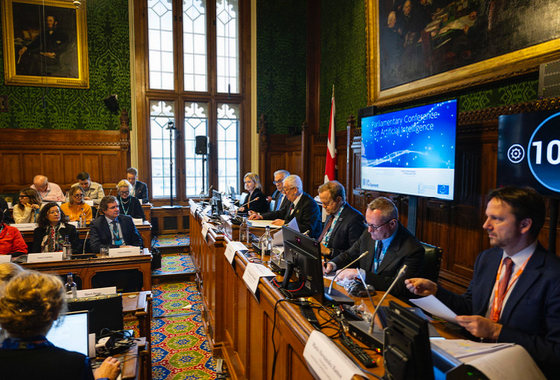
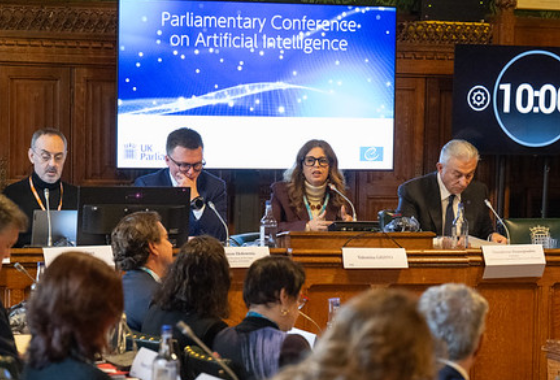
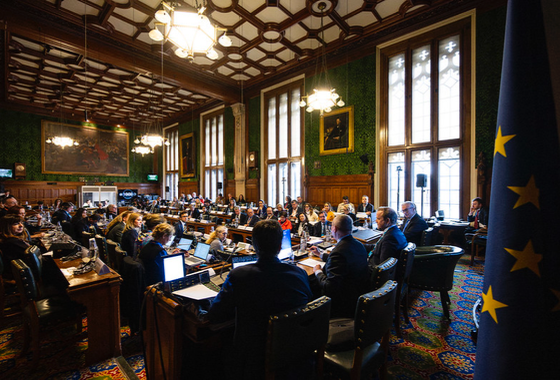
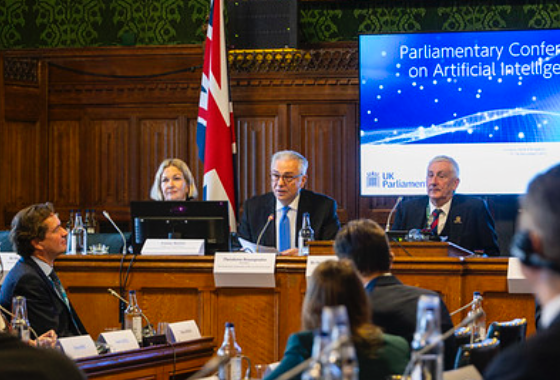
Parliamentarians, policymakers, experts, AI professionals, academics and NGO representatives gathered in London for a major conference on artificial intelligence have urged a stronger role for parliaments in shaping the development, application and regulation of AI to ensure that it complies with democratic values and human rights.
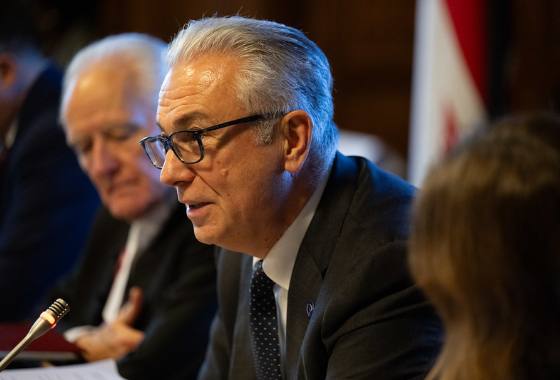
PACE President Theodoros Rousopoulos, opening the event alongside House of Commons Speaker Rt Hon. Sir Lindsay Hoyle, called on Europe’s parliaments to take democratic responsibility for overseeing AI, arguing that “technology must be at the service of representation, not its substitute”.
Citing the myth of Prometheus, the President noted that fire was power, and power always requires judgment: “Artificial intelligence is the power of our time. Not because it is technologically impressive, but because it reaches deeply into public life: into how we inform ourselves, how we persuade, how we trust.” The greatest danger, he warned, was “the gradual transformation of human beings into predictable, manipulable — and ultimately expendable — decision-makers. A loss of autonomy. A loss of judgment. And, ultimately, a loss of meaning.”
AI can optimise objectives, the President pointed out, but it cannot know why those objectives have value. Unlike Prometheus who was chained to a rock, humanity still has the ability and duty to choose, he noted: “If we safeguard human dignity, if we keep political responsibility in human hands, if we use technology to strengthen — rather than replace — democracy, then artificial intelligence will not determine our future. We will.”
Council of Europe Deputy Secretary General Bjørn Berge, in a separate opening address, highlighted how artificial intelligence has already changed the basis on which ordinary people, the citizens of our democracies, form opinions. “It has transformed the way our parliamentary representatives communicate with the public," he noted, and magnified the possibilities for foreign information manipulation and interference: “In some cases, they use it to strike at the very heart of democracy by undermining free and fair elections.”
The Deputy Secretary General underscored the need to ensure that technology is used to serve people, and not the other way around: “Given that artificial intelligence knows no borders, we need to work together […]. We must ensure that our democratic processes remain resilient, even as information ecosystems evolve and that they keep human rights at their core. We must use automated systems to assist, but not to replace human beings.”
Council of Europe Commissioner for Human Rights Michael O'Flaherty, in a keynote address, called for smart oversight and regulation of AI: "We are not in a legal terra nullius — but we need targeted, coherent, smart oversight and regulation to protect us all from the risks inherent to AI and to build trust in its use.”
He also called on states to ratify the Council of Europe Framework Convention on AI and human rights, democracy and the rule of law, and to uphold the European Union's two regulations in this field, the Digital Services Act and the AI Act.
The conference, on 15 and 16 December at the House of Commons, offered a platform to exchange best practice, define parliamentary roles in AI governance, and mobilise support for the Council of Europe’s Framework Convention on Artificial Intelligence.