


13/02/2026 Legal Affairs and Human Rights
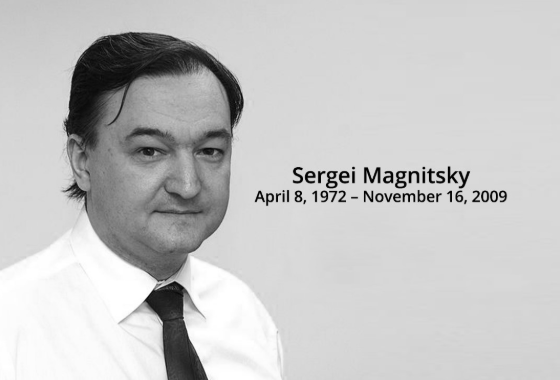
PACE’s Committee on Legal Affairs has reiterated its call “for all those responsible for the death of Sergei Magnitsky, as well as the beneficiaries of the fraud he uncovered, to be held accountable”. Mr Magnitsky, a Russian tax adviser and auditor, uncovered a US$230 million fraud perpetrated by Russian government officials and criminal collaborators involving tax rebates from the Russian Treasury. In retaliation for his revelations, he was arrested, subjected to inhuman and degrading treatment, denied medical care, and ultimately died in a Moscow prison in 2009.
Approving a draft resolution based on a report by Lesia Vasylenko (Ukraine, ALDE), the committee pointed out that all criminal cases within Russia against the officials involved in Mr Magnitsky’s ill-treatment have been closed, with no-one held to account – while he himself was posthumously convicted of tax evasion.
“The proceeds of the crime exposed by Mr Magnitsky were laundered through a complex network, potentially involving waystations in several states” in Europe and beyond, the parliamentarians said. They welcomed the fact that in five Council of Europe member or observer states, investigations had resulted in convictions, settlements and/or confiscations of the proceeds of crime (France, Latvia, Netherlands, Switzerland and the United States) but regretted that in several others the proceedings had not led to any conclusions, convictions or confiscations so far.
Concerning Switzerland, the committee deeply regretted that the funds initially seized there “will return to the disposal of three Russian citizens with established links to the Russian state apparatus” as the Swiss judicial authorities concluded that it was not possible to consider the money laundering to be the work of a criminal organisation. It also regretted that the Swiss investigation had been “overshadowed by serious allegations that Swiss officials involved in the investigation accepted undue favours from high-ranking Russian officials and oligarchs”. Although these allegations were duly examined and even led to the conviction of one investigator, the Swiss authorities determined that his conduct had no impact on the investigation or its findings.
The parliamentarians invited Switzerland and other member states to “introduce or expand the use of non-conviction-based confiscation, in particular by reversing the burden of proof as to the origin of unexplained wealth” and to review the application of the “proportional confiscation” method, replacing it with more dissuasive alternatives to punish perpetrators of money laundering. States which have not yet done so should consider imposing targeted sanctions (“Magnitsky sanctions”), such as visa bans and asset freezes, against those reasonably believed to be responsible for or benefiting from serious human rights violations.
The Assembly is due to debate the report at a forthcoming session.