


29/05/2026 Equality and Non-Discrimination
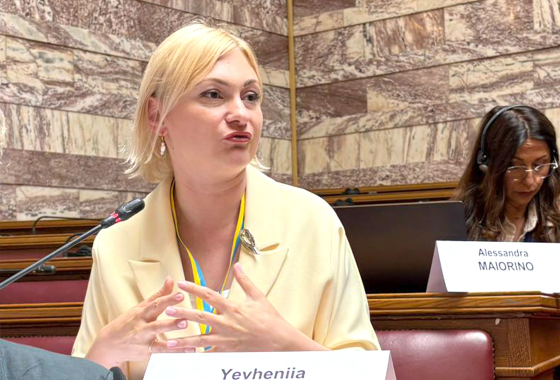
The Committee on Equality and Non-Discrimination, meeting in Athens on 28 May, expressed concern at the pervasiveness of gender stereotypes throughout public communication spaces, including the press, radio and television, as well as online platforms and social networks.
Too often trivialised and tolerated under the banner of freedom of expression, gender stereotypes are a barrier to gender equality, undermine women’s empowerment, and damage boys and men by presenting them with stereotypes of male roles to which they feel pressure to conform, the parliamentarians emphasised.
These stereotypes are often exacerbated by intersectionality, the committee noted, with women from racialised groups and LBT women being disproportionally targeted, adding that transgender women were victims of severe forms of stereotyping.
By adopting the report by Yevheniia Kravchuk (Ukraine, ALDE), the committee proposed a set of measures to eliminate gender stereotypes in the media, covering education, co-operation with civil society, online platforms and technology companies, as well as research and data collection.
It proposes, in particular, developing media literacy programmes at all education levels, and incorporating into school curricula “a critical analysis of gender stereotypes across traditional and digital media”.
Furthermore, the committee recommends nationwide public awareness campaigns – with a focus on youth – and that social media platforms design “transparent and updated community standards prohibiting gender-based harassment and sexist hate speech”.
Finally, the adopted text urges media organisations, journalists’ associations, the advertising sector and other cultural sectors to “adopt codes of ethics and self-regulatory mechanisms explicitly prohibiting sexist representations”.