The sitting is open.
I remind members that in order to be registered for this sitting, you should insert your badge when you take your seat and keep it there for at least 30 seconds.
You should also insert a badge in order to speak or vote. To request the floor, please press the "request" button once.
This morning we held a ballot to elect a judge to the European Court of Human Rights in respect of Bosnia-Herzegovina. An absolute majority of the votes was required.
I will now announce the results.
Total number of members voting: 165.
Number of blank ballot papers: 0.
Number of spoiled ballot papers: 0.
Numbers of votes cast: 165.
That makes an absolute majority of votes cast: 83.
The votes were cast as follows: Ms Svjetlana MILIŠIĆ-VELIČKOVSKI,158. Mr Mahir MUHAREMOVIĆ, 6. And Mr Predrag RAOSAVLJEVIĆ, 1.
Ms Svjetlana MILIŠIĆ-VELIČKOVSKI, having obtained the majority of votes cast, is elected judge of the European Court of Human Rights for a term of office of nine years, which shall commence no later than three months after her elections.
I really, really congratulate Bosnia-Herzegovina on this truly historic moment which we have been looking forward to for five years. And I congratulate Ms Svjetlana MILIŠIĆ-VELIČKOVSKI on her election as a judge of the European Court of Human Rights, in respect of her country.
[Applause]
Ladies and gentlemen, it is now a very great pleasure to welcome the Federal Minister for Foreign Affairs of Germany, Mr Johann WADEPHUL, to the Parliamentary Assembly of the Council of Europe.
Dear Minister, welcome to the Chamber, or should I say welcome back. You know this House very well. For 15 years you were a member of this Assembly. Today you return as Foreign Minister. Thank you for taking the time to address us today in your new capacity. Being Foreign Minister in a world of war and crisis is no easy task. In times like these, commitment to multilateralism, international law and human dignity matter more than ever.
In my opening speech this week, I spoke about values. But values only mean something when people are ready to stand up for them. When governments, parliaments and citizens stand together, they make a real difference.
And Germany stands with us. Germany's engagement really matters today more than ever. Germany is one of the strongest supporters of the Council of Europe. Financially, it is one of the largest contributors to our budget. Institutionally, it provides political backing whenever the organisation needs it. That is solidarity, not in words, but in deeds. As President of the Assembly, I thank Germany for this.
Dear Minister, we greatly appreciate Germany's strong support for Ukraine. And we value Germany's commitment to dialogue and multilateral co-operation at a time when both are under strain. In this Assembly, you have a reliable partner in defending our democracies. We are looking forward to hearing your perspective on the challenges ahead and on how we can meet them together.
Dear Minister, it is my honour to give you the floor.

German Federal Minister for Foreign Affairs
15:44:35
Madam President,
Ladies and gentlemen,
Thank you very much for your warm welcome.
And indeed, for me this also marks a return to the Parliamentary Assembly, of which I myself was a member for many years. When I was elected to the German Bundestag in 2009, I was immediately integrated into the German delegation. Later, I served as a deputy member, and I still look back fondly on that time, which continues to shape my political approach to this day: the issues we repeatedly discussed together as parliamentarians – from human rights in general to freedom of the press in particular – right through to the holding of free and fair elections; the open exchange with colleagues – regardless of the political landscape in their home countries; and the new perspectives that emerged from viewing matters from a different angle and considering them with fresh arguments.
Incidentally, a vote in which I took part in 2012 proved to be a particularly wise foresight, namely the introduction of Italian and German as official languages of the Parliamentary Assembly, which is why, as German Foreign Minister, I am able to address you in German here today.
Dear colleagues,
The Council of Europe holds special significance not only for me personally, but for my entire country. For the Council of Europe was – and this is something we will never forget – the very first multilateral institution to which the Federal Republic of Germany acceded after the Second World War. Even before the re-establishment of a German state following the Second World War, the German delegation was present when the establishment of the Council of Europe was discussed in 1948. At that time, all the founding members had the unspeakable crimes of the Nazi regime fresh in their minds: they had witnessed first-hand how Germany had plunged the European continent into a brutal war of annihilation.
They were therefore united by the conviction that lasting peace in Europe could only be built on shared values, and that democracy, human rights and the rule of law should be the three pillars of the Council of Europe. This conviction is more important today than ever before. For over four years now, we have been witnessing President Vladimir PUTIN’s brutal war of aggression against Ukraine, which violates international law.
Because President Vladimir PUTIN has so far been unable to win the war, he is relentlessly seeking ways to break the will of the Ukrainian people to resist. Particularly with winter approaching, Russia is systematically targeting civilian heating and energy infrastructure. To achieve this, President Vladimir PUTIN is willing to accept tens of thousands of deaths and injuries – not least amongst his own people.
That is why it was right for Russia to be expelled from the Council of Europe on 16 March 2022. As recently as 2019, the Russian delegation had returned to the Parliamentary Assembly. Yet President Vladimir PUTIN rejected even this olive branch. There is no place here for those who wage wars of aggression in breach of international law!
But that is not all. Russia’s aggression has long since ceased to be confined to Ukraine’s borders. Through targeted attacks on Ukrainian ports, Russia is preventing the export of vital grain supplies. We are talking here about millions of people who are suffering as a result. Added to this are hybrid attacks – something we ourselves witnessed recently in Germany with the drone incident in Leipzig.
And we are not alone in this: in many of our member states, we are experiencing cyberattacks and sabotage of critical infrastructure. Just today, our Estonian friends also clearly attributed responsibility to Russia for the arson attack in Tallinn on 14 and 15 August. Added to this are widespread propaganda and disinformation campaigns. This is because President Vladimir PUTIN is labouring under the misconception that he can thereby unsettle our free societies, because he wishes to weaken our democratic institutions and thwart our support for Ukraine.
Ladies and gentlemen!
But the exact opposite is true. We stand firmly alongside the people of Ukraine because they are defending not only their own freedom, but the freedom of us all. It is President Vladimir PUTIN who is blocking the path to a ceasefire.
Despite international mediation efforts, despite mounting pressure from sanctions and despite immense losses of his own, he shows no serious willingness to negotiate. Nevertheless, one thing is clear: even this terrible war will come to an end. And it is precisely with a view to the aftermath – the reconstruction of Ukraine and dealing with past war crimes – that the Council of Europe can play an important role. For it is already focusing on accountability: to ensure that the suffering of the Ukrainian people is documented, that their demands are heard, and that those responsible for the crimes of aggression can be held to account.
The Council of Europe is helping to lay the institutional foundations for justice and redress: through the Register of Damages for Ukraine maintained by the International Reparation Commission and the Special Tribunal for the Crime of Aggression against Ukraine.
We will complete our ratification process for Germany’s accession to the International Claims Commission by the end of the year, and we are committed to ensuring that the Special Tribunal can also be established as soon as possible.
Ladies and gentlemen!
In doing so, the Council of Europe defends the rule of law and human rights as the foundation of our democracies, extending far beyond Ukraine.
It is committed to ensuring that every individual can trust that their individual rights and fundamental freedoms are protected. To ensuring that people can freely express their opinions and assemble. That courts can deliver their judgements independently of the political leadership and that these judgements are actually enforced. That elections are not merely called such – as the Russian leadership has recently done – but are in fact free and fair. That state power has limits.
And you, ladies and gentlemen, as parliamentarians of your member states, are striving to establish the best legal foundations for your societies by enacting laws, whilst also taking into account the Council of Europe’s system of conventions. You – we – have the greatest interest in ensuring that these laws are then also respected, so that the rule of law does not remain an empty shell.
Dear colleagues,
The Council of Europe is not, however, merely an organisation that reacts to wars and crises. It is a place that reminds us of something particularly important:
That democracy is not a state of affairs that is achieved once and then lasts forever.
That democracy, rather, must be defended, renewed and practised time and time again. Every day! Especially today, when our shared values are being called into question in many places. In times when digital influence and new technologies – in particular artificial intelligence – are transforming our public debates. In times when our democratic institutions and the independence of the judiciary are under threat from both outside and within.
The response to this must not be less democracy. It must be more democracy – and, above all, a more resilient democracy. Herein lies, in my view, a particular strength of the Parliamentary Assembly of the Council of Europe (PACE). It brings together the democratically elected representatives of our states. It brings together parliamentarians who do not always see eye to eye, but who share common European values. It is precisely this capacity for dialogue that is of inestimable value today. I see the central task of the Parliamentary Assembly – now and in the future – as maintaining this dialogue as the foundation of our democracies.
And I am convinced that, in these times of upheaval, the Council of Europe should reflect on what makes it and PACE unique. Namely, prioritising its core mandate – democracy, human rights and the rule of law – in its work!
But also to further develop that core mandate – wherever new challenges require it. This includes building on existing conventions and creating new common standards. On the subject of AI, for example, the Council of Europe has been at the forefront from the very beginning and has set standards as a pioneer.
We need this forward-looking approach, but we also need to focus on what really matters!
Dear colleagues,
Russia’s war of aggression, the situation in the Middle East, the rivalry between the major powers – the US and China – migration flows and the impacts of climate change, the rise of autocracies, co-operation with our neighbouring states and the involvement of young people – whose interests the Council of Europe is particularly committed to championing – these are just a few examples of the issues that occupy you and me on a daily basis.
The fact is, today’s geopolitical situation is anything but straightforward. Often, the world has yet another crisis in store just as we are still exploring solutions to existing ones.
Particularly in these turbulent times, I would like – as German Foreign Minister, but also as a former member of this Assembly – to speak out in support of the Council of Europe and the Parliamentary Assembly.
This organisation is a historic achievement!
Without the Council of Europe, Europe would be poorer, less stable, less secure in terms of the rule of law, less free and less democratic!
It enables you, dear colleagues, to play an active part in shaping our shared future and to tackle the challenges of today and tomorrow together. That is precisely where your strength lies, and where our shared responsibility lies.
Thank you very much for your attention. I look forward to our discussion.
Thank you very much, Mr Johann WADEPHUL; I shall now continue in German.
I believe that your voice is being heard here and that it carries weight; it shows that it is not only Secretaries-General and Deputy Secretaries-General who are present, but also the Chair of the Committee of Ministers, Ms Isabelle BERRO-AMADEÏ, and the President of the European Court of Human Rights, Mr Mattias GUYOMAR, as well as a great many ambassadors. So your voice does count.
We will now turn to the questions on behalf of the political groups.
And it's my pleasure to first give the floor to Ms Katrin FEY, on behalf of the Group of the Unified European Left.
Thank you very much, Mr Foreign Minister.
Over 160 people have been arrested in Türkiye as part of a crackdown on the LGBTQ+ community. Many are still in police custody or have already been remanded in custody.
To what extent is Germany involved in monitoring ongoing court proceedings through its diplomatic missions?
And how has the Federal Government raised this issue at a high level with the Turkish Government?
And how can you address this issue in Türkiye, both bilaterally, within the EU and in international forums? Thank you.
Please, Mister Foreign Minister.
German Federal Minister for Foreign Affairs
15:57:41
It’s working now. Thank you very much.
Thank you very much for raising this important issue. We are monitoring the situation in Türkiye with concern and regularly raise it with the Turkish Government. I do the same with my counterpart. I can only encourage this House to address this issue here.
Of course, it is part of the diplomatic process that we, on the German side, also keep an eye on one or two court cases. However, we trust that the principles of the Charter of Fundamental Rights are being upheld in Türkiye, and we also appreciate the fact that there is a court which, in cases of doubt, can ensure compliance and to which appeals can be made.
But this is indeed an issue to which we must pay close attention.
Thank you on behalf of the Socialists, Democrats and Green Group.

Lithuania, SOC, Spokesperson for the group
15:58:54
Thank you, Madam Chair.
Mister Minister,
Highest respect for your support for the International Criminal Court that you reaffirmed at the United Nations General Assembly. Indeed, crimes against humanity and their deserved punishment is part of our civilisation. Also, I would like to express our gratitude for decision of deployment of the Lithuania Brigade. It serves for the security of the entire Baltic region.
Mister Minister, Germany has provided substantial military, civilian and humanitarian assistance to Ukraine. Germany also signed the Council of Europe Convention establishing an International Claims Commission for Ukraine. So my question is, Mister Minister, how will Germany help bring the International Claims Commission into operation and ensure that Ukraine receives timely and predictable financial support as the European Union negotiates its next long-term budget?
May I remind members that you have 30 seconds for your questions. Please, Mr Foreign Minister.
German Federal Minister for Foreign Affairs
16:00:05
Yes, thank you very much.
In fact, I would like to take this opportunity to mention that yesterday I visited the International Criminal Court together with my Dutch colleague, Mr Tom BERENDSEN. It is a key institution for the rule of law at international level, which we not only defend but will continue to support in the long term. We are committed to ensuring that this Court functions effectively.
And as I also said in my speech, Germany will do everything in its power to ensure that the Special Tribunal is established as quickly as possible. We are also engaged in intensive discussions with the Dutch Government on this matter, but naturally we still need further preparatory work from the Council of Europe.
We will carry out the necessary ratification process this year and are, of course, prepared to make Germany’s share of the financial contribution so that the entire system for addressing possible war crimes committed on Ukrainian territory can be established and the perpetrators subsequently brought to justice before the war crimes tribunal.
This applies, of course, not only to individual accountability but also to the material damage caused.
Thank you. The next question is from Ms Elvira KOVÁCS on behalf of the Group of the European People's Party.

Serbia, EPP/CD, Spokesperson for the group
16:01:41
Thank you.
Mister Minister,
Regarding your talks in New York and the defence of Europe, what was the core message you convened to the Russian side to signal that European security and sovereign borders are not negotiable?
And, on the other side, what message would Germany like to send to candidate countries regarding the future of European Union enlargement?
Thank you.
Mr Johann WADEPHUL.
German Federal Minister for Foreign Affairs
16:02:08
The main focus of the discussion with my Russian counterpart was the hybrid attack we experienced at Leipzig Airport. Having arranged for the Consulate-General in Bonn to be closed, my aim was to inform the Russian Government once again, quite officially, that Germany takes the view that a line has been crossed here, and that we are at all times capable and prepared to defend not only our territory but also our people, and that this also applies to our allies.
I have called on Russia to refrain from such activities – I have, after all, just referred once again to the incident in Estonia in August.
Furthermore, a key concern of mine – and I am happy to reiterate this here – was to advocate for a solution to be found regarding grain shipments that should be made from Russia itself and also from Ukraine to third countries. There is a risk of famine, particularly in the countries of the Global South, which could destabilise states, lead to new waves of displacement and, above all, cause great human suffering.
I believe it is our shared responsibility to ensure that – at least as a first step – a ceasefire is achieved in the Black Sea region, one that will now allow these grain shipments to take place whilst the grain is still fit for consumption. It is high time that something was done here, and I can only earnestly ask this Assembly to support us in this endeavour.
Furthermore, I have made it clear that all Europeans are prepared to contribute to a peace process. Ukraine is willing to enter into negotiations, yet the Russian seat remains empty to this day. In our view, it is high time that Russia brought the hostilities to an end and showed its willingness to engage in substantive peace talks.
Thank you. Mr Oleksii GONCHARENKO, on behalf of the European Conservatives, Patriots & Affiliates.

Ukraine, ECPA, Spokesperson for the group
16:04:46
Mister Minister,
So I want to continue about your meeting with Mr Sergey LAVROV, the first high-level Russian-German talk from 2022. You said what you asked and you addressed Mr Sergey LAVROV. What was his answer? Because as the answer for the moment, we see a continuation of Russian relentless attacks, including yesterday striking the very centre of Kyiv, very close to the German Embassy.
So what is the way to peace? And while the American diplomatic track does not provide us breakthrough, what is the European plan for peace, which is so much needed by Ukraine?
Thank you.
German Federal Minister for Foreign Affairs
16:05:23
Indeed, you were able to follow the official response from our Russian counterpart at the press conference in New York, and it is highly unsatisfactory. At this stage, I see no willingness on Russia’s part to engage in the urgently needed negotiations. That is why we are continuing our full support for Ukraine. This also applies to the coming winter. It applies to political, economic and military support. This will remain the case. Furthermore, we will continue to increase the pressure on Russia.
Continuing this war is not only costing Russia dearly in military terms, but is also of the greatest economic detriment. And that is why Russia has every reason to enter into negotiations.
I would perhaps like – Madam President, if you’ll allow me, I’d just forgotten – to say a few words about the Western Balkans. Just two sentences, if you’ll permit – thank you.
We will be meeting in Montenegro this week as part of the so-called Berlin Process. The German Federal Government stands by the commitment made in Thessaloniki: that all states in the Western Balkans should have the opportunity to join the European Union. This requires compliance with the necessary criteria. We believe Montenegro is well on the way to meeting these criteria. Other countries are following suit, such as Albania. And in other countries, considerable efforts are still required. Ms Elvira KOVÁCS, this also includes Serbia.
But the opportunity exists and the door is open. However, the work – the reform work and the process of aligning with the European Union’s criteria – must be carried out within the countries of the Western Balkans themselves.
And the round of questions on behalf of the political groups is concluded by Mr Iulian BULAI on behalf of the Alliance of Liberals and Democrats for Europe.
Thank you so much, Madam President.
First I would like to answer to your call on more solidarity on the export of Ukrainian cereals. Romania does a lot. And the fact that the Global South is assured with Ukrainian cereals is thanks to the Romanian harbours and railways that are open to that solidarity.
Now I speak as a European and Romanian citizen worried about war escalation and drones all over Europe, the Baltic countries, Poland, Romania, every day, Germany. What can you yourself, dear Minister, and all the other partners do for Ukraine in order to strengthen its air defence that could prevent such type of aggression, but also help them face the terrible and brutal attacks of Russia in Ukraine?
Thank you.
German Federal Minister for Foreign Affairs
16:08:15
You are absolutely right. The threat from the air has now become Ukraine’s greatest military problem, and it is particularly despicable that Russia does not hesitate to target civilians in particular.
As an example, you mentioned the recent attack that struck near the German Embassy in Kyiv. We are supporting Ukraine, firstly, with the additional air defence systems at our disposal.
Germany has made substantial contributions, and the German Defence Minister, Mr Boris PISTORIUS, is working tirelessly to secure further systems, including from friendly and allied nations.
Many countries – including Germany – have now reached the limits of what is responsible for security reasons. But we are continuing these discussions together. Just last week in New York, I spoke once again with colleagues – from both Europe and Asia – and I am confident that at least two further countries will be able to make arms deliveries to Ukraine.
We now come to other questions of members of the Assembly. And I will group them in three always.
We start with Ms Bisera KOSTADINOVSKA-STOJCHEVSKA from North Macedonia.
Thank you, Madam President.
Respected Minister,
Your recent meeting with Mr Sergey LAVROV caused quite the attention. And today in one of our meetings we had most precious guests. We had displaced children from Ukraine. We asked them what they want and they said blue sky with no drones in Ukraine. According to your insights, when can we fulfil their dream?
Thank you.
Thank you. Next is Mr Márton HAJDU from Hungary.
Minister,
In July you called for joint European action to protect the borders in Ceuta. We have seen there that migration can be weaponised as part of hybrid warfare. The new majority in Hungary stands firmly for the protection of borders and against illegal migration. Just like we see that in the East, where Poland and others are defending the European border.
What kind of concrete support can we expect to protect the southern border? Including perhaps a change in the legislative definition of hybrid warfare and weaponisation.
Thank you.
And the third is Mr Piero FASSINO from Italy.
Piero, you have to insert your badge.
At a time when Russian aggression against Ukraine jeopardises Europe's security, the European integration of the Balkans is essential for the security of Europe.
How do you think the European integration of the Balkan countries can be accelerated? This is my question. Thank you.
Mr Johann WADEPHUL.
German Federal Minister for Foreign Affairs
16:12:00
Thank you very much.
It is heart-wrenching to hear these accounts from children and parents in Ukraine. And indeed, it is yet another powerful motivation to do everything we can to ensure that Ukraine is best placed to defend itself against these brutal air attacks by drones and ballistic missiles.
As I have just explained, the Federal Government is constantly considering how we can provide more air defence systems, and we are trying to procure them. Germany is now starting to produce Patriot systems itself. However, these will not be available until next year. This means we need to bridge the gap in the meantime. But you can rest assured that we will leave no stone unturned to bring about an improvement in the situation as quickly as possible.
That is why, during my visit to Slovakia today, I once again appealed to the government there to give its full support to all Europeans in standing alongside Ukraine and to do everything possible to ensure that Russia understands that this terrible war – which is, after all, also costing countless Russian lives – must be brought to an end as quickly as possible.
On the one hand, we must address the issue of migration effectively, whilst of course complying with all legal requirements and regulations, international law, the Convention on Human Rights and our Constitution, and bring order to the situation.
I therefore very much welcome the agreement on a common asylum system within the European Union, which must now be implemented by all member states. On the one hand, it provides for effective external protection, which you have just mentioned in relation to the southern border. To this end, the member states affected there must be supported.
Conversely, this means that member states must show solidarity with one another – and I must emphasise this point – because solidarity must not be a one-way street. There are some member states that face greater migratory pressure and have taken in more migrants than others. And I urge that we in Europe show solidarity in this regard.
Indeed, I regard the integration of the Western Balkan states – that is, the countries of the former Yugoslavia – into the European Union as a task which, with combined efforts and the necessary political will, we can – and, in my view, must – achieve over the next decade.
We have just once again reflected on the horrific crime at Srebrenica, and it must not be forgotten. And we must constantly remind ourselves how quickly conflicts can arise, flare up and even escalate into war, particularly in this region.
That is why I see it as our task at this time to do everything in our power to ensure that this integration can succeed. And Germany, together with Italy and the Italian Government, sees itself in a strong position to ensure that the integration process is accelerated.
However, as I said earlier, this also requires that the necessary reforms to the rule of law, in line with EU standards, are genuinely implemented in these candidate countries.
Thank you very much.
The second round starts with Mr Emanuelis ZINGERIS from Lithuania.
Minister, thank you very much for your recent visit to the front line in Ukraine.
What do you think? Isn’t it now high time to designate President Vladimir PUTIN's Russian intelligence service, the Main Intelligence Directorate (GRU), as an international terrorist organisation? Our Lithuanian Foreign Minister, Mr Kęstutis BUDRYS, did just that last week. We must protect our member states and we must help one another.
This is our response to the Russian terrorism that has been directed against our nations. We must respond to it. Thank you very much, Minister.
Thank you. Next is Mr Titus CORLĂŢEAN from Romania.
Mister Minister,
As a follow up to the question related to your meeting with Mr Sergey LAVROV in New York and also with the same Romanian accent like my colleague and coming from the same complicated Black Sea region, it will remain very complicated in the medium, long term. It's a very simple and non-provocative question.
How do you see the relationship with Russia in the medium and long term after the war? A simple question.
Thank you. The relationship with Russia from our Western democratic world in the medium and long term after the war.
And Mr Christophe BRICO from Monaco.
Minister,
First of all, thank you for being here.
We have discussed the threats facing the European continent in the East, but we must also acknowledge that the continent’s most reliable ally in the West is no longer reliable today.
My question is therefore very simple: as a representative of the Federal Republic of Germany, which is one of Europe’s major states, how do you see the future of Europe and the prospects for its military and economic defence?
Thank you.
Mister Minister, please.
German Federal Minister for Foreign Affairs
16:18:37
I believe that we are now at a stage where all European states, which are exposed in various ways to Russia’s hybrid attacks, should clearly identify them, apply the technical term – that is to say, clearly attribute them to the institution and the state that instigated them.
And sometimes it is, in fact, the Main Intelligence Directorate (GRU) from Russia. We must also discuss this openly with one another. We must discuss all further procedural steps, statements and decisions with one another within the European framework. Whether and when such measures are appropriate is something I cannot predict at this stage.
Without being naïve, we are at a stage where I, together with others, want to make a serious effort to take steps towards de-escalation. And that applies both to grain shipments across the Black Sea and to the war itself.
I believe that we Europeans – and here I am also addressing the question raised by my Romanian colleague – must start shaping this relationship right now. And that means precisely that these negotiations, which are now taking place – and it is becoming apparent that they could begin – must not be left to the US alone, but that we Europeans must play a role in them. For the future of Europe is at stake. This war is taking place in Europe.
I welcome the fact that the United States of America is making diplomatic efforts to bring this war to an end. But when it comes to European issues, Europe must be involved. It is clear, of course, that anything agreed that concerns Ukraine can only be decided by the Ukrainians themselves. But when it comes to matters of security guarantees, or to the question of whether, when and under what conditions Ukraine can join the European Union, the European Union must be involved.
That is why I attach great importance to there being a European voice in these negotiations. And that is also what I wanted to make clear in the discussion. Ultimately, there is every chance of a good relationship with Russia in the future, because we naturally have nothing against Russians, against the Russian people or against this country at all. We have a problem. We have a major problem with the current Russian government, which is violating international law and waging this war.
That is why we must state at this juncture – and probably for the foreseeable future – that we will not have security in Europe with Russia, but only against it.
This means that, within the NATO alliance and the European Union, we must position ourselves securely to ensure that we are not attacked further and that we can live in peace and freedom.
When I speak of the North Atlantic Treaty Organization (NATO) Alliance, I am of course referring to the transatlantic alliance, of which the United States of America is a crucial part. We are dependent on the US remaining engaged in Europe, including from a security perspective, and I am certain that this is also in the US’s interest.
At present, and for the foreseeable future, only the US can provide the nuclear deterrent that we need for the European continent. At the same time, we as Europeans must do more. That is why I find the wording used by the French President very apt: that we must ensure greater European sovereignty.
This means that in all areas – and this applies not only to the military sphere, but also to trade dependencies, to our dependence on raw materials and rare earths – we must broaden our base and diversify. And by doing so, I believe, we can also feel a little more independent. That is the way things are developing.
We must recognise that certain sections of the American administration – and these are by no means insignificant – increasingly view our transatlantic relationship as an alliance of convenience rather than as the deep bond that has characterised it for decades. I do not regard this as a cause for alarm; it is something we can manage.
In any case, we Europeans stand very close together. We share a strong bond based on our values, and that is why I have absolutely no concerns about the future; on the contrary: I also see this emerging European sovereignty as a great opportunity for us.
Thank you. And we make a last round of three, starting with Mr Bertrand BOUYX from France.
Thank you, Madam Chair.
Minister,
We have all been following the election results closely throughout September, and we are, of course, all counting on Germany.
I would therefore like to ask you some questions in my capacity as rapporteur for a mission on Arctic issues. I would like to ask you about Germany’s assessment of the recent agreement between the United States and Denmark concerning Greenland, and, more broadly, about your country’s analysis of this region and the interests it is attracting.
Thank you.
Thank you.
And Mr Adam BODNAR, Poland.
Mister Minister,
I have two questions. One is about implementation of judgements of the European Court of Human Rights. So what more can German diplomacy do in order to promote the proper implementation of judgements?
And the second question relates to recent statements by leaders of one political party in Germany. What do you think about plans to restore or to re-open the Nord Stream gas pipeline?
Thank you.
Thank you. And finally, Ms Saskia KLUIT from the Netherlands.
Thank you very much, Chair.
I want to thank the Minister for his firm stance yesterday on the International Criminal Court. I'm from the Netherlands and it's very important.
And this also brings me to my question, because we talk a lot about the situation in the Middle East, Israel and the suppression of the Palestinians. And there are also court orders against Prime Minister Benjamin NETANYAHU and some ministers and some people from Hamas.
What would Germany do to fulfil those orders? Because it is not only defending the institution, but also fulfilling the orders that makes it strong. Thank you.
Thank you.
Mister Foreign Minister.
German Federal Minister for Foreign Affairs
16:26:23
Thank you also for your confidence in Germany’s stable democracy. You can rest assured that we are fully aware of the major challenges we face, but that we are also very confident that Germany will continue to be governed from the political centre in the future.
Issues relating to the Arctic are of great importance. Naturally, they are taking on new significance in particular because climate change is opening up new shipping routes and making it possible to exploit natural resources, both of which were previously hidden by thick ice. In this respect, entirely new questions are arising.
We are very keen to engage in intensive dialogue on this matter with the seven Arctic states that have joined forces. My understanding of the agreement between the United States and Denmark – and also Greenland – is that it is a security agreement which, whilst respecting the sovereign rights of the Kingdom of Denmark and also the autonomous region of Greenland, allows the US to carry out certain military plans and projects. In that respect, this is good news for Europe, because it ensures security and because the principle of respecting sovereign rights has been upheld.
We are concerned that some rulings of the European Court of Human Rights are not being complied with. We raise this issue regularly. This is an ongoing task for all the Federal Republic of Germany’s diplomatic missions abroad. I repeatedly call for this and, where necessary, also make it the subject of my own discussions.
As far as I can see, the Federal Government has no such plans – for constitutional and political reasons, I cannot speak on behalf of any opposition party, but I do see that there is perhaps only one political movement that might be considering this – but the Federal Government has absolutely no plans to reactivate the Nord Stream.
We have allowed ourselves to become far too dependent on Russia in a way that is fundamentally flawed, and we must not allow this to happen again.
As the Federal Government, we will always implement all decisions of the International Criminal Court. Should such a measure be on the agenda, a decision will have to be taken. But at this stage, I do not see the need for it.
That brings us to the end of the question time with Mr Johann David WADEPHUL. Thank you very much for answering our questions this afternoon. They were quite substantial answers, thanks for that.
And before we continue with the next point of our agenda, which is a joint debate, I interrupt the sitting for 2 minutes. Thank you.
[Applause]
Dear colleagues, we will now continue the session.
And we now come to the joint debate on the two reports from the Committee on Social Affairs, Health and Sustainable Development. The first is titled “Towards coherent policies on veterans in Europe” (Document 16473) presented by Ms Lesia ZABURANNA; and the second is titled “The need for systemic support to Ukrainian soldiers who became disabled as a result of hostilities” (Document 16464) presented by Mr Jan Filip LIBICKI. These will be followed by the presentation of an opinion by Mr Georgios STAMATIS (Document 16483) on behalf of the Committee on Equality and Non-Discrimination.
We will aim to finish this item by about 6:00 p.m.
I now call on Ms Lesia ZABURANNA, rapporteur, to present the first report. You have 7 minutes now, and 3 minutes to reply. The floor is yours.
Thank you so much.
Mr President,
Dear colleagues,
Behind the title of this report, there are people.
Europe today faces the largest cohort of veterans since the Second World War. In Ukraine alone, more than two million people now hold veteran status. Together with their families, that is five to six million people, close to one in seven of our fellow citizens. More than 159 000 have been granted the status of a person with a war-related disability. And this is not a Ukrainian question alone. As member states increase defence spending and reintroduce military service, veteran communities will grow across this continent in the coming decades.
Let me begin with one moment that I heard described, in almost identical words, in nearly every consultation I held while preparing this report. The hardest day for many soldiers is not a day at the front. It is the day of return; the morning they take off the uniform and discover that the State which mobilised them in 24 hours now asks them to move between a dozen separate offices, to fill in the same forms many times over, and to prove, again and again and again, that they served. A person who gave the State everything is met with bureaucracy. This is precisely the problem I am tackling in this report.
The Committee adopted both the draft resolution and the draft recommendation unanimously on 10 September. Here is what it asks member states to do.
First, it asks us to change how we think about veterans. For too long, veteran support has been treated as welfare; as something granted, late and unevenly, at the discretion of the State. This report treats it instead as a human-rights obligation, grounded in the European Convention on Human Rights (ECHR) and the revised European Social Charter. The right to life carries a positive duty to prevent veteran suicide. The prohibition of inhuman treatment carries a duty of care to the combat-wounded. The right to private and family life reaches mental health, housing and family reunion. These are not aspirations. They are obligations that already bind our States, and the report maps each domain of support to the provision that grounds it.
Second, the report sets out honestly where our systems fail, because a clear diagnosis is the condition for any real remedy. Far too often what a veteran receives depends on where they live and where they served. There is an invisible burden, carried disproportionately by women veterans, by family carers, and by those who returned with wounds that no one can see. In Ukraine, by the end of 2024, 40% of veterans reported an unmet need for medical care; well above the rate for other citizens. 24% report tension with their communities, nearly double the non-veteran figure. These are early warnings.
Third, the report is a model of European veteran policy. A whole-of-life standard built around six connected domains; physical and mental health, relationships and recognition, vocation, material security, housing, and life skills. A defined recovery period of at least three years after discharge, during which the State provides enhanced, co-ordinated support. Public systems that recognise a person may be a veteran, a person with a disability and a displaced person at once, and that treat them as one person rather than three files. And a single point of entry; the kind Ukraine has built through the Veteran PRO service in the Diia application, and that Canada and the United Kingdom approach through service connection and the Armed Forces Covenant.
The report also contains a number of clear calls.
To member states: enact or update a common definition of "veteran", broad enough to cover conscripts, reservists, territorial defence and volunteers; guarantee a comprehensive minimum support package; establish a single national contact point; earmark budget lines, subject to parliamentary review, for mental health, prosthetics, women veterans and family carers; and ensure the portability of veterans’ rights across our States, so that a disability recognised in one country is not erased at the next border.
To those States that have not yet signed and ratified the revised Social Charter: do so, so that the social rights of veterans and their families are fully protected.
And to the Committee of Ministers, through the draft recommendation: draw up the first European text to set common human rights standards for veterans, and give veterans dedicated attention in the next Action Plan for Ukraine. Strengthen presence in Ukraine on the ground to support enhanced support for veterans in Ukraine and monitor lessons learnt from Ukraine's veteran policy.
Colleagues, this Assembly has said many times that we honour those who defend democracy. The way to honour service is to build a system of support which really meets all the needs of veterans. This is what this report asks. I ask for your support for the resolution and recommendation.
Thank you very much.
Thank you very much, Ms Lesia ZABURANNA.
I now call Mr Jan Filip LIBICKI, rapporteur, to present the second report. You also have 7 minutes and 3 minutes at the end to reply. The floor is yours.
Thank you, Mister President.
Mister President,
Dear colleagues,
First of all, I would like to sincerely thank Ms Lesia ZABURANNA for her report, "Towards coherent policies on veterans in Europe". I am convinced that our two reports complement each other and, in a certain sense, are also a confirmation of our co-operation, the co-operation between Poland and Ukraine in our efforts to resist Russian aggression.
And now, allow me to begin my speech with a personal reflection on how this report came into being.
In January 2024, I attended a service in a Greek Catholic military church in Lviv. I came for one mass, but it turned out that the previous service was just ending. Then came the service I had come for, followed by another one. In less than an hour, there were three funerals for four young soldiers. At that moment, I realised that, apart from prayer, for those of us who are people of faith, there was nothing more we could do for those who had died. But their comrades were also there. Some were walking on crutches, others were in wheelchairs. They had come to say goodbye to their friends. I thought then that, since we could no longer help those who had fallen, we could and should do something for those who had survived but had suffered the lasting consequences of war.
That is how the idea for this report was born. I therefore took the initiative to collect signatures for the proposal for this report. Then, and for this I would like to sincerely thank you today, our committee placed its trust in me and entrusted me with preparing this report.
I subsequently established co-operation with the Polish Education for Democracy Foundation, which helped me reach Ukrainian non-governmental organisations working to support veterans. These organisations first helped me understand the scale of the problem and then enabled me to establish direct contact with wounded soldiers. I had the honour of conducting personal interviews with several Ukrainian veterans. Excerpts from conversations with two of them, Mr Serhii KHRAPKO and Mr Mykhailo BAKALIUK, are included in this report.
Another important stage of our work was the hearing organised during the meeting of our committee on 4 September last year. We had the opportunity to hear directly from veterans, including Lieutenant Colonel of the Ukrainian Army Volodymyr HERA, who was present on our meeting, as well as from other participants joining remotely and representatives of the Halychyna Rehabilitation Centre near Lviv. During a subsequent meeting of our committee in Paris, we also heard from the Ukrainian Minister for Veterans Affairs, Ms Natalia KALMYKOVA.
In seeking answers to the question of how best to support Ukrainian veterans with disabilities, I also turned to the Polish Veterans Centre and asked it to present solutions used in different countries around the world, including countries represented in our Assembly. Thanks to this extensive material, I was able to compare the systems already in place and draw conclusions concerning the creation of an effective and coherent system of support for Ukrainian veterans. The co-operation with the Polish HumanDoc Foundation was also of great assistance. The foundation is implementing a pilot programme, financed with European funds, aimed at helping Ukrainian veterans adapt to a new life after their experience of war.
The material we have gathered has led to the following conclusions and proposals, which are reflected in the draft resolution and the draft recommendation. First, I believe that member states should allocate at least 10% of the funds devoted to the reconstruction of Ukraine to the rehabilitation and social reintegration of veterans and civilians with disabilities. Second, Ukraine should establish a comprehensive legal and institutional framework for supporting veterans with disabilities, taking into account the long-term nature of this challenge.
In particular, I propose adopting a single law on veterans and veterans with disabilities; creating a system of benefits linked to the actual loss of working capacity; developing a specialised military medicine pathway; expanding the national network of rehabilitation and prosthetic services; establishing a state system of mentors to support veterans in returning to active life; providing veterans’ families with appropriate psychological and social support.
Finally, I propose that the Council of Europe Development Bank should play a greater role in financing social projects of long-term importance, such as rehabilitation centres, supported housing, adapting public spaces to the needs of people with disabilities, support for families, vocational reintegration and the development of services that are also accessible outside major urban centres.
Mister President,
Distinguished members of the Assembly,
I strongly encourage you to support the draft resolution and the draft recommendation that I have prepared as part of this report.
Thank you very much.
Thank you very much, Mr Jan Filip LIBICKI. And now I call on Mr Georgios STAMATIS, who is rapporteur, for the opinion. You have 3 minutes.

Greece, EPP/CD, Rapporteur for opinion
16:50:09
Thank you, Mister President.
Dear colleagues,
The report prepared by Mr Jan Filip LIBICKI and adopted by the Committee on Social Affairs, Health and Sustainable Development is timely and necessary: it is a wake-up call to raise awareness about one of the most devastating consequences of the war of aggression carried out by the Russian Federation in Ukraine for more than four and half years.
There are more than two million veterans in Ukraine right now, and the number of persons with disabilities in the country has grown since the aggression started, with an additional million persons with disabilities in Ukraine.
My role as rapporteur for opinion from the Committee on Equality and Non-Discrimination has been to propose a number of amendments to integrate the equality and non-discrimination mandate of our committee's work.
My aim was to strengthen the draft resolution and draft recommendation by recommending the need to consider the needs of all veterans that become disabled as a result of the hostilities in Ukraine. This includes women veterans, LGBTI veterans and foreign nationals who volunteered to combat in Ukraine and who were injured and became disabled as a result of the war.
Ensuring that all persons in a similar situation are treated equally, while integrating their diverse circumstances and needs, lies at the heart of the mandate of this Assembly.
This is also why the Committee on Equality and Non-Discrimination adopted and tabled one amendment to the draft recommendation, to fully reflect the diversity of veterans in future Council of Europe policies to support Ukraine.
More than 75 000 women serve in Ukraine's armed forces, including approximately 5 500 women in combat roles. This represents an increase of nearly 40% compared to the number of women in combat roles before the start of the war of aggression.
I also believe that the work of the Parliamentary Assembly should reflect relevant activities by other parts of the organisation. Our opinion reflects this and one amendment follows the findings of the recent evaluation report published by the Group of Experts on Action against Violence against Women and Domestic Violence (GREVIO) about the implementation of the Istanbul Convention in Ukraine.
Dear colleagues, I congratulate Mr Jan Filip LIBICKI and the Committee on Social Affairs, Health and Sustainable Development and all of the staff for this important work and the joint debate we are having today.
I call in this Assembly to support the integration of an equality and non-discrimination perspective in the draft resolution and draft recommendation that are submitted to your vote.
Thank you in advance.
Slava Ukraini.
Thank you, Mr Georgios STAMATIS.
And may I remind you that speaking time is limited to 3 minutes for spokespersons for political groups and 2 minutes for all other members.
And now in the debate, I first call on Mr Oleksii GONCHARENKO, representing European Conservatives, Patriots & Affiliates. You have the floor.
Ukraine, ECPA, Spokesperson for the group
16:53:43
Thank you Mister Chairman.
And first of all, I would like to thank our wonderful rapporteurs, Ms Lesia ZABURANNA and Mr Jan Filip LIBICKI, for the amazing job done.
This is a super important report. And it's not important just for Ukraine, where now we have hundreds of thousands of veterans. It's important for everybody, for all the countries you represent, because Europe is rearming today, and eventually every army produces veterans. And these people want to know, and they all have the right to know, how they will be protected, how they will be treated as veterans who will fight for their countries.
And not just for countries. We're here in the Council of Europe. Our core values are democracy, human rights and the rule of law. So all those who are fighting for democracy, human rights and the rule of law are our common veterans. So it means that all Ukrainian veterans are our common European veterans. Because they are fighting not just for Ukraine, but for these values and for Europe in general.
And that is very important. These people need to know that they will be treated with respect, both in Ukraine and in Europe, which they are protecting today from the barbarians from the East. And that is something we should remember. And those who are today protecting Europe from the Russian threat, they should know that they will be respected and treated as they deserve.
And also you should take examples from Ukraine's experience, and the main lesson should be the following: every soldier deserves to know when his or her service ends. Unfortunately, Ukraine still failed to deliver this to our veterans, and it's something which should be changed as soon as possible. We don't have terms of service in Ukraine, and this is a big problem and a big mistake. So don't make this mistake in your countries. Think about this today.
People need to know how long they will serve and what will be after this. There shouldn't be a situation where, after the war, the veteran has to fight a second war against bureaucracy in his own country. That is something unacceptable, and that is something where we all should do everything we can in order to prevent it. So this is very important. Once again, we need this in Ukraine. And I also address my colleagues, and I address the Ukrainian government.
Finally, to answer the question, what are terms of service? Just imagine, Ukrainian soldiers today are fighting longer than in the First World War. And if we take those who are fighting from the beginning of the Russian invasion in 2014, they are serving longer than the First and the Second World Wars together combined. Just imagine who these heroes are. Yes, they are still people, but still, they are people, and they need time. They need to be protected and treated, and they need to be supported, and they need to go back home.
"I want to thank all the veterans. Thank you for your service." [spoken in Ukrainian].
Thank you for your service.
Thank you.
I now call on Ms Manuela PERTEGHELLA from the Alliance of Liberals and Democrats for Europe.

United Kingdom, ALDE, Spokesperson for the group
16:57:09
Mister President,
Dear colleagues,
Across Europe, the number of veterans is growing. Nowhere is this more evident than in Ukraine, where hundreds of thousands of veterans are already navigating the difficult transition from military service to civilian life, carrying the lasting physical and psychological consequences of war.
After asking people to defend our democracies, our values, our freedoms and our security, we must be prepared to guarantee them dignity, opportunity and support when their service ends. And yet, national systems differ greatly. Even definitions of veteran status vary.
Access to healthcare, housing, employment and social protections remains uneven. Too many veterans, particularly those living with disabilities, women veterans, LGBTI soldiers, former prisoners of war and their families, face many barriers. This must change!
The reports' recommendations provide long-term, collaborative European-wide solutions, from a comprehensive definition to policies which champion the role of veterans, advocate for support and full reintegration into civilian life. The call for the creation of common European standards on veterans' rights and well-being, grounded in the European Convention on Human Rights and the European Social Charter, is necessary. This landmark framework would set out clear protections for veterans and help guarantee that those who have served receive the fair treatment they deserve across Europe.
Without adequate rehabilitation and healthcare, many veterans face poor health outcomes and, in some cases, homelessness. Ensuring access to medical care, mental health services, prosthetics care, education, training and employment opportunities is our duty. And by doing so, we not only support those who have served, but also enable them to continue contributing their resilience and leadership skills to society.
We support the recommendation to strengthen veteran policy within the next Council of Europe Action Plan for Ukraine. Supporting Ukraine in developing veteran-focused, equitable long-term policies on healthcare, housing, education, employment and social inclusion will contribute not only to the well-being of Ukrainian veterans, but could also be the blueprint for coherence of policies across member states.
A country, a continent even, will be judged by how it treats its veterans, those who sacrificed so much in service to their nation. I therefore urge the Assembly to support the hugely important recommendations in the reports.
Thank you.
Thank you.
And I now call Ms Janina BÖTTGER, you have the floor.

Germany, UEL, Spokesperson for the group
17:00:13
Thank you, Mr President. I would like to speak in German.
Many thanks to the female rapporteurs and to the male rapporteur.
Ladies and gentlemen,
The report mentions two million Ukrainian veterans, both men and women. Five to six million if their families are included.
These are staggering figures, for behind every number lies a person, a family, a life that has been changed by war. Added to this are those who have fallen as a result of Russia’s attack, which contravenes international law, and their relatives.
That is why we must discuss the best possible care for veterans and their families. But it is equally urgent that this Assembly reiterate that this war in Ukraine must end! The killing and the dying must end!
For war leaves behind the dead and the wounded, trauma and lives in ruins. And not everyone on the front line has chosen to be there of their own free will. People are conscripted, pressured or recruited against their will.
That is why the Group of the Unified European Left (UEL) supports this report and the Committees’ proposals. People returning home from the hell of war need comprehensive support – psychological and medical, with rehabilitation, education, housing and also in making a fresh start in their careers.
The US G.I. Bill of 1944 shows what is possible: after the Second World War, it helped millions of veterans with their education and in starting a new career.
But this also requires a solid foundation, such as healthcare for all. Psychological support and trauma treatment must be strengthened across the board. The current simultaneous cuts to, and budgeting of, psychotherapeutic services in Germany, for example, are therefore negligent in every respect. Anyone who wishes to demonstrate responsibility towards veterans and the war-wounded must first ensure excellent healthcare for all.
The veterans’ policy is also a call for peace. If we take the excessive cost of war seriously, we must do everything in our power to prevent it. Thank you very much.
Thank you so much.
And I call on Ms Tuula HAATAINEN.
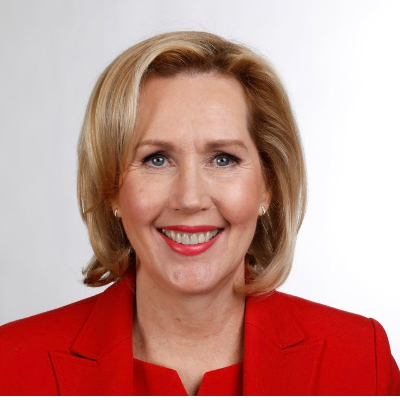
Finland, SOC, Spokesperson for the group
17:02:40
Mister President,
Dear colleagues,
Most of us have been growing up in peacetime. Yet, at the age of 21, I suddenly understood the senselessness of war. I was a newly qualified nurse working in a surgical hospital in Finland. I was helping a man who had been disabled in the Second World War; he had an amputated leg and used a prosthesis. He asked my age, and when I answered, he looked me in the eyes and said, "I was your age when I lost my leg." By then, he had lived with the prosthesis for over 30 years.
That was when I truly understood what war really means. War means death; war leaves people disabled. The nightmares of war haunt those who have experienced it for the rest of their lives. War casts its shadow for many generations to come.
The horrors of war are currently a reality in Ukraine, which has been living through Russia's brutal aggression for nearly five years. Ukraine continues its brave fight against Russia, not only for itself but for all of Europe.
Since the beginning of the war, the Council of Europe has supported Ukraine politically and concretely through the establishment of the Register of Damage and the International Claims Commission.
I think that the Council of Europe action plan for Ukraine, called "Resilience, Recovery and Reconstruction" for the years 2023 to 2026, is of utmost importance also in relation to war veterans.
It is my belief that Ukrainians disabled because of war receive high-quality and appropriate care without delay and without discrimination on any grounds. When the war eventually ends, support for those disabled in the conflict must continue, and they must have the possibility to live as normal a life as possible despite their injuries. Through rehabilitation and support, daily routines begin to take shape, and disability no longer dominates their lives.
The rehabilitation of veterans with disabilities, including women and LGBTI persons, must be included in programmes. The scars of war do not vanish with peace, but it is possible to learn to live with them.
That veteran I once met in the hospital reminded me, when I was just a young girl, that they put their entire lives at risk so that we, the following generations, could live in peace in an independent and free country.
On behalf of the Socialists, Democrats and Greens Group, I thank you for this timely report and fully support its conclusions.
Thank you.
Thank you very much.
And now on to the last speaker from the political groups. Mr Emanuelis ZINGERIS, you have the floor. Emanuelis.

Lithuania, EPP/CD, Spokesperson for the group
17:06:05
Dear friends, it's about what our House was built like.
Our house was built like an echo to Second World War. My mother was liberated from a Nazi concentration camp and the House, the Council of Europe, was built on humanity.
So today, congratulating our good rapporteurs, Ms Lesia ZABURANNA and Mr Jan Filip LIBICKI, I would like to say that our first duty is to dedicate our attention to those – you call them veterans – but to those brave men and women who defended us, Europe, on the front lines. Was it done only for Ukraine? No, it was done for us.
We should take our budgets in European Union member countries and Council of Europe member countries and try to put the line for two issues related to humanitarian support: the children of Ukraine and veterans. Children and veterans.
I visited countless small rooms in the hospitals with veterans without hands, without legs. You can imagine the mood in those hopeless small rooms in the hospitals and the feeling of loneliness. Let's not let them be lonely in those hospitals. Let's extend our personal auspices to every veteran.
We have like 500 million people here in our European Union space and more in the Council of Europe member states. Let's be connected to everyone, let's help them, let's have their names. Today we have two guys, in just a side event: Mr Yehor BABENKO and Mr Taras KOZUB organised by Ms Olha SEMOSHKINA. We should honour them like our heroes.
Will we wait until 2 million Poles, hundreds of thousands of Czechs, hundreds of thousands of Baltic people have been injured and killed after the additional Putin invasion, the additional drone attacks? No, we should show Russia that every guy injured by them, including women and men, all kinds, are on our Schindler's list.
Thank you.
Thank you, Mr Emanuelis ZINGERIS. And now we change the time limit of speeches to 2 minutes and I call on Lord Don TOUHIG. You have the floor.
As former Veterans Minister, I welcome these reports.
Europe owes so much to those who served in our armed forces and protected and defended our freedom. Britain has a Veterans Agency helping veterans and their families. Our Armed Forces Covenant promises veterans and their families easier access to public services. Veterans can also gain priority access to mental and physical care. And in Britain we are fortunate, fortunate to have voluntary and charity support groups helping veterans. Groups like the Royal British Legion, Combat Stress, Help the Heroes and Blind Veterans UK do so much to support the lives of veterans and their families.
I spent a day with a Combat Stress support worker visiting veterans and their families. He introduced me as Don. This is Don, my trainee support worker. I will never forget a visit to a veteran with post-traumatic stress disorder. His wife welcomed us when we got to the house and in front of me on the wall was a photograph of a smart young man standing proudly in the uniform of his queen and country. And when we entered the living room, there was an exhausted-looking wreck of a man, unshaven and his two teenage sons.
For almost an hour the support worker sought to understand the problem the veteran and his family were enduring. And the veteran told us because of his PTSD he couldn't work, could not sleep. He was drinking heavily and to his obvious shame was sometimes violent and angry with his wife and sons. The sons said how hard life was coping with their father.
For the next hour the support worker outlined the help Combat Stress could give him and when he'd finished, what a change in that family. The gloom and misery had turned to smiles and laughter. Combat Stress was their hope of a better life.
President, I've always thought no matter how good the state is supporting veterans, without the charitable and voluntary sector, the quality of their life would be the less. We are very grateful to them.
Thank you, Lord Don TOUHIG. And the next speaker is Mr Joseph O'REILLY. You have the floor.
Thank you, President.
At the outset can I congratulate Mr Jan Filip LIBICKI, Ms Lesia ZABURANNA and Mr Georgios STAMATIS on their great work. And if I might single out Jan Filip, he's pioneered this for so long.
Can I firstly condemn outrightly the ongoing war of aggression and current relentless targeting of civilians and civilian infrastructure? Can I secondly say that we cannot forget the numbers – there's 200 000 cited with war-related disabilities in 2024 and a projected 2 million veterans later, hopefully when this war is over.
In 2024, Ukrainian services provided prosthesis and assisted devices to approximately 11 400 and including 2 500 eligible personnel.
To talk specifics, I personally strongly support the idea that each nation supporting the reconstruction earmark 10% for veterans. I, in that context, welcome the Canadian trust already set up. I I believe all of us member states, by arrangement and by co-ordination, should take an overflow and there have been 6 400 people taken already – medical evacuees if you like – but we should have a concerted taking in of veterans across Europe to deal with overflow in Ukraine. And every country should make an effort. And in that context, we should provide care and medical personnel directly to Ukraine where possible, and in a co-ordinated fashion.
We have to make this effort. Given that the people, the veterans of this war, have been fighting for Europe and have put their lives on the line, and we owe them this. I think my time is up. But to say that we have to act on this in a practical way. Thank you.
Thank you.
And now I leave the floor to Mr Marco SCURRIA. You have the floor.
Thank you, Mr President.
When we talk about the reconstruction of Ukraine, we must remember that reconstruction means, first and foremost, restoring hope to the people who have paid the price of this war with their own lives.
In this regard, I would like to highlight how Italy is making a tangible contribution through its medical expertise, research and specialist skills.
Italian doctors and surgeons are working directly in Ukraine, alongside their colleagues there. They are doing so through the European Center of Cooperation Italy - Ukraine, which brings together businesses, associations, universities and Domus Europa, working directly to support both Italy and Ukraine in the reconstruction effort.
We are operating on people who have undergone amputations, transferring knowledge and training new professionals. A concrete example is a technique developed by Dr Alexander GARDETTO, which enables sensory nerves to be reconnected and can help reduce phantom pain and create the conditions for using bionic prostheses equipped with sensory feedback.
But it is not just about surgery: Italian research is also working on the development of increasingly advanced and personalised prostheses, alongside new rehabilitation models. This means bringing to Ukraine not just a prosthesis, but a comprehensive programme: surgery, technology, rehabilitation, training for doctors and the transfer of expertise.
This is our commitment: to provide our know-how, building expertise that can remain in Ukraine.
I believe this is a model worth supporting and promoting, because the reconstruction of Ukraine will not merely involve rebuilding buildings and infrastructure. It will also depend on our Europe’s ability to use science, medicine and innovation to restore independence and a future for those who have lost a limb during this war.
And we cannot leave them to fend for themselves, because they have given us so much. They have given us freedom and hope for the future.
Thank you.
And I now call on Ms Lesia VASYLENKO. You have the floor.
Ms Lesia VASYLENKO is not here. Then I leave the floor to Mr Per Vidar KJØLMOEN.
Thank you, Mister President.
Dear colleagues,
First of all, let me thank the two rapporteurs for their important work and impactful reports.
It is indeed sad that the number of war veterans in Europe is back to levels not seen since the Second World War. Support for veterans must not stop at physical rehabilitation or employment assistance. The report rightly recognises that the invisible wounds of war can affect the families and even the communities of war veterans.
The resolution calls on member states to provide mental health support to veterans and also their families. This can help prevent and combat domestic violence. This is a crucial point. Untreated trauma can have consequences reaching far beyond the individual veteran. Families may face enormous strain, and in some cases, domestic abuse. Preventing this is not only a matter of public safety. It is a matter of human dignity.
We must invest in mental health services, support families, intervene early and make sure veterans have access to the help they need without stigma or delay. By doing so, we honour those who have served while also protecting those closest to them. If we are serious about supporting veterans, we must be equally serious about preventing domestic violence. Strong veteran policies and strong family support policies go hand in hand.
Thank you.
Thank you so much.
And I'll call on Ms Zdravka BUŠIĆ.
Thank you, Mister President.
I too would like to congratulate both rapporteurs for these very timely reports.
History teaches us that when wars end, the suffering of those who bear the consequences lasts for a long time, and for some, a lifetime.
The scale of this phenomenon in Ukraine today presents the greatest social challenge Ukrainian people face in the years ahead. To reconstruct a country, rebuild cities, roads and infrastructure, regardless of how difficult and challenging it may be, it is much easier than healing wounds from the consequences of war, be they physical or psychological.
The most difficult task is to understand how to handle the trauma of the war and how to help those affected to rebuild their lives. Rehabilitation and social reintegration should be recognised as one of the fundamental priorities of the reconstruction of Ukraine.
We are all aware that Ukraine has suffered enormous losses of both soldiers and civilians. The courage, perseverance and strength of the Ukrainian people to resist Russian aggression is indeed incredible. They deserve our admiration for their heroic resistance.
On our side, now it is our task to provide them first with healthcare and psychological support, social integration, and to give them dignity, meaning, and an appropriate and respected place in our society. Every society will be judged on how they treat their veterans, because those who forget their veterans forget what real freedom means. I'm sure that Ukrainian society will pass this test with the highest grades.
Slava Ukraini!
Thank you so much. And now I call on Mr Marek BOROWSKI. You have the floor.
Thank you, Chair.
First of all, I would like to congratulate both rapporteurs, in particular Mr Jan Filip LIBICKI, who understands the problems of displaced persons better than anyone else.
You have drawn our attention to a very important issue that has until now remained somewhat in the background. We can watch on television burning houses, destroyed infrastructure, people fleeing. But we rarely see the victims of this cruel aggression. Until now, there have been hundreds of thousands of victims. A great number of soldiers and civilians are disabled. The Ukrainian healthcare system is doing everything to help them, but its capabilities are limited.
Many countries send weapons, ammunition, food, medicine and many other items essential for survival. That is a huge help. But I would like to appeal to all my colleagues to encourage their governments to also launch aid at home, treating wounded Ukrainian soldiers in your hospitals and rehabilitation centres. We in Poland have treated over 300 seriously wounded Ukrainian soldiers in our hospitals.
If every member state of the Council of Europe were willing to accept and treat just 100 wounded soldiers, it would be an extremely valuable aid to struggling Ukraine.
The report of Mr Jan Filip LIBICKI also rightly points out that disabled victims of Russian aggression also need action and programmes enabling them to return to normal life. Such programmes are expensive. So I fully support the proposal included in the draft resolution that member states destinate at least 10% of their national funds allocated to the reconstruction of Ukraine for the rehabilitation and social reintegration of veterans and civilians with disabilities.
Thank you again, rapporteurs; you did a good job.
Thank you. And now I call on Ms Louise MOREL. You have the floor.
Thank you, Mr President.
I would first like to thank the rapporteur for the forward-looking report she has presented to us, which, I believe, lives up to the ambition of this subject and the challenges facing our continent.
Europe is at war. The security threat has never been greater since the end of the Second World War, and with the war in Ukraine and the return of military service in several of our countries, we have never had so many veterans, and we must therefore address this issue at a continental level.
This policy is, first and foremost, a matter of justice and recognition for those who serve in uniform, and I agree with everything that has been said so far. We must support them throughout their lives by ensuring a harmonised definition of their status, providing for their physical and mental health, offering support with finding employment, and facilitating access to certain public services.
In this regard, France, for example, has established what is known as the National Office for Veterans and War Victims (ONaCVG), which, I believe, can serve as a model for our work.
This responsibility we have lies, in particular, with the Ukrainian combatants, who are the heroes of our continent, and I wish to state this here.
But I would also like to raise a point that does not appear in your report, namely the issue of remembrance. And I say this as a Member of Parliament for Alsace. Here, in Alsace-Moselle, there were people during the Second World War who were forced to wear a uniform they had not chosen. And for decades, France has not really wanted to confront this memory and this history, and the last remaining witnesses – who are now elderly and passing away – all tell us the same thing: all their lives, they would have liked to be heard, and there is this wound that has not yet healed.
And in Ukraine too, there will be a multitude of memories, a multitude of stories, a multitude of territories. And I believe that, in the context of this debate as well, we must raise awareness of this issue and, of course, support them. That is what you are proposing to us, but we must also take the time to draw up public policies that will enable us to gather all these different memories, because these are not just two sides; they are human beings – and there are many of them – whom we must support.
Thank you.
Thank you so much. And now I call on Mr Markus WIECHEL. You have the floor.
Thank you, Mr President and distinguished colleagues.
Europe has not seen a generation of veterans like this since 1945. Not because we chose war, but because the Russian Federation chose a ruthless conquest. More than 2 million Ukrainians have already served. Hundreds of thousands carry wounds that will last a lifetime. Tens of thousands have lost limbs. Families have lost fathers, mothers, sons and daughters. That is not a statistic. This is a price paid so that the rest of this continent can go on speaking of truth, law, peace, and never again.
And let us be honest, these men and women did not only defend Ukraine, they defended the European Convention on Human Rights in practice, while we debated it in theory. They stood between an imperialist dictatorship and the rest of us. If we treat them as an afterthought, a social file to be processed after the roads and ports are rebuilt, we have failed the very principles that this Assembly exists to defend.
A veteran is not a problem to be managed. A veteran is a citizen who has already given more than the state can ever repay. Colleagues, reconstruction that ignores veterans is not reconstruction. It is amnesia with a budget line. History will not judge us by how vividly we condemned Moscow. It will judge us by whether the people who stopped Moscow were left standing alone or not.
Those who fought evil and authoritarian aggression deserve more than just our applause. They deserve a Europe that keeps its word. So, please, colleagues, support these reports.
Thank you.
And now I give the floor to Mr Michael BARRETT.
I'm pleased to speak to this report today as a member of Canada's House of Commons, but also as a former member of the Canadian Armed Forces.
I now serve as the Vice Chair of the Standing Committee for Veterans Affairs, and what we've seen at that committee time and time again is that you can have good programmes and you can offer good services, and they could be supported with resources and still not adequately connect veterans and their families to the supports that they have earned in service to their country.
Leaving the military is a major change in anyone's life. And suddenly a veteran may find themselves trying to navigate the bureaucracy that is intended to help them and their family. And veterans shouldn't have to, and aren't trained to understand the machinery of government simply to unlock the services that they deserve.
We also need to be sure that the skills that our service members develop and learn are recognised in the form of credential recognition, and that those skills have their application in civilian life appropriately recognised.
There's great opportunity to learn from the successes that Canada has had with the service to our veterans. And there is great opportunity to learn from where we've fallen short and where we've fallen or failed to show up. We've spent decades building programmes for veterans and are still trying to serve them in the way that they've served us.
Let me conclude with this: veterans serve the country with unlimited liability. They deserve more than our gratitude. They deserve service from government, from country, that's at least as good as the unlimited service that they offered to us.
Thank you. And I now call on Mr Carlos SILVA SANTIAGO. You have the floor.
He is not here. Then I call on Sir Edward LEIGH. You have the floor, Edward.
Mister Chair,
Our soldiers are sent into impossible, high-stakes environments to protect us from very real threats to our society. They have to make split-second life-or-death decisions in the fog of war, facing enemies who often wear no uniforms and certainly respect no laws. We must learn from mistakes of the past to ensure that we do not fail our own service members.
Now we've seen this issue play out in the United Kingdom, where decades after the troubles in Northern Ireland, elderly veterans in their 70s are being dragged through the courts and faced with prosecution. Meanwhile, the terrorists and IRA operatives who brought bloodshed to the streets will never face justice. It is absolutely outrageous that law-abiding soldiers are held to relentless scrutiny while terrorists walk free with impunity.
Critically, Mister Chair, we must recognise the mechanism driving this injustice. It is of great interest to us as an Assembly, it is the European Convention of Human Rights, or ECHR.
To truly protect our service members. We may have to, according to learned opinion by Lord David WOLFSON, leave the ECHR. This framework has been weaponised by activist lawyers to launch endless retroactive legal campaigns against our troops. By extending human rights into active combat zones, the ECHR ties the hands of our military and subjects soldiers to shifting legal goalposts decades after their service.
Leaving the ECHR may be the only way to restore national sovereignty over our own legal system and permanently shield our veterans from judicial overreach. Given these extraordinary circumstances, true support for our veterans means ensuring they are treated with fairness and respect by the justice system at home and abroad. Thank you.
Thank you very much.
And I will call Ms Yuliia OVCHYNNYKOVA. You have the floor.
Thank you very much, Mister President.
Dear colleagues,
I would like to thank our rapporteurs, Ms Lesia ZABURANNA and Mr Jan Filip LIBICKI, for their very important and timely work.
For Ukraine, veteran policy is already become a key area of public policy and we are building this system while the war continues. People return from the front with complex injuries, disabilities and a need for physical and psychological rehabilitation. Healthcare services, local communities, employers and public institutions must adapt alongside them.
For me, one principle is fundamental: reintegration is not a journey that a veteran should have to make alone. The responsibility of the state and society is to create the conditions for a full return to civilian life.
Ukraine is already developing a comprehensive system of support, from digital public services and veteran spaces to professional adaptation and modern centres for physical and psychological rehabilitation, including the RECOVERY project, the UNBROKEN Centre, Superhumans, etc.
But another principle is equally important. Nothing about veterans without veterans. Their own experience must be part of policy making. This also has a clear European dimension. A Ukrainian veteran may receive medical treatment in one of the European countries, rehabilitation in another, study or work in a third, and later return home. Our systems are different, but this makes co-ordination and the exchange of good practices even more important, particularly in healthcare, rehabilitation, accessibility and professional reintegration.
So, we should not define a veteran with disabilities by what they can no longer do. We should ask: what barriers prevent them from doing what they can? Sometimes, it is a consequence of an injury. But sometimes, it is a staircase or an inaccessible workplace. Modern veteran policy is not about creating a separate world; it is about removing barriers in the world we all share.
Glory to our heroes and Slava Ukraini.
"Thank you" [spoken in Ukrainian].
Thank you.
And now I call on the last speaker, who will be Mr Johannes VOLKMANN. You have the floor.
Thank you.
Dear colleagues,
I want to use my speaking time to reflect on the sacrifices that brave Ukrainians are making today in the defence of their homeland, but also in our defence and the defence of all of Europe. The motions we have in front of us today are an important recognition that those who carry the burden of this war at the front line deserve our greatest support.
When we talk about veterans' care, there is one group that I want to highlight in particular today: thousands of Ukrainians are being held as POWs by Russia, often in degrading and inhumane conditions. Russia's failure to uphold minimum standards in humanitarian international law will have long-term consequences for the physical and mental health of these captured soldiers. We must therefore pay special attention to their fate, increase international pressure on those responsible for their ill-treatment and unite in our efforts to support Ukrainian veterans and former POWs
In any health matter, prevention is of greatest importance. So what does prevention mean in the context of Putin's war? His regime is cynical in his approach to human life, disinterested in a just peace and bent on annihilating Ukraine as a nation. On that premise, therefore, prevention means supporting Ukraine with whatever it takes to prevent further harm to Ukraine, its civilians and other free nations of Europe.
This war of colonial conquest must fail, and it will fail if Europe stands united in its financial, economic, military and political support for Ukraine. This support is not charity, but in our own well understood self-interest as Europeans, realising that without Ukraine's experience, tactics or technology, our own security would be at peril.
Ukrainian resilience today shows that the cause of freedom is not lost, even at a time of authoritarian resurgence. Glory to the defenders of Europe.
Slava Ukraini
(Undelivered speech, Rules of Procedure Art. 31.2)
Mister chair,
Dear colleagues,
Europe's security environment has changed fundamentally. Russia's war of aggression in Ukraine has also reminded us that the consequences of war do not end when a soldier returns from the front.
Europe is now home to the largest number of veterans since the Second World War. This requires us to pursue a long-term and consistent policy regarding veterans.
Supporting veterans cannot be limited to healthcare alone. There is a need for physical and psychological rehabilitation, support for education and employment, adequate social security, and assistance for veterans' families as well.
We bear a particularly great responsibility for the soldiers disabled in the war in Ukraine. Many of them require intensive rehabilitation, prosthetics, and other forms of long-term support. The goal must not merely be surviving their injuries, but enabling an independent and fulfilling life.
In Finland, respect for veterans has deep historical roots. We have learned that gratitude must also be demonstrated through practical actions.
Ukrainian soldiers are defending their country's independence, freedom, and right to determine its own future. They are paying a heavy personal price for this defence.
Therefore, Europe must bear its responsibility even when the guns eventually fall silent. The support provided to veterans and their families must continue for as long as needed. No one who has defended their country should be left alone.
Thank you.
Speech not pronounced (Rules of Procedure, Art. 31.2), only available in French
(Undelivered speech, Rules of Procedure Art. 31.2)
Thank you, Mr President.
Today, more than six hundred thousands of Ukrainians live with disabilities because of the war. This is a terrible number. Sadly, it grows every day. Helping these people recover and return to normal life is a question of dignity and our responsibility to them.
Priority number one, good medical and psychological rehabilitation. Ukrainian doctors are working at the limit of their capacity. The number of wounded people is growing, need for rehabilitation isgrowing, but our resources are not enough. Our rehabilitation centres need repairs and modern equipment. They need new medical rooms and better conditions for patients. I support the proposal to use at least 10% of national funds for the reconstruction of Ukraine for the rehabilitation and reintegration of veterans and civilians with disabilities.
Dear colleagues,
We are very grateful to our partners for all your support. It is very important that this support continues. Help Ukraine build and modernise rehabilitation centres. Share your experience with our doctors, psychologists and social workers. Rehabilitation is not charity. It is an investment. Soldiers and civilians who receive support today will be able to work, raise their children and build a strong Ukraine tomorrow, in a free Europe.
Thank you.
Thank you so much.
I must now interrupt the list of speakers. The speeches of members on the speakers list who have been present during the debate but have not been able to speak may be given to the Table Office for publication in the official report, and these speeches must not exceed 400 words.
And I remind colleagues that the type-written text can be submitted electronically if possible, no later than 4 hours after the list of speakers is interrupted. And this concludes the list of speakers.
I now call on Mr Jan Filip LIBICKI, who is the rapporteur, to reply. You have 3 minutes.
Thank you very much, Mister President.
Dear colleagues,
Thank you very much for all the statements and opinions expressed in this Chamber today during the debate on our two reports.
We must be aware that the issue of war veterans may also affect other European countries if Russia, or another imperial power, attacks Europe. Such a scenario cannot be ruled out. However, this issue is already with us today. When the war in Ukraine comes to an end, Europe will face the necessity of developing a comprehensive policy for veterans, a policy which we have not needed to formulate for the past 80 years. Even if Ukraine wins this war, we will still be dealing with the largest number of war veterans Europe has seen in 80 years. I hope that our two reports will provide an impact to begin work on such a policy now.
In conclusion, I would like to thank everyone who contributed to the preparation of my report: the Polish Education for Democracy Foundation and HumanDoc, and their representative directors, Ms Martyna BOGACZYK and Mr Stanisław BRUDNOCH; the Polish Veterans Centre; the Ukrainian veterans Mr Volodymyr HERA, Mr Serhii KHRAPKO and Mr Mykhailo BAKALIUK; as well as the Ukrainian activists Ms Olena DASHAKIVSKA and Ms Marta BOIANIVSKA.
I would also like to thank the Ukrainian Ministry for Veterans Affairs and the representatives of the many public and private rehabilitation centres with whom I was in contact while working on this report.
My special thanks go to the Secretariat of the Committee on Social Affairs, Health and Sustainable Development, and particularly to Mr Jannick DEVAUX, without whose assistance this report would never have been completed.
Thank you very much, Mister President.
Thank you so much. And I now call on Ms Lesia ZABURANNA. You also have 3 minutes.
Thank you, Mister President.
Dear colleagues, I would like to say thank you to everyone who took the floor.
Now we see this is not a question for Ukraine, this is a question for all European countries, for all of us, the responsibility before our veterans and justice and support for all of our veterans.
I will not repeat the whole report. I will repeat the request: please adopt the resolution and the recommendation, enact the definition, guarantee the minimum package, ratify the revised charter if you haven't and ask the Committee of Ministers to give us the first European standard for the rights of veterans.
Also, I would like to say many thanks to my colleague, Mr Jan Filip LIBICKI, who actually initiated this very important issue in the Parliamentary Assembly of the Council of Europe (PACE). I highly appreciate all the support of our Secretariat, of our permanent secretariat in PACE and our ambassador, Mr Mykola TOCHYTSKYI. I highly appreciate the Ministry of Veterans Affairs of Ukraine and of course our Ukrainian delegation for its constant support and for its big impact on and input in my report. Thank you so much.
Thank you. Does the Chair of the Committee on Social Affairs, Health and Sustainable Development want to speak? Yes, she wants. You have 3 minutes.

Netherlands, SOC, Chairperson of the Committee on Social Affairs, Health and Sustainable Development
17:41:53
Yes, thank you very much.
I would like to speak because I would like to express my unanimous support for the people who fight on the borders of Ukraine against Russia. They are not only fighting for Ukraine, but they are fighting for the whole continent and our values. And this is an immeasurable act that they do for us all. So when they work as soldiers, the first thing they need is good stuff to work with. So I think the best veteran policy is to prevent veterans from getting hurt. And we need to make sure they have enough arms to fight the fight that is needed.
Secondly, Ukraine has a lot of veterans. And Mr Jan Filip LIBICKI saw that very early on and took the initiative for this report. And I think he did a really great job. We not only spoke with the veterans, but we also spoke with a lot of organisations on how to make a good veteran policy.
And then, my dear colleague very rightly said, Europe is not ready for what is coming. So we made a second report. And this is also how the Committee on Social Affairs, Health and Sustainable Development is making, I think, the things that are needed in the reform of the Council of Europe. We adapt to the situation, and we work fast to bring advice and practical instruments to our parliaments on how to improve the work on human rights and on dignity.
So I hope all my colleagues will not only speak nice words here, but bring these reports home and implement them in their national councils, not only on veteran policies, but also in the support of the Ukrainian soldiers who fight every day a really harsh and brutal war.
I want to thank the rapporteurs; they did a wonderful job. We are very proud of you and your work, and I was very happy to be your Chair in the process. So, good luck with the vote.
Thank you.
The Committee on Social Affairs, Health and Sustainable Development has presented a draft resolution entitled "Towards coherent policies on veterans in Europe", to which one amendment has been tabled. The Committee on Social Affairs, Health and Sustainable Development has also presented a draft recommendation on which no amendments have been tabled.
So we begin by examining the amendment to the draft resolution. And I understand that the Chairperson of the Committee wishes to propose to the Assembly that Amendment 1 to the draft resolution, which was rejected by the Committee with a two-thirds majority, be declared as definitively rejected.
Is that so? It is so.
So if no one objects, I'll consider the amendment to be rejected. Is there any objection? So, Amendment 1 to the draft resolution is therefore rejected and will not be called.
And then we will proceed to vote on the draft resolution contained in Document 16473, as amended, as not amended and a simple majority is required.
I will now open the vote.
The vote is closed and I call for the result to be displayed.
And the draft resolution is adopted.
So, congratulations.
And I will now proceed to the vote on the draft recommendation contained in the same document. And I remind you that a two-thirds majority is required.
The vote is open.
And I now close the vote and call for the result to be displayed.
The draft recommendation is carried and adopted.
Thank you very much and congratulations.
And we now come to the second draft resolution presented by the Committee on Social Affairs, Health and Sustainable Development. "The need for systemic support to Ukrainian soldiers who became disabled as a result of hostilities", to which 13 amendments have been tabled. The Committee on Social Affairs, Health and Sustainable Development has also presented a draft recommendation to which one amendment has been tabled. They will be taken in the order in which they appear in the Compendium, and I remind you that the speeches on amendments are limited to 30 seconds.
And we begin by examining the amendments to the draft resolution. I understand that the Chairperson of the Committee wishes to propose to the Assembly that Amendments 9, 1, 10, 11, 2, 3, 4 and 7 to the draft resolution, which were unanimously approved by the Committee, be declared as definitively approved.
Is that so? That is so.
So if no one objects, I'll consider the amendments to be approved. Is there any objection? There is no objection. Amendments 9, 1, 10, 11, 2, 3, 4 and 7 to the draft resolution are therefore approved and will not be called.
I understand that the Chairperson of the Committee wishes to propose to the Assembly that Amendments 12, 13, 5 and 14 to the draft resolution, which were rejected by the Committee with a two-thirds majority, be declared definitively rejected. We will come in a moment to an oral amendment from the Committee intended as an alternative to Amendment 12.
Is that so? It is so.
So if no one objects, I will consider the amendments to be rejected. Is there any objection? There is not. Amendments 12, 13, 5 and 14 to a draft resolution are therefore rejected and will not be called.
And now, we have received an oral amendment from the Committee on Social Affairs, Health and Sustainable Development which reads as follows: at the end of paragraph 9, insert the following sentence, "Parts of the frozen Russian assets and their proceeds could be used for this purpose". The President may accept an oral amendment on the grounds of promoting clarity, accuracy or conciliation and if there's no opposition from 10 or more members to it being debated. In my opinion, the oral amendment meets the criteria of Rule 34.7.a.
And is there any opposition to the amendment being debated? There is not. So I therefore call Mr Jan Filip LIBICKI on behalf of the Committee on Social Affairs, Health and Sustainable Development to support the oral amendment. You have 30 seconds, Sir.
I support Amendments 6 and 8.
And the oral amendment after the change of Paragraph 9 would then read as follows: "In light of the above, the Assembly calls on member states to earmark at least 10% of the national funds allocated to the reconstruction for the rehabilitation of veterans and social reintegration of veterans and civilians with disabilities. Parts of Russian frozen assets and their proceeds could be used for this purpose."
Thank you very much.
Thank you. And the Committee is obviously in favour. So I will now put the oral amendment to the vote.
The vote is open.
I close the vote and ask for the results to be displayed.
The oral amendment is agreed.
Thank you very much.
And we now go to Amendment 6. And I call Mr Georgios STAMATIS to support Amendment 6. You have 30 seconds.
Yes, Mister President.
In the draft resolution, paragraph 11.4, last sentence, after the words “Such data should be”, insert the following words: "disaggregated by sex and".
Does anyone want to speak against the amendment? Not the case.
What is the opinion of the committee on the amendment? Ms Saskia KLUIT?
Netherlands, SOC, Chairperson of the Committee on Social Affairs, Health and Sustainable Development
17:52:27
We are in favour.
The committee is in favour.
I will now put the amendment to the vote.
The vote is open.
I'll close the vote and ask for the result to be displayed.
Amendment 6 is agreed.
And now we proceed to vote on the draft resolution as a whole. And a simple majority is required.
The vote is open.
I now close the vote and ask for the result to be displayed.
The draft resolution is unanimously adopted.
[Applause]
Congratulations.
And we now come to the amendment to the draft recommendation proposed by the Committee on Social Affairs, Health and Sustainable Development entitled “The need for systemic support to Ukrainian soldiers who became disabled as a result of hostilities” (Document 16464).
And I call Mr Georgios STAMATIS to support Amendment 8. You have 30 seconds.
Thank you, Mister President.
In the draft recommendation, at the end of the paragraph, we will have to include "women, LGBTQI persons and non-nationals". For us is very important.
Thank you.
Thank you.
Does anyone want to speak against the amendment? Not the case.
What is the opinion of the Committee?
Netherlands, SOC, Chairperson of the Committee on Social Affairs, Health and Sustainable Development
17:54:37
We were in favour.
The Committee is in favour.
So I now put the amendment to the vote.
The vote is open.
And I will now close the vote and ask for the result to be displayed. Thank you.
Amendment 8 is agreed.
We now proceed to vote on the draft recommendation contained in Document 16464. And I remind you that a two-thirds majority is required.
The vote is open.
And I now close the vote and ask for the result to be displayed.
The draft recommendation is adopted. Congratulations.
[Applause]
And we will now have a 2-minute break to change the Chair up here and the bench down there.
Finland, SOC, President of the Assembly
17:59:47
So we will continue.
The next item of business this afternoon is the debate on the report titled "The Role of Diasporas and Migrants in Developing Social Cohesion and Democratic Engagement", Document 16476, presented by Lord Leslie GRIFFITHS on behalf of the Committee of Migration, International Protection and Economic Co-operation.
In order to finish by 7:30 p.m., I will interrupt the list of speakers at about 7:20 p.m. to allow time to reply and vote.
Now I call on Lord Leslie GRIFFITHS, the rapporteur. You have 7 minutes now and 3 minutes at the end to reply to the debate. The floor is yours. Yes, Lord GRIFFITHS, please.
Thank you very much, Madam Chair and colleagues in the Chamber.
It is a privilege to be given the task of introducing this debate. The work of diasporas is in most places not an indicator of failed integration, but rather an important tool for successful integration. It needs to be seen, not as a problem to be managed, but as a partner in building bridges between newly-arrived migrants and established communities, between communities and public institutions, between citizens and democratic decision-making.
With that in mind, it's important to note that this report doesn't pretend to introduce new ideas into our debates. It seeks rather to build on what's already been decided. It highlights the work of the Intercultural Cities Programme, for example, and so much else.
This is not a surprise packet, but it does introduce a new dimension. In the past, much has been made of the need for consultation, and that's what we are seeking to do in this report to take that to the next level. Consultation, though necessary, isn't enough. Out of the consultative process must come a readiness, along with members of diasporic groups, to co-create new policies so that they may be grounded in the experience and knowledge of the communities supposed to be their beneficiaries.
It's important to stress that the report is not centred on the subject of migration itself. It offers a counter-narrative to that debate. It's rather about people whose antecedents were migrants, but who are now part and parcel of the host countries, where they are rooted. We have seen how over time they've been contributing and enriching as members of society. It's not difficult to gauge the tremendous contributions such people are making in the realms of business, entertainment, sport, education, the medical world, government – local and national – and with the labour force in general.
The people who figure in this report have multifaceted roles. They offer space for new arrivals. They act as guardians of the culture and languages of their countries of origin. They help, encourage, support and inspire each other along the way. They're a bulwark against the cruder social forces to which they are too often subject.
With increasing confidence, through education and self-awareness, they acquire agency. This sees them not only adding value to communities where they live, but well beyond that. They bolster the ideals being put forward by the Council of Europe's current work on the New Democratic Pact for Europe. They become actors in the public life of the countries they live in. Some of them even get elected as lawmakers. Indeed, one or two of them are sitting here today as members of this Assembly.
We heard the cry of young people. "Papers are not enough", they told us. We set out to listen to their fears, hopes, loves and ideas. They helped us to recognise obstacles that are too often put in their way. They experience discrimination, racism, questions of identity, questions of belonging. Yet they have so much to offer. They're often multilingual and multicultural and exceedingly well-placed to act as bridges between communities. They deserve a better place in our deliberations.
We also gave ear to members of faith groups and recognised the way they provide far more than religious service. In defiance of a narrow view of laicité, they offer language courses, housing assistance, legal guidance, psychosocial support and networks of solidarity.
It's our sincere hope that what we've written two-dimensionally onto the papers before you may resonate in your inner ear and acquire an extra dimension. We've tried really hard to articulate the voices we've listened to, to give prominence to their contribution to the societies we belong to, to honour the women and men who found a way while safeguarding their own cultural heritage, to enrich that of the countries they've lived in. We've sensed the talent, dedication, loyalty and energy which they bring to their communities.
I'm not a politician. I'm not a social worker. I'm a pastor. And I've spent my entire life working with minority groups, from Fiji to the Philippines, from South Africa to South Korea, from Haiti, the first black republic in the world, to Ghana, the first Sub-Saharan African country to gain independence from European colonial rule.
I've heard their voices, enjoyed their company and can testify to the way they've added value to the society we've lived in and the democratic system we're all part of.
Before ending my remarks, I simply have to pay tribute to the warm encouragement always of Ms Sandra ZAMPA sitting beside me, and of Ms Marie MARTIN, who went off halfway-through to get a baby and is now back, to Mr Andrew DRAPER, an assistant, my staff member, come here from London. And especially to Mr Marc MONTANY DAUFÍ, whose intellect and skill proved indispensable in the compilation of this report.
More than once, he kept me focused on our work together when my spirits were low, as I wondered whether we'd ever complete what we'd begun. Mille mercis, mon bien cher Marc.
This report is not mere reportage. It's an appeal to each and every one of us gathered here today. Let's accept this report by all means. But remember that in the words of our young people, papers are not enough. Action is what's needed from you, from me, and from all of us. Thank you.
Finland, SOC, President of the Assembly
18:07:26
Thank you, Lord Leslie GRIFFITHS.
May I remind the Assembly that speaking time is limited to 3 minutes for the spokespersons for political groups and 2 minutes for all other members.
In the debate, I call first on Lord Michael GERMAN from the Alliance of Liberals and Democrats for Europe. You have 3 minutes.

United Kingdom, ALDE, Spokesperson for the group
18:07:51
Thank you, Madam Chair.
It gives me the greatest pleasure to speak next to thank my colleague, Lord Leslie GRIFFITHS, who unbelievably has got a lifespan of interest in this very area. And his commitment to it should be evidenced through this report and through all that he said this morning.
It's, of course, in all of our interests for integration to be as swift as possible so that those on the journey to citizenship can reach fulfilment in their lives within a new host country. And there are so many hurdles to cross, all of which make the journey to citizenship difficult for people if they are left without help. Housing, language, employment, understanding the norms and the rules of the host country all require a transition period in which help is needed to make the journey as short as possible.
As the report correctly points out, diasporas have a major role to play in promoting social cohesion. Just look at the difficulties many of us face within our homeborn populations. Citizenship features in some form or other in all our school curricula. Yet many of our countries have falling numbers of young people participating in our elections. And for those seeking new lives in our country, we hold up the ability to vote as critical to becoming a full citizen.
The report in Paragraph 45 makes a very powerful point that social cohesion cannot be secured for the next generation unless young Europeans of all backgrounds are trusted, included and empowered as architects of that future. The point I'm making is this: bringing in and funding local diaspora support is essential to building understanding of the complex issues we all face. It's not just important, it is necessary. And that includes the major barrier, which of course, in my experience, is that of language. Again, funding language learning programmes are essential, but the ability to work with and through diasporic groups are such an asset because they are able to help understanding through shared language and it's much more simple to assimilate.
Paragraph 9 of the resolution is the heart of what is proposed. I encourage everyone to read its three points. They're crucial. Now, this report is a masterly piece of work by a rapporteur who has complete understanding of the world of diaspora and has worked closely with them all his working life. So comfortable and replete with this inside knowledge. the noble Lord Leslie GRIFFITHS has produced this excellent report and I look forward to the conclusions being taken forward as a matter of urgency.
Finland, SOC, President of the Assembly
18:11:00
Thank you.
The next speaker is from the Group of the Unified European Left (UEL). Mr Emmanuel FERNANDES, the floor is yours.

France, UEL, Spokesperson for the group
18:11:09
Thank you, Madam Chair.
I would like to begin by thanking the rapporteur, Lord Leslie GRIFFITH, for this vital work at a time of rising racism, xenophobia and discrimination, when migrants and people of colour are all too often – and indeed with increasing frequency – blamed for all the ills of our societies.
In the face of far-right rhetoric that thrives on fear of the ‘other’ and turns exiled people into scapegoats, this report reminds us of a reality: diasporas are not a threat. They play a full part in social cohesion and in the economic, cultural and democratic development of our societies. They set up organisations, work, bring our neighbourhoods and public services to life, support new arrivals and build bridges between communities and institutions. They are key contributors to the cohesion of our societies.
But integration cannot be a one-way process. Our institutions must listen, include and enable everyone to participate meaningfully in community life. Being a full member of society also means being able to participate in the decisions that shape one’s daily life.
I would therefore like to welcome the recommendations concerning the political participation of people from diaspora communities. There is indeed a clear democratic contradiction in asking someone to work, pay their taxes, bring up their children and participate in the life of their local community – sometimes for several decades – whilst denying them the right to choose those who make local decisions.
On this issue, some member states, including France, are lagging behind. In 14 European countries, including Sweden, the Netherlands, Belgium and even Hungary, foreign residents can vote in local elections. But democracy does not end at the ballot box. I also welcome the proposals aimed at directly involving diaspora communities in the development of policies that affect them, at supporting their organisations, and at increasing the participation of young people from migrant backgrounds.
It is not enough to consult those affected on an ad hoc basis; they must be able to participate in the design, implementation and evaluation of public policies that affect their lives. This is particularly important for young people from diaspora communities. Many were born in Europe, have grown up here and are building their futures here, yet they are still treated as outsiders, as if they were constantly required to justify their place in the society in which they live.
We do not build a shared society by excluding part of the population from collective decision-making, nor by dividing people according to their real or supposed origins, or their nationality. We build it by giving each and every one of them a voice and a place in our democracy and by valuing the richness that our differences bring. That is why my group, the United European Left, will vote wholeheartedly in favour of the resolutions arising from this report. We will never cease to fight against racism and hatred.
Thank you.
Finland, SOC, President of the Assembly
18:14:24
Thank you.
The next speaker, from the Socialists, Democrats and Greens Group, is Ms Luz MARTINEZ SEIJO. The floor is yours.

Spain, SOC, Spokesperson for the group
18:14:33
Madam President.
First of all, I would like to congratulate the rapporteur, Lord Leslie GRIFFITHS, for this report, which brings out the basic contribution that diasporas and migrants make to social cohesion, economic development and strengthening our democracies.
The text recognises, quite correctly, that integration, participation and intercultural dialogue are essential elements to build societies which are more inclusive, resilient and committed to the democratic values that we all share.
Diasporas also build a bridge between cultures, countries and communities. Their contribution is not limited to the economic or labour fields. They also enrich our cultural life, encourage interchange of knowledge and strengthen links between societies.
In a world which is ever more interconnected, this ability to build bridges is an asset that we must value and promote. I would particularly like to emphasise an issue that I consider to be of central importance: education.
The draft resolution highlights the importance of civic education and democratic literacy, so as to encourage participation of migrant communities in public life. However, we must strengthen this focus even further. School is the first space in which we learn to live with people different from ourselves, where critical thought is developed, as well as mutual respect and a feeling of belonging to a democratic community.
Education doesn't simply transmit knowledge; it also teaches values. Classrooms are where children learn that diversity is not a threat but a form of wealth. And that is where misinformation is fought, where you can prevent prejudice from taking root and build the basis for an actual responsible form of citizenship. This is why we need to guarantee education systems that are inclusive and able to offer equal opportunity and encourage the participation of one and all.
Integration does not mean assimilation. Integration means respecting laws and sharing democratic values and actively contributing to the society that receives immigrants, but it doesn't mean demanding that people renounce their language, their culture, their traditions or part of their identity so as to be accepted. True integration is based on mutual respect and recognition of diversity as part of the reality of our societies.
When dealing with people who present diversity as a threat and propose exclusion as an answer to migratory challenges, we should recall that Europe was built precisely on the idea of cultures living together, protecting minorities and respecting human dignity. The answer to these challenges cannot be refusal, dehumanising those who are looking for opportunities or a better future. A democracy which is sure of itself does not require people to give up on who they are; it offers them a common framework of rights, freedoms and responsibilities, based on which everyone can contribute to the common good. This is the Europe that we need to defend and to strengthen.
Many thanks.
Finland, SOC, President of the Assembly
18:17:53
Thank you.
And next speaker is from the Group of the European People's Party. Mr Georgios STAMATIS, the floor is yours.
Greece, EPP/CD, Spokesperson for the group
18:18:03
Thank you, Madam President
Dear colleagues,
I would first like to congratulate our rapporteur, Lord Leslie GRIFFITHS, on this excellent work and, of course, for us, it's very important, because not only do we welcome this report, but we accept the balance of this report, which goes well beyond migration policy in the narrow sense. It addresses a broader political question. How can we strengthen social cohesion and democratic engagement in increasingly diverse European societies?
The report highlights the importance of diaspora populations as integral and valuable parts of European societies.
It is noted, however, that members of diaspora populations often face structural barriers that limit their full participation in their host societies. As an organisation firmly committed to upholding human rights and democracy, we have a responsibility to bring to the forefront the importance of ensuring the full inclusion and integration of the diaspora communities within their host societies.
In this regard, the report stresses that integration is a mutual and ongoing process, requiring openness on the part of the host society as well as active participation by diaspora communities themselves.
For these reasons, the report calls on member states to consult diaspora groups when planning and developing programmes and policies that concern them, to involve diaspora members and organisations in their implementation as social partners. And this is the most important: diasporas can play a crucial role in the next days for themselves and for their families.
And the member states are also invited to promote the political participation of migrants and diaspora communities in public life through educational programmes for citizens. If we don't have the right to vote, the right of political participation and, of course, access to the education system, we don't have time to build strong communities in our societies. And for this reason, I think that this report drives us to the future.
And of course, as the Group of the European People's Party (EPP), we also welcome the fact that the report recognised the contribution of organised diaspora groups, including religious communities. And of course, in many cases, these organisations provide language courses, social and legal support, psychological care and, of course, the creation of solidarity of networks.
Once again, dear rapporteur, congratulations on this report.
Finland, SOC, President of the Assembly
18:20:43
Thank you.
Our next speaker is from the European Conservatives, Patriots & Affiliates Group. Mr Balázs HIDVÉGHI, the floor is yours.

Hungary, ECPA, Spokesperson for the group
18:20:55
Thank you.
Honourable Chairperson,
Dear colleagues,
National minorities have shaped Europe's history and remain an inseparable part of its cultural and societal landscape. As a Hungarian, I mentioned the Hungarian communities, for instance, living outside of Hungary. The majority of these communities never left their homeland. The borders changed and they are now in other countries. And their rights must be respected.
In this context, protecting the rights of autochthonous national minorities is not only a fundamental democratic duty, but also a historical and national responsibility. These communities must be guaranteed the right to preserve their mother tongue, their culture and their national identity. They must have the right to study in their own language, to use it in public life and in public administration, to maintain their own institutions and to freely use their national symbols.
Legal certainty for indigenous minorities does not weaken the state. On the contrary, it strengthens and stabilises it. And let us be very clear, autochthonous national minorities should not be confused with newly-arrived migrants. Autochthonous minorities are historically rooted communities. While for newly-arrived migrants, integration is a long and gradual process involving language learning, respect for the laws and values of the host country, work and active contribution to society.
Migrants should only be accepted to stay if they show a willingness to assimilate to European culture. Attempting to grant political rights to non-citizens risks undermining the fundamental bond between citizenship and democratic representation. The responsibility of deciding the political future of a nation must remain firmly tied to its citizens. Short-sighted policies that blur these boundaries not only create integration challenges as seen in several Western European cities, but also weaken public security and social cohesion.
We must respect the democratic foundation that leaders are chosen by those who share a long-term commitment, history and civic duty to their country. Granting voting rights without citizenship undermines the trust of native citizens in their own democratic system. No European citizen should feel sidelined in their own homeland. Our sovereignty and democratic self-determination must be protected. We must stand up for our nations, secure our borders and preserve the integrity of our democracies.
Thank you very much.
Finland, SOC, President of the Assembly
18:23:28
Thank you.
In the debate, I call next Ms Jurgita ŠUKEVIČIENĖ from Lithuania. You have 2 minutes. The floor is yours.
Thank you, Madam President.
Dear colleagues,
I would like to thank Lord Leslie GRIFFITHS for reminding us that diasporas are active members of our societies. They connect communities, help newcomers find their place and can bring valuable experience to democratic life. Young people in diaspora communities are particularly well placed to build those connections.
Lithuania knows the value of maintaining ties with people who live beyond their country of origin. We also recognise that meaningful integration requires effort from public institutions, local communities and migrants themselves. Policies work better when those affected can help shape them.
I therefore welcome the report’s emphasis on consultation, civic education and opportunities for young people to engage with elected representatives. These are practical ways to strengthen trust and participation. Political rights, of course, must be considered within the applicable legal framework and each country’s constitutional arrangements.
Lithuania remains firmly committed to human rights, the rule of law and the rights of migrants. At the same time, democratic institutions must be able to protect national security, public order and their citizens in the face of current threats. These responsibilities should be pursued together, through lawful and proportionate measures.
Let us treat diasporas as partners in building cohesive communities and resilient democracies. And as has been said, papers are not enough. Actions are needed.
Thank you.
Finland, SOC, President of the Assembly
18:25:28
Thank you.
Next speaker is Ms Gabriella Mária VIRÁGH, Hungary.
Thank you, Madam.
Dear colleagues,
How can we help legal migrants integrate and be heard, without extending voting rights to non-citizens?
Being outside the ballot box must not mean being outside the conversation.
Language learning, community organisations, local advisory councils and public consultations can all help. Consultation must give people a genuine say in decisions affecting their lives.
In Hungary, we oppose illegal migration and take public concerns seriously. But public trust requires honesty.
Mr Viktor ORBÁN promised protection, yet his government released more than 2 200 convicted people smugglers from prison.
Hungarians voted for change.
We want to help Hungarians abroad return home by building a country worth returning to. Until then, we want their ideas and experience to help shape our future.
Across Europe, countries face different migration challenges. Those differences deserve respect.
We can strengthen participation through dialogue and consultation without extending voting rights. Making electoral rights the centre of this debate risks deepening divisions when we should be building trust.
So I ask the rapporteur: would you support practical measures to help non-citizens participate in community life, without extending the right to vote or stand for election?
Thank you very much.
Finland, SOC, President of the Assembly
18:27:09
Thank you.
Next speaker is Ms Cristina Gabriella DUMITRESCU from Romania. Floor is yours.
Thank you.
Dear colleagues,
When reading this draft resolution, it seems like an ideal text for difficult situations. For me, it means even more, as I am the Chairwoman of the Committee for Romanians Abroad in the Romanian Senate.
We are reading here about the need to protect democracy, equality, combating discrimination, involving diasporas in democratic process, in policy-making affecting them, about how crucial it is to promote the political participation of diaspora members, to empower those eligible to vote and stand for election. And attention! To provide structural funding to diaspora-based organisations so that they can meaningfully engage in long term policy-making processes.
However, to be honest, I was unaware that British politicians cared so deeply about Romanian and Turkish citizens. Because, within the European Union, Romania has the largest diaspora population with 6.5 million citizens and in Europe's geographical border, Türkiye has also 6 million people living in an European country.
Romanians work all across Europe and contribute to economic development. And yes, they have faced, and are still facing, discrimination. Yet, they have also earned respect for the quality of their work. Some are even politically active in those states. They have largely preserved their identity thanks to the Romanian churches. They could also use funding, as our government is not particularly generous. Moreover, they serve as an example of integration, because they respect the state and the laws.
But I don't think this resolution is about them. And if I misunderstood, excuse me. If not, let's be cautious, because we have to be cautious about those diaspora who came and did not respect our laws.
So, we have to become once again what Europe was, we must all make Europe great again.
Thank you.
Finland, SOC, President of the Assembly
18:30:01
Thank you. I remind you of the time limit of 2 minutes.
The next speaker is Ms Manuela PERTEGHELLA from the United Kingdom. The floor is yours.
Dear colleagues,
I want to thank Lord Leslie GRIFFITHS for this important resolution, especially for focusing on the youth.
Across Europe, millions of people live between cultures, languages and traditions. They are migrants, refugees, exiles, members of long-established diaspora communities. Too often, public debate on immigration focuses on the challenges of integration. We should instead recognise and celebrate the innovative spaces that diasporas create.
Diasporas enrich our societies through entrepreneurship, innovation, international networks and civic engagement. They strengthen our economies, our democracies and our cultural life. Meaningful participation in democratic processes must be at the heart of any policy. Democracy is strongest when everyone who contributes to our society also has a voice in shaping it. All communities have a stake in our countries’ future, and they should have opportunities to participate fully in democratic life, including voting rights and standing for official office.
Participation is also about belonging. The scholar Mr Homi BHABHA speaks of a "third space", where cultures meet, and new identities emerge. Diaspora communities create something new: identities that draw from multiple traditions. And this liminality is a source of creativity, resilience and innovation. Europe itself has always been shaped by movement and exchange.
We must recognise diaspora communities as active partners in building more inclusive societies, in fighting discrimination, promoting equal opportunities, and we must ensure diaspora voices are heard in policy making. Diasporas are part of Europe’s story, its present and its future.
Thank you.
Finland, SOC, President of the Assembly
18:32:17
Thank you.
The next speaker is Baroness Lyn BROWN from the United Kingdom. The floor is yours.
Thank you.
And I'd like to thank Lord Leslie GRIFFITHS for this fabulous report.
I was blessed to be the Member of Parliament for arguably the youngest and most diverse constituency in Europe. And I love the richness that their cultures have brought to my life and to my home.
As a legislator, I sought to work with my communities to ensure we overcame together barriers that hinder full participation for all.
I was proud that in 2024, our government launched a consultation on our approach to Africa, which included consultations with 35 diasporic organisations. We found these communities are under-used “living bridges” for the flow of investments, knowledge and mutual growth.
But as a nation, we’ve not always got it right.
We've had Blackshirts marching on our streets with covered faces, making people feel unsafe, telling them that they don’t belong.
It's clearly a well-funded poisonous narrative portraying otherness as an existential threat to Western civilisation.
Those who wish to ensure that wealth flows ever upwards fund this narrative, saying that the problems in society are caused by others, the outsiders, the foreigners, and not their own rapacious greed. Diaspora communities are not responsible for the cost-of-living crisis, or the underfunded public services.
We need to stop going along with this narrative, endlessly promising to "fix" migration. These Blackshirts will always seek to scapegoat migrants – it's what they do – seeking to lay foundations for dog-whistle populists and authoritarian solutions.
Our job is to make a positive case for migration, celebrate diversity, constructively work with diaspora communities, and challenge racism and bigotry whenever we see it. This report gives us the tools.
Finland, SOC, President of the Assembly
18:34:27
Thank you. Our next speaker is Ms Edina DEŠIĆ from Montenegro. The floor is yours.
Distinguished colleagues,
As someone who is coming from a country of 620 000 inhabitants, I am quite aware of the fact that people are our most valuable resource.
In a time of significant demographic changes, especially ageing of population in so many countries across Europe, maintaining strong and lasting links with our citizens abroad is not only a matter of identity, it is also a matter of our social, economic and democratic future.
Comparing to the number of citizens living in the country, we often say that almost one Montenegro is living outside of Montenegro. Our diaspora is present across all Europe, and far beyond from the American to Australian continents. They have successfully integrated into their countries of residence. Among them are successful entrepreneurs, academics, scientists, professionals and community leaders and we are very proud of each one of them.
At the same time, they have preserved something extremely valuable: their original identity, culture, language and traditions. They carefully and with such dedication pass on these values to their children.
Our diaspora associations around the world are therefore much more than communities abroad. They are bridges, bridges between Montenegro and the countries in which they live. So, they are truly the best ambassadors of Montenegro.
Montenegro is strengthening its institutional co-operation with its diaspora. We have the strategy, the law and also the Council for Co-operation with the Diaspora-Emigrants. These mechanisms should help us turn the strong emotional ties of our diaspora into stronger cultural, educational, scientific and economic co-operation.
And we should remember that Montenegro is also a country of immigration. Our legal framework provides mechanisms for the residence, work and protection of foreigners, including measures aimed at their integration into Montenegrin society, such as social care, education, access to labour market, etc.
People are not merely numbers in demographic statistics. They are the bridges connecting our countries, carrying shared values, diverse experiences and knowledge across borders. And ultimately, it is people, not administrations, who will shape the Europe of tomorrow.
Thank you.
Finland, SOC, President of the Assembly
18:36:46
Thank you.
The next speaker is Mr Malte LARSEN from Denmark. The floor is yours.
Thank you.
Dear colleagues,
We do not need more migration to Europe. We need re-migration. Far too many people have come to Europe who do not belong in our countries. Murderers, rapists and radicalised Islamists who despise our way of living. These are the people who you are inviting into Europe with your open border policy. And we are seeing the consequences every single day.
In Sweden, bombings and shootings have become a normal occurrence. In the United Kingdom, tens of thousands of British working-class girls have been systematically raped by Middle Eastern grooming gangs. And all across Europe, terrorist attacks are becoming so common that you're no longer surprised when they happen. This is the consequence of your policies, and we need to end this. We need to protect our European citizens, we need to close the borders, and we need to send home the criminals and the radicalised Islamists who do not belong in our countries.
This report states that migration is something to be celebrated. Dear colleagues, it is not something to be celebrated if the migrants who are coming to our countries are causing mayhem, if they are criminals, if they are Islamists who want to make our countries like theirs; it is not something to be celebrated.
There are lots of migrant groups who are behaving nicely, and it's no problem. In Denmark, we have Iranians who are very nice people and who respect our culture and way of life. And we need to demand that from immigrants. Immigrants need to respect our country, our culture, our legal system. And if they do not do that, then they need to be sent home again because they do not belong in our countries.
Thank you.
Finland, SOC, President of the Assembly
18:38:43
Thank you.
The next speaker is Baroness Theresa GRIFFIN from the United Kingdom. The floor is yours.
Thank you, President.
Dear colleagues,
Diasporas are valuable, inherent parts of European society. Diasporas help to build cohesive societies and democratic engagement. Diasporas should not be viewed as a concession, but as a societal investment. Diasporas can shape democracies and build bridges to cohesion.
And as our dear rapporteur has said, diasporas should not be just consultees, but co-creators in upholding our values of human rights and the rule of law. The future and legitimacy of European democracy depend on the inclusion of everyone, including diasporas and migrants. We must promote the political participation of diaspora members, empowering those with the right to vote and stand for election not only as beneficiaries, but as equal partners, embracing civic education and democratic literacy.
Finally, the Council of Europe should support the existing work of the Advisory Council on Youth, pairing young diaspora members with Assembly members to inform and shape future Council of Europe instruments, standards and expertise and those of our member states.
Colleagues, I stand with you as a child of the diaspora. Both of my parents were migrants.
Thank you.
Finland, SOC, President of the Assembly
18:40:39
Thank you. Next speaker is Mr Sali BERISHA from Albania. The floor is yours.
Thank you, Mr Speaker.
No nation could and must be more proud with its diaspora than the Albanian nation. We owe to it almost our survival, our freedoms and a great contribution in our culture.
But today, unfortunately, I have to present you a terrible picture. A devastating effect of immigration in my country. Mr Justin GEST, in a study of 149 countries found that immigration could be a democratic drain and have very severe effects. In Albania, it has put the nation in a real existential threat.
Actually in the European Union space, 1 000 Albanians, 466 Albanians according to Eurostat, are living in the European Union. Imagine where we are. This is entirely due to Albania's narco state, which is more classic than any narco state in the world, but unfortunately unrecognised, unassailable, by Europe at least.
Albania is the first exporter of cannabis. And Albania's drug cartels are the biggest transporter of cocaine in Europe. To conclude, it an international stand against this narco state is vital to save the nation.
Thank you very much.
Finland, SOC, President of the Assembly
18:43:09
Thank you.
The next speaker is Ms Yuliia OVCHYNNYKOVA from Ukraine. The floor is yours.
Madam President,
Dear colleagues,
First of all, I'd like to thank our rapporteur very much for this excellent report.
For Ukraine, this debate is our daily reality. Millions of Ukrainians are living across Europe today. We will never forget how Europe opened its doors and hearts when Russian aggression forced millions from their homes.
History reminds us that diasporas can be much more than communities seeking protection. The lesson is clear: diasporas should not be seen simply as communities to integrate, but as partners in strengthening Europe’s freedom and democracy.
This is especially important when authoritarian regimes seek to exploit migration and disinformation to divide our societies and undermine trust in democratic institutions. Our response must be stronger integration, social cohesion and democratic resilience.
I would highlight three priorities.
First, integration must be built with communities, not simply for them.
Second, we must move from symbolic consultation to genuine civic partnership.
Third, we should invest in diaspora youth and grassroots organisations as bridges between societies, connecting young people with lawmakers, supporting mentorship and strengthening civic spaces.
Dear colleagues,
Integration is not charity. It is an investment in social cohesion and democratic resilience.
When we treat diaspora and migrant communities as equal partners, we do more than support integration. We strengthen our societies against polarisation, disinformation and hostile interference and make European democracy stronger and more resilient for everyone.
And I believe this Resolution can help us do exactly that.
Thank you.
Finland, SOC, President of the Assembly
18:45:14
Thank you.
The next speaker is Ms Meryem GÖKA from Türkiye.
Thank you.
Dear President and colleagues,
I commend Lord Leslie GRIFFITHS for this report. Türkiye has been hosting millions of refugees and migrants for more than a decade. And behind every figure is a human being, a family and a life disrupted by war and instability.
Yet sadly, diasporas' contributions are increasingly overshadowed by the political instrumentalisation of migration, particularly during election campaigns. We have seen how rapidly "re-migration" narratives can gain political ground. Previous Parliamentary Assembly of the Council of Europe (PACE) reports have also highlighted that the migration debate can be partial and biased.
Migrants and refugees are often portrayed through security, electoral competition, racism and anti-Muslim racism. Türkiye has therefore approached migration not only as border management but as a matter of humanity, social responsibility and international solidarity. For over 11 years, we have carried a responsibility that extends far beyond our borders. When migrants and diasporas are viewed as a problem, rather than as contributors to society, social cohesion is weakened. Türkiye both hosts large migrant communities and has one of Europe's largest diasporas.
As a parliamentarian born into the Turkish diaspora in Germany, I know firsthand that diaspora communities can be bridges between countries, cultures and citizens. Across Europe, we see people with migrant and diaspora backgrounds making valuable contributions to democratic and public life. From politics to science, from business to sports, and from culture to education, diasporas are enriching European societies and strengthening their democratic life.
Migration must be debated honestly and responsibly. It must not be exploited as a tool for fear and division. As this report reminds us, empowering migrants and diasporas is not a concession; it is an investment in the democratic resilience of Europe.
Thank you.
Finland, SOC, President of the Assembly
18:47:34
Thank you.
The next speaker is Mr Max LUCKS from Germany. The floor is yours.
Thank you very much, dear Ms President.
Dear colleagues,
It was very interesting to hear the agenda from the far right today in this Assembly. And what we saw and what we heard was that instead of working together to lift Europe up, the far right is trying to divide us from each other. Because our diaspora groups, they are not from abroad, they are from our countries. And we can be proud to have them at home in our countries.
And I can tell you, I am so proud to have so many friends and former classmates from the Turkish diaspora in Germany who are contributing today so much to our economy, to our way of life. And we will not let you re-migrate them. They are at home in Germany, they are at home in Europe. We will protect them and we will make Europe stronger with them.
[Applause]
Dear colleagues, please allow me to switch to German to use the last seconds of my speech for a special diaspora group that understands German far better than English.
Germany is now home to the largest diaspora of Yazidis, numbering probably more than 250 000 people. This group of people is incredibly proud to live in Germany because, after centuries of persecution, they have for the first time experienced a form of freedom and co-existence in our country that they could scarcely have imagined.
Here, at the 2016 session of this Assembly, we ourselves awarded Ms Nadia MURAD the Václav Havel Prize. By offering groups of persecuted people a home and a sense of belonging, we are safeguarding our own values and strengthening them, ladies and gentlemen – we are not weakening them.
Thank you very much for your attention.
Finland, SOC, President of the Assembly
18:49:51
Thank you.
The next speaker is Mr Lőrinc NACSA from Hungary. The floor is yours.
Thank you, Madam President,
Dear colleagues,
I would like to raise a fundamental question concerning the distinction between established diaspora communities and newly arrived migrants.
Let me be clear: Europe’s historic national minorities and long-established diaspora communities deserve our full respect and support. Their languages, their cultures, educational institutions and community life are an integral part of Europe’s heritage. We have a responsibility to preserve and strengthen these communities, particularly through education, cultural programmes and support for their institutions.
However, we must not confuse these communities with people who have only recently arrived in Europe, particularly those who have entered our countries illegally.
Integration is a process, not an automatic entitlement. It requires respect for the law, knowledge of the language, a willingness to participate in society and a commitment to the fundamental values of the host country.
Support for integration is one thing. The automatic extension of political rights is quite another.
The report calls for exploring the expansion of voting rights and eligibility for public office among certain categories of non-citizens. This raises an important question: where do we draw the line between promoting democratic participation and preserving the sovereign right of nations to determine their own citizenship and electoral laws?
Citizenship is not merely an administrative status. It represents a lasting bond between an individual and a nation, carrying both rights and responsibilities. The right to vote in national elections must remain closely linked to citizenship and the democratic sovereignty of the people.
We must also recognise a potential danger: the gradual expansion of citizenship and voting rights for newly arrived migrants could, in the future, become a tool for political engineering. Especially for the left. There is a risk that political forces, faced with declining electoral support, may see the accelerated naturalisation of migrants and the extension of voting rights as a way to reshape the electorate rather than address the concerns of their own citizens.
I think we can defend human dignity while insisting that citizenship and political rights carry genuine meaning.
Thank you very much.
Finland, SOC, President of the Assembly
18:52:14
Thank you. The next speaker is Mr Angelo IACONO from Canada.
Thank you, Madam Chair.
Honourable colleagues,
I would like to begin by commending the excellent report presented by Lord Leslie GRIFFITHS, as well as the draft resolution.
This Assembly is right to take every opportunity to reaffirm the crucial role of diasporas in strengthening democracies. Diasporas play a key role not only in the integration of immigrants, but also in the maintenance of genuine engagement between communities and government bodies.
Thus, Canada and Europe must continue to support organisations that provide services to newcomers, such as school groups and faith-based entities. Furthermore, the report and the resolution rightly emphasise the importance for governments to consult diasporas in order to include them meaningfully in the decision-making processes that affect them.
We must also enable young leaders from these communities to fully participate in public life. Canada, like Europe, must make every effort to ensure that young people, including those from diaspora communities, receive civic education.
For its part, the Government of Canada firmly believes in the benefits of providing services for newcomer youth. These services enable young people to forge lasting ties with their host society, particularly through school and employment support.
Canada, like Europe, must continue to ensure the full participation of diasporas in our society. Thus, governments will help reduce prejudice and discriminatory practices and will protect the values that our democracies hold dear.
Thank you, Madam Chair.
Finland, SOC, President of the Assembly
18:54:01
Thank you.
The next speaker is Mr Vasileios-Nikolaos YPSILANTIS from Greece. The floor is yours.
Thank you, Madam Chair. [spoken in French]
Dear colleagues,
This report addresses an important question for Europe's democracies today. How can diaspora and migrant communities contribute more actively to social cohesion and democratic life?
I believe the report starts from the right premise: integration cannot succeed if people are treated merely as passive recipients of public policy. Participation matters. Dialogue matters. And involving the communities concerned in the design and evaluation of immigration policies makes those policies both more effective and more credible.
I particularly welcome the report's emphasis on young people. Young members of diaspora communities often have the language skills, cultural knowledge and life experience to act as bridges between communities. Mentoring programmes, civic education and closer contact with elected representatives can therefore be valuable tools for strengthening democratic participation.
But we must also draw an important political distinction. Social inclusion, civic participation and electoral rights are related, but they are not the same thing.
The report invites member states to consider extending voting rights and the right to stand for election to certain categories of people. This is an important and sensitive question, and such decisions must respect the constitutional traditions, citizenship rules and democratic choices of each member.
After all, successful integration also means taking part in a shared civic life.
Dear colleagues, diversity can strengthen our democracies when it leads to participation, dialogue and a genuine sense of belonging.
That is the balance we should seek: participation without exclusion, diversity with cohesion, rights alongside responsibilities.
Thank you.
Finland, SOC, President of the Assembly
18:56:19
Thank you.
The next speaker is Ms Valerie VAZ from the United Kingdom. Thank you.
Thank you, Chair.
And I want to start by thanking Lord Leslie GRIFFITHS – the distinguished Lord Leslie GRIFFITHS – for his report and for his commitment to social cohesion and democratic engagement throughout his life.
But I want to look at the sources and the causes of why people are so upset by migrants. When we are walking the streets, the men in black balaclavas don't distinguish whether you're third-generation British or a migrant; they look at the colour of your skin. For the one Ms Malala YOUSAFZAI we save, there are thousands left behind – girls and women with no right to education or equality. Countries have been trawled to encourage skilled workers to come to other countries to care for the elderly. Social workers, teachers, medics, even IT – their skills are wanted, but not the colour of their skin.
That's why the problem, as far as I can see, needs to be looked at at source. We need to support social cohesion, but we need to know the reasons for the problems. What we do know is that there have been cuts to local government funding that has promoted social cohesion. The international development budget has been cut internationally, and that needs to be restored. That was there to help people in those countries ravaged by war or colonialism to rebuild their democratic institutions. The British Council, the BBC World Service – important independent organisations need to be supported. And we need to help those countries just as we did when they cancelled the debt to grow food, not to service the debt.
We need a rules-based system, so there is a fairness in our immigration system. There are swathes of people moving from one country to another, sometimes moving out of necessity, others forced out. That's why I think this needs a global international response. With our observer status at the United Nations, we need to address this issue. We need to go beyond Lord Michael GERMAN's review.
And I want to call for the Committee of Ministers to look at setting up a Conference of the Parties on migration. Not just for climate change, but for migration. To stop the waste of human talent, some of which is lying at the bottom of our oceans. Balancing human rights and fairness, for all, for the sake of our common humanity.
Finland, SOC, President of the Assembly
18:58:43
Thank you. The next speaker is Mr Markus WIECHEL from Sweden. The floor is yours.
Thank you, Madam Chair.
Dear colleagues,
A nation is not a waiting room. It is a home that already exists, a language, a law, a memory and a people who carry responsibility for what comes next. When we speak of integration, we must speak plainly. Those who settle among us are asked to enter a political community that was here before they arrived and will remain after we are gone. That is not hostility; it is the ordinary meaning of belonging, and courtesy is not the same as self-erasure.
Citizens of the host country do not need to be integrated as if they were newcomers to their own streets, schools and parliaments. They are the measure of the common life into which others are invited. If that measure becomes negotiable every time the population changes, we no longer have integration; we have a nation that is constantly redefining itself.
Social cohesion is not produced by treating every identity as equal in authority. It is produced when there is a shared public culture, strong enough to welcome people without dissolving. Trust grows when newcomers learn the language, accept the law without parallel systems, and understand that citizenship is not a service they consume, but a bond that they take on. Democracy, too, has a shape. The right to decide the laws of a nation belongs first to those who are members of that nation. If we blur that line, we weaken the very legitimacy we claim to defend.
None of this denies the contribution of people who came from elsewhere and made this continent their home. Many have. The question is not whether they matter; the question is whether Europe still dares to say that a host country is allowed to remain itself. A bridge is useful only if it leads somewhere, not when it leads into space, where everyone is constantly integrating, and no one is at home.
Thank you.
Finland, SOC, President of the Assembly
19:01:02
Thank you. The next speaker is Ms Lesia ZABURANNA from Ukraine.
I cannot see her, so we move to the next speaker, Ms Mariia MEZENTSEVA-FEDORENKO.
She's not here.
So we move to the next speaker, Ms Filiz POLAT from Germany. The floor is yours.
Ms Filiz POLAT is not here, but I see now Ms Mariia MEZENTSEVA-FEDORENKO here from Ukraine. The floor is yours.
Thank you, Madam President [Spoken in French].
Thank you, Ms Tuula HAATAINEN. I am honoured to speak today with regards to this important report. And I would like to thank first the Committee on Migration, Refugees and Displaced Persons for conducting this amazing work with the rapporteur. We've been dealing on several papers together. Thank you very much for upholding impressive topics which are challenging.
On one hand, one may say migration and diasporas has been always in the light of this House. But colleagues today will look at it at the dimension of social security and security in a wider sense, not only from moving one nation to another for safety, or for looking for new opportunities, but rather as a spot for still upholding human rights, human dignity, and everything that is stipulated in the Charter of Human Rights.
This text is quite small, but it has many important dimensions. It's about culture, it's about multilingualism, it's about inclusion, it's about religion, it's about every possible dimension of human rights. And today, colleagues, we want to emphasise as representing the Ukrainian delegation, for us, having more than presumably 9 million people abroad, for some of your countries, it exceeds the whole population of your state. For us, it's important how well these people are received, how well they're integrated in your economy, in your social life, in other dimensions.
And I'd like to thank your governments for everything they are doing today to support Ukrainian families. Of course we rely on the Convention on Human Rights. Of course we rely on the new challenges. But I think this is a new chapter and a new beginning for the policies on migration and diaspora. God help us with this.
Finland, SOC, President of the Assembly
19:04:17
Thank you. Next speaker is Ms Filiz POLAT from Germany. The floor is yours.
Thank you very much, Madam President.
Ladies and gentlemen, I, too, would like to express my sincere thanks to Lord Leslie GRIFFITHS for this report, and I would actually like to focus on just one point, namely point 10 of the report. Why? Precisely because this issue has already been raised – it concerns the right to vote. It is the foundation of democratic participation, and we must come to terms with a reality – including our colleagues on the other side of the House. Millions of people have been living in our countries for many years. They work, pay taxes, start families, get involved in their local communities and have long been part of our societies, without being able to have a say in political decisions everywhere. That is why we should strengthen democratic participation, particularly at the local government level, as that is where decisions affecting people’s immediate daily lives are made.
The report highlights a specific call that I would like to mention here, namely the Convention on the Participation of Foreigners in Public Life at Local Level (ETS No 144). And not all member states have ratified this yet. It is precisely this convention that strengthens political participation, as it enables diaspora communities to have a say for themselves. It is not for us to decide on behalf of the diaspora communities; rather, the diaspora communities themselves should decide, together with their host countries. Whilst EU citizens – as has also been mentioned – can already take part in local elections in other EU member states, third-country nationals cannot.
This imbalance, these inequalities in our countries, must be resolved. Of course, naturalisation remains a key route to full political participation, but at the same time we should discuss how we can further strengthen democratic participation beyond that.
Belonging does not just mean living here; belonging also means having a say, taking part in decision-making and helping to shape our society.
Thank you very much.
Finland, SOC, President of the Assembly
19:06:43
Thank you. The next speaker is Mr Bernardo PESSANHA from Portugal. The floor is yours.
I cannot see him. He's not here. So the next speaker is Mr Yuriy KAMELCHUK from Ukraine. The floor is yours.
Also not here. So the next speaker is Mr Nikolla CAMAJ from Montenegro. The floor is yours.
Thank you, Madam Chair,
Dear colleagues,
I thank the rapporteur, Lord Leslie GRIFFITHS, for this comprehensive report and express my full support for the draft resolution, it's small, but great.
For Montenegro, as a small state on its path towards full European integration, migration is not a theoretical debate. It directly touches our rule of law, our demographics, and our economic sustainability. Our key sectors, tourism, agriculture, and construction, are facing serious labour shortages. Regulated legal migration must be part of the answer, but irregular flows cannot be condoned. We need a transparent, rules-based framework that defines who enters, for which jobs, and under what conditions. In line with Council of Europe standards, this is how we protect migrant workers from exploitation and undeclared work, while also protecting our domestic workforce and ensuring national security. Our goal must be balanced policy: open to talent and lawful workforce but firmly grounded in social cohesion, human dignity and the rule of law.
This brings me to another vital asset: our diaspora. Montenegro has a large and active diaspora across Western Europe and the United States. They are a bridge between cultures and an important engine of development, particularly for our multi-ethnic and minority communities. Too often, however, our legal and administrative systems build walls instead of bridges. Many people living abroad still struggle with basic civil matters, from legal status and personal documentation to the fair protection of ancestral property rights. Their engagement cannot be taken for granted.
If we want our diaspora to invest, transfer knowledge, and return, we must guarantee their rights through transparent governance and in line with the best European practices.
Montenegro stands ready to align its national policies with the recommendations before us today: managing migration humanely and lawfully, while strengthening our diaspora as genuine partners in Montenegro’s European future.
Thank you.
Finland, SOC, President of the Assembly
19:09:52
Thank you. The next speaker is Mr Murat Cahid CINGI from Türkiye.
Thank you, Madam Chair.
Dear colleagues,
I thank Lord Leslie GRIFFITHS for this report that superbly places diasporas as equal participants in the social and political life in countries that they live in.
We must keep in mind that diaspora communities are not simply recipients of policies, but active participants in shaping the policies and societies.
However, if we are committed to this objective, we must also be aware of the challenges that diasporas continue to face across member states.
As rightly underlined in the report, diasporas face structural obstacles hampering their progress and contribution to the host societies.
Discrimination, often based on multiple grounds such as nationality, ethnicity, religion and sex, against migrants and diasporas has to be addressed thoroughly at both national and European level.
Sadly, discriminatory practices are often coupled by xenophobic political rhetoric and by the normalisation of anti-Muslim racism, especially by some populist parties and fascist parties, especially during election campaigns.
Therefore, making diasporas equal partners in their host societies is the correct approach that would combat the discriminatory practices.
I am sure, this work is a major contribution to the Assembly’s constructive and equitable approach towards diasporas and migrants.
Thank you again.
Finland, SOC, President of the Assembly
19:11:49
Thank you. The next speaker is Ms Bianca-Eugenia GAVRILĂ from Romania. The floor is yours.
Madam Chair,
Dear colleagues, I thank Lord Leslie GRIFFITHS for a report that treats diasporas as they are partners, not only beneficiaries. I speak as a Romanian parliamentarian. More than a million Romanian citizens live in Italy and some 600 000 in Spain. They show us every day that keeping your roots and putting down new ones are not opposites.
Take language. Since 2007, under an agreement between Romania and Spain, Romanian children have been able to learn their mother tongue in Spanish schools. Learning the language of the host country is essential, and so is a child's right to keep her mother tongue. A child who keeps it does not love her new country less, she becomes a bridge between the two.
Take faith. The Romanian Orthodox Diocese of Italy has now nearly 500 communities and most of its parishes are hosted in Catholic places of worship. That is what respect looks like when it's offered, not just demanded.
Take democratic life. Mr Aurel TRUTA left Alba Iulia for Spain, where he worked in agriculture, as a waiter and in construction. Today, he is the mayor of Páramo de Boedo, re-elected in 2023 for a third term. His neighbours trusted him, not because he forgot where he came from, but because he served the place where he lives.
The report quotes a young Londoner, "we need people daring to cross the bridge, but also people awaiting them on the other side". Respect must travel both ways. Diasporas owe respect to the laws, the language and the customs of the country that welcomes them. Host societies owe respect to the identity, the language and the traditions diasporas bring with them. Integration is not assimilation, it is a partnership between equals.
Thank you.
Finland, SOC, President of the Assembly
19:14:01
Thank you. The next speaker is Mr Patrick BONIN, from Canada. The floor is yours.
Madam President,
Quebec has been built up over time thanks to successive generations of people from diverse backgrounds. This history has shaped a society that is open to the world, rich in its diversity and committed to social cohesion.
Diasporas have helped to forge lasting ties between Quebec and many countries. These ties are sometimes economic, sometimes institutional, but above all human. They are based on trust, dialogue and friendship between our different peoples. These communities now play a vital role in Quebec’s social, cultural and economic vitality. They also often enrich our societies immensely through their experience, their talents and the perspectives they bring to public debate.
The recent Forum Afrique Expansion in Montreal, Quebec, demonstrated the importance of creating spaces where diaspora communities can take part in discussions and contribute their perspectives on issues affecting their communities and the countries with which they have ties. The report presented by Lord Leslie GRIFFITH calls on us to give greater recognition to this contribution and to put in place the conditions that will enable diasporas to participate fully in the life of our societies.
To achieve this, trust in democratic institutions is essential. Citizens must feel that their voice counts and that they can make a meaningful contribution to decisions affecting their future.
We must also remain mindful of the social, economic and institutional barriers that may hinder the participation of certain individuals or communities. We must therefore view integration as a shared responsibility.
Lord Leslie Griffith’s report also highlights the importance of empowering diaspora and migrant communities, as well as removing the structural barriers that prevent them from contributing fully to our societies. By creating the right conditions for constructive participation, we can make better use of the talents, perspectives and experiences of these communities. And in doing so, we can build more cohesive communities and more engaged democracies.
Thank you, Madam Chair.
Finland, SOC, President of the Assembly
19:16:22
The next speaker is Mr Szymon HOŁOWNIA from Poland. The floor is yours.
Madam President,
Dear colleagues,
First of all, a little update to our conservative and absent colleague from Denmark. There are not imaginary migrants responsible for the majority of terrorist acts in Europe. Russians are responsible for them. So change this old tape please.
We can all see that the far right has a strange aversion of telling the truth about Mr Vladimir PUTIN's acts, not only in Poland. The documents presented here by Lord Leslie GRIFFITHS are not solely on electoral rights, and I can agree that special caution is needed here.
It is about social cohesion. First line of defence of every society in Europe. First life of defence is the social integrity tested by Russians right now, every single day. Most of the work needs to be done at the local level. All the policies mentioned in this report should be implemented at the level of the local governments. Non-governmental organisations should be invited to co-operate with them. In my view, the national level, given its current state of polarisation and emotional turmoil, is, for the time being, unavailable.
And let me conclude with this address to Lord Leslie GRIFFITHS. Thank you, Leslie, for seeking out the spaces of hope, peace and co-operation in this absurdly aggressive world. Thank you so much.
Finland, SOC, President of the Assembly
19:18:41
Thank you. And now I have to announce that the next speaker will be the last in this debate. So, Dame Karen BRADLEY from the United Kingdom, the floor is yours.
Thank you very much, Madam President.
And I want to pay tribute to Lord Leslie GRIFFITHS, who I know has put so much work into this report. It's a very valuable piece of work and one that I know will be used by many in the years to come. It's also led to us hearing so many examples of the role diaspora communities play in our own constituencies, our own communities, and it's been very useful to listen to those contributions.
Now, the issue of migration and immigration is a very sensitive issue. And that is why, at the Home Affairs Select Committee, which I chair in the House of Commons, we felt we needed to have a conversation directly with the public about their views about migration. And I know Lord Leslie GRIFFITHS has done that during his work on this report.
We instigated a piece of deliberative democracy where we worked with Demos and a number of other organisations to bring together over 100 members of the public in three different locations across the United Kingdom, where they spent a day and a half each discussing the issues of immigration, in particular the issues around migration for filling vacancies, for work, so legal migration.
It was an incredible experience. I went to one of the sessions that we held in Leicester and it was wonderful to hear people who had very, very different views on immigration finding common ground. And there were two areas that came across in every one of the discussions. One, unsurprisingly, is that the indigenous population should be skilled to do the vacancies that there are. That it's important that people have the right education and skills and training. The second point, which is very relevant to this report, was about the dignity that needs to be shown to migrants when they do come to our country. And that when they are part of our country and part of our community, those diaspora communities need to be treated with respect.
And I think, therefore, the work we did and the work Lord Leslie GRIFFITHS has done are very complimentary. Thank you.
(Undelivered speech, Rules of Procedure Art. 31.2)
Madam President,
Dear colleagues,
There are many reasons invoked by authors of this report – but in reality, it has only one goal. To extend electoral base of the left.
To grant immigrants rights to vote not just in local but even national elections. Without citizenship. Just after five years of residence "or even less".
Colleagues, the right to vote is not a public service offered to residents. It is the heart of citizenship – the way a political community governs itself and holds power to account. European citizens have a basic democratic right: that the laws, taxes and constitution of their country are decided by those who share its citizenship, its obligations and its fate.
Separate the vote from citizenship, and you dilute the vote of every citizen. And you open the door even larger threat - hostile States instrumentalising diasporas.
My country has seen Belarus and Russia weaponise migration on our border. And now you want to hand them even stronger lever - inside our ballot boxes?
This is not just an error - it is a threat to human rights of our citizens. Right to feel safe on our streets. Right of women not to be raped and murdered. Right to preserve our national identities.
Article 16 of the Convention allows restrictions on the political activity of foreigners for a reason. Keep that in mind: reserving the vote for citizens is not discrimination. It is democracy – it is the very essence of democracy.
(Undelivered speech, Rules of Procedure Art. 31.2)
Honourable President,
Dear Colleagues,
I would like to thank the rapporteur for his fabulous work. I believe that diasporas make important contributions to the host societies and build bridges between different communities and countries. Diasporas’ participation does not just mean voting in elections. Members of diasporas should also have opportunities to take part in decision-making and local public life.
In this context, I would like to talk about the Turkish diaspora in Europe.
Having migrated to Western European countries decades ago, Turkish people living in European countries have successfully integrated into their host countries. They no longer only have blue-collar status. They have also succeeded in wide range of sectors including medicine, engineering, modern technologies, law, academia and arts. Members of Turkish diaspora take active part in the European politics. In this context, many politicians with Turkish background, who get elected in Western European countries are solid examples on this matter.
To sum up, if we want stronger and more inclusive societies, as this report has pointed out, we must see diasporas not only as beneficiaries of policies, but also as active partners in shaping the societies they live in.
Thank you!
(Undelivered speech, Rules of Procedure Art. 31.2)
President,
Let me begin by recognising the positive contributions that many migrants and diaspora communities make across Europe. People who work hard, learn the language, respect our laws and contribute to society deserve recognition.
However, I am concerned that this report places too much emphasis on political participation through diaspora structures and too little emphasis on integration into the broader national community. Social cohesion is built when people from different backgrounds unite around shared democratic values, a common civic culture and equal rights and responsibilities.
I am also sceptical of proposals that encourage expanding political rights beyond citizenship. Citizenship remains the cornerstone of democratic legitimacy, and political participation at the national level should be linked to membership of the political community through citizenship.
We should also remember that elected representatives are expected to represent all citizens equally. We should be careful about creating permanent consultation mechanisms based on ethnic, national or diaspora identities.
Our objective should be integration, not fragmentation. We should encourage people to become full participants in society rather than promote politics based on group identity. For these reasons, I remain unconvinced by several of its recommendations.
Thank you.
(Undelivered speech, Rules of Procedure Art. 31.2)
Madam chair,
Dear colleagues,
Inclusion and the opportunity to have a say are the foundations of a functioning democracy. This applies to immigrants and diaspora communities as well.
The report highlights the potential of diasporas to strengthen social cohesion and democratic participation. This is an important perspective. At the same time, we must remember that successful integration is a reciprocal process. The host society must provide opportunities for education, employment, and participation. Conversely, those who have moved to the country can be expected to show initiative and a willingness to integrate, as well as respect for the laws and democratic principles of the state. Language proficiency is a crucial factor in this regard. Adequate language skills open the door to education, labour market, services, and civic participation. They also enhance the independence of an individual, which is important for self-respect.
We must pay special attention to children and young people. We need to prevent social exclusion and strengthen their opportunities for education, employment, and participation in society. At the same time, we must prevent the formation of parallel societies. Social cohesion does not arise from people living apart from one another. It stems from a shared language, interaction, trust, and adherence to common rules.
Successful integration benefits both the individual and society.
Thank you.
(Undelivered speech, Rules of Procedure Art. 31.2)
Honourable President,
Dear Colleagues,
I would like to express my appreciation to Lord Leslie GRIFFITHS for this report and, more broadly, for the constructive perspective that this Assembly has developed towards diaspora communities.
What I find particularly valuable is that diasporas should be seen as part of the social fabric of Europe. They are not communities standing outside our societies. They are already contributing to them; economically, culturally and socially. Therefore, integration should not mean simply adapting to a host society. It should mean creating the conditions for people to participate fully and to contribute as equals. Furthermore, social cohesion is not created by uniformity. It is created when people from different backgrounds can develop trust, a sense of belonging and a shared commitment to the society they live in.
Diaspora organisations can make an important contribution here. They can connect newly arrived migrants with local institutions, provide practical support and create links between different communities. But this responsibility should not rest on diasporas alone. Public authorities must also address prejudice and discrimination. Hence, we must create genuine opportunities for interaction between diaspora communities and host societies.
Therefore, I totally support this report because it suggests that social cohesion is something we build together, and diasporas should have a place at the table when we build it.
Thank you.
Finland, SOC, President of the Assembly
19:21:03
Thank you. Now I must interrupt the list of speakers. The speeches of members on the speakers list who have been present during the debate but have not been able to speak may be given to the Table Office for publication in the Official Report. Speeches must not exceed 400 words. I remind colleagues that the type-written texts can be submitted, electronically if possible, no later than four hours after the list of speakers is interrupted.
Thank you, that concludes the list of speakers.
Now I call Lord Leslie GRIFFITHS, rapporteur, to reply. You have 3 minutes. The floor is yours.
I can't tell you how grateful I am for the nature of this debate. Apart from perhaps a couple of speakers, there was a readiness to engage with the ideas that I had hoped would activate the debate. On the whole, that has happened. And I want to thank everybody, not just the ones who agree chapter and verse with what I've said, but those who've shown that there's room for discussion and debate as things go forward. And if this therefore ends up being a discussion starter, rather than claiming to be the finished product, it will have done well.
Now, there were two speeches, and what I regret is that those who made them are no longer in the Chamber. That doesn't happen in the British Parliament. If you commit yourself to a debate, you're there for the whole of the debate. So I must speak of people in their absence.
"Thousands of British girls are being raped by people from other places" is an utter and total lie. Indeed, the 47th President of the United States of America would be proud of it. Yes, work that one out. Well, I have to say... no, please don't smirk. Don't smirk. Just give some attention. That's what debates are about. Yes. Good.
Now, what is there to celebrate? I've spent my entire life celebrating living with migrants and diasporas and people from other places. My entire life has been enriched and empowered and inspired by them. Well, perhaps looking at me, you think perhaps the opposite is true. I am a happy man at 84 years of age, largely because of the influence on my life of people from other places. That's a fact, not a lie.
And then there's the other speech, the other speech that recognises the difference between established diasporas and settled, and those who've come recently. Well, I do acknowledge that at the very beginning of the report, it didn't need to be said. All I'd want to say, picking up on that point, is that all the people in the diasporas who are now Prime Ministers – we've had one in Britain – and Home Secretaries and Foreign Secretaries and people in the leadership of our country, all of them are the descendants of people who, a generation or two ago, were migrants. Being migrants actually gives people the opportunity, over time, to become full members, participating members, from whom we can all learn so much.
Finland, SOC, President of the Assembly
19:25:10
Thank you. Does the Chairperson of the Committee, Ms Sandra ZAMPA, wish to speak? 3 minutes. The floor is yours.

Italy, SOC, Chairperson of the Committee on Migration, International Protection and Economic Co-operation
19:25:22
Thank you, Mr President. I’m going to speak in Italian.
I would have liked to give my speaking time to Lord GRIFFITH, as it seems to me that his speech and his reply alone have said everything there was to say. However, this is not possible. So, first of all, let me thank him. Not only for the tenacity with which he has steered this report, but also for the extraordinary passion you have all witnessed – which needs no further comment. I would also, of course, like to thank the Secretariat for the assistance they have provided and for the professionalism with which they have done so.
Lord GRIFFITH’s report has been discussed at length, over several sittings and meetings of the Committee. There are no amendments to be voted on, and it is, among other things, the result of a very significant number of hearings we have held. The reason I wish to thank him is that each of us has learnt a great deal, both from listening to the hearings he has held and from his work.
I feel I cannot extend my thanks to those who, in this Chamber, make false and defamatory accusations against people whose sole hardship is having to leave their own country to survive. And I believe that this is unacceptable.
The only issue I would like to address in this report is one of the opportunities available to those who genuinely wish to tackle the challenge of the future, namely migration. We often discuss this in ideological terms or by complaining that there are no opportunities. Well, the diaspora – and support for diasporas – is an important tool for social cohesion and is extremely valuable to society, not just in Europe. It plays a crucial role in integration and, above all, I wish to highlight here the point concerning young people: young people within the diasporas. Because social cohesion, as Lord GRIFFITH said, referring to young people who were heard in London during a hearing, amongst other things, cannot be achieved if young people are not included and if they do not have confidence in the institutions.
The future of all of us, of our children and of our countries is at stake here. I believe that our primary duty is to tackle this issue calmly, without seeking to frighten the public merely for self-serving purposes.
Thank you.
Finland, SOC, President of the Assembly
19:28:45
The debate is now closed.
Finland, SOC, President of the Assembly
19:28:49
The Committee on Migration, International Protection and Economic Co-operation has presented draft resolution Document 16476, to which three amendments have been tabled. They will be taken in the order in which they appear in the Compendium.
I remind you that speeches on amendments are limited to 30 seconds.
I understand that the Chairperson of the Committee wishes to propose to the Assembly that Amendments 1, 2 and 3 to the draft resolution, Document 16476, which were rejected by the committee with a two-thirds majority, be declared as definitely rejected. Is that so, Ms Sandra ZAMPA?
Italy, SOC, Chairperson of the Committee on Migration, International Protection and Economic Co-operation
19:29:46
Yes, it's true. We agree.
Finland, SOC, President of the Assembly
19:29:53
If no one objects, I will consider the amendments to be rejected. Is there any objection? No.
Amendments 1, 2 and 3 to the draft resolution are therefore rejected and will not be called.
We will now proceed to vote on the draft resolution contained in document 16476. A simple maturity is required. Now the vote is open.
The vote is closed. I call for the result to be displayed.
The draft resolution in document 16476 is adopted.
Just two minutes for the change for the Chair.

Ukraine, EPP/CD, President of the Assembly
19:35:29
Colleagues,
The next item of business this late evening is the debate on the Report titled “The honouring of membership obligations to the Council of Europe by Greece” (Document 16470) presented by Ms Laura CASTEL on behalf of the Monitoring Committee.
In order to finish by 8:30 p.m., I will interrupt the list of speakers at about 8:20 p.m. to allow time for the reply and the vote.
We will begin with Ms Laura CASTEL, co-rapporteur. You have 7 minutes now, and 3 minutes at the end to reply.
Dear Ms Laura CASTEL, the floor is yours.
Thank you, Mariia.
Madam Chair,
Dear colleagues,
Since this is the last time I shall be taking part in a meeting of our Assembly, I would like to take this opportunity to thank you all – parliamentarians, as well as the Secretariat, for the excellent work carried out by the Committee on the Honouring of Obligations and Commitments by Member States of the Council of Europe (Monitoring Committee).
I would like to especially acknowledge my co-rapporteur, Ms Miapetra KUMPULA-NATRI, who has also just resigned from her parliamentary position to take on new responsibilities in the private sector. We worked together in perfect harmony on this monitoring mission on Greece.
We are very happy that the resolution tabled received a unanimous positive assessment by the Committee and that its balanced nature was repeatedly recognised.
Dear colleagues,
After the deep economic recession, Greece achieved significant progress, with considerable sacrifices by its citizens. The Hellenic Republic is characterised by stable institutions and constitutional guarantees that ensure fundamental freedoms, the alternation of governments in power, and a legal framework for the protection of fundamental rights and liberties. Greece now enjoys robust economic conditions, and its asylum system has been reformed. Simultaneously, it plays an important role in the Balkans and the Mediterranean areas.
Nevertheless, significant challenges persist with regard to the functioning of democratic institutions. As the time allotted to me will not allow me to cover everything in detail, I shall outline only some comments.
On the one hand, the plans to amend the Constitution to make judicial removal procedures independent of political power and to review the method of appointing judicial officials are of great interest. This proposal could potentially enhance the transparency and robustness of the political and judicial system.
We noted with satisfaction the dissolution of the Golden Dawn party. Furthermore, the three members of Parliament who had been elected three years ago on a list regarded as an offshoot of Golden Dawn were stripped of their seats by the country’s highest court.
When it comes to combating discrimination, the Assembly appreciates that Greece adopted a law legalising same-sex marriage and granting adoption rights to all couples.
On the other hand, Ms Miapetra KUMPULA-NATRI and I viewed with concern the reported cases of ill-treatment, abuse, or even racist behaviour by internal security forces – an observation that is supported by the European Court of Human Rights case-law – as well as the fact that, from 2018, the Greek authorities have not yet established an effective and fully independent police complaints body.
We expect that the compliance measures taken by Greece to harmonise its legal framework with the Court’s case-law will enable the full and effective enforcement of the Court’s decisions.
Likewise, we expect that the new judicial map and the reforms of the judicial system will help to improve the delays in judgment, enforcement of Court decisions, and independence of judges.
Equally, we expect that the comprehensive action plan for the overhaul of the prison system will address the prison crisis and bring Greek prisons in line with the standards set out by the Council of Europe European Committee for the Prevention of Torture and Inhuman or Degrading Treatment or Punishment (CPT).
Considerable progress must still be achieved in the field of fighting corruption, relying on the Group of States against Corruption (GRECO) recommendations. In particular, two major cases involving elected representatives and public officials currently under criminal investigation need to be transparently concluded: first, the inadequate and delayed implementation of European Union-funded rail infrastructure projects, which led to the Tempi railway disaster of 2023, costing the lives of 57 people; second, the massive fraud concerning European Union agricultural subsidies.
Concerning the administrative authorities, Greece should grant constitutional status to the National Transparency Authority, in order to strengthen its independence, effectiveness, political accountability to the parliament, and domestic and international credibility.
With regard to the ombudsman, despite its constitutional status, which should grant pre-eminent legal authority, its powers are constrained. The Assembly should call for an alignment of its status with all Venice Principles on the protection of the ombudsman institution.
Regarding Predator spyware, Greek authorities should conduct independent and prompt investigations into all confirmed and alleged cases; provide sufficient redress to victims; apply adequate sanctions to punish all abuses committed; and refrain from using blanket secrecy rules to deny access to information on the use of this spyware.
In relation to the media, the Greek authorities should also make further progress in ensuring the compliance of its legal framework and practices with the European Media Freedom Act in regulation, ownership transparency, pluralism, public service media, and funding.
And regarding migration, Greece has been able to develop a system of controlled border management, in anticipation of the European Pact that entered into force last June. However, it is imperative for the country to refrain from violations of international law, including the renunciation of pushback operations, and to give full implementation to the judgments of the Court.
Finally, the Monitoring Committee adopted yesterday an amendment taking into account the Venice Commission opinion regarding the migrants legislation. According to the Venice Commission opinion, the obligation for NGOs to register represents an interference with the enjoyment of the right to freedom of association, which is protected by the European Convention on Human Rights.
And secondly – and I am finishing – the Venice Commission worries that the severe sentences foreseen in the new law, applicable to all kinds of factual situations, could differ significantly due to the broad scope of the criminal provisions. This could lead to the imposition of “grossly disproportionate sentences”...
[mic cut off]
Ukraine, EPP/CD, President of the Assembly
19:44:19
Excuse me, Ms Laura CASTEL, I think there was a technical issue.
Even though we do admit this extra minute, as long as the report – you can still, dear Ms Laura CASTEL, finish what is unfinished in the section of the replies within 3 minutes at the end of the debate.
Thank you very much. Gracias.
May I remind the Assembly that the speaking time of those who represent political groups is limited to 3 minutes, and for those following the political groups' discussion, it is limited to 2 minutes.
Now I call to the debate the first speaker, representing the Group of the Unified European Left, Mr George LOUCAIDES. Dear George, the floor is yours.

Cyprus, UEL, Spokesperson for the group
19:45:09
Thank you, Madam Chair.
I will start by thanking our colleague Ms Laura CASTEL for the excellent work she has done, together with Ms Miapetra KUMPULA-NATRI. Thank you very much, Laura.
Dear colleagues, Greece's democratic resilience and progress deserve recognition. We welcome the ratification of Council of Europe conventions and steps to strengthen the protection of rights. The Greek people have borne the consequences of the debt crisis and harsh austerity. Workers, pensioners and young people paid a heavy price. Economic recovery must therefore be judged by whether it improves wages, pensions, public services and access to affordable housing.
Social justice is essential to democratic confidence. People must see that institutions protect their dignity and hold those exercising power accountable. The report identifies serious concerns regarding corruption, interference in sensitive judicial investigations, predator spyware and treatment of migrants. These require transparent investigations, effective remedies and accountability. Those affected by unlawful surveillance are entitled to the truth and to justice. Journalists and civil society must be able to scrutinise political and economic power without intimidation or abusive litigation. Independent authorities need the powers, resources and freedom to carry out their duties.
We should assess constitutional and judicial reforms by whether they strengthen independence and accountability in practice. Announcements must be followed by implementation, including full execution of judgments of the European Court of Human Rights.
On migration, Greece carries a disproportionate responsibility as a country of first arrival. European solidarity must mean fair sharing of responsibility and adequate support for reception and asylum. At the same time, of course, pressure at the borders cannot justify ill-treatment, unlawful pushbacks or restrictions on organisations defending human rights. An effective independent mechanism for complaints against police misconduct remains essential.
Our recommendations should bring measurable results with clear deadlines and parliamentary follow-up. The protection of social rights must also become more accessible, including through the report's recommendation to allow national NGOs to bring collective complaints under the European Social Charter.
Dear colleagues, our solidarity with Greece is solidarity with its people. It means recognising their sacrifices, supporting progress and insisting that the recovery delivers social justice and that no political or economic interest stands above the law. That must guide our assessment.
Thank you.
Ukraine, EPP/CD, President of the Assembly
19:48:21
Thank you very much. Next on my list, representing the Socialists, Democrats and Greens Group, is Mr Kimmo KILJUNEN. Dear Kimmo, the floor is yours.

Finland, SOC, Spokesperson for the group
19:48:32
Madam Chair.
Our item is the honouring of membership obligations to the Council of Europe. That means democracy, human rights and the rule of law by Greece. Thanks very much to the rapporteur, Ms Laura CASTEL, and Ms Miapetra KUMPULA-NATRI, my fellow Finn, for this excellent report.
Madam Chair,
This is quite challenging, maybe a bit of an attractive challenge to start to put together two words: democracy and Greece. Actually Greece is the home of democracy as we know through our history.
Democracy is an ancient Greek word. "Dēmos" means people and "kratos" means power. Democracy means people's power.
Because of this, I couldn't avoid the temptation to start my presentation from Homer's Iliad. That's a poem about the Trojan War. The ancient Greeks read this story for centuries and they drew a conclusion: there must be another way than war and animosities between people to solve common problems.
And now I will quote for you a very famous Greek politician and thinker and the quotation goes like this: "So the ancient Greece invented democracy, not to eliminate conflict, but to prevent rage from destroying the society. To turn anger into debate, rivalry into rules, emotion into logic, conflict into co-existence. So democracy requires an ecosystem, legislation, institutions, a culture that welcomes disagreement without tearing the community apart". End of quote.
That famous politician is a former Prime Minister of Greece, Mr George PAPANDREOU. He's our fellow here and also here today speaking with you. He made this quotation the start of his presentation in the Parliamentary Democracy Forum in Brussels last autumn. That was an excellent presentation. Thank you very much.
So, it is interesting to see that among the two founders of the Council of Europe it was logical that Greece was a member. Pity that Greece was also the country which was the first country to withdraw from the organisations in 1969, after the military coup. It was taken back in 1974. And the Greek case was very important in the development of this organisation. Why? Because that indicated that this organisation was serious in addressing the questions of human rights.
So actually the Council of Europe, in its functional way, was created by Greece. Now I don't have any more time. Concerning the report itself, I wanted to go through it but Laura, you made a very good summary. I agree with you fully. Thank you very much.
Ukraine, EPP/CD, President of the Assembly
19:52:08
Thank you Mr Kimmo KILJUNEN. And next on my list is the representative of the Group of the European People's Party, Mr Christophe BRICO.
Please, you have the floor [Spoken in French].
Ukraine, EPP/CD, President of the Assembly
19:52:13
Dear Mr Christophe BRICO, please. You have the floor.

Monaco, EPP/CD, Spokesperson for the group
19:52:24
Thank you, dear Ms Mariia MEZENTSEVA-FEDORENKO.
First of all, I too would like to offer my congratulations to Ms Laura CASTEL and wish her all the best for the follow-up.
Now, as the previous speaker said, it is a complex matter to debate a report in which Greece and democracy feature.
Although anyone who has read PLATO’s Republic will know that critical views of democracy already existed in ancient Greece. That is interesting.
Nevertheless, I was born two months after the end of the Colonels' dictatorship. And I am a Mediterranean. Greece is one of the countries I consider to be part of my cultural heritage.
In recent times – to turn, after all, to the content of this report – the country, as the report states, experienced between 2009 and 2015 what was probably one of the most severe economic and systemic crises ever seen in Europe; and yet, at great cost and with great sacrifice on the part of the Greek people, the country has recovered, and 10 years on, if we read the report before us carefully, it is a functioning country, on the path to prosperity, and a functioning democracy.
So, of course, we are always critical; our Monitoring Committee reports are rigorous, as they ought to be, and that is only to be expected.
But all in all, I am nevertheless pleased to say that my political group will support this report; that during the debates on this report, we were even able to hear testimonies from several former prime ministers who are amongst our members and were present in the Chamber; and that, in a very short space of time, Greece has moved from a major economic crisis that threatened even its own institutions to becoming, ultimately, a leading nation in the Mediterranean and an important country on the European continent. So, of course, we will support this report, and thank you for your work.
Ukraine, EPP/CD, President of the Assembly
19:54:43
"Thank you" [spoken in French]
The next on my list representing the European Conservatives, Patriots & Affiliates, Ms Cristina Gabriella DUMITRESCU. Please, Cristina, the floor is yours.

Romania, ECPA, Spokesperson for the group
19:54:56
Thank you.
Congratulations for the report and for the progresses made by Greece. But I would like to speak about a particular issue in this report about minorities rights, because they are very important in the European Union countries and they are applied differently. For example, Romania can be a real example for the minority rights, because we actually have reserved in the Chamber of Deputies for each minority, one seat, 19 in total.
So I would like to draw attention to an important passage in the report on Greece concerning the preservation of black heritage in the north of the country. This is a very welcome formulation. Almost three decades ago, through Recommendation 1333 from 1997, the Assembly explicitly addressed the situation of Aromanian culture and language and called for concrete measures concerning education, publication, the media, cultural activities for the Aromanian association. We are talking about a language, a culture and a European historical memory. If black heritage is to be preserved, then we must ensure that its language and culture can be passed on to the future generation.
Therefore, I believe that the current report should represent not the end of a discussion, but the beginning of a concrete assessment of the measures that Greece can adapt to preserve the Aromanian language and culture. A culture is not protected merely when we preserve its past, but is protected when we ensure its future. Thank you very much.
Ukraine, EPP/CD, President of the Assembly
19:57:13
Thank you very much. On behalf of the Alliance of Liberals and Democrats for Europe, please, Mr Bogdan BOGDANOV, the floor is yours.
No stress. It's just a micro...maybe you can change your cards into the next seat. Yeah. And there will be a...

Bulgaria, ALDE, Spokesperson for the group
19:57:50
Thank you very much for this report and the professional work. Our group welcomes the balanced report, and we do confirm that Greece is a firmly rooted and resilient democracy. It has made significant economic, administrative and judicial progress, while carrying a disproportionate responsibility for protecting Europe's external borders.
Recognising this progress, however, cannot mean overlooking persistent weaknesses in democratic accountability. We are particularly concerned by unresolved questions surrounding the Tempi railway disaster and the misuse of European agricultural funds. We must not prejudge individual responsibility. However, investigations involving ministers and senior officials must be independent, transparent and capable of following the evidence, wherever it leads. Particularly, majorities must never become a shield against justice.
The same principle applies to the Predator spyware scandal. Surveillance of politicians and journalists strikes directly at political pluralism and press freedom. National security may require confidentiality, but it cannot justify blanket secrecy, ineffective oversight or the denial of remedies to those unlawfully targeted.
On migration, our position must be equally clear. Greece cannot be left alone to manage a European border. Solidarity and shared responsibility are European obligations, but border pressure cannot suspend the European Convention on Human Rights. Allegations of pushbacks, violence or failures at sea must be investigated effectively.
We also welcome the Venice Commission's opinion concerning the registration of NGOs and the criminal liability of their members. Transparency requirements for the civil society organisations might be legitimate, but they must comply fully with the Council of Europe's legal framework. Criminal penalties must be proportionate to the actual offence, and legitimate humanitarian and legal assistance must never be treated as criminal activity.
Colleagues, this report is not an indictment of Greece. It is an invitation to protect the democratic process Greece has achieved. The same standards must apply to every member state, irrespective of its government or political orientation. For the Alliance of Liberals and Democrats for Europe group, the principle is simple: no double standards, no political protection, only equal rights, equal rules, accountable power and effective safeguards for every citizen.
And last but not least, by acting decisively on these recommendations, Greece will threaten not only its own institutions, but the democratic credibility of Europe as a whole.
Thank you.
Ukraine, EPP/CD, President of the Assembly
20:01:11
Thank you, Mr Bogdan BOGDANOV. The next on my list is Ms Gökçe GÖKÇEN from Türkiye. Ms GÖKÇEN, the floor is yours.
Thank you, Madam Chair.
Dear colleagues,
First of all, I would like to thank the co-rapporteurs for their comprehensive work. Greece has made significant progress in the ratification of instruments of the Council of Europe, including the Istanbul Convention. At the same time, I would like to draw attention to the protection of minority rights and the full implementation of the judgements of the European Court of Human Rights, which are directly linked to the credibility of our organisation.
As a Turk, whose ancestors lived in lands that are today within the borders of Greece, I would like to express my concerns regarding the freedom of association of the Western Thrace Turks. National authorities have referred to Article 45 of the Treaty of Lausanne as a basis for restricting the right of Turks to establish associations. We need to clarify this issue.
It is true that Greece and Türkiye define the respective minorities in their countries on the basis of religious affiliation rather than ethnic origin. However, this arrangement has not prevented the Greek community in Türkiye from establishing associations and foundations. By contrast, in Greece, it is not possible to organise under the name "Turkish" or, as the European Court has found, even to organise as a minority with the aim of promoting Turkish-Greek friendship. The judgements in the Bekir-Ousta group of cases have remained unimplemented for many years.
Dear colleagues,
The Treaty of Lausanne established peace and also has a foundational significance for the modern Republic of Türkiye. Such an important treaty cannot, and should not, be used as a justification for discrimination or violations of human rights. We should not forget that peace and friendship between our states is based on the culture of tolerance developed by the Turkish and Greek communities living in both countries.
Thank you.
Ukraine, EPP/CD, President of the Assembly
20:03:20
Thank you. Next on my list is Mr Demetris DEMETRIOU. Mr Dimitris, the floor is yours. Please make sure the microphone works.
I wish to thank the co-rapporteurs there for their balanced report.
Since 2018, Greece has undergone a remarkable transformation. Only a few years earlier, Greece would endure one of the most severe economic crises. But they did not give up; the country chose reform, resilience and a European future. Today we see the results.
Thanks to the very agile leadership of Prime Minister Kyriakos MITSOTAKIS, the economy has returned to strong growth. Greece's progress is not only economic. The Greek state has been modernised. Public services are becoming faster, simpler and more accessible to citizens. Its democracy has remained firmly rooted in resilience, demonstrating its capacity to withstand periods of intense economic and social pressure. It has also strengthened its democratic and social framework.
Greece's contribution extends well beyond its natural borders, most notably in the Western Balkans and the Mediterranean area. As one of Europe's principal entry points for migration, it carries a responsibility at a European scale. Managing Europe's external borders in such circumstances is an enormous responsibility. Greece, despite ongoing challenges, has developed a system of controlled border management consistent with European and international law.
Of course, progress must continue. This report identifies areas where further work is required, including strengthening the rule of law, improving institutional safeguards and ensuring full confidence in overseas mechanisms.
These recommendations should not diminish the progress that has been made. On the contrary, they provide an opportunity to consolidate it. Strong democracies do not fear scrutiny. Strong democracies use scrutiny to become stronger. Today we should recognise the determination of the Greek people and their leadership, their sacrifices and their confidence in Greece's European future. Thank you.
Ukraine, EPP/CD, President of the Assembly
20:06:07
Thank you, Mr Demetris DEMETRIOU. The next on my list is Mr Mehmet AKALIN. Mehmet, the floor is yours.
Thank you, Madam Chair.
Dear colleagues,
I would like to thank the rapporteur for this report, but I would like to talk about the part of this report that raises a question at the heart of this Assembly’s work: whether people are free to express their own identity or not.
Now the Treaty of Lausanne refers to the “Muslim minority” in Greece. That term includes people of Turks, Pomaks and Romas. Yet its wording cannot prevent a person from identifying as Turkish.
Individuals and associations must be free to express their beliefs concerning their ethnic identity.
The European Court of Human Rights has made this clear in the Bekir-Ousta group of judgements.
These cases concern the refusal to register associations and the dissolution of the Turkish Union of Xanthi.
The Court found violations of freedom of association.
More than 18 years after the leading judgement became final, implementation remains under the supervision of the Committee of Ministers.
And the problem has continued.
In 2025, the Court found another violation when the Cultural Association of Turkish Women of Xanthi was refused registration.
A right recognised in Strasbourg must be a right people can exercise in Western Thrace.
Unfortunately these points have not been mentioned in this report.
So I urge Greece to allow associations to use “Turkish” in their names and to ensure equal rights and opportunities for citizens who identify as Turkish.
Respect for Turk's identity goes hand in hand with respect for Pomak and Roma identities.
Every person must be free to define who they are.
That is the principle this Assembly should defend.
Thank you.
Ukraine, EPP/CD, President of the Assembly
20:08:34
Thank you.
The next on my list is Mr George PAPANDREOU. Dear George, the floor is yours.
Yes, something is wrong. Maybe it's Russian intervention, I don't know. It doesn't work. George, can you make sure your badge is inserted?
Press the mic only once and then wait a second.
So, dear Ms Laura CASTEL, thank you. Mr Kimmo KILJUNEN, thank you for your kind words.
Dear colleagues,
Let me begin with some good news. Greece has just beaten Germany at football, for the first time in our history.
I wish I could be equally happy about the state of our country.
For more than 50 years, Greece has enjoyed a stable democracy. Free elections. Peaceful changes in government.
And during the financial crisis, the Greek people made enormous sacrifices to put our economy back on its feet.
But that crisis taught us something deeper. It was not only an economic crisis. It was a crisis in good governance.
Because democracy is not only about who wins power.
Democracy is about how you exercise power. Who holds it to account. And whether you are held accountable when you abuse it.
That, for me, is the essential message of this report.
Tempi. The Payment and Control Agency for Guidance and Guarantee Community Aid (OPEKEPE). Two different cases, one fundamental question: when an investigation reaches ministers, does accountability reach them too?
The report itself speaks of a “sense of impunity based on political power.”
We have independent authorities. But independence is not measured on paper. It is tested when those authorities are called upon to scrutinise power itself.
In the Predator case, individuals linked to the private surveillance companies involved have been convicted. But the fundamental questions remain: who acquired it? Who operated it? Who knew? Who is accountable?
Free media and a strong civil society are the oxygen of democracy. Yet this report raises concerns about media concentration and the independence of public media.
And I would add this: billions of euros in public contracts have been awarded without competition. That too is a question of transparency and accountability.
These may look like separate stories.
They are not.
They expose the same institutional weakness: when scrutiny reaches those in power, the system stalls.
That is why this report must be a wake-up call.
The next elections should not only be about who governs Greece.
They should be about something deeper: how we want Greece to be governed. How power is exercised. How it is checked. How we guarantee accountability, justice, equality, transparency and the rule of law. Principles, yes, that we have inherited from the ancients.
In the end, what is at stake is our citizens’ trust in democracy itself.
Thank you.
Ukraine, EPP/CD, President of the Assembly
20:11:40
Thank you, Mr George PAPANDREOU.
The next on my list is Mr Georgios STAMATIS. Dear Georgios, the floor is yours.
Thank you, Madam President.
Allow me to speak in Greek. We are talking about Greece, so I want to speak in Greek.
[speaks in Greek, no interpretation]
Ukraine, EPP/CD, President of the Assembly
20:12:19
It's coming. It's coming. Colleagues, the translation is there. Please, Mr Georgios STAMATIS, continue. The translation is there. We can hear you.
[speaks in Greek, no interpretation]
Ukraine, EPP/CD, President of the Assembly
20:12:40
Mr Georgios STAMATIS, sorry, just 5 seconds, please.
I'll speak in English.
Ukraine, EPP/CD, President of the Assembly
20:12:52
We can't deprive you of the right to speak in your native language. Can we try again? Okay.
Okay, Mr Georgios STAMATIS, continue in Greek.
Madame President, give me the time from the beginning, please.
Ukraine, EPP/CD, President of the Assembly
20:13:05
We resume the time. Thank you.
Dear colleagues,
As I was saying, I was born after the restoration of democracy in Greece.
Our constitution was changed several times, but it is a very strong constitution. We recognise the Muslim minority in Thrace. That is a minority with structural rights, rights which are respected in a democratic country.
In Greece, we do not have Roma as such. We have Greeks who speak Greek. When we talk about the Roma minority, we are the first government since 2019 to have recognised their rights and to have acknowledged their existence. And there has been no pushback since we've tried and are trying to help these people, who are often being trafficked and whose lives have been saved by us.
So we are a country that has addressed these problems, notwithstanding the difficulties – the Covid-19 pandemic – we addressed it all with great transparency and democratic procedures.
So, we are a country with an independent judiciary. We have voted through new laws to consolidate the independence of the judiciary in Greece, and we are wedded to the modernisation of our institutions. And we are having to deal with unemployment and the economic crisis, which we are trying to grapple with. That is the prime danger for our people.
So help us to consolidate our democratic institutions. We are modernising, and we wish to be an example for the whole of Europe.
Thank you.
Ukraine, EPP/CD, President of the Assembly
20:15:29
Thank you, Mr Georgios STAMATIS. Ms Sena Nur ÇELİK KANAT, the next on my list, please. Yes, Sena, the floor is yours.
Thank you, Madam President.
Dear colleagues,
I thank the rapporteurs for their work.
Greece's prolonged failure to implement the judgements of the European Court of Human Rights concerning the rights of the Turkish minority in Western Thrace demands our attention. Tens of thousands of Greek citizens belonging to the Turkish minority have been denied their identity and religious and educational rights for decades.
The leading Bekir-Ousta group of cases concerns refusals to register associations formed by the Turkish minority. Nearly two decades after the Court found a violation of freedom of association, full implementation still remains outstanding despite repeated expressions of concern by the Committee of Ministers.
The Greek authorities invoked the Treaty of Lausanne's recognition of a Muslim minority rather than a Turkish minority as justification. However, the United Nations Committee on the Elimination of Racial Discrimination stated that Lausanne neither prevents recognition of other minorities, nor bars ethnic self-identification. It warned that non-recognition could restrict rights concerning language, culture, religion and association. Greek citizenship and Turkish ethnic identity are not mutually exclusive.
Reports also describe serious infringements of right to education and freedom of religion. The closure of several minority schools, the absence of bilingual kindergartens and the non-recognition of elected muftis must be addressed through genuine consultation with the minority. The report also cites civil society accounts of racist policing affecting Roma, the Court's January 2025 finding of a systematic practice of pushbacks by Greece and the persistent failures of accountability for these practices.
The pressures of migration management cannot justify placing anyone beyond the Convention's protection.
Dear colleagues, this Assembly should insist on a clear timetable for full implementation of the Court's judgements and Greece's compliance with its Convention obligations. The same standards must apply to every member state, without exception.
Thank you.
Ukraine, EPP/CD, President of the Assembly
20:18:05
Thank you very much.
I now call Ms Dora BAKOYANNIS on behalf of the Group of the European People's Party.
Madam President,
Dear colleagues,
Let me first thank both rapporteurs for their thorough work. Thank you.
For years, Greece appeared before Europe as a country in crisis. Fingers were pointed. Stereotypes took hold. Today, the report recognises a different Greece: a recovering economy, and a democracy that remains, in its own words, “firmly rooted and resilient".
Behind those words stand the extraordinary sacrifices of the Greek people. Unemployment has fallen from over 20% to below 8%. Economic growth almost doubles the EU average. Greece has developed what the report calls "a system of controlled border management". The neo-Nazi Golden Dawn has been imprisoned. Our international standing has strengthened. The Eurogroup now has a Greek President. Greece leads the European operation for the protection of commercial shipping in the Red Sea.
Across Europe, we hear that democracies are too slow, too divided, too weak to compete. That rights obstruct decisions. That strength requires fewer freedoms. Greece offers an alternative: a country can become stronger, while strengthening its democracy. Is Greece a paradise? Certainly not. Is it a better place to live, work and build a future? Yes it is.
The report identifies shortcomings. We take them seriously and commit to acting on them. Our progress gives us confidence, but no room for complacency. The Greek people have earned this recognition. Our responsibility now is to make this progress reach every citizen. A stronger Greece. A fairer Greece. A more prosperous Greece. That is our responsibility to our people. That is our contribution to Europe.
Thank you very much.
Speech not pronounced (Rules of Procedure, Art. 31.2), only available in French
(Undelivered speech, Rules of Procedure Art. 31.2)
Madame President,
Dear Colleagues,
I commend the co-rapporteurs for their extensive work and for addressing many important aspects of Greece's democratic and institutional development. I would like to focus on the rights of the Turkish minority in Western Thrace, an issue where progress remains very limited.
The report itself notes that Greece has not ratified the Framework Convention for the Protection of National Minorities or the European Charter for Regional or Minority Languages, and that the authorities have no intention of doing so, partly because of their position regarding the identity of the Western Thrace Turks.
This approach has worrying consequences.
In education, the Turkish minority continues to raise concerns about the gradual disappearance of minority schools, the absence of bilingual Turkish-Greek kindergartens and difficulties concerning adequate education in the minority's mother tongue. Recent information indicates that the number of Turkish minority primary schools has fallen dramatically over the years.
In freedom of association, the situation is even more difficult to ignore. In 2024, the Western Thrace Fenerbahçe Culture and Sports Association was dissolved by a Greek court, with the term "Western Thrace" in its name being treated as problematic. In June 2026, the appeal against that decision was rejected.
There are also the judgements of the European Court of Human Rights and Greece's refusal to implement them. In Bekir-Ousta and Others, the Court found a violation of freedom of association. In Sagir and Others, decided in 2025, the Court again found a violation concerning the refusal to register the Cultural Association of Turkish Women. The Bekir-Ousta group has now remained under execution supervision for more than 18 years. The Committee of Ministers itself stated in June 2026 that the applicants had still not obtained full restoration of their previous status.
This raises a legitimate question about consistency. Türkiye is repeatedly and strongly pressed in this Assembly regarding the implementation of Strasbourg judgements. That scrutiny must apply to every member State. PACE should not create the perception of different standards for different countries. The authority of the European human-rights system depends on consistency. If a judgement is binding, it is binding for all.
I urge Greece to address these longstanding issues concretely.
Thank you.
Speech not pronounced (Rules of Procedure, Art. 31.2), only available in French
Ukraine, EPP/CD, President of the Assembly
20:20:34
Thank you, Ms Dora BAKOYANNIS.
I must now interrupt the list of speakers.
The speeches of members who have not been present or who have not been able to participate in the debate physically due to the constraints of time, can submit their speeches to the Table Office for publication in the Official Report. Speeches must not exceed 400 words. I remind colleagues that the texts should be type-written so that they can be submitted, electronically if possible, no later than 4 hours after the list of speakers is interrupted.
Thank you, dear colleagues.
I close the list of speakers, and I now call Ms Laura CASTEL. Ms Laura CASTEL, you have 3 minutes to reply or comment. Please, the floor is yours, Laura.
Thank you, Madam Chair.
Very briefly, just to thank everyone for this enriching debate. And just one comment to Mr Mehmet AKALIN, because just to mention that it is clearly included what you are requesting in several parts of the report, in the resolution, in points 9.4 and 10, because we regret, or we call for signing and ratifying the European Charter for Regional or Minority Languages, and the Framework Convention for the Protection of National Minorities.
And then, regarding the Bekir-Ousta group sentence, it is included clearly in the report in point 45.7. So it is included clearly there. And if I may, that is why? Because it's my last intervention here.
[Speaks in Catalan]
Ukraine, EPP/CD, President of the Assembly
20:23:08
Ms Laura CASTEL, with all due respect...
I just finish, I know that you can maybe understand...
Ukraine, EPP/CD, President of the Assembly
20:23:15
[Speaks in Ukrainian], but I cannot. I would love to.
And therefore, according to Rule 28 - Official and working languages – the same goes for me; the same goes for you.
It is a pity because the Charter is recognised and ratified by Spain. But anyway, I am telling — Thank you.
Ukraine, EPP/CD, President of the Assembly
20:23:34
You did speak a little bit in Spanish.
The Spanish translator, I think everybody can translate. But anyway, I only said that the work we have done here is important.
It is a task that is important.
[Speaks in Catalan, no interpretation]
Thank you. Maybe, Mr Iulian BULAI, you can translate because it is very similar, I think.
Ukraine, EPP/CD, President of the Assembly
20:24:08
I think we all get the point. But as a President, as a non-binding part right now, I had to refer to the rules, colleagues. Otherwise, well, yes, I did what I had to. Thank you, Ms Laura CASTEL.
I would like to ask Madam Chairperson of the Committee, Ms Elvira KOVÁCS. Dear Elvira, would you like to speak? Please, go ahead. The floor is yours.
Serbia, EPP/CD, Chairperson of the Committee on the Honouring of Obligations and Commitments by Member States of the Council of Europe (Monitoring Committee)
20:24:38
I hope it works. Thank you, Madam Chair.
Dear colleagues,
Greece became the 11th member state of the Council of Europe on August 1949, only a couple of months after its establishment by the 10 founding countries. Like all member states, upon accession, the country committed itself to respect the obligations incumbent on all members with regard to pluralist democracy, the rule of law and human rights.
The latest periodic review, which took place in 2018, was held just a few years after Greece had emerged from the most severe systemic economic crisis in its recent history. At that time, the Parliamentary Assembly concluded that the country was, in general, honouring membership obligations, and that its democratic institutions functioned in line with the organisation's standards, but identified a number of concerns that it urged the authorities to address.
Since then, Greece addressed a number of these recommendations and has ratified 11 additional Council treaties, including, among others, the Istanbul Convention and two important protocols to the Convention for the Protection of Human Rights and Fundamental Freedoms.
The work on this new periodic review concerning Greece, which began in December 2023, comes to an end this evening. I would really like to thank Ms Laura CASTEL and Ms Miapetra KUMPULA-NATRI for the outstanding work both of them have done. This makes us all more regretful that they are leaving. Both of them are leaving the Assembly, which I hope is only temporary. For now, I wish them every success in their endeavours.
As Laura has just said, the resolution before you this evening is both comprehensive and balanced. It is based on discussions with a wide range of political figures, including the high state authorities and representatives of the various political forces represented in the Parliamentary Assembly of the Council of Europe (PACE) delegation, as well as with the main independent administrative authorities and numerous civil society organisations.
Therefore, dear colleagues, I ask you to vote in favour of this resolution and thank you for your attention.
Ukraine, EPP/CD, President of the Assembly
20:27:00
Thank you, dear Ms Elvira KOVÁCS. Now I close the debate.
Ukraine, EPP/CD, President of the Assembly
20:27:04
The Monitoring Committee has presented a draft resolution (Document 16470), to which three amendments have been tabled. They will be taken in order in which they appear in the Compendium.
I remind you that the speeches on amendments are limited to 30 seconds.
I understand that the Chairperson of the Committee wishes to propose to the Assembly that Amendment 2 to the draft resolution, which was unanimously approved by the committee, be declared as definitely approved.
Is it so, Ms Elvira KOVÁCS? This is so.
Amendment 2: if no one objects among the members, I will consider the amendment to be approved. Is there any objection, colleagues?
I see none. Thank you.
Amendment 2 to the draft resolution is therefore approved and will not be called.
I understand that the Chairperson of the Committee wishes to propose to the Assembly that Amendment 3 to the draft resolution, which was rejected by the committee with the two-thirds majority, be declared as definitely declined.
Is it so, dear Ms Elvira KOVÁCS? This is so.
If no one objects, I will consider the amendment to be rejected.
Colleagues, is there any objection?
I see none. Thank you.
Amendment 3 to the draft resolution is therefore rejected and will not be called.
I understand that Mr Pablo HISPÁN wishes to withdraw Amendment 1. Dear Pablo, is it correct?
Yes, it is correct.
Ukraine, EPP/CD, President of the Assembly
20:28:51
Thank you.
Amendment 1 is withdrawn.
We will now, colleagues, proceed to the vote on the draft resolution contained in Document 16470 and a simple majority is required.
I now open the vote. Please vote.
The vote is closed. I call for the results to be displayed.
The resolution is adopted.
And I would like to thank, on behalf of the Assembly, Laura, who's leaving us; we hope for better endeavours and a better life after politics.
Colleagues, bon appetit, sleep well. And, of course, the Assembly will hold its next public sitting tomorrow at 10 a.m. sharp, with the Agenda approved on Monday.
The sitting is closed.