Dear colleagues, good morning,
The sitting is open.
I remind members that, in order to be registered for the sitting, you should insert your badge when you take your seat and keep it inserted for at least 30 seconds.
You should also insert your badge in order to speak or vote. To request the floor, please press the “request” button once.
I can now announce that, in view of the number of speakers, the speaking limit for Thursday will be 2 minutes.
The first item of business this morning is the debate on the Report titled “Growing threats to media pluralism and the independence of the media” (Document 16468), presented by Ms Valentina GRIPPO on behalf of the Committee on Culture, Science, Education and Media.
We will then hear from Ms Agnes Sirkka PRAMMER on behalf of Ms Gala VELDHOEN, who will present an opinion on behalf of the Committee on Legal Affairs and Human Rights (Document 16474).
In order to finish by 12 p.m., I will interrupt the list of speakers at about 11:50 a.m. to allow time for the reply and the vote.
I call Ms GRIPPO, rapporteur. You have 7 minutes now, and 3 minutes at the end to reply to the debate. Please.
Thank you, Chair.
Dear colleagues, I shall speak in Italian.
Access to information through pluralistic and independent media is essential in a democracy. However, media pluralism and independence are increasingly under threat from a number of factors: the growing editorial control of the media sector by political and economic actors, the mounting pressure on public service media, the development of news deserts, and the intensification of competition and market dominance by online platforms.
One of the most worrying developments mentioned in my report is precisely the so-called "media capture" of the media sector by political and financial actors. As you are well aware, the sustainability of news organisations is seriously at risk for economic and market-related reasons, and this contributes significantly to a growing concentration of media ownership and may lead to a less diverse news landscape.
Please do not misunderstand the thrust of the report: a certain level of media concentration is not in itself a bad thing. However, effective regulation is needed to mitigate the potential negative effects on the diversity and quality of information. In this regard, transparency regarding media ownership can be of great help, clarifying who actually owns a particular media outlet. But, beyond media concentration, the lack of media sustainability has a particular impact on local and community journalism, investigative journalism and cross-border journalism. This makes journalists and news organisations vulnerable to pressure from powerful economic and political groups.
Various measures can be taken to counter this so-called "media capture". First and foremost, we can investigate how political and economic actors exercise control and influence over the media sector in ways that run counter to the public interest. Secondly, of course, effective regulation is needed at both national and supranational levels. But that is not all. We also need competent and independent regulatory authorities.
National media regulatory authorities can play a role in preventing "media capture", but to do so they must be independent, have adequate financial and human resources to fulfil their role (something our analysis has shown is not always the case) and their decisions should be subject to judicial review.
Another important issue is the safety of journalists. Journalists must be able to work safely if they are to fulfil their role of informing us freely and independently. We have addressed the safety of journalists in a great many reports here at the Council of Europe. It is worth emphasising that such safety, as well as being important for the protection of journalists’ rights, also has a major impact on freedom, media autonomy and their ability to inform, because, unfortunately, there is a growing range of threats, pressures and restrictions to which journalists are subjected while carrying out their work.
We have worked very closely with the Council of Europe’s Platform for the Safety of Journalists in recent years, and the assessment carried out in 2025 is deeply concerning; it concludes that press freedom in Europe is at a turning point. In particular, Russia’s ongoing war of aggression against Ukraine continues to pose the most significant threat to journalists across Europe. However, beyond the war, journalists in Europe often face oppressive lawsuits – Strategic Lawsuits Against Public Participation (SLAPPs) – as well as threats and attacks, both online and in person, simply for doing their jobs.
In particular, female journalists are disproportionately targeted by intimidation and harassment.
Another worrying development is the emergence of so-called "news deserts", i.e. areas where information simply no longer exists. News deserts are geographical and administrative areas or social communities where it is difficult or impossible to access sufficient, reliable and diverse information from local or regional media or from independent sources.
The research carried out for my report shows that there is no one-size-fits-all solution for all cases of news deserts, but there are best practices and alternative business models that could be considered.
As regards public support for local media, the allocation of resources, including state advertising, must be transparent and fair, in order to prevent media capture and threats to media independence in general.
Furthermore, there is an urgent need to address the lack of information on economic and financial data, for both local and community media, as well as to conduct research into various issues related to the formation of news deserts.
As regards online platforms – another crucial issue – I would like to emphasise the importance of discoverability in the online environment. It is not enough to have 500 television channels or numerous European works in video-on-demand catalogues, as content prioritisation practices, algorithm-based recommendations and the strategies adopted by platforms can, in fact, render these channels and works virtually invisible.
In this regard, I would like to highlight the fact that connected televisions and virtual assistants provided by major technology companies are increasingly acting as gateways of access to audiovisual content and therefore have the potential to become gatekeepers with the power to determine which content takes priority on our screens; this is becoming increasingly true with the integration of artificial intelligence into our lives.
Finally, a further problematic issue, which has already been addressed by this Committee, is the monetisation of third-party content by artificial intelligence service providers without effective control by rights holders and without any remuneration in return.
I have therefore set out a number of recommendations in the preliminary draft resolution included in my report, and I shall briefly outline some of them here. Council of Europe member states should ensure that information on direct and beneficial ownership of the media is available and accessible to the public; they should introduce rules to safeguard media independence and ensure oversight, with decisions taken by national authorities that are objective, reasoned and transparent, legislation with robust safeguards for independence and other commitments – particularly regarding SLAPPs and media independence – which you will find in the recommendation.
I hope that this text will meet with your approval, and I thank you for your support.
Thank you, Madam Valentina GRIPPO.
And now I call on Ms Agnes Sirkka PRAMMER for the opinion of the Committee on Legal Affairs and Human Rights. You have 3 minutes.
Thank you, Mister President.
Dear colleagues,
I would like to sincerely thank and congratulate Ms Valentina GRIPPO for her excellent report on "Growing threats to media pluralism and the independence of the media".
I would also like to thank Ms Gala VELDHOEN, rapporteur for opinion, for her thoughtful work on this topic which was unanimously supported by the Committee on Legal Affairs and Human Rights.
The media sector has undergone profound changes, particularly with social media and artificial intelligence now occupying a prominent position in the global landscape. These transformations have been accompanied by the emergence of new threats to pluralist democracy, freedom of expression and other human rights, threats against which we must remain vigilant.
Ms Valentina GRIPPO's report provides a detailed and highly relevant analysis, covering the phenomenon of media capture in Europe, the mounting pressure on public service media, the development of news deserts, and the market dominance of online platforms.
The Committee on Legal Affairs and Human Rights strongly welcomes the draft recommendation inviting the Committee of Ministers to collaborate with member states and the European Union towards the creation of a pan-European database of media ownership in Europe. This measure would not only enhance transparency but also foster trust in the media, ensuring that the democratic values we hold dear remain central to the production of news and the conduct of public debate.
In addition, I would like to stress that journalists are today facing unprecedented levels of repression, particularly in conflict zones such as Ukraine and Gaza, where they are being deliberately targeted and killed on a massive scale. I am therefore grateful that the draft resolution underlines that journalists are civilians protected under international law and calls on the Council of Europe member states to provide them with adequate support.
Colleagues,
More than just a source of information, the media is now an arena in which ideas, ideologies and political agendas confront one another. Engaging with this topic is not optional if we wish to tackle the causes and consequences of democratic backsliding, with a view to building a more resilient society.
For these reasons, it is essential to develop a common strategy, capable of addressing the current and future challenges we will have to face.
Thus, I am pleased that the two amendments proposed by the Committee on Legal Affairs and Human Rights have been unanimously accepted by the Committee on Culture, Science, Education and Media.
The first amendment anchors the draft resolution more firmly in the legal framework provided by the European Convention on Human Rights, which guarantees the right to freedom of expression, and in the case law of the European Court of Human Rights on media pluralism.
The second amendment calls on member states to make the disclosure of beneficial ownership of the media mandatory, in line with the standards developed by the Council of Europe.
The media plays a key role in our democratic societies and therefore the health, pluralism and independence of the media warrant attention and support, as shown by the keen Assembly interest in this debate.
I would like to congratulate Ms Valentina GRIPPO once again and thank Ms Gala VELDHOEN for her work and reiterate my full support for this report.
Thank you.
Thank you, Madam Agnes Sirkka PRAMMER.
Dear colleagues,
We will now hear speeches on behalf of the political groups. And I now give the floor to Ms Bisera KOSTADINOVSKA-STOJCHEVSKA from the Socialists, Democrats and Greens Group, please.

North Macedonia, SOC, Spokesperson for the group
10:18:40
Thank you.
Media pluralism and editorial independence are essential conditions for democratic societies. Citizens can only participate effectively in political life when they have access to diverse, reliable and independent sources of information. Ms Valentina GRIPPO's report identifies several growing threats to this principle, including media capture, political pressure on public service media, the disappearance of local journalism, media concentration and the increasing power of digital platforms.
Protecting media pluralism helps maintain democratic accountability. Independent journalists can investigate government decisions, expose possible abuses of power and inform citizens about public institutions. If political or economic actors control a large part of the media environment, the diversity of political debate can be reduced.
Citizens should be able to know who owns and controls the media outlets they use. Without transparency, political or economic influence it may be difficult to identify. Such rules can help prevent private power from becoming disproportionately influential in democratic debate.
Politically independent public broadcasters can provide information to citizens regardless of their economic circumstances or political preferences. Public service media can contribute to pluralism, diversity and social cohesion, provided that they are protected from political interference and have appropriate and sustainable funding. This is particularly important because governments themselves should not be able to use publicly funded media as instruments of political communication.
Protecting local and regional journalism also has a political dimension. When local newspapers and other news outlets disappear, citizens may have fewer sources reporting on local authorities, public spending and community issues. Supporting independent local media can therefore strengthen participation at the regional and municipal levels and ensure that political debate is not concentrated exclusively in national media.
Nowadays, governments face new challenges from social media and artificial intelligence. Digital platforms can expand access to information, but algorithms can also affect which information users encounter, while artificial intelligence (AI) can facilitate the production and circulation of manipulated or misleading content.
Protecting media pluralism is very closely connected to the functioning of democracy itself. Ms Valentina GRIPPO’s report therefore places media freedom not simply in the context of journalism, but within the broader question of how European democracies can preserve informed political debate and meaningful democratic participation. And that is why I call on my colleagues to support this report.
Thank you.
Thank you.
And now I give the floor to Ms Marie-Christine DALLOZ. Marie-Christine, please.
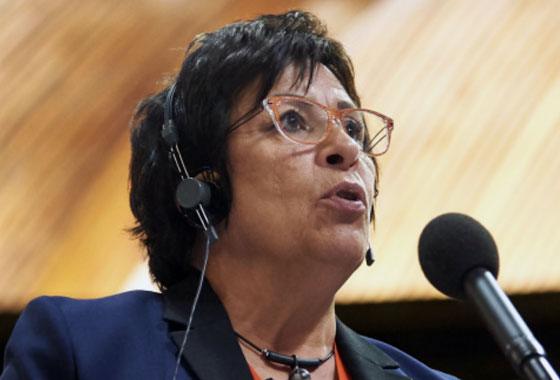
France, EPP/CD, Spokesperson for the group
10:21:36
Thank you, Mister President,
Dear colleagues,
This report highlights a matter of concern, as press freedom is one of the cornerstones of our democracies. It requires that our fellow citizens have access to diverse and independent information.
However, media pluralism and independence are currently in crisis in Europe, as documented in the recent report by the Centre for Media Pluralism and Media Freedom (CMPF).
The 2026 edition highlights the vulnerability of certain European countries: the study identifies 26 countries at high risk of media concentration. France itself has a risk rating of 71%, particularly with regard to media concentration, ownership transparency and economic influence over editorial teams. These findings remind us that full and complete media freedom is never permanently secured.
Hungary is a striking example: under the presidency of Mr Viktor ORBÁN, taxpayers have funded the President’s propaganda. It appears that €1 billion of public funds were paid to pro-government media between 2015 and 2023. The public broadcaster had a budget of €400 million in 2026.
Throughout the 2026 election campaign, the public broadcaster never invited the leader of the largest opposition party. It was only after his election that Mr Péter MAGYAR appeared on the channel for the first time.
These vulnerabilities are now exacerbated by digital technology and social media. Algorithms have profoundly reshaped access to information; they carry the risk of fragmenting information spaces, which could undermine the robust debate that is essential to the cohesion of our societies.
As major elections approach across our continent, we must remain attentive and vigilant in the face of these changes. The Council of Europe must continue its efforts to support media independence, encourage transparency amongst those involved in the dissemination of information, and thereby preserve a pluralistic public sphere.
Thank you for your attention.
Thank you.
And now, on behalf of European Conservatives, Patriots & Affiliates, I give the floor to Sir Edward LEIGH.

United Kingdom, ECPA, Spokesperson for the group
10:24:41
Mister President,
At the heart of our Conservative philosophy lies a fundamental truth. A society cannot remain truly free without absolute protection of free speech and a fiercely independent press.
For centuries, the right to speak, to challenge power and to debate openly has been the bedrock of Western civilisation. Yet today, this fundamental liberty is facing a quiet but dangerous erosion. We are witnessing the rise of a new orthodoxy, often driven by political correctness and woke ideology that seeks to police language, dictate acceptable thought and silence dissenting voices. What began as a demand for sensitivity has transformed into a culture of censorship. When the press or individual citizens self-censor out of fear of social banishment or professional ruin, democracy itself begins to wither.
We Conservatives believe that the remedy to bad speech or disagreeable ideas is more speech, better arguments, robust debate – never the silencing of opposition. This battlefield is now extended directly to the digital public square. Social media platforms have become the modern-day town squares. For years, these powerful tech monopolies have engaged in arbitrary content moderation, shadow banning and the outright suppression of conservative viewpoints under the guise of combating misinformation or hate speech. When algorithms and corporate committees decide what information the public is allowed to see, they are no longer just hosting a conversation; they are controlling it.
We must insist that these digital giants respect the principle of free expression and stop acting as partisan gatekeepers. Equally concerning is the growing temptation by the state to interfere in the media landscape.
We must be absolutely clear. The government has no business regulating, managing or interfering in the ownership of media organisations, whether through legislative overreach or regulatory pressure. State interference is wrong, and we must stop it. When the state-controlled narrative takes over, we are in grave danger. When the state begins to pick winners and losers in the press room or dictates who is allowed to hold a microphone, the press ceases to be a watchdog of the government and instead becomes its mouthpiece.
So Conservatives stand, Mister President, four-square, defending a free press and open platforms.
Thank you.
Thank you.
And now, on behalf of the Alliance of Liberals and Democrats for Europe, I give the floor to Ms Yevheniia KRAVCHUK, please.

Ukraine, ALDE, Spokesperson for the group
10:27:56
Thank you, Chair.
Dear Ms Valentina GRIPPO, I'd like to congratulate you on this very important report, and I believe it is probably the most popular report during this session, given the number of people who wanted to speak for this debate. And it just proves that no matter where you are in this hall, freedom of speech, but also the importance of independence of media, also the physical protection of the life of journalists, is of great importance to this Assembly.
And I do agree with the findings that Ms Valentina GRIPPO comes to. We do need transparent information about media owners. We do need strong public broadcasters. We do need independent national regulators. We do need the support for quality journalism, especially on the local level. I'm a journalist myself and I always hope that not all of the journalists go to the capitals to work, but they also stay in the communities and bring the news to the people on the local level.
Also, I want to reflect on what the influence of the Russian aggression is to journalists. Not just Ukrainian journalists, but media workers, media professionals that cover this war. So far, Russia had killed 137 media professionals. 15 of them were reporting while they were killed. One of them was killed in Russian prison, Ms Viktoriia ROSHCHYNA. And tomorrow we'll commemorate her in the Committee on Culture, Science, Education and Media hearing.
But also 27, not 26, that was last year, 27 Ukrainian journalists are right now in Russian captivity. One of them is Ms Iryna LEVCHENKO, a 64 year-old journalist from Melitopol, Zaporizhzhia region. She was just accused of espionage and sentenced to 15 years in prison. And it's happening to other civilians in Russian captivity. Also, the journalists, while doing their work on air, were targeted by Russian drones. A TV channel, We Are Ukraine, was hit by a drone while journalists were on air. Six media workers were injured and the studio was also damaged.
And the latest type of crime: Russians are targeting data centres that work with media. And because of that, some of the TV channels and some of the media enterprises in Ukraine lost either their signal or lost some of their part of their archives. These are the types of crimes that the Russian Federation is committing every day. And, of course, I call for the support of this report and the findings of Ms Valentina GRIPPO.
Thank you.
Thank you.
Now, on behalf of the Group of the Unified European Left, I give the floor to Ms Sevilay ÇELENK.
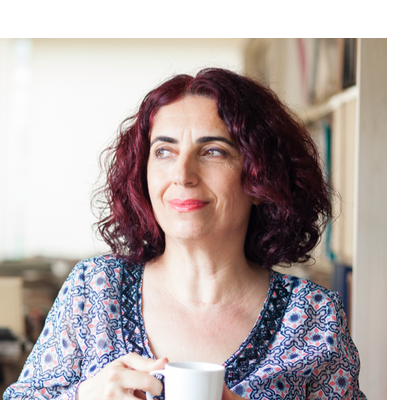
Türkiye, UEL, Spokesperson for the group
10:31:12
Thank you, Chair.
Thank you, dear rapporteur, for this comprehensive report. I see it as an opportunity, on behalf of our group, to reflect on today’s media environment and journalism, particularly in the Turkish context, as Türkiye is included as a concrete example in the report.
Media is no longer simply a newspaper, a television channel or a website. Platforms converge, information crosses borders instantly, and audiences receive an apparently endless flow of content. Yet, this abundance can coexist with a media desert in which independent and professional journalism becomes invisible, economically unsustainable or simply impossible.
Türkiye illustrates this problem clearly. The issue is not only media capture or concentration of ownership; it is also the erosion of the meaning of journalism. Journalists have been criminalised, prosecuted or arrested in connection with their reporting. And journalists are being killed in Gaza, in Ukraine, in Syria.
All of this matters because once the public is persuaded that a journalist is not really a journalist, or that a politician is not really a political actor, the problem is not only who owns the media, but who has the power to define whose voice is legitimate.
This also extends to public institutions and regulatory bodies. In Türkiye, bodies such as the Radio and Television Supreme Council, meant to perform independent public functions, have had their governing and decision-making structures taken over by the ruling power.
This has happened alongside the dismantling of what was once the mainstream media. Major media groups have been weakened through tax and regulatory pressures, placed under trusteeship, and subsequently handed over to media owners close to the ruling power. What remains is increasingly a partisan media landscape rather than a free media environment.
At the same time, independent and grassroots media face severe economic pressure. Advertising revenues and access to public resources can be decisive for their survival.
We should also examine algorithms and artificial intelligence. Search engines and platforms increasingly determine what audiences see, so algorithmic bias can become a question of media pluralism.
Finally, media literacy, fact-checking and verification must become central. In an age of synthetic content and rapidly circulating information, the real challenge is to preserve independent journalism, to strengthen audiences' capacity to distinguish manipulation, and to help them make meaningful use of the content they encounter.
Thank you. Sorry.
Thank you.
Dear Sir Edward LEIGH, you have asked to take the floor to ask another member a question on behalf of your group in accordance with Article 37.4 of the Rules of Procedure.
I remind you that you must ask a question, not make a speech. The question must be addressed to a member who does not belong to your political group. It must directly relate to the speech made by that member and to the topic of the debate.
You will have 30 seconds to ask. Please.
United Kingdom, ECPA, Spokesperson for the group
10:35:33
My question is to the last speaker.
We are very worried in this Assembly about what is happening in Türkiye, the case of Mr Osman KAVALA. The suppression of independent journalism.
I'd like to ask the last speaker, what more can we do? Because apparently the government of Türkiye is saying that they will ignore this Assembly. They will stay in the Committee of Ministers, but ignore it. So what can we do in this Assembly?
I ask the last speaker to hold Türkiye to account.
Please. You have 30 seconds to answer.
Türkiye, UEL, Spokesperson for the group
10:36:08
This is a really, very important question, and I really appreciate your solidarity always with Mr Osman KAVALA, who is very respectable and a very valuable philanthropist, businessperson and a real democratic person.
Yes, the European Court of Human Rights' judgments are not implemented, and we should insist on this. We should bring this issue onto the Agenda all the time. And we are aware of the Council of Europe's power to make things go correctly in member states.
Thank you very much.
Thank you.
Dear colleagues, we now open our speakers list.
And now I give the floor to Ms Aysu BANKOĞLU. Please, 2 minutes.
Thank you, Mister President,
Dear colleagues,
Democracy cannot function properly without access to diverse and independent sources of information, of course. When citizens cannot freely access different voices, they cannot fully know, question or participate. The report warns that press freedom in Europe stands at a “tipping point”; indeed, pluralistic media today face threats worldwide.
It also identifies Türkiye as a prominent example of media capture. In Türkiye, critical broadcasters face repeated fines and programme suspensions, while journalists continue to face detention and arrest. Restrictions also extend online: numerous news websites and journalistic content have been blocked by court decisions. The key question, here, is not simply whether opposition voices still exist, but whether such measures are based on clear legal grounds, applied transparently, and remain proportionate.
At the same time, these threats are not unique to Türkiye.
Across democracies, concentrated media ownership and political influence narrow the range of voices citizens hear. Populist politics deepen polarisation, while powerful actors use disinformation and manipulation to shape public opinion.
The report highlights another troubling trend: women journalists are disproportionately affected by intimidation and harassment, including online. Dear colleagues, we should all raise a strong voice against this.
So, our position should be clear: a pluralistic media environment must give citizens access to diverse independent voices. It cannot be determined by concentrated ownership, political pressure or opaque algorithms.
Because if the powerful control both the message and who gets to hear it, democracy may still hold elections, but it no longer has an equal public sphere.
Thank you.
Thank you.
And now I give the floor to Ms Anikó SÓTI.
Thank you, Mister President.
Dear colleagues,
I would first like to thank the rapporteurs for this important report.
I agree with its main message: media pluralism and media independence are essential to a functioning democracy. When political power gains influence over the media, citizens lose access to fact-based and objective information.
Hungary knows this problem very well. For the past 16 years, the Hungarian media system was exposed to severe political influence. State advertising distorted competition, independent media faced growing political pressure, public and also private service media systematically lost its independence.
Following the regime change in 2026, we therefore began rebuilding the institutional foundations of the Hungarian media system. An independent public media board has been set up. A new Media Council has also been established, and, for the first time in Hungary, its President was selected through an open procedure.
However, the reform is not yet finished. A new Media Act will follow, with the objective of bringing our national legislation fully into line with the expectations of the Hungarian people.
The Hungarian example shows why institutional guarantees matter. Media independence cannot depend on the current political direction.
Thank you.
Thank you.
And now I give the floor to Mr Balázs HIDVÉGHI, please.
Thank you. Thank you very much.
No double standards in this respect. There's no good political influence and bad political influence, depending on who does it. If we are serious about this, then the media should be free of interference, no matter where this interference comes from. It doesn't become more acceptable just because it comes from a more mainstream party in Europe.
Recent developments in Hungary raise serious concerns about what's going on. You have heard, I'm sure, and the previous speaker also talked about it: the new government and Mr Péter MAGYAR, the Prime Minister, announced with a lot of fanfare that a new era is beginning and they are restoring media independence.
However, let me give you an example of what happened. The new leaders of the public media company announced a new editor-in-chief; they announced a new news anchor. And the Prime Minister Péter MAGYAR, on his personal Facebook page, said that afternoon that he didn't think these were the right people, and they were sacked the next morning. This is already in the new era.
Another example: the supervisory board. No, it hasn't been set up democratically because the Prime Minister Péter MAGYAR got irritated in a parliamentary debate, and he instructed his own people not to vote for the opposition candidates for this board. There was an agreement, by the way, at the committee level between the government and the opposition, and he then ordered them not to support the opposition candidates. So there are only government representatives right now on that board. This is blatant interference in media freedom. It's making the whole process a mockery. This is not independence. It's a new political interference directed from the highest level directly by Prime Minister Péter MAGYAR.
I don't think this is acceptable. I think it's blatant interference, and I think that every democratic force in this Chamber should condemn it without any hesitation.
Thank you.
Thank you.
And the next speaker is Mr Gusty GRAAS. Please.
Thank you, President.
Dear colleagues,
Media pluralism and independence are not merely ancillary to efforts to safeguard democracy and human rights. Indeed, they are an essential prerequisite for them.
Yet they are experiencing a worrying decline, including within the Council of Europe, due to a range of threats: intimidation and attacks on journalists, and political and governmental interference. Furthermore, legislation modelled on the Russian "Foreign Agents" Act, a lack of transparency in the allocation of public advertising, and gag lawsuits constitute further threats.
Added to this is the risk of continued concentration of media ownership. Thus, when several major media outlets find themselves in the hands of an ever-smaller number of owners, pluralism can be undermined. Furthermore, professional journalism must compete with ever-faster, journalist-free content on social media, whilst artificial intelligence (AI) facilitates the creation and dissemination of disinformation. The US President’s recent attempts to bar news agencies that have reported critically on his actions from the White House are a particularly worrying example. They illustrate increasingly widespread and unacceptable trends that should give us serious cause for concern.
Fortunately, the relevant courts have blocked this initiative by the President.
Dear colleagues, faced with these dangers, we are not starting from scratch. The Council of Europe has the instruments and standards to counter them. The priority must be their implementation. We must improve transparency to continue the fight against strategic lawsuits against public participation (SLAPP) and, above all, protect journalists.
What is needed is the political will to act, for a free, independent and pluralistic press must remain a fundamental pillar of our democracies and human rights.
Thank you.
Thank you.
And now I give the floor to Mr Francesco VERDUCCI. Please, the floor is yours.
Thank you, President.
I would like to thank the rapporteur, Ms Valentina GRIPPO.
We know that in war zones and in openly authoritarian countries, there are cases of exceptional gravity targeting the independence of the media and journalists, whose lives are at risk. But what I wish to emphasise here is that, in the times we live in, the independence of the media is once again under attack everywhere – even where we believe there is a solid democracy – because we are facing a colossal structural issue. Platforms, algorithms and artificial intelligence have a staggering potential for manipulation, capable of destroying public opinion and, with it, democracy.
Then there is another issue. Throughout our democracies, we are seeing a resurgence of pressure – even intimidation – from the executive branch against the press. To tackle both these issues, we already have a tool, borrowed from the European Union: the implementation of the Media Freedom Act to place at the heart of an information model a strong, autonomous and pluralistic public service – information as a common good with which everyone can identify.
I believe we should work towards a Council of Europe convention on freedom of information, based precisely on the Media Freedom Act, to ensure it is applied everywhere, starting with the countries of the Union. There is a risk that it will not be applied in many places; this is also a risk for Italy, and I say this with serious concern and not out of partisanship. We need governance structures that shield us from political interference, from the excessive power of the market and from the excessive private power of the Big Tech giants.
It is not enough to demand transparency and rules; we need to invest in raising public awareness, because the first way to combat manipulation is for citizens to be able to recognise it. As Ms Michelle BACHELET said, and I conclude: "It must not be algorithms that decide; it must be citizens". The quality of information is the cornerstone of our fight for democracy.
Thank you, President.
Thank you.
And now I give the floor to Ms Christine PASQUIER-CIULLA.
Please, you have the floor.
Thank you, President.
Dear colleagues,
It seems that the issue is no longer simply: can we ban a newspaper? It is now: can we still guarantee that it can investigate, survive and remain independent?
The excellent report before us reminds us that economic concentration, financial fragility, political pressure, gagging lawsuits, online attacks and, now, algorithms and artificial intelligence (AI) are reducing the diversity and objectivity of information.
It identifies very real threats, such as pressure on public service media, violence and intimidation against journalists, but also the growing power of platforms and AI over the visibility of information. Above all, it calls on member states to enshrine pluralism in law and to provide regulatory authorities with the means to act.
We, as parliamentarians from the member states, are not merely here to observe the deterioration of press freedom and media pluralism, but to establish legal and institutional safeguards to preserve them.
This is precisely why Article 10 of the European Convention on Human Rights protects not only those who speak, but also those who receive information. The European Court reminds member states of their positive obligation to guarantee effective media pluralism.
This sentence, and I quote: "The less wise and enlightened the government, the less freedom of speech there is in the press", comes from The Marriage of Figaro in 1785 and highlights a truth which, unfortunately, is increasingly relevant today. Protecting the media means protecting citizens’ right to know, to understand and, above all, to choose freely.
Thank you.
Thank you.
And the next speaker is Ms Alicia KEARNS. Please, you have the floor.
Thank you, Mister President. And I congratulate Ms Valentina GRIPPO on this report.
When journalists are silenced, democracies and societies suffer and the vacuum is filled with those with the greatest power manufacturing their own version of reality, whilst hostile states and malign actors seek to flood our societies with disinformation designed to deepen divisions.
This is particularly acute in Serbia, where, according to the Council of Europe's own Platform for the Safety of Journalists, violations of press freedom more than doubled last year. Since the Novi Sad tragedy, where 16 people lost their lives, Serbia has seen mass peaceful protests calling for an end to corruption and more transparency in government. Shockingly, journalists reporting at these protests have faced intimidation, death threats and physical attacks. There has been no functioning media regulator since 2024, and independent voices are being silenced. Only months ago, the News Director of N1 and members of his family received death threats saying that he should be impaled and set on fire.
And this is the context in which Serbia will soon hold parliamentary and presidential elections. Elections where independent observers have yet to be formally invited. These will be some of the most consequential elections in modern times, with President Aleksandar VUČIĆ's resignation and attempt to resecure power as Prime Minister. If these elections are to be free and fair, we must be clear: membership of this Council comes with responsibilities. And when this Assembly observes the vote, we must judge not only how the ballots are counted, but what voters were allowed to hear and whether the voices of the opposition were carried or not.
Meanwhile, our own citizens abroad are held for speaking truth to power. Mr Jimmy LAI, a 78-year-old British national and newspaper publisher, was sentenced to 20 years in prison by the Chinese Communist Party, simply for reporting the truth. He is denied the medical care he needs and denied even the ability to hold communion.
We must protect media freedom because freedom of speech and freedom to come together is the first freedom that tyrants take from us. We have the right to recognise that when this is stripped away, every other freedom will follow.
Thank you.
Thank you.
And now I give the floor to Lord George FOULKES. Please, you have the floor.
Thank you, Mr President.
As Ms Valentina GRIPPO said, independent journalism is a vital part of our democracy, and I want to concentrate on how we guard against fake news.
Fake news. We've seen a huge increase, sadly, in abusive racist rhetoric from the far right, based often on fake news. We've seen, in the United Kingdom, Russian bots with fake news during our Brexit referendum. And we're seeing it again now in relation to separation, trying to break up Britain. And we've seen fake news as well, resulting in racist, violent attacks on minorities and asylum seekers.
Good journalism is vital, absolutely vital, for the safety of people on the ground. And, Mister President, the United Kingdom has taken some international action to try and help this. We have supported the United Nations Educational, Scientific and Cultural Organization (UNESCO) Global Media Defence Fund, which has helped over 10 000 journalists in crisis areas – Ukraine, Sudan and Haiti. But sadly, cuts in our aid budget have restricted this and leave the situation open to bad actors.
We must also address literacy. We've seen far too often short-form videos which are engineered to play on your emotions. And Mr Nigel FARAGE, sadly, is an expert at this, playing on emotions through short-term videos. And that's why we need to encourage and develop literacy.
So our priority should be: protect media pluralism, defend human journalism, invest in global truth, foster critical readers. Otherwise, our democracy is in danger.
Thank you.
And now I give the floor to Mr Ricardo CARVALHO. Please, the floor is yours.
Thank you, Mister President.
Dear colleagues,
There is no strong democracy without free and independent media. And today, across Europe, that freedom is under pressure. In some countries, governments seek to control the media, silence critical voices and transform public broadcasters into instruments of political power. In others, the threat is less visible but equally important: economic fragility, the disappearance of local journalism, and the growing power of global digital platforms over what citizens read, watch and ultimately know.
We should be clear: political power should never decide what journalism can say. But defending media freedom also means ensuring that journalism has a future. A newspaper that cannot survive, a local radio station that disappears, or a newsroom without the resources to investigate are also losses for our democracy.
And today we face a new challenge.
A growing part of our political debate is no longer shaped only by journalists and editors, but also by algorithms, global platforms and, increasingly, artificial intelligence. These transformations bring opportunities, but they also concentrate enormous power over information in the hands of a few global actors.
Our response cannot be more political control over the media. It must be more freedom, more pluralism and more responsibility and scrutiny. We need strong and independent journalism. We need economically sustainable media. And we need citizens who can freely choose between different sources, different opinions and different perspectives.
Because democracy does not require everyone to think the same.
Democracy requires the freedom to disagree. And protecting that freedom is ultimately what protecting media pluralism is about.
Congratulations on this report.
Thank you very much.
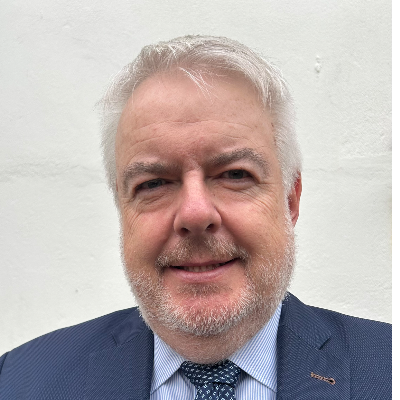
United Kingdom, SOC, President of the Assembly
10:56:56
Thank you.
The next speaker is Ms Bernadeta COMA.
Dear Mister President,
Dear colleagues,
I would first like to thank Ms Valentina GRIPPO for this particularly important and highly topical report, which I fully support. It reminds us of a fundamental reality: there can be no strong democracy without free, independent and pluralist media. Nevertheless, today, this independence faces a wide range of pressures. Transparency is fundamental. Citizens must be able to know who owns the media, who funds them and what interests may influence their editorial line.
In this regard, I would like to briefly mention the experience of my country, Andorra. Our Constitution expressly recognises the freedoms of expression, communication and information, and prohibits any form of prior censorship. In recent years, Andorra has continued to strengthen its democratic framework. In 2021, it adopted a law on transparency and access to public information. In 2022, the General Council adopted a specific agreement on information, the media and institutional advertising, reaffirming the independence of public and private media, pluralism, and the need for transparent and fair criteria in the allocation of institutional advertising.
A small media market must balance two imperatives: ensuring the economic viability of the media whilst at the same time guaranteeing the diversity and independence of information. Andorra is also committed to the Council of Europe’s commitments to media freedom and the safety of journalists.
Defending free and pluralistic media means defending our citizens' right to be informed and, through them, the very quality of our democracy.
Thank you.
United Kingdom, SOC, President of the Assembly
10:59:03
Thank you.
The next speaker is Mr Mustafa CANBEY.
Honourable President,
Dear colleagues,
I would like to thank the rapporteur for this important report. Media pluralism is essential for democracy, as citizens need access to different views and reliable information.
At the same time, the media landscape is changing rapidly. Digital platforms are becoming more influential, traditional media faces economic pressure and artificial intelligence is creating new challenges. We therefore need to consider media pluralism from a broader perspective.
In addition, we should also take into account the different conditions in our member states. States have a responsibility to protect public order, national security and the rights of their citizens, particularly in the face of terrorism, disinformation and the misuse of digital platforms. Being a journalist does not provide immunity from criminal responsibility, but this principle should be applied fairly.
I would also like to draw attention to the situation of journalists in Gaza, Ukraine and other conflict zones. Their safety must be protected. Their work is vital for the public’s right to information. It is also essential for documenting what is happening on the ground.
Journalists are civilians and must be protected under international law. They should not be targeted because of their profession. If we are serious about protecting media freedom, the same protection must apply to all journalists working in every conflict zone.
Thank you.
United Kingdom, SOC, President of the Assembly
11:01:11
Thank you.
The next speaker is Lord Don TOUHIG.
President,
The Caerphilly Observer is a first-class, locally owned, independent newspaper. It has no backing of big corporations, has just seven staff, is run on a shoestring budget and does a great job. When I began my journalistic career 58 years ago, there were hundreds of newspapers like this the length and breadth of Britain.
The Monmouthshire Free Press, where I worked in South Wales, was a small family-owned newspaper founded in 1859. I was fortunate to be trained by a great journalist, Mr Jack SALTER, and he and his father edited the paper for 80 years. And I succeeded Jack as Editor and spent 27 years of my life there. The paper is still published, but it's no longer locally owned and is part of the second largest group of publishers of newspapers in Britain.
These large publishers control over half the market, cutting thousands of journalists' jobs and centralising newsrooms miles away from their local communities. And a great many local newspapers are now increasingly controlled by corporate entities, often owned by a small number of ultra-wealthy individuals. More than that, they have ceased to be truly local newspapers.
In Britain, more than 300 local newspapers have closed since 2005. This has led to a massive weakening of good regional journalism, which by its very existence held local councillors and politicians to account. Almost without realising it, this loss of good local and regional newspapers is creating what the report calls "a news desert". Dozens of local councils across Britain now function with no local public interest journalism responding to the decisions that they take. This lack of local oversight has led to delayed accountability on major local reorganisation schemes, lower civic engagement and increased political polarisation.
Why should we be concerned about this at the Council of Europe? Well, President, when people are kept in ignorance about the decisions taken in their names, then democracy, and indeed freedom itself, is at risk.
United Kingdom, SOC, President of the Assembly
11:03:29
Thank you.
The next speaker is Ms Tone Wilhelmsen TRØEN.
Thank you, Mister President.
I would like to thank the rapporteur for an excellent and timely report.
Free and independent media are fundamental pillars of democracy. Without professional journalism, citizens cannot make informed choices, those in power cannot be held accountable and democratic debate becomes vulnerable to manipulation.
We should therefore be concerned by the grave decline in press freedom indicators across Europe. In too many countries, independent media and journalists face pressure from political influence, economic concentration, intimidation and disinformation.
This is not only a media issue. It is a democratic and security issue.
When trusted journalism is weakened, the space is increasingly filled by alternative information ecosystems that thrive on polarisation, conspiracy theories and disinformation. This undermines trust in democratic institutions, elections, courts and public authorities. At a time of growing geopolitical tensions and hostile information campaigns, this should concern all of us.
In Norway, we have a long-standing tradition of strong editorial independence. Through the Ethical Code of Practice for the Norwegian Press, editors have full responsibility for editorial decisions, regardless of ownership. This is complemented by an independent self-regulatory system, the Norwegian Press Complaints Commission, which helps maintain professional and ethical standards. These arrangements have been important in building public trust in media.
Greater transparency is important. The proposed pan-European database on media ownership could help strengthen trust and accountability by making it clearer who ultimately owns and controls media outlets.
I fully support this report and its recommendations.
Thank you.
United Kingdom, SOC, President of the Assembly
11:05:46
Thank you.
The next speaker is Mr Paweł JABŁOŃSKI.
Mister President,
Dear colleagues,
This resolution says a lot how important freedom of speech is, how we cherish media pluralism, how it is a prerequisite for democracy. It's obviously all true.
The question is though, whether this Assembly applies this universal standard to everyone, regardless of political allegiance. In my country, in Poland, the so-called liberal centre-left pro-European government took control of the public media, public television, public radio, national news agency, by a simple ministerial decision. They imposed a formal liquidation status that allowed them to put their own people in charge. They ignored the National Media Council, they ignored the Constitutional Court, just to impose their control. There was nothing independent about that.
And the government didn't stop at the public media, because the journalists of networks that dared to ask the difficult questions to the government, notably TV Republika or WPolsce24 television, they are constantly attacked, discredited, insulted by members of the government, by members of the ruling majority, they are refused access to press conferences.
This resolution condemns specifically concealing critical voices. And this is exactly what current Poland's liberal government is doing. And we all know too well, dear colleagues, that if a conservative government did this, we would be debating this under urgent procedure, every part-session. So we must understand that media freedom is not left wing or right wing. We might not like some journalists, what they say, but we protect them because democracy needs them to hold us all accountable.
And we may adopt this resolution or not. But the real question is whether this Assembly will be equally committed to apply this resolution to every member state, regardless of the fact that some of your political colleagues continue to silence critical media.
Thank you very much.
United Kingdom, SOC, President of the Assembly
11:07:53
Thank you.
The next speaker is Mr Emmanuel FERNANDES.
Thank you, President,
I would like to thank Ms Valentina GRIPPO for this report.
Media pluralism and independence raise a major democratic question: who controls the information? This question is crucial at a time when media concentration and the stranglehold of political and economic actors are threatening media independence across Europe.
France is no exception to this situation. In 2026, nine billionaires will own more than 80% of the French media. Mr Vincent BOLLORÉ, in particular, owns CNews, Paris Match and Europe 1, as well as publishing houses, bookshops and communications companies. This concentration encourages the dissemination of xenophobic views and the normalisation of far-right themes. In its 2026 World Press Freedom Index, Reporters Without Borders ranks France 25th and warns of media concentration in the hands of a few ultra-rich individuals, notably the expansion of the Bolloré group, which raises fears of "the triumph of opinion over facts".
The Regulatory Authority for Audiovisual and Digital Communication (ARCOM) has, moreover, recently served a formal notice on CNews to comply with its obligations regarding pluralism. We must therefore provide our regulatory authorities with genuine resources: they must be able to exercise their powers fully to guarantee the independence and pluralism of information.
But the upheaval in the media landscape also presents an opportunity. New digital media can enable journalists, creators and independent media outlets to reach millions of people and give a voice to those previously marginalised. In this digital space, we must support independent and diverse stakeholders.
Finally, defending press freedom means, above all, defending those who risk their lives to report the news. In Gaza, between October 2023 and mid-December 2025, 289 journalists were killed during Israeli military operations, according to the UN High Commissioner for Human Rights. These victims perished whilst carrying out their work to document the war crimes and crimes against humanity committed by Israel in Gaza.
Whether threatened by weapons, political power or economic forces, freedom of the press must be defended everywhere. Money and monopolies must not be allowed to dominate the media. The media must be free and pluralistic: this is a democratic imperative!
Thank you.
United Kingdom, SOC, President of the Assembly
11:10:17
Thank you.
The next speaker is Ms Daan ROOVERS.
We can't hear you, unfortunately. Let's wait for you to turn the microphone on.
Media capture, the problem that is addressed in this report, is a real and serious threat, as we have seen in recent years in member states such as Hungary and Serbia. This report rightly acknowledges the vital role of the media in a democracy.
I do not wish to detract from its importance, but I would like to broaden the discussion by asking: to ensure real media pluralism, is it adequate to approach the media primarily as a market? Or are they, first and foremost, an essential public infrastructure?
Importantly, then, regarding this question, we should discriminate between media and journalism. The report does address the role of journalism, but it is predominantly focused on media in general, and I think we should distinguish the two more sharply. "Media" is a catch-all term: newspapers, podcasts and vlogs all count as media. Journalism, however, refers to the method by which information comes into being: verifiable, professional procedures that, in principle, result in reliable and trustworthy information.
That brings me to a major problem: the growing precarity of journalism. Over the past two decades, the revenues of news media companies have fallen dramatically. In a very conservative estimate, in the Netherlands by 25%, and across Europe even by some 40%. And the trend is still downwards. Large social media companies are absorbing the advertising market, while readers have come to expect the news to be free.
So, returning to quality journalism as a cornerstone of democracy, I ask again: can we seriously treat public-interest journalism primarily as a market? I doubt that.
This report is a valuable contribution to tackling media capture. But it calls for a follow-up on the imbalance between private and public media infrastructures, and on improving the position of professional journalism itself.
Thank you.
United Kingdom, SOC, President of the Assembly
11:12:51
Thank you.
The next speaker is Mr David WELLS.
Dear colleagues,
A free and independent media is one of the foundations of a democratic society.
But across much of the world, including Canada, media freedom and media pluralism are facing growing challenges.
As Chair of the Senate of Canada, Transportation and Communications Committee, I know this all too well.
The threats to press freedom include harassment and violence against journalists, state censorship and surveillance, and the use of laws that criminalise or restrict independent voices.
At the same time, profound changes in how we produce, distribute and consume news are reshaping the media landscape and creating new challenges.
As the rapporteur, Ms Valentina GRIPPO, notes in her report, we are seeing greater political and economic influence over media organisations.
We are also seeing pressure on public service media, particularly through political interference in governance structures, appointments and funding.
Beyond these pressures, the digital transformation of the media environment has changed who controls the flow of information.
Digital platforms bring enormous benefits. But they can also become powerful gatekeepers, as personalised algorithms determine what information people see, what receives prominence, and ultimately which voices are heard.
As Ms Valentina GRIPPO’s report emphasises, we need greater media transparency. Citizens should be able to know who owns and controls the media organisations they rely on, so they can make informed decisions about the news they consume.
We must also guard against the capture of the media by the state, which can use it to control public information and manipulate public opinion. We have seen this even in Canada, with billions of dollars being openly directed toward both state and private media companies.
Fundamentally, journalists must be able to do their jobs without intimidation or undue restrictions, nor with the influence that accompanies the promise of government funding.
Media pluralism supports democracy and protects freedom of expression: two things at the heart of the Council of Europe’s mission. It is essential to the resilience of our democracies, and we must do everything we can to safeguard it.
Thank you.
United Kingdom, SOC, President of the Assembly
11:15:04
Thank you. The next speaker is Ms Ivanka VASILEVSKA.
Thank you, Chair.
Media freedom is one of the fundamental conditions of a democratic society. Yet freedom of the media cannot be reduced to the absence of censorship. It also requires pluralism, editorial independence, transparency of ownership, professional standards and an institutional environment in which journalists can perform their work without political or economic pressure.
The Macedonian media landscape reflects many of the broader challenges confronting contemporary democracies. The legal framework provides guarantees for freedom of expression and media freedom, while the Law on Audio and Audiovisual Media Services establishes important safeguards and defines the role of the Agency for Audio and Audiovisual Media Services as an independent regulatory authority. The protection of access to public information, together with constitutional guarantees of freedom of expression, further forms part of the institutional architecture protecting the right of citizens to receive and impart information.
However, legislation alone cannot guarantee genuine media independence. The European Commission's 2025 assessment identifies several areas requiring further attention: transparency of media ownership, the independence and functioning of public service media, the allocation of state advertising, and the continued alignment of the media framework with European standards.
The same principle applies to public service media. A public broadcaster should serve the public interest rather than the interests of the government of the day.
Another increasingly important dimension is the protection of journalists. Professional journalism cannot function where threats, intimidation, violence or abusive litigation are used to discourage reporting on matters of public interest. The European framework has increasingly recognised the need to protect journalists against such pressures.
Thank you very much.
United Kingdom, SOC, President of the Assembly
11:17:22
Thank you. The next speaker is Ms Jurgita ŠUKEVIČIENĖ.
Mister President,
Dear colleagues,
I would like to thank Ms Valentina GRIPPO for her report, which highlights a threat to democracy.
When the media can be controlled, intimidated or deprived of the means to survive, citizens are deprived of the information they need to hold those in power to account.
Lithuania supports the recommendations aimed at ensuring transparency in media ownership, guaranteeing the independence of regulatory authorities and protecting public service media from political interference. We must also safeguard local investigative journalism.
Without reliable local reporting, citizens are more vulnerable to manipulation and disinformation. Journalists must be able to work safely, both online and on the ground. Female journalists are particularly vulnerable to harassment. Russia’s war against Ukraine makes the risks even more severe.
Furthermore, independent journalists in Russia and Belarus continue to face persecution. Vilnius has become a haven for media in exile, and Lithuania remains committed to supporting them.
We must take concrete action. Let us protect editorial independence, combat abusive legal proceedings and ensure that new technologies provide fair remuneration for journalistic work. A free press enables our societies to recognise threats and defend democracy.
Thank you.
United Kingdom, SOC, President of the Assembly
11:19:15
Thank you.
The next speaker is Ms Minna REIJONEN.
Dear colleagues,
Media freedom is important, and it is something we should all protect. However, freedom also brings responsibility. It is important that the media remains reliable and truthful. False and clearly biased news can weaken people’s trust in the media. Unfortunately, it can also expose journalists and other media professionals to public criticism, harassment and pressure. Media outlets connected to political parties are a separate thing, but people can also be very critical of public broadcasters owned by the state. I want to remind everyone that critical speech is also part of freedom of speech – both when it comes from the media and when it comes from its readers.
Media literacy is also changing. We are living in a time when so-called deepfake videos and images created by artificial intelligence (AI) can spread online extremely quickly. Even people who are normally critical viewers can find it difficult to tell AI-generated content from real photos and videos. This also creates a difficult situation for the media, because it is not always possible to be certain about the source of an image. I mention this because I believe that we still do not have enough regulation concerning AI and its use. At the moment, marking content as AI-generated is mostly the responsibility of the person or organisation publishing it, and only a small number of people actually label their content as AI-generated.
It is becoming harder for citizens to separate truth from false information, especially when their media literacy is weak. In my opinion, one way to support media freedom is to invest more in people’s media literacy and to regulate AI-generated content more effectively than we do today.
Thank you.
United Kingdom, SOC, President of the Assembly
11:21:51
Thank you.
The next speaker is Ms Sona GHAZARYAN.
Dear President,
Dear colleagues,
Dear Ms Valentina GRIPPO, Dear Valentina,
I would like to congratulate you on this interesting report and important discussion within the Chamber.
We do agree, all of us, that the media is not an additional advantage of democracy; it is indeed one of the foundations. Without free and independent media, citizens cannot make informed decisions, and society cannot effectively hold those in power to account.
Today we discussed the financial independence of the media, and we must also consider situations in which media outlets depend on one single sponsor, one political force or financial centre for their survival. And in these circumstances we cannot even dream about editorial independence. I agree that whenever we speak about media freedom, we must not only speak about legal protection of the journalists in carrying out their work, but also about the sustainable and independent financing of media outlets. And we have this kind of discussion in our Parliament as well, and we have sought to address it through a practical legislative solution.
So, together with the government, we have developed an initiative that would allow citizens to allocate a portion of the income tax they pay to media organisations and civil society organisations of their choice. So basically, people can choose who they want to dedicate the money they pay. This draft legislation is expected to be discussed in our Parliament during the autumn session. And I believe that this initiative can open a new avenue for strengthening the financial independence and sustainability of independent media and, of course, civil society.
I don't think this is just a purely new tax mechanism. It is a form of public participation and democratic responsibility, one that gives citizens a greater role in supporting independent institutions that are very essential for us.
Thank you.
United Kingdom, SOC, President of the Assembly
11:24:08
Thank you. The next speaker is Ms Gökçe GÖKÇEN.
Thank you, Mister Chair.
Dear colleagues,
I may be one of the members here who feels most strongly about the importance of press freedom. I believe that the relationship between capital and press freedom should not be underestimated.
If a media outlet’s financial independence depends on the government or certain companies, it is simply not possible to speak of genuine press freedom. If journalists do not earn enough to live with dignity and have no job security, they cannot be truly independent from their employers either.
Journalists who want to work independently of political power and business interests increasingly turn to digital journalism. However, when journalism moves to social media, it encounters another non-transparent but much bigger wall: a global corporation with its own financial relationships with governments. On X, formerly Twitter, dozens of accounts are being blocked each day in Türkiye, at the request of the government, often within hours. Profiles of journalists, activists, feminists and academics are facing censorship. At the same time, disinformation, hate speech, personal attacks and harassment are allowed to circulate freely under the guise of news. In other words, the owner of a social media platform can effectively decide both who is able to access which information and what is recognised as news in the first place.
For this reason, today, protecting press freedom also requires us to work together to ensure that those global corporations are subject to effective oversight. National measures, or even regional measures such as those adopted by the European Union, can provide only limited and temporary solutions to what is ultimately a global challenge.
Thank you.
United Kingdom, SOC, President of the Assembly
11:26:02
Thank you.
The next speaker is Ms Patrícia ALMEIDA.
Thank you, Mister Chair,
Madam rapporteur, colleagues,
What we are discussing here today could address real threats to media and pluralism. Citizens should know who controls news outlets. Journalists should be able to investigate without intimidation. And state advertising must never be used to reward media outlets that favour those in power or punish those that criticise them.
It is precisely because we take these principles seriously that we are concerned about some of the proposed solutions. The report recommends public support for so-called “quality journalism”, a greater role for regulators, and rules on the prominence of content on platforms. Who defines quality? Who allocates the money? And who decides what people should see?
The European Union’s European Democracy Shield, for example, illustrates the tension we need to address here. Presented as a defence against information manipulation, it shows how efforts to combat disinformation can bring public institutions, fact-checking bodies and digital platforms closer to deciding what circulates in public debate. This creates a serious risk of censorship, even when the stated aim is to defend democracy.
Of course, I am not asking this Assembly to decide on a European Union initiative. I am asking it to draw a lesson for the report we are debating today: protecting the media from private influence must not make them dependent on the approval or funding of public authorities.
We support transparency of media ownership, the protection of journalists and action against abusive practices. But any public support must follow objective, verifiable criteria; any regulatory decision must be reasoned and open to appeal; and no legitimate political opinion should be excluded under an administrative label of “disinformation”.
Thank you.
United Kingdom, SOC, President of the Assembly
11:28:16
Thank you.
The next speaker is Ms Edina DEŠIĆ.
Today’s message is simple: journalism must be free, independent and professional.
But our reality, as Ms Valentina GRIPPO noticed in the report, is very different.
When powerful political or financial actors own, finance or control media outlets, there is a real risk that editorial policies will no longer be guided by professional standards, but by their interests, while the public is presented with a carefully selected version of reality.
This is why today’s resolution is so important. It recognised the importance of media ownership transparency, editorial independence and media pluralism.
And all these concerns are very relevant for my country, Montenegro.
There is notable foreign influence not only through political or economic channels, but also through media content. Media channels and platforms, sometimes based even outside of our country, can create narratives which polarise society, deepen divisions, and promote retrograde, cleronationalist ideas, often connected with the painful and bloody legacy of recent history from the Balkan region.
Recent examples are deeply concerning; for example, the broadcasting of the funeral of convicted war criminal Mr Ratko MLADIĆ on some TV channels. Or, last year, the TV programme Srebrenica – Anatomy of Deception promoted the denial and relativisation of genocide and war crimes, which led to regulatory actions, including a fine, which was, I must say, very symbolic. And the fine was a result of the official objection submitted by myself and my MP colleagues.
This is why Montenegro needs a genuinely independent, adequately resourced and proactive media regulator, one capable of identifying harmful and unlawful content in a timely manner, rather than acting after citizens or politicians submit complaints.
And not to forget the growing role of informal media and unregistered websites in disseminating misinformation and shaping public opinion. Although these platforms are not formally registered, they can nevertheless exert considerable influence on public discourse, and there is an urgent need to change this.
Freedom of expression cannot be a shield for glorification of war crimes, denial or relativisation of genocide, promotion of hatred or disinformation.
Protecting media freedom means protecting journalism from political and financial capture, but it also means protecting our societies from manipulation.
Thank you.
United Kingdom, SOC, President of the Assembly
11:30:34
Thank you.
The next speaker is Ms Irene CHARALAMBIDES.
Dear colleagues,
We are politicians, and as such, we are frequent targets of attacks through – often anonymous – disinformation, defamation and orchestrated hate campaigns.
It is precisely because of these that we as lawmakers face a real temptation to respond by legislating restrictions that end up violating freedom of expression itself. The line between protecting individuals from online abuse and curbing free speech is extremely thin. And the anonymity of today's internet makes it thinner still and easier to cross without even realising it.
Let me give you an example. In Cyprus's Parliament, the government attempted to legislate exactly along these lines. I requested a legal opinion from the Office for Democratic Institutions and Human Rights (ODHIR), and on that basis the Bill was stopped.
I speak here not only as a politician, but as a journalist myself. I know how hard you have to fight to do this job with integrity when the environment around you is built to intimidate. All media professionals must be able to work in safety, free from intimidation and from political or financial control. Censorship and media capture are, at their core, forms of corruption to be fought with transparency and accountability, not restrictions on speech.
A strong democracy cannot exist without a free, independent and pluralistic press. Our task is not to legislate out of fear of what is said about us, but to protect the conditions in which journalists can speak freely.
Thank you.
United Kingdom, SOC, President of the Assembly
11:32:57
Thank you.
The next speaker is Mr Murat Cahid CINGI.
Thank you, Mister President.
Dear colleagues,
Journalism is an honourable profession. Every media worker who helps the public receive accurate information deserves our deepest respect. Independent and pluralistic media allow citizens to access different sources, compare views and form their own judgement. For this to be possible, journalists must be able to work safely, especially during the gravest humanitarian tragedies.
I therefore thank Ms Gala VELDHOEN for recalling that this Assembly has condemned the deliberate targeting and killing of journalists in Gaza by Israeli forces. However, I am disappointed that Israel, which holds observer status in this Assembly, is absent from Ms Valentina GRIPPO's report and draft resolution.
According to the Committee to Protect Journalists, Israel has killed 259 journalists and media workers since October 2023. Let me repeat that number: 259 journalists. No state has killed more journalists than Israel since 1992. Israel also prevents international journalists from entering Gaza, while journalists reporting from the ground continue to be killed. As a result, the world is being denied independent access to what is happening there. This is a clear double standard.
A report examining Türkiye in detail cannot remain silent about Israel's actions against media workers in Gaza. If we are serious about protecting media pluralism and independence, we must apply the same standards to everyone. As a matter of fact, Türkiye has a diverse media environment to answer to some critics. Their outlets, representing different political views, including those openly critical of the government, reach broad audiences.
I extend my greetings and respect to all media workers who carry out their duties responsibly.
Thank you.
United Kingdom, SOC, President of the Assembly
11:35:30
Thank you. The next speaker is Ms Birutė VĖSAITĖ.
She's not here. Next speaker then is Ms Denitsa SACHEVA.
Dear colleagues,
For years, this debate has been trapped between two uncomfortable ideas.
One is that whoever pays for journalism will eventually call the tune, and the other is that journalists should somehow rise above money altogether, as though independence required them to work like saints.
Neither idea pays for an investigation. A journalist needs time to obtain documents, check claims and speak to sources. An editor needs enough income to publish the story even when it angers an advertiser or a politician. Today, an artificial intelligence (AI) service can summarise that work in seconds. So the practical question is, who pays for the next investigation?
I thank Ms Valentina GRIPPO for identifying the financial pressure on local and investigative journalism. We need the realistic answer built on several sources of income, so that no single payer holds the newsroom hostage.
First, companies that commercially use journalism should pay for that use. Publishers, including small ones, need the ability to negotiate licensing terms collectively with AI and technology companies and to enforce those agreements.
Second, readers should have more power to fund the reporting they choose. Member states should consider tax relief for subscriptions and memberships supporting independent local news. The money would follow the reader's decision, rather than a minister's choice of outlet.
Third, where subscriptions cannot sustain reporting, independently administered funds could combine philanthropy, private contributions and limited public funding for local investigative journalism. Grants should be awarded through open competitions with published criteria and no influence over editorial conflict.
Safeguards matter as much as the funding. Media ownership, public advertising and grant awards must be transparent. Journalists must also be able to defend their reporting without being ruined by abusive lawsuits. Bulgaria has made important legislative changes for this.
Thank you.
United Kingdom, SOC, President of the Assembly
11:38:01
Thank you. The next speaker is Mr Vladimir ĐORĐEVIĆ, who's not here.
The next speaker then is Ms Irena FERČIKOVÁ KONEČNÁ.
Thank you very much.
Mister President,
Colleagues,
Information is power. And today we are living in a time of information warfare where narratives are weapons and those who control the flow of information shape the fate of democracies. That's why this report is so important. And I would like to extend my thanks to the rapporteur Ms Valentina GRIPPO for this report.
Media pluralism across Europe faces a dual crisis. Offline, we see structural pressures, political and economic media capture, financial instability, political harassment of public service media, strategic lawsuits against public participation (SLAPPs) that are designed to silence investigative journalists. On the other hand, online platforms and social media have become new gatekeepers of democratic discourses. Recommender systems and opaque algorithms decide what citizens read, prioritising engagement over truth and trapping people in polarised filter bubbles. When algorithms curate reality, editorial independence and diversity suffer.
And as artificial intelligence floods our digital space, we face a fundamental human rights imperative: protecting authentic human expression from being drowned out by synthetic content, and by those who use them for disinformation and manipulation. Media literacy must be firmly embedded in school education from an early age, rooted in critical thinking. Our youth must be empowered to analyse, evaluate and question the automated feeds shaping their worldviews. Protecting media pluralism is protecting human rights and democratic resilience across Europe in information war and informed citizens are the best defence.
I will therefore support this report.
United Kingdom, SOC, President of the Assembly
11:40:25
Thank you. The next speaker is Mr Bertrand BOUYX.
Thank you, Mister President,
My dear colleagues,
Madam rapporteur,
I would like to begin by thanking you for this very important resolution. Media pluralism and independence, which we believed to be guaranteed forever, are currently being undermined, and this trend risks, in the long term, destroying our most precious asset: democracy and the civil liberties that go with it.
Media pluralism and independence are under attack from two angles.
The first is one we know all too well here: direct political pressure, or even outright bans, not to mention threats against journalists that can go as far as murder. Our continent has not been spared. As for the United States, we have all witnessed Mr Donald TRUMP’s ban on CNN from the White House.
The second aspect is the media’s entry into the political arena as mere mouthpieces that are increasingly less critical of one side’s message. Admittedly, the media have always had a more or less defined editorial line. In my country, when you read Le Figaro or Libération, the experience is not exactly the same, but this phenomenon has become alarming.
The concentration of media ownership in the hands of a few means that a single individual or group owns television stations, radio stations and newspapers, acting as both broadcasters and publishers. Each of these media outlets, as part of the same group, reports on certain news stories whilst ignoring others, depending on its political leanings.
Why are these concentrations, based on such extreme ideological divides, so serious? Because whilst some people boycott one media outlet or another and only consume content that reinforces their worldview, others do exactly the same, the other way round. There is no longer a common language. The other side is no longer merely a political opponent. It becomes an enemy whose electoral victory is deemed illegitimate and whose result must be contested, even through violence.
That is why I am pleased that our institution is already addressing this issue.
Thank you.
United Kingdom, SOC, President of the Assembly
11:42:55
Thank you. The next speaker is Mr Christophe BRICO.
I beg your pardon. You're quite right. The next speaker is Ms Santy MONTEMAYOR CASTILLO.
Thank you, President.
Dear colleagues,
Mexico has a constitutional framework that recognises and protects freedom of speech and the right to information. Likewise, the country continues to promote efforts aimed at strengthening these guarantees and creating more favourable conditions for the practice of journalism. However, significant challenges remain.
In the 2026 Reporters Without Borders World Press Freedom Index, Mexico ranks 122 out of 180 countries. Mexico seeks to improve this position through new strategies and legislation aimed at strengthening press freedom and creating a safer and more independent media. As I said, we have a big challenge.
Media pluralism also presents an area of improvement. Mexico has a broad diversity of voices, media outlets and information platforms. However, further support is necessary for small and independent media organisations by promoting more transparent and equitable economic conditions.
Digital transformation also offers new opportunities to expand access to information, foster journalistic innovation and make diverse content accessible to a wider audience. Protecting media pluralism does not mean only protecting journalists and media organisations. It means defending the right of society as a whole to hear different voices, compare ideas and perspectives and freely form its own opinions. Because where free, diverse and independent media exists, there are also better-informed citizens and a stronger democracy.
Thank you and greetings from Cancún, Mexico.
United Kingdom, SOC, President of the Assembly
11:44:58
Thank you. The next speaker is now Mr Christophe BRICO. Who is not here.
So we move on to Mr José María SÁNCHEZ GARCÍA.
Mister President,
I have to say that this report as a whole is satisfactory in my opinion. I don't think that this is something that always applies, unfortunately, to the work of the Parliamentary Assembly of the Council of Europe.
There are a number of items, that are not convincing, in my opinion. For example, the gender perspective part in the draft resolution. I'm not very convinced either by Art. 7 of the draft resolution, according to which the European Media Freedom Act is going in the right direction, in general. First of all, I disagree. And secondly, precisely the reform submitted to us today, I think, is far more nuanced than this particular draft instrument from the European Union.
Now, I will say it again and it has been said before in the same room: it's not possible to understand how this European regulation is insisting on the need to avoid state interference in public media, public sector media that is funded by public authorities. That there should be no interference at all on the part of the authorities. It's difficult to understand, if this is stated in the EU draft instrument, that the providers of public service media contribute to pluralism.
So the premise is false. There's no media experience in the world except for the British Broadcasting Corporation (BBC) in the United Kingdom, according to which public ownership of media guarantees pluralism. What guarantees pluralism is information at the service of political power. So, I think this premise is false.
But this report, I think, is nevertheless quite well-balanced without going into the details. I'm thinking also about the role of national regulatory authorities. They're often appointed by the powers that be, so it's difficult for them, I think, to be fully independent. Thank you very much.
United Kingdom, SOC, President of the Assembly
11:47:57
And the next and final speaker is Lord Leslie GRIFFITHS.
Friends and Chair,
This debate has been most interestingly focused at two levels, the state level and the international level, and the need for freedoms there, and also the local level and the contribution to community life which local newspapers granted. And my friend and colleague Lord Don TOUHIG came in on that one because he'd been the editor of a local newspaper for many years before coming into parliament.
For me, it's the other end of the journalistic trail. At the age of 17, I was a journalist, whilst I was at high school. We had a local newspaper called the Llanelli Star, and it was a very good local newspaper. But in both villages of Burry Port, where I lived, and Llangennech – the Chairman knows where all these places are – Llangennech, the front page was devoted to the very local news of our village.
And my job was every week to fill the front page up with news. I sat in the council chamber and I listened to debates. There was a petition to commute the death penalty for a local man who'd committed murder, so that he wasn't going to have capital punishment, but to be put into prison for a long time. And I followed the team seeking signatures for that around. There was a missionary coming back from Central Africa to tell the people of Burry Port all about life out there in Africa. And I was sat there watching the lantern slides and writing up the report week by week. A lady in the town had had twins. That was news in Burry Port. And I went to meet the twins. I tried to hide from my readers the fact that the dear lady hadn't got married before she had her twins. And I suppose that's weighted journalism in the favour of... well, I don't know what.
For all of that, all I know is that my little efforts made for community cohesion, gave the people a sense of community, and without it, because it's now paragraph 17 on page 35 in the Llanelli Star, owned by somebody somewhere, we're all worse off.
(Undelivered speech, Rules of Procedure Art. 31.2)
This report addresses an issue of fundamental importance. The lack of freedom of press and freedom of speech is a real problem today all over the world, including here, in Europe.It is also welcome that the report looks beyond politics and acknowledges the role of economic actors, including media owners, who have taken the media hostage, and who restrict the freedom of the media and freedom of speech.
Another positive aspect is that the report mentions social media and artificial intelligence.
Traditional media are no longer the dominant form of mass media. That role has increasingly been taken over by social media platforms and artificial intelligence.
In reality, virtually every piece of news and information now reaches people through the filters created by these platforms and technologies. For this reason, we should be paying far greater attention not only to these platforms and AI systems themselves, but also to those who finance, own and stand behind them.
Our primary objective must be to ensure media pluralism and to give people a choice, allowing them to access news and information from the widest possible range of media outlets.
The media must not be in a position to determine the outcome of elections. Nor should the owners and financial interests behind media organisations be able to decide which politicians get a voice, what the composition of parliament will be, or which political parties win elections.
Meta, for example, is constantly interfering in Hungarian elections. At present, there are only two party leaders represented in the Hungarian Parliament, yet I — the leader of the opposition party, am subject to political discrimination and I am not permitted to have a Facebook page, despite Facebook enjoying an almost monopolistic position in Hungary.
While criminals are allowed to use Meta’s platforms, a politician representing hundreds of thousands of citizens is excluded from Facebook.
I therefore welcome this report and would like to propose two additional concrete measures.
First, elected members of parliament should be required to be accessible to the media rather than being allowed to pick and choose which media outlets they are willing to speak to. They should be required to answer questions from all journalists. After all, elected politicians serve the citizens and are paid with taxpayers’ money. Providing information to the public should therefore be a fundamental obligation of every elected politician.
Second, governments should adopt legislation requiring media owners, especially social media platforms, not to discriminate against elected members of parliament or political parties, or exclude them from their platforms.
(Undelivered speech, Rules of Procedure Art. 31.2)
Mister President,
Dear colleagues,
Media freedom is our early-warning sentinel when other freedoms are violated. That is why those who seek to weaken democratic accountability begin with the media. Censorship rarely announces itself. It creeps in through regulatory pressure, judicial investigations, broadcasting bans and digital restrictions.
Türkiye is, regrettably, a striking example. The Supreme Council for Radio and Television has become a mechanism of political censorship, imposing disproportionate sanctions on critical outlets. In a democracy, broadcasters should never have to fear losing their license over criticism. Financed by public resources, the Turkish Radio and Television belongs to the citizens of Türkiye, not a political party. Political pluralism is a legal obligation, not an act of generosity.
Pressure on journalists extends beyond individual cases. Investigations, arrests, and pre-trial detention send a clear message: be careful what you say. This is how state censorship breeds mass self-censorship. We witnessed this clearly, following the arrest of Istanbul mayor Ekrem İMAMOĞLU, with fines and suspensions imposed on several TV channels, alongside restrictions on access to major social-media platforms. When governments limit what citizens see, hear and discuss during political tension, the quality of democratic competition itself collapses.
Dear colleagues,
The role of journalism is not to make governments comfortable, but to ask uncomfortable questions. Democracy does not require a loyal press. It requires a free one. When governments dictate which journalists speak, which broadcasters remain on air and which opinions reach the public, pluralism ceases to exist. A democracy confident in itself does not silence criticism. It answers it.
Thank you.
(Undelivered speech, Rules of Procedure Art. 31.2)
Mister President,
Dear colleagues,
I wish to express my unequivocal support for Ms Valentina GRIPPO’s report. It raises a fundamental question that goes to the heart of democracy in each of our countries: who really controls citizens’ right to know?
Official censorship is not the only way to silence a journalist. An unaffordable lawsuit can do it. So can a hidden owner, political pressure on a public broadcaster, or financial dependence that makes an editor hesitate before publishing.
Imagine a regional newsroom investigating how public money is spent. A large claim is brought against it. The newsroom may win, but defending itself costs time and money it cannot spare. Its next investigation may never reach the public. That is one of the most damaging effects of pressure on journalism: stories never written because of fear. And sometimes the price is even higher, another journalist’s life lost for daring to inform the public.
In Bulgaria, anti-SLAPP amendments passed their first plenary reading and have now been approved at second reading by the Legal Affairs Committee. A final plenary vote remains. We must ensure the safeguards work in court for journalists and citizens speaking on matters of public interest.
There is another, quieter form of pressure: the power of money. Bulgaria is still working to improve transparency in the allocation of state advertising, including through intermediaries. Public funds need clear and fair rules. They must never reward favourable coverage or punish difficult questions.
Citizens deserve to know who owns the media and whose interests may influence what they read and watch.
Public service media need independent leadership, editorial freedom and predictable funding. Regulators must be free from political interference.
And we must protect local journalism. When a local newspaper disappears, who scrutinises decisions made at the town hall? Who asks how public money is spent and holds those in power to account?
Even a strong investigation has limited impact if people cannot find it. Digital platforms and recommendation systems increasingly influence which stories reach an audience. Independent reporting needs a fair chance to be seen and heard.
This report sets out a clear responsibility: protect journalists, make media ownership and public funding transparent, and defend independent local and public service media. Media freedom is not a privilege for journalists. It belongs to citizens, who have the right to know.
Our responsibility does not end with the vote. It begins there.
Thank you.
(Undelivered speech, Rules of Procedure Art. 31.2)
The protection of press freedom, media pluralism, is indeed a fundamental issue for democracy in Europe.
But let us reflect for a moment.
When journalists are threatened, when their physical safety -or even their very lives- are at risk, not only in war zones, what kind of free investigative journalism can we really speak of?
When journalists are targeted with spyware such as Predator, and it has still not been clarified who used it and for what purpose, what kind of press freedom can we speak of?
When news services become simply another market, intertwined with other profit-driven interests, with political power itself, and with public procurement, what kind of editorial independence can we speak of?
When news outlets depend for their very survival exclusively on state advertising and public subsidies, what kind of impartiality can we speak of?
When the tendency of politicians to attack journalists, file strategic lawsuits against them, or exclude them whatsoever from political procedures, something we are witnessing so starkly on the other side of the Atlantic, begins to spread to Europe as well, what scrutiny of those in power can we speak of?
These are not merely observations. They are wake-up calls.
And so is the resolution that we are called upon to adopt.
Because journalism is not simply a profession.
It is a means of holding power to account and defending our shared European democracy.
(Undelivered speech, Rules of Procedure Art. 31.2)
Media pluralism is not an ornament of democracy. It is the mechanism through which citizens hold power to account. Where many voices compete, errors are exposed and abuses reported, and voters can weigh one claim against another. Where that range narrows, elections continue but their substance drains away: people still vote, yet they no longer genuinely choose. The erosion rarely announces itself. It arrives not as censorship, but as absence of the awkward question, of the opposing voice, of the fact that was never reported at all.
The obligation is heaviest for public broadcasters. A private channel may have an owner and an editorial line. A public broadcaster has neither the right nor the excuse. It is financed by every taxpayer, including those who did not vote for the government of the day. That funding creates a duty: to reflect the range of opinion in society, to report facts that discomfort those in office, and to allow the accused to answer the accusation. When a public broadcaster abandons that duty, citizens are made to pay for propaganda directed against themselves.
Armenia's Public Television illustrates the danger. This Assembly's own election observation report, Doc. 16486 rev, found that the public broadcaster showed clear bias in favour of the ruling party, contrary to its legislative obligations and public mandate, and that the resulting media environment undermined voters' opportunity to make an informed choice.
Three patterns deserve attention.
The first is omission: opposing views and inconvenient facts are not broadcast, so no debate is lost, because none takes place.
The second is the use of law enforcement communications as political material. Announcements of investigations against opposition figures are aired as established fact, without reply.
The third concerns editorial independence: The husband of a serving government minister hosts the broadcaster's principal political program.
Independent fact-checkers have separately documented networks of fabricated social media accounts amplifying attacks on opposition figures, attacks that have also reached prime-time programming.
The remedy is the one this Assembly has already recommended. Guarantee the impartiality of the public broadcaster, secure genuine editorial independence, and ensure it is not used as a propaganda tool by the authorities.
(Undelivered speech, Rules of Procedure Art. 31.2)
Mister President,
Dear colleagues,
Talking about media freedom, usually we think about the freedom of journalists, their freedom to write and speak without pressure or fear. But this report shows much broader problem. We need to ask: Who owns the media? Who finances them? Who can influence the way they work? Do citizens really have access to different and independent sources of information?
Media pluralism does not simply mean having many TV channels, newspapers or online news sites. Free media need free journalists, different and independent voices. But also need transparent ownership, independent regulators, strong local media, clear and responsible rules for digital platforms and artificial intelligence. It is about the right of every citizen to have access to different sources of information, to judge that information for themselves, and to form their own opinion.
I would like to thank Ms Valentina GRIPPO for this important and very timely report.
(Undelivered speech, Rules of Procedure Art. 31.2)
Dear colleagues,
We live in an age of paradox: never before have we had access to such a wealth of information, and yet media freedom and pluralism are increasingly under threat.
A free and diverse media is not simply a pillar of democracy; it is the oxygen that allows democracy to breathe. Citizens cannot make informed decisions if information is controlled by a small number of political or economic actors, if journalists are intimidated, or if independent news sources are censored.
We must face this challenge, not only by diagnosing the problems, but by finding the antidote and taking concrete action.
Media capture can subordinate editorial decisions to political or financial interests, while investigative journalists increasingly face pressure and intimidation. Less than a year ago, a renowned Bulgarian television host was suddenly dismissed without adequate explanation, prompting public protests amid widespread concerns that political considerations may have played a role in her dismissal.
This is why greater transparency of media ownership is essential, including transparency of beneficial ownership, so that citizens know who ultimately controls the media they rely on for information. Independent journalism also requires strong safeguards and genuinely independent national media regulators, capable of taking transparent and proportionate decisions, with effective opportunities for independent appeal.
The protection of journalists is equally essential. They must be able to do their work without intimidation, physical attacks or legal harassment designed to silence them. As parliamentarians, adopting effective anti-SLAPP legislation is within our competence. I know that many of us are working on this, and that it is not easy. I am therefore pleased to share that today, the Bulgarian Parliament adopted new legislation designed to protect individuals, journalists and activists from SLAPPs.
We must also recognize how technology is transforming media pluralism. Artificial intelligence and online platforms increasingly shape the information people see and access. Innovation must go hand in hand with respect for creators’ rights and copyright, while ensuring that public-interest media remains visible and accessible.
These principles must be grounded in European human rights standards, including the case law of the European Court of Human Rights on effective media pluralism.
Colleagues, protecting media freedom means protecting transparency, independent journalism and diverse sources of information. Above all, it means safeguarding citizens’ ability to participate in democratic life on the basis of reliable and pluralistic information.
I urge you to support these principles and turn them into meaningful action.
Thank you.
(Undelivered speech, Rules of Procedure Art. 31.2)
Dear colleagues,
It is a pleasure to be back in this Chamber and to participate in this important debate on the future of media independence and pluralism. I believe that freedom of expression and freedom of the press are essential pillars of democratic societies.
In Canada, these freedoms are protected under section 2(b) of the Canadian Charter of Rights and Freedoms. Our courts have consistently recognized the close relationship between democratic participation and freedom of expression, viewing it as a cornerstone of democratic governance.
I appreciate the focus of the report on local journalism and so-called "news deserts". In a country as diverse as Canada, local journalism helps ensure that different communities can access information that reflects their lived realities, languages, and concerns.
Unfortunately, local media are among the most vulnerable to the economic and technological changes shaping the media sector today. They are affected by declining advertising revenues, shifting patterns of news consumption and growing concentration in digital markets. Recent monitoring by the Canada Press Freedom Project found increases in physical attacks on journalists and growing intimidation directed at media workers in Canada. A free press depends on journalists being able to report independently and without fear. These developments remind us that safeguarding media freedom requires constant vigilance, even in established democracies.
Ultimately, media pluralism and media freedom require ongoing commitment from us, as legislators, as well as from civil society and media organizations. I therefore welcome this report and thank the rapporteur, Ms Valentina GRIPPO, for helping draw attention to these important issues.
(Undelivered speech, Rules of Procedure Art. 31.2)
Thank you, MisterPresident.
Good morning to the Parliamentary Assembly of the Council of Europe.
I would love to stand before you today and speak of Mexico as a beacon of freedom of expression; as a country where those who investigate, question or think differently can do so freely and without fear. I would like to tell you that we have built that country. But that would not be true. That is not our reality.
And I am not here to denounce my country or to expose its government. Let me make that absolutely clear. I am here to offer a reflection on this debate, and to speak about something that concerns us all: human dignity, the rule of law and freedom of expression have no postcode. They are a universal demand.
In Mexico, it began with harassment and attacks against journalists at municipal and state level. Then came the discrediting and intimidation, which escalated all the way to the highest platform of the Mexican government. In 2022, we experienced the deadliest year for the Mexican press: 13 journalists were murdered in just eight months, during a six-year term in which more than 200,000 Mexican citizens were killed.
And today we are facing a new chapter. The Government proposed powers to impose financial sanctions on media outlets if their content was deemed not to be relevant to their audiences. We have even reached the absurdity of seeing proposals from the ruling party to sanction political satire and comedy content on social media. When the truth becomes uncomfortable, the temptation to silence it becomes a very dangerous symptom. But no statistic can measure how many words were never written out of fear; how many questions were never asked; or how many truths never made it into print.
If we silence the question, we are killing the answer. That is why Mexico's experience can serve as a lesson to us all: Let us protect our freedoms before we have to fight to regain them. In a democracy, freedom of expression is not a concession granted by those in power. Let no government forget that power is temporary, while rights and freedoms must endure.
From Mexico, we propose that, through our parliamentary work, and in whatever forum around the world is appropriate, we work together to ensure that our freedom to use our voice and to raise our voice prevails over the fear of being silenced, persecuted or sanctioned by whoever happens to be in power.
Thank you very much.
Speech not pronounced (Rules of Procedure, Art. 31.2), only available in French
Speech not pronounced (Rules of Procedure, Art. 31.2), only available in German
(Undelivered speech, Rules of Procedure Art. 31.2)
Madam Speaker,
The most serious international reports demonstrate that in Albania, over 90% of the media, including news coverage, debates, and editorials, are controlled by the prime minister, his narco-government, and the businesses of his oligarchs. The less than 10% of media outlets that are not controlled are subject to persecution, verbal and physical attacks against journalists by the prime minister himself and his narco-officials, as well as heavy fines and even the destruction of their property and assets.
All recommendations from this and other international institutions regarding the media in Albania have been ignored by the Albanian government.
Madam Speaker,
In a context where 90% of the media is controlled by an the government political and economic interests, "banal evil" ceases to be a series of random mistakes and transforms into an operating system, and this is precisely the case in Albania.
When 90% of the media is controlled by the government, the corruption of language is no longer a side effect, but a technology of rule and this is a typical case of Albania. In this case, language turns into a kind of "prison without walls," where words are used to prevent independent thought before it is even born. The corruption of the language is by far the most powerful and invisible tool of "banal evil." The corruption of language marks the destruction of the fundamental contract between humans, society, and the truth. Corrupting language corrupts thought: freedom becomes fictitious, political pluralism is replaced by bureaucratic pluralism, and this is today's reality in Albania, the first and only narco-state in Europe.
This makes dialogue impossible. Language no longer serves to seek the truth, but to build walls, Ludwig WITTGENSTEIN said "The limits of my language mean the limits of my world." It serves to attack opponents and demonize the real opposition. In a country where banal evil has become a system and the corruption of language a dominant technology, the opposition is always blamed for everything that happens in the country.
A firm stance, international sanctions, and the punishment of the narco-state in Albania and those who built it are sine qua non conditions for the freedom and independence of the media and the restoration of true democratic pluralism in my country.
United Kingdom, SOC, President of the Assembly
11:50:28
Thank you. And I look forward to the interpreters making sense of Llanelli and Llangennech.
Well, I'm afraid that does bring the list of speakers to an end, so I must interrupt the list of speakers.
The speeches of members on the speakers list who have been present during the debate but have not been able to speak may be given to the Table Office for publication in the Official Report. I remind colleagues that speeches must not exceed 400 words and that the type-written texts can be submitted, electronically if possible, no later than four hours after the list of speakers is interrupted.
That then concludes the list of speakers.
I now call on Ms Valentina GRIPPO, rapporteur, to reply. You have 3 minutes.
Thank you, President.
First of all, I would like to thank all my colleagues who have spoken, as well as those who were unable to do so, because I believe this morning’s debate has shown just how deeply felt and how important this issue is in all our member states; certainly in those facing restrictions on freedom or at war, but truly across the board in all member states.
I shall take just a moment of the time I have left to thank the Secretariat for the work it has done, the Chair of the Commission and the Commission itself, Mr Francisco CABRERA and Ms Tatiana TERMACIC, because these have truly been two significant years of hearings, during which the Council of Europe has demonstrated its ability to fulfil its role of listening, even before that of formulating policy.
Allow me to make a few observations.
Clearly, in today’s debate, many colleagues – whom I truly thank for not merely making rhetorical or opportunistic remarks, but for addressing the substance of the matter – have raised other issues: that of journalists in Gaza, for example, or that of small and local media.
Each of these aspects of artificial intelligence are, in fact, the subject of other reports, which we are currently working on or have already worked on within the CULT Committee. And so, one of the reasons why you do not find all these aspects examined in detail is because, obviously, the report is part of a jigsaw puzzle that makes up the Committee’s work, which, fortunately, pays close attention to the issue of journalists.
Clearly, freedom of speech is the foundation and the backbone of all the other vital institutions of our democracies, and I would like to emphasise, in conclusion, the issue that many have touched upon: that of small local publishers and the importance of community newspapers, for very different reasons.
There are countries where these newspapers manage to survive. For example, Spain is a country where the local press is still very vibrant. We have encountered many such publications. In other countries, this press is disappearing, for reasons linked to the economy and the dominance of the major platforms.
I believe that, alongside our focus on artificial intelligence and major economic shifts, we must keep an eye on this aspect, because closeness and proximity – in an age of widespread global ignorance, in an age of limited access to information and human isolation – also become an important safeguard of rights.
Thank you all for your collaboration on the report.
United Kingdom, SOC, President of the Assembly
11:54:25
Thank you.
Could I ask, does Mr Mogens JENSEN, the Chairperson, wish to respond?

Denmark, SOC, Chairperson of the Committee on Culture, Science, Education and Media
11:54:32
Thank you, Mister President,
According to the latest report of the Centre for Media Pluralism and Media Freedom, “the digital transformation of communication has profoundly altered the institutional conditions under which pluralism operates”.
I haven't heard anybody in this very great discussion today dispute this statement.
Not so long ago we were getting the news through a limited number of newspapers and TV and radio channels. Now a seemingly unlimited number of social media services, search engines and video platforms are the main gateway to information. Algorithms decide who sees what, when, and how often, often leaving behind important, well-researched information and bringing disinformation and artificial intelligence (AI) slop instead to the forefront.
Ms Valentina GRIPPO's report highlights this and many other threats to media pluralism and independence: the increasing editorial control of the media sector by political and economic actors, the creation of news deserts locally, the all too many attacks against journalists, the mounting pressure against public service media.
All this has a direct impact on the sustainability of the news media sector, which is currently at serious risk. And without trustworthy media, our fundamental freedom of information, the access to reliable, diverse and independent information, will simply disappear.
This is a very serious situation. To put it in the words of the latest Europe Press Freedom Report, Europe is approaching a critical juncture where press freedom stands at a tipping point.
But where there is a will, there is a way. Ms Valentina GRIPPO's report is full of important measures that can contribute enormously to protecting media pluralism and the independence of the media, if they are applied properly, of course.
I congratulate our rapporteur for her excellent work and invite the whole Assembly to support this report.
Thank you.
United Kingdom, SOC, President of the Assembly
11:56:57
Thank you very much.
The debate is now closed.
So let's go on to the amendments. The Committee on Culture, Science, Education and Media has presented a draft resolution to which six amendments have been tabled.
The Committee has also presented a draft recommendation to which no amendments have been tabled.
So the amendments will be taken in the order in which they appear in the Compendium. I remind you that the speeches on amendments are limited to 30 seconds.
Now, I understand that the Chairperson of the Committee wishes to propose to the Assembly that Amendments 1, 5, 4, 2 and 6 to the draft resolution, which were unanimously approved by the Committee, be declared as definitively approved.
Is that so, Mr Mogens JENSEN? I can see a nod there. That'll do.
So if no one objects, I will consider the amendments to be approved. Is there an objection?
There are no objections. And so Amendments 1, 5, 4, 2 and 6 to the draft resolution are therefore approved and will not be called.
Moving on to the next amendment, I understand that the Chairperson of the Committee wishes to propose to the Assembly that Amendment 3 to the draft resolution, which was rejected by the Committee with a two-thirds majority, be declared as definitively rejected.
Is that right? Yes. If no one objects, then I will consider the amendment to be rejected.
Is there an objection? There is not. So Amendment 3 to the draft resolution is therefore rejected and will not be called.
Let's move on then to the next item of this business, which is to call for the vote. We will now proceed to vote on the draft resolution contained in Document 16468.
A simple majority is required, and I now open the vote.
Okay, the vote is closed.
I call for the result to be displayed.
And therefore the draft resolution is adopted.
There is one more vote on the draft recommendation. I'll proceed to a vote on that. I'll remind you that a two-thirds majority is required, and I now open the vote.
The vote is closed.
I call for the result to be displayed.
And the recommendation is therefore adopted.
Your Excellency, President António José Martins SEGURO,
It's a great, great honour to welcome you here at the Parliamentary Assembly of the Council of Europe. Your presence shows the lasting bond between Portugal and the organisation and your own lifelong commitment to democracy, human rights and the European project.
Portugal joined the Council of Europe in 1976, nearly exactly 50 years ago, after decades of authoritarian rule. It helped consolidate democracy in our continent, and ever since, it has stood firmly for our core values; the rule of law, social justice and human dignity. Portugal knows very well what freedom costs and what it is worth.
President SEGURO, your own career embodies exactly these ideals.
As a member of the European Parliament and co-rapporteur on the Treaty of Nice, you helped shape modern Europe. Elected with a historic mandate in February 2026, you carry forward Portugal's tradition of building bridges across the continent.
Portugal has always believed that horizons exist to be crossed. Five centuries ago, Portuguese navigators like Vasco DA GAMA, Bartolomeu DIAS, Pedro Álvares CABRAL and Ferdinand MAGELLAN sailed into the unknown. They did more than map new territories. They connected worlds, cultures and peoples. That spirit lives on in Portugal's foreign policy today, championing multilateralism, solidarity between states and the strong voice for small and medium-sized countries.
And Portugal is charging, of course, on one of the greatest questions of our time: the right to a clean, healthy and sustainable environment. Portugal wrote the right to a healthy environment into its constitution back in 1976. This Assembly has called for the right to be recognised across Europe. A healthy planet is not a luxury, it's a human right.
Mister President, Portugal has shown the way.
I count on Portugal's support to make this right a reality for every European. As President of this Assembly, I look forward to working closely with you to strengthen the bonds between Portugal and our Assembly, and to advance the causes that unite us; democracy, human rights and social progress. Europe is not just a place on the map. It is a shared project built on trust, dialogue and the courage to move forward together.
Welcome, your Excellency. May the spirit of the Portuguese navigators guide us all towards a more just and united Europe.
The floor is yours.
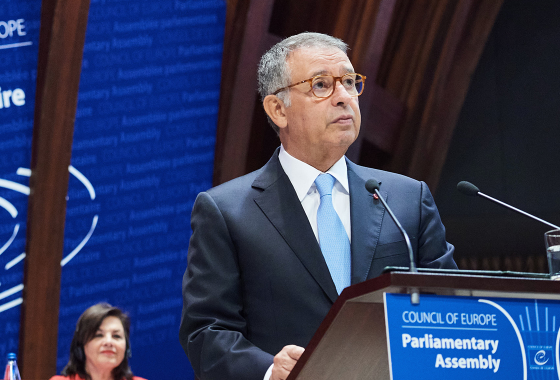
President of the Portuguese Republic
12:09:58
Madam President of the Parliamentary Assembly of the Council of Europe, Ms Petra BAYR,
Mister Secretary General of the Council of Europe, Mr Alain BERSET,
Madam President of the Committee of Ministers of the Council of Europe, Ms Isabelle BERRO-AMADEÏ,
Mister President of the European Court of Human Rights, Mr Mattias GUYOMAR,
Ladies and gentlemen, presidents of parliamentary groups,
Ladies and gentlemen, parliamentarians,
Ladies and gentlemen, permanent representatives of the Council of Europe,
Madam Marija PEJČINOVIĆ-BURIĆ, former Secretary General of the Council of Europe,
Madam Teresa ANJINHO, European Ombudswoman,
Madam Minister of Justice of Portugal,
I would like to begin by warmly welcoming the President of the Parliamentary Assembly, Ms Petra BAYR, for inviting me to address this Assembly and for her very kind and friendly words. Let me reciprocate by stressing her firm commitment towards young generations, social causes, the protection and rights of women and working with civil society in her country, Austria.
Ladies and gentlemen, let me greet all of the parliamentarians present here and tell you how pleased and honoured I am to be addressing you today. I would like, in particular, to greet the Portuguese parliamentarians and the head of the Portuguese delegation, Ms Edite ESTRELA.
I do this during a particularly significant part-session. We are celebrating the 50th anniversary of the accession of Portugal to the Council of Europe and the signing, on our part, of the European Convention on Human Rights. Fifty years ago, Portugal took a historic decision on 22 September 1976. Mr José Medeiros FERREIRA, Minister for Foreign Affairs of the government, led by Mr Mário SOARES, signed the Statute of the Council of Europe and the European Convention on Human Rights.
Portugal had recovered its freedom two years earlier with the revolution of 25 April 1974, and the democratic constitution had just entered into force. Accession to the Council of Europe was the expression of a clear choice. Portugal wished to belong to a Europe of freedom, democracy and the rule of law. Mr Mário SOARES understood that consolidating democracy in Portugal meant stronger ties with Europe. He understood that our conquered freedom had to be protected and deepened further. This choice was that of the Portuguese people, who refused isolation and claimed their place in the Europe of freedom.
This accession, however, was not only a mere diplomatic act, but it was a political and moral affirmation; it was the choice of a country wishing to build its future on the basis of freedom, justice and respect for human rights. Ever since, the relationship between Portugal and the Council of Europe has contributed to strengthening democracy and the protection of fundamental rights in Portugal. It is fitting to acknowledge this contribution today, and I would like to thank all those who made it possible. It is right to reaffirm today that Portugal will continue to be a staunch defender of the Council of Europe and of the European Convention on Human Rights and its system. Our gratitude for the past is inseparable from our responsibility for the future, Madam President.
But this is not only an opportunity for celebrating the past, but this is also an opportunity to renew our commitments and take responsibilities for the future. Indeed, because the mission of the Council of Europe continues to be as necessary today as it was at its creation: to defend democracy, human rights, the rule of law and human dignity. Eighty years ago, in a Europe devastated by war, this Europe started to rise up again. Mr Winston CHURCHILL, in Zurich, called for reconciliation, union and the building of lasting peace. The Council of Europe was a remarkable expression of that vision.
Over decades, together, we built a common space for rights, principles and guarantees. A space in which human dignity doesn't depend on nationality, origin, social conditions or personal beliefs. And this is one of the major conquests of Europe. But no conquest is guaranteed once and for all. This is something history teaches, and it is particularly relevant again today. Today, we are facing the rise in extremist movements, a loss of trust in institutions, discrimination, hate speech and xenophobia. We're seeing attempts to move backwards on rights, rights we felt were rock solid. We are faced with contempt for international law and increasing geopolitical uncertainty.
International conflicts and migrations amount to genuine challenges for our societies. But these challenges cannot ever serve to justify indifference to human suffering. Technological progress opens up extraordinary possibilities, but they also create instruments for manipulation and disinformation. Climate change threatens our safety and the living conditions of our populations. The ageing of the population also calls for new economic and social responses. These challenges cannot be solved through nostalgia, fear, or by relinquishing the principles that have brought us this far. They can only be resolved with better democracy, more co-operation, more justice, and more capacity for action. They can be resolved with concrete solutions for the real problems of persons.
Our response must be a joint one, because all of these problems go beyond our borders. Madam President, as we know, war has returned to our European continent. The invasion of Ukraine by the Russian Federation on 24 February 2022 amounts to a breach of international law and the fundamental principles of European order. In the face of this aggression, the Council of Europe has taken a very clear-cut position consistent with its funding values. The sovereignty of states, territorial integrity, and the prohibition of the use of illegitimate force are not options. They are basic foundations for international security.
Supporting Ukraine is a duty of solidarity towards its people. It's also a matter of defending our safety and the credibility of the principles that our communities are based on. The Council of Europe has played an important role in apportioning responsibility for breaches of human rights and fighting impunity. The Registry of Damages, the International Claims Commission and the Convention for the Establishment of a Special Tribunal for the Crime of Aggression are practical examples of this commitment.
Portugal has supported these mechanisms from the very beginning, and it will continue to support Ukraine on the political, humanitarian, financial and military levels. What we want is peace. But we want a fair and lasting peace, in compliance with international law and the sovereignty of Ukraine. It is urgent to put a stop to the human suffering caused by the war. A ceasefire is also urgent. We need to open peace negotiations. War destroys, peace builds. War causes suffering. Peace fosters development. That is one of the lessons of history, and that is the responsibility of Europe.
Madam President, this responsibility is linked to three fundamental priorities: tirelessly defending human rights; looking after democracy and strengthening social cohesion; and a Europe open to the world, capable of dialogue and co-operation. These are not isolated priorities. These are dimensions inseparable from the one and the same European project. First of all, defending human rights, without any compromise or hesitation, is a duty for us. European humanism is our biggest strength. Human dignity must continue to serve as a compass for us. Fundamental rights cannot depend on circumstances, parliamentary majorities or simple convenience. The European Convention on Human Rights and the European Court of Human Rights are essential pillars in this building. Their authority depends on the fulfilment of obligations accepted by states and the effective execution of the court's judgements.
But proclaiming rights is not enough. We need to guarantee them. It is not sufficient to sign conventions. They must be implemented. The Council of Europe is building a legal heritage of extraordinary value. The Conventions of Istanbul, Lanzarote and Budapest, just like the Framework Convention on Artificial Intelligence, demonstrate the organisation’s ability to anticipate problems and transform principles into practical instruments for protection. Artificial intelligence is one of the major transformations of our times. It can improve the lives of persons, stimulate creativity and stimulate scientific discovery, but it also represents risks for human rights, democracy and the rule of law.
Innovation cannot dispense with responsibility. Efficiency cannot justify opacity. Technological progress cannot reduce human beings to instruments. And so we need transparency, supervision and accountability. We need rules protecting citizens and institutions capable of guaranteeing they are fulfilled. Technology must be at the service of persons and not the other way around. This requirement also applies to the new digital space. Digital education, educating young people for citizenship, preparing citizens, in particular the youngest, to distinguish information from manipulation and to exercise freedom with critical thinking.
A democracy needs informed and free citizens who are able to participate. Freedom of expression is essential. Freedom of the press is also essential. The protection of journalists is a responsibility for all democratic states. And we also need to act in the face of climate change. Portugal has opted for renewable energy and the protection of oceans. Our Constitution, approved in 1976, consecrated the right to a human environment which is sound, healthy and balanced. Portugal supported the recognition by the United Nations of the human right to a clean, healthy and lasting environment. We defend the idea that the Council of Europe must make progress in protecting this right, reinforcing the instruments at the disposal of European citizens.
I would now like to move on to the abolition of the death penalty. The Council of Europe is a space without capital punishment. The abolition of the death penalty amounts to a civilisational conquest and a non-negotiable compromise and commitment. Portugal was a pioneer in the abolition of the death penalty, and it will continue to work towards its eradication throughout the world.
Our second commitment is gender equality and the protection of women's rights. There can be no full democracy when women cannot exercise their rights on an equal basis. There is no progress when domestic violence, violence against women or unequal pay between women and men are tolerated. I am concerned with the resurgence of narratives and initiatives seeking to limit the rights conquered by women over decades. Women's rights are not negotiable rights. The Istanbul Convention is a fundamental instrument in this fight. It's important to see to its effective implementation and to strengthen mechanisms of prevention, protection and accountability.
Our third commitment is the fight against any forms of discrimination and the defence of the rights of minorities and vulnerable persons. The resurgence of extremist currents inciting hate calls for vigilance and determination. We cannot accept discrimination, violence or intimidation against persons because of their identity or sexual orientation. The universality of human rights needs to be proved on a practical level as soon as someone's rights are challenged. It is then that we need to act with determination.
Our second priority is looking after democracy and strengthening social cohesion. Democracy is not limited to elections, institutions or the letter of the law. Democracy thrives in trust, participation and the ability to respond to the practical problems persons experience. A strong democracy requires credible institutions, an independent and effective justice system, fighting corruption, freedom of the press and respect for the rule of law. This calls for pluralism, active participation and citizens who feel that they are part of a community. But most of all, this calls for no one to be left alone. Democracy needs to be able to reach out to people in their day-to-day life. And I mean all people. Democracy has to guarantee that rights are not only recognised, but they're also exercised. That public services don't exist only on paper, that they respond to the needs of those who need them.
Equality before the law must translate into equal opportunities. Political freedom must be accompanied by the real possibility of building a life for oneself. This is the social dimension of democracy. It's also one of the conditions of its legitimacy. History teaches us that democracy can be lost, that rights that seem there forever can disappear, that what we felt was impossible can actually happen. Therefore, we need a very clear-cut message, in particular towards the younger generations. Democracy is never guaranteed. We all need to defend it every day. We need to take care of democracy. We cannot be truly safe if the defence of our democracy is not based on the rule of law, respect for fundamental rights, and the trust of citizens. Looking after democracy is a collective responsibility. We, the Portuguese, are very familiar with the price of dictatorship, isolation and silence. We know what it means to live without freedom and without political rights. This is why we cannot remain indifferent in front of attempts to restrict freedoms, promote the backsliding of rights, or discriminate against citizens.
But to defend democracy also means fighting inequalities, those which erode trust in institutions. Poverty, exclusion, lack of opportunities, and economic insecurity are not problems which exist in the margins. They are central challenges for the vitality of our society, just as we need a central response to the rise in the cost of living caused by the surge in oil prices as a result of the conflict in the Strait of Hormuz. Individuals and companies are struggling today. This is a common problem in different countries. Europe must work towards a common response which dovetails with domestic responses. Social justice, access to housing, dignified employment, and equal opportunities are the conditions we need for each individual to be able to build their own life. There can be no truly strong democracy if some citizens feel they have no place in it. Young people in Europe need concrete responses also: accessible housing, dignified employment, protection of the environment and opportunities for self-realisation and fulfilment. We need to listen to young people, involve them in decision making and give them reasons for believing in the future.
We also need to respond to the challenges of an ageing society. Elderly people must be able to live in dignity, autonomy and safety as full participants in society. Solidarity between generations is one of the foundations of a cohesive society. And cohesion requires responsible migratory policies also. Europe needs to respond to its demographic and economic needs whilst respecting human dignity and effectively integrating migrants with credible border control. Border control is not incompatible with the respect for human dignity. We need effective policies, we need capable institutions and the trust of citizens. We need to recognise the contribution of migrants to our societies and guarantee the integration of migrants.
Portugal is firmly committed to the revised European Social Charter and in 2029 will be hosting its third High-Level Conference on Social Rights. In Braga in 2025, we organised a European Youth Conference. These are contributions for a fairer Europe with more participation and more solidarity. Portugal was never a closed country. Our history and our geography taught us to open up beyond our borders. Europe must not be a fortress. We must be a space of freedom, dialogue and co-operation, open to the world, but faithful to our principles. We need multilateralism.
The Council of Europe has the right conditions to strengthen its external dimension and deepen its relations with countries in the South, with which we share responsibilities, challenges, and common interests. The experience of this organisation, of its legal instruments, and its heritage in defending human rights are very relevant beyond the European continent alone. Portugal was proud, in 1990, to host the creation of the North-South Centre of the Council of Europe. This centre is a platform for intercultural dialogue between the North and the South, which promotes education, citizenship, solidarity and international co-operation. In a world with so many divisions and lack of understanding, we need spaces which bring together peoples and cultures. We need to build bridges, create trust and find common responses to common problems.
The awarding of the North-South Prize at the level of our Parliament precisely expresses this universal vocation and this humanist vision of ours. We had the honour to award this prize for the first time recently. And we must also reinforce our strategic partnership with the European Union, in deep co-operation with the United Nations also. Multilateralism calls for effective institutions with a capacity for decision making, but with the participation of citizens also.
Portugal will continue to fully play its role in all of this. Our belief is very simple: the major challenges of our time cannot be resolved in isolation. Peace, safety, climate change, migration, technological transformation and defending human rights call for international co-operation. A strong Europe is not a closed Europe. It is a Europe that knows what it is defending, that has its own voice and which is capable of dialoguing with everyone. A world that needs to listen to the voice of Europe.
Madam President, celebrating 50 years of the presence of Portugal on the Council of Europe is taking stock of what we have done thus far. But it is most of all taking responsibility for continuing to build this in the future. The founding fathers of this organisation understood that peace, freedom and human dignity called for political courage, vision and determination. Today, we have to live up to this heritage. It is not sufficient to preserve what we have received. We need to consolidate it. It is not sufficient to defend human rights with words. We need to guarantee it in people's actual lives. It's not sufficient to proclaim democracy. We need to protect it and make it closer to citizens. That is the responsibility we have towards European citizens, young people and all future generations.
In 50 years time, when Portugal will have been a member of the Council of Europe for 100 years, we hope that our children and grandchildren will be living in a fairer, freer Europe; a Europe with more safety and more solidarity; a Europe in which peace will be lasting; a Europe in which democracy is not something we've inherited, but something which is renewed every day; a Europe in which economic and technological progress is translated through better living conditions for all; a Europe in which everyone can enjoy their rights, regardless of their origin, beliefs or conditions; a Europe capable of defending its values without closing itself off to the world.
This future is not written. It depends on the choices we will make now. Portugal has chosen freedom. It has chosen democracy, the rule of law and integration in Europe. We maintain this choice today with the same determination as 50 years ago. We will continue to be fully committed vis-à-vis the Council of Europe in defending its values and fulfilling its mission. Because we believe that human dignity knows no borders. Because we believe that human rights are universal. Because we believe that democracy calls for a permanent commitment. And we know that the rule of law is an essential condition of freedom.
We need the courage to reform ourselves and to act. I hope that the Council of Europe will continue to be an essential hallmark in the defence of democracy, human rights and the rule of law. That Europe will continue to be a space for freedom, peace and human dignity. And that Portugal will continue to bring its contribution to this common goal.
The future of Europe cannot be defended with words only. It is built with principles, decisions and action. That is our responsibility. That is our commitment.
Thank you very much for your attention.
[Applause]
Thank you very much, Your Excellency, for your most interesting address. I very much appreciate that you shared your approach, how to tackle our common concerns and our common challenges.
And I also appreciate very much your way to learn from the past, which means not praying to the ash, but preserving the spark. I think that's indeed a way forward.
You already made the welcome which I wanted to do for the President of the Committee of Ministers, the European Court of Human Rights and our former Secretary General. So thank you for that.
We will now take questions from the representatives of the five political groups. And the first on my list is Mr Frank SCHWABE on behalf of the Socialists, Democrats and Greens Group.
Frank, you have the floor.
I just think about the language I should use. So, in English, it is okay.
Madam President, Mister President, thank you very much for this very important speech. Congratulations on 50 years of membership in this organisation. And if I may say so, as a German, congratulations that you are a member of the UN Security Council.
So, you spoke about the Constitution of Portugal, the very innovative one. Tomorrow we have a very important debate about the environment and climate change. You spoke a little bit about it, but maybe you can go a little bit more into a concrete situation. What do you think we can learn here from your innovative Constitution for our debate on the human rights dimension of the environment and climate change?
Thank you, Mister President.
You can answer from your seat. It's fine.

President of the Portuguese Republic
12:37:16
Thank you very much for your question.
Our constitution, when it comes to environmental policies and rights, did not require from us that we carry out any significant reform. And we have, therefore, a constitutional framework which makes it possible to apply public policies which defend and protect the environment, in particular to fight climate change and all of these climate-related challenges we face.
And we have indeed adopted policies that very much rely on renewable energy. This is a very important factor if we want to be able to confront climate change. And this also calls for good management of water. We have a framework law on this. And with the policies adopted by successive governments, we're attempting to ensure consistency in our policies in order to address the problems that we face. But as you know, you might have the best environmental policies in the world, but if the general context is not appropriate in order to apply them, you can do very little.
And this is also a matter of joint responsibility for all countries in the world. We can bring our CO2 emissions down, but if other countries and other regions of the world are raising theirs, then of course the environment will be polluted in the same way. And that's just an example. If we want to fight climate change, if we want a better environment, this is a joint responsibility at global level. All countries have to move in the right direction here.
The international community has not faced climate change with appropriate measures and we are suffering the negative consequences of this. We have the example of major fires breaking out, of extremely high temperatures, and those are emblematic of these problems. We live in societies in which we have the information, we have the scientific knowledge, but we don't have the matching political action and political will. And these political measures are called for at global level.
Thank you.
Thank you.
The next on my list is Mr Pablo HISPÁN, on behalf of the Group of the European People's Party. You also have 30 seconds to ask a question.
Thank you, Madam Chair.
Welcome to the Parliamentary Assembly of the Council of Europe.
50 years ago, Portugal joined this organisation, as you said in your address, as a young democracy. It took a clear decision in favour of the rule of law, of freedom.
Today these values are threatened in the West. What role should this organisation play to strengthen all of our fundamental human rights and what should we do in multilateral organisations so that we can actually bolster existing conventions?
Thank you, Mister President.
President of the Portuguese Republic
12:41:09
I would like to thank you for these questions. I will continue in Portuguese.
We cannot expect the Council of Europe to do everything. The Council of Europe has a mission to defend peace, human rights and the rule of law, those essential parameters for a democratic regime. Now I have just met with the Secretary General, and of course the European Court of Human Rights plays a very relevant role here, and there are other such jurisdictions in the world.
Those decisions, if they are confirmed by the case law of respective member states, make it possible to apply those decisions to 700 million people. So that is a fantastic kind of achievement, the idea being to protect what is most sacred in human communities, that is, the defence of human rights.
I would say that if we want to take the decisions adopted by the European Court of Human Rights and then adapt them in every country, if we work together to do this, that will foster better guarantees for human rights and the rights in general of people living in Europe. And I think that is an area which calls for significant investment.
And then, I'm also thinking of your relentless work here at the Council of Europe in defence of peace and human rights, with the reports you produce and the dialogue you entertain with various countries that might be less advanced in the realisation of these human rights. This calls for work that is not immediately visible but which is lasting and which creates roots and which is very much based on education. And I would have perhaps one suggestion to make here, although I know, of course, financial resources are always limited, but perhaps you should play more of a role in terms of educating younger generations.
A lot of people only attach importance to a glass of water when they're thirsty, but we need to value democracy at all times. We have to have the ability to carry out projects involving younger people, explaining to them the invaluable role of democracy in terms of human development and happiness. This is something we need to do in Europe, but also with other countries that are not on the European continent. They can also make an important contribution, and I think that we can sow seeds so that there can be flowers for future generations. We need to plant those seeds; we need to water them and nurture them every day.
Thank you.
I now call on Mr Bernardo PESSANHA from the European Conservatives, Patriots & Affiliates (ECPA).

Portugal, ECPA, Spokesperson for the group
12:44:43
Thank you, Madam Chair. I will ask my question in Portuguese.
Mister President,
Here at the Council of Europe we are an organisation which was created to defend democracy. We are used to seeing authoritarian regimes stifling opposition and Portugal has also thought about taking measures to extinguish Chega, an opposition party.
I would like to know what more you can say about this, about the role of the opposition. What will you do to put an end to attempts to eliminate political opposition through violence?
Thank you.
Mister President, please.
President of the Portuguese Republic
12:45:32
Thank you. Thank you very much for your question.
Well, I agree with what you said at the beginning of your intervention. Portugal is based on the rule of law and, therefore, decisions on the possible elimination of political parties are decisions which also need to be confirmed by the Constitutional Council. And I'm not aware of any initiative taking place at this point in time of this kind. If we look at the principle of the separation of powers, well, it is up to courts to take these decisions if behaviours are found which are not in conformity with the law or with our constitution.
Now, when it comes to the Chega party, I would like to say that as President of the Republic – and this is the case also for other parties with parliamentary representation – I have met with the leader of that party, as with the leaders of all other parties.
Thank you.
Thank you very much.
The next one is Mr Bertrand BOUYX on behalf of the Alliance of Liberals and Democrats for Europe (ALDE).
France, ALDE, Spokesperson for the group
12:46:46
Thank you, Madam President.
President,
On 8 February, you won the presidential election in resounding fashion against the far right, in a political context somewhat reminiscent of that in my own country. In short, Portugal has shown France the way forward.
Since then, you have been received by President Emmanuel MACRON as part of the implementation of the Treaty of Friendship and Cooperation, known as the Treaty of Porto, and I am very proud of this.
President, I would simply like to ask you what lessons you have learnt from this presidential election. I am sure we all have much to learn, given that our countries are under threat from the rise of populism and extremism.
Thank you.
Mister President.
President of the Portuguese Republic
12:47:33
Thank you very much for your question.
I believe, this is really my belief, that moderation is not a weakness. And in terms of polarisation and fragmentation, I would even say that moderation is an act of courage. And therefore, what counts is that moderators should take part in the public space and should be available, should make themselves available, so that they can speak up and take on political responsibilities in every country.
I also consider that it is fundamental for persons in politics to be focused on the practical solving of people's problems. Of course, you need free and fair elections. There are all these conditions that I referred to in my speech. But it's also about finding answers to people's problems. And today, what we are seeing is that, in certain cases, the focus hasn't really been to solve people's concrete problems. It's about confrontation. It's been about confrontation between various stakeholders.
What I did during my presidential campaign was precisely to focus on people and not so much on my political adversaries. The enemies of democracy, our enemies, are these problems that we can't solve. Then populists take advantage of that situation. Democrats have a responsibility to act in keeping with their beliefs and to find solutions which improve the lives of persons.
And this is why I would say that focusing on solving people's problems is essential. Many people are suffering. Many people are experiencing difficulties. When I was young, when I was working at the European Youth Centre here in Europe, the future seemed full of potential and possibilities. For young people today, the future seems very limited and frightening. We need to address this. There are all sorts of problems. For example, in my country, young people stay on average in their parents' home until they're 30 years old. This affects their autonomy, their independence, any projects they might have for their lives. That's just an example concerning young people. I could have given you other examples.
And so our responsibility, when we want to accede to a certain position, when we stand for election, is to find solutions. I would say moderation as a behaviour, focusing on solutions as a central objective, and then bringing people together, because for the moment we're seeing a lot of fragmentation. We need to understand that we need to bring about a political culture of convergence. Democracy is not only confronting different opinions in situations of emergency. You need commitment between forces, but also compromise so that you can give people what they hope democracy will give them in terms of health, education, social protection, access to housing.
Now as to how this is actually implemented, every political party has its own solutions. But in many countries today democracy has worn very, very thin indeed and this is a problem for all of us. I recently met with the President and with the Secretary General and I was wondering how it was possible that, today, one of our concerns should be to continue being able to live in democracies in the short term.
This Council of Europe was set up almost 80 years ago, after a devastating Second World War, causing millions of deaths. How is it possible that we might be returning to war on our continent? I was always trained to believe that solutions could be solved through peaceful means and not through war. I think it's very important for us to look after these common values in our democracies. It's quite obvious. Democracies cannot declare war on other democracies. And if we want peace, it's important to consolidate our own democracies. And in order to consolidate our democracies, we need to provide answers to problems. Because, of course, people tend to believe in democracy and the fact that it's the best possible regime apart from all others, as Mr Winston CHURCHILL said, if their problems are solved.
Thank you.
Thank you.
And the last round of questions, on behalf of the political groups, is Mr Emmanuel FERNANDES, on behalf of the Group of the Unified European Left (UEL).

France, UEL, Spokesperson for the group
12:53:19
Thank you, Madam Chair.
Mister President, first of all, thank you for being here today at our institution.
I am speaking to you on behalf of the Group of the Unified European Left, but you may have noticed from my surname that I have a direct connection to Portugal, as my father left the banks of the Douro in the early 1970s, fleeing the dictatorship of Mr António DE OLIVEIRA SALAZAR with his family.
Upon arriving here, he and his parents were subjected to xenophobia. Today, migration is being exploited on a massive scale for political ends; intolerance and racism in particular are dividing our societies.
So, while you have already touched upon this at length, by posing this follow-up question I am giving you the opportunity to explore this deeply worrying issue in greater depth: the rise of racism, which is a crime, not an opinion. How might you contribute to combating this threat in Europe?
Thank you.
Mister President.
President of the Portuguese Republic
12:54:14
Thank you for your question and your words.
I would say that Europe needs to pay attention to the issue of migration from various angles, not only one. It's very reductionist to see migration exclusively as an emergency or simply related to the fact that there are fewer young people, we need more labour and therefore we need to open our borders. I think that one of the questions that needs to be asked is why these people want to come to Europe.
Well that's because they have no prospect of development or self-fulfilment in their country. One of our responsibilities is also to share our own well-being with other countries through development co-operation. Secondly, if we don't agree on the type of development we want, and bearing in mind that the development of technologies might mean we have less need for labour, but if we can have better jobs with better wages, even if there is less labour overall, and less numbers of jobs overall, well...
And if we can't control migratory flows and see to proper integration, for me there are three important phases: regulation, reception and then the integration of migrants. What we're seeing in some countries is that you have a certain number of migrants, but very often they're not going to find the right structures in the host country to take them on and help them integrate.
So I think it's very important for migration to be organised. If it is organised and if it's integrated, then societies will realise that the contribution of these migrants is very valuable indeed, including for our economies. We shouldn't be afraid of speaking of migration. We need open conversations about this. And we shouldn't deny, either, the difficulties linked to it and the pressure it exercises, for example, on public services. We need to address these problems without any taboos, without any emotions. We need a rational debate. I think this is possible.
Thank you, Mister President.
I trust that you will manage to answer the next three questions very, very briefly.
Then I will start a last round before we have to conclude.
And I first call Mr Márton HAJDU from Hungary.
Thank you.
Mister President,
In 2007, you helped strengthen parliamentary scrutiny in Portugal, while your own party had an absolute majority.
In Hungary, we now find ourselves in a similar situation. After 16 years of corrupt authoritarian rule, the new majority of my party, the Tisza Party, is aiming to restore parliament to its rightful place and build ironclad checks and balances.
In your personal experience, what are the key things that matter to ensure that a parliamentary majority holds a government to account when they are made up of the same party?
Thank you.
Thank you.
And Ms Edite ESTRELA is next.
Thank you, dear President.
How good it feels to be able to speak Portuguese today in the Assembly.
Mister President,
It is an honour and a privilege for the Portugese delegation to receive you today, here at the Council of Europe. It was 50 years ago that Portugal opted for the path of peace, democracy, rule of law and human rights.
And Portugal is also very proud of the heritage it contributed to the Council of Europe, that is, as a founding member of the North-South Centre located in Lisbon.
Mister President,
In the current political context, with deep inequality between the North and the South, how can democracy continue to be attractive for those that have not benefitted from it, that is, the countries of the South?
Thank you.
And the last of the three is Ms Ivanka VASILEVSKA from North Macedonia.
Thank you, Madam President.
Your Excellency, what steps does Portugal envisage to strengthen its diplomatic presence in the Western Balkans?
And how can the countries of south-eastern Europe best support those efforts?
Particularly, can we expect in the near future the opening of an embassy of Portugal in my country, the Republic of North Macedonia?
Thank you very much.
Mister President.
As brief as possible.
President of the Portuguese Republic
12:59:58
Thank you very much.
I'll be as brief as I can.
I would like to begin by thanking the parliamentarians for these questions.
Portugal supports the accession process of the Balkan countries to the European Union, and I feel that it is extremely important to take into account the conventions devised by the Council of Europe that very much contribute to the progress being made by these countries.
The responsibility of opening embassies falls not with the President of the Republic, but with the government in Portugal. For the time being, I don't think that we are contemplating the opening of another embassy, but I have, nevertheless, taken good note of your question.
Now, when it comes to what Ms Edite ESTRELA has said, it is a great pleasure to be listening to her and to be meeting with her. Now, I think I might already have answered when it comes to the conditions in which democracies can become attractive, and to make sure that they are attractive. Well, we were certain that we would have a fourth democratic wave at the end of the last century, and in particular, with the Arab Spring, this is not what actually occurred. On the contrary, there has been backsliding – there are various reasons for this. I don't have time to go into all of them, but I would say that it is important, first of all, to better keep electoral promises. That is, politicians need to actually implement what they have promised to do to avoid creating disillusionment.
Then I am also thinking about the ethical dimension that needs to be upheld on the part of politicians. This will create more credibility and more trust in institutions. And I think that it is very important, therefore, to make sure that these ethical standards are upheld at all times. And this also applies to parliaments.
And as I have already said, we need to see to it that people's concrete problems are solved. When it comes to redistribution of social assets, that is something, of course, that does a lot of good. If there is no redistribution to the population, there is a lot of disillusionment and a lot of disappointment. It is also a matter of distance between those who have and those who don't, but if we can't solve people's concrete problems, if people feel that they're not in a position to do what they want with their lives, then of course they're going to be disappointed, and bitterly so. We also need policies that won't keep chopping and changing, according to who is in government.
That is another thing. All of this is fundamental. How can we see to this in times of polarisation and fragmentation? Well, I think we need to give more importance to moderation and balance, and we need to focus not on fighting our opponents, but on fighting the problems that affect people's lives and find solutions to respond to them.
Moving on to the question now of how a parliament can scrutinise a government when there's an absolute majority. In 2007, I had the honour of co-ordinating a reform in the Portuguese Parliament, and amongst other mechanisms, the one I believed was the most effective and the most useful was the fact of giving scrutiny rights to opposition members, which they had never enjoyed before. Until 2007, for example, the prime minister was a member of government who had certain powers, and in a situation of difficulty, of course, the majority would always defend its own government, so what could we do? Well, you can solve that by giving more power and more credit to opposition members also, in terms of powers of scrutiny, in particular, over the government. This means that the majority is not all-powerful, combined with other measures, such as the compulsory presence of ministers in committees. For example, the Minister of Justice has to go to parliament at least four times a year to examine legislative projects. For example, well, that's important. Scrutiny is essential, of course, for the rules of democracy to be applied as they should.
Thank you.
Thank you very much.
We must now conclude the questions to His Excellency.
I really want to warmly thank you for your substantial answers. We very much appreciate it.
[Applause]
And I also personally really enjoyed listening to the beautiful Portuguese language which I Iove very much.
Thank you very much.
The Assembly will hold its next public sitting this afternoon at 4 p.m. with the agenda approved on Monday.
The sitting is adjourned.