


07/11/2025 Culture, Science, Education and Media
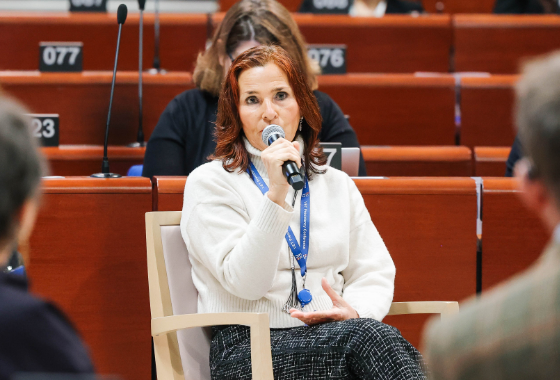
At the World Forum for Democracy 2025 in Strasbourg, a session co-organised by PACE and the Observatory on History Teaching in Europe explored how history education shapes democratic citizenship and resilience.
Moderated by Matjaž Gruden, Director for Democracy at the Council of Europe, the discussion brought together educators, policymakers and experts to reflect on how teaching history can help societies confront the past, resist authoritarianism and nurture informed, engaged citizens.
Luz Martínez Seijo (Spain, SOC), Chairperson of PACE’s Sub-Committee on Culture, Education and Democratic Values and the author of a recent Assembly report on history education for democratic citizenship, stressed the power of multiperspectivity — exposing students to “diverse narratives and not only facts, which builds tolerance and critical thinking”.
“Multi-perspectivity shows young people how to build tolerance, how to respect other students’ points of view, how to interpret history, and then learn from the mistakes of the past, understand the present, and shape more inclusive and democratic societies for the future,” she said, calling for stronger links between formal and non-formal education through museums, remembrance sites, and cultural initiatives.
Other panellists — Francine Mayran, Alina Mungiu-Pippidi and Lorena Zuccolo — discussed the emotional, social and cultural dimensions of remembrance, from preserving the memory of the Shoah to confronting Europe’s totalitarian legacies. Together, participants reaffirmed that history education is a cornerstone for defending democracy against populism, disinformation, and division.