20/11/2025 Elections | Ad Hoc Committee New Democratic Pact
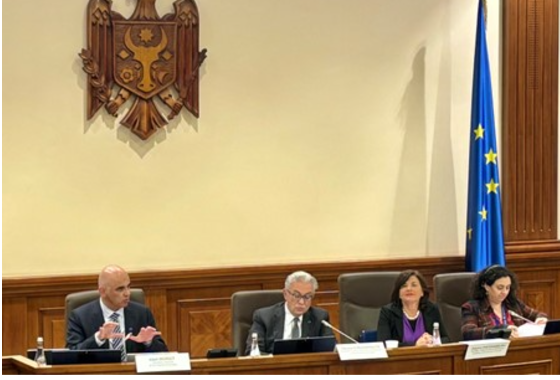
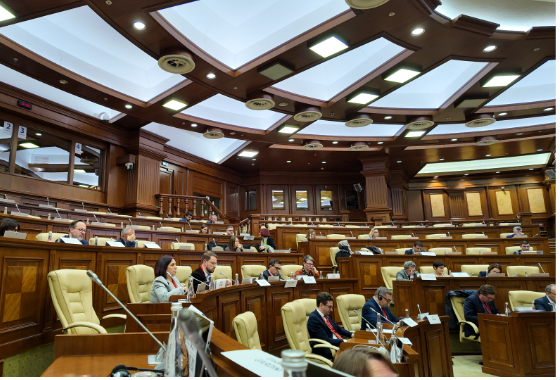
PACE’s Committee on the New Democratic Pact heard at first hand from the Republic of Moldova’s top election official how the country had managed to resist foreign interference during recent elections, and held an exchange of views with Council of Europe Secretary General Alain Berset on the Pact, which aims to stop the unravelling of democracy and boost the resilience of democratic institutions against backsliding, disinformation and authoritarianism.
PACE President Theodoros Rousopoulos, opening the event, noted that at the very moment Council of Europe states were seeking stronger armies, they were potentially facing weaker democracies. “Democratic security is Europe’s first line of defence,” he pointed out, underlining that the Assembly’s 46 parliamentary delegations could be “key conduits” for advancing the New Democratic Pact at domestic level and among citizens. “The cross-cutting nature of our work on the Pact must now translate into tangible outcomes,” he pointed out, announcing the launch of a new web page on the Assembly’s activities to support of the Pact.
Council of Europe Secretary General Alain Berset said the 30 years since the fall of the Berlin Wall had seen moments of “huge optimism” for the development of democracy, but today that optimism could seem a little naive after a succession of crises which had put democracy under pressure. Pointing to the many ways the Council of Europe was supporting democracy, he added: “Now is the right moment to bring these elements together to find a stronger response to democratic backsliding. The New Pact will be an opportunity to create a clear view of what more we need to do to make progress, and to increase synergies between the different Council of Europe bodies.” He added that – following high-level discussion among heads of state and government from Council of Europe member states – the Council of Europe had begun work on a possible new convention on disinformation and foreign interference.
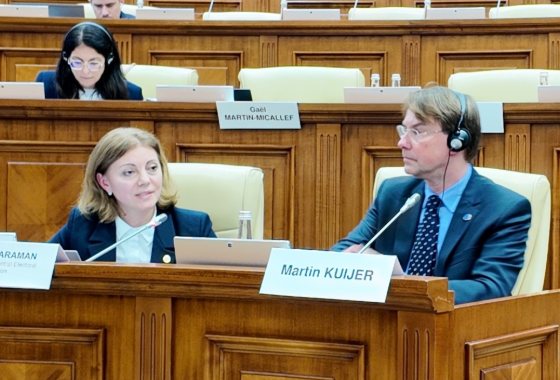
The President of the Republic of Moldova’s Central Election Commission Angelica Caraman set out the huge challenges that she and her fellow officials had faced in Moldova’s recent elections, and the steps that were taken to protect Moldova’s electoral processes against foreign intervention: “These elections were a test for the resilience of our institutions. The stakes were huge for our country, but I feel that we passed the test.” Challenges included cyber-attacks, obscure or illicit financing, paid protests, attempts to bribe voters, fake registrations, so-called “false observers” and more. She defended the legal steps that had been taken, late in the campaign, to ban “successor parties” to parties which had already been banned.
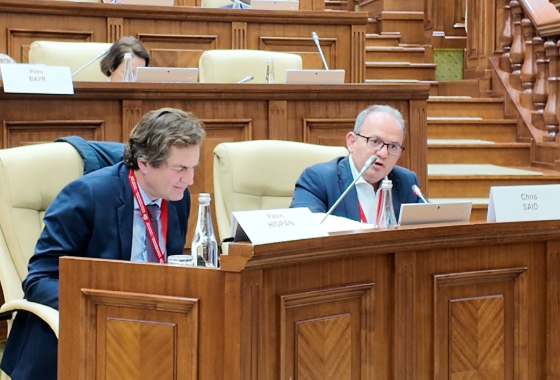
Chris Said (Malta, EPP/CD), the head of the PACE team that observed Moldova’s recent parliamentary elections, praised Moldova’s institutional readiness and its active defence against hybrid threats. It was a strength that all parts of society had been involved in this effort, he pointed out. “Moldova has shown it is possible to resist a sophisticated foreign interference campaign, but this fight is never over once and for all.”
Martin Kuijer, Vice-President of the Council of Europe’s expert legal body the Venice Commission, set out the Commission’s latest recommendations on good electoral practice in the age of foreign interference, misinformation and cyber-attacks. Three key measures, he said, were robust legal frameworks that could respond to evolving online threats, strong institutions to enforce these frameworks and stronger cross-border co-operation.