29/12/2025 Elections
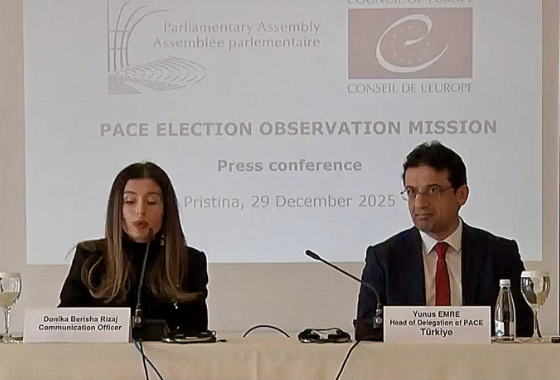
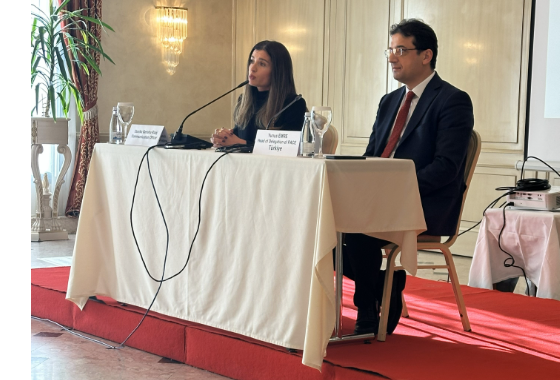
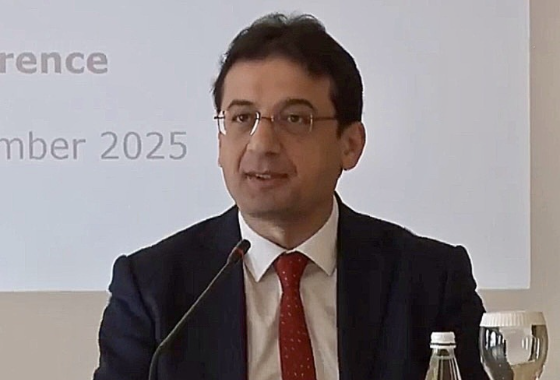
A delegation from the Parliamentary Assembly of the Council of Europe (PACE) has welcomed the smooth and professional conduct of the early elections to the Assembly of Kosovo, expressing the hope that all political stakeholders will demonstrate responsibility in restoring functional institutions.
The 28 December vote marked the fourth electoral process in Kosovo in 2025, following the inconclusive Assembly elections in February and the two rounds of local elections in October and November 2025. These early elections were prompted by a prolonged political stalemate — including the delayed constitution of the Assembly, failure to form a government and the inability to adopt a budget — and took place within shortened electoral deadlines after a brief, low-key campaign.
Despite the polarised political climate, the PACE delegation noted that most interlocutors appreciated the campaign's softer tone, the absence of formal complaints regarding hate speech and the lack of serious incidents, which are positive developments.
The delegation noted that the elections were technically well prepared despite short deadlines and generally assessed as inclusive. However, for the fourth time this year, the Central Election Commission (CEC) rejected the certification of the main Kosovo Serb party, Srpska Lista, and their list of candidates — a decision later overturned by the Electoral Complaints and Appeals Panel and the Supreme Court. This recurring pattern raised concerns about the consistency and impartiality of the electoral administration regarding the certification process.
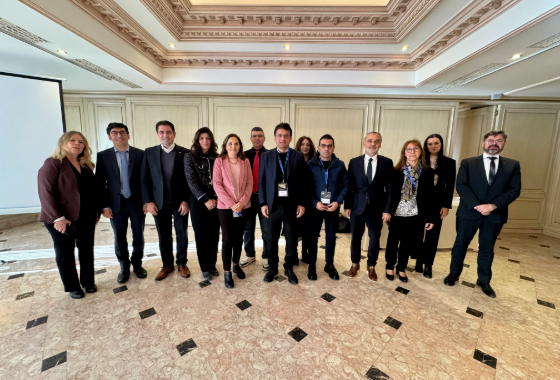
The PACE delegation, led by Yunus Emre (Türkiye, SOC), was composed of 12 members, including six parliamentarians from four political groups of the PACE and five Council of Europe member states, as well as representatives of the Venice Commission and staff. On election day, the PACE teams were deployed in Pristina and its surroundings, as well as in Ferizaj/Uroševac, Gjilan/Gnjilane, Gračanica/Graçanicë, Istog/Istok, Klinë/Klina, Leposavić/Leposaviq, Mamushë/Mamuša, Severna Mitrovica/Mitrovicë e Veriut, Mitrovicë e Jugut/Južna Mitrovica, Osojan/Osojane, Pejë/Peć, Podujevë/Podujevo, Prizren, Rahovec/Orahovac and Zllakuqan/Zlokućane.
In the limited number of polling stations observed, the delegation found that the elections were conducted smoothly and professionally, with well-trained electoral officers and a positive atmosphere prevailing in polling stations administered by officers from both majority and non-majority communities. The delegation also noted a reduction in invalid ballot papers due to improved assessment of voters’ expressed will.
However, in a number of polling stations, electoral materials were not available in languages other than Albanian. Access for disabled persons remained a challenge in many polling stations. Voters requiring assistance during the voting, including illiterate persons, was also an issue at some polling stations. These regulations should be reviewed to allow for a more inclusive approach. Regrettably, in one polling station, the electoral administration did not allow one PACE observer team to be present during the counting.
The delegation welcomed the active involvement of women in the polling stations visited. While parties fulfilled the formal gender quota requirement, further progress is needed regarding equal campaigning opportunities, media and social media exposure and realistic chances of election.
The delegation also acknowledged that the legislation is conducive to democratic elections. However, serious gaps remain, notably regarding the regulation and oversight of campaign finance. The delegation was also informed about fines deemed disproportionate, imposed for campaign speech considered inflammatory or discriminatory. This has prompted a debate on balancing the protection of freedom of expression with the need to sanction hate speech. While media coverage was seen as balanced and compliant with regulations, the delegation heard concerns regarding political sponsorship of the media and the safety of journalists.
With 2.1 million voters registered in a population of 1.5 million, the issue of inflated voter lists — stemming notably from the lack of effective deregistration mechanisms for emigrants and the absence of systematic harmonisation between census data and the civil registry — remained unaddressed in 2025. Such issues may raise concerns under international standards regarding the accuracy and credibility of voter registration and should be addressed by the authorities.
The elections were also notable for being held on a date that coincided with the return of a significant number of diaspora members for end-of-year celebrations. Some modalities allowing out-of-country voting at diplomatic premises or by postal voting were also improved.
These early elections were intended to end a political deadlock. The delegation calls on all stakeholders to demonstrate responsibility in restoring functional institutions ahead of the election of the President of Kosovo in spring 2026 by the Assembly of Kosovo, and to uphold the democratic and Euro-Atlantic aspirations of the voters. The Parliamentary Assembly of the Council of Europe and the Venice Commission stand ready to co-operate in further improving the electoral framework and strengthening the capacities of stakeholders responsible for managing elections.
The PACE delegation was in Kosovo from 26 to 29 December 2025. It met with leaders and representatives of the main political parties (including parties representing non-majority communities), the Chairperson of the Central Election Commission, the Chairperson of the Electoral Complaints and Appeals Panel, as well as representatives of the international community, NGOs and the media. The delegation's election observation report will be presented during a PACE part-session in 2026.
--------------
* Throughout this text, all reference to Kosovo, whether to the territory, institutions or population, shall be understood in full compliance with United Nations Security Council Resolution 1244 and without prejudice to the status of Kosovo.