


30/09/2026 Session
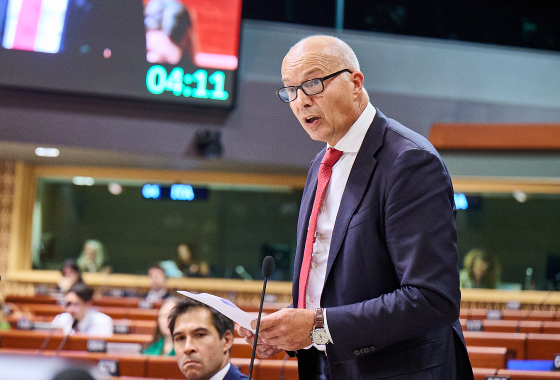
The Parliamentary Assembly of the Council of Europe (PACE), meeting in plenary session in Strasbourg, expressed today its concern regarding attempts “to threaten and intimidate international judges and prosecutors of the International Criminal Court (ICC)”, by subjecting them to coercive measures for undertaking their functions as part of the international criminal justice system.
According to the resolution adopted unanimously by PACE, based on the report by Tekke Panman (Netherlands, EPP/CD), these measures have been taken in particular by the United States and Russia against international judges and prosecutors who were investigating alleged war crimes and crimes against humanity falling within the ICC’s jurisdiction, specifically in Ukraine, Afghanistan and Palestine.
“These measures have far-reaching consequences for the ICC’s operational functioning, as well as for the professional and private lives of the officials concerned, constituting an unacceptable attack on their independence,” the parliamentarians emphasised.
Expressing its full support for the ICC’s work, PACE called on the international community, and in particular the States Parties to the Rome Statute, to take action to protect the ICC and other international institutions from such external threats, notably by ensuring that the officials’ privileges and immunities are scrupulously respected.
“The ICC is being attacked because it is feared, because it tears away the veil of hypocrisy and propaganda, and because it forces those in power to account for their actions. When certain entities or states are attacking the Court, they are implicitly recognising that the value of the law, the value of fundamental rights, is higher than the value of violence and brute force,” said Judge Rosario Salvatore Aitala, First Vice-President of the International Criminal Court, who spoke during the debate.
“Power does not absolve one of responsibility, and even in times of war, there are moral principles that must be upheld. That is why the Court will continue operating and will never abandon victims anywhere,” Mr Aitala stressed.
The Council of Europe’s member states and, where applicable, all States Parties to the Rome Statute, as well as the EU, should also ensure that the ICC and other international organisations and their officials based in Europe, have unimpeded access to all the services – including banking, insurance, medical and IT services – they need to fulfil their international mandate, PACE said. The Assembly called on those States and the EU to activate the EU Blocking Statute, and equivalent national legal measures, to guarantee access to such service provision to shield the ICC and its judges from external coercive measures.
Finally, the adopted resolution calls on other states that are not Parties to the Rome Statute (including Council of Europe observer states and states whose parliaments enjoy observer or partner for democracy status with PACE) to “respect the ICC, its mandate, integrity and independence”, and to refrain from imposing sanctions or other coercive measures against judges and prosecutors of the ICC.