


15/10/2026 European Conference of Presidents of Parliament
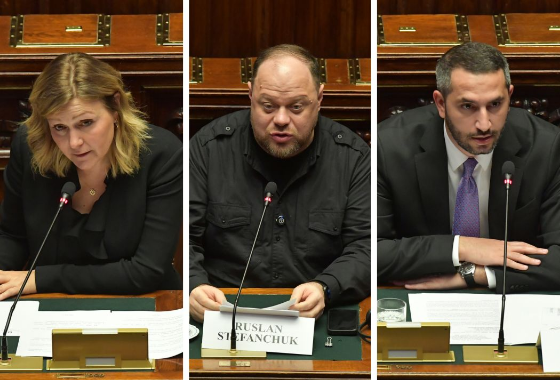
“The line between hybrid threats and open aggression grows thinner every day. These threats do not stop at borders, and they aim at the heart of democracy: the trust of citizens in the institutions that represent them,” PACE President Petra Bayr said today at the opening of a session of the European Conference of Presidents of Parliament devoted to the theme “Resilient democracies: united against hybrid threats”. “Resilience is not only a matter of security and technology; it is a matter of political will, transparency, media literacy and unity,” she emphasised.
Referring to foreign interference and the manipulation of information, Yaël Braun-Pivet, President of the French National Assembly, underlined that this offensive takes the form not only of direct manipulation of our electoral processes, but also of a more indirect and insidious form of manipulation, “which seeks to create an alternative reality and fracture society”. “In the face of borderless interference, our response must be a European one. We must pool our detection resources, cross-reference our intelligence and best practices, and step up this cooperation,” she said, adding that the Council of Europe had a vital role to play in harmonising legislation and developing common legal definitions and responses. Ms Braun-Pivet concluded by calling for the negotiation of a new, dedicated European legal instrument for the Council’s member states.
Ruslan Stefanchuk, Chairman of the Verkhovna Rada of Ukraine, expressed his gratitude to the parliaments, leaders and governments of the member states “for their solidarity, for every political decision and every act of military aid, for providing refuge to the Ukrainian people and for the sanctions against the Russian aggressor”. He recalled that Ukrainian cities were being shaken by terrible strikes and that, under the constant threat of airstrikes, the Ukrainian Parliament was operating. Referring to the recent Russian attacks, he expressed concern about disruptions to the transmission of data from early-warning systems relating to missile launches, which had impacted Ukraine’s military capabilities.
“Hybrid interventions, which are increasingly difficult to identify, prevent and confront, seek to exploit vulnerabilities within state institutions and society,” said Ruben Rubinyan, President of the Armenian National Assembly, evoking the recent elections in his country, which took place against a backdrop of foreign interference on a scale described as “unprecedented and worrying”. To ensure that external pressure does not determine the future of a democratic society, he advocates strengthening democratic institutions, transparent governance, independent institutions, and information resilience by investing in media literacy, independent journalism and factchecking. It is also necessary to increase cooperation against cyber-threats and to protect peace processes from manipulation and escalation by supporting confidence-building measures and diplomatic mechanisms based on international law.