


28/09/2015 Session
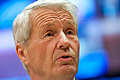
Thorbjørn Jagland replied to the questions put to him by members of the Parliamentary Assembly during a questions and answer session held in the context of the autumn session of the Assembly.
During the exchange, which was dominated by the migration crisis, Mr Jagland underlined the importance of placing all those arriving on the European continent, irrespective of their origin, status or religion, under the protection of the European Human Rights Convention. “We could have done more and done it sooner to avoid this crisis and help countries such as Turkey, Italy, Greece and Malta, to deal with these problems,” he said, saying that there had been political shortcomings throughout Europe.
In this context, he underlined the role of the Council of Europe Development Bank in helping migrants and refugees, in particular its contribution to the setting up of “hot spots” to deal with the arrival of migrants in Europe.
With regard to the situation in Syria, the Secretary General spoke of the responsibility of the Security Council and its permanent members in ensuring peace and security; he considered it unacceptable that the strategic interests of some countries should take precedence over the principles set out in the Charter of the United Nations.
Mr Jagland said he was concerned at the situation in the Republic of Moldova and that in order to ensure the rule of law it was necessary to combat corruption and the abuse of authority, and to guarantee the independence of the courts to ensure more social stability.
With regard to Turkey, the Secretary General called on the Turkish government to protect the media, freedom of expression and assembly, and to allow all citizens to vote.
In reply to a question concerning human rights in Russia, Mr Jagland said that a new report was being prepared on the situation of democracy, human rights and the rule of law in the 47 member states of the Council of Europe.
The other issues addressed included questions concerning the situation in Ukraine and Azerbaijan, the Council of Europe’s role in settling the Nagorno-Karabakh conflict, and co-operation with Belarus.