12/05/2025 Parliamentary support

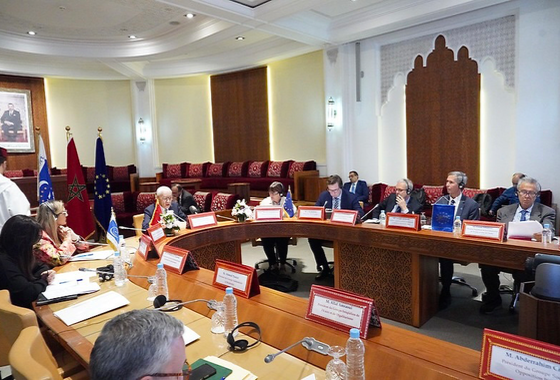
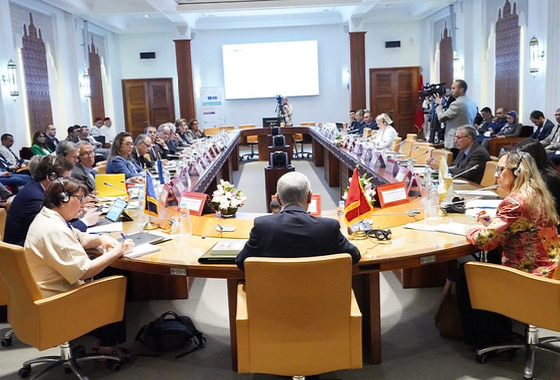
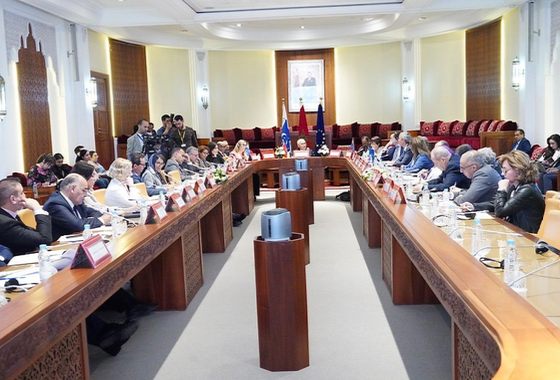
On the occasion of the international seminar “Legal Certainty and the Quality of Law: Concepts, Challenges, and Comparative Perspectives", which took place in Rabat on 6-7 May 2025, the Parliamentary Assembly of the Council of Europe (PACE) reaffirmed its strong commitment to legal clarity, transparency, and democratic oversight.
The event, co-organised by the Venice Commission and the Parliament of Morocco, brought together lawmakers, legal experts, and academics to explore how legislative frameworks can be made clearer, more accessible, and more effective in safeguarding the rule of law.
Discussions centred on three key dimensions of legal certainty: foreseeability of the law, including improved drafting techniques and explanatory memoranda; accessibility of legal texts, with a focus on online access, transparency, and publication of constitutional decisions; and regulation of discretionary powers, essential to prevent arbitrary application and ensure rights are protected.
At the opening session, Director Louise Barton highlighted Morocco’s status as a valued partner for democracy with the Parliamentary Assembly of the Council of Europe, underlining this cooperation as a cornerstone of our shared commitment to the values of democracy, human rights, and the rule of law.
In his intervention, Pablo Hispán (Spain, EPP/CD), highlighted PACE’s perspective: that accessible law is a right, not a luxury. He stressed that clear, well-drafted, and publicly available laws are central to building trust in democratic institutions. He also highlighted good practices from Spain, including open legal databases, plain-language drafting, and transparency portals that foster public engagement.
A crucial theme throughout was the case law of the European Court of Human Rights (ECtHR), especially under Article 8 of the Convention, which protects the right to respect for private life. As noted in ECtHR relevant judgments, legal frameworks must provide sufficient safeguards against state overreach and in the context of mass surveillance. These rulings underscore the need for independent authorisation procedures, clear criteria for data interception, time limits for data retention and robust supervision mechanisms.
Marietta Karamanli (France, SOC) emphasised the urgent need to regulate discretionary powers to prevent arbitrariness and protect fundamental rights. From the PACE standpoint, she underscored that discretionary authority must always be clearly defined, limited by law, and subject to robust judicial and parliamentary oversight. She warned against the risks posed by unchecked surveillance and called for stricter safeguards aligned with ECHR and Venice Commission standards.
PACE, she noted, plays a key role in setting political and legal benchmarks, especially in times of crisis, reinforcing the principle that even exceptional powers must remain proportionate, temporary, and accountable within a democratic framework. Ms Karamanli also highlighted good practices from France.
In an age of information overload and growing mistrust in institutions, the seminar served as a reminder that clarity, transparency, and participation remain our best tools to uphold democracy, human rights and the rule of law.