The sitting is open.
I remind members that, in order to be registered for the sitting, you should insert your badge when you take your seat, and keep it inserted for at least 30 seconds.
You should also insert your badge in order to speak or vote. To request the floor, please press the “request” button only once.
We will now hear an address by Ms Isabelle BERRO-AMADEÏ, Minister of Foreign Affairs and Cooperation of Monaco, and President of the Committee of Ministers of the Council of Europe. After her address Ms Isabelle BERRO-AMADEÏ will take questions from the floor.
But first of all, it is my honour to welcome you again, dear Isabelle, as Chairperson, as President.
Madam Minister, thank you for joining us today again, like you did yesterday and the day before yesterday. We very much appreciate that you are so interested in our work and about your active participation. It's really great. And let me say first that our co-operation rests in real trust, I can say. You lead the Committee of Ministers and I lead the Assembly. Two statutory organs, two women at the helm, one shared commitment.
Our roles are different. Our goals are the same. The Council of Europe that delivers. When our two bodies work hand in hand, this organisation is stronger. And I am proud that we are building together. Your Presidency has set ambitious priorities: effective protection of all European citizens; an effective organisation; a resolute response to Europe's challenges today and tomorrow. And these priorities show Monaco's valuable commitment to a better future, built on the ideas of justice and resilience.
Europe faces many challenges. The Monegasque Presidency does not look away. It stands up to them. It offers a collective European answer rooted in steadfast commitment to multilateralism and to a stronger system for the protection of human rights. A telling example, the recent meeting of the Minister's Deputies in Monaco. There you organised a thematic debate on the environmental crisis through the lens of human rights to exchange views on the right to a clean, healthy and sustainable environment. My personal thanks for this.
Your Presidency has now reached its midterm already, unbelievable, it's very quick, and it is performing in an exemplary manner. We look forward to your insights. Tomorrow, we will have the honour of hearing His Royal Highness Prince Albert II. But first, Madam Minister, it is my pleasure to give you the floor.

Minister of Foreign Affairs and Cooperation of Monaco, President of the Committee of Ministers of the Council of Europe
16:08:01
Madam President of the Parliamentary Assembly,
Mr Secretary General of the Council of Europe,
Madam Secretary General of the Parliamentary Assembly,
Madam Deputy Secretary General of the Council of Europe,
Your Excellencies,
Honourable Members of Parliament,
Ladies and gentlemen in your respective capacities,
I am very pleased and honoured to address you, for the second time, in my capacity as Chair of the Committee of Ministers.
When I addressed this Assembly on 23 June, the Principality of Monaco had been holding the Chair for just one month.
A quarter of a year has now passed, during which our organisation has continued its work in a European and international environment that remains deeply marked by conflict and tension. Breaches of international law, combined with technological, environmental and social changes, call into question the ability of our democracies to protect our fellow citizens effectively.
The gradual development of international law and standards must continue; however, it is their effective implementation that will determine whether there is a tangible improvement in the living conditions of our people. Innovation offers opportunities in many fields, but it is the inclusive and safe application of these new tools that will determine whether they will benefit the greatest number of people or harm the collective interest. In this context, dialogue between our two bodies remains as important as ever.
Your Assembly gives voice to the peoples of Europe. The Committee of Ministers brings together the voices of their governments. This complementarity is essential to the vitality of our organisation and to its ability to provide joint responses to the challenges facing our continent.
Ladies and gentlemen,
Last June, the Head of the Government of Monaco, Mr Christophe MIRMAND, reminded you of the guiding principle adopted by the Principality to steer its actions: "The protection of all, through an effective organisation, to meet contemporary challenges". Since then, we have been committed to turning this ambition into reality. I am thinking, first and foremost, of Ukraine. On 15 September, I travelled to Kyiv in my capacity as Chair of the Committee of Ministers. That visit enabled me to appreciate, in very concrete terms, what it means to defend the principles we uphold here in Strasbourg. I was able to pay tribute to those who have lost their lives since the start of the war of aggression and to meet with several representatives of the Ukrainian authorities.
To each of my interlocutors, including the Minister of Foreign Affairs, Mr Andriy SYBIHA, I was keen to reaffirm the Committee of Ministers' consistent position: our support for Ukraine’s independence, sovereignty and territorial integrity, as well as our determination to uphold and ensure the rule of law. For the war waged by the Russian Federation also constitutes an attack on the very principles upon which the European legal order is founded. And because there can be no lasting peace without justice, the Council of Europe continues to work towards the development of a comprehensive framework for accountability and redress.
The Register of Damages has continued to be rolled out, and we welcome the fact that today marks the day on which all 43 categories are now open. 195 000 applications have already been received. Let us not forget that behind each of these claims lies a person, a family, a community or an institution seeking to assert the damage, losses or harm they have suffered and, ultimately, to obtain redress.
As a continuation of this work, progress is also being made on the establishment of the International Claims Commission. The compensation of Ukrainians who have suffered losses and damage will be a key factor in the credibility and reliability of our organisation.
At the ministerial meeting in Chișinău and subsequently during the Monegasque Presidency, four states signed the Convention establishing this International Claims Commission and eight ratified it, bringing the total to 41 signatures and 10 ratifications.
This framework is intended to be complemented by the establishment of the Compensation Fund. The arrangements for its financing have yet to be finalised and will continue to be the subject of close attention. The Monegasque Presidency will remain fully committed to this issue and available to support the implementation of a robust, credible and operational compensation mechanism. For, beyond the recognition of harm, the objective remains clear: to ensure effective redress.
Finally, work is continuing to make the Special Tribunal for the Crime of Aggression against Ukraine operational.
These three mechanisms respond to the same imperative: that of ensuring that aggression, destruction and suffering do not go unanswered.
Albert Camus said: "Justice is both an idea and a warmth of the soul". Because behind the mechanisms we are building, behind the procedures and legally binding instruments, there are individuals waiting for justice to be done. There are children whose lives have been turned upside down by the war and to whom we must offer prospects for the future. The return of children who have been illegally deported or forcibly transferred remains an absolute priority. There are also women who are contributing to the war effort, and veterans who, after the fighting, face trauma and the difficulties of reintegration. In the face of fear and uncertainty, one conviction remains: freedom must prevail. It is our collective responsibility to ensure that the rule of law remains stronger than violence and that justice is never sidelined in the face of emergency.
Ladies and gentlemen,
Whilst the response to the aggression against Ukraine is at the heart of our priorities, it is nevertheless part of a broader international context, characterised by the proliferation and interconnection of crises. Geopolitical, democratic and environmental crises, hybrid threats, the manipulation of information and technological upheavals: whilst their forms differ, they all serve to undermine our points of reference and test the international order. In this context, isolationism or a wait-and-see approach can never be the answer.
The pressures being exerted on the enjoyment of human rights, on good governance and on the rule of law must lead us to strengthen forums for dialogue and multilateral co-operation. This is precisely one of the aims of the Council of Europe’s external action strategy, which I mentioned to you back in June. In this regard, I am delighted at the opening, on 22 September, of the Council of Europe’s Office to the United Nations in New York. The aims and principles of these two organisations, which we all share, are mutually reinforcing: international peace and security, sustainable development and human rights on the one hand; human rights, the rule of law and democracy on the other.
The New York Office will enable us to intensify political dialogue, develop synergies and raise awareness, beyond our continent, of the Council of Europe’s standards and expertise. Working closely with the offices in Geneva and Vienna, it will thus help to bring greater coherence and visibility to our international work.
At a time when multilateralism is being put to the test, we must, more than ever, bring together the institutions that keep it alive. For the Council of Europe is not meant to act in isolation. Its strength also lies in its ability to engage in dialogue with other international organisations and to promote, beyond Europe’s borders, the principles that define its identity.
Without compromising its principles, without duplicating existing mandates, and without leaving any gaps, the Council of Europe and other regional and international organisations fulfil their roles to the full when they complement one another, as demonstrated by the Secretary General's recent visit to the United Nations and the Organisation of American States (OAS). By virtue of their nature, composition and tools, they offer distinct yet mutually beneficial opportunities to advance our common priorities and defend our fundamental values.
Thus, the Council of Europe’s standard-setting work and the monitoring cycles of its bodies constitute essential added value, making our institution the cornerstone of respect for fundamental rights and freedoms for more than 700 million European citizens. The adoption of new legal instruments is a constant testament to the Council’s vitality.
Two of these were opened for signature during the Monegasque Presidency: the Protocol amending the Council of Europe Convention on the Prevention of Terrorism, on 26 May 2026. And the Additional Protocol to the Council of Europe Convention on Laundering, the Search, Seizure and Confiscation of the Proceeds from Crime and on the Financing of Terrorism, which will be opened for signature on 14 October. This will strengthen our collective capacity to respond to financial crime that is becoming ever more complex, transnational and technologically sophisticated.
However, the adoption and signing of an instrument are only the first step. It is through its ratification, followed by its effective implementation, that it can take full effect and contribute to the added value of the Council of Europe. In this regard, your national parliaments have a vital role to play in consolidating our common legal area.
Furthermore, in June I spoke to you about campaigns of information manipulation and foreign interference, which seek to undermine confidence in our institutions and fragment our societies. A few months on, this concern remains as pressing as ever. In this regard, on 8 July, the Committee of Ministers established the Ad hoc Committee on Information Manipulation and Foreign Interference (CAHFIMI), tasked with preparing a legal instrument in this field. This decision gives concrete expression to the guidelines adopted in Chișinău. Our aim is to strengthen the capacity of our democracies to withstand these threats, whilst fully respecting the human rights and fundamental freedoms that underpin our action.
The Committee is also continuing the work undertaken following the decisions adopted in Chișinău. This work should address the concerns expressed by member states, whilst preserving the authority and effectiveness of the European Convention on Human Rights system. The Monegasque Presidency will continue, until the end of its term, to foster constructive dialogue, based on the search for common ground and on our shared commitment to the Convention and to the independence of the Court.
Ladies and gentlemen,
These past few months have also enabled the Monegasque Presidency to pursue several of its priorities. On 2 September, the Principality had the honour of hosting the 1567th meeting of the Ministers' Deputies. The presence of the Permanent Representatives, as well as the Secretary-General and the newly elected Deputy Secretary-General, marked a particularly significant moment during our Presidency. In particular, this meeting provided an opportunity to organise a thematic debate on the environmental crisis through the prism of human rights. Climate change, the loss of biodiversity and the degradation of ecosystems now have direct consequences for the effective enjoyment of many fundamental rights. They affect our living conditions, our health and our security. Once again, it is the most vulnerable who are hit hardest. Our responses to these challenges must therefore be fully integrated into our thinking on human rights.
This meeting also led to the adoption of a recommendation on artificial intelligence (AI) literacy, giving concrete expression to the commitments set out in the Council of Europe’s Framework Convention on Artificial Intelligence (AI). This work illustrates a conviction that guides our Presidency: the Council of Europe’s effectiveness is also measured by its ability to anticipate the transformations taking place in our societies. It is our responsibility both to protect the rights and freedoms enshrined 76 years ago, to identify emerging risks, to strengthen our capacity to respond to them, and to establish safeguards commensurate with the challenges our societies will face in the future. This requirement applies particularly to our convention-based system.
Just a few days ago, the Committee of Ministers met in its "Human Rights" configuration to continue its task of monitoring the implementation of the Court’s judgments. This responsibility is one of the Committee of Ministers' core functions. The President of the Court himself reiterated this before you on Monday afternoon. The strength of the European system for the protection of human rights rests not only on the existence and independence of the Court, but also on the authority of its judgments and, above all, on their effective enforcement by the States concerned. We must continue to safeguard this system, its authority and its effectiveness.
Ladies and gentlemen,
The coming weeks will be marked by several important events, which will enable us to pursue and give concrete form to the priorities championed by the Monegasque Presidency since 15 May. Tomorrow, His Serene Highness Prince Albert II will address your Assembly. His address will be one of the most significant moments of our six-month Presidency. At the end of October, the dialogue between the Committee of Ministers and the other bodies of our Organisation will continue with the address by Mr Lionel BEFFRE, Minister for the Interior, at the 51st session of the Congress of Local and Regional Authorities.
Then, on 3 and 4 November, Monaco will host the 19th Council of Europe Conference of Ministers responsible for Sport, which will bring together representatives of the member states, experts and stakeholders from the sporting community. Preventing and combating violence and abuse in sport will be at the heart of the discussions, as will the promotion of physical activity, well-being and the personal development of children and young athletes. Through its unique interactive format and the exchange of best practice, we hope that this Conference will make a tangible contribution to advancing our efforts towards "safer and healthier sport for all children", in line with the ambition embodied by its main theme. Indeed, whilst sport is a powerful vehicle for education, inclusion and the transmission of values, it can only fulfil this role if every child is able to take part in it within a safe, caring and supportive environment.
Finally, on 9 and 10 November in Strasbourg, our Presidency will dedicate its final event to another key issue for the future of our democracies: the fight against disinformation, in relation to young people and new digital practices. We have sought to view young people not only as individuals in need of protection, but also as full participants in shaping the responses to the challenges that affect them. Young people from the member states will therefore be directly involved in the work and called upon to devise concrete initiatives to raise awareness of disinformation. Because protecting our democracies does not mean making decisions on behalf of younger generations. On the contrary, it means giving them the knowledge, the tools and the critical thinking skills they need to fully exercise their freedom of judgement and make their own choices.
Ladies and gentlemen,
When I addressed you in June, our Presidency was only just beginning. Today, it is entering its final phase.
These past few months have reinforced our conviction: in an increasingly unstable and uncertain international environment, we need, more than ever, a Council of Europe that is strong, visible and capable of taking action. An organisation that remains true to its principles, whilst being able to adapt to the changes of our time. An organisation that protects hard-won rights, whilst anticipating new threats and challenges. An organisation that knows how to respond to crises, without ever allowing urgency to take precedence over the law.
On 10 November, the Principality will hand over the Chairmanship of the Committee of Ministers to Montenegro. I would like to take this opportunity to extend my best wishes for success to the future Montenegrin Chairmanship. I have no doubt that it will continue the work already accomplished with dedication, and I wish to assure it of the Principality’s full support during this new phase.
Until then, we shall continue to fulfil to the full the responsibility entrusted to us. In this regard, allow me to echo the words of the Czech President, Mr Václav HAVEL, and I quote: "Hope is not the conviction that things will turn out well, but the certainty that what we do has meaning, whatever the outcome". It is with this conviction that we intend to continue our work until the end of this Presidency, with the same ambition that has driven us since 15 May: to protect. To protect the most vulnerable. To protect the rights and freedoms upon which our societies are founded. To protect our shared values. And, finally, to protect our democracies. And, through them, to preserve and consolidate this European area that several generations have patiently built. In a world where crises can sometimes lead us to doubt multilateralism's ability to provide answers, our responsibility must be precisely to keep it alive and to demonstrate, through action, its full relevance. Through dialogue. Through co-operation. Through the rule of law. These are the instruments of the Council of Europe. And they will remain, well beyond our Presidency, our roadmap.
Thank you for your attention.
Thank you very much, Madam President, for your comprehensive and relevant address.
Members of the Assembly will now put questions to you. I will start with a round of speakers on behalf of the political groups and ask you to address or give an answer after each of the questions.
I want to remind those who pose questions that they should not be longer than 30 seconds and really should be questions and not interventions.
And I start with Ms Bisera KOSTADINOVSKA-STOJCHEVSKA, on behalf of the Socialists, Democrats and Greens Group.

North Macedonia, SOC, Spokesperson for the group
16:31:17
Thank you, Madam President.
Madam Minister, could you further elaborate on the background idea of the reform of the Council of Europe, the role of the Parliamentary Assembly of the Council of Europe (PACE) in that process, and whether, in your opinion, this can further enhance the implementation of the documents that this Assembly adopts?
Thank you.
Thank you, Madam President. You have the floor.
Minister of Foreign Affairs and Cooperation of Monaco, President of the Committee of Ministers of the Council of Europe
16:31:42
Thank you very much, Madam, for your question.
Against a backdrop of profound change in Europe, the Secretary General wished to launch a debate on how the Council of Europe can continue to adapt its work, make better use of its strengths and respond to the challenges facing it – and facing us.
The proposals he put forward this summer represent a significant contribution to this debate and are now the subject of initial discussions amongst member states within the Committee of Ministers. As far as the Committee is concerned, I must say that the challenge is clear. We must ensure that the Council of Europe remains a strong organisation – as I emphasised earlier in my speech – a relevant organisation capable of fully showcasing what makes it unique. We certainly possess the necessary expertise. We have unique legal instruments and monitoring mechanisms in areas that lie at the heart of our mandate: human rights, democracy and the rule of law. We must make better use of this capacity for action and focus our efforts where our organisation can bring real added value, and that strikes me as essential.
So, we are truly at the very beginning of the process. The Secretary General’s proposals have sparked a useful debate, which must now be informed by the various contributions that are expected. At its last meeting, the Committee of Ministers agreed that it would, in due course, determine the framework within which it wishes to continue its discussions, particularly in the light of the report by the external think tank. I believe it is important that member states have all these elements at their disposal before collectively agreeing on the direction they wish to take. Your Assembly naturally has a full role to play in this process. And I would also like to commend the keen interest you have shown and the commitment you have demonstrated on this issue.
The general policy debate you have organised this week is, I believe, a perfect illustration of this. It allows parliamentarians’ voices to be heard and brings to light your expectations, priorities and also the questions that must inform our work. I firmly believe in the value of this dialogue between the various components of our organisation.
The Secretary General contributes his vision and proposals. Your Assembly brings its experience and the parliamentarians’ perspective. And it is up to the member states, within the Committee of Ministers, to collectively shape the guidelines that will steer our organisation’s actions. These contributions are not in conflict; they are intended to complement one another and, I would even say, to enrich our thinking.
You have also asked me about the follow-up to the texts adopted by your Assembly. I believe there is certainly scope for improvement in better highlighting their contributions to the work of the Council of Europe. Your Assembly already plays a vital role in identifying new challenges, fuelling political debate and drawing governments’ attention to issues that call for a European response. Its members also have a particular role to play in bringing this work to life within their national parliaments, and I believe that is the role you are all playing.
It would therefore be premature to speculate today on the specific arrangements that might emerge from the ongoing process. However, better co-ordinating our work, facilitating dialogue between our institutions and ensuring that everyone’s contributions can be fully taken into account seems to me to be a step towards a Council of Europe that is truly more coherent and effective. And it is ultimately in this spirit that I am approaching this reflection: to preserve what makes our organisation strong, to better harness the expertise of each and every one of us, and of each of its constituent parts, so that, ultimately, we may seek together ways to strengthen the impact of our joint action.
Thank you.
Next is Mr Georgios STAMATIS on behalf of the Group of the European People's Party.

Greece, EPP/CD, Spokesperson for the group
16:36:35
Thank you, dear President.
Madam Minister,
Following your visit, the Parliamentary Assembly of the Council of Europe will discuss the threats and intimidation directed at the International Criminal Court (ICC), as well as its judges, prosecutors and staff by the governments of countries that are not members of this international organisation.
We must counter attacks on international organisations founded on the principles of the rule of law and human rights. What steps is the Committee of Minister taking to defend the ICC? And does the fact that three Council of Europe member states are not members of the ICC play a role in this? Thank you.
Madam President.
Minister of Foreign Affairs and Cooperation of Monaco, President of the Committee of Ministers of the Council of Europe
16:37:14
Thank you very much for that question.
I would say that, as a former judge, this is an issue particularly close to my heart. The independence of international courts is a fundamental requirement of the rule of law. This requirement means that judges, prosecutors and their staff must be able to carry out their duties free from any pressure, threat or reprisal. This is a principle to which, of course, the Council of Europe is deeply committed.
To be very specific, the most recent sanctions and acts of intimidation directed at the International Criminal Court have not yet been the subject of a specific examination by the Committee of Ministers, which has therefore not yet adopted a common position on them. However, the Committee has nevertheless already expressed its views on this matter, notably in February 2024. It had strongly condemned the attempts by the Russian authorities to prosecute judges and prosecutors of the International Criminal Court (ICC) who were involved in issuing arrest warrants targeting, in particular, President Vladimir PUTIN. It had considered at the time that such reprisals constituted a flagrant interference with judicial independence and the Court’s mandate. This position was reaffirmed at the ministerial session in May 2024.
I would also like to recall the remarks made on Monday before this House by the President of the European Court of Human Rights, Mr Mattias GUYOMAR, who expressed the Court’s full solidarity with the judges and the President of the International Criminal Court (ICC), who are subject to US and Russian sanctions. This solidarity between international courts strikes me as particularly important in the current context.
As regards your second question, I believe we must distinguish between non-ratification of the Rome Statute and a State’s commitment to the principle of international criminal justice. Regardless of the differing legal situations of our member states, I believe we can unite around a fundamental principle which the Committee of Ministers has already had occasion to reiterate: the independence of international justice must be preserved, so that the courts can fully exercise their mandates, free from interference and intimidation.
Thank you.
The next speaker, on behalf of the European Conservatives, Patriots & Affiliates, is Mr Bob De BRABANDERE.

Belgium, ECPA, Spokesperson for the group
16:39:58
Yes, thank you.
We see that across Europe, measures are being taken that risk undermining democracy. In Hungary and Poland, for example, politicians are being imprisoned, and constant institutional changes are being introduced to deal with the opposition parties. In Germany and Portugal, there are growing calls to have political parties banned through the courts. Banning parties and locking up opposition members are practices in authoritarian dictatorships.
Will the Committee of Ministers join us in condemning these undemocratic actions by some of its member states?
Madame President, please.
Minister of Foreign Affairs and Cooperation of Monaco, President of the Committee of Ministers of the Council of Europe
16:40:38
Honourable Member,
In this area, as in many others, the European Convention on Human Rights provides us with a particularly clear framework. Political pluralism is one of the cornerstones of any democratic society, and political parties play a vital role in this regard. By safeguarding freedom of expression, freedom of assembly and freedom of association, the Convention protects the ability of different political forces, including those in opposition, to participate in public debates, defend their ideas and propose political alternatives. Member States therefore have a responsibility to ensure the conditions for effective political pluralism.
This in no way means, however, that a democracy lacks the means to protect itself when its democratic order or the rights and freedoms of others are genuinely under threat. We must be able to respond effectively to new forms of information manipulation and foreign interference which may seek to undermine confidence in our institutions or the integrity of our democratic processes, as we have seen on certain occasions during electoral processes. It is, moreover, in this area that the Council of Europe has recently stepped up its work, as I mentioned earlier. The Court’s case law also recognises that restrictions on a party’s activities may, in exceptional circumstances, be justified where the party resorts to violence, encourages it, or pursues objectives that are manifestly incompatible with the fundamental principles of democracy. However, these various issues must not lead to a weakening of the safeguards that lie at the heart of the rule of law.
The prohibition or dissolution of a political party constitutes a particularly serious measure. Such measures may therefore only be taken in strict compliance with the requirements of the Convention. They must be provided for by law, meet a pressing social need, be proportionate to the aim pursued and be based on sufficiently sound grounds. This is the case law of the European Court of Human Rights. Effective judicial safeguards must also be in place for such decisions. It is therefore primarily the responsibility of the national courts to ensure that these safeguards are respected. Once domestic remedies have been exhausted, the Court may be called upon to examine whether such a measure complies with the Convention. It is this balance between the protection of political pluralism, to which we are all committed, and the ability of our democracies to defend themselves whilst fully respecting the rule of law that must guide our actions.
Thank you.
The next speaker is Ms Larysa BILOZIR on behalf of the Alliance of Liberals and Democrats for Europe, please.

Ukraine, ALDE, Spokesperson for the group
16:43:51
Madam President,
On your recent visit to Kyiv you personally witnessed the consequences of Russian aggression. And today, Kyiv is under permanent attacks, under fire, in the fire, in smoke. We can see now, in the 12th year of war, that justice delayed is justice denied.
Can you elaborate on what progress the Committee of Ministers has achieved under your Presidency towards making the Special Tribunal operational? And what political steps, funding commitments and clear deadlines are needed to accelerate this process?
Madam President.
Minister of Foreign Affairs and Cooperation of Monaco, President of the Committee of Ministers of the Council of Europe
16:44:30
Thank you, Madam, for that question.
As you pointed out, I visited Kyiv on 15 September, and I can tell you that the issue of justice and accountability featured prominently in the discussions I had with the Ukrainian authorities. Support for Ukraine and the need to ensure accountability for crimes committed in the context of the war of aggression remain, as I have also emphasised, at the heart of the priorities of the Council of Europe and the Monegasque Presidency. And I have no doubt that this concern will remain a priority beyond our Presidency.
The Committee of Ministers has stated and reaffirmed on several occasions that a just and lasting peace cannot be separated from the establishment of responsibility. It is therefore in this spirit that the Council of Europe remains committed to translating our political commitments into concrete legal and institutional mechanisms in the service of justice and redress for Ukraine and, above all, for its people. The establishment of the Special Tribunal for the Crime of Aggression against Ukraine is, of course, a major priority of our work.
To date, 38 countries, as well as the European Union, have revealed their intention to accede to the resolution establishing the Enlarged Partial Agreement on the Management Committee of the Special Tribunal for the Crime of Aggression against Ukraine. Work is continuing to fulfil the conditions necessary for this agreement to enter into force, in particular – and I believe this is important – by ensuring the financial viability of the Special Tribunal. A preparatory team is actively working on the legal, institutional and operational aspects of its establishment, in close co-operation with the Dutch authorities. At the same time, the Committee of Ministers’ working group, the GT-TRIBUNAL, is continuing its work on the decision required for the agreement to enter into force, while preparations for the budget are progressing.
Our objective is simple: to secure the broadest possible support within the Council of Europe and beyond. This Special Tribunal forms part of a wider framework of justice and redress. As I said in my address, the Convention establishing an International Claims Commission for Ukraine now has 41 signatories. The Register of Damage for Ukraine, for its part, is fully operational, with 195,000 claims submitted, 65,000 of which have been registered. We have also discussed this with the Ukrainian authorities. We are continuing to work with them to finalise the Council of Europe’s new Action Plan for Ukraine for the period 2027–2030. And I must say that the Ukrainian authorities are eagerly awaiting for this to be finalised.
As I told you, I had the opportunity to appreciate the importance of this commitment during my visit to Kyiv last September. My discussions therefore centred on mechanisms for justice and redress, but not exclusively. We also spoke at length about the protection of the most vulnerable groups, and in particular Ukrainian children who have been unlawfully transferred or deported. Their protection and the return of these children to their families remain a priority for the Committee of Ministers, which – and I would like to take the opportunity presented by your question to emphasise this – adopted, on 9 September, new decisions following the work of the Group of Experts on Action against Trafficking in Human Beings (GRETA) on the risks of trafficking and exploitation to which these children are exposed. The discussions I had in Kyiv confirmed just how central these issues remain for the Ukrainian authorities.
I can therefore assure you that the Council of Europe must continue to take action and make full use of all the instruments at its disposal, in collaboration with other international actors, to defend the rights of those affected by this war and, above all, to ensure that they receive justice.
Thank you.
And the final speaker in the round on behalf of political groups is Ms Sevilay ÇELENK, on behalf of the Group of the Unified European Left.

Türkiye, UEL, Spokesperson for the group
16:49:13
Madam Minister, the Court's judgments concerning Mr Selahattin DEMIRTAŞ, Ms Figen YÜKSEKDAĞ and Mr Osman KAVALA, as well as its findings on Mr Abdullah ÖCALAN's right to hope, remain unimplemented.
Does Türkiye's deliberate and persistent failure to comply undermine the credibility of the Court and the Council of Europe? What concrete steps will the Committee of Ministers take to ensure compliance?
Thank you.
Madam President.
Minister of Foreign Affairs and Cooperation of Monaco, President of the Committee of Ministers of the Council of Europe
16:49:54
Honourable Member,
As I said earlier, the issue of the enforcement of judgments of the European Court of Human Rights (ECHR) falls directly within the remit of the Committee of Ministers. The Convention entrusts us collectively with the task of monitoring their implementation. And this responsibility applies to all States Parties.
With regard to Türkiye and your country, several important cases continue to be closely monitored by the Committee, and you have mentioned a few of them. Like any State Party to the Convention, Türkiye is required to give full effect to the Court’s judgments. These are commitments freely undertaken – I believe it is worth recalling this – which lie at the heart of our common system for the protection of human rights. The Committee of Ministers has, on several occasions, reiterated the measures still awaited in certain cases.
Where difficulties in implementation persist, it is the responsibility of us all to examine them carefully and consistently. Dialogue with the national authorities is essential, but it must also lead to concrete progress in the implementation of the judgments in question. The Committee of Ministers’ most recent meeting, which was devoted to the implementation of judgments in September, once again provided an opportunity to examine several cases concerning Türkiye. The participation of the Turkish Deputy Minister of Justice gave these discussions a particularly valuable dimension, facilitating a frank and direct dialogue on the difficulties encountered and on the ways in which progress in the implementation of the judgments in question might be facilitated.
This willingness to engage in dialogue should be encouraged. However, it must not cause us to lose sight of the objective guiding the Committee’s work: to achieve the full and effective enforcement of the Court’s judgments as soon as possible.
It is not, therefore, my place to prejudge the Committee’s assessments of the various cases whose enforcement remains pending. But there is one principle that admits of no ambiguity. The enforcement of the Court’s judgments is not an option. It is an obligation arising from the Convention and is essential to the authority and credibility of our common system.
We shall therefore continue to encourage the Turkish authorities to co-operate fully with the Committee of Ministers and the bodies of the Council of Europe. Our approach must remain one of frank and constructive, yet demanding, dialogue, with the aim of achieving concrete and lasting progress.
Thank you.
Thank you. We will start now with the questions of other members.
I will group them in threes. And the first one is Ms Vesela MOMCHEVA-TOWNE from Bulgaria. Please, you have the floor.
Thank you, Madam President.
The European Social Charter guarantees the right to protection of health. However, proceedings before the European Court of Human Rights may take too long to provide an effective remedy in time-sensitive cases. Cases such as Dimovska v. North Macedonia and more recently that of Ms Iva MIKHAILOVA from the same country, raise concerns about access to necessary medical treatment abroad.
My question is what mechanism can the Council of Europe use to react quickly when judicial restrictions may prevent a person from receiving urgent or essential healthcare? Thank you.
Thank you.
Mr Márton HAJDU from Hungary is next.
Thank you.
Madam Minister,
As enshrined in your programme, children in state care must be safe and heard.
In Hungary, Fidesz promised to protect children. Yet a man convicted of helping to cover up sexual abuse received a presidential pardon, and the child protection system was defunded and left to rot.
Tisza is committed to protecting every child and holding those who fail them accountable. How will your Presidency promote independent inspections and safe ways for children to report abuse, so that protecting an institution's reputation never comes before protecting children?
Thank you.
Thank you.
And the last one in this round is Ms Cristina Gabriella DUMITRESCU from Romania.
Madam Chair,
What concrete measures has the Committee of Ministers taken in recent years, as part of its dialogue and monitoring activities, to encourage Greece to ratify the Framework Convention and to strengthen the effective protection of national minorities in the Hellenic Republic, given that Greece signed the Framework Convention for the Protection of National Minorities nearly 30 years ago, but has not yet ratified it, despite the presence of several historic communities on its territory?
Thank you very much.
Madam President.
Minister of Foreign Affairs and Cooperation of Monaco, President of the Committee of Ministers of the Council of Europe
16:55:09
Thank you very much, Madam President.
I shall first answer the first question. The Committee of Ministers has not taken a position on the cases to which you refer, Madam, and you will understand that, in my capacity as Chair, it is not my place to comment on individual cases that are the subject of ongoing proceedings, whether at national level or before the European Court of Human Rights.
However, I would nevertheless like to point out that in exceptional circumstances, particularly where access to healthcare is at stake, it is possible to apply to the Court for interim measures under Rule 39 of its Rules of Procedure where there is an imminent risk of irreparable harm to a right protected by the Convention. Of course, it is then up to the Court, naturally, to assess whether the conditions are met. And I would nevertheless like to emphasise that the protection of health occupies an important place in the work of the Council of Europe, including at the level of the Committee of Ministers, as evidenced, for example, by the adoption last June of Recommendation 2026-8 on respect for autonomy in mental health care.
Turning to the second question and the protection of children, as you said, Honourable Member, the protection of children is at the heart of the Monegasque Presidency’s priorities, which intends to reaffirm that the protection of all is the sine qua non of just, peaceful, inclusive and prosperous societies. As such, children must fully enjoy the fundamental rights guaranteed by the European Convention on Human Rights, the Lanzarote Convention and the United Nations Convention on the Rights of the Child (UNCRC). Strengthening the protection of their rights is a key commitment.
During our Chairmanship, a number of events have been organised. For example, on 3 June, a thematic debate of the Committee of Ministers took place on combating violence against women and protecting children’s rights. I would also like to mention the conference we organised in Monaco on justice for children on 16 June. On that occasion, we invited legal professionals and services working in the field of child protection, and these experts had the opportunity to discuss best practice regarding children’s access to justice, as well as how to take their views into account and ensure the best interests of the child. As recent events in several countries demonstrate, it is indeed crucial to ensure that a child’s voice is fully heard, in an appropriate manner, from the moment the offence is committed, and is also taken seriously throughout the criminal justice process, so that perpetrators of violence are held to account for their actions. A number of important issues will be adopted and addressed in the coming months and years to further promote children’s rights; for example, the drafting of a recommendation on child-friendly justice models, more commonly known as the ‘Barnahus’ models. The Council of Europe carries out numerous other activities in support of children’s rights, currently as part of the implementation of the Council of Europe’s Strategy for Children’s Rights 2022–2027, which naturally enjoys the full support of the current Presidency.
I would also like to take this opportunity to encourage all members of your Assembly to do their utmost within their national parliaments to facilitate and accelerate the signing and ratification of key Council of Europe conventions that have a direct impact on children. For example, the Istanbul Convention on preventing and combating violence against women or the Warsaw Convention on combating trafficking in human beings. As regards the Lanzarote Convention, as we know, it has been ratified by all Council of Europe member states. However, I would like to emphasise the need to ensure the full implementation of the Lanzarote Committee’s recommendations. And I invite you all to promote this within the framework of your countries’ development co-operation with third countries. Thank you.
Finally, the last point. I would first like to clarify the framework within which the Committee of Ministers operates. The Committee of Ministers’ role in this area is precisely defined by the Framework Convention for the Protection of National Minorities. With the support of the Advisory Committee, it examines how States Parties are fulfilling their commitments and, at the end of this process, adopts conclusions and recommendations addressed to them. This mechanism cannot therefore be applied to a State such as Greece, which has not ratified the Convention. This does not prevent the States Parties and the bodies of the Council of Europe – which are particularly committed to this instrument and its effective implementation – from promoting the principles enshrined therein more widely and encouraging the broadest possible accession to this Convention. And I can assure you, Madam, that for its part, the Committee of Ministers will continue to fully exercise the responsibilities conferred upon it by the Convention in relation to the States that are parties to it.
Thank you.
We now must conclude the questions to Ms Isabelle BERRO-AMADEÏ.
Dear Isabelle, I want to thank you very much for your substantive answers to the Parliamentary Assembly of the Council of Europe this afternoon and wish you an ongoing successful Presidency of Monaco.
Thank you very much.
[Applause]
The next item of business this afternoon is the debate on the report titled "Threats to the International Criminal Court" (Document 16475), presented by Mr Tekke PANMAN on behalf of the Committee on Legal Affairs and Human Rights.
This will be followed by a statement by Judge Rosario Salvatore AITALA, First Vice-President of the International Criminal Court.
In order to finish by 6:50 p.m. I will interrupt the list of speakers at about 6:30 p.m. to allow time for the reply and the vote.
I call Mr Tekke PANMAN, rapporteur, and we will wait for 2 minutes until everybody who wanted to leave has left and everybody who wanted to come to the first row has managed to come there. So I interrupt the meeting for 2 minutes.
So we continue with our sitting. And I call Mr Tekke PANMAN, rapporteur of this report. You have 7 minutes now and 3 minutes later to respond.
Please, the floor is yours.
Thank you, Madam President.
The International Criminal Court (ICC) was established by the international community to hold individuals accountable for genocide, crimes against humanity, war crimes and the crime of aggression. Its lawyers, judges and prosecutors are the successors of those who sought accountability in Nuremberg for the horrors of World War II.
On this continent we have seen the horrors of genocidal and violent conflicts. We understand the importance of bringing those responsible to justice to enable society to heal. Ensuring accountability for the most heinous international crimes is obvious to us.
Indeed, how could anyone oppose prosecuting those responsible for the most heinous atrocity crimes – war crimes, crimes against humanity and genocide?
And yet, this is the heart of today’s debate. Individuals in power in Russia and in the United States of America seek to attack the International Criminal Court to prevent it from prosecuting the most serious crimes. They seek to undermine the system of international justice.
The United States of America has introduced sanctions against judges and prosecutors of the International Criminal Court – and just last week threatened institution-wide sanctions. Russian courts have sentenced the ICC prosecutor and judges to lengthy prison terms in absentia, as retaliation for their arrest warrants against Mr Vladimir PUTIN and others for war crimes. This is in addition to reported state-led cyber-attacks and espionage targeting the ICC.
These actions are being taken against these international lawyers and judges for merely doing their jobs within their mandate.
I should make clear that the ICC fulfils the international mandate conferred on it by its 125 member states. It only investigates where it has jurisdiction – such as on the territory of a state party. Moreover, the ICC only steps in if local authorities fail to put in place adequate procedures to carry out such investigations themselves. It is, thus, a vital safeguard against impunity for atrocity crimes.
The risks of such threats and actions against the ICC being used to undermine other international organisations and the wider cause of international law are real. The international community must act to protect itself from such threats. We cannot tolerate threats and sanctions as instruments for obstructing the administration of justice by an international court.
In my report I sought to take a forward-looking and constructive approach: to protect international institutions and the system of international justice, and to support the ICC, to perform at its best, in carrying out its crucial mandate.
This has become increasingly difficult given the unprecedented and brazen interference with the ICC judges and prosecutors by some states – and the near-weekly announcements of increased threats.
Whilst we must speak against hostile actions by third states, practical measures enable us to better withstand them. My report therefore proposes practical constructive measures that international organisations, like the EU, and their member and host states can take to protect both the organisations and their officials.
We cannot tolerate a situation where the rule of law, in Europe, is threatened or undermined by third states. And we should not allow ourselves to be so dependent on certain suppliers that we enable those states to interfere with the institutions that we have collectively built to uphold the international legal order.
My proposals will need concerted action by host states, states parties to the ICC Statute and international organisations. We need to support and strengthen the ICC. A more resilient system of international justice is in our collective interest.
For over 75 years, the Council of Europe has been founded on the principles of human rights, democracy and the rule of law. We created the European Court of Human Rights, one of our greatest achievements, and we are working to establish a special tribunal for Ukraine. Here, in this Assembly, we champion those values and know that the system of international justice is worth defending.
I would end with saying hands off the ICC and all those other institutes that protect the international legal order.
Thank you.
Thank you very much, Mr Tekke PANMAN.
And I would now like to welcome Judge Rosario Salvatore AITALA. He is the First Vice-President of the International Criminal Court.
Mister Vice-President, you have the floor.
First Vice-President of the International Criminal Court
17:12:43
Thank you very much, Madam President.
I'm very grateful for the invitation. On behalf of the International Criminal Court (ICC), I would like to gratefully acknowledge the excellent work of the Committee on Legal and Human Rights Affairs, which has produced principled, but also detailed and technically impeccable, reports.
It is particularly important for me to be here on behalf of the ICC, because the International Criminal Court and the Council of Europe are carved from the same wood. They come from the same trauma, the trauma of the world wars. The horrors of the First and the Second World Wars which destroyed Europe, prompted states to establish shared values, shared languages, courts and values, so that violence would not remain the only possible and primitive language, primitive rule.
And it is particularly crucial for me being before you, because you represent the peoples of Europe. And there is a growing disconnect between the actions and the feelings of governments and the sentiments of our people. Our peoples long for justice, for peace, for dignity for everyone, not only themselves, but also others of any nationality, any ethnicity, any religion.
And as members of parliament of assemblies, you have a special role to play. And I kindly ask you, I beg you, to bring back this resolution, if you will approve it, to your assemblies to speak about the ICC, to speak about the underlying values of the ICC. These are the underlying values of your states. Please explain to the people. Reach out to your people, to the youngsters, to let them know where all this comes from.
Now, Madam President, the Rapporteur Mr Tekke PANMAN has explained the situation very well, but let me put it like this. What are we discussing today? I bet you have read sometimes in your life, Moby Dick. There is a moment when Captain AHAB asks his deputy, where do the murderers go, men? Who is to doom if the judge himself is dragged to the bar? This is what we are discussing . Who is going to give justice to millions of people who are persecuted, who are bombed, who are starved, who are kidnapped, who are discriminated, if the ICC, God forbid, is ever stopped or is impaired from exercising its duties? This is the question before you and before all the the citizens of Europe.
This is concerning for a number of reasons. The first is moral, because atrocities are based on negating the victim's humanity, while morality identifies the duties that we have with respect to all human beings, simply and merely for the fact of being human. This is what we do at the ICC. These are the values underlying the ICC. There is also another aspect. It is a matter of sovereignty, because this is European soil. And as far as I know, your assemblies have not consented to extraterritorial measures, conviction of judges, simply because they are defending harmless children and other innocence or financial sanctions. This is the territory of Europe and it is your duty as members of the Assembly, representatives of the people, to make sure that this territory remains a safe, a fair, a secure place of freedom and dignity for all humans.
The ICC in the last few years has been under extreme pressure, but paradoxically, has never been so determined, so efficient and so productive as it was. There are many things we are doing which I cannot refer to because they are secret and I will not refer to any of the cases. But what I can confidently say, that we are giving truth, justice and dignity to millions of people across the world, stretching all continents. I firmly believe – we firmly believe – that violence will never have the last say. The last say is for politics and justice politics. Because in the international arena, states have obligations that exceed abstaining from the use of brute force. It is not enough to say, we don't exterminate, we don't kill, we don't torture, we don't persecute. States have obligations towards the conduct of other states. They must make sure and prevent the use of violence and atrocities from other states, stand up for the values they're based upon and isolate those who resort to violence and atrocities.
The ICC is being attacked because it is feared. And it is feared because it stirs the consciences of millions of honest people, because it tears away the veil of hypocrisy and propaganda, and because it forces those in power to justify their actions. And I've always thought that when certain entities or states are attacking the court, they are implicitly recognising that the value of the law, the value of fundamental rights, is higher than the value of violence and brute force.
The ICC is telling the world, power does not absolve one of responsibility. The ICC is telling the world, even in war there is a morality to be upheld. This is why the ICC will continue operating. This is why the ICC will never give up. This is why the ICC will never abandon victims anywhere in all continents. This is why we cannot stop. We must not stop. And we don't want to stop.
Thank you very much.
Thank you very much, dear Judge AYTALA, for having this clear opinion that you have and for sharing it with us.
We now start the debate, and I first call for 3 minutes the representatives of the political groups, and later for 2 minutes each, the other members.
And we start with Mr Adam BODNAR on behalf of the Group of the European People's Party. Please, Adam.
Madam President,
Ladies and gentlemen,
On behalf of the Group of the European People's Party, I would like to express my support for the report prepared by the rapporteur, Mr Tekke PANMAN.
This report is a result of intensive work of both the rapporteur and the Committee on Legal Affairs and Human Rights and different meetings with relevant stakeholders, including judges under pressure.
I think that when we discuss this report we should remember the very idea of individual criminal responsibility for war crimes, crimes against humanity, genocide and the crime of aggression. Because these principles of public international law are the result of decades of development, to which scholars such as Mr Raphael LEMKIN and Mr Hersch LAUTERPACHT made a historic contribution.
And then we know well that we had the Nuremberg Trials, we had the Tokyo Trials, we had a lot of different hybrid tribunals. But finally, because of the adoption of the Rome Statute, the International Criminal Court (ICC) could be created. And the ICC is the first permanent international court established to hold individuals criminally responsible for the most serious crimes under international law. And it is the result of extraordinary efforts by a number of scholars, judges, practitioners and prosecutors. And after many years of operations, we know that it delivers justice and it brings a lot of hope to thousands or even millions of victims around the world. And that's why its work should be appreciated and acclaimed.
And taking this into account, it is beyond any understanding why the ICC is under attack, why its work is under daily threat, and why we are witnessing co-ordinated efforts to undermine the foundation of its work. Please note that these attacks are not only on the ICC as an institution, they are directed against individual judges, prosecutors and members of the ICC staff. They affect their families and even their ability to carry out their daily lives because of the very strict conditions imposed by the executive orders of the United States Administration.
And here I can only express my gratitude to all of them for their courage, resilience and integrity. Because despite this hostile environment, the people of the ICC continue to fulfil their duties. And in just two months we'll see the effect of this work, when the trial of Mr Rodrigo DUTERTE starts in the ICC. Millions of citizens of the Philippines wait for this trial to come.
I hope that this report will encourage member states to stand up and to defend the ICC. And I think that we cannot accept a world in which war crimes and crimes against humanity, genocide and the crime of aggression go unpunished. Therefore, I would like to call for voting in favour of adopting the report and relevant resolution. Thank you.
Thank you very much.
And the next speaker is Ms Victoria TIBLOM on behalf of the European Conservatives, Patriots & Affiliates.

Sweden, ECPA, Spokesperson for the group
17:25:03
Thank you, Madam President.
No judge should be threatened for doing his or her job. No prosecutor should face intimidation, sanctions or political pressure simply for carrying out a legal mandate. We believe in the rule of law, judicial independence and accountability. These principles are not optional. They are foundations of every democratic society.
For that reason, we share the concern expressed in this report regarding attempts to intimidate judges and prosecutors of the International Criminal Court (ICC). Whether such pressure comes from Russia, from other powers or from any actor seeking to influence judicial decisions, it is wrong and must be rejected.
At the same time, support for judicial independence does not require uncritical support for every action taken by any international institution. Conservatives believe that legitimacy comes from respect for mandates, treaties and the sovereignty of democratic nations. International institutions are strongest when they act within clearly defined competences and maintain the confidence of the states that created them.
Therefore, our support for this resolution is based on a simple principle: judges must be free to decide cases without fear of retaliation. Disagreements with court decisions should be addressed through legal and diplomatic channels, not through threats, sanctions or personal persecution.
We should also be careful not to use this debate as a vehicle for unnecessary centralisation or new layers of supranational control. Protecting judicial independence and defending the rule of law must remain the focus. Europe has a responsibility to stand firm against intimidation, to defend the independence of courts, and to uphold justice without fear or favour. That is the balanced, principled and conservative position.
Thank you.
Thank you.
The next speaker on behalf of the Alliance of Liberals and Democrats for Europe is Ms Louise MOREL.
Thank you, Madam Chair.
Mr Rapporteur,
Mr Vice-President of the International Criminal Court,
On behalf of the Group of the Alliance of Liberals and Democrats for Europe (ALDE), I wish to state here, in no uncertain terms, that we condemn all attacks against the International Criminal Court (ICC): against its independence, against its judges, and against its Statute.
These attacks have specific forms. They include US sanctions against the Prosecutor, sanctions against judges, against the President, and against the Office of the Prosecutor. They also include sanctions against the United Nations Special Rapporteur. In total, there are now more than ten judges and officials of the Court who are subject to sanctions imposed by a state.
Yet, barring a judge from entering a country, freezing their assets, and cutting them off from banking services: this runs counter to the rule of law. It must be said; there is no other way to put it.
These sanctions – and we would like to emphasise this – also affect the victims. For when the Court is undermined, those who have suffered the most serious crimes are deprived of their right to have their voices heard. And when states themselves withdraw from it, they weaken international law and, in effect, also fuel impunity. We can only express the hope that they will reverse these decisions.
Attacking judges is a sign of authoritarian drift. I would like to quote MONTESQUIEU, the French Enlightenment philosopher, who wrote several centuries ago: “To prevent the abuse of power, it is necessary that, by the very arrangement of things, power should check power.” Yet these repeated, numerous – far too numerous – attacks reawaken the age-old temptation to concentrate power, whereas our organisation was founded precisely to reject this concentration of power and the disastrous consequences it has had on our continent.
That is why we welcome this debate and wish to reiterate that the law is strong only if it is independent. Therefore, we cannot be content with mere declarations. The ALDE Group therefore calls on all member states of the Council of Europe to publicly reaffirm their support for the Court, to co-operate fully with it and to guarantee it the resources it needs to function, and for us to protect all those who serve it: judges, prosecutors, staff, victims and civil society.
To give in today – and I shall conclude on this point – would be to open the door to arbitrariness tomorrow. Our group, for its part, is not prepared to do so, and that is why it welcomes this resolution, Mr Rapporteur, and will support it.
Thank you.
Thank you. And now, Mr George LOUCAIDES, on behalf of the Group of the Unified European Left.

Cyprus, UEL, Spokesperson for the group
17:30:29
Thank you, Madam Chair.
I would like to start with congratulating Mr Tekke PANMAN for his work and this timely report.
Dear colleagues, violations of international law by the United States of America are not new.
What is new, though, is the Trump administration's utter contempt for international law. In the United Nations (UN) Chapter, this contempt is accompanied by attacks on institutions capable of halting the United States and Israel. The pattern is clear. The Trump administration undermines the United Nations by cutting resources and obstructing its work. Its attack on the independent International Criminal Court (ICC) serves the same purpose, weakening international constraints on American and Israeli power. Washington punishes the ICC for investigating alleged crimes in Afghanistan and Palestine. Nine of its 18 judges, including its President and senior prosecutors, are under American sanctions. When the ICC investigates alleged crimes in Afghanistan and Palestine, Washington sanctions its judges and prosecutors. When it issues an arrest warrant against Mr Benjamin NETANYAHU, the Israeli government attacks its legitimacy. The message is that Israeli leaders must remain beyond the reach of justice, and those challenging their impunity will pay a price.
Dear colleagues, we must reject this imperial arrogance. American power cannot place any government above the law. For the people of Gaza, these attacks compound a profound injustice. While enduring genocide, bombardment, displacement and starvation, they see American power turned against those seeking accountability. Palestinian lives cannot count for less. Their right to justice cannot depend on Washington's permission or Israel's consent.
We welcome the Netherlands efforts and other government support. But Europe's commitment to international justice must outweigh its fear of confronting the Trump administration. We must unequivocally condemn American sanctions and demand their withdrawal. We must strengthen and activate the European Union (EU) blocking statute and equivalent national protections, guaranteeing banking services, technological independence and reliable funding for the ICC. European banks and technology companies must not become instruments of American question. States parties to the Rome Statute must fulfil their obligations to execute arrest warrants, including those concerning Israeli leaders.
Governments cannot defend the ICC while shielding those it seeks to bring before justice. The same standards must apply to all, including Israel and the United States.
Thank you, Madam President.
Thank you.
And the round of speakers on behalf of the groups is closed by Ms Luz MARTINEZ SEIJO. Please, 3 minutes.

Spain, SOC, Spokesperson for the group
17:33:51
Thank you very much indeed, Madam President.
I would like to start off by congratulating Mr Tekke PANMAN for what is an important report, reminding us that international justice did not come out of nowhere; rather, it is the culmination of our remembrance of the worst tragedies in human history.
Following Auschwitz and the extermination camps, the wars and the genocides, the international community decided that never again should impunity be allowed to prevail over human dignity. The Nuremberg Trials and subsequently the International Criminal Court are the direct heirs of this historic commitment. And that is why any threats to the judges, prosecutors or institutions which are responsible for prosecuting war crimes, crimes against humanity or genocide, cannot be construed as a mere legal dispute.
This report reminds us that attacking the International Criminal Court means attacking an international system which was set up precisely to make sure that the horrors of the past should never recur. But I should also add that defending truth and justice cannot reside solely in the courts, they must also derive from education and democratic memory. The courts can be there to hold people to account, but education protects the critical awareness of future generations and memory protects truth from oblivion, manipulation and negation. And at a time at which we see the widespread downplaying of facts, of disinformation and of revisionist narratives, it's important to remember that the rule of law is not something we can take for granted, but rather something that is fragile and that will require permanent vigilance.
The international justice system is there to punish crimes once they have being committed and education and remembrance are there to prevent them. Defending the International Criminal Court means defending truth against falsehood, defending justice from impunity and human dignity from barbarity. And that is why we need to push back against the interference and threats and use the legal and diplomatic recourse that we have in order to push ahead educational policies as well as a policy of remembrance, to make it possible for future generations to realise the dangers of hatred and impunity, because international justice punishes crimes once they've already been committed.
And so, defending the court is to defend truth from falsehood and to make sure that we uphold human dignity in the face of barbarity. And that is why this is the shared belief of all European democrats. Thank you.
"Thank you very much, Luz" [spoken in Spanish].
Next on my list is, for Luxembourg, Mr Yves CRUCHTEN. You have 2 minutes.
Madam President,
Dear colleagues,
I will not repeat what was already said about the threats facing the International Criminal Court (ICC). I want to focus on what is really at stake. This is not only an attack on one court. It is an attack on international justice, the rule of law and on the rules-based multilateral order.
President Donald TRUMP has imposed sanctions on judges and prosecutors of the ICC. And there is a striking irony here: Mr Donald TRUMP has himself been convicted by an independent court in his own country. Yet, as president, he is now using the powers of his office to attack another independent judicial institution. But this is not about Donald TRUMP. It is about a fundamental principle: political power must not decide which judges are allowed to do their job or how to do it.
You may disagree with a judgment. But sanctioning judges and prosecutors because you don’t like their decisions crosses a very different line. And this is where I miss a much stronger expression of international solidarity. Yes, there have been some timid international reactions. And it is good that we speak about it today. Today it might be the ICC. What if tomorrow it is the European Court of Human Rights? Would we accept that? Of course not. Then why should we accept it when these attacks are directed at the Hague? Our report warns that the ICC may only be the first target. Other international institutions and even national judges could face similar pressures.
That is why international institutions must stand up for one another. Because multilateralism and the rule of law rest on one simple principle: rules must apply even when they are inconvenient to the powerful. Judicial independence is indivisible. We cannot defend the principle here in Strasbourg and look away when it is attacked in the Hague. And when one institution comes under attack, the others must not remain silent. Defending the ICC means defending the principle that no one is above the law, neither our adversaries, nor our allies and not even the most powerful states or the most powerful people in the world.
Thank you.
And I now call Mr Theo BOVENS from the Netherlands.
Madam President,
Dear colleagues,
The Second World War ended more than 80 years ago, and from the ashes emerged the conviction that if we wish to build a new, peaceful world order, it can only be achieved through co-operation between nations grounded in a shared legal system.
That conviction gave rise to the Council of Europe and the International Criminal Court (ICC), as other international bodies. The major European political families, the social democrats, the liberals, and the Christian democrats, collectively desired and fostered this development. We owe it to our great forebears to stand firm, in that same spirit, for the common achievements of the post-war era.
To undermine the ICC is to undermine the very foundations of our vision of peace, the rule of law, and individual human rights. As a Christian democrat, as a European, and as someone who believes in the rule of law, I wholeheartedly support this resolution.
I commend the Rapporteur for a clear and concrete text. That text will not be greeted with applause in Moscow or Washington. I therefore call upon us all, dear colleagues, not only to, hopefully, speak with one voice, but also to express our solidarity right now with all those who worked on this report. I will be clear: should you face the threat of sanctions, we stand behind you. Your text is our text; it is also my text.
Thank you.
Thank you.
The next speaker is Ms Olena KHOMENKO from Ukraine.
Is Olena...? Ah, yeah, here she is.
Dear colleagues,
I just would like to cite someone:
"Gentlemen, everyone walks under God and missiles. It is quite possible to imagine the targeted use of hypersonic Oniks from the North Sea by a Russian ship at the Hague Court building. Unfortunately, it cannot be shot down". This is the statement of the Deputy Chairman of the Security Council of the Russian Federation, Mr Dmitry MEDVEDEV.
The International Criminal Court (ICC) embodies globally the belief we all share that impunity for genocide, war crimes and crimes against humanity would no longer be met with ignorance. And today that promise is under direct and deliberate attack.
Russia continues to threaten the ICC and sanction the ICC, at the same time acting under the President Valdimir PUTIN, who himself has a status of a war criminal. After receiving arrest warrants for Mr Valdimir PUTIN and Ms Maria LVOVA-BELOVA for deported Ukrainian children, Russia has convicted eight ICC judges and the former prosecutor in absentia, sentencing them to prison terms for up to 15 years and its deputy head of the Security Council, Mr Dmitry MEDVEDEV, is openly sending the threats to the ICC.
Thanks to the work of the ICC Unified Investigation Team, we have publicly available evidence of vast numbers of crimes, including the deportation of children, attacks on energy infrastructure and grave violations of human rights committed in Russian detention facilities established under occupation. There are concrete names of the ones responsible for these horrors in all Russian government and military ranks. Russia sees its impunity as an invitation to commit more atrocities again and again.
Thank you very much.
Thank you.
The next speaker on the list is Ms Nadine VOGELSANG from Liechtenstein.
Thank you, Madam Chair.
Dear colleagues,
I would like to thank the rapporteur and the Vice-President for their remarks.
Liechtenstein recently took a clear stand at the UN General Assembly in New York: attacks on the judiciary, such as the intimidation of judges and prosecutors, the disregard of court rulings and the deliberate dissemination of disinformation to the detriment of the judiciary and the rule of law, are unacceptable.
We, the Liechtenstein delegation to the Council of Europe, expressly endorse this position.
We are deeply concerned about the sanctions directed against the International Criminal Court and its President. These constitute an attack on international law and the independence of the judiciary and must be lifted.
Since its foundation, the Council of Europe has defended the rule of law, human rights and democracy. Intimidation, sanctions and political interference in international courts are absolutely unacceptable. For without an independent judiciary there can be no rule of law, and without the rule of law there can be no lasting peace. Thank you very much.
"Many thanks" [spoken in German].
Next on the list is Mr Serhii SOBOLIEV from Ukraine.
Thank you, Madam President.
Dear colleagues,
A long way for 80 years from the Nuremberg Tribunal to the Special Tribunal, that will be adopted – and I am sure on this – is impossible without the active and principled work of the International Criminal Court.
Can we imagine that 80 years ago, after the decisions of the Nuremberg Tribunal, any country can have sanctions against judges or persecutors of this Tribunal? It's impossible even to imagine this, but now it's a reality. And so it's very important that this report now, in the right place and in the right building and in the right time, it's very important to show our total support to the International Criminal Court, the only Court in the world now that can announce President Vladimir PUTIN as a criminal. That can announce the men who are engaged in their crimes against humanity, can be under the Court.
So for us, it's very important to show how we can provide future work in the Special Tribunal, if we will not protect the International Criminal Court. It's very important to understand that it's the only place now, before we provide the Special Tribunal, where all crimes that are now investigated, that have their final decisions, can be announced. So we have to have the very strong decision to protect the International Criminal Court and all those persons who bravely protect peace in all the world.
Thank you.
Thank you.
Next is Ms Alicia KEARNS from the United Kingdom.
Thank you, Madam President.
Colleagues,
The Rome Statute established the International Criminal Court (ICC) on a simple promise: the gravest crimes, those which shook the conscience of humanity, must not go unpunished. Articles 27 and 29 are clear: no head of state is above the law and these crimes do not expire. Yet those charged with enforcing this law are themselves now being targeted.
Moscow has threatened The Hague with missiles and jailed its judges in absentia because they have sought justice for Ukraine's stolen children. Over 20 000 children have been deported or forcibly transferred, uprooted and taken from their homeland and their families – memories, hopes and futures stolen by Russian occupiers. Only 2 644 have been rescued while the illegitimate Russian regime uses them as chess pieces, as bargaining chips. Those not returned home or adopted face forcible renaming and forced, unlawful summer camp attendance, where they are indoctrinated and subjected to military training. There is no crime crueller than stealing a child, stripping away who they are and teaching them loyalty to the country responsible, and then sending them to the front line to kill their own people and fight against their homeland. And those Russian politicians, officials and fake charities responsible must be held responsible for this genocide. And that's why the arrest warrants have been issued.
The Kremlin may seek to hide from justice, but it must not be allowed to erase it. Now, my own country is preparing to host a G20 summit next year. Russian war criminals must know that if they set foot on British soil, they will be arrested. This is not a provocation, it should be a promise. And it is the minimum owed to the children whose lives were stolen.
Now, the ICC may not be perfect and it has disappointed me, but we cannot allow intimidation to become impunity, because the stolen children of Ukraine deserve better.
Thank you.
Thank you.
Next on the list is Mr Vasileios-Nikolaos YPSILANTIS. If you are here, you have to insert your badge because I don't have you on the speakers list. But you do not seem to be here.
Then we proceed to Mr Patrick CASEY from Ireland.
Thank you, Madam President.
The International Criminal Court (ICC) was created because the gravest crimes must never be beyond the reach of justice. Its judges and prosecutors must be able to follow the evidence and apply the law, wherever that leads.
Today, they face intimidation for doing precisely that.
Russia has convicted ICC officials in absentia following the Court’s work on Ukraine.
The United States has imposed sanctions on senior Court officials in connection with investigations concerning Afghanistan and Palestine.
These are different actions, but both threaten the independence of a court that victims rely upon.
Ireland has always supported the ICC. We cannot demand accountability for atrocities in Ukraine while allowing the Court to be undermined when it examines alleged crimes elsewhere. The principle must apply consistently: no government and no individual is above the law.
States may disagree with a decision of the Court. They have legal and diplomatic channels through which to raise those concerns. Sanctioning judges for exercising their mandate crosses a very different line. It tells victims that justice depends on political power, and it tells prosecutors that some cases carry a personal price.
These threats also have practical consequences. Sanctions can make it harder for officials to obtain banking, insurance and other essential services. Pressure on the people who work for the Court can become pressure on the Court itself.
I therefore support the resolution and recommendation before us. Member states should protect ICC staff and their families, ensure that the Court can access the services it needs, provide adequate resources, and resist efforts to pressure states into withdrawing their co-operation.
Madam President, if we permit judges and prosecutors to be punished for carrying out the mandate we gave them, our commitment to international justice becomes words alone. This Assembly must stand firmly with the Court, with its independence, and with the victims who look to it for justice.
Thank you.
Thank you.
The next speaker is Ms Meryem GÖKA from Türkiye.
Thank you, dear Madam President, dear colleagues. [in German]
I will speak in English.
We often speak about a rules-based international order. And now that we are discussing the International Criminal Court (ICC), I would like to raise a question : How can international law retain its credibility when, despite an ICC arrest warrant for war crimes, Mr Benyamin NETANYAHU can still address the United Nations General Assembly, the very forum meant to uphold peace, justice and international law ?
But there is another troubling reality : The ICC itself has been targeted by fundamentalist Israeli politicians for pursuing justice.
This is the weaponisation of sanctions to silence accountability. The purpose is not only to punish individual judges. It creates a chilling effect. And when accountability gaps become permanent, they produce an ecosystem of impunity.
Yet the antisemitism card is played whenever accountability comes knocking. That is how impunity becomes normalised.
Israel’s expansionist agenda threatens regional peace. The genocide is no longer confined to Gaza; as we speak, attacks in Lebanon are widening the regional consequences. The "Gaza-fication" of the West Bank means destruction, displacement and dispossession. It is a direct assault on the rules-based international order. And the world can no longer turn its eyes away!
We appreciate that 12 countries are taking measures against goods from illegal Israeli settlements. The concern is no longer about isolated acts. This is an organised settler-colonial project. The threat is not only to one court. It is to a principle: international law must remain independent from political power. This ultra far-right extremist government must be stopped by an alliance of humanity.
Gaza needs the world to show that “never again", nie wieder, still means something.
Thank you.
Thank you.
And I now call Ms Aysu BANKOĞLU from Türkiye as well.
Madam President,
Dear colleagues,
What we are discussing today goes far beyond the International Criminal Court (ICC). The real question is whether the international rule of law still stands.
For decades, we have built institutions to ensure that the gravest crimes do not disappear into history without accountability. From Nuremberg onwards, the message was clear: no one should be above the law, and no victim should ever be forgotten. But today, that principle is being tested.
When judges and prosecutors of an international court are threatened because they are carrying out the duties entrusted to them, this is not simply a disagreement with a court, or with a particular decision. We should understand what is at stake.
We cannot defend the international rule of law only when it is convenient. Its real strength is measured precisely when it is under pressure.
Justice cannot be selective based on political alliances or geographical borders, dear colleagues. Whether the victims are in Ukraine, in Gaza, or anywhere else in the world, their right to justice is identical. Their suffering demands the same accountability.
That is why we need more than statements of concern. We need solidarity between states, stronger protection for judges, and practical measures to ensure that these institutions can carry out their mandates independently.
We owe this not only to the institutions we have created. We owe it to the victims whose voices those institutions are meant to carry.
And history has already shown us what happens when impunity becomes normal and accountability becomes optional. We must not allow history to repeat itself.
If we believe in the rule of law, this is the moment to stand behind it, not with words alone, but with action.
Thank you.
Thank you.
Next we hear Ms Mira NIEMINEN from Finland.
Thank you, Madam Chair.
Dear colleagues,
The credibility of the international legal order rests on a simple principle: those who commit even the gravest crimes must be held accountable. The International Criminal Court (ICC) plays a pivotal role in this regard. Its mandate is to address the most serious international crimes whenever the conditions for its jurisdiction are met.
Any pressure exerted on the Court’s independence must therefore be taken seriously. Judges, prosecutors, and other staff must be able to perform their duties independently, safely and free from intimidation or political pressure.
This is of particular importance at a time when war is being waged in Europe. Allegations regarding serious international crimes committed in Ukraine must be thoroughly investigated and issues of accountability must be resolved through fair proceedings based on evidence and the law.
The rule of law cannot be applied selectively. The rules of international law must apply to everyone equally.
Above all, we must remember the victims of these crimes. For them, the delivery of justice is not an abstract legal matter; it is a question of accountability, fairness, and ensuring that crimes do not go unpunished.
The Council of Europe’s mission is to uphold human rights, democracy and the rule of law. That is why we must also defend independent legal institutions and their ability to carry out their work. The strength of international law ultimately depends on whether we are prepared to defend it, even in difficult times.
Thank you for this timely report.
Thank you.
The next speaker is Mr Marek BOROWSKI from Poland.
Thank you, Madam Chair.
Dear colleagues,
I will not speak about the threats going from Russia. President Vladimir PUTIN is a war criminal. He is being pursued by the International Criminal Court (ICC), so the threats going from him are to some extent natural.
But the United States and Israel: this is a different situation. The United States has taken sanctions and diplomatic measures against the International Criminal Court, aimed at weakening the Court and ultimately dismantling it. And they press member states to limit co-operation with the ICC, halt its funding and, finally, withdraw from the Rome Statute. All such actions and threats must be deemed unacceptable.
The concerns raised by the United States regarding the exercise of ICC jurisdiction over citizens of states that are not parties to the Rome Statute, particularly US military personnel, should be addressed through dialogue with a mutual understanding of the different perspectives.
In this context, our Assembly should express its strong support for the independence, impartiality and integrity of the ICC as an essential institution, ensuring accountability for the gravest crimes of concern to the international community, including Russia's war against Ukraine.
The International Criminal Court must be protected and defended against unjustified political attacks.
Now we listen to Ms Daan ROOVERS from the Netherlands.
Thank you.
A thriving democracy is a carefully balanced and ever-evolving creation, an architecture resting on the pillars of elected and unelected institutions. Both pillars must be strong and vital, but be able to operate independently. That is the founding principle of liberal democracy: countervailing powers check and restrain political powers. Elected politicians have no say over the media. Elected politicians, parliaments and governments have no power over the courts. An independent judiciary lies at the very foundation of liberal democracy and, at least originally, of the countries which constitute this Assembly.
In recent decades, we have managed to anchor this principle even at the international level, with countries jointly recognising an international criminal court that takes charge of prosecuting war crimes, crimes against humanity and genocide. What began shortly after the Second World War in Nuremberg, where the leading figures of the Nazi regime were brought to trial, continued through the tribunals for the former Yugoslavia and Rwanda into the International Criminal Court (ICC). As a Dutch citizen, I can say with pride that the Court is based in The Hague, the city of Mr Baruch SPINOZA and Mr Hugo GROTIUS, internationally renowned thinkers on freedom and international law.
Respecting international law, and the courts that uphold it, is crucial. It is an indispensable pillar of our free democracy. This urgent report on the recent and unprecedented threats facing the ICC makes a powerful case for an unapologetic defence of the institution, its mission, its staff and their families. And we, as the Parliamentary Assembly of the Council of Europe, upholding the Council's three core values (human rights, democracy and the rule of law), should unequivocally condemn all parties and states that attempt to delegitimise the ICC and fully embrace this excellent report and its consequences.
Thank you.
Thank you.
Next is Mr Oleksii GONCHARENKO from Ukraine.
Thank you.
We're speaking about protecting the International Criminal Court (ICC) and this is very important and I completely support this.
But to be able to protect somebody, you need to be able to protect yourself. I want to tell you and inform you, last week, a listening device was found in the car of a Ukrainian member of the parliament, the Head of the Investigation Commission of the Ukrainian Parliament on Corruption, a member of the Parliamentary Assembly of the Council of Europe. I am speaking about myself.
This is the device which I found last week in a car. Unfortunately, I have no doubts that it was installed by one of the Ukrainian special services. Why? Because it's not the first time. Two years ago, I physically stopped a person who claimed to be an employee of an internet company who tried to install such a device in my apartment. So I called the police. I took this person to the police, together with policemen. And what do you know? For two years the Ukrainian police couldn't find this person. They just couldn't find them. And now again.
So those who did it, they wanted, not to know what music I'm listening to, they wanted to know what uncomfortable questions I will ask, how I will fight corruption, how I will investigate cases which unfortunately have taken place in my country.
And to those who wanted to listen, listen to me now. I am not afraid. You tried to put me under pressure. My blood pressure is okay. I will continue to fight against corruption. I will continue to ask uncomfortable questions. I will continue to protect human rights, even during mobilisation.
But I want to address our Assembly, we are protecting human rights defenders, journalists, opposition politicians throughout Europe. It's time to stand up with me. So I want to ask you to support me in this situation. We need to stop this because it's illegal and it's absolutely abnormal.
And the last thing, the parliament which can be bugged then can be blackmailed. And the parliament which can be blackmailed is not a parliament any more. I think we can't allow this to happen to the Ukrainian Parliament and to our Assembly.
Thank you.
Next one, Ms Lesia VASYLENKO from Ukraine as well.
Thank you, Madam Chair.
Dear colleagues,
Today we speak about threats to the International Criminal Court (ICC) and its judges, prosecutors and staff. Threats, pressure, discrimination, linked only to the fact an international judicial institution is serving its purpose and the people working therein are doing their job.
The people of Ukraine count today on the ICC in the hope that it will one day serve justice and bring accountability to those responsible for war crimes, rape, murder, torture, deportation, filtration, for destruction and for making Ukraine unliveable. 225 000 cases of documented war crimes and other atrocities committed by Russia have been recorded by Ukrainian prosecutors.
Our prosecutors work closely with the ICC teams to make sure the perpetrators are brought to justice. The ICC has already issued arrest warrants for President Vladimir PUTIN and Ms Maria LVOVA-BELOVA for carrying out the crime of deportation of Ukrainian children. President Vladimir PUTIN retaliated, and it's not surprising, and he issued arrest warrants against ICC judges. But what is worse is that some countries who are members and who are signatories to the Rome Statute, have reacted by welcoming the Russian leader rather than condemning him and upholding commitments with the ICC.
Basically, what we are witnessing, colleagues, is a very dangerous deterioration of an otherwise sound system of international justice. This is why we must, without fail, adopt this resolution and recommendations. And we must go further than mere statements of concern. We owe it to the victims of war and aggression, to the stolen children of Ukraine. We must make sure justice is served and the ICC is able to function independently and safely.
I urge everyone to vote on this resolution. Thank you.
Thank you.
And now we will hear Mr Dimitrios MANTZOS from Greece.
Thank you, Chair.
Colleagues, let us reflect on where we stand today.
The President of the world’s most powerful country speaks from the podium of the world’s foremost international organisation, refers to the International Criminal Court (ICC) as “an evil group of people”, and calls on its member states to withdraw. Powerful governments impose sanctions on judges and prosecutors for carrying out their duties.
The Court's judgments and warrants are systematically ignored. The ICC, established as a last resort for the victims of war crimes, crimes against humanity, genocide, now finds itself under threat from states that are not even parties to the Rome Statute.
A dangerous idea is spreading across the world: That the rules do not apply equally to everyone. That raw power can prevail over the rule of law. In the face of this trend, we must remain steadfast defenders of multilateralism and the peaceful settlement of disputes.
We should stand up and defend the ICC, its integrity and independence.
It is particularly significant to hold this debate here, in Strasbourg, at the Council of Europe: the international organisation which, through the European Court of Human Rights, has demonstrated that rules remain incomplete without an effective judicial mechanism.
International justice is not an ideological experiment. It is a guarantee of the rule of law and democracy at the international level. It is a cornerstone of a rules-based international order.
To undermine justice is to threaten democracy. To defend it is a duty we all share, for Europe, and for the world we will leave to future generations.
Thank you.
Thank you.
And now Mr Aram VARDEVANYAN from Armenia.
Thank you Madam President.
Distinguished m embers of the Assembly,
When the Rome Statute was created, the international community pledged that the most serious crimes of concern to humanity would not go unpunished. Today we debate the possible threats to the International Criminal Court (ICC). At the same time, we must confront another threat originating from within the court. And that is inaction.
Between September 2020 and September 2023, the world was a passive spectator to the horrifying crimes in Nagorno-Karabakh, also known as Artsakh. Eventually, the Azerbaijani state officials, which were directly linked with heinous possible acts, a mandate of which the ICC is enshrined with, no action was taken. Is that a threat to the ICC? We believe it is. In September 2023 more than 120 000 Christian Armenians were forcefully displaced from their homes. That is ethnic cleansing, plain and simple. But there was inaction from the ICC.
We believe in genuine peace. We believe in peace between our countries. But I'm more than aware and I'm more than certain that the international community believes that there cannot be genuine peace without accountability. Therefore, we believe that selective inaction cannot be acceptable. Not for the ICC and not for the international community. Rule of law must prevail. God bless you all.
Thank you.
The next speaker is Ms Sena Nur ÇELİK KANAT, please.
Dear colleagues,
I thank the rapporteur for this report.
Accountability for the most heinous crimes requires an independent International Criminal Court (ICC). Attacks on that independence threaten the international justice system and our core values.
Our Assembly must condemn intimidation unequivocally. No judge or prosecutor should have to weigh up a lawful decision against their family's safety. The report records US sanctions against half of the ICC's judges and its entire prosecutorial leadership over the arrest warrants for Prime Minister Benjamin NETANYAHU and Mr Yoav GALLANT for war crimes and crimes against humanity, and the investigation of US personnel in Afghanistan.
It also records Russian prison sentences against court officials. Twelve senators warned Mr Karim Asad Ahmad KHAN in a letter saying "target Israel and we will target you" and threatening sanctions extending to families. Former prosecutor Ms Fatou BENSOUDA described threats against herself and her family as hostile tactics.
The Guardian reported allegations that the then-Mossad Chief threatened them with obstructing the Palestine investigation. Together with +972 Magazine and Local Call, it also reported a nine-year surveillance operation overseen by top Israeli government and security officials, to prevent a war crimes probe by targeting ICC personnel and Palestinian rights groups providing evidence.
United Nations (UN) experts warned in May 2024 about threats made by US and Israeli officials against the Court, its personnel and their families. Yet, although the Explanatory Memorandum identifies the Israeli government among the sources of threats, the resolution explicitly names United States and Russia, but not Israel. This is a disappointing omission that continues the double standards in this Assembly's response to Gaza, where a UN Commission of Inquiry has found genocide.
These double standards destroy the credibility of this Assembly. Equality before the law and judicial independence require the same standards of accountability and protection from interference in proceedings concerning Palestinian and Ukrainian victims. The resolution should be implemented by all states, as victims need courts that can determine responsibility without fear of retaliation. Most importantly, our core values require that standard to be upheld.
[Ms Sena Nur ÇELİK KANAT is interrupted by the President]
Thank you you very much.
The next speaker is Ms Seda GÖREN from Türkiye.
Thank you, Madam Chair.
Dear colleagues,
Born out of the suffering of the Second World War, the International Criminal Court (ICC) has, since Nuremberg, been one of the guardians of the promise of "never again". Today, however, the Court faces serious threats and intense pressure.
Even as this pressure continues, Mr Benjamin NETANYAHU’s aircraft was able to travel to the United States, passing through the airspace of several States Parties to the Rome Statute, despite the arrest warrant issued against him by the ICC. The sanctions imposed on ICC officials and the threats to which they are subjected constitute outright blackmail aimed at paralysing the international justice system.
The measures taken to protect Mr Benjamin NETANYAHU and Mr Yoav GALLANT, just like the decisions aimed at intimidating the ICC judges, stem from the same logic that can go so far as to glorify criminals such as Mr Ratko MLADİĆ. This is an attack on the conscience of humanity as a whole.
We cannot accept that the lessons of Srebrenica be forgotten. Nor can we accept that, in the face of what is happening today in Gaza, international law should be paralysed by political considerations.
That is why, as our President, Mr Recep Tayyip ERDOĞAN, has emphasised, rather than taking empty action, we must act with justice, solidarity and collective determination, so that those responsible for the genocide are held to account for their actions.
I call on you all to support this magnificent report, and I thank you.
Thank you very much.
Next on the list of speakers is Mr Marc RISCH from Liechtenstein.
Thank you, Madam President.
Dear colleagues,
I would like to thank the rapporteur and Vice-President Mr Rosario Salvatore AITALA for these remarks, which are of the utmost significance and equally distressing.
I am also pleased to echo the opening appeal made by my colleague, Ms Louise MOREL, speaking on behalf of the Alliance of Liberals and Democrats for Europe. As elected representatives of a geographically very small state, we support the statement recently made by Liechtenstein’s Foreign Minister in New York. A world order based on the sovereign equality of states and international law remains a core interest for Liechtenstein. Particularly in times of growing power politics, we must strengthen all institutions that safeguard justice, reliability and accountability.
Courts such as the International Criminal Court and the European Court of Human Rights are achievements of civilisation.
The International Criminal Court has institutionalised the fundamental principle of international criminal law. The most serious crimes must not go unpunished.
The Liechtenstein delegation views with the utmost concern attempts to obstruct the work of the International Criminal Court, to put pressure on its members and/or to impose sanctions on them for the performance of their duties. We must not allow this form of attack on the independence of the judiciary to go unchallenged. We will continue to resolutely support the courts and tribunals, and we call on all states to do the same. Attacks on the independence of the courts and direct pressure on judges must be consistently addressed, condemned and combated.
Thank you very much.
Thank you.
And we now listen to Baroness Sal BRINTON from the United Kingdom.
We can't hear you.
This week we have had meetings discussing the malign actions of the Russian Federation, whether the continuing illegal war against Ukraine, the banning of political parties in the run-up to the recent illegal Russian elections, and the corrupt charging and imprisoning of anyone who would challenge the regime.
So it is shocking, but perhaps not surprising, that eight International Criminal Court (ICC) judges and the former Prosecutor, as well as some of the leadership staff of the Prosecutor's Office, have been sentenced in absentia for up to 15 years imprisonment by the Russian Federation for their roles in investigating the many war crimes in Ukraine. Individuals have also been personally sanctioned.
The motion and the report make it clear that under current law if a country wants to avoid the jurisdiction of the ICC over their nationals, they can either ensure their own legislation prevents it, and or act against anyone engaging in war crimes, and crimes against humanity. Russia has chosen not to do this.
As we have heard from other speakers, the threat to the International Criminal Court and to its judges and prosecutors, is very real. It is lawfare being used in a hybrid war to intimidate independent legal bodies from holding authoritarian leaders of countries who do not believe in the rule of law, only their rule of law.
We must each do what we can in our own states to prevent countries like Russia from taking this action.
And that’s why this Assembly, the Committee of Ministers, and the constituent members of the Council of Europe, need to send a very clear message to the Russian Federation: we do believe in the rule of law, untainted by political leaders, and we will continue to uphold the International Criminal Courts and its people in their vital work to protect millions of people from war crimes, crimes against humanity, and who hold the perpetrators to account.
Thank you.
The next speaker is Mr Murat Cahid CINGI from Türkiye.
Thank you, Madam Chair.
Dear colleagues,
I would like to thank the rapporteur for this extensive and important work.
At a time when the world should stand united to end the bloodshed in Gaza, protect civilians and demand justice, we are witnessing something deeply troubling. Political pressure is being directed against international justice.
Since 7 October, countless civilians have suffered. People have been killed, injured, traumatised and taken hostage. International law cannot be selective. Civilian lives cannot be treated as political bargaining chips.
The International Criminal Court (ICC) has a clear mandate. Its mandate is legal. Its work must remain independent. Yet the Court is facing pressure, threats and sanctions because it is carrying out its mandate.
This should concern all of us. A court cannot be independent if it is punished for investigating powerful actors. International law loses its meaning if it applies only when it is politically convenient. We cannot demand accountability from one side and ignore it when it becomes uncomfortable for another. The credibility of international justice depends on equal treatment. It depends on the principle that no state, government or political actor is beyond scrutiny.
This issue is bigger than one court or one conflict. It concerns the future of international justice itself. If international justice can be silenced by political pressure, then no victim can trust the promise of accountability. The ICC must be allowed to carry out its mandate independently. Its work must not be dictated by political interests.
Thank you.
Thank you.
We will now hear Ms Nadejda IORDANOVA from Bulgaria.
Thank you, Madam President.
Dear Vice-President of the International Criminal Court (ICC),
Dear colleagues,
Our debate is taking place at a difficult time for the international legal order. It is a time when might increasingly challenges right, and the rule of law is under threat.
The system created after the Second World War to preserve peace and uphold international law is under serious pressure. We must not allow the institutions created to ensure justice and accountability to be weakened.
Let me add another example to the cases already mentioned in this Plenary. Let me remind you of Mr Bosco NTAGANDA, a warlord convicted by the ICC of 18 counts of war crimes and crimes against humanity, horrors including murder, attacks against civilians, rape and sexual slavery, and the recruitment and use of children under 15. He was sentenced to 30 years in prison.
These crimes were against real people. And the work of the ICC is not abstract. It shows why international criminal justice matters: it turns accountability into concrete justice. But this work is possible only if its judges, prosecutors and staff can act independently and without intimidation. Today, Court officials face pressures including sanctions, criminal proceedings and cyber-attacks.
States may disagree with the Court’s decisions, but disagreements must be addressed through legal and diplomatic channels, not by undermining its independence.
Thanks to Mr Tekke PANMAN and the Committee on Legal Affairs and Human Rights for its excellent job.
Dear colleagues, let's make a clear political message and support this report.
Thank you.
Thank you.
The next speaker on my list would be Ms Zeynep YILDIZ. And you have to insert your badge if you would like to speak. And push the button. Yeah, it takes a while.
The other one. Okay. Thank you.
Dear colleagues,
Dear Madam Chair,
The International Criminal Court's (ICC) decision to issue arrest warrants for Israeli Prime Minister Benjamin NETANYAHU and former Defence Minister Yoav GALLANT in November 2024 marked a significant moment for international criminal justice. The violence followed the ICC's rejection of Israel's challenges to the ICC's jurisdiction.
Since then, the ICC and its officials have faced serious pressure. The ICC Presidency itself expressed concern about measures directed against judges, noting that such actions appeared intended to threaten their liberty and judicial integrity simply because they had performed their judicial duties. We should be particularly concerned when judges and prosecutors are personally targeted because of judicial decisions they have taken in accordance with the Rome Statute.
The credibility of international justice depends on protecting the independence of judicial institutions. We should therefore stand firmly for the principle that international judges must be able to perform their duties independently without fear of personal threats. The ICC must be allowed to carry out its mandate under the Rome Statute, and those who co-operate with this court must be able to do so without intimidation.
Protecting judicial independence is ultimately about protecting the principle that no one is above the law. I would like to thank the rapporteur once again for his approach in this report. In the recommendation, in each and every case stated, the only criticism that we can have, stated by each and every state, is the one regarding Israel.
Thank you very much.
And as we are 2 minutes ahead of time, we'll give Mr Vasileios-Nikolaos YPSILANTIS a second chance.
Madam Chair,
Dear colleagues,
I would first like to congratulate our rapporteur, Mr Tekke PANMAN, on the quality and relevance of his report. This debate goes far beyond the issue of a single institution. It touches on the very heart of the international legal order that Europe helped to build following the tragedies of the 20th century.
International justice can only be credible if it is independent. A judge threatened for his decisions, a prosecutor sanctioned for carrying out his duties – this is not merely an attempt to intimidate one individual, it is the very principle of the rule of law that is being undermined. The reports make this clear. This pressure, exerted in particular by the United States and Russia, is directed at investigations being conducted in Ukraine, Afghanistan and Palestine. None of these situations can justify the intimidation of judges.
Greece, a State Party to the Rome Statute, has consistently reaffirmed its support for the International Criminal Court (ICC), its independence and its impartiality. This position is based on a fundamental principle: international justice must remain a justice of rights, never a justice of circumstances. That is where Europe's strength lies. Protecting the Court does not mean shielding it from criticism. It means guaranteeing its right to adjudicate freely, in accordance with its Statute, without threats, intimidation or interference. It is a matter of justice. It is a matter of credibility. And for us Europeans, it is a matter of principle.
Thank you, Madam.
Thank you.
That concludes the list of speakers.
I call Mr Tekke PANMAN, the Rapporteur, to reply. You have 3 minutes.
Thank you, dear President, and thank you also to the many speakers today for their contribution to this debate.
It was more or less all positive reactions that we got on this report, and that is very supportive and also giving hope.
Altogether, the most important issue today is do we allow the instrument of threats and sanctions to undermine our courts and democratic institutions, or do we say that the instrument of that threat against democracy in bodies like courts is not accepted? That is the main question.
And I would like to have your support for this report. Thank you.
Thank you very much.
I now call Mr Tony VAUGHAN, Vice Chairperson of the Committee on Legal Affairs and Human Rights. You also have 3 minutes. Please.

United Kingdom, SOC, Second Vice-Chairperson of the Committee on Legal Affairs and Human Rights
18:32:03
Thank you, Chair.
On 9 September, the Committee on Legal Affairs and Human Rights unanimously adopted this report, including the draft resolution and the draft recommendation before you today. And I thank Rapporteur Mr Tekke PANMAN for his excellent report on the meticulous work that was behind it.
He undertook two fact-finding visits to The Hague to meet with representatives of the International Criminal Court (ICC), the international community and the host state, the Netherlands.
The Committee also held an exchange of views with Judge Nicolas GUILLOU and Mr Osvaldo ZAVALA GILER, the Registrar of the ICC, which greatly inspired the Committee. And I would like to thank them for their invaluable input.
But I mean, I, for one, was shocked and completely outraged at what I heard at their evidence session. I had no idea previously about the scale – the nature of these measures. And you know, I think I'd agree with First Vice-President Judge Rosario Salvatore AITALA that we all should go back to our national assemblies and explain to people what is happening, because I think that most people would not believe that this is happening. And it's hard not to feel, having not seen, I don't think, one person dissenting from the main proposals behind this report that these measures do strike at the heart of the international rule of law, and we have to educate our colleagues. We have to make sure that strong action is taken.
We are very pleased to have welcomed the First Vice-President of the ICC, Judge Rosario Salvatore AITALA, to the Assembly. Our Committee's support for the ICC and the international criminal justice system is a long-standing one. We supported the establishment of the ICC and have repeatedly urged all member states to ratify the Rome Statute and co-operate fully with it. We have spoken out in defence of the ICC's integrity and independence when they came under threat in the past.
And in the context of the Russian war of aggression against Ukraine. We have strongly supported the ICC's work concerning the situation in Ukraine and condemned attempts by Russia to prosecute judges and other ICC officials involved in the arrest warrants issued against President Vladimir PUTIN and others.
We have also called for complementarity between the ICC and the future Special Tribunal for Ukraine. So this Tribunal should complement and work with the ICC, and not replace it.
Our message in the face of today's threat is simple. Those investigating and prosecuting the worst atrocity crimes must be able to do their work without intimidation. And our member states must uphold our commitments to international justice and take concrete measures to protect those international judges and officials who are sanctioned or otherwise threatened.
I thank again the Rapporteur for his work and the Committee and the Secretariat. And I say to Judge AITALA, we stand with you in solidarity with you and all your colleagues and or what you're experiencing. And I hope we can turn the tide on this.
Thank you. That closes the debate.
The Committee on Legal Affairs and Human Rights has presented a draft resolution (Document 16475) to which five amendments have been tabled.
The Committee on Legal Affairs and Human Rights has also presented a draft recommendation to which no amendments have been tabled.
They will be taken in the order in which they appear in the compendium. I remind you that speeches on amendments are limited to 30 seconds.
We begin by examining the amendments to the draft resolution. And I understand that the Committee wishes to propose to the Assembly that Amendments 2, 4, 5 and 1 to the draft resolution in Document 16475, which were unanimously approved by the Committee, be declared definitely approved. Is this so, Mr Tony VAUGHAN?
That's correct.
So if no one objects, I consider these amendments to be approved.
Is there an objection? That is not the case.
That means that the Amendments 2, 4, 5 and 1 to the draft resolution are therefore approved and will not be called.
I understand that the Committee wishes to propose to the Assembly that Amendment 3 to the draft resolution in Document 16475, which were rejected by the committee with a two-thirds majority, be declared definitely rejected. Is this so?
That's correct.
If no one objects, I will consider the amendment to be rejected.
Is there an objection? This is not the case. So Amendment 3 to the draft resolution is therefore rejected and will not be called.
We will now proceed to vote on the draft resolution contained in Document 16475, as amended. A simple majority is required.
The vote is open.
Thank you. The vote is closed.
I call for the results to be displayed.
The draft resolution in Document 16475 is unanimously adopted.
We will now proceed to vote on the draft recommendation contained in Document 16475. I remind you that a two-thirds majority is required.
The vote is open.
The vote is closed and I call for the results to be displayed.
The draft recommendation in document 16475 is unanimously adopted.
I congratulate the rapporteur and the Committee on Legal Affairs and Human Rights. Thank you very much for your work.
And I interrupt the sitting for 2 minutes to change before we have the joint debate on "Fake 'elections' in Russia and its destabilising attacks on Europe" and “How to ensure the implementation of judgments of the European Court of Human Rights concerning the Russian Federation, including payment of the compensation awarded”.
I interrupt for 2 minutes.
I open the meeting again and may I ask all those who would like to stay in the room to take your seats and all those who would like to chat to do that somewhere else.
Are you ready? Please take your seats. The next item of business this afternoon is the joint debate on two reports from the Committee on Political Affairs and Democracy the Committee on Legal affairs and Human Rights.
The first report is titled "Fake 'elections' in Russia and its destabilising attacks on Europe". That's Document 16498, presented by Ms Alicia KEARNES on behalf of the Committee on Political affairs and Democracy. The second, the report is titled "How to ensure the implementation of judgments of the European Court of Human Rights concerning the Russian Federation, including payment to the compensation awarded" (Document 16478), presented by Mr Tony VAUGHN on behalf of the Committee on Legal Affairs and Human Rights.
In order to finish by 8:30 p.m., I will interrupt the list of speakers at about 8:00 p.m. to allow time for the reply and to vote.
I call Ms Alicia KEARNS to present the first report. You have seven minutes now and three minutes at the end of the debate to reply. Please. The floor is yours.
Madam President and colleagues,
The most dangerous word for European security today is not 'war'. It is 'incident'. A cable cut in the Baltic: an incident. A drone over an airport: an incident. A warehouse set alight: an incident. An assassination plot on our streets: an incident. These are not incidents, they are attacks. Attacks by a regime that has just staged an election in which the only material consideration was regime survival and the silencing of dissent.
This regime, of course, is Mr Vladimir PUTIN's murderous creation in Russia. And these two issues, illegitimate and scam elections and attacks on member states are one effort, an attempt by Mr Vladimir PUTIN to maintain total control of Russia and to manufacture fear and hesitance abroad. Because the history of Russia teaches us that when it risks loss of control at home, its leadership will always seek to export fear abroad.
Now, 10 days ago, the Kremlin staged an election in which the outcome was fixed. It took the ballot paper, that most precious of freedoms, and turned it from an instrument of choice into an instrument of control. In Russia, dissent is a crime. This election is the first since Mr Alexei NAVALNY was murdered. Because Mr Vladimir PUTIN feared his voice so greatly, Mr Alexei NAVALNY's allies and all genuine political opponents have been jailed or driven into exile. The Russian United Democratic Party Yabloko, one of the last parties still standing against the war, was struck from the ballot. The Organization for Security and Co-operation in Europe (OSCE) was refused entry for the third national vote in a row. And a state that will not be observed has something to hide.
In place of real observers, Moscow flew in 1 000 so-called observers from over 100 countries under an association invented solely for that purpose and refused to publish their names. Shamefully, I have to share that members and nationals of these member states in this room were documented among those so-called observers from Serbia, Slovakia, Spain, Portugal and Armenia. Incredibly, some of these even attempted to legitimise illegal so-called elections held in occupied Luhansk. And they should be named and sanctioned. We saw ballot boxes carried at gunpoint through Crimea, Sevastopol, Donetsk, Luhansk, Zaporizhzhia and Kherson. Polling stations opened in Transnistria without Moldova's consent and Abkhazia and South Ossetia without Georgia's. That is not an election, it is annexation through paperwork.
So let us speak with one voice. Today, Moscow does not hold elections, it stages them. And we will not be silent in the face of election washing and nor should any member state. Now, this Assembly has already declared Mr Vladimir PUTIN to be an illegitimate president. And today we say the same of his Duma: illegitimate. We will not recognise it and we will not engage with it. And we call for sanctions on the Central Electoral Commission and on every official candidate and so-called observer who participated in the shameful and fraudulent events in illegally occupied Ukraine.
Now to Russia's attack on member states. For a decade, whenever Russia has attacked us, the first question in our capitals has been if we respond, will it escalate? We rarely ask the second question. If we do not respond, what are we inviting?
And colleagues, we know the answers.
Cables cut, airports targeted, arson, sabotage, murder plots on our soil. Our restraint did not buy peace. It bought the next attack. In Germany, Russian operatives prepared a drone attack on Leipzig Airport. Thankfully, they didn't succeed and therefore we risk filing the incident away as a near miss. But it was not a near miss, nor an incident. It was an attack. In my own country, Mr Vladimir PUTIN authorised a chemical weapons attack that killed a British mother, Ms Dawn STURGESS. They said the cables in the Baltic fly drones over Poland, Denmark and Romania. And they are increasingly not Russian officers, but proxies, criminals for hire or useful idiots. This is the Russian state outsourcing terrorism.
But the use of proxies does not dilute Moscow's responsibility, because each attack is calibrated to sit below the line at which we would respond and to create ambiguity around the attacker. And each time we do not respond, the line moves. Because any risk of complicity with ambiguity only benefits the aggressor. And because almost no incident is an accident.
Recklessness is a choice, and the Kremlin makes it because we have failed to impose sufficient cost, we are not deterring attacks and we must, because Russia is flailing. Five years into their renewed illegal invasion of Ukraine Mr Vladimir PUTIN is not achieving his objectives. His economy is consuming itself to fund this endless war. Tens of thousands of Russian soldiers die every month. Mr Vladimir PUTIN needs this. Unfortunately, he's being supported in this folly. China is his ventilator. The oil it buys, the components it ships, the sanctions-evading logistics and Beijing should hear from every member state.
So let me turn to us here and what we should do. The message we should send to our governments at home is that deterrence is not posture, it is defence. And it must be enacted consistently. We must attribute a tax, exercise our rights, draw a line and impose costs when that line is crossed. We know this, but we just don't do it. And when deterrence is gone, it costs far more to recover than it would have been to uphold.
Now, some will say that firmness escalates. I say the opposite. It is our reluctance that leaves the escalation ladder in Mr Vladimir PUTIN's hands. Nothing makes war more likely than when an aggressor state feels it can continue to be reckless, consequence-free. So here is what the report asks. We are not choosing between escalation and peace. We are choosing now between imposing costs or all-out conflict. We must name the crimes, we must prosecute them as state terrorism before the special tribunal and we must raise the cost of ambiguity and attacks. We must also protect the exiles and dissidents Moscow hunts on our streets and we must be honest with our people about the threat that we face.
For this Council, we should consider a mechanism tracking Russian operations and attacks across all 46 member states, because no other organisation brings us together. And that would lay bare the extent of Russia's state attacks across the length and breadth of our continent.
Colleagues, the last decade cried out for deterrence and we failed to act.
But the choice is still ours. We must defend our people and our countries against unprovoked attack. We must strengthen our support to Ukraine, call out and sanction those guilty of annexation through so-called election. And I commend this report to Assembly and ask you to vote for it unanimously this evening.
Thank you.
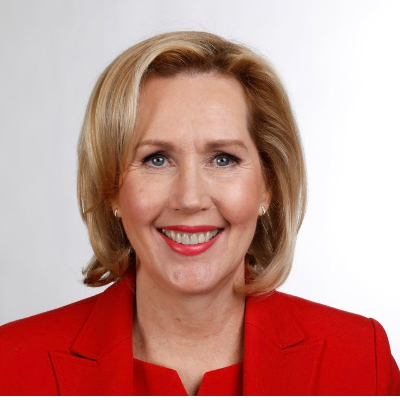
Finland, SOC, President of the Assembly
18:50:54
Thank you, Ms Alicia KEARNS.
I now call Mr Tony VAUGHAN to present the second report.
You have 7 minutes now and 3 minutes at the end to reply to the debate. So the floor is yours, Mr VAUGHAN.
Colleagues,
In July last year, the European Court of Human Rights handed down judgments in the case of Ukraine and the Netherlands against Russia. The Court found a pattern of widespread and systematic human rights violations by Russia that were unprecedented in the entire history of the Court's existence. Now the imperative to ensure that justice is done requires us to consider just a few examples of this conduct given in the Court's judgments.
In September 2022, the occupying Russian authorities in Kherson detained a Ukrainian man. They beat him, they waterboarded him, they gave him electric shocks, they threatened to castrate him and they raped him. In Irpin, just outside Kyiv, Russian soldiers took a group of women into a basement. Witnesses heard cries and screams for two hours. Four of the women were taken outside and shot in the head, and the witnesses were ordered to burn their bodies. Some women remained in the basement. Witnesses heard them pleading with the Russian soldiers to kill them. There are many, many accounts of rape by Russian forces in the occupied parts of Ukraine. Other reported victims include two 10-year-old boys, triplets aged 9, a 2-year-old girl and a 9-month-old baby raped in front of his mother.
Now, the people who committed these crimes and those who allowed them to happen, believe they can get away with it. The state that facilitated these crimes, the Russian Federation, thinks it will never be accountable. But colleagues, we cannot allow that to happen. So my report is about trying to turn judgments of the Court into real justice for victims.
Now that isn't easy. Since its exclusion from the Council of Europe, Russia has refused to pay compensation under existing judgments. It refuses to engage with the Committee of Ministers on the implementation of judgments. This is a flagrant breach of the unconditional obligation to execute those judgments. And those judgments remain binding and cover violations committed while the Convention was still applicable to Russia, until September 2022.
There has also been much debate among EU countries and others about how we use frozen Russian money to give justice for the war of aggression. But what we can do in the case of people who already have a judgment of the European Court of Human Rights is potentially much more specific and more of a strong argument. The first concerns the payment of just satisfaction awarded by the Court. Russia owes billions in compensation to applicants and may soon owe billions more when the Court quantifies the damages payable in the Russia case I've just described.
So what we must do is ensure that the money reaches people who deserve it when the Court comes to rule in those cases. The draft resolution that we have before you today, and the recommendation, propose that individual claimants should be empowered to enforce their unpaid just satisfaction awards in countries outside of the Russian Federation. This would allow claimants to bring litigation before domestic courts of the member states, and also contracting parties to the European Convention on Human Rights, in order to get the money that is owed to them.
An amendment tabled by the Committee on Legal affairs and Human Rights also proposes the creation of an ad hoc funding mechanism with the mandate to recover Russian state-owned assets and proportionately disburse them to applicants who have been awarded just satisfaction by the Court. The draft text also contains proposals specifically relating to cases brought by Ukraine. The Court has already issued two judgments in interstate cases concerning the war of aggression, finding the multiple and flagrant violations I've referred to, as well as finding that Russia was responsible for the downing of the MH17 flight.
As I say, the Court has not yet awarded just satisfaction in those cases, but any awards could amount to tens of billions, hundreds of billions or more. So Ukraine is in a unique position with regards to obtaining payment, because the repurposing of Russian state assets to pay amounts due would constitute a lawful countermeasure under international law. Member and observer states should take appropriate legal and practical measures to repurpose assets of the Russian State that are within their jurisdiction, so that when the Court delivers judgments awarding just satisfaction in interstate cases brought by Ukraine arising from that aggression, those assets may be transferred to the funding mechanism I've described, enabling the payment of the just satisfaction awarded.
So that is the first area where we can act, just satisfaction. The second area concerns individual accountability. Now, many of the judgments of the Court concerning the Russian Federation detail outrageous violations of human dignity. In a small minority of cases, the Court provides the identity of the individuals responsible. In other judgments, the names of the perpetrators are anonymised, but the persons involved may still easily be identifiable from other sources, including judgments or credible reports.
And so I propose that we have a list of such persons drawn up so that sanctions may be applied to them and enable national authorities and the International Criminal Court to investigate and prosecute individuals where appropriate.
Colleagues, the report contains ambitious and novel proposals, but they are also achievable and grounded in law. They seek to provide redress for serious violations of international law, while remaining within the bounds of international law. Behind the legal mechanisms, it is vital that we remember the human beings behind these judgments: the political opponents in Russia who have been subjected to imprisonment, enforced disappearances and murder; the victims of rape and sexual violence who have never been given justice; the victims of torture; the civilians who have been bombed indiscriminately; the people also of Transnistria, South Ossetia and Abkhazia; the people of Ukraine.
The Russian Federation thinks it can avoid the repercussions for its crimes. This Assembly must today show them that they are wrong.
Thank you.
Finland, SOC, President of the Assembly
18:57:43
Thank you, Mr Tony VAUGHAN.
May I remind the Assembly that the speaking time is limited to 3 minutes for the spokespersons for political groups and 2 minutes for all other members.
In the debate I call first, from the European Conservatives, Patriots & Affiliates, Ms Olena KHOMENKO. The floor is yours.
Please, press the button.

Ukraine, ECPA, Spokesperson for the group
18:58:31
Today's debate raises important legal challenges that Europe must address.
When we speak about the European legal order, we need to pay closer attention to Russia's actions and to what they are telling us. Russia is trying to convince Europe that law no longer matters, that judgments can simply be ignored, that borders can be changed by force and that elections can be held under occupation. Every unanswered violation tests the limits of our response. Russia is testing how much Europe is prepared to tolerate: our institutions, our unity and our determination to defend the rules on which European security is built. We must prove that these rules still matter.
The European Court of Human Rights has already found Russia responsible for grave human rights violations. Yet Russia has stopped co-operating with the Committee of Ministers and refuses to implement the Court's judgments. Today, more than 3.3 billion euros in just satisfaction remains unpaid. This may sound like just a number, but behind every judgment, there are people, people who were killed, tortured or forced to leave their homes. Families whose lives were destroyed. Children unlawfully transferred. Victims who spent years seeking justice.
And while these victims are still waiting for justice, Ukrainian civilians continue to be killed. From 1 to 21 September alone, the United Nations recorded at least 200 civilians killed and more than 1 200 injured in Ukraine. Just days ago, another Russian attack on Kyiv killed seven people, including a 14-year-old boy. A judgment that remains only on paper cannot be the end of their pursuit of justice. And Russian state assets must remain available to meet Russia's obligations. Effective mechanisms should allow these assets to contribute to just satisfaction and reparations. And those responsible for the crime of aggression must face justice through the Special Tribunal.
Dear colleagues, the same disregard for law can be seen in Russia's so-called elections. Russia holds illegal elections in occupied territories. At the same time, it attacks democratic processes across Europe through false information, cyberattacks, sabotage and other forms of interference. These are not separate issues. By holding illegal elections in occupied Ukraine, Russia is testing whether European democracies are ready to defend their own institutions. Europe must be consistent. We cannot condemn illegal occupation while accepting its political consequences. And we cannot defend the authority of the European Court while accepting that judgments can simply be ignored.
Accountability must mean consequences. Aggression, fake elections and refusal to follow binding judgments cannot become acceptable simply because time passes. Our responsibility is to ensure that law is not merely recorded in Strasbourg, but enforced. Thank you, dear colleagues.
Finland, SOC, President of the Assembly
19:01:56
Thank you.
And next I call, from the Alliance of Liberals and Democrats for Europe, Ms Lesia VASYLENKO from Ukraine. The floor is yours.

Ukraine, ALDE, Spokesperson for the group
19:02:06
Thank you, Madam Chair.
Dear colleagues,
Let me begin by thanking our rapporteur, Ms Alicia KEARNS, for her dedication and work on Ukraine and with Ukraine. And of course for this report, which once again exposes how Russia manipulates and distorts democratic concepts.
Ten days ago, the world witnessed a major circus entitled "elections to the State Duma of the Russian Federation".
No genuine political competition. Opposition politicians, civil-society and media imprisoned, persecuted and forced into exile. No independent international observers either.
Moreover, these so-called elections were conducted illegally on the territory of another sovereign state.
As the occupying power, Russia, went ahead with setting up voting stations in Crimea, in occupied parts of the Donetsk, Luhansk, Zaporizhzhia and Kherson regions of Ukraine. This was a blatant violation of international law, accompanied by coercion, pressure and threats against people living under occupation. Many of whom, by the way, had already been subjected to forced passportisation and other forms of Russification beforehand.
These fake elections are just one example of how democracy is twisted and perverted by Russia.
The second report in this debate addresses the multitude of human-rights violations that Russia has been committing for decades, but somehow managed to escape responsibility for, every time. Today, over 3 000 judgments against Russia remain pending implementation.
In addition, millions of Ukrainians are suffering daily from the destruction brought on by Russian attacks. The total damage amounts to almost 500 billion euros and recovery will take years.
On behalf of the Alliance of Liberals and Democrats for Europe, I would like to also thank the rapporteur, Mr Tony VAUGHAN, for addressing the issue of a proper compensation mechanism for the victims of Russian aggression and for making it particularly clear that Russian frozen assets should form part of that mechanism. The report also rightly points out that, unless and until Russia bears full responsibility for its crimes, none of these frozen assets should be returned to it.
The two resolutions will undoubtedly be adopted within the hour, together with recommendations calling for all the right things. But colleagues, let us be honest with ourselves and with each other: these reports alone will not stop Russia from breaching human rights, committing war crimes and continuing its aggression and threatening peaceful societies all across Europe.
If we do not urge our governments to act, we risk seeing Russia prevail in the court cases it has already filed to recover its frozen assets. We risk another decade of war and we risk seeing more loss and destruction on our continent as unpunished crimes accumulate.
This is the price of justice denied. This is the price of tolerance towards tyrants and aggressors. And we are paying it now.
I am sorry to end on such a realistic note, dear colleagues, but the reports merit our support. They are just and they need to be adopted unanimously.
Most of all, they merit a follow-up from our governments back home.
Thank you.
Finland, SOC, President of the Assembly
19:05:14
Thank you. And now I call, from the Group of the Unified European Left, Mr Aaron VALENT. The floor is yours.
Madam Chair,
Dear colleagues,
A ballot box alone does not make an election free. Where political opponents are persecuted, where independent media is silenced and any serious competition is suppressed, holding a vote does not automatically amount to democracy.
The so-called election in Russia, therefore, should not and cannot be regarded as free and fair elections. This applies all the more to the votes held in the occupied territories of Ukraine. They violate Ukraine's sovereignty and must not have legal effect. But democratic responsibility does not end at a ballot box. It's also effected in whether people are able to enforce their rights and whether judgments are actually implemented.
Russia was bound by the European Convention on Human Rights for more than 24 years. And to this day, Russia remains obliged to comply with judgments delivered by the European Court of Human Rights concerning violations committed during that period. Leaving the Council of Europe does not erase that responsibility. And yet Russia refuses to comply. Russia refuses to pay more than 3.3 billion euros in compensation. Behind those figures, there are people who are still waiting on redress.
We need to find a legally sound solution to ensure Russia finally assumes their responsibility. For example, Russian state assets could be used for this purpose, provided we are able to establish a solid legal basis for doing so. The common message for this debate must be clear: neither manipulated elections nor unilateral national legislation can allow a state to evade its responsibilities regarding democracy, human rights or the rule of law.
It doesn't matter if we speak about Russia, Germany or any other state.
Thank you.
Finland, SOC, President of the Assembly
19:07:41
Thank you.
Now I call, from the Socialists, Democrats and Greens Group, Mr Ivan RAČAN. The floor is yours.
Thank you.
Dear colleagues,
Russia's cultural and historical output has fundamentally shaped the architecture of the world we live in. While it can be argued what of the historical heritage is good or bad, black or white, Russia's current contribution to the world is deep in the black. Such is the case with the two reports in front of us today.
Russian elections today are a textbook example of a deeply corrupt democracy. To give a few points, I will mention the most obvious.
In Russian elections, the opposition is not allowed to run. On top of that, mass vote manipulation was reported. Russian democracy was never a guiding light but it has now, for decades, taken a bad turn into centralisation.
Centralisation in Russia has not only meant suppressing political opposition but it has also meant the systematic removal of the autonomy of regional and other local political actors. Governors have become more dependent on Moscow, mayors more dependent on governors and municipalities have lost both elected leadership and important decision-making powers.
This is a template for a Tsarist regime. If it was called that, we would have a completely different discussion today, if at all. But it is presented to us as a democracy and as a rules- and values-based institution, we must condemn it, because democracy it is not.
The second report in this debate is "How to ensure the implementation of judgments of the European Court of Human Rights concerning the Russian Federation, including payment of the compensation awarded." Frozen is not justice. Immobilising assets was an important first step, but it is not an adequate endpoint. The purpose must be to turn Russia’s responsibility for reparations into enforceable, practical support for Ukraine’s defence, recovery and reconstruction.
This is not merely a legal issue, this is a political choice.
Legal risks must be addressed carefully, but they cannot become a permanent veto. Legal pathways need to be developed through EU action, co-ordinated member state legislation and an international compensation mechanism. The European Parliament has repeatedly treated this as a question of political will as well as legal design and so must we.
This report shows that there is a legally coherent way of forcing Russia to make reparations, in the defined situation where there is a litigant with a European Court of Human Rights' judgment in their hands, with an order that Russia pay a defined amount of money for the loss that they suffered, but Russia doesn’t pay. In that situation, we have a rule-of-law-compliant way of saying to Russia: we will take your assets and you will pay what the court ordered. This is not just confiscating assets in response to Russia’s war, it is making Russia pay what a court has told them to pay.
Thank you.
Finland, SOC, President of the Assembly
19:10:55
Thank you. And now I call from the Group of the European People's Party Mr Emanuelis ZINGERIS. The floor is yours.

Lithuania, EPP/CD, Spokesperson for the group
19:11:15
Dear friends,
Actually, I've been here since 1993 and I remember the first Russian commitments here in this hall when they were admitted in 1996. Can you imagine?
First point, there are three, the withdrawal of the 14th Russian army from Transnistria. Second, compensation for Siberia during the time of Mr Joseph STALIN. That was the Mr Boris YELTSIN time. From the Boris YELTSIN time we are coming year by year back to the totalitarian regime of Mr Joseph STALIN. And now this regime is functioning. And again, like in Molotov–Ribbentrop Pact time they're warning us.
From our point of view, we should be ready, like during the Hitler-Stalin Pact, to act. And in this report, fantastically echoing the need of the European Court of Human Rights to solve this big problem that thousands of Russian people opposing the war are in prison. Can you imagine that we cannot help them to be out during the time when every person who is against the war is imprisoned in Russia.
So in this case, we should organise ourselves, create possible money for human rights courts, additional support, and we'll go forward and bring those files. If we cannot solve the files like in Lebedeva and Others v. Russia, we should bring them and save them.
And thank you to all committee members who were in favour of bringing those points, that all the files of brave Russian people who are on the side of Ukraine against the war were actually included. Thank you for that.
And thank you, Rapporteur, Mr Tony VAUGHAN, for your brilliant, inclusive point of view.
Thank you so much.
Finland, SOC, President of the Assembly
19:13:34
Thank you. And now in the debate, I call next Mr Sam RUSHWORTH from United Kingdom. You have 2 minutes. The floor is yours.
Thank you.
And I'd like to commend my fellow United Kingdom (UK) colleague, rapporteur Mr Tony VAUGHAN, for bringing his legal experience, but also his humanity, to preparing this timely and practical report.
For time I won't list all of Russia's crimes. This whole Assembly knows them. They include rape, torture, mass killing, child kidnapping. Crimes that are unprecedented in the history of this institution.
We should be clear about what's at stake. Russia's repeated refusal to comply with judgments of the European Court of Human Rights is not simply a procedural problem. If the Russian aggressor can wage war, tear up the European Convention on Human Rights, withhold billions from Ukrainian and Georgian victims and simply walk away untouched, then the credibility of this Council, and ultimately our entire human rights framework, is in jeopardy.
The Court has awarded billions of euros in just satisfaction that remain unpaid. Behind those figures are victims whose rights were violated and whose lives were devastated. And that's why I strongly support the rapporteur's search for practical solutions, particularly the proposal to repurpose Russian state assets within our jurisdictions, so that when courts award just satisfaction, those assets can ultimately be used to meet those obligations, alongside ensuring that national legal systems can enforce the Court's awards.
I also support the points in this report about accountability. Where courts identify serious violations, and those responsible remain unaccountable, states should use targeted sanctions, and if they've not legislated for universal jurisdiction, they should do so. If they have domestic legislation in place, they should use it. And where the evidence indicates that an international crime within its jurisdiction may have been committed, the International Criminal Court should have our full support.
Finland, SOC, President of the Assembly
19:15:55
Thank you. Our next speaker is Ms Zita BILISICS from Hungary. The floor is yours. Thanks.
Dear Madam,
Dear colleagues,
This topic matters and it divides us. In Hungary, a foreign state property can sit only under the special rules and central bank assets enjoy special protection. Hungary respects state immunity. But the ruling is worth little if nobody carries it out. Hungary wants the Court's judgements honoured with an international law through a shared European approach.
Yet enforcement is only the last step. Justice begins much earlier, with evidence and with memory. A testimony, a medical report, a court document. For many victims, this is the only official proof of what happened. Many of these face destruction within only one and five years. If the evidence disappears, a regime that denies its crimes will get away with it. A lost truth cannot be recovered.
Ukrainian children are taken from their homes and given a new name, a new nationality, a new family on paper. But a person is not a document, not a stamp, you cannot erase a childhood. If we can accept these papers, we make the wrong permanent. This is why I support Amendments 2 and 11. But the Hungarian legal position is that the European Court of Human Rights judgement must be enforced by respecting international law and state immunity.
Hungary therefore supports a European solution based on the clear legal basis and consistent with both Hungarian and European law, ensuring the effective enforcement of judgements. Thank you.
Finland, SOC, President of the Assembly
19:18:17
Thank you.
And now I call the next speaker, Mr Oleksii GONCHARENKO from Ukraine. The floor is yours.
Thank you very much.
And first of all, I would like to thank both rapporteurs for a great job done. Absolutely.
Thank you very much, Mr Tony VAUGHAN.
Thank you, Ms Alicia KEARNS. And special thanks to Ms Alicia KEARNS. Because I know that Russia always tries to take revenge on those who call a spade a spade. You call these elections fake. It's true. But as a person, I think I'm for the moment the only one, who has been sentenced by a Russian court, also including for the speeches here. I understand that it took courage from you to make this report. Thank you so much.
And now I want to tell you a very important thing. This report is about a fire in our home. Our home is on fire, the whole of Europe. And you can see this, these Russian attacks everywhere: in Leipzig, in Salisbury, in the Baltic states, in Scandinavia, everywhere. And believe me, it will be more.
So, the only way to prevent it is to end this war as soon as possible. When the building is on fire, you can't isolate your personal apartment and sit and wait for it to go somewhere else. No, it will come to you. And your apartment, your home will also be on fire. We need to end this war now. And we can't count anymore just on the Americans. Unfortunately, the American track doesn't work. We see this. I hope that it will change soon. But for the moment it doesn't work. We don't need to wait for China or India or any other countries.
It's our case, we need to react. Europe should react. And now Kyiv again has a blackout. And it's just 30 September, imagine what it will be like during the winter. So, we don't have much time. And what I see how to do this is step-by-step de-escalation. If we can't end this war at once, let's start, for example, with the Black Sea, and here we can create a big coalition of countries: global South, Türkiye, Egypt, India, other countries which are dependent on Ukrainian crops.
The Council of Europe can lead these efforts. Let's show this leadership. Let's have a first practical result. And when we will stop the war in the sea, next will be in the air, next on the land. And then the war will end. And this is our task.
Thank you.
Finland, SOC, President of the Assembly
19:20:42
Thank you. The next speaker is Ms Larysa BILOZIR from Ukraine. The floor is yours.
Madam President,
Dear colleagues,
I thank both rapporteurs, Mr Tony VAUGHAN and Ms Alicia KEARNS, for their important and deeply interconnected reports.
Russia’s disregard for international human rights law and its hybrid warfare against European democracies are two sides of the same coin, systemic impunity.
The Kremlin manufactures legitimacy through sham elections, including in the occupied territories of Ukraine, Moldova and Georgia. It exports instability across Europe through sabotage, arson, cyberattacks, airspace violations and interference in foreign elections.
And how does Russia respond to the judgments of the European Court of Human Rights?
It pays nothing, it acknowledges nothing and it complies with nothing, all while escalating its terror against Ukraine. Thousands of victims are waiting for justice.
Approximately 300 billion euros in Russian central bank assets remain immobilised. We need a legally sound mechanism to use these assets to compensate victims.
Recognition without enforcement is not justice.
Colleagues, Russia is testing Europe’s determination. And Ukraine knows what impunity looks like. We live it every single day.
I came here with a heavy heart, leaving my three children behind in Kyiv. For the past month, they have been sleeping, eating and studying in bomb shelters.
Kyiv is living through hell. Our capital is under relentless Russian attacks, day and night, suffocating beneath a thick blanket of smoke and being on fire. Schools, kindergartens, shopping centres and energy facilities are being constantly attacked. Only last week, Russia launched 2 300 jet drones and new jet-powered drones reach speeds of up to 600 kilometres an hour and we cannot intercept them.
So this is not just Ukraine’s reality. It is a warning to all of Europe. Justice must have consequences. All those consequences must be real. And we must stop Russia in Ukraine before its aggression reaches your countries.
Finland, SOC, President of the Assembly
19:22:59
Thank you. Our next speaker is Mr Yves CRUCHTEN from Luxembourg. The floor is yours.
He doesn't seem to be here, so the next speaker will be Mr Andrian CHEPTONAR from the Republic of Moldova. The floor is yours.
Thank you, Madam Chair.
Dear colleagues,
I thank our Rapporteur, Mr Tony VAUGHAN, for addressing a key issue under the European Convention on Human Rights: ensuring the implementation of judgments against Russia, including payment of just satisfaction.
For victims, justice cannot end with a judgment on paper. The compensation awarded by the Court must reach those to whom it is due. This is particularly urgent in the inter-state cases brought by Ukraine, where compensation could reach billions of euros. We should examine how immobilized Russian Central Bank assets, or the income generated by these assets, could lawfully contribute to compensation.
The report rightly calls on member states to explore this possibility and to strengthen the avenues available at national level for the enforcement of awards of just satisfaction. Any such mechanism must have a robust legal basis and fully respect international law. But legal caution must not become a reason for inaction. We need practical and coordinated solutions that turn judgments into effective redress.
Let me also stress that this challenge extends beyond the cases brought by Ukraine. As the report recalls, Russia has refused to pay just satisfaction in other cases relating to conflict and post-conflict situations, including those concerning the Transnistrian region of the Republic of Moldova. It expressly refers to Catan and Others v. Moldova and Russia, where judgments have remained unexecuted for more than 10 years and the obligations concerning just satisfaction have still not been fulfilled.
Dear colleagues,
Every judgment of the Court must be respected and implemented. Otherwise, we risk weakening not only the Convention system, but also the trust that individuals place in it. I therefore support the report’s call for determined, coordinated and legally sound action.
Thank you.
Finland, SOC, President of the Assembly
19:25:44
Thank you. The next speaker is Mr Markus WIECHEL from Sweden. The floor is yours.
Thank you, Madam President and dear colleagues,
This debate is about a simple fact: Russia still owes justice for violations committed while it was bound by the European Convention on Human Rights. Exclusion from this organisation did not cancel those judgements. Article 46 from the Convention still applies to every case that became final before 16 September, 2022.
The record is not abstract. The Court has documented rape used as a weapon of war, indiscriminate bombings of civilians, murder of opponents, enforced disappearances, the abduction of children and the destruction of independent societies. Russia has stopped talking to the Committee of Ministers. It has passed a law refusing to enforce later judgements and limiting payments of earlier compensation. More than 3.3 billion euros in just satisfaction remains unpaid. Interest continues to run. Around 5 700 complaints against Russia are still waiting for a decision by the Courts. A large share of them is linked to the ruthless war against Ukraine.
We are therefore left with one choice: we can treat these judgements as historical documents, or we can use every lawful tool still available to us. That means keeping Russian State assets immobilised until reparation is paid. It means preparing to transfer those assets to a mechanism that can pay the compensation ordered for Ukraine and to individual victims, and then deducting every euro from the debt that Russia still owns. It means refusing to recognise Russian papers that erase the identity of deported Ukrainian children and demanding the information needed to find them and, of course, bring them home. It means naming those responsible for the serious violations where the Court has identified them and using sanctions, universal jurisdiction and co-operation with the International Criminal Court where national authorities fail to act.
I could continue, but I understand my time is up. So please, colleagues, support the amendments that make this document stronger. And thank you very much.
Finland, SOC, President of the Assembly
19:28:16
Thank you.
And next speaker is Ms Anna-Kristiina MIKKONEN from Finland.
Madam President of Finland, ladies and gentlemen,
Rigged elections for a rigged parliament. The conclusion is clear: the so-called ‘elections’ to the State Duma did not meet international democratic standards, and their results cannot be regarded as a genuine expression of the will of the Russian people. These are rigged elections that will give rise to a rigged parliament.
Any vote held in the temporarily occupied territories of Ukraine constitutes a flagrant violation of Ukraine’s sovereignty and territorial integrity, as well as of international law. Such elections can have no legitimacy whatsoever nor produce any legal effect.
Furthermore, the exclusion of the Yabloko Party also undermines the rule of law.
These elections are, in reality, devoid of any real significance for many reasons. Political opponents, representatives of civil society and journalists have been imprisoned, persecuted or forced into exile. Independent media outlets have been shut down or blocked. Even moderate and peaceful criticism of Russia’s war of aggression against Ukraine has been criminalised.
Parliamentary work concerning Russia frequently exposes legislators to state-orchestrated harassment, disinformation or more direct pressure. Elections held under such conditions are incompatible with Russia’s international commitments.
Such elections can have no legitimacy whatsoever and cannot produce any legal effects.
Thank you very much.
Next is Mr Serhii SOBOLIEV from Ukraine.
Thank you, Madam President.
Dear colleagues, it's very important that we have these discussions together.
Excellent reports, both reports. And we have answers to very many questions. But it's very important that both reports give us a very concrete definition: Russia is a terrorist state. Yes, it's not our first definition in the resolution, but it's very important to stress this once and once again.
Because we can't answer the main question: how we are waiting and for what we are waiting when the main enterprises of your countries are being bombed each day in Ukraine. You can imagine this, that the biggest Coca-Cola enterprise in Ukraine was bombed and the United States was silent. When the biggest Spanish, German and other enterprises were also being bombed, everybody kept silent. When the main embassies are being bombed – imagine this in the heart of Kyiv – and everybody is silent.
When today horrible information that the Russian embassy in Belgium officially declared, from the position of the Russian state, that they will use nuclear weapons against the North Atlantic Treaty Organization (NATO) – this is the official memorandum that they sent to NATO – if there are any problems with Kaliningrad. Everybody is thinking and discussing again and again. I think that we need to act very quickly.
And the second report, it's the answer to what we had to do with the help of the European Court of Human Rights, with the help of the Special Tribunal for the Crime of Aggression against Ukraine. We need to answer these questions and of course, without force. If we are not united all together, we cannot answer the question about when Russian aggression will be finished. This will happen only when we will be united.
Thank you.
Thank you. And I now call on Mr Aleksi JÄNTTI from Finland.
Madam President,
Russia’s war of aggression against Ukraine is not only an attack against a sovereign European nation, it is an attack against the rules and principles on which our European order is built. And those rules must have consequences. Russia was expelled from the Council of Europe because of its aggression against Ukraine. But its dismissal did not erase its legal obligations. Russia remains legally bound to implement the judgments of the European Court of Human Rights concerning violations committed while it was a party to the Convention.
Today, Russia owes more than 3.3 billion euros in unpaid just compensation. Thousands of victims are still waiting for justice. We can't accept a situation in which a state commits serious human rights violations, refuses to implement binding judgments and then simply walks away from its obligations. That's why I strongly support the direction of this report. Russian state assets must remain frozen until Russia has fulfilled its obligations. And we should establish the necessary legal mechanisms to use those assets to compensate for the damage Russia has caused.
My country has consistently supported a comprehensive approach to accountability. Just yesterday, in the parliament, were discussed the agreements concerning both the Special Tribunal for the Crime of Aggression against Ukraine and the International Claims Commission for Ukraine. The principle is clear: accountability is a requirement for a just and lasting peace. And in the case of Ukraine, Russia must pay.
Colleagues, Europe's strength finally depends on whether our principles are followed by action. Russia must be held accountable and the victims must receive justice.
Thank you very much. Next one on the list is Ms Lesia ZABURANNA from Ukraine.
Madam President,
Dear Colleagues,
First of all I would like to say thank you to our Rapporteurs, Mr Tony VAUGHAN, especially Ms Alicia KEARNS, for constantly supporting Ukraine and being a very strong voice of Ukraine in the United Kingdom. And actually it's one of the most important issues also for us to give our vision about that election.
Russia's fake elections and its attacks on Europe are part of the same strategy: to undermine democracy, spread fear and avoid responsibility.
A ballot organised under occupation, repression and military control cannot legitimise Russian rule. It cannot erase the rights of people whose homes and communities Russia has destroyed. Elections held without freedom are a tool of coercion, not an expression of the rule of law.
Russia's destabilising campaign does not stop at Ukraine's borders. Its attacks on critical infrastructure, alongside sabotage, cyber-attacks and political interference, seek to weaken trust and divide our societies. These actions test whether Europe will answer with unity and the rule of law, or allow intimidation to become normal.
I know what these attacks mean in people's daily lives. In February, Russian strikes hit a power plant in Kyiv. More than 1 200 residential buildings in my constituency lost heating in the middle of winter. Now you know we have another critical infrastructure disaster in Kyiv and we also have a lot of problems with electricity.
So we highly support this report and please support it.
Thank you.
Next on the list of speakers is our dear Mr Dominik OBERHOFER from Austria. Please.
Madam President, ladies and gentlemen, but above all, dear rapporteurs,
There were candidates, there were ballot papers, there were polling stations, but there was no election; the winner had already been decided before the election had even begun.
I come from a country, Austria, which has been governed very stably over the last 25 years by various coalition governments. And we have had a total of nine Federal Chancellors, one of them a woman, at a time when Mr Vladimir PUTIN was an autocrat, switching between offices and achieving one thing in particular: destroying democracy in his own country. And what he has successfully achieved in his own country, he now wants to implement in Europe, through disinformation. We are under attack when it comes to free elections. We are under pressure in all our member states.
But let me say one thing. Even though you repeatedly hear pessimism in the media, and even when you’re out on the streets talking to citizens, you often hear people say "Europe is finished. We need to completely reinvent ourselves in some way. Everything is going so badly". I have formed a different opinion here over the last few days.
I have seen how strong this Assembly is, how strongly it stands up here for democracy, for human rights, for the freedom of our continent. And that makes me incredibly optimistic. It makes me very proud. And I can tell you one thing: when I return to Austria, I will take this optimism with me, because I see 47 nations here that share a common goal, namely to defend our values – to defend them in a world where they are under attack, not only from Mr Vladimir PUTIN, but from a wide variety of systems. I thank you for your optimism, for your commitment and for your work.
Next on the list is Ms Bisera KOSTADINOVSKA-STOJCHEVSKA.
Thank you, Madam President.
Thank you to the Rapporteurs for these strong reports.
And yes, I agree with all my colleagues. We need practical solutions. Why? Let's see. The Russian State Duma Elections held from 18 to 20 September of this year took place in an increasingly restrictive political environment. Although millions of Russian citizens formally participated in the elections, serious questions have been raised about whether the process provided the conditions necessary for genuinely competitive and democratic elections.
This was the third consecutive nationwide electoral process in Russia that the Organization for Security and Co-operation in Europe had been unable to observe. According to them, the absence of independent observation reduced transparency and deprived voters and international community of an impartial assessment of the electoral process. Restrictions affecting political participation, including rules preventing people designated as foreign agents from standing for election, limitations on campaign financing and restrictions on the ability of parties and candidates to appoint polling station representatives were reported. Opposition parties were labelled foreign agents.
The organisation of voting in Ukrainian territories occupied by Russia were contrary to international law and their results would have no validity under international law. The European Union stated that it would not recognise either the organisation of these elections or their results in the occupied territories. These were not elections. This was a pure exercise of power. Russia continues to ignore democracy as well as the judgements of the European Court of Human Rights. Thank you.
Thank you.
I now call Mr Patrick BONIN from Canada.
Madam Chair,
Dear colleagues,
An election is not merely a matter of placing a ballot paper in a ballot box. It requires a genuine political choice, access to independent information, and the opportunity for citizens to participate freely and without intimidation.
The recent "elections" held in Russia do not meet these fundamental standards. As members of the Parliamentary Assembly of the Council of Europe (PACE) have emphasised, these elections took place in a climate of fear and repression, against a backdrop of systematic repression of the political opposition, independent media and civil society.
The illegal elections organised by Russia in the occupied Ukrainian territories constitute a clear violation of international law and confer no legitimacy on the Russian occupation.
The challenge posed by Russia, however, goes beyond the denial of democratic choice on its own territory and in the territories it illegally occupies. Russia has also sought to weaken democratic institutions and interfere in the political processes of countries across Europe and beyond.
Across the region, we have witnessed the use of cyber-attacks, disinformation, covert interference and other forms of hybrid activity aimed at undermining democratic institutions. PACE, for example, has raised concerns about such interference, particularly in relation to the elections in Romania and Moldova. The North Atlantic Treaty Organisation (NATO) has also identified Russian activities targeting critical infrastructure through sabotage, the use of irregular migration as a weapon, and various forms of economic coercion.
These challenges require not only a co-ordinated, but also a sustained response. We must continue to hold Russia to account through sanctions and other measures that increase the cost of its aggression and destabilising activities in the region.
But external pressure alone is not enough. We must also strengthen our resilience at national level, in particular by consolidating our democratic institutions and electoral processes, developing effective tools to combat disinformation, and strengthening our capacity to detect and resist foreign interference.
Above all, we must uphold the principle that democratic choices belong to the people, not to regimes that seek to manipulate, intimidate or undermine them.
Thank you.
Next on our list is Ms Mariia MEZENTSEVA-FEDORENKO.
Many thanks [spoken in German], Madam President,
Dear colleagues,
First I would like to congratulate the true hero of the day. Usually you call our defenders the heroes they are. But today, in this hall, the real hero is Ms Alicia KEARNS. She upholds the file which has been drafted in only in 24 hours. Usually the resolutions take longer to be drafted.
And every point here is so extremely important. And I'd like to draw your attention to the most important ones.
Colleagues,
So very few of you spoke about these terrible fake elections. And the title says so. Fake elections, sham elections. Everyone knew that no elections are taking part there. There is no pace, there's no Organization for Security and Co-operation in Europe, no other observers, but we all confirm they never took place. People who are in occupation under the guidance of servicemen of the Russian army were voting. What is this called? These are fake elections.
So we don't say that Russian Parliament is legitimate. President Vladimir PUTIN is not legitimate. Colleagues, thank you so much for having in this text the bleeding heart of civilians today. And this is a small village in the temporary occupied of Kherson region, Oleshky. Today I am Oleshky. You are Oleshky. We are Oleshky. 2 000 people are starving, colleagues. They ask for our help. Our drones are delivering aid, but Russian forces are taking them away. A humanitarian corridor now under the observation of the International Committee of the Red Cross and the United Nations must be called, colleagues.
Prisoners of war, civilians in captivity, at your political groups you heard their testimonies. Thank you for that. Each and every one must be heard. We call on mixed medical commissions involving Ukraine and Russia to be established, which Russia agreed to but never committed. And colleagues, of course, tribunal, compensations, everything we're doing today.
Thank you that you are here. Thank you for your votes. And please be brave, like Ukraine. Slava Ukraini.
Thank you very much.
Next is Mr Andries GRYFFROY from Belgium.
Dear colleagues,
First of all, on behalf of the Belgian delegation, we wish to emphasise that we have always supported the Ukrainian people in this terrible war, started by the aggressor Russia.
The Belgian government fully supports the approach currently taken by the European Union and the G7, which consists of using the extraordinary revenues generated by immobilised Russian assets, while preserving the underlying capital itself. As regards Belgium, the share of the extraordinary revenues generated by the assets held by Belgium is fully allocated to Ukraine and the Ukrainian people. This approach has also enabled the establishment of the Extraordinary Revenue Acceleration loans initiative, which mobilises approximately 45 billion euros and the European Union’s Ukraine Support Loan of 90 billion euros.
All of these assets represent an important element in any future negotiated settlement. Keeping them immobilised constitutes a significant lever to encourage Russia to assume its international responsibilities and contribute to the reparations owed to Ukraine.
In a few minutes, we will all vote on the terms: confiscation or repurposing or creating a funding mechanism. The Belgian position regarding the possible use of immobilised Russian assets has always been clear and remains unchanged: we cannot accept confiscation or repurposing or creating a Special Purpose Vehicle (SPV). And we are not the only country with frozen assets. There is also France, Germany, Switzerland, Luxembourg and the United Kingdom who have frozen assets. That’s the reason Belgium has always put some conditions on the table, like for example, the full and unlimited mutualisation of all risks of all member states.
There are two main reasons for this. Confiscation or repurposing incur significant risks and it would create a significant precedent in international law by paving the way for the use of expropriation as an instrument of political or economic coercion.
For this reasons, we will vote against the amendments when these terms are mentioned.
Thank you for your understanding.
Thank you. And the very last on the list is Ms Yevheniia KRAVCHUK from Ukraine.
Yevheniia, please.
Really honoured to be the last on the list. To sort of sum it up. And I want to thank both of the Rapporteurs, I want to thank to each of you who spoke today, who will vote for these two very important resolutions. And of course I will not go to these 50 shades of scam that Russia was doing during these so-called elections. It's not elections. They did not have free and fair elections for more than 20 years. And since they illegally included the occupied, temporarily occupied territories in the vote, of course no Russian Duma President will be legal until the very last vote when they take illegally from our people on occupied territories.
My call to action is very simple. We are going right now by this vote to say that of course this Duma could not be recognised, nor politically, nor legally. And of course the Parliamentary Assembly of the Council of Europe will not have any contacts. But you probably know that there are other assemblies, there is the Parliamentary Assembly of the Organization for Security and Co-operation in Europe, there is the Inter-Parliamentary Union. And I assure you that these so called members of Duma will show up there.
Please work with your delegations. Please tell about this resolution. Please tell that it is not appropriate to treat them as official representatives of this country. And please stay strong. We will be returning soon to Ukraine again, to the bombs again, to the drones again, to these sleepless nights. But we want to make sure that we have our back covered. We want to know that you will be as strong as Ukrainians. Slava Ukraini.
Thank you all.
I call now, Mr Tony VAUGHAN, to have 3 minutes to reply as Rapporteur, please.
Thank you very much, Chair.
I mean, it's been heartening to see that not a single speaker has argued against the broad proposals in my report, the resolution, or indeed the draft recommendation. And I think that's very important for the Committee of Ministers when, I hope, they consider this recommendation, because I think it shows, and another speaker said this as well, that this Assembly is united in the need to take stronger steps to make Russia pay for these heinous violations that we have seen. Especially where, I should say, the European Court of Human Rights has ordered Russia to pay specific sums for specific violations.
Now that, in my view, is the key feature here which distinguishes the situation of a European Court of Human Rights successful litigant from the victims of Russians violations generally. Now, every victim is deserving. But the question that we have to ask ourselves here is how do we get compensation to those who need it, as fast as possible? And the answer is in the draft recommendation in the report, because for the litigant victim, I strongly believe that we are in a stronger position, both legally and reputationally, to demand the stronger action that I propose.
And I do just want to address very briefly a point made by my Belgian colleague about terminology. Now, as you've seen from the report, this report does rely on the legal doctrine of countermeasures against Russia for its internationally wrongful acts. And that requires us to use great precision with our terminology. It requires us to be able to say that the measures we are ordering against Russia are temporary and reversible. That's something that we've got to do for this report to have legal coherence. And so we do have to use the language of repurposing, not confiscation, because confiscation entails a permanent deprivation of the asset.
And so it is very important that we use the right language so that we craft the right solution to maximise the chance of victims getting what is due. Because ultimately, the European Union has been trying for a very long time to go further than simply using the interest from these assets, to go further than simply freezing them, to consider, well, how do we use the actual asset?
Now, this recommendation, this resolution, is about how we actually start to look at the asset itself. And I think it's a very, very important moment that this Assembly has recognised that we can do this, certainly in the situation of a litigant in the Court, so that we can really take the debate forward in Europe about how we take more muscular approaches with Russia on these issues.
So I thank everyone for their input. I thank the Committee on Legal Affairs and Human Rights and the Secretariat for all of their support in this very, very complicated report.
And I hope that our report will lead to change.
Thank you.
Thank you, Tony.
I now call Ms Alicia KEARNS, also Rapporteur. You also have 3 minutes.
Thank you colleagues.
Thank you for your unity, for those who spoke, who laid amendments, to the Secretariat of the Committee of Ministers, to Ms Nika RIZOL, all of you for your support.
The sham election was not an election. The opposition is in prison, in exile or in the grave and ballot boxes were accompanied and carried at gunpoint illegally through occupied Ukraine. The Organization for Security and Co-operation in Europe (OSCE) was shut out so the election could be whitewashed. As I say, shamefully, some of these were our own citizens and we have a duty to go home and root out those individuals. This is not an election. And so this report says firmly and with no doubt that we will raise our voices for those living under Kremlin tyranny in Russia, but also for the brave Ukrainians enduring illegal Russian occupation in sovereign Ukrainian land.
This Duma is not a parliament. It is an illegitimate group of frauds and war-crime deniers and is led by an illegitimate and genocidal president. We will not recognise them and we will call out those who do. We will also sanction those who ran, stood or observed this fraud in occupied Ukraine, because the Kremlin's unprovoked attacks are on us all. These are not incidents, they are attacks. And just this week, confirmed today, a drone company in Estonia, a nation standing firm in our defence on the front line against Mr Vladimir PUTIN's imperial ambitions, was attacked once again.
These attacks are unprovoked. But we have failed to deter those Russian attacks because we stay quiet when we fear escalation. And in so doing, we have failed to prepare our countries over the last ten years so that we have the deterrents, the defence and the resilience we needed. Our restraint did not buy peace: it encouraged recklessness. And our caution has not bought us safety, but bought Moscow time. And our failure leaves Ukraine every single day defending all our freedoms with the blood of its people.
This report asks you to go home to your governments and to act with clarity, to attribute attacks publicly, promptly, and united as allies. Mr Vladimir PUTIN has no allies. Only those who keep him on a leash or his country on a ventilator. We must name the crime: state terrorism. It is not "hybrid activity". And we must impose costs. Persona non grata Schengen limits, sanctions, freezes on tourism visas that are being used to attack our countries and using Russia's frozen assets to be put to work for Ukraine and to tell our people that we must prepare more.
Mr Vladimir PUTIN needs this illegal war to survive. And I'm sorry to Ukraine that you are still fighting for us because we have failed you, that you are still there fighting today. Together we must send a message to our governments that we stand firm together and deter Russian attacks, that timidity and de-escalation is appeasement and that we will not recognise this illegitimate Russian Duma.
I ask you to vote for your report today, to vote for it as one, because we are all Oleshky.
Slava Ukraini.
Thank you, Ms Alicia KEARNS. And I now call Ms Marietta KARAMANLI, Vice-Chairperson of the Committee on Political Affairs and Democracy. You also have 3 minutes.

France, SOC, Vice-Chairperson of the Committee on Political Affairs and Democracy
19:57:41
Thank you, Madam Chair.
Ladies and gentlemen, Rapporteurs,
My dear colleagues,
On behalf of the Committee on Political Affairs and Democracy, I would first like to congratulate the male and female Rapporteurs on this report, which is of genuine urgency, and on their ability to respond very swiftly to this matter of concern to us. I would like to thank all the members who have contributed to today’s debate. For, as the daily news reminds us, Russia is escalating its criminal war – its aggression against Ukraine. It is doing so by targeting critical infrastructure, killing civilians and imposing a regime of terror in the temporarily occupied territories.
As we have pointed out, this report encompasses several dimensions. That is its strength. Russia’s suppression of democratic choice within its own borders, its denial of that choice in the occupied territories, and its efforts to undermine democratic choice in Europe are not separate issues. They are facets of the same strategy that require a coherent response.
The debate highlighted three points that the committee considers essential. Firstly, hybrid threats must be treated as systemic attacks rather than as individual incidents. The committee also fully endorses the report’s call for member states to strengthen their preparedness and resilience, both collectively and individually.
Secondly, elections must be protected. The committee strongly supports the call for better protection of electoral infrastructure and for effective responses to foreign information manipulation.
And finally, thirdly, the so-called Duma elections to which you referred – a process without opposition, without independent observers and without freedom of information – are not an election. The committee supports the report’s clear position. The resulting Duma has no democratic legitimacy.
Honourable colleagues,
The committee has given its full support to this text. It is firm because firmness is needed today. It is clear-sighted regarding the challenges we face. I therefore urge you to support it unreservedly and to send a message that today’s European democracies will not be intimidated, that sovereignty cannot be negotiated, and that rigged elections certainly cannot create legitimacy.
Thank you.
Thank you, Ms Marietta KARAMANLI.
The debate is closed. We now come to the draft resolution presented by the Committee on Political affairs and Democracy on Fake 'elections' in Russia and its destabilising attacks on Europe (Document 16498), to which 14 amendments have been tabled.
They will be taken in the order in which they appear in the Compendium. I remind you that speeches on amendments are limited to 30 seconds.
I understand that the Committee wishes to propose to the Assembly that Amendments 5, 6, 1, 2, 7, 8, 3, 9, 10, 11 and 13 to the draft resolution of Document 16498, which are unanimously approved by the Committee, be declared as definitely approved.
Decisions on Amendments 4 and 14, which were also unanimously approved by the Committee, will be taken separately as Amendment 14, will fall if Amendment 4 is adopted. Is that so, Ms Marietta KARAMANLI?
France, SOC, Vice-Chairperson of the Committee on Political Affairs and Democracy
20:01:35
Yes.
If no one objects, I will consider the amendments to be approved.
Is there any objection? There is one objection.
You have 30 seconds, please.
Well, just a small question. I thought that 3 and 9 were not unanimously.
Yes, 3 and 9. I repeat, the ones who are unanimously adapted and should be considered as finally adapted.
It's 5, 6, 1, 3. Sorry. 5, 6, 1, 2, 7, 8, 3, 9, 10, 11 and 13.
Yes?
Talking about the other report, not the political report.
You are complete. The next report. Wait a little bit. We will come back to you.
Now back to the number 16498. So there is no objection? There is no objection.
So that means that Amendments 5, 6, 1, 2, 7, 8, 3, 9, 10, 11 and 13 to the draft resolution are therefore approved and will not be called.
I understand that the Committee wishes to propose to the Assembly that Amendment 12 to the draft resolution, which was rejected by the Committee with a two-thirds majority, be declared as definitely rejected. We will come in a moment to an oral amendment from the Committee intended as an alternative to Amendment 12.
Is that so, Ms Marietta KARAMANLI? It is so. Is there any objection? That's just a wave and not an objection. I understand.
So that means Amendment 12 to the draft resolution is therefore rejected and will not be called.
I have received an oral amendment from the Committee on Political affairs and Democracy which reads as follows, "In the draft resolution, Paragraph 18.4, replace the words 'return of Ukrainian territories' with the following: 'withdrawal of Russian troops from Ukrainian territories, return of Ukrainian territory to Ukrainian control'."
The President may accept an oral amendment on the grounds of promoting clarity, accuracy or conciliation and if there is no opposition from 10 or more members to be debated.
In my opinion, the oral amendment meets the criteria under Rule 34.7a. Is there any opposition to this amendment being debated? I don't see. So that is not the case. I therefore call Ms Alicia KEARNS on behalf of the Committee on Political affairs and Democracy to support the oral amendment.
You have 30 seconds.
Madam President, we thank you for taking that position, allowing this to go forward.
This is a clarifying and conciliatory amendment to ensure that our report adequately reflects the full position. And it was a unanimous position of the Committee that we need to be very clear about the need for full removal of Russian troops from Ukrainian territory and in addition to that, the return of Ukraine territory to Ukraine and not to any so-called Russian force that would be without military actors.
So we're very grateful to you for allowing us to discuss this and I hope the Assembly will support it.
Thank you for supporting this oral sub-amendment.
Does anybody wish to speak against this oral amendment?
That is not the case. The Committee is obviously in favour.
I shall now put the oral amendment to the vote.
The vote is open.
Thank you. The vote is closed.
I call for the results to be displayed.
That's adopted. The oral amendment is agreed.
If this amendment is agreed, Amendment 14 falls.
Yeah, that's the case.
So I call Ms Yevheniia KRAVCHUK to support Amendment 4.
You have 30 seconds, Yevheniia.
Yes. Thank you, Chair.
Well, obviously, very soon there'll be some people claiming that they represent the occupied territories of Ukraine. And we believe that they should be especially sanctioned in the first rows.
And by the way, on 26 September, Ukraine had put out a list of 44 sanctioned officials, those who ran and won elections. So we also ask you to follow these sanctions in your respective countries.
That was on Amendment 4, just for clarification.
Does anybody wish to speak against this amendment?
That is not the case.
Then I will put it on vote.
The Committee unanimously accepted this amendment and I open the vote now.
The vote is closed.
I call for the result to be displayed.
It is unanimously agreed on.
That means that Amendment 4, which is agreed on now, and Amendment 14 falls.
We come to the draft resolution. We will now proceed to the vote on the draft resolution contained in Document 16498 as amended. A simple majority is required.
The vote is open.
The vote is closed.
I ask for the results.
That is unanimously the case.
[Applause]
Congratulations.
We now come to the draft resolution presented by the Committee on Legal Affairs and Human Rights titled "How to ensure the implementation of judgments of the European Court of Human Rights concerning the Russian Federation, including payment of the compensation awarded" (Document 16478), to which eight amendments and three sub-amendments have been tabled.
The Committee on Legal Affairs and Human Rights has also presented a draft recommendation to which three amendments have been tabled. They will be taken in the order in which they appear in the compendium.
I remind you that speeches on amendments are limited to 30 seconds.
We begin by examining the amendments in the draft resolution.
I understand that the Committee wishes to propose to the Assembly that Amendments 2 and 11 to the draft resolution (Document 16478) which were unanimously approved by the Committee, be declared as definitely approved.
Is this so, Mr Tony VAUGHAN? That's correct.
If no one objects, I will consider the amendments to be approved.
Is there any objection? That is not the case.
That means that Amendments 2 and 11 to the draft resolution are therefore approved and will not be called.
I understand that the Committee wishes to propose to the Assembly that Amendments 6, 8 and 4 to the draft resolution in Document 16478, which were rejected by the Committee with a two-thirds majority, be declared as definitely rejected.
Is that so? That's correct.
If no one objects, I will consider the amendments to be rejected.
Is there any objection? That is not the case.
That means that Amendments 6, 8 and 4 to the draft resolution are therefore rejected and will not be called.
I understand that Mr Max LUCKS wishes to withdraw Amendment 7 to which a sub-amendment has been proposed.
Is that so?
I don't see Mr Max LUCKS, but maybe somebody else can...
Okay, that is his intention and if no one asks to hold it, it is withdrawn.
There is a sub-amendment proposed to Amendment 1. I call Mr Oleksii GONCHARENKO to support Amendment 1.
You have 30 seconds, Oleksii.
Dear colleagues,
I just want to ask you to support this amendment. And I agree with the position of the Committee.
And I once again want to thank the Rapporteur, both Rapporteurs, for a brilliant job done. And please support the proposition of the Committee. I support it, too. Thank you.
Thank you. I noted that Baroness Thérèse COFFEY wanted to support the sub-amendment. But she is not here.
Does anybody else wish us to speak against the sub-amendment? For the sub-amendment?
United Kingdom, SOC, Vice-Chairperson of the Committee on Legal Affairs and Human Rights
20:12:16
Chair, yes, it's simply [off mic] to change paragraph numbering so that the point about transfer of children is raised at a different, and I would say more appropriate point, in the document.
What is Mr Oleksii GONCHARENKO's opinion on the sub-amendment?
Complete support.
And the opinion of the Committee is the same as I understand it's the same. Okay.
I shall now put the sub-amendment to the vote.
The vote is open.
I close the vote and I call for the results to be displayed.
It is carried unanimously.
Now we come to the main Amendment 1, as just amended. Does anybody wish to speak against Amendment 1 as amended? I do not see anybody.
The opinion of the Committee is also in favour. You support it? Then I shall now put the amendment to the vote.
The vote is open.
The vote is closed. I call for the results.
So it's also unanimously carried.
There is a sub-amendment proposed to Amendment 3. I call Ms Lesia ZABURANNA to support Amendment 3. You have 30 seconds. Lesia? Or Mariia MEZENTSEVA-FEDORENKO?
Please. 30 seconds.
Yes, thank you so much.
I would like to support Sub-amendment 1 to Amendment 3.
And actually the first sentence, replace the word "confiscated" with the following word: "repurposed".
Thank you.
Thank you.
Baroness Thérèse COFFEY is not here to support the sub-amendment. Would the Committee like to do so?
United Kingdom, SOC, Vice-Chairperson of the Committee on Legal Affairs and Human Rights
20:14:29
The Committee supports the sub-amendment.
It's again made to simply reorder the paragraph in the right place in the document.
May I ask for Ms Lesia ZABURANNA's opinion on this sub-amendment?
I agree, yes.
It's fine.
And we already heard that the Committee is also in favour of the sub-amendment.
So I put it to the vote.
The vote is open.
A point of order, please.
Can you start speaking?
No, I can't, normally. There's also the question, is there someone who has 30 seconds to speak against?
Yes, you have.
Okay, for the...
But do you want to make a point of order or do you want to speak against the sub-amendment?
I want to speak against before the voting. You put it already on the voting, but you didn't give the opportunity to speak against.
Okay, when you want to speak against the amendment that is after the voting of the sub-amendment because you speak against the whole amendment as sub-amended.
So a little bit later.
Okay?
A point of order.
United Kingdom, SOC, Vice-Chairperson of the Committee on Legal Affairs and Human Rights
20:16:02
Sorry Chair, could I just clarify that the vote is still open, or did the vote close before my colleague's point of order was raised?
That's why I close the vote now.
And ask to display.
The sub-amendment is agreed to.
And now we come to the main Amendment 3 as amended.
And there you would like to speak against, now I think.
It's a little bit confusing, Madam President, but in fact we wanted to speak against Amendment 3 even as amended, because for us it will create a significant precedent in international law by paving the way for the use of expropriation as an instrument of political or economic coercion. And changing then the word from "confiscation" to "repurpose": repurpose is just a euphemism of confiscation.
And so that was why I tried to explain that I was also against this sub-amendment, but we are also against the amendment from the Belgian delegation.
What is the opinion of the Committee on that?
United Kingdom, SOC, Vice-Chairperson of the Committee on Legal Affairs and Human Rights
20:17:18
The opinion of the Committee is to accept the amendment.
Could you repeat? I couldn't understand.
The Committee accepted the amendment as sub-amended. Thank you.
Then I now put the amendment to the vote.
The vote is open.
We are in the midst of the voting. So not now.
I close the vote.
The amendment as sub-amended is carried.
Is there now still a point of order or not?
United Kingdom, SOC, Vice-Chairperson of the Committee on Legal Affairs and Human Rights
20:18:09
I think I just did what my Belgian colleague did in terms of asking whether the vote was still open when it wasn't necessary to speak against it. So I think I'm going to be given an opportunity. Apologies.
Okay, all clear?
We will now proceed to the vote on the draft resolution contained in Document 16478 as amended. A single simply majority is required and the vote is open.
The vote is closed.
I call for the results to be displayed. And the resolution in Document 16678 as amended is adopted.
We now come to the amendments to the draft recommendation proposed by the Committee on Legal affairs and Human Rights.
I understand that the Committee wishes to propose to the Assembly that Amendment 10 of the draft recommendation, Document 16478, which was unanimously approved by the Committee, be declared as definitely approved. This is correct?
United Kingdom, SOC, Vice-Chairperson of the Committee on Legal Affairs and Human Rights
20:19:36
That's correct, Chair.
It is correct.
So if no one objects, I will consider the amendment to be approved.
Is there any objection? That is not the case.
Amendment 10 of the draft recommendation is therefore approved and will not be called.
I understand that the Committee wishes to propose to the Assembly that Amendment 5 to the draft recommendation of Document 16478, which was rejected by the Committee with a two-thirds majority, be declared as definitely rejected. Is this correct?
United Kingdom, SOC, Vice-Chairperson of the Committee on Legal Affairs and Human Rights
20:20:13
That is correct, Chair.
That is correct.
If no one objects, I will consider the amendment to be rejected.
Is there any objection? That is not the case.
Amendment 5 to the draft recommendation is therefore rejected and will not be called.
We now come to Amendment 9.
I call Mr Tony VAUGHAN to support Amendment 9 on behalf of the Committee on Legal Affairs and Human rights. You have 30 seconds.
United Kingdom, SOC, Vice-Chairperson of the Committee on Legal Affairs and Human Rights
20:20:48
Thank you, Chair.
So this amendment maintains the call for a mechanism to facilitate the payment of just satisfaction owed to Ukraine following the repurposing of Russian assets.
But what it also seeks to do is to broaden the mandate of the proposed mechanism, so it would be empowered to receive funds in any case involving Russia, if the funds were, in due course, available.
So I'd invite colleagues to support.
Thank you. Does anybody wish to speak against this amendment? Yes, please, Mr Andries GRYFFROY.
Thank you.
In fact, this proposal of the Rapporteur has been produced, let us say, in a very short term. it cannot be balanced and been checked fully, legally.
So for us we vote against because this confiscation, or even repurposing, which is an euphemism of confiscation, even creating a fund or Special Purpose Vehicle (SPV), entails really significant risks.
What is the opinion of the Committee on the amendment?
United Kingdom, SOC, Vice-Chairperson of the Committee on Legal Affairs and Human Rights
20:21:50
The Committee is in favour of the amendment.
Thank you. I shall now put the amendment to the vote.
The vote is open.
I close the vote and call for the results to be displayed.
Amendment 9 is agreed on.
We now come to the draft recommendation.
We will now proceed to the vote on the draft recommendation contained in Document 16478 as amended. I remind you that a two-thirds majority is required and the vote is open.
I close the vote and I call for the results to be displayed.
That means that the draft recommendation in Document 16478 is adopted.
The Assembly... Congratulations!
[Applause]
The Assembly will hold its next public sitting tomorrow at 10 a.m. on the basis of the agenda agreed on Monday.
The sitting is adjourned.