


20/04/2026 Session
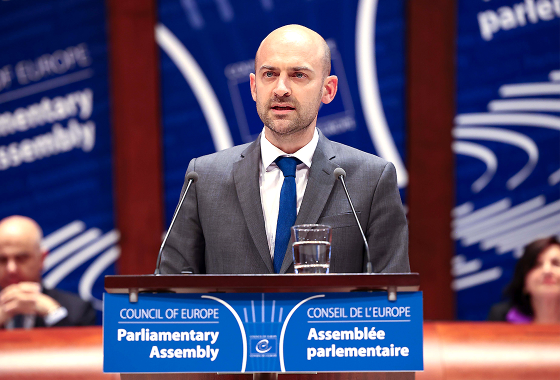
Addressing the Parliamentary Assembly of the Council of Europe (PACE) today in Strasbourg, France’s Minister for Europe and Foreign Affairs Jean-Noël Barrot issued a warning: human rights, the rule of law and democracy are now under threat “even in countries that have traditionally been at the forefront of these struggles”.
“Every day, force is gaining ground over the rule of law,” he emphasised, calling on Europe to set an example and to vigorously defend fundamental rights and freedoms.
The Minister highlighted the democratic backsliding in Europe and beyond: contested elections, judges and journalists being intimidated, civil liberties being flouted, women’s rights being called into question, and even the return of the spectre of the death penalty. He specifically cited the adoption by the Knesset in Israel of a law extending the death penalty, noting that “neither peace nor security can be built on discrimination and injustice”.
The Foreign Minister praised the resilience of the peoples of Poland, Hungary and the Republic of Moldova in the face of pressure. Faced with the return of war to the continent, he emphasised the urgent need for Europe to rebuild its military, diplomatic and economic strength. But this rearmament, he stressed, must be accompanied by a “democratic rearmament”.
The minister highlighted the central role of the Council of Europe and the European Convention on Human Rights, which he described as the “cornerstone of European unity”. He referred to the impact of the Strasbourg Court’s case law on French law, particularly in relation to the fight against discrimination, respect for privacy and freedom of expression. Despite criticism, particularly regarding migration policy, “France reaffirms its absolute support for the Court’s independence and autonomy”, he underlined.
Mr Barrot also praised the work of the Parliamentary Assembly, describing it as “the democratic conscience of Europe” and “the voice of its citizens”.
“France supports the establishment of the Special Tribunal to try the crime of aggression against Ukraine, complementary to the International Criminal Court,” the minister said. “France will join the agreement on the Steering Committee of the Special Tribunal, which we hope will be established at the ministerial meeting in Chișinău on 14 and 15 May,” he added.
Mr Barrot recalled that the Council of Europe had taken the lead in efforts to secure justice for Ukraine and its people: “These efforts made it possible, as early as 2023, to establish the Register of Damages, the first pillar of the reparations mechanism requested by Ukraine.”
“But compensation for damages is not enough. Russian leaders must be held to account,” he insisted, recalling the massacres in Bucha and Mariupol, the deportation of children, the attacks on civilians, the murder of journalists and the many war crimes committed.
“There can be no peace without justice. And there can be no justice without the truth,” he concluded.