02/09/2026 Elections
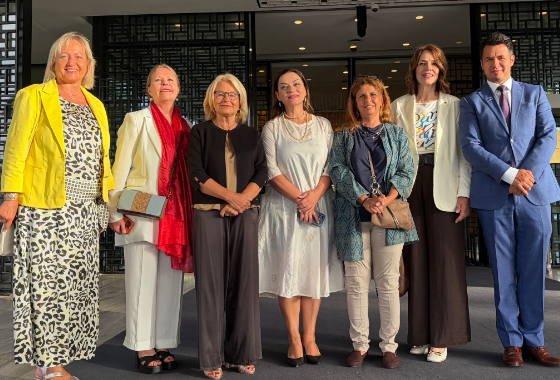
“Morocco has considerable experience in organising elections, and preparations for 23 September 2026 are well advanced. The coming weeks should be used to ensure that all voters and contestants can participate on equal terms and have confidence in every stage of the process,” said Elisabetta Gardini (Italy, ECPA), Head of a PACE pre-election delegation* ending a three-day visit to Rabat.
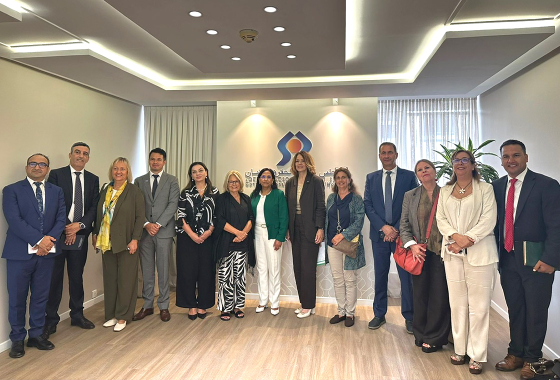
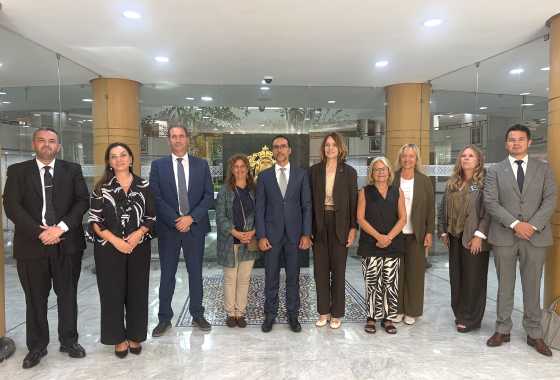
The five-member, cross-party delegation of the Parliamentary Assembly of the Council of Europe (PACE) visited Morocco from 31 August to 2 September at the invitation of the National Council of Human Rights. It met the authorities responsible for administering and observing the elections, the head of the Moroccan delegation to PACE, and representatives of civil society, the media and the diplomatic community in Rabat.
Recalling PACE’s positive assessment of the 2021 parliamentary elections as professionally administered and generally transparent, the delegation welcomed the many legislative improvements aimed at making elections more inclusive, the advanced state of preparations and the electoral administration’s clear willingness to continue improving the electoral process.
It also commended measures to broaden participation and respond to emerging challenges, including the reservation of 90 regional seats for women, financial incentives for lists headed by candidates aged 35 or under, the digitalisation of certain procedures and new rules on online campaigning, disinformation and artificial intelligence.
Several long-standing and new issues nevertheless require attention. Voter participation remains a particular concern: around 15.8 million citizens are registered, considerably fewer than for previous elections and well below the estimated voting-age population. Young people account for only three per cent of those registered. The delegation encouraged all stakeholders to intensify voter information and mobilisation, especially among women and young people.
The delegation stressed that the freedoms of expression, peaceful assembly and association must be fully guaranteed throughout the campaign, allowing voters, contestants, civil society and journalists to participate freely in public debate. These guarantees, together with political pluralism and effective election observation, should apply everywhere and throughout the electoral process.
The effective participation of Moroccans residing abroad remains limited: without polling stations abroad, registered voters must return to Morocco or vote by proxy. The new electronic proxy procedure may ease participation but warrants close monitoring. Although international standards do not prohibit proxy voting, robust safeguards are essential to protect the secrecy of the ballot, freedom of choice and electoral integrity. More direct forms of out-of-country voting should be considered in the longer term.
Constituency boundaries have not been comprehensively revised since 2011 despite demographic change, resulting in significant differences in the weight of votes. This structural issue should be reconsidered after the election to strengthen equality of suffrage.
With the Ministry of the Interior and the territorial administration responsible for managing the elections, public confidence requires that the process be - and be perceived to be - administered independently, neutrally and impartially. The delegation therefore underlined the importance of transparent decision-making, equal treatment of contestants and a clear separation between State and party activities. Any misuse of public resources, campaign-finance violations or allegations of vote-buying should be investigated promptly and addressed effectively.
The delegation discussed the substantial electoral reforms adopted in January 2026. While acknowledging that the legislation was prepared in consultation with political parties, it recalled the importance of stability in fundamental electoral rules. PACE observers will closely follow the application of the new eligibility and candidacy provisions and assess whether measures against false information and manipulation adequately safeguard legitimate political debate, journalism and criticism.
A pluralistic information environment is essential for voters to make an informed choice. The delegation welcomed the regulatory framework adopted by the High Authority for Audiovisual Communication for the electoral period and stressed that pluralism depends not only on airtime but also on fairness of tone and prominence, editorial independence and meaningful access for opposition and smaller parties. Social media, paid online campaigning and AI-generated or manipulated content will require particular vigilance.
The delegation welcomed assurances that accredited observers will have full access to polling stations, counting and all levels of tabulation. Instructions applying the prohibition on mobile phones and recording devices should be clear and must not inadvertently restrict effective observation.
“This mission took place in the context of PACE’s long-standing partnership with Morocco. Our aim was to listen and learn, not to judge. We thank the authorities and our civil society partners for the open and constructive discussions,” Ms Gardini said. “The credibility of these elections will depend not only on the smooth conduct of voting on 23 September, but also on confidence in the campaign, the impartiality of the administration, equal opportunities for contestants and the transparency of counting and results. There is still time to address practical concerns and reinforce that confidence.”
The delegation called on parties and candidates to campaign responsibly, refrain from pressure on voters or misuse of public resources, and focus debate on genuine political choices. A larger PACE delegation will return for the 23 September elections to assess the entire process against Council of Europe standards and the commitments undertaken by the Moroccan Parliament as a PACE Partner for Democracy.
*The pre-electoral delegation comprised Elisabetta Gardini (Italy, ECPA), Head of the delegation, George Loucaides (Cyprus, UEL), Deputy Head, Edite Estrela (Portugal, SOC), Albana Vokshi (Albania, EPP/CD) and Valentina Grippo (Italy, ALDE).