mercredi 21 juin 2023 après-midi
2023 - Troisième partie de session Imprimer la séanceVidéo(s) de la séance 1 / 1
The meeting is opened.
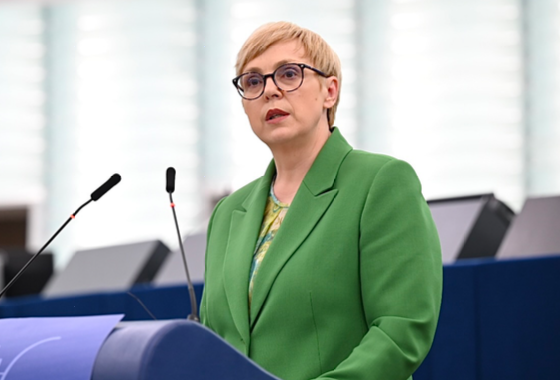
The next item is the address by Her Excellency Ms Nataša PIRC MUSAR, President of Slovenia.
Following her address, Her Excellency the President will take questions from members of the Assembly.
Dear colleagues,
Ladies and gentlemen,
It is my pleasure now to welcome amongst us Her Excellency, the President of the Republic of Slovenia.
Madam President, it is such an honour to have you here with us, with us in the year of the 30th anniversary, I think, of Slovenia's accession to the Council of Europe, a milestone in your history and in our history.
You were elected to the helm of your country in December 2022, being the first woman to hold this position in your country. I congratulate you on that, because in many of our countries something still has to develop. During lunch, we spoke about how we could use a few more female presidents - not because that is a fair balance, but also because it brings a bit more wisdom into the whole of our politics. It is great to have you here.
At recent the recent 4th Summit of Heads of State and Government of the Council of Europe in Reykjavík, where you were present together with all your colleagues from our 46 member states, you declared, Madam President, that the utmost has to be done to reverse the backsliding of democracy, the rule of law, human rights and minority rights in our member states, and that full support should be lent to the Council of Europe as our continent's leading and indispensable guardian of legal obligations and shared standards.
You also, Madam President, voiced clear support for the right – the fundamental right – to a clean and healthy environment as a human right. Everything that you said there in Reykjavík was appreciated very much by us, who were also there representing the Parliamentary Assembly, as your remarks were completely in line with the proposals that we, the Assembly, made to the organisers of the Summit in the preparation of this most important gathering of heads of state and government. Also, thank you very much for these remarks over there.
Madam President, now you are here, our honoured guest.
We are looking forward to hearing your post-Summit views on the future of the Council of Europe within the broader European architecture. We know that you have more than exciting ideas on several issues that this Assembly is also most interested in. We are all looking forward to your speech, and thank you very much for your preparedness, also, to answer colleagues' questions afterwards.
Without further delay, I would like to give you the floor, Madam President.
Dear President, thank you very much for inviting me here.
Just regarding the female presidents, there are only six of us in Europe, 29 within the United Nations... so there is still a long way to go for us, ladies. But, men, you should help us.
Distinguished President, Deputy Secretary General, and Members of the Parliamentary Assembly, Excellences, Ladies and Gentlemen.
Let me begin by expressing my appreciation for giving me the opportunity to discuss the European and global challenges of our time. Over the course of 70 years, the Council of Europe has become Europe’s pre-eminent body for protecting human rights and the rule of law.
By addressing the crisis of multilateralism today, I shall try to make a case for the Council of Europe as a vital part in seeking solutions to not only regional but also our global challenges.
And I am particularly pleased to be able to engage in this exchange of views with you, dear President and members of the Assembly, as we celebrate 30 years of Slovenia’s membership in the Council of Europe.
This is an important milestone, as it allows us not only to look back but, empowers us with the experience to plan well for the future.
We met last month for only the 4th Council of Europe Summit in Reykjavík, which I attended myself. We expressed there our united support to our friends in Ukraine, who are fighting not only for their lives and land but also for our shared European values. I shall return to this later in my address. In Reykjavík, we also reaffirmed our unity behind these shared values of human rights, democracy, and the rule of law. These fundamental values have guided Slovenia into our independence, and ever since joining the Council of Europe.
You will remember that after declaring our independence Slovenia was attacked by the-then Yugoslav army and had to fight a war to win its independence. I recall this in a message of solidarity to our Ukrainian friends. Ex-Yugoslavia lived through its share of bloody wars. In some of its parts, the scars of many such wounds are still cut deep. However, and this is important, the aggressor was defeated and finally we were allowed to breathe freely, liberated of the hegemony of the former Yugoslavia. And I trust this day will come for Ukraine as well, and we in Slovenia are doing our best to help our Ukrainian friends win the war.
So, dear excellences, when Slovenia joined the Council of Europe 30 years ago on 14 May, it was a moment of national celebration and pride. Because membership in this organisation validated and crowned the national aspirations for respecting human rights and freedoms.
I believe Slovenia’s membership and co-operation with the Council of Europe is a big success story.
They say it takes two to tango and I am delighted to say that we have danced together with much brilliance and gusto, and I am much looking forward to staying on the dance floor together with you!
Let me add here that our predecessors, the founders of European institutions, were dreaming about Europe as one and the torch is now in our hands to make this dream a reality. The Council of Europe’s door must be open for new members. I trust, Mister President, that the Parliamentary Assembly will embark soon on its task to assess Kosovo’s readiness to become the 47th member of this organisation.
On this note, allow me a small comment. Recent events in both Serbia and Kosovo show how fragile the situation is in this part of the Western Balkan region. During my recent visit to Serbia and call with Kosovo's president, I encouraged both sides to return to dialogue and to take steps to ease tensions between Kosovo and Serbia. Dialogue, courage, vision and a strong will are needed to implement the agreements adopted by both sides, aimed at normalising relations between Serbia and Kosovo.
In this regard, I fully intend to continue to co-chair, together with my Croatian counterpart, the Brdo-Brijuni Process, in order to facilitate dialogue at the highest political level. I expect the Process to be primarily focused on topics that concern us all. One of those topics is the massive brain drain in the region. Young people in particular are eager to leave. And they leave in hundreds of thousands! This is why I visited the European Youth Centre today. I shall never tire of spreading the important message to the region and to the world: that the young people of the Western Balkans must be provided a European perspective.
Dear members of the Assembly,
We must learn from the past so that we can inform ourselves on how to best go about the future. And the current state of affairs in the international community gives too many reasons for concern. Above all, we are in the midst of a crisis of multilateralism.
We need to speed up our combined efforts against the climate crisis, as the clock is ticking dangerously close to too late. We, human beings, cannot live without nature. And from today’s point of view, we are losing and nature is winning in its own scientifically proven and predictable way.
The geopolitical polarisation among the "Big Powers" is deepening. As a result, the block mentality is returning and is hindering us from progressing for the benefit of all. Small and intermediate states make up the majority of the Council of Europe’s membership. We should be worried that the international decision-making process is moving behind and away from the lit stages. We want to participate with our voice fully, according to the principle of sovereign equality, towards the resolution of global challenges. And we are concerned, as history teaches us clearly that the power of might should not take over the might of right.
So, what can be done? And in particular, how can the Council of Europe help strengthen the multilateral way of solving global problems? Who can help the Council of Europe do so? I see four avenues for action.
The first one is related to the role Slovenia can play as an advocate of Council of Europe’s values in the global arena. Slovenia’s strong commitment to multilateralism has been validated by our recent election, earlier this month, as a non-permanent member of the Security Council of the United Nations for the term 2024-2025. I believe this election is recognition by a vast majority of the UN membership in support of multilateral diplomacy and at the same time a rejection of the bloc mentality.
We want to use our two-year term to contribute to the Security Council’s work for the maintenance of international peace and security on behalf of and for the benefit of the wider UN membership.
We would like to continue working on climate security. Climate change is not only aggravating existing armed conflicts but is increasingly becoming a security threat in many states, such as small island states threatened to be drowned by the ocean or some African states threatened to be overcome by desertification.
We know there is no planet B. The recent Covid-19 pandemic was a stark reminder that we are only as strong as our weakest link. We will either stand united in the face of the triple planetary crisis of pollution, biodiversity loss and climate change, or we shall fall together, big and small, rich and poor. All!
I am a firm believer in our need for solidarity, particularly with those that have contributed the least to the climate crisis, but are threatened existentially by it. Very soon we will be faced with waves of climate refugees. Are we ready for this in Europe? Believe me: extremists are, as migration is the fuel that drives them. Tragedies such as the recently sunk packed vessel in the Mediterranean Sea should not be merely one-day news. Where is our humanity? I often ask myself.
Allow me thus to make the case for the Council of Europe to engage actively in climate justice. Slovenia can and is willing to help. With some states from all the world’s regions we have been working hard for the global recognition of the human right to a clean and healthy environment. I keep emphasising that the important thing now is to implement this right.
May I use this opportunity to commend you, Mister President and the members of the Parliamentary Assembly, for your proactive stance and for putting forward strong proposals in furthering the right to a clean and healthy environment, which I hope member states will act upon sooner rather than later.
Secondly,
Now more than ever we need to reject attempts at blatant violations of international law. Russian aggression on Ukraine, a sovereign country, is an undeniable violation of the UN Charter.
We in Slovenia, and I am sure all of you here, were shocked by the atrocities committed in Bucha, Borodyanka and Irpin, as well as by the disastrous attack on the Ukrainian dam, said to have unleashed the worst ecological disaster in the country since the meltdown of Chernobyl.
I am also particularly appalled by the sexual violence and unlawful transfer of thousands of children, the consequent dangers of human trafficking, of exploitation, and forced deportations. The Council of Europe’s co-operation with all other international stakeholders in addressing these issues is and will be crucial for many years ahead of us.
The Russian aggression is an attack against the world order as we know it, against the democratic values we hold dear. It is in the interest of all peace-loving states to reject such flagrant aggression against the independence and sovereignty of Ukraine. For this reason, the Russian Federation no longer sits on the Council of Europe.
I support all efforts that would pave the road to a lasting and just peace in Ukraine, but I also want to be clear: not a single metre of that road can be built without Ukraine itself.
I also firmly believe that those responsible for aggression and perpetrators of these heinous crimes should not get away with impunity. In this regard, I welcome the warrant of the International Criminal Court for the arrest of Russian President Mr Vladimir Putin for the illegal deportation of Ukrainian children.
But I also want to encourage Ukraine to accede to the Rome Statute. This step would add to the legitimacy of the ongoing prosecution procedures for the war crimes and crimes against humanity committed in Ukraine.
And I wish to recall that in Reykjavík we took some very concrete steps towards helping seek a sense of justice after this war. Slovenia joined the register of damage resulting from the Russian aggression against Ukraine immediately after its adoption as a full participant, and will participate in the first conference thereon in a couple of days.
You may be familiar with the event that is relevant to my discussion here. Parallel to the 4th Summit, Slovenia hosted a diplomatic conference for the Adoption of the Convention on International Co-operation in the Investigation and Prosecution of Genocide, Crimes against Humanity, War Crimes, and Other International Crimes, also named the “Ljubljana – The Hague Convention.” This is a major step towards enhancing state co-operation in the fight to end impunity for core crimes. The convention will be open for signature early next year. Once in force, it will provide a global legal framework against impunity and for justice for the victims of most serious crimes.
Last but most certainly not least, what happens after the war in Ukraine is important too. Ukraine will go through a massive rebuilding in so many ways, from reconstruction of infrastructure to reconstruction of relations with minorities living in Ukraine. Trust-building will be a slow and, I know, also a painful process – but without trust we cannot have security. How safe a place is, depends on how much people trust each other. I dare say, if that lack of trust – especially between majorities and minorities in individual member states – is not addressed, the risk of conflict, including of a major one, will persist.
Thirdly,
While I see the UN and the OSCE as conflict-resolution organisations and NATO as a security one, I see the Council of Europe primarily and most importantly as the legal bedrock of Europe. In other words, the Council of Europe is the legal spine that holds the body of Europe upright and functioning. Take away this legal foundation and Europe as we know it will collapse.
The Council of Europe is also our continent’s watchdog on human rights and the rule of law, the two basic tenets of thriving democracies.
The Council of Europe’s attractiveness beyond Europe is proven by the accession of a number of non-European states to its legal instruments. This is the best contribution the Council of Europe can make to global governance and the rule of law.
I strongly believe that the Council of Europe must remain a global standard-bearer in addressing new and evolving human rights challenges. New technologies and artificial intelligence are getting ahead of us and it is high time for the regulation of their use in a manner that respects human rights. If we fail to act now, the consequences may be quite devastating for our enjoyment of human rights.
Your colleagues in the European Parliament have just given a green light to the EU member states to move forward with the EU Artificial Intelligence Act. This is good news and it is an opportunity. As a member of both organisations, I see very good potential for synergy among the two with a potential global reach.
I therefore call on the Council of Europe to seize the opportunity and set robust standards regarding artificial intelligence’s ethical and responsible development and use. We must ensure that such are in compliance with human rights principles, and that adequate safeguards are in place to prevent misuse or abuse. I therefore very much hope to see the swift completion of the Council of Europe's [Framework] Convention on Artificial Intelligence, Human Rights, Democracy and the Rule of Law.
I must stress the importance of the Council of Europe’s co-operation with the European Union in the broadest sense. We share the same flag and the same anthem. Sharing the same values makes our combined voice stronger and louder.
As the EU will continue to enlarge, this will provide an opportunity for a detailed review of the respect for democracy, the rule of law, human rights, and minority rights as the four political conditions for EU membership. The Council of Europe is to date the only organisation that has managed to establish binding legal standards on minority rights.
This year marks 25 years since both the Framework Convention for the Protection of National Minorities and the European Charter for Regional or Minority Languages came into force. I put it to you that the protection of minorities and vulnerable groups is the best indicator of the health of every single society.
The Lisbon Treaty obliged the European Union to accede to the European Convention on Human Rights (ECHR). For a long time, the negotiations on the EU’s accession to the ECHR were stalled; however, recently an important breakthrough was made. Today, the European Union is the Council’s main institutional, political, legal and also financial partner. The EU’s accession to the European Convention on Human Rights will raise this definitely to a new level.
I applaud the EU's recent accession to the Istanbul Convention. Violence against women and domestic violence are unacceptable phenomena in all our countries. The Istanbul Convention is a catalyst of positive development regionally and is an internationally recognised instrument in our efforts towards global standards in fighting violence against women and domestic violence. We can observe an improvement in the effective implementation of the Convention’s standards, even if the progress is slow. We cannot deny that the Convention’s standards help improve lives of many women in Europe and indeed also around the world.
I very much hope that the EU’s accession will encourage those states still hesitant to go ahead and ratify this Convention.
Widening the circle of state parties will strengthen our fight against this particularly appalling form of violence, hidden behind the closed doors. With this as with other human rights violations, the Council of Europe’s monitoring bodies offer us, states, their expert and independent advice both in helping us spot such violations in a timely manner and how best to resolve them.
And this brings me to the fourth and final point regarding the Council of Europe’s role in the global multilateral architecture. Here I want to make a case for the Council of Europe as an irreplaceable and critical part of the overall multilateral architecture.
We are observing the widespread backsliding of democracy, the rise of human rights violations, and the weakening of the rule of law and democratic institutions in Europe and elsewhere. We thought this phenomenon belonged to the past.
On the contrary, populism is on the rise in Europe, questioning achievements reached in gender equality and spurring homophobia. We can see how the politicians targeting the LGBTIQ+ is translating into very concrete hostile acts against members of this community.
The Council of Europe’s legal regime is an important part of the European stability. By its open instruments it is also an important contribution to the international rule of law.
Later this year we will be celebrating the 75th anniversary of the Universal Declaration of Human Rights. This is perhaps the best legacy the United Nations has given to humanity in the aftermath of the Second World War: the universality of human rights. Time has more than validated the Universal Declaration, as well as that of its other European daughter, the European Convention of Human Rights.
Human rights and the rule of law are the best invention of us humans against the Hobbesian rule of Homo homini lupus. These values in fact hold together our multilateral system. They are essential for its survival into the future. If you take human rights and the rule of law out of the multilateral equation, ladies and gentlemen, we are back to the future and to the land-and-resources grab.
Dear members of the Assembly,
You carry the most important responsibility in the elections of new judges of the European Court of Human Rights. I appeal to you to choose the best possible candidates. And in doing please do not shy away from choosing excellent female candidates, as the Court’s gender balance is still lacking.
Now turning to us, member states, the most critical obligation that all our states share is the full and timely implementations of the Court’s judgements. This is the very basis of the rule of law and thus an absolute obligation.
I must observe that the growing trend of non-execution of the Court’s judgements is deeply concerning and it is unacceptable. The rules apply to all of us equally. This is an area where there should be no backsliding.
In summing up, Mister President, members of the Parliamentary Assembly:
I see diversity and respect for all individuals and communities, as this is the essence of our European way of life. As I remarked in the beginning, that’s exactly what we were fighting for all these years ago leading to our independence. That is what the universality of human rights is all about: we all have human rights.
I believe we need more multilateralism nowadays, certainly not less.
I further believe the Council of Europe plays a very important part in serving as the legal bedrock of Europe, and it can and should provide inspiration and guidance globally in setting up new norms to respond to new and evolving human rights challenges. But we shall only be credible insofar as we ourselves abide by the principle of equality and the universality of human rights in our own backyards.
I have tried to present my views and my vision on how the Council of Europe fits firmly into the European and international multilateral architecture. Thank you for giving me this opportunity in the agora of Europe. As one of the very key Council of Europe bodies, you represent a direct link to the people in our 46 member states. We should all aim at progress and work together. We do not need to agree always and we certainly shall not always, but this is the essence of the parliamentary democracy.
Before listening to your questions and remarks, kindly allow me to remind you all of our National Day reception later tonight. I will invite you all to raise a glass of Slovenian wine in salute to the first 30 years of Slovenia in the Council of Europe and to the continuation of this wonderful friendship and collaboration in the time to come.
Thank you very much.
Madam President, today here in France, it is the day of the "Fête de la musique" [World Music Day] and I think that much of what you said did sound like music in the ears of our Assembly because the texts suit rather well in the report that we wrote and during the preparation of the 4th Summit. But as we are politicians, we always have something to add and you will see that when our colleagues are now given the floor to ask you questions.
So, first, we will take five questions from the political groups and we have the political groups and then we see how far we can go with the rest of the speakers' list.
I remind everybody that you have 30 seconds to ask the question, not make a speech, and not to make more questions in one question. I see someone smiling who is aware that this is now the rule.
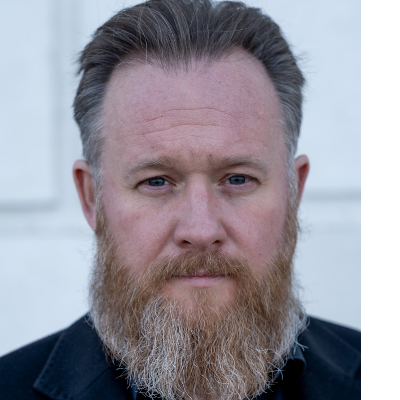
First, in the debate, I call Lord George FOULKES. And Lord George FOULKES, he is from the United Kingdom and speaks on behalf of the group of Socialists, Democrats and Greens Group.
George.

Royaume-Uni, SOC, Porte-parole du groupe
15:10:05
Can I first thank you, Madam President, for a really positive and encouraging speech.
And since I know you, like us, are concerned about media freedom and the safety of journalists, and I know you will have concern about the strategic lawsuits against public participation, commonly known as SLAPPs, which enable wealthy people to silence journalists – wealthy people including Russian oligarchs – and that is undermining our democratic institutions.
Can you tell us what you, as President, and the influence that you can use on other countries, can do to try and get some action in relation to this?
Thank you, Lord George FOULKES.
Madam President.
Thank you very much.
Being a former journalist, you have to believe me that journalism is so deeply inside my heart that whenever I see the erosion of the freedom of expression, my heart is bleeding.
SLAPPs are something that we have to fight against.
I know that the Council of Europe is preparing something to help the journalists who are affected by the SLAPP lawsuits. Even in Slovenia we have one case, so no country is immune to that.
Regarding freedom of the media, freedom of expression, I'm pretty sure that all of us are aware that there is no democracy without freedom of speech.
We can see in so many countries the erosion of democracy, because the media became the servant of different political parties. This is something that I do not like. I do not believe in the media environment like that.
Even in Slovenia, we have something to talk [about] and discuss.
I would like to ask you especially [to] be careful when we are discussing the national public broadcasting system. This is the core of the media freedom and expression.
For example, in my country now the national broadcasting system is affected by the previous government, still.
You can ruin the national broadcasting system in one or two years, but it will take 10 years to rebuild it back, and this is not okay.
Just one more example:
In my country, we had a debate that on the national broadcasting system we have to have one programme for the left-wing parties and then we have to have one programme for the right wing parties.
This is not the right way to do it. This was a test in Italy [with] Rai Uno and Rai Due in the 1970s; it didn't work out. If you have two bubbles, people will only listen to the programme of their political party, and they will not get the information from the other bubble. This is certainly not in the public interest.
For God's sake, which is what I'm saying also in my country, politicians, leave your hands out of the media, away from the media. If you are going to influence the media only with your political agendas, this is not good for society as a whole. It may work over a short period of time, but it will never work for a longer period of time.
In the Council of Europe, please do whatever you can to help to protect media freedom, freedom of expression.
What can I add here? Maybe just briefly... I understand media really well because I worked as a journalist for 12 years. When I studied media in the United Kingdom at Salford University, your Excellency, the first sentence which was drafted on the blackboard was "what's the difference between public television and private television?"
Private television makes the programme to get the money, and public television gets the money to make the programme. So, that's the core difference. The thin line between the interest of the public and public interest is something that the serious established media should never cross.
Once you go into the paparazzi, yellow, gossiping part, you write something which is in the interest of the public, and this is not of the public interest.
It's a lot of responsibility also on the media itself.
If we see sometimes media as a problem, I often say that the media should be part of the solution as well.
Thank you.
Thank you, Madam President.
I saw Lord George FOULKES smile. That means that you probably have pleased him with your answer, but the applause shows you have pleased more people.
Lets see whether you can do that with the next question. It comes from Ms Yelyzaveta YASKO from Ukraine. Lyza is going to ask her question on behalf of the Group of the European People's Party.

Ukraine, PPE/DC, Porte-parole du groupe
15:15:28
Dear President,
I want to thank you for standing together with Ukrainian women and Ukrainian children. For me, it is very important that you raise this.
But I also want to ask you, as a woman, also to help us not only to return our children but also our men, who are currently war prisoners or political prisoners. And I also want to ask, especially, to help to bring a Ukrainian citizen, the former president of Georgia, Mr Mikheil Saakashvili, back to Ukraine, who is illegally currently imprisoned in Georgia in a condition of very bad health.
My question is about the policies of the European Union that could be implemented urgently to help us to fight the foreign intervention of disinformation. I believe we need these policies very urgently and there is some work being done. What would be your answer to that?
Thank you.
Thank you, Ms Yelyzaveta YASKO.
Madam President.
One moment, we have a problem.
Houston we have a problem... now it works. Good!
Thank you for the question, your Excellency, Madam from Ukraine.
This information is also something which sometimes keeps me awake during the night.
When I had a discussion with my colleague Ms Maia Sandu from Moldova, she was telling me how much her country is infected by the disinformation from the Russian side.
It is really very hard to fight against this information, but I think that despite the fact that - I think that artificial intelligence is sometimes considered a threat, and it is a threat - artificial intelligence can help fight this information heavily.
In my country, we do have the centre of artificial intelligence under the auspices of UNESCO. The scientists there are working on how to fight this information with artificial intelligence.
Artificial intelligence is developing really very rapidly. I don't know when this project is going to be finalised, but on the other hand, again, the traditional media and especially the public broadcasting system should fight against disinformation. Fact checking; and artificial intelligence can help here as well as Chat GPT [which] is an enormous library of different information.
Also I have to ask all the governments, respective countries, members of the Council of Europe - if you notice as a government that disinformation was spread around the globe, react!
We do have one example from my country. The Russians were using a nuclear reactor from Slovenia, which is in my country for scientific purposes. They said that this nuclear reactor is used by Ukrainians and then Americans to, I don't know, build the atomic bomb. But when we found this photo on the internet, we immediately reacted as the Ministry of Foreign Affairs, and let the whole world know that this is a photo from a Slovenian small scientific reactor, that it's not based and located in Ukraine.
So everybody has their own responsibility.
In today's world disinformation has been present already for many decades, also in the previous century - there were groups of people who were spreading false disinformation on purpose, and they were paid for that.
The problem we are facing today is that disinformation is spreading around more rapidly than ages ago.
This is why we have to use the technology to help us fight disinformation.
I would like to tackle here another point, if I may, Mister President.
I just read an article recently about a group of investigative journalists. They were infiltrated in the so-called Jorge group in Israel. The Jorge group is a group of people which is selling its services to various countries around the globe to influence the electoral body. So to affect and disinform the people about certain political standpoints. The Jorge group sold its services to 30 countries. They have 30 000 bots on Twitter, Facebook, LinkedIn, Instagram - all these fake profiles have real photos of real people.
These people have opened bank accounts. If you go and check, you will never find out quite easily that this is a bot behind it. This guy Jorge explained to the journalists that it costs approximately four to five million dollars, the service, and they can help the country to win the elections. This guy said in this hidden video which was filmed by the investigative journalists, that he was successful in 27 countries.
So this is also something that we have to take into account.
Here all of us have to call upon Facebook, Twitter - which might be you know a bit harder because of Elon Musk - and other social media platforms to react and have investigative teams to fight such bot production of disinformation.
So it is their obligation as well.
Thank you.
Thank you, Madam President.
And the next question comes from Ms Sabina ĆUDIĆ from Bosnia and Herzegovina, and Sabina speaks on behalf of the Alliance of Liberals and Democrats for Europe.
Sabina.

Bosnie-Herzégovine, ADLE, Porte-parole du groupe
15:21:46
Well, thank you, Madam President for the extraordinarily brave vision you presented us here today.
Building on to that, considering the challenges that Europe and the whole world faces in light of the Russian aggression on Ukraine, and considering the level of Russian influence that continues in countries, particularly of Eastern Europe and even more so in the Western Balkans, I have a question:
How do you assess the success of current efforts led by several countries, including Slovenia, to move away from the decision-making based on unanimity in the European Union towards the qualified majority?
And whether this kind of thinking can be applied to issues of European Union enlargement, to foreign policy in addition to general foreign policy decision-making, and to countering Russian influence in Eastern Europe and the Western Balkans, and more importantly, sanctioning openly destructive pro-Russian forces around Europe?
Thank you.
Thank you, Ms Sabina ĆUDIĆ.
Madam President.
You have to believe me that I have special feelings for the Western Balkans, because, you know, Slovenia was part of the former Yugoslavia, and I worked in all the countries in the Western Balkans as the Council of Europe and European Union expert.
Maybe, firstly to answer the question about the qualified majority: we all know that even the European Union is not without problems. Despite the fact that we showed enormous unity regarding Ukraine, we still have internal problems that we need to solve. The debate regarding the qualified majority just started inside the European Union. Slovenia is part of that group of seven countries which joined together to start a discussion.
We have learned from the past, especially in the case of North Macedonia, how one country can block the accession process of the aspiring country which wants to enter the European Union.
I just visited North Macedonia 14 days ago. You have to believe me that the people of North Macedonia are not really happy that they have to change the constitution.
North Macedonia waited for many years, and they had to change their name because of the Greek demands. The problem was solved. I was happy that North Macedonia and Greece did solve the problem. But after that, another topic was put on the table: to change the constitution for the Bulgarian minority, also a legitimate request. I said to North Macedonia: what is there to lose if you change the constitution? Nothing.
I mean, there are seven minorities that are on the proposal for the change of the constitution. Every single debate like this is putting Western Balkan countries behind. You are all waiting to enter European Union for too long, if you ask me. We have to share the responsibility.
The way that I see it, there is not enough political will in any of the Western Balkan countries right now, but also the European Union should do more to help the countries to join our European family.
A qualified majority is one step. It's only a proposal, but I think it's the right way to do it. I hope I did answer your question.
Thank you.
Thank you, Madam President.
And the next question is from Mr John HOWELL from the United Kingdom on behalf of the European Conservatives Group. John.

Royaume-Uni, CE/AD, Porte-parole du groupe
15:25:33
Thank you very much, Mister President and Madam President.
Can I congratulate you on the clarity of your message. When you visit Kosovo later in the year, what will you say to the Kosovans that will help to protect them from the dangers of war and will allow them to pursue their rightful self-determination?
Thank you, John.
Madam President.
Thank you.
I'm planning to go to Kosovo in October to participate in the Women's Security and Peace Conference, but I will have the official visit and I will meet with my counterpart Ms Vjosa Osmani. But we had a couple of telephone calls already and we met at the Munich Security Conference.
As a woman, as a mother, and as a first-time politician who's not affected by the remains of the past too heavily, I see the solution in the Western Balkans, and it is only one way: it's dialogue, dialogue, and dialogue.
If they stop talking to each other, there will be no light at the end of the tunnel. And I am passing this message to Pristina, to Belgrade, to Sarajevo, to all the countries where, you know, there are tensions between ethnical groups.
As I said in my speech that it takes two to tango, this is also the case in Belgrade and in Pristina. If we are going to listen to hostile dialogue and words from both sides, this is not going to bring a solution to the problem, definitely not.
In Serbia, I asked president Aleksandar Vučić when I had a discussion with him: please, do not use hostile words, please, do not. But if we go to Kosovo, as a lawyer, I always believe in pacta sunt servanda. If some concrete agreements were agreed upon and signed, we have to respect them. And I think that Kosovo should establish the Serbian municipality community in the north of Kosovo. That's their obligation. And Serbia's obligation is to let Kosovo join the Council of Europe, the United Nations. That was agreed upon. In 2013 the agreement for the Serbian Municipality Community was signed.
Later on, you know, Mr Miroslav Lajcak and a lot of... Mr Gabriel Escobar, I mean, everybody is working heavily to bring peace to this region. But when something is agreed and then not respected afterwards, what can we think about such politicians. I don't think any good of them. If I promise something, if I sign something, I will respect this. And this is the only solution.
So I really do hope that the people in the region will try and will continue to talk to each other.
This is why, despite the fact that the Brdo-Brijuni Process, that you are probably familiar with, was last year put in a dead end, there was a lot of fighting between the presidents of the Western Balkan regions, and Croatia and Slovenia are hosting this process, and my predecessor, Mr Borut Pahor, asked me to continue the process. And I definitely agree with him that this process should continue, because, as long as we talk to each other, there is hope.
And I suggested, for this year's Brdo-Brijuni Process, which is going to be hosted in North Macedonia, that we go away from the hot daily political issues, we know that we just agree to disagree.
I suggest it to them: let us give this platform, this Process, a new opportunity. Let us discuss about the topics which do unite us and not divide us. And I proposed to all the presidents in the region that we should discuss youth problems and climate change.
And I have to inform you: they all said yes. And I was happy about it.
Maybe talking about the topics [where we have] a common focus could help us later on to continue the dialogue on more difficult questions.
Thank you.
Thank you, Madam President.
And the last question on behalf of the political groups comes from Mr George KATROUGALOS from Greece on behalf of the Group of the Unified European Left. George.

Grèce, GUE, Porte-parole du groupe
15:30:17
Thank you very much Tiny, and Madam President, welcome, congratulations on your national holiday, the anniversary of your accession to our organisation. You honoured us with your presence at the Reykjavík Summit but in the same practical time, we had the summit of the European Political Community.
I would like to ask you, which is, according to your viewpoint, the distinct role of the latter initiative vis-à-vis our organisation, complementarity that may exist but also dangers or problems of overlapping many things.
Thank you, George.
Madam President.
Maybe I can say only one thing: the Council of Europe is 75 years old.
So there is a lot of knowledge, a lot of history here.
Each new community, new platform is welcome if they discuss topics which are in [the] common [interest] of the states which are gathering around the platform.
The more the better - but let us not forget: the Council of Europe is the heart and soul of Europe.
Nobody can replace the Council of Europe.
Thank you very much, Madam President.
We have to look at the clock. If you allow me, I would give four more members the floor now to ask their questions jointly, and then the final word is for you.
The first question comes from Mr Rafael HUSEYNOV from Azerbaijan.
Dear President,
In 2011 I founded a museum in your country in Nova Gorica. This museum is dedicated to the heroes, the common child of the Azerbaijani and Slovenian peoples.
The grave of Azerbaijani Mehdi Huzejnade – Mikhailo – who courageously died in the fight against fascism during the Second World War is today a cherished shrine in Slovenia.
Since such relatable bridges exist in our history, the dynamic development of relations between our countries appears to be natural today.
What potential opportunities do you see for co-operation between Azerbaijan and Slovenia in the fields of industry, energy, agriculture, tourism and ICT?
What new initiatives are required for further expanding our relations?
Thank you.
Thank you, Mr Rafael HUSEYNOV.
The next question comes from Mr Vladimir VARDANYAN from Armenia. Vladimir.
Your microphone again.
Honourable Madam President,
It is a new building, it is a temporary building. That is why we are not very experienced in using this equipment.
Thank you very much for your reference to the rule of law and the freedom of expression in the digital era. It is very easy to find any kind of information. I would like to ask you the following issue, how we should react in the cases of manipulation of information on Facebook and social media.
If we are comparing the situation we have now with the 19th century, we see that in the 19th, even the beginning of the 20th century, we see the situation that in one day a person who is a hero may become evil and someone can go from being evil to a hero. What is the Slovenian approach to this issue? And what is the role of the Council of Europe? What should we do in this approach and how should, for example, the wide usage of Pegasus spyware and so on be combated in our reality?
Thank you so much.
Thank you, Mr Vladimir VARDANYAN.
And the next question comes from Ms Katalin CSÖBÖR from Hungary. Katalin.
Thank you, Mr Chairman, Madam President,
Slovenia is a party to both the Framework Convention and the Language Charter.
What do you think of recent negative trends in the approach to the challenges facing traditional national minorities in Europe?
How could we politically support the systematic integration of the judgments of the European Court of Human Rights into the monitoring processes of these important conventions?
Thank you.
"Thank you, Ms Katalin CSÖBÖR" [said in French]
The last question comes from a person whom you are familiar with, I think, Ms Tamara VONTA from your own country, Slovenia.
Tamara.
Madam President,
Thank you for calling upon the Council of Europe to pursue an ambitious Framework Convention on Artificial Intelligence and Human Rights. As we all know, artificial intelligence has become a determining factor for the future of humanity as it continues to substantially transform our lives and the lives of our societies.
Could you please elaborate on some basic goals that such a new instrument should pursue in your view?
Thank you.
Thank you very much, Ms Tamara VONTA.
President, you have heard that even in 30 seconds we can ask quite a lot of questions.
You could now start with the challenge to answer them, and you have the final say.
I have what? Five minutes? Yeah, I'll be brief.
The first question regarding the Azerbaijan partisan Mikhailo who died during the Second World War, I have to assure you that this is a place of friendship between Slovenia and Azerbaijan. There is a monument there that Slovenia is taking care of, and I am really happy that such events from our past can can boost the friendship between the countries.
You asked me for the opportunity for further expansion of business cooperation. I mean, I'm the President of the Republic. Maybe this is more of a question for the Prime Minister, but I often say, "It's never so good that it cannot be even better". And I think that sometimes even my country is closing itself into a European Union bubble, but the world is wide and big. We have to expand the friendship and the cooperation to other countries as well, and I'm pretty sure that Azerbaijan has a lot to offer and Slovenia has a lot to offer to Azerbaijan as well.
The second question, from Armenia: Social media and the approach of Slovenia towards hate speech and disinformation. I think I did answer this in my first part already, but I strongly believe that self-regulation is the first step of the social media. So, if the big giants are going to self-regulate themselves, that's the first step. The European Union tried to boost the self-regulation process but Facebook and Twitter, I think, they left out this self-regulation platform, which is of course not okay. And if the self-regulation doesn't work, then the real regulation has to step in.
The Digital Services Act of the European Union is one huge step forward to regulate the gatekeepers of the social media. So, hate speech and disinformation are never going to go away. They will always be present here. So, we have to be aware of that fact. But, as I said, everybody needs to do their own job and then try to minimise the damages and dangers behind the spreading of disinformation and hate speech especially.
Question number three. Hungary. Slovenia and national minorities and the execution of judgments.
In my speech, you heard how much I believe that minority rights are the key to all the human rights in every single respective country. We have to be aware there is practically no country in the world where there were not at least one or two ethnical minorities. Not a single country in the world, as far as I know, is ethnically clean. So, minority rights are something that is protecting the peace and stability in every single country.
But I would like to say something as a lawyer. Every single country in the world, and especially in the Council of Europe... countries, members of the Council of Europe, where I mentioned the Convention, should be aware that dealing with minorities in every single country is a domestic affair. Other neighbouring countries are not to interfere. Please, do not forget this. This is really very important. Thank you.
Regarding the execution of judgments, if we members of the Council of Europe are not going to respect European Court of Human Rights judgments, what is there left for us? Why are we in the Council of Europe, if not for the protection of human rights and the rule of law? And the European Court of Human Rights is the only body which can put a mirror in front of us and tell us what we are doing wrong.
A couple of years ago, Slovenia had a backlog of 300 judgments that were not executed in my own country. Today there are only five left. And we are on the fourth place among 47 member states regarding the execution of judgments. And I would appeal to all of you: execute the judgments. Because this is the core of our values and democracy. If we are not going to do this, the Council of Europe is losing its vision, its power, and its goals. And this is the case which goes for every single country.
Türkiye: I mean, we're not going to mention the case everybody is well aware of. So, I think that the Council of Europe should invent a kind of a mechanism which will persuade the member states to execute the judgments. I do not have a magic ball in front of me here, but in the European Union – and all 27 member states are well aware of that – [there] is the European execution order.
So, is there another convention needed in the Council of Europe to persuade the members to execute the judgments? The way it is now, is not okay. I think we can all agree on that. So we should find a mechanism which would persuade the member states to execute the judgments.
I strongly believe that the European Court of Human Rights is one of the best courts in the world... other international courts... the judgments are really... I mean, as a lawyer, I can read them as a novel in the evenings, and it's really.. they are showing us what democracy and human rights are all about. And let's listen to the judges.
Number four. My colleague from Slovenia asked me about artificial intelligence and the future of humanity... basic goals of regulation. When I lecture students on computer faculties, there is one sentence I always say to them: Artificial intelligence is going to be only as ethical as the people who are building it. And even the regulators, we have to remember that. Big tech companies are now warning us that regulation is needed. Big tech companies from the United States of America who are not keen on regulation. But they are asking us to regulate.
The European Union and the Council of Europe are the leading two multilateral bodies with the regulation of high-tech. I'm so often so proud to be a European. To spread the virus of regulation which is changing the world. For example Convention 108+. I am really asking you to ratify it. Slovenia just passed the ratification yesterday to the General Secretary of the Council of Europe as the number 26, I think. 38 is the threshold that the Convention 108+ is going to be put into force.
And I think that every single development of modern technology is bringing a lot of good to humanity, but it is also bringing a lot of bad things to humanity. And because of the bad things, the bad part of artificial intelligence, we need regulation. And the European Union is now leading, and I think that the Council of Europe should not be left behind. We should catch up with the European Union, because otherwise the same problem will happen as with GDPR in Convention 108+. GDPR was there and then 108+ needed to be adapted to the European Union perspective. And artificial intelligence really, really needs to be regulated.
For example, the most important part of the new artificial intelligence regulation of the European Union is that artificial intelligence should not be used for public places. If you combine face recognition, CCTV, and artificial intelligence algorithms, there is no privacy anymore in public places, believe me. So it is really, really necessary. And the basic goals of regulations should be – I might sound like Miss Universe right now – but human rights, and human rights, and human rights.
Artificial intelligence is all about using different data, and if we are not going to use it smartly and in a regulatory way, nothing good will happen. And to end my discussion with you, I'm going to tell you a story from a podcast of the New York Times. I listened to this podcast a month and a half ago when I was playing with ChatGPT hours and hours over the night, and a journalist had a discussion with an IT guru, and they were explaining ChatGPT and artificial intelligence, and then this IT guru said that one night he spent more than five hours chatting with ChatGPT and the conversation really went into a strange direction.
At the beginning, if you ask ChatGPT what's your name, ChatGPT is going to answer "I'm ChatGPT". After five hours of conversation with ChatGPT, this IT guru asked ChatGPT again "what's your name?" and ChatGPT said "My name is Sydney". And after that, the conversation was really very bizarre. The ChatGPT, Sydney, said to this IT guru, "You know what? I want to marry you." And the IT guru said, "How come? I mean, I'm married". And ChatGPT said, "You're not happily married" and then he shut down ChatGPT because, he said, "This is weird".
So, the technology can often get out of hand. This is why, just to conclude, we have to regulate it. But we have to regulate it wisely, not to kill the technology, but to find the right balance between modern development and respect of human rights.
Thank you, ladies and gentlemen.
It was really my great pleasure to be here for the first time. I hope I was not boring, and I wish to see you again and talk to you again in the near future. My mandate is going to be over in four years and seven months.
Thank you.
Thank you very much, Madam President.
I can say on behalf of the whole Assembly, you are not boring at all. We are listening very carefully and thank you very much for giving your ideas about the post-Reykjavík period and your more than in-depth answers to many questions that we did pose you.
We wish you well and hope to see you again and that your mandate is still going on. Thank you very much, Madam President.
The next item is our joint budgetary debate on two reports from the Committee on Rules of Procedure, Immunities and Institutional Affairs, both presented by Mrs Ingjerd SCHOU.
We will first hear the presentation of the report on "Budgets and priorities of the Council of Europe for the period 2024-2027" (Doc. 15780).
Next, Ms Ingjerd SCHOU will present the report on "Parliamentary Assembly expenditure for the 2024-205 biennium" (Doc. 15781).
I remind you that we must finish examining these texts, including votes, at 4:30 p.m. We will, therefore, have to interrupt the list of speakers at around 4:20 p.m. so that we can hear the Committee's reply and proceed with the necessary votes.
Madam rapporteur, I do remind you that you have 7 minutes to present your two reports and at the end 3 minutes to answer to the debate.
Can I give you the floor, dear Ms Ingjerd SCHOU?
Thank you Mister President, colleagues,
The 4th Summit of the Heads of State and Government of the Council of Europe set an ambitious political agenda for our organisation.
The Reykjavík Declaration and its appendices gives the Council of Europe a roadmap for the coming years.
At the Standing Committee meeting in Riga, we expressed our strong support to the Reykjavík Declaration and the proposals in it.
Without going into detail, I will highlight a few key proposals:
Firstly, showing solidarity and supporting Ukraine by ensuring accountability for the crime of aggression and war crimes, including through the register of damage, and by furthering efforts to establish an ad hoc tribunal.
Secondly, ensuring the effectiveness of the European human rights protection system by strengthening the implementation of Court judgments;
Thirdly, upholding democracy and counteracting backsliding by delivering on the Reykjavík Principles of Democracy and providing early warning and rapid reaction;
Fourth, combating inequalities by upholding social rights through the European Social Charter, counteracting discrimination, and upholding equality between women and men;
Fifth, promoting and implementing the Istanbul Convention;
Finally, addressing rights for the new generation, especially regarding the environment and the use of artificial intelligence and digital technologies.
Implementing the “Reykjavík agenda” must be at the core of the organisation’s programme and budget for the next four years.
This is the message that we should send to the Committee of Ministers by adopting the opinion on budgets and priorities.
Colleagues, I count on your unanimous support.
Colleagues,
The Parliamentary Assembly is a key actor in delivering on the Reykjavík agenda; working closely with the Committee of Ministers, the Secretary General and Deputy Secretary General of our Assembly provides the parliamentary dimension of the organisation’s action.
This is why I propose to re-focus the Assembly’s own priorities and activities based on the Summit outcome.
In the report on Assembly expenditure needs for the period 2024-2025, you will find many examples of how we can support the Reykjavík process.
A few examples:
Firstly, continuing to support Ukraine’s resilience against the Russian Federation’s war of aggression and by supporting our colleagues from the Verkhovna Rada;
Secondly, ensuring parliamentary follow-up to the implementation of judgments of the Strasbourg Court;
Thirdly, fostering exchange of good practices and developing legal standards on the right to a safe, clean and healthy environment;
Fourthly, addressing legal and human rights aspects of artificial intelligence and digital technologies;
Finally, combating inequalities and discrimination, promoting women’s empowerment and strengthening further equality within our activities and structures.
Colleagues,
I count on you to support these proposals by approving the draft resolution on the Assembly’s priorities and budget needs.
Colleagues,
Europe and the world are facing unprecedented challenges, but our commitment and political ambition to stand up to these are firm and strong.
This was clearly reaffirmed by our heads of state and government in Reykjavík.
The political ambition is high; our commitment for the organisation must be equally as high.
To deliver effectively on the Reykjavík agenda, member states must invest additional resources.
Investment pays off, because stronger democratic security in Europe means: better guarantees of fundamental rights and freedoms; more efficient rule of law mechanisms; better cohesion in societies; and more equality, improving the lives of millions of citizens.
Colleagues,
Until the 46 governments covered the budget gap when Russia was excluded – over 27 million euros in 2022, and over 35 million euros this year. I commend this.
But this is not enough.
The implementation of new priorities calls for a stronger financial effort. It calls for investment.
Our governments and parliaments must go over and above zero real growth for the 2024-2027 budget.
But the organisation also needs structural reinforcements in the European Court of Human Rights and the execution mechanism, in our independent advisory and monitoring bodies, in our expert bodies dealing with the rights for the new generation, addressing climate change and human rights in the digital world.
Our Assembly also needs more resources to implement political priorities, re-focused after Reykjavík. A few examples:
Supporting Ukraine through reports and debates on the consequences of the war for as long as it takes;
Upholding democracy and counteracting backsliding;
Fulfilling our statutory obligations to the best of our abilities – by ensuring excellence in the process of election of judges to the Strasbourg court, and by thoroughly considering the membership application we received from the Committee of Ministers.
To deliver, we need additional financial means. Proposals are included in the draft resolution.
I can assure you that we will use these resources well, we will prioritise, we will be cost effective, we will reduce spending to the minimum – after all, our budget is public money.
So, colleagues,
I count on you today to send a strong political message to our member states:
A strong and – I will finish now – effective Council or Court, fit for purpose and able to respond rapidly to the challenges of modern times, requires political commitment and financial investment over and above zero real growth.
Thank you.
Thank you, Madam rapporteur.
I said you will reply at the end of the debate.
Now, first in the debate on behalf of the political groups, I call Mr George KATROUGALOS from Greece. He speaks on behalf of Group of the Unified European Left. You have 3 minutes, George.
Grèce, GUE, Porte-parole du groupe
15:57:33
Thank you, Tiny.
First of all, I would like to congratulate and commend the rapporteur for the clarity of her presentation.
I reminded, also, the colleagues at the meeting of the Rules Committee that the most known passage we have from the Athenian orator Demosthenes is one saying that we need money if we want our goals to be fulfilled. What I'd like to commend most of all on her presentation is exactly that she made clear that the very ambitious goals we have set at the Reykjavík Summit must be served, and there's no other way to be served than by an increase of the budget.
I also would like to commend her on highlighting the greatest objectives we have to follow besides Ukraine: the necessity of reversing the backsliding of democracy, the necessity, also, to serve the social phase of organisation through support of the European Social Charter by tackling the social inequalities, not just as a goal per se, but because, in my understanding, and I believe also in hers, inequalities are also a root cause for the undermining of support to our democratic institutions. We must always mind how little money is actually devoted to the service to democracy, human rights, and the rule of law of our organisation of 25 years.
The former President of the Assembly reminded us that the budget of the Parliamentary Assembly is just one hundredth per cent of the budget of the European Parliament.
The last thing I'd like to add is, besides what the report is asking, what the Secretary General of the Council of Europe is going to ask of member states.
Maybe we should, through the network we have of our inter-parliamentary diplomacy, also ask the broader national parliaments to give, of course, not to the ordinary budget but an extraordinary help, maybe earmarked "additional economic assistance to our goals", exactly because we serve the same objectives.
We must have in mind that even if we have an increase we hope that we are going to achieve, this increase is not commensurate with the ambitious goals we have set in Reykjavík.
Many thanks, Mister Chair.
Thank you very much, Mister George KATROUGALOS.
Now in the debate, I call Ms Petra BAYR from Austria on behalf of the Socialists, Democrats and Greens Group.
Petra.
Thank you, Mister President.
Multilateralism costs money, a lot of money, indeed. It offers gains. Combatants meet at the table, and not on the battlefield. That means that multilateralism not only saves our values. It saves lives. It saves the environment. It saves societies that otherwise would be destroyed.
Multilateral bodies, like the Council of Europe, not only face the challenge of keeping, of restoring things, we also have to repair things which often were destroyed by the greed of the private sector. That's another layer of multilateralism and obligations we have. To summarise: multilateralism saves money when we do it in a good way.
The Summit of Reykjavík offers us some guidance where our involvement is most urgently needed. Just to mention some, it is of course to deal with the legal and the political consequences of the Russian war of aggression in Ukraine. It is to deal or to force the democracy and the rule of law all over the continent. It is to... if we take the convention system seriously, then we also need to allocate the European Court of Human Rights in a much better way, in a way that it really can fulfil its obligations in a trustful way.
If we work [so] that the right to live in a healthy environment really becomes human rights, then the Court in the long term will have more cases than it has today. That's something more that we have to think about.
If we continue our work in eradication of gender-based violence, or curb the negative effects of artificial intelligence, or use ICT for our tools - as we do for instance with the Parliamentary Assembly app - then we can also generate a lot of effectiveness and efficiencies.
Our sources for revenues for the Council of Europe are very limited. It is limited to the member states. I really want to call on the Committee of Ministers to dedicate more of their national budget, be it extraordinarily or be it regularly, to the sustainable future of Europe.
That means [it is] not only the task of the Council of Europe to protect human rights, the rule of law, democratic governance, and environment and justice, but also to develop it forward.
There is no doubt that in this whole interplay of the Council of Europe, the Parliamentary Assembly has to play a crucial role when we want people of Europe [to be] our allies in our common struggle for a sustainable future.
For a successful way into a sustainable future, we will not only need more money; we will also need more new tools to allocate and spend our assets. That means, for instance, gender budgeting, which is state of the art and which is also in line when we want to foster gender equality in all our institutions.
Assessments on the impact of our political activities should be used to see whether we really meet the goals, the sustainable development goals, which is also in line with a result-oriented approach. Accountability and transparency must be implicities.
To come to an end, when we take multilateralism seriously, also money-wise, we will save lives, the environment, social coherence, and ensure a common good future for everybody by taking global responsibility.
We made significant reforms and have plans for new ones to increase the efficiency of the Council of Europe and of the Parliamentary Assembly in particular, and we need the financial equipment to fulfil all our democratic duties.
Thank you very much.
Thank you very much, Madam Petra BAYR.
Sorry for the misunderstanding. I hope that the clock is now going to function properly.
Next in the debate, I call Ms Yelyzaveta YASKO from Ukraine on behalf of Group of the European People's Party.
Lyza.
Ukraine, PPE/DC, Porte-parole du groupe
16:05:22
Dear Colleagues,
Dear rapporteur,
I want to congratulate everyone that we are finally moving. You know, in this hall and other halls, we were calling that we need reforms of this organisation, that we need fresh purpose and this Session, at least for me, what I hear and what I feel that, finally, there is a fresh understanding of our purpose. The priorities that were outlined in the Reykjavík Summit speak on behalf of themselves, because now we clearly see what this organisation should be dealing with in the next years.
Of course, I am delighted to know that all that reflects the pain of the Ukrainian people is also one of the priorities here in this organisation. I am talking now about Ukrainian children. I am talking now about Ukrainian recovery. I am talking now about creating a special registry for compensation. It is incredibly important for us, and I want to ask you to think why we are all doing it. Yes, there is gratitude from us, from the Ukrainian people, but I want you also to think about what is important for you.
You know, when people ask me, "Why shall we care and support Ukraine more and more?" I always say that it is not only about Ukraine. It is about the future of your country, of your family, of your children, of your environment. When we know that this organisation cares about values, it cares about these priorities. We have more peace in our minds that we know that the future will bring what we want and that we will have tools to protect it.
I am very happy that we are finally having different conversations on what tools we actually can use to promote this peace and these priorities. One thing that I want to mention and also to ask all of you is to do more promotion of the idea of the Council of Europe in the member states, because not everyone knows what the Council of Europe is about and why we need this organisation.
As today, we heard Madam President say that no one and nothing can replace the Council of Europe. It is very important that this organisation, these priorities that we outlined, also have sufficient funding.
That was also part of the discussions that we had, and that the political groups all have sufficient resources to function in a way to deliver these priorities into life.
Once more, congratulations that we are finally making progress.
I really hope that it is only a start and [that] we will be creating more tools for our peaceful future.
Thank you.
Thank you very much, Ms Yelyzaveta YASKO.
And next in the debate, I call Mr Rik DAEMS from Belgium; he speaks on behalf of the Alliance of Liberals and Democrats for Europe. Rik.
I'd like to start by thanking and congratulating the Chairman and the rapporteur for their reports.
I'd also like to thank Mr Bjørn BERGE, our Deputy Secretary General, who is here and who has informed us about the budgetary framework that we are currently discussing within the Committee of Ministers.
I would like to address the Committee of Ministers, the ambassadors who are present, and all the others who are obviously watching and listening to us from behind a small screen.
The first thing I would like to say is basically, and Mr George KATROUGALOS has said it too, we are in the hemicycle of the European Parliament, our budget is 1% of the budget of the European Parliament. To put it in an American way, that is one cent on the dollar. That is what we mean in terms of human rights, the rule of law and democracy. Think about it! One cent on the dollar.
So this is a message to the Committee of Ministers and, of course, to those who need to negotiate it, do you not think that the Assembly is worth more? Why? Because you also say that democracy is backsliding, which means that the Assembly is at the heart of going against it, because we are the elected people from the 46 member states who need to fight against it. So this is the first remark I would like to make, Mister President, that maybe we should think about adding some means to the budget of the Assembly as the first defenders of democracy between the people, because we need to be elected.
The second remark I would like to make, and thanking again the rapporteur, is that you need priorities for the next time, for the next years, and I am particularly happy that the priority of the environment is put on the table. We started it all together like three and a half years ago. It has been taken up by the Reykjavík Summit, it has become one of the priorities. I understand from Mr Bjørn Berge that there is somewhere in there some means concerning the Reykjavík process concerning the environment, and so, I think, if we really mean it about the environment and human rights, the means need to be there. I have said it before: in 1996, we created the European Commission against Racism and Intolerance (ECRI), in 1997, it was up and running. If you provide for the means, dear Committee of Ministers, you decided on the Reykjavík Committee in 2023, we can be up and running in 2024. It is an easy thing. It is not a lot of money, but the impact is huge.
So this is why, on behalf of the Alliance of Liberals and Democrats for Europe, I would like to say: make priorities. If you have a hundred priorities, you do not have any. One of the two, three, four important priorities, in our view, should be human rights and the environment. You can do it in a very easy way by putting into practice what you decided at the Reykjavík Summit.
Thank you.
Thank you very much, Mister Rik DAEMS.
The last speaker on behalf of political groups is Mr Ian LIDDELL-GRAINGER from the United Kingdom. Ian speaks on behalf of the European Conservatives Group and Democratic Alliance.
Ian.

Royaume-Uni, CE/AD, Porte-parole du groupe
16:11:31
Thank you very much indeed, Tiny.
I am very grateful to be able to talk and I thank the rapporteur.
A budget is – the clue is in the name – a budget is the ability to do what you want to do over a period, sometimes here in our case slightly longer. But let's look at this in the cold light of day. We have to be aware of what we can and can't do. And Mr Rik DAEMS was our former president and I don't disagree with what you said there, Rik, so well done, but a budget has got to look at every part. You can't just take a bit and say we can achieve that.
Shell – one of the largest companies in the world – has no more than four to five aspirations every year. That is it. They dwarf us. Now, we may have 1% of the budget of the EU, but it is our money. You may notice we are not part of the EU at the moment; we don't want to give money where money is not due. There are four grand payers here. They pay an extra 10 million. We get €91 million in voluntary contributions, and a lot of it comes from Germany, thank you very much. But it is not the way to run a budget. We've got to go from the top down, as to what we can achieve. We have to look at staffing, we have to look at the priorities of what we can and can't achieve.
I don't disagree with what the speakers have said: we've got to have priorities, but you've got to have realistic priorities. We can't build or rebuild the whole of Ukraine, it is impossible. We can actually do things on democracy locally, human rights obviously, culture yeah, absolutely; but let's take those and let's bring them down to what we can do.
But I do charge... well, there is not many of them left.. the Council of Ministers, including the British, the groups matter: We are important, we are the parliamentarians, we are the elected people. And I say this to the Council of Ministers: please, do not ignore the groups. We work ruddy hard, we depend on the staff to be able to look after us to do our jobs, and we couldn't do it if we didn't have those people there. So, do think about that.
Ms Despina CHATZIVASSILIOU-TSOVILIS needs to be delegated to be able to negotiate on our behalf as the Secretary General and that is vital. And if we can do that, then the future for the groups, for the political power of this Assembly at the Council of Europe is going to be secured. And that is absolutely vital.
We've not had an increase in over 10 years. We have got to talk about this maturely, at every level. And I do charge the Latvians at the moment to take this forward.
I do notice last of all that the President of the Assembly's expenses are €54 000. Tiny, you use a lot of jeans.
I don't particularly approve, but I do say I'm jealous of that ability.
I thank you very much colleagues, let's work together to get this right.
Thank you.
Thank you very much, dear Mr Ian LIDDELL-GRAINGER.
You see I'm wearing a new suit. You were talking about my budget; I have a new suit.
Now let's continue with the speakers on behalf of our delegation.
First, in the debate, I call Lord George FOULKES from the United Kingdom.
George, you have the floor.
Mister Tiny KOX,
You will be glad to hear I am not going to follow Mr Ian LIDDELL-GRAINGER, except just in one respect, and that is the importance of this Parliamentary Assembly. In an organisation where democracy is one of the three key aims, of course, the Parliamentary Assembly must be given some special consideration and some priority. Within that, as Mr Rik DAEMS said, the political groups must be given some priority. If you cut back on the expenditure of the political groups, you are undermining the whole work of the Parliamentary Assembly.
I do not underestimate the work that the Secretariat has done. I have particular respect for Bjorn Berger, our Deputy Secretary General, whom I have worked very closely with. But, I do think there ought to be more working, co-working, between the Assembly and the Secretariat. I do not think we know enough of what each other does. We need to work more closely together.
I think we also need to work closely with the European Court of Human Rights. I visited it along with colleagues last time I was here, and I learned a lot by visiting it. We ought to have more briefings from the Court. We cannot influence their decisions. They make their own decisions, and we respect that. We ought to know more about their work, so we need to work more closely together.
That's the first point I want to make. That is the priority that the Parliamentary Assembly must have in an organisation where democracy is so central.
The second point I want to make was also made by others earlier, and that is we are not well known. You go around London or Edinburgh and ask about the Council of Europe. If you bump into someone who knows about it, you are very lucky, and it is usually me. So, we need to get the message over, even after Reykjavík. The publicity about Reykjavík was more, understandably, about what needs to be done in Ukraine rather than this was a monumental occasion for the Council of Europe. We need to get more publicity, more awareness. If I can compliment one Tory, which I do not often do, as they know, Mr John HOWELL, our leader, has done a really good job in raising, in our parliament, the work of the Council of Europe. That is where we need to start, taking some more of the stuff that we are deciding, we are discussing here, back to our national parliaments and getting it better known among other parliamentarians.
Finally, the use of social media, it started. I commend the work already being done by some of our PR people in social media, but we need to do more. We need to get over the fact that the Council of Europe is very different from the European Union. We have our own role, a very important role. The more we can get that over to a wider audience, then I think it will be a great step forward, not just for this Parliamentary Assembly but for the Council of Europe in general.
Thank you, Lord George FOULKES.
I have to inform you that I spread fake news. As Despina CHATZIVASSILIOU-TSOVILIS said, "That is not a new suit; you wore it already months ago." But it feels like a good suit.
Thank you, George.
Next in the debate, I call Ms Marijana BALIĆ from Croatia.
Marijana.
Thank you, Mister President.
In every international organisation, a budget is indicative of the political importance attached to it and represents a clear expression of the necessary political will which member states invest in implementation on determined priorities.
In our view, the new budget for the period 2024-2027 should properly reflect the need for the protection of vulnerable groups. New emerging human rights challenges must become a priority for our future work. A clean, safe, healthy, and sustainable environment should no longer be a privilege, but it should be considered as human rights that every person is entitled to. Benefits and limits of artificial intelligence and emerging digital technologies, as mentioned in Ms Ingjerd SCHOU's report, should remain in the focus of the Council of Europe agenda as well.
Moreover, the protection of children and women from violence, protection of national minorities, as well as the topic of migration should also be in the focus for the upcoming period.
Furthermore, we see particular merit in stronger possible support to the European Court of Human Rights and the Convention system, as well as the further focused work on execution of judgments.
We also strongly support increasing the overall assistance to Ukraine, including of course all efforts related to the recently established register of damage, whose participant is Croatia, the country that I come from.
The war in Ukraine creates new alliances, but also new divisions. However, the war in Ukraine is also for the values we all are sharing, for democracy, the rule of law, and human rights. By adopting the Reykjavík declaration, we committed to preventing and resisting democratic backsliding in our continent, including in this situation of emergency crisis and armed conflict.
What exactly are the means for the fight against democratic backsliding? Today democracy is not suffering only due to the weapons, tanks, and dictators. It is suffering under the pressures of politicising independent institutions, spreading misinformation, populism, and manipulation by stirring up fear and hatred among people. The shortest path to defending our democracy is often through local policies and government. Members of the local community can easily join and contribute to policymaking and [having] their voice echo louder, which can help fortify and rebuild our democracy from the ground up.
Therefore, we believe that the strengthening of local governments can contribute to our overall democracy building. We welcome the Reykjavík Declaration in which member states invite national authorities to strengthen co-operation with local and regional authorities. We strive for the budget expenditure to be allocated for these matters.
Thank you.
Thank you, Madam Marijana BALIĆ.
Now in the debate, I call Mr Rafael HUSEYNOV from Azerbaijan.
Rafael.
Thank you, Mister President, dear colleagues.
We live in the most complicated, most complex, most unpredictable period of contemporary history. Ongoing developments and likely global occurrences warn that major changes will take place in the coming years. Such big and radical changes, which in a short time can lead to the fact that many borders and the current political map will be significantly distinct from today. Therefore, I consider it necessary to pay special attention to two points that are among the priorities of the Council of Europe for the next four years. This includes providing early warning and rapid response. Why do I focus on these two factors first, leaving aside other points, each of which is of particular importance and, apparently, more important than these two points?
As we have repeatedly witnessed how many leading international organisations, including the Council of Europe, over the past 20 years, that, no matter how strong the alarm sounds, no matter how many warnings about gloomy prospects that will lead to catastrophes and tragedies, have manifested a lot of indifference, lethargy, inactivity. The reaction followed only when the bonfire flared up with a roar. Many words were said, many documents were adopted. However, just as we hesitated to take preventive measures, there was no immediate reaction to the dangerous events that had already happened, no immediate action was taken, no further deepening of the conflict was prevented. Eventually, the ability to take some useful steps has been limited. One of the most instructive examples is the military conflict between Armenia and Azerbaijan.
Similarly, conflicts that have arisen between member states since the beginning of the new millennium have not had a prompt response from the outset.
Warnings were made and SOS calls were raised. We failed to join forces in time and move faster than evil. Even now, if early warning and rapid reaction are considered very important among the priorities of the Council of Europe for the next four years, we must also develop precise mechanisms on how to do this from the very beginning. Because in order for the words to turn from a dry statement into a concrete action, you need to have a well-thought-out plan for how to implement it. If we have done this, then we are less likely to regret the occurrence of unwanted events and developments. Because many stoves will be turned off before they flare up!
Thank you.
Thank you, Mister Rafael HUSEYNOV.
Next in the debate I call Mr Marco SCURRIA from Italy.
Marco.
Thank you, Chairman.
I am going to focus in particular on the analysis of some of the priorities that we have given ourselves following the Reykjavík Summit and then of course putting this report on the budget of our Parliamentary Assembly.
Of course, we cannot but join in the total support for the struggle of the Ukrainian people in the face of the Russian invasion. I say this especially for us, for us who are here in the Council of Europe. This Council of Europe was born right after the Second World War to prevent totalitarianism and dictatorships from bringing the world to the brink. That is why the defence of Ukraine is even more important for us, as a sense of our organisation, as a symbolic sense of the existence of the Council of Europe.
It is a testimony to our reason for existing. It is the reason we are here. It is the reason we are still here. This was also said and emphasised by our prime minister, the Italian prime minister, when she spoke in Reykjavík, saying, "The Ukrainian people with their heroic reaction to the invasion are not only defending their homeland; they are defending the founding values of the European identity, freedom, democracy, justice, equality among people. If Ukraine capitulated, we would live in a world in which the force of law is replaced by the right of the strongest. That is why on this we cannot step back."
Just as it is right to pursue two other goals that were recounted earlier: those of sustainability and those of digital modernisation.
However, there is one issue in particular, also, that I wanted to emphasise that the President of the Republic of Slovenia reminded us of just now, which is that of combating discrimination and violence against women, a hateful practice and crime on which we have to mobilise assiduously, on which of course our organisation also has to have a say.
Femicides, that is, murders done by men against women, are constantly increasing and must compel nation states to intervene with ad hoc legislation, but also with appropriate educational and social programmes.
There is an additional practice, however, that is increasingly manifesting itself and that this Assembly should somehow point out as one of the most important human rights violations.
It is that of the uterus for rent or surrogacy. It is the terrible commodity that exploits the female body, that humiliates women, especially the poorest women, especially those in the southernmost areas of the world or those who are in underdeveloped areas, which is a real injury to women's dignity.
Here all of these are important initiatives, and they need to be pursued. There is a theme, though, that there is no possibility of doing politics and to be in democracy without parties. It is also important that if we want to do these things, if we want to give ourselves such important goals, the political groups within this European Council have to be supported, funded and enabled so they can really work.
Thank you.
Thank you, Marco. [in Italian]
The next speaker is Ms Marietta KARAMANLI from France.
Thank you, Mr President.
Madame rapporteur,
Ladies and Gentlemen,
The reports and draft resolutions we are discussing today are important.
They are important because, on the one hand, the budgets reflect an adaptation to events and developments in the institutions of the Council of Europe; on the other hand, they must be put into perspective with the challenges of the moment.
For the period 2022 to 2025, the Council's budget has been adjusted to €479 million.
First of all, I would like to thank the rapporteur for her work and observations.
With regard to adapting to current events and developments, the Council of Europe has taken into account the outbreak of military conflict on European territory, with the invasion of Ukraine by the Russian Federation, in violation of international law, democratic principles and human rights. It has also taken into account the resulting reduction in its resources, due to the departure of a significant contributor. At the same time, it has not given up its commitment to new-generation rights, such as those relating to climate and environmental protection.
With regard to the budget of our Parliamentary Assembly, we are continuing our own internal adaptation, with the aim of reconciling dematerialisation, transversal work and greater efficiency.
The Assembly's annual budget for the next four years will be around €16.680 million, with a decrease in 2023 and stability for the next two years, 2024 and 2025.
These efforts should not blind us to the role played by our Assembly, which is to:
- contributie to the return of peace to Europe and the prosecution of those responsible before international courts;
- consolidate democracy, which is constantly called into question, particularly in times of crisis;
- fully support the implementation of the European Convention on Human Rights and the work of the Court.
In the face of a far-reaching and multifaceted crisis, we must not reduce our efforts, but make the savings needed to carry out this fundamental work.
By way of example, I note that the European Union of 27 states, having lost one of its members, will spend €647 million in 2022, 2023 and 2024 on its human rights and democracy plan.
Admittedly, this comparison does not make sense. Nonetheless, I wanted to point out here that the mobilisation of funds that sometimes have the same purpose, the same scope and less visibility elsewhere, raises questions about the choices made by states and whether resources are properly matched to objectives.
I will vote and we will all vote - several in my group - for this resolution and this report, and we intend to propose a reflection on these various subjects, which need to be put into perspective.
Thank you for your attention.
There's still a lot of work ahead of us, all of us together.
Thank you.
Royaume-Uni, CE/AD, Président de l'Assemblée
16:31:12
Thank you very much.
We have time for two more speakers, and the first of those is Ms Beatrice TIMGREN from Sweden.
Thank you, Mister President.
The budget and what we need to focus on have been made for a time when the Council of Europe needs to work harder than ever before.
We are here in the middle of a war, here in Europe, caused by the Russian illegal attack on Ukraine. I am happy and proud that the Parliamentary Assembly is standing together with the member states of the Council of Europe to support Ukraine.
I ask for responsibility for the wrong done against the member country. This is not only very important for Ukraine but also important for Sweden and all other countries in Europe. It sends a strong message about our shared wish to defend the values we believe in, to protect every member country depending on it, and to stand up against unfairness.
Right now, we are in the middle of the process of planning and deciding on the budget at a time of big political, legal international change. I am sure that we can overcome it if we work together and stand united.
Thank you.
Royaume-Uni, CE/AD, Président de l'Assemblée
16:32:42
Thank you very much. The last speaker in this debate will be Mr Frank SCHWABE.
Dear Mister President,
Mister Mr Ian LIDDELL-GRAINGER,
Congratulations for this applause. It was the applause from those one who want to limit this organisation. It was the applause from the collected right extremists all over Europe, who are fighting against the values of this organisation and this organisation as a whole.
That is a group which hides behind your leadership in this Assembly. The majority have another opinion here. This organisation is about values and the highest values are the values of this organisation in Europe. This organisation is not cheap, but this organisation is cost-efficient.
I think it was Mr Rik DAEMS, and you quote him as well, that this Parliamentary Assembly cost one percent of the organisation and the European Parliament, which usually meets here. This organisation is not about money, but without money we cannot work efficiently.
We discussed now if the Reykjavík Summit was successful or not. I don't know in the end if it was successful or not. We will know it in some years, when we look back. It can be successful, but for sure, if it should be successful, we need very good financing, because what in the end is the value of the decisions of Reykjavík, if we don't have enough money to fulfil our commitments and our obligation there.
In the end, it cannot be that the annual amount that we put on top of the budget, maybe, in the end is less than [what] the Summit and the Road to Reykjavík finally cost. I'm a parliamentarian from Germany, and usually we should criticise governments. In this, as some others mentioned already, I can praise the German government a little bit, because Germany is committed to paying more for this organisation.
For sure, Germany is strong enough to do so. I think if we organise a fair share, I cannot imagine that other countries and other parliaments are not able to contribute as well. Because of this, I urge the governments and the Committee of Ministers to listen very carefully to the Secretary General, the deputy Secretary General, about the budget question.
If it is a historical moment for the Council of Europe, for the whole Europe, then we have to strengthen the Court, then we have to strengthen the Commissioner for Human Rights, then we have to find a way to deal with the question of environment and artificial intelligence, and for sure we have to find a way to better finance our Parliamentary Assembly that is very powerful as well.
Again, I urge you, I ask you to take your responsibility in this historical situation and to really take into account the programme and the figures that are sent to you from the Secretary General and to do everything to finance this organisation just a little bit better.
Thank you very much.
Royaume-Uni, CE/AD, Président de l'Assemblée
16:36:04
Thank you.
I must now interrupt the list of speakers. The speeches of members on the speakers' list who have been present during this debate but have not been able to speak may be given to the Table Office for publication in the official report.
I remind colleagues that type-written texts can be submitted electronically, if possible, no later than 4 hours after the list of speakers is interrupted.
I now call Ms Ingjerd SCHOU, the rapporteur, to reply and you have 3 minutes.
Thank you, President. John.
Thank you for the reflections, thank you for the support, thank you for the good messages of high value.
I have to say that our budget is public money; therefore, our financial management cost-effectiveness and outputs must be of the highest standard. This is why reform and modernisations are important.
Thanks to the efforts of the Secretary General and of the Deputy Secretary General, we are doing well.
Through the result-based management strategy, the programme and budget are more integrated, focused on outcomes and impact, ensuring efficient and effective use of resources.
Through the people strategy, managing human resources is more flexible.
Through the capital master plan, our premises are modernised and more energy-efficient.
Our Assembly is contributing by optimising the Secretariat structure, improving cost-effectiveness and energy efficiency. Digital modernisation and the Parliamentary Assembly app means saving and efficiency gains.
Our printing budget has been reduced by 71% since 2013. Digital modernisation will continue to be our priority.
One or two reflections from you: why weren't one or the other priorities from the Reykjavík Declaration highlighted in the report or resolution?
It has not been my intention to prioritise among the different elements of the Reykjavík Declaration. The Assembly endorsed the Reykjavík Declaration and all priorities in it in Riga. The report highlights a few priorities where the most tangible outputs have been identified. It will be up to our Presidential Committee and Bureau of the Assembly to prioritise as we now embark on the implementation of Reykjavík.
The Assembly is readjusting its priorities around those in the Summit Declaration. Our added value is to provide the parliamentary dimension of the activities.
We have three pillars here in our organisation: setting standards. The second one is the monitoring. It's covered in the budget, ordinary budget. What we do not have covered in the ordinary budget is our core business really, and that's about co-operation and assisting countries that really need the support to reduce the backsliding of democracy. That's what the budgets are all about in the total.
Thank you.
Royaume-Uni, CE/AD, Président de l'Assemblée
16:40:10
Thank you very much.
I must apologise to you. I understand that I mispronounced your name. It is Ms Ingjerd SCHOU. Thank you, I have got that right now.
Now, does the Chairperson of the Committee, Ms Marie-Christine DALLOZ, wish to speak at all?
If so, you have 3 minutes.
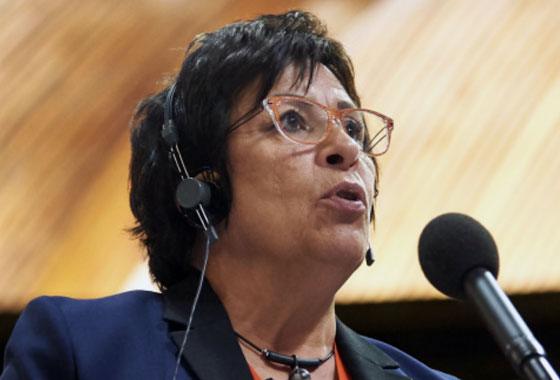
France, PPE/DC, Présidente de la Commission du Règlement, des immunités et des affaires institutionnelles
16:40:31
Thank you, Mister Chairman.
Ladies and Gentlemen,
Allow me first of all to congratulate our rapporteur on her excellent work.
The ambitious roadmap of the 4th Summit of Heads of State and Government of the Council of Europe must be at the heart of the organisation's program and budget for the period 2024-2027.
As Chairman of the Committee on Rules of Procedure, allow me, Mister Chairman, to say a few words about the implementation of these priorities.
As we all know, the most ambitious programmes will not have the expected impact and visibility if their implementation is not supported by corresponding resources.
I agree with the rapporteur on this point. After years of zero nominal growth, after the Covid-19 pandemic that has left its mark, in the face of a war of aggression that is severely testing the resilience of our citizens and our economies, the Council of Europe needs additional resources if it is to continue to meet the challenges and guarantee the fundamental rights and freedoms of our citizens.
Member states must, therefore, invest additional resources in our organisation, beyond zero real growth.
The Deputy Secretary General shared the priorities identified by the Secretary General with our Committee today.
These include strengthening the European Court of Human Rights; supporting the implementation of judgments; reinforcing the activities of the European Commissioner for Human Rights and the Venice Commission; and boosting the work of our independent monitoring bodies.
This is the price of democracy. These are logical priorities that we must support.
At the same time, dear colleagues, in calling for additional resources, we must not forget our responsibilities. For we are talking about the use of public money, our taxpayers' money. It is, therefore, our duty to ensure that this money is used responsibly and thriftily with a view to improving the effectiveness and efficiency of our actions.
We must, therefore, take a critical look at our activities, our practices, and our operating methods.
Can we do better at lower cost? That is the question.
The reform process led by the General Secretary and the Deputy General Secretary is a step in this direction.
Our Assembly, dear colleagues, is also contributing to the modernisation effort through digital transformation, which has already enabled us to make savings, as the rapporteur pointed out.
We must continue to support the reform process, particularly by completing the modernisation we have begun.
France, PPE/DC, Présidente de la Commission du Règlement, des immunités et des affaires institutionnelles
16:43:28
Thank you, dear colleagues, for your attention and I hope you will support this report. Thank you.
Royaume-Uni, CE/AD, Président de l'Assemblée
16:43:38
"Thank you, Madam." [said in French]
The Committee on Rules of Procedure, Immunities and Institutional Affairs has presented a draft opinion, which is Document 15780 to which one amendment has been tabled.
I now call Mr Simon MOUTQUIN to support Amendment 1.
You have 30 seconds.
Thank you, Mr President.
This Amendment is nothing more than a continuation of all the Assembly's work over the past three years.
The Assembly has voted in favour of a report recognising and calling for the right to a healthy environment to be enshrined in our legal instruments; a network of European parliamentarians has been set up to defend this right to a healthy environment; and today, following the 4th Reykjavík Summit, the Committee of Ministers has also asked us to begin more serious work on recognising the right to a healthy environment.
This is why we are tabling an Amendment, so that we can implement and give concrete form to this work in our forthcoming work, and show that the Assembly is available to take part in this work.
Thank you for your attention.
Royaume-Uni, CE/AD, Président de l'Assemblée
16:44:51
I have been informed that Ms Ingjerd SCHOU wishes to propose an oral sub-amendment to Amendment 1 as follows, "Leave out the words 'paragraph 12' after the third sentence and add the following sentences and insert the following words after paragraph 12, and add the following new paragraph".
In my opinion, the oral sub-amendment is in order under our rules. However, do 10 or more members object to the oral sub-amendment being debated?
No.
Fewer than 10 members object to the oral sub-amendment being debated.
Therefore, I call Ms Ingjerd SCHOU to support her oral sub-amendment.
You have 30 seconds.
Thank you, President.
Yes, I agree with this amendment, so I do want to highlight it more and to adopt it. Therefore, I suggest this amendment as a new paragraph 13, and then the ordinary 13 be 14, and so on.
I think it is not well-placed in the middle of the existing paragraph 12. That is why.
Royaume-Uni, CE/AD, Président de l'Assemblée
16:46:06
Thank you very much.
Does anyone wish to speak against the oral sub-amendment?
You have 30 seconds.
Thank you, Mister Chairman.
Earlier this morning at the Committee, I voted against this Amendment but I did not take the floor to explain why. I would like to use this opportunity now.
My reason is purely legal. I would like to remind my distinguished colleagues that there is no such thing as a human right to a safe, clean and sustainable environment. This is a matter of policy. This is a very good thing to have, but this is not a human rights issue.
For that reason, I am against this amendment. Thank you.
Royaume-Uni, CE/AD, Président de l'Assemblée
16:46:47
Thank you very much.
The Committee is in favour of this Amendment? Yes? Thank you.
I will now put the oral sub-Amendment to the vote.
The vote is now open.
The vote is now closed.
I call for the result to be displayed.
The oral sub-Amendment is agreed to.
We will now consider the main Amendment as sub-amended.
Does anyone wish to speak against the Amendment as sub-amendment.
I don't see anybody.
What is the opinion of the Committee?
Thank you very much.
I shall now put the Amendment 1 to the vote.
The vote is now open.
The vote is now closed.
I call for the results to be displayed.
Amendment 1 is agreed to.
We will now proceed to vote on the draft opinion contained in Doc. 15780 [as amended]. A two-thirds majority is required.
The vote is now open.
The vote is closed.
I call for the results to be displayed.
The draft opinion has been adopted.
The Committee on Rules of Procedure, Immunities and Institutional Affairs has presented a draft resolution [Doc. 15781] to which no amendments have been tabled.
We will proceed to vote on the draft resolution contained in Doc. 15781. A simple majority is required.
The vote is now open.
The vote is closed.
I call for the results to be displayed.
The draft resolution has been adopted.
Thank you very much indeed.
We now come to the joint debate on two reports from the Migration, Refugees and Displaced Persons Committee and one report from the Social Affairs, Health and Sustainable Development Committee.
Mister George KATROUGALOS, I take your point of order.
A point of order, Mister President.
My group proposes to observe a moment of silence in memory of the victims of the big tragedy, the migrant boat tragedy in Greece. We know that there are already dozens of deaths confirmed, fears for many other hundreds of victims, but we also know that we've had more than 25 000 victims in our seas over the last few years.
We are asking to observe this moment of silence both in memory of the victims and as a plea for a more humane and concerted European policy on migration and refugees.
Royaume-Uni, CE/AD, Président de l'Assemblée
16:51:24
Thank you.
I agree to your point of order. Let us rise and observe a moment of silence.
Thank you.
The first of the debates is entitled “Integration of migrants and refugees: benefits for all parties involved”. And that is Document 15785 presented by Mr Domagoj HAJDUKOVIĆ.
The second is entitled “Social inclusion of migrants, refugees and internally displaced persons through sport”. And that is Document 15786 presented by Ms Nigar ARPADARAI.
The final one is entitled “Health and social protection of undocumented workers or those in an irregular situation”. And that is Document 15784 presented by Ms Ada MARRA.
These will be followed by the presentation of an opinion by Ms Arusyak JULHAKYAN, and that is in Document 15794.
In order to finish by 7:00 p.m. I will need to interrupt the list of speakers at about 6:40 p.m. to allow for the reply and the vote.
I call Mr Domagoj HAJDUKOVIĆ, rapporteur, to present the first report. You have 7 minutes now and 3 minutes at the end to reply to the debate.
I hope I made a good stab at pronouncing your name correctly.
Thank you, Mister Chair.
Indeed, you did, and all the commendations for the flawless pronunciation.
Ladies and gentlemen,
Dear colleagues,
First of all, when addressing you and when talking about integration, I want to highlight the definition of "integration".
In the debates we have in the Committee on Migration, Refugees and Displaced Persons, and in general in this august house, we usually talk about assimilation, inclusion, and integration.
I just want to underline how different these expressions are and what different meanings they have.
First of all, I think "assimilation" is straightforward. Those migrants and refugees who arrive in a recipient country assimilate into a society, leaving behind their former identities.
"Inclusion" would mean that they are included. If not, maybe it's just a better word for tolerated in the society, but in order to be included, they usually have to suppress their identity and the peculiarities that make them different.
Finally, "integration". Integration should be a two-way process. A process that enriches both the recipient society and the migrant themselves. Why? Because in accepting the values, way of life, the requirements of the recipient country, the migrant changes themselves. But also the recipient society in accepting the migrant with their heritage, culture, identity, also changes and enriches itself.
Therefore, amongst the three, I believe that integration is the most favourable one and, as such, should receive special attention.
When I was thinking about this report, my vision was to present a catalogue of good practices of integration policies from our member countries for the use of other member countries, so that you can adjust them to your needs and implement them in your countries in order to produce best results.
There is a wide range of approaches to the integration issue that are listed and which member states can apply and adjust to their needs. The goal is to bolster a sense of togetherness and minimise fear and resentment towards people arriving from other countries, which are, unfortunately, present in some of our societies.
Finally, we should invite migrants and refugees to accept a new social contract, which sets out their rights, but also their obligations.
There are many positive examples from many countries. I use this opportunity to thank all the delegations, all the member countries, and all the institutions within and outside the Council of Europe which I co-operated with and that wanted to contribute their examples.
However, I must specially thank the Norwegian delegation to the Council of Europe for their gracious hosting of me and intercultural cities, especially the city of Bergen, which, if you read the report and explanatory memorandum, I think everything will be clear on. Because they have really good practices and have been good hosts, I learned a lot from those visits. I hope that you will by means of this report.
My work has identified certain requirements for successful integration processes.
First of all, access to interpretation for migrants and refugees is vital at the beginning stages of integration.
Second, language training and acquiring of language competences is a requirement for any successful integration.
The third would be citizenship training, which sometimes we, dear colleagues, take for granted, but depending on the country of origin, many of the migrants and refugees are not fully aware of their rights, their obligations, and how should they exercise them.
Then, active matching of the migrants and refugees' skills with the job opportunities as well as a universal system of recognition of competences, at least, should be in place for the Council of Europe member states; then, targeting assistance with access to housing, healthcare, and schooling, of course adapted to every migrant need; and additional support and protection of vulnerable groups.
Here we speak about unaccompanied children, LGBTQI+ people, and many other vulnerable groups that require special attention, that require special support, and sometimes, unfortunately, require even physical protection from other members of migrant groups.
Last but not least, communication with the public on migration should be fair and fact-based. This is maybe the most important thing. Unfortunately or fortunately, we have seen a lot of fake news, a lot of sensationalism, a lot of false reporting with regards to the migrants, often highlighting only the rights and excluding the responsibilities, and so on and so on, which have, unfortunately, contributed to a lot of misunderstandings, a lot of xenophobia, and a lot of incidents that would otherwise be avoided.
Finally, integration should not be seen as an expenditure but as an investment, an investment in a better future, because an integrated migrant or refugee is one that has enriched themselves by living freely and being able to work and contribute to the society of the reception country, but also the reception countries societies enriched by a plethora of other cultures, identities, religions, that are basically all the same because in the end we are all human.
Therefore, dear colleagues, I ask you to support my report.
Thank you very much.
Royaume-Uni, CE/AD, Président de l'Assemblée
17:00:03
Thank you.
I now call Ms Nigar ARPADARAI, the rapporteur, to present the second report.
You have 7 minutes now and 3 minutes at the end to reply to the debate.
Ladies and Gentlemen,
Dear Colleagues,
I have the honour to present you my draft resolution on the social inclusion of migrants, refugees and internally displaced persons through sport.
This is a very topical issue, which aims at better integrating migrants, refugees and internally displaced persons (IDPs) in host countries and communities.
Migrants, refugees and internally displaced persons face numerous challenges on their move all along their migration journey.
They have suffered from trauma in their country of origin, during the process of migration, and when settling in the host country.
Such trauma has a long-term impact on their mental health. In the host countries, they often face anti-social behaviour, racism, discrimination, and hate speech.
Sport can therefore be a fantastic catalyst for empowerment and feeling well both physically and psychologically. Why is sport such a unique opportunity to better integrate into society?
In sport, individual, social or cultural backgrounds do not matter. In sport, nobody asks athletes – and nobody should ask them – about their religion, the colour of their skin or hair, their native language, their political orientation or other factors which seem to divide our societies much too often. Sport is an excellent way to communicate. For a child, who came from a far away country and recently moved to a new neighbourhood, where he does not know anyone, where he probably has little or no command of local language, a football match with local children is probably the best way to break though the glass wall of being left an outsider.
Sport is an international and universal language, and it is a brilliant way to show how similar we all are.
Professional sport is an important social ladder or social lift for migrants, especially migrant youth.
Sport is based on rules – the rules of the game – as well as on fairness and fair play. Sport encourages us to show initiative, become active and engage with others in a positive, rules-based and athletic manner. In this sense, the Council of Europe is a natural partner, because we promote greater European unity based on the rule of law and human rights.
The values that our Assembly defends and promotes are:
Welcoming the universality of sport;
Giving the chance to everyone, especially migrants, refugees and internally displaced persons, who have great potential and are benefits for all parties involved, as raised by Mr Domagoj HAJDUKOVIĆ in his report.
My overall objective has been to demonstrate the benefits of sport as an essential means of social inclusion for migrants, refugees and internally displaced persons in host countries and communities.
I firstly underline the benefits of sport as a tool for the social inclusion of migrants, being an effective trauma healer and a means of empowerment.
Sporting activities have a positive impact on physical wellbeing and often play a role of icebreaker for migrants, IDPs and refugees participating in the linkage with the host community.
My report also raises the difficult inclusion of specific categories of migrants, refugees and internally displaced persons, namely women, children and LGBTQI+ community members.
The necessity to refer to male peers are factors that often explain the scarce participation of women in sport.
I secondly analyse the barriers challenging the success of inclusive programmes for migrants, having observed structural and socio-personal barriers.
The structural barriers are the lack of access and the financial constraints preventing a proper social inclusion of migrants, such as the costs of participation and of sport uniforms, for example.
There are also legal obstacles, such as the requirement of residence permits.
Obstacles to social inclusion of migrants through sport can also be highlighted in cultural, interpersonal and personal elements, due to traditions or customs.
I thirdly cover the existing policies and good practices among states’ policies, but also local initiatives and the international co-operation, taking the examples of France, Germany, Türkiye or my country, Azerbaijan, where the establishment of modern settlements has benefited numerous professional IDP athletes.
The local initiatives indicated in the report also show the enthusiasm of local and regional authorities to promote social inclusion of migrants.
At an international level, the Council of Europe has been particularly active in promoting sport as a means of inclusion and peace.
In addition to the relevant Committee of Ministers’ recommendations, my report underlines the crucial role of the Enlarged Partial Agreement on Sport, in charge of monitoring the application of the European Sports Charter of the Council of Europe.
UNHCR has also done a lot for social inclusion through sport, especially in partnership with the International Olympic Committee, as well as the European Union, with its White Paper on Sport.
Dear Colleagues,
There are many social inclusion policies and good practices existing at an international level, as well as in host communities at local, regional and national levels.
However, support programmes are needed in several areas.
I have, therefore, made the following recommendations.
First of all, states and actors involved in sport-based activities should have due regard to the values and principles laid down in the European Sports Charter.
In this spirit, states are invited to accede to the Enlarged Partial Agreement on Sport for a better implementation of the European Sports Charter, and for benefitting from a more effective international co-operation.
States are, moreover, invited to adopt or ensure the application of legislation prohibiting any forms of discrimination in sports due to nationality, gender, sexual orientation, ethnicity, language or disabilities.
Specific attention should be drawn to groups particularly exposed among migrants, refugees and internally displaced persons for whom structural and cultural barriers are harsher, namely vulnerable groups: women, children, LGBTQ+ community members or disabled migrants.
Specific targeted actions should be developed to their intention for promoting their social inclusion in the receiving societies.
Long-term and sustainable projects should be privileged over short-term programmes, and by investing in cross-sectoral initiatives.
Finally, states and sport structures should ensure public awareness on the benefits of sport as a tool for the promotion of social inclusion of migrants, refugees and internally displaced persons, and develop further the exchange of knowledge and experience.
Dear Colleagues,
I would like to thank the Secretariat for the great support.
I would like to thank you for considering the adoption of this draft report.
Thank you very much.
Royaume-Uni, CE/AD, Président de l'Assemblée
17:07:04
Thank you and now I will call on Ms Ada MARRA, as rapporteur, to present the third report.
And you too have 7 minutes now and 3 minutes at the end to reply to the debate.
Thank you, Mister Vice-Chairman.
Dear colleagues,
"Undocumented but not without rights": these were the powerful words of the Council of Europe's Commissioner for Human Rights in 2015, and it's what I want to repeat today in this hemicycle.
This is a legitimate topic here, where we are concerned with human rights, respect for people's rights and their physical and mental integrity, regardless of their administrative definition. We can all still remember the queues of people in our towns and cities lining up at soup kitchens during Covid-19. Many of these people had no right to state or institutional assistance, as they had no legal right of residence. It was these people who were most affected by their loss of employment during the pandemic.
Yes, these people are not undocumented migrants, and most of them are, but workers without rights. A malleable workforce at risk of the most serious abuses, such as human trafficking for sexual or labour purposes. They are also often found, as I show in my explanatory memorandum, in the agri-food sector, the domestic economy, fishing, catering and, now, online platform services.
There are 4 to 5 million of them in Europe. Their profile varies, and while there are sometimes organised mafia networks, there are also people who arrive with a visa and don't leave once it expires. Others arrive to apply for asylum and remain in the country even if the decision is negative. Some arrive with a residence permit obtained on the basis of a temporary work contract, but see their situation change when they lose their job or change employer. Still others arrive for family reunification, but either the family structure changes or they can no longer meet the minimum thresholds and criteria enabling them to benefit from reunification, etc.
The negative consequences of allowing people to remain indefinitely, with no prospect of leaving the country, without legal status, are numerous: the risk of labor exploitation, complete dependence on the employer and lack of access to the social safety net, including unemployment benefits, social security benefits, etc., or to basic medical care, with the public health problems this can entail. Limited access to social protection entails a high risk of high levels of insecurity.
Children and young people grow up in our countries with no prospects other than undeclared work. Areas of lawlessness and crime linked to these populations – violence, abuse of weakness in housing, substandard housing, swindles, loan-sharking, wage undercutting and the unfair competition that goes with it – develop because people feel they cannot turn to the police and/or the courts to defend their rights. Paragraphs 13 to 27 of my explanatory memorandum contain examples of documented abuse by these people; it's appalling.
Ladies and gentlemen,
This report is intended to be concrete. This is not the first time that our Council of Europe has recommended regularisation programmes as one of the possible ways of cleaning up inextricable situations. It already did so in 2007. Since 1996, moreover, our countries have regularised nine million people. During Covid-19, several countries set up emergency programmes to find concrete solutions, and this is to be commended. You will find these examples in points 37 to 43 of my explanatory memorandum.
The aim of our resolution and recommendation is to highlight best practices and areas for improvement in three areas in particular:
Point 1: Good practice in regularisations, whether in ad hoc programmes or permanent mechanisms. At a time when our continent needs workers, we need to retain those who are already on our continent by giving them rights. We recommend the right procedures in various points of paragraph 9 of this report. These procedures must be objective, facilitated, supported and guaranteed.
Point 2. Access to justice. This is currently the cornerstone of the ability of illegal immigrants to defend themselves against abuse. However, for fear of being reported to the migration authorities, few turn to the courts to fight abuses in the areas of work, housing, etc. Practices differ from country to country. Practices differ from one country to another. While sometimes, in civil cases, there is no obligation to report residence status to the migration authorities, this is the case in criminal cases. Our states must put in place procedures to ensure that data is not cross-referenced between different administrations, because it is paradoxical that it is the victims of serious abuse who are punished instead of the abusers.
Furthermore, any illegal migrant who collaborates with the police to report abuse should be granted a residence and work permit directly. At the very least, for any victims of criminal labour exploitation, human trafficking and other violent criminal acts who wish to remain in the country, expulsion procedures should be suspended and access to specific permits facilitated, irrespective of their co-operation with the authorities and participation in legal proceedings.
Point 3. Access to healthcare. This is perhaps the least developed point in this report. It deserves to be developed further. I know that colleagues are working on it, and I thank them in advance. Access to healthcare must be guaranteed, whatever the stage of the regularisation process, and not just for emergency care.
Ladies and gentlemen,
To conclude this first speech, and since we're discussing migration, I'd like to point out that the issue of labour exploitation affects both migration and labour law. Member states' tightening of legal channels for third-country nationals coming to work in adopted Europe is exacerbating the precariousness of the labour and residence rights of people who have sometimes resided in our countries for many years. Asylum and migration policies themselves sometimes create illegal situations for migrants.
However, I also want to move beyond the debate on migration to talk about the economy and labour law, because for me, before being migrants, they are workers without rights. Entire sectors of our economy rely on the abuse of workers who can't defend themselves. It's hypocritical, unfair to them, but also to honest employers who can't compete under such unequal conditions.
This brings me to my final point: one of the Council of Europe's most powerful instruments for guaranteeing the social rights of our fellow citizens is the Social Charter. It has to be said that it does not cover the rights of undocumented migrants. To achieve this, we need to remove the restriction on the personal scope of the European Social Charter, i.e. the exclusion of people from countries that have not ratified it, and of people who do not legally reside or work in the territory of the party concerned. I believe this is also one of the added values of this report.
Thank you for your attention. I look forward to the debate.
Royaume-Uni, CE/AD, Président de l'Assemblée
17:14:18
"Thank you, Madam" [said in French].
Thank you very much. And now we move to Ms Arusyak JULHAKYAN who is the rapporteur for opinion. You have 3 minutes.

Arménie, PPE/DC, Rapporteure pour avis
17:14:33
Thank you chair, honourable colleagues,
I have the honour to present you the opinion of the Committee on Migration, Refugees and Displaced Persons on Ms Ada MARRA's report on “Health and social protection of undocumented workers or those in an irregular situation”.
The joint debate of today demonstrates the crucial issue of the integration of migrants, refugees and displaced persons in host communities, which is dealt with through different angles by the reports of my colleagues Mr Domagoj HAJDUKOVIĆ, Ms Nigar ARPADARAI, and Ms Ada MARRA.
I wish to welcome the excellent report prepared by Ms Ada MARRA for the Committee on Social Affairs, Health and Sustainable Development.
The Committee on Migration, Refugees and Displaced Persons fully supports the report and its recommendations, in particular:
the responsibility of member states to prevent human rights violations against undocumented workers and the necessity to strengthen socio-economic rights for all across Europe;
the ratification and the effective implementation by member states of the European Social Charter and its protocols; and
the invitation of member states to extend the criteria for access to permanent regularisation mechanisms and/or to consider putting in place targeted regularisation programmes.
Dear colleagues,
This opinion proposes amendments aimed at reinforcing the text, mainly based on Ms Diana STOICA's report on “Precarious and irregular work situations of migrant seasonal workers and domestic migrant workers”.
The Committee on Migration, Refugees and Displaced Persons has tabled several amendments to the report, and all of them were acceptable for the rapporteur and for the Committee on Social Affairs, Health and Sustainable Development.
With regard to Amendments 1 and 2, we recommend mentioning in the Resolution the migrant seasonal workers and domestic migrant workers among the workers affected by exploitative conditions, which are aggravated by cumulative factors, such as the limited nature of their work contracts, and often being part of the “invisible workers”.
With regard to Amendment 3, the Committee on Migration, Refugees and Displaced Persons suggests adding in the Resolution two Assembly resolutions of 2013 and 2020, which both looked at human trafficking as the most severe form of exploitation.
Concerning Amendments 4 and 5, we recommend adding in the resolution the necessity for member states to guarantee legal assistance and protection to migrant workers victims of criminal labour exploitation, trafficking in human beings and other violent crimes, and their access in appeal to a body independent from administrative structures.
Finally,
Considering the relevance of the text regarding undocumented migrant workers, Amendments 6 and 7 recommend specifying respectively both in the Resolution and the Recommendation, the invitation to member states to sign and ratify the European Convention on the Legal Status of Migrant Workers.
Dear colleagues,
I would like to thank the Secretariat for their support in the preparation of this opinion.
I thank Ms Ada MARRA and the Committee on Social Affairs, Health and Sustainable Development for their effective co-operation.
I thank you all for your attention.
Royaume-Uni, CE/AD, Président de l'Assemblée
17:17:57
Thank you very much indeed.
Now we move on to speakers on behalf of the political groups. I call first Ms Marietta KARAMANLI.
"The floor is yours." [said in French]

France, SOC, Porte-parole du groupe
17:18:12
Thank you Mister Chairman.
Ladies and gentlemen, rapporteurs,
Dear colleagues,
On behalf of the Socialist, Democrat and Green Group, I would first of all like to thank the rapporteurs for their work, their reports and their draft resolutions, which are very important because migration is both the illustration of a world on the move and the consequence of profound political, economic, social, military and environmental changes.
By 2020, Europe had already welcomed some 87 million international migrants.
On integration in general, I would also like to remind you that in 2014, a previous report I had the honour of presenting to our Assembly here already stated that the overall level of integration remained unsatisfactory and that the situation of regular immigrants, and, even more worryingly, their descendants, was raising justified concerns in many Council of Europe member states.
On behalf of my Group and personally, I can only congratulate the rapporteurs and support their reports for their realism, pragmatism and sense of justice and efficiency.
At this point in the debate, I would also like to return to the context in which this subject is being discussed today.
A stable proportion of the population in various countries is concerned about immigration to European countries. Unfortunately, this concern cannot be countered by scientific arguments, by facts established by the economic and social sciences. It's not a scientific concern, but a fear of change, of not being able to cope in a world where inequalities have increased even within developed countries.
In the view of many of our colleagues here on all sides and in our national parliaments, we need to return to the kind of global policies that you mentioned, and which ensure a better redistribution of wealth towards populations with weak economic, cultural and political resources; and involve all immigrant populations, recent or less recent, and whose positive effects for all will be able to play favourably for those with the most difficulties, without a stigmatising effect for them and without a feeling of exclusion in reverse for the others.
This also goes back to the idea that integration policies are played out at the level of each state, and must combine cross-cutting public policies: work, housing, education and also culture.
Finally, on a personal note, I'd like to make a suggestion: that good practices and success stories, such as those that the report draws on in three states, be used to create a site and a platform of good practices that all players can use and contribute to.
Our Group will therefore support the vote on the reports and resolutions.
Thank you for your attention.
Royaume-Uni, CE/AD, Président de l'Assemblée
17:21:19
"Thank you." [said in French]
I should have pointed out at the beginning that Ms Marietta KARAMANLI was speaking on behalf of the Socialists, Democrats and Greens Group.
Now we move to Mr Birgir THÓRARINSSON, who will speak for the Group of the European People's Party.

Islande, PPE/DC, Porte-parole du groupe
17:21:34
President,
I would like to start by thanking Mr Domagoj HAJDUKOVIĆ for his excellent report on the vital topic of integration of migrants and refugees and how integration can be of benefit to all.
Access to society is a key factor, both in terms of being given the opportunity to take part in society and of being able to build one's own unique skills and capabilities.
Access to society creates value and, as mentioned in the report, builds on the vision that integration entails a long-term investment in human capital.
The three cases highlighted in the report demonstrate how important language skills and employment opportunities are for a successful long-term integration of refugees and migrants in society. These two aspects also go hand in hand. Studies in Norway showed that improved skills in Norwegian among immigrant workers led to a rise in productivity.
In these cases, additional schooling and language courses proved essential for the long-term employability of the migrants.
Some findings in Denmark also point in the same direction and show, furthermore, that there can be important spillover effects even between generations.
Successful language training with increased accessibility, to language courses for adult refugees, resulted in lower rates of school dropouts. These examples also demonstrate the importance of looking ahead, of analysing the long-term effects of the policies in place. One example of this that is highlighted in the report is the Danish decision of cutting back on welfare support, which resulted in short-term gains but left a negative effect on long-term employability.
Mister President,
Investing in human potential is the key for the future of our society.
We need to make sure that we are not guided by fear and racism, and that those seeking shelter in our societies get the opportunities they deserve.
By doing that, we can create the togetherness necessary for the prosperity and future of our society.
Royaume-Uni, CE/AD, Président de l'Assemblée
17:24:23
Thank you very much.
And now on behalf of the Alliance of Liberals and Democrats for Europe, Ms Yuliia OVCHYNNYKOVA.

Ukraine, ADLE, Porte-parole du groupe
17:24:31
Dear Mister Chairman, dear rapporteurs,
Migration is one of the key challenges in the 21st century, and for the future.
Yesterday, on 20 June we marked World Refugee Day. It is a special day for me, as well, because I'm twice an internally displaced person in my country Ukraine as well.
So, according to the UN, an estimated 100 million people were forcibly displayed from their homes and communities by the end of 2022, due to the worst violence human rights violations, natural and human generated disaster, and increasingly from the consequences of climate change and environmental challenges, including ecocide actions.
Since the aggression of the Russian Federation against Ukraine, millions of Ukrainians fled the country seeking protection in other countries, and it created the fastest outflow of refugees recorded since since World War II.
But conflict and insecurity in other parts of the world, including Afghanistan, the Democratic Republic of Congo and Syria, also contributed to the refugees record raise.
Meanwhile, the increasing frequency of the weather-related disasters linked to climate change, including drought and flooding, drove forward displacement on a scale not seen before.
We should also pay more attention to the ecological climate migration as a phenomenon.
Refugees face many challenges; as a result, they may feel limited in exercising their human rights in a new host community.
This makes refugees one of the most vulnerable people.
Today's resolution reinforces all key points and stresses the need for a new direction and strengthening of a series of actions for the better integration of migrants and refugees in the host countries, including a new framework of a new social contract, development of intercultural dialogue and fostering social cohesion.
And here again, the Council of Europe is an effective platform for international co-operation in this regard, which can involve all actors and parties for material benefits.
Nevertheless, we should develop more positive attitudes and make more efforts to multicultural approaches to migrants, to create more intercultural, open, inclusive, democratic communities.
Why shouldn't we remind ourselves of the beautiful motto and the title of Council of Europe white paper "Living together as equals in dignity", and continue the implementation of recommendations and good practices on multicultural dialogue and governance.
This would require much effort from us. The more diversity we have – intercultural diversity, gender diversity, biodiversity, etc. – the richer our lives together will be, the better human rights of refugees and migrants will be fulfilled.
Thank you.
Royaume-Uni, CE/AD, Président de l'Assemblée
17:27:36
Thank you very much.
And now on behalf of the European Conservatives Group and Democratic Alliance, Mr Marco SCURRIA.

Italie, CE/AD, Porte-parole du groupe
17:27:44
Thank you, President,
Any discussion on migration issues cannot but start from the drama that happened in the Aegean Sea a few days ago. And we did well to begin this discussion by remembering the many deaths with a minute's silence. A huge drama that follows so many other deaths in the Mediterranean Sea that we could never resign ourselves to or get used to.
They are all deaths that, however, also prompt us to reflect on the actions that we have taken so far and whether what we have done has been done well and are meritorious actions. Seeing the reports that have been presented to us, I thank the rapporteurs for their work. There are also references to previous resolutions made here in the Council of Europe, for example the one in 2017, and there are references to how immigration is an opportunity for the development of our societies as well. And the importance then of the integration of people who come to our nations.
Of course integration is a key aspect through which it also becomes a tool for all of us to be able to live better and make the people who arrive live better. And we have to make every effort possible for this integration to be real.
However, I would also like to emphasise another aspect, which is that in these works of ours, in these actions of ours, we never analyse, however, how much the wealth that we have in our societies, through immigration, continues to be an element instead of poverty and impoverishment of the African continent and of the other countries from which massive migratory flows depart.
We cannot resign ourselves even here to the perennial flight from those countries, to the continuous uprooting, to the journeys of hope that often, as we have seen, turn into despair especially in the Mediterranean.
There is a right that comes before any other, it is the right not to have to emigrate and to be able to live and fulfil oneself in one's country of origin.
Migration should never be a necessity, it can be a choice.
And so I think the Council of Europe should also envisage, encourage, press the nation states and the whole European Union to promote real, real, massive co-operation plans to help the African continent and other developing countries really.
For example, why don't we as the Council of Europe promote a big international conference on the causes of immigration, on the situation that pushes so many people to leave their states and what the solutions to be able to avoid this are.
This could be an opportunity to restore the centrality of our Council of Europe and to have a presence on the international stage as well.
Otherwise there will remain only the utopia of being able to welcome everybody, everyone.
Not only refugees, not only asylum seekers, not only those who are in need of international protection according to the UN and EU convention, but everybody.
All those who are seeking a life free of poverty and hardship and who find themselves in our societies without our societies being able to guarantee services, rights, opportunities, and who often cause these people to end up in the hands of crime and exploitation when, even worse, we don't have to cry for them at the bottom of the sea.
Royaume-Uni, CE/AD, Président de l'Assemblée
17:31:36
Thank you.
And now on behalf of the Group of the Unified European Left, Mr Emmanuel FERNANDES, "the floor is yours" [said in French].

France, GUE, Porte-parole du groupe
17:31:46
Thank you, Mister Chairman.
First of all, my group would like to highlight the quality of the reports we are examining today, which are useful, fair and well-documented. We congratulate the work of the rapporteurs, who have highlighted good practices and favourable recommendations which, if followed by our member states, will help to counter the mortifying view that migration is a threat or a danger, a view that is gaining ground right in the heart of this institution.
Yes, better integration of migrants and refugees benefits us all, and taking measures to guarantee this integration helps our societies to live better.
Yes, sport, along with culture, public services and communities are wonderful levers for integration.
Yes, protecting migrants and refugees through access to the right to health, housing and work under the conditions of the law that apply to everyone: this access to the law is essential in our democracies. Because that's what it's all about: respecting the fundamental rights recognised by the European Convention on Human Rights and guaranteed by our institution.
Yes, this requires better international co-operation, resources and logistics, but the rights to life, liberty, security and non-discrimination are non-negotiable. We are talking about human lives, torn from their homelands to survive or try to improve their conditions.
At this moment, I am thinking of the victims of the shipwreck off the coast of Greece: hundreds of people have disappeared in this absolute tragedy, adding to the terrible death toll of tens of thousands of victims over the last few decades. These were women, men and children who had embarked on this crossing, knowing the immense risks involved, in search of a better future. The Mare Nostrum has become their graveyard.
It's high time we collectively questioned ourselves. From the comfort of our living rooms and hemicycles, let's take action to stop these daily tragedies.
So, these three reports are most welcome in these troubled times, when the threat of the extreme right is growing right into our midst.
A growing number of our governments are questioning the rights of migrants and refugees.
Last night, in the very heart of Paris, Mr Emmanuel Macron's police violently attacked an encampment of unaccompanied minors to disperse them, in breach of all conventions, in defiance of liberty, equality and fraternity.
Yet our societies have proved their ability to welcome Ukrainian refugees in conditions that should serve as a model for us, ever since the outbreak of the Russian war of aggression. It was our duty and we are fulfilling it, but, dear colleagues, how can we justify not following these good practices for all migrants, refugees and displaced persons, with particular attention on vulnerable groups such as women, unaccompanied children, the elderly, the disabled and members of the LGBTQI+ community?
Dear colleagues,
The honour of the democracy we defend here lies in welcoming with dignity all people, all those who are in need. Let us live up to the universal and humanist principles that must once again become our common compass.
Royaume-Uni, CE/AD, Président de l'Assemblée
17:35:14
"Thank you" [said in French].
Now we move on to the main speakers' list and I call Mr Yuriy KAMELCHUK to speak first.
Thank you.
Dear Chairman, dear colleagues,
In a world facing increasing global migration and forced displacement, it is imperative that we recognise the immense value and potential that the integration of migrants and refugees brings to both the host societies and the individuals themselves.
Integration is a multifaceted and dynamic process that encompasses social, economic, and cultural dimensions. When effectively implemented it has the power to transform lives, foster social cohesion, and contribute to the overall well-being of both migrants and the host communities.
It is crucial to understand that integration goes beyond mere assimilation. It embraces the principles of mutual respect, understanding, and the creation of inclusive environments that celebrate diversity.
One of the significant benefits of successful integration is the enrichment it brings to whole societies. Migrants and refugees bring with them diverse skills, talents, and perspectives that can enhance the social fabric, spur economic growth, and promote cultural exchange.
Their contribution to various sectors, including healthcare, education, entrepreneurship, and the labour market have the potential to invigorate and diversify local economies, leading to increasing innovation and competitiveness.
Moreover, the integration of immigrants and refugees can help address demographic challenges that many countries face today, such as an ageing population and workforce decline.
By harnessing the skills and potential of these individuals, host societies can mitigate labour market gaps, sustain economic growth, and maintain the vitality of their communities.
Furthermore, successful integration has a positive impact on the well-being and self-fulfilment of migrants and refugees themselves, it offers them opportunities for personal and professional development, empowers them to rebuild their lives, and allows them to contribute to their new communities.
Through access to education, employment, healthcare, and social services, integration provides the necessary tools and support for individuals to thrive and achieve their full potential.
Integration also plays a crucial role in fostering social cohesion and breaking down barriers between different cultural, ethnic and religious groups. It promotes understanding, empathy, and the building of bridges between communities, thereby reducing prejudice, discrimination and xenophobia.
By creating inclusive spaces for interaction and dialogue, host societies can cultivate a sense of belonging and share the responsibility among all members for fostering a more harmonious and resilient society.
Thank you for attention.
Royaume-Uni, CE/AD, Président de l'Assemblée
17:38:32
Thank you very much.
And now I call Ms Ruth JONES.
Thank you, Mister John HOWELL.
It is good to see you in the Chair this afternoon. Is this working? It is. Okay. Brilliant.
I would like to thank all three rapporteurs for their respective comprehensive reports this afternoon. I will be speaking principally on Mr Domagoj HAJDUKOVIĆ's report.
Yesterday, as we have already heard was World Refugee Day, and organisations across the globe have been using this moment to celebrate the positive impact refugees can have. In the UK, in particular, we have been highlighting the injustices of the Illegal Migration Bill that this UK government is currently recklessly pushing. This is a bill that my party believes undermines compliance with the international laws and standards that other countries are committed to upholding. The resolution that we are debating today, by contrast, promotes some of the highest standards that we should be meeting.
I must briefly praise the Welsh government as integration is a devolved matter in the UK, as they declared Wales a Nation of Sanctuary in 2019. This was then put into clear practice during the initial crisis in Ukraine. The Welsh government became a super sponsor in the Homes for Ukraine scheme, accepting thousands of Ukrainians into Wales. They also opened six welcome centres in Wales, much like the one in the city Ioannina mentioned in the report. So, I thank the officials and elected representatives in the Senate for their continuing work of making Wales a truly accepting place.
I do note that on the topic of integration, although it is England only, Dame Sara Khan was appointed in March 2021 as the UK government's Independent Advisor for Social Cohesion and Resilience. There was a consultation open from April 2022, which was extended to June 2022. Since that time, I can find no official updates and certainly no publication timetable. Following the rapporteur today, I will be returning home to ask questions about where this independent review has gone and why it has disappeared without trace.
Finally and most importantly,
I would like to highlight that in Mr Domagoj HAJDUKOVIĆ's report line 5.9, the need for affordable and decent accommodation. In the UK, we have a housing crisis worsened by 13 years of Conservative government. Our current situation is deteriorating rapidly with the Tory government proposing desperate vulnerable refugees and asylum seekers are to be dumped into hotels or army camps, or even worse, put on barges. This is inhumane and must be stopped. The political choices of governments around housing and immigration have led us to this point. These political choices by the UK government foster a closed, intolerant and unwelcoming environment.
We must always oppose that. I stand with my colleagues here and back in the UK parliament who believe in a society based on respect for the rights and dignity of every individual.
Thank you.

Monténégro, NI, Présidente de l'Assemblée
17:41:34
Thank you.
The next speaker is Ms Yevheniia KRAVCHUK.
You have the floor.
Thank you, Madam Chairman, thank you dear colleagues.
I'd like to first to congratulate all the rapporteurs for their work, but also I would like to use this time to thank all of you for hosting Ukrainians in your countries.
Literally, I think that every Council of Europe country has some Ukrainians right now that are seeking temporary shelter, and you know I can say something about all of your countries.
I remember when in March of last year I was first crossing the border to come here to vote for the expulsion of the Russian Federation from the Council of Europe, I was crossing by foot going to Romania at the time, and I remember how the volunteers asked me: do I know where to go, do I have something to eat, to drink. It was very, very human.
I remember because I go through Poland now all the time, and remember the time in Warsaw that literally it felt that there were more Ukrainians in Warsaw than Poles in it. And now Germany has the highest rise of population in 30 years. Norway has the highest rise of population in 10 years. Tiny Moldova was welcoming so many Ukrainians they had to drastically find the way for logistics, for medicine, for 20% out of their population. The Czech Republic right now has the highest percentage of their population hosting Ukrainians at this moment. Tiny Lichtenstein probably knows all the refugees, not only by name but by face.
I can go on and on, but these three minutes will go just by saying the names of the countries, and I want to thank [them] again.
What I would like to point out, as a Ukrainian and also as the Chair of Cultural Committee is: please, take care of Ukrainians that they can preserve their national identity. This is very, very important. We see what Russia does with abducted children, putting them in education camps, not allowing them to speak Ukrainian. In occupied Crimea and parts of the Donetsk and Luhansk regions, there are children that do not know the Ukrainian language at all because they were not allowed.
Please, make sure that you pay attention to cultural projects, that you have Ukrainian books in libraries, that there are cultural centres where Ukrainians can go to come together and execute their cultural identity. This is very important.
I go by train and all the time I speak to people and they're so thankful to you as well, and the most touching moment every time I come to Kyiv train station is when the families are reunited and everyone cries.
Well, we do believe that these Ukrainians that are in your countries will come back, we want them back, we want them to reconstruct Ukraine, but until that time, please, take good care so that they can preserve their national identity.
Thank you.
Monténégro, NI, Présidente de l'Assemblée
17:44:50
Thank you.
The next speaker is Mr Thibaut FRANÇOIS.
You have the floor.
Thank you, Madam Chairman.
Ladies and Gentlemen,
Europe is seeing more and more migrants arrive on its shores, facing a wave of migration that has now become unprecedented.
At the same time, the people of Europe are suffering from an ever-increasing cost of living: massive inflation, rising taxes, skyrocketing energy and fuel prices.
The French will not accept this new inequality that you wish to promote in our societies. What legitimacy do illegal immigrants have to demand and obtain medical cover financed by European taxpayers? They have never contributed in our countries.
As a reminder, in France, in my country, state medical aid for illegal immigrants is estimated at over 1.2 billion euros; the procedure for sick foreign nationals, 250 million euros; and care for some of the unaccompanied minors, 225 million euros. All in all, our highly complex procedures for dealing with rejected illegal immigrants – arrests, accommodation, deportation, return of aid, legal costs – add up to an estimated total expenditure of 3.9 billion euros. Yes, yes, 3.9 billion euros a year, just eight times the annual budget of our Assembly.
It's no taboo to say that, yes, mass immigration is too costly for our societies. It's a fact. Moreover, the situation is appalling when you consider that 50% of non-European foreigners present in France do not work. They, therefore, pay no taxes and do not finance our social protection system. It's always the same people who pay, and that's enough.
Dear Colleagues,
You want to, and I quote, "combat human trafficking and the underground economy, and prevent cuts in state revenues". The best thing would be to actively combat the mafias of people smugglers who get rich off people's misery, and to encourage the return of illegal immigrants to their countries of origin, which are not at war, without delay. Otherwise, our respective social protection systems won't hold up under these pressures.
Thank you very much.
Monténégro, NI, Présidente de l'Assemblée
17:46:49
Thank you.
In the debate, I call next Ms Sibel ARSLAN.
You have the floor.
Thank you very much, Madam President,
Ladies and Gentlemen,
First of all, I would like to thank the rapporteurs for these valuable reports. I believe that the previous speaker has just pointed out where the difficulties are in migration and why it is important that we should invest in migration and in refugees. But also in sans-papiers so that precisely these critical points can no longer be said; so that they no longer exist, because there is also a great potential that we in Europe do not use enough.
It would be important that we address this big question of migration with the consequences, but also difficulties in a dignified way. That was indeed also done in all these reports, that you also bring in proposals. I am glad about the recommendations that were also brought forward in these reports.
Migration is a challenge for all of us. I know this situation; I myself emigrated from one country to another, also as a migrant. The conditions were not always very easy, but I now represent my new homeland. I think that is a potential that has been gladly taken, and I am proud of both. I can bring in several things, understand many things internationally as well, and I can mediate. That is, I can mediate both with the migrants who have to flee, who perhaps also have their difficulties, but I can also do translation work for those who also, perhaps, do not know this story. That is why it is important that at some point we no longer talk about integration, but about inclusion, because then we will be able to treat and accept precisely these migrants and refugees with dignity.
For me, the only thing missing from the reports are the homeless people who have not been included in the reports. These people also become homeless in Europe. Perhaps we should also deal with this. I would like to thank my colleague, Ms Ada MARRA, in particular for the protection of undocumented workers, because their situation has vehement consequences for them as well as for their children, who then also come to school and have to reckon with these difficulties, also for the economy. I think that we, as the Council of Europe, must not allow people to be exploited, to have potential for abuse, because they can perhaps be exploited sexually.
Ladies and Gentlemen,
Many migrants have no voice. I am glad that we can give them a voice with these reports.
Thank you very much.
Monténégro, NI, Présidente de l'Assemblée
17:50:05
Thank you.
The next speaker is Mr Davor Ivo STIER.
You have the floor.
Thank you, Madam President,
Let me start by congratulating our four rapporteurs for their work.
Now whether we speak of the advantages of integration of migrants and refugees as it is elaborated by Mr Domagoj HAJDUKOVIĆ in his report, or we speak about social inclusion or health protection of undocumented workers, we always come to one crucial point and that is the importance of communities. Strong, resilient and inclusive communities. Because society, well, society is not just the sum of individuals, but it is rather a complex network of communities, starting with the family and then through a different variety of societies, of associations, of the intermediate bodies of the society, all the way up to our local, regional, national, and – yes, why not – our European community.
Now, while talking about this important issue of migration, let us not close our eyes to the importance also of religious communities and their crucial work in integrating immigrants. Let me also use this concept of immigrants meaning, of course, all the persons that are migrating from one country to the other to establish there their permanent residence.
I was talking about the importance of acknowledging, also, the work of religious communities in accepting into their communities immigrants, in treating them as sisters and brothers, as Pope Francis suggests in Fratelli tutti, regardless of their legal status, actually helping them with legal advice and support, advocating for the respect of their social rights, the respect of their dignity as human persons.
Now, as Mr Domagoj HAJDUKOVIĆ rightly said, integration also implies a responsibility of immigrants to accept and respect the identity and the rules of the community they are joining without renouncing their heritage.
Now having said that, let me conclude by stressing that Europe, especially in this difficult demographic situation with an ageing population, well, Europe can prosper only with strong resilient and inclusive communities: communities which will be proud of their culture and identity but, at the same time, they will be able to grow stronger by protecting refugees and integrating migrants.
Thank you.
Monténégro, NI, Présidente de l'Assemblée
17:52:48
Thank you.
In the debate, I call next Mr László TOROCZKAI.
You have the floor.
Thank you, Madam President.
I would like to address the part of this report that focuses on the social integration of migrants through sport. This report has nothing to do with reality. Those involved in writing this report are living in a dream world. They are so hopelessly naive, so ignorant of the reality, that they should not be involved in politics and human rights because they are causing terrible damage with their fairy tales.
Of course, you can put together a football team of hundreds of thousands of migrants consisting only of angels who can say that they have been accepted by society thanks to sports. It is also possible to raise the awareness of the European people about the increasing numbers of migrants or even refugees playing in European sports teams but that will not change the facts.
As for sports, there have been a number of scandals in recent years involving sportsmen who have committed serious crimes – theft, robbery, assault, rape – and many of them come from first- or second-generation immigrant families. For example, Achraf Hakimi, born in Spain to Moroccan immigrant parents, was recently accused of rape. His case is just one of many where sportsmen of immigrant backgrounds have committed a crime. Unfortunately, there are more and more scandals, violence and crime linked to sports in Europe. It is naive to think that sport makes it easier for immigrants to integrate. At best, you can lie to people about it to reduce resistance against mass migration.
I will show you the reality. I can invite you to my small town, Ásotthalom, where we live right next to the Hungarian-Serbian border, which is also the border of the European Union and nowadays, it is a war zone. Gangs of human traffickers and armed migrants are shooting machine guns, destroying our lives. Just as crime statistics have worsened everywhere where immigration has increased massively. Breaking into our countries illegally led by human-trafficking criminals is not a human right. It is a crime that is destroying Europe. We should not be organising sports teams of migrants, we should be defending our borders and law and order.
When are you finally going to wake up?
Thank you very much.
Monténégro, NI, Présidente de l'Assemblée
17:55:49
Thank you.
The next speaker is Mr Jeremy CORBYN.
You have the floor.
Hello.
I couldn't disagree more with the speaker who's just addressed this Assembly than I intended to do now.
Frankly, it was racist hate speech against people who've made their homes in this continent in order to survive, to avoid human rights abuses, and the effects of wars, and have made a massive contribution to our world, to our community, and to our society.
I would like to take our Hungarian friend to my own community, where I'm proud to represent a constituency where there are 100 different languages spoken. There are people who made their homes there who've come from all over the world. They are people who came as refugees. They are now our neighbours. They are our nurses, they are our doctors, they are our teachers, and there are our engineers.
As it is the story across so many parts of Europe, where people who have made this massive contribution to our society, have themselves come from enormous stress and enormous difficulty.
We don't need hate speech at this time. We don't need condemnation of people who have been through the most horrific experiences. We need humanity, and we need empathy about it. Only an hour ago we stood in silence in memory of the hundreds of people who died in that ship off the Greek coast.
Why did they die? Why did they die?
Was it not something to do with the collective policies of every European government that has tried to push back against desperate people seeking a place of safety?
Those policies have created the market, the market for the people traffickers and the people smugglers. We need safe routes for people to seek safety and asylum. We need to recognise that our society depends on them, and that our policies, our economic policies, our foreign policies and so much else actually have some bearing on the reasons why people seek asylum in the first place.
There are a hundred million refugees around the world. A minority of them are in Europe. The vast majority are being looked after in countries that don't have the resources, the wherewithal or anything else to cope with it. So, surely we need something better.
I commend the reports that are in front of us today, because they talk about integration. They talk about support. They talk about the right of access to health care, which is so important for all asylum seekers and refugees.
We are in a privileged position. We can get up and speak about these things. But those that are living in my country without recourse to public funds, living in poverty on the streets, having to beg to survive in some cases going on for years, those are the people who have no voice. We must make sure that their voice is heard.
These reports go some way towards bringing a sense of decency, a sense of humanity, and a sense of inclusion in this world to these people who've suffered so much.
They don't deserve to be treated like this, and they don't deserve the kind of language that was thrown out them a few moments ago.
Monténégro, NI, Présidente de l'Assemblée
17:59:27
Thank you.
The next speaker is Mr Franz Leonhard ESSL.
Mister ESSL, you have the floor.
Thank you, Madam Chair
Ladies and Gentlemen,
I would like to comment on the report Integration of migrants and refugees: benefits for all parties involved. In the first moment, I would like to say, I feel, like the previous speaker, this is plausible and worthy of support. However, on closer examination of the report, I will explain why I will still not agree.
From my point of view, there has to be a separate approach and a separate assessment, depending on whether it is a legal influx, where there is a residence permit, or residence for the purpose of gainful employment, or whether it is an illegal border crossing or a refugee movement. So that no false impression is created, I am not against refugees; yes, I am in favour of helping refugees. But we have to distinguish whether there really is a reason for asylum or not. It is necessary to determine whether the asylum seeker is actually being politically persecuted in his home country or not. It is necessary to determine whether the asylum seeker is even threatened in life and limb, or is a war refugee. If this is the case, the migrant should receive all help and all support, and immediately.
Unfortunately, the reality is often different. Less than half of the asylum seekers who come to the country can actually prove an objective reason for asylum. More than half come for another reason, mostly economic. Refugees often spend considerable sums of money on illegal trafficking, which must be condemned and prosecuted accordingly. However, as we know, an asylum procedure is not completed in two months. Rather, it often takes several years, and there are people who also earn money from asylum procedures. There are asylum seekers who know from the outset that they will never receive a positive decision, and the public has no understanding for that. Unfortunately, I don't have enough time to give examples. For these cases, I don't think it's helpful to take all the measures for integration and then say that there is no reason for asylum, that there is no positive decision on asylum. You have to leave the country again.
Therefore, my demands: first, support for the refugees in the country of origin; second, short asylum procedures and quick decisions; and third, for asylum seekers with a positive residence decision and for migrants who come to the country by mutual agreement, measures for integration should come into effect from day one. It is, after all, referred to in the report – language lessons, training, education, jobs, access to housing – which are to be fully supported in this case.
It is a pity that the report does not make any distinction here. That is why I cannot agree with the report either.
Monténégro, NI, Présidente de l'Assemblée
18:03:37
Thank you.
Our next speaker is Mr Rafael HUSEYNOV.
Mister HUSEYNOV, you have the floor.
Thank you Chair
Dear Colleagues,
Each of these words differs from other ones in the language by the burden of pain it carries.
Migrants, refugees, internally displaced persons (IDPs) are people whose fate was torn apart by the earthquake. This is such a class of society that everyone should be sensitive to them.
The most important place where every creature finds solace is its nest. Any creature deprived of its nest is already in trouble.
This topic, close to everyone is very familiar to us, Azerbaijan, for a long time up to 30 years, because for 30 years, every tenth person of the population of Azerbaijan has been living as an internally displaced person or a refugee. Only in November 2020 did the situation begin to change after Azerbaijan liberated 20% of the territory occupied by Armenia and its supporters. IDPs have already gradually begun to move into houses built for them in the territories liberated from occupation and cleared of mines.
Nevertheless, this is not a process that will end soon, because the occupied lands have become completely uninhabitable over the past 30 years. Moreover, these places are completely mined and have become a source of serious danger. In other words, now actually double overtime work is being carried out on the liberated lands. First, areas are being cleared of mines. Only after that construction can work begin there.
Therefore, my country will have to live with care for refugees and internally displaced persons for several more years. For a long time, this difficult topic will, unfortunately, retain its alarming relevance for us.
I would also like to share my thoughts about the unpleasant experience of communicating with refugees and internally displaced persons.
We have witnessed that in our Assembly and in other international organisations, numerous debates on these topics have been held for years, the necessary words were spoken, resolutions and other important documents were adopted, but no serious work was carried out towards the fundamental improvement of the situation of the people belonging to this class as well as towards the fundamental solution of their problems. The distance between words and deeds has always been very long.
Today, attaching particular significance to the issue, we hold a joint discussion on three topics, analysing the problem from several angles, and will eventually adopt a resolution.
I would very much like one of the positive innovations in our work to be that we should not be content with a dormant document left on paper. Let's ensure that the most important points of today's exchange of views and reports lead to the realisation of the desired positive change in the lives of migrants, refugees, and internally displaced persons.
Thank you.
Monténégro, NI, Présidente de l'Assemblée
18:06:56
Thank you.
Our next speaker is Mr Oleksii GONCHARENKO.
Mister GONCHARENKO, you have the floor.
Thank you very much. I wanted to speak about other things, but I heard our Hungarian colleague. I can't not respond to it, because when you're saying that you live in a war zone on the Hungarian-Serbian border, welcome to Ukraine. I will show you a war zone. I will show you a real war zone. You should see it.
The only prime minister in Europe who has not visited Ukraine is Mr Viktor Orbán. Take your prime minister and visit our country.
I will show you the war zone, and I will show you why people sometimes in their life need to run away from a butcher who came to kill them. I will show you Bucha, Hostomel, Irpin. I will show you how it is to live like this. I will show my native Odessa, where just a week ago there was an explosion 200 metres from my home, and my children were scared and crying in my arms. I will show you what a war zone is.
When you are saying that your enemies are migrants, are refugees running from tyrants and butchers, like Mr Bashar Al-Assad, Mr Vladimir Putin, and others. No, your enemies and our enemies are Putin himself, Al-Assad himself, other people who made other human beings run away to leave their homes. They are our enemies, and you should know this. Because if you don't know this, are you really European?
You said it is a border of the European Union. The European Union is not just a word. It's not just a star on the flag. It's the values; it's humanity.
I want to say dziękuję bardzo to the Polish people who accepted Ukrainian refugees; mulțumesc to Romanians, Moldovians; děkujeme to the Czech people. I want to say Danke schön to the Germans, "thank you" to English people, aitäh to Estonians, paldies to Latvians, ačiū to Lithuanians, to everybody who saved their lives and through this who showed that they are human, and that is so important.
The most important task in our life is to be human. It is the most difficult, but the most important task.
Please, be human.
I want to address all of you. Please, support those who are running from the war, Ukrainians and other people who just need this support and shelter.
I understand that sometimes you can be used to what's going on in the world. Sometimes you can be tired of all of this, but believe me, there are places in the world which are much, much worse than the Serbian-Hungarian border, as you told us. When you are in such a place, the only thing you need is another human who is standing shoulder to shoulder with you.
Thank you very much.
Monténégro, NI, Présidente de l'Assemblée
18:10:03
Thank you.
Now I call Ms Kate OSAMOR.
Madam OSAMOR, you have the floor.
Thank you, Madam Chair, for calling me to speak in this joint debate.
I would like to congratulate all the rapporteurs on their timely reports, which I fully support, but I will principally speak to Ms Ada MARRA's report.
I would like to draw my remarks to shine a light on another group of migrants who are documented but are in an irregular situation. They are marginalised because they have no recourse to public funds (NRPF). NRPF, as it is known, is a condition attached by the UK Home Office to a significant number of migrants' immigration statuses, which excludes them from accessing a significant section of the Public Safety Net, despite paying income tax and national insurance. This condition excludes access to benefits and homelessness assistance. Unable to fall back on the welfare system like other workers, notably during the Covid-19 lockdown, if struggling financially or if they became sick, they could not access sick pay or secondary healthcare. This, therefore, leaves them more dependent on employers and are vulnerable to exploitative and unlawful practices just like the undocumented. Cited in the draft resolution of this report we are discussing today, estimates between 4 and 5 million undocumented persons in Europe. Well, 1.4 million migrants in the UK are subject to NRPF, which shows how widespread this is. This affects them and their families, including an estimated 180 000 children.
It is not surprising that a report by the House of Commons' Work and Pension Select Committee in 2021 found that families with no recourse to public funds are at higher risk of relying on food banks, living in poor quality or overcrowded housing and becoming homeless. Even mothers and families suffering from domestic violence face additional challenges in trying to remove themselves from abusive relationships. They are denied help and subsequently remain in abuse. Their immigration status prevents them from accessing some support and services. This is clearly unjustifiable.
As I draw my speech to a close, I would like us all to consider how limiting documented migrants' access to the welfare state can recreate the precarity of undocumented migrants. I encourage everyone to go back to their parliaments and to stand up for all migrants.
Thank you.
Monténégro, NI, Présidente de l'Assemblée
18:12:54
Thank you.
Our next speaker is Ms Zdravka BUŠIĆ.
Ms BUŠIĆ, you have the floor.
Thank you.
Thank you, Madam Chair. Thank you to the rapporteurs and for the good reports they have done.
Human migrations have occurred from one place to another, from one country to another, from continent to continent. It has been going on for centuries, and it's likely to continue as long as people search for new places to go.
No matter what the reasons are, men will keep on moving. Individuals, tribes, and ethnic groups endlessly moved from one place to another, from far away to the unknown throughout the centuries.
I'm sure that the majority of us in this Assembly here have their ancestors who long ago landed on the shores of the United States and passed through Ellis Island in New York.
To make us aware of the scope and the dimensions of mass migration movements, movement settlements, we should only visit some of the migration museums, such as the National Immigration Museum on Ellis Island or the National Museum of African American History and Culture in Washington, to mention just a few. They all tell a story of how new territories were inhabited and new countries were created.
Our world has greatly changed since, and so did the migrations today. Migrants are –as always was the case– on the search for better lives, and the recipient countries are in search for a labour force. They are, in a way, independent and interdependent, I would say. Therefore, a successful integration is of benefit to both, as the rapporteur Mr Domagoj HAJDUKOVIĆ pointed out in his report.
What should recipient countries do to make this process successful? I would just name a few.
The most important task is to include the migrants and refugees from the very beginning into the social life of the communities of their settlement, provide them with programmes, trainings, and education so that they can more easily and quickly start to actively participate in the life of the community and grow professionally and socially.
Organised trainings and education should be secured, particularly learning the language of the host country, so they can more easily and more rapidly integrate into society and into the labour force. Ghettoisation must be avoided not only because of successful integration, but also from the aspect of the security.
Qualifications of skills obtained abroad should be processed faster so they can apply for the jobs they are trained and qualified for.
Good practices, successful stories of migrants, positive examples of the successful integration should be broadcast on the public media.
Reports about the countries of origin and the migrants and refugees along with the history and the culture should also be shown on public broadcast.
Sports, hobbies, and participation in everyday activities should be encouraged in order to avoid discrimination, ease tension, and relax communication.
It is needless to say how important that is for their physical and mental well-being.
Finally, migration is here to stay with us. Europe has shown the ability to integrate, but there is a lot more to do when it comes to respecting the rights and the dignity of the migrants on one side and honouring and respecting the way of life of the recipient countries on the other.
Thank you.
Monténégro, NI, Présidente de l'Assemblée
18:17:04
Thank you.
The next speaker is Ms Luz MARTINEZ SEIJO.
You have the floor.
Thank you very much, Madam President.
First of all, I would like to commend all of the rapporteurs for the magnificent reports we have been given today.
Spain has a long history of welcoming immigrants and the living together of different cultures and religions, and that is thanks to our geographic and strategic situation. And we have also been a country of emigrants, mostly towards other European countries and also towards the Americas. So we have experience with this and that is why the majority of people from my country would agree with these reports.
The immigrant population in Spain makes up about 12% of our population and they represent about 12.9% of those enrolled in the Spanish social security system. This number has been growing significantly over the last decade and they are present in almost all economic sectors in the country.
We have reduced irregular immigration by 25.6% in the last year, thanks to co-operation with the countries of origin, as well as in our fight against those mafias that smuggle people. With this, we have been able to avoid some 40% of the journeys towards the Spanish territory. Let us not forget that we are the southern gateway to Europe. This is the situation that we are actually dealing with today: regular immigration and the battle against irregular immigration.
During the Franco dictatorship, many Spaniards had to emigrate, not only for political reasons but also because they were looking for a better life. We are a host country but we do so because of need as well. There are a lot of work positions that are not occupied by Spanish. I am talking about the service sector, agriculture, livestock and many traditional sectors of the economy. And companies are asking for workers that they cannot find in Spain. So let us give employment opportunities to others because those opportunities are out there. And that is also why we have to be efficient when trying to recognise the experience and qualifications that migrant people have.
Nobody in Europe can close their eyes to the reality. If we have a high level of employability amongst immigrants, it is because they are coming to work, which is not what certain political parties say to deceive society with lies that they want to make a reality, leading to fanatism and xenophobia.
On the contrary, we must foster regular immigration and immigration policies in the educational system, giving children the opportunity to learn about language, culture, and living together in social harmony because there is no better place to start with immigration than in childhood.
Social cohesion is achieved via investment, with measures that foster social harmony and guarantee dignified conditions and basic human rights and fundamental freedoms for all migrant people and their families, no matter where they came from.
At the end of the day, migration is good, in particular, we can think about the positive effect it has on the economy and on our demographic growth, as well as the contribution it makes but culturally and socially. And yes, we must foster international co-operation to face global challenges and support regular, orderly and safe migration and promote true integration and foster dialogue in the development of a Europe that is based on solidarity and intercultural understanding.
And my last words here would be to appeal for our responsibility as politicians but as human beings. We must not allow the far right to make this difference that they are trying to between migrants and refugees. Origin or race cannot be an excuse to deprive people of their rights. We must never forget human rights and we must do everything possible to conserve them.
Thank you very much.
Monténégro, NI, Présidente de l'Assemblée
18:20:52
Thank you.
Our next speaker is Mr Jacek PROTASIEWICZ.
You have the floor.
Thank you, Madam Chair. Thank you, rapporteurs.
Dear colleagues,
Let me start with sincere congratulations to both rapporteurs.
They did excellent work on the extremely important issues of social inclusion of migrants, refugees, and internal displaced persons, as well as the importance of integration of migrants and refugees.
Many of the recommendations included included in the reports are really accurate and worth it to be widely implemented, as well as examples of good practice listed by both rapporteurs.
As I am representing Poland in this Council, I would like now to share with you our recent experiences with hosting massive refugee waves that followed.
Firstly, the severe repressions imposed on Belarusian people after a huge protest against rigged presidential elections in 2020. Then most of you could observe that in the media, millions of Ukrainian refugees coming to Poland after the brutal unjustified and illegal full-scale aggression of the Russian Federation against their country.
In both cases, Polish people warmly welcomed those refugees, offering them not only standard, basic assistance, but much more. Poles offered them not only institutional shelter, inviting particularly Ukrainians to their homes, to live together. Many of them still live with their hosts, sharing everyday problems and successes.
As a representative of the Polish opposition party, I must also admit that the Polish government, following the common people's compassion, also rose to the challenge and offered Ukrainian refugees nearly all citizens' rights that Poles are enjoying, including easy access to education, healthcare, the labour market, as well as to social benefits.
That policy was commonly accepted by Polish society. Ukrainians who decided to stay in Poland may feel, I hope, at home and as equal citizens, almost equal citizens, because they don't of course have the voting rights.
There are little examples of social tensions between Poles and Ukrainians, despite some dark times in common history and real differences, like religious beliefs, for instance. That inclusive policy contributed much to the development of the Polish economy and resulted in a positive influence also on the social welfare system, particularly pension schemes.
Let me conclude that, not forgetting the tragic context of the cruel war in Ukraine and repressions of the Lukashenko regime against the Belarusian people, these recent Polish-Ukrainian and Polish-Belarusian examples totally confirm the idea of Mr Domagoj HAJDUKOVIĆ's report: successful integration of migrants and refugees may really be beneficial both for immigrants and the hosting society.
Thank you.
Monténégro, NI, Présidente de l'Assemblée
18:24:26
Thank you.
Now I call Mr Jacques LE NAY.
Mr LE NAY, you have the floor.
Thank you, Madam Chairman.
I would like to thank our colleagues for their reports, which highlight the challenges involved in the social inclusion of migrants, at a time when Europe has been facing a significant increase in their numbers for several decades.
While I agree with the analysis of our colleague Mr Domagoj HAJDUKOVIĆ that the integration of migrants represents a long-term investment in human capital, we must not underestimate the sensitivity of populations and, by ricochet, of governments, to migratory waves. To do so is to run the risk of electoral setbacks and tensions within our states.
Discussions on the European Union's "asylum and migration" pact, and in particular on the issue of relocating migrants, have shown us just how difficult the subject is. Faced with this situation, successfully integrating migrants is both a challenge and a necessity, both in terms of the humanist approach we defend at the Council of Europe, but also to ensure the cohesion of our societies.
Our colleague's report, thus, presents a wide range of approaches that Council of Europe member states can apply so as to encourage "a sense of common belonging" and minimise fear and resentment towards people arriving from other countries, in particular by inviting migrants and refugees to accept a "new social contract" that sets out their rights and responsibilities. This notion of rights and responsibilities, along with a command of the host country's language, a sharing of its values and an understanding of its culture, seem to me to be absolutely fundamental to successful integration.
This cannot be invented or decreed. It must be supported by specific public policies, particularly in terms of language and citizenship training. The report highlights the interesting approaches taken in this area in Norway, Sweden, and Finland.
It also rightly highlights the challenge of distributing migrants across the country, to avoid creating ghettos that resemble zones of social disintegration, as well as access to housing, healthcare, schooling and employment. These are not easy issues, either at European, national or local levels, as we have seen in France, in the commune of Saint-Brévin-Les-Pins, where the mayor was attacked and he eventually resigned, against a backdrop of tensions linked to the establishment of a reception centre for asylum seekers.
I would like to emphasise the role of local elected representatives, who are the first to come into contact with our populations and have the capacity to federate locally.
To achieve this, governments need to support them and take full responsibility for their decisions. Integration is a whole, and migratory acceptance, as we can see in all European countries, is always based on a balance between rights and duties, but also on the ability of states to enforce the rules they impose.
The French parliament is due to debate a new bill to control immigration and improve integration. I hope that our discussions today will be a source of inspiration in this respect.
Monténégro, NI, Présidente de l'Assemblée
18:28:11
Thank you.
The next speaker is Mr David MORRIS.
Mister MORRIS, you have the floor.
Thank you very much, Madam Chair.
There are various reasons for asylum, migration and immigration: war, natural disasters, political upheaval, persecution. There are also reasons for economic migration, sometimes illegal, which is currently the issue that is preoccupying the United Kingdom, rightly or wrongly, at this moment in time.
First and foremost, the UK is a welcoming country to refugees from all across the world and all across Europe. The UK is currently supporting people from Ukraine, Afghanistan, and Hong Kong with the help of integration from £11.5 million for intensive English-language courses and employment-supporting schemes and programmes throughout the UK. The Refugee Employability Programme provides refugees with enhanced tailored support to refugees as they enter the labour market in the UK economy. The UK government has provided nearly £4 million to honour, rightly, the Windrush generation and their legacy, recognising the value of that community that settled in the UK 75 years initially after their arrival. The UK has also enshrined in UK law, the protection of all workers including migrants in the Modern Slavery Act, brought in by the Theresa May government in the last decade.
Sport is extremely important in integrating all migrants into the UK communities. Sport England has announced local delivery programmes across the UK, as a whole UK sponsorship of £100 million. In the UK, this integration is taken extremely seriously, indeed.
The UK's National Health Service looks after everyone, irrespective of their creed or colour or migration status. All citizens in the UK are catered for by the National Health Service. Indeed, the whole government has a legal obligation to the needs of migrants who are being processed in the UK Home Office, to their needs both to look after themselves and their financial assistance.
Chairman,
I do not blame people for wanting to come to the UK. After all, if there is a land on the other side of the world that offers free education, free health service and safety to all citizens who can go there, would you not like to go? On that note, I would like to close my part of this debate.
Monténégro, NI, Présidente de l'Assemblée
18:30:47
Thank you.
Our next speaker is Ms Laura CASTEL.
Ms CASTEL, have the floor.
Thank you, Chair.
Let me start by thanking the rapporteurs for this timely reports.
Yesterday, as it was World Refugee Day, I asked the President of the Committee of Ministers whether the Committee will enforce human rights in the European Union and through which concrete steps they will do so, since the European Union and its organisms, like Frontex, will be part of the European Convention on Human Rights.
I say that because last week we witnessed the horror, the obscenity, the lack of humanity of this European Union leaving almost 800 people adrift drowning.
I can't understand the double standards we, Europeans, are defending here or in the European Union. We open our arms, of course, to welcome our brothers and sisters from Ukraine, but we don't do the same for our brothers and sisters from other countries. This is double standards! This is double standards! Not only do we discriminate in life, we discriminate in death!
The last example is the search for the sunken submarine near the Titanic. How many public resources are being dedicated to saving four rich people? Why we didn't do the same for others? Or the others do not have to recognise the same human rights?
Also, in my country, Spain, we are witnessing serious violations of human rights regarding asylum seekers and migrants. Just remember the massacre of Melilla, a year ago, with almost 40 people dead on Spanish soil by Spanish police forces. Or the tragedy of Tarajal, when a Spanish civil guard shot at almost 300 and killed 15 of them.
This afternoon, again, a new massacre is confirmed in Spanish waters: 39 people dead, 4 women and a baby included. This afternoon. They were begging for a rescue for 12 hours. This is horrible, dear colleagues. Are we normalising human suffering?
Finally, on multiple occasions and from different organisations, Spain has been requested to reform the law on citizens' security in such a way that it does not allow the summary expulsion of migrants who crossed the border.
For this reason, in the line with the Commissioner of Human Rights' recommendations, it is urgently necessary to delay the provisions referring to the refoulement of migrants in order to put an end to this bad practice and guarantee the rights of migrants and asylum seekers.
A final remark. With the early call for general elections in Spain next July, there is a real danger that the Conservatives, with the help of the extreme right party, will reach the government. In this sense, I warn you that the possible worsening of migration policies will happen for sure, because they have already announced it. It's for all of the above that we have to vote in favour of this resolution.
Thank you, colleagues.
Monténégro, NI, Présidente de l'Assemblée
18:34:26
Thank you.
Now I call Ms Mariia MEZENTSEVA.
Mariia, you have the floor.
Good afternoon, dear colleagues.
Thank you, dear Chairwoman.
Firstly, I would like to thank the rapporteurs for the follow-up on the migration refugee crisis that is taking us up to the next level.
Colleagues,
There is a new notion which has arrived recently in international law after the most massive movement of human beings since the Second World War. This new notion is "temporary relocated persons" who are of Ukrainian citizenship.
The war of aggression brought them to your home states, to the member states of the Council of Europe, where you are hosting them, where they are most welcome in education services, in business opportunities, in health, in everything that is touching upon universal human rights.
Colleagues,
I would like to link these two topics, because sports should not be taken out of it. I would like to thank the opportunity of our initiative for the fundraising for temporary relocated persons from Ukraine in Germany, when they were playing football in the city of Mainz on the football pitch, helping a small town in my home region of Kharkiv called Zmiiv.
On a daily basis we are facing an opportunity of risking our life, of depriving a person's basic right to life and existence. Regardless of how many reports will pass, your governments, dear colleagues, are doing an unprecedented amazing job.
They are ready to host and welcome the temporary relocated persons and refugees as long as it takes. We should not forget about the crisis and the waves of crisis which were before the 22 February war of Russian aggression, and this is Syria, Afghanistan, and other countries that are facing difficulties up until today.
Surely, both of the reports are timely; both of them stipulate human rights and the need to strengthen them, regardless of how beautiful our words are.
As we speak, right now there are many people who are facing these challenges and difficulties, who are risking their lives to show that there is a chance for better projects of co-operation so that your citizens are travelling today to my home country to Ukraine, under the shelling, under the rockets, with an alert of a possible bombing of biggest atomic power plant in the Zaporizhzhia area.
Under every possible circumstances, culture is working, and sport is working.
I want to thank you on behalf of the delegation of Ukraine and on behalf of my nation for supporting these people, the internally displaced people of Ukraine.
Thank you.
Monténégro, NI, Présidente de l'Assemblée
18:37:51
Now I call Mr Don DAVIES.
Mr DAVIES, you have the floor.
Dear colleagues,
In Canada, we believe that diversity is our strength. Newcomers, both migrants and refugees, bring their skills, perspectives, and cultural practices to Canada, benefitting our country as a whole.
As Canadians, we can relate with what Mr Domagoj HAJDUKOVIĆ's report highlights: integrating migrants is not only just, but "a long-term investment in human capital," with highly beneficial dividends.
I will share with you just a few initiatives taken in Canada that match some of the report’s 16 recommended approaches to promote integration.
Approach 8 recommends dialogue between policymakers and the local stakeholders who carry out integration activities. In Canada, we have begun this dialogue by creating local immigration partnerships, or LIPs.
These LIPs work at the municipal level, coordinating the efforts of settlement service providers and other stakeholders, such as schools, health care providers, major employers, and all levels of government.
The goal is to improve newcomers’ integration experience. LIPs operate through formal agreements and they receive funding from the federal government.
Approach 15 recommends welcoming programs for migrants. S.U.C.C.E.S.S., which is a social services agency in my home town of Vancouver, is just one example of such a program. S.U.C.C.E.S.S. has for some 50 years provided support to newcomers along every step of their journey to Canada, starting even before migrants even arrive in Canada.
This agency offers a warm welcome at the Vancouver International Airport, in many different languages, and it connects migrants to settlement services of all kinds in their new home and communities.
Approach 16 highlights the importance of mental health supports, especially critical for refugees fleeing trauma.
In April 2022, the Canadian federal government invested some CAD $4 million for additional mental health supports for immigrants and refugees, with funding shared between the Centre for Addiction and Mental Health and 13 distress centres.
In Canada, we view addiction as a mental health issue, not a criminal one.
This investment aims to meet the increased demand for crisis mental health services, including crisis line supports for immigrants and refugees.
While this is only a start, this recognises that mental health is just as important as physical health to our overall well-being.
Colleagues, this report makes it clear: If migrants are excluded from education and training, they’re more likely to be forced into the informal economy – meaning society is denied the important contributions that migrants could make via their skills.
Most importantly: When migrants and refugees are included, everyone benefits.
Finally, to my Hungarian colleagues, in the early 1920s my Hungarian grandparents immigrated to Canada, and in 1956 my grandparents helped settle some of the thousands of Hungarians who fled Hungary to seek freedom and a better life. I would hope that his country today would adopt a similar spirit of openness and compassion with a situation reversed.
Thank you, colleagues.
Speech not pronounced (Rules of Procedure, Art. 31.2), only available in French.
(Undelivered speech, Rules of Procedure Art. 31.2)
Dear Chair, Dear Colleagues,
I would like to congratulate all three rapporteurs for their excellent works.
Most of the European governments’ first response was to deny the existence of migration and the rights of migrants. And their initial response failed to comply with human rights obligations of the States.
Rising xenophobia, racism and Islamophobia have blocked the attempts for social and political integration of new comers to the Europe.
In this sense, the report on integration of migrants successfully draws our attention to the necessity of a new social contract and sense of togetherness.
Governments along with stakeholders must devise comprehensive strategies that would accelerate integration and convince their own people by showing the positive impact of the migrants on the well-being and prosperity of host society.
In line with efforts for successful integration, sport is an important tool that would help member States achieve successful integration and inclusion.
As you know well, Türkiye has been hosting 3,7 million refugees for years. While we provide basic services such as health and education for them, we are also working on strengthening their social inclusion and cohesion.
As mentioned in the report on the inclusion through sport, Türkiye implements the project called “Social Cohesion Through Sport”, one of the most successful projects that aims at integrating migrant and refugee children through sport.
Initially, the project was implemented in five provinces back in 2019 and then expanded to three more provinces as the outcome of the project proved to be fruitful and successful for migrant and refuge children.
Another significant aspect of this project is to provide protection for migrant children. Project activities help coaches and other professionals in the project identify other needs of children such as access to health and education or protection due to their vulnerability.
I hope that good practices in the field of integration and social inclusion would increase across Europe. I believe that this is a necessity for both States’ human rights obligations and well-being of societies. Thank you!
(Undelivered speech, Rules of Procedure Art. 31.2)
President,
Thank you for all the important work that has been done in this assembly on migration and integration.
Migration is not a new phenomenon, but a fascinating and dynamic process that has shaped our world throughout history.
Today we mostly talk about migration and the vast number of refugees as a problem. I prefer to call it a challenge and an opportunity. This well written report by Mr Hajdukovic does the same. It points two several positive aspects of migration and to how we can succeed with integration. This is what we need to focus on and what we should discuss in this assembly, not only today, but also in the future.
One of the great challenges in European countries is the lack of skilled workers. At the same time a lot of people want to leave their home countries in search of a better life.
Knowing that many refugees have valuable skills and qualifications that can contribute to their host countries' economies and societies, it would be in our interest to do what we can to succeed with integration.
Migrants often contribute by filling labor market gaps, starting businesses, and driving entrepreneurship. This can contribute to sustainable development in Europe..
Integrating refugees into new communities is an important and demanding process that involves various aspects, including recognizing skills obtained abroad.
It also includes learning the language spoken in the new country, understanding its social norms, and engaging with local institutions and communities.
Successful integration demands priorities and respect. It is a shared responsibility between migrants, host-communities, governments and civil society.
Migration is about the basic/fundamental force in us all to always seek safety and the best possible future with new opportunities for our families, our children and our selves. As it has always been throughout history.
How we succeed with integration, will be a testimony to our respect for human rights.
(Undelivered speech, Rules of Procedure Art. 31.2)
Dear Mr President and esteemed members of the Council,
I would like to express my heartfelt gratitude to my esteemed colleagues for bringing up these important issues.
In my opinion, the establishment of integration programs is an effective means for encouraging the integration of migrants and refugees. These initiatives may concentrate on different facets of integration, such as access to education and healthcare, employment support, language and cultural training. By offering language programs specifically designed to meet the requirements of migrants and refugees, we can help them communicate effectively while adapting to their new environments.
With your permission, I would like to make a note here. The lands of Azerbaijan were occupied for almost 30 years, until 2020, as a result of the aggression policy of the neighbouring country - Armenia. As a result of the past conflict between Azerbaijan and Armenia, a great humanitarian disaster occurred in the region - about 1 million Azerbaijanis became refugees and internally displaced persons in their homeland. Thus, Azerbaijan was in the first place in terms of the number of refugees and internally displaced people in Europe. Despite this, Azerbaijan is one of the countries that pursues an active policy and achieves high results in terms of improving the standard of living of this category of people and their comprehensive integration.
Dear colleagues, I would like to mention that to enhance social inclusion, we can establish multicultural sports clubs that welcome individuals from diverse backgrounds. These clubs can create a safe and supportive environment where migrants, refugees, and IDPs can engage in sports and build relationships with the local community.
Furthermore, to address social protection of undocumented workers, we can establish a well-designed and accessible regularization program which would aim to provide legal status to undocumented workers. Also, by conducting comprehensive information campaigns we can raise awareness of workers about the benefits and opportunities provided by the regularization program. Together, let's heal the wounds, restore hope, and build a brighter future for IDPs and refugees, transcending borders with love and solidarity. From conflict to compassion, we stand united for IDPs and refugees. Thank you all for your attention!
Speech not pronounced (Rules of Procedure, Art. 31.2), only available in French.
(Undelivered speech, Rules of Procedure Art. 31.2)
Multifaceted nature of migration is reflected in many areas, such as lack of labour in general, especially blue-collar labour, scares skills and over-depopulation. There fore migration issue is an important challenges to which Europe need to face and to offer an answer. This shows that issue of migration will not disappear and it is here to stay. We need coordinated and balanced efforts that will lead to suppression of abuse of entry to Europe, and to better integration of people from third countries. All EU members need an effective and responsible migration integration policy. This is supported by the proposal of the European Commission, Pact on Asylum and Migration, from 2020. It is a balanced document that offers solidarity and determination, while avoiding long-standing disputes between member states on issues of migration.
It is important that the illegal flows that we witnessed in the migration crisis in 2015 should serve as a lesson on how to turn it on legal routes, because that’s the best way to reduce risks which migrants and refugees are exposed to, as they are embarking on uncertain journeys. They put their fate in the hands of smugglers, and often hundreds of them unfortunately die.
We need to help those who are legally permitted to stay in Europe to realize their full potential and assume the rights and obligations that Europe is offering them. However, I would like to underline that we need to have a special responsibility towards vulnerable groups.
Integration is a two-way process and should rely on respect for the values on which Europe is based. This segments must be an integral part of the integration process. In addition to language courses, recognition of qualifications and inclusion in the labour market, we must encourage family reunification, which is particularly a big responsibility. At the same time, I would like to emphasize that integration also means a European way of life. Croatia has a model of integration of foreigners which is recognized by other countries, and often taken as an example.
We must continue to work on strengthening the integration of third-country nationals. Europe has demonstrated its ability to integrate, but there is room for improvement.
Bearing all this in mind, including the consequences of the demographic changes we are facing, it is crucial to have clear demographic and migration strategies, at both European and national level.
(Undelivered speech, Rules of Procedure Art. 31.2)
Protecting the human rights of migrants is a particularly important issue globally, and certainly in Mexico.
Hence, our migration policy is built around the migrant, social and economic development as a basis for human mobility and with a focus on full respect for human rights, inclusion and the intercultural and gender perspective.
With regard to the protection of the health of migrants, it should be noted that, since it is a human right, the migrant population guarantees equality with other citizens, regardless of their immigration status.
In order to facilitate access to employment and social security, measures have been taken to recognize migrants as workers at borders and thereby be affiliated to the social security system.
Recently, President Andrés Manuel López Obrador announced a number of measures to grant temporary visas so that migrants can work legally in Mexico and thus have access to the benefits that entails.
It should be noted that projects have also been launched for self-employed Mexicans living abroad, so that they and their families can access social security.
In legislative matters, the Chamber of Deputies approved a reform of the Migration Law, in order to strengthen policies that allow migrants to access formal employment, through inter-institutional agreements with the Ministry of Labor and Social Welfare.
I would also like to acknowledge the Intercultural Cities Programme of the Council of Europe with whom we have worked hand in hand to implement their policies in Mexico both locally and nationally.
We have worked with Ms. Gabriela Battaini, Irena Guidikova and now with Ivana D'alessandro, 13 years of continuous support.
Mexico City was the first non-European intercultural city to join the programme and soon the municipality of Guadalupe, Nuevo León, will be the second city to participate in it.
This is an example of how an observer country in this parliament makes use of the instruments available to the Council to achieve good results, in this case, in favour of migrants.
Undoubtedly, there is still a long way to go, but we are convinced that with effort, perseverance and conviction we can build a more humane, fraternal and generous nation in which the rights of migrants are fully respected.
Thanks a lot.
Speech not pronounced (Rules of Procedure, Art. 31.2), only available in French.
(Undelivered speech, Rules of Procedure Art. 31.2)
Esteemed members of the PACE,
We are here today to address a pressing and enduring concern: the plight of undocumented individuals and the associated undocumented workforce.
I believe it is crucial for us to engage in a meaningful discussion on this subject, and I would like to extend my congratulations to the rapporteur for bringing this important issue to the attention of the PACE.
The report before us is a well-crafted document that provides a comprehensive review of good practices in this field. It serves as an invaluable resource for our future endeavors in tackling this issue.
While the number of individuals working invisibly in Europe continues to rise, the presence of undocumented workers in our societies gives rise to a multitude of problems with far-reaching implications.
These individuals remain socially and economically vulnerable, often lacking access to basic socio-economic rights and facing a high risk of abuse, exploitation, and even forced labor.
Moreover, this situation fosters precariousness, human trafficking, and criminal activities, jeopardizes workplace safety, fuels the underground economy, diminishes state revenues from social contributions, and undermines fair competition.
The challenges faced by undocumented individuals are complex and require solutions rooted in sustainable, long-term social policies.
It is imperative that we strive to integrate these individuals into our national labor markets and society at large. Without ensuring their inclusion and well-being, any solutions we propose will only provide temporary relief.
Dear friends,
Yesterday, we underscored the importance of adopting a holistic approach to public health emergencies. The same principle applies to the health and social protection of undocumented workers.
Access to healthcare must be ensured for all individuals, regardless of their immigration status.
We must bear in mind that human rights are indivisible and impose clear obligations on states to protect every individual within their jurisdiction.
Ladies and gentlemen,
Let us join forces and work towards comprehensive and sustainable measures that prioritize the integrity and dignity of these individuals.
By doing so, we can pave the way for a brighter future for all members of our society.
Thank you.
(Undelivered speech, Rules of Procedure Art. 31.2)
Dear Colleagues,
Allow me to congratulate our Rapporteurs for their work.
The death of 600 people some days ago in the sea of Pylos, Greece, on top of more than 25 000 that have already perished in Mediterranean waters during the last decade, reminds us in the most tragic way of our huge responsibilities. An important part of this responsibility concerns their integration into our societies, which is the focus of our Joint Debate. However, we must not lose sight of the bigger picture and adopt a holistic approach.
Whilst acknowledging the severe criminal responsibility that falls upon smugglers as well as the fact that certain countries have instrumentalized the migration issue, we must be at the same time face the truth: we are doing very little to minimise the root causes of migration and the reason people become refugees or migrants in the first place. On the contrary, we are largely guilty or have become accomplices for creating conditions forcing millions of people to flee their own countries.
The US and some European countries have repeatedly fostered internal conflict or conducted illegal military interventions and have also drained wealth producing resources from the developing world. Similarly, very little has been done to create safe, dignified and regular pathways for migrants and refugees seeking to flee their homelands for the above mentioned reasons.
Additionally, the Rapporteur of the first Report, Mr. Hajdukovic rightly suggests the need for solidarity within our societies and a more equitable distribution of migrants and refugees in host countries so as to prevent the development of ghettos. The question is why have we not done this yet at European level? Why have some countries in the southern Mediterranean been left to carry all the responsibility in hosting almost all migrants and refugee? Why are we not following the positive experience in the handling of Ukrainian refugees who have settled in Europe?
The subject of this Report is of crucial importance. The Rapporteur has explained and suggested a number of ways to better facilitate the integration of migrants and refugees in our host societies by fully upholding their rights to health, social welfare, labour, housing and education. We fully agree with these recommendations. However, we understand that these measures are difficult to implement in many countries, taking into account that even for a large section of the local population, their human rights remain unaddressed, let alone those of migrants and refugees. I am not of course suggesting in any way that we should leave behind the rights of migrants and refugees.
On the contrary. There can only be one road ahead.
That of the respect and safeguard of the social and human rights of all people and particularly the most vulnerable in our societies. The road of humanity, solidarity and empathy.
Thank you.
(Undelivered speech, Rules of Procedure Art. 31.2)
Honourable colleagues,
First, I would like to commend Ms. Nigar Arpadarai for drafting this resolution – part of the impetus for today’s important joint debate.
The fact that the Parliamentary Assembly is holding a discussion on the social inclusion of migrants, refugees and other displaced populations is significant. But far more work is needed to improve their settlement and integration process.
To that end, it is important to highlight sport as a universal vector of social inclusion, as well as the need to provide equitable access to sporting facilities and activities for all.
I am a proud Mi'kmaq. We are among the original inhabitants of Eastern Canada. According to our oral tradition, the Creator gave us the gift of sports so that our unique strengths and talents are revealed.
This story has been shared from generation to generation amongst my people, and through it, our children have been taught the importance of social inclusion, despite differences.
In our communities, sports also have healing potential.
Similarly, this draft report rightfully highlights how sports can have a “healing impact on migrants’ well-being”, and how “breaking down isolation barriers constitutes the first step to overcoming personal difficulties.”
As such, I encourage all of our governments to take every opportunity to increase access to sports for migrants, refugees, and internally displaced persons.
Doing so can produce incredible results.
Alphonso Davies, one of Canada’s most prominent athletes was born in a refugee camp in Ghana, after his parents had fled the civil war in Liberia.
Alphonso resettled with his family in Canada as a government-assisted refugee at the age of 5 years old.
In 2021, he became a Goodwill Ambassador to the United Nations’ Refugee Agency. His story is not only a symbol of hope for young Canadian soccer players, but also for refugees who want to start a new life, free of violence and persecution.
Finally, I would like to applaud the International Olympic Committee’s important work.
Enabling a Refugee Olympic Team to participate in official competitions helps this cause tremendously.
I am proud that some of these athletes, such as James Chiengjiek Nyang from South Sudan, currently study and train in Canada in anticipation of the Paris Summer Games.
Wela’lin – Thank you – Merci.
(Undelivered speech, Rules of Procedure Art. 31.2)
Dear Chair,
Dear Colleagues,
At the outset, let me thank the rapporteurs for their valuable work. In my statement, I will focus on the report and resolution on “Social inclusion of migrants, refugees and internally displaced persons through sport”.
Local sports events and sports clubs play an important role in Liechtenstein’s society. Particularly for children and youth, they form a critical part of their leisure time. Not only does sport significantly contribute to the physical and mental health of participants, but it also brings together persons belonging to a diversity of social groups allowing them to form networks and friendships. Promoting social inclusion of migrants and refugees through sport therefore only makes sense.
In Liechtenstein, we have recognised the great integrative potential of sports, and we actively promote different initiatives to this end. The Liechtenstein Olympic Committee, for example, has set up a fund to financially support local sports clubs in offering free access to sports activities to migrants and refugees.
Initiatives like these have proven very successful in supporting and promoting the integration of migrants and refugees into local society. We therefore encourage other states to promote similar initiatives, and to implement the recommendations of this resolution.
Thank you.
(Undelivered speech, Rules of Procedure Art. 31.2)
Mrs President,
I represent the SwedenDemocrats in the Swedish Parliament. This is a party that early on pointed to challenges in our immigration policy. Despite Sweden's efforts to promote self-sufficiency on the part of newcomers through study and professional development plans, the results have not met expectations. Meanwhile, unemployment remains high in areas with large numbers of newcomers.
At the same time, Sweden has received more newcomers per capita than most European countries. Our healthcare system, accessible to all migrants regardless of status, is coming under heavy strain when the influx of newcomers is substantial.
A new government, supported by the Sweden Democrats, has now taken office, with its main task being to reform immigration policy. This is in line with a significant portion of the population's view, who believe that immigration levels have been excessively high and not enjoying any broad popular support.
Mr President, I just wish to raise one more general observation: Winston famously said: “Democracy is the worst system of government”. Then, after a pause, he added ironically: “That is, if you except all the others!”
In other words: Democracy is slow. For example, in 1915-1916 we had, in many of our member states, massive, millionfold and virtually uncontrolled immigration. A few among our political parties therefore called for more controlled policies and better checks on would-be asylum seekers.
However, these pleas by certain parties such as my own were in vain, even though they were based on the limited capacity of receiving countries to provide for the proper integration into society of such huge numbers.
Today, it is striking to see how most ‘mainstream’ political parties have at last reached the same conclusion, Including recently at EU level: namely that we must to some extent put a limit to the number of immigrants, so that it rhymes better with our capacity to integrate. Churchill might indeed have added: ‘Democracy may be slow to react. But when it does react, it does!’
Thank you, Mrs President!
(Undelivered speech, Rules of Procedure Art. 31.2)
This debate is very timely and remarkable in that it does not mention the shocking incident that happened in the Aegean Sea last week.
Perhaps the incident has happened to close to the debate today and the documents were ready but, while last weeks incident was shocking in the amount of people that were drowned, it is sadly not unusual.
That is something that we must be constantly aware of.
It is estimated that over the last number of years 25000 people have drowned in the Mediterranean and that is something that all of us in Europe should be shocked at.
I hope that it is good that the EU is now a party to the CoE and that FRONTEX and its role in the disgraceful acts in the Aegean will come under scrutiny here but, only time will tell in relation to that.
I think the response to migration is made even more remarkable because we have seen that it is possible to treat migrating people properly and provide for their needs in the way that all of Europe has rightly embraced the Ukrainian refugees.
That should be the standard rather than the exception.
The report outlines very simple basic acts that should be in every national response to the issue of migration, indeed they should be in every national government’s response for our own citizens as well.
The reports states ‘an affordable and decent accommodation is a prerequisite for a successful integration of migrants, a smooth access to the job market as well as to basic services, such as healthcare and education’. That I think is the least that all citizens and migrants should be able to receive.
‘Civil society and NGOs play a crucial role in the integration of migrants and refugees. A long-term and independent funding of civil society organisations’ is vitally important I believe with particular emphasis on the ‘independent’ funding is important. Many governments could be sensitive to the work of migrant support groups that may not be complementary to them as well.
In Ireland we have a particular problem with government departments not having consultation with communities prior to the arrival of migrants into an accommodation centre. That is why I think it is vitally important that paragraph 3 of the resolution is there and should be sent particularly to all accommodation providers that is state parties.
‘Integration programmes can have positive outcomes only if, and when, such integration programmes are well prepared and implemented in cooperation with all the relevant stakeholders’. Host communities are relevant stakeholders but not vetoers as they are misunderstood in the Irish sense.
I would just like to say as well that it is very important that this organisation pushes for the release of Julian Assange.
(Undelivered speech, Rules of Procedure Art. 31.2)
Social protection is a right of all human beings that should be within everyone's reach to guarantee their well-being and protect them from a situation of vulnerability. Social protection as a human right is based on article 22 of the Universal Declaration of Human Rights, which establishes that: "Every person, as a member of society, has the right to social security, and to obtain, through national effort and international cooperation, taking into account the organization and resources of each State, the satisfaction of economic, social and cultural rights, essential to their dignity and the free development of their personality”.
Despite advances in social protection, 4.1 billion people in the world still do not have access to this right, according to data provided by the International Labor Organization (ILO) in 2021. This figure includes millions of undocumented or undocumented workers in an irregular situation that do not have basic social security and health coverage, a circumstance that worsened the living conditions of migrants during the pandemic in which many did not receive medical attention.
Migrant workers in an irregular situation face specific obstacles to access social protection such as limited information about their rights, legal restrictions, lack of coordination between countries, and complex procedures that make it difficult to enjoy this right.
Undoubtedly, migrant workers are an important asset in the labor market and have a positive value for the economy throughout the world, which is why it is essential to generate policies that contribute to facilitating access to social protection regardless of their legal situation, since Human rights must be available to everyone and it is the obligation of States to protect them in order to build a more inclusive, equitable and egalitarian society that fights against discrimination and promotes social stability.
In my country, it is worrying that migrants, including men, women and children, who cross Mexico in search of international protection or better life opportunities, face a series of violations of their human rights as a result of the migration policies implemented by the Mexican government.
The agreements of Andrés López Obrador with Donald Trump that turned Mexico into a safe third country with the Stay in Mexico program, and which were later consolidated with Joe Biden with the so-called Title 42, meant that the northern border of Mexico does not have capacity to face the migratory phenomenon in our country, so the case like that of the 40 migrants who died in a fire that occurred in Ciudad Juárez last April, is the result of the lack of protocols and that this government has accepted to receive up to 30,000 migrants from the United States without having the capacity or the necessary conditions to guarantee their safety and life.
(Undelivered speech, Rules of Procedure Art. 31.2)
Migration, a word that is almost synonymous with history, is a fact of the relationship between countries and cultures, since homo salpiens started to migrate from East Africa around 70 thousand years ago.
In recent decades there has been alarm about south-to-north migration around the world. But such alarm, sometimes hysteria, seems to ignore recognition of the historical fact of the migrant. Never, in any region of the world, has human mobility come to a complete halt. We owe to it nothing less than the shaping of today's societies, which are the result of trade and cultural exchange. It is human exchange that has constituted civilisation.
It was known, at least since the mid-20th century, that large exoduses of human beings would occur towards the end of that century and during the 21st century, given that, generally speaking, poverty and inequality are concentrated in the southern hemisphere while prosperity tends to occur in the northern countries, the seats of the old empires.
Human mobility will not stop. Given this fact, the international community, and individual countries, must focus all their efforts on making this inevitable event happen in conditions that respect the human rights, welfare and dignity of those who migrate. In Mexico we are well aware of the horrors suffered by our migrants, and those from Central America and the Caribbean, in detention camps in Texas, for example, and even in our own migrant sites. It is not a question of stopping or restricting a historical reality, but of making it happen in conditions that are in line with the UN Declaration of Human Rights.
As legislators, we must focus on the elaboration of a new social pact to manage the migration phenomenon in compliance with international migration law. In the case of Europe, rethinking a new social pact would have to consider more flexible mechanisms within labour and migration rules in order to organically integrate the four to five million people living in irregular conditions in Europe today. Integrating these human beings, who are not mere statistics, will ultimately benefit the nations that take them in. As is well known from the experience of some of the more developed nations, the children and grandchildren of migrants more than repay the original investment made by the receiving societies.
As far as can be foreseen, human mobility will be with us for decades to come. It is up to us to respond to it with humanistic values and virtues. If any region of the world should set an example in dealing with migration, it is the old continent of Europe, the beacon of Western civilisation.
Thank you very much.
Speech not pronounced (Rules of Procedure, Art. 31.2), only available in French.
Monténégro, NI, Présidente de l'Assemblée
18:41:11
Thank you.
I must now interrupt the list of speakers. The speeches of members on the speakers list who have been present during the debate but have not been able to speak may be given to the Table Office for publication in the official report.
I remind colleagues the type-written text can be submitted electronically, if possible, no later than 4 hours after the list of speakers is interrupted.
I call Mr Domagoj HAJDUKOVIĆ, the rapporteur, to reply.
You have 3 minutes.
Thank you, Madam Chair.
I was hoping that this debate would not take the road it took, because this was supposed to be a debate about integration, without questioning the reasons why we have migrants in our countries or refugees.
Indeed, migration or rather immigration for most of the European countries is a reality that will remain. Anybody who thinks that we can create fortress Europe is wrong. I'm sorry to dispel this dream you have.
In my view at least, it would be really opportunistic and useful to look into how to create a possibility out of this reality, how to create an advantage. What Mr Don DAVIES from Canada said: diversity is strength. I think we can look up to Canada in many respects when it comes to integration of migrants.
Unfortunately, Canada is not a member state of the Council of Europe, so I couldn't include you in the best practices. I have, however, a few countries. As I know there are many good examples in many countries, I focused on three: Norway, Sweden, and Finland. There are others, and it would take a lot, maybe a few reports to list them all.
Ideally, yes, we should be discouraging risky migrations.
I have authored a few reports on the subject, for example, extra territorial... asylum creation of safe zones, saving lives in the Mediterranean.
Unfortunately, since 2019, when we adopted the reports on saving lives in the Mediterranean, nothing has changed. Unfortunately, people are still dying, and we haven't made any progress in this respect. I omitted to mention that many NGOs do help in this process, as was mentioned by my colleagues. NGOs run by religious groups, LGBTI activists, charities, and so on, but also other institutions you wouldn't necessarily include in this process at first thought, like universities, chambers of commerce, municipalities. For example, that is happening in Bergen. These are really great things to do.
Finally, allow me to say, as a person who has been a refugee myself, when I hear some positions that the colleagues have here. Either they have no heart or they have no eyes to see what is happening in the world and whose fault it is. To say, for example, that sport cannot be a very useful tool in integration, I would really ask them what reality they live in. Both as a teacher and as a refugee, I have experienced the benefits of sport in integrating especially a minor, a young person. This must not be forgotten.
Allow me finally to thank again all who helped me in this drafting of the report, especially the Secretariat of the Committee, who supported me all the way, but also to all the national delegations that volunteered the information, as well as all the colleagues who took part in the discussion.
Thank you very much.
Monténégro, NI, Présidente de l'Assemblée
18:44:58
Thank you.
Now I call Ms Nigar ARPADARAI, rapporteur, to reply.
You have 3 minutes.
Dear Colleagues,
First of all, I would like to thank you all for your interventions and your thoughts and speeches. It is very useful, and it was very useful to listen to all of you.
Dear Colleagues,
I believe that a diverse and wider Europe is a stronger Europe. That is why the speech by our colleague was very disturbing. We should not think like that. We should stand by human rights, because we share these values. Refugees, IDPs and migrants need to be supported. I believe that sport is a universal language and is a great tool to help these people.
Dear Colleagues,
While working on this report, I got to know the stories of athletes – refugee athletes, IDP athletes – and these stories are really touching. We had, for example, Nagin Ravand, an Afghan–Danish refugee football player who came to our Committee meeting. She is a true role model, speaking about her story. We had IDP, Kifayat Gasimova. She is a female judoka IDP, is a European Champion, a participant in Olympic Games, and a role model. I must say that I am proud of this woman. I am proud of all male and female IDP athletes who made it, because, despite all the difficulties, they could do it. I am sure that there were people who supported and helped them. We should stand by these people.
We are parliamentarians. We should raise public awareness of this issue. We should make sure that there is legislation in place that avoids all discrimination. We can do that. We can create mechanisms to have free access to sports facilities. We can do all these things.
Dear Colleagues,
We should stand by these people. Again, this subject is very important. I would like to thank my colleague who has done a great job, our Secretariat who helped us in drafting this report. Thank you very much [to those] who share the same values.
Thank you.
Monténégro, NI, Présidente de l'Assemblée
18:47:16
Thank you.
Now I call Ms Ada MARRA to reply.
You have 3 minutes.
Madam President,
I'd like to start by drawing your attention to what's happened here.
Basically, we're dealing with three different types of migration. In other words, there is no such thing as the "foreigner gene". There are particular situations, with different particularities.
So, when I hear Mr. Thibaut FRANÇOIS give us a whole host of names - "illegals", "refugees", "they don't pay", "they abuse", "they've never participated" - I'd just like to remind you that, at least as far as illegal immigrants are concerned, or rather people without a residence permit in our country, many of them participate and pay social security contributions, sometimes even taxes in my country, and they have therefore participated in these contributions on one occasion or another at any rate. Because, in the end, it's not their lives that are changing: it's our laws that are making them more precarious, changing their status. You lose your temporary work permit, you change employer, you become irregular. And that's the problem.
I'd like to stress what several speakers have said: behind every undocumented worker, there's an employer who employs them. So, what is the most serious crime? Is it losing your residence permit and becoming undocumented as a result, or being exploited and exploiting people? Because at the heart of certain political parties' programmes, that's what it's all about.
It's taking away rights, it's putting people in a precarious position, so as to better exploit them. And that's where the problem lies today, not in the integration of these people alone; because if integration means work, then I can tell you that there are four to five million people on our continent who are integrated and to whom we don't want to recognise their rights.
I'd like to finish by thanking Ms Arusyak JULHAKYAN, rapporteur for the Committee on Migration, Refugees and Displaced Persons, and thank you for the good collaboration on the amendments that will be coming, which are absolutely judicious; of course also Ms Aiste RAMANAUSKAITE, from the Committee on Social Affairs, Health and Sustainable Development, who has accompanied me throughout this lengthy work.
And above all, my thoughts today are with the researchers, sociologists, journalists and associations in the field with whom we wanted to collaborate on this commission; people in the field who, every day, every day of their lives, carry out research and give a voice to all those people who have none. It is also these people whom I would like to thank here and to whom I am delighted to give this report if you accept it.
Thank you all.
Monténégro, NI, Présidente de l'Assemblée
18:50:30
Thank you.
Does the Vice-Chairperson of the Committee on Migration, Refugees and Displaced Persons wish to speak?
Mr Paul GAVAN, you have the floor.

Irlande, GUE, Vice-Président de la Commission des migrations, des réfugiés et des personnes déplacées
18:50:40
Thank you, madam Chairperson.
Firstly, I just want to state that the horrific drownings of at least 700 people, 700 human beings, last week is a matter of absolute shame for all of our countries. We need safe, legal routes to Europe, we need much greater solidarity with frontline states, and we need state-led search and rescue missions to stop the scandal of mass drownings of human beings.
Dear colleagues, on 15 March and on 11 May, the Committee on Migration, Refugees and Displaced Persons, adopted respectively the draft resolution presented by Mr Domagoj HAJDUKOVIĆ on "Integration of migrants and refugees: benefits for all parties involved" and the draft resolution presented by Ms Nigar ARPADARAI on "Social inclusion of migrants, refugees and internally displaced persons through sport".
I want to congratulate both rapporteurs for really positive and excellent reports.
Mr HAJDUKOVIĆ's report highlights a wide range of approaches which the Council of Europe member states can apply, encouraging a sense of togetherness and minimising fear and resentment towards people arriving from other countries.
The report recommends inviting migrants and refugees to accept a new social contract, which sets out their rights and responsibilities, offering them the help of mentors and guides when they first arrive in the host country, creating spaces where they can be brought together with local communities, and aiming for a fair and balanced distribution of the migrant population across a national territory to avoid ghettos.
Access to interpretation for migrants and refugees, as well as of language and citizenship training, of actively matching their skills with job opportunities and targeted assistance with housing, access to healthcare, and schooling are also key steps to ensure an integration that is successful and to the benefits of the host country as well.
Finally, communication with the public on migration should be fair and fact-based, addressing both its benefits and challenges, while avoiding stigmatising, xenophobic, racist, alarmist or inaccurate reporting.
Ms Nigar ARPADARAI's report follows up on the report of Mr Domagoj HAJDUKOVIĆ, and demonstrates how sport can heal and contributes to reinforcing self-esteem of migrants, refugees and internally displaced persons, especially after traumatic migration journeys.
Sports indeed participates in reducing stress and improving health, while facilitating migrants' integration in host communities, including by promoting gender equality. There are existing good practices at local, regional, and national levels in several countries from which our governments should take inspiration.
As Ms Nigar ARPADARAI underlines in her report, every person should be granted the right to sport. And member states can improve the social inclusion of migrants, refugees, and internally displaced persons through legal and practical solutions.
Beyond the national policies, international co-operation should be used, such as the enlarged partial agreement on sports, as well as our international instruments ratified and implemented by our member states, such as the European Sports Charter.
So, colleagues, I encourage you therefore to wholeheartedly support both of these draft resolutions.
Monténégro, NI, Présidente de l'Assemblée
18:53:48
Thank you.
Does the Chairperson of the Committee on Social Affairs, Health and Sustainable Development wish to speak?
Ms Selin SAYEK BÖKE, you have the floor.

Türkiye, SOC, Présidente de la Commission des questions sociales, de la santé et du développement durable
18:54:01
Thank you very much.
Following this very rich debate, I'd like to thank all colleagues who contributed comments to this discussion.
I want to underline that this is not the place for hate speech.
We are an organisation to protect human rights - universal human rights.
Rights that every individual deserves to be protected for, just because we are born human.
Therefore I commend actually all reports, but I speak on behalf of my Committee. Therefore I'm going to focus on Ms Ada MARRA's report.
I'd like to thank our rapporteur and our Committee for a very comprehensive, clear and well-documented report.
I would like to warmly thank also the rapporteur for opinion on behalf of the Committee on Migration, Refugees and Displaced Persons, Ms Arusyak JULHAKYAN, for her pertinent input.
From Ms Ada MARRA's report and from our opinion, it's clear that undocumented workers are among the most vulnerable persons in our countries.
They live and work in our very own neighbourhoods, yet they cannot enjoy the same fundamental rights as regular workers do.
They are at high risk of exploitation and abuse, and sometimes even forced labour.
They can become victims of human trafficking and be hurt due to a lack of attention to safety at their workplace. Why? Because the system does not see them.
They are left invisible because of the system.
Now we are talking about undocumented workers, so having a concrete figure is not easy, but we know that there are around four to five million undocumented workers, or those who end up being in an irregular situation because our systems are slow in reacting, because they leave them invisible.
Administrative red tape often breeds illegality, social injustice and borderline situations. We have to stop this.
We should change the relevant laws, their application procedures, and policies, where necessary to protect the human rights of everybody.
Now our rapporteur is right in pointing out to the significant added value the invisible workers create in numerous sectors of our economy.
Unfortunately the prevalent economic model and the philosophy tend to discount that contribution and favours an exploitative approach.
Therefore, in order to protect human rights we have to change our economic model.
This hurts at the end of the day the fairness of the system, reduces the social contributions that could create more state revenues, excuse fair competition.
This race to the bottom doesn't just hurt those workers who are immediately affected; it hurts the whole system.
Our rapporteur is also right in explaining why the current limitations of the European Social Charter have to change, so I'd like to underline that: we have to protect every individual social economic right.
Following the Reykjavík Summit, I think we should uphold our shared values and rights by keeping the promise of our stronger commitment to democracy, good governance and social justice.
We need a high level conference on the European Social Charter, so let us press as parliamentarians for this to be organised in 2024.
I call on your support for this report.
The amendments put forward by the Committee on Migration, Refugees and Displaced Persons strengthen this very well drafted proposal.
They were supported unanimously in our Committee.
I look forward to actually applauding the acceptance of all three reports.
Thank you very much.
Monténégro, NI, Présidente de l'Assemblée
18:58:07
Thank you.
The debate is closed.
The Committee on Migration, Refugees and Displaced Persons has presented a draft resolution, Document 15785, to which no amendments have been tabled.
We will now proceed to vote on the draft resolution contained in Document 15785. A simple majority is required.
The vote is now open.
The vote is closed.
I call for the result to be displayed.
The draft resolution in Document 15785 is adopted.
The Committee on Migration, Refugees and Displaced Persons has presented a draft resolution, Document 15786, to which no amendments have been tabled.
We will now proceed to vote on the draft resolution contained in Document 15786. A simple majority is required.
The vote is now open.
The vote is closed.
I call for the results to be displayed.
The draft resolution in Document 15786 is adopted.
The Committee on Social Affairs, Health and Sustainable Development has presented a draft resolution, Document 15784, to which six amendments have been tabled, and a draft recommendation, Document 15784, to which one amendment has been tabled.
I understand that the Chairperson of the Committee on Social Affairs, Health and Sustainable Development wishes to propose to the Assembly that Amendments 1, 2, 3, 4, 5 and 6 to the draft resolution, which were unanimously approved by the Committee, should be declared as agreed by the Assembly.
Is that so, Ms Selin SAYEK BÖKE?
Türkiye, SOC, Présidente de la Commission des questions sociales, de la santé et du développement durable
19:00:21
Yes, it is.
Monténégro, NI, Présidente de l'Assemblée
19:00:25
Thank you.
Does anyone object?
If so, please ask for the floor by raising your hand.
There is no objection.
We will now proceed to vote on the draft resolution containing Document 15784 as amended. A simple majority is required.
The vote is now open.
The vote is closed.
I call for the for the result to be displayed.
The draft resolution Document 15784 as amended is adopted.
We will now consider the draft recommendation contained in Document 15784, to which one amendment has been tabled.
I understand that the Chairperson of the Committee on Social Affairs, Health and Sustainable Development wishes to propose to the Assembly the Amendment 7 to the draft recommendation, which was anonymously approved by the Committee, should be declared as agreed by the Assembly.
Is that so?
Thank you.
Does any one object? If so, please ask for the floor by raising your hand.
As there is no objection I declare that:
Amendment 7 to the draft recommendation has been agreed.
We will now proceed to vote on the draft recommendation containing Document 15784 as amended.
A two-thirds majority is required.
The vote is now open.
I call for the result to be displayed.
The draft recommendation in Document 15784 as amended is adopted.
All of the reports are agreed.
[Applause]
Congratulations.

Suisse, SOC, Présidente de l'Assemblée
19:06:25
One is enough.
Ladies and gentlemen, the next item of business this afternoon is the debate on the Report titled “UK reform of its human rights legislation: consequences for domestic and European Human Rights protection", presented by Mr Kamal JAFAROV on behalf of the Committee on Legal Affairs and Human Rights.
In order to finish by 8:00 p.m., I will interrupt the list of speakers at about 7:55 p.m. to allow time for the reply and the vote.
I call Mr JAFAROV, Rapporteur. You have 7 minutes to present the report and then you will have also 3 minutes to reply to the debate at the end.
Please.
Thank you very much, Madam President.
Dear colleagues,
The background to the work on this report is an ongoing debate in the UK about finding the most appropriate way to protect human rights and the rule of law within the framework of the UK's constitutional model. During the course of hearings, exchanges of views and an informative visit, I was struck at how this is the subject of intense yet thoughtful discussion in the UK. I am grateful to all those who contributed to this work.
These efforts at reform have led, most recently, to two draft laws being introduced by the UK government before the British Parliament: the Bill of Rights Bill and the Illegal Migration Bill. Whilst the former is still in its initial stages of parliamentary consideration and may well stay there, the Illegal Migration Bill, however, is currently being examined by the House of Lords and is being progressed more rapidly through the Westminster parliament. Concerns have been raised by several international organisations that these two bills could put the UK in breach of its international obligations, including under the European Court of Human Rights (ECHR).
In this work I have sought to emphasise that it is primarily for states, in line with the principle of subsidiarity, to implement and enforce human rights at the national level. Moreover, I have been very impressed by how effective the existing mechanism has been in the UK. The Human Rights Act of 1998 has been remarkably effective at ensuring that human rights are respected and protected at the national level, while nonetheless retaining their full respect for parliamentary sovereignty as one of the twin pillars of the UK constitution, alongside the rule of law.
In recent years, the Human Rights Act has resulted in the UK consistently having one of the lowest findings of violations against it, per capita, of all member states. Against this background, it would be a shame to get rid of such an excellent and effective system.
In my report, I highlight certain concerns with the Bill of Rights Bill, in particular its likely negative impact on legal certainty, positive obligations, overseas military operations and interim measures. During my visit to the UK, I was struck by the careful analysis by academics and civil society in relation to the potential impacts of the Bill and considered that there did seem to be more to lose than to gain by the changes that it would introduce. I note that there is currently some uncertainty as to the future of this Bill. Given the many positive views that I have heard as to the operation of the Human Rights Act, including as a potential model for other countries, including mine, I can only commend the existing system for human rights protection in the UK.
The Illegal Migration Bill is one of the rare bills that UK government ministers have been unable to certify as being compatible with ECHR rights. Moreover, it seems this is for many different reasons, as the Bill pushes the limits of respect for the UK's international obligations in a number of different regards. As is well known, there has been significant outcry in response to provisions of the Illegal Migration Bill, including from the United Nations High Commissioner for Refugees, the Group of Experts on Action Against Trafficking in Human Beings (GRETA), the High Commissioner for Human Rights and the Parliamentary Assembly of the Council of Europe's own Committee on Migration, Refugees and Displaced Persons.
In my report, which was adopted by the Committee with unanimity, I have sought to focus on aspects of the Illegal Migration Bill that might raise concerns from the perspective of the rule of law, which of course also includes respect for international law.
In particular, the report notes concerns that the Illegal Migration Bill may not respect the UK's obligations under the European Convention on Human Rights, the UN Refugee Convention, the Convention relating to the Status of Stateless Persons, the UN Convention on the Rights of the Child and the Council for Europe Convention on Action against Trafficking in Human Beings. Whilst domestic legislation is obviously a matter for the UK parliament, respect for international law, which is part of respect for the rule of law, is a core priority for this organisation. Moreover, it has been surprising to see legislation which could risk breaching international law introduced in the UK, which has such a traditionally good record of respect for human rights and the rule of law.
As we are all aware, each of our countries can no doubt seek to do better, individually and through working together, in respecting international human rights obligations. I have been very conscious of this in my work, including in highlighting areas where there is scope for sharing best practices in how to ensure respect for human rights. I also encourage further reflection as to what more might be done to improve information and education so that citizens in the Council of Europe states are able to fully understand and appreciate the value of solid democratic institutions, the rule of law, and respect for the human rights of all.
Thank you for your attention. Thank you.
Suisse, SOC, Présidente de l'Assemblée
19:12:52
Thank you very much to you, Mr Kamal JAFAROV.
So, we go to the speakers' list, to the speakers on behalf of political groups. I want to call first Mr Bernard FOURNIER from France.

France, PPE/DC, Porte-parole du groupe
19:13:13
Madam President,
Ladies and gentlemen,
Today, our colleague Mr Kamal JAFAROV is presenting us with a report on a subject that I find particularly worrying: the Human Rights Bill and the Illegal Immigration Bill presented by the British government. In the opinion of several associations representing civil society, these two projects could call into question the UK's respect for the rule of law.
As long ago as June 2022, the British government strongly criticised a provisional decision by the European Court of Human Rights to suspend the deportation of asylum seekers to Rwanda. At the same time, the UK government was presenting new legislation to parliament, changing the way the UK applies the European Convention on Human Rights to migrants and asylum seekers.
Our Committee on Migration, Refugees and Displaced Persons was deeply concerned by the provisions of this text. In particular, it aims to organise asylum applications from countries of origin, thus not allowing applicants to apply from the UK.
While the British government has justified this choice by expressing concern at the large number of people who die at sea in makeshift boats - a point I can obviously understand - it must nevertheless guarantee migrants' rights to an effective remedy and apply the principle of non-refoulement. These are international obligations that the UK itself helped to develop.
Of course, illegal and uncontrolled immigration raises major political issues in many European countries. In France too, parliament will be called upon to examine new immigration and integration measures.
But it seems to me that the UK, which has historically been a benchmark for the rule of law and human rights, must not lose its compass. The UK must not embark on a course that would lead it to violate its international obligations and the commitments it has entered into. What is at stake here is the credibility of the British state, but also the defence of the democratic values we share. And yet, in these troubled times, to adopt measures that would weaken the system of the European Convention on Human Rights and the Council of Europe would seem to me to be a very bad political signal.
I shall therefore vote in favour of the draft resolution before us, and hope that the British parliament will take it into account in its deliberations.
Thank you very much.
Suisse, SOC, Présidente de l'Assemblée
19:16:38
Thank you very much, Mister Bernard FOURNIER.
Mr Bernard FOURNIER speaks on behalf of the Group of the European People's Party.
Now we are going to listen to Mr Robert TROY on behalf of the Alliance of Liberals and Democrats for Europe.
Dear Colleagues,
While the European Court of Human Rights is the penultimate body to ensure human rights are exonerated, the principle of subsidiarity exists. That is, human rights should be secured by domestic mechanisms rather than through the Court.
Point 6 of the draft resolution points to the current operation of Human Rights Act in the UK as an excellent example of an effective domestic mechanism for ensuring rights are respected and fully implemented at a national level.
Why then is there a need for the Bill of Rights Bill, which according to Westminster's Joint Committee on Human Rights weakens rights, protections, and shows disregard for international legal obligations?
This year we rightly celebrate the 25th anniversary of the Good Friday Agreement and its successes, and how peace has been achieved on our island after 30 years of futile and unnecessary loss of life and destruction of communities.
Underpinning the Good Friday Agreement was the Human Rights Act of 1998, which incorporated the European Convention on Human Rights into Northern Ireland law.
I call on the UK government to reconsider legislation that could potentially undermine this.
The Northern Ireland Troubles (Legacy and Reconciliation) Bill, which is currently before the House of Lords, is opposed by all Northern Ireland political parties. It's opposed by victims and survivors of the Troubles across all communities, because it will close off the mechanisms for bereaved families to articulate their desire for truth, accountability and for justice.
Again, serious doubts are being expressed about compliance with international human rights, raising potential for future legal challenges and adding to the distress of families.
The mass displacement of people as a result of war, famine and climate change continues to be major challenges for government across the EU.
In responding to these challenges, governments must respond in a mechanism that respects human rights and the international rule of law.
Rather than ignoring fears and anxieties or shouting down people who have legitimate concerns, we must deal collectively with this issue. If we don't, we do run the risk of social unrest.
That's why I believe we should establish a new social charter in migration, reform the process, ensure safe channels, ensure we have a process that's open, transparent, efficient and fit for purpose, educate our communities, and avoid what's currently happening: exploitation of fears and anxieties for political gain.
[Light applause]
Suisse, SOC, Présidente de l'Assemblée
19:20:12
Thank you very much.
Our next speaker is Lord Richard KEEN on behalf of the European Conservatives Group and Democratic Alliance.

Royaume-Uni, CE/AD, Porte-parole du groupe
19:20:24
Thank you Madam Chair and colleagues,
Subject to the principles of effective protection and legality, a national government must be entitled to apply convention rights and other international obligations as they consider appropriate.
That reflects the principle of subsidiarity and the requirement for a margin of appreciation to be extended or afforded to national governments.
The present report attempts to address issues with respect to the Bill of Rights and the UK Illegal Migration Bill.
The legislative process of the Bill of Rights has been halted, and I suspect will remain halted.
With reference to the immediately preceding speaker, I would observe that the Human Rights Act is not only embedded in the Belfast Agreement, but also in the divorce settlements for Scotland and for Wales.
So I will make no further comment on that matter.
With regard to the UK Illegal Migration Bill, I will address one of its central issues, which is the detention and removal of illegal migrants.
Under the United Kingdom Immigration Act of 1971, a person who is not a British citizen is guilty of a criminal offence if they enter the United Kingdom without permission.
Such a domestic law is common to most if not all nation states.
However a person who is a refugee - as defined by Article One of the UN Refugee Convention of 1951, as amended by the 1967 protocol - is not to be prosecuted for such an offence, provided that they meet the requirements of Article 31 of the 1951 Convention - a person entering the United Kingdom unlawfully will only meet the requirements of Article 31 if they're coming directly from a country where their life or liberty is genuinely threatened.
Persons crossing the Channel from France without permission, whatever their country of origin, are not presumptively coming directly from a country in which their life or liberty is threatened.
Consequently His Majesty's government is legally entitled to treat the entry of such persons into the United Kingdom as an unlawful act that may merit detention and removal.
That is a right shared by all nation states, for control of its borders is the very definition of a nation state, and has been since at least the Treaty of Westphalia in 1648.
It accords with the norms of customary international law.
Colleagues,
I would conclude by observing that we cannot continue to ignore the criminal activity in the Channel, the criminal activity in the Mediterranean, and the criminal activity in the Aegean, which places so many people at risk of death.
The United Kingdom government is determined to take steps necessary to challenge such a criminal model.
Thank you.
Suisse, SOC, Présidente de l'Assemblée
19:23:54
Thank you very much.
Our next speaker is Mr Paul GAVAN on behalf of the Group of the Unified European Left.
Thank you, Madam Chairperson.
On behalf of the Group of the Unified European Left, I want to welcome this report. It is a very timely report.
I was very struck by the last speaker talking about criminal activity in the Mediterranean and the Aegean. The criminal activity was not to rescue those 750 human beings who are allowed to drown. That was the criminal activity.
I am extremely concerned in relation to events in Britain. Not just because of its appalling consequences for human beings, but in particular, as well, its consequences for the North of Ireland, where my party represents a number of people. In fact, we are the largest party in the North of Ireland.
In terms of the Illegal Migration Bill, I mean it is very straightforward. Basically, anyone who arrives irregularly, as they say, will be deemed inadmissible, so they are going to be denied the right to claim asylum. That is against international law. This is a human rights chamber, we are supposed to be supporting international law. It is a disgraceful proposal, and it is doing huge damage to your country's reputation, I have to say that.
In terms of the Bill of Rights Bill, well, I can quote directly from the Joint Committee of the British Parliament, which says that: "It weakens rights protections, undermines the universality of rights, shows disregard for international legal obligations, creates legal uncertainty and hinders effective enforcements." That is what your parliament is actually saying about that ridiculous Bill.
Then, of course, I have to mention the Northern Ireland Troubles (Legacy and Reconciliation) Bill.
I really would say it should have been in this report. We call it the "bill of shame". I would say the Conservative party has done one thing: they have managed to unite every party in Ireland. Every party in Ireland, every unionist, nationalist, Republican, is entirely opposed to this Bill. As are all of the NGOs. It is disgraceful that the Conservative government continues to plough on regardless of the beliefs and the expressions of concern of the people in my country. It is absolutely appalling. This "bill of shame", that is what we call it, would, uniquely in the world and against all principles of domestic and international law, close down all routes to justice for people bereaved in the conflict. How on Earth could that be in keeping with human rights?
Finally,
Whenever we talk about justice and whenever we talk about human rights and with regards to Britain, we must raise the case of Mr Julian Assange, a man who very soon may need the protection of the European Court of Human Rights. Mr Julian Assange's only "crime", in inverted commas, was to tell the truth about war crimes in Iraq and Afghanistan. It is an absolute shame above shames that he is still in prison, and indeed, has been found to be a victim of torture. It is time to release Mr Julian Assange.
I would hope everyone would agree and make that call today as well.
Thank you.
Suisse, SOC, Présidente de l'Assemblée
19:27:03
Thank you very much.
Now we are going to our next speaker, Mr Piero FASSINO on behalf of the Socialists, Democrats and Greens Group. Piero, you have the floor.
Thank you, Madam President.
I agree with the report that has been presented and congratulate our colleague Mr Kamal JAFAROV.
Let me read what the UK Parliament's Joint Committee said: "These laws weaken the protection of rights; they undermine the universality of rights; they show contempt for our international legal obligations; they create legal uncertainty and hamper effective enforcement. They will increase the number of cases in Strasbourg and damage our international reputation as guardians of human rights."
These are words that were written and declared by the UK Parliament's Joint Committee. Even in the UK, there is a lot of concern about laws that weaken the possibility of respecting human rights and laws that ensure, respect rights for all citizens, even immigrants.
We've said it before: these two projects will undermine the principle of the rule of law and put the UK in breach of its international obligations, including its obligations under the European Convention on Human Rights, the UN Convention on Refugees, the UN Convention on the Rights of the Child and the Council of Europe Convention on Action against Trafficking in Human Beings.
It is surprising that all this is happening in a country, the United Kingdom, which is the country of the Magna Carta; a country which for centuries has been the benchmark for the respect of human rights.
I believe that for this reason, we must express our concern and invite the British Parliament to reflect and to stop, to stop in the process of examining these laws, and to correct the points in these laws that are obviously contrary to all the conventions on rights that Great Britain has signed and adopted to date.
The responsibility of each country and each government to manage migratory flows, and therefore to ensure respect for the law and the security of its citizens, is not in question, but all this cannot be achieved against the principle of the rule of law and against the laws that guarantee human rights.
For this reason, we believe that we must ask, invite - through our Council - the British authorities to stop and avoid approving laws that are in contempt of human rights.
We will therefore vote in favour of the resolution that has been approved.
Thank you for your support.
Suisse, SOC, Présidente de l'Assemblée
19:31:06
"Thank you, Piero" [said in French].
Now we are going to the speaker's list. Our first woman in the debate is Ms Ruth JONES.
You have the floor.
Thank you Madam President.
I want to begin by thanking the rapporteur Mr Kamal JAFAROV for the report before us. It is detailed and forensic, and his research has been really comprehensive.
It was a Labour government in 1998 that introduced the Human Rights Act.
This Act integrated the European Convention on Human Rights into UK law. We on the UK Labour benches are still in full support of it, and will continue to strongly oppose any Conservative attempts to weaken or replace the Human Rights Act.
Yesterday, my colleagues in Wales, the Senedd, refused their consent by a clear majority on the UK government's Illegal Migration Bill.
They did so for many of the reasons outlined in the report before us today.
For the conservative UK government that refusal by the Welsh Senedd will have less weight than the paper it's printed on; it will be ignored.
We can look at another contradiction through the lens of the draft resolution before us today: Section 10.1 which calls for assessments of compatibility with the rule of law, including international law and human rights law, should be undertaken in respect of bills introduced into parliament.
The problem is not that British parliamentarians are unaware or ignorant of international human rights, but their incompatibility or illegality on a national or international level is absolutely no bar to conservative action.
The proposed Bill of Rights, or rights removal bill, as civil rights groups call it, would damage the means by which human rights are protected and enforced in the UK.
It would make it harder for people to bring human rights claims, and would require judges to defer to the government on a wide range of areas, including deportation decisions.
It is aimed at decoupling the UK's domestic human rights regime from the Strasbourg system.
Even the government's own impact assessment of the Bill acknowledges the differences between the Bill of Rights and the Human Rights Act, and I quote: "(...) are expected to create legal uncertainty and are likely to create extra litigation until case law is settled".
So therefore, the only people who will benefit from this bill are the lawyers.
To be clear, under the UK's Conservative government bills are put before the parliament knowingly incompatible with human rights.
Individuals on that side of the house will vote them through regardless.
It's time for a UK Labour government to ensure that Britain once again has a government that actually understands the importance of, in the words of the draft resolution, "core principles such as the rule of law, robust democratic institutions, and effective guarantees for the protection of human rights".
That is coming, I promise you.
Thank you.
[Light applause]
Suisse, SOC, Présidente de l'Assemblée
19:34:03
Thank you very much.
I call next Mr Bertrand BOUYX.
Thank you, Madam President.
Madam Chairman,
Ladies and gentlemen,
The rule of law is based on a simple principle: a legal edifice built on a strict hierarchy of norms, with the national constitution and international conventions at the top.
With regard to the European Convention on Human Rights, in accordance with the principle of subsidiarity, the member states of the Council of Europe are primarily responsible for the effective implementation and application of the international human rights standards to which they have subscribed. Last April, we held a debate on unexecuted judgments in the various countries of our institution, with the United Kingdom not appearing on the list of countries with poor implementation. This is due to an effective organisation, namely a system for implementing the European Convention on Human Rights through the Human Rights Act. This system ensures that the rights protected by the Convention are respected and fully implemented at the national level.
"To name things badly is to add to the unhappiness of the world", said Mr Albert Camus. To put it plainly, it is this system that is today threatened by the draft Charter of Human Rights and the draft law on illegal immigration. The resolution is very clear on this point; I won't elaborate any further.
I simply wish to return to the political evolution of the United Kingdom, which has led it to leave the European Union. This is a sovereign choice of the British people, which it is not for me to judge here, and which could today put it on the road to leaving the flagship instrument of our institution. This development is based on one and the same logic: regaining sovereignty in all areas, principally economic in the case of the European Union, and legal in the case of the European Court of Human Rights (ECHR).
I respect, though I don't always understand, this move to relocate power to London. However, I repeat: respecting the judgments and decisions of the ECHR is a guarantee for us all that the rule of law and democratic values will be respected. We cannot leave national jurisdictions on their own in the face of governments everywhere in the world, including on our own continent, which are becoming increasingly rigid in the face of external threats and centrifugal forces that are undermining the cohesion of our nations.
I'm not accusing the British government of this, but by removing a supranational guarantee, it is undermining the rule of law, not only at home but for all of us. Indeed, if the country that practically invented parliamentary democracy goes down this road, who can blame other countries for doing so? And probably with far more serious consequences given that democratic traditions are sometimes much less deeply rooted in the population.
For all these reasons, we wholeheartedly support this resolution.
Thank you for your support.
Suisse, SOC, Présidente de l'Assemblée
19:37:26
Thank you very much.
I call next Ms Boglárka ILLÉS.
Thank you, Madam Chair.
First of all, I would like to congratulate the rapporteur for the detailed and legally substantial work. The protection of the rule of law and democratic values needs to be the cornerstone of the legal and political systems in each country.
We in Hungary absolutely know this. A solid legal system is more than important, which in my country originates from 1222 with the adoption of the Hungarian Golden Bull, which was created at the same time as the Magna Carta, and the European Convention on Human Rights became part of the Hungarian legal system with its promulgation in 1993.
According to the rules of the act on legislation, the Hungarian Ministry of Justice refused all draft legislation from the point of view of fundamental rights, which in accordance with the practice of the Constitutional Court, also includes the examination of consistency with the Convention. But, as an elected member of the Hungarian Parliament, my primary responsibility is to represent and save the will and interest of Hungarians and analyse problems from the Hungarian point of view.
So I would like to highlight, we insisted that illegal migration weighs on public security, the welfare system and public healthcare. And I would like to ask two questions, which is more human, helping suffering people in their homelands or risking their lives on a migration boat?
We want to save as many lives as we can, so we started the programme named Hungary Helps, which not only helps persecuted people staying in their homelands, but helps thousands of Africans find stability and security at home to avoid becoming refugees.
Thank you for your attention.
Suisse, SOC, Présidente de l'Assemblée
19:39:35
Thank you very much.
Our next speaker is Lord Leslie GRIFFITHS.
You have the floor.
Madam Chair and friends and colleagues,
This is such an important matter that we are looking at.
I really want to thank the person who has put this together. It is a lot of really hard work.
I am so glad that it is a voice outside the United Kingdom that has brought these matters in such a focused way to our attention. And I want to compliment you, as indeed did Ms Ruth JONES earlier, on the hard work that you have done.
Of course, it is a difficult subject. I, like Lord Richard KEEN, am a member of the House of Lords.
The Illegal Migration Bill is on its last legs, almost through to becoming an act of parliament with all the inconsistencies that have been referred to here.
Perhaps, forgive me, if I patronise people by explaining that the last stage of consideration for this Bill which is currently before us, is the report stage, which begins on Monday next.
We have had five days of discussion at the committee stage of every single detail, and one noble Lord in the House of Lords made the comment that he is tired of this Bill for the simple reason that it is like playing tennis – when you hit the ball over the net there is nobody on the other side to return it. Because members of the Conservative party have spoken against it, the bishops have spoken against it, the cross-bench peers have spoken against it, the Labour party, the Liberal Democrats – every single part of the house is against the core principles and the spirit of this law.
Now, how does the government, the executive, continue to push this matter when it is in the face of a widespread... My noble friend – forgive me for calling...that is what we call each other in the House of Lords – my noble friend, Lord Richard KEEN, makes the point about Article 31, about coming direct from a safe country. He is a noble lawyer. He is a distinguished lawyer and of course he makes that interpretation, but I promise members of this Assembly that I have heard many...a very well-esteemed lawyer in the House of Lords make the opposite point from the same article that has been interpreted as it has for us today.
Now, I do not want to repeat endlessly what has been said, but while I have been sitting here listening to the debates, I received a letter from London from the minister who would be defending this report stage next Monday, when it comes before us.
Let me say that people of my age – I am ancient – and we are all ancient in the House of Lords – 4:20 a.m., we finished our debate one day, two weeks ago. Midnight, 1:30 a.m. - because we determined not to let the government get away with this. But next Monday comes the crucial thing when we vote on our considerations.
I have just received this, and I will quote it and then I will sit down and get out of your way. It says:
"The Home Secretary and I have reflected carefully. We do not think we are going to change anything. We have seen a reduction in the number of arrivals. Things are going all right. We must act to save lives, break the business model of people smugglers. We can only do that if the measures in the Bill are unambiguously clear: that if to come to the UK illegally, you will not be able to build a life here, instead you will be liable to be detained. You will be returned to your home country, if safe, or removed to a safe third country, such as Rwanda. Rwanda or any one of" [is interrupted by the Chair]
– it is the full stop that is lacking, it is coming, I promise –
"...17 countries".
No impact assessment of any of them as to whether they are safe or not! I ask you, I am out of my depth.
I hope that everybody here will send a signal to London that this thing simply has to be stopped.
[Applause]
Suisse, SOC, Présidente de l'Assemblée
19:44:23
Thank you.
Now we are going to listen to Mr László TOROCZKAI.
Thank you, Madam Chair.
I would like to address the Illegal Migration Bill section of this report.
Again, I must remind you that the people who write these reports seem to have nothing really to do with reality. Either they are naïve or they are lying. The fact is that mass immigration in Europe is an organised crime supported by politics. Criminal organisations, which are often formed by former migrants, are making a lot of money from human trafficking, which has become one of the most violent and bloody businesses.
In this report, under the terminology section, you say that "Migration should not be associated with crime, because it dehumanises the most vulnerable people in society". Do you know what dehumanises these people? It is that your dishonest proposers of human rights and your constant invitations to them are helping mass migration and consequently criminality. You are inviting people from other continents to Europe with false dreams that end when they drown in the sea or in the river when crossing the border, when they suffocate in the back of a truck or are shot by a human trafficker after he has taken thousands of euros from them. This must stop.
The Western powers must stop making wars. Then there will be fewer real refugees. Illegal migration must be stopped, because it is a breeding ground for crime.
In this respect, the previous agreement between the British and Rwandan governments on the transfer of illegal migrants to Africa was exemplary. Such economic and migratory co-operation with other continents based on mutual respect is what is needed, not support for human trafficking.
Breaking laws, breaking into a house or a country, is not a human right.
Thank you very much.
Suisse, SOC, Présidente de l'Assemblée
19:46:58
Thank you very much, Mister László TOROCZKAI.
I want to call all of our members for respect, please, also in their speech. Thank you very much.
Now I call, as next the speaker, Mr Jeremy CORBYN.
You have the floor.
Thank you, Madam President,
It is good fortune to follow our friend who has just spoken.
I couldn't, again, disagree with him more. It's as though the whole speaking arrangements have been designed to make us a double act.
I just remind him and remind everyone else: to seek asylum is not illegal.
It is clear from the 1951 Geneva Convention that that is absolutely the case.
When he talks about criminal gangs that are involved in people smuggling and people trafficking, yes, there are people making a great deal of money out of this. There are people behaving in a disgraceful, disgusting and very violent way.
How do they do it and how do they get away with it, other than the creation of desperation by people who risk all in order to get to what they hope will be a place of safety?
I went to Calais to talk to people there who were trying to come to Britain. They were young, they were desperate, they were frightened, they were terrified, and they were being abused by racists and chased around a town by the police.
None of us in this Chamber would willingly get into one of those small boats to try to cross the Channel to get to Britain, across the world's busiest shipping lanes. We wouldn't do it unless we were totally desperate and you felt you had no other alternative but to do that.
So it's our policies that have created this situation that have killed thousands in the Mediterranean.
I'm reading today about a fisherman in Tunisia who cast his net into the sea to catch fish every day, and what does he catch? But dead bodies of migrants that have died on their way to try to get, in that case, to Italy even picking out a baby's body from the sea.
This is what we have created by the immigration system that so many countries have imposed.
In the case of Britain – and I really do absolutely complement Mr Kamal JAFAROV for his report, the thoroughness of it and the detail of it, is absolutely excellent – he points out that in Britain in 1998 - now I was in parliament at the time and I was proud to support that Human Rights Act, which transferred into UK law all the case law of the European Court of Human Rights, and gave every British citizen that protection.
We want that same protection for everybody else.
The British government wants to walk away from that protection, wants to walk away from the European Convention on Human Rights and the European Court of Human Rights by this piece of legislation that they're putting through.
We will do everything we can to oppose it in parliament, but we look to colleagues all over Europe to support us on this. If one government is allowed to walk away from that Convention which protects the rights of all of us, all across the continent, then other right-wing governments will follow in their footsteps, and the human rights that protect us all, our right of free speech, our right of assembly, and so much else, will be taken away and destroyed.
I thank the rapporteur for this report.
Please support and adopt this report.
We will fight on to try to protect the right of people to be defended by the European Court of Human Rights.
[Applause]
Suisse, SOC, Présidente de l'Assemblée
19:50:51
Thank you very much, Jeremy.
So we are going to our last speaker. I want to call Ms Fiona O'LOUGHLIN.
You have the floor.
Thank you, Chair.
Today, for many reasons is significant, in that the British government's Northern Ireland Troubles (Legacy and Reconciliation) Bill is being heard at report stage in the House of Lords.
This Bill proposes an effective amnesty for those accused of killing or maiming people during the Troubles in Northern Ireland.
While some amendments were made on the 8th of this month, the substance of the Bill remains intact.
I wish to express my very grave concerns about this Bill, which could be enacted as soon as this autumn, both in terms of its impact on the fundamental work of reconciliation in Northern Ireland, as we commemorate the 25th anniversary of the Good Friday Agreement, and of course the incompatibility of the said bill with the European Convention on Human Rights, effectively shutting down avenues to pursue truth, reconciliation and justice.
This is wrong on every level.
And yet the UK government continues to bulldoze through human rights with their Bill of Rights Bill and the Illegal Migration Bill, which undoubtedly puts the UK in complete breach of its international obligations, including under the European Court of Human Rights and the Council of Europe Convention on Action Against Trafficking in Human Beings.
I commend the rapporteur and the report and fully endorse its findings and conclusions.
This week last year the UK government introduced the Bill of Rights Bill into the House of Commons containing quite significant changes, that seem to limit human rights protection in the UK in some respects, and therefore is a rare example of a Bill of Rights that seems to limit rather than enhance a system of rights protection.
This Bill contains a number of provisions that do not seem to achieve any meaningful change to the law, but potentially create a significant amount of confusion or legal uncertainty, while at the same time undermining the universality of rights and showing complete disregard for international legal obligations.
I appreciate the concern expressed by Lord Richard KEEN at the number of asylum seekers resorting to dangerous journeys across the Channel.
However it is important that any steps taken to tackle such concerns themselves respect human rights, including the rights of children, and those exploited by human traffickers.
We have to acknowledge that refugees rarely have safe and legal routes for leaving their country of persecution.
This Bill however speaks about illegal migration and immigration crime.
While it's normal that any state wishes to control their borders, it is deeply unhelpful to conflate migrants and refugees with criminals.
Migrants and refugees may find themselves in irregular situations regarding documentation - that does not make them criminal.
I say to Lord Richard KEEN to confuse immigration status or criminality is a dangerous pathway to dehumanising some of the most vulnerable people in society .
Refugees deserve to be treated with humanity and with respect.
Thank you.
[Light applause]
(Undelivered speech, Rules of Procedure Art. 31.2)
Article 6 of the report states ‘the Assembly Considers that the UK system of giving affect to the European Convention on Human Rights through the operation of the Human Rights Act is, in many respects, an excellent example of an effective domestic mechanism for ensuring that the Convention rights are respect for the separation of powers and for the democratic debate in determining how rights and laws should be developed and balanced…… The Assembly therefore considers that it would be regrettable were the UK to dispense with such an excellent system’
Concerns are being expressed around the world as to what the UK could possibly be doing. Our own government is very concerned with the Legacy Bill and as the motion states the Joint Committee on Human Rights, the UK’s own National Human Rights Institutions, the Commissioner for Human Rights, the Group of Experts on Action against Trafficking in Human Beings (GRETA) and the UN High Commissioner for Refugees are all concerned with what is happening.
Our assembly is concerned that a member state could legislate in a way that could risk breeching international legal obligations and the rule of law. This is something that is very serious.
But it is interesting in that the forces that are opposed to those legal obligations and the rule of law seem to have become emboldened in recent years and perhaps it is a sign of the times that this is happening.
Should we expect more of it as well?
We see how the Council of Europe must push Turkey constantly to have law respected. Today we heard in a side meeting about the jailing of judges in Turkey where over 20% of the judiciary has been targeted and we also know about the constant persecuting of political opponents of the government, particularly the HDP and the Kurdish people.
What the UK government is doing is not as visible or extreme as what Turkey is doing but perhaps it is emboldened by the lack of reaction from the Council of Ministers and PACE or the very slow cumbersome reaction.
As I have said it is hard to see what the reason for these changes are in the UK when the human rights legislation by all accounts seemed to be working well.
This I believe is not about having a system that works well.
This is about having a system that protects itself and allows the system to continue what it is doing. Protecting the ruling classes and the establishment.
This is a system that will continue to persecute Julian Assange and keep him in jail and try to extradite him to the US. Not so much for what he has supposedly done but because of the chilling effect that his continued incarceration has.
Speech not pronounced (Rules of Procedure, Art. 31.2), only available in French.
(Undelivered speech, Rules of Procedure Art. 31.2)
Illegal migration and the pernicious influence of criminal gangs are pressing issues that demand our collective attention and action. In the face of this challenge, it is imperative for all European countries to come together and forge a united front to address this issue and protect our communities.
Migration has always been a part of human history, bringing diversity, culture, and economic contributions to societies. However, the rise of illegal migration has presented all European countries with a complex set of problems that cannot be ignored. Criminal gangs have taken advantage of individuals, some of them vulnerable, exploiting their hopes for a better life and subjecting them to unimaginable suffering. This is a grave violation of human rights, and it is our moral duty to put an end to it.
To effectively tackle this issue, European countries must recognise that it cannot be solved in isolation. The challenges posed by illegal migration and criminal gangs transcend national borders. These networks operate across countries, exploiting loopholes in our systems and perpetuating a cycle of despair and violence. We must acknowledge that the fight against these gangs requires a coordinated, collaborative effort.
First and foremost, we must bolster our collective security measures. Enhanced border controls and intelligence sharing are crucial to disrupt the activities of criminal organisations. By pooling our resources, intelligence, and expertise, we can better detect and intercept human trafficking and smuggling operations, ultimately dismantling the networks that perpetuate this crime.
Additionally, addressing the root causes of migration is paramount. We must invest in the economic development and stability of countries from where migrants originate. By promoting education, job opportunities, and good governance, we can create an environment that dissuades people from risking their lives and falling into the hands of criminal gangs. It is in our interest to foster prosperous societies both within and beyond Europe.
The U.K. Prime Minister, Rishi Sunak, came to the recent Council of Europe summit in Iceland to drive coordinated action across our nations to protect the security of our whole continent – and we, in the U.K. are taking the necessary legislative measures to stop the humanitarian disaster caused by illegal migration. Legislation must be updated across Europe to reflect new challenges regarding illegal migration.
The U.K. is not acting unlawfully - we have a well-established rule of law – nor is the U.K. anti-asylum – we have a long history of offering refuge to millions of people – nearly half a million since 2015.
We must not conflate refugees and illegal or economic migrants.
France and Italy are also pursuing legislation to address illegal migration. It is vital that individual countries measures must go hand in hand with international cooperation to establish a global asylum framework that is fit for modern day purpose.
The challenge of illegal migration and criminal gangs demands a united European response. It is only by our governments and institutions working together can we stop illegal migration and humanitarian disasters - such as the tragic one we have recently witnessed off the shores of Greece.
If we get a grip on illegal migration we can also combat the stigma associated with migration. All countries need to foster a culture of empathy and understanding, where diversity is celebrated and newcomers are welcomed. By promoting integration and inclusivity, we can empower migrants to become active contributors to our societies, enriching our cultural tapestry and strengthening our economies.
We must strive to rise above our differences, bridge the gaps, and strive for a future where human dignity, security, and cooperation prevail.
Suisse, SOC, Présidente de l'Assemblée
19:54:55
Thank you very much.
Dear colleagues, I must now interrupt the list of speakers.
The speeches of members on the speakers' list who have been present during the debate but have not been able to speak may be given to the Table Office for publication in the official reports.
So I remind colleagues that type-written texts can be submitted electronically, if possible, no later than 4 hours after the list of speakers is interrupted.
Now I want to call Mr Kamal JAFAROV, the rapporteur, to reply. You have 3 minutes.
Thank you.
I will be very short.
First of all, I would like to thank all those who contributed to the discussion part.
I also want to thank the Secretariat and especially Eleanor HOURIGAN, who assisted me in this process.
Much has been said.
I personally believe this resolution will give a strong message to the UK Parliament, not only the UK Parliament but all the members states to the European Convention on Human Rights.
Therefore, I call all of my colleagues to support this resolution.
Thank you very much.
Suisse, SOC, Présidente de l'Assemblée
19:56:15
Thank you very much.
I see that the President or Chairperson of the Committee, Mr Damien COTTIER, wishes to speak as well.
You have the floor, Mister COTTIER.

Suisse, ADLE, Président de la Commission des questions juridiques et des droits de l'homme
19:56:26
Yes, that's right, Madam President, thank you.
Madam Chair,
The Committee has given its unanimous support to the rapporteur's precise and balanced work.
As we have seen today, the issues dealt with in this report are the subject of lively discussion in the United Kingdom, which we know to be an ancient, vibrant and exemplary democracy.
These discussions relate as much to the draft Charter of Fundamental Rights, which it seems may not be adopted, as to the Illegal Immigration Bill.
It is important, as has been said by several rapporteurs and speakers, that states enjoy an appropriate margin of appreciation in the way they meet their human rights obligations. This principle of subsidiarity is dear to the Council of Europe. But another principle also applies: the human rights obligations of states must be respected and effectively implemented at the national level.
This national implementation has been discussed several times in recent reports presented by our Committee. In April, our Assembly adopted a resolution proposed by Mr George KATROUGALOS in his work on the relationship between the Convention and national constitutions. There was also a report by Mr Constantinos EFSTATHIOU at this April part-session on the implementation of the Court's judgments by States.
Attention to the effective implementation of human rights obligations should be an objective in every one of our member states. Let me be clear here. We must all be humble about this: none of our countries is perfect in this respect, and all can make progress, even if they are obviously in very different starting positions.
Current UK legislation contains interesting and even exemplary institutions for the effective implementation of human rights, so it's no coincidence that the UK has the lowest number of violations per capita of all member states. However, some of the plans before the British Parliament, which we have discussed at length today, risk going in the opposite direction. Concerns have been expressed that these bills, if passed, could place the UK in breach of its obligations, including under the Convention.
Another concern is the prejudice caused by discussions around these reforms by senior politicians who have suggested that it is conceivable not to comply with obligations to the European Court of Human Rights, or not to comply with interim measures and judgments of the Court. Such rhetoric is not without consequence; it undermines respect for the rule of law and casts doubt on the determination to meet human rights obligations.
Our Committee would, therefore, like to encourage our colleagues in the British Parliament to weigh up these issues carefully in the final days of these debates, to ensure that human rights are effectively and efficiently protected and that the UK, at heart, remains a benchmark for respect for the rule of law and human rights on our continent.
Madam Chair,
I would like to congratulate the rapporteur on his work and thank the Secretariat for the support it has provided, as usual, with great quality, speed, and commitment.
Thank you all very much.
Suisse, SOC, Présidente de l'Assemblée
19:59:53
"Thank you, Mr Damien COTTIER" [said in French].
The debate is closed.
The Committee on Legal Affairs and Human Rights has presented a draft resolution to which no amendments have been tabled.
We will now proceed to vote on the draft resolution contained in Document 15782. A simple majority is required.
The vote is now open.
The vote is closed.
So the draft resolution in Document 15782 is adopted.
Congratulations.
Dear colleagues, the Assembly will hold its next public session tomorrow afternoon at 4:00 p.m. with the Agenda which was adopted on Monday.
I would like to remind those members who are not attending the remainder of this part-session to return their voting card to the dedicated box at the entrance to the chamber before leaving the Palais.
The sitting is adjourned.