lundi 26 janvier 2026 après-midi
2026 - Première partie de session Imprimer la séanceVidéo(s) de la séance 1 / 1

Autriche, SOC, Présidente de l'Assemblée
15:48:28
Dear colleagues, welcome back.
The sitting is open.
I remind members that, in order to be registered for the sitting, you should insert your badge when you take your seat, and keep it inserted for at least 30 seconds.
You should also insert your badge in order to speak or vote. To request the floor, please press the “request” button in front of you.
I also remind the Assembly that members who have not submitted an annual declaration of interests are required to start any intervention with an oral declaration of interests under paragraph 20 of the Code of Conduct for members of the Parliamentary Assembly. So I think that's a good incentive to really fill out your declaration forms.
The first item of business this afternoon is a current affairs debate on safeguarding the system of international justice.
Speaking time in the debate is limited to 2 minutes for all members except for one member chosen by the Bureau to open the debate, who is allowed 7 minutes, and speakers for the political groups, who have 3 minutes.
In the debate, I will – a little bit later – first call Mr Tekke PANMAN, who has 10 minutes in total. And I want to remind you that due to the report on which we debated and also voted unanimously in favour of in the last meeting of the Standing Committee in Chișinău, from now on, after your 2 minutes' speaking time, the microphones will be cut off. So no additional seconds, so please be aware – you always have the countdown visible in front of you.
Thank you very much, and Mister PANMAN, you have the floor.
Dear colleagues,
The system of international justice, as we know it today, was conceived and developed in the aftermath of the Second World War to restrain brutality, to punish war crimes and to give victims a voice.
Yet, to listen to the rhetoric and the news these last weeks and months, it seems that too many have forgotten the importance of international law and international justice, forgotten that these are the shared values of the international community, and forgotten, above all, that humanity is at the heart of our system.
International justice is not simply something that is elsewhere, far away or "for others", it is something that is a shared and common sense of justice, between nations and between people. It implies protecting individuals from arbitrary behaviour, whether by their own states or from other states. It is a much-needed compass in uncertain times.
The system of international justice, of course, relies firstly on national justice systems. International courts are designed to complement, not replace, national justice systems – stepping in only when states are unable or unwilling to act.
Thus, international courts and tribunals exist to ensure accountability and responsibility for the most grave crimes, crimes that offend us all as humans. Whether that's the role of the International Criminal Court (ICC) in holding individuals accountable for genocide, crimes against humanity, war crimes or the crime of aggression, or the role of the European Court of Human Rights in protecting individuals against human rights violations committed by states, including widespread and flagrant abuses.
One obvious example of a state that consistently fails to respect international law, and fails to take action to prevent war crimes and gross human rights violations is Russia in its brutal war of aggression against Ukraine. In the face of such aggression, international justice systems do not give in, they do not lessen their standards faced with such war crimes or brutality, they are the last bastion of our international standards to ensure we, in Europe and internationally, never again accept the unacceptable. Instead, we hold those responsible to account.
In the example of the situation in Ukraine, the ICC, based in the Hague the Netherlands, has issued arrest warrants for Mr Vladimir PUTIN and his Commissioner for Children's Rights for the war crime of unlawful deportation of children from Ukraine to Russia. When it comes to violations of human rights, the European Court of Human Rights, here in Strasbourg, is the international court successfully holding Russia accountable for human rights violations stemming from its aggression. Last July, the European Court of Human Rights delivered a landmark judgement finding multiple violations of the Convention by Russia in Ukraine, both before and after the full-scale invasion of February 2022. Further action within the Council of Europe, led, last year, to the signature of an agreement for the establishment of the Special Tribunal for the Crime of Aggression against Ukraine. An advance system for the establishment of the Special Tribunal will start working soon.
The lawyers, judges and prosecutors undertaking their functions in these courts are the successors of those who sought accountability in Nuremberg after World War 2, for war crimes and crimes against humanity. We should be applauding their courage and valuing their work. And yet, powerful governments are now trying to attack these systems of international justice and to establish impunity for themselves and their friends for war crimes, crimes of aggression, crimes against humanity and even crimes of genocide.
The United States of America has introduced sanctions against judges and prosecutors of the ICC, as well as a United Nations Special Rapporteur. Russian courts have sentenced the ICC prosecutor and eight ICC judges to lengthy prison terms in absentia, as retaliation for their arrest warrants against Mr Vladimir PUTIN and others. Russia has also declared certain international organisations as "undesirable", and Russia has threatened to target the court – in the Hague – with missile strikes from Russian ships in the North Sea. State-led cyber attacks and espionage targeting the ICC continue.
I am currently rapporteur for the Assembly's report on "Threats to the International Criminal Court" and I have been struck both by the importance of the work done by the Court and sheer astonishment at how its prosecutors and judges are being treated. Prosecutors and judges who have dedicated their lives to serving others, to providing accountability for the most heinous crimes, are being threatened with "sanctions" for merely serving international justice, for standing up for people who have been abused in the most heinous ways.
Judges at the ICC, including from the European states of France and Slovenia, face political intimidation, asset freezes and threats. International judges are placed on a sanctions list next to international terrorists. No distinction drawn between war criminals and those trying to bring them to justice. If someone had told us of this a few years ago, the only response would be disbelief. The race to the bottom has never been so fast.
At the same time, international courts face cyber attacks and disinformation campaigns, together with a seeming carelessness from some, internationally, to recognise that humanity requires us to act and to cherish these institutions, without which we risk accepting aggression and criminality as part of global life. Whether it is disinformation or disinterest, both are harmful to the preservation of humanity.
A Europe, and a world where war crimes go unpunished is not one that any of our citizens would welcome. In such a dystopian world, no border, no community and no minority is safe. Inaction in the face of such attacks is a moral stain on us all. And, a world where laws do not apply to certain individuals, or certain countries, is one where nobody is safe from aggression or exploitation.
We are not powerless though, we have a choice, we can decide to accept the casual erosion of our values, to accept impunity for war crimes, for genocide, for aggression and for crimes against humanity, or we can decide, as an international community, that we will stand for what we know to be right. Together, we must take action to prevent the bullying of judges. We can choose to act to ensure that our democratic institutions are sufficiently robust to withstand such threats.
We can choose not to rely on service providers who will too rapidly block access to IT systems or to financial services at the whim of powerful men. We can encourage our international and European organisations to diversify out of such unhealthy relationships with service providers.
We can call on the European Union to deploy its blocking statute to protect the international judges and prosecutors.
Autriche, SOC, Présidente de l'Assemblée
16:01:06
Sorry, I'm afraid you won't have any speaking time afterwards...
You have already used all your 10 minutes, now it's really expired. I'm really sorry.
But I am very happy that next I will welcome Ms Stephanie HUBIG, German federal minister of justice and consumer protection.
And allow me to address her in German.
Autriche, SOC, Présidente de l'Assemblée
16:01:33
Minister,
Last December, you took part in a conference on the European Convention on Human Rights here in Strasbourg and I am very pleased to welcome you here again today. In your speech, you emphasised that the Convention does not provide ready-made and rarely simple answers, but that it serves us as a guidance system and that it shows us limits. This image is particularly apt today at a time when we are navigating very troubled waters and when the foundations of our understanding of justice are eroding, when the rule of law is under pressure and when aggression and the principles of independence and territorial integrity are being tested once again.
Minister, I can only agree wholeheartedly with your words. Our common democratic heritage must continue to guide us and you have the floor in this regard. Here you go.

Ministre fédérale allemande de la Justice et de la protection des consommateurs
16:02:33
Madam President, Mister Secretary General, honourable members,
First of all, thank you very much for allowing me to speak to you here today. Let me begin by offering my warmest congratulations to the new President, Ms Petra BAYR, on being elected. I am delighted that a woman who is committed to women's rights is taking on this important role. I look forward to working with her.
It is no coincidence that we live in a Europe where violence against women is no longer considered a private matter. This is not by chance, it is the result of progressive political decisions. And this is particularly evident in the Istanbul Convention, which has its origins in the work of this Parliamentary Assembly.
Ladies and gentlemen,
In 1946, Winston CHURCHILL described the state of Europe, so 80 years ago. I quote: "a vast, quivering mass of tormented, hungry, care-worn and bewildered human beings, who wait in the ruins of their cities and homes". What was the situation like at that time? Cities lay in ruins, millions of people were fleeing. Europe was wounded, both externally and internally. And yet, in his speech at the University of Zurich, Winston CHURCHILL formulated an idea that was greater than the destruction he described. The idea of a united Europe. A Europe that would no longer be torn apart by violence, but held together by law. Strength by law, and not the law of the strongest. That was the political consequence of war, crime and destruction. And even if this principle is being questioned again today by forces that believe power can replace rights, this intellectual origin of Europe continues to have an impact. It has changed us, and no one can turn back the wheel of history. Law tames violence.
This idea was at the beginning of the Council of Europe's history. We have just celebrated the 75th anniversary of the European Convention on Human Rights. So, let me look back once again today. When the Council of Europe was founded in 1949, violence was still very much present. It was murderous antisemitism, racist delusions and the fanatical belligerence of a single country that had led Europe into catastrophe: Germany. And so it is all the more astonishing that, just a few years later, this country was admitted to the Council of Europe, a community that wanted to create a new Europe. Free, peaceful and democratic. And it was an extraordinary act of trust. It was undeserved good fortune. And we can be, and indeed are, grateful to this day for being part of this great European project.
National Socialist terror was based on a nationalistic, collectivist ideology that devalued the individual. And it was precisely this ideology that the Council of Europe radically rejected. Winston CHURCHILL formulated the goal of a united Europe in such a way that people should live happily, freely, contentedly and securely. But how could this be achieved? The answer was as simple as it was revolutionary. Through numerous conventions, the Council of Europe placed the individual and their rights at the centre and created concrete instruments of protection, such as the Anti-Torture Convention and the Istanbul Convention. Much of what was decided here has resulted in very specific improvements: better prison conditions, help for victims of violence and stronger rights for children, women and minorities. This has created a protection system for more than 700 million people between Reykjavik and Diyarbakir. The foundation for this protection system was laid as early as 1950. With the European Convention on Human Rights, the Council of Europe sought nothing less than a fundamental new beginning after the catastrophe of the 20th century. The Convention on Human Rights promised each and every individual the right to life instead of mass murder, the right to freedom and security instead of arbitrary persecution, freedom of expression instead of conformity, and the right to a fair trial instead of special courts. The promise was: justice instead of violence and arbitrariness.
Ladies and gentlemen,
Words alone do not change anything. The European Convention on Human Rights was a risk, because this new law had no army, no police force, and yet it fundamentally changed European politics. From then on, human rights violations were no longer considered an internal matter for individual states, they became a common cause for Europe. They could be investigated, named and sanctioned. However, this system became particularly effective through its judicial enforcement. To name just a few examples, the judgements of the European Court of Human Rights have strengthened the freedom of expression of employees, protected children's rights in family proceedings, and specified fair trials, from access to files to mandatory defence. And so abstract rights became real changes. The law works. However, international law, which has no means of enforcement, can only be effective if states enforce it. If we want to continue this success story, we as a government must ensure that the judgements of the Court are implemented, even and especially when they are politically inconvenient or challenge national certainties. And that is why I am very grateful that the Parliamentary Assembly is also committed to implementing the judgements of the European Court of Justice. This is an area where we can certainly still combine our forces to great effect. And I would also like to make it very clear that, for the law to be effective, the Court must remain free from political influence. As a government, we must not dictate to the Court how it should rule. The independence of the Court applies to all issues, without exception. There can be no topics that are excluded, no areas in which it is relativised. There is no such thing as a little bit of independence. It is either there or it is not.
And I know that all of us sitting here are aware that migration places considerable demands on our societies, especially and above all on the countries bordering Russia and Belarus and the countries in the Mediterranean region. Nevertheless, weakening even parts of the system opens Pandora's box. And we are calling into question what was created as a lesson from a bitter past. I am convinced that we can and must respond effectively to the issue of migration, within the framework of the European Convention on Human Rights. It is not an obstacle, it is the framework for our policy. That is precisely why the European Convention on Human Rights enjoys lasting acceptance. And that is part of the great success story of the Council of Europe, the European Convention on Human Rights.
Ladies and gentlemen,
In 1989, the success story seemed set to continue. When Russia at the time committed itself to the basic principles of the Council of Europe, it was a sign of change. For reformers in Eastern Europe, a door to a democratic future had opened. Within a few years, 17 more countries joined the Council of Europe. The global success of democracy and the rule of law appeared within reach. This makes the break we are witnessing today all the more stark. Russia is no longer part of this community. Long before its exclusion, the country had gradually distanced itself from the rule of law. It evaded control and disregarded judgements of the European Court of Human Rights. When the Russian president sent tanks towards Kyiv four years ago to take over the neighbouring country, it was the culmination of a development that ultimately sealed Russia's exclusion. And it is also true that the Council of Europe has become a key supporter of Ukraine, whether in documenting war crimes with the damage register or with the special tribunal to punish the crime of aggression.
And yet we can, no, we must hold on to hope, the hope that one day Russia too will return to the Council of Europe as a democratic country, just as Germany was allowed to return after the self-inflicted catastrophe of the 20th century. This hope is not a sign of weakness, it is an expression of the fundamental idea of the Council of Europe itself, as Winston CHURCHILL once said, "no people is committed to violence". The rule of law and the constitutional state can pave the way back, if there is a genuine desire to do so. When we see where the departure from the constitutional state leads, then we must defend it all the more resolutely, ladies and gentlemen.
However, worldwide, including in the countries of the Council of Europe, we are seeing democracy and the rule of law coming under pressure, and the methods used are similar. A mood of doom and gloom is being stirred up without any solutions being offered, resentment and exclusion are being exploited, critics are being intimidated, and the control of state power, especially the courts, is being deliberately weakened. The aim is to discredit the rule of law and destroy its reputation. Because the rule of law is popular. People know exactly what its strengths are, and that is why it is usually dismantled quietly behind the scenes, through small changes to rules of procedure, new powers for courts, interference in the election of judges or restrictions on lawyers. And each individual step seems insignificant at first. Only when taken together, and often much later, do they have an effect and jeopardise the independence of the judiciary and thus the core of the rule of law. This is particularly dangerous when the legal profession comes under pressure. Without independent lawyers, there can be no effective control of state power, which is why effective protection of the legal profession is needed.
Today, I had the privilege of signing the Convention for the Protection of the Profession of Lawyer on behalf of Germany. It is the first instrument under international law that expressly enshrines the rights of lawyers, such as the free choice of clients, access to clients, including those in custody, and the protection of professional secrecy. The Parliamentary Assembly has followed suit. This is an excellent example of how you, ladies and gentlemen, shape the work of the Council of Europe. By addressing politically important and topical issues, you ensure the international visibility and relevance of the Council of Europe. For this, you deserve the gratitude of the member states. Regarding the Convention on the Rights of the Defence, it is particularly important for me that protection does not remain abstract. It must be monitored by an independent committee that works with civil society, professional associations and non-governmental organisations, and it must carry out country visits. This is a powerful instrument and it comes at the right time.
Ladies and gentlemen,
We are currently witnessing a world in which a new order is emerging. An order in which law, including international law, is setting standards less and less frequently, and in which power, influence and military strength are instead the deciding factors. A world in which some states relativise borders, disregard the sovereignty of other states and increasingly undermine the validity of international obligations. The rules-based order is being called into question as a whole, and that is precisely why the Council of Europe is more important than ever. It stands for a different idea of order: adherence to rules, international co-operation, the protection of the individual against the power of the state. It is the counter-model to a world in which violence has once again become a political instrument. This order thrives through us, through you here in the Parliamentary Assembly, through the parliaments in our countries, through governments, through courts, through civil society. The rule of law is protected and strengthened by the support of society, and I am therefore confident that it will remain resilient. Law tames violence. That was the lesson learned from the past and from the ruins of Europe, and it is our task today to preserve that lesson.
Thank you very much.
Autriche, SOC, Présidente de l'Assemblée
16:16:43
Thank you very much, Ms Stefanie HUBIG, for your address and we now come to the debate.
I also want to remind you that, due to our new rules, those who speak on behalf of the groups will now have 3 minutes and all the other speakers afterwards 2 minutes.
And we start with the speaker on behalf of the Socialists, Democrats and Greens Group.
Ms Saskia KLUIT, you have the floor.

Pays-Bas, SOC, Porte-parole du groupe
16:17:08
Thank you, dear colleagues.
After the devastation of the war, Europe made a clear choice. Never again should unchecked state power and violence against citizens be allowed to prevail. Safeguards we built – freedom of expression, human dignity, decent working conditions – they all only work if we uphold them. The Council of Europe, the European Convention on Human Rights, the European Court of Human Rights in Strasbourg are, like the United Nations, the International Criminal Court, and the International Court of Justice, among the most important guardrails that we have for this system.
But today, these guardrails are being tested. Authoritarian leaders do not accept criticism and try to weaken the system by criticising our independent courts. Also, moderate voices no longer hesitate to publicly question the content of verdicts and even the role of the courts. We even see the intimidation of key actors in the system, including ICC prosecutor Mr Karim KHAN and United Nations Special Rapporteur Ms Francesca ALBANESE, who personally experienced punitive measures, including sanctions for upholding our mandates.
So what should we do? First, and very urgently, we should unequivocally protect the guardians of the system. This Assembly should speak out clearly when judges, prosecutors, journalists and UN rapporteurs are personally attacked. We should condemn intimidation, demand that sanctions are lifted and ensure political support for those carrying out the mandates of our institution.
Secondly, strengthen the compliance in the system. We must insist on the full implementation of judgments of the European Court of Human Rights, even when they are inconvenient. Because remember, the strength of our rule of law is not proven in the easy cases. It's proven when we find it hard. Yes, we should also organise healthy conversation on questions whether the laws that are upheld by the Court meet the needs of the 21st century. But it should not be done in a public debate where the addressed are, by the very nature of the Institution, stifled in their response.
And thirdly, support international accountability in practice. Cooperation with the ICC and the ECHR is not symbolic. It requires executing arrest warrants and refusing safe havens to suspects. Especially when we see them as special persons or we see them as friends. Because anything less fuels the damaging idea that our international justice is selective and that some perpetrators are above the law.
Colleagues, at the heart of this debate is the question whether Europe remains credible when we say that human rights and democracy are non-negotiable. And I hope that we answer this question today with a clear message to our citizens that it is.
Thank you very much.
Autriche, SOC, Présidente de l'Assemblée
16:20:01
Thank you very much.
The next speaker on behalf of the European People's Party Group is Mr Christophe BRICO.
You have the floor.

Monaco, PPE/DC, Porte-parole du groupe
16:20:20
Thank you, Madam President.
I would like to begin by congratulating you on your election.
A little over 80 years ago, the victors of the Second World War decided that the resolution of this conflict would not only be achieved through a treaty, as had been the case for centuries, but also through a trial, which was held from 1945 to 1946 in Nuremberg.
And they decided that a mark of civilisation was to condemn barbarism, not only by the force of the victor, but by holding a proper trial where even the barbarians would have the right to a defence. And that is perhaps where the concept of international justice was born.
Today, most major organisations are based on the principles of the rule of law, particularly the separation of powers. There is an executive branch, a deliberative branch and a judicial branch that is there to arbitrate, including, for example, in organisations such as the WTO, where there is an arbitration court.
All these organisations, including ours, have a judicial branch. And I would add that, in the case of the Council of Europe, perhaps the greatest benefit for our fellow citizens is the European Court of Human Rights. This provides access to an additional level of justice once all domestic remedies have been exhausted, obviously within the scope of the Convention, and allows them to benefit from fair arbitration beyond their national justice system.
The rule of law also means equality before the law, but here again there is a double standard, since it seems to be thought that in terms of international law, which is based essentially on conventions, this equality may be debatable depending on the political situation.
As my colleagues have pointed out, in many respects it is unacceptable to punish magistrates for the work and mission they carry out, and states that sign up to an international convention undertake to respect and enforce it. That is the rule.
A state's signature is only valid to the extent that it is able to implement what it has committed to. In the case of the Council of Europe, all member states undertake to implement the judgments of the European Court of Human Rights. This is the case. Under the Rome Statute, every year the States undertake to implement the processes of the International Criminal Court. This is not always the case. And it is important in this organisation, which defends the rule of law, and this is really a question of the rule of law, to continue to defend international justice.
I would like to thank our colleague for raising this topical issue. I believe it is an important issue and I would like to thank you all for participating in this debate.
Autriche, SOC, Présidente de l'Assemblée
16:23:31
Thank you very much.
And on behalf of the European Conservatives, Patriots & Affiliates, I call Sir Edward LEIGH.

Royaume-Uni, CEPA, Porte-parole du groupe
16:23:41
Madam President,
The Convention of Human Rights, as the Minister from Germany has reminded us, is, in its inception, a very good document. And I would remind delegates here that it was the leader of the Conservative Party, Winston CHURCHILL, who helped draft it. And this body is at its best when it fights tyranny. For instance, what Russia is attempting to do in Ukraine. And the Convention, of course, was created to fight the evils of fascism and communism.
But I have to tell you that it is now being interpreted in a way which was never intended by its founding fathers. Now, I heard today that some people are questioning whether the British Conservative Party is committed to this body, because it is now our policy to leave the Convention of Human Rights. And people are saying we're no longer committed to this body and therefore our group shouldn't have the right to have the presidency.
Let me make clear that we are committed to the Convention of Human Rights as it was originally drafted, but not the way it is being interpreted. And the fundamental problem we have is that every nation has a right to defend its own borders. People are pouring across the channel. We have no idea who they are, whether they are terrorists, whether they potentially could cause harm to children. We are having to house them in hotels at vast costs. Law and order in some areas is breaking down. I've only got two minutes. I can't say why it is impossible to arrest and detain these people and deport them, and therefore have an effective deterrent if you remain in the Court of Human Rights. But if you want to you can read the 200-page memo submitted to the leader of the Conservative Party by the Shadow Attorney General, who makes it quite clear that if we are to have any hope of addressing these problems of people pouring across the channel and, by the way, drowning, then we have to leave the Convention of Human Rights.
Now, I'm a man of the right and you may not want to hear what I'm saying, but Jack Straw, the former Labour Home Secretary, has said precisely what I've said. He said that the Convention is not being interpreted in the way it was originally drafted. So I have to warn this Assembly. Do listen to us. You didn't listen to us when we warned you that we might have Brexit. It is very possible that, that in four years time, or in three and a half years time, after the next general election, Great Britain will be leaving this Assembly. This is the last chance saloon.
This Convention has to be restored. Nations have to have a right to protect their borders.
Thank you very much.
Autriche, SOC, Présidente de l'Assemblée
16:26:43
Thank you.
Next on my speaking list from the Alliance of Liberals and Democrats for Europe, I call Mr Eerik-Niiles KROSS.

Estonie, ADLE, Porte-parole du groupe
16:26:54
Thank you, Madam President.
'Safeguarding the international system of justice'. Of course, the topic stems from the presumption that this system still exists. And I do the same; I think that it partially does.
But the system of international justice, of course, is not just an abstract legal construct. It's a system that depends – besides conventions and legal texts – on political courage, institutional integrity and moral clarity.
I'm glad to hear from the previous speakers that I'm not alone here, among those who feel like we urgently need a lot more of all three. We are indeed living in a time when that system is being tested on multiple fronts. Foremost, of course, by the illegal war of aggression of Russia against Ukraine, but also by attempts to trade justice for so-called stability, by the very dangerous idea that accountability becomes optional when power is involved, and by threats of force against the territorial integrity of our own member states. And not only from the enemies of democracy, but uncomfortably, sometimes from within our own alliances.
The greatest threat to the international justice system today is the increasingly dominant belief that aggression is once again rewarded, that the use or threat of force is an effective tool to achieve political goals. "The strong do what they can, and the weak suffer what they must," as Pericles said nearly 2 500 years ago.
And that logic is back. And if it prevails, there will be no system of international justice. That is why one simple principle must be our core line of defence. There must be no impunity for the most serious crimes under international law, especially for the crime of aggression, which the Nuremberg Tribunal rightly called the "supreme international crime because it contains within itself all others".
If aggression goes unpunished, every other rule becomes conditional. And if aggression goes unpunished, there will be more aggression. This is why the establishment of a Special Tribunal for the Crime of Aggression against Ukraine is the most important task before the Council of Europe and its member states today and beyond. Failure to complete this task would be a failure of the international system of justice itself.
The Tribunal would reaffirm the fundamental condition of any just justice system. No one is above the law; not presidents, not governments, not those who plan and launch wars of aggression.
Of course, establishing the court alone will not save the system; justice requires indictments, arrests and judgments. But failing even to begin would be profoundly damaging, if not fatal.
Thank you.
Autriche, SOC, Présidente de l'Assemblée
16:30:08
Thank you.
And to conclude the circle of the spokespersons on behalf of the group, for the Unified European Left Group, Mr Emmanuel FERNANDES, please.

France, GUE, Porte-parole du groupe
16:30:23
Thank you, Madam President.
International justice is under attack in a way that is unprecedented and extremely serious. For several months now, we have been witnessing a major political offensive against independent courts and international law. In February 2025, the Trump Administration adopted an executive order imposing sanctions against the International Criminal Court: visa restrictions and financial penalties for those who cooperate with the Court.
The objective is clear: to intimidate, deter, and block investigations when they concern American nationals or allies. This is an extremely serious precedent. A major power is attempting to neutralise an independent international court. At the same time, international criminal justice is being undermined by the non-cooperation of states. Since 2024, several countries, including the United States and France, have refused to execute ICC arrest warrants, notably against Benjamin Netanyahu, who must answer for war crimes and crimes against humanity against the Palestinians.
Other states are delaying the enforcement of these arrest warrants or announcing their withdrawal from the Rome Statute. In cases related to the genocide in Gaza, the International Court of Justice has issued orders intended to compel Israel to modify its military conduct and ensure access to humanitarian aid. However, these obligations are not being respected, as if international law were optional.
This logic of circumventing judges also exists within the European Union.
Last week, the European Parliament voted in favor of referring the EU-Mercosur Partnership Agreement to the European Court of Justice. We expressly call on Ms Ursula VON DER LEYEN, President of the European Commission, to take this referral into account and not to proceed with the provisional application of this treaty, thereby disregarding both Parliament and judicial review.
It is in this global context that we must understand what is at stake today around the European Court of Human Rights, which is not immune to these attacks. It is currently the target of a very serious offensive. Following an open letter published last May by nine European heads of government, a new milestone was reached in December with a joint statement by 27 Member States directly challenging the human rights protected by the Convention.
In particular, it challenges Article 8 of the ECHR, which protects the right to private and family life. But it also seeks to dangerously restrict the scope of Article 3 of the Convention, which, I would remind you, states that “no one shall be subjected to torture or to inhuman or degrading treatment or punishment.”
The justification put forward is always the same: the ECHR allegedly prevents states from pursuing their migration policies, when in fact it simply guarantees respect for fundamental rights and human dignity. But the far right's sinister plan is to see human rights disappear for everyone.
Therefore, together with the European United Left, we call on this Assembly to wake up and take action, as well as all the bodies of the Council of Europe. In particular, we expect the Secretary General, Mr Alain BERSET, to continue to firmly reject these intolerable attacks on the European Convention on Human Rights. We must defend human rights and international justice without compromise.
Thank you.

Finlande, SOC, Présidente de l'Assemblée
16:33:39
Thank you. That was the last speaker on behalf of the political groups.
Finlande, SOC, Présidente de l'Assemblée
16:33:44
Thank you, everyone. Happy New Year or happier New Year.
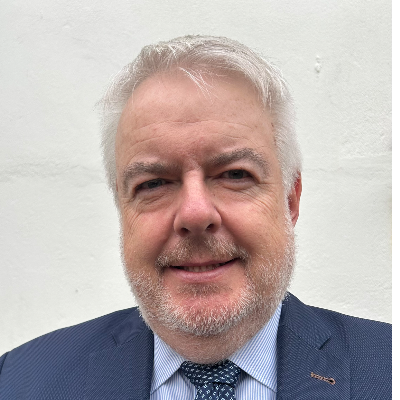
We go to the Speakers List and the first is Lord Carwyn JONES.
Madam Chair, thank you very much indeed.
Could I just inform the Parliamentary Assembly that there is a book written in the English language by a professor called Mr Eric Hobsbawm. He was a history professor and he wrote a book called the Age of Empire. It's meant to be a work of history, but for some, I think it's meant to be a manifesto for the future, given the world that we live in.
The system of international law is as old almost as humanity itself. Ancient civilisations have customs of war. The Romans had the jus gentium, the natural law between peoples. After the carnage of 1914 to 1918, we saw the Treaty of Versailles imperfect and open to criticism, though of course it was. We saw concepts such as self-determination being mentioned for the first time by President Woodrow Wilson.
After the Second World War, we saw the United Nations established, we saw the Universal Declaration of Human Rights, the Refugee Convention, this Convention, the Convention of the Law of the Sea, and institutions of international justice being established.
And why do we have those rules? Why have those institutions?
There are many of us who remember that it was believed that Europe in the 1990s was on an inevitable path to democracy and freedom. It hasn't quite worked out that way. We see what happens in some parts of Europe, such as of course in Ukraine at this very moment. It's why we have international rules and international rights.
And those rights are under attack. Freedom for some is only for those who hold the same view as themselves. There are some people who want to jail or sue – sensitive souls – who want to jail or sue people who value their own freedom, but trash the freedom of others.
There is a threat that we face, a threat that might becomes right. The world is dominated by great powers, where international institutions are ignored or attacked. A world of spheres of influence, a world of the age of empire.
That's why it's so important to defend our rights and institutions so that they endure; because the alternative is to return to a dark past that we spent the last 70 years trying to escape.
[Applause]
Finlande, SOC, Présidente de l'Assemblée
16:36:09
Thank you.
And then, unfortunately, the last speaker on this topic will be Ms Marianne BINDER-KELLER, Switzerland.
Madam President, ladies and gentlemen, the international legal system is the foundation of an international order.
The international legal system forms the foundation of an international order. It guarantees stability, predictability and peaceful co-existence between states. A matter, of course, to which we had become accustomed, especially in the Western constitutional states after the Second World War, and a matter, of course, that seemed to be established after the fall of the Berlin Wall.
Mr PUTIN's crimes in an independent neighbouring country have overturned these self-evident facts. They have shown how sensitive our humanitarian achievements are, especially when you look at all the chatterboxes in the West of all places who talk after the Russian president. They are sawing at the branch on which we are sitting, the branch of a secure legal system, our guarantee of mutual trust. Without this, the law of the T. Rex prevails, which senselessly eats up everything, including its own livelihood.
Legal certainty is fundamental, and I cannot fail to mention the disturbing speech by the American President, who is calling into question a set of values for which the whole of Central America bears responsibility after the war. Mr TRUMP is questioning this legacy by claiming, for example, that the USA never needed NATO. We know otherwise and that hundreds of soldiers have lost their lives. We know that he said "The only thing I want is a piece of ice".
So where are we? In kindergarten. I'll stop talking about this speech, but I'm worried about the chatterboxes who are also talking after him. They are sawing at the branch we are sitting on. I would like to point out that there is also the speech by the Australian Prime Minister or the Californian Governor. These show that we have to stand up and speak out, have courage. We have a responsibility, even if we are a little breathless at the moment. Let's take a breath and stand resolutely for freedom and justice.
(Undelivered speech, Rules of Procedure Art. 31.2)
Dear colleagues,
The international justice system established in Europe was designed for states that generally recognised the rule of law and limits on power, and were prepared to be limited by it.That system no longer corresponds to the political reality it is meant to regulate.
After the collapse of the Soviet Union, a vast new political space emerged where democracy and human rights did not need to be reformed, they had to emerge. However, instead of re-formatting the system, Europe simply extended old institutions to new realities.
It was at this point that new categories entered international justice: compromise, geopolitical expediency, and the balance of interests. Politics began to limit law, whereas law was created to limit politics. As a result, the number of mature democracies has declined in recent decades. This demonstrates that existing human rights protection mechanisms have ceased to fulfil their transformative and restraining function.
Today, international justice increasingly records catastrophes but fails to prevent them. A system created to protect individuals from the state risks becoming a system that protects states from accountability. This is precisely the situation we wanted to avoid when we raised the issue of the ethnic cleansing of Armenians in Artsakh in this Hemicycle.
The ethnic cleansing of Armenians marks the moment when international justice ceased to be a mechanism of protection and became a backdrop for accepting a reality created by force. We saw how the destruction of the rights of an entire population was translated into the language of “difficult but necessary compromises.” How responsibility was replaced by consequence management. How the language of law was supplanted by the language of geopolitical realism.
Dear colleagues,
Artsakh revealed more than the tragedy of one people. It demonstrated what the international justice system has become. Europe has effectively accepted a reality shaped by force and set a dangerous precedent: when a situation reaches an impasse, the law ceases to restore justice; it begins to serve the consequences.
Such precedents do not remain local. They shape the pattern of future crises. Where the law ceases to restore justice, the future is shaped not by norms, but by possibilities. This is not only about the Armenian people. It is about the future of Europe, including strategically important regions such as Greenland.
Today’s discussion is not about the past. It is about the rules by which Europe will live. We have to remember: international justice suffers when it is violated. But it dies when the consequences of violations are accepted as political reality.
Speech not pronounced (Rules of Procedure, Art. 31.2), only available in French.
(Undelivered speech, Rules of Procedure Art. 31.2)
Madam Chair, Esteemed colleagues,
As members of the international community, we share a responsibility to uphold the rule of law, protect fundamental rights, and ensure that justice mechanisms remain credible, impartial, and effective.
In this spirit, as the Republican People's Party, we believe Turkey’s engagement with the international justice system should be rooted in genuine partnership, one where international institutions help to strengthen the judiciary, and where Turkey honors its obligations despite political and security pressures.
This engagement must also prevent the abuse of courts for political ends and the exercise of lawfare, so that no leader like Ekrem İmamoğlu faces detention through politicized charges, and figures such as Osman Kavala and Selahattin Demirtaş are not deprived of their freedom in defiance of international human rights standards.
While the Turkish government maintains that domestic legal processes must be respected, it is equally important to recognize that the international justice system functions as a safeguard. Institutions like Strasbourg Court play a vital role in guiding member states towards full alignment with shared principles.
However, safeguarding international justice system also requires reciprocity. International mechanisms must operate impartially, avoid politicization, and remain sensitive to the unique challenges that states face. Systems perceived as selective lose legitimacy, while those grounded in cooperation and proportionality grow stronger.
Dear Colleagues,
Safeguarding international justice is a shared responsibility and it requires open dialogue, mutual trust, and a commitment to justice that is both principled and practical.
Thank you.
Speech not pronounced (Rules of Procedure, Art. 31.2), only available in French
(Undelivered speech, Rules of Procedure Art. 31.2)
Dear President and Colleagues,
We are living through a transition.
The era of unipolar dominance is over, but a fair, inclusive, and institutionalized multipolar system has not yet emerged.
In such an environment, sovereignty and territorial integrity cannot be treated as diplomatic vocabulary, used when convenient, ignored when uncomfortable.
Nowhere are double standards more visible than in Gaza.
Even genocide may go unpunished, when perpetrators are politically protected.
Is international law not the greatest safeguard of the weak, one that once broken for one is weakened for all?
For years, externally engineered political interventions justified as "democracy promotion" have produced nothing but instability.
From Afghanistan to Iraq, from Libya to Syria and beyond, the pattern is unmistakable. Didn't we all know that the international rules-based order was actually asymmetrical?
Yet, the gap between rhetoric and reality was known, tolerated, and ultimately normalized.
The debates in Davos show that the criticisms Türkiye has raised for years are now being echoed in the Western world.
Those who constantly lecture others on values have long undermined the very values-based international system they claim to defend. Hypocrisy plain and simple.
When violations are justified or ignored elsewhere, it should not come as a surprise that the same disregard for law reaches their own borders.
We knew that selective exemptions and identity-based applications of international law…would erode its credibility globally.
We are deeply concerned! And Türkiye’s position is clear: not dismantlement, but reform of the international rules-based system to restore justice and legitimacy.
As President Recep Tayyip ERDOĞAN has emphasized: "The world is bigger than 5."
We will continue this principled struggle, to ensure a human-centred international order where the rightful are strong, not the strong deemed right.
Thank you.
Speech not pronounced (Rules of Procedure, Art. 31.2), only available in French
Speech not pronounced (Rules of Procedure, Art. 31.2), only available in French
(Undelivered speech, Rules of Procedure Art. 31.2)
Honourable President,
Dear Colleagues,
International justice aims to protect human dignity, uphold the rule of law, and prevent injustice.
Sadly, it is injustice that prevails.
Above all, the devastation in Gaza after September 2023 is inseparable from broader global injustices. Israeli attacks on Palestinians amounted to war crimes and genocide.
Palestinians have been suffering from the Israeli oppression and persecution for long decades.
It shows how selective enforcement of international law and justice could cause immense human suffering on this scale.
Another pressing issue is the state of migrants and refugees in Europe. Millions flee war and poverty in search of safety. Instead of protection, many face detention and ill-treatment, pushbacks at borders and sea.
These are just two clear examples on how lack of international justice could erode human dignity and cause profound human suffering.
We should not forget that when justice is selective, it loses its meaning. We must uphold human dignity without exception.
Thank you.
(Undelivered speech, Rules of Procedure Art. 31.2)
Safeguarding the international system of justice is indispensable to upholding the rule of law, protecting human rights, and preserving peace and security in Europe and beyond.
For the Council of Europe, this commitment is rooted in the European Convention on Human Rights (ECHR) and given effect through the judgments of the ECHR.
The authority of the Court, together with the execution of its judgments under the supervision of the Committee of Ministers, is central to ensuring accountability, providing effective remedies, and preventing recurring violations.
In this context, inter-State cases and individual applications with inter-State character bare particular challenges, as their execution is often politicized. Regrettably, this has been evident in the supervision of the cases related to the situation in Cyprus, notably the property-rights cluster of the Cyprus v. Turkey case.
The Immovable Property Commission (IPC) was established by the Turkish Republic of Northern Cyprus (TRNC) in 2005 in accordance with the guidance provided by the ECHR in the Xenides-Arestis case, as an effective remedy examining the claims of the Greek Cypriots for restitution, compensation and exchange.
The ECHR has consistently confirmed the effectiveness of the IPC, recognizing compensation and exchange as effective alternatives to restitution and affirming the rights of current ownership holders notably in Demopoulos and Others in 2010 and in its several decisions and judgments thereafter, most recently on 10 June in 2025 in K.V. Mediterranean Tours Ltd. case. This assessment has been further reinforced by the Committee of Ministers, which closed supervision in several cases including the Loizidou case in 2022 and most recently in December 2025 in Saveriades and Ramon cases.
Nonetheless, the Greek Cypriot Administration has persistently politicized this issue in order to hinder the closure of the supervision process, while simultaneously adopting measures that constitute serious violations of the European Convention on Human Rights and international law. These include circulation of arrest warrants targeting Turkish Cypriots, coupled with the arrest and conviction of several foreign nationals. Greek Cypriot Administration clearly aims at undermining the economy of the TRNC and perpetuating the inhuman and unjust isolation imposed on the Turkish Cypriot people along with undermining the efficient presence of the IPC.
In light of the foregoing, it is high time that this esteemed Assembly addresses this issue in order to safeguard the integrity of the Convention system and uphold the authority of the Court.
(Undelivered speech, Rules of Procedure Art. 31.2)
Today, I speak before you as a representative of Mexico and also as a Latin American voice committed to the defense of international law. I do so to underline the urgent need to safeguard the international system of justice at a moment when its foundations are being tested.
This system is not a peripheral element of the international order. It is one of its most fragile and most essential pillars. Power must be constrained by law, and force cannot be the final arbiter of international relations.
Within this framework, the International Court of Justice plays an indispensable role. It offers States a lawful and peaceful means to resolve disputes while upholding sovereign equality, territorial integrity, and the principle of non-intervention. Sovereignty is protected, not weakened, when exercised within a shared legal order.
The situation in Venezuela represents a serious challenge to the foundations, the functioning, and the very purpose of international justice. When judicial decisions are disregarded and regional mechanisms are ignored, the belief that law can prevail over power is weakened.
The international system of justice exists above all to protect those who are least able to protect themselves. It was created to safeguard the weak and to place limits on the strong.
For Latin America, this defense carries particular weight. At the heart of our regional architecture stands the Inter-American Court of Human Rights, which is central to the system of justice in our region. It is often uncomfortable for States, yet vital for our societies. For this reason, our commitment to the Court as representatives of the people must be irrestrict and unwavering.
Defending international justice requires a voluntary renunciation of the unrestricted use of force. International justice represents a step toward civilization itself, one in which legitimacy flows from law and not from power.
The proposal is simple. We must inject new life into our regional institutions. We must reinforce our regional and national commitment to human rights. We must stand together to defend reason over force in every institution, every forum, and every public discourse.
For this reason, Mexico has categorically condemned any invasion of Venezuela. This position reflects a moral obligation rooted in the historical memory of Latin American peoples.
The erosion of the international system of justice advances through silence, selective compliance, and normalized exceptions. Each concession weakens a rules-based order and brings us closer to a world governed by force rather than law.
Safeguarding the international system of justice ultimately means defending the very idea of an international community. It means affirming that power must be accountable and that justice cannot depend on strength or influence.
This is the commitment we must renew today as parliamentarians, as representatives of our societies, and as a region that has already paid too high a price for the absence of justice.
(Undelivered speech, Rules of Procedure Art. 31.2)
The international legal order exists to ensure that the gravest crimes are subject to law rather than power. Courts, treaties and legal institutions were created to guarantee accountability even when it is politically inconvenient. Today, that foundation is under serious pressure.
The United States’ sanctions against the International Criminal Court (ICC) are a direct assault on the rule of law. By sanctioning ICC officials for performing their mandate, the US creates a chilling effect on international justice and signals that accountability will be met with retaliation. This is an explicit assertion of power over law.
Member States must act to protect the ICC and its staff. The Court is hosted in my country, in The Hague, a city that symbolises international justice. Following the US sanctions, Microsoft suspended services used by the ICC Prosecutor, showing how political pressure can translate directly into technical disruption. For this Council, founded to defend human rights, democracy and the rule of law, the intimidation of an international court strikes at our core principles. My question is: Why has the EU not activated legal instruments, such as a blocking mechanism, to shield the Court and its officials from extraterritorial sanctions?
What is happening to the ICC is a wake-up call. If courts can be constrained through digital dependency, the same can happen at all our justice systems. When courts are intimidated, it is not institutions but victims who are denied access to justice.
The independence of courts is a binding European standard. Safeguarding international justice requires more than political statements. It demands enforceable legal and technological safeguards. We must act now.
(Undelivered speech, Rules of Procedure Art. 31.2)
I grew up believing that progress was linear: that the great institutions built after the world wars to protect human rights and uphold the international rules-based order were permanent, immovable, and destined to carry ever more countries toward freedom and democracy.
I was wrong.
Civilisations rise and fall. The rules-based order that has delivered unprecedented peace, freedom, and human flourishing exists only because people believe in it, and are willing to defend it. We have never been more than a generation away from losing it.
Today, we are living through a new era of realism. An era in which the weak are scapegoated and the powerful are exalted. In which old alliances can no longer be relied upon, and universal human rights are quietly subordinated to the idea that might makes right.
This erosion is not happening at the end of a gun, but at the tip of a pen: the pen that casts a vote or signs an executive order. It is happening because people are willing to vote for it.
Across the so-called free world, we see leaders exploiting fear and insecurity, offering scapegoats and simplistic answers to complex problems in order to seize power. Once elected, they use the legitimacy of the ballot box to undermine the judiciary and dismantle the laws that constrain them.
We have seen this in the UK. During Brexit, a national newspaper shamefully branded judges who upheld the law as "traitors" and "enemies of the people". Today, the two parties polling highest for the next general election are committed not only to withdrawing from the European Convention on Human Rights, but to repealing our own Human Rights Act. I recently heard a Conservative defector to Reform justify this in the language of sovereignty: "Trust us to protect your rights," he argued. "You don’t need legal safeguards."
That argument should alarm us all.
We cannot allow this to continue. And the only way to stop it is at the ballot box. This is a battle for hearts and minds. But to win it, the institutions we cherish must not become our weakest point.
That is why we must take seriously the need for reform, ensuring our international institutions adapt to new challenges and continue to safeguard international justice. We cannot take their survival for granted.
(Undelivered speech, Rules of Procedure Art. 31.2)
Madame President,
Dear colleagues,
The difficulties encountered in implementing decisions and the impunity of perpetrators in the face of systematic human rights violations are seriously undermining the effectiveness and credibility of international humanitarian law.
Considering the developments in Gaza in particular, this situation raises deep and legitimate questions about the effectiveness and deterrent power of the international justice system.
In this context, ineffectiveness on the grounds of the Provisional Measures Decision issued by the International Court of Justice (ICJ) in 2024 has further highlighted the disconnection between international legal norms and their implementation.
Indeed, the systematic violation of fundamental principles of international humanitarian law in Gaza reveals the structural weaknesses in implementation in this area.
This situation points to not only a legal problem but also an institutional and structural problem in terms of establishing justice.
In addition, criticism that obligations accepted under international law can be interpreted flexibly and selectively, particularly in line with the political power balances shaped within the United Nations Security Council, is being expressed more and more strongly in the international public arena.
This situation seriously undermines the principles of equality, impartiality, and universality in international law.
In this context, the wisdom of the statement "The world is bigger than five" is once again clearly evident.
This statement represents a strong and legitimate demand for the current global governance and international justice architecture to be transformed into a more inclusive, fairer, and more accountable structure.
Finally, all these issues clearly demonstrate that the international justice system urgently needs to function more effectively, consistently, and reliably.
Meeting this need will only be possible by strengthening enforcement mechanisms and ensuring that decisions are applied without discrimination.
Thank you.
(Undelivered speech, Rules of Procedure Art. 31.2)
The system of international justice is a cornerstone of the international rules-based order, to uphold the rule of law, ensure accountability, protect human rights, and provide peaceful means for resolving disputes among states and individuals.
All states have a responsibility to respect international law, cooperate in good faith with international justice mechanisms, and comply with their decisions.
Nowadays, the system of international justice is facing an unprecedented challenge.
Weaker actors are expected to comply, while stronger ones evade accountability, undermine international institutions, or redefine the rules to suit their interests.
Unfortunately, this is no news for the Turkish Cypriot people. We have been living under isolations for decades, just before the eyes of Europeans. Our youth cannot compete at international tournaments, we do not have direct flights and we cannot travel with our own passports. We exist but we are invisible, by choice of the EU and others. Unfortunately, the European Union and Europe as a whole have turned a blind eye on us.
We were forced to abandon our homes and properties, and lived in enclaves in early 1960’s for more than a decade, following our forceful expulsion from the 1960 partnership Republic of Cyprus.
Since then, negotiations continued for decades without the Turkish Cypriots’ being given an international status.
In 2004, in spite of the overwhelming Turkish Cypriot approval and Greek Cypriot rejection of the UN Comprehensive Settlement Plan, which would ensure that a united Cyprus entered the European Union, Greek Cypriots became a member of the EU and Turkish Cypriots were left out in the cold. The Greek Cypriot administration became an EU member as the sole representative of the "Republic of Cyprus" while the EU acquis was suspended in North Cyprus until a settlement.
Recently, we have been facing a deeply concerning development involving a series of unlawful arrests initiated by the Greek Cypriot leadership. These arrests have targeted both Turkish Cypriots as well as third parties in North Cyprus, who have acquired property rights in accordance with the Convention-compliant property regime.
This is an act of instrumentalization of legal tools for political ends.
The recent decision of the Court of Cassation in France, rightfully put a stop to these charges against a Turkish Cypriot citizen, which is well-received in Northern Cyprus.
Safeguarding international justice therefore means defending it against double standards and political interference. Without equal application of the law, the international order loses legitimacy.
Speech not pronounced (Rules of Procedure, Art. 31.2), only available in French
(Undelivered speech, Rules of Procedure Art. 31.2)
International Courts constitute a fundamental part of International Law and the rules-based international order that we are here to defend.
And as such, International Law is not optional. It is not like a supermaker. You cannot select what you like from one shelf and ignore the others.
Equally, you cannot choose which judgments we like or not, solely based on political beliefs, geopolitical alliances and ideological prejudice.
This is the reason why we cannot tolerate statements by Government officials undermining the institutional status of International and European Courts. The International Criminal Court, the International Court of Justice or even our own judicial instrument, next door, the European Court of Human Rights. We are the guarantors of its independence, integrity and resolve. We cannot afford Governments casting doubts over its authority and legitimacy.
After all, this is a matter of consensus. A common agreement. That in order to live in a peaceful and secure world, we have to abide by certain rules and obligations. That states and international actors should limit themselves, regulate their behaviour and face consequences for every breach they provoke -no matter how strong or influential the perpetrator may be.
In any other scenario, we risk opening the gates to global instability. It is the Law of the Jungle waiting out there for us. All of us. Big and small countries alike.
And this simply cannot be an option for any of us.
Finlande, SOC, Présidente de l'Assemblée
16:38:46
Thank you.
I must now interrupt the list of speakers. The speeches of members on the Speakers list who have been present during the debate but have not been able to speak, their speech may be given to the Table Office for publication in the Official Report. I remind colleagues that type-written texts can be submitted, electronically if possible, no later than 4 hours after this time.
I remind you that at the end of the current affairs debate, the Assembly is not asked to decide upon a text, but the matter may be referred by the Bureau of the Assembly to the responsible committee for a report.
Finlande, SOC, Présidente de l'Assemblée
16:39:22
So a new topic. We go to the joint debate on the 'Progress Report of the Bureau of the Assembly and the Standing Committee', Document 16323.
With this, we will consider the report from the ad hoc committee on 'Observation of the early parliamentary elections in the Kyrgyz Republic'.
We shall also consider the report from the Monitoring Committee on 'The progress of the Assembly's monitoring procedure'.
The 'Progress Report of the Bureau and the Standing Committee', Document 16323 will be presented by Mr Iulian BULAI.
The second report is titled 'Observation of the early parliamentary elections in the Kyrgyz Republic', Document 16319 and will be presented by Mr Georgios STAMATIS.
The final report on 'The progress of Assembly's monitoring procedure', Document 16316, will be presented by Ms Zanda KALNIŅA-LUKAŠEVICA.
I will bring proceedings to a close around 5:30 p.m., so I will need to interrupt the list of speakers again around 5:15 p.m. to allow time for replies and for the vote.
So if we are ready, the speaker seems to be ready.
So I call Mr Iulian BULAI, rapporteur, to present the first report: 'Progress Report of the Bureau and the Standing Committee'.
You have 7 minutes and then three after to reply after debate. Mr Iulian BULA, the floor is yours
Thank you so much, Ms President.
I want to congratulate the newly elected President Petra BAYR, despite her not being here now.
I wish her good luck on behalf of all of us, not only from the group that I represent.
It's always a bit of a challenge to present the so-called Progress Report. It's a very technical report, rather boring. It's just information on what has technically happened in the past month since the last Assembly. But it's sad to actually let you know that there's not that much progress which we see around. It's rather the opposite.
Dear colleagues,
I have the responsibility of presenting the Parliamentary Assembly's progress report at an unprecedented time on the international stage.
These are serious times.
The principles governing the international system are changing.
Some speak of a new world order, while others see it primarily as disorder.
What is certain is that the international system that emerged from the Second World War is being challenged by the major powers, which are driven by imperialism, the thirst for power and the pursuit of economic interests – often personal – at the expense of the rules.
Dear colleagues,
We are already accustomed to Russian foreign policy being based on coercion, confrontation and intimidation.
But today we see that our powerful ally, the United States, is turning to the same approach, questioning the principles of sovereignty, borders and the rule of law, destabilising the rules of international cooperation, making unilateral decisions. This creates institutional and communicational fog and unpredictable grey zones.
This situation emboldens autocrats, proponents of illiberalism who hope to be befriended by great powers. Maybe the great powers will even like them, until they don't. In this approach, there is no longer a distinction between democracies and dictatorships. The same bargains apply to all.
This is particularly important for our house that we are used to calling the house of democracy, human rights and rule of law, because it goes explicitly against what the Council of Europe stands for, against the European approach and values.
The global disruption calls into question the role and future of multilateral organisations and our Council of Europe too. Today there is a strong temptation for many countries and political leaders to go along with, to accommodate great powers, abandoning our values-based approach. We hear these voices, including in this very Assembly, saying that it is cheaper and easier to make deals, whether with stronger players or with autocrats thinking only about short-term interests. These voices tell us that now is a good time to uphold our values. The liberal world order is over. Let's overlook the violations of our standards and keep countries in our organisation. Let's reduce democracy to the act of voting, even if it is a simulacrum, and say that human rights and rule of law are not essential at this dark moment marked by geopolitical instability. This is what they say.
These calls are tempting, but accepting them would be a mistake. First, because an international system solely based on power and domination fosters unpredictability, which in the long-term is much more costly, risky and dangerous than a well functioning multilateral system.
Second, the system is all the more dangerous for middle-sized and small countries, for our European countries, namely, who individually, in bilateral relations with great powers, will always be in in a weak position. Our Ukrainian friends are paying a horrible price for this lack of unity right now, in front of our very eyes.
But this dark future is not set in stone. That is why I salute those leaders in Europe, Canada and beyond who refuse to comply, who refuse to go along, who, as Mr Emmanuel MACRON put it, prefer respect to bullies, and the rule of law to brutality.
In Europe, no country can do it alone. When we are united around a common project based on our values, we can make a difference. Together, we can make a difference even when we are up against a huge country. Look at the failure of the Russian attempt to submit Ukraine and Ukrainian people aspiring to the European course. Look at Greenland, our unified and strong message that Greenland is not for sale seems to have stopped, at least for now, Mr Donald TRUMP's claims to annex it.
If we are doing that, we can do a lot. We just need to stay true to ourselves and to our values. And can we just imagine how powerful and sovereign a more federal Europe would be? Just imagine that.
Finally, it would be a mistake, particularly for the Council of Europe, to go along and submit to the pressure of geopolitics and abandon our mission. And this mission is to bring the people of Europe closer together, based on a clear commitment of each participating state to uphold the values of democracy, human rights and the rule of law.
The clear commitment is key in this issue. As parliamentarians of European states during this difficult moment, we need to stop embellishing reality. Democracy on our continent will neither improve nor survive just because parliamentarians are sitting in this Hemicycle. We are not here just to have dialogue. These days, there are plenty of platforms for dialogue. We are here to uphold our country's commitment not to participate in the rituals and avoid calling out the gaps between rhetoric and reality, as Mr Mark CARNEY so rightly put it in his speech in Davos last week.
Today, two delegations are absent from this Hemicycle. We can regret it. I do. But we cannot compromise on our values just to have them back. It makes no sense. If democracy is under threat in a Member State, let's say it, and let Member States show their commitment to making progress. Let's have institutional boldness and be firm, do not give in. Only this way will we preserve our institutional credibility.
Because let's be honest, there is a backsliding in Council of Europe Member States, in Georgia and Azerbaijan who are absent from this Hemicycle. We haven't seen a monitoring report on Serbia for more than 12 years and we know that democracy is suffering in that country. The recent constitutional amendments in Slovakia go against all recommendations and European commitments of this Member State.
Finlande, SOC, Présidente de l'Assemblée
16:48:31
You will have — it was automatic — you will have 3 minutes in the end. Put it there.
Thank you so much. Yes, we will want to hear the rest in your 3 minutes at the end.
Next one is Mr Georgios STAMATIS, rapporteur, to present a second report on the observation of early parliamentary elections in Kyrgyzstan.
Thank you.
Dear President, dear colleagues,
The Parliament of Kyrgyzstan, as you know, has had the status of 'partner for democracy' with the Assembly since 2014.
In its Resolution 1948, the Assembly underlined that progress in taking forward reforms with the prime aim of this partnership and should constitute the benchmark for assessing its efficiency.
Against this backdrop, the Assembly stressed the importance of free and fair elections as a cornerstone of a genuine democracy and expressed its expectation to be invited to observe elections in Kyrgyzstan.
Following the invitation by the Speaker of the Kyrgyz Parliament, I had the honour to lead the 11-member Parliamentary Assembly of the Council of Europe delegation during this election observation mission. We were accompanied by representatives of the Venice Commission, who provided us with precious legal expertise, and of course, by staff from the Election Division and the Committee on Political Affairs and Democracy.
Dear colleages,
We concluded that Kyrgyzstan’s early parliamentary elections were efficiently run, but the restrictive campaign environment stifled candidate and voter engagement. While the fundamental freedoms are protected by the constitution, they are increasingly limited in practic. Recent changes to the legal framework weakened the involvement of political parties in these elections. The election administration enjoyed public trust in its technical ability to prepare the elections and made efforts to increase transparency, they were influential in some key aspects.
We noted that the election administration enjoyed confidence in its technical capacity and introduced measures to enhance the transparency of its decision-making.
While there were competitive campaign activities in some districts, significant financial disparities between candidates affected their ability to compete on a level playing field.
The Parliamentary Assembly of the Council of Europe delegation recalls that an election and its observation involve more than just polling day; they constitute a multi-stage process that needs to be analysed and evaluated in order to assess the entire electoral process.
The following specific issues are of key importance for strengthening democracy, the rule of law and respect for human rights and fundamental freedoms in Kyrgyzstan.
Free and fair elections should be held in accordance with relevant international standards, and improving the electoral legal framework in co-operation with the Venice Commission.
It is important to enhance public interest in, and awareness of, the democratic process, as well as ensure a higher level of participation in elections and involvement of citizens in political life.
Public monitoring of elections by independent observers should be strengthened, including the capacities of domestic observer networks.
The Assembly notes with concern that a number of irregularities and shortcomings need to be dealt with by the country’s authorities as soon as possible.
The delegation therefore encourages the authorities of Kyrgyzstan to show strong political will to address the problematic aspects of the electoral process and ensure proper implementation of the existing legislation; implementing the recommendations for further improvement of the legal framework governing elections issued by the Venice Commission and Office for Democratic Institutions and Human Rights (ODIHR); ensure that key elements of the electoral system are not revised shortly prior to the elections, in line with the Venice Commission Code of Good Practice in Electoral Matters; take measures to eliminate reasons for fears of retribution for political activity during a campaign; take strong measures to deter vote-buying; and also take measures to further increase the participation of women in political life; also, pay special attention to ensuring the meaningful participation of youth in political life, and also people with disabilities in the Kyrgyz Republic to have the access to vote in the election.
The Assembly stands ready to work with the authorities of Kyrgyzstan to address the issues highlighted.
We also reiterate our appeal to the newly elected Parliament of the Kyrgyz Republic to step up its co-operation with the Assembly, reaffirm its commitment to the aims of the partner for democracy status and take full advantage of the opportunities offered by this status, in order to ensure compliance with the political commitments, as set out in the 2014 Resolution.
I would like to recall that the 'partnership for democracy' is currently undergoing review by the Committee on Political Affairs and Democracy.
I am looking forward to sharing my insights from the mission with colleagues in due time.
Finally, we strongly encourage the Kyrgyz Republic and the Kyrgyz authorities to boost co-operation with the Venice Commission in order to bring the country’s laws closer to international standards and to implement the previous recommendations, in particular with regard to the elections, and those included in the 2021 Joint Opinion on the draft constitution of the Kyrgyz Republic.
Thank you.
Finlande, SOC, Présidente de l'Assemblée
16:53:59
Perfect timing. Thank you so much.
The next one is Ms Zanda KALNIŅA-LUKAŠEVICA, rapporteur, to present the third report of the progress of the Assembly's monitoring procedures.
You have 7 minutes, please.

Lettonie, PPE/DC, Rapporteure
16:54:24
Thank you, President.
Dear colleagues, dear friends,
This is the second time I present you the report on the 'Progress of the Assembly's monitoring procedure'.
In a time when the international rules-based order is being questioned and countries are openly rejecting not only the supremacy, but also the importance of international law, adherence to the principles enshrined in the statutes of the Council of Europe and to the membership obligations of this organisation are needed more than ever.
The Monitoring Committee monitors the fulfilment of the membership obligations of all member states, and strives to maintain an open and constructive dialogue with all member states, subject to one of its monitoring procedures. This work not only remains essential and relevant, but it is increasingly so. It has therefore been a true pleasure to chair and guide this Committee over the last two years.
In close co-operation with the rapporteurs and Committee members. I have striven to ensure that the Committee implements its work in the most efficient and impartial manner possible, even in these complex times, and that the fundamental principles of this organisation are respected and adhered to. This has not always been an easy task, as reflected in the report before you.
Last year, the Committee's work has been dominated by the dramatic democratic backsliding in Georgia which threatens the country's democratic foundations. The Committee organised numbers, exchanges of views and hearings on the developments in Georgia, and the rapporteurs made two visits to the country.
In addition to the report on the credentials of the Georgian delegation, the Assembly debated two reports on Georgia under urgent procedure prepared by the monitoring rapporteurs.
The Georgian delegation's regrettable decision to resign from the Assembly has clearly not stopped the Committee from doing its work in relation to Georgia.
Therefore, both Georgia and Azerbaijan have chosen not to present delegations to the Assembly. This will not prevent the Committee from continuing to monitor developments in these countries and maintain a dialogue with all political and political forces.
The Committee also prepared a report under urgent procedure in response to the developments in Türkiye and prepared normal monitoring reports in Hungary, Bulgaria, Bosnia and Herzegovina and North Macedonia. In a welcome development, the Assembly decided to end the post-monitoring dialogue with Bulgaria.
And if the Assembly follows the Committee's recommendation, as I sincerely hope it will, the post-monitoring dialogue with North Macedonia will also end later this week.
This underscores the positive impact that the work of the Committee and its dialogue with the authorities of the countries it monitors can have.
The rapporteurs have made several visits and prepared several information notes on the countries under their responsibility. The country sections contained in this progress report, and the corresponding paragraphs in the draft resolution, have been prepared by the rapporteurs based on their work over the last year. So they, and only them, should receive full credit for this.
As a rapporteur for Moldova, allow me to draw your attention to this incredibly resilient country. In a year marked by democratic erosion and mounting pressure from authoritarian powers, Moldova offered something we too rarely get to celebrate: democratic resilience that held, despite determined and unprecedented attempts to influence the political process from abroad. Moldovan institutions, civil society and citizens safeguarded elections that ultimately reflected the will of the people, not the preferences of the Kremlin. This matters for Moldova and it matters for Europe.
As Moldova currently holds the presidency of the Committee of Ministers of the Council of Europe, our rules rightly prevent the presentation of a monitoring report during the presidency. But I sincerely hope that soon after it ends, we will be able to assess and acknowledge Moldova's progress in implementing reforms, strengthening the rule of law and defending democracy.
Dear colleagues,
This progress report demonstrates that it has been a busy year for the Committee, and all signs indicate that next year will be similarly busy for the Committee and its rapporteurs.
I therefore wish my successor, Ms Elvira KOVÁCS, every success with her important task; I'm really confident that she will fulfill it to the highest standards.
I would like to conclude by thanking all the rapporteurs, as well as Committee members, for their co-operation and the trust they have placed in me over the last two years.
Of course, I would like to thank the brilliant Secretariat of the Committee under the leadership of our colleagues, Ms Agnieszka NACHILO and Mr Bas KLEIN. So without them, my work would have been impossible.
I will continue my work as co-rapporteur for the Republic of Moldova. I look forward to continuing our co-operation on this important file.
Dear colleagues,
It has been an honour to chair the Monitoring Committee in times when its role is becoming not only more challenging, but actually also more and more important.
Therefore, once again, I thank you for all your co-operation and support.
I invite you to support the progress report prepared by the Committee, that underlines all the challenges we see, but also the progress we can achieve if we work together in the spirit of democracy, rule of law and human rights.
Thank you so much.
Finlande, SOC, Présidente de l'Assemblée
17:01:01
Thank you.
We progress to the speakers on behalf of the political groups.
The first one will be Ms Belén HOYO, the Group of the European People's Party.

Espagne, PPE/DC, Porte-parole du groupe
17:01:18
Thank you very much, Madam President.
Ladies and gentlemen,
Democracy is undergoing difficult times. We have radicalism, polarisation, we have foreign interference and these all attempt to undermine our rule of law on a daily basis. We have a number of cases that have been addressed in the various reports of our Monitoring Committee. I would even include territorial integrity for our nations, which is also under threat.
My group would like to call out Russia's invasion of Ukraine once again. I would also like to say that the situation in Greenland is an issue that we will be discussing further this week.
Today, the rules-based international order is under threat. Our institution is directly affected by this reactionary and anti-democratic wave. The European Convention on Human Rights is beginning to be called into question by some. People forget that the Convention is at the heart of our European system of rights and freedoms. It is being called into question and attacked. Our role is to make sure that we safeguard it.
And the same thing holds true for the decisions handed down by the European Court of Human Rights (ECHR). In many cases, the ECHR is the last resort for a lot of vulnerable people in our societies. The Assembly must continue to pay close attention to all of these challenges, even if they occur elsewhere in the world.
We very much hope that in the Middle East we will see peace and democracy, particularly in Iran. The dictatorship is massacring its own people. This Assembly has debated the Middle East a lot over the last few years. We cannot turn a blind eye to this emerging situation.
Also, I think it is important for us to continue to strengthen our relations with Latin America, and in particular, we need to look towards Venezuela. We very much hope that the new situation will unfold and pave the way for democracy and freedom in this country.
And finally, Madam President, ladies and gentlemen, allow me to refer to the situation prevailing in my own country, Spain. The Venice Commission has been crystal clear in this regard. Any kind of system, such as the one that we have, actually undermines European standards. The model defended by the government is actually leading to the politicisation of the justice system. On the other hand, we also need to make it clear that we do have problems regarding the fact that not enough is done to fight corruption. I refer you also to the Group of States against Corruption (GRECO). GRECO has said that Spain does not fully implement the recommendations that have been handed down by GRECO. There are 19 recommendations, and they have not been fully implemented at all.
So this Assembly needs to continue to stand up for democracy, and my political group will certainly continue to fight for these such important issues.
Thank you.
Finlande, SOC, Présidente de l'Assemblée
17:04:21
Thank you.
On behalf of the European Conservatives, Patriots & Affiliates, Mr Zsolt NÉMETH.

Hongrie, CEPA, Porte-parole du groupe
17:04:37
Madam President, dear colleagues,
I would like to congratulate every newly-elected official in our Assembly, Ms Elvira KOVÁCS, all the other committee chairs and other officials.
I would like to reflect on the election of the Parliamentary Assembly of the Council of Europe's President.
The European Conservatives, Patriots & Affiliates did not support the Socialist candidate, as you could follow. But it was nothing personal, I would like to underline. On the contrary, we would have liked to support the Socialist candidate because until now, in the past years, there was an agreement and we always supported the agreed candidates.
We couldn't support her because, unfortunately, in the past two years, since the presidency of Mr Tiny Kox, no agreement among the five political groups was achieved. Two political groups, the Socialist Group and the Group of the European People's Party (EPP), agreed, but the two political groups are not the Parliamentary Assembly.
I would like to underline here that as far as the EPP was concerned, we experienced willingness to have an agreement, to be fair.
But even one sentence would have been enough to the European Conservatives, Patriots & Affiliates, because I have participated in these discussions, and the one sentence should have sounded like that: 'Yes, the third largest group of the Assembly will follow in case we are able to agree on the person'. Unfortunately, this sentence was not expressed by our Socialist colleagues.
The third largest group in this organisation, at this stage, doesn't have the right to have a candidate for the presidency of the Parliamentary Assembly.
Let us remember this situation, dear colleagues. We were not the ones who broke the agreement. But we should work now – that is our position – together to find an appropriate agreement, a consensus going back to that and start the work together and start to talk to each other.
I wish ourselves, in the coming period, good collaboration. Let's restore, as [much] we can, the level of democracy in the Parliamentary Assembly.
Thank you very much for your attention.
Finlande, SOC, Présidente de l'Assemblée
17:07:47
And, it was maybe loosely part of the Agenda, but at least it was an open forum to have your minutes.
Next one will be on behalf of the Alliance of Liberals and Democrats for Europe, Mr Damien COTTIER.

Suisse, ADLE, Porte-parole du groupe
17:08:03
Thank you, Madam Chair.
"There are decades where nothing happens; and there are weeks where decades happen". We all felt like we were living this famous quote at the beginning of 2026, witnessing a breakdown in the international system, but a breakdown that came at the end of a long period of profound change, particularly in the political attitudes of the major powers and their attitude toward international law.
A few days ago, I was in Davos, where many leaders, particularly from European countries, acknowledged this rupture. The Prime Minister of Canada found the right words to describe it, rightly pointing out that it was regrettable, but that we should not dwell on it, and suggesting ways to respond. Essentially, Mr Mark CARNEY emphasised that nostalgia is not a strategy.
So we must strengthen Europe, the European continent, in its defence, in its politics, in its political weight, in its economic attractiveness, and in the diversification of its partnerships. This is an attitude that combines respect for essential principles with pragmatism in this new world that has been proposed, and it makes sense.
And then, we must also strengthen democracy, democratic security as Secretary General, Mr Alain BERSET calls it, who is proposing this New Democratic Pact for Europe, which we support and for which our Assembly has set up or will set up an ad hoc Committee.
All these developments underscore the importance of the work of the Council of Europe, the fundamental purpose of this institution and its Parliamentary Assembly. All of this was confirmed two and a half years ago by the declaration of the heads of state and government at the Reykjavík Summit. And this must encourage us to work more, even harder, and even more closely together and with our partners, those who want to, and in particular with the countries that want to join this organisation, and here I am thinking of Kosovo, for which it would be good if the Committee of Ministers took up the matter again.
We are talking here about the progress report of our institution. We must make even more progress, reaffirm our principles and strongly reiterate that Greenland belongs to Denmark and is neither for sale nor negotiable, and that Ukraine must be supported by all means until a just and lasting peace is achieved, but also until a dignified and solid peace can be negotiated, and that includes efforts in the field of international justice. We discussed this earlier. We have good news from the International Claims Commission.
Well, we also need good news from the Special Tribunal for the Crime of Aggression against Ukraine that our Assembly called for more than two years ago.
Finlande, SOC, Présidente de l'Assemblée
17:11:07
Thank you.
The next speaker, on behalf of the Unified European Left, is Mr George LOUCAIDES.

Chypre, GUE, Porte-parole du groupe
17:11:17
Thank you very much, Madam Chair. Dear colleagues,
I will focus on three interconnected issues that are central to this period and to the responsibility of this Parliamentary =Assembly.
First, preserving the integrity of the European Convention on Human Rights system.
Across Europe we see increasing pressure to weaken the authority of the Convention and the Court, often under the pretext of managing migration. We just listened to our UK colleague.
This is a dangerous path, dear colleagues. The Convention is not a problem nor a refuge for failure. It is the safeguard that prevents fear from becoming policy.
Curtailing freedom of expression, questioning binding judgments or carving out exceptions under political pressure does not strengthen democracy. It dismantles it.
Undermining the Convention in the name of expediency means legitimising authoritarian reflexes, rather than confronting them.
Second, the geopolitical context.
Dear colleagues,
We are facing a blunt confrontation between international law and the law of the mighty.
Under Mr Donald Trump, the United States openly discussed a century of international legal principles. The so-called "Board of Peace" cynically bypasses the United Nations system and erases the Palestinians, while Gaza continues to suffer devastation without accountability. Claims to acquire Greenland revive coercive territorial logic that Europe should have buried long ago.
This is not realism, dear colleagues. It is geopolitical bullying. The Council of Europe must respond clearly and firmly, defending the UN Charter, multilateralism and the primacy of law without hesitation or subservience.
Third, in relation to social rights, another issue that we are going to discuss in this session.
Social rights remain fragile, 65 years after the European Social Charter.
Austerity, deregulation and inequality weaken social cohesion and democratic trust. Defending democracy means enforcing social rights, not only commemorating them.
These three issues are not separate challenges: attacks on human rights, the erosion of international law and social injustice are part of the same crisis.
The Assembly has a duty to confront it with clarity and resolve.
Thank you.
[Applause]
Finlande, SOC, Présidente de l'Assemblée
17:14:11
Thank you.
And then the final speaker on behalf of the Socialists, Democrats and Greens Group is Mr Gerardo GIOVAGNOLI. Please.

Saint-Marin, SOC, Porte-parole du groupe
17:14:20
Thank you, President.
The election in Kyrgyzstan raised a fundamental question that is useful also in other cases. Can we assess that country's election as we would those of a Western European state?
Kyrgyzstan is a country that over the past year has undergone multiple radical changes to its electoral law. In its latest version, before the election, the law required a payment of €3,000 to stand as a candidate, while the average monthly salary is only €450. It was a law that effectively made it impossible for any party to win the election, despite the fact that only one organised party exists, the president's party.
It is a country in which the president has concentrated power around himself and the head of the security services, and where the overwhelming majority of those elected describe themselves as independent. It is a country where a few years ago an institution was created that revives a tradition interrupted more than a century ago, the Kurultai, which is considered very important, yet whose functions and selection process remain unclear, except that it appears to be heavily influenced by the president.
On the other hand, Kyrgyzstan has experienced three more revolutions in just 15 years, with the ousting of two presidents in 2005, in 2010 and a resignation in 2020, events that brought casualties and suffering. All this must be viewed in light of the country's 70 years within the Soviet Union, but also considering that it was once regarded among the Central Asian republics as the happy island of democratic progress and human rights.
It is a country where many interlocutors have expressed to us their exhaustion with endemic instability and their belief that the party system was to blame for generating it. This has instilled in many citizens a sense of resignation and a perception that trading fewer freedoms for greater stability and more power in the hands of the leadership for less confusion is legitimate.
Kyrgyzstan is not a member of the Council of Europe, but rather a partner for democracy and in many of the States, mandated by the candidates and media representatives, I sensed a kind of appeal not to abandon them, despite the fact that democratic conditions and the rule of law are deteriorating.
I would say that, all the more for this reason, we must be both understanding of what is happening and unwavering in our values and ultimately even more present and proactive, offering both support and encouragement to improve the situation in a country where many citizens still feel drawn to the justice and rights embodied by the Council of Europe.
Thank you.
Finlande, SOC, Présidente de l'Assemblée
17:17:16
Thank you so much.
That was all the speakers on behalf of the political groups.
Then on the list of the speakers we all have, firstly Lord David BLENCATHRA, for the presentation of the activity report on the observation of the Parliamentary Assembly on elections.
Madam Vice-President and colleagues,
I'm presenting the annual report on the Assembly's election observation activities in 2025 in my capacity as Chair of the Parliamentary Alliance for Free and Fair Elections.
In 2025, the Parliamentary Assembly of the Council of Europe participated in 11 pre-electoral and election observation missions in five countries: Kosovo, Albania, Poland, the Republic of Moldova and the Kyrgyz Republic.
Our delegations remain strong and diverse. Women's participation continued to improve, reaching 39.6%. Yet we're still not where we should be; only one of the six observation missions was led by a woman. Political groups must keep addressing this gap with determination.
The Network of Election Observers held its inaugural meeting on 29 January and was renamed the Parliamentary Alliance for Free and Fair Elections.
In that meeting we set certain clear priorities:
- to broaden observation where instability threatens integrity;
- to develop methodology and guidance for out-of-country voting to strengthen post election follow-up;
- to build expertise on digital elections, cybersecurity, AI and social media threats;
- develop methods to assess pre-election activities, not just on polling day, and to protect observers;
- and again, to promote gender balance and participation and leadership.
Now these priorities, colleagues, reflect what we repeatedly saw in 2025: that is elections unfolding amid acute polarisation, foreign interference, industrial scale, often AI-enabled disinformation, cyber incidents, opaque financing and late legal changes that weakened legal certainty.
As we've seen all too often, technically orderly polling day procedures co-existed with pre-election conditions that curtailed genuine competition.
Observers also faced pressure and constraints, confirming the need to protect the observation function itself.
So, colleagues, for 2026, the report proposes a pivot.
First, earlier and deeper pre-electoral scrutiny, so our assessment rests on the full electoral environment and not just on polling day.
Second, we should translate the recently adopted Council of Europe Steering Committee on Democracy (CDDEM) parameters for implementing the Reykjavík Principles into a practical observer checklist; a concise blueprint to help us state more clearly how free, how fair and how resilient an election was, and ensuring our conclusions map directly to our Council of Europe standards. We should invite the Chair of the Alliance to brief us in the April 2026 meeting.
Third, we must develop a solid out-of-country voting methodology, so that external voting is assessed to the same standards as domestic voting, building on the work of our Venice Commission friends.
Fourth, we should ensure observer protection, including through the joint tripartite hearing in Paris on the 28 to 29 April, on securing the rights of observers for trusted and inclusive electoral processes.
Finally, Madam Vice-President, this is deliverable only with resources, so we need more dedicated funding, including voluntary contributions.
This will help us to ensure that the work of our Alliance is delivering democracy for all our member countries.
Thank you.
Finlande, SOC, Présidente de l'Assemblée
17:20:53
Thank you.
The next speaker is Ms Aurora FLORIDIA.
Two minutes.
Thank you, Madam President. Dear colleagues,
The observation of the parliamentary elections in Kyrgyzstan, in which I took part, offers us an important lesson not only about Kyrgyzstan, but also about key requirements for the health of democratic systems, including our own.
One serious warning sign stands out: the repeated and late changes to the electoral law. In 2025 alone, the electoral framework was amended seven times, altering the system, weakening political parties and restricting candidate eligibility.
Changing the rules of the democratic game on the eve of elections is never a neutral technical choice. It reduces voters' ability to make informed choices and, as repeatedly underlined by the Venice Commission, erodes trust in electoral processes and is, let me be honest, often a sign of an illiberal drift.
In Kyrgyzstan, these last-minute reforms were adopted without inclusive public consultation and without addressing long-standing international recommendations.
While the election administration demonstrated technical capacity and professionalism, the political environment was increasingly restrictive.
Colleagues,
Democratic backsliding rarely happens overnight. It often begins with incremental changes to electoral rules introduced at politically sensitive moments and without consensus. This is why we must remain vigilant not only when observing partner countries, but also within our own democracies, including my own country, Italy.
Free and fair elections require stable rules, political pluralism and full respect for fundamental freedoms.
Defending democracy abroad also means defending it at home.
Thank you.
Finlande, SOC, Présidente de l'Assemblée
17:23:07
Thank you.
The last speaker will be Sir Christopher CHOPE.
And then I have to cut the list of speakers, and then go for the presentations and the vote.
Please.
Thank you for calling me, Madam Chairman.
I'm looking forward to the establishment of the New Democratic Pact committee, because this is a very important initiative.
I think what is clear is that we have a Committee on the Honouring of Obligations and Commitments by Member States of the Council of Europe (Monitoring Committee), most of whose activities are conducted in private.
We have, as the leader of the Alliance of Liberals and Democrats for Europe said in his opening remarks, we've got a situation where we have chosen, as an Assembly, to exclude countries like Azerbaijan and Georgia on the basis that they don't meet our fullest standards. But in so doing, we are probably undermining the democracy which exists within those countries, imperfect as it is.
And the chair of the Monitoring Committee, who did a great job last year, she said: "Well, don't worry, the fact that they're not here is not going to make any difference. We're still going to be monitoring what they're up to".
All I can say is, as a joint rapporteur for Azerbaijan, that there's absolutely nothing we can do to monitor what's happening in Azerbaijan directly, because we can't go there. Secondly, we are not able to get information from everybody there.
I think the best way of being able to engage with countries which are imperfect democracies – and which country isn't an imperfect democracy, Madam Chairman?
So if we wish to engage with these imperfect democracies, I think we should do jaw-jaw rather than war-war. That's why I hope that this new committee will be able to engage in that important initiative.
Speech not pronounced (Rules of Procedure, Art. 31.2), only available in French
(Undelivered speech, Rules of Procedure Art. 31.2)
Ladies and Gentlemen,
Once again you mention Serbia in your report, in which you presented inaccurate information and facts. Although last year, we had as many as two separate discussions on developments in Serbia, as if there had been no more important topics, you have failed to include accurate information in this report.
You have not condemned the violence committed by the blockaders against members of the Government and of the Serbian Progressive Party. You have not condemned the arson attacks against the premises of the ruling party, nor have you condemned people showing up at the homes of their political opponents. There is not a single word about this in your report.
Yes, there were protests but now they are gone. Only, those were non-notified assemblies and blockades, violent gatherings and attacks on those who think differently and on the police.
The trigger for the violent protests was a terrible tragedy that occurred in Novi Sad.
Recently, terrible tragedies happened in some other countries, but there, the tragedy was not exploited for political gain and to justify violence in the streets.
You have called for dialogue and I welcome this, because the President of Serbia, Aleksandar VUČIĆ, was also calling for dialogue but the blockaders chose violence instead of dialogue.
In future, in order for such reports to have credibility, it is important that they be based on facts rather than on hearsay.
Speech not pronounced (Rules of Procedure, Art. 31.2), only available in French
(Undelivered speech, Rules of Procedure Art. 31.2)
Dear Colleagues,
The recent wave of detentions in Türkiye, including Istanbul Mayor Ekrem İMAMOĞLU, the presidential candidate of our party, marks a critical turning point for our country’s democracy. Mayors of Adana, Antalya, district mayors across Istanbul have also been detained, based on politically motivated allegations.
Let us be honest: this is a civilian coup carried out through courtrooms. Recep Tayyip ERDOĞAN's regime is now trying to seize through the courts what it failed to win at the ballot box.
When authoritarian power cannot defeat the people, it arrests their representatives. When it loses elections, it criminalizes politics. When it fears democracy, it destroys.
Ekrem İMAMOĞLU's detention is not an isolated case. It is part of a systematic campaign to dismantle the Republican People’s Party (CHP), the main oppositon party, that is the last democratic barrier against one-man rule in Türkiye.
But they underestimate one thing: CHP is not an ordinary party. It is the founding party of the Republic, born resisting occupation and tyranny.
To Europe, I say this clearly: silence is not neutrality, it is complicity. What is happening in Türkiye is no longer a domestic issue, similar attacks on democracy are unfolding today in many countries around the Europe, as the report argued. No citizen deserves to live under repression and political persecution.
Any government that abuses the law to preserve itself is not strong, it is frightened and desperate. As our founder Mustafa Kemal ATATÜRK said: "Freedom is my character."
And freedom will remain the character of the CHP, and of the people of Türkiye.
(Undelivered speech, Rules of Procedure Art. 31.2)
Dear colleagues,
Armenia is entering a difficult electoral political period. The political space is being deliberately narrowed to manipulative alternatives like "peace or war", "Russia or the West" and others. These frames are false.
There is no "party of war" in Armenia. Civil and political forces that are being labeled as such simply because they raise uncomfortable questions about the fate of Armenian prisoners held in Baku, the protection of cultural and religious heritage in Artsakh, the rights of displaced persons, and the occupation of Armenia’s sovereign territories. To ask, "Where are the real and international guarantees for the implementation of the Washington agreements?" is not an attack on peace. Countering Ilham Aliyev's aggressive rhetoric, which refers to Armenia's sovereign territories as "Western Azerbaijan" is certainly not a desire for war.
I sincerely hope that all these problems and challenges in this organization are perceived only in the context of human rights and the rule of law, and not of internal political speculations.
Dear colleagues,
The narrative of "peace or war" is also being actively exploited in relation to the war in Ukraine. For many Armenians, any war is unacceptable. In reality, Armenia does not influence the outcome of Ukrainian war. But Armenia does determine whether its fire spreads to our own home. Armenians are ready today to call on the parties to the same "difficult but necessary compromises" that were demanded from Armenia during and after the 44-day war in Nagorno-Karabakh.
It is challenging today to position at a time when the differences between U.S. and European approaches to the war in Ukraine are becoming increasingly evident. And now, without any sarcasm, I can suppose that the situation surrounding Greenland could lead to another forced choice for Armenia: "USA or Europe", and for Europe: "USA or East".
Dear Colleagues,
For Armenia, it is vital to have Iran as a stable and territorially intact neighbor, not another Libya or Syria on our immediate borders. Any other approach creates serious risks to territorial integrity and internal stability for all neighboring countries and could become a trigger for a new regional war. That is why, here as well, we stand for peace through dialogue and diplomacy.
The Armenian people have paid too high a price for "peace" used as a tool for advancing interests. States like Armenia cannot exist within imposed choices. They must be given the space for balance and pragmatic decisions. It is also crucial that the Council of Europe expects from Armenia solidarity around values, not around interests. Thank you.
(Undelivered speech, Rules of Procedure Art. 31.2)
Madam Chair, Esteemed colleagues,
I would first like to congratulate the rapporteurs of this joint debate. In addressing the Monitoring Committee’s work in 2025, particularly regarding Türkiye, I would like to speak about values that lie at the heart of a just and prosperous society, freedom, democracy, and human rights, and about a man whose journey embodies the significance of these principles: Ekrem İMAMOĞLU.
His story is not simply about winning elections; but about reaffirming power of the people in a time when democratic institutions face increasing pressure worldwide. Ekrem İMAMOĞLU, elected by the will of millions, is now unlawfully imprisoned, not for a crime, but for his commitment to people he serves. This is not a blow to one individual; but a message to every citizen who believes in justice, transparency, and the ballot box.
As if these were not enough, his diploma has been arbitrarily cancelled to delegitimize his career and erase his achievements. And his family’s company has been unjustly taken over, to intimidate not only him but all who dare to stand against political oppression.
These are not signs of strength; but of fear, fear of democracy, accountability, and the people’s voice. And history shows us that injustice does not silence society; it amplifies its conscience.
Defending democracy is not an option, but a duty. And international support is essential. When democratic rights are threatened anywhere, they are threatened everywhere. The world cannot stand silent while political freedom is suffocated.
Thank you.
(Undelivered speech, Rules of Procedure Art. 31.2)
On behalf of the Danish delegation, I would like to thank you for the strong and steadfast support that has come from an extraordinary number of delegations and member states in the difficult situation that Greenland and the Kingdom of Denmark are facing.
This means a great deal to the people of Greenland and to the rest of our Realm Community.
Thank you also for giving us the opportunity to discuss the situation concerning Greenland in an urgent debate on Thursday.
This is important, because this is not only about Greenland and Denmark. It concerns the most fundamental universal principle of international law and the territorial integrity of nation states, which affects us all.
There is no doubt that it was a strong and united Europe, particularly a clear and firm response to President Trump’s recent threats of tariff sanctions against selected European countries that supported Greenland, that led the President to back down. This demonstrates how vital our European community is.
However, this crisis is not over, and we hope for continued support and solidarity.
The Danish delegation has circulated a joint statement to all delegations and political groups, which we hope you will sign today.
Once again, thank you for your strong solidarity.
Finlande, SOC, Présidente de l'Assemblée
17:25:24
Thank you.
As I had to interrupt the list of speakers, you know, the speeches on members on the list who have been present but not able to speak, can send the speech to the Table Office via the rules, which you know already.
So I call now Mr Iulian BULAI, your reply for 3 minutes.
I'm very eager to hear the rest.
President,
I'm very happy that so many of you have intervened. My impression is that we see more or less the same challenges around the south and in Europe.
So I appreciate very much the intervention of Ms Belén HOYO, speaking of both Venezuela, Iran, so much going on in our neighbourhood too; and also about the need of ethics after the event in Davos. So this is the right place that we should approach our continent with sincerity.
I have in fact only one answer, and this is a remark rather than a general observation: No one has excluded any conservative candidate. The conservative group is excluding itself by the messages delivered in this House. When you say openly and publicly 'we come here to destroy the Convention', you exclude yourself. When you come here and say 'we want to leave the court', you exclude yourself. When you welcome the communist former president of Moldova, lying two days ago, saying that Moldova has a new military contract with Ukraine – which is a lie, Moldova being a neutral country – you exclude yourself. When you have a member of your group going to the United States of America and eating a cake with the flag of USA before the annexation of Greenland, you exclude yourself. These are all behaviours that should not be accepted. You should not look at yourself as a victim, but rather as the creator of your own fate within this Assembly. We wish you good luck with that, but that's not the case to complain about.
[Applause]
So for the rest of us, for the greatest majority of this House, Group of the European People's Party, Alliance of Liberals and Democrats for Europe, Socialists, Democrats and Greens Group, Group of the Unified European Left, understanding, with the same language, with the same symbols, the challenges of this House.
Let us stick together with courage and determination, to stay together to defend this establishment and to continue to improve it.
It's not perfect, but it's the best we could have after 75 years of democracy in Europe.
Thank you.
[Applause]
Finlande, SOC, Présidente de l'Assemblée
17:28:14
Thank you.
And I call Ms Zanda KALNIŅA-LUKAŠEVICA, Rapporteur, for your reply. You have 3 minutes. Zanda.
Lettonie, PPE/DC, Rapporteure
17:28:29
Thank you.
Three brief points from my side.
Indeed, Ukraine continues to be the focus of our work in many committees, including in the Monitoring Committee. And let me underline and inform you that our Monitoring Committee rapporteurs went to Ukraine for a monitoring visit last October, and actually, they also witnessed one of the major attacks on Kyiv, but continued their work by also providing support to Ukraine. And also, I think we will be able to acknowledge soon how much progress Ukraine is making, even being under attack from the aggressor every day. And I am sure that our Assembly will continue to support Ukraine by all means, including throughout the monitoring process.
On Greenland, I think that any attempts or wishes to change the status of Greenland, and by that, interfering with the sovereignty of Denmark, is the most dangerous issue for the rules-based order. And I'm sure that the Assembly this week will have a united voice in support of Denmark, and that, indeed, can help to find common understanding and safeguard the rules-based order.
And regarding Azerbaijan and Georgia, let me remind you that both Azerbaijan and Georgia decided not to present their credentials this year. And actually, by that, they are contradicting their duties as member States. The backsliding of democracy in Georgia is tremendous and very dangerous for the country, and unfortunately, the citizens are suffering, and free media, NGOs and citizens as such. But we continue to work and to proceed with the monitoring process. Several visits were organised, and we will continue to organise them. And also, we will continue to talk to the authorities so that they come to acknowledge that being a member of the Council of Europe actually indeed means also having duties to be part of the Assembly and to fulfil their duties as a country that is a member of the Council of Europe. And it is an important duty.
So indeed, dear colleagues, thank you once again. And the next report will be presented in only two years. We have changed the rules.
Thank you so much for all your support, and I'm sure that a lot of work will be done by the Committee in the upcoming months and years.
Thank you.
Finlande, SOC, Présidente de l'Assemblée
17:31:41
Thank you.
It's a good opportunity to give the floor to the new elected chair — congratulations — for Ms Elvira KOVÁCS to reply for two minutes.
Please.

Serbie, PPE/DC, Présidente de la Commission pour le respect des obligations et engagements des États membres du Conseil de l'Europe (Commission de suivi)
17:31:56
Thank you, distinguished Chair.
Dear colleagues,
During this debate, the Monitoring Committee presented its report on the 'progress of the Assembly's monitoring procedure' in 2025. The report was prepared by my predecessor, our dear Ms Zanda KALNIŅA-LUKAŠEVICA. As she personally, our rapporteur, said, "Recent global developments have emphasised the importance of strengthening our international rules-based order and adherence to the principles on which the Council of Europe is founded".
The Monitoring Committee's task of monitoring the fulfilment of the membership obligations of all member states is therefore more important than ever.
The report outlines developments in countries subject to one of the Assembly's monitoring procedures. It highlights progress made and remaining challenges and provides recommendations to maintain, as Ms Zanda KALNIŅA-LUKAŠEVICA also underlined, constructive and open dialogue with the countries concerned.
On behalf of the Monitoring Committee, I would really like to use this opportunity to thank our dear rapporteur for her hard work, as was mentioned also during the debate, and her insights and guidance as the previous chair of our Committee over the last two years. Her commitment to the Monitoring Committee and its task is reflected actually in this report.
The absence of any amendments to the draft resolution underscores the impartial and objective manner in which she had drafted this report.
I therefore, dear colleagues, really ask you to support this resolution.
As Ms Zanda KALNIŅA-LUKAŠEVICA already mentioned, we decided last time because when we discussed how many people took part and how important this is, to have the next paper only in two years.
Thank you.
Finlande, SOC, Présidente de l'Assemblée
17:33:57
Thank you, Madam Chair. The debate is now closed.
We will go for the ratification on the decision and the vote.
So, the Progress Report, I propose that the decisions in the Progress Report be ratified as they appear in Document 16323 with Addendum 1. Are there any objections?
No. Approved.
And then we go for the draft resolution. We will proceed to vote on the draft resolution in Document 16316, on which no amendments has been tabled.
A simple majority is required. So I do declare the vote open.
[Speaking to someone nearby] Thanks for the hint.
And I close the vote. The vote is closed. I call for the result to be displayed.
It is clearly adopted. 75 in favour, 1 against and 3 abstentions.
Thank you and the Assembly will hold its next public sitting tomorrow at 10:00 a.m. with the agenda approved this morning.
The sitting is adjourned. Have a good evening and group meetings. Thank you.