mercredi 28 janvier 2026 matin
2026 - Première partie de session Imprimer la séanceVidéo(s) de la séance 1 / 1
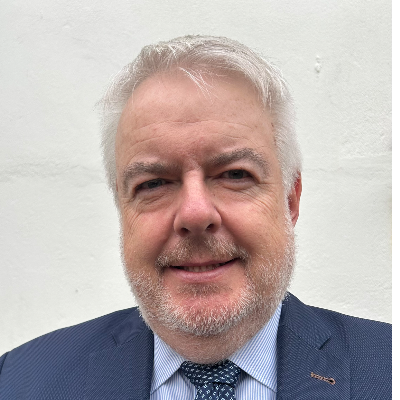
Royaume-Uni, SOC, Président de l'Assemblée
10:12:33
"Good morning" [in Welsh]. Good morning everybody, it's past 10:10 a.m., so let's make a start.
The sitting is therefore open.
Could I remind Members that, in order to be registered for the sitting, you should insert your badge when you take your seat, and keep it inserted for at least 30 seconds.
You should also insert your badge in order to speak or vote. To request the floor, please press the “request” button, just once.
Could I also remind the Assembly that Members who have not submitted an annual declaration of interests are required to start any intervention with an oral declaration of interests under paragraph 20 of the Code of conduct for members of the Parliamentary Assembly.
Now colleagues, our first business this morning is to consider the changes proposed in the membership of committees, set out in document Commissions (2026) 01 and Addendum 2, and the appointment of members to the Special committee on the New Democratic Pact, which have been published in Commissions (2026) 02.
Can I first of all ask, are these agreed to?
Is there any disagreement?
There is not, okay.
In that case, we can take that as having been approved.
The next item of business this morning is the debate on the report entitled “Strengthening democracies with young people: from participation to shared responsibility” (Doc. 16308). It will be presented by Ms Sona GHAZARYAN on behalf of the Committee on Culture, Science, Education and Media.
We will then hear from Ms Elisabetta GARDINI, who will present an opinion on behalf the Committee on Political Affairs and Democracy (Doc. 16332). As ever, in order to finish on time by midday, I will interrupt the list of speakers at about 11:45 a.m. to allow time for the reply and the vote.
So could I now call on Ms Sona GHAZARYAN, Rapporteur.
You have 7 minutes now, and 3 minutes at the end to reply to the debate.
The floor is yours.
Distinguished members,
Colleagues,
It's an honour to stand before you today to present the report. The revised title is not a matter of semantics; it marks a decisive shift in perspective away from viewing young people as passive beneficiaries of democracy towards recognising them as full partners at its very core.
When we meet today, the timing is both urgent and challenging. Across Europe, young citizens are expressing new hopes, but also deep and growing frustration. Recent polls and research make this unmistakably clear: many young people are losing trust in our institutions and increasingly feel that their voices, their votes, carry little real weight in shaping their future.
Economic insecurity, the rising cost of living, precarious employment, housing shortages, and increasingly fragile mental health outlooks are not merely social concerns. They risk eroding democratic legitimacy itself and deepening generational divides across our societies.
The Council of Europe's "New Democratic Pact for Europe" rightly acknowledges that the energy, creativity and strong sense of justice expressed by young people must no longer remain on the margins of political life. They must be placed at its centre.
This call was powerfully echoed in Malta at the 10th Conference of Ministers responsible for Youth, where governments adopted the Reference Framework calling for a systematic youth perspective across all areas of policy and decision-making.
It is on this foundation that the Committee on Culture, Science, Education and Media report calls for a genuine step change from consultation to shared responsibility. Young people must not only be present, they must have real power and institutional avenues of influence. The Council of Europe’s pioneering co-management system, centred on the Advisory Council on Youth, offers a clear and proven model that all member states can and should follow. Its principle of equal partnership between young people and public authorities in shaping priorities and strategies is not merely innovative, it is indispensable if democracy is to weather the storms we face today.
Colleagues, the recommendations presented to you today are ambitious, but they are also very practical and achievable. They call on every member state to adopt or to update comprehensive frameworks for youth participation and to translate them into clear, measurable outcomes. This means creating and strengthening youth councils and advisory bodies with genuine mandates; ensuring the meaningful presence of young people and young politicians across all levels of decision making, from parliaments and boards to ministries and local authorities, where they should support participatory youth budgeting; and promoting innovative mechanisms such as youth juries and digital assemblies, where young voices are central to deliberation rather than treated as an afterthought.
Our debates have also made it very clear to me that the obstacles young people face are significant and complex.
Social media, once celebrated as a space for democratic promise, has increasingly become a source of harassment, hate speech, disinformation, and exclusion.
At the same time, young women, minority groups, and those living in rural areas face distinct and often compounding barriers to participation. In response, the Committee has unanimously agreed on stronger language, calling for more robust legal protection offline and online.
I would also like to recognise the irreplaceable contributions of youth non-governmental organisations and activists, who enriched and animated our discussions. Thank you. Their passion, expertise and lived experience have directly shaped these proposals before you.
In particular, the Advisory Council on Youth, one of the pillars of the Council of Europe's youth sector, must receive sustained and enhanced support. Only then can it contribute to building a democratic architecture that includes all young people, not merely the most connected or privileged ones.
Turning these recommendations into reality will require national parliaments. It will require us to fully assume their role. This means scrutinising budgets and legislation, measuring access and outcomes through reliable data, inviting young people to the table as co-authors of policies, and ensuring that their involvement is permanent and sustainable, so it cannot be sidelined in times of crisis.
Colleagues, this agenda demands clear political will to guarantee quality education and training, alongside fair access to housing and health care, to mainstream gender equality and ensure the full inclusion of minorities and persons with disabilities, to invest decisively in both civic education and non-formal learning, and not merely debate youth voting rights, but to act by lowering the voting age to 16. A reform that evidence constantly shows strengthens engagement and trust in democratic institutions.
Beyond Western Europe, our democratic responsibility must extend further. That is why we strongly support the creation of a European Youth Centre in the Black Sea region, an act of solidarity and a clear expression of faith in the democratic potential of every young citizen from the Atlantic to the South Caucasus.
In closing, democracy cannot be renewed without young people as architects and equal partners. Shared responsibility requires every parliament and every government, not simply to speak about youth, but to act with youth, for youth.
I therefore call you to give your full support to this resolution and recommendations, and to recognise in every decision you take, the opportunity to build a democratic Europe sustained by the creativity, energy and hope of its youngest citizens.
Thank you.
Royaume-Uni, SOC, Président de l'Assemblée
10:21:50
Thank you, Ms Sona GHAZARYAN.
I now call on Ms Elisabetta GARDINI for the opinion from the Committee on Political Affairs and Democracy.
You have 3 minutes.

Italie, CEPA, Rapporteure pour avis
10:22:00
Thank you, President.
Dear colleagues,
I am presenting today the opinion of the Committee on Political Affairs and Democracy on the report 'Strengthening democracies with young people: from participation to shared responsibility'.
Firstly, I would like to warmly congratulate the rapporteur, Ms Sona GHAZARYAN, on her outstanding work. She addresses a central challenge for our democracies. How can we ensure that young people are not only heard, but are genuinely involved in democratic life?
Both the report and our opinion share a simple yet fundamental belief, that democratic institutions are stronger when young people are involved, when young minds can contribute meaningfully to decisions that affect their futures. The Committee on Political Affairs and Democracy fully supports this approach.
Our amendments aim to reinforce this conviction in three ways:
- encouraging the full implementation of earlier resolutions on youth issues;
- linking youth-related activities to the work on the New Democratic Pact;
- engaging young people who are already politically active in dialogue with us.
Regarding the first point, I welcome the fact that the report refers to Resolution 2553 (2024). This Resolution represented an important step forward. It created the Parliamentary Assembly of the Council of Europe's Youth Participation Mechanism and introduced the role of youth rapporteurs in committees.
Our amendments aim to make youth rapporteurs more visible, to ensure that young people's views are included across committee work and plenary debates.
Further amendments establish a link to the New Democratic Pact for Europe. It can benefit significantly from the involvement of young people. The Assembly is already actively contributing to the Pact, including through its Ad hoc Committee.
Finally, we propose strengthening dialogue with young political minds from our countries. In my experience, our parties, youth organisations are full of young talent. It is important to support this potential and encourage interest in our Assembly. I hope we can help to achieve this.
To sum up, this report makes the Assembly more open and responsive to youth voices.
I believe that this opinion strengthens the political message of the report.
For these reasons, I invite the Assembly to support this opinion and the proposed amendments.
Thank you.
Royaume-Uni, SOC, Président de l'Assemblée
10:25:08
Thank you very much, Ms Elisabetta GARDINI. We'll move on now to the speakers from each group.
Just to remind everybody that the time limit is 3 minutes for spokespersons from political groups and 2 minutes for everybody else.
Could I now call on behalf of the Socialists, Democrats and Greens Group, Ms Aysu BANKOĞLU.

Türkiye, SOC, Porte-parole du groupe
10:25:26
Thank you, Mister President.
Dear colleagues,
I would like to begin by thanking the Rapporteur for this timely report. It rightly focuses on meaningful youth participation, social inequality, and the structural barriers that prevent young people from fully engaging in democratic life.
Young people across our societies are asking not for symbolic gestures, but for real influence. Participation limited to consultations or advisory panels is no longer enough. Democracy must evolve towards a model of shared responsibility, where young people genuinely shape the decisions that affect their lives.
Today, many young people feel excluded from political processes across Europe. Trust in institutions is declining, and young people feel unheard. This exclusion is deepened by inequality, job insecurity and the housing crisis, which deny young people stability and dignity.
Therefore, we must confront the hostile environment that deters political engagement. Rising hate speech against young activists requires stronger legal protections to safeguard their voices in the public sphere. We must also address the socioeconomic disadvantages that disproportionately affect young women, who often face a double burden of precarious employment and systematic discrimination.
In our workplaces and educational spaces, we see a trend of age-based mobbing. Young people are often dismissed as inexperienced or exploited as cheap labour, a perception that undermines their immediate rights as citizens. We should transform our institutional structures to ensure every young person can participate safely and with dignity.
As one of the youth rapporteurs in this Assembly, I want to underline this clearly: youth participation must not remain decorative. We must move beyond "lip service" by implementing institutional reform and adopting the co-management system as a standard for national governments.
Dear colleagues,
Young people must move from consultation to decision-making power, not as guests in democracy, but as its co-owners. So we should call on institutions to open their structures, budgets, and policy processes to young people as equal partners.
Because if we continue to sideline youth, we risk losing not just a generation, but the very legitimacy of our democracies.
Thank you.
Royaume-Uni, SOC, Président de l'Assemblée
10:28:07
Thank you very much.
Now the next speaker on behalf of the Group of the European People's Party is Ms Yelyzaveta YASKO.

Ukraine, PPE/DC, Porte-parole du groupe
10:28:17
Dear colleagues,
I want to thank the rapporteur for this report and especially for providing very concrete recommendations such as lowering the voting age and providing more mandates for young people.
But as a Ukrainian, I want to say, let's be very honest.
In my country, in my society, when the state was not delivering opportunities for young people, what did we do? We were trying to fill those gaps ourselves. When the war started in 2014 and our state wasn't able to deliver some functions, we had a volunteering movement filled by many people — young people, older people — just because we believe when there is no mandate, we have to create that; when there is a gap, we have to do that.
When thinking about what I wanted to say today, I was thinking about my own motivation, about why I wanted to go into politics.
I was born in 1990. That was the year when, for instance, my parents lost all their savings. My father is a musician. In the 90s he couldn't stay as a musician in Ukraine. He had to go abroad to earn a living. So the economic motivation for me to go and to argue and to act for change in my country so that our people will have better economic opportunities, better social opportunities, was always a part of my motivation.
But there, of course, there is another motivation about freedom, about our identity, that I know that you are aware of.
When we talk about Ukraine, there is one very interesting fact. When we were elected, our parliament, the average age in our parliament at that stage was 39 years old. In our party, it was 34. Of course, now, after almost six and a half years, the age got a little bit older.
But I want to say that when you are looking for some solutions, let's look at the case of motivation: when people just go on the streets and fight for what they want. And whether we like it or not, existential threat, when the war is knocking on the door, this is something that makes people go and fight.
We can create a lot of mandates and we should be doing that for young people; but the young people should also understand and believe in themselves with different examples of different societies – when people go and fight for their future.
Ukraine has great social mobility. I'm proud to say that.
I just hope that with the war of aggression, there will be young people left in our country because many of us have already been killed or wounded or our lives have been destroyed.
Good luck to young people and to our democracies.
Thank you.
[Applause]
Royaume-Uni, SOC, Président de l'Assemblée
10:31:28
Thank you.
Our next speaker on behalf of European Conservatives, Patriots & Affiliates is Ms Alexandra SCHOOS.

Luxembourg, CEPA, Porte-parole du groupe
10:31:39
Thank you, Mister President,
Dear colleagues,
We are debating how to strengthen democracy with young people. The report is right to warn us: if youth engagement becomes a ritual rather than a power to shape outcomes, we will not build trust – we will manufacture frustration.
From an European Conservatives, Patriots & Affiliates perspective, we support youth participation that is serious, representative and accountable. That starts with one principle: no tokenism. We do not want participation reduced to box-ticking through quotas. We need pathways that empower young people through merit, opportunity and real responsibilities.
My first point is therefore impact over optics. Youth councils, hearings, and structured dialogue can be useful, but only if they are transparent, open to diverse backgrounds, and linked to measurable follow-up. Otherwise, it becomes participation theatre.
Second, we must reject one-size-fits-all thinking. The report strongly supports lowering the voting age to 16. Engaging young people earlier is important – but the voting age is a profound constitutional choice. Each country must decide according to its democratic traditions, civic education, and societal consensus.
Third, if we want young people to believe again in democracy, then we politicians must stick to democracy ourselves. That means respecting voters and the outcomes of elections. In recent years, we have too often seen a dangerous reflex: democratically elected parties are pushed aside, de-legitimised or treated as untouchable – simply because others dislike their political views. This is not democratic resilience; it is democratic erosion. Young people see that. They draw the conclusion that voting may change nothing.
Fourth, we must be honest: as elected representatives, we have much more in our own hands than we sometimes admit. If we truly want young people in politics, then we must do the practical work: put young, motivated candidates on our election lists, support them, mentor them and give them real responsibilities in our parliamentary groups and committees.
This brings me to a challenging and provocative question for all of us: who in this room would be willing to give up his or her spot on an election list in favour of a young person? Because that is what 'shared responsibility' looks like in real life – not in a resolution, but in our own parties and our own decisions.
Colleagues,
Youth participation will not be rebuilt by slogans. It will be rebuilt by democratic consistency.
Let us choose substance over symbolism, national democratic responsibility over templates and respect for democratic choice over exclusion.
If we do that, young Europeans will not turn away from democracy – they will step forward to lead it.
Royaume-Uni, SOC, Président de l'Assemblée
10:34:52
Thank you.
The next speaker on behalf of Alliance of Liberals and Democrats for Europe is Ms Yevheniia KRAVCHUK.

Ukraine, ADLE, Porte-parole du groupe
10:35:00
Thank you, Chair.
Dear Ms Sona GHAZARYAN, congratulations on this report and congratulations on yesterday's elections as the chair of the Sub-Committee on Youth and the Society of the Future.
Of course, it's a very timely report.
Actually, today, the Parliamentary Assembly of the Council of Europe is setting a gold standard by moving from just the engagement of young people to real shared responsibility in decision-making processes.
This report continues the standards that we already adopted together in this Assembly, standards we believe in and standards we are already implementing.
Thanks to Malta for putting engagement with youth at the heart of their presidency.
We see a powerful commitment to democracy among the new generation. Here comes Eurobarometer data – we should have some data from the Council of Europe countries!
Over 70% of young people in the EU voted in recent elections.
64% of young Europeans have engaged in activities of organised youth movements in the last year. They are not just ready to lead; they are already leading.
Crucially, their priorities have shifted to reflect our reality: 31% of young Europeans now believe that security and defence should be the top priority, followed by climate change and public health.
However, a significant gap remains. One in three young people feels they lack the necessary tools to participate effectively. Obviously, we have to fill that gap.
Ukraine serves as a living example of how young people take on this 'shared responsibility' even when they are facing mortal danger.
We have effectively implemented the call to establish youth councils, so now, we have 664 youth councils from the local level to the national level. Volunteering among youth has more than doubled, rising from 20% to 42% since the full-scale invasion started.
Lviv, as the European Youth Capital 2025, has become a symbol of resilience, providing young residents with the space to grow within their communities.
We are ready to exchange and share these unique experiences and expertise. The democracy of the future, as described in this report, is impossible without sustainable peace.
I strongly encourage all colleagues to support this resolution., because the democratic, safe, strong Europe of tomorrow cannot be built for young people, it must be built with them, as equal and full partners today.
Thank you and, please, support this report.
Royaume-Uni, SOC, Président de l'Assemblée
10:37:49
Thank you.
The final speaker on behalf of the Unified European Left, Ms Janina BÖTTGER.

Allemagne, GUE, Porte-parole du groupe
10:37:59
Thank you very much, ladies and gentlemen.
As the Group of the Unified European Left, we naturally support the report because it shows that young people must not just be involved symbolically. They need a real say, real responsibility and real opportunities. But participation often fails where poverty determines everyday life, where schools are underfunded, where there are no meeting places where young people can learn, organise themselves and raise their voices. Those who don't know whether they can afford to go on the school trip, those who have to work alongside school, those who fight for recognition on a daily basis, have neither the time nor the desire for participation processes. Participation thus also becomes a question of social background.
We therefore call on member states to finally direct their resources to where they are most urgently needed. Start with the schools in deprived areas. Support local authorities that suffer from structural poverty, invest in public infrastructure, in buses and trains, the frequency of which must also fit in with the lives of young people. This is the only way to equalise unequal starting conditions. This is the only way to ensure that democratic participation is not a prerogative of the already informed and privileged.
Education, political participation and equal rights should form a triad. I would like to remind you once again of the speech by the Chief Rabbi, Mr Meir STAMBLER, who spoke to us yesterday from Ukraine in memory of the human rights abuses of the Holocaust. I agree with his assessment: it's not about one more or one less lesson, it's about attitude, it's about teaching and learning about tolerance and acceptance, about courage and resistance. Because injustice happens every day. Every day, people are discriminated against on the basis of origin, gender, religion, disability, age or sexual identity. And it is all the more important that young people learn not to accept this, but to react to it with strength. This is only possible if our educational institutions are strengthened and the use of digital media is made more critical and responsible.
Genuine participation does not just mean that young people are allowed to vote and speak. It means equipping them with knowledge, tools and spaces. It means taking up their ideas on the future of society and actually involving them in political action. Their ideas must be realised and we must reduce inequalities that hinder their participation. We need to give them confidence that their commitment really has an impact and that their voice counts.
Thank you very much.
Royaume-Uni, SOC, Président de l'Assemblée
10:40:39
Thank you very much indeed.
Let's move on then to the general Speakers list.
The first speaker is Mr Ricardo CARVALHO.
Thank you.
Thank you, Chair.
Dear colleagues,
I would like to welcome this report on strengthening democracies with young people. We fully share one central conviction: without engaged, informed and responsible young people, democracy is weakened.
The report is right to stress that youth participation must not be symbolic. Civic education, digital literacy, the fight against disinformation, and access to culture, employment and housing are essential conditions for young people to trust institutions and take part in democratic life in a meaningful way.
For me and my party, participation means responsibility, not merely the creation of new structures. Young people must be integrated into political parties, parliaments, local authorities and civil society, rather than being channelled into parallel bodies without direct democratic legitimacy.
Strengthening youth wings, political training and involvement in existing legislative processes is the most solid and credible path forward.
However, we do have clear reservations about some proposals. In particular, automatically lowering the voting age to 16 should not be treated as a one-size-fits-all solution. Each member state must decide with prudence, taking into account civic maturity, the educational context and public trust in institutions.
What matters most is not the age of voting, but ensuring informed, critical and responsible citizens.
It's important to advocate a balanced approach: rights accompanied by duties, participation accompanied by education and inclusion accompanied by responsibility. This is how we build resilient, intergenerational and sustainable democracies.
Young people are not only the future of democracy, they are part of its present. It is our responsibility to ensure that this present is built on freedom, responsibility and trust.
Thank you very much.
Royaume-Uni, SOC, Président de l'Assemblée
10:43:03
Thank you.
The next speaker is Mr Max LUCKS.
Thank you, Mister President.
Ladies and gentlemen,
Lowering the voting age, involving young people in Europe and setting up a new Council of Europe youth centre in the Black Sea region are all good things.
However, I believe that the strength of our youth policy is measured by two other key questions:
Firstly, on the question of whether our national governments are also prepared to raise the necessary funds for the youth work that our Council of Europe does so magnificently.
Secondly – and I say this as youth rapporteur in the Committee on Political Affairs and Democracy – the question of whether we as politicians are able to give young people in Europe hope for the future again.
When many people in this room were my age, I think it was clear where we were heading: prosperity had grown, autocracies had become democracies, walls had fallen.
Today we are seeing that for many, many young people on our continents, none of this can be taken for granted.
Instead, we are seeing how Mr Vladimir Putin has brought war back to Eastern Europe.
When we look westwards to the United States of America, we see how an increasingly autocratic Mr Donald Trump, with his 'tech bros' in tow, is having people like nurse Mr Alex Pretti shot down by ICE officers.
We are increasingly witnessing how human rights and democracy are being restricted in Europe.
There is nothing more timely than Mr Winston Churchill's call for a united Europe, based on democracy and human rights.
I want us to call out to every young person on our continent, whether you live in Greenland, Donetsk or Budapest: No Donald Trump, no Vladimir Putin, no autocrat will keep you down.
We will make sure that you have a good future in freedom on these continents.
Thank you very much.
Royaume-Uni, SOC, Président de l'Assemblée
10:45:28
Thank you.
The next speaker is Baroness Thérèse COFFEY.
There is much in this resolution and recommendations to support, including the participation of youth in the Council of Europe and the Assembly, and to recognise youth civil society, volunteering and community engagement.
We should consider further activity even in this Assembly. For example, when committees form, instead of the oldest member chairing at the start, why not make it the youngest member?
In the UK, uniformed services, whether the Scouts, Girls’ Brigade or Army Cadet Force, are all well-established places and spaces for young people to explore their understanding of a number of issues affecting themselves and each other and are also an opportunity to serve their community.
However, I am opposed to Paragraph 12 in the Resolution and Recommendation 5, which is regarding the voting age of 16. I know in 2011, the Assembly adopted support for voting at 16. I respectfully disagree, which is why I cannot support the resolution in full today.
Young people can and do, of course, have political views. I grew up in a politically charged city, Liverpool. The hard-left, militant Labour Party ran the council. And to stay in power and avoid bankruptcy, Labour councillors made all its employees redundant, including my parents, who were teachers. Every teacher was made redundant.
Seeing how my city was being destroyed, I joined the Conservative Party at the youngest age possible of 16, and started my civic and political education. For me it was clear, but that was because I faced an extremist party running my city.
Now, there are many things that you cannot do in the UK till you become an adult, recognising the greater understanding that people acquire as they mature.
I am particularly concerned thinking about social media. Getting good quality information matters. I have heard a lot about the concerns surrounding extreme influencers, misinformation and fake news distribution through social media, the primary source of information for young people.
I think it's really important that we fix the civic education first. Knowing the consequences of how you vote for your country, your community, your family and you as an individual are vital. That is why I cannot support the resolution fully today.
Royaume-Uni, SOC, Président de l'Assemblée
10:47:45
Thank you.
The next speaker is Mr Benoît LUTGEN.
Thank you, Mister Chairman.
Dear colleagues,
Strengthening democracy with and for young people is a crucial issue for the future of Europe.
Giving responsibility to young people is also the best way to invest in the future of our democracies and the rule of law. The participation of young people in the democratic process is essential to ensure that their voices are heard and that their interests are taken into account.
Colleagues,
Perhaps we should start at the local level. At a local level, young people are often the first to be affected by political decisions, but they are also often the least well represented. This is why it is essential to put in place mechanisms to encourage their practical participation in particular, such as with participatory budgets. I'm delighted to see that this point is made in the report.
Participatory budgets enable young people to take part in deciding how public funds are used and to contribute to defining the priorities of their community. It's an effective way of strengthening local democracy and promoting civic engagement among young people. It is also a way of getting them involved, positively confronting them and offering them concrete responsibilities.
In conjunction with the cultural and artistic worlds, these budgets also enable young people to reclaim their living spaces. You can also support, of course, a whole range of initiatives aimed at strengthening young people's participation in democratic life, such as youth councils, discussion forums or voluntary projects.
Ladies and gentlemen,
On the subject of lowering the voting age, let's not believe that this is a panacea, that it would solve all the problems of young people's participation. It won't. We've seen it in our country, in Belgium, where the voting age was lowered for the European elections, and it didn't improve turnout among young people.
If we wanted to move towards this kind of lowering, we would need training first, and perhaps we would also need to do it at a local level first.
The future of Europe lies in guaranteeing that young people will be key players in democracy, that it will be a true partner of young people.
Thank you to our colleague Ms Sona GHAZARYAN for her excellent work.
Thank you very much.
Royaume-Uni, SOC, Président de l'Assemblée
10:49:59
Thank you.
The next speaker is Ms Victoria TIBLOM.
Thank you Mister President,
This report is right about one thing: democracy cannot be renewed without young people, but participation without limits is not responsibility – it is delegation without accountability.
Political formation does not begin with state programmes or classroom activism. It begins at home. Families, not governments, are the first educators in democracy.
Schools must teach how democracy works – the rule of law, free elections, separation of powers – not promote political positions. When education becomes ideology, democracy becomes weaker.
Some on the left seem to believe that disengagement can be solved by more political messaging from the state. History teaches us the opposite. Democracy grows through pluralism, not instruction.
Young people do not need to be mobilised – they need to be trusted. Real engagement comes from voluntary participation, local responsibility, work, entrepreneurship and civil society – not from being spoken for.
If we truly want shared responsibility, we must stop using young people to validate political agendas.
Democracy is strengthened when the state sets limits, families pass on values and young citizens are free to decide for themselves.
Thank you.
[Applause]
Royaume-Uni, SOC, Président de l'Assemblée
10:51:44
Thank you.
The next speaker is Ms Zita GURMAI.
Mister President, dear colleagues,
For too long, youth participation in politics has been a photo op rather than a power-sharing experience. Today's generation is no longer satisfied with symbolic consultation. They want real influence, and rightly so. Just as previous generations fought to give women an equal voice, we must now empower young people as equal partners of democracy.
Across Europe and beyond, youth are already doing the work of democratic renewal. In Bulgaria, tens of thousands of young people mobilised against corruption and helped bring down a government. In Serbia, students that must protest after a deadly infrastructure collapse in Novi Sad, demanding accountability for corruption and negligence. In Nepal, young people took to the streets to defend freedom of expression when social media bans were proposed. In Morocco, thousands of young citizens mobilised against social injustice under the banner of a new generation demanding dignity and fairness.
These are not signs of disengagement. They are proof that young people are often the first to defend democratic values when institutions fail. Their movements, decentralised, tax-savvy and value-driven, are reshaping civic life and remind us that democracy is not inherited, it must be renewed.
We have begun to recognise this. In 2025, the Congress of Local and Regional Authorities adopted the European Charter on Participation of Young People in Local and Regional Life. Our Assembly has called for lowering the voting age, removing barriers to youth activism and opening parliaments and councils to young voices.
But principles are not enough. Empowering young people is not a gesture of goodwill, it is a democratic imperative. Democracy grows stronger when power is shared. Let us move beyond tokenism. Let us institutionalise youth participation, from civic education to decision-making.
The resilience of our democracy depends on it, because the future is already knocking at the door.
And thanks to the Maltese presidency to do the utmost for the youth. And thanks for our great rapporteurs.
Royaume-Uni, SOC, Président de l'Assemblée
10:53:59
Thank you.
The next speaker is Ms Bianca-Eugenia GAVRILĂ... (No?)
In that case, the next speaker we have will be Ms Naomi CACHIA.
Thank you, Chair.
Some of us here may be familiar with a current social media trend, where people look back and share photos of what they were doing in 2016.
Ten years ago, I was a 21-year-old student, actively involved in youth politics in Malta.
At the time, one of the key issues on the youth agenda was "Vote 16". We really believed that, as young citizens, we weren’t asking for much, just for the recognition that we should be the authors of our own destiny; because lowering the voting age is not simply about allowing more people into the polling booth on election day. It goes far beyond that.
It makes us rethink how we engage with young people, and to create genuine spaces for meaningful dialogue.
Two years later, we succeeded.
Today, as a young politician, I want to see this shift, from merely speaking about youth participation to embracing 'shared responsibility'.
For years, we have paid lip service to the concept of giving young people a seat at the table. I myself have attended countless seminars and conferences on this topic. While that intention may have been noble, it has not really gotten us to where we need to be today when we look at the wider picture.
We are now recognising that participation alone is not enough. It is not enough to consult young people at the margins.
In Malta, if you are 16, you can stand for local elections, you can even be elected as mayor. We have established a Youth Advisory Forum, a committee of our Cabinet of Ministers, chaired by our prime minister, where young people are consulted directly on matters of national importance.
We are consulting children and young people on our country’s vision for the next 25 years, and on what they want to see in our national parks.
That gives real meaning to our decision-making and to our policies.
Our experience has shown that when you give them space and trust, young people will step up.
So thank you, Ms Sona GHAZARYAN, for your recommendations and your report. I hope young people keep demanding to have a seat at the table.
Thank you.
Royaume-Uni, SOC, Président de l'Assemblée
10:56:26
Thank you very much.
Our next speaker is Ms Marie-Christine DALLOZ.
Dear Mister President,
A recent survey of 18-30 year olds in France shows that while young people may be distrustful of politicians, they are far from being depoliticised: they keep themselves informed, admittedly mainly through social networks; they get involved in sport, humanitarian aid and culture; and they sign online petitions. I see this regularly when I give talks in secondary schools on the role of members of parliament: the pupils are very interested.
And yet they vote very little. A third of these 18-30 year olds explain away the abstention of young people with a lack of confidence. A quarter of them think that their vote has no impact.
Faced with this situation, the draft resolution we are examining provides some answers.
Point 9 highlights the need to develop civic education. Indeed, this is essential. But this education in citizenship must go beyond simply reminding people of the role of institutions and the principles of democracy; it must also include a digital culture.
At a time when 51% of young people only watch news that is not always verified, it is vital to make them aware of the risks of false information and the manipulation of public opinion.
Education in active citizenship is also essential. The success of municipal youth councils and the Children's Parliament organised by the French National Assembly show that young people can get involved.
All initiatives in this direction should be supported, but we also need to think about initiatives that involve young working people and first-time voters.
Institutions often seem very remote to young people, simply because they are not familiar with them.
Young parliamentarians could play a greater role in reaching out to young people in our respective countries who feel unrepresented.
The network of young parliamentarians of the Parliamentary Assembly of the Organization for Security and Cooperation in Europe (OSCE) organised a series of round tables in member countries to exchange views with young people. A draft text was presented at the last session based on this feedback. This is fully in line with the draft resolution, which insists on sharing with young people.
Thank you very much.
Royaume-Uni, SOC, Président de l'Assemblée
10:59:11
Thank you.
Our next speaker is Ms Louise MOREL.
Thank you, Mister President,
First of all, I would like to commend the quality of the work carried out by the Rapporteur, and I share your enthusiasm for this subject and your conclusions.
Ultimately, the question we are examining today is how can we really involve young people, whether they are old enough to vote or not, in public decision-making?
This question is all the more fundamental given that, in many of our countries, there is a significant abstention rate among young people when voting is not compulsory. A generation that does not vote is a generation that is not represented. It is excluded from political decision-making. This is all the more worrying in European societies, some of which are ageing, where the balance of power between generations is becoming structurally imbalanced.
I would like to share a few thoughts that echo the work done here.
First, a question of vocabulary. We often talk about "youth", but I would prefer the term "young people". "Young people", because they vary greatly from one country to another, and even within the same country, depending on age and where they live, and I think it's important to remember that.
Then I'd like to come back to the framework of the report, which says: how do we move from participation to shared responsibility? I think we need to go further in involving young people, particularly when it comes to decisions that will affect our countries for decades to come. Take energy choices, for example, and nuclear power in particular. Is it sometimes legitimate that, on this subject, there is an over-representation of the generations that make decisions when the sums involved and the operational aspect of these choices will be borne by future generations? I believe that we should have opinions that are at least consultative on subjects that commit our countries for decades to come, and sometimes even opinions with a truly binding value.
Finally, I would like to return to the subject of the representation of young people in political life. This is not to call into question universal suffrage, which gives democratic legitimacy, but to recognise that a democracy is stronger when it reflects the diversity of society.
Finally, I would like to share a personal anecdote. I was elected at the age of 26, and I often heard from older colleagues: "I don't agree with you, but my children think exactly like you." That says something about our institutions. Listening to the youngest among us also means listening to what society will sometimes be saying in 10 or 15 years' time, and perhaps getting a bit ahead of it.
Thank you very much.
Royaume-Uni, SOC, Président de l'Assemblée
11:01:41
Thank you.
Our next speaker is Mr Koloman BRENNER. But I see he is absent, so we will move on then to our next speaker, Ms Gökçe GÖKÇEN.
I'm afraid your mic is off.
Thank you, Mister Chairman.
Ladies and gentlemen,
I would like to thank the rapporteur for this excellent report.
I would like to take this opportunity to mention a good example of young people's involvement in politics.
At the last congress of the Youth Organisation of the Republican People's Party (CHP), there were people in 'red waistcoats', including myself.
Who were these 'red waistcoats'? On one side of their waistcoat was written their current position. And on the other, the position they had held in the past within the Youth Organisation. For example, "member of parliament" on one side, "president of a youth organisation" on the other. For example, "mayor" on one side, "local youth leader" on the other.
Dear colleagues,
Young people have fought hard to get representation. But at this Congress, there were more of us than ever before. Because one of the reasons that made the Republican People's Party (CHP) the leading party in Türkiye at the last elections was the fact that young people were given not just quotas, but real responsibilities.
From here, I'd like to say hello to a friend and pay tribute to another. One of these red waistcoats read 'secretary general of youth' on one side and 'mayor of Avcılar' on the other. It was Mr Utku Caner Çaykara. He has been in prison for months. He is incarcerated with Mr Zeydan Karalar, Mr Rıza Akpolat, Ms Oya Tekin and Mr Kadir Aydar. As we speak, they are appearing before the judge. I would like to express my solidarity with them.
Another of those 'red waistcoats', on one side it said "president of Manisa youth", on the other "mayor of Şehzadeler". We lost Ms Gülşah Durbay last month, at a very young age, to colon cancer. I salute the memory of my dear friend with great emotion.
Thank you very much.
Royaume-Uni, SOC, Président de l'Assemblée
11:04:06
Thank you.
Our next speaker is Baroness Ruth HUNT.
I thank the rapporteur for this report. It reminds us that democracy is not a relic we inherit intact. It is a living system that endures only if each generation is allowed to reshape it.
The Council of Europe was born out of catastrophe. A generation that had seen fascism and war did not simply defend democracy; they designed it. They built institutions meant to outlast them and that act of democratic imagination is a core reason why European democracy has survived.
Today, a new generation faces different, but no less existential challenges: climate breakdown, digital power, inequality, polarisation and, indeed, war. They are asking to help design the next systems, not just inherit ours.
Yet too often, we invite young people to the table, but limit what they can influence. We listen, we take notes and then we keep control.
This has to change and it has to start here, with us. Not with another visit to a youth centre, but with how the Parliamentary Assembly of the Council of Europe and the Council of Europe actually work. We need to examine our committee structures, our reports, our urgent debates, and change how we operate, here and now, rather than repeating the same processes and congratulating ourselves for the occasional consultation.
If democracy is a living thing, young people must be its co-architects, not its spectators. That means real influence, real responsibility, and a willingness from us to loosen our grip on power.
The generation that built this Organisation trusted itself to design democracy for the future. We must trust today’s young people to do the same. Because if we do not let them help redesign democracy, we cannot expect them to defend it.
Thank you.
Royaume-Uni, SOC, Président de l'Assemblée
11:06:10
Thank you very much. Our next speaker is Mr Yunus EMRE.
Dear colleagues,
Let me begin by thanking the rapporteur for this highly timely and much needed report.
At the moment, when debates on democratic backsliding are intensifying across our continent, this report reminds us of something essential: democracy cannot be sustained by institutions alone. It must be sustained by people, and especially by young people.
For decades after the Second World War, when democracy became firmly rooted in Europe, each new generation lived better than the previous one. Better education, better jobs and higher living standards. This shared experience helped to build trust in democracy itself.
Today, however, many young people face a very different reality. For the first time, a generation expects that it may not earn more than its parents, may not have access to better housing and may not enjoy improved living conditions. This is unprecedented and deeply dangerous. This growing dissatisfaction is not politically natural. It erodes democratic legitimacy and creates fertile ground for extremism.
When democracy no longer delivers social progress, it struggles to maintain public trust. We must therefore be clear: this challenge cannot be addressed by rhetoric or participation mechanisms alone. It requires strong social policies and a determined fight against inequality. Democracy must once again become a system that offers real opportunities, social mobility and dignity, particularly to younger generations. Expecting young people to defend democracy without improving their life prospects is simply unrealistic.
Thank you.
Royaume-Uni, SOC, Président de l'Assemblée
11:08:35
Thank you. Our next speaker is Mr Pedro Miguel HACES BARBA.
European representatives,
Respectful greetings from the Mexican people.
Strengthening democracy with young people requires speaking honestly and above all, dealing with serious challenges. We recognise the progress that is taking place, because democracy, ultimately, is similar to youth. It's born from the idea that injustice can be changed and the most important thing is putting the most urgent matters first.
In Mexico, we are experiencing a particularly important phase. In 2023, we changed the Constitution to reduce the minimum age to be elected as a representative from 21 to 18 years of age and to be a part of the presidential cabinet as a minister from 30 to 25 years of age; to formally open the door so that young people can be part of public power.
In 2024, there were almost 25 million young people aged 18 to 29 on the electoral register. This means that if young people mobilise today, they could change the course of any country. In the 2023-2024 electoral process, more than 60% of 18 year olds voted for the first time. The challenge is transforming this momentum into sustained co-responsibility.
The Inter-Parliamentary Union reports that 3.4% of elected representatives globally are aged 30 or under. It also reports a hopeful statistic. 42.8% of these are aged 45 or under, which shows a developing generational renewal.
The message is clear. Young people don't need to be given permission to participate. They need institutions which include them, that eliminate all barriers and that share responsibility.
On this bridge between participation and co-responsibility, Mexico always wants to be in dialogue with Europe to build a more open and modern democracy.
Thank you.
Royaume-Uni, SOC, Président de l'Assemblée
11:10:54
Thank you very much. The next speaker is Ms Tone Wilhelmsen TRØEN.
Thank you, Mister President.
Dear colleagues,
I would like to start by thanking the rapporteur, Ms Sona GHAZARYAN, and Ms Elisabetta GARDINI, for their important work. This is a strong and timely report.
At the same time, we must be careful not to congratulate ourselves too quickly on youth participation. Democracy is not strengthened simply because young people are present. It is strengthened when they are able to speak openly and have real influence over decisions.
Youth engagement is not limited to formal political participation. It is about participation in all parts of society. It is just as important that young people take on leadership roles, engage in volunteering and participate in civil society and organisations as it is that they enter party politics.
Many of us in this Parliamentary Assembly became politically active because our engagement was sparked by a single issue, that mattered deeply to us. Young people today deserve the same opportunity, to care, to speak out and to act without fear.
This is why paragraph 7.5 of this report is so important. Many young people today experience hate speech, harassment, and intimidation when they take part in public debate. As a result, many choose silence over engagement. Not because they lack opinions, but because the cost of speaking out is so high.
We must recognise that the ability of young people to speak openly, debate loudly, disagree, and test ideas is just as vital to democracy as their participation in youth councils, political parties or other formal structures.
If we truly want young people to move from participation to shared responsibility, we must also take shared responsibility for creating the conditions.
Thank you.
Royaume-Uni, SOC, Président de l'Assemblée
11:13:12
Thank you. Our next speaker is Sir Edward LEIGH.
Mr Vice President,
I support what my colleague Baroness Thérèse COFFEY says on votes at 16.
Now, the report is right to stress the importance of young people understanding democratic institutions. We all agree. It does not sufficiently distinguish between neutral civil education, the responsibility of the state and its educational partners, and normative political instruction. The responsibility of non-state political actors in a free society.
This distinction, that is crucial if trust in democratic systems is to be sustained across generations. Too often programmes framed as quote, "informing young people about democracy", risk becoming vehicles for promoting a narrow range of approved liberal establishment views. Instead, we should set a clear goal of equipping young people to understand, interrogate and ultimately scrutinise political authority.
A healthy democracy requires exposure to disagreement. That includes views that are unpopular or upsetting to the liberal political class. Yet the report appears to assume that democratic education can proceed without confronting the danger of ideological conformity. By treating political values as settled and uncontested, the report risks presenting democracy as a finished moral project.
In reality, it is a vibrant and living system shaped by conflict, compromise and the constant negotiation of competing interests. Young people are still in a state of forming their own identities, sometimes trying out new ones and discarding them several times over. That is natural and we should not, as society, impose our views on them.
Thank you.
Royaume-Uni, SOC, Président de l'Assemblée
11:15:26
Thank you. The next speaker is Ms Yuliia OVCHYNNYKOVA.
Thank you very much.
Dear Mister President, dear colleagues,
Ms Sona GHAZARYAN, my congratulations. Thank you for your wonderful work.
And today I'm honoured to speak about the role of young people in strengthening democracy. This topic is deeply personal for me as well as I'm sure every one of you. My professional journey began in inclusive and encouraged spaces of youth activism. And I started as a youth activist with the clear belief that young people must not only be heard, but must have real influence over the decisions that shape their lives.
Fourteen years ago, I created the youth organisation which initiated the Day of Europe in the east of Ukraine. This was a very serious day when we invited all international volunteers and shared in European unity in the east part of our country. Now this territory is under occupation.
So today, as a parliamentarian, I carry these lessons with me. Democracy must be co-created with the next generation, not designed for them without them. We must pay attention and do our best in all civic education, working with patriotic values and involving young leaders in the old process, in the parliamentary work, in the huge co-operation with the government to share our European values and our future. And for generations, young people have been at the forefront of social and political change. Their energy, courage and creativity are not just assets, they are essential for democratic resilience. From climate action to anti-corruption initiatives, youth-led movements continue their major democratic engagement.
And of course, young people are not merely the leaders of tomorrow, they are partners in democracy today. And democracy cannot function without them.
Thank you.
Royaume-Uni, SOC, Président de l'Assemblée
11:17:30
Thank you. The next speaker is Mr Joseph O'REILLY.
Thank you (off mic), President,
As I rise to speak, as I rise to speak on this excellent report, I am proud to have been involved in youth participation projects, bringing youth organisations and individuals from Ireland here to the Hemicycle in Strasbourg and to a subsequent youth conference in Rome. The late, great Baroness Doreen E. Massey from the UK and Ms Elena Bonetti from Italy were centrally involved then too.
We need a well-informed, motivated, idealistic, active youth as a bulwark against racism and xenophobia and to preserve the democratic values.
My personal view on the voting age is that 17 might be a more reasonable place to introduce votes for young people, to lower from 18 to 17. That's a personal view, not a party one.
We have all heard repeatedly that young people are the future of our democracies. However, these young people are not just future leaders of our nations and our continent. They are the citizens and leaders of today. They do not only vote, they are often the catalysts of innovation, the leaders in civic engagement and the backbone of major political movements.
Unfortunately, however, young people face real barriers for political participation. These challenges can be legal, economical, social or a combination of all three.
Add to that fact that the younger generation must navigate the modern digital age, where challenges such as misinformation and disinformation are abundant. Yet despite this, across Europe and the globe, young people continue to lead, and we need them there.
The question before us is not whether young people care about democracy, it is whether we are prepared to involve them.
To strengthen our democracy, democracy must work with youth, not simply work for them. They must be involved centrally.
Thank you, President.
Royaume-Uni, SOC, Président de l'Assemblée
11:20:00
Thank you. The next speaker is Mr Pavlo BAKUNETS.
Dear members of the Assembly,
Dear rapporteur, thank you for this excellent report.
Dear representatives of democratic countries,
The fact that our Ukrainian delegation is working here in this hall today is thanks to Ukrainian youth. More than ten years ago, young people from Ukraine stood up for the European future of Ukraine. They became the first victims of Ukraine’s modern struggle for a European future.
Later, young Ukrainians were among the first to join the Ukrainian army to stop the Russian invasion. And since February 2022, thousands of young men and women have defended Ukraine and all of Europe from the full-scale Russian invasion in Ukraine. Because of this youth, it is safe here today, in Strasbourg. There are no Russian tanks, missiles and drones here.
That is why young people are already a real guarantee of Europe’s security. While we are working here, in this warm and safe hall, Ukrainian youth are fighting on the front line. Many of them are in captivity. Many are missing. Many have given their lives, unfortunately, so that Ukraine and Europe can have peace.
In my mind, the future of Europe, of Ukraine, which I represent here, depends on societies in which young people are active in local political life, in local governments, and they should have opportunities to feel included in the decision-making process, like we have in Ukraine.
I thank you all for your support of Ukraine.
Thank you.
Royaume-Uni, SOC, Président de l'Assemblée
11:22:15
Thank you. The next speaker is Mr Yuriy KAMELCHUK.
Thank you.
Dear Chariman,
Dear colleagues,
This report delivers an uncomfortable truth, too often we confuse youth participation with decoration. We create "platforms", hold "consultations", take photos, and leave young people without real influence. And then we act surprised by distrust, radicalisation and disengagement.
We must move from consultation to shared responsibility. That means one thing, young people must have not only the right to speak, but real mechanisms to shape decisions that determine their lives.
First, political participation. We should consider lowering the voting age to 16, backed by strong civic education and practical channels of influence, from youth councils to participatory youth budgeting.
Second, the digital dimension. Young people live in an information environment where disinformation and online violence have become tools of political control. Protecting young people’s rights online is not optional, it is a duty of states.
Third, the socio-economic foundation. Without access to affordable housing, education, jobs and cultural spaces, participation becomes a privilege for a few. Democracy will not hold if young people do not see fairness in it.
And the key point, parliaments must stop being spectators. We need laws, budgets, indicators and regular reporting, so that youth participation is not a slogan, but a system that can be measured, audited and held accountable.
If we want a strong Europe, we must build it with young people, not merely about them, and not without them.
Thank you.
Royaume-Uni, SOC, Président de l'Assemblée
11:24:18
Thank you. The next speaker is Ms Béatrice FRESKO-ROLFO.
Thank you, Mister Chairman.
Ladies and gentlemen,
I'm not going to confine myself to platitudes when I say that it is essential to train tomorrow's generation of citizens.
Strengthening our democracies today means considering young people as players in their own right. Their creativity, energy and ability to question existing models are invaluable assets in making our institutions more resilient and adapted to contemporary challenges.
Listening to the ideas of the new generation allows us to move forward with them and avoid getting stuck on outdated issues, while new priorities emerge.
We are elected to represent the experience and struggles of our generations, but if we ignore the voices of young people, our policies will constantly lag behind the demands and challenges of our time. We run the risk of focusing on yesterday's issues instead of preparing for tomorrow's.
In Monaco, the National Youth Council enables young Monegasques to work in groups on concrete projects throughout the year, accompanied by the President of the Education, Youth and Sport Commission, and to finalise proposals for resolutions. These may inspire the elected members of the National Council.
Similarly, the Youth Economic, Social and Environmental Council (Youth CESE) is a real bridge between the educational world and the professional sector.
Since it was set up in 2007, almost 500 secondary school students have taken part, discovering how institutions work, developing their critical faculties and contributing innovative ideas on social issues. Typically, this initiative enables young people, often under the age of 16, to present their projects at a plenary session and, when their proposals are adopted, to see their 'wishes' brought to the attention of the Monegasque authorities.
These initiatives show that involving young people in democratic life is an investment in the future of our democracy itself.
Thank you to our rapporteur for this excellent report.
Royaume-Uni, SOC, Président de l'Assemblée
11:26:21
Thank you. And our next speaker is Ms Aurora FLORIDIA.
Thank you President, colleagues.
First of all, I would like to thank my colleague Ms Sona GHAZARYAN for her excellent report, which highlights the need to actively involve young people in European democratic life, moving from simple consultative mechanisms to a true intergenerational co-responsibility in decision-making processes.
Young people are already protagonists of change in many areas, from climate and social activism to civic and digital initiatives. Nonetheless, youth participation is often hindered by institutional barriers, a widespread distrust of politics and institutions and vice versa and, let's be honest, even a certain degree of mistrust from the adult world towards them.
Young people's involvement often remains limited to symbolic and cosmetic forms, lacking real decision-making power, fuelling feelings of frustration, disillusionment and disaffection.
The Council of Europe is taking an important step forward in this area by integrating the new generations into the decision-making processes, through a model of co-management in the youth sector, setting itself up as a role model to be followed.
This is demonstrated, for example, by the work done on the right to housing.
Another example is their active participation in the Council of Europe on the right to live in a healthy, clean and sustainable environment.
Their contributions are valuable and environmental protection is a key priority for them. Accepting and embracing their contributions means strengthening young people's trust in the institutions, a task we cannot fail to do.
Therefore, making a rigorous commitment to the recognition of this fundamental right means not only responding to environmental and climate challenges, but also conveying to them principles of consistency, responsibility and proactivity with respect to the challenges that must be taken up now.
Thank you.
Royaume-Uni, SOC, Président de l'Assemblée
11:28:46
Thank you. The next speaker is Ms Danuta JAZŁOWIECKA.
Thank you.
Mister President, dear colleagues,
The report makes it clear that the future of democracy in Europe depends on whether young people are treated not merely as passive recipients of consultation – dialogue is not enough – but as full partners in public decision-making. The issue today is no longer visibility, but influence.
Rebuilding young people's trust in public institutions requires a shift from declarations to action. Democracy will not be strong without young people. They will endure only if they are co-created with them. At the same time, we must not overlook the reality of an ageing European society. Young people are indispensable for sharing Europe's shared future together with seniors for a better life for all.
In Poland, youth councils operate at municipal and regional levels. The strategies for the development of young people are being implemented at local and regional levels. I think this is the best way to prepare them for politics. Ms Alexandra SCHOOS, I would resign from the election list for young people. I'd just do it. But they have to be prepared for it. They have to be responsible people.
Ms Yelyzaveta YASKO, you are right. There is no gap for young people. There's a future for them and a future for us.
Thank you to the Rapporteurs for a great job.
Thank you very much.
Royaume-Uni, SOC, Président de l'Assemblée
11:30:35
Thank you.
The next speaker is Mr Vladimir ĐORĐEVIĆ.
Thank you, Mister Chair.
Democracy is not a playground, it's a responsibility. But responsibility cannot exist without fairness.
Across Europe, young people are encouraged to participate, to speak up, to engage. Yet many share the same frustration.
Responsibility is demanded, while real authority is withheld.
Young people are ready to take responsibility, such as the students in Serbia.
What they reject is responsibility without trust, without clear rules and without influence over the future.
Strong democracies are built on clear rules, equal standards and real accountability matched with real authority and clear mandates. This is where participation becomes institutional responsibility. When young people know that effort matters, that rules are fair and that responsibility brings influence, they do not disengage; they step forward.
Strengthening democracy with young people means not lowering expectations, but trusting a new generation with both obligation and vision – because only fair systems can demand responsibility, and only responsible generations can shape the future of democracy.
Thank you.
Royaume-Uni, SOC, Président de l'Assemblée
11:32:12
Thank you. The next speaker is Mr Armağan CANDAN.
Thank you, Ms Sona GHAZARYAN, for your valuable work.
We all agree here that young people should be more involved in democratic life in our countries and across Europe. This report rightly highlights the the vitality of youth participation.
We must not forget that democracy is not only about having elections. Sound youth participation clearly comprises of involvement in all social, political, economic and cultural decision-making processes.
In the draft resolution, I quote, 'the Assembly emphasises that youth participation must evolve from consultation to shared responsibility, ensuring that young people have both the right and the means of influence decisions that affect them.'
For instance, the Youth Delegate Initiative of the Congress of Local and Regional Authorities is a good example of promoting the participation of young people in public life and in the decision-making process.
At this point, I would like to remind you that unfortunately, Turkish Cypriot youth neither have the right nor the means to participate in any of the Council of Europe's programmes.
As the report underlines, young people who have not accessed institutional channels for participation must be reached and their involvement must be ensured.
The Cyprus problem, unfortunately, still continues. But this should not prevent the Turkish Cypriot youth from getting involved with European and international initiatives and programmes offered for young people. Like all youth, the Turkish Cypriot youth deserve a formula, a solution, that includes them, empowers them and allows them to take part in the Council of Europe's activities, like their Greek Cypriot friends.
I can assure you that the Turkish Cypriot youth is ready to take responsibility in political, social, economic and cultural decision-making processes to shape their society and their future. However, first we need to provide the Turkish Cypriot youth the opportunity to participate.
Once again, I would like to congratulate the rapporteur for the clear roadmap presented for European youth.
Thank you.
Royaume-Uni, SOC, Président de l'Assemblée
11:34:26
Thank you. Our next speaker is Mr Sigurður Helgi PÁLMASON.
Mister President,
Across this great continent, we should be thinking: What kind of Europe will we leave to the next generation? But perhaps the better question is: what kind of generation are we preparing to inherit Europe?
History teaches us something essential. Strong democracies are not built by governments alone, they are built by citizens who believe that freedom is worth defending, responsibility is worth carrying, and participation is our fundamental right, not a favour granted by the state.
Young people do not need to be sheltered from democracy. They need to be trusted with it.
The role of parliament is not to manage every outcome, but to protect the conditions in which initiative, creativity and civic virtue can flourish.
When young people are given real opportunity, they do not retreat from responsibility. They rise to it.
Democracy does not survive because it is guaranteed. It survives because it is chosen – again and again – by citizens who understand that freedom requires effort, and rights, and comes with obligations.
The strength of our institutions ultimately reflects the character of the citizens who sustain them. Democracy does not inherit itself. Each generation must be taught, challenged and trusted to carry it forward.
To the rapporteur, thank you.
Royaume-Uni, SOC, Président de l'Assemblée
11:36:11
Thank you. Our next speaker is Ms Bernadeta COMA.
Dear colleagues,
I would like to express my full support for this report.
It responds to a fundamental challenge for our democracies: enabling young people to participate in a real, lasting and structured way in public decision-making. Today, many young people still feel excluded from decision-making processes and under-represented by our institutions.
The report rightly states that the future of our democracies depends on the full involvement of young people, no longer as participants who are consulted on an ad hoc basis, but as real players in democratic governance.
It invites us to move on from symbolic participation to genuinely shared responsibility. In this context, parliaments have a central role to play.
Despite its small size, the Principality of Andorra is fully involved in these issues. As in many countries, young people face major challenges, particularly in terms of housing, employment and participation in public life.
However, I would like to emphasise that concrete initiatives already exist, in line with the principles of this report. Dialogue forums have been set up, such as the Children's Council at a primary school level, organised in the town halls of the seven parishes, and the Youth Council at secondary school level, which is held in parliament.
In addition, the parliament, with the support of the Andorran delegation to the Organization for Security and Cooperation in Europe (OSCE), has encouraged the participation of young people in debates on key issues such as housing, technological innovation and the energy transition.
In addition, the National Youth Forum plays an important role in promoting the involvement of young people in society.
Political parties also have youth sections, and our Ministry of Foreign Affairs also encourages their participation internationally.
Thank you very much for your attention.
Royaume-Uni, SOC, Président de l'Assemblée
11:38:29
Thank you.
Our next speaker is Ms Albana VOKSHI.
Thank you,
Dear Chair, dear colleagues,
I thank the rapporteurs for their report and for raising this vital issue. In Albania, students and young people made history. In the 1990s, they stood up and brought down a communist dictatorship.
History teaches us what the power of youth is. When youth rises, regimes fall. When youth leaves, democracy erodes.
Today, Albania is facing a youth exodus. According to Eurostat, in only the last decade 1.1 million Albanians left to EU countries. 78% of Albanian asylum seekers are under the age of 34. 80% of university students, 59% of high school graduates, 95% of those studying abroad want to leave and not come back.
The latest European Bank for Reconstruction and Development Transition Report published a few weeks ago confirms this alarm. Albania has lost 40% of its population through immigration and one quarter of the highly educated citizens have left.
This is not an economic crisis, this is a democratic crisis. Because when young people leave, they do not only take their skills with them, but their voices, their votes and the power to hold institutions accountable. The result is deeply troubling. Elections in our countries are increasingly decided by those who remain, not by those who will live in the future.
In Albania's last elections, over 42% of voters were pensioners. Young people leave because they lack hope; because they feel politically excluded and unrepresented; because the public administration is captured by patronage networks, not merit; because they cannot afford housing, cannot find decent jobs, they cannot face high living costs and growing youth poverty.
Youth emigration and population ages are now a direct threat to Albania's economic and social stability. This Assembly has given the answer. If we want young people to stay, we must give them dignity, opportunity and a real voice so they do not leave the country, but can be heard and contribute for the future of the country.
Thank you very much.
Royaume-Uni, SOC, Président de l'Assemblée
11:40:56
Thank you. Our next speaker is Ms Cat ECCLES.
Thank you, Chair,
Colleagues,
Today I rise to strongly support one particular aspect of this report and that is extending voting rights to 16‑ and 17‑year‑olds. This report underscores a simple but powerful truth: democracy is stronger when young people are not just consulted, but fully empowered as equal partners in shaping political, social, economic and cultural life.
The report reminds us that while progress has been made across Europe, youth participation remains uneven, fragmented and hindered by persistent barriers, including inequality, precarious employment and limited access to civic spaces. Many young people feel excluded from the decision‑making process and perceive institutions as distant or unrepresentative. These realities should serve as a call to action. When young people feel disconnected from democracy, democracy itself is weakened.
Lowering the voting age is one of the most direct, meaningful steps we can take to address this. It moves youth participation from consultation to shared responsibility, giving young people not just a voice, but real influence and agency – something the report explicitly frames as central to renewing and strengthening democratic legitimacy.
We are not alone in moving in this direction. My own government in the UK has committed to lowering the voting age before the next national election.
Scotland and Wales already enfranchise 16‑ and 17‑year‑olds.
Across Europe, Austria, Belgium, Germany and Malta have successfully extended voting rights in various elections.
Sixteen‑year‑olds work, they pay taxes, they contribute to society, and as the UK Prime Minister Mr Keir STARMER has said, "If you're paying in, you should have the opportunity to say what your money is spent on".
So today, I wholeheartedly support votes at 16.
It is consistent with European democratic principles, backed by international evidence, and grounded in a vision of a healthier, more inclusive democracy.
Thank you.
[Applause]
Royaume-Uni, SOC, Président de l'Assemblée
11:43:12
Thank you very much.
I move on to our next, I'm afraid, final speaker, who is Ms Maria-Nefeli CHATZIIOANNIDOU.
Dear colleagues,
Dear rapporteur,
As a young parliamentarian from Greece, I strongly welcome this report and commend the rapporteur for addressing one of the most challenging issues of our political environment; how we ensure that young people are not only heard, but are actually generally trusted, empowered and involved.
This report reminds us of a fundamental truth. Youth participation is not a trend, not a concession. It is a democratic obligation. Across Europe, young people are engaging in political life through movements, local initiatives, digital platforms and institutional pathways. They are responding to crises: social, economic, environmental, not with apathy, but with action.
Yet, as the report rightly underlines, participation alone is not enough if it remains fragile, tokenistic or conditional. Too often young people are welcomed in theory, but silenced in practice. Their ideas are praised, but their influence is limited. Their presence is encouraged, but their legitimacy is questioned. I know this reality personally. Young politicians are still too often met with scepticism, labelled as inexperienced, emotional or unrealistic.
But let us be clear. Dismissing young voices does not safeguard stability. It undermines democratic credibility.
I want to stress this. When institutions fail to create meaningful space for young people, others will fill that vacuum, sometimes with disinformation, polarisation or exclusion.
And this is why the Council of Europe has a crucial role to play. We must protect the civic and political space for youth participation, ensure access to decision-making and support youth-led initiatives with real resources and long-term commitment.
Let me be clear. Advocating for youth participation does not mean promoting young people simply because they are young. But we do need young people that, through co-operation and dialogue with older generations, can bring renewal, resilience and a shared sense of responsibility for the future. And if we take this process seriously, we'll not only strengthen youth engagement, but democracy itself.
Thank you.
Undelivered speech, Rules of Procedure Art. 31.2.
Mr President, Esteemed Colleagues,
Democracy is not inherited. It is renewed generation after generation by those who believe in its promise. And nowhere is this renewal more visible than in the energy, creativity, courage, and determination of young people.
We have seen this vividly.
During the Gezi Park uprising in Turkey, thousands of young people from diverse backgrounds, beliefs, and political opinions stood up to defend civic space, environmental protection, and fundamental freedoms. Regardless of political outcomes, Gezi demonstrated something essential: young people are not indifferent. They care deeply about their cities, rights, and future, and willing to engage, question, and speak truth to power.
We see this spirit again today in the supporters of İstanbul Mayor Ekrem IMAMOĞLU. Many of them are young voters demanding accountability, transparency, and democratic renewal.
These examples remind us that young people are not a “future constituency” but a present force in democratic life.
Nevertheless, many still feel unheard. They must be included in public debates, decision-making spaces, local councils, parliaments, consultative bodies, and policymaking processes.
Dear Colleagues,
Democracies are strongest when citizens believe their voice matters and their future is shaped with them, not for them.
The stories of Gezi, young IMAMOĞLU supporters, and countless young activists across Europe and beyond tell us that young people are ready and already taking responsibility.
It is now up to us to open the doors wide enough for them to enter as equal partners.
Because when young people and democracy grow together, both become unstoppable.
Thank you.
Speech not pronounced (Rules of Procedure, Art. 31.2), only available in German.
Speech not pronounced (Rules of Procedure, Art. 31.2), only available in French.
Undelivered speech, Rules of Procedure Art. 31.2.
Thank you Madame President,
I would like to express my full appreciation for the presentation of this report and for the work carried out by the rapporteur, a report that clearly and insightfully addresses one of the most decisive challenges for the future of our democracies: the relationship between institutions and younger generations.
This document is not only about young people. It is about the quality of our democracies, their capacity to regenerate, to include, and to build.
At a time marked by distrust, polarization, and disaffection towards institutions, young people must not be seen as mere recipients of public policies, but as protagonists in their construction.
For too long, youth participation has been treated as a formal, sometimes symbolic, consultation.
Young people are the present and the future of our societies. As such, they must have not only a voice, but real spaces for listening, involvement, and shared responsibility, where they can genuinely influence the decisions that shape their present and their future.
Only in this way does participation become shared responsibility, and democracy is transformed from an abstract principle into a daily, inclusive practice.
There can be no participatory democracy if young people live in precarious conditions, if they cannot afford housing, if they do not have access to quality education, and if they do not feel part of a community.
For all of us, and especially for a small State such as the Republic of San Marino, the country I represent, this text is not only commendable, it is strategic.
It points us toward a clear direction to strengthen our youth policies, to create spaces for structured participation, to invest in civic education, culture, social inclusion, and intergenerational dialogue.
Young people are not a problem to be managed. They are a resource, and ignoring them means weakening the future of democracy.
The former President of this Assembly, Mr Theodoros ROUSOPOULOS , in the book “The Canary of Democracy” that he gave us, offers words dedicated to young people that are profoundly true and invite us, as political leaders, to reflect on the signals that come precisely from them.
Because democracy is not inherited, it is built every day, together with the new generations.
Investing in young people is not an act of generosity. It is an act of democratic responsibility.
Undelivered speech, Rules of Procedure Art. 31.2.
"How can we expect to have knowledgeable voters and people who take voting seriously if we don't educate them when they are young?"
Those words were spoken by my dear friend and colleague the late Baroness Doreen Massey in a debate here in Strasbourg.
Doreen was my mentor and an inspiration to those of us who want to see young people engage with us and with the democratic institutions we serve and defend.
More, if we want them to share our passion and commitment for the three building blocks of this Council of Europe namely defending democracy, the rule of law and human rights, then we must reach out to them now.
In these times of great uncertainty, we must renew our endeavours creating a powerful impetus for working with young people enabling them to understand their rights as free people.
Free to say what they want,
Free to do what they want,
Free to go where they want
And yes, free to vote for whom they want.
Freedoms we inherited from generations who endured two terrible wars in Europe and who rebuilt our Continent after 1945.
In the UK the House of Lords has a scheme called Learn with the Lords and last Tuesday, together with other colleagues, I met with a group of students from Plympton Academy in Plymouth.
They were on a visit to Parliament and in groups and I spent around 45 minutes talking to them about what I do and answering their questions.
They were truly amazing with insightful questions, comments
and challenges about everything from the influence of social media to defending freedom and democracy and they pressed me on whether politics should be taught in schools more widely.
That engagement convinced me that this group of young people were up for the challenge that Doreen Massey spoke about all those years ago.
They wanted to be educated so that they can fully take part in the democratic process.
They wanted to engage in a dialogue that was both educationally learning and allowed them to have their say on the great issues of the day.
I was greatly reassured that these young people are well prepared for the time when their generation will be our nation’s leaders.
My friend Doreen would be so proud.
Undelivered speech, Rules of Procedure Art. 31.2.
Chair, dear colleagues,
I read this resolution and recommendation with great interest, pleasure, and agreement.With interest, because this year marks 40 years since I was elected as the youngest member of the City Council in my city Maastricht, thus beginning my political and administrative career. I was elected because my party, the Christian Democrats, reserved a preferential position on the candidate list for a member of their youth organization. Such positive discrimination is sometimes necessary to give young people a chance among all those experienced men and women of older age, sometimes with grey hair, such as myself, present among you today.
It is not the case that young people should concern themselves only with issues for young people, seniors with those for seniors, and women with women’s issues. No, I advocate genuine participation, meaning participation in debates on all relevant topics.
With pleasure, because I read the text with the joy of recognition. I have always been active in other youth organizations as well, such as those in the field of scouting and youth culture, especially music. Nor should I forget my participation in aspects of nightlife for young people. These aspects of youth participation, and their importance for structures of governance and politics, also receive full attention in the resolution. Consider, for example, the participation of young people in the labour market.
And with appreciation, because the statements and calls are not only institutional in nature, but also address matters such as attitude, style, upbringing, culture, and education. They also refer to the responsibility of young people themselves.
Perhaps the only addition I would still make, concerns the addressees of the resolution. At present, in accordance with our rules, it is addressed to the Committee of Ministers, that is, the governments. I would recommend that the call also be directed at civil society, educational institutions, and youth organizations. In other words, place the implementation of the resolution also with society itself, with young people. The recommendations are far too good to be left to governments alone, after all, they too are mostly made up of men and women of my age.
Thank you to the rapporteur.
Undelivered speech, Rules of Procedure Art. 31.2.
Public trust in the institutions that are there to support and protect our rights, confidence in our electoral systems and the widening of participation in the democratic processes, are the foundations that prevent democratic backsliding. The young generations are central to democratic renewal, and their participation in democracy is fundamental in fostering a sense of belonging, a sense of place and civic pride.
As policy makers we must ensure that we listen to the youth voice so that we can shape a future which is fair for everyone, and in particular for the next generations. And we must start from the grassroots level, in schools and colleges, in youth clubs, sports and arts clubs, and other youth organisations.
With the UK Government finally committing to lowering the voting age to 16, it is absolutely important that political and democratic education and, increasingly digital citizenship, are integrated in the national curriculum and other youth settings to give children and young people with the tools they need to fully participate in the political processes, and equip them with the skills to navigate disinformation campaigns by malign political actors and social media platforms.
The enfranchisement of young voters, the introduction of youth quotas in selection lists of political parties, and automatic voter registration, are just some of the steps towards a meaningful and impactful participation, and in a Europe with increasingly older demographics, these are some of the ways to redress the current imbalance in democratic representation.
I want to acknowledge the Council of Europe’s proactive engagement with youth organisations and the work it already does with young people in fostering active civic participation and empowerment and promoting that shared responsibility.
Strengthening democracies with young people must also include pulling down the very barriers which prevent participation in the first place. National governments must shape inclusive policies, from access to education to cultural rights, and national youth strategies created in cooperation with young people. And inclusion must include everyone: young people living in poverty, those who are care-experienced, those with special needs and disabilities, migrant and displaced young people.
Much more still needs to be done at national levels to create meaningful opportunities for participatory and deliberative democracy, so that we’ll have better public services and a fairer Europe as a result.
Speech not pronounced (Rules of Procedure, Art. 31.2), only available in French.
Undelivered speech, Rules of Procedure Art. 31.2.
Madam President, dear colleagues,
We know the facts. Young people vote less, trust institutions less, and feel increasingly distant from politics.
They do not watch television, do not follow traditional media. Their main source of information is TikTok, Instagram and Snapchat.
But the problem is not that young people are indifferent. The problem is that politics often feels indifferent to them.
Today’s young people grow up in much harsher conditions than we often acknowledge.High living costs, insecure jobs, unaffordable housing and growing mental health pressures create a permanent sense of uncertainty.
When everyday life feels unstable, political participation easily becomes a luxury.
In countries like mine, this uncertainty has an additional consequence.Many young people are leaving their country because they no longer trust state institutions. They see that opportunities too often depend on party loyalty rather than merit. They see public jobs filled by party networks, not by competence and they conclude that their future lies elsewhere.
Let me share a very concrete example from my own city.
We formally invite young people to participate in youth councils. And many times, no one applies. Not because young people do not care, but because they do not believe their voice will matter. They assume the outcome is already decided.
In other cases, youth councils exist, but they are dominated by party youth organisations, often reflecting the ruling party rather than the diversity of young people themselves.
When young people see this, they learn a dangerous lesson very early:participation is symbolic, and trust is optional.
This report reminds us that participation is not about creating structures, but about credibility.Young people engage when processes are open, fair and meaningful.
It also shows that where young people are involved early, and where institutions genuinely share responsibility, trust grows. Some countries have seen higher civic engagement after extending voting rights earlier, but no single reform is a magic solution.
What truly matters is whether young people feel democracy is real or staged.
And we, as politicians, must be honest.We often forget how it feels to be young: to feel unheard, sceptical, and impatient with empty invitations.
If we want young people to believe in democracy, democracy must first prove that it believes in them.
Undelivered speech, Rules of Procedure Art. 31.2.
There is no point in extolling the virtues of "respecting" or "listening" to young people, as some have in this debate, if we will not trust them with even one morsel of power, a single vote in the ocean of votes that decides who governs us.
Too much of what passes for "youth engagement" or "youth dialogue" amounts to little more than youth-washing: the co-option of young people as symbols of vulnerability, vitality, or hope, without allowing them to meaningfully influence outcomes. Too often, it is a box-ticking exercise that benefits the already privileged, confident, hand-picked young people polishing their skills in mock parliaments, while marginalised voices are sidelined: those who are poor, disabled, in care, refugees, or from minority ethnic or religious backgrounds.
I represent an area in one of the poorest and most left-behind regions in Northern Europe. Decades of decline under Conservative policies of de-industrialisation, austerity, and Brexit have left a generation of young people with limited opportunities. They hold diverse and sometimes conflicting views, and when they feel ignored or disrespected, far-right narratives can become dangerously seductive, particularly for young men.
The response to this, including, sadly, from parts of the left, has too often been to problematise these young people as examples of so-called "toxic masculinity". I believe that is the wrong approach. In my experience, young people thrive when they feel valued and genuinely trusted to forge their personal path and shape their community.
That is why I support the Labour government’s commitment to lower the voting age to 16, joining countries such as Austria and Malta, where evidence shows that voting earlier helps build a lifelong habit of civic participation. Some have accused us of "vote rigging", but every party has an equal opportunity to appeal to young people, and our politics would be healthier if we did, because when 16 and 17 year-olds can vote, politicians are forced to take their views seriously, on climate, housing, education, and jobs.
Today, the share of national wealth held by under 40s has halved since 2010. Young people are locked out of home ownership, burdened by debt, and facing a climate crisis not of their making, yet they remain systematically underrepresented in politics.
It is time to change that. Let us give young people not just a voice, but a vote, and a real stake in shaping our shared future.
Undelivered speech, Rules of Procedure Art. 31.2.
We must accept that for a whole bunch of reasons trust in politics is at an all-time low, people are losing faith in democracy and their institutions, both in Europe and further afield.
Young people, born in the aftermath of the global economic crash, ensuing political and economic turmoil and a global pandemic bear the brunt of increasing inequalities in society, life chances dependent upon their background.
Many feel increasingly isolated, excluded from politics, disrespected, unheard, hopeless, unable to change a society trapping them into futures they do not want, with opportunities reserved for those with generational prosperity and success.
Many are withdrawing from society, turning to the pernicious whispers of far-right snake oil salesmen trying to undermine the democracy and social progress we have fought so hard to achieve.
This report rightly “emphasises that equal access to rights is the foundation of participation”. Every child given the chance to thrive with early years support, universal access to education, meaningful employment and a stable affordable decent home.
But sadly, cynicism has been baked in by the time our children are in their late teens. Many, realistically, have no hope for a decent future.
So I am delighted that the UK unveiled their national youth strategy last December. It seeks to tackle disillusionment and isolation. The UK will also implement a key recommendation of this report: to expand the franchise and lower the voting age to 16, a formative age, giving an opportunity at the ballot box to shape their own futures and hopefully shape future political engagement. Member nations have already shown that you can rebuild civic trust by giving 16 and 17 year-olds the vote. It is high time the rest of us follow suit.
Undelivered speech, Rules of Procedure Art. 31.2.
With the permission of the Chair,
Distinguished members of the Parliamentary Assembly of the Council of Europe,
It is an honor to address this Assembly to share Mexico’s perspective on strengthening democracies through the active participation of young people, an objective we consider essential and one that is shared by our societies.
Contemporary democracies face complex challenges, including declining public trust, growing inequalities, and the perception of exclusion among broad segments of youth. In this context, the Government of Mexico has assumed a firm commitment to promoting a more inclusive democracy, one that recognizes young people as central actors in the construction of the public sphere.
From this perspective, public policies have been advanced to guarantee rights and expand real opportunities. In particular, strategies have been developed to facilitate young people’s access to adequate housing, recognizing that material autonomy and social stability are indispensable conditions for full democratic participation. Likewise, Mexico has promoted the creation of new higher education institutions, especially in historically marginalized regions, with the aim of bringing education closer to communities and reducing territorial disparities.
Complementarily, we have strengthened educational scholarship systems to ensure that social or economic background does not constitute an obstacle to academic
development and civic formation for new generations. These policies not only broaden access to education, but also reinforce a sense of belonging and social responsibility.
At the same time, mechanisms for civic education, community participation, and intergenerational dialogue have been reinforced, fostering a democratic culture grounded in respect for pluralism, the rule of law, and human rights. For us, democracy is exercised beyond the electoral sphere and is built daily through social interaction.
From the parliamentary sphere, we have worked to incorporate youth perspectives into open parliament processes, convinced that inclusion strengthens institutional legitimacy and democratic cohesion.
In this multilateral forum, Mexico reiterates its willingness to deepen cooperation with the Council of Europe, exchange experiences, and strengthen parliamentary dialogue in support of more resilient and inclusive democracies.
We are convinced that investing in young people is investing in the stability and future of democracy.
Thank you very much.
Undelivered speech, Rules of Procedure Art. 31.2.
Strengthening democracies with young people requires moving beyond symbolic participation toward meaningful inclusion and shared responsibility. Young people must be recognised not only as beneficiaries of democratic systems, but also as active actors in shaping them.
This requires creating opportunities for their engagement in decision-making processes and fostering an environment in which young voices are valued, respected, and able to influence outcomes at local, national, and international levels.
At the same time, barriers that limit youth participation should be removed and equal access to democratic life for all young people, without discrimination or exclusion, should be ensured. Democracies can only be strengthened when the right to development of young people is guaranteed in all spheres of life in order to enable them to reach their full potential. This implies that young people need to be empowered to contribute across borders, cultures, and communities.
For decades, Turkish Cypriot people have been subjected to unjust isolation, which continues to affect almost every aspect of daily life. Despite their consistent commitment to dialogue, cooperation, and peaceful coexistence, Turkish Cypriot people remain exposed to restrictions that hinder their economic, social, cultural, and international engagement.
The consequences of this isolation are felt most acutely by young Turkish Cypriots, whose participation in international life remains severely constrained. Restrictions on representation in the fields of sports, culture, education, and youth activities continue to deprive them of opportunities available to young people elsewhere.
The inability to participate in international competitions, cultural platforms, and youth networks on an equal footing not only limits personal development, but also contradicts the principles of inclusion, participation, and shared responsibility. A genuine commitment to strengthening democracies with young people requires the removal of such unjust restrictions and the facilitation of the full and equal participation of Turkish Cypriot youth in international life.
One such example is the youth delegate mechanism of the Congress of Local and Regional Authorities, from which Turkish Cypriot youth remain excluded, despite the presence of democratically elected Turkish Cypriot local authorities in the Congress. In this regard, it is essential that the youth delegate mechanism of the Congress be implemented in an inclusive and non-discriminatory manner, enabling Turkish Cypriot youth delegates to be elected by their own democratically elected representatives and to participate fully and effectively in the work of the Congress.
Royaume-Uni, SOC, Président de l'Assemblée
11:45:54
Thank you very much.
I'm afraid now I do have to interrupt the list of speakers. We've just gone past 11:45 a.m.
The speeches of members on the Speakers list who've been present during the debate but have not been able to speak may be given to the Table Office for publication in the official report.
Could I remind colleagues that the typewritten text can be submitted electronically, if possible, no later than four hours after the list of speakers is interrupted.
Could I now then call on Ms Sona GHAZARYAN, the rapporteur, to reply?
You have 3 minutes.
Dear President,
Dear colleagues,
I would like to thank all the speakers for a debate that has been thoughtful, sincere and, at times, rightly challenging. The diversity of views expressed today reflects not division, but the seriousness with which we all approach the future of democratic systems.
I would like to thank the Committee members. I'd like to thank the Committee Secretariat for the huge amount of work done.
What has emerged clearly from the discussion is a shared recognition of one essential truth. Democracy cannot remain credible, resilient or legitimate if young people experience it only as observers, rather than participants. While approaches may differ, there is a broad agreement that disengagement, frustration and distrust among young people, the younger generation, pose a real risk not only to the youth policy, but to democracy itself.
At the same time, we have been reminded of the extraordinary resource that young people represent. Their capacity for innovation, their commitment to justice and their readiness to engage when they are trusted and empowered. The Council of Europe's co-management system stands as a proof that shared responsibility is not an abstract idea, but an effective model.
Colleagues,
The resolution and recommendation before us do not impose a single model. You are correct. It doesn't have one single, one-size-fits-all solution. They offer a framework, flexible yet firm in its principle, that respects national context while affirming our common democratic values.
In closing, this debate today should not mark the end of a discussion. But it should mark the beginning of more consistent action. Supporting youth participation is not an act of generosity, it is an investment in democratic continuity. It's a choice to strengthen trust, legitimacy, social cohesion across generations.
I therefore invite you, as the member of the youngest Parliament, as a member of the Armenian Parliament, once as the youngest female MP, to support the text before us and to carry its spirit into our national Parliament's policies and practices, so that democracy is not only protected for young people, but it is built with them.
Thank you.
Royaume-Uni, SOC, Président de l'Assemblée
11:49:22
Thank you very much indeed. Could I ask at this point if the Chairperson of the Committee wishes to speak? No? Yes.

Danemark, SOC, Président de la Commission de la culture, de la science, de l'éducation et des médias
11:49:36
Thank you very much, Mister President.
Dear colleagues,
The Committee on Culture, Science, Education and Media fully supports this report before us, prepared with great clarity by the rapporteur.
Throughout 2025, the Committee has held hearings and exchanges with young people, youth organisations, academics, parliamentarians and institutional partners from across Europe. These discussions were, yes, sometimes challenging, but always illuminating. They confirmed one central message: democracy cannot be renewed without the meaningful and lasting inclusion of young people.
We heard both concern and hope. Concern about declining trust in institutions, economic insecurity, barriers to participation and exposure to online harassment and disinformation. But also hope, creativity and a strong willingness among young people to engage, if they are given real opportunities and real responsibility.
The recommendations before us are ambitious, but also pragmatic. They call for stronger and permanent youth participation frameworks, and for young people to be present where decisions are made, at the local, national and European levels.
One recommendation deserves particular attention: lowering the voting age to 16. This is not a radical experiment, but a tested reform, supported by evidence, showing that early participation fosters long-term democratic engagement.
At a time when many young people feel decisions are taken about them, without them, this measure sends a clear signal of inclusion and trust.
I therefore invite you to support this resolution and recommendation, and to take a decisive step towards a more inclusive and forward-looking democracy, with young people.
Thank you very much.
Royaume-Uni, SOC, Président de l'Assemblée
11:51:53
Thank you. That closes the debate, then.
Let's move on to the resolution. The Committee on Culture, Science, Education and Media has presented a draft resolution, 16308 in the documents, to which five amendments have been tabled.
They will be taken in the order in which they appear in the compendium. And could I remind you that speeches on amendments are limited to 30 seconds. Any amendment which has been unanimously approved by the Committee seized for report shall not be put to the vote in plenary and shall be declared as definitively approved unless 10 or more members of the Assembly object.
I understand that the Chairperson of the Committee wishes to propose to the Assembly that Amendments 1, 2, 3, 4 and 5 to the draft resolution, which were unanimously approved by the Committee, be declared as definitively approved. Is that so? Chair?
Danemark, SOC, Président de la Commission de la culture, de la science, de l'éducation et des médias
11:52:53
'That's right' [heard in the room, off microphone].
Royaume-Uni, SOC, Président de l'Assemblée
11:52:54
Now, if no one objects, I will consider the amendments to be approved. But, is there an objection? I see no objections.
So, Amendments 1, 2, 3, 4 and 5 to the draft resolution are therefore approved and will not be called.
Let's move on then to the recommendation, which I will find in a moment. We will now proceed to the vote on the draft resolution contained in the same document. A simple majority is required to adopt the resolution.
The vote is now open.
(Off-mic) I can't see that.
The vote is closed.
I now call for the result to be displayed.
And that means that the resolution is adopted.
(Applause)
I now move on to the draft recommendation. No amendments have been tabled to this so we'll now proceed to vote on the draft recommendation contained in the document.
A two-thirds majority is required for the recommendation to be adopted and I now open the vote.
Try again. I close the vote, I call for the result to be displayed and that is clearly a two-thirds majority.
I was worrying that my maths might be tested, but clearly not, and therefore the draft recommendation is adopted.
We will now pause for a moment, we're waiting for the Armenian Foreign Minister to arrive.

Autriche, SOC, Présidente de l'Assemblée
12:01:45
Dear colleagues,
It's my great pleasure to welcome among us Mr Ararat MIRZOYAN, Minister for Foreign Affairs of Armenia.
Dear Minister,
It is my pleasure to welcome you here in the hemicycle. You are no stranger to parliamentary life, have served as a Member of Parliament from 2019 to 2021, as President of the National Assembly of Armenia, and since 2021, you have held the office of Minister for Foreign affairs.
Your time as Minister comes at a pivotal moment, following the conclusion – in August 2025 – of a peace agreement between Armenia and Azerbaijan, opening new perspectives for regional peace, which is very important for us as well, of course,
The important step coincides with another meaningful milestone this year: Armenia marks the 25th anniversary of its accession to the Council of Europe. A quarter of a century of commitment to our shared values of democracy, human rights and the rule of law.
We look forward to further progress in consolidating the landmark step for peace. And I wish to assure you the full support of the Assembly in this endeavour. And without any further ado, I would like to give you the floor.
Thank you very much. Please.

Ministre des Affaires étrangères de l’Arménie
12:03:36
Madame President of the Parliamentary Assembly,
Mister Secretary General,
Ms Secretary General of the Parliamentary Assembly,
Distinguished Members of the Parliamentary Assembly,
Excellencies,
Ladies and gentlemen,
Let me start by extending my warm congratulations to you, President Petra BAYR, for assuming the leadership of this august body. I wish you all the success during your tenure. I would also like to express my gratitude to you for the opportunity to address this highly respected European agora of democratic debate. And of course, my special thanks go to the Secretary General of the Council of Europe, Mr Alain BERSET, for the warm welcome extended to me and my delegation.
It is an honour and a privilege to address the Parliamentary Assembly on the occasion of the twenty-fifth anniversary of the Republic of Armenia's accession to the Council of Europe. We have gathered to celebrate the valued membership of Armenia in the Council of Europe and to recognise Armenia's remarkable achievements over the recent years in ensuring the rule of law and protection of human rights and fundamental freedoms.
This jubilee provides an opportunity to reflect on the path we have travelled together, the challenges faced, the moments of shared resolve, and the achievements made possible through joint efforts.
It is also a chance to reflect collectively on today's common challenges and uncertainties, such as: hybrid attacks against democracies, including the malicious spread of disinformation and the weaponisation of information; foreign interferences into domestic democratic processes such as elections; and last, but not least, undermining international law and the erosion of the multilateral system.
All of these put our values and principles to the test, and it is our shared responsibility to safeguard them in an increasingly complex and fragile international environment.
Тhe 75-year legacy of the Council of Europe as a standard-setter of democracy, human rights and the rule of law empowers the organisation to expand its role in countering global democratic backsliding and contributing to the restoration of trust in the international architecture.
Distinguished members of the Parliamentary Assembly,
Since Armenia’s accession, the Council of Europe has played a significant role in nurturing hope for democratic values, and their eventual incorporation into the very fabric of Armenian society and statehood. Each reform, each ratified convention, each institutional development has meant not just a technical change, but tangible and practical improvement in the lives of ordinary citizens.
Armenia’s accession to the European Convention on Human Rights introduced the right to appeal to the European Court of Human Rights, providing a place where citizens can seek justice and fairness when the domestic legal remedies fall short. The abolition of capital punishment guaranteed the fundamental right to life, ensuring that no individual can be sentenced to death.
The establishment of the Human Rights Defender institution gave a direct and independent channel to send alerts аbout rights violations committed by the state, providing ordinary people with a mechanism to seek restoration of their rights without necessarily going through long court battles.
The Venice Commission, through its legal opinions, acted as a 'watchdog', aimed at ensuring that legislative reforms met international standards.
The Group of States against Corruption (GRECO) provided regular monitoring and pressure to implement transparent anti-bribery laws and promote integrity within government.
Accession to the European Charter of Local Self-Government empowered local communities to manage their own affairs with greater autonomy from the central government.
Ladies and gentlemen,
I named only basic illustrative examples, but, of course, the list can go on and on.
But let us be very frank, and I really hope that my message won’t be misunderstood.
This process of prescribing reforms from outside could have continued for ages without reaching the finish line, turning Armenia into a democracy, because there was no genuine interest in the level of the government. Thus, in Armenia, people changed the government, becoming the driving force behind change and democracy.
Ms. President,
The peaceful democratic revolution marked a turning point in the modern history of our country. After tasting the bitterness of all previous failures, in 2018, I myself walked alongside hundreds of thousands of my fellow citizens, my sisters and brothers, who filled the streets and cities of Armenia, not with weapons, but with open hands and a fierce, burning belief that we deserved better; fair and legitimate elections and right to form government through our votes; open, accountable and transparent governance; state institutions free from corruption; social justice; taxes being spent on building schools and roads for the people, not castles and private estates for oligarchs and corrupt officials; businesses operating without paying bribes to officials and competing without artificial monopolies; an independent and efficient judiciary.
We proved that our nation can choose its own destiny.
Since 2018, Armenia has implemented extensive reforms. Our achievements registered since are reflected in the indices of reputable organisations like Freedom House, Reporters Without Borders, Transparency International and many others, and, of course, in the reports and resolutions of this very prestigious body.
Most importantly, Armenia successfully conducted two snap parliamentary elections that earned both domestic and international recognition as completely free and fair, including by this august body. These milestones demonstrated a genuine transition, ensuring that the will of the citizens is accurately reflected at the ballot box.
This June, Armenia will hold parliamentary elections.
For us, it represents a vital milestone in cementing the irreversibility of our democracy. It is the moment where the Armenian people will once again demonstrate that their will is the only source of power in our country.
However, we are not naive to the realities of the modern world. We know that the enemies of freedom do not sleep. We must acknowledge that they can be very creative. They are ready to pump millions of dollars into propaganda machines and illegal schemes of interference, and they own near-limitless media resources. They want to derail our sovereign choice for peace and democracy. They want to take us back into the darkness of authoritarianism, endless conflict with neighbours and weak sovereignty.
They want to use the very tools and mechanisms of democracy to destroy democracy.
Confronting these challenges has become a daily activity. Of course, there comes the dilemma and the delicate line between upholding the freedom of expression, pluralistic media on one hand; and, on the other hand, the decisiveness to confront the malign actors aiming to misuse the freedom and undermine the trust in society, our democracy itself.
Those efforts will only increase as Armenia is heading towards parliamentary elections this year.
But, I stand here to tell you: they will not succeed.
Our society has developed immunity to lies, and our resolve to defend our hard-won freedoms is stronger than any shadow operation. To protect democracy in Armenia, we will rely on democracy itself and the mechanisms it provides, as also outlined by the Prime Minister of Armenia, Mr Nikol Pashinyan, just months ago in his address to this body. We will be both prudent and decisive. With our partners, including the Council of Europe and its Parliamentary Assembly, we will ensure that these elections will serve as a showcase of our democratic resilience.
Distinguished parliamentarians,
Despite the painful experiences of recent years, including the war and the humanitarian consequences that followed, Armenia has made a clear and deliberate choice for peace, taking strong steps that enabled the South Caucasus to move to peace and co-operation in the region and beyond.
The Washington Peace Summit on 8 August 2025 marked a historical turning point, with the signing of the Joint Declaration by Armenia's Prime Minister and Azerbaijan's President, the US President as a witness. Together with the foreign minister of Azerbaijan, we have initialled the Agreement on Establishment of Peace and Interstate Relations between the Republic of Armenia and the Republic of Azerbaijan, establishing principles of sovereignty and territorial integrity as the indispensable foundations for lasting peace and stability in our region.
For Armenia, this is a solemn pledge to our citizens, to all who suffered through decades of conflict, and to our future generations, that we will choose co-operation over confrontation, hope over despair, development over decline.
Meanwhile, respect for human rights and dignity is crucial to restoring trust and reconciliation between societies, turning the page on decades of suffering and paving the way for a peaceful future.
Indeed, the recent release of the four Armenian prisoners held in Azerbaijan offers hope for this. The subsequent release of the remaining 19 Armenian detainees currently still held in Azerbaijan, as well as the co-operation in clarification of the fate of missing persons, would undoubtedly represent a meaningful contribution to reconciliation.
Peace, much like democracy, cannot be taken for granted: it must be constantly nurtured, defended and renewed in the face of both external and internal pressures.
In this context, I want to stress that we deeply value the Council of Europe’s consistent attention to our region and appreciate the unwavering commitment of the Secretary General, the Parliamentary Assembly of the Council of Europe President, and this Parliamentary Assembly in supporting the normalisation between Armenia and Azerbaijan.
Your support for lasting peace, the humanitarian dimension of normalisation and human rights remains vital as we turn the page on decades of enmity.
We thank you for standing with us on this historic path toward a stable and prosperous future.
At the same time, Armenia remains firmly dedicated to the full normalisation of relations with Türkiye. Continued progress in Armenia; Türkiye normalisation, including the full opening of the border; and the establishment of diplomatic relations and restoration of the Gyumri-Kars railway will be a crucial investment in strengthening regional stability and prosperity.
Distinguished members of the Assembly,
Last spring, the parliament of Armenia adopted the law initiating the EU accession process. The support from both the government and parliament underscores that our shared vision of European integration is not just a political goal, but a societal choice driven by civic initiative. This represents the democratic will of the Armenian people to anchor our future in the European family of nations as an authentic reflection of our values and identity.
Another milestone was achieved last December, when the Strategic Agenda for the Armenia–EU Partnership was adopted in Brussels, complementing the Armenia-EU Comprehensive and Enhanced Partnership Agreement (CEPA), elevating our partnership to a strategic level.
In May this year, in Yerevan, we will host heads of state of Europe to participate in the 8th Summit of the European Political Community (EPC), a crucial pan-European platform to discuss evolving challenges and identify necessary steps to address them.
Ms. President,
Armenia's unwavering dedication to democracy, human rights and the rule of law defines who we are as a nation.
Today, we renew the choice we made 25 years ago. We do so knowing that our journey of peace and democracy will face tests, that external pressures will seek to divert us and that the road ahead remains challenging. But we also know that we do not walk this path alone. The people of Armenia know this. The Council of Europe and this Parliamentary Assembly stand with us.
For this partnership, for this solidarity, and for the shared belief that our common values are worth defending, we express our profound gratitude.
It is symbolic that following our exchange, on the occasion of the 25th anniversary of Armenia's membership to the Council of Europe, we will present Armenia's official gift to the Secretary General, a manuscript reproduction of the first Armenian legal code, Datastanagirk, created in the twelfth century. This masterpiece serves as a reminder of our nation's deep-rooted dedication to justice and the rule of law. I invite you all to join us for this special occasion.
I thank you for your attention. I will respond with pleasure to your questions, if any.
[Applause]
Autriche, SOC, Présidente de l'Assemblée
12:18:44
Thank you very much, Mr Ararat MIRZOYAN, for your really relevant and timely address.
Members of the Assembly have now the possibility to put questions to you.
And we will first hear the questions from the representatives on behalf of the political groups. They will all have 30 seconds for the questions and after each question from the representatives of the political groups, I will ask you for your answer.
And the first on my list on behalf of the Socialists, Democrats and Greens Group (SOC) is Mr Titus CORLĂŢEAN. Please, Titus.

Roumanie, SOC, Porte-parole du groupe
12:19:24
Thank you, Madam President.
Mister Minister,
I express the appreciation of the Socialists, Democrats and Greens Group and of my own country, Romania, for the brave decision taken by your government to agree a peace treaty with Azerbaijan and to promote peace and co-operation in your region.
Also for your declared engagement for a historic EU accession process. For achieving this goal, your country needs stability and continuity, including after the June parliamentary elections.
Do you envisage relevant challenges, hybrid attacks, for instance, from Russia, trying to undermine the electoral process and how can we, the European partners, help you in this regard?
Thank you so much.
Autriche, SOC, Présidente de l'Assemblée
12:20:05
Thank you very much. Mister Minister.
Ministre des Affaires étrangères de l’Arménie
12:20:11
Thank you very much for your very important question.
Well, the majority – at least a very serious part – of my speech, was exactly about the hybrid threats and our readiness to protect our democracy using the tools that democracy itself provides.
Of course, we assume that the challenges and the hybrid attacks will continuously increase as we approach the elections, which are going to take place in the early days of June, most probably.
But we also, like I said, have a certain immunity to all these hybrid threats. Well, the good news is that we have been living in an environment full of hybrid threats during the past four or five years. We have witnessed and survived a military coup d'état. We have survived, we have witnessed violent protest movements on the street, some other expressions of hybrid attacks.
We are confronting the false information, disinformation, manipulation of information which is part of our daily life in Armenia, as I assume it is in many countries of yours.
Dear members of the Parliamentary Assembly,
What can you do, what can this august body do?
Well, continue to stand by Armenia or stand by Armenia's democracy; verbally, politically and publicly express the will, the readiness to continue the support for Armenian democracy on the ground.
Please come to Armenia, see what's going on in Armenia physically.
We are pretty much sure that we will, together, jointly, overcome all possible hybrid attacks.
Thank you.
Autriche, SOC, Présidente de l'Assemblée
12:22:12
Thank you very much.
The question on behalf of the Group of the European People's Party comes from Mr Ricardo CARVALHO.

Portugal, PPE/DC, Porte-parole du groupe
12:22:18
Thank you very much, Madam Chair.
Minister,
The European People's Party places strong value on the rule of law, human rights and European stability.
In the context of South Caucus, what clear commitments is your government prepared to take towards a lasting peace with Azerbaijan based on international law, territorial integrity and the effective protection of populations affected by the conflict?
Finally, how do you assess the role of the European Union, in particular the European Union's civilian mission in Armenia, and to what extent is Armenia ready to further align politically with the European Union, including on foreign and security policy?
Thank you very much.
Autriche, SOC, Présidente de l'Assemblée
12:23:00
Mister Minister, please.
Ministre des Affaires étrangères de l’Arménie
12:23:01
Well, thank you very much for this very important question as well.
We do enjoy peace now between Armenia and Azerbaijan. It's been already several months and our belief lies in our daily care, because peace continuously needs to to be taken care of and nurtured. We also believe that in the future, the two nations, Armenia and Azerbaijan, will continue to enjoy peace and co-operation.
It is interesting to note that since the peace summit and peace declaration on 8 August, several developments have already taken place on the ground. For instance, we cannot avoid mentioning this and we do this with pleasure and with acknowledgement. Azerbaijan has already lifted the ban on the transit of goods to Armenia. Now the two countries have started a bilateral trade and the two countries' respective agencies and committees are currently discussing other possibilities of bilateral trade from Armenia and the transit of goods from Armenia to Azerbaijan and from Azerbaijan to Armenia. So this is already quite a milestone and quite an achievement.
Also, in terms of the peace summit in Washington, another very interesting development happened. The leaders agreed upon the principles of unblocking the regional transit transport communications, unblocking the infrastructure; they defined the fundamental principles and you mentioned some of them: territorial integrity, sovereignty of the states, national jurisdiction of the states over the infrastructure. This is also very important to note because during the months and years of negotiations, there have been several interpretations of national jurisdiction. Now, the national jurisdiction of sovereignty over the infrastructure is fully acknowledged, written down, signed and published.
By the way, this important thing was also reconfirmed just weeks ago, on 14 January this year. Already, we with our American partners, agreed upon more detailed principles and modalities of operating the infrastructure. You also know that during the peace summit in Washington, we agreed to establish TRIPP, the Trump Route for International Peace and Prosperity. This is part of the infrastructure on Armenia's sovereign territory. It will be operating according to our legislation and under our jurisdiction. And this TRIPP, along with the other parts of transit infrastructure, will enable the two countries not only to become a transit hub, to make the South Caucasus a transit hub for transits and for connecting people, but also goods, also the countries from the EU to Central Asia and in the opposite direction, but also it will become another semantic factor of peace and co-operation in our region.
So there are several components of the peace. There is the treaty which has been initialled and hopefully is going to be signed and ratified in the coming months, hopefully months. And also there is the component of unblocking communications. There is the component of helping each other when it comes to transit. Things are really happening, things are really moving forward, and we hope and will make every possible effort to make sure that this will bring us to a better future.
Thank you.
Autriche, SOC, Présidente de l'Assemblée
12:27:16
We indeed share this hope.
The next question will be posed by Sir Edward LEIGH on behalf of the European Conservatives, Patriots & Affiliates.

Royaume-Uni, CEPA, Porte-parole du groupe
12:27:23
Minister,
The Armenian Apostolic Church is 1700 years old and one of the last bastions of independent thought in Armenia.
Mr Nikol PASHINYAN, the Prime Minister, stated that he wants to take over the Armenian Apostolic Church and replace it with quote, "a state-centred church", one that is banned from dissenting from the state.
And to this end he has arrested a third of the bishops of Armenia. How is this anything other than a violation of the democratic rights of religious freedom and freedom of speech that every member of the Council of Europe is supposed to uphold?
Autriche, SOC, Présidente de l'Assemblée
12:28:02
Mister Minister.
Ministre des Affaires étrangères de l’Arménie
12:28:04
Thank you very much for this question.
I really acknowledge that this is a question, this is a rumour – I'm sorry for using this word – that should be touched upon and clarified.
But before that, if you allow, I will continue. I understand that I missed a part of your question.
The European Union civilian mission which was deployed to Armenia to monitor the situation and stability along the Armenian-Azerbaijani border.
Back then, when this respective decision was made by our EU colleagues and the member states, we really needed the presence of an objective monitoring mission. For me this is another opportunity to express our gratitude to those who made this decision in the EU and its member states. I should also state that indeed, this mission played a significant role in, and supported the real stability along the Armenian-Azerbaijani border.
We also understand that time has passed. Now we do have peace. We should think about how this mission can continue to support our internal, maybe in some border management capacities, maybe others.
So I'm very sorry to be taking a little bit of time from your question but I acknowledge, Sir Edward LEIGH, your efforts and your contribution in the cause of preservation of Armenian cultural and spiritual heritage in Jerusalem, the Armenian Quarter of Jerusalem. At the same time, I'm afraid, and I have to say, that I completely disagree with some of your qualifications. I'm afraid your information is not completely true, to say the least. There is no persecution of clergymen in Armenia.
But I want to come up with a question for you. You have a situation when some citizens of Armenia publicly call for the violent removal of a democratically elected government from power through a coup d'état. The public calls for – and I invite your attention here – the public calls for the assassination of some of the leadership of Armenia, including myself, by the way. What would be your decision? What would be your actions in this situation?
For me, there is rule of law in Armenia. Everyone, all the citizens of the Republic of Armenia must abide by the law, be it a clergyman, be it a politician, an official, I don't know, a conductor, an artist, whoever.
So indeed there are now ongoing judicial proceedings and I don't want to undermine the presumption of innocence. But also we have seen, we have heard, these public calls for the removal of power, violent removal of power of democratically elected government, and also calls for assassination.
So, that's the very sad reality in Armenia. We do have some clergymen who did this.
Thank you so much.
Autriche, SOC, Présidente de l'Assemblée
12:32:06
Thank you.
The next question we hear comes from Ms Louise MOREL, on behalf of the Alliance of Liberals and Democrats for Europe.

France, ADLE, Porte-parole du groupe
12:32:13
Ms. President, Mister Minister,
I too would like to pay tribute to the recent progress made towards a lasting peace between Armenia and Azerbaijan through the agreement signed in Washington in August 2025.
I would also like to assure you of my group's support for your efforts to combat foreign interference, to combat Russian agents and also for your actions, particularly on this subject of the Church.
Minister, unfortunately, like other countries, you too are faced with foreign interference in your internal policy, including your rapprochement with the European Union.
How can this Assembly help you, especially as you are the only democracy in the region?
Thank you very much.
Autriche, SOC, Présidente de l'Assemblée
12:32:55
"Thank you" [in French].
Mr Ararat MIRZOYAN.
Ministre des Affaires étrangères de l’Arménie
12:32:59
Well, thank you very much for the question.
Basically, I already had the chance to address this question, to speak a little bit about the hybrid attacks against Armenia's democracy and the readiness of democratic powers and the people of Armenia, most importantly, and the determination of the people of Armenia to protect the democracy in Armenia.
We also use this opportunity to express our gratitude to all our international partners which, even today, currently at this very moment, work together with my colleagues from the Armenian administration to make sure that these hybrid attacks do not succeed and Armenian democracy survives again. And this is very important to emphasise, using only democratic tools, tools and mechanisms that democracy itself provides.
In regards to our policy towards deepening and significantly deepening our relations with the European Union. Yes, this is part of our policy. Like I said during my speech, the Armenian Parliament adopted a specific law making it mandatory for any government of the Republic of Armenia to implement this policy of getting full membership of the European Union.
Meanwhile, to this end, we are currently implementing various steps together jointly with our EU colleagues, including the sectoral integration, including, for instance, the visa liberalisation, several tools and mechanisms to support Armenia's democracy, like the European Peace Facility, like the Growth and Resilience Plan that was implemented, and hopefully we will continue our joint efforts.
Thank you.
Autriche, SOC, Présidente de l'Assemblée
12:35:02
Thank you.
The round of questions of political groups is concluded by Ms Laura CASTEL, on behalf of the Group of the Unified European Left.

Espagne, GUE, Porte-parole du groupe
12:35:10
Thank you, Madam Chair.
Dear Minister,
The peace process with Azerbaijan continues to face challenges related to the finalisation and implementation of a comprehensive agreement, the border delimitation, secure and sovereign connectivity and outstanding humanitarian issues, including detainees, missing persons and the rights of displaced populations.
In this context – I know that you have explained a lot, but maybe you could elaborate more – how is your government working to advance a dialogue and confidence-building? And what steps are being taken to promote progress with appropriate international support towards sustainable and just peace?
Thank you.
Autriche, SOC, Présidente de l'Assemblée
12:35:56
Mister Minister, please.
Ministre des Affaires étrangères de l’Arménie
12:35:59
Thank you very much.
Well, the government, the political circles and also the people of Armenia really make every possible effort to to make sure that the peace established between Armenia and Azerbaijan is lasting. And this peace and the agreements that have already been agreed upon between Armenia and Azerbaijan help us to bring the two countries and the region as a whole to an era of co-operation and prosperity.
At the same time, we acknowledge that there are several layers of this very complex issue. One is the humanitarian dimension, the fate of missing persons, the release of the 19 Armenian detainees from captivity in Azerbaijan. These are issues that should be addressed by both the government and the civil society of Republic of Armenia.
We continue our efforts and our negotiations, our discussions, with, first of all, Azerbaijani colleagues, but also with our international partners, because your support and your contribution to this very important issue is crucial, is vital, and is and will be much appreciated.
I already touched upon one of the aspects of the ongoing peace process of established peace. Here I'm speaking about the bilateral trade between Armenia and Azerbaijan. I'm speaking about the transit through the territory of Azerbaijan to Armenia.
Also, it is important to emphasise that immediately after this lift of the ban by Azerbaijan, Armenia publicly – and the Prime Minister of the Republic of Armenia publicly – declared that the borders of the Republic of Armenia are now open for transit to Azerbaijan, and for Azerbaijan as well as to Türkiye and from Türkiye. Unfortunately, our neighbours haven't used this opportunity so far.
But also along with this economic aspect of the issue, I should also mention the co-operation and the dialogue that is established and is ongoing between the representatives of civic society. So since August, several visits took place to Azerbaijan and to Armenia. Visits by respectively Armenian and Azerbaijani representatives of civil society. This is also a very important channel.
Also, distinguished colleague, you mentioned the limitations — and thank you for bringing this part of the process, of Armenian-Azerbaijan normalisation, to our attention as well — the limitations are basically one of the cornerstones of this process. Within this process, and even before initialling the peace treaty, peace agreement between Armenia and Azerbaijan, and even before the Washington Peace Summit, the two respective committees, the Border Commission of Azerbaijan and Armenia, agreed upon a document which was ratified by the parliament of the Republic of Armenia. It also got the necessary internal procedures in Azerbaijan as well. So this was the first ever official document agreement between Armenia and Azerbaijan. In this document the two countries, through their border commissions, agreed that the delimitation of the border between Armenia and Azerbaijan should take place on the basis of the Declaration of the Alma-Ata.
I'm very sorry, dear colleagues, for overloading you with too many details, but this is the context that I should mention. So the Declaration of the Alma-Ata is the document that was signed by former Soviet Union republics, saying basically two things: that first of all, the Soviet Union won't exist anymore; and secondly, that newly independent states recognise that the former administrative borders between them as Soviet socialist republics are now becoming interstate and internationally recognised borders between them as independent states.
So why is this important?
This makes it possible to have very tangible achievements when it comes to delimitations. It is a small part, but it is still an achievement. Part of our border is already delimited and the respective commissions continue working.
Another very interesting nuance, like I said, this document passed through internal domestic procedures, including the approval by the Constitutional Court of Armenia. So this is interesting to note. By that time, and by doing that, the Constitutional Court of Armenia recognised that the borders which were established or recognised, acknowledged by the Declaration of the Alma-Ata are fully constitutional and have no contradiction with the constitution of Armenia.
Thank you. I'm very sorry for this long and probably boring answer.
Autriche, SOC, Présidente de l'Assemblée
12:42:12
Not boring at all.
I will give the floor now to other speakers, and I will always group them in threes and after the three, ask you to answer the question.
And the very first one on my list is Ms Andrea EDER-GITSCHTHALER.
Mister Minister, I will speak German.
You have told us that there is now peace in the country. Thank God, you have also now done a great deal.
We are very interested in how things look in your country now.
An agreement has also been signed to strengthen economic relations with the US, also as a guarantor power for trade in the Zangezur Corridor.
When will this be usable? What are your current relations with the US like?
More specifically, how are the preparations for the elections in June going?
Thank you.
Autriche, SOC, Présidente de l'Assemblée
12:43:06
Thank you, sir. Next on the list is Ms Bisera KOSTADINOVSKA-STOJCHEVSKA.
Please, Bisera.

Macédoine du Nord, SOC
12:43:14
Thank you, Ms. President.
Mister Ararat MIRZOYAN, I had the privilege of being in Armenia on one occasion, but I went through the visa process, which was quite long.
So my question to you is, what are your overtakings? What do you think of the visa liberalisation process between Armenia and North Macedonia?
Thank you.
Autriche, SOC, Présidente de l'Assemblée
12:43:38
Thank you.
The third is Mr Hasan TAÇOY.
Foreign Minister,
As you have mentioned in your speech, plus we are following the rapprochement between Armenia and Türkiye.
Is there any timetable for opening the borders between the two neighbour countries?
Autriche, SOC, Présidente de l'Assemblée
12:44:01
Mister Minister, please. When you are ready, do reply.
Ministre des Affaires étrangères de l’Arménie
12:44:09
Thank you very much.
Dear colleagues,
So, Armenia and relations with the United States of America. We have established a strategic partnership. This was declared and signed last year. And then this readiness and commitment of the United States was reaffirmed by new, the current administration of President Donald TRUMP.
Along with the 8 August peace summit and peace declarations and establishment of peace opening the communication between Armenia and Azerbaijan, another event took place. Usually this remains in the shadow of the peace achievements and peace summit. On that very day, bilaterally, we and the United States of America also agreed upon several memorandums of understandings where the two countries expressed a commitment to deepen co-operation when it comes to infrastructure. The TRIPP route, I already spoke about it, but also when it comes to semiconductors, artificial intelligence, also energy. We just finished negotiations over an agreement which will make it possible to establish co-operation in the field of nuclear energy, atomic energy.
So, the relations between Armenia and the United States of America are developing. We are jointly with our American colleagues exploring new areas and possibilities, new horizons for deepening our relations. So far, at this very moment, we see commitment and readiness from the two sides and we truly believe that this will lead us to deeper co-operation, visa liberalisation. So, I really welcome and thank you for this question.
Dear colleagues,
You are always welcome in Armenia. Please come again. By the time of your new visit or next visit, maybe we, together with our North Macedonian colleagues, will finish the process of liberalisation of the visa processes between our two countries. I take this as a note for my further homework. I will get in contact with my dear colleagues from your country.
But also I would like to say that in general, people-to-people contacts, having in mind the traditional, very deep ties that the people of Armenia has had, and still currently enjoys with Balkan states and larger Europe, people-to-people contacts and mutual visits are really very important as we implement our policy of bringing Armenia closer to EU and Europe in general.
So we also, you may be aware, dear colleagues, that we have launched a visa liberalisation dialogue with the European Union as well. And luckily, and knock on wood, this process flows quite smoothly and in a very rapid and fast manner. We already, although we just started the conversation, the dialogue, we've already got the action plan and we already, jointly with our EU colleagues, are working on a daily basis to make sure that we have a visa-free regime between Armenia and the EU. The sooner the better. Probably, I don't know, hopefully in the coming months, maybe next year, we'll see. But, I will say, that people in Armenia, they very much hope that they will see this visa-free regime in the coming months.
Thank you.
I'm sorry, Madam Chair, if I may continue.
So, we do have a very intense and fruitful dialogue with our Turkish counterparts. There is a quite rich agenda, there is commitment and readiness expressed several times by both sides, that the final aim, final goal of this Armenian-Turkish dialogue, is the establishment of diplomatic relations between the two countries, officially, formally, and then, opening completely, a complete opening of the border between the two countries. And, of course, then building the co-operation.
So far, the two countries, we have succeeded in implementing several confidence-building measures. We have agreed that the Gyumri-Kars railway, which I have talked about earlier today, is going to be restored and the trade, including through this railway, is going to take place in the near future.
The main question is, if I speak very frankly, the question is not what, it is already agreed upon, the question is when? And my hope is that we will be seeing at least a partial opening of the border in the coming days and weeks, and then eventually a full opening of the border.
I'm confident that this will be beneficial for both the people of Armenia and Türkiye as well.
Autriche, SOC, Présidente de l'Assemblée
12:50:00
Thank you very much.
Next we hear from Mr Yuriy KAMELCHUK.
Mister Minister,
How do you envision Armenia's long-term security model for the future? And what red lines and de-escalation mechanisms are non-negotiable for you?
Where do the negotiations on a peace agreement and border delimitation with Azerbaijan currently stand? And what are the remaining key sticking points?
Which international border monitoring mechanism would Armenia consider acceptable? And what would be needed to make them genuinely effective rather than symbolic?
And what concrete outcomes do you expect from close engagement with the EU over the next 12 months?
Thank you.
Autriche, SOC, Présidente de l'Assemblée
12:50:39
Thank you. And the last question comes from Mr Gerardo GIOVAGNOLI. Please.
President,
Honourable Minister,
Armenia has had a long conflict with Azerbaijan. A truce and an understanding was finally reached a few months ago, but it has yet to be tested with time.
How are things really going from the Armenians' point of view?
Is the compromise reached satisfactory? Is Azerbaijan respecting it? How much do the wounds caused by 30 years of conflict, if not healed, risk being reignited?
What can the Council of Europe do to help avoid it?
Thank you.
Autriche, SOC, Présidente de l'Assemblée
12:51:24
Thank you.
Mister Minister, over to you. That was the last question.
Ministre des Affaires étrangères de l’Arménie
12:51:31
Well, thank you very much.
Dear colleagues,
I have to say that I already touched upon these topics and I basically answered these questions.
But once again, we are pretty much sure that the European Union will continue to play a vital and significant role in maintaining not only stability and prosperity in the region, co-operation in our region in the South Caucasus, but also in strengthening Armenian institutions, like most probably border management. So we are looking forward to this further engagement.
With regard to how lasting the peace will be, you know, it depends on us, on all of us, on people in Armenia, on people in Azerbaijan. We have had a very sad, tragic story of enmity in our region, a story of a conflict which lasted decades. A story of conflict, the roots of which go back deep into the last century. So every single moment, those who are and will be in power in Armenia, but also those who visit the ballot boxes during elections, will remember that peace needs to be taken care of, peace needs to be nurtured.
Peace is - it's very simple - peace is better than war. Co-operation is better than confrontation. It is not easy. The wounds are still very fresh. There are still detainees, prisoners of war. There are still the missing persons whose fate is yet to be clarified jointly, I mean, by joint efforts, by respective agencies and professionals, experts from Azerbaijan and Armenia.
There is huge psychological trauma in society. But also we understand that this trauma should be overcome. The steps should be undertaken by governments and by societies themselves, because governments can agree upon the papers, governments can sign treaties, but the societies will not live in the environment and atmosphere of co-operation if they do not overcome the psychological trauma and if the societies do not reconcile.
And also the international community, international partners, all of us have our role to play in this further process of institutionalising peace and also establishing real reconciliation and co-operation between Armenia and Azerbaijan. But I'm really confident, dear colleagues, and this is probably the last remark that I want to share with you today. I'm really confident that the real peace, the real co-operation, the prosperity of nations in the South Caucasus is very tangible, it is very close and I really see it happening in the near future.
Thank you so much for your attention.
Autriche, SOC, Présidente de l'Assemblée
12:55:25
You have another?
Please.
Ministre des Affaires étrangères de l’Arménie
12:55:29
I've heard, dear colleagues, that some of the colleagues asked me a question and I really don't want to leave any question unanswered.
So one of the colleagues, if I understand correctly and if I'm not mistaken, spoke about the so-called Zangezur corridor.
So, once again, dear colleagues,
I want to invite you to read the declaration that was signed by the President of Azerbaijan and the Prime Minister of the Republic of Armenia. It is a public document. There is a very clear wording there. The sites agreed to open the transport transit infrastructure to unblock the connectivity issue, and also, there is a provision about the establishment of the TRIPP route, the "Trump Route for International Peace and Prosperity."
So there is no Zangezur corridor agreed by both sides. There is no Zangezur corridor and of course accordingly respectively there are no specific modalities for this non-existent Zangezur corridor. There is no corridor at all. There is a TRIPP route. Now please read very clearly. It is public and there is exact wording regarding this.
But I don't want this last remark to spoil the whole positive atmosphere and environment that currently we are enjoying when it comes to normalisation between Armenia and Azerbaijan.
Thank you.
Autriche, SOC, Présidente de l'Assemblée
12:57:10
That brings us to the end of our exchange with Mr Ararat MIRZOYAN.
On behalf of the Parliamentary Assembly, I would like to thank you very much for answering our questions so elaborately.
Thank you very much.
[Applause]
The Assembly will hold its next public sitting this afternoon at 3:40 p.m. with the Agenda approved on Monday.
The sitting is adjourned.