The sitting is open.
I remind members that, in order to be registered for the sitting, you should insert insert your badge when you take your seat and keep it inserted for at least 30 seconds.
You should also insert your badge in order to speak or vote. To request the floor, please press the "request" button.
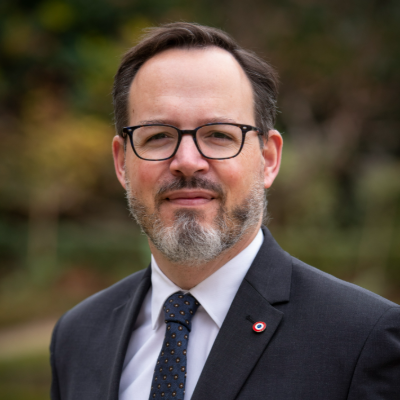
We will now hear an address by Mr Christophe MIRMAND, Minister of State of Monaco. After his address, he will take questions from the floor.
Dear colleagues,
It is a great pleasure to welcome the Minister of State of Monaco, Mr Christophe MIRMAND.
We welcome you as your country is chairing the Council of Europe's Committee of Ministers for the first time since its accession in 2004, at a particularly decisive moment for our organisation and for our whole continent.
The priorities of your presidency — the effective protection of all European citizens, an efficient organisation and working resolutely to meet Europe's current and future challenges — are both timely and highly relevant.
We also recognise your country's ongoing support for Ukraine and its people and the continuation of the fight against impunity with the establishment of the Special Tribunal for the Crime of Aggression against Ukraine and the International Claims Commission. As Europe is faced with a range of major challenges, the Monegasque Presidency has highlighted the importance of the renewed mobilisation of all member states and the shared responses to address these challenges.
So please be assured that the Parliamentary Assembly will stay firmly and stand firmly alongside Monaco to this end.
Without further ado, it is my honour to give you the floor. Please.
Madam President of the Parliamentary Assembly of the Council of Europe,
Mister Secretary General of the Council of Europe,
Madam Secretary General of the Parliamentary Assembly of the Council of Europe,
Honourable Members of Parliament,
Ambassadors,
Ladies and Gentlemen in your respective capacities,
It is a great honour to address your Assembly today, at a time when the Principality of Monaco has, for over a month, held the Chairmanship of the Committee of Ministers of the Council of Europe.
Before I go any further, I should like, if I may, to welcome the Monegasque delegation sitting in this chamber. Ladies and Gentlemen, Members of the National Council, your constant commitment to the Parliamentary Assembly brings honour to the Principality and, day after day, breathes life into European dialogue.
In Monaco, the quality of the dialogue and the trust that bind the Prince’s Government and the National Council are among the strengths of our institutional model: on the essentials – the defence of our values and the future of our country – we move forward together.
Here in Strasbourg, by assuming the responsibility of chairing the Committee of Ministers, the Principality reaffirms its deep commitment to the ideal championed by the Council of Europe for over 75 years: to build a space where human rights, the rule of law and democracy form the foundation of our shared future.
This ideal did not arise in the abstract. As early as 1946, in Zurich, whilst our continent was barely recovering from its ruins, Mr Winston CHURCHILL called for the creation, and I quote: “a sort of United States of Europe” and the formation of “a Council of Europe”. Three years later, the Treaty of London gave substance to this vision. What we serve today is therefore not just one institution amongst many; it is the living memory of a promise made to Europe in the aftermath of the war.
In recent months, Monaco has hosted several meetings of this Assembly: the Committee on Political Affairs and Democracy in March and the Standing Committee in May.
On each of these occasions, we discussed the challenges facing our societies. The world is changing. This reality is now a fact for all states. War has returned to our continent for more than four years now. Crises are multiplying, some very tangible, others insidious: social tensions, the undermining of norms, the manipulation of information, cyber threats and hybrid interference.
Faced with these challenges, we have no choice but to respond swiftly and collectively. Indeed, inaction today is a recipe for uncontrolled pressures tomorrow. In this context, dialogue and multilateral co-operation are more necessary than ever.
It is in this spirit that the Principality currently holds the Chairmanship of the Committee of Ministers. Our commitment is based on a simple conviction. Within the Council of Europe, a State’s contribution is not measured by its size, population or economic power. Every member state, whatever its characteristics, is called upon to contribute fully to the collective endeavour.
In this regard, the words of Prince Rainier III, reaffirmed by His Serene Highness Prince Albert II upon his accession, still resonate particularly strongly; and I quote: “Let us remember that it is not necessary to be a great country to have great dreams, nor to be numerous to realise them.”
This Presidency also provides an opportunity to raise awareness within the Principality of the role of the Council of Europe and to present to member states the reality of the Monegasque model, which is often misunderstood, but deeply aligned with the ideals and values we share.
Ladies and gentlemen,
For more than seven centuries, the Principality has been built on a strong identity and set of values. Monaco enjoys a stable institutional framework, capable of evolving without ever abandoning the principles that underpin its continuity.
Mr Edmund BURKE once remarked that “a state devoid of the means to evolve is devoid of the means to preserve itself”. The Principality has, in its own way, taken this principle to heart: to reform in order to endure, without ever betraying its essence.
In this regard, I would like to say a few words about what Monaco actually stands for, beyond the image that is sometimes projected of it.
The Principality is, first and foremost, a land of coexistence. Within a few square kilometres – two, in fact – nearly one hundred and forty nationalities, each with their own languages, cultures and traditions, live together in peace. In a unique situation amongst the states of our continent, Monegasques themselves are in the minority in their own country; and it is precisely this mosaic that constitutes the richness of our national community. Freedom of worship, freedom of expression and freedom of opinion are guaranteed here, because they are the very foundation of harmonious coexistence.
Monaco is also a place of work, open to the surrounding region. Every day, the Principality’s population more than doubles: nearly 60 000 people cross its borders to come and work here, within a remarkably diversified economy; from financial services to construction, from trade to tourism, and from high-tech industries to scientific research and maritime-related activities. This vitality is underpinned by a unique social model, which combines economic dynamism, solidarity and the protection of individuals.
This model is not an abstraction. It is the day-to-day embodiment, on the scale of a small territory, of the very values upheld by the Council of Europe: the dignity of every individual, pluralism and openness to others.
This stability is rooted in a culture of dialogue, responsibility and the constant pursuit of the public interest, which enables Monaco to develop its institutions whilst respecting the balance enshrined in its Constitution and in accordance with the requirements of a modern rule of law, as in any democracy.
Maintaining public confidence in the institutions and ensuring the effective protection of fundamental rights are constant priorities.
Since its accession in 2004, the Principality has maintained a constant, rigorous and constructive dialogue with the Council of Europe and its monitoring mechanisms.
The recommendations addressed to Monaco have never been viewed as constraints, but rather as opportunities for progress, which have accompanied several significant institutional developments, including: the strengthening of the powers of the National Council and the independence of the judiciary, through the High Council of the Judiciary; the establishment, and subsequent expansion of the remit, of the High Commissioner for the Protection of Rights and Mediation; and the establishment of the Committee for the Promotion and Protection of Women’s Rights.
This momentum continues today, driven by the same commitment to compliance with the highest international standards.
Our legal system is undergoing fundamental changes. Several important pieces of legislation have been adopted, whilst further work is underway, particularly in the areas of social rights and family law, whether concerning the situation of same-sex couples, adoption or the exercise of parental responsibility, with a view to bringing our legislation even closer into line with developments within the European Union.
In the fight against money laundering and the financing of terrorism, the Principality has taken decisive steps: a strengthened legislative framework, considerably increased human resources and an effective system of sanctions. In this area, only long-term results matter, and we remain committed to this standard.
The Principality has also very recently adopted a national anti-corruption strategy, which sets a clear course and specific objectives for all its institutions.
Finally, a draft bill on journalism now aims to guarantee that members of this profession can practise under conditions comparable to those prevailing in neighbouring countries, as freedom of the press is one of the most fundamental expressions of that freedom of opinion to which Monaco remains deeply committed.
These advances reflect a single ambition: to adapt our model of governance to the expectations of our citizens and the demands of our times.
Ladies and gentlemen,
The principles upon which our organisation is founded are a collective obligation for us all.
Our States face widely shared concerns and priorities: the fight against all forms of discrimination, the strengthening of social cohesion and the building of societies that are ever more egalitarian, inclusive and respectful of the dignity of every individual.
For the challenges facing us are numerous and interlinked: the war of aggression in Ukraine, but also the silent erosion of the rule of law, the weakening of citizens’ trust in their institutions, the undermining of fundamental freedoms, disinformation, isolationism and the decline in participation in democratic life. None of these dangers spares anyone in the long term; none will be resolved in isolation. All call for a renewed mobilisation of all member states and the institutions of the Council of Europe.
These challenges call on us to bring to life the vision of the Council of Europe’s founding fathers, not as a static legacy, but as a renewed commitment to serving the 700 million Europeans.
This aspiration is given concrete expression in the public policies pursued in the Principality and guides the priorities that Monaco has chosen to place at the heart of its Presidency, for the strength of a society is also measured by the care it shows for the people it has a duty to protect.
Thus, Monaco’s commitment to respect for international law – and international humanitarian law in particular – naturally extends to the defence of our common values.
In this regard, the war of aggression waged by the Russian Federation against Ukraine has profoundly shaken our continent.
Since the start of the conflict, the Principality has consistently affirmed its support for Ukraine and continues to call for a just, comprehensive and lasting peace, based on respect for Ukraine’s independence, sovereignty and territorial integrity.
However, such peace cannot be separated from the issue of the aggressor’s responsibility for violations of international law.
Guided by this conviction, the Principality has fully endorsed the initiatives developed under the auspices of the Council of Europe: firstly as a founding member of the Register of Damages in 2023, then by becoming a signatory, from day one, to the Convention establishing an International Claims Commission for Ukraine in December 2025, and finally by supporting the establishment of the Special Tribunal for the Crime of Aggression against Ukraine, as expressed at the Ministerial Session in Chişinău on 15 May this year.
Monaco and the Council of Europe stand shoulder to shoulder with the Ukrainian people – women and men, girls and boys – who are fighting to defend their country and their identity. Despite their tireless resistance and efforts to achieve peace, the aggression continues and the suffering of the population is unbearable.
Almost 25 centuries ago, Thucydides recorded the phrase by which the Athenians justified their domination over the island of Melos: “the strong do what they can, and the weak suffer what they must”. The Council of Europe was born out of a rejection of this principle. It was designed to ensure that the rule of law prevails over the law of force.
At a time when international law is being flouted and the desire to act unilaterally, in breach of established rules, is becoming ever more prevalent, we must continually reaffirm that the norms governing our continent, together with the United Nations Charter, must remain our guiding principles in these turbulent times.
In this sense, the three pillars of our organisation, which are inseparable from one another, are essential to ensuring the rule of law.
It is in response to these challenges that the Principality has set out the priorities for its Presidency. They all stem from the same principle: to protect those who need protecting, by equipping our organisation with the means to be effective.
The protection of the most vulnerable comes first. The promotion of gender equality and the fight against violence against women and girls, in particular through the full implementation of the Istanbul Convention, will be one of the key priorities of our Presidency, building on the commitments the Principality has already made at national and international levels.
The protection of children and the participation of young people form the second priority. We will pay particular attention to the prevention of radicalisation and violent extremism, the impact of social media, the development of a child-friendly justice system and the fight against disinformation, for a society can only prepare for its future by giving its young people the means to think freely and act as informed citizens.
Sport is a natural extension of this ambition. As a vehicle for health, education, inclusion and social cohesion, it instils in young people values that will stay with them throughout their lives, provided it is practised in an environment that protects them from all forms of violence. That is why, on 3 and 4 November, the Principality will host the 19th Council of Europe Conference of Ministers responsible for Sport, dedicated to safer and healthier sport for children.
But protection also requires an effective organisation.
This begins with support for the convention system. Monaco reaffirms its unwavering commitment to the European Court of Human Rights and its independence; and it is the responsibility of the Committee of Ministers, which the Principality chairs, to collectively ensure the full implementation of its judgements, upon which the credibility of our entire system depends.
It also requires enhanced co-operation in the fight against organised crime, from terrorism to money laundering. In a world where the rule of law is all too often challenged, states have never needed common rules more: several new commitments and treaty instruments will be introduced during our Presidency.
Finally, this rests on dialogue. The Principality will strive to promote regular consultation between member states, as well as between the various bodies of the Council of Europe, in order to strengthen the coherence of our commitments and ensure that our actions fully serve the organisation’s aims and values.
Through these priorities, ladies and gentlemen, Monaco is pursuing a simple aim: to reaffirm its commitment to the values on which the Council of Europe is founded, to highlight commitments that have long been dear to it, and to demonstrate that a State, whatever its size or population, can contribute credibly, effectively and constructively to our common endeavour.
Ladies and gentlemen,
At a time when certainties are wavering and the balance of power is being undermined, our organisation’s unity, relevance and capacity for action must be renewed. Our continent has already experienced the collapse of its certainties. In The World of Yesterday, his magnum opus subtitled Memoirs of a European, Mr Stefan ZWEIG wrote that he had watched, powerless, as "the most appalling defeat of reason" of his time unfolded. He wrote these lines in 1941, as Europe was being torn apart for a second time, and did not live to see Europe’s rebirth. The Council of Europe has been the driving force behind this rebirth; and it was founded precisely to ensure that such a catastrophe would never happen again.
It is against this troubled backdrop that Monaco is assuming, for the first time since its accession, the Chairmanship of the Committee of Ministers.
Allow me, in conclusion, to turn to another era. In 1849, addressing the Peace Congress, Mr Victor HUGO heralded the day when the nations of Europe, “without losing their distinct characteristics and their glorious individuality”, would merge “into a higher unity” to form “European brotherhood”.
Ladies and gentlemen,
The Council of Europe remains today one of the most faithful custodians of that promise. And it does not belong solely to the great nations: it also belongs to the smallest, provided they commit themselves to it unreservedly. Aware of this responsibility, the Principality intends to contribute to the work of the Council of Europe, guided by the following vision: the protection of all, through an effective organisation, in order to meet contemporary challenges.
Ladies and Gentlemen,
Finally, allow me to convey to your Assembly the message entrusted to me by His Serene Highness Prince Albert II, our Sovereign: “Monaco is convinced of the essential role of multilateralism in the face of geopolitical, economic, climatic and digital upheavals. In this context, uniting around our values seems all the more necessary. We recognise the scale of the task ahead, and we shall stand by your side to reaffirm our unwavering commitment to the three pillars of this institution: human rights, the rule of law and democracy.”
Thank you for your attention.
Thank you very much, Mr Christophe MIRMAND, for your very clear and interesting address.
And I must not miss the opportunity also to welcome very warmly the Minister of Foreign Affairs and Cooperation of Monaco, Ms Isabelle BERRO-AMADEÏ. So also welcome here with us.
We will first hear questions of the speakers on behalf of the political groups, followed by a response to each of them from Mr Christophe MIRMAND.
And I remind you that questions must not take longer than 30 seconds. And please really raise questions and do not make speeches.
And I first give the floor to Ms Anna-Kristiina MIKKONEN on behalf of the Socialists, Democrats and Greens Group.

Finland, SOC, Spokesperson for the group
16:00:31
Madam President, Minister Minister,
We are living in an age in which our democratic societies face numerous threats. These threats to the security of society may arise independently, simultaneously or in succession. When society as a whole is under threat, the contribution of all these stakeholders to its defence is essential.
How does Monaco ensure its security of supply and work towards overall security in Europe?
Mister Minister, please.
Your question, Honourable Member, concerns global security and the resilience of democratic societies in the face of contemporary threats.
Any discussions regarding the strengthening of security in Europe – and the strengthening of the Council of Europe in particular – are therefore worthy of consideration. These solutions are, of course, complementary to, rather than in competition with, existing mechanisms, particularly those of the United Nations and the OSCE. And the Council of Europe, of course, has a full part to play in this.
The Council of Europe’s membership, mandate and expertise enable it to take very specific actions. And the Principality of Monaco, naturally, in the role it will assume at the head of the Committee of Ministers, will endeavour to support and strengthen the Council of Europe. Virtually all states on the European continent, with the exception of Russia and Belarus, are members.
Our concerns and our responsibility centre on human rights, the rule of law and democracy, which are the three pillars of the Council of Europe. And through its treaty framework, the Council has established an extremely comprehensive regulatory framework that enables us precisely to tackle all the threats you have mentioned, and which urges all member states to improve their own legal frameworks and the resources they must mobilise fpr their implementation.
I believe this is the case for no other organisation, and it is important that, in the resources we mobilise, we do not undermine the very nature of the Council of Europe, so as to make its responsibilities and instruments even more effective.
These, in any case, are the tools and instruments that the Principality of Monaco wishes to activate and mobilise during its Presidency, which it now holds until next November.
Thank you very much.
Mr Pablo HISPÁN, on behalf of the Group of the European People's Party, please.
Thank you. Thank you, Madam Chair.
Welcome, Minister. You, as a small nation, have always lived in difficult environments, but today more so than before.
What is the role of small nations in this world with big enemies? And specifically, what is the role of your country in this environment?
Thank you, Mister Minister.
Thank you for that question.
Small states, I believe – and this is the conviction of the Principality of Monaco – play a balancing role in a polarised international system. First and foremost, all states – regardless of their size, their population, or perhaps even their history – remain equal not only in terms of rights, but also in terms of obligations.
States that are often described as ‘small states’ actually make, and this is our conviction, a contribution that is far greater than their apparent influence would suggest, for they are well aware that this collective solidarity and the affirmation of the rule of law undoubtedly constitute the best defences against faits accomplis and individual vulnerabilities.
Through their numbers, their commitment and their pursuit of the common good, they are often, in a sense, the beating heart – or perhaps the springboard, if I may put it that way – of multilateralism.
The Council of Europe is that multilateral forum where the roles and contributions of each member, from the smallest to the largest states, are visible on a daily basis and are illustrated in particular during the presidencies of the Committee of Ministers, as is the case today with the Principality of Monaco, and as has also been demonstrated recently by Malta, Liechtenstein and Luxembourg.
It is therefore in this spirit that we wish to commit ourselves to this chairmanship of the Committee of Ministers.
Thank you.
Now I call Ms Cristina Gabriella DUMITRESCU on behalf of the European Conservatives, Patriots & Affiliates.

Romania, ECPA, Spokesperson for the group
16:06:08
Hello.
Mr Christophe MIRMAND, how does your presidency intend to ensure the European policies on child protection respect family sovereignty and the fundamental right of parents to raise their children within their own culture?
And how can we strengthen cross border co-operation to prevent institutional abuse against these minors? An example among thousands is the Samson family whose girls are detained in Sweden from December 2022.
Thank you.
Thank you very much.
Mr Christophe MIRMAND.
Thank you, Honourable Member, for your question.
Children – and this is, of course, a key commitment for the Principality of Monaco – must be able to fully enjoy the fundamental rights guaranteed by the European Convention on Human Rights and the United Nations Convention on the Rights of the Child.
This protection is a priority for our Presidency. Strengthening the protection of their rights is a key commitment, and several events have already been organised or are due to be organised as part of our Presidency. For example, on 3 June, a thematic debate of the Committee of Ministers took place on combating violence against women and protecting children’s rights. On 4 June, a thematic dialogue was organised on social media and children’s mental health. Finally, on 16 June, the conference on child-friendly justice took place in Monaco.
The Council of Europe has carried out numerous other activities in support of children’s rights, currently as part of the implementation of the Council of Europe’s Strategy for the Rights of the Child 2022–2027, which naturally has the full support of the current Presidency.
For example, two very important recommendations were recently adopted by the Committee of Ministers, concerning respectively the protection of children’s rights and their best interests in parental separation proceedings and in placement proceedings.
Several important issues will be addressed in the coming months and, no doubt, in the years ahead, with a view to further promoting children’s rights. For example, comprehensive and age-appropriate sex education, and the drafting of a recommendation on multidisciplinary and inter-institutional justice models tailored to children, known as the Barnahus model.
As a representative of the Principality of Monaco, I also encourage all members of this Assembly to do their utmost within their national parliaments to facilitate and expedite the signing and ratification of key Council of Europe conventions that have a direct impact on children, the Istanbul Convention and the Warsaw Convention, and, with regard to the Lanzarote Convention, which has been ratified by all member states of the Council of Europe, the Principality of Monaco emphasises the need to ensure the full implementation of the Lanzarote Committee’s recommendations, and to promote them within the framework of co-operation and development between all Council of Europe member states and third countries.
That, Honourable Member, is all I can offer in response to your question.
Thank you very much.
And now Mr Damien COTTIER, on behalf of the Alliance of Liberals and Democrats for Europe.

Switzerland, ALDE, Spokesperson for the group
16:09:51
Thank you, Madam President.
Mr Christophe MIRMAND,
First of all, congratulations to Monaco, which has long been a global leader in the protection of the oceans, and we would be interested to hear your views on the challenges in this area.
And with regard to human rights and social rights in particular, you mentioned women’s rights, Mister Minister. What does Monaco intend to do to reform the law on abortion or liberalise access to it, given that it is currently very restrictive, if not outright banned, in the Principality?
Furthermore, you also mentioned the rights of same-sex couples, particularly in relation to their children. What do you intend to do to advance rights in this area as well?
Thank you.
Thank you, Mr Christophe MIRMAND.
Thank you, Honourable Member.
As you are no doubt aware, Monaco already permits voluntary termination of pregnancy under three conditions.
Firstly, a potential risk to the life or physical health of the pregnant woman. Secondly, a high probability of serious and irreversible abnormalities in the foetus, or the presence of an incurable, life-threatening infection. And finally, where the pregnancy is the result of a criminal act, provided the procedure is carried out within 12 weeks. These provisions were introduced by a law passed in 2009.
More recently, a law passed in 2019 decriminalised abortion in the Principality. However, the decision not to legalise abortion following a bill that had been passed by the National Council does not, in truth, alter the applicable legal framework or the rights of the pregnant woman in any way. The agreement reached in 2009 and 2019, following discussions with the National Council, strikes a fair balance and goes as far as the Constitution allows. It was, moreover, stated in 2019 that this text, which had been unanimously approved by the members of the National Council, removed an injustice whilst respecting the institutional specificities of our country.
Naturally, the Sovereign Prince and the Government recognise the seriousness of this issue and are deeply committed to the well-being of women and the circumstances they may face; Monaco will therefore continue to adapt in the future to address the concerns and expectations of society with its characteristic pragmatism and efficiency.
A roadmap for sexual health outlines the measures put in place to improve support, and to strengthen information, education and communication on sexuality and sexual health, particularly amongst young people, as well as the promotion of reproductive health through information and access to contraception, the prevention of unwanted pregnancies, and the introduction of anonymous and free gynaecological consultations for minors and young women up to the age of 21.
With regard to LGBTI rights, Monaco is also fully committed to the principle of non-discrimination. And to address certain situations, the Government has begun considering the extension of certain rights, to ensure greater protection for same-sex couples, but also to address situations involving children living with them, in accordance with the principle of the best interests of the child. Close attention is being paid to the decisions that have been made, and work is currently under way which will shortly be the subject of a discussion with the National Council.
Thank you.
And now, Mr Dionysios-Charalampos KALAMATIANOS, on behalf of the Group of the Unified European Left.
Greece, UEL, Spokesperson for the group
16:13:40
Thank you, Madam President. Welcome, Mister Minister.
Across Europe, inequalities are widening. The cost of food, energy and housing continues to rise. These pressures undermine social cohesion and weaken public trust in democratic institutions.
So my question is, what initiatives can be taken to address or reverse this trend?
And how does Monaco, during its chairmanship, intend to strengthen the implementation of the European Social Charter and place social rights higher on the Council of Europe agenda?
Thank you.
Thank you, Mister Minister.
Thank you, Honourable Member, for your question.
I would like to emphasise that the declaration adopted at the end of the High-Level Conference on the European Social Charter, held in Chișinău under the Moldovan Presidency last March, sent, I believe, a very strong message.
Social justice is not only a moral obligation; it is also a cornerstone of democratic renewal. Ensuring the effective enjoyment of these social rights strengthens trust in public authorities by reducing inequalities, and is also a means of fostering inclusive and solidarity-based societies.
The Committee of Ministers welcomed member states’ commitment to social rights, and in particular those that have undertaken additional commitments under the European Social Charter. The work carried out and the Chișinău Declaration will certainly contribute to the social justice dimension of the New Democratic Pact for Europe championed by the Secretary General.
During its chairmanship, the Principality of Monaco will continue to support the work being carried out to draw up this pact, the initial results of which are expected to be presented during the second quarter of 2027.
But I speak subject to your approval, Mister Secretary-General.
In any case, the Principality believes that the success of this new pact will depend on our collective ability to make it an operational instrument based on evaluation, coherence between existing monitoring mechanisms and constructive dialogue among member states.
Thank you very much.
I will now give the floor to other speakers and we'll take them in groups of three.
Please don't forget to limit your questions to 30 seconds.
And first of all is Ms Bisera KOSTADINOVSKA-STOJCHEVSKA from North Macedonia.
Thank you, Madam Chair.
Mr Christophe MIRMAND, thank you for being with us today.
Monaco today would generally be classified as a country with high levels of legal equality for women and relatively strong institutional support for women's rights.
But still the continuing challenge is violence against women. Domestic and sexual violence remain of important concern.
I would like to ask you what are your plans on removing this concern and further enhancing and disregarding violence against women?
Thank you.
Thank you.
Ms Andrea EDER-GITSCHTHALER of Austria.
Thank you very much.
Madam President,
Minister, you have already mentioned the key priorities: child protection, ethics in sport, and the fight against gender-based violence.
What measures have already been planned or taken to implement these priorities? And, more specifically, how are you supporting the repatriation of abducted Ukrainian children? Child protection is, after all, also a priority.
Thank you very much.
Thank you.
And the third one in this round is Mr Christophe BRICO from Monaco.
Thank you, Madam Chair.
Mr Christophe MIRMAND,
We are used to debating matters in our national parliament, and whilst you may not be aware of this, it is not my custom here to engage in domestic politics.
Nevertheless, your presence compels me to do so, and I shall therefore touch upon it briefly.
For three parliamentary terms now, Monegasque parliamentarians have been asking successive governments to organise question times, as is the practice in all European parliaments. The foundation of democracy lies first and foremost in citizens who are informed and therefore knowledgeable.
And yet, we are still being denied this; I would like to know why.
Thank you.
Thank you for these questions and I now give for the answers to the Minister of State, please.
Thank you, Madam Chair.
I would first like to respond to the question put to me by the representative of North Macedonia regarding women’s rights.
I would like to emphasise that this issue is naturally one of the priorities being implemented in the Principality of Monaco and that the Principality has also established it as a priority in relation to its Chairmanship of the Committee of Ministers.
In the Principality, the Committee for the Protection and Promotion of Women’s Rights was established in 2018, and by virtue of its interministerial nature and scope, its remit is to ensure the coordination, implementation, monitoring and evaluation of all national policies and measures in order to promote equality between men and women and prevent all forms of violence and discrimination against women.
Numerous awareness-raising campaigns have therefore been organised and implemented by this Committee, notably to mark International Women’s Day on 8 March, as well as 25 November, which is the International Day for the Elimination of Violence Against Women.
Naturally, legislative measures have also been implemented by the government in collaboration with the National Council in the field of protecting and promoting women’s rights, in particular: a law on sexual harassment in the workplace adopted in 2017; an amendment made to the Criminal Code in 2019 to criminalise a number of offences if they are committed on the grounds of the victim’s sex; a reform of the Criminal Code in 2021 to implement measures against criminalisation of sexual assaults and introduce the offence of sexual harassment; and finally, a comprehensive overhaul in 2022 which repealed provisions that had become obsolete or discriminatory in relation to gender equality.
More recently, a law passed in 2023 also established a compensation scheme to provide redress for harm suffered by victims of sexual offences, crimes and offences against children, and domestic violence.
With regard to the care provided to these victims of violence, it should be emphasised that the Principality of Monaco provides particularly attentive care and support through a system tailored to the circumstances faced by victims of violence. In particular, this protocol, enables victims to be provided with shelter in suitable accommodation, with financial assistance offered and arranged by the government.
That covers the measures implemented by the Princely Government to combat violence against women.
Moving on to the second question I was asked, regarding the return of Ukrainian children, I would like to point out that on 3 December 2025, the United Nations General Assembly adopted a resolution in support of this important issue, and this text condemns the forced transfers of Ukrainian children to Russia, their illegal adoptions and the erasure of their identities, and demands their immediate, safe and unconditional return. In early 2026, the Principality of Monaco joined the International Coalition for the Return of Ukrainian Children, which was launched on the initiative of Canada.
On 11 May, Monaco took part in the coalition’s high-level meeting in Brussels, and the return of all Ukrainian children who have been forcibly transferred must be an absolute priority for all member states of the Council of Europe. Monaco is actively involved in the work of this coalition as well as in the Council of Europe’s Consultation Group on the Children of Ukraine, underlining the particular importance the Principality attaches to the protection of children affected by the war and to their safe return.
Finally, regarding the question raised by Mr Christophe BRICO – whom I of course thank for highlighting the current developments in the Principality’s National Council – I would, of course, first like to emphasise the importance of the relationship of trust that unites these two institutional bodies: the legislative branch, the National Council and the Princely Government, in accordance with the principles laid down in the 1962 Constitution, as amended in 2002.
I would, however, like to emphasise that the Constitution states that executive power in the Principality of Monaco falls under the supreme authority of the Prince and that government is exercised under this supreme authority by a Minister of State, who is assisted by the Council of Government. In our institutional system, the government derives its authority from the Prince. It is the Prince who appoints it and it is accountable to him and him alone.
In the Principality of Monaco, the government is therefore not politically accountable to the National Council. There are no confidence votes, censure motions, or any votes capable of forcing the government to step down.
While it is true that when one looks at countries that have introduced a system of questions on current affairs or questions to the government (as is the case, for example, in France) this system can only be understood in light of the government’s accountability to the National Assembly.
To transpose this institutional ritual in a certain way, without transposing its underlying principles, might amount to establishing, in the Principality of Monaco, a meaningless imitation, a sort of institutional illusion, or even to lend credibility to the idea that there is, in a sense, a principle of accountability not provided for by the Constitution. And in both cases, such an arrangement would seem to us to be at odds with the overall functioning of our institutions.
Indeed, I believe it is important to emphasise that, at the Principality level, relations between the government and the National Council – an assembly of 24 elected members – take place within a direct, ongoing framework with mainly personal relationships. The mediating role that a question time plays in assemblies comprising several hundred members meets a need which, ultimately, does not necessarily arise in the relationship between the Government and the National Council, and this Monegasque institutional tradition of deliberation, characterised by a quest for consensus, might even, in some way, be altered or undermined by this "questions to the government" mechanism, which would lend itself to pointed remarks or a style of interaction that would sit ill with a culture like ours, and might well lead to more confrontational political relations, which do not correspond to our political culture, founded on respect and trust.
We will try a very quick last round of three.
Mr Vladimir ĐORĐEVIĆ is the next, but I think he's not in the room.
So we proceed to Mr Bertrand BOUYX.
Thank you, Madam President.
Minister of State,
First of all, as Chair of the French delegation, I would like to welcome you here, on your home turf, given that the French Republic and the Principality of Monaco form a very real community of destiny, of which you are the perfect example. Your country has set out its priorities: equality and the fight against violence – particularly violence against women – as well as the protection of children and young people. These are two priorities we share, given the complex situation we are currently facing in France.
My question will be simple and direct. What areas can we focus on within our institution to further strengthen the justice system, making it more effective and efficient, so that never again does a failure of this kind lead to such a tragedy?
Thank you.
Thank you.
And Ms Olena MOSHENETS.
Thank you, Mister Minister of the State, for your report. And we also thank you for the support of Ukraine.
And my question is: the Principality of Monaco awards state decorations for foreign citizens. They were also awarded to the representatives of Russian war criminals.
Does the Principality of Monaco consider the removal of these awards from Russian war leaders? And how do you view your contribution to holding the Russian Federation accountable for its crime of aggression against Ukraine?
And finally, Ms Luz MARTINEZ SEIJO.
Thank you, Madam President.
Mister Minister, you said that Monaco has made progress when it comes women's rights in recent years. We recognise these steps forward. But there are still severe limitations in fundamental rights, such as the almost total restriction of access to abortion, multiple cases of gender-based violence, and economic and labour gaps which affect the real equality between men and women.
For this reason, Mister Minister, the question is clear. Do you think the government of Monaco will make progress in terms of genuine equality, guaranteeing reproductive rights, strengthening the fight against violence and adopting concrete measures against economic inequality?
Thank you.
Mr Christophe MIRMAND, for your final conclusion.
Thank you, honourable Members of Parliament.
In response to the question from Mr Bertrand BOUYX, whom I would like to thank for his welcoming remarks, regarding the tragic events that have recently occurred in the French legal system, I would naturally like to reiterate and emphasise – as I did in my remarks earlier – the urgent need to accord the protection of children the utmost political priority.
It is precisely in this spirit that the Principality of Monaco has sought to place the protection of children’s rights at the heart of its presidency’s priorities. Our national approach is based on four distinct requirements.
The first is to prevent such situations from arising. To this end, the Principality attaches great importance to the training of staff who work with children and listen to their accounts.
The second priority is to identify situations of this nature, which in particular requires the training of professionals in contact with children; it is necessary – and I would even say essential – to monitor developments in this area as closely as possible by collecting objective data that enables us to adjust our response.
The third priority is protection. This means better coordination between the services working in the field of child protection to provide a comprehensive response that includes shelter, social and medical care, psychological support and legal assistance.
Finally, the last priority is support. Support means giving children a greater say at every stage of the process, creating an atmosphere of trust with the aim of ensuring that the best interests of the child are upheld and that this does not remain merely an abstract principle in the Principality, but is upheld as it is in all member states of the Council of Europe. This issue naturally calls for a shared commitment from all Monegasque institutions, and you may rest assured, of course, of our full commitment to this cause. It is our collective responsibility to ensure the full implementation of the Lanzarote Convention through the recommendations and follow-up questionnaires, so as to continually improve the quality of the measures taken by Member States.
Here, we would like to commend the work currently underway to update the Steering Committee’s guidelines on the rights of the child, with a view to ensuring a justice system tailored to children’s sensitivities and needs.
With regard to the question on Ukraine that was put to me, I would naturally like to reiterate that the Principality of Monaco wishes to reaffirm its commitment to the territorial integrity, sovereignty and independence of Ukraine, as well as, above all, the need to ensure full accountability for the violations of international law that have been committed. This means a firm and resolute condemnation of the aggression carried out by the Russian Federation against Ukraine, in violation of international law and fundamental principles.
It also means standing in solidarity with the Ukrainian people in their struggle for sovereignty, peace and freedom. It also means a firm commitment to international humanitarian law and, in particular, speaking out to express our rejection of strikes against infrastructure and civilian populations, which we naturally regard, like everyone here, as unacceptable.
Finally, it means supporting all initiatives aimed at achieving a just and lasting peace. Of course, such a peace cannot in any way be equated with Ukraine’s capitulation or defeat. On the contrary, it is a matter of providing Ukraine with security guarantees to meet the legitimate aspirations of the Ukrainian people. This support for Ukraine therefore implies that the Russian Federation must be held accountable for the crime of aggression it has committed.
This is a priority for the Council of Europe; it is, naturally, also a priority for the Presidency held by the Principality of Monaco, which will continue to support Ukraine and the accountability mechanisms developed within the framework of the Council of Europe. The Council of Europe continues to gradually strengthen this legal framework for mechanisms ensuring accountability and compensation for Ukrainian citizens. We will, of course, take action in this regard.
Finally, regarding the last question put to me on access to the right to abortion, or voluntary termination of pregnancy. I emphasised this earlier in my remarks. The two laws introduced in 2009 and 2019 – the first to address specific situations involving women who are victims of rape or whose medical condition could threaten their health or that of the foetus, and on the other hand to decriminalise voluntary termination of pregnancy outside the territory of the Principality, seem to me to fully meet the objective you referred to, Honourable Member, which is to enable all Monegasque women who so wish to be able to terminate their pregnancy.
This is a measure which we had the opportunity to discuss with the National Council in connection with a bill drafted by the Council. The Prince’s Government replied that it did not wish to decriminalise abortion within the Principality, particularly in view of the unique nature of the Principality’s institutional framework and the confessional basis of its organisation.
But naturally, one must also take into account the Principality’s geographical location, which enables women who wish to terminate their pregnancies to make full use of the opportunity to do so without facing any particular constraints that would prevent them from doing so.
Thank you very much, Mr Minister, for answering all our questions.
Very much appreciated. And I'm looking forward to a very fruitful co-operation with the Monegasque representatives over the next half year. Thank you very much.
Before we continue with the debate on the progress report, I'll interrupt the meeting for one minute to have a change here. Thank you very much. And also to give Ms Laura CASTEL the chance to come forward again.
And we will continue in one minute.
United Kingdom, SOC, President of the Assembly
16:37:58
Okay, colleagues, let's move on then to the next item of business.
We now continue the debate on the Progress Report of the Bureau and the Standing Committee, which is Document 16430, which was presented by Ms Laura CASTEL.
Now, with this we are considering the following reports. The report by the Ad Hoc Committee of the Bureau on Observation of the parliamentary elections in Hungary on 12 April 2026. That's Document 16432, which was presented this morning by Mr Pablo HISPÁN.
And we'll also consider the report by the Ad Hoc Committee of the Bureau on Observation of the early parliamentary elections in Bulgaria, 19 April 2026. That is Document 16429, which was presented this morning on behalf of Mr Chris SAID, by Mr Armen GEVORGYAN.
We will now continue hearing from the registered speakers. Could I remind everybody that the debate will end by 5:30 p.m. and the speaking time limit is 3 minutes.
With that, I call the first speaker, who is Mr Mike READER.
Thank you.
And thank you to the rapporteur, the observers and everyone who put this report together on behalf of the 4 000 Bulgarian and Hungarian members in Northamptonshire, many of whom, I'm sure, made their voice very clear.
I'm going to speak about the Hungarian elections. After 16 years, this election delivered a peaceful change of government on a turnout of nearly 80% and with an outgoing Prime Minister conceding on election night. This is a democratic achievement, in spite of the democratic system, though not because of it.
And this report is unflinching. Voters had a genuine choice at the polls, but they didn't have an equal opportunity. The state and governing party were fused in Hungary, with public money, public media and public data all used to support the status quo. The fact that voters overcame an uneven playing field does not make that playing field acceptable.
So I ask myself, have Hungarians stepped out of the frying pan and into the fire? The machinery that Mr Viktor ORBÁN used to assert dominance has not vanished overnight. The two-thirds majority still remains, and it's the very instrument that was previously used to capture institutions across the Hungarian estate.
But my initial observations are that we have a hope, but a conditional hope. There are early good signs. The state of emergency has ended. There has been a term limit introduced for the office of the Prime Minister. The withdrawal from the International Criminal Court (ICC) is being reversed. Public media reform has begun, and we will even see the return of Budapest Pride this year.
These are real steps back towards our European family. But they must be locked in through inclusive, transparent reform, scrutinised by an opposition, a free press and a civil society that are allowed to do their job free of oppression.
But I want to end by putting on record something that this report kind of captures between the lines. That change like this only ever happens when people work together. It does not happen as a result of one party alone. In Hungary, there was a consensus, a collective decision across the opposition that removing the incumbent mattered more than any single party banner. Smaller parties of the left stood aside, urging their voters to consolidate behind the main challenger. And in doing so, many of them lost their seats, and they lost their leaders in those positions. They could have run themselves, they could have run to protect themselves. But instead, they chose unity. And for my Socialist and Democratic colleagues, this is not a defeat. It's the quiet, hard, quite often unglamorous work of democracy, and the good people who made that sacrifice deserve the gratitude of everyone in this Chamber. And we, and within our group, they will be missed.
Thank you.
United Kingdom, SOC, President of the Assembly
16:42:12
Ms Elvira KOVÁCS.
Distinguished Chair, dear colleagues,
As a representative of the Hungarian minority political party in Serbia, I would like to outline the basic tasks of minority parties such as the development of the community, the protection of rights and representation of interests, the maintenance and development of links with the kin state, and the maintenance and development of community institutions which affirm good co-operation between the two countries in different fields, including infrastructure and the European integration process.
The Parliamentary elections in Hungary of the 12 April were marked by active citizen engagement. Record turnout the technical administration of voting was efficient and election day was orderly. The campaign was active. Online campaigning became a central arena of competition.
The Hungarian parliamentary election brought a change. As a result, among other things, the ratio of female MPs in the current Hungarian national assembly has almost doubled. Today, the speaker and three of the six deputy speakers in the Hungarian National Assembly are women. Eight out of the 20 Parliamentary Committee chairs are also women. A quarter of the members of the new Hungarian government are women. Women now lead several important ministries including Foreign Affairs, Education and Child Welfare, Justice and Rural and Urban Development.
Coming back to the election, the record turnout of almost 80% reflected exceptional public interest. The results are well known. Tisza's result amounted to 71% of parliamentary seats and a two-third constitutional majority. Tisza received 53.2% of the list vote, but secured a much larger share of seats because of its overwhelming success in the single member constituencies.
Postal ballots once again overwhelmingly favoured Fidesz–KDNP. A two-thirds majority places a heavy responsibility on the new majority since it provides the legal ability to amend cardinal laws and the fundamental law. Mr Péter MAGYAR and Tisza have a clear mandate to turn the page. But democratic renewal cannot be achieved by not respecting the rule of law.
Anyway, our Assembly stands ready to support Hungary in this reform process in close co-operation with the Venice Commission, other Council of Europe bodies and international partners.
Thank you.
United Kingdom, SOC, President of the Assembly
16:44:57
Thank you.
Mr Bob De BRABANDERE.
Thank you.
Dear Colleagues,
I read on the Council of Europe website that the Hackathon 2026 is a significant event aimed at addressing the current democratic backsliding and restoring public trust in democratic institutions, by boosting access to reliable, pluralistic information and critical thinking.
But critical thinking, dear colleagues, is precisely what is under fire in a lot of our nations.
For example in my own country Belgium, where the recent conviction of political activist Mr Dries VAN LANGENHOVE, watching these proceeds here from the benches up there. This conviction in Leuven criminalises a political speech, not because the facts presented were disproved, but because the way they were framed displeased prosecutors and judges.
This judgment, ladies and gentlemen, crosses a red line.
When courts start criminalising tone, emphasis and political conclusions drawn from official statistics, the message to citizens, academics and opposition politicians is clear: challenge the dominant narrative and you may face a criminal record. That is the very definition of a chilling effect and it is how democracies slide from open debate into sanctioned opinion.
In the UK, people are imprisoned for voicing the wrong opinion. In Germany, Chancellor Friedrich MERZ persecutes citizens for calling him "Pinocchio" and unfortunately in many other countries we notice the same decline of free speech.
Dear Colleagues,
Article 10 of the European Convention on Human Rights, which guarantees everyone “the right to freedom of expression”, including the freedom to hold opinions and to receive and impart information and ideas without interference by public authorities, is not a decorative clause. It is meant to shield precisely the kind of sharp, uncomfortable political speech that those in power would rather not hear.
If any kind of laws, including anti-racism laws, are stretched until they become instruments to silence dissent, then the law itself becomes a tool of intimidation. I urge this Assembly to treat this not as a detail, but as a warning sign. If we accept that judges can punish wrong interpretations of right facts, we normalise the criminalisation of thought and critical thinking and that is simply unacceptable. I urge you all to be very, very vigilant about that.
Thank you.
United Kingdom, SOC, President of the Assembly
16:47:49
Mr Damien COTTIER.
Thank you, Mister President.
I would like to speak on the subject of election monitoring.
We have had several such observations in recent weeks and, in every case that has been monitored, we have seen foreign interference – at times on a massive scale – hybrid attacks, pressure – sometimes economic, sometimes even involving military threats – as well as heightened tensions and increased polarisation across the country.
I shall have the opportunity to present a detailed report at the next part-session, in principle, on the elections that have taken place in Armenia. It would be too early to discuss this in detail, but I would like to make this general observation because I am truly convinced that our Assembly and partner organisations must adapt their approach to election observation in light of this reality.
This was already set out in the report I had the opportunity to present to this Assembly a few months ago, which received unanimous support in the form of a resolution – "Elections in Times of Crisis" – and which proposes, in particular, that we adjust our approach to election observation.
I am truly convinced that we need to place greater emphasis on the pre-election period, because it is not so much on polling day that problems arise, but well beforehand, during the campaign and even during the drafting of electoral legislation, and also afterwards, as we are currently seeing in Armenia, for example, where events are unfolding involving protests and cases being brought before the courts after the elections; here too, a post-election presence would likely strengthen this work.
Election observation is an extremely valuable tool, but it must evolve in line with changes in society, technology and the threats we face, and I am delighted that, during the reporting period we are covering, there was a conference in Paris which addressed precisely this issue, and that the network of observers is set to discuss this matter further this week.
Tomorrow, the Committee on the New Democratic Pact will have the opportunity to discuss this very issue with the Secretary General of the Council of Europe, and I would add that it is also discussing it with representatives of the network and the Venice Commission.
Because this is truly something we need to work on, something through which we can develop and improve our toolkit, and we have seen this in an extremely powerful, striking and, ultimately, very concrete way over the past few weeks.
We must work together to improve the situation.
United Kingdom, SOC, President of the Assembly
16:50:26
Thank you.
Mr Piero FASSINO. He is not in his seat.
Mr Gerardo GIOVAGNOLI.
Madam President,
On behalf of the San Marino Delegation, including Ms Alice MINA, now Captain Regent – that is, Head of State for this six-month term – I would like to thank the President of the Assembly, Ms Petra BAYR, and all those who have spoken in the plenary this morning or sent their messages of condolence and sympathy following the passing of our colleague Ms Mariella MULARONI.
She had a remarkable ability to listen and seek the views even of her political opponents, to stand firm in her positions without raising her voice, to offer a smile at every opportunity and to practise kindness.
She showed us just how important these qualities are for holding public office – qualities that are pre-political, human and essential for establishing dialogue and building bridges.
Ms Mariella MULARONI was elected Minister for Health in 2023, stepping down from her role as a Member of Parliament and thus also leaving this House. Since then, she had to contend for most of the time with a very serious illness, which had affected her appearance but not her essence – characterised by great faith and a consistent approach to people and life, marked by trust and kindness.
Indeed, her role as Minister for Health – with her immense dedication to working for the health of all and to caring for individuals, whilst she herself bore her illness with great dignity – served as a great example of humanity, even before it was a political one, which has left its mark on our community.
I once again offer my condolences to her family and, in particular, to her young daughters Ms Giulia MULARONI and Ms Beatrice MULARONI , whom I hope will follow in their mother’s footsteps in her civic and political commitment.
Thank you.
United Kingdom, SOC, President of the Assembly
16:52:25
Ms Marie-Christine DALLOZ.
Thank you, Mister President,
Dear colleagues,
I would like to thank our colleague Mr Pablo HISPÁN for his report on the observation of the parliamentary elections in Hungary, which was a thorough piece of work.
Before the election, many of us were concerned about the atmosphere of the campaign, the blurring of the lines between state resources and those of the ruling party – which we were able to observe – and the risks of foreign interference; on the eve of our arrival, the Vice-President of the United States, Mr James David VANCE, had come to support the candidate who went on to lose the election. We should also note the attempts to intimidate certain voters and, finally, the uneven media coverage.
I myself took part in this observation mission and I, too, would like to commend the good logistical organisation of the election and the serious and calm atmosphere in which the voting took place. In the polling stations my colleague and I observed, the atmosphere was calm and respectful. I saw quite incredible queues towards the end of the morning, with people showing consideration when a person with a disability or someone with a baby came to vote; everyone would move aside to let the person with reduced mobility or the babies through.
Representatives of the political parties, whether TISZA or Fidesz, were present at every polling station; exchanges were respectful and cordial, and the vote count I witnessed proceeded without any apparent major difficulties. It is also important to acknowledge the civic commitment of the Hungarian people and the significance of this election for the country’s democratic future and its place within the European Union.
I would point out that turnout was over 80%. This is a significant figure, and many countries could only dream of such a turnout.
Finally, I was very touched by the warm welcome our delegation received at every polling station.
And that evening, in the streets of the capital, on the night the results were announced, it was a joy to see the delight of a people reunited with Europe, and cars driving past flying both the Hungarian and European flags.
So there you have it: this is the result, and I am delighted for the Hungarian people.
I hope that from now on, we will welcome them back into the European family.
Thank you.
United Kingdom, SOC, President of the Assembly
16:55:32
Mr Márton HAJDU.
Do I have the floor? Okay. Good. Thank you.
Mr President,
Dear colleagues,
First of all, allow me to thank Mr Pablo HISPÁN and the entire observation delegation for their work.
Indeed, as he said, it was no ordinary election.
I also accept the report's central conclusion. Hungarians were offered a genuine choice between democracy and autocracy, between Europe and the East. And consequently, they turned out in massive numbers and the election day was orderly.
But the campaign took place nowhere near an even playing field. It was tough and profoundly uneven. Mr Viktor ORBÁN used every instrument of the state and some more to prevent change. And he was not constrained by the President of the Republic, Mr Tamás SULYOK, or by the Constitutional Court or any other institution tasked with protecting democracy.
We could not match his media power, state resources and institutional advantages. So we answered with perseverance and immense field work. The hard legwork of democracy.
Mr Péter MAGYAR visited around 700 settlements, some as many as five times. During the final weeks of the campaign, he held seven or eight rallies a day. Across the country, our candidates and their volunteers talked to people and knocked on doors.
This effort overcame a political system designed to make change impossible, also known as autocracy. Hungarians did more than replace their government. They reclaimed their democratic choice. And they voted in 141 TISZA members of parliament, more than a third of them women and five Roma. All of these are record-breaking numbers in Hungary.
Since the election, our support has surged to over 70%. This political capital carries an extraordinary responsibility. We will use it to tackle the real problems of Hungarians: healthcare, education and the economy. But Hungarians also demand justice and guarantees that the wrongs of the past 16 years can never be repeated. Accountability must come through independent prosecutors, courts and institutions, all with due process.
This requires genuinely independent people in those institutions, not the puppets of Mr Viktor ORBÁN who didn't do anything to constrain his power.
The rule of law is also essential to economic renewal. Predictable rules, clean public procurement and independent institutions are necessary for investment, prosperity and the responsible use of public money.
Let me note that we inherited the Council of Europe's monitoring procedure and the EU's Article 7 procedure and several court cases. We did not create these problems, but we accept responsibility for solving them. And as soon as possible, we will put our house in order and deliver justice and lay the foundations of a new Hungary firmly built on the rule of law, democracy and human rights. We will engage in genuine public consultations. Already the current proposal to change the constitution is in public consultation.
Thank you for your support. If you have any questions, turn to us. We are here.
Thank you. Goodbye.
United Kingdom, SOC, President of the Assembly
16:59:20
Lord David BLENCATHRA.
I was pleased to be an election observer for the Hungarian election and did so in Budapest, surely one of the most beautiful cities in Europe and a very warm and welcoming people.
As we see in most elections I've observed in recent years, there were no real problems on polling day, well run and free and fair. As usual, the election fraud takes place many months and years before, with changes to election law to assist the government party, as my colleague Mr Damien COTTIER alluded to.
This was a fascinating election, which took place under the election system invented by the then Prime Minister Viktor ORBÁN, so that his party would have an action advantage. But the great thing about this election was that he was defeated by the system he constructed so that he would not be defeated.
Let me quote what our official report said: "Since 2010, successive Fidesz two-thirds majorities were used to amend the fundamental law, adopt and modify the cardinal laws, redraw the electoral system and appoint key office holders in the Constitutional Court, the Curia, the Prosecution Service, the State Audit Office, the Media Council and other supervisory bodies. It went on to say qualified majority rules which would normally encourage consensus, instead enable the governing majority to entrench its political preferences and limit the room for future majorities to reverse them. Rule by decree further weakened parliamentary oversight and cheques and balances."
Colleagues, we have never encountered before a system whereby in a first-past-the-post system, the votes of the losing candidates were then added to the party list candidates. But the real vote-rigging scandal was that the so-called surplus votes of the winning candidate – that is, the majority the winning candidate had over the runner-up – was then added to the winning party's own party list.
Now that ensured that Mr Viktor ORBÁN had this super majority of 66% of the votes and could rule by decree and ignore parliament, which he routinely did.
So then why did he lose?
I spent, at my own cost, a few extra days in Budapest and talked to taxi drivers, shopkeepers, waitresses and other ordinary hard-working people. They all very carefully whispered the same thing: the ORBÁN government was totally corrupt and they wanted rid of it. As one person said, "There are only two types of people in Hungary: the wealthy, corrupt politicians like Mr Viktor ORBÁN's son in-law, and the rest of us who are poor." Now, whether they were correct or not, that was the overwhelming view.
And that is why Mr Péter MAGYAR and Tisza won. And now they must be given the time to root out the corruption of the past. That will mean sacking many of the officials, the friends and relatives who corruptly benefited financially from the the ORBÁN government.
So let's now give Türkiye the chance to show democracy in action once again.
Thank you.
United Kingdom, SOC, President of the Assembly
17:02:19
Ms Aurora FLORIDIA.
Thank you, President.
Dear colleagues,
We have witnessed a historic moment in Hungary during the parliamentary elections and an extraordinary expression of democratic participation.
First of all, I would like to express my heartfelt gratitude to the millions of Hungarian citizens who turned out to vote. Having been there, I have breathed in the atmosphere and intensity of this election first hand. It was a wave that swept across the country and challenged Mr Viktor ORBÁN's political model with a turnout of nearly 80% that some member states could only dream of.
One important lesson to be taken from this election is that constitutions and electoral systems can be changed by governments in power. But there comes a point when citizens stand up and respond. And in this case they voted not only for themselves, but also for the future of Europe. Our shared future.
As previous speakers have already mentioned, the pre-election period was marked by significant tensions, including concerns over the presence of so-called fake observers linked to Make America Great Again (MAGA) networks as well as Russian actors. There were also some challenges in engaging with Tisza. We chose not to participate in meeting with the Organization for Security and Co-operation in Europe (OSCE) observation mission due to concerns over external interference, and instead engaged only with our delegation.
Another remarkable aspect was the political responsibility shown by several opposition parties that decided not to run candidates in order to maximise the chance of a democratic change. That required sacrifice and a willingness to place the broader public interest above individual political ambitions. During the hearings, representatives of Tisza described themselves not as a traditional political party, but as a movement bringing together different political traditions united by one common objective: a democratic change after 16 years of Mr Viktor ORBÁN's system.
We will now closely follow the work of Mr Péter MAGYAR and his party. Citizens organise themselves through local islands, bringing together both younger and older generations, creating independent networks. Mr Péter MAGYAR will certainly now have to respond to the expectations of a highly mobilised civic movement.
My personal impression is that Hungarian citizens will now exercise much greater scrutiny over those in power and that a process in democratic normalisation may gradually begin. However, this will require time, responsibility and continued commitment.
Dear colleagues,
The Hungarian people have shown to us that democratic participation remains a powerful force. It is now up to the new Hungarian government to honour that commitment and translate it into lasting democratic process.
Sorry for the time. Thank you.
United Kingdom, SOC, President of the Assembly
17:05:45
Ms Vesela MOMCHEVA-TOWNE.
Dear Mister President,
Distinguished Members of the Parliamentary Assembly,
I take the floor for the first time in this hall of the oldest Pan-European organisation, as a new member and the new Head of the Bulgarian delegation. Bulgaria has been a member of the Council of Europe since 1992 and during this long period, our mutual cooperation has transformed Bulgaria into a democratic state, defending human rights, the rule of law and democracy as a true member of our United Europe.
I represent a new party in Bulgaria named “Progressive Bulgaria”, which consists mostly of people without political experience, but who have a sincere desire to deal with the problems facing Bulgarian society and the Bulgarian state today.
Our political family in Bulgaria is guided by clear principles and values. We are currently exploring which political group in this Assembly most closely reflects our vision, priorities and commitment to democratic values.
In the last parliamentary elections, we won 131 out of 240 seats in the Bulgarian Parliament. This large majority, which is the result of public trust, allows us to carry out the reforms that we believe are necessary.
In this process, we will also rely on a sincere and effective dialogue with the bodies of the Council of Europe, as befits members of a European family united by common values and shared future. All parliamentary elections during this long period were observed by the Parliamentary Assembly of the Council of Europe. Many recommendations were made which we considered, not as an order or command, but as a dialogue of equals among equals.
This is also the spirit of the present report presented by Mr Chris SAID from Malta. I congratulate the Rapporteur, the Ad Hoc committee and its Secretariat for the well-structured report and the valuable recommendations which we will take into serious consideration.
Unfortunately, the last elections also saw cases of negative manifestations, such as the phenomenon of vote buying, but thanks to law enforcement authorities, legal proceedings have been initiated against the violators and they will be held accountable under the law.
I am grateful to the Ad Hoc Committee for its conclusion that, I shall quote: “The Parliamentary Assembly of the Council of Europe (PACE) delegation commends the Bulgarian election administration and the many officials who organised the 19 April 2026 early parliamentary elections in a professional and transparent manner. The elections were administered efficiently, and election day was calm and orderly. Fundamental freedoms were generally respected, and voters were offered a genuine choice.”
As representatives of Progressive Bulgaria, we remain committed to build a stronger democracy, upholding rule of law and working together for a more united and prosperous Europe.
I am looking forward to our future cooperation.
Thank you very much, indeed!
United Kingdom, SOC, President of the Assembly
17:08:55
Mr Ruben RUBINYAN.
Thank you.
Since Mr Damien COTTIER mentioned the elections in Armenia, I would like to use this opportunity to talk about them. And first, I would like to thank the election observation mission led by Mr Damien COTTIER himself for the excellent job done.
Dear colleagues, these elections in Armenia were distinct and outstanding for a couple of reasons. The first reason was, strangely, a massive and co-ordinated vote-buying scheme implemented by the three main opposition parties. Almost every day, the relevant Armenian authorities were publishing tape recordings of members of these parties or representatives of these parties talking about how they were giving money to people to get their votes.
The second distinction was the massive disinformation campaign launched against the ruling party in Armenia. Again, almost every day, certain fake news was being published in certain foreign countries, and then that news was imported and disseminated in Armenia by these opposition parties.
The third distinction, and the major distinction, would be foreign interference in Armenian politics and foreign interference in Armenian elections and even economic measures were implemented by foreign actors and all of these were designed specifically to influence the outcome of the elections in Armenia.
Fortunately, the people of Armenia made a clear choice. Despite all these vote-buying schemes and foreign interference and disinformation campaigns, the people of Armenia made a clear choice, and this choice was peace and democracy. Armenia chose peace and democracy. And this means that Armenia will continue its path toward institutionalising the peace that it has achieved with Azerbaijan, continuing the normalisation process with Türkiye, and most importantly, continuing its democratic reforms and hopefully with the support of this organisation.
But also, it has to be understood that there is a massive demand for justice in Armenia, a demand to punish all those who have co-ordinated and implemented this massive scheme of vote buying. And the people demand justice. Our party demands justice. And justice has to be served.
Thank you very much.
United Kingdom, SOC, President of the Assembly
17:11:43
Ms Liliana TANGUY.
No.
So, Mr Balázs HIDVÉGHI.
Thank you, Honourable Chair.
Dear colleagues,
First of all, being new to this Parliamentary Assembly, I greet you all. I look forward to working together.
First and foremost, I'd like to welcome the record-high voter turnout in the Hungarian parliamentary elections. This clearly demonstrates that Hungarian citizens are exercising their democratic rights and actively participating in shaping the future of the country.
The election process was conducted in full compliance with the applicable rules and regulations. The electoral procedure was carried out properly, entirely in accordance with the law. The National Election Office performed its duties professionally and once again proved that Hungary is among the leading countries in Europe in terms of the practical implementation of democratic elections.
I would also like to address the attacks and accusations that were made in the period leading up to the elections. Numerous claims suggested that democracy was being undermined in Hungary or that the conditions for free and fair elections were not guaranteed. However, the conduct of the elections clearly demonstrated that these allegations did not reflect reality.
These were political attacks without any factual basis. The conduct of the elections and the transfer of governmental power both demonstrate that these accusations were unfounded. This is evidence of political stability and the continuous functioning of democratic institutions.
Now, the new government wants to reinforce democracy, as they say. But if they want to do that, they cannot do it undemocratically. In fact, what we see now in the past few weeks is an attempt at state capture. They are attacking democratic institutions. They are attacking officials who had independent organisations, just because these people were elected or nominated by the previous government during the previous parliament. But that parliament was also democratically elected. It was just as legitimate as the one that we just elected now.
So a previous parliamentary majority made a decision, and the new government should also respect that. They are attacking the President of the Republic, Mr Tamás SULYOK, and they want to remove him from office. They're attacking the Chief Prosecutor Gábor Bálint NAGY, the President of the Constitutional Court Péter POLT, etc. If we take democratic norms seriously, and if they take it seriously, then they cannot be partisan. And they have to do this objectively.
They have just announced now a major constitutional change, a constitutional amendment. And only five days are allowed for consultation, democratic consultation. And in this amendment they are proposing just to end President Tamás SULYOK's term because they don't like him.
We strongly urge the Venice Commission to get involved and have dialogue with the Hungarian government. And we urge the Hungarian government to be open to talk to the Venice Commission about these kinds of major changes. We cannot accept retroactive legislation and ad hominem legislation directed against specific people and to punish them because they have been in office prior to the current elections.
Thank you very much.
United Kingdom, SOC, President of the Assembly
17:15:22
Mr Oleksii GONCHARENKO.
Thank you, Chairman.
Dear colleagues,
Russia and the Russian capital, Moscow, is being bombed. Moscow is burning. Can you imagine such headlines 10 years ago? Five years ago? Or even three or four years ago, at the beginning of the Russian full-scale invasion?
Now that's exactly what's happening almost every day. And Russian social media is now full of videos of Russians crying, screaming, with explosions in the background. Yes, Ukrainians proved again that we shouldn't be underestimated. But does it mean that we want the war to continue? No, we want peace as soon as possible.
But we realise that the only way to achieve this peace is to show Russians what the war is about and what it really looks like, something we feel in Ukraine every day for already more than 12 years, especially in the past four years at least.
But from what's going on now, we can learn several lessons. The first is a lesson to all of us. If we fail, together with you, to promote our values by resolutions, by words, by soft power, then we will need to explain our values with drones and missiles.
Unfortunately, if we are turning a blind eye to dictatorships on our borders, sooner or later these dictatorships will go mad and will start the war, terrorist attacks or anything else. And the only way to stop it will be to burn their capital, to burn their refineries, to burn them.
So we need to be much more active and proactive in promoting our values. I think one Ukrainian drone explains to Russians why democracy, rule of law and human rights matter more than a million words and resolutions, unfortunately. And that's the lesson.
And the second lesson is to the Russian people, and I want to address the Russian people. We strike you not because we want this war to continue, but because we badly want to end this war. And if you want to end this horror, first you need to end your silence. We are ready in Ukraine to end this war on the current lines right now. And the only reason why it continues is because your dictator still wants to continue the war.
I want to address the Russian elites and Russian people: if you keep silent, the war will continue. Moscow will burn, your cities will burn. The only reason why it's happening is because the war continues. So you should make something and change the situation. One million people on Moscow's streets demanding one thing – peace – will be much more effective than one million words in one million resolutions, or, in another case, one million Ukrainian drones, sooner or later, will come to you.
Thank you.
United Kingdom, SOC, President of the Assembly
17:18:39
Ms Atidzhe ALIEVA-VELI.
Dear President,
Dear colleagues,
First of all, I would like to address the rapporteur, Mr Chris SAID, for improving the report. The election observation mission creates high expectations of Bulgarian citizens for objectivity. And I noticed that the text still includes some media-based clichés far removed from objective reality.
The report also lacks information about police pressure and excesses, such as active campaigns, arrests, searches, frequently on the verge of that permitted by law or in violation of the law. Such incidents also include the controversial seizure of financial funds, demonstrative police actions, and shows of strength.
According to publicly accessible information the results speak for themselves. Of the more than 3 000 boldly advertised “strikes” against “vote buying" only 34 court proceedings were initiated. This is a total of 0.1%. With regard to the remaining cases, the police themselves filed reports with the State Prosecutor stating that no actual crime had been perpetrated. In most cases the police were reacting not to real alerts but to anonymous allegations, which is legally inadmissible.
The illegal actions of the Ministry of the Interior have continued within the framework of the regular government, lead by Minister Ivan DEMERDZHIEV. The arrest of the Mayor of Kardzhali, Mr Erol MUMUN, without any court warrant, his illegal public detention, the show of strength and pressure are tantamount to revenge against political opponents.
Last but not least, restrictions relating to the organisation of polling stations in third countries is a violation of the voting rights of Bulgarian citizens, especially in countries like Türkiye, the United Kingdom and the United States of America. At that time, we in the Movement for Rights and Freedom, stated our opposition to such restrictions and we have already submitted a draft law on amendments to the Electoral Code with the aim of removing this discriminatory and anti-constitutional restriction of the political rights of Bulgarian citizens.
Thank you.
United Kingdom, SOC, President of the Assembly
17:21:24
Thank you. Mr James MACCLEARY.
Thank you, Chair, for the opportunity to speak about this.
I was proud to serve as part of the Assembly's election observation mission in Hungary. And my thanks go to Mr Pablo HISPÁN for leading the mission so ably.
In Budapest, alongside colleagues from across Europe, I saw something powerful: long queues, busy polling stations and citizens determined to use their vote.
In some areas, turnout was extraordinary. The atmosphere in many polling stations was positive and even hopeful. I was particularly struck by the large number of young people voting in this election, which gave us real hope for the future of European democracy. But our duty as observers is not only to celebrate participation, but to tell the truth.
This election offered genuine choice and saw remarkable citizen engagement. But it did not take place on a level playing field. The blurring of state and party, the misuse of public resources, the distorted media environment and the fearmongering tone in parts of the campaign all mattered.
I saw campaign material that used President Volodymyr ZELENSKYY as a symbol of danger. That tells us something about the climate in which this election was fought.
And yet, despite all that, the Hungarian people chose change. After 16 years in power, Mr Viktor ORBÁN has been defeated. That matters not only for Hungary, but for Europe. His government spent years undermining institutions, weakening media freedom, restricting civil liberty and obstructing support for Ukraine, giving comfort to the Kremlin.
The election can only be seen as a strong rejection of Russian interference in European democratic processes. That President Vladimir PUTIN's relentless campaigns of disinformation and distortion can be overcome. Indeed, that interference did not just come from Russia. Just a week before the election, the US Vice-President, Mr J.D. VANCE, spoke in Budapest in support of Mr Viktor ORBÁN. An extraordinary intervention from the US Administration in the internal democracy of a European nation.
Mr Péter MAGYAR and the Tisza Party now have a huge responsibility. Victory is not a blank cheque. The task ahead is to restore the rule of law, rebuild trust in institutions, protect media pluralism and bring Hungary back to the heart of European democracy.
In his victory speech, Mr Péter MAGYAR evoked Hungary's long history and role at the heart of European politics. The uprising of 1848, the revolt against the Soviet Union in 1956. But today we should recognise what Hungarian voters have done. In one small country, citizens have reminded us that democracy can still surprise the powerful. That is something worth defending, and it is something worth celebrating.
Thank you, Chair.
United Kingdom, SOC, President of the Assembly
17:24:10
Mr Jan Filip LIBICKI.
Mister Chair,
Dear colleagues,
First of all, I would like to thank Mr Pablo HISPÁN for his very important and professional report. Thank you, Pablo.
My participation in the parliamentary election observation mission in Hungary from 9 to 12 April leads me to a broader reflection than merely assessing the election date itself.
I would like to put forward a thesis that stems not only from this particular emission, but also from my previous observation experience in various countries.
Irregularities in the electoral process rarely occur on election day itself. Much more often, they arise earlier during the election campaign. In Hungary, election day proceeded calmly, efficiently and in accordance with procedures. The polling stations I visited were well prepared, accessible for persons with disabilities, and the vote-counting process was orderly and procedurally transparent. I did not observe any significant irregularities.
At the same time, during briefings and preparatory meetings, serious concerns were repeatedly raised regarding the quality of conditions for conducting the campaign. There were references to limited access of the opposition to the media, the dominance of pro-government messaging in public media, the absence of electoral debates and the possibility of the ruling parties making use of public resources.
This leads to a fundamental conclusion that even if the technical aspects of voting on election day are conducted properly, a full assessment of elections as democratic must take into account the earlier stages of the electoral process.
Therefore, I believe that, as the Parliamentary Assembly of the Council of Europe, we should place greater emphasis on pre-election missions, so-called pre-observation missions. It's precisely there that we are best able to assess the real conditions of political competition, access to the media, campaign financing and the use of the state's resources.
Thank you very much, Mister Chair.
United Kingdom, SOC, President of the Assembly
17:26:43
And our final speaker is Mr Pavlo BAKUNETS.
Thank you, Mister Chairman.
Dear members of the Parliament, I agree with Mr Oleksii GONCHARENKO.
One Ukrainian drone works better in Moscow than 1 million words and resolutions in the world. And these days we see an important moment in the war which Russia started against Ukraine. We see results of our common work. It's possible because of brave Ukrainian soldiers, because of work of Ukrainian engineers and strong support of the international community, especially European countries.
I thank you for your support. We thank you for 90 billion for our Ukrainian budget and for our Ukrainian military sphere. Thank you.
Today we see a very important thing: Russia can be stopped. Russia can be pressured. That's why I believe lasting peace will come thanks to the joint efforts of Ukraine and our partners around the world.
But there can be no real peace without justice. We must continue this path until the moment when Russian military and political leaders who started this war against Ukraine will be brought to justice. We welcome the decision of Committee of Ministers on the start of the Special Tribunal for the Crime of Aggression against Ukraine.
It's important step, but it's just the beginning. We call on all members, all states of the Council of Europe and other countries to join this work. This could make the Russian government feel responsibility for their crimes. And I believe we all together can return security to Europe and ensure a peaceful future for all of us.
Thank you.
United Kingdom, SOC, President of the Assembly
17:29:11
Thank you.
And I must now interrupt the list of speakers.
The speeches of members on the speakers list who have been present during the debate but have not been able to speak may be given to the Table Office for publication in the Official Report.
Speeches must not exceed 400 words. I remind colleagues that the type-written texts can be submitted, electronically if possible, no later than 4 hours after the list of speakers is interrupted.
I now call on Ms Laura CASTEL to reply. You have 2 minutes.
Thank you, Chair,
Just a few remarks. Important issues have been raised during this debate. Some of them are very important, for example, the implementation of judges by our colleague Ms Bisera KOSTADINOVSKA-STOJCHEVSKA but also the challenge to peace and the normalisation of the violation of international law or the policies of Mr Donald TRUMP against Greenland and this interference in the territorial integrity and how the challenges of democracy has been posed by the housing crisis and the poverty and inequality and the social rights which sometimes we are not focusing enough on, because this social insecurity. And we have this Social Charter, which is a very important document that we celebrate the 65th anniversary.
The destruction of all the cultural heritage has also been mentioned, where I called it Mr Iulian BULAI and how those responsible have to be accountable. But if one thing has been raised a lot, it is about the election observation. It has been pushed by Mr Damien COTTIER, for example, the proposal of improved tools. But not only, but also to monitoring after the elections, because it is important, and a lot of members have raised this issue on Hungarian observation missions. About how on the day of the elections, it is normally very calm and very soft, and there's a very good procedure. But then there is some – not in the Hungarian, but in all the elections – how the foreign interference has tried to interfere and influence the results.
Also, the peace process with Azerbaijan has been raised, which is an important thing, I think.
And let me finish with two things. Welcome, new members. For example, from Ms Vesela MOMCHEVA-TOWNE from Bulgaria and Mr Balázs HIDVÉGHI from Hungary. Welcome to this Assembly. Because they say that is the first intervention.
And I finish saying thank you to Mr Armen GEVORGYAN, for his work here. Because it is his last session. As it is mine, this is my last session. So thank you again.
Thank you to the secretariat for this job in the observation missions and Ms Aurora FLORIDIA's report.
And thank you all.
United Kingdom, SOC, President of the Assembly
17:32:25
Thank you.
Now, before we move on, our colleague Mr Konrad FRYSZTAK has informed me that he would like to speak to commemorate the 50th year since the tragic events at Radom on 25 June 1976 in Poland.
Mr Konrad FRYSZTAK, you have 1 minute.
Mister Chairman,
Dear colleagues,
50 years ago in Radom, Poland's road to freedom began.
On 25 June 1976, the people of Radom protested against drastic increases in food prices and stood up to the Communist authorities.
For their courage, they paid a high price. They were brutally beaten, imprisoned, dismissed from their jobs and and sentenced to many years in prison.
The events of June 1976 in Radom initiated changes that later led to the rise of Solidarity, the fall of communism in Poland, the return of democracy and Poland's accession to the European Community.
In these days, we pay tribute to the heroic people of Radom and once again, repeat, it all began in Radom.
Thank you.
(Undelivered speech, Rules of Procedure Art. 31.2)
Thank you, Mr Chair.
First of all, I would like to thank the rapporteur, Mr Chris SAID, and the members of the observation mission for their thorough work.
The report rightly concludes that these elections were administered transparently and efficiently. Credit should be given to the caretaker government led by the Prime Minister Andrey GYUROV, which played a proactive role in safeguarding electoral integrity and combating vote-buying. These efforts contributed significantly to public confidence in the electoral process.
The results of these elections have placed my party in the opposition. Yet precisely because we are in opposition, I believe that saying these were probably the best organised elections Bulgaria has held in recent years is an objective assessment.
At the same time, the report identifies important areas where electoral legislation should be improved. I strongly believe that the recently introduced cap on polling stations in non-EU countries should be abolished. Millions of Bulgarian citizens living outside the country must enjoy equal and unrestricted access to their voting rights. Their participation strengthens our democracy and reinforces the bond between Bulgaria and its citizens abroad.
The voting process should also continue to evolve. We should make voting simpler and more accessible while using voting machines to their full potential. At the same time, public trust must be protected through regular independent audits and full transparency. My colleagues and I have already tabled legislative proposals addressing these issues.
The Bulgarian people have entrusted the new government with a great responsibility. They expect stronger rule of law, transparent and accountable governance, effective anti-corruption measures, and institutions that serve the public interest. In this regard, continued cooperation with the Council of Europe, the Venice Commission and other European institutions will be essential.
Finally, while political stability is welcome, we must also recognise the dangers that come with the concentration of power. A strong parliamentary majority must never come at the expense of democratic checks and balances. As an opposition, we will remain vigilant and constructive. We will defend democratic oversight, uphold Bulgaria's European path, and work to ensure that our country remains fully engaged in the key political, economic and security processes shaping Europe.
We will also continue to support Ukraine in its struggle against aggression and in the pursuit of a just, lasting and sustainable peace. Bulgaria's future lies in a strong, united and democratic Europe, and we will continue to defend that vision.
Thank you.
(Undelivered speech, Rules of Procedure Art. 31.2)
Madam Chair,
First of all, I would like to thank the rapporteur and the election observation mission for their work and for their balanced assessment of the parliamentary elections in Bulgaria.
The report rightly highlights the growing role of social media, the spread of disinformation and the increasing polarization of political debate.
In my view, however, one trend deserves particular attention.
Politics is increasingly moving from the public square to the digital platform. Citizens are gradually becoming consumers of political content rather than active participants in democratic life.
Algorithms reward outrage more than argument. Visibility often matters more than credibility. Emotional reactions travel faster than facts. As a result, democratic debate becomes more fragmented, more personalized and more vulnerable to manipulation.
This is not only a Bulgarian challenge. It is a European challenge.
I would also like to address the discussion on vote-buying and controlled voting.
These practices must be investigated and prosecuted wherever they occur. However, public debate in Bulgaria has become excessively focused on allegations and police operations rather than on proven violations and final court decisions.
We should be careful not to confuse allegations with facts. Otherwise, we risk creating the impression that electoral crime is the defining feature of Bulgarian democracy, while election observation missions consistently conclude that voters are offered a genuine choice and that election day is conducted in a calm and orderly manner.
I am also concerned by the growing visibility of the Ministry of Interior during election campaigns. Law enforcement institutions play an important role in protecting electoral integrity, but they should never become political actors themselves.
Such perceptions can undermine public confidence and may discourage citizens from engaging in democratic life. Electoral legitimacy should be built on trust in institutions and the rule of law, not on the perception that policing is the primary guarantee of democracy.
Finally, while higher voter turnout is encouraging, our greatest challenge remains those who no longer vote at all.
Thank you.
(Undelivered speech, Rules of Procedure Art. 31.2)
Dear colleagues,
Within my speech today and in the framework of the Progress Report of the Bureau and the Standing Committee, I would like to highlight several important developments and areas that require continued attention, that these bodies were focusing on during the last months.
First, I would like to reiterate my appreciation for the Assembly’s continued commitment to supporting a comprehensive, just and lasting peace for Ukraine and strengthening the security of the European continent. The work carried out and had been done within the Assembly demonstrates a clear understanding that Ukraine’s resilience and territorial integrity remain closely connected with the broader security architecture and democratic stability of Europe.
I also very welcome the continued attention given to strengthening democratic resilience, protecting human rights and upholding the rule of law across Council of Europe member States. Recent work of the Assembly has addressed a wide range of challenges affecting democratic societies, including the functioning of democratic institutions in Serbia and Georgia, the protection of critical voices, and the need to safeguard democratic processes from emerging threats such as artificial intelligence-related disruptions.In this context, I would like to underline the importance of the Assembly’s efforts to address increasing forms of pressure against democratic actors and civil society. The discussions on transnational repression, political prisoners, and the situation of democratic Russian civil society in exile demonstrate the Assembly’s essential role in defending fundamental freedoms and ensuring accountability for violations of human rights.
I would also like to highlight the importance of addressing the consequences of unresolved conflicts and historical injustices. The Assembly’s work on issues such as the need to combat impunity for transnational war crimes reflects its commitment to justice, accountability and the protection of victims.
Another important priority remains strengthening societal resilience. Recent reports and motions concerning energy sovereignty, sustainable food security, access to healthcare for migrants and refugees, and the protection of critical infrastructure demonstrate that security today must be understood in a comprehensive manner. The experience of Ukraine has shown that attacks against essential systems and services directly affect citizens’ safety, democratic stability and the ability of societies to function effectively.
I would also like to recognise the Assembly’s continued efforts to promote equality and inclusive societies. The work on eliminating gender stereotypes in the media, combating harmful practices, improving access to healthcare, and protecting human dignity reflects the Council of Europe’s commitment to ensuring that human rights remain at the centre of all policies.
Furthermore, I welcome the Assembly’s continued focus on media freedom, freedom of expression and the role of independent journalism, particularly in challenging contexts such as conflicts and crises. A free and responsible media environment remains a fundamental pillar of democratic societies.As we approach the Third Part of the 2026 Ordinary Session, it is important to maintain the momentum of this work and ensure effective follow-up to the Assembly’s decisions. Strengthening members’ active participation, enhancing cooperation between committees and increasing the visibility of the Assembly’s activities remain essential for ensuring that our institution continues to respond effectively to current challenges.
In conclusion, the Progress Report reflects significant and timely work by the Bureau and the Standing Committee. The priority now is to transform these commitments into concrete actions that reinforce democratic resilience, protect human rights and strengthen the common values of the Council of Europe.
Thank you. I wish all of us a productive session!
(Undelivered speech, Rules of Procedure Art. 31.2)
Distinguished Chair,
Dear Colleagues,
I welcome the Parliamentary Assembly of the Council of Europe (PACE) report and the effort of the observation team on the recent elections in Bulgaria. While we commend the professional administration of the vote, we must address an insidious threat that transcends Bulgaria's borders and strikes at the heart of our shared democratic fabric.
The electoral landscape is being aggressively reshaped in the digital sphere. Recent analysis by the Balkan Free Media Initiative shows how algorithmic vulnerabilities are actively exploited to manufacture political support. In Bulgaria, we saw a coordinated deployment of fake accounts, automated bots, and targeted disinformation heavily fuelled by malign foreign influence, most notably Russian state-backed narratives. The care-taker government launched initiatives to prevent, detect and respond to foreign interference by forming co-ordination mechanism between responsible ministries and requesting the activation of the European Union (EU) Rapid Alert System.
Dear colleagues,
What we have witnessed in Bulgaria is part of a dangerous, synchronised pattern across our continent. We see the exact same hybrid footprint from the Black Sea to the Nordics. We saw it in Romania, where TikTok bot networks upended the presidential elections. We saw it in Moldova and Georgia, where massive hybrid campaigns weaponized artificial intelligence and digital fear to derail democratic sovereignty. And we see it in Poland and Norway, where targeted cyberattacks and coordinated networks have repeatedly struck political parties to erode public trust and weaken Western solidarity.
These are not isolated incidents; they are live-fire testing grounds. If coordinated networks and opaque (ОУПЕЙК) algorithms can systematically distort the electoral choices of our neighbours, no nation in this Chamber is immune.
The Council of Europe is the guardian of democracy and the rule of law. But to guard democracy today, we must adapt. We can no longer treat algorithmic manipulation as a corporate oversight; it is a sovereign matter of collective democratic security.
We urgently need coordinated, multilateral action. We must hold global social media platforms strictly accountable under frameworks like the Digital Services Act, strengthen our regional cyber defences, and build robust, cross-border frameworks to counter hostile foreign manipulation. Let us treat these findings not merely as a report to be noted, but as a critical call to collective action.
Thank you.
United Kingdom, SOC, President of the Assembly
17:33:55
Thank you, Mr Konrad FRYSZTAK.
I now propose that the decisions in the progress report be ratified as they now appear in Document 16430 with Addendum 1.
Are there any objections?
If there are no objections, the progress report is approved.
The Assembly will hold its next public sitting tomorrow morning at 10:00 a.m. with the Agenda which was approved earlier today.
The sitting is adjourned.