


01/04/2026 Election observation
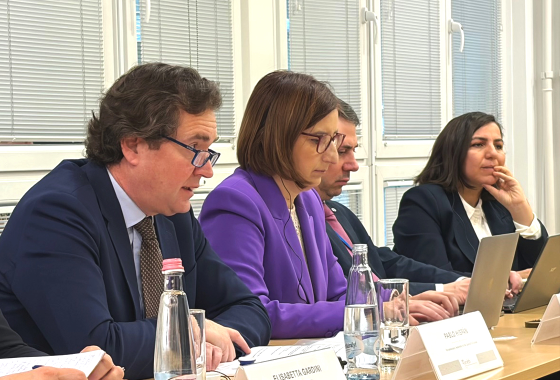
A cross-party delegation of observers from PACE, visiting Budapest on 30 and 31 March ahead of the 12 April parliamentary elections, held talks with representatives of the authorities, the election administration, political parties, civil society, the media and the diplomatic community.
The delegation came away with a stark impression: that what is at stake is not only who wins votes, but whether democratic competition itself remains meaningfully open, pluralistic and fair.
The delegation observed that the electoral process appears technically well prepared overall. It appreciated the willingness of the authorities to engage in dialogue and the full co-operation of the Hungarian delegation to PACE. Many Interlocutors, however, pointed to a toxic climate marked by the blurring of state and party, the massive use of all state and government resources in favour of one party, a distorted information space, inflammatory propaganda, captured institutions, growing concern over foreign malign interference and hostility towards independent civil society organisations.
“After our meetings in Budapest, one question cannot be avoided: is Hungary still a competitive democracy, or a state captured by one party? Voters must decide Hungary’s future – not fear campaigns, not smear operations, not unequal rules and not foreign manipulation. They must also be able to trust that every vote is treated equally and handled with full transparency - including votes cast abroad,” concluded Pablo Hispán (Spain, EPP/CD), head of delegation.
The delegation was particularly concerned by repeated accounts of aggressive and deceptive campaign messaging, including sustained anti-Ukraine and anti-EU propaganda and a crude “war or peace” narrative aimed at stigmatising opponents rather than enabling an informed democratic choice.
Members also heard serious concerns about the broader integrity of the electoral environment: the prolonged state of emergency; weaknesses in oversight and remedies; the misuse of state resources, data and institutions for partisan purposes; serious allegations of vote-buying and the intimidation of voters; concerns about the independence of the judiciary dealing with election dispute resolution; uneven media coverage of political parties; and a media landscape in which many voters have only limited access to pluralistic and independent information.
The delegation wishes to express particular concern over out-of-country voting. Interlocutors underlined the different treatment of Hungarian citizens voting abroad, depending on their status and place of residence, raising serious questions about equality of suffrage. The delegation was also struck by concerns over the lack of transparency in the handling and verification of these votes. All votes must be subject to the same guarantees of equality, secrecy and effective scrutiny.
Another serious issue raised throughout the visit was the shrinking space for independent journalism, scrutiny and accountability. Democratic trust cannot be sustained if critical journalists, watchdogs and civil society actors are treated as adversaries rather than as an essential part of public oversight.
PACE does not take sides in party competition. It does, however, stand firmly for democratic standards. A credible election is not defined by election day alone. It depends on a fair campaign, equal conditions for contestants, transparent treatment of all votes, genuine media pluralism and protection against manipulation and foreign malign influence. These are the standards by which the electoral environment in Hungary will be assessed when the full-fledged delegation returns for the elections on 12 April.
***
Elisabetta Gardini (Italy, ECPA), deputy head of the delegation, expressed a dissenting opinion on this statement.
Composition of the delegation: Pablo Hispán (Spain, EPP/CD), head of delegation; Elisabetta Gardini (Italy, ECPA), deputy head of delegation; Gerardo Giovagnoli (San Marino, SOC); Marjana Puljak (Croatia, ALDE); Semra Çağlar Gökalp (Türkiye, UEL); Georges Papandreou (Greece, SOC), co-rapporteur on Hungary of the Monitoring Committee (ex officio).