Corruption and the perception of poor ethical standards pose a significant threat to democratic institutions, undermining public trust and impeding sustainable development.
The project Strengthening Ethics and Integrity in Parliaments, funded by Germany, supports the Council of Europe’s 46 member states in strengthening ethical standards, transparency, and accountability within parliamentary systems. By reinforcing integrity frameworks, the project contributes to increased public trust and more effective prevention of corruption in democratic institutions.
The project addresses, through a series of conferences, round tables and workshops, (1) the need for standards, such as codes of conduct, and seeks to promote their development; (2) the importance of effective enforcement mechanisms to uphold these ethical standards; and (3) the importance of establishing and fostering a strong ethical culture.
19 March 2025, Strasbourg (France) – Exchange of views on “Strengthening ethics and integrity in Parliaments: the Monegasque example”, with the participation of Mr Jean-Baptiste Perrier, Ethics Officer of the National Council of Monaco.
Launched in 2014, PACE's Anti-Corruption Platform provided a forum for dialogue and the exchange of good practices on combating corruption and strengthening parliamentary integrity. Although the platform is no longer active, its former webpage, including a record of past events and hearings, remains available for reference.
The current project builds on this earlier work, further advancing efforts to strengthen ethical frameworks and integrity in national parliaments.
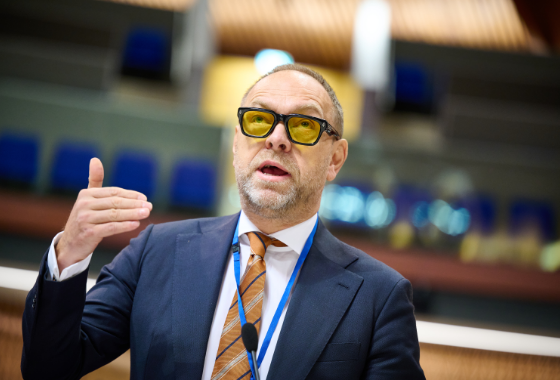 17/06/2026 - Rules, Ethics and Immunities
North Macedonia: PACE General Rapporteur welcomes the adoption of the revised Code of Conduct for members of Parliament
 19/11/2025 - Transparency and Integrity
Round table in Cyprus on strengthening ethics and integrity in parliaments
 20/10/2025 - Rules, Ethics and Immunities
Armenian parliamentarians explore Westminster’s ethics framework in study visit
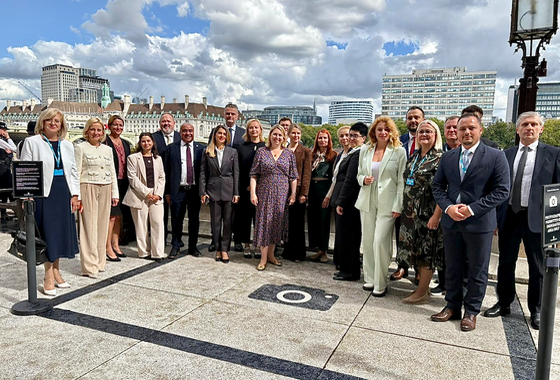 15/09/2025 - Transparency and Integrity
Study visit in London on ‘strengthening ethical and integrity standards in parliaments’
 09/04/2025 - Session
PACE calls for action to develop ‘an ethical culture’ at the Council of Europe, strengthens its own anti-corruption rules
The National Assembly of North Macedonia unanimously adopted a revised Code of Conduct for MPs in June 2026, strengthening its parliamentary ethics framework. The process was supported by PACE and OSCE-ODIHR, including through a study visit to the UK Parliament in September 2025.
Sergiy VLASENKO (Ukraine, EPP/CD)
General Rapporteur on ethical standards and anti-corruption
“Democracy depends on citizens’ trust that public power is exercised transparently, responsibly and in the public interest. Strong ethical standards, accountability and clear rules help parliaments uphold that trust and safeguard democracy.”
Resolution 2632 (2025)
Identifying and managing conflicts of interest in the Parliamentary Assembly
Resolution 1943 (2013)
Corruption as a threat to the rule of law
Recommendation 2019 (2013)
Corruption as a threat to the rule of law
Resolution 1214 (2000)
Role of parliaments in fighting corruption
Toolkit for drafting codes of conduct for members of parliament (March 2023)
Resolution (97) 24 on the twenty guiding principles for the fight against corruption (GPC 15)
Civil Law Convention on Corruption (4 November 1999)
Criminal Law Convention on Corruption (27 January 1999)
Additional Protocol to the Criminal Law Convention on Corruption (15 May 2003)
GOPAC Handbook on Parliamentary Ethics and Conduct (2009)
GOPAC Anti-Corruption Assessment Tool for Parliamentarians
OSCE/ODIHR Public Ethics and Integrity Toolkit: Guidelines for Parliaments
OSCE/ODIHR Background Study: Professional and Ethical Standards for Parliamentarians