


03/10/2025 Session
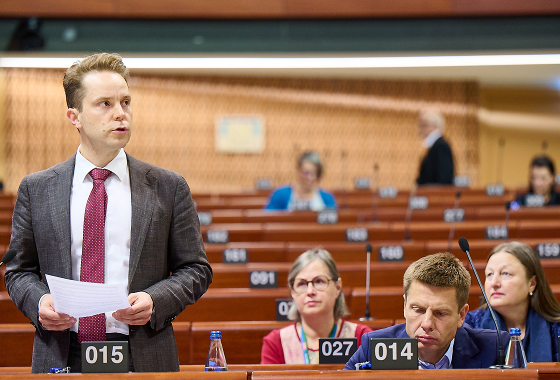
According to PACE, the use of artificial intelligence (AI) in migration management must balance efficiency gains with protection of human rights “at all stages of the migration journey”.
In adopting a resolution based on the report by Petri Honkonen (Finland, ALDE), PACE proposed a set of measures for the regulation and control of AI systems in order to establish “safeguards against bias, human oversight and ensuring the dignity of migrants”, from pre-departure to transit, arrival, stay, circulation, return and sustainable (re)integration.
The adopted resolution underlines that AI systems are increasingly used in “border surveillance, visa processing, biometric identification, natural language processing and integration support”.
However, PACE believes AI “can make migration management not only more efficient but also more humane and inclusive”, highlighting the opportunities created by the responsible and ethical use of AI, such as saving lives, providing migrants with multilingual and accessible information, or supporting their integration by facilitating language learning, education and access to labour markets. It added that all AI tools must be transparent, accountable, subject to oversight, and in alignment with international instruments.
PACE also considers that the use of AI in migration, asylum and border control management must not allow for the bypassing of international obligations, in particular under the Refugee Convention. Nor should AI be used to infringe on the principle of non-refoulement, or to deny safe and legal avenues into States’ territory, according to the parliamentarians.
Finally, the Parliamentary Assembly called on member states to sign and ratify the Council of Europe Framework Convention on Artificial Intelligence and Human Rights, Democracy and the Rule of Law, which aims to ensure the development of AI in line with human rights standards.