08/06/2026 Elections
Assembly teams deploy across Kosovo to assess voting day after meeting key players
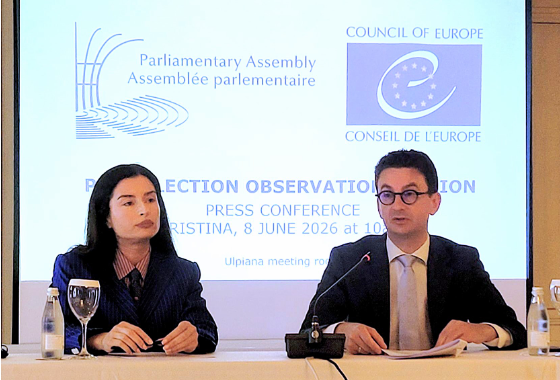
A delegation from the Parliamentary Assembly of the Council of Europe (PACE) has welcomed the orderly and smooth conduct of Kosovo’s early elections on 7 June 2026, which took place without major incidents. The delegation urged all elected representatives to engage now in genuinely constructive dialogue to reach the necessary compromises to promptly elect the president and advance the country’s democratic processes.
For the third time in 16 months, voters in Kosovo were called to the polls, following the inability of political parties to reach an agreement and elect a president, which resulted in the dissolution of the Assembly.
These elections took place against a backdrop of voter frustration and fatigue. The traditional campaign was subdued, characterised by a lack of substantial debate. A shift towards digital campaigning was observed. In this context, the delegation commends all the people of Kosovo for their commitment to democracy and their involvement in these elections. In a country with a history of high voter turnout, the significant drop in voter participation should however be a wake-up call.
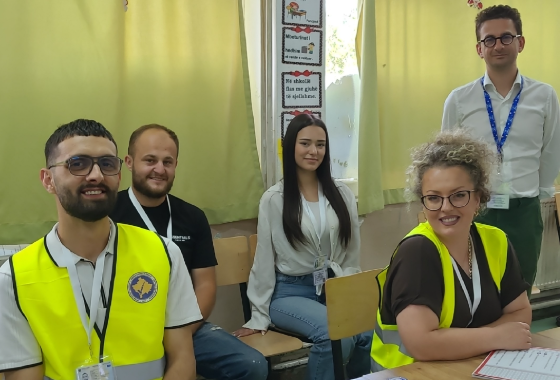
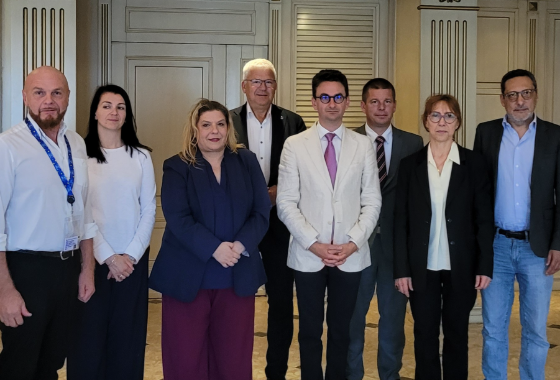
The PACE delegation, led by Iulian Bulai (Romania, ALDE), included ten members: seven parliamentarians from three political groups and seven Council of Europe member states, along with staff. On election day, PACE teams were deployed in Pristina and its surroundings, as well as in Gjakova/Đakovica, Gjilan/Gnjilane, Gračanica/Graçanicë, Kamenicë/Kamenica, Klinë/Klina, Leposavić/Leposaviq, Lipjan/Lipljan, Mamushë/Mamuša, Theranda/Suva Reka, Mitrovica, Severna Mitrovica/Mitrovicë e Veriut, Mitrovicë e Jugut/Južna Mitrovica, Parteš/Partesh, Pejë/Peć, Podujevë/Podujevo, Prizren and Ranilug/Ranillug.
In the limited number of polling stations observed, the delegation found the elections to be conducted smoothly and professionally. Electoral officers demonstrated competence, and the atmosphere was calm and orderly, with polling stations effectively managed by both majority and non-majority community representatives. However, language difficulties caused by inadequate representation of the community which makes up the majority in certain municipalities have created some friction in few cases. Equitable ethnic representation in local election commissions should be improved. Likewise, the inclusiveness of multilingualism could be enhanced.
The delegation also noted improvements in regulating assistance for voters with specific needs, while the accessibility of polling stations remained an issue.
Despite tight deadlines, the elections were technically well-organised and broadly inclusive. The Central Election Commission (CEC) deserves credit for the inclusive certification of party and candidate lists, including those submitted by the main Kosovo Serb party, Srpska Lista. The reduction in the number of complaints registered by the CEC and the Electoral Complaints and Appeals Panel (ECAP) signals progress. However, last-minute changes to the CEC’s rules complicated the registration of civil society observers.
The delegation took note of some measures seeking to prevent attempted manipulation in the counting of preferential votes - a significant issue in the previous election. The presence of domestic election observers at the Municipal Counting Centers will be key, and their role is essential in safeguarding electoral transparency and integrity.
A record number of diaspora voters registered for these elections. However, the late CEC decision allowing voting with expired IDs, and its subsequent reversal by the ECAP just days before the election, caused confusion, with the CEC resorting to additional verification of postal ballots upon their reception in Pristina.
The delegation heard from several interlocutors that the brief 10-day campaign was marred by allegations of misuse of administrative resources by the caretaker government, including the targeted distribution of social allowances and an announcement of subsidies to airlines for the diaspora – the timing of these measures was widely perceived as intended to benefit the ruling party.
The media landscape in Kosovo is diverse; however, the delegation received reports of AI-generated videos, misinformation and the appearance of fake accounts that could influence voters’ informed decision-making. There are serious concerns about the country’s limited capacity to address these threats and the lack of adequate institutional responses to remove harmful content. Furthermore, interference from Serbia was noted to influence the vote of Kosovo Serbs for one specific party. Particularly worrying was that such disinformation and online abuse often targeted women politicians, undermining their ability to campaign and their participation in public life.
“The voters of Kosovo have spoken clearly. They now expect their elected representatives to deliver decisive leadership, seek constructive compromise, and move the country forward on its Euro-Atlantic path - ending all cynical political games,” the head of delegation stated. “Democracy requires compromise and coalition-building, not zero-sum victories.”
The Parliamentary Assembly of the Council of Europe stands ready to assist Kosovo in further improving its electoral framework and strengthening the capacity of election stakeholders.
The PACE delegation was in Kosovo from 4 to 8 June. It met with leaders and representatives of the main political parties, the Chairperson of the Central Election Commission, the Chairperson of the Electoral Complaints and Appeals Panel, the Chairperson of the Independent Media Commission as well as representatives of the international community, NGOs and the media. The delegation's election observation report will be presented during the PACE September 2026 part-session.
---
* Throughout this document, all reference to Kosovo, whether to the territory, institutions or population, shall be understood in full compliance with United Nations Security Council Resolution 1244 and without prejudice to the status of Kosovo.