


23/06/2015 Session
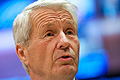
Thorbjørn Jagland today answered the parliamentarians’ questions during a question and answer exercise as part of the Parliamentary Assembly’s summer session.
In reply to a question on the need for a common European response to migration challenges, the Secretary General stressed that the Council of Europe did not have competence regarding more equitable Europe-wide distribution of the burden constituted by the arrival of numerous migrants.
“I would nevertheless point out that we do a great deal in other ways: all those arriving in Europe in a State Party to the European Convention on Human Rights have a right of individual petition before the European Court of Human Rights”, he said.
In reply to a question concerning the announcements made by certain member states contemplating withdrawal from the European Convention on Human Rights, the Secretary General said the tendency in some member states to contest the authority of the European Court of Human Rights was indeed “a matter of concern”.
“It is blatant in the United Kingdom; suffice it to see what happened during the election campaign. But there was also an attempt to hold a referendum on the primacy of Court judgments in Switzerland. Utterances hostile to the Court are heard in Moscow too. The powers of the Court are thus the subject of numerous discussions and contestations today,” he said.
Mr Jagland stressed that he had written to the British ministry of justice asking to review the situation with the authorities, but that hitherto he had received no reply. “But I am endeavouring to have contacts with all the other governments which seem inclined to a similar debate,” he concluded.
Among the other topics dealt with were questions concerning massive telephone tapping in Europe, the state of democracy and human rights in the Russian Federation, the Maidan Square incidents and the recent events in Odessa, the revision of the Ukrainian Constitution and the situation in Azerbaijan, Romania, “the former Yugoslav Republic of Macedonia” and the Republic of Moldova.