27/05/2025 Standing Committee

Young people are not merely seeking permission to be involved in political decision-making but are already acting, raising their voices and demanding recognition for their work to shape the future they will inherit, participants at a PACE parliamentary round table in Valletta have heard.
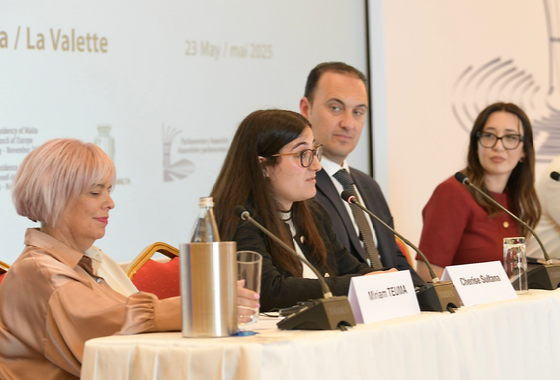
Youth representatives from Malta – young MPs, youth workers and young political activists – shared their thoughts on what parliaments and governments can do to empower young people during the event, which took place as part of the PACE Standing Committee meeting in the Maltese capital.
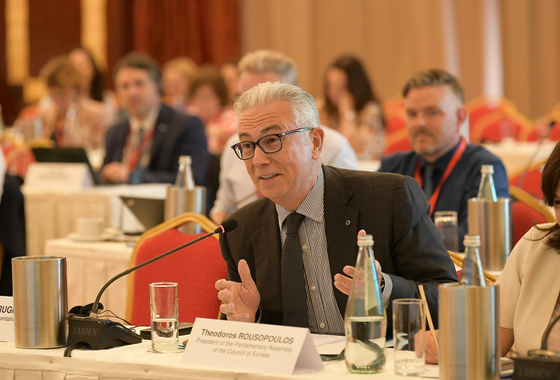
Theodoros Rousopoulos, the President of PACE, welcoming participants, noted: “Young people today are not merely asking to be heard, they are demanding to be trusted, to be in charge of shaping the future they will inherit”. He cited a 2024 resolution which had placed youth participation “at the core of the Assembly’s work”.
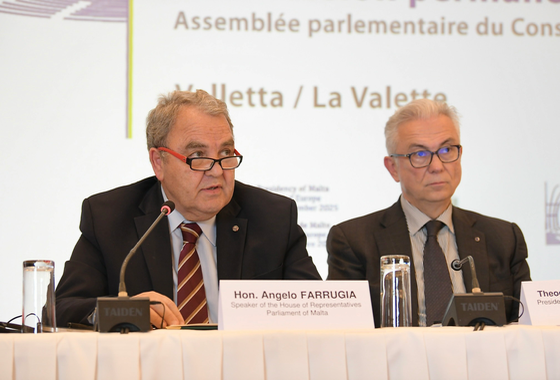
Angelo Farrugia, the Speaker of Malta’s House of Representatives, also opening the event, pointed out that young people are often told they are the leaders of tomorrow, “but the truth is: they are already shaping our societies today – in climate action, in digital innovation, in social justice movements and in peacebuilding, young people are leading by example.”
He pointed to Malta’s record on engaging young people in politics, including lowering the voting age to 16, the presence of six MPs under 30 in the national legislature, and some 20 local councillors under the age of 25.
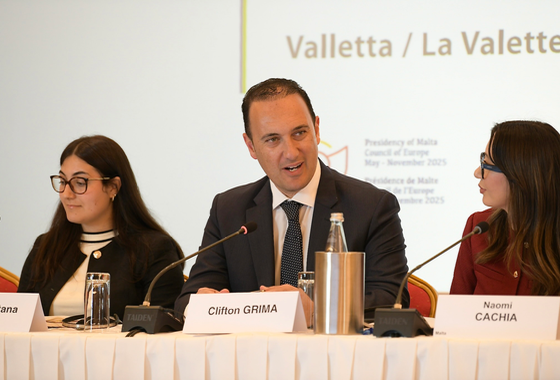
Clifton Grima, Malta’s Minister for Education, Sport, Youth, Research and Innovation, also expressed his pride at the progress made by Malta in empowering young people in political life: “The way we reason, the way we think, between different generations is bound to be different – and this is the added value of having representation coming from different generations,” he pointed out.
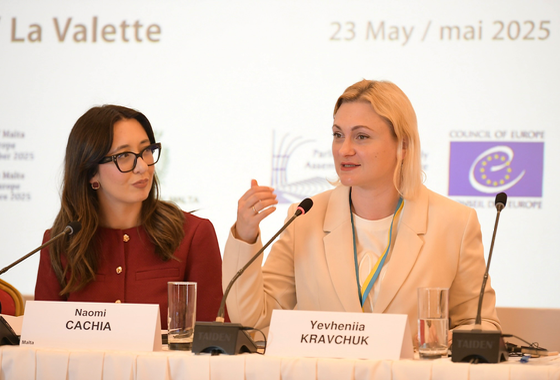
Yevheniia Kravchuk (Ukraine, ALDE), Chair of the PACE Sub-Committee on Youth and the Society of the Future, cited worrying signs and data showing young people’s lack of faith in democracy, and spoke about the need to improve communication, emphasising the links between institutional work, which “can sometimes seem boring” and everyday life.
Cherise Sultana, the President of Malta’s National Youth Council, welcomed the fact that young people had moved from being “passive beneficiaries” to being “essential partners in decision-making bodies”. Also emphasising the fragility of democracy, she took pride that Malta will be preparing a blueprint for other European countries on how to create new structures to involve young people.
Miriam Teuma, Chair of the European Steering Committee for Youth (CDEJ) and Vice-Chair of the Council of Europe’s Joint Council on Youth, spoke of her long experience of encouraging and mentoring young political leaders, underlining: “If we are patient, if we want to listen, if we are always available for them, young people are always there to participate.”
Naomi Cachia (Malta, SOC), the head of the Maltese delegation to PACE, moderating the event, expressed her hope that youth empowerment is not just something to tick off in a box, adding that “the best gift we can give back to our societies is to have young people at the heart of it”.
Despina Chatzivassiliou, Secretary General of the Parliamentary Assembly, summing up the contributions to the event, underlined that: “Young people are not waiting to be invited, they are already present, already active. They are organising, proposing, leading – redefining how democracy works and how power should be exercised […]. You are not asking for a seat just to listen, you are demanding to co-shape the agenda – and rightly so.”