United Kingdom, EC/DA, President of the Assembly
15:35:52
The sitting is open.
Can I remind members that it is a legal requirement for everyone here to wear a mask and I should put mine on, even when taking the floor.
The next item on the agenda is the continuation of the debate on the Progress report of the Bureau and Standing Committee, that is Document 15375 and Addenda 1 and 2.
I remind members that speaking time in this debate will be limited to 3 minutes. The debate must conclude at 4:20 p.m. so I propose to interrupt the list of speakers at about 4:15 p.m. And first we will hear from the spokespersons for the political groups and first of all I call Ms Petra BAYR.
Thank you very much, Mr Chairman,
I would like to do something unusual,
I would like to use the Progress Report not to talk about content, but to talk about the other side, so that parts here of politics, namely how we work and how we work with each other here in the Assembly, how we also try to create visibility and create impact for our politics.
I would like to take as an example, because this is also mentioned in the in Progress report, the June session where we had this High-Level Panel and the Istanbul Convention "Ten years on" and gave space to that. It's a lot of space for a discussion that moves a lot of people, because we know that in Europe between one in three women and five in three women, depending on the country, are themselves affected by gender-based violence; are themselves affected by domestic violence. That's why I think it's important to have such slots, to have such spotlights, where we deal very specifically to a greater extent with such important issues that move people.
It has also been shown that we have had an impact. Not only has Liechtenstein ratified the Convention. In the meantime, Mexico and Tunisia are also discussing ratification, and in other countries, such as Great Britain or Ukraine, the discussion has already generated a certain momentum and rekindled the discussion. I hope that we will soon be able to do something about this in more member countries as well.
Violence cannot be abolished with a single event. It takes a lot of staying power, it takes a lot more. That is why it is so incredibly important that we have the role of the rapporteurs-general. They really do have the opportunity to work on a subject for a long time, to create awareness, to give subjects a face, and to involve people.
In this context, I am very grateful to the Secretary General of the Assembly for submitting a letter and an idea on how the role of the rapporteurs-general could be further developed in the future., for example, that we regularly look at whether it still makes sense, whether the topic is still important, whether the topic should be dealt with in the same way as it was at the beginning, when we started a topic. I can only say now for the Equality Committee, where we have three general rapporteurs who are all very active, that in two cases - and I think this is very important - we also have a link to a parliamentary institutional network, namely the Parliamentary Network Women Free from Violence and the No Hate Parliamentary Alliance.
We did webinars on that in the pandemic. I think we succeeded in reaching a large number of people outside there. I think that's what's important too: explaining to people how our work works. I would like to suggest, because tomorrow we are dealing with the topic of the environment, which also moves so many people, considering whether we should not introduce a general rapporteur or rapporteuse for environmental issues.
Thank you very much.
United Kingdom, EC/DA, President of the Assembly
15:40:04
Thank you very much, Ms Petra BAYR.
The next speaker is Ms Mariia MEZENTSEVA.
Thank you. The floor is yours.

Ukraine, EPP/CD, Spokesperson for the group
15:40:16
Thank you, colleagues.
I would like to begin my speech by thanking the PACE Secretariat for once again organizing the PACE session. Such a great representation. Today we're discussing very important issues of elections in the national parliaments and to ECHR.
So, Armenia's early parliamentary elections were competitive and well managed within a short time frame. However they were characterised, as said in the report, by intense polarisation and marred by increasing inflammatory language from key contestants.
The PACE delegation concluded that the electoral legal framework in general is comprehensive, but some shortcomings still remain. In some cases there were [unintelligible] in both the private and public sector, while allegations of fraud by, misuse of the state's resources continued throughout the campaigns.
However, despite the fact that women candidates were included in the party list, their visibility during campaign was markedly low. However, we have a great presentation of women from Armenian delegation in the PACE for instance.
On 6 September the Bureau approved the report on the ad hoc committee on Moldova's early parliamentary elections observation. The Assembly Election observation delegation concluded that Moldova's early parliamentary elections were well-managed, admits an improved legal framework and voters were offered a wide choice of alternatives. But concerns over the impartiality of the election authorities undermined the trust while inadequate campaign finances rules, which left the potential breaches unaddressed.
The assembly observation legal delegation conducted also the Bulgarian parliamentary elections on the 4th of April 2021. They were competitively and officially done, despite the Covid-19 pandemic, and the fundamental freedoms were respected. However, the long standing Venice commission and ODIHR recommendations to bring it in line with international standards and good practices remain unaddressed.
These mainly relate to the voting by prisoners, candidate nominations, elected day voters registration, campaign finance report, campaign in itself, conditions and consistent criteria for establishing out-of-the-country polling stations.
Of course, we cannot leave out the issue of the future discussion for the ECHR judges. We have four countries being addressed: Ukraine, the Russian Federation, Czech Republic, and Moldova. Three of them were approved and, unfortunately, Ukraine was recommended for rejection. We will see it further for the discussion, but the issue of the implementation of the European Court decisions is one of the main obligation of the member States. We should aim for maintaining the high profile of European Court.
Thank you colleagues
United Kingdom, EC/DA, President of the Assembly
15:43:27
Thank you very much.
The next speaker is Mr Iulian BULAI.
The floor is yours.
I would like to start by thanking Mr Jacques MAIRE, ALDE group chair. Thank you so much for your report and also thank you Mr Rik DAEMS for keeping the Assembly alive and relevant.
In the name of the ALDE group, we affirm that we are very supportive of the idea that the environment should be part of human rights, and we count on Wednesday's debate to give an impulse to our national governments to support this move demanded by citizens all over Europe and start a real conversation on this topic.
ALDE has established a working group to reflect how we can better link human rights and the environment and we will hear their report this week.
Regarding the report on the elections in Russia, it is important that PACE was present on the ground but the Covid-19 pandemic cannot become a pretext for countries to make meaningful international observation virtually impossible since this will only increase mistrust in free elections and the voting process itself.
Also on the eastern front, ALDE is extremely preoccupied with the escalation of the crackdown against civil society in Belarus, and on a personal note, I am very happy that Maria Kalesnikava won this year's Václav Havel Human Rights Prize. The former Václav Havel Human Rights Prize Laureate from this country, Ales Bialiatski, is again in detention facing trumped up charges alongside more than 670 other political prisoners.
Our organisation's own partners, who have taken part in our meetings as experts or witnesses over many years, have also suffered from repression and they risk heavy jail terms. We cannot forget these people. We cannot leave them behind. While co-operation with Belarusian civil society remains an indispensable tool for the Council of Europe, and should be fully supported, we also have an obligation to back our partner when they face politically motivated repression. It is the mission of this Assembly to find the best – the most appropriate – tools to make this support truly effective in preventing abuse against our partners.
It is more and more obvious that the Covid-19 pandemic is not only a health, economic and social challenge but also a threat to democracy and human rights in certain countries on our continent. We, in ALDE, have a deep belief that this Assembly has an important role to play in safeguarding these European values, but we are not here only as a shield against illiberalism. We are here to represent our communities on the hard path ahead of all of us in the light of the changes brought by this pandemic.
Since we are back here, let's make sure we continue our work with no more interruptions.
Thank you.
United Kingdom, EC/DA, President of the Assembly
15:46:58
Mr Zsolt NÉMETH is here?

Hungary, EC/DA, Spokesperson for the group
15:47:10
First of all I would like to congratulate also Ms Kalesnikava for being nominated and given the Václav Havel Human Rights Prize of the Council of Europe. And we hope that she is going to get free along with the other 600 political prisoners of Belarus soon.
Secondly, dear colleagues, I would like to draw your attention to the issue of Afghanistan. We will have an urgent debate on the subject. It is needed. We all know that the withdrawal agreement, the so-called Doha agreement, implementation is just happening, taking place, and it signals a new world order. We do agree with the very fact that it had to happen. However, the form of the realisation is a major failure and a Western humiliation. It is a kind of disaster and we all know the level of incompetence which has resulted from all this, which has been very much underlined by the grave terror attack where over 200 victims have been identified until now.
We need to express our condolences and to draw the importance to being aware of terrorism in the coming years as well in the case of Afghanistan. And we need to draw the conclusion also that we have to establish an operational engagement with the Taliban in the future, and to have a regional humanitarian strategy where the Council of Europe, I'm sure, can find its role, and which may be a decisive role.
And thirdly, I would like to mention the Green Week that we are just having. It is a priority of the Hungarian Presidency as you all know. And the historical challenge to turn our economies green and digital is just in front of us. The high-level panel which we are going to see on Wednesday is now a new model in the Council of Europe. I would like to congratulate our chairman and I am very glad that the Hungarian President, who is very active in the field of green protection – voter summits have been organised by him – is going to be our guest. And I believe that the feasibility study concerning the additional protocol to the European Convention on Human Rights to environment is going to signal the third wave of fighting for human rights, after political and social rights. The challenge is international and the solution should also be international.
Thank you very much for your attention.
United Kingdom, EC/DA, President of the Assembly
15:50:25
Thank you.
And Mr Tiny KOX.
Thank you very much Mr President and let me also, on behalf of the group of the Unified European Left, pay my compliments to the prize winner of our Václav Havel Human Rights Prize, Ms Maria Kalesnikava, and let us all support a call for her immediate release from the Belarusian prison. As I have often said, politicians do not belong in prisons they belong in the public sphere and they belong in parliaments. Let us hope that the prize that we have awarded her is in support to that idea and I wish the people of Belarus well.
Let me thank the rapporteur for his report and his remarks, and may I say that I share his compliments about the way how our president has taken the lead in these challenging times to overcome problems. He managed that very well, the Presidential Committee worked in good co-operation with President DAEMS and I hope he will continue in this way in the coming months. And I support the President's goal to take the lead in protecting and promoting the rule of law, human rights and democracy, as this organisation was created exactly for this, in order to create greater unity in the whole of Europe.
Quoting Shakespeare was well said, "to be or not to be, to lead or not to lead, that is the question" and the good news is, I think, that in April of this year this Assembly adopted by a large majority my opinion on the strategic priorities of the Council of Europe for the future. By doing so, this Assembly showed that we are able and willing to play our role in leading this organisation. We agreed that we should and could do this in close co-operation with the Committee of Ministers and the Secretary General.
And the good news is Mr President, that a week ago, we received, as an Assembly, a positive reaction of the Committee of Ministers on our then adopted recommendation, which regarded our strategic priorities in which the Committee of Ministers recognised the important role of the Assembly in supporting democracy and taking the lead in taking political initiative. So I think that is good news and that shows that in the future we can co-operate in synergy with the Committee of Ministers and the Secretary General. Then, I want to thank the Committee of Ministers for this answer to our recommendation.
And finally, I want to thank all the colleagues who have been involved in the election observation missions – it was mentioned by several colleagues – how important that work is. We went to Armenia, we went to Bulgaria, Moldovia, we went to Russia and all of our colleagues did there – under challenging circumstances – a great job. Election observation is one of the key issues, I think, for this Assembly and I hope that we will continue that in the future.
So once again, thanks to all the colleagues who are involved in that. Thank you very much.
United Kingdom, EC/DA, President of the Assembly
15:53:39
Thank you,
That brings us to the end of the speakers on behalf of political groups and I will now move on to the list of speakers from the floor.
And the first of those is Mr Oleksandr MEREZHKO.
Thank you Mr President, dear colleagues.
The term "progress report" implies that we expect some progress to be achieved in our activities in the field of human rights. The fact is that there has been no progress. On the contrary, the situation with human rights has considerably deteriorated, especially in Russia and in the territories occupied by Russia. As an act of brutal revenge against holding the Crimean platform in Ukraine, Russian occupation authorities arrested a number of Crimean Tatars and activists in Crimea, including deputy head of Mejlis, Nariman Dzhelyalov.
Some of the arrested persons were subjected to torture by the Russian FSB. Regrettably, there has been no serious reaction against this gross violations of human rights which would stop Russia. As for Russia itself, it hopes that we will get tired of paying attention to Russia's constant and endless provocations and violations of human rights, and at some point we will quit. But we shouldn't get tired and we have no moral right to quit. On the contrary, we should redouble our efforts aimed at the protection of Crimean Tatars in the occupied territories.
As for Russia, it openly states that it has absolutely no intention to implement the PACE resolutions on the situation in Crimea. Instead it is using its massive propaganda machine to create an artificial illusion of prosperity in the Crimea.
I also would like to mention the case of Alexei Navalny. Again, Russia ignores the decision of the European Court of Human Rights and documents of the PACE in this regard. It wants this case to be forgotten.
Dear colleagues: Russia, which has recently conducted elections which was just a mockery in the occupied territories of Ukraine using citizens of Ukraine living in the occupied territories. This is a new Russian crime and Russia is very creative in such kind of crimes. The truth is that Russia's behaviour is totally incompatible with the values and principles on which our organisation is based. The conclusion is simple: Russia should be expelled from the Council of Europe.
Thank you.
United Kingdom, EC/DA, President of the Assembly
15:56:20
Thank you very much, and the next speaker is Ms Laima Liucija ANDRIKIENĖ. Is she here? Thank you.
Thank you.
Election observation is one of many tools we have at our disposal. So, today I would like to speak briefly on the elections in Russia and in Moldova.
So-called Russian Duma elections were neither free nor fair. A further hardening of the law on extremist organisations, foreign agents and undesirable organisations reinforced a systematic crackdown on democracy, human rights and fundamental freedoms and independent media as well. All this further limited political pluralism in Russia to the advantage of the ruling party and prevented members of the independent political opposition from participating in the elections. It is regrettable that the Office for Democratic Institutions and Human Rights (ODIHR) and Organization for Security and Co-operation in Europe (OSCE) and the OSCE Parliamentary Assembly were prevented from observing the elections. Same applies to PACE. Our mission was an election assessment mission. The OSCE Office for Democratic Institutions and Human Rights refused to establish an observation mission because of the limited member of election observers allowed.
Moreover, the holding of elections in the Crimean peninsula as well as holding elections in the so-called LNR in Luhansk or DNR in Donetsk aggravated infringements of the international law. All of this has resulted in the most managed elections in modern Russian history further undermining democracy in the country. We have to answer a key question, can what happens at the Russian polls still be considered elections? And how does that affect the legitimacy of the next state Duma?
Contrary to the assessment of the Duma elections, there is a positive example to be mentioned today in this debate and I have in mind Moldova, of course. Early parliamentary elections in Moldova took place on 11 July and I was part of the PACE election observation mission. ODIHR was there, OSCE and its Parliamentary Assembly was there, PACE was there observing elections and I have to say that all international observers agreed that early parliamentary elections in the country were well organised, they met international standards.
So, I wish Moldova all the best in the future and the Moldovan example is the one to be used when we speak about a positive experience, when we speak about the strengthening of democracy in the PACE member countries.
Thank you.
United Kingdom, EC/DA, President of the Assembly
15:59:31
Thank you very much.
And now we go to a video recording I think of Mr Leonid SLUTSKIY.
Do we have him online?
Thank you Mr President,
I am going to be speaking Russian.
The last two speakers have made me change my plans for what I am going to say. And what Mr Oleksandr MEREZHKO has said is quite out of place. We constantly hear this kind of statement recently from the Ukraine delegation. It's all rubbish, it's all untrue. And with regards to what Ms Laima Liucija ANDRIKIENĖ has said vis à vis the Russian elections to our Duma, to our parliament, this is not at all in keeping with what actually happened.
There were more than 300 international observers who saw no irregularities or violations of electoral practices, and as regards the refusal of the OSCE ODIHR and the PACE missions we feel that they made a mistake. But we note that the PACE Assembly did nevertheless send an evaluation mission – it's the right of any international organisation. In connection with the pandemic we were prepared to receive a limited number of observers, limited because of the pandemic. But at the same time I'd like to note that the number of observers to the elections was about 10 times as many as those who observed the recent presidential elections in the United States. Therefore, colleagues: stop spreading untrue and unverified information. Let's actually provide real information for rapporteurs so that you can actually tell the truth about what has happened.
I'd also like to say one more thing and point to a particular situation. I'm talking about the amber country zones and the access for Russian delegates, who can only be in the hotel and in the Assembly. I think that we're talking about violations of measures that should be taken. As a result the Russian delegation is only taking part via video conference in this session, which makes it more difficult for us to work. The European Medicines Agency is the appropriate agency whose indications should be taken into account by the Council of Europe.
We feel that this is a kind of situation that should simply not be allowed to happen.
Thank you.
United Kingdom, EC/DA, President of the Assembly
16:02:47
Thank you Mr Leonid SLUTSKIY.
Mr Jacques LE NAY.
Thank you, Mr President.
Dear colleagues,
On 27 August, we celebrated the thirtieth anniversary of the independence of the Republic of Moldova. This State has been a member of our Organisation for 26 years now, and I welcome this. This membership illustrates the will to create a democratic state in the Republic of Moldova. However, getting citizens interested in politics requires a constant effort, even in the oldest democracies.
After the institutional crisis that followed the 2019 elections and the resulting highly polarized campaign, the 2021 elections were held in a calm manner. This is to be welcomed; I myself was an observer of these elections in the Republic of Moldova. However, the low turnout of 48.51% is regrettable, which shows a lack of confidence in the institutions and the electoral process.
However, our ad hoc committee was able to note a number of points of satisfaction. First of all, the reform of the electoral code following the 2019 elections made it possible, on the one hand, to return to a more representative proportional representation system and, on the other, to increase the number of women on the electoral lists, in accordance with the recommendations of the Venice Commission. Moreover, the restrictions put in place to combat the health crisis did not hamper the campaign.
Despite these points of satisfaction, a number of difficulties remain. The campaign was marked by controversies and legal challenges regarding the voting of citizens residing abroad. Indeed, the decision of the Central Electoral Commission to set the number of polling stations abroad at 139 triggered strong controversy. Following legal challenges, the number was finally increased to 150, but this type of controversy raises doubts about the impartiality of the electoral authorities and encourages abstention.
Furthermore, the legislative provisions on complaints and appeals need to be reviewed to be fully effective. Similarly, a strengthening of the control of campaign expenses is necessary to ensure fairness among candidates.
Finally, the bias of the main media, due to their partisan affiliation, undermines the existing legislative provisions that aim at ensuring a certain media fairness among candidates.
Reforms are therefore essential and, despite the limitations that I have noted, we can be pleased that these elections have put an end to the period of political instability that the Republic of Moldova has been experiencing for several years. It was to be hoped that reforms could be undertaken quickly, particularly to combat corruption and strengthen the independence of the judiciary.
I hope that the Council of Europe can fully support the new Moldovan government in this process.
United Kingdom, EC/DA, President of the Assembly
16:06:00
Thank you very much.
Mr Samad SEYIDOV.
Thank you very much, Mister President.
Elections in Armenia are a very important event not only for Armenia, but for the neighbouring country because everything which is happening in one state is immediately echoed in another one.
Today is the 27 September. Exactly one year ago, as a result of provocation made by Armenian authorities, we started to liberate our territories. It is really very strange that the people of Armenia voted for those who defeated as a result of the war. Pashinyan's party won despite the fact that they had been defeated on the battlefield. Thousands of Armenians soldiers have been killed and disaster had happened in Armenia. Have you ever seen this situation in any other country? No.
There is a reason why and the reason you can find within the Armenian nation. They voted against the Kocharyan, Sargsyan and Ohanyan criminal regimes. They voted for Pashinyan because they want to live in peace, as any other nation all over the world. Actually, Pashinyan had this chance three years ago. He got his mandate from the Armenian people, but unfortunately, he made a historical mistake. He chose the same way which took by the regime of Kocharyan, Sargsyan and Ohanyan. As a result of that, we saw what we see just now in Armenia.
History gave Armenians a second chance. They again won at the election, I mean Pashinyan's party. This is a vivid example that people who are living there together with the rest of other people are looking for peace. What we can see, again, those who came to power started to fulfil ideas of revanchism, started to talk about the war, started to talk about the new revenge and something like that we already saw three years ago. That is why I asked my Armenian colleagues not to use these styles of behaviour. You already did it. You already brought your country to the collapse. There is only one way to find the way out from this deadlock: peaceful agreement with Azerbaijan, mutually acknowledge the territorial integrity of both countries. This is the way out. I urge Armenia to do that, and I urge my Armenian colleagues to do the same.
Thank you.
United Kingdom, EC/DA, President of the Assembly
16:09:19
Thank you very much.
And now, Mr Vlad BATRÎNCEA.
Thank you.
I would like to thank Mr Stefan SCHENNACH for his fairly objective report which doesn't sink into emotions and basically focuses on facts and matters which Mr SCHENNACH and others were able to see in the Republic of Moldova.
The elections in Moldova were open and there was a large number of parties competing and, according to the report, the central electoral commission for the first time in Moldova did not support or favour any one candidate but provided an objective result. And therefore for the first time in Moldova no candidate was accused of anything nor was any candidate limited in their freedom to take part in the elections and the elections were really representative.
What's also very important, which is noted in the report, is the professional attitude of the CEC. It's very important to note this attitude of the CEC to the elections. But recent events have shown that there has been an attempt to set up a CEC which favours one party only. As regards the opposition, for subjective reasons some of these candidates were not supported, and what I would like to say is that it's important to make sure that the mass media are free. There is an attempt now to impose political control over members of the audiovisual council and it's important in future campaigns for citizens to be able to receive information from the news sources which they prefer and choose for themselves and to make sure that mass media sources and outlets are all on an equal playing field.
There has been a case of corruption: television, which was traditionally thought of as independent, but this shows that we must still continue to make sure that there is a level playing field for everyone without any kind of limitation, without any hate speech to make sure that citizens can carry out their will.
Unfortunately there have been cases of manipulation and deception and so on. Mr SCHENNACH's report indicated that the obervers of the elections observed speculations and manipulation, but we must really make sure that there is no speculation or manipulation or fake news and no hate speech and the dehumanisation of opponents.
There must be proper humane debates which take place in election campaigns.
Thank you.
United Kingdom, EC/DA, President of the Assembly
16:12:41
Thank you.
Mr Ruben RUBINYAN is the next speaker.
Thank you.
Dear colleagues, first I want to thank the observation mission to the Armenian elections for their comprehensive report. These elections were the second free and fair elections, national elections in Armenia after the Velvet Revolution of 2018, and these elections took place in a very difficult time after a war which brought many disasters but the Armenian democracy prevailed and the Armenian democratic institutions prevailed.
And using the opportunity, I want to respond to our Azerbaijani colleague, Mister SEYIDOV, whose speech was not stopped even though it was completely off topic, but still. What Mr SEYIDOV tried to speculate about the relationships of the Armenian majority and the opposition or previous governments, or on the topic of the Armenian elections, my first thought was to respond in the same way; to try to speculate on the relationship of their opposition with the government. Then I remembered that there is no opposition in Azerbaijan, there are no elections in Azerbaijan, and there is no democracy in Azerbaijan.
Mister SEYIDOV, our party and Mr Pashinyan won because the Armenian people want democracy and freedom. The Armenian people in Armenia want democracy and freedom, the Armenian people in Nagorno-Karabakh want democracy and freedom. And this is something unbreakable and this has been demonstrated many times and this is the will of the Armenian people regarding peace – of course, peace has to be achieved – but I think we may have to make small steps towards peace and your speech is unfortunately not such a step.
Thank you.
United Kingdom, EC/DA, President of the Assembly
16:14:50
Thank you very much.
And Mr Dimitar GARDEV.
My statement is about a monitoring report on the early parliamentary elections in Bulgaria.
Honourable Members of the Parliamentary Assembly, Ladies and Gentlemen, thank you for giving me the opportunity to address you and make this statement on one of the most important issues for any democracy - the elections.
The Parliamentary Assembly delegation concluded that the early parliamentary elections on 11 July 2021 were competitive and generally respected the fundamental freedoms.
The voting process at the polling stations was well organised.
An entirely machine-based vote was introduced in polling stations with more than 300 voters and for the first time, the possibility of increasing the number of polling stations of Bulgarian citizens abroad was provided, which increased the possibility for all those wishing to cast their vote.
The change in election legislation, made by the 45th National Assembly, has created the conditions to obstruct, as much as possible, attempts to buy votes and to counter other corruption risks.
The Ministry of Interior undertook investigations into all serious allegations of vote-buying, as reflected in the report of the mission for monitoring the elections. More than 23 cases have been filed. Observers from international organisations will be informed of the results of the investigations in a timely manner.
The measures taken by the authorities [has] made society more sensitive and more intolerant to electoral violations.
The transparency of the electoral process is one of the important points in the political platform of my party.
Efforts to implement the Group of States against Corruption´s (GRECO's) recommendations on the financing of the election campaigns of the parties will continue.
The state subsidy to the political parties which received more than 1% of the votes in the last elections, was not suspended but was reduced.
I believe that the full implementation of GRECO's recommendations regarding the amount of funds available to parties and coalitions during an election campaign will contribute to increasing confidence and transparency in the electoral process.
Everything mentioned above, contributes to greater equality of participants in elections and a more realistic representation of the vote.
Bulgaria aims to implement good cooperation with the Venice Commission, GRECO and all other bodies of the Council of Europe to further improve its electoral legislation.
United Kingdom, EC/DA, President of the Assembly
16:18:13
Thank you indeed. I must now, I am afraid, interrupt the list of speakers.
The speeches of members on the speaker's list who have been physically or remotely present during the whole of this debate but have not been able to speak may be given to the Table Office for publication in the Official Report. I remind colleagues that the texts are to be submitted in typescript, electronically, no later than 4 hours after the list of speakers is interrupted.
Mr Jacques MAIRE, do you wish to reply? You would have 3 minutes.
Yes, I'll be very brief in my response. I don't need three minutes.
I think the discussion has been very interesting. We have seen a gradual return to normal in the way in which our Assembly functions. Not only in terms of every day work, but also in election observation. I am pleased to take note of the high quality observations that have mentioned Moldova and we are convinced by what has been said.
Yes, there are still the effects of the pandemic. The fact that we are able to give more and more time to non Covid-19 topics is a sign of good health, but I see that Covid-19 is still being instrumentalised by certain Member States who wish to use Covid-19 to maintain in an accurate line. We musn't see Covid-19 as an excuse for from ones responsibilities and I am sure that everything will go back to normal in the months to come.
I would also like to say that what the Groups have said, and the Bureau agrees, there is essentially consensus on what has been said about the strategic priorities. This has been done in conjunction with the Committee of Ministers in order to have visible strategic priorities and that is important from this point of view. There has been a huge effort when it comes to the Report on the environment. In particular we are going to have the high-level day in a few days of time and that is an essential part of past and future work of this Assembly.
Thank you, Mr President.
United Kingdom, EC/DA, President of the Assembly
16:20:51
Thank you Mr Jacques MAIRE.
The Bureau has proposed a number of references to committees for ratification by the Assembly and these are set out in document 15375 and Addendum 1.
Is there any objection to the proposed references to committees?
I see none. We have one there, please.
Thank you, dear President, dear colleagues.
I must raise an objection to Document 15375 concerning the Ukrainian list for the elections of judges.
United Kingdom, EC/DA, President of the Assembly
16:21:29
I'm sorry. We will come to the Ukrainian list in a minute.
I understand. It is fine.
OK. Can I take it that there are no objections to the proposed references to Committees and that on that basis these references are ratified.
Now I invite the Assembly to approve the other decisions of the Bureau, as set out in the progress report, and let me say: is there any objection?
Now is the time, Madam, to make your objection.
I'll try number two.
Dear President, dear colleagues, I must raise the objection to document 15375 Addendum 2 concerning the Ukranian list of elections of judges to the European Court of Human Rights (ECHR). We have to stress that the list is composed of three highly qualified candidates fully meeting the conditions laid by Article 21 paragraph 1 of the Convention as well as the requirements developed by the Assembly. It offers to the Assembly a genuine choice and is based on a fair and transparent national selection procedure held in accordance with the respective recommendations of the Council of Europe.
We are sure that you have had an opportunity to consult the CVs of the candidates which made it clear that some criticisms towards them might be seen as a subjective and based on misleading information. On the other hand, we fully share concerns previously raised by many colleagues of this House that it is unacceptable able to continue artificially the term of the office of certain judges that expired long ago and unfortunately, it is the case of Ukraine since 2019. For almost three years, Ukraine has not had a judge in the ECHR, which is unacceptable. Nor is it acceptable for everyone to lobby against any new list of the candidates to prolong the stay of the current judge for private reasons.
And the last point. While remaining fully supportive of the mission and authority of the Committee and in order to protect the Assembly and the Court from any lobby-based on private interest, we ask you, dear colleagues, to support the proposal to return the Ukrainian list for consideration.
Thank you very much, dear President.
United Kingdom, EC/DA, President of the Assembly
16:23:46
There was an objection to the rejection of Ukraine's list of candidates for the election of judges to the European Court of Human Rights and that objection we have just heard.
Does anyone wish to speak against the objection?
Sir.
Dear colleagues, because I had the honour as an acting Chair to preside over the meeting on the election of judges on 16 and 17 September in Paris, I must clearly oppose, on behalf of the Committee, the Special Committee of the Assembly, the above-mentioned challenge.
I want to underline – I can confirm that the Committee has done its work in the professional and impartial manner which the Assembly rightly expects. You have our recommendations, you have our conclusions on your files, specifically on the Ukrainian national list.
I want to underline the fact that after extensive discussions, the Committee concluded by a very large majority that not all candidates fulfilled the requirements set by the Convention for the election of judges to the European Court of Human Rights. Because the procedure is confidential I cannot provide supplementary details but I want you to rely on the authority and the competence and impartiality of our Special Committee.
So for all these reasons, I politely invite all the members of the Assembly to endorse the Committee's position and recommendations, and to reject the above-mentioned challenge.
Thank you very much.
United Kingdom, EC/DA, President of the Assembly
16:25:27
Thank you.
Mr Jacques MAIRE.
Mr President,
As my colleague from the Committee on the Election of Judges has just pointed out, I can only confirm that the Bureau has taken note of this opinion, which was given in accordance with the rules and procedures that are fully respected and justified. The Bureau can therefore only take due note of the Committee's decision and, indeed, it is traditional to follow it in such cases.
Thank you.
Speech not pronounced (Rules of Procedure, Art. 31.2), only available in French.
(Undelivered speech, Rules of Procedure Art. 31.2)
Dear colleagues,
Exactly 1 year ago on 27th September, second Karabakh war between Armenia and Azerbaijan broke out. But it was just, hopefully, a final accord in the long lasting conflict which took many thousands of lives.
This bloody conflict started 3 decades ago with occupation of a chunk of Azerbaijani territories and ethnic cleansing of all ethnic Azerbaijanis living there. The cities and villages were destroyed, people killed or driven out. The territory served as one large depressing military base.
Less than 1 year passed and Azerbaijan have flown first Civil airplane into brand new Fizuli airport built from scratch in early September. Fizuli is located in Karabakh region of Azerbaijan most of which was under Armenian occupation for 3 decades. Fizuli city, home to 40 thousand people in 1992 was grazed to the ground with population zero. Now Azerbaijan is rebuilding it and Fizuli airport is the first major civil infrastructure project, completed. This amazing result is the product of national idea of Azerbaijan - to rebuild Karabakh, to turn it into the blooming garden it once was. Karabakh in Azerbaijani means Black Garden, but it may also be translated as Great Garden. We will turn it into one, no doubt.
Dear colleagues,
We’ve all witnessed elections in Armenia, these elections were accompanied by very radicalized and controversial rhetoric between various political forces. Now it is over, populistic promises have been made and we are yet to see the practical steps towards long lasting and sustainable peace in the region.
We have to leave the conflict behind and we, Azerbaijanis have done it and started large-scale construction works in the liberated territories. Azerbaijan is building new cities and towns from the ground zero with modern urban planning and "smart living" concepts.
However, I have to once again remind that the process of rebuilding is delayed due to the heritage of totally destroyed civil infrastructure and landmines, tens of thousands of which have been planted by Armenian occupying forces. Since the end of military hostilities more than 30 people (military servicemen and civilians), including 2 journalists were killed and around 130 citizens were wounded. The map provided by Armenian side are sketchy and imprecise – a merely political bargaining tool. The accuracy level of the maps for three regions which Armenia had to provide is only 25 percent.
Occupation of Karabakh by Armenia was always an issue overlooked by international community. Too many have chosen the way of appeasement of occupants and it led to catastrophic results. Now the reconstruction efforts and elimination of consequences of occupation are being similarly overlooked.
I call on this assembly to do more about it. After all it is its job.
(Undelivered speech, Rules of Procedure Art. 31.2)
Thank you Mr. President
Freedom is not free.
And democracy must never be taken for granted.
History has taught us the consequences of sleeping on duty.
Preserving a well-functioning democracy requires continuous work.
Mr. President. It has been a great honour to participate in the Election Observation Missions to Bulgaria and Moldova.
What could be more meaningful than supporting our Bulgarian and Moldovan friends in carrying out important elections.
I want to thank the heads of delegation for steady leadership.
But first and foremost I want to thank the countries themselves for making the missions possible, despite difficult circumstances.
As we’ve seen, not all countries show the same willingness.
Covid must never be an excuse for abandoning fundamental civil rights.
We, as members of the international community, must never let down our guard for democracy.
Mr. President. Election day in Moldova gave grounds for some optimism.
It appeared calm and well organized. The freedoms key to democratic elections were largely respected.
Having said that, alas, there are still serious challenges.
A soviet-inspired breakaway republic
Media linked to parties. Corruption.
Covid 19 is a dangerous virus. But there is no virus like corruption.
This summer the people of Moldova gave a clear message: They want corruption to end.
Congratulations to PAS on a clear victory. With 53 %, the best result any Moldovan party has achieved since the fall of communism.
That’s a strong mandate for necessary reforms.
To fight corruption and reinforce the legal system.
To take steps towards more European cooperation.
Mr. President. Freedom is not free. And democracy must never be taken for granted. Neither in Norway nor Moldova.
Let’s all hope this election is a further step towards giving young people a future to believe in. A democracy to trust.
Thank you.
(Undelivered speech, Rules of Procedure Art. 31.2)
Mr President, dear colleagues,
I’d like to thank Mr Mare, Mr Catrougalos, Mr Heer and Mr Schenach for their reports.
Monitoring elections is a very important part of the work of the Assembly and I’d like to thank the colleagues who volunteer and participate election observation missions.
The parliamentary elections in Armenia was held under very difficult circumstances – after a military defeat, after an overruning of the National Assembly and government buildings on the night of the cease-fire agreement has been signed, after a call from the Chief of Staff of the armed forces asking the resignation of Prime Minister Pashinyan, after 8 months of political crisis and demonstrations and after Azerbaidjani forces entered in May 2021 into Armenian territory for which Azerbaijan demands a demarcation of borders.
The simple fact that these elections have taken place and that they have been free is quite an achievement.
These elections achieved their goal: to find an issue to the domestic political crisis and to legitimise the winner of the elections.
There are other countries, in a similar situation, whose institutions did not survive and were changed not through democratic elections, but through more drastic ways.
Mr Catrougalos (the report) mentions the change of the voting system.
It’s true that the change of voting system came very close to the election and made it not easy for some parties to organise themselves, as the OSCE/ODIHR reported.
However, the electoral reform was made with the help of the Council of Europe and the Venice Commission itself indicated that the reform was making the electoral system easier to understand for the voters, had been discussed for a long time and has been rather consensual.
One concern however. The level of polarisation and the inflammatory speeches before, during and after the elections made us believe that the relationships between the majority and the opposition in the National Assembly are going to be confrontational and not very constructive.
That is a missfortune, because Armenia really needs to strengthen its parliamentary culture.
(Undelivered speech, Rules of Procedure Art. 31.2)
Thank you Mr President,
First of all, I would like to thank the observers in the election observation mission in Bulgaria.
Since in BG on 14.11., the third parliamentary elections are coming up this year alone, I would like to draw your attention to and inform you of some worrying trends, some of which have been reflected in this report.
As reflected in the report, in violation of all recommendations and standards, the penultimate parliament, adopted less than two months before the election, substantial changes to the Electoral Rules, not only to completely replace the members of the professional Central Electoral Commission, but also introduced fully machine voting. The distrust of Bulgarian citizens in this type of voting was reflected in the unprecedented low turnout - 42 percent - almost 10 percent lower of the turnout two months earlier.
Despite our insistence - the receipts from the machines were not counted and the results were reported only on the basis of a protocol from the machine itself. Without the ability to control the results by checking the receipts.
A separate issue is that there is no other country in Europe that votes only by machine, without the possibility of voting with a paper ballot.
Unfortunately, although this report also addresses this issue, although our political party proposed amendments to the Electoral Code to introduce mandatory counting of machine receipts and the possibility of paper voting, these amendments were not even included in the agenda.
Secondly, there is still extremely disturbing behavior from part of the caretaker ministers - mainly the caretaker interior minister, who is in charge of organising the elections. This behavior is expressed in unprecedented police repression and pressure on members, supporters, candidates for MPs, municipal coordinators of the party. Many times the Minister pointed out that there are signals of an attempt to buy votes from our supporters. At the same time, no pre-trial proceedings have been instituted for violating the electoral law by our members and supporters, although thousands of them have been searched, called to come in person to police stations and repressed.
All this anti-democratic and disgraceful behavior of the caretaker Interior Minister aims only to reduce the election result of our party by:
- breaching of our reputation and
- preventing our candidates and supporters from participating in the election campaign.
Ladies and gentlemen, I hope that the forthcoming monitoring mission will draw attention to these facts and be more assertive in condemning them as completely unacceptable and inconsistent with democratic standards.
(Undelivered speech, Rules of Procedure Art. 31.2)
Dear colleagues,
Early parliamentary elections in Armenia was not an ordinary election. It had its specific cause and potential for further reconciliation process.
It is noted in the report that these elections were called after the Prime Minister Pashiyan signed the capitulation act on 10th November 2020.
Even though elections were held with some shortcomings and toxic political atmosphere, we believe that this could be new opportunity for Armenia and Pashinyan.
Because, in 2018, when the Kocharyan-Sargsyan regime of war criminals was overthrown, we had some hopes that the new government of Armenia would seriously engage in negotiations.
However, Pashinyan’s deliberate political and military provocations caused the war. In response, Azerbaijan, using its inherent right of self-defense, started a counter-attack on our own territories against Armenia. We have successfully implemented UNSC resolutions, we rightfully restored our territorial integrity, we have defeated Armenia. This was military victory of our President and army.
Following that, Armenia had to sign capitulation act. According that Armenia was obliged to withdraw its troops from the remaining part of Azerbaijan’s territories, namely Aghdam, Lachin and Kalbajar regions. This was political victory.
Now large-scale construction work is carried out in the liberated territories. There is also new transit opportunity - the Zangazur corridor for Armenia, there will be more chances for economic cooperation.
Therefore, this Assembly’s recommendation to the new government of Armenia should make wise moves and refrain from making new mistakes to its citizens and Azerbaijan.
Otherwise, Pashinyan should remember that Iron fist is it’s in place.
Speech not pronounced (Rules of Procedure, Art. 31.2), only available in French.
(Undelivered speech, Rules of Procedure Art. 31.2)
Dear Ladies and Gentlemen,
All of us are politicians here but I bet that any of you has ever thought that hammer can be a tool for political debate. Well “the hammer” was the main tool for the leader of the ruling party during his campaign for the early elections held in Armenia back then in June 2021. And I am not speaking figuratively. Nikol Pashinyan was rallying in all regions of Armenia shaking a hammer above his head. “…the hammer, first of all, will be broken on your head…” he said speaking about those who were supporting the opposition. These elections had nothing to the with the core values of democracy. As you can see the definition “…competitive and generally well-managed…” used in the report is not the best choice of wording for the election held under the hammer. Such wording sends a very bad and dangerous signal to those authorities of member states who are willing to conduct unfair elections. The silence of international organizations led to the physical usage of “hammer”. One of the local authorities supporting the opposition was beaten in the office of the governor. Everyone in Armenia knows about it but the security cameras were mysteriously broken. The process goes on even with the sitting members of parliament: one of my colleagues Mr. Armen Gevorgyan an oppositional member of the Armenian Parliament, member of the Armenian delegation was not allowed to attend the PACE session because of politically driven criminal charges. In fact, the almost 60% of the oppositional members of parliament are prohibited to leave the country.
Today, the 27th of September, is a sad day for my country. A year ago on this day Azerbaijan with the support of Turkey unleashed war against the Nagorno Karabakh Republic. A war against peaceful people. A war with the usage of mercenaries from Middle East and restricted weapons. A war that led to partial occupation of Nagorno Karabakh and ethnic cleansings.
Some authorities try to present the outcome of the early parliamentary elections in Armenia as a sign of justification of the results of the 44-day war between Azerbaijan and Nagorno Karabakh. As a representative of my country to PACE I am obliged to state the belief of all Armenians: the status of Nagorno-Karabakh Republic based on the right of self-determination of its people and de-occupation of the territories of Nagorno-Karabakh Republic is inevitable.
(Undelivered speech, Rules of Procedure Art. 31.2)
Eventful several more months which in fact seemed longer, have been left behind. In such a short period of time so many serious events have happened that it seems that a year has passed, and not several months. Of course, the Council of Europe did not remain indifferent to many of these important events, regularly commented on them, had a direct impact on some dvelopments and this political palette has been reflected with certain contours in the presented Progress Report.
During this period parliamentary elections were also held in Armenia, and these elections cannot yet be described as one of the traditional parliamentary elections previously held in this country. The reason is that these elections were held in a completely different historical context, after the defeat of Armenia in the war and its expulsion from the occupied Azerbaijani lands with heavy losses. These elections became a important test for the Armenian society, a moment of historical significance. In recent years there have been many elections in Armenia, and we have closely watched each of them. The Council of Europe did not always give an objective assessment of these elections, and time has shown how erroneous and sometimes false these assessments are. Later, there were presidential and parliamentary elections, which were extremely negatively assessed by both the Armenian society and the new leadership of the country, which here were nevertheless described as a step towards democracy. There were also praises of Kocharyan and Sargsyan, war criminals and direct participants of the internationally recognized Khojaly genocide against the Azerbaijani people.
They and their revanchist forces also participated in the recent parliamentary elections in Armenia. With populist speeches and dreamy promises, new appeals for war, they wanted to deceive the people again and get votes. They considered it as a good opportunity and that they could easily defeat Prime Minister Pashinyan who had lost the war.
However, the main lesson of the parliamentary elections in Armenia in June 2021 is that the Armenian people, the country's electorate rejected the reactionary forces, Kocharian and Sargsyan, and their military policy seeking to win over the people with revanchist appeals. Everyone realized that the dream of Karabakh was over. This adventure is over. The people and the Armenian society realized the groundlessness and tragedy of the aggressive line of the country's leadership against neighboring Azerbaijan for many years, the catastrophe of sick separatism and the fact that for the last 30 years they were deceived and dragged into the abyss. Therefore, the people rejected this sick policy, and, despite thousands of losses in the last war, the destruction and defeat of the army, they still supported the line of Prime Minister Pashinyan, and not revanchism, Kocharianism, Sargsyanism, that is, new tragedies.
For all these reasons, I regard the recent parliamentary elections in Armenia as an instructive example not only for this country, but also as a world experience.
This example teaches that any aggression, any separatism, and any usurpation has no future, in the end there are defeats, break-up, regrets, missed opportunities, and the only correct path to development and progress is peace, mutual understanding and cooperation!
United Kingdom, EC/DA, President of the Assembly
16:26:06
Thank you.
Before I call the vote, may I remind the Assembly that the effect of Ms Mariia MEZENTSEVAM's objection would be to refer the list of candidates from Ukraine nominated for election to be judges back to the Committee on the election of judges to the European Court of Human Rights. Those who wish to support this objection should vote "yes", those who do not support the objection and agree to the rejection of the list of candidates should vote "no".
A simple majority will decide this question. So if we are ready, I think the vote should be just about open.
Please, vote.
Okay.
The vote is closed.
Can I call for the results to be displayed.
So the objection is rejected and Ukrainian authorities will be asked to submit a new list of candidates.
If there are no further objections, is the progress report as amended approved? I think it is approved. Thank you very much indeed. And I think that brings us to the end of this debate. And the conclusion of this.
Thank you very much indeed. Thank you.

Netherlands, EPP/CD, President of the Assembly
16:30:25
Dear colleagues, the next item of today's business is the debate on the report titled until now "Humanitarian consequences of the conflict between Armenia and Azerbaijan".
It is Document 15363 and the report will be presented by Mr Paul GAVAN on behalf of the Committee on Migration, Refugees and Displaced Persons.
The debate must be concluded at 6:45 p.m. so I will propose to interrupt the list of speakers at about 5:10 p.m. and that will allow us then the time for the replies and the the vote before the next debate.
The rapporteur, Mr Paul GAVAN, has 7 minutes to present the report and then will have a further 3 minutes to reply to the debate at the end.
So Mr Paul GAVAN, you have the floor.
Madam chairperson, dear colleagues,
First I want to thank both delegations for the immense amount of work to facilitate my report and to visit their countries, Armenia in May and Azerbaijan in July.
I regret I was not able to visit the conflict region. This affects the quality of the report without a doubt, and issues of access to what we call grey zones must be sorted out for the future. I've tried to avoid politics and keep to the humanitarian and linked human rights concerns.
My report, as you will see, focuses on eight issues.
Firstly, the dead, the missing and wounded, the casualties are to be deeply regretted. Over 3,900 Armenians and 2,900 Azerbaijani military were killed or went missing and there were 163 Armenian and 548 Azerbaijani civilian casualties. In terms of missing persons, there remain around 243 Armenians and 7 Azerbaijanis. It is important that we continue to trace these persons. I'm also aware of the very large number of persons missing from the earlier war, in 1991 to 1994. 3,890 Azerbaijanis and 1,000 Armenians are still unaccounted for and, to be frank, I cannot understand why there has been so little progress in this regard. It is so important for the families to have answers to the fate of their loved ones and further work is urgently needed.
The second issue my report looks at is that of prisoners of war and alleged captives. The European Court of Human Rights, as you will read in my report, notified the Committee of Ministers of the Council of Europe of about 188 Armenians allegedly captured by Azerbaijan. I am deeply concerned about the fate of a number of these persons filmed in Azerbaijani captivity and not showing up anywhere almost a year after the end of the conflict. While I understand that there are now investigations and information is gradually being provided to the European Court of Human Rights, it is essential that full answers are given.
I'm also concerned about the fate of around 50 persons acknowledged by Azerbaijan as held in captivity after the trilateral statement was signed. They have undergone or are undergoing trials where there may be issues of fairness. I am glad that recently two groups of 15 persons were released, but all these captives in my opinion should be freed as soon as possible, and this was also the call of the Monitoring Committee of PACE. You will see in the draft resolution that there is a call for the Council of Europe's Committee for the Prevention of Torture to follow the situation of the alleged captives even if the ICRC also has a role in this.
The third issue, one of the most difficult to deal with, is allegations of crimes, war crimes, and other wrongful acts. These are serious allegations and highly distressing and need investigating by both sides. With access to social media so widespread many atrocious acts were filmed and shared on social media. They range from extrajudicial executions, beheadings, to despoliation of the dead. There are also worrying allegations of torture and ill-treatment of prisoners. There's also a great deal of evidence of indiscriminate use of weapons, killing and injuring of civilians on both sides, both in the conflict region but also in Azerbaijani cities, well away from the conflict region, like Barda and Ganja.
There is evidence of the use by Azerbaijan, with Turkey's assistance, of Syrian mercenaries. There has to be some form of accountability, truth, and reconciliation for what happened during the six-week war, but also what happened in the earlier war, between '91 and '94. That cannot be ignored. I want to move on because time is pressing.
The issue of landmines. This is a huge matter with the conflict region being probably the most mined area in the world. 159 Azerbaijanis and five Armenians have died or been wounded since the trilateral statements. The recent handing over of mine maps by Armenia is welcome, but I want to be clear: Armenia needs to hand over all maps in their possession.
Moving on to the issue of displaced persons. They have suffered greatly from the recent six-week war. 36,000 persons on the Armenian side have been unable to return to their homes, mostly in the Nagorno-Karabakh region, and they live in difficult situations and require housing and livelihoods. Women in particular have problems in this respect. The international community has been supportive but does not have access to the conflict region. The ICRC and Russia have access and have played an extremely important role in providing humanitarian assistance and security.
In relation to IDPs from Azerbaijan, most of those displaced by the recent war have been able to return, but the greater challenge now for Azerbaijan are the returns from the earlier 1991 to 1994 war. Up to 650,000 persons, according to Azerbaijan. I am concerned in relation to this because I saw the total destruction of places such as Agdam, which I visited, and Fuzuli, which are under the effective control of Armenia for 30 years. Not enough has been spoken on this topic, not enough has been done on this topic.
The return of displaced persons to these areas will be a long and expensive process and I hope the international community will support Azerbaijan in this.
The sixth issue is border tensions. There are ongoing and deeply worrying. It's essential that there be delineation and demarcation and perhaps some form of buffer zone creation. There should also be some form of monitoring by an independent body or organization of the border and boundary lines.
The 7th issue is damage and destruction to cultural heritage in different forms and different ways. I'm concerned about the destruction in the past during the recent war, but also allegations of ongoing destruction. I'm also concerned about the development of a Caucasian-Albanian heritage narrative in what seems to me to be a process of trying to replace an Armenian heritage. UNESCO needs to be allowed to play its role on the issue of cultural heritage and visit the entire region and look into all cultural issues.
The final matter in my report is that of hate speech. This has been a long-standing problem for decades in both countries, but particularly in Azerbaijan. As noted by the Council of Europe expert on monitoring bodies, it reached new proportions for both sides through the filming of horrific acts and their sharing on social media during the six-week war.
I am concerned about the stereotyped mannequins in the so-called "Military Trophy Park" which, as the CoE commissioner for human rights mentioned in the statement in April, are highly disturbing and humiliating. The issue of hate speech is an area where the Council of Europe should be assisting both countries in taking steps to tackle this problem for the benefit of future generations.
I'm aware that this is a very brief summary.
I just want to place on record my thanks to my colleague from the Secretariat, Mark Neville, to the Secretary-General, to the Migration Committee in the table office who have kept me straight throughout this process.
Thanks indeed.
Netherlands, EPP/CD, President of the Assembly
16:38:45
Thank you Mr Paul GAVAN.
I give now the floor to the speakers on behalf of the political groups. The first one is Mr Jacques MAIRE.
Thank you, Madam President.
Mister President, Madam President, ladies and gentlemen,
First of all, allow me, on behalf of the ALDE Group, to thank our colleague Mr Paul Gavan for the quality, precision and strength of his work, and also his balance, on a subject that concerns us all. I think that everyone is aware of the dramatic impact of the conflict in Nagorno-Karabakh, which involves two of our countries, with 7,000 deaths, more than 91,000 Armenians and 84,000 Azerbaijanis displaced on that occasion.
The consequences are long-term. You come back to the allegations of crimes, war crimes, other wrongdoings. If these crimes go unpunished, I agree with you, co-operation with the European Court does not move forward. Then, in these cases, the relationship between the two countries will be poisoned for a long time.
Furthermore, the subject of prisoners of war is also a central issue that could be resolved with a little goodwill and that we must take very seriously. We held an urgent debate last April: I see that the problem remains. I see that the problem remains unresolved. Several dozen Armenian soldiers are still being held captive in Azerbaijan. The appeals to the European Court are piling up, but there is no solution.
We in the ALDE Group therefore call on the Committee of Ministers to take action to protect the Armenian and Azerbaijani populations as a matter of priority and to ensure that the human rights of both civilians and soldiers are respected. We call for close co-operation with the European Court of Human Rights to ensure that the situation does not deteriorate as it has today.
Finally, I would like to pay tribute to the work of the Russian peacekeeping force in Nagorno-Karabakh, of course, but also to the work of the NGOs, and in particular the International Red Cross, with their work with the civilian population. We know that, without their involvement, the humanitarian situation could be even more dramatic.
For all these reasons, the ALDE Group and I support the motion for a resolution, and we will vote in favour of the report by our colleague, Mr GAVAN, all in order to ensure that human rights and individual freedoms are safeguarded, including in this dramatic conflict zone.
I thank you for your attention.
Netherlands, EPP/CD, President of the Assembly
16:41:25
Thank you Mr Jacques MAIRE. And now I will give the floor to Mr John HOWELL.
United Kingdom, EC/DA, Spokesperson for the group
16:41:40
When I last spoke about this issue in a debate here, I said that I have friends on both sides of the debate. I have friends who are Armenian, friends who are Azeri, and I am glad that I do. And I would like to make sure that we can still have those friends on both sides. But this is not a time for us to look back into detailed recriminations, into detailed examination of what has happened in the the area in conflict. It is a time for us to look to the future, to look to make sure that humanitarian consequences of the war are dealt with.
So I'm not going to go into the arguments of who is responsible for what, who is responsible for the bad feeling, who started the war. Because if this week means anything, it means that we are dealing with climate change and with environmental degradation and what a terrible effect war has on environmental degradation, both environmental degradation for human beings and environmental degradation for the environment and for animals.
And there are two issues that I would like to stress in this that we must get right. The first is the issue of land mines, and indeed, the other damage that live munitions left around can still cause. This means that we must insist on an effective clean-up with both sides working towards that, and we have seen in other conflicts around the world how long that has taken to achieve and how difficult it can be to make sure that it happens and we need the support of all NGOs. And the second thing that we need to achieve is what has happened to many of the villages. If people and lives are to be restored, they need somewhere to live and somewhere to restore their sense of belonging. And I hope that we can ensure that, in view of the large number of villages that have been totally destroyed, that we can achieve this and that both sides can continue to exist in their full cultural heritage, to be able to go forward and to be brothers in peace for the future.
Thank you.
Netherlands, EPP/CD, President of the Assembly
16:44:39
Thank you very much and now I would like to give the floor to Mr Alexandros TRIANTAFYLLIDIS, but I need to know if he is connected. Oh you are here! Thank you a lot.

Greece, UEL, Spokesperson for the group
16:44:55
Dear Colleagues,
I would like to begin my speech on behalf of UEL by recalling the sad, today, anniversary of the attack by Azerbaijan against Nagorno-Karabakh (Republic of Artsakh), but also of the commitments that both Armenia and Azerbaijan committed themselves, upon their accession to the Council of Europe in January 2001, to use only, only, peaceful means for settling the conflict.
With the above in mind, let me focus not on the political consequences or the agreements, which were in any case determined by the tripartite treaty between Armenia, Russia and Azerbaijan, but on what every war leaves behind, that is, the tragic consequences on a humanitarian level.
The data show in the most dramatic way the tragic consequences of this six-week war, that is, thousands of dead, including many civilians, as well as hundreds of missing persons.
The losses in human lives were tragic, as were the damages to the infrastructure of cities and villages, but also to thousands of cultural monuments, churches, and monasteries.
Thousands of civilians were displaced over the course of six weeks, with the major victims being women and young children. The consequence of all this is the deprivation of their basic rights, such as education, housing and work. According to recent sources, 36,000 Armenians have not returned home since the six-week war.
Speaking of human rights abuses, I cannot fail to mention both war crimes and the exchange of prisoners of war. In the first case, there is information available for killings, without prior trial, for torture of prisoners of war, indiscriminate use of weapons, which resulted in the loss of civilians.
Finally, the nationalist outbursts and intolerance cultivated mainly by Azerbaijan probably do not help to resolve any differences between the two countries peacefully and with respect for human rights.
Ladies and gentlemen, our colleague Mr Paul GAVAN reflected the consequences in an excellent way in his report and called on the two countries first to comply with the Council of Europe's recommendations and to respect international treaties.
We are therefore called upon to pay particular attention to the needs and rights of the displaced and to issues related to their return, confidence-building measures for all affected communities and measures necessary to build tolerant societies and tackle hate speech.
Thank you for your attention.
Netherlands, EPP/CD, President of the Assembly
16:48:27
You were too long, but I have to apologise because we thought that you were not connected.
I will give the floor now to Mr Stefan SCHENNACH.

Austria, SOC, Spokesperson for the group
16:48:40
Thank you very much Madam President,
On behalf of my political group, Mr Paul GAVAN, I can only thank and congratulate you on this excellent balanced report. Personally, I would also like to do this, as I have been the rapporteur for the Monitoring Committee for a country in conflict here for over five and a half years.
In recent years, I have always been amazed by the depth of this hatred, this mutual hatred. And once I went to Tbilisi and I went twice to that district where Armenians and Azerbaijanis live together, peacefully in Georgia. It used to all be a little bit more blurred until from 1991 to 1994 there was this attack and this occupation. And one should not forget that not only the autonomous region of Karabakh was occupied, but also - completely traumatizing for Azerbaijan - seven other provinces, which resulted in more than one million displaced persons.
Right now we also have to investigate the war crimes - which were even filmed and put on the social network. War crimes cannot go through; or the desecration of the dead, or the destruction of culture. This underlines this racism, intolerance and hatred that we find here, which is practically already being practiced in the curricula and the schools, and that is the only way to understand what is going on at the moment.
Yes, we appeal to Azerbaijan; also to send the remaining prisoners of war back home and we appeal to Armenia to release the maps over the minefields. Civilians are dying non-stop, and there are now over 160 since the ceasefire at these deadly mines. They kill and kill; we know that from Bosnia, we know that from other parts of the world.
And Mr John HOWELL rightly put the perspective here; the late Lady Diana was committed against these mines worldwide. That is; we need to get back to a situation here where one country - even if it wins - treats the underdog respectfully. I just remember that an 18-year-old queen - Christina of Sweden - ended the 38-year war and showed how to do it. And there, dear colleagues from Azerbaijan, a trophy park humiliating for an inferior country has no place in our history.
Thank you.
Netherlands, EPP/CD, President of the Assembly
16:51:59
Thank you Mr Stefan SCHENNACH.
I will give the floor to my Dutch colleague Mr Pieter OMTZIGT.
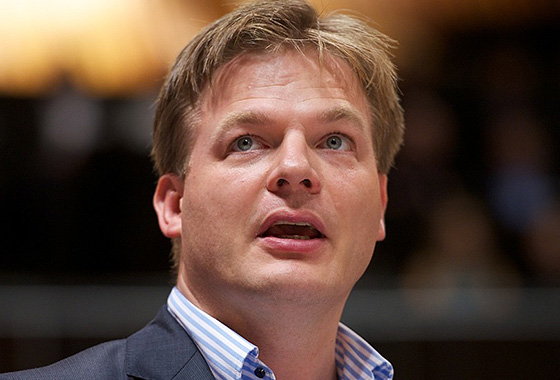
Netherlands, EPP/CD, Spokesperson for the group
16:52:22
Okay sorry colleagues, thank you very much.
Thank you very much to Mr Paul GAVAN for an excellent report which is deeply and deeply depressing. The whole idea of having a Council of Europe was that we would at least be able to prevent a conflict in which member states are involved. It seems that it has become normality that we accept this kind of conflict. We have had the Russian invasion of Georgia. We have had the invasion of Ukraine and now we have had the Azerbaijani attack on Nagorno-Karabakh. This has led to conflict between those two nations but if we cannot prevent this kind of conflict, what kind of work are we doing on minor issues of human rights? This is one of the biggest issues of human rights one can face. Thousands of people are dying on both the Armenian and Azerbaijani sides and the horrible consequences which Mr GAVAN has just given to us in his six-minute horrific talk, basically. It is now time for both countries to face up to the music.
And I would like to stress a few points which are really worrying. The hate speech on both sides, and especially the Trophy Park in which you see Mr Aliyev walk through, is worrying. It is worrying for the future. Secondly, we see the use of mercenaries, and I have to admit that a number of those mercenaries, which Turkey seems to have flown in, were also equipped by Dutch taxpayers' money earlier when they were fighting in Syria. That is worrying and we should know those consequences. We should ask those countries and we should really wonder and look whether they will whether Armenia will give the maps of the demining. If they do, if they do not, it should have consequences. If Azerbaijan does not free the people they do not want to give the rights of the prisoners of wars, it should have consequences in this organisation. If not, we shall keep talking about this conflict because this conflict has been a focal point in every speech of these two countries in the last few years.
I would like to underline what you were saying on changing the narrative and the destruction of cultural sites – destruction also of religious sites – in which people try to change the history for making the land theirs. That is not going to work and it is not going to lead to any sense of peace. So this is the beginning of your work, Mr GAVAN. We will have to look further into whether these countries, who promised so much, will deliver.
And one minor thing Mr Chairman, because I have been very precise in the past, because I was instrumental in getting a Dutch Embassy in Armenia, the Armenians thanked me at the national parliament with the medal. And because I want to make sure that everything is being mentioned here, I would like to mention that as it is not yet in the list.
Thank you.
Netherlands, EPP/CD, President of the Assembly
16:55:50
Mr Erkin GADIRLI you have the floor, yes.
Thank you Madame Chair, dear colleagues,
This is not the first time that we hear phrases like 'Azerbaijan attacked Nagorno-Karabakh' or 'Azerbaijan committed an act of aggression over Nagorno-Karabakh'.
This is legally incorrect.
Nagorno-Karabakh is not an international legal entity. It has never been a state. Aggression, according to international law, is a violent act of one state against another state. No state is legally capable of committing an act of aggression on its own territory.
Please take note of that.
Netherlands, EPP/CD, President of the Assembly
16:56:22
We will do, and we did read the report very carefully, as you did also, I hope.
We close the lift with the speakers on behalf of the political groups.
I go now to Mr Constantinos EFSTATHIOU from Cyprus, Socialist group. Connected? Ah he is here.
I think it's wrong - it's the wrong list... Mr Stefan SCHENNACH has already spoken.
Netherlands, EPP/CD, President of the Assembly
16:56:57
No. You are not [speaking] on behalf of the group, but you are here for speaking time.
I am a speaker on the Committee on Rules of Procedure, Immunities and Institutional Affairs.
Netherlands, EPP/CD, President of the Assembly
16:57:11
Ok, so you don't want to speak. That's nice.
Then I give the floor to Mr Bernard FOURNIER.
(FR) Madam President,
I would like to congratulate our colleague Mr Paul Gavan on this very detailed report.
This means that we can clearly see who is responsible amongst the warring parties. It is not the first time that the Assembly has spoken about this conflict. I can only regret the fact that an armed conflict should have broken out in the heart of Europe between two member states of this Organisation, which, when they joined the Council of Europe, committed not to use force to settle their differences.
This conflict has cost 3 900 Armenian and 2 900 Azerbaijani soldiers their lives. The tripartite statement of 10 November 2020 put an end to this hostility. However, the conflict will leave traces, and it is up to the two warring parties to engage in a dialogue. I hope that the Committee of Ministers will become more involved in this topic to avoid a new war.
However, for the time being, it is necessary to deal with the humanitarian consequences of the conflict. The issue of prisoners of war particularly needs to be addressed. Article 8 of the tripartite declaration expressly provides for an exchange of prisoners. While exchanges have taken place, Armenia disputes the fact that Azerbaijan has released all prisoners of war who were captured before the tripartite declaration, and claims that 48 Armenians captured after the declaration are still in prison, and being held in particularly worrying conditions. On this issue, it is important that Azerbaijan respects its commitments and releases the prisoners of war who must be treated humanely, and in accordance with the Geneva Convention.
Another issue that I find particularly worrying is the question of landmines and unexploded ordnance. This is a grave danger for civilians. Both sides must cooperate to allow the rapid return of civilians who have fled these mined zones. International financial and technical assistance will be necessary to carry out demining operations.
Finally, the situation faced by displaced persons remains a matter of great concern. Armenians have fled these regions, under Azerbaijan's control, and will not be able to go back because their security cannot be guaranteed. Therefore, it is necessary to provide Armenia with assistance in order to find a lasting solution for these people.
The role of Turkey and Russia in this conflict cannot be denied. The assistance of these two states will be necessary to develop genuine co-operation between Azerbaijan and Armenia, with a view to helping the affected populations, but I also want to recall the role of the Minsk Group, which I believe continues to be entirely pertinent.
Thank you.
Netherlands, EPP/CD, President of the Assembly
17:00:19
Thank you very much, Mr FOURNIER.
I now give the floor to Mr Ahmet YILDIZ of Turkey.
We had high expectations of this report from Mr Paul GAVAN, but, unfortunately, it turned out to be a partial one instead of a neutral one. Although Azerbaijani colleagues and our Turkish delegation tabled some amendments to correct some factual mistakes, unfortunately, the Rapporteur and the Committee did not join our efforts. The relevant part of the report which deals with the European Court of Human Rights and interim measures contains inaccurate and insufficient information, because pursuant to Article 46 of the Convention, final judgments rather than the findings of the Court are binding.
Let me draw your attention to the fact that there is currently no interim measure in effect against Turkey, contrary to the report. The interim measure of 6 October was lifted by the court on first of 1 December 2020. Indeed this decision of the Court has also been taken on interim measures solely on information submitted by the applicant, and used social media clippings of dubious provenance and hearsay, as a basis for its decision. We should not allow PACE to be instrumentalised in a similar way. The report by this body should not be used to keep the same mistakes on the agenda.
Dear colleagues, I am surprised at some remarks by some members here putting the aggressor and the self-defender in the same place, and even putting the native inhabitants of Nagorno-Karabakh and the other seven districts of Azerbaijan in as illegal settlers. This is not the right approach. I think that if we put it that way, it is not the right address of the situation and its humanitarian consequences.
Therefore, I request your understanding to correct these mistakes through our amendments and Azerbaijan amendments when we come there. Thank you.
Netherlands, EPP/CD, President of the Assembly
17:03:08
Thank you, Mr. YILDIZ.
Now, Mrs Nicole TRISSE. You have the floor.
Madame President, rapporteur, ladies and gentlemen,
The clashes that took place in Nagorno-Karabakh in 2020 were a reminder, if one were needed, that so-called "frozen" conflicts are still conflicts. We are not here today to talk about responsibilities or geopolitics: the UN does that very well.
However, and this is the whole point of today's debate, we have a duty to look very carefully at the humanitarian consequences of such conflicts, because they directly affect people whose most basic rights have been and are still being violated.
The figures speak for themselves, as you have said and as several speakers have also said: in six weeks of fighting, some 7,000 soldiers have been killed or disappeared, hundreds of civilian victims have been killed, more than 130,000 people have been displaced on both sides, executions have been carried out, cases of torture have been reported, and some 60 schools and hundreds of religious or cultural monuments have been destroyed.
Thanks to the mobilisation of the international community and, I want to believe, also thanks to the Council of Europe through the European Court of Human Rights and our Assembly, some slight progress has been made, especially with regard to the release of prisoners of war. However, it is still not nearly enough.
The draft resolution and recommendation before us today, both strongly and appropriately denounce these deplorable facts, and also set out a number of principles and proposals that could initiate a return to a negotiated, and therefore lasting, solution.
I fully agree with the position of the committee and its rapporteur on the fact that the belligerent parties must co-operate in clearing these territories of mines, as well as with the request that they initiate a de-escalation on the ground by refraining from any incursion beyond the positions fixed by the November 2020 cease-fire. Above all, however, it seems to me essential that a negotiation process really begin on the delimitation and demarcation of the borders, if necessary with a demilitarised zone and the presence of a peacekeeping force.
Difficult compromises will undoubtedly be necessary on both sides to reach a peaceful solution in Nagorno-Karabakh. Nevertheless, dialogue remains essential, a dialogue that must exclude hate speech that is unbearable and toxic for populations that are already suffering.
As a token of goodwill to move forward, it seems to me that Armenia and Azerbaijan would gain by agreeing to give UNESCO access to cultural sites in the region that are exposed to fighting and destruction. History teaches us that culture and heritage are solid foundations for building lasting reconciliations.
I am sure you have understood that I support the report and I thank the rapporteur for his excellent work.
Thank you.
Netherlands, EPP/CD, President of the Assembly
17:06:04
Thank you, Mrs TRISSE.
I will now give the floor to Mr Samad SEYIDOV of Azerbaijan.
Madame President, dear friends, dear colleagues,
For 30 years, my land has been occupied by Armenia.
For 20 years in this Parliamentary Assembly, we struggled for freedom, for peace, and for returning back to our Holy Land.
Now, one year [ago] – because today, 27 September – as a result of another Armenian provocation, Azerbaijan liberated its historic lands.
We did our best in order to restore justice.
And now justice has returned back to the territory of Azerbaijan.
Nagorno-Karabakh is an integral part of Azerbaijan. Neither the Council of Europe nor other organisations have ever accepted the words which were pronounced unfortunately by Mr Pieter OMTZIGT.
That's absolutely the wrong position, absolutely an unacceptable position.
Today Azerbaijan is doing its best to restore peace in the region. I want to inform my colleagues and friends: some Armenians from Khankendi just a couple of days ago came to us, to Azerbaijanis and asked about jobs, about normal life. We are doing our best for them, because they are citizens of Azerbaijan.
But those who are not so happy with peace in the region, those who are not so happy with justice in the region, they are the ones who are dreaming about the revanchist ideas and new war – they try to mislead the Parliamentary Assembly. They try to exaggerate the situation.
That's why I ask my colleagues and friends to support the Azerbaijani amendments - not to go the path of provocation, not to do something which could lead both countries to another war.
We're not afraid of war. We are ready to do everything in order to secure our territories, but we have to understand that this is a historic chance for Armenia to come back to the path of peace – not to think about the war and revanchist ideas. You are talking about the church and other cultural heritage. This is our duty to respect not only churches, but all other things – synagogues.
And have you heard that all mosques in the region have been destroyed and razed to the ground? And they kept pigs, cattle in the mosques?
They completely destroyed the cities of Azerbaijan – Agdam, Fuzuli. They deliberately shelled the city of Ganja, and killed kids, women, elderly people.
That's why I ask my friends to refrain from war, to think about peace, and to support Armenia to return back to a normal situation because the situation in Armenia unfortunately is not normal and it is not acceptable. Thank you.
Netherlands, EPP/CD, President of the Assembly
17:09:32
Thank you very much, Mr Samad SEYIDOV. I will cut after "four more speakers: Georgia, Ireland, Finland and Armenia. I will now give the floor to Mr Irakli CHIKOVANI from Georgia." [spoken in French].
Dear colleagues,
Caucasus accounts for most of the armed conflicts of the post-Soviet space. It is in the Caucasus, where Georgian occupied territories have turned into the source of constant humanitarian crises stemming from the deliberate aggressive policy and hybrid warfare waged by the Russian Federation, in blatant violation of international law.
Occupation has not stopped Georgia exploring the ways to support dialogue and confidence-building in the region. Right after the Karabakh war, Georgia came up with a trilateral initiative that would include Georgia, Armenia and Azerbaijan. This initiative aims at concrete projects that would be acceptable for all participants and at the same time support better interconnection and confidence-building.
The release by Azerbaijan of 15 Armenian prisoners and their return to their families, as well as the decision of Armenia to provide Azerbaijan with information on mined territories through mediation of the US and Georgia, evidently showed the possibility for dialogue and in fact, created a good groundwork to build on it. Here I must emphasise the personal positive role of Georgian Prime Minister Mr Irakli Garibashvili.
Evidently, it is an absolute necessity to think of a regional peace framework that will support neighbourhood and robust development in South Caucasus.
Last week, at the United Nations General Assembly, the Prime Minister of Georgia announced the new Peaceful Neighbourhood Initiative. This format will be possible with the active engagement and support of our western partners and those who could be interested to engage and contribute to this new idea.
From a geopolitical perspective, the wider Black Sea region is growing ever more important. Our goal is to ensure peace and stability in the entire region. We should focus on facilitating dialogue and confidence-building, and lead the implementation of practical solutions to regional issues of common interest.
Georgia has always been and is ready now to support and promote international law-based peace and security in the Caucasus – facilitating the transformation of the region of conflicts into the place of peace. These words take on special meaning precisely on this tragic day for the whole of Georgia, when after fall of Sokhumi, 28 years have passed, on 27 September: thousands of Georgians were forced to leave their homes, thousands of people died, and we have lost control of Abkhazia region.
Thank you for your attention.
Netherlands, EPP/CD, President of the Assembly
17:12:52
Thank you very much.
I give not a floor to Mr Joseph O'REILLY.
Thank you.
Thank you, Madam President, and I am delighted to see that you are in the Chair for this debate. I wanted on the outset to welcome the report. I want to warmly congratulate my colleague, my Irish colleague, on its balance, its objectivity, its depth, and his very hard work in producing it. What I like about the report is that it has within it recommendations or suggestions or a pathway to the future. To that extent, I applaud him for that; there is a basis to build peace there. I agree with my distinguished friend from the UK delegation, Mr John HOWELL, that we have to look to the future and build lasting peace.
I think the first issue that needs immediate addressing is, of course, the question of missing persons. It is a stark figure that there are 243 Armenians and 7 Azeris missing and, indeed, thousands of Azeris from the previous war. These people should be followed up on. Prisoners of war should be given an overall amnesty and released, and that includes ones recently arrested since the peace agreement.
I think Armenia should produce the map and the information on all the land mines. I think that should be non-negotiable and must be the case. There are internationally displaced persons – 36 000 of these – and also misplaced Azerbaijanis from previous wars. This issue needs addressing. These people need support, need help and need practical assistance.
I think the tensions around the border cited in the report, in this outstandingly good report, the tensions are on the border are of a great concern and do need international involvement and an international force there to deal with that.
I agree with the points around hate speech and Trophy Gardens, etc., because hate speech is something that is the prelude to war and is the oxygen that gives rise to violence and war.
I agree, lastly, with the point around the cultural heritage. If we could work with UNESCO and if Azerbaijan and Armenia would so do, we could build a basis for co-operation and peace there.
Well done to my colleague, Mister GAVAN, and I think it is a good evening's work and that we should adopt this report.
Thank you, President.
Netherlands, EPP/CD, President of the Assembly
17:16:18
Thank you very much, Mister O'REILLY.
Then I give down the floor to my Finnish colleague, Mr Kimmo KILJUNEN.
Madam Chair,
First of all I would like to thank very much Mister GAVAN, the rapporteur, no, I cannot speak with that one. I'm so sorry, like, he also made the speech without his mask. If I cannot speak without that, I must stop.
Madam Chair, I'm sorry about that one. Thanks to Mister GAVAN for the good report, it was a balanced report and very good basis for our discussion what we are getting now through here in our Assembly.
Netherlands, EPP/CD, President of the Assembly
17:16:57
Kimmo, you have to wear a mask. I apologise.
(...what happens if I start to vomit. I'm so sorry - this is actually for health reasons for me that I... in my parliament I have usually actually not... but I will try to do my best, I will try to do my best. Can I start once again?)
Thanks Mr Paul GAVAN for an excellent report. It's a good base for our discussion.
Secondly I want to remind you about 2001, the year Azerbaijan and Armenia joined the Council of Europe. It was agreed - it was clearly agreed - that only peaceful means were to be used in settling this so called frozen conflict of Nagorno-Karabakh. That was clearly a precondition for both countries to join the Council of Europe.
What you have now seen - as Ms Nicole TRISSE unfortunately nicely expressed - frozen conflicts are sometimes open conflicts. In this case it's very clearly the case.
There are lots of other frozen conflicts in Europe, as you very well know, and so that must be a warning for us.
In the six-week war last autumn, close to 10,000 people died. There was huge destruction, physical destruction, humanitarian suffering. Obviously you are right to speak about the hate and animosity among two neighbouring countries and people who have lived together for such a long time.
It's still polarising, the situation. Obviously that's very, very alarming. Obviously now we must try to find a way to solve the issue. This is a humanitarian crisis. It's absolutely a humanitarian crisis. There are still some prisoners of war, as we have discussed, and thanks to the Azeri authorities, they have released a few of them, but still it's an open question and the Geneva Convention is very clear on that issue.
There is also, as is very well known, the very big issue of the land mines. That's also a humanitarian problem. I really sincerely hope that we'll find a way with international support to have the demining process taking place in the area. That's for the safety of the people and people of the future in the area.
Obviously you're absolutely right when you are stressing the key issue of historical cultural heritage. There are major monuments and places in the area - historical, historical. It's a much longer history than in my country Finland, in cultural terms, compared to Azerbaijan, Armenia and the Nagorno-Karabakh region. Obviously we should respect culture and heritage on those terms.
So I sincerely thank the Rapporteur for making this report. We can now address these questions openly.
Hopefully, hopefully we can help the two sides to agree to a step-by-step approach, and diminish - in the best possible way - the hate, and create a reconciliation process in the region.
Thank you very much, Madame Chair.
Netherlands, EPP/CD, President of the Assembly
17:20:20
Thank you very much, Kimmo. Mister KILJUNEN, I have to say.
The last speaker which I will have is Mr Ruben RUBINYAN from Armenia.
Thank you, Madam Chair.
Dear colleagues,
Exactly one year ago on this day, Azerbaijan breaching its commitment to resolve the Nagorno-Karabakh conflict by peaceful means, which it undertook when becoming a member of the Council of Europe, attacked and started a massive full-scale war against Nagorno-Karabakh. This came after years of building institutionalized Armenophobia in Azerbaijan and constant warmongering by its leaders.
As a result of the war, both during and later after it, thousands of Armenians lost their homes only because they were Armenian. Cities were shelled, civilians were killed, prisoners of war were summarily executed, bodies were desecrated, ears and limbs where cut only because they were Armenian. In some footages released you could hear some of the thousands of terrorist mercenaries who were brought to fight in Karabakh by Turkey shouting that to individuals, that to Armenian pigs. The presence of these mercenaries from Syria has been confirmed by the State Security Agencies of France, Russia, Iran, and the United States international media Human Rights Watch.
Almost a year after signing the trilateral statement which put an end to the war, Azerbaijan keeps dozens of Armenian prisoners of war in a unlawful and cruel captivity, some of them are even charged with falsified criminal cases. Today people in the conflict zone and the bordering regions of Armenia and Azerbaijan live in everyday danger.
In May 2021, Azerbaijani military units violated the territorial integrity of the Republic of Armenia and illegally crossed the border. Armenian culture heritage that remains in parts of Nagorno-Karabakh, which came under Azerbaijani control, is under big danger. Many Armenian churches have been already destroyed. Furthermore, in a classic case of falsification of history, some very highest of officials claim that the Armenian churches in Karabakh are actually not Armenian but Caucasian-Albanian. This is done with the clear intention to erase the Armenian heritage from Nagorno-Karabakh. This is deplorable.
Dear colleagues, during this one year the leadership of Azerbaijan, including president Aliyev, have made numerous speeches and remarks containing hate speech towards our Armenians: dogs, devils, enemies. These are just some words used to describe me and my people by the Azerbaijani leadership. This is not normal. This is not right.
Azerbaijan must be stopped. Institutionalised hatred should stop including holding prisoners of war as hostages should stop, destroying churches should stop, warmongering should stop.
By the way, talking about warmongering. I think we hit a historic moment today because, for the first time, one of the members of this Assembly openly threatened war in this hemicycle, Mister SEYIDOV. This is truly historic and deplorable.
Concluding, I would like to thank Mr GAVAN for his report.
I know it has been hard and also want to mention that the fact that he wasn't able to visit Nagorno-Karabakh because Azerbaijan is not a good fact, and it weakened the report.
Thank you.
Netherlands, EPP/CD, President of the Assembly
17:23:58
Thank you very much.
As I said before, I had to close the speaker's list. However, speakers who are on the list and who have been present, physically or remotely, during this debate if they have not been able to speak, they can put their speech to the Table Office and then it will be published in the Official Report.
There is one thing I have to add, provided that speakers connected remotely can report the actual presence when the debate is closed. I remind colleagues that type-written text must be submitted, electronically, no later than 4 hours after the list of speakers is interrupted.
I call now Mr Paul GAVAN, the rapporteur, to reply to the debate.
You have still 3 minutes. Go ahead.
Thank you, Madam President.
I want to thank all of the contributors for their thoughtful contributions.
I want to tell you about my two most vivid memories of my trips to both Armenia and Azerbaijan.
In Yerevan I saw the military cemetery and all of the new graves of young men, the same age as my oldest son - 18 in many cases - and the heartbreaking cries of loved ones mourning their lost sons. It was absolutely tragic.
I'm sure my colleagues in Azerbaijan could have shown me a similar setting in their country.
Equally when I went to visit Agdam, a city that was once a thriving city of 30,000 people. When I witnessed first-hand the wasteland that was left there, it was hard to believe a city was actually once there. It was absolutely shocking. It brings home to me the absolute tragedy and futility of war.
I would respectfully say to Mr Samad SEYIDOV when he says "we are not afraid of war", I think every one of us in this Chamber should be afraid of war when we see the consequences, when we see what it can do.
Having detailed so many issues I want to try and focus, if I can, on what needs to happen now. I can tell you first-hand that there are good people on both sides of this conflict. I can tell you that because I have met them. We should recognise there has been good co-operation in relation to some issues, in relation to the missing and the dead. What we need to see is confidence-building measures that will encourage a real dialogue. Hopefully I've spelled out what some of them must be.
We must see all prisoners released. We must see all mine maps handed over. One should not be dependent on the other: it should not be a trade-off. It should be done because it's the right thing to do, because it's what any human rights body worth its name should be calling for.
I agree with Ms Nicole TRISSE on the importance of establishing a demilitarised zone. I think that's extremely important. I do think that parties such as Russia who have played a very positive role, I have to say, in this to date, have a key role to play there in encouraging that, along with this body.
I agree with the call for the Committee of Ministers to step up after this report and play a more positive role.
Finally, I just want to say let's try and start with ending hate speech. Hate speech, as somebody said earlier, is the prerequisite. It's what happens before war.
If we could take that one message away from this debate, let's end hate speech on all sides. It would be a positive step forward today.
Thanks again.
Netherlands, EPP/CD, President of the Assembly
17:28:13
Thank you very much, Mr Paul GAVAN, for your impressive reports and your impressive debate.
Now I will call Mr Pierre-Alain FRIDEZ, Chair of the Committee to reply. You also have 3 minutes.

Switzerland, SOC, Chairperson of the Committee on Migration, Refugees and Displaced Persons
17:28:31
Thank you, Vice-President.
Ladies and gentlemen, dear colleagues - I shall be brief.
Last September, the continued conflict between Armenia and Azerbaijan over Nagorno-Karabakh went through another dark hour, with consequences that we all know.
The debate in our committee did not deal with the political aspects of the conflict. Our colleague, Mr Paul Gavan, focused on the humanitarian consequences of the conflict, in particular, the remaining prisoners of war, but also raised questions relating to disappeared people and people who have died, the identification and return of bodies, and everything relating to the humanitarian aspects of the issue. Civilian populations have suffered; very often, they have lost everything. These populations have often been forced to leave their homes, they have been victims of mine explosions, and this is without mentioning the destruction that has taken place in the country. There has been continued high tension between the protagonists.
I would like here, to pay tribute to the commitment, objectivity and ability to listen that Mr Paul Gavan has shown. He has really tried to establish an authentic picture of the situation following this conflict. There are multiple humanitarian consequences from this conflict and they really deserve a proper solution, especially in relation to the people who are still being detained. I hope that Mr Paul Gavan´s report, and our Assembly as a whole, will be able to send out a clear message to the various protagonists of the conflict, calling for appeasement, the release of all the remaining prisoners and for everyone to work together to help alleviate as much as possible the suffering and hardship of all the direct and indirect victims of this conflict.
I would like to thank Mr Paul Gavan once again for his balanced report on a subject that is so delicate and, unfortunately, has led to so many human tragedies.
Thank you for your attention.
Speech not pronounced (Rules of Procedure, Art. 31.2), only available in Italian.
(Undelivered speech, Rules of Procedure Art. 31.2)
Dear collegues,
First of all, I would like to remind the Assembly and the rapporteur that, the Nagorno-Karabakh conflict was left in the past. Because Armenia is a defeated country, and its Prime Minister signed the capitulation act on 10 November 2020 in unknown place.
Furthermore, there is no administrative territorial unit called Nagorno-Karabakh in Azerbaijan. We have created Karabakh and Eastern Zangazur economic zones with the Presidential decree. By using this opportunity, I call all my colleagues and the Secretariat to avoid using legally non-existing, politically biased and manipulative names while referring to our territories.
Secondly, the phrase in paragraph 78 referring “region which remained under the control of Armenia” is factually and legally wrong. Because the referred part is an internationally recognized part of Azerbaijan, and Russian peacekeeping contingent is temporarily deployed to these territories.
Thirdly, report refers to groundless allegation of use of Syrian fighters. We categorically reject that and demand everyone who voiced these fabrications, including Macron, to provide evidence. However, no conclusive evidence was provided. Because there is none.
Moreover, report fails to mention systemic and deliberate attacks by Armenia against civilians and civil objects in Ganja and Barda which is far from battlefield. Because of these war crimes, 100 civilians, including 11 children were killed, more than 450 wounded.
Therefore, this Assembly, should call on Armenia to investigate these war crimes, bring to justice anyone including at command level and fully co-operate with European Court of Human Rights.
My recommendation to Armenian leadership is to bear state responsibility for its war crimes, to refrain from making new mistakes, always remember that Iron Fist in its place.
(Undelivered speech, Rules of Procedure Art. 31.2)
Today, exactly 1 year ago, on 27th September war between Armenian and Azerbaijan started. This war was a final accord of the 3 decades long occupation by Armenia of part of Azerbaijan. From today on we mark this day in Azerbaijan as Memorial day.
Dear Mr Gavan,
I had a chance to accompany you to Aghdam, a city, once densely populated, which has been looted to the ground by the Armenian occupying forces. Military fortifications and remnants of foundations of buildings is all that is left there. “Hiroshima of the Caucasus”, this is how it is called now. What you’ve seen there is not just a destroyed city.. destroyed hospitals, schools, roads, mosques and infrastructure. This is destroyed lives, destroyed hopes, destroyed future. 3 decades of occupation means a whole generation. A generation of people who spent half of their lives as refugees.
Dear colleagues, the report is drafted, we disagree with some, agree with others. The report is missing information about Khojaly genocide, which is the bloodiest page in the history of the conflict. Khojaly town has not only been ethnically cleansed with 613 people killed, many missing, but it was later renamed by occupants with all traces of Azerbaijanis there removed.
Moreover, the cultural heritage of Azerbaijanis in Armenia was destroyed or appropriated, was reduced to zero, but there is not a single word about it in the report. Any signs of Azerbaijanis who used to be the second largest ethnic group in Armenia in 20th century have been erased.
Most importantly, Armenian side was using ballistic missile to attack densely populated civilian areas of Azerbaijan, located far beyond the frontline. Ganja city – 100 km away from the frontline, 60 km away from Armenian border hit by ballistic missile several times.Barda - 50 km away from frontline, 100 km away from Armenian border hit by ballistic missiles and cluster bombs. All of Azerbaijani civilian victims, every single one of them were killed far outside of war zone.
And there are 2 simple reasons for this:
Armenia was targeting civilians on purpose. The strategy was to cause as much human loss on Azerbaijan as possible. This is by all means a terror tactic, not a military one and it is well documented.
There were no Azerbaijani residents in the war zone itself, because they were all killed or ethnically cleansed from it 30 years ago.
This distinguished assembly sometimes has tendency of looking for truth in the grey zone. But the truth is there. Armenia was occupying piece of Azerbaijan for 30 years. International community did close to nothing about that. We should leave war behind and do our best to turn south Caucasus into peace zone. It is important for Europe, it is important for people of our region.
(Undelivered speech, Rules of Procedure Art. 31.2)
One year ago, Azerbaijan with the direct support and involvement of Turkey and with the participation of foreign terrorist, launched full scale attack against ethnic Armenians in Nagorno Karabakh. It should be clearly stated, that initiator of the war and the disruption of the negotiation process was Ilham Aliyev, who rejected the peaceful political settlement of the conflict.
For a year the hundreds of the Armenian prisoners of war and civilians have been held captive in Azerbaijan. The number of Armenian POWs still remains unclear. Azerbaijan authorities do not publish the exact numbers of captives without any legal grounds and in gross violation of human rights requirements as per The Third Geneva Convention.
Approximately 90 percent of the alleged cases provided photo or video evidence, confirming that Azerbaijani forces had captured them and keep confined. Video Recordings of Armenian POW’s abuse have been posted on Azerbaijani accounts of social media. And now we realize, that from the very beginning of the war the Azerbaijani government established a special mechanism for processing and maintaining incoming captives in a way that abuse, beatings, torture, harassment, and intimidation are a customary practice. Systematic propaganda and strategically planted hatred against Armenians for over 20 years are worsening the conditions of the captives.
Armenian prisoners of war and other captives, have been and are being held in inhuman conditions, deprived of food, water, sleep and medical treatment; they have been humiliated, degraded and dehumanized in every possible way.
During the last months Azerbaijan has repeatedly abused legal procedures, falsified the requirements of international law, and prosecuted Armenian POWs using deprivation of liberty as punishment. Labelling Armenian servicemen and civilians captured by the Azerbaijani armed forces as "terrorists" is a gross violation of international humanitarian law and international human rights law in general. We emphasize once again that, regardless of the date of captivity, all Armenian servicemen held in Azerbaijan, including civilians, are prisoners of war by their current status.
There are still hundreds of individuals who remain in Azerbaijani custody. They must be identified, protected, and repatriated as soon as possible. The international community and human rights organizations must pressure dictator Aliyev to release all Armenian POWs immediately.
Speech not pronounced (Rules of Procedure, Art. 31.2), only available in French.
(Undelivered speech, Rules of Procedure Art. 31.2)
Dear President, Dear Colleagues,
Let me start by expressing my disappointment about the report.
To my knowledge, this report is the first official report which will be adopted by PACE as well as other international organizations in the aftermath of the 44-day war.
For this reason, our expectation from this report was a complete and fair description of the humanitarian consequences of the conflict and true account of how the conflict between two countries erupted over the decades.
This report unfortunately fails to address the realities with regard to the origin of the conflict. This conflict erupted due to the occupation of 20 per cent of the Azerbaijani territory by Armenia in 1990s. However, relevant UN Security Council Resolutions and PACE resolutions recognized the Armenian occupation.
In addition, Armenian attacks led to catastrophic effects on Azerbaijani civilians. Armenian forces employed internationally banned cluster bombs. In addition, populated areas around the frontline as well as cities far from the conflict area have been targeted and hit by Armenian forces during the conflict.
I am sad to say that these Armenian attacks on civilians, which had catastrophic consequences in populated areas, have not been properly documented in the report. All these attacks by the Armenian forces are clear violations of international humanitarian law principles.
This report should have been objective and impartial if its purpose was to serve peace and stability in the region. If we fail to recognize these established facts, our works in this Assembly does not serve in favor of peace, stability and justice.
It is quite worrying that this report with its current configuration is likely to lead to further accusations and disagreements between two sides.
Finally, Assembly should help find remedies to the humanitarian consequences of the conflict and restore a peaceful and friendly future for both Armenian and Azerbaijani people.
(Undelivered speech, Rules of Procedure Art. 31.2)
Dear President, Dear Colleagues,
I would like to begin with the allegations in the report with regard to Turkey.
Allegations with regard to the involvement of Turkey were based on fabricated facts. We strongly deny that Turkey involved in the transfer of mercenaries as alleged in the report. Furthermore, our colleagues from Azerbaijan has repeatedly stated that there was no use of mercenaries in the conflict. There is no compelling evidence proving the use of mercenaries with Turkey’s involvement.
However these allegations are still in the text despite the fact that we raised the issue in the committee and presented our amendments. Unfortunately, neither the Rapporteur nor the Committee accepted our amendments.
In addition, the report calls for Turkey to cooperate with the European Court of Human Rights. On 1 December 2020, European Court of Human Rights lifted its interim measures for Turkey adopted upon Armenian application because trilateral statement by Armenia, Azerbaijan and Russian Federation ended the hostilities in November 10.
For these reasons, I believe that referring to Turkey in the report is deceptive and irrelevant because it diverts our attention from the real origins of the conflict. I hope you all would consider these points while voting for the amendments.
Furthermore, current conflict between two countries led to displacement of more than 80 thousand Azerbaijani people. 1991-1994 war had already displaced around one million persons.
I believe that forced displacement should not be the fate of the people of Azerbaijan in this region. I do support the current initiatives of Azerbaijani government to make these people return to their homes. International community should support these initiatives and show solidarity with people who are forced to move due to the conflict.
Thank you.
(Undelivered speech, Rules of Procedure Art. 31.2)
Dear President, Dear Colleagues,
I am disappointed with regard to the current configuration of the report. I will explain why I oppose some of the arguments and facts presented in the report.
We are friends of the brotherly Azerbaijani people. This brotherhood stems from history, culture and shared heritage. But our perspective on the conflict between Armenia and Azerbaijan is not just based on brotherhood and friendship.
Our approach to this conflict is also based on stability and peace in the region, and equity and justice in the resolution of the conflict.
I believe that this report does not adequately provide a true and fair account of the conflict. This report overlooks the historical facts and origins of the conflict. This means that it does not present a fair and just approach towards Azerbaijan and Armenia.
This report does not acknowledge the fact that occupation of Azerbaijan territory by the Armenian forces in 1990s brought the conflict to this day. UN Security Council Resolutions demanded immediate and complete withdrawal of Armenian forces. But Armenia continued to pursue its aggression policy. I would expect from this Assembly to adequately refer to these resolutions and the occupation of Armenia.
Regrettably, there are some references to Turkey in the report as well. This conflict erupted due to the Armenian aggression at the first place and Turkey has never been part of the conflict between two countries. We always asked for justice, stability and peace in the region.
Despite the fact that Turkey is never a party to the conflict, Armenian government fabricated allegations with regard to involvement of Turkey. In fact, these allegation were even submitted to the European Court of Human Rights. I am very disappointed with the fact that the Court has been instrumentalized on fabricated on-sided allegations.
Finally, I call this Assembly to serve for peace and stability in the region. Thank you.
(Undelivered speech, Rules of Procedure Art. 31.2)
I join with others in congratulating Mr Paul Gavan on his useful report. As he summarise for us : the main issues include the dead, missing and wounded; prisoners of war captives ; allegations of crimes, war crimes and other wrongful acts ; land mines and unexplored ordnance ; displaced persons ; border tensions ; cultural heritage; hate speech.
Today I will concentrate on the land mines problem. We are glad that Armenia has recently produced maps indicating 97,000 mines around Aghdam and a further 92,000 mines in districts of Fuzuli and Zangilan districts.
Nevertheless, a great deal more has to be done. More maps released by Armenia. And shared maps between Armenia and Azerbaijan, said to lack proper information for effective demining, are to have this deficiency removed.
The conflict area around Nagorno - Karabakh has the highest density of land mines worldwide.
The UK funds de mining work by the UN and has urged other states to join in.
A stronger UN involvement with humanitarian and security protection in the area is essential.
Then the de mining programme itself. This must not be delayed. Since the November cease fire 159 Azerbaijanis and 5 Armenia have already be killed or injured. Many others will also be killed or injured until land mines are removed.
All of us may well agree that this should happen immediately. However, the concern is that the de mining programme will be badly organised and procrastinated. Correctly, therefore, and to counter this caveat, the rapporteur prescribes the ingredients of competent intervention instead. Armenia and Azerbaijan should now increase mine and unexplored ordnance awareness programmes ; the international community must give equipment, training and funding for the clearance of about one million mines.
Not least and along with the United Nations, must the Council of Europe, representing its 47 state, insist upon action straight away.
(Undelivered speech, Rules of Procedure Art. 31.2)
All wars and conflicts, no matter how long they last, are finally over. There are no eternal conflicts and wars. However, the wounds and consequences of war do not heal quickly, and sometimes they are so deep that they do not heal at all.
In November 2020, a very significant event took place in the life of my people and, I think, in Europe and in the world. The Armenian-Azerbaijani conflict and war, which lasted almost 30 years, finally ended with the liberation of the occupied territories by the Azerbaijani army. Azerbaijan has succeeded in breaking the knot which would have likely continued indefinitely, had it been left to influential international organizations which had been constantly giving ineffective promises, and the OSCE Minsk Group which had the authority to work directly on the settlement of the conflict. Almost 10 months have passed since the end of the war, and intensive construction work was launched in the liberated territories. However, as a recent observer of the situation in the region at the end of August, I can confirm that the roots of this tragedy which has been raging since the end of the 1980s, run so deeply that it may perhaps take longer than the conflict to eliminate completely the aftereffect of the conflict. About 1 million Azerbaijanis had become refugees and internally displaced persons. This means that hundreds of thousands of families and homes had been destroyed. Walking along the roads built in a short time and meeting the most modern requirements, I saw invisible ruins to the right and left. Armenia has not left a single home in the occupied territories of Azerbaijan safe. As if a nuclear war had broken out in these places. The houses were demolished to the last stone. Once upon a time, the places where life was in full swing turned into empty plains. Instead, the Armenian side mined all these areas from start to finish. It takes years to clean them. This means that IDPs who have been homesick for years will not be able to return to their homes soon. Generations change over time. Today, the Azerbaijani state is focused on reviving these wounded territories and is doing a great job with incredible speed. A beautiful international airport was built in Fizuli in eight months after the occupation, and the first flights are already being made there.
In place of the destroyed buildings, the ones many times better than previous buildings will be built. Nevertheless, how to return hundreds of destroyed historical monuments, hundreds of destroyed cemeteries, hundreds of destroyed mosques, places of worship, hundreds of old plane trees, thousands of young people who died in this war? These fragments will forever remain in the memory and in the heart, from time to time they will move, hurt, sting and burn.
Of course, there are many ordinary people also among the Armenians who have suffered. The blow of war never strikes just one side. Today the screams of mothers from Armenia are constantly growing. Why have thousands of young Armenians died over the years? Why did the criminal leaders who usurped the power in Armenia sacrifice them for the sake of their vain dreams and ambitions? Was it worth it? What has been obtained besides break-up?
All these humanitarian tragedies tell us the truth which unfortunately many pneumonia-minded people unwilling to investigate tomorrow don’t wish to see. The truth is, revenge must end, and hands that have held onto weapons for years must now seek cooperation. No matter how complicated it is! This is the only way to get rid of the vortex, to develop and enjoy a good life!
Netherlands, EPP/CD, President of the Assembly
17:30:40
Thank you very much.
I will come now to the consideration of the amendments from the draft resolution which is in front of us. There are 27 amendments on the draft resolution and 2 amendments to the draft recommendation.
The amendments will be taken in the order in which they appear in the Compendium. I would strongly remind you that on the amendments there is a limited time of 1 minute and I ask members of this Parliament who will participate remotely to ask for the floor only when they have to support their own amendments or when they wish to speak against another amendment.
So I will be very tough on keeping the 1 minute.
So, first I would like to call the amendment from Mr Ruben RUBINYAN, amendment 18. You have 1 minute.
Thank you, dear colleagues.
The goal of the amendment is to change the text in a way that it refers to the conflict as a conflict between Armenia and Azerbaijan/Nagorno-Karabakh conflict, because for all this time, when the conflicts existed, in all international organisations, including this one, including the OSCE, including also the trilateral statement which put an end to the war of 2020, Nagorno-Karabakh Conflict is used as a way of naming this conflict.
Thank you.
Netherlands, EPP/CD, President of the Assembly
17:32:34
Thank you very much. Is there anybody who wants to speak against the amendment?
Yes, Mister.
My name is Erkin GADIRLI.
I'm want to speak against this amendment for the very same reason I made during my point of order. Nagorno-Karabakh is not an international legal entity. It is not possible to have a legal conflict between a state and part of it. It is an international conflict between Armenia and Azerbaijan. The context of it has always clearly been referred to in the four resolutions of the Security Council of the United Nations. "Nagorno-Karabakh conflict", this amendment by Mr RUBINYAN should be rejected.
Thank you.
Netherlands, EPP/CD, President of the Assembly
17:33:34
Then I would like to ask the Committee, what is your position on the amendment?
Switzerland, SOC, Chairperson of the Committee on Migration, Refugees and Displaced Persons
17:33:43
The committee was in favour by 14 votes to 7.
Netherlands, EPP/CD, President of the Assembly
17:33:51
Ok, thank you [in French].
So, I will put the amendment to the vote.
The vote is now open.
I will close the vote now.
The vote is closed.
The results are 57 in favour, 20 against, 5 abstentions.
Thank you very much.
Then I come now to support the Amendment Number 1. One minute for Mr Samad SEYIDOV.
Madam President,
This is a very, very important amendment because these amendments refer to the roots of the conflict. This conflict has happened because of the provocations made by the leadership of Armenia but much more importantly, this conflict occurred because of the absence and visible, tangible results of the international community efforts.
In this case, we should take that into account; without it, we will be able to achieve something. As, unfortunately, absence of any tangible results are why Armenia and Azerbaijan went to conflict. That is why we should reflect this reality in the report.
Netherlands, EPP/CD, President of the Assembly
17:35:46
Thank you very much.
Then I would like to ask now if there is anybody who wants to speak against.
Yes, Mr Ruben RUBINYAN.
Thank you Madame Chair.
Mr Samad SEYIDOV basically made my case for me.
They openly state that they are proud that they won the war. They threaten with a new war. The reason that they try to go with this amendment is the following, they want to rationalise it in the following way: since the negotiations didn't have any tangible results, the war happened, and of course the war happened because they attacked.
This is an attempt to justify war. Regardless of the fact that the negotiations did or didn't bring tangible results, war is wrong – there is no justification to starting a war. I oppose this amendment.
Thank you.
Netherlands, EPP/CD, President of the Assembly
17:36:45
Position of the Committee?
Switzerland, SOC, Chairperson of the Committee on Migration, Refugees and Displaced Persons
17:36:48
The committee is in favour by a large majority.
Netherlands, EPP/CD, President of the Assembly
17:36:53
I have to put it to the vote [spoken in French].
I will put it now to the vote in the hemicycle and via remote.
Vote is now open.
So I will close the vote now.
The results: 68 in favour, 17 against, and 10 abstentions.
Thank you very much.
I come now to Amendment No. 2.
Mister SEYIDOV.
In the draft resolution paragraph 6, we suggest replacing the word "concern" with the following word "notification". As in the notification of the European Court from 16 March 2021, there is no reference to "concern" on captives. This is not a factual conclusion that one can make from the given notification.
It's important that when PACE refers to a legal document, it should stick to the facts.
Thank you.
Netherlands, EPP/CD, President of the Assembly
17:38:30
I was told it would be Mr SEYIDOV who would say something on this amendment. Does anyone want to speak against... No, Mr GAVAN wants to propose a sub-amendment. Mr GAVAN, you have to floor.
Thank you, Madame President.
Yes, I'm suggesting that we replace the words "the concerns of" with the words "with concern the notification by". In other words, the new sentence would read "the assembly, however, notes with concern the notification by the European Court of Human Rights".
Netherlands, EPP/CD, President of the Assembly
17:39:18
The oral amendment meets the criteria of rule. Is there any objection of the oral amendment being debated?
I don't see that.
So that means, if there's no objection from 10 or more members, then I can put it to the vote.
Yeah, OK.
[ The reason] We suggested replacing the word "concern" because here it speaks about the Court.
Netherlands, EPP/CD, President of the Assembly
17:39:59
But do you have the support of 10 members? Because that is what I asked for.
Now I just wanted to object to the oral amendment, because the gentlemen proposed to have "with concern", that's right.
Netherlands, EPP/CD, President of the Assembly
17:40:11
You need 10 members, and I don't see them.
So that means.. does anyone want to speak against the oral amendment?
No?
So, Mister GAVAN.
I would ask that we support the oral amendments.
I'll just repeat it. It would mean that the sentence would now read: "the Assembly, however, notes, with concern, the notification by the European Court of Human Rights".
Netherlands, EPP/CD, President of the Assembly
17:40:57
So, the opinion of Mr Samad SEYIDOV, because you are introducing the main amendment.
Madam President, I'm in favour of the sub-amendments which were presented by Mr HOWELL.
Netherlands, EPP/CD, President of the Assembly
17:41:11
Thank you very much. Then I ask for the position of the Committee. In favour, yes.
Switzerland, SOC, Chairperson of the Committee on Migration, Refugees and Displaced Persons
17:41:18
The Committee was unanimously in favour.
Netherlands, EPP/CD, President of the Assembly
17:41:22
OK. Thank you very much. [spoken in French]
Then I will now put oral Sub-amendment No. 1 to the vote.
The vote is open.
The vote is closed.
The results: 92 in favour, 2 against, 1 abstention.
Thank you very much.
I now go to the main amendment.
Does anyone wish to speak against the amendment as amended?
I don't see anybody.
What is the opinion of the Committee?
Switzerland, SOC, Chairperson of the Committee on Migration, Refugees and Displaced Persons
17:42:26
Unanimously in favour.
Netherlands, EPP/CD, President of the Assembly
17:42:28
Thank you.
So I shall now put Amendment 2 to the vote.
The vote is open.
I will close [the vote] now and ask for the results.
So Amendment 2 is AGREED with 95 in favour, 5 against and 2 abstentions.
I go now to amendment no. 3 and if my notes are right, it is Mr Samad SEYIDOV who wants to support it.
Yes, Madam Chairperson.
We propose Amendment No. 3 to add the words "made by Armenia" after the word "allegations", because we oppose all the allegations put forward by Armenia.
That's why the words "made by Armenia" should be there, because Azerbaijan is committed to the norms and principles of international humanitarian law. We have provided open access to the International Red Cross. They have freely visited the Armenian captives. We have also provided the related information to the European Court of Human Rights and relevant agencies.
That's why here we propose to add "made by Armenia" after the word "allegations".
Netherlands, EPP/CD, President of the Assembly
17:44:15
Thank you very much.
Then I would like to ask someone to speak against.
Yes, you have the floor.
Thank you, dear colleagues.
What our Azeri colleagues just said is simply not true. These allegations were made not just by Armenia but by many reputable human rights watchdog organisations, international media, and other countries.
So, we are against this amendment. Thank you.
Netherlands, EPP/CD, President of the Assembly
17:44:48
Thank you very much, Mr Ruben RUBINYAN.
The Committee.
Switzerland, SOC, Chairperson of the Committee on Migration, Refugees and Displaced Persons
17:44:54
The Committee is in favour by a large majority.
Netherlands, EPP/CD, President of the Assembly
17:44:57
Committee in favour [spoken in French].
So, we have to vote.
Shall I put now the amendment to the vote, so who's in favour of Amendment No. 3?
The vote is open.
Yeah, I will close the vote now. The results will be displayed.
80 in favour, 15 against, 9 abstentions.
I come now to the vote on the Amendment No. 4.
I call someone to support it.
Hello, yes from the Azerbaijan delegation, Ms Nigar ARPADARAI.
In Amendment No. 4 after the word "which", we suggest adding the following word "may", as we feel that the Parliamentary Assembly of the Council of Europe should not be so affirmative when it comes to respect for the Convention, without any proper examination of these cases by the European Court or any other international instance.
The rights of all persons of Armenian origin were duly provided during their court trials.
Netherlands, EPP/CD, President of the Assembly
17:46:26
Thank you very much.
Then I will ask is there someone who wishes to speak against the amendment? Mr Ruben RUBINYAN.
Thank you, dear colleagues,
It's very simple. There are Armenians who are undergoing or have undergone speedy criminal trials in Azerbaijan. They are prisoners of war, but Azerbaijan is trying them.
The question is very simple: does this raise fair trial issues or not?
They are saying this may raise fair trial issues. I'm saying this does raise fair trial issues.
You decide, and I hope you will decide to reject this amendment.
Thank you.
Netherlands, EPP/CD, President of the Assembly
17:47:14
Thank you, Mr Ruben RUBINYAN.
The position of the Committee?
Switzerland, SOC, Chairperson of the Committee on Migration, Refugees and Displaced Persons
17:47:19
The committee is largely in favour.
Netherlands, EPP/CD, President of the Assembly
17:47:23
Okay I will put it to the vote now.
The vote is open.
I will close the vote now and ask for the result.
The vote was already closed.
The result is 72 in favour, 17 against and 11 abstentions.
And I was asked to go a bit slower. I was closing the voting process too fast, so I will do my utmost to do so.
Then amendment 4 was accepted.
Then I come now to amendment 20. And who wants to support amendment 20?
Okay, the Chair of the Committee.
Switzerland, SOC, Chairperson of the Committee on Migration, Refugees and Displaced Persons
17:48:59
Amendment No 20 has been withdrawn.
I'm sorry, I was mistaken. I apologise.
Netherlands, EPP/CD, President of the Assembly
17:49:06
Okay, Mr Ruben RUBINYAN, he wants to support.
Mr Ruben RUBINYAN, he moved the amendment so you are free to support.
Thank you, dear colleagues.
In the original text, the Assembly calls on the Azerbaijani authorities to release all remaining captives and return them to Armenia without further delay. We suggest to add the words: to fulfil their obligations and release. Why? Because it's important to stress that this is an international obligation of Azerbaijan and most of you probably heard that our other colleagues deny that there are any, I mean captives, or say that they are criminals or terrorists, so it's very important to stress again that they have an obligation to release these people.
Thank you.
Netherlands, EPP/CD, President of the Assembly
17:49:49
Thank you very much, Mister RUBINYAN.
Who wants to speak against?
Thank you Madam Chair.
I oppose this amendment from a purely legal point of view. It's redundant because it doesn't add any substantial meaning.
But it's also confusing because it's too vague.
Such an open texted amendment could mean anything and could lead anywhere.
That's why it should be rejected, so let us stick to the original text of paragraph 6.7.
Thank you.
Netherlands, EPP/CD, President of the Assembly
17:50:24
Sorry, Mr Tural GANJALIYEV, right? Yes? GANJALIYEV? No?
So, you are moving? The rule is now that everybody is moving place the whole day, so it's quite difficult to look for the names.
Mister Mr Erkin GADIRLI, OK.
Thanks to the help from the Secretariat.
What is the position of the Committee?
Switzerland, SOC, Chairperson of the Committee on Migration, Refugees and Displaced Persons
17:51:03
The Committee is against by a large majority.
Netherlands, EPP/CD, President of the Assembly
17:51:07
I will put now the Amendment to the vote.
I open the vote.
I will close the vote.
The results will be displayed: 14 in favour, 78 against, and 8 abstentions.
The amendment is rejected.
Then I come to Amendment No. 5.
Who wants to say something on the amendment?
I understand that Mr SEYIDOV wishes to withdraw the Amendment.
Yes, you are absolutely right, Madam President.
Netherlands, EPP/CD, President of the Assembly
17:52:28
Yeah, okay.
Is there anybody else who wants to support this amendment?
I do not see anybody. What is the position of the Committee? Happy?
Switzerland, SOC, Chairperson of the Committee on Migration, Refugees and Displaced Persons
17:52:43
This amendment has been withdrawn.
Netherlands, EPP/CD, President of the Assembly
17:52:46
It is wrong. My papers...
Thank you very much. It was wrong.
Then I come to Amendment No. 6. Who wants to support that amendment?
Mr Samad SEYIDOV.
This is very important because we should be very precise in our wordings.
When we said that 'we have warring evidence' it means you have something in your hands.
My Armenian colleagues very frequently said that they have a lot of shootings, photos, videos, etc., but all this evidence came from unreliable sources.
Instead of that, taking into account that this is a very important paragraph, our suggestion is to write 'there are warring reports on', because everybody can read some reports which are produced by different sources.
That's why I think it is very important to support this amendment.
Netherlands, EPP/CD, President of the Assembly
17:53:57
Thank you very much.
Then who will speak against? I do not see [anybody].
Mr Ruben RUBINYAN?
And I also see that Mr GAVAN wants to.
If Mr GAVAN wants to, let him speak.
Netherlands, EPP/CD, President of the Assembly
17:54:18
Let's hear Mr GAVAN.
I want to suggest a compromise here. I want to suggest that we replace the words "there is worrying evidence of" with the words "there are worrying allegations and evidence of". I want to do this because it is true that there are allegations and it is also true there is evidence. So that is my proposal as an oral sub-amendment.
Netherlands, EPP/CD, President of the Assembly
17:54:43
In our opinion, the other sub-Amendment meets the criteria of the rules. Is there any objection to the oral sub-Amendment?
I don't see any. So then I go now to the next.
Mr Paul GAVAN, I call you to support the oral sub-Amendments.
I propose the oral sub-Amendment?
Netherlands, EPP/CD, President of the Assembly
17:55:10
And nobody wants to speak against.
What is the opinion of the move of the original amendments?
Of course, Madam President, there are some doubts about the formula which is presented by the rapporteur. Taking into account that we have to keep the spirit of compromises – we are not in favour, and we are not against. We abstain.
Netherlands, EPP/CD, President of the Assembly
17:55:47
What is the opinion of the Committee?
Switzerland, SOC, Chairperson of the Committee on Migration, Refugees and Displaced Persons
17:55:51
Voted unanimously in favour.
Netherlands, EPP/CD, President of the Assembly
17:55:55
"In favour" [spoken in French]
So I will now put the oral sub-amendment 2 to the vote.
The vote is open.
The oral sub-amendment vote is closed.
The oral sub-amendment is accepted by 82 votes in favour, 2 against and 21 abstentions.
I go on now to consider the main amendment. Does anyone wish to speak against the main amendment? I do not see anyone. What is the opinion of the Committee on the main amendment?
Switzerland, SOC, Chairperson of the Committee on Migration, Refugees and Displaced Persons
17:57:09
In favor.
Netherlands, EPP/CD, President of the Assembly
17:57:12
I put Amendment No. 6, as amended, to the vote.
The vote is open now.
I will close the vote.
Results will be displayed: 83 in favour, 7 against, and 15 abstentions.
Amendment No. 6 as amended is agreed.
Then I come now to Amendment No. 7.
I call now someone to support. Mister SEYIDOV.
Madam President,
This is a very important amendment, because our delegation is in favour of withdrawing the word "systematic". This is totally out of reality. We have a lot of evidence of different kinds of crimes made by Armenian side. When the rapporteur writes about Armenian side, he said just allegation and in our case he said "systematic". That's why, of course, this is not acceptable. "Systematic" means some kind of system that does not exist. I ask my colleagues to support this amendment and to withdraw the word "systematic" from the text.
Thank you.
Netherlands, EPP/CD, President of the Assembly
17:59:00
I am informed that the rapporteur will replace [it] with an oral amendment.
Rapporteur.
Thank you Madame President, yes I want to propose that we replace the word "systematic" with the word "consistent". So let me give you the full revised sentence, it would read as follows: "a substantial number of consistent allegations of inhuman and degrading treatment and torture".
Netherlands, EPP/CD, President of the Assembly
17:59:29
Is there any objection to the oral sub-Amendments being debated?
I don't see. If that's not the case, then we go to the vote.
Who wants to speak against?
No.
The opinion of the Committee on sub-Amendment is in favour.
Switzerland, SOC, Chairperson of the Committee on Migration, Refugees and Displaced Persons
17:59:55
Favourable by a large majority.
Netherlands, EPP/CD, President of the Assembly
17:59:59
I now put the oral Sub-amendment No. 3 to the vote.
The vote is open.
The vote is closed now.
There are 92 in favour, 4 against and 5 abstentions.
Oral Sub-amendment No. 3 is agreed.
We will now reconsider the main amendment. Does anybody wants to speak against that amendment? I do not see anyone. What is the opinion of the Committee?
Switzerland, SOC, Chairperson of the Committee on Migration, Refugees and Displaced Persons
18:00:53
A large majority in favour.
Netherlands, EPP/CD, President of the Assembly
18:00:56
So I shall now put Amendment No. 7 to the vote.
I declare it open now.
I will close the vote now.
Results will be displayed.
The result is: 88 in favour, 4 against, and 8 abstentions.
So the amended Amendment No. 7 is agreed.
Then I come to Amendment No. 8.
Who wants to support Amendment No. 8?
Yes, Madam President,
We propose to add the words "particularly in places not located in the conflict zone" to paragraph 8.4 after the word "civilians" because you know that during the 44 days of war last year, while Azerbaijan was strictly following humanitarian international law and also the requirements of the law of armed conflict, unfortunately, Armenia did vice versa.
Armenia attacked civilians, the biggest cities of Azerbaijan, far from the conflict zone. For example, the second biggest city of Azerbaijan, Ganja, was attacked and its downtown district was wiped out by ballistic missiles. Even the capital of Azerbaijan, the city of Baku, was attacked and it was just because of Azerbaijan air defence systems [which] intercepted the ballistic missile coming from Armenia and targeting the capital of Azerbaijan.
So in this case, it's very important to add this phrase, "particularly in places not located in the conflict zone."
Netherlands, EPP/CD, President of the Assembly
18:03:15
Thank you very much.
Then who wants to speak against? Mr Ruben RUBINYAN.
Dear colleagues, first of all, what our colleague just said is false.
Secondly, what is the aim of this amendment?
In the original text the concern is about 'indiscriminate use of weapons killing and injuring civilians'.
They want to add the following: 'particularly in places not located in the conflict zone'.
So do I understand it right?
It's particularly not okay to kill civilians in cities which are a bit further from the conflict zone, but in cities which are in the conflict zones, it's kind of fine to kill civilians with indiscriminate weapons - because this is the logic of this amendment.
I think this is very wrong. We can't put distinctions between civilians based on where they live. So if they happen to be born and live in a city which is in a conflict zone they are second-class civilians, right?
I strongly oppose this amendment. I don't understand why our distinguished Rapporteur has been supportive of this.
Please, vote against this. Thank you.
Netherlands, EPP/CD, President of the Assembly
18:04:27
Thank you very much.
What is the position of the Committee?
Switzerland, SOC, Chairperson of the Committee on Migration, Refugees and Displaced Persons
18:04:31
The Committee is in favour by a large majority.
Netherlands, EPP/CD, President of the Assembly
18:04:35
OK, thank you very much. [spoken in French]
I will open the vote now on the Amendment No. 8.
The vote is open.
The vote is closed.
The results: 72 in favour, 17 against, and 18 abstentions.
So that means that Amendment No. 8 is agreed to.
Then I come to Amendment No. 16. Amendment No. 16 has to be supported, Mr Ahmet YILDIZ, or someone else?
Madam Chair,
Indeed this sentence talks about warring evidence - but there is no evidence. This allegation regarding the use of mercenaries by Azerbaijan, with assistance from Turkey, is false and fabricated by Armenian circles. So there is no compelling evidence. This is an allegation but the evidence is just about the involvement of Armenian mercenaries from all around the world.
Let's separate this. I would appreciate it if the Rapporteur takes this accordingly.
Thank you.
Netherlands, EPP/CD, President of the Assembly
18:06:17
Who wants to speak against?
Mr Ruben RUBINYAN.
Thank you, dear colleagues.
The use of mercenaries from Syria by Azerbaijan with Turkey's assistance is a fact. This fact has been confirmed by State security agencies of Iran, Russia, France, the USA, international media outlets, human watchdogs, NGOs, so this is the truth and it should be displayed.
Thank you.
Netherlands, EPP/CD, President of the Assembly
18:06:55
What is the position of the Committee? Thank you very much. What is the position of the Committee?
Switzerland, SOC, Chairperson of the Committee on Migration, Refugees and Displaced Persons
18:06:59
The Committee is against by a large majority.
Netherlands, EPP/CD, President of the Assembly
18:07:03
So against with a large majority.
So I put the amendment to the vote, on Amendment 16.
The vote is open.
We can close the votes now.
Expecting the results.
The amendment is not accepted: 26 in favour, 68 against and 8 abstentions.
So amendment 16 is rejected.
Now, I come to Amendment no. 9. It will have support from whom? Mr Tural GANJALIYEV, you have the floor for 1 minute.
Yes, Amendment No. 9:
We propose adding the following words "allegations of".
You know this stuff relating to mercenaries is purely allegations made by Armenia.
That's why this phrase "allegations of" must be here in this amendment. No sound evidence has been provided up-to-date to Azerbaijan.
It's just fabrications, accusations, you know, these allegations put forward by Armenia.
That's why it's important to include these words in this amendment for the sake of impartiality of the report.
Thank you.
Netherlands, EPP/CD, President of the Assembly
18:08:53
Thank you very much.
Who wants to speak against?
Mister RUBINYAN.
Again it is very hard to argue with facts.
The use of Syrian mercenaries by Azerbaijan is an established fact. Calling it a fabrication thousands of times won't make these facts fabrications.
Thank you.
Netherlands, EPP/CD, President of the Assembly
18:09:18
Thank you very much.
The position of the Committee?
Switzerland, SOC, Chairperson of the Committee on Migration, Refugees and Displaced Persons
18:09:22
The Committee is against by a large majority.
Netherlands, EPP/CD, President of the Assembly
18:09:25
OK, so I will put this advice to the vote.
The vote is open.
The vote is closed.
The results please.
The Amendment is rejected with 28 in favour, 68 against, and 10 abstentions.
Thank you very much.
Then I come now to Amendment No. 21.
I understand that Mr Ruben RUBINYAN wishes to withdraw Amendment No. 21.
I don't see someone who wants to introduce this Amendment, so I can go then to Amendment No. 29.
Who wants to support Amendment No. 29?
Oh, Mr Ruben RUBINYAN.
Thank you, dear colleagues.
The purpose of the amendment is to better reflect the reality. The reality is that there is a huge difference between an organised use of thousands of Syrian mercenaries by two countries - meaning Turkey transporting them and Azerbaijan using them or them using it together - and the alleged presence of a couple of ethnic Armenian volunteers during the war. This should be reflected. Thank you.
Netherlands, EPP/CD, President of the Assembly
18:11:30
Who wants to speak against? Mr Erkin GADIRLI, are you okay now?
Thank you, Madam Chair.
I oppose this amendment. The original text is correct and factually provable.
The Armenian volunteers obviously didn't travel by airplane with weapons. They came to Armenia, and they were provided with ammunition, with weapons. They were training in camps, and they were proudly sharing videos on social media that they came to fight against Azerbaijan.
Armenia was directly involved. Armenia was in fact an organiser of these mercenaries.
Netherlands, EPP/CD, President of the Assembly
18:12:16
Decision of the Committee?
Switzerland, SOC, Chairperson of the Committee on Migration, Refugees and Displaced Persons
18:12:19
The Committee is against by a large majority.
Netherlands, EPP/CD, President of the Assembly
18:12:22
OK, with this is advice, I will put it to the vote.
The vote is open.
Amendment 29.
I will close the vote now.
The results: 16 in favour, 78 against, 11 abstentions. So that means that amendment 29 is rejected.
Then I come to amendment 10. I understand that amendment 10 will be withdrawn and there is someone who wants to move an Oral Amendment as follows:
Introduce in the paragraph 9 of the draft Resolution, insert a new paragraph:
"Appropriate investigations should also be carried out in relation to allegations of crimes, war crimes or other wrongful acts which took place during the 1991-1994 war, for which there should be similar accountability."
I remind the Assembly of Rule 34.7 which enables the President to accept an oral amendment or sub-amendment on the grounds of promoting clarity, accuracy or conciliation. And if there is no opposition from 10 or more members to it being debated.
What is the view of the Committee?
Switzerland, SOC, Chairperson of the Committee on Migration, Refugees and Displaced Persons
18:14:28
The Committee is in favour of this proposal, which was a proposal agreed by consensus.
Netherlands, EPP/CD, President of the Assembly
18:14:38
Okay, so there is a consensus. So in the opinion of the Committee this amendment meets the criteria of rule 34, but there is an objection.
Mister RUBINYAN.
Dear colleagues, first of all, this is not the objection to the oral Amendment. I want to inform you that there was no consensus in the Committee about this issue. It was not voting, so the Committee does not have any opinion on this for the very simple reason that this Amendment, this oral Amendment, wasn't presented during the Committee meeting and it wasn't voted for.
So you say how we go from here.
Netherlands, EPP/CD, President of the Assembly
18:15:27
So, conciliation here in the team. The President of the Committee?
Then I give Mr Samad SEYIDOV the floor.
Switzerland, SOC, Chairperson of the Committee on Migration, Refugees and Displaced Persons
18:15:35
So in effect, there was no vote. In fact, it was the rapporteur who made this proposal that was not contested, but he was supposed to make it here in the plenary and I interpreted that as a consensus, which was perhaps wrong.
Netherlands, EPP/CD, President of the Assembly
18:15:54
Mister SEYIDOV?
Point of order. I think we just listened to the Chair of the Committee who is absolutely right.
I had an amendment, then Mr Paul GAVAN presented an oral sub-amendment and the Committee has decided unanimously to present this amendment for the vote here at the hemicycle.
This is what had happened at the Committee.
I don't understand my Armenian colleague, why he tried to mislead the members of the Assembly.
Netherlands, EPP/CD, President of the Assembly
18:16:29
I go to the Committee point of order.
Dear colleagues,
It is very, very clear: there was a Committee sitting.
During the Committee sitting there was no oral amendment made.
Hence there was no oral amendment discussed and there was oral amendment voted for.
This is a fact. Please check this fact.
Plus, there couldn't have been any consensus in the Committee because as you see I'm not very consensus-minded on this issue.
Thank you.
Netherlands, EPP/CD, President of the Assembly
18:17:06
Do you oppose the Amendment? The oral Amendment?
My problem as of now - we will come to this at a later stage - this is not about me opposing or not opposing this amendment.
Netherlands, EPP/CD, President of the Assembly
18:17:22
But it's my question to you - do you oppose it or not?
Well I actually have a sub-amendment to this oral amendment then.
But, we first have to establish what is the procedure because this amendment hasn't been voted for in the Committee.
Netherlands, EPP/CD, President of the Assembly
18:17:39
I trust the Bureau of the Committee, the President of the Committee. Give us advice.
Switzerland, SOC, Chairperson of the Committee on Migration, Refugees and Displaced Persons
18:17:47
We were therefore caught up in a huge number of amendments and, in fact, time was limited, which meant that, on this particular point, there was a proposal made by the rapporteur to add an additional amendment – well, an additional paragraph – to summarise the problem to some extent.
There was, in fact, in my view, a tacit agreement to move in that direction. If we are to be clear, there was no committee vote. So, there is no clear position from the committee.
Netherlands, EPP/CD, President of the Assembly
18:18:21
There is no clear position, so.. [spoken in French].
The original mover of the Amendment wants to withdraw. That's right?
Mister SEYIDOV?
Thank you very much, Madame President.
I do not understand why my colleague Mr Ruben RUBINYAN tried to absolutely misinterpret the decision of the Committee.
I want to repeat – I have to repeat again – the Committee Chair is here, the rapporteur is here, these oral Amendments have been presented to the Committee and the Committee unanimously agreed to put these oral Amendments to the vote. Here, not at the Committee. And we did it, we all agreed and now he said that this is not a procedure, which is an absolutely vivid example that he tried to mislead the Committee meeting decision.
Netherlands, EPP/CD, President of the Assembly
18:19:15
To my understanding, the Amendment would be withdrawn under the condition that there would be an oral Amendment.
Is that right, I ask the Rapporteur and the Chair of the Committee?
Yes, that's my understanding.
My understanding is that an oral sub-Amendment would have to come from a member of the Assembly.
I understand it has come from Mr Samad SEYIDOV.
So the oral Amendment that you refer to is correct, Madam President, and it was discussed in Committee.
It wasn't voted on in Committee because the understanding was that Mr Samad SEYIDOV may choose to make that as an oral sub-Amendment here, and then we can vote on it.
Netherlands, EPP/CD, President of the Assembly
18:20:06
It's clear, so that means that we will have to vote on the oral Amendment.
Is there anybody who wants to object?
Mister RUBINYAN, yes, 10. I don't see 10 people to object.
I only see two, so we have to move on.
Point of order.
Thank you Madame, the Chair, for your patience. Just to clarify, so now did we establish that the Committee does not have an opinion because it has not voted for it?
No.
No?
Netherlands, EPP/CD, President of the Assembly
18:20:55
No. I asked you for the proceeding: the Amendment would be withdrawn under the condition that an oral Amendment would be introduced.
So what I'm asking you - you are not in favour of introducing that oral amendment, so that means if you want to ask the plenary not to vote it, then you need to have 10 persons who want to reject it. I don't see the 10 persons so I will put it to the vote, okay?
So I will put your amendment to the vote.
I will open the vote now.
In the middle of the vote there is no point of order.
So, I close the votes.
I would like to ask for the results.
59 in favour, 9 against and 26 abstentions.
So, that means that the oral Amendment is accepted.
Yes, Mr Ruben RUBINYAN, point of order.
I'm sorry Madam Chair, but I have to challenge this vote for a very simple reason: the whole hemicycle and all following us online have been misled, because at the end of the process no one understood clearly what was the position of the Committee. People have been misled that the Committee has a position which is in favour of the Amendment.
This is not the case and I challenge this vote.
Netherlands, EPP/CD, President of the Assembly
18:23:37
No, I think I was very clear when I told you and I told the hemicycle that the Amendment would be withdrawn if the oral Amendment would be accepted.
That is the case and that is what we voted. As simple as that.
So I go on, I go on to Amendment No. 17.
Mister VARDANYAN, yes.
I'm sorry Madam Chair to say this, but I would like to remind you and everybody here that we are still in a hybrid format.
The hybrid format has its specifics, firstly.
Secondly, when we are speaking about oral sub-Amendments, we need to at least have it somehow listed before voting.
Third, how is it possible to communicate with people who are in a hybrid format, who are trying to understand what is going on?
Plus, how is it possible to understand where is the consensus. Then, the Chair of the Committee said that frankly speaking we had no voting, but you continue to discuss this issue as an issue which is under the procedure.
I would like kindly to request you, and all my colleagues, to be quite precise when dealing with the procedure, since we are discussing a very sensitive issues for our region.
Thank you.
Netherlands, EPP/CD, President of the Assembly
18:25:03
Thanks a lot. Thanks a lot.
I did explain it two or three times, so I think I was clear enough. Misses TRISSE, do you want to add something?
Yes, a point of order.
I did not quite understand, because we are voting on an oral amendment. For the past 10 minutes, however, I have not been able to find out what this oral amendment contains. I would like to know what we are talking about today. We are in a mess, people are going to vote. In my opinion, I am not sure that they know what they are voting for, which is a serious matter.
Netherlands, EPP/CD, President of the Assembly
18:25:40
I did read it, not in French, but in English. It was clear enough, I repeated two times. I said that Mr Samad SEYIDOV was willing to withdraw Amendment 10 in the case or as a condition when the Amendment "appropriate investigation should also be carried out in relation to allegations of crimes, war crimes or other wrongful acts which took place during the 1991-1994 war, for which there should be similar accountability."
I read it clearly. So, I cannot help that you did not hear it. In the end, it is the Chair of this Plenary who takes a decision.
So, I want to go on to amendment 17. So no, not.
Mister YILDIZ, do you want to support amendment 17?
Madam Chair,
We table this amendment because indeed the involvement of the name of my country on this issue was wrong from the beginning.
Supporting that, the interim measure against Turkey was lifted by the Court on 1 December 2020. So, there is no interim measure in effect.
Pursuant to article 46 of the Convention, only final judgments rather than the findings of the Court are binding.
That's why I asked colleagues to accept this amendment.
Thank you.
Netherlands, EPP/CD, President of the Assembly
18:27:26
Then is there anybody you want to speak against the amendment? Yes?
Thank you. Madam Chair,
Regarding the previous amendments - let's be honest - the regulations were broken.
Regarding this amendment. I'm against this amendment.
Netherlands, EPP/CD, President of the Assembly
18:27:53
You are against, ok. So what is the position of the Committee?
Switzerland, SOC, Chairperson of the Committee on Migration, Refugees and Displaced Persons
18:27:59
The committee is opposed by a large majority.
Netherlands, EPP/CD, President of the Assembly
18:28:02
Ok, with that advice I will bring it to the vote.
The vote is open now. I will put Amendment number 17 to the vote. The vote is open.
I close the vote now.
The results will be displayed. OK. The result:
25 in favour, 68 against, 6 abstentions.
So, that means that Amendment no. 17 is not accepted.
I come now to Amendment 22.
I understand that Mr Ruben RUBINYAN wishes to withdraw Amendment 22, is that right?
OK. Then is there anybody who wants to move this Amendment? I don't see...
So then I go to the next one, that is Amendment no. 27.
I call Mr Ruben RUBINYAN to support this Amendment - if you want? Yes.
Thank you. We suggest to add the words "by the international community" to stress that the Armenian people which we refer to in the text feel abandoned by the international community.
Thank you.
Netherlands, EPP/CD, President of the Assembly
18:29:52
Who wants to speak against? Mr Samad SEYIDOV.
Thank you. Thank you, it is really not so easy to work with those who are not able to accept the fact which just a couple of hours before had happened.
With this amendment, we are completely against because the Red Cross has complete access to the region and in my speech during the discussion I said that a lot of Armenians now appeal to the authorities of Azerbaijan to work together and that is why the region is open and that is why we are absolutely against this amendment.
Thank you.
Netherlands, EPP/CD, President of the Assembly
18:30:39
Thank you very much. What is the position of the Committee?
Switzerland, SOC, Chairperson of the Committee on Migration, Refugees and Displaced Persons
18:30:43
The committee is in favour by a large majority.
Netherlands, EPP/CD, President of the Assembly
18:30:46
OK. With this advice I will open the vote for amendment no. 27.
So, I will close the vote now.
Results will be displayed. Yes. Takes time.
OK, this amendment is accepted:
65 votes in favour, 24 against, and 6 abstentions.
So, that means that Amendment no. 27 is agreed.
Now I go on to amendment no. 11.
I call for support for amendment 11.
Mr Samad SEYIDOV? The lady.
Yes, "Arpadarai".
In the resolution, in paragraph 18.2, we suggest to delete the word "deliberately", because we do not really understand how one can claim that Azerbaijan deliberately caused damage to its own cultural heritage, on its own territory. Well, these are just speculations and baseless, groundless speculations spread by the Armenian side, so we think that it should be deleted.
Thank you.
Netherlands, EPP/CD, President of the Assembly
18:32:29
Ok, who wants to speak against? Yes, Mr Ruben RUBINYAN.
I oppose the amendment because - let's agree - you can't really shell one historic church twice in two days and claim that it was not deliberate.
Plus, there is numerous footage of Azeri soldiers in an organised way destroying Armenian religious monuments including ancient medieval churches.
So, I oppose the amendment.
Netherlands, EPP/CD, President of the Assembly
18:33:02
So, the position of the Committee? Rejected?
Switzerland, SOC, Chairperson of the Committee on Migration, Refugees and Displaced Persons
18:33:06
The Committee is against by a large majority.
Netherlands, EPP/CD, President of the Assembly
18:33:09
OK. So I will put it to the vote on amendment 11.
The vote is open.
OK. I will close the vote now.
So amendment 11 is rejected by 69 votes, 24 in favour and 5 abstentions.
So, I come now to amendment 12 and I understand that Mr Samad SEYIDOV would like to withdraw amendment 12. Is there anybody who wants to move this amendment? I do not see so, so I can go to the next one, that is amendment 13. I call for support of amendment 13, 1 minute.
Yes, Madame Chairperson.
Here in this amendment we propose to add the words "Gazanchi Church" because it has some even personal connection with this amendment. Because I am from the city of Shusha, I was born there and I lived in this city and we had family, we have a house; my family lived there and we spent many years visiting this church. And this church has always been called Gazanchi so being on the Armenian occupation does not mean that you can have only the Armenian version of this name. So it is natural that we propose to add the real – the original – name, which is the Gazanchi Church, to this amendment to this report.
Thank you very much.
Netherlands, EPP/CD, President of the Assembly
18:35:11
Thank you, Mister GANJALIYEV.
Who wants to speak against?
Yes. You have the floor.
Thank you.
Dear colleagues,
I oppose this amendment because it contains historical revisionism or falsification of history. How can an Armenian church have an original Azeri name? Doesn't this sound strange? This church was built in the 19th century by Armenians for Armenians who belong to the Armenian Church. As far as I know, our very colleagues don't contest this fact. ,Why on the one hand, do we condemn the so-called Caucasian Albanian legend yet, on the other, want to do what is proposed?
I think it is not the way to go forward, and I urge you to reject them.
Thank you.
Netherlands, EPP/CD, President of the Assembly
18:36:06
Thank you very much.
What is the position of the Committee?
Switzerland, SOC, Chairperson of the Committee on Migration, Refugees and Displaced Persons
18:36:11
The Committee is in favour by a large majority.
Netherlands, EPP/CD, President of the Assembly
18:36:14
In favour [spoken in French]. OK.
Then I call the plenary to vote.
The vote is open for Amendment No. 13.
In the explanation I just heard, because... that's a failure on the screen.
But I announced Amendment No. 13.
Wait, I did announce the No. 13. [Spoken in French]
There was a mistake on the screen. So, I open the vote on Amendment No. 13.
I will close now the vote on Amendment No. 13.
The results: this amendment is accepted by 60 votes in favour, 15 against, and 17 abstentions.
Thanks a lot.
Now I come to Amendment No. 14.
Also there I ask someone to support it.
Mister SEYIDOV? Then later Ms ARPADARAI.
Thank you, Madam Chair.
We are actually suggesting to remove the wording "in particular, in relation to Azerbaijan". I do not really understand why we are singling out Azerbaijan when we speak about the hate speech and hate crimes. Azerbaijan was a victim of Armenia. Azerbaijan faced the aggression and the occupation; there is a very simple fact, if you look at Armenia, there is not a single person, not a single Azerbaijani living in Armenia at the moment. However, there are 30,000 Armenians living in Azerbaijan at this very moment. I think this is a fact which shows it all. I do not understand why we are singling out Azerbaijan in this case.
Thank you.
Netherlands, EPP/CD, President of the Assembly
18:39:30
Thanks a lot. Of course Mr Ruben RUBINYAN who wants to take the floor to be against.
The information provided by Ms Nigar ARPADARAI is not true, unfortunately.
Regarding the amendment, it is explained why Azerbaijan is singled out in the original text. It says in relation to Azerbaijan, which has also been criticised by the Advisory Committee on the Framework Convention for the Protection of National Minorities. This is why Azerbaijan is singled out.
I am against the amendment.
Thank you.
Netherlands, EPP/CD, President of the Assembly
18:40:06
Thank you very much.
What's the position of the Committee?
Switzerland, SOC, Chairperson of the Committee on Migration, Refugees and Displaced Persons
18:40:11
The committee is opposed by a large majority.
Netherlands, EPP/CD, President of the Assembly
18:40:14
The Committee is against this amendment.
I put it now to the vote.
The vote is open - Amendment No. 14.
I think I can close. I can close the vote.
The results will be displayed.
This amendment is not accepted: 74 votes against, 26 in favour and 1 abstention.
Now I come to Amendment No. 25. Yes. I have here 25. That is the problem. 26, yes. I call Mr Ruben RUBINYAN to support Amendment No. 26
Thank you.
While it is true that during the war and also before the war and after the war there has been hate speech both in Armenia and Azerbaijan on the level of ordinary people, there is a big distinction, however, when we talk about Azerbaijan there is an institutionalized hate speech. We see high-ranking Azeri officials, including the president, making remarks which contain hate speech practically every week or month, while it is not the case for Armenians. That's why I suggest to delete the words "by both sides".
Thank you.
Netherlands, EPP/CD, President of the Assembly
18:42:10
Thank you very much.
Who wants to speak against the amendment?
We are strongly against this amendment, as Armenia is trying to release itself of accountability.
Armenia should be held accountable for the hate crimes, for the war crimes it created.
This wording "both sides" should stay here at least because, just one fact, Armenia's former president Armen Sarkissian has admitted, has confessed that they organised the Khojaly genocide. They committed the genocide. So these kind of things shouldn't be left aside.
We are strongly against that.
Thank you.
Netherlands, EPP/CD, President of the Assembly
18:42:47
Thank you Ms ARPADARAI and I go now to the Committee.
Switzerland, SOC, Chairperson of the Committee on Migration, Refugees and Displaced Persons
18:42:53
The committee is against by a large majority.
Netherlands, EPP/CD, President of the Assembly
18:42:56
Large majority.
I open the vote on Amendment No. 26.
The vote is open.
The vote is closed.
14 in favour, 77 against, and 8 abstentions. The amendment is rejected.
Thank you very much.
I come now to Amendment No. 19.
Mister RUBINYAN.
Thank you.
The reason for this amendment is the following: we cannot really welcome the statements from Azerbaijan that Azerbaijan is proud of its multiculturalism, because if it was really proud or if there was really multiculturalism in Azerbaijan, we would not be having this discussion, this report would not exist, the war would not exist and all this would not exist, so you cannot be welcoming this.
And on the other hand, you cannot really just take note or just note that there remain statements at the highest which continue to portray Armenians in an intolerant fashion Azerbaijan. It is something to regret, so let us regret this. Thank you.
Netherlands, EPP/CD, President of the Assembly
18:44:42
Thank you very much.
I am being informed that Mr Paul GAVAN wishes to propose an oral sub-amendment on behalf of the Committee on Migration, in amendment 19 replace the word "welcomes" with the words "is aware of".
In my opinion the oral sub-amendment meets our criteria of Rule 34.7 as 67.4. Is there any objection to the oral sub-amendment? I do not see that. That means that I call Mr Paul GAVAN to support the oral amendment, but he does I think.
Of course.
Netherlands, EPP/CD, President of the Assembly
18:45:26
Yes, what is the opinion of the mover of the original, the main amendment? Mr Samad SEYIDOV?
You are in favour, no?
Ok, Mr SEYIDOV.
Thank you, Madam President.
Actually, I kept my silence because my opinion also was expressed during the Committee meeting. The rapporteur made his oral sub-amendment of course, this is his responsibility. But it sounds a little bit strange that we are not accepting the reality, different kind of ethnic groups, minorities, nations, nationalities living in Azerbaijan without any kind of problem, and we are proud of that.
If Mr RUBINYAN is not happy with that, that's his problem. This is the reality. We have we have to accept that this is a very welcome fact. If Mister rapporteur is going to do some additional oral sub-amendments what can we do?
The reality is that.
Netherlands, EPP/CD, President of the Assembly
18:46:45
OK. Then I will now put oral sub-amendment 4 to the vote. Who's in favour?
We can close.
So I would like to have the result displayed.
There is 54 in favour, 16 against and 13 abstentions. So that means that the oral sub-amendment number 4 is agreed to.
And then we will now consider the main amendments as amendments. Who wants to speak against that amended amendment? Nobody?
What is the opinion of the Committee?
Switzerland, SOC, Chairperson of the Committee on Migration, Refugees and Displaced Persons
18:48:19
The committee is in favour by a large majority.
Netherlands, EPP/CD, President of the Assembly
18:48:23
OK. So, I put it to the vote.
The vote is open now on Amendment No. 19 as amended.
I think I can close the vote now.
So, 74 in favour, 15 against, and 5 abstentions. So that means that Amendment No. 19 as amended is agreed to.
So I come now to Amendment No. 15.
Which will be supported by Mr Samad SEYIDOV.
Thank you, Madam President.
This is very important because we already saw in the text the same wording. This is the first reason.
As for the second one, I already mentioned that we have absolutely open access to the Red Cross in the region and the international community can come and can investigate the situation under the auspices of the Azerbaijani authorities. This is the essential one.
Repetition, which we already saw in the report, is not good for the report. That is why, of course, in our case, our amendment is to delete this paragraph from the draft report.
Netherlands, EPP/CD, President of the Assembly
18:50:12
OK. Thank you very much.
Who wants to speak against? Mr RUBINYAN.
Thank you.
Dear colleagues, the rapporteur of this report was not able to travel to Nagorno-Karabakh, so I would have a very hard time to understand how anyone including the rapporteur could support such an amendment withdrawing the text which says that it is a problem that there is lack of access by international organisations to the Nagorno-Karabakh region.
I want to tell you that, of course, the Committee was in favour of this amendment but I think we should reject this amendment. Thank you.
Netherlands, EPP/CD, President of the Assembly
18:50:58
What is the position of the Committee?
Switzerland, SOC, Chairperson of the Committee on Migration, Refugees and Displaced Persons
18:51:01
The committee is in favour by a large majority.
Netherlands, EPP/CD, President of the Assembly
18:51:09
That means that I put it to the vote.
Amendment No. 15.
The vote is open.
I can close the vote.
Now results will be displayed.
The amendment is accepted by 71 in favour, 20 against, 7 abstentions.
I come now to Amendment No. 24, but I understand that Mr RUBINYAN wishes to withdraw Amendment No. 24.
Is there anybody else who wants to support this amendment or take it over? No. That means that I can go to Amendment No. 28. That is an amendment to the title of the Draft Resolution.
I call Mr RUBINYAN to support Amendment No. 28.
Thank you, Madam Chairperson.
Dear colleagues,
You remember in the very first amendment that we discussed, Amendment No. 18, we changed the name of the conflict and added the following words "/ the Nagorno-Karabakh conflict".
This is the same, but it is in the title, to correspond to what we already did. Thank you.
Netherlands, EPP/CD, President of the Assembly
18:53:24
Does anybody want to speak against?
Mr Samad SEYIDOV.
Ladies and gentlemen, dear colleagues,
You know, half of the day we are discussing the humanitarian consequences of the war. In not so easy surroundings, in not such an easy atmosphere, and now what can we see? That my Armenian colleagues try to absolutely change the essence of the report. Because this is a conflict between Armenia and Azerbaijan. Thousands of my soldiers have been killed there. Thousands of Armenians have been killed there. And negotiation even within this group goes only and went only between Armenia and Azerbaijan. And now we can see that they are not only going to put the word Nagorno-Karabakh within the text, but they try to change the title of the report, the title which was accepted by the Bureau of this Assembly. That is why I am against.
Netherlands, EPP/CD, President of the Assembly
18:54:32
Thank you. What is the position of the Committee?
Switzerland, SOC, Chairperson of the Committee on Migration, Refugees and Displaced Persons
18:54:38
The Committee is in favour by a large majority.
Netherlands, EPP/CD, President of the Assembly
18:54:41
In favour of Amendment No. 28.
So I open the vote now.
I close the vote now.
The result will be displayed.
Amendment No. 28 is accepted by 76 votes in favour, 18 against, and 3 abstentions.
So I come now to the draft resolution.
There we need a simple majority.
We will now proceed to vote on that draft resolution contained in Doc. 15363 as amended. A simple majority is required, as I just said.
Members present in the chamber should use the hemicycle voting system and members participating remotely should vote using the remote voting system.
The vote in the hemicycle and fire remote voting, I declare now as open.
Close the vote.
The results will be displayed.
The draft resolution in this document as amended is accepted. It is adopted by 80 votes in favour, 18 against, and 3 abstentions.
Thank you very much.
Now we also have to consider the draft recommendation to which two amendments have been tabled.
So, I come to those amendments.
First: Amendment No. 23, from Mr Ruben RUBINYAN. I ask you to support it if you want.
Thank you.
Dear colleagues,
It is exactly the same as the previous amendment but for the draft recommendation. So, for the title of the draft recommendation and for the text of the draft recommendation again, "/ Nagorno-Karabakh".
Thank you.
Netherlands, EPP/CD, President of the Assembly
18:57:50
I am just advised that because of the fact that 23 is the same as 28, we do not need to vote on it. We accept it, don't we?
Then I go on but there is still a sub-amendment to Amendment No. 23. It is also adopted. Okay.
Then I move to Amendment No. 25. It is also here that I call Mr Ruben RUBINYAN to support the amendment.
Thank you.
We suggested to delete the words "between the two countries" because, while it is true that Armenia and Azerbaijan are two countries which are involved in the Nagorno-Karabakh conflict, they are not the only entities which are involved. For example, when Armenia and Azerbaijan were becoming members of the Council of Europe, Azerbaijan undertook an obligation to resolve the Nagorno-Karabakh conflict peacefully, while Armenia undertook an obligation to use its influence on Nagorno-Karabakh to solve the conflict peacefully. By deleting "between the two countries", we present the situation in a more justified way. Thank you.
Netherlands, EPP/CD, President of the Assembly
18:59:24
Thank you very much. Who wants to speak against? That is Ms Nigar ARPADARAI.
Dear Madam Chair, dear colleagues,
This distinguished Assembly has a tendency for looking for truth in grey zones sometimes. The truth is there. It is white and shiny. Armenia has been occupying the land of Azerbaijan for 30 years. Azerbaijan is a victim of Armenia's aggression. We are against all of these changes and all these amendments done by the Armenian side, because this is a conflict between Armenia and Azerbaijan. Azerbaijan is a victim, Armenia is the aggressor. It is as simple as that. Against.
Netherlands, EPP/CD, President of the Assembly
19:00:11
Thank you very much.
Now I would like to have the opinion of the Committee: the Chair.
Switzerland, SOC, Chairperson of the Committee on Migration, Refugees and Displaced Persons
19:00:17
The Committee is against by a large majority.
Netherlands, EPP/CD, President of the Assembly
19:00:21
With the advice of the Committee to be against with a large majority, I will open the vote on Amendment No. 25.
That means that I will close the vote now and call for the results:
16 in favour, 68 against, and 10 abstentions.
But there is a two-thirds majority required, I see – I'm right? Yes? No?
The amendment is rejected, but there is also a two-thirds vote required for the draft recommendation, not for this amendment.
I would like to open the vote on the draft recommendation.
The vote is open.
I will close the vote and ask for the results:
75 in favour, 19 against, and 2 abstentions.
I would like to congratulate the Rapporteur, Committee and all those who worked on this this good report. It's nice that we could debate it in such good circumstances.
Thanks a lot.
For the record, I would like to mention that during the vote on Amendment 26, my intention was to vote against, and that I voted in favour by mistake.
Ladies and gentlemen,
Let's move swiftly to the next item. That's the last item of the first day of our Assembly this week.
I must say really that honestly I don't envy. I only feel strong solidarity with my colleague Ms Ria OOMEN-RUIJTEN concerning the last session, the last item, let's put it in those terms. Ms Ria OOMEN-RUIJTEN, thanks very much for your guidance of the meeting.
We are actually one hour late, exactly one hour late.
Point of order from the beginning! It starts difficult with this session also. Point of order. Please.
Dear Chairman,
Thank you very much.
I have a point of order.
During the voting for the objection of the chairperson of the Ukrainian delegation, on the rejection of the Ukrainian list of judges, my vote was not counted due to a technical problem.
My vote was in favour.
Thank you very much.
We will put that on the minutes. That's there, we cannot change obviously the results.
Now we move to the next item on our agenda. I'm sure, although we are one our late that looking at that issue itself and also looking at the list of amendments, I hope that this will be very swiftly and easily done. That's my hope anyhow.
The issue is about the scope of parliamentary immunities of the members of our Assembly. That actually is our issue itself. We are now creating the guidelines.
I know that the Committee on Rules of Procedure, Immunities and Institutional Affairs have asked Mr Tiny KOX to make a report.
You have made it, Mr Tiny KOX.
Let's now quickly do it. You have now 7 minutes to introduce the item, and then 3 minutes later on to respond. Then the procedures are as normal. I won't repeat them in order to save time.
Mr Tiny KOX, the floor is now yours.
Thank you very much Mr President.
May I first thank the Committee on Rules of Procedure, Immunities and Institutional Affairs for granting me the honour to draft this resolution on guidelines on the scope of the parliamentary immunities enjoyed by all members of the Parliamentary Assembly.
May I thank as well the Secretariat of the Committee on Rules of Procedure, Immunities and Institutional Affairs, and in particular Ms Kateryna Gayevska for the support I received when delivering this Resolution. I learned that Kateryna is now recovering from illness so I wish her well.
Mr President, although all members of our Assembly benefit in addition to different national regimes from a very special supranational regime of parliamentary immunity guaranteed by the statute of the Council of Europe, the vast majority of our members are unaware of this most important protection regime.
This was shown in the survey which we organised in the cadre of this report.
With this resolution and report, the Committee on Rules of Procedure, Immunities and Institutional Affairs hopes to increase the awareness amongst Assembly members and in the national parliaments about these most important binding rules on immunity, which were created in order to protect this Assembly in its proper functioning.
When this Assembly was created in 1949 Mr President, the founding fathers deemed it necessary to protect it against undue external influence and threats to its autonomy.
And for good reasons, as the Assembly functions as the political engine of the whole organisation. It is often the starting point for new conventions, and is entitled to elect all 47 judges of the European Court of Human Rights, the Human Rights Commissioner, the Secretary General, the Deputy Secretary General of the organisation, its own President, Secretary General and Deputy Secretary General, as well as its committee chairs and its Assembly rapporteurs.
Therefore, the Statute of the Council of Europe binding law for all member states stipulates in its article 40: " immunity for all representatives to the Consultative Assembly from arrest and all legal proceedings in the territories of all members, in respect of words spoken and votes cast in the debates of the Assembly or its committees or commissions", end of quote.
Mr President, this protection of Assembly members was further developed in the Council of Europe's general agreement on privileges and immunities.
This agreement states in its article 14 that, and I quote: "Representatives to the Consultative Assembly and their substitutes shall be immune from all official interrogation and from arrest and all legal proceedings in respect of words spoken or votes cast by them in the exercise of their functions", end of quote.
This immunity given by article 14 is absolute, permanent and perpetual in nature. It continues to apply after the end of a member's mandate and it cannot be waived, neither by the Parliamentary Assembly nor the national parliament.
None of us can ever be prosecuted for whatever opinion or whatever vote cast here.
Looking to some very worrying developments in some member states, I want to underline that the case law of the European Court of Human Rights is crystal clear in this respect: no member state is entitled to prosecute a member of its national parliament who is or has been a member of this Assembly for words spoken or votes cast.
Mr President, another immunity is stipulated in article 15 of the general agreement on privileges and immunities. This article protects a member from the Assembly from undue pressure which could be exercised against him or her in respect of acts which do not constitute a part of typical parliamentary activities, but are essential for doing the job.
This immunity of article 15 is not absolute; it can be waived by the Parliamentary Assembly at the request of the competent authority of the member state concerned.
However, as long as this immunity is not waived, a member enjoys full protection against interrogation, arrest and imprisonment in their own and in any other member state - even if the national immunity is waived by the national parliament, the supranational immunity is still there to protect any Assembly member.
A member should not be hindered from doing his or her work in a proper way – access should be granted to the meeting places of our Assembly here in Strasbourg or in Paris or wherever the Assembly or its committees decide to meet. There have been several disputes on this, but in the end, this part of the immunity is generally respected.
In order to ensure that there will not be any misunderstanding, the Committee on Rules of Procedure, Immunities and Institutional Affairs unanimously agreed to formulate in this resolution, as from now, clear guidelines on the scope of our parliamentary immunities.
When adopting this Resolution these guidelines will be appended to our Rules of Procedure as a complementary text, all in line with the Statute and general agreements on privileges and immunities.
Although most members, according to our survey, can do their work in an appropriate way and are not hindered in exercising their membership, some of us are hindered, sometimes incidentally, sometimes frequently.
Therefore, the Resolution underlines that not allowing a member to do his or her job is in violation of the statute and the general agreement on privileges and priorities.
I urge therefore all authorities in all member states to fully respect these international binding rules, in order to avoid any conflict in the interpretation and application of the provisions of the Statute and the General Agreement, the relevant Council of Europe bodies and national jurisdiction must cooperate as now stipulated in the new guidelines.
Mr President, most authorities fortunately do respect these rules. Most of our members can freely travel to and from Strasbourg and participate in the Assembly's activities such as election observations committee meetings outside Strasbourg, and to do their work as Assembly rapporteurs.
But some of our colleagues do meet undue obstructions.
After adopting this resolution and introducing clear guidelines on the scope of the existing immunities for our members, every national authority has no reason whatsoever not to act in line with these guidelines.
Mr President, immunity does not mean impunity – that is also clarified in the new guidelines.
Speaking and voting is absolutely protected, but misusing the Assembly structures for acts of corruption is clearly not covered by the immunity.
The Resolution says that immunity does not cover an inquiry into bribery-related offences, for example, offering or requesting undue advantages in return for certain voting behaviour, given that those those offences do not pertain to opinions expressed or votes cast.
With the inclusion of paragraph 16.8 in the new guidelines the Assembly positively answers the earlier request of GRECO, the Group of States against Corruption, and of the independent investigation body on the allegations of corruption within the Parliamentary Assembly.
Finally, Mr President, I hope the Assembly will now follow the unanimous advice of the Committee on Rules of Procedure, Immunities and Institutional Affairs when voting on the resolution, but of course, first I'm open to any comment on the proposed guidelines.
Thank you very much.
Thank you very much Tiny, your statement was very clear, well accurate, the only problem was that it was a bit long, so it means that in the end, you actually have only 2 minutes, but that is fine.
Now let us go to the speaker's list and start the debate. And we start with the spokespersons for the political groups and the first one in my list is Ms Yuliya LOVOCHKINA from Ukraine representing the Socialist Group.
Yuliya, are you there? Please, the floor is yours.

Ukraine, SOC, Spokeperson for the group
19:13:59
Mr President, dear colleagues.
I would like to express my sincere gratitude to rapporteur Mr Tiny KOX, who presented a comprehensive overview of the scope of the rights and privileges enshrined in basic Council of Europe documents related to the issue of the Parliamentary immunity. Immunity rules, both at the national and international levels, are closely linked to democratic architecture, the separation of powers, the concept of representation, and the rule of law and fundamental rights.
There are different national regimes of parliamentary immunity in different countries both in Europe and worldwide. There is also a great variety of how these rules are applied in different States, although there is no unified model of parliamentary immunity the core idea of that, the elected representatives, the people need a certain system of guarantees in order to effectively fulfil their mandate without fear of political persecution and harassment from political opponents. It is a parliamentary opposition that might be in danger of undue pressure and persecution and which is indeed of a special protection. In this respect, parliamentary immunity regulation represents a principal guarantee for political minority, and we witness that in this Assembly on many occasions.
Due to the complexity of the issue and the diverse traditions, it is hardly time for a universal blueprint for parliamentary immunity. At the same time, summarising and re-assessment of the Council of Europe legal framework and practice currently provided by Mr Tiny KOX will give a strong impetus for better legal understanding of the function and purpose of the immunity and will contribute to this critical review at the national level, as well, I believe.
I hope that standards of the Council of Europe will serve as a source of inspiration for the member States in order to strengthen democratic legitimacy and transparency, and to prevent the misuse of immunity.
Thank you for your attention.
Thank you very much, and the next group is EPP.
Vladimir VARDANYAN from Armenia, where are you?

Armenia, EPP/CD, Spokeperson for the group
19:16:26
Thank you, Mr Chair.
First of all, I would like to express words of gratitude to Mr Tiny KOX for a very important report.
I would like just to start my speech with a very interesting fac. When the UN International Law Commission started to codify diplomatic immunities, there was huge opposition because diplomats thought that it would make diplomatic law non-flexible.
In general we came in this direction. We now have diplomatic law, especially the parts of international immunities and privilege as codified.
Ladies and gentlemen, immunities are not provided for Members of the Parliament recently for personal benefits. They are necessary for the normal functioning of our Organisation.
In any case this should be respected both on a national and international level.
What does this mean? Not only the international organisation but also member States should respect the diplomatic immunities of the members of our Organisation.
Immunities are not absolute. They cannot be considered as indulgence. They cannot be considered as something pardoning, especially pardoning the commitment of crimes, especially crimes interconnected with corruption.
Unfortunately, very often, we see cases of misuse of diplomatic immunities.
It is quite important to mention also that when we are speaking about diplomatic immunities, we should know that we should correspond to the general idea of the rule of law both on an international and national level. We should take note that on a national level the understanding of the rule of law should correspond to the international standards.
Ladies and gentlemen, when we are speaking about immunities, we shouldn't forget also about another part of the diplomatic status or international status of our colleagues. We shouldn't forget about privileges.
These privileges are also part of our life and they are not for personal benefits, but for making our work possible and easier.
Unfortunately, due to Covid-19 and due to the use of this hybrid format, we, different members from different countries, are not in the same situation from the perspective of immunities and privileges.
It is not normal to take into account that somehow international organisations are acting as extraterritorial units.
We shouldn't go after this or that country's legislation.
We should base our activity on the general agreements that gave this organisation certain immunities and certain privileges which should be respected.
Thank you once again for this important report.
Thanks very much.
Ladies and gentlemen, the guidelines I have been given for this meeting tells that 7:20 p.m. we should stop the speaker's list. I will not do it now anyhow because we are still actually having those group spokespersons to speak. Let us see where we are after that moment. Now it is the ALDE Group, Mr Claude KERN, please.
Thank you, Mr President.
Ladies and gentlemen,
On behalf of the ALDE Group and on my own behalf, I would first like to congratulate our colleague Mr Tiny Kox on this report, which reminds us that parliamentary immunities are provisions designed to guarantee the proper functioning of democracy, not to confer any privileges on parliamentarians. I therefore support the draft resolution, which aims to ensure that the immunity system be applied consistently.
The first thing to remember is that the purpose of the system of immunities is to protect parliamentarians in the exercise of their mandate and, for all intents and purposes, I recall that the role of a parliamentarian is to vote on the law and to control the action of the government in the general interest.
Given the political and economic stakes of their action, they can be subject to various pressures. It is thus to protect parliamentarians from such pressure and thus guarantee their independence that this system of immunities exists. Consequently, no Member of Parliament can be prosecuted for opinions expressed and votes cast in the exercise of his or her mandate, in the territories of all the Member States.
Similarly, a Member State cannot refuse access to its territory to a member of our Assembly who has denounced certain shortcomings in the implementation of the principles upheld by our Organisation. In its 2016 resolution on sanctions against parliamentarians, our Assembly recalled its commitment to the unrestricted freedom of movement of its members, as expressly provided for in the 1949 General Agreement on Privileges and Immunities. President DAEMS recently had to remind Russia, which had wanted to declare our colleague Mr Jacques MAIRE personae non grata. It is the duty of every Member State to respect the commitments entered into when this agreement was signed. It is the duty of each Member State to respect the commitments it made when it signed the agreement. However, there is no place for abusive language in this Assembly, and everyone needs to discipline themselves. If they do not, it is up to the Assembly, on the proposal of its President, to impose sanctions, as provided for in Rule 22 of our Rules of Procedure.
Lastly, inviolability is intended to protect parliamentarians who are the subject of trumped-up charges with a view to removing them from office. Measures restricting liberty may only be taken against a parliamentarian for acts that do not fall within the scope of his or her activity as an elected representative after their immunity has been waived, in accordance with the conditions laid down in Rule 73 of our Rules of Procedure. However, Article 15 of the General Agreement on Immunities and Privileges provides that, on their national territory, members of the Assembly enjoy the immunities accorded to members of parliament of their countries. This provision may therefore create inequalities in the protection afforded to parliamentarians. It is therefore necessary to interpret the protection afforded by Article 15 to members of our Assembly as broadly as possible in order to guarantee a minimum protection in the absence of a relevant provision on inviolability in the domestic law of their country.
Thank you, very much.
And the next one is EC group, Mr Kamal JAFAROV from Azerbaijan.
Kamal, please.

Azerbaijan, EC/DA, Spokeperson for the group
19:23:13
Yes, now.
Thank you very much, Mister President.
I personally thank the rapporteur Mr Tiny KOX for this excellent report. Transparency and accountability I believe are the cornerstone of not only this Parliament, this democratic institution, but all parliaments. Furthermore, the fight against corruption remains not only the cornerstone of the rule of law, but also a key component of a genuine democracy. Because perception of corruption negatively affects voter turnout and the credibility of democratic institutions. And parliaments should always promote integrity and transparency in public life at all levels, ensure full cooperation with GRECO and MONEYVAL and implement the recommendations without further delay.
I'm very glad to announce that according to the fines of GRECO, 42 member states have partially or fully implemented 70% of recommendations regarding the prevention of corruption in respect of MPs. It means that these countries have solid institutional and legal framework in prevention of corruption in the respect of MP's.
At the same time, it's also important to have effective protection for our institution and members, especially in the light of new political risk. Of course, a two-fold regime has its own strengths and weakness in different situations. Because some countries provide broader protection for MPs while some do not. And the unique importance of this report is that it highlights the unified approach taking into account internal practices. Even though these guidelines do not create new rights and privileges, but this report successfully clarifies existing rules and sets criteria on the scope of parliament immunities enjoyed by the members of this Assembly.
Therefore as a group we fully support this report.
Furthermore, we believe that this report will allow more visibility to Assembly members as to the privileges and immunities they enjoy.
Thank you very much.
Thank you very much and the last spokesperson of the group is the United European Left, Ms Laura CASTEL from Spain, please.
Thank you, Chair, colleagues, this is an important report that Mr Tiny KOX has presented that will surpass the scope of PACE parliamentarians' rights. We already have debated some cases in detail like Catalonia, Spain and Turkey, but there is a broader tendency in Council of Europe territories to undermine the rights of parliamentarians to represent people.
This is an authoritarian rule spreading across and it is necessary to set standards throughout member States, so valuable tool for our colleagues here but also a code for how immunity should be applied at a national level.
This report highlights the main elements leading to an abuse of a waiver of immunity. A request for a waiver as Mr Tiny KOX's report rightly states should be a serious one and when a waiver is asked, the Assembly should look at the political and legal context because it could show a possible political motivation behind the legal proceedings and analyse whether the procedure is disproportional. It is necessary that safe words are applied to avoid damaging a politician's activity nor limit or pressure by challenging the opinion. When it comes to parliamentary debate, as the European Court has already ruled, the only limitation is that it should not constitute hate speech or incite violence. Allowing national courts to entirely decide on absolute immunity can be used to attack political opponents and create confusion or confusion of powers and restrict political pluralism for political motivations.
A second layer of safe words to double-check this decision would give additional protection if the other court, be it the European Parliament or PACE, would look closely against its protocols. The case of the recent detention of Catalan president Carles Puigdemont is an example of the importance of drawing clear guidelines and safe words for members of parliaments. This has shown a total lack of consented European framework and lead in illegal detention on European soil breaching fundamental rights.
In Turkey, a massive number of parliamentarians' immunity has been lifted. The HDP's co-chairs and many other MPs are still behind bars despite repeated calls by the Committee of Ministers for the ministers' release. The lifting of immunities of HDP parliamentarians has been condemned by the Venice Commission and the Commission for Human Rights and ruled against by the European Court of Human Rights in the case of former PACE member Ms Filiz KERESTECİOĞLU DEMİR. We should not allow a waiver of immunity to be applied for political purposes, not in national courts, not in the European institutions and not when the legal proceeding behind the waivers deemed from political speech and activities. Thank you rapporteur for your work and for this excellent report. Thank you.
Thank you very much indeed.
Dear colleagues, I'm very sorry.
I am very sorry, we are already over time.
We should finish the meeting now. I cannot actually open the speaker's list at all. There are actually eight requests and I cannot start let's say having three or four because then I'm against all of them.
So sorry, the debate is now closed. We will move to the end part of the debate.
First the Rapporteur, thanks for your report Tiny, you have 2 minutes.
Thank you very much Mr President.
Indeed it is a pity that we are not able to have a full fledged debate.
I thank the speakers on behalf of the political groups, to the others who had registered to take part and should have been entitled.
But there is no room for you to manoeuvre, so I accept this decision.
I think in general it is clear the Assembly underlines this report, this resolution, the importance of immunity for us as members.
Indeed, as was said, it is not a personal gift to us, it is to protect the institution.
We can only function if words spoken, votes cast are protected and cannot be used against you.
That is more important I think than ever.
Perhaps some decades ago, some years ago, there was not so much pressure on this organisation, but now many of us see that there is pressure.
Many examples were mentioned of people at home who lose their immunity and they then depend on our immunity not to end up in jail, not to end up on trial.
I think we agree on that, and on the other hand we agree that immunity does not mean impunity.
Those who try to use this organisation to seek shelter for misdoings of themselves cannot say that we should protect them for their votes cast or words spoken, because corruption has nothing to do with that, and should be investigated as our international investigative body also has stipulated, and the GRECO has asked as well.
In the Committee, in the end, we had unanimous support for the new guidelines as it was properly set; these are not new rights nor new rules, but we bring it together so that everybody can really know what protection is given to each and every member of this Assembly.
Thank you very much.
Thanks, Mr Tiny KOX to agreeing also to my stopping the debate.
The question is not only that we do have commitments ourselves as Members of the Assembly. However, I'm more looking after the staff and interpreters, who are now actually already overtime.
That was no way for continued debate.
The last words in terms of debate I obviously keep for the Committee chairperson. If you would like to say a few words, you have 3 minutes, please.

Norway, EPP/CD, Chairperson of the Committee on Rules of Procedure, Immunities and Institutional Affairs
19:32:11
Yes, thank you, President, a few words.
Dear colleagues,
First of all let me warmly thank our rapporteur Tiny KOX for his work in preparing this report.
What may seem, at first glance, to be a rather technical report, is actually an extremely important subject for our work as parliamentarians in an international parliamentary assembly. The matter is not an academic exercise, it conveys protection to Members of the Assembly, when they are acting as such, in order to enable them to perform their duties, our duties. The protection that a functioning system of Immunities confer should not be underestimated.
Hence, the Committee on Rules of Procedure, Immunities and Institutional Affairs regularly reviews the mechanisms for the protection of its members. This is all the more relevant in view of new political risks, even more so for members of the opposition, as was rightly pointed out during the debate.
Our rapporteur has mentioned it: the foundation of our 70-year-old system for immunities is strong, solid, and still valid. It is, nevertheless, necessary, and I think we have experienced that, from time to time to adapt it to take into account new realities of the Assembly’s Members’ work.
This is our endeavour with this report. The Committee sought to ensure the most effective protection of the Assembly Members, and, at the same time, to avoid abuses.
The proposed guidelines on the scope of the parliamentary immunities enjoyed by Members of the Parliamentary Assembly will clarify the application of the existing rules in the Statute of the Council of Europe, the General Agreement on Privileges and Immunities of the Council of Europe, and the Protocol thereto.
On behalf of the Committee, I invite you to support the draft resolution. Again, thanks to the rapporteur, Mr KOX, and also to all the help from the Secretariat.
Thank you.
Speech not pronounced (Rules of Procedure, Art. 31.2), only available in French.
Speech not pronounced (Rules of Procedure, Art. 31.2), only available in French.
(Undelivered speech, Rules of Procedure Art. 31.2)
Dear colleagues,
First of all, I would like to congratulate Mr Tiny Kox for his thorough report on this very important issue for all of us.
Today, we seek to adopt a set of guidelines on the scope of the parliamentary immunities enjoyed by members of the PACE, thus taking a much-needed step towards further improving and updating the current regime of immunities, as set by the Statute of the Council of Europe, the General Agreement on Privileges and Immunities of the Council of Europe and its Additional Protocol.
Special attention should be placed on any underlying preclusions that undermine essential freedoms of parliamentarians such as their freedom of movement, freedom of expression and freedom of choice. The fundamental right of politicians to express their view and convey their message should never be liable to biased media outlets, powerful stakeholders, financial interests and more importantly to exigencies of the executive power.
By assessing and defining the principles pertaining to the application of the immunity regime granted to PACE members we place ourselves in a better position to address any risks associated with the unilateral and arbitrary interpretation of the scope of privileges and immunities, while on the other hand, we set stronger parameters to safeguard against immunity-related misuse and exploitation by individual members.
Speech not pronounced (Rules of Procedure, Art. 31.2), only available in French.
Now we are moving to the decision-making side of the meeting.
The Committee has presented a draft resolution on the item, as you know.
Good luck to us! Timing wise also. Good luck. No amendments have been made, so we seem to be unanimous in terms of the report itself and obviously the issue itself.
It's actually emphasising the significance that we can really unanimously agree, all groups and all members here on the draft resolution.
A simple majority is required.
I declare the vote now open for the whole draft resolution.
We are closing - we wait a little bit as we also have those people at a distance voting. The vote is now closed.
The result: oh, very clearly adopted:
47 for, 1 against, 9 abstentions.
Item is closed. (Applause)
Congratulations to the Rapporteur, to the Committee.
This item is closed.
The Assembly for today is also closed. We will have the next meeting tomorrow morning at 10:00 a.m.
We will resume then. Have a nice evening, everybody.