03/06/2024 Secrétaire Générale de l'Assemblée

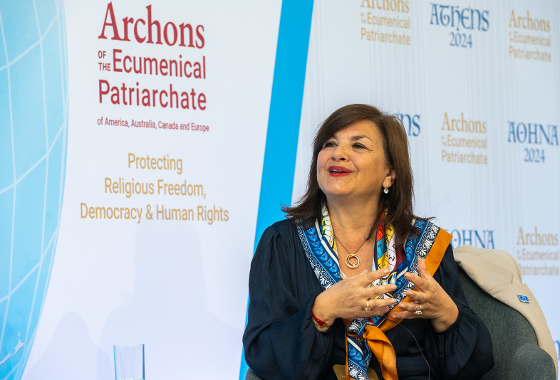
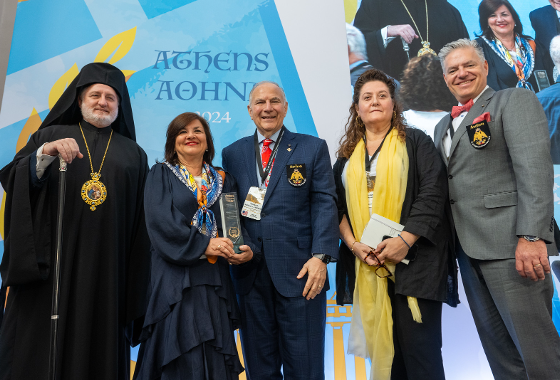
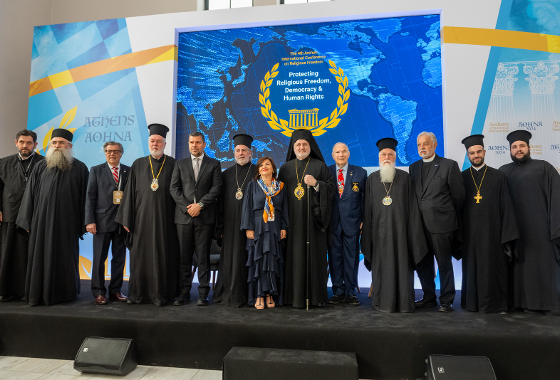
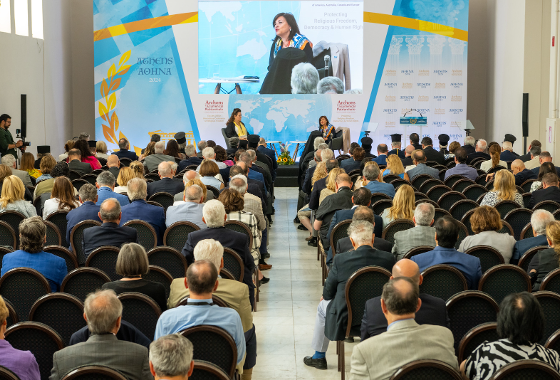
S'exprimant lors du 4ème Congrès international des archontes du Patriarcat œcuménique, le 27 mai à Athènes, la Secrétaire Générale de l'APCE, Despina Chatzivassiliou-Tsovilis, a rappelé que la liberté de religion était un droit humain essentiel et l'un des fondements de notre société démocratique.
« Je pense que les valeurs fondamentales des 46 Etats membres du Conseil de l'Europe, y compris le droit à la liberté de pensée, de conscience et de religion, tel que garanti par la Convention européenne des droits de l'homme, doivent être le ciment qui nous unit », a-t-elle souligné, appelant au dialogue interculturel et interreligieux afin d’établir un nouveau paradigme du ‘vivre ensemble’ et l'ancrer dans l'esprit de nos peuples.
« Le mélange de cultures et de croyances différentes n'est pas une nouveauté pour l'Europe. Pourtant, les cas d'intolérance, de haine et de violence se multiplient, notamment les incidents antisémites et l'augmentation des signes d'islamophobie », a-t-elle déclaré. « La guerre d'agression de la Fédération de Russie contre l'Ukraine et la situation au Moyen-Orient et ses ramifications ont des racines géopolitiques mais aussi religieuses. Les questions en jeu sont incroyablement complexes et sensibles, et rares sont ceux en Europe qui ne s'en préoccupent pas, comme en témoignent les récentes manifestations », a-t-elle ajouté.
Mme Chatzivassiliou-Tsovilis a évoqué le phénomène des migrations comme un domaine dans lequel la religion et la culture pouvaient aussi rapidement être utilisées à mauvais escient comme prétexte à des discours conflictuels et intolérants. Dans ce contexte, elle a présenté les mesures prises par l'Assemblée parlementaire pour aider les États membres à accueillir les migrants, et pour contrer les soupçons injustifiés à leur égard. « Le modèle européen est multiculturel. Toutes les croyances doivent être respectées pour autant que les croyants respectent l’État de droit », a-t-elle déclaré.
Ce congrès portait sur la protection de la liberté religieuse, de la démocratie et des droits humains.
Au cours de la séance de questions-réponses, la Secrétaire Générale de l'APCE a répondu à des questions sur les conséquences de l'agression de la Fédération de Russie contre l'Ukraine et le rôle du Conseil de l'Europe pour y faire face, notamment en ce qui concerne la destruction du patrimoine religieux ; les travaux de l'Assemblée concernant le Patriarcat œcuménique ; la participation des femmes en politique ; ainsi que les priorités de son mandat.