


21/04/2026 Session
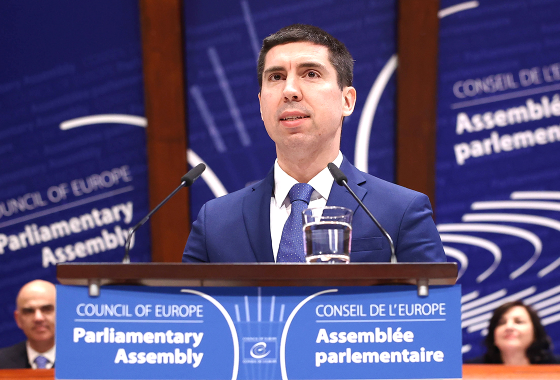
Au cours de sa présidence, la République de Moldova s'est efforcée de renforcer la capacité du Conseil de l'Europe de s'adapter aux nouvelles réalités d'un monde de plus en plus incertain : « Il doit non seulement réagir aux crises, mais aussi les anticiper », a déclaré aujourd'hui le Vice-Premier ministre et ministre des Affaires étrangères Mihai Popșoi à l’Assemblée parlementaire du Conseil de l’Europe.
La présidence a donné la priorité aux droits des femmes, notamment par la mise en œuvre effective de la Convention d'Istanbul et l’adoption d’une nouvelle recommandation pour lutter contre la violence à l'égard des femmes et des filles.
Les droits sociaux ont également occupé une place centrale, une déclaration ayant réaffirmé qu’ils ne sont pas accessoires mais fondamentaux. « Ils sont à la base de la justice sociale, favorisent la prospérité économique et ouvrent la voie à la pleine jouissance de tous les autres droits », a déclaré le ministre.
Tout en soulignant les tendances positives dans la mise en œuvre des arrêts de la Cour européenne des droits de l’homme, il a noté l’augmentation du nombre d’affaires classées et les progrès significatifs réalisés dans de nombreux pays. « La crédibilité de la Convention européenne des droits de l’homme repose fondamentalement sur l’exécution des arrêts de la Cour. Tous les États membres doivent honorer pleinement leurs obligations », a-t-il précisé.
Parmi les autres priorités figurent la démocratie locale, la participation des jeunes grâce à une nouvelle Charte européenne sur la participation des jeunes à la vie locale et régionale, et la protection des journalistes.
Lors de la réunion qui se tiendra à Chișinău le mois prochain (15 mai), le Comité des Ministres réaffirmera son soutien à l’Ukraine en particulier, en avançant sur la création du Tribunal spécial pour le crime d’agression. « La République de Moldova fait partie des États qui se sont engagés à en être l’un des membres fondateurs », a indiqué le ministre Popșoi.
« Il reste primordial que la Convention [établissant une Commission internationale des réclamations pour l’Ukraine] entre en vigueur dès que possible », a-t-il ajouté.
Le Comité des Ministres devrait également adopter une déclaration politique sur les questions liées aux migrations et à la Convention européenne des droits de l’homme, qui ont fait l’objet d’un débat politique intense au sein et entre de nombreux États membres du Conseil de l’Europe.
Le ministre a également salué le Nouveau Pacte Démocratique pour l'Europe, qu’il a qualifié de « réponse collective visant à renforcer les fondements de la démocratie, à la rendre plus résiliente, et à veiller à ce qu’elle garde tout son sens pour nos citoyens et citoyennes ».
À Chișinău, les pays européens aborderont la question de la manipulation de l’information et de l’ingérence étrangères et adopteront une stratégie pour l’action extérieure du Conseil de l’Europe visant à soutenir la sécurité démocratique et l’ordre international fondé sur des règles.
« Le multilatéralisme reste notre meilleur outil pour défendre la démocratie, protéger les droits humains et garantir la pérennité de l’ordre international fondé sur des règles », a déclaré le ministre Popșoi.
« L’expérience de la République de Moldova montre que la résilience démocratique, des institutions solides et un peuple courageux peuvent résister même aux pressions les plus fortes. Et plus encore, elle peut se renouveler », a-t-il conclu.