24/05/2024 Commission permanente | Projets parlementaires

(Traduction en cours)
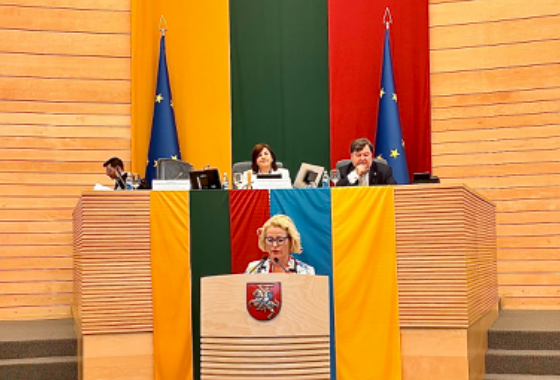
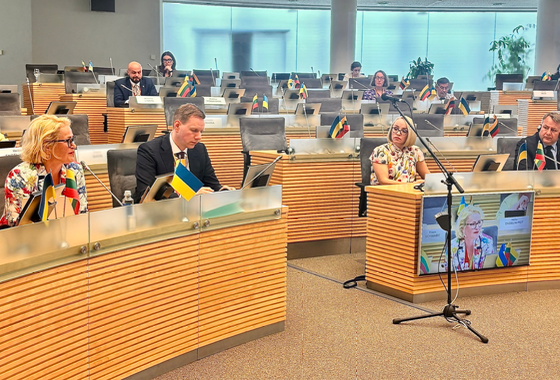
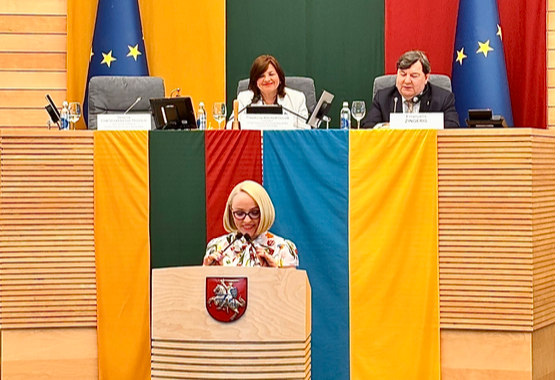
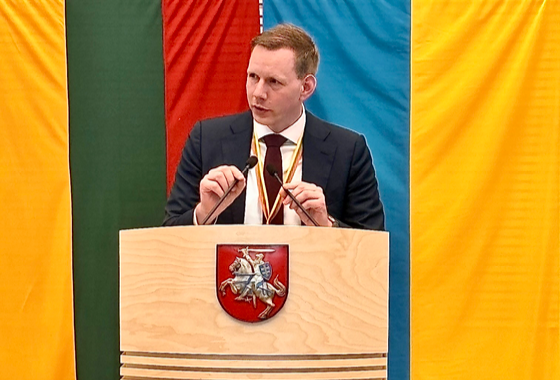
A PACE Parliamentary and Electoral Cooperation Division hearing, organised in the margins of the Standing Committee in Vilnius, in collaboration with the Lithuanian Delegation to PACE, focused on sanctions against the Russian Federation and companies aiding in their evasion. The hearing gathered key speakers who presented various views on the topic.
The event aimed to provide a comprehensive overview of the existing sanctions against the Russian Federation and to analyse their impact and effectiveness. It also considered effective mechanisms to monitor compliance with sanctions and prevent their circumvention. Furthermore, the discussion emphasised the role of parliaments in ensuring that sanctions are properly implemented and achieve their intended objectives.
PACE Secretary General Despina Chatzivassiliou-Tsovilis, the moderator of the hearing, opened the hearing by reminding that PACE’s Legal and Human Rights Committee adopted a draft resolution on legal and human rights aspects of the Russian Federation’s aggression against Ukraine, which should be debated in the June part-session of the Assembly.
PACE’s President, Theodoros Rousopoulos, reiterated that effective sanctions are one way to support Ukraine “by curtailing the Russian government’s possibilities to finance its war of aggression” and highlighted the need “to have effective sanctions and not merely window-dressing declarations.”
The chair of the Lithuanian delegation to PACE, Emanuelis Zingeris, said that when the democratic space declines and shrinks, it is important to bring proof that “we are serious and our sanctions are serious.” He also underlined that creating the register for those avoiding the sanctions would be “Lithuania's project.”
The Member of the European Parliament, Miapetra Kumpula-Natri, said the parliamentarians should be thinking broadly about security every day, including sanctions, and how to make Russia weaker and unable to use its violations of army powers without respecting international orders. She underscored the importance of member states’ “concrete actions”, like contacting the originators of products and using enough resources to find those companies who look for “trade schemes”.
Vice Minister of Justice of the Republic of Lithuania, Gabija Grigaitė-Daugirdė, talked about how Lithuania is applying the control measures and investigations inside the country to implement the EU sanctions against Russia and tightening controls on sanctioned goods exported to third countries via Russia as well as the importance of exchange of information between countries of the list of the companies circumventing the sanctions. She highlighted that enforcement of sanctions requires “consolidated efforts” from the states, the private sectors and broader society.
Senior Economist at Kyiv School of Economics Benjamin Hilgenstock pointed out that sanctions alone will not be able to end this war. Still, without sanctions, “our strategies of military and financial support to Ukraine are unlikely to succeed either.” He emphasised that sanctions and financial and military assistance to Ukraine were significant. “If Putin's geopolitical ambitions are not stopped in Ukraine, they will only grow,” he warned.
Finally, Deputy Prosecutor General Saulius Verseckas said Lithuania has witnessed an “increase in the circumvention of sanctions and the engagement of entities, both legal and natural persons operating in Lithuania”. He stated that Russia is making “a significant effort to circumvent international sanctions by developing new circumvention schemes, by employing Russian intelligent services, by exploiting contacts with companies operating in EU countries and by employing Russian and Belarusian citizens,” he concluded.