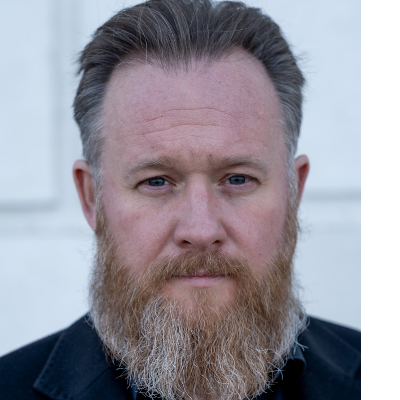
mercredi 26 juin 2024 après-midi
2024 - Troisième partie de session Imprimer la séanceVidéo(s) de la séance 1 / 1

Suisse, SOC, Président de l'Assemblée
16:32:29
Ladies and Gentlemen,
The meeting is now open.
I remind you that speakers must insert their voting card to take the floor.
If you wish to request the floor, please press the "request" button once only.
We now return to the list of speakers.
I now give the floor to Ms Maryna BARDINA from Ukraine.
Dear President,
Dear colleagues,
First of all, I would like to thank our rapporteurs for the work they have done and highlight the importance of this debate and the work of the Parliamentary Assembly in supporting Ukraine, which means supporting the ideas of rule of law and human rights.
I want to thank Mr Davor Ivo STIER for his detailed overview of the progress made on the different components of a comprehensive system of accountability for the Russian Federation aggression against Ukraine and its legal and human rights consequences.
It is important to emphasise that since February 2014, and every new day as long as the crime of aggression continues, Russia continues to commit other international crimes against Ukraine and our people: war crimes, crimes against humanity, and genocide.
This report mentions a significant number of reports of atrocities, violations of human rights and international humanitarian law committed by Russian military forces on our territory.
The scale of the damage is measured in wiped-out cities, millions of deported and displaced adults and children, millions who remain in the temporarily occupied territories and are subjected to forced passportisation, mobilisation, filtration, forced disappearance, sexual violence, etc.
We even talk about culture and environmental issues. This list of internationally wrongful acts of the Russian State is far from complete. The real truth is that we yet have to discover the real scale of their crimes, this real truth after the war is over, all our territories are de-occupied, and all our people return home.
This war of the Russian Federation is, according to many estimates, the first most documented and digitised crime of aggression in history. Can you imagine?
There is an urgent need for effective mechanisms to investigate and bring to justice all those responsible, especially the military and political leadership of the Russian Federation.
Ukrainian society and the whole world that respects the rule of law have an indisputable demand for justice.
We can move one step closer to it by establishing the special tribunal for the crime of aggression of the Russian Federation as an ad hoc institution with the highest international legitimacy prosecuting Russian offenders on the principle of universal criminal jurisdiction in the member states of the Council of Europe, expanding the circle of states that will join the joint investigation team after the ICC investigation of the crime of genocide on the territory of Ukraine, arresting the person on the basis of warrants issued by them ICC, and recognising Russia as a state sponsor of terrorism.
Thank you very much, dear rapporteurs for this work, and I hope we all will support not only today's debates but the report you prepared.
Thank you.
Suisse, SOC, Président de l'Assemblée
16:36:28
Thank you.
I'd like to take advantage of the fact that there are a few more people here to point out that the list of speakers is due to end at around 4:45 p.m., so that we can hear the Committees' replies and finish at around 5:20 p.m., because as you know, after that, we're expecting the Olympic flame.
I now give the floor to Mr Larry BROCK from Canada.
Monsieur le Président,
Mes chers collègues,
This past February, Canada and Ukraine signed a significant new agreement on security co-operation. I bring it up today because an entire section of it deals with accountability. That's a common thread running though all three of the reports that we're debating. More specifically, our security agreement with Ukraine states that we'll continue to engage in the Core Group to examine options for establishing a special tribunal on the crime of aggression against Ukraine.
Rapporteur Mr Davor Ivo STIER's report makes a clear proposal in that respect, the creation of a tribunal through an agreement between Ukraine and the Council of Europe. This, the report argues, is the most feasible option in terms of legal basis and political legitimacy, because it would clearly fall within the mandate of the Council of Europe, and it would ensure justice for a crime that was and still is being committed against one of its member states by a former member state. I'm not in the position to say whether this is indeed the most feasible option, but the report does make a compelling case for it. I agree that the Core Group needs to decide on the model and legal form of the tribunal as soon as possible.
In my remaining time today, I'd like to briefly recognise the important work of rapporteur Ms Yevheniia KRAVCHUK on Russia's use of cultural cleansing as a weapon of war in Ukraine. This issue is also covered in our bilateral security agreement, which acknowledges that Russia's war on Ukraine has sought to destroy the Ukrainian identity and silence Ukrainian voices. The agreement commits Canada to, amongst other things, helping Ukraine across audiences in its temporarily occupied territories and supporting and promoting Ukrainian voices internationally. With the Ukrainian-Canadian community of some 1.3 million people, we're well aware in Canada of Ukraine's unique, distinct, and incredible culture. We'll continue doing all we can to help Ukraine defend and promote it.
Slava Ukraini!
Suisse, SOC, Président de l'Assemblée
16:39:27
Thank you for your attention.
I now give the floor to Ms Mariia MEZENTSEVA from Ukraine.
She doesn't seem to be here.
I therefore propose to give the floor to Ms Olena MOSHENETS from Ukraine.
I would like to thank all the speakers for addressing the issue of the Russian aggression in a multi-faceted way, from legal issues to the destruction of culture.
By its action, Russia is destroying the international order and peace, built by the joint efforts of millions.
The Geneva Convention states that prisoners of war should be treated humanely. Russia says "Olenivka", when Ukrainian prisoners died in Russian captivity. Violations of the conventions are evidenced by mutilated bodies of Ukrainian prisoners of war who returned home after months and years of Russian captivity.
The Geneva Convention refers to the proper treatment of civilians in the occupied territories, while Russia's actions are murder, torture, violence and genocide. The effective medicine for genocide is timely military assistance and serious damage to the economy of the aggressor state.
The use of Russian assets to support Ukraine is a fair solution. We are grateful to the countries that support the recovery of frozen Russian assets for the benefit of Ukraine and call on others to join the creation of an international compensation mechanism.
Equally important are the sanctions that are actually effective. Despite the statements of the Russian leadership, their so-called economic growth is driven by an increase in the military industrial complex. However, we have no moral right to ease the sanctions' pressure on the aggressor.
First of all, we need to develop mechanisms that would block the Russian by-pass roads as much as possible. In particular through Central Asian countries.
We are grateful to the representatives of EU countries for the adoption of the 14th sanctions package aimed at strengthening the impact of sanctions by eliminating loopholes, as that shows that it will not be possible to get away with destroying Ukraine, the Ukrainian nation, and its identity.
The Russian Federation kills everything Ukrainian. According to the competent ministry, as of February this year, almost 2 000 cultural sites in Ukraine have been damaged. Schools in occupation are not a happy and carefree childhood. They fear misunderstanding of a new programme and coercion.
The National Resistance Center of Ukraine reports on a new position in schools in the temporarily occupied territories as so-called patriotism supervisors. Children who have returned to Ukraine tell of a new order in schools, disciplinary talks for using Ukraine language and being forced to walk around wrapped in a Russian flag. This school terror and imposition of the Russian ideology to destroy Ukrainian identity and culture has been going on for 10 years.
Please, we hope for the support of the world and Europe.
Thank you.
Suisse, SOC, Président de l'Assemblée
16:43:31
Thank you, Madam.
We must now interrupt the list of speakers.
Registered speakers who have been present during the debate but have not been able to speak may submit their typed statement within 4 hours to the Session Office, for publication in the minutes. This text must not exceed 400 words and must be transmitted electronically.
I now call on the committees to reply.
I shall first give the floor to the rapporteur, Mr Davor Ivo STIER.
You have 3 minutes to reply to the speakers.
Thank you, Chair.
And, dear colleagues, thank you very much for all your interventions, your comments, your questions.
Let me also thank our Secretariat Mr Günter SCHIRMER and in particular Mr Guillem CANO PALOMARES for their great contribution and assistance in this report.
Now about your questions and your comments, some of them have already been incorporated in the text, namely, for example the new ICC indictments for former defence minister Sergei Shoigu and General Valery Gerasimov.
Dear colleagues, this Assembly was the first assembly to vote to expel the Russian Federation after the invasion of Ukraine.
This Assembly was the first one to call for the creation of a special tribunal for the crime of aggression. Now we are very close to reaching an agreement at the Core Group, meeting the following days in Bucharest. One of the issues that is still impeding that is the question how to deal with the personal immunities. We stated in this report clearly that these personal immunities should not apply for the key suspects for the crime of aggression. But we also provide language that we hope will help to find the agreement and to finally have a special tribunal.
We also provide the legal arguments for declaring Russia as state-sponsoring terrorism, and we also provide the legal arguments and the framework for a full-fledged compensation mechanism.
Now, dear colleagues, many of you mentioned not only what this Assembly is doing, not only what the Council of Europe is doing, but also what the European Union and the European Parliament in particular has done or is about to do about decisions.
And I take all these recommendations with me. As you know this will be my last report here and, after seven rewarding years in this Assembly, I will be moving to the European Parliament.
I will take all your suggestions with me, but also the important mission of promoting democracy, human rights and the rule of law to that institution across the passerelle. I think that there is no better issue than to defend democracy today by defending the right of the Ukrainians to be free, and I invite you all to support not only this report but all the three reports today, to support Ukraine, to support freedom.
Thank you.
Suisse, SOC, Président de l'Assemblée
16:47:07
Thank you, Mr Davor Ivo STIER, and good luck in your future activities in Brussels – and occasionally in Strasbourg too.
[Applause]
I now give the floor to the Chairman of the Committee on Legal Affairs and Human Rights, Lord Richard KEEN.
You have the floor for 3 minutes.

Royaume-Uni, CE/AD, Président de la Commission des questions juridiques et des droits de l'homme
16:47:30
Thank you, President.
Thank you, colleagues.
I would like to express my unqualified support for the three rapporteurs and the significant Reports that they've placed before this Assembly.
I would also like to thank all colleagues for their contributions during the course of this debate.
Mr Davor Ivo STIER's Report addresses a number of critical issues, including first of all, the establishment of an international compensation mechanism for all of the destruction caused by the Russian aggression to both the Ukrainian state and individual victims.
Second, it highlights the need to ensure that there is a comprehensive and effective tribunal to deal with all of the violations of international law, international criminal law, war crimes, crimes against humanity, and indeed, instances of genocide that have been the result of the Russian aggression.
I had the privilege to attend the meeting of CAHDI, in April, when progress was made on establishing a bilateral agreement between Ukraine and the Council of Europe for the establishment of what would be recognised as an international tribunal.
Ms Yevheniia KRAVCHUK held up to this Assembly the most disturbing of symbols: a burnt book.
Colleagues, when books burn you know that the barbarians are at the gate.
Russia is seeking to deliberately impose a dystopian future upon a Ukrainian society that they would leave bereft of any cultural identity.
Her Report is a timely reminder of the dark shadow that Russia would extend over a free Europe and over a democratic Europe.
Can I turn then to the Report from Ms Yelyzaveta YASKO, which deals with two elements of sanctions. Sanctions on export and sanctions on import.
Dealing with the former, even today, oil and gas leave Russia in record quantities. We've all heard of money laundering, but what we're facing at the moment is sanctions laundering.
Oil moves in a shadow fleet to third party countries where it's refined, and the refined products are then imported by countries that claim they are sanctioning Russian oil. We can do more.
On the matter of imports, despite an international sanctions regime, Russia continues to access raw materials and critical components from abroad. This is allowed for the continued production of core weapons and an increase in the sophistication of key military capabilities.
Why have we failed to disrupt that industrial level of importation?
We've been slow to address indirect routes for material into Russia. We've become reactive rather than proactive in dealing with Russia's procurement networks. We're not doing enough to co-ordinate the work of trade bodies throughout Europe and the world.
Indeed, we must also be prepared to adopt covert as well as overt methods in order to deal with this.
I reiterate that I welcome all three Reports, which are both timely and well considered.
I thank colleagues for their attention.
Suisse, SOC, Président de l'Assemblée
16:51:25
Thank you, Lord KEEN.
I now give the floor to Ms Yelyzaveta YASKO, rapporteur.
You have 3 minutes.
Thank this House, this Assembly, for the majority of your voices supporting an importance of sanctions, which means the majority of you are on the light and positive, right part of morality.
Yes, we're all in politics, and some may say that in politics you're not making moral, right decisions. I'm sorry. No, it's not the case anymore. Business as usual shouldn't be going the way it was going for many years because business as usual always leads to feeding those who can commit crimes and run aggression. To those who still have doubts why we shall impose sanctions, I want to answer. Sanctions are not about the quantity, they're about quality. We're not running for a number of sanctions; we're running for those sanctions that would restrict Russian aggression. We want to make sure that those who are producing weapons inside Russia are sanctioned. We want to be sure that those who open the TV channels, telecommunication systems for Russian propagandists are sanctioned. We want to make sure that Danish ports' trains are not easily operating for a Russian shadow fleet, where they're committing environmental damage.
This Assembly should be based on the moral human rights decisions. That's why I want to congratulate ourselves also for talking about very practical things and how we can make sure that we have a tracking system for the sanctions circumventions. I'm very grateful for those of you who raised different discussions on how we can make sure that European institutions will co-operate on making sure that these financial flows that may lead to sanctions circumventions are accountable. We need to make sure that banks, customs, and the exchange of all this information is working. I'm very grateful, for instance, if our colleague Mr Davor Ivo STIER will also be raising this in the European Parliament. We need to be united in different European institutions.
I really hope that this report will also have serious follow-up that will not be in the form of reports but in the form of real actions, where we can make sure that we put more people, more companies on the right side of history.
I believe that it's a time to think about your own reputation. Don't sell goods to Russia, because these goods may end up killing people. Don't be involved in that. Please stop selling goods to Russia and let us all do everything possible to restrict Russian aggression against Ukraine or in any other places.
Thank you.
Suisse, SOC, Président de l'Assemblée
16:55:09
Thank you, Madam.
I now give the floor to Mr Emanuelis ZINGERIS, Vice-Chairman of the Political Affairs and Democracy Committee.
You have 3 minutes, Mister ZINGERIS.

Lituanie, PPE/DC, Premier Vice-Président de la Commission des questions politiques et de la démocratie
16:55:27
Dear colleagues and friends,
I have spent more than 30 years in this Assembly. Now during the 75th year we are facing our unique phase that we are together, and we are voting in favour of mostly all the resolutions.
In front of us, we have three rapporteurs. Ms Yevheniia KRAVCHUK's report is about a total annihilation and a political will to eliminate Ukrainian culture. Mr Davor Ivo STIER's report, he called in two words, I would like to cite my friend, "it's intentionally preparing the genocide which should be evaluated by our international courts will be created" but "intentionally prepared genocide" was said by our fantastic Rapporteur Mr Davor Ivo STIER. The third and last one from Ms Yelyzaveta YASKO about the cynical face of our society when part of our firms avoid convening the sanctions and making rich, and that money will be used for the destabilisation of Europe. Those firms will become Russian political agents.
The different restrictive measures adopted by several of our member states against the Russian Federation serve a dual purpose of undermining Russia's ability to finance the brutal war of aggression it is waging against Ukraine. Those limiting the impact of its actions as well as sending a strong political signal to the Russian elites as well as to other autocratic regimes that they will be held accountable for their international illegal criminal acts.
The Assembly has already pronounced its position on the sanctions regime against the Russian Federation. It is, however, our duty to keep focusing on this matter. We must all be vocal and call our governments to take stronger measures, dear friends, and close all legal loopholes – all legal loopholes – that still allow Russia to avoid and circumvent sanctions. At the same time, keep the public attention alive on the vital importance of the sanctions not only for supporting Ukraine but for the security in all of Europe.
On behalf of the Committee, I welcome the various important recommendations that are contained in the draft resolution of all three reports but especially want to thank Ms Yelyzaveta YASKO for her commitment to preparing it and, of course, all staff from our Committee and from the neighbouring Committee on Legal Affairs and Human Rights.
Ms Yelyzaveta YASKO organised a side event during our January part session that was very useful, and she held meetings with German representatives. The Committee has supported her work by organising two hearings with different experts. I would like to say that the amendment for the register to be established, register for the firms who are avoiding the sections was voted like an amendment and all the amendments in our Committee were voted unanimously. That's a historic case. No one abstained. No one doubted about Ms Yelyzaveta YASKO's report.
Thank you so much for bidding unanimously on the side of the truth and against historical evaluation of this terrible tragedy, a tragedy that should be stopped.
Thank you.
Suisse, SOC, Président de l'Assemblée
16:59:14
Thank you, Mr ZINGERIS.
I'll now give the floor to Ms Yevheniia KRAVCHUK, rapporteur.
You have 3 minutes.
Thank you, Chair.
Thank you, friends and colleagues.
Thank you, rapporteurs.
I think all these three reports bring us closer to justice. That's what the members of the Assembly of course should do. Bring justice closer. I listened carefully to your speeches when you spoke about culture, about your culture and national cultures, identities, languages.
I really understand that if Ukraine would not stop Russia they will come to your countries and to erase your identity as they do, as they actually do for indigenous people in the Russian Federation.
I thank for the amendment to be put to the report, because it's important. No one talks about it. So we should talk about the erasure of identities of indigenous people in the Russian Federation. In Belarus there is Russification, because this Русский мир, Russian world, wants to eliminate everything that is different.
I would like to thank all of the experts who helped me with this report. I would like to thank the Secretariat, who did a tremendous job. I would like to thank the prosecutor general of Ukraine, Andriy Kostin, who is now prosecuting crimes against cultural heritage.
I would like to actually stop on a positive note, because on 5 July, in the National Museum of History in Ukraine there will be an exhibition launched. It's called Treasures of Crimea: the Return. These are Scythian gold, priceless objects. They were exhibited in Amsterdam during the annexation of Crimea. These are objects from Crimean museums. After years of courts they returned to Ukraine, they returned to Kyiv in November 2023. This exhibition will be permanent. By the time we liberate Crimea and take Scythian gold to Crimean museums that are under occupation right now. I want to see this day, to invite all of you to go to Crimea to see these objects.
By the way, I would like to congratulate Crimean Tatars on the national flag day of Crimean Tatars.
Thank you, friends.
Slava Ukraini!
Suisse, SOC, Président de l'Assemblée
17:02:08
Thank you, Madame.
I now give the floor to Ms Linda Hofstad HELLELAND, Chair of the Committee on Culture, Science, Education and the Media.
You have 3 minutes.

Norvège, PPE/DC, Présidente de la Commission de la culture, de la science, de l'éducation et des médias
17:02:20
Dear colleagues, thank you to the rapporteurs for their excellent reports and for the contribution from you.
Dear colleagues, the right to take part in cultural life and to enjoy both tangible and intangible cultural heritage are pivotal to the system of human rights and fundamental to individual and collective cultural identity.
However, the international legal framework concerning cultural heritage in armed conflicts remain fragmented.
It has significant gaps particularly in relation to new types of warfare and to the safeguarding of cultural heritage after conflicts.
The return of cultural heritage and restoration of damaged heritage objects are also matters of concern. Loopholes in international law make it difficult to bring perpetrators to justice before international or national courts.
In the draft recommendation we therefore call on the Committee of Ministers to start a co-operation with the United Nation, the European Union, and other relevant organisations in order to develop legal and policy responses to new forms of cultural erasure taking into account existing Council of Europe conventions and other international treaties.
We proposed that acts of cultural cleansing or erasure, deliberate or systematic destruction of cultural heritage, and losing of cultural property are legally defined as human rights violations, crimes against humanity, and war crimes, for the purpose of their prosecution.
It is also necessary to legally determine the role that a state-driven policy of cultural erasure has on one of the inherent elements of the intent to destroy a national or any other protected group when committing genocide.
We call on our member states to continue providing support to Ukraine and, in particular, to gather record documents and preserve evidence of crimes committed by the Russian Federation against cultural heritage in Ukraine, in order to assess damages and seek reparations, to digitalise objects of cultural heritage and property, to build institutional capacity to ensure the best use of funding provided by outside agencies and donors, to enhance heritage management, and carry out reconstruction processes, to develop specific projects for cultural heritage support, for cultural vitality, and cultural exchange, and funding initiatives, grants, and residency programs on behalf of the Committee on Culture, Science, Education and Media.
I invite you to back the proposals that are outlined in the draft resolution and draft recommendation with your vote today and in your parliament tomorrow.
We thank you for your support.
Suisse, SOC, Président de l'Assemblée
17:06:01
Thank you, Madam.
We now come to the first report on "Legal issues and human rights violations linked to aggression by the Russian Federation against Ukraine" (Document 15998).
The Committee on Legal Affairs and Human Rights has presented a draft resolution to which four amendments have been tabled, and a draft recommendation to which no amendments have been tabled. The amendments will be called in the order in which they apply to the text, as published in the compendium of amendments.
Ladies and Gentlemen,
I would remind you that the speaking time for each amendment is limited to 30 seconds.
I have been informed that the Chair of the Committee on Legal Affairs and Human Rights wishes to propose to the Assembly that Amendments 3 and 4, which were adopted unanimously by the Committee, be deemed adopted by the Assembly.
Is this the case, Mr Chair?
Royaume-Uni, CE/AD, Président de la Commission des questions juridiques et des droits de l'homme
17:06:59
That is correct.
Suisse, SOC, Président de l'Assemblée
17:07:02
Thank you.
If no one objects, I consider these amendments definitively adopted. If there are any objections, we'll have to check that they have the requisite support of 10 people.
Is there any objection?
Obviously, there are no objections.
Amendments 3 and 4 to the draft resolution are therefore adopted definitively.
I have also been informed by the Chairman of the Committee on Legal Affairs and Human Rights that Amendment 1 was rejected by the Committee by a two-thirds majority of votes cast.
Is this the case, Mister Chairman?
Royaume-Uni, CE/AD, Président de la Commission des questions juridiques et des droits de l'homme
17:07:43
That is again correct.
Suisse, SOC, Président de l'Assemblée
17:07:46
Thank you.
If no one objects, I consider this amendment definitively rejected.
If there is any objection, we'll have to check that it has the requisite support of 10 people. Is there any objection?
Obviously not.
Amendment 1 to the draft resolution is therefore rejected and will not be called.
We will now discuss the other amendments.
Amendment 2. Ms Mariia MEZENTSEVA has the floor to support Amendment 2.
You have 30 seconds.
You may remain seated if you wish.
Thank you, dear President.
Apparently, we have here a misspelling of the word. We consulted with the table office.
We are referring to our colleagues from the OSCE and the NATO Parliamentary Assembly, where we call the Russian ideology "Russism". It was a misspelling as "racism", so we suggest that we call the Russian Federation state ideology in brackets "Russism".
It was also communicated to the rapporteur.
Suisse, SOC, Président de l'Assemblée
17:09:13
Thank you, Madame.
Does anyone wish to speak against the amendment?
I do not see anyone.
Opinion of the Committee?
Royaume-Uni, CE/AD, Président de la Commission des questions juridiques et des droits de l'homme
17:09:36
We are content.
It was not moved at the Committee, I am reminded.
Suisse, SOC, Président de l'Assemblée
17:09:47
The amendment was not examined by the Committee as it was not presented to the Committee. We will therefore vote on it.
The vote is opened.
It's very good, with the flame, there are a lot of people.
The amendment is adopted.
We will now proceed to vote on the draft resolution. This is the draft contained in Doc. 15998 (amended).
The vote is opened. A simple majority is required.
Absolute majority, everyone votes, very well.
The draft resolution is adopted.
We now move on to the draft recommendation for which a two-thirds majority is required. This is Doc. 15998, to which no amendments have been tabled.
The vote is opened.
Same unanimous result. Well done.
The draft recommendation is therefore adopted.
Congratulations to its author.
I now propose that we move on to the second report on "The role of sanctions in countering the Russian Federation's war of aggression against Ukraine" (Doc. 16000).
The Political Affairs and Democracy Committee has presented a draft resolution to which 13 amendments have been tabled.
The amendments will be called in the order in which they apply to the text, as published in the compendium of amendments.
Ladies and Gentlemen,
I would remind you that the speaking time for each amendment is limited to 30 seconds.
I have been informed that the Vice-Chairman of the Political Affairs and Democracy Committee wishes to propose to the Assembly that amendments 1 to 13, which were adopted unanimously by the Committee, be deemed adopted by the Assembly.
Is this the case, Mr Vice-Chairman?
Lituanie, PPE/DC, Premier Vice-Président de la Commission des questions politiques et de la démocratie
17:13:20
Adopted, thank you.
Suisse, SOC, Président de l'Assemblée
17:13:26
Thank you, Mr. Vice-Chairman.
So, unanimously proposed by the Committee.
If no one objects, I consider these amendments definitively adopted. If there are any objections, we'll have to check that they have the requisite support of ten people. Any objections?
Obviously not.
Amendments 1 to 13 to the draft Resolution are therefore adopted.
We will now vote on the draft Resolution contained in Doc. 16000 (amended).
A simple majority is required.
The ballot is opened.
The ballot is closed.
I ask for the results to be displayed.
The draft Resolution is adopted almost unanimously.
Third Report: "Combating the erasure of cultural identity in times of war and peace" (Doc. 16003).
The Committee on Culture, Science, Education and the Media has presented a draft Resolution to which two amendments have been tabled, and a draft Recommendation to which no amendments have been tabled.
The amendments will be called in the order in which they apply to the text, as published in the collection of amendments.
Ladies and Gentlemen,
I would like to remind you that the speaking time for each amendment is limited to 30 seconds.
I have been informed by the Chairman of the Committee on Culture, Science, Education and the Media that Amendment 2 was adopted unanimously by the Committee and that Amendment 1 was rejected by the Committee by a two-thirds majority of votes cast.
However, as these two amendments are linked, they will be discussed in accordance with the usual procedure.
So Amendment 1 and sub-Amendment, which was rejected by a two-thirds majority.
Ms Mariia MEZENTSEVA has the floor to support Amendment 1.
Thank you.
Dear President,
I will have to withdraw Amendment 1.
Because I didn't have the opportunity to speak, I will speak 23 seconds to remind us all that today is the International Day in Support of Victims of Torture. I want to say thank you to everyone who mentioned prisoners of war in Ukraine, civilians who are in prisons, and the deported children of Ukraine. We are all waiting for them to come back.
Thank you very much.
I withdraw Amendment 1.
Suisse, SOC, Président de l'Assemblée
17:16:33
Thank you for your attention.
This amendment is therefore withdrawn.
We now move on to Amendment 2.
Ms Mariia MEZENTSEVA has the floor to support Amendment 2.
Thank you, Mister President, we have a very simple philosophy here, dear friends, we're talking widely on the topic of targeting cultural identity, erasure of that identity, by this amendment we enhance the understanding that the Russian Federation, so-called Federation, has numerous indigenous people living there who are deprived of their native language, culture, history, and many other identity items as ethnic minorities.
Thank you.
Suisse, SOC, Président de l'Assemblée
17:17:31
Thank you for your attention.
Does anyone wish to speak against the Amendment?
I give the floor to the Committee, which, according to my information, has adopted this Amendment unanimously.
Madam Chairwoman.
Norvège, PPE/DC, Présidente de la Commission de la culture, de la science, de l'éducation et des médias
17:17:56
Yes, that is correct.
Suisse, SOC, Président de l'Assemblée
17:17:59
Thank you, Madam Chairman.
We shall now proceed to the vote.
The vote is open.
The vote is closed.
I call for the result to be displayed.
Adopted unanimously.
That's not all: we will now vote on the draft Resolution contained in Doc. 16003 (amended). A simple majority is required.
The vote is open.
The flame is attracting more and more voters, which is very good.
The vote is closed.
I call for the result to be displayed.
Accepted unanimously, congratulations, the draft Resolution 16003 is adopted.
We now proceed to vote on the draft Recommendation contained in Doc. 16003, to which no amendments have been tabled.
I remind you that the required majority is two-thirds of the votes cast.
The vote is open.
The vote is closed.
I call for the result to be displayed.
Once again unanimously adopted, congratulations.
The draft Recommendation contained in Doc. 16003 is adopted.
We shall now proceed, pending the flame, with a report on the "Reparation and reconciliation process to overcome past conflicts and build a common future of peace: the question of just and equitable reparatory measures".
The next item is the presentation and discussion of the report by Lord Richard KEEN, on behalf of the Committee on Legal Affairs and Human Rights, entitled: "Reparation and reconciliation process to overcome past conflicts and build a common future of peace: the question of just and equitable reparatory measures" (Doc. 15933).
Mr Georges LOUCAIDES will then present the opinion of the Political Affairs and Democracy Committee (Doc. 16019).
We are due to complete our examination of this text, including the vote, at 7 p.m. We shall therefore interrupt the list of speakers at approximately 6.45 p.m., so that we can hear the Committee's reply and proceed with the necessary votes.
I call Lord Richard KEEN, rapporteur for the Committee on Legal Affairs and Human Rights.
I would remind you, rapporteur, that you have 7 minutes to present your report and 3 minutes to reply to speakers at the end of the general discussion.
We'll wait for people to change places, and then you can start your speech.
We'll wait another 30 seconds and then you can start.

Italie, CE/AD, Présidente de l'Assemblée
17:24:17
Okay, we will begin with Lord Richard KEEN, rapporteur, you have 7 minutes now and 3 minutes to reply to this debate.
Please, the floor is yours.
Thank you, President. Thank you, colleagues.
The Council of Europe has a clear role to play in improving reconciliation processes amongst its members. And this is especially true in times of conflict and when there is a climate of growing threats to the rules-based international order, particularly in the wake of the Russian war of aggression against Ukraine. This makes it ever more important for the Council of Europe to promote tools aimed at the peaceful resolution of disputes.
The report before you intends to do just this – to call for an enhanced role for the Council of Europe through the establishment of a mediation process. Such a process should be accompanied by an improved toolkit and generally accepted standards for reparation and reconciliation. And the aim must be to find remedies best suited to each individual situation that arises. One size fits all does not work.
Such a step could help to ensure durable peace in the future and respond to the needs of victims. An approach based on mediation should complement existing mechanisms, such as the European Court of Human Rights. Judgements in interstate cases before the court are as we know notoriously difficult to implement. Some of these problems could be avoided by a mediation process that would clarify and possibly resolve some issues before an application is lodged.
We are proposing a toolkit that would be holistic and victim-centred. Our Assembly is not equipped to build such an instrument itself – that I can see. It will be up to the Committee of Ministers to set the process in motion and invite the specialised services of the secretariat to develop and evaluate specific proposals.
An important recommendation of ours is that the future reconciliation and mediation mechanism should be given some teeth. It is, after all, a requirement under the Council of Europe statute that all member states shall co-operate with one another in good faith in the pursuit of peace based upon justice and international co-operation.
And indeed, Article 3 of our statute states and I quote "every member of the Council of Europe must accept the principles of the rule of law and of the enjoyment by all persons within its jurisdiction of human rights and fundamental freedoms, and collaborate sincerely and effectively in the realisation of the aim of the Council as specified in Chapter 1". And Article 8 of the statute lays down the possible consequences of a violation of the obligations flowing from Article 3.
Colleagues, I'm fully aware that any such tool, especially if it is given some teeth, as we recommend, cannot be applied retroactively and certainly should not cover any conflicts before the creation of the Council of Europe or indeed that lie outside geographical remit. I excluded those from the scope of my report from the outset.
It is also perfectly clear that any mediation process depends on the goodwill and co-operation of all sides. But why not make use of the fact that all member states of the Council of Europe under the statute are duty bound to co-operate with one another and I quote "sincerely and effectively for the realisation of the ideals defended by our organisation"?
The pursuit of peace based upon justice and international co-operation would be well served by the establishment of the mechanism set out in the report.
Colleagues, I thank you for your attention and I look forward to our discussion.
Italie, CE/AD, Présidente de l'Assemblée
17:28:56
Thank you, Lord Richard KEEN.
I call now Mr George LOUCAIDES, the rapporteur for opinion, Committee on Political Affairs and Democracy.
You have 3 minutes.

Chypre, GUE, Rapporteur pour opinion
17:29:27
Thank you, Madam Chairperson.
Dear colleagues,
The Committee on Political Affairs and Democracy entrusted me with this opinion that we discussed yesterday and unanimously adapted together with a number of amendments.
I wish to congratulate the rapporteur of the Committee on Legal Affairs and Human Rights, Lord Richard KEEN for this important and innovative report, which keeps practical significance to the obligation taken up in Reykjavík last year, to give our Assembly and this organisation a more robust, visible and active role in addressing conflict situations in Europe.
The report proposes the establishment of a Council of Europe mediation process to overcome past and frozen conflicts and suggest a number of ways and the conditions under which this mediation process between the parties could be initiated.
We fully share rapporteur's view that the Council of Europe may play an increased role in promoting solutions to foster justice, co-operation and peace in Europe, thus fulfilling its statutory goal.
Accordingly, we welcome the idea of considering establishing a mediation mechanism, under the auspices of the Council of Europe, to complete the existing tools at the disposal of the organisation, to facilitate finding solutions to post conflict disputes.
However, the Committee on Political Affairs and Democracy has some reservations with regards to specific parameters proposed by the Committee on Legal Affairs and Human Rights' report.
The most important parameter is the mandatory character of this mediation procedure or mechanism.
As the Committee on Political Affairs and Democracy, we believe that the mediation process should only be initiated with the full consent and adherence of both parties involved. Any attempts to impose a mediation process in the absence of such consent and adherence may lead to the results opposite to those sought.
As the report rightly states, the reparation and reconciliation process in post-conflict situations can be a highly sensitive matter.
One must avoid any risk that, instead of helping promote reconciliation, attempts to impose mediation lead to new tensions.
Furthermore, it is important to state that these new mediation mechanisms must not replace, not side track, any existing mediation efforts underway, most notably under the framework of the United Nations.
It is also important to preserve the right of state parties to launch interstate applications before the European Court of Human Rights, nor hinder the timing or procedure foreseen in such cases.
Thank you, Madam Chair.
Italie, CE/AD, Présidente de l'Assemblée
17:32:37
Thank you. Thank you.
Now, I give the floor to the speakers on behalf of political groups. In the debate, I call first Mr Oleksii GONCHARENKO on behalf of the European Conservatives Group and Democratic Alliance.

Ukraine, CE/AD, Porte-parole du groupe
17:32:58
Thank you very much, Madam Chair.
Dear friends, now it's a very symbolical moment, so many viewers, so many of us here, why? Because the Olympic Flame is on the way here, and we will speak now here and we will watch the Olympic Flame. But what are the Olympic Games? It's a symbol of peace, and we are now speaking about reconciliation processes and peace in the future, that is very important.
But I want to remind all of you that when we will watch with you the Olympic Flame, the war continues in Europe, and Russia continues to kill Ukrainian people right now. When the whole world is preparing for Olympic Games, unfortunately we in Ukraine are preparing to give the last honours to our heroes, we are preparing to say the last goodbye to our closest people because Russia is continuing to kill us.
And we are speaking about reconciliation. And, you know, today's very symbolical. In the last debate, there was a brilliant speech by Mr Axel SCHÄFER from Germany who stood up and said "Hitler is our shame, what he did in 1939 now Putin is doing in Europe against Ukrainians". That was said by a German MP in Strasbourg, which became a symbol of First and the Second World War, and that is the way to peace and reconciliation.
So the day when a Russian representative will stand up in this Assembly or in any other way and will say "Putin and the Russian Empire and the Russian regime during his time and what Russian people did at that time is the biggest shame of us", that will be the day of reconciliation, when Russia will go through de-imperialisation like Germany did, and now Germany is a fantastic country, which is ready to build a better future for all the world and not a threat to everybody like it was before the end of the Second World War.
But unfortunately we have this empire still in Europe and this is the last colonial empire in Europe which is called Russian Empire and it's still active and it still attacks and is killing many peoples, including my nation, Ukrainians.
And also Russians themselves are suffering from this empire. So the only way to reconciliation and peace is de-imperialisation. And when in this Assembly there will be free Chechen Republic, free Tatarstan, free Buryatia, free Cherkessia, and other free republics, and Dagestan, and will be together with us, that will be the day when finally Europe will have security.
And when the Olympic Flame will enter this hall once again, I believe it will happen, I hope not in 75 years, but earlier, and we will know this is the time of peace on our continent, and we will all benefit from this.
But before this moment, please, don't forget the war is very close and we need to stop this evil now.
Thank you very much.
Italie, CE/AD, Présidente de l'Assemblée
17:36:15
Thank you, Mr Goncharenko.
Now I give the floor to the speaker on behalf of the Alliance of Liberals and Democrats for Europe group.
The floor is yours, Ms Ćudić, for three minutes.

Bosnie-Herzégovine, ADLE, Porte-parole du groupe
17:36:32
Thank you.
Dear colleagues,
Sometimes bold calls can remain, unfortunately, only that; bold calls. We are going to be entirely cynical – they can even be self-serving speeches expressing good intentions but without necessarily paving a way forward. Fortunately, this report is not such a report. It is bold. It is innovative. It is brave.
My liberal colleagues and myself are delighted every time this institution is called to show greater ambition to show greater strength and to show greater vision. This is such a report. Not only does this report pave the path, but it also justly and in a measured way recognises both legal and political obstacles, potential obstacles to this initiative. At the same time, it pays close attention to the existing potentials of this institution, namely our Assembly, but also, of course, the European Court of Human Rights, and it pays attention to the most important aspects of reparations and reconciliation that these measures need to be achievable, enforceable and implementable.
At the same time, I want to draw attention to something which I personally and also my colleagues believed to be incredibly important. When we say that these initiatives for reperations and for reconciliation need to be victim-centric, I fully agree. However, what we sometimes fail to realise that actually recognition, reparations, and reconciliation initiatives based on mediation can also be incredibly liberating for perpetrators and the states that are responsible for the most terrible acts. I come from a country that even today – 30 years later – suffers from genocide deniers from within our own country and also in neighbouring countries. I deeply believe that the day will come when it will be comforting and important for victims to be seen, to be recognised both domestically regionally and internationally, it will be an enormous opportunity for the perpetrators to face themselves, to offer recognition and to liberate themselves from these kinds of, from the heritage of war crimes, such as genocide.
This is why we need bold ambition. We need just ambition, and we need to recognise that we ourselves have the capacity to contribute to the historic potential of these initiatives to engage in mediation with the aim of reparations and reconciliation.
Thank you.
Italie, CE/AD, Présidente de l'Assemblée
17:39:40
Thank you, Ms Sabina ĆUDIĆ.
Now I give the floor on behalf of the Group of the Unified European Left to Mr Berdan ÖZTÜRK.
You have 3 minutes.

Türkiye, GUE, Porte-parole du groupe
17:39:57
Thank you, Madam Chair.
I would like to thank the rapporteurs for these reports.
While we can only welcome the focus on mediation between Council members and avoidance of conflict, we must register our concerns that without a much more detailed examination of possibilities and possible consequences as well as the resources and capabilities of this organisation, it is difficult to agree detailed prescriptions.
The creation of a robust mediation process would seem to be giving the Council a massive new role at a time when existing mechanisms are hardly working. Simple decisions at the European Court of Human Rights take years and the consequences of ignoring those decisions seem minimal, with action continually postponed.
However, if these ideas are to be taken further, we endorse the concerns raised by the Committee on Political Affairs and Democracy and supported unanimously by that Committee. We are concerned that making mediation mandatory could make it not only ineffective but introduce new sources of conflict. We are concerned to see such a prescriptive and detailed proposal at this stage. We are concerned that the introduction of an additional mechanism of conflict resolution could be used to undermine existing mechanisms throughout the process and enable states to cherry-pick the mechanism that they feel might treat them the most favourably.
Thank you very much.

Grèce, PPE/DC, Président de l'Assemblée
17:42:33
Madam Luz MARTINEZ SEIJO, you are next.

Espagne, SOC, Porte-parole du groupe
17:42:42
The majority of European countries are built on a past of conflict. Our continent is characterised by a past that is characterised by wars, but also by the search for peace to guarantee compliance with human rights and a search for a future of peaceful coexistence.
Our identities and our remembrance of the past are built on conflicts between peoples, between states and between nations.
The cruelty of the 20th century, which saw two world wars and totalitarian regimes, and other terrible events, are our past. But never again should they be our future.
We are witnessing a territorial war again. A war based on the same spirit which was behind other wars.
It has consequences for our continent.
This is one aspect of autocracy.
This can end this war, sometime. But it doesn't mean it will end properly and that the wounds will heal, and that we can properly say it's over.
To have reconciliation there needs to be reparation. That's behind reparation and mediation.
I would also add there's a third basic element in which we support both of these. That is knowledge and recognition of reality.
Knowledge of reality, of the facts in history. This is crucial for the youngest generations which already barely have access to this dark history.
It is crucial for those who everyday live with fear and have learnt to be silent out of fear.
It is relief for the descendants of the victims, that have a right to know what actually happened – why they lost their loved ones.
Above all, we need to push for the right measures. Prevent to ensure that the darkest history never be repeated.
We need to learn from our errors, from the crimes committed against peoples, against individuals and against their rights.
We need to recognise the reality of history and to do away with symbols of oppression and dictatorship.
We need to know the names of victims. We need to give back dignity to their lives and their deaths, and to acknowledge their contribution.
We need to think about reconciliation and the crimes that were done. The dimension of those crimes.
We shall never whitewash what happened.
Wars leave victims on all sides. But crimes against human rights and reprisals and deprivation of rights must be acknowledged. We must learn from this.
Spain suffered a coup, a civil war and a dictatorship for some 40 years.
Today, 46 years after becoming a democracy, we have a law on memory that promotes reconciliation.
In Castilla y León, in Aragón and in other parts of Spain, however, they want to whiten this and compare a democratic regime with oppression suffered by more than 150 000 people.
There are still some 30 000 people unknown in common pits.
We need to think about this and remember what happened under the dictatorship.
There are still many families of the victims who are still trying to find reparation. Their loved ones should be buried with dignity. People want to know who were their torturers. We need to know these things. We need to know our own past. Reparation deals with this.
We need to have reparation and reconciliation.
Thank you.
Grèce, PPE/DC, Président de l'Assemblée
17:46:30
Thank you, thank you, Ms Luz MARTINEZ SEIJO.
Dear colleagues, we will now interrupt for less than 10 minutes following the ceremony of welcoming the Olympic Flame in our hemicycle.
Madam Secretary General of the Council of Europe, Ms Marija PEJČINOVIĆ-BURIĆ.
Madam Secretary General of the Assembly of the Council of Europe Ms Despina CHATZIVASSILIOU-TSOVILIS.
Madam Mayor of Strasbourg,
Madam President of the Strasbourg Eurometropole,
Excellencies,
Ladies and gentlemen,
Dear colleagues,
We will now witness a historic moment: the arrival of the Olympic Flame in our hemicycle for the first time in the history of the Council of Europe.
Let us travel back in time to the head of Antiquity, in 776 BC in Ancient Olympia, when the first Olympic Games were held.
A celebration of sportsmanship, unity, and peace.
These games were part of a religious festival honouring Zeus, the king of the Greek gods. They were held every four years, a period known as Olympiad. Ancient Olympic Games laid the foundation for what would millenniums later become the modern Olympic Games revived in 1896 in Athens by the French Baron Pierre de Coubertin.
The Olympic Flame has its origin in Ancient Greece as well. A sacred fire was kept burning throughout the celebration of the ancient Olympics, reminding us of the fact that Prometheus took the fire from the gods as an act of liberation.
Today, I'm honoured to speak about and welcome a tradition that has its routes in the very heart of my homeland, Greece.
Every four years, the Olympic Flame Ceremony is held before its Olympiad at the site of ancient Olympia, symbolising the commencement of the Olympic Games.
On 16 April 2024, this ceremony was held at the historic site of ancient Olympia and the flame was led by the high priestess. Following this momentous event, on 26 April 2024, the Olympic Torch was ceremoniously handed over from Greece to France, marking the beginning of its journey to Marseilles. It was at this stadium where the dreams of Pierre de Coubertin, the father of the modern Olympic Games, were first realised in 1896.
Like the Olympic messengers of ancient times who proclaimed the Ekecheiria or "sacred truce", the relay runners who pass on the Olympic Flame bring a message of peace with them along their path.
Thus, this journey to France is a testament to the enduring spirit of the Olympics as the flame travels a remarkable 12 500 kilometres carried by 11 600 torch bearers embodying the unity and friendship among nations that the games inspire.
On 26 July 2024, the flame will reach its final destination, and the final destination is Paris, which is hosting the Olympic Games after 100 years, where it will light up the opening ceremony of the so-called 33rd Olympic Games.
Dear friends, dear participants, in the 2024 Paris Olympic Games we will have the chance to enjoy 32 Olympic sports and then, later in September, 22 Paralympic sports in the Paralympic games. 15 000 athletes will participate from 206 National Olympic Committees and the International Committee Refugee Olympic team which represents more than 100 million forcibly displaced people worldwide – made up of 36 athletes from 11 different countries.
Dear friends, throughout the Games the flame will burn day and night, and it will burn in a special altar inside the Olympic Stadium of the host city, Paris.
The flame therefore is more than a symbol, it is a representation of human ingenuity and resilience.
Baron Pierre de Coubertin, in his vision for the modern Olympic Games, showed the flame as a vital link between the ancient and modern games, a torch passed down through generations lighting the way for human progress and unity.
As we stand on the brink of the 33rd Olympic Games we extend our best wishes of course to France and we hope that these Games will be a celebration of peace, unity, and the enduring human spirit.
Dear colleagues, many times in this hemicycle we speak about symbols.
I said that the flame is something more than a symbol.
I recall in my mind the famous phrase of a French president, François Mitterrand. He said that politics is not only what we are doing in the hemicycle, politics, according to my predecessors, the ancient Greeks, is the people being interested in other people, the people being interested in human rights, the people being interested and participating in the agora.
I used the word agora, it was a word that my predecessor Mr Tiny Kox liked to use very often.
And what was the agora? The agora was the place where all Athenians who embraced democracy were participating and, if I may use this phrase, they were forced to participate. Those who did not participate were considered as people, who are today known with the British word, and I had already mentioned it; I will tell it first in Greek: ιδιώτης ["idiocy" in Greek]. Idiocy at that time was, as I mentioned the description of those who didn't want to participate in the agora, of those who didn't want to participate in the decisions taken by the people of Athenian democracy. Today it is known in English as "idiot". You may be surprised, some of you, but this is the connection. And this is what we are trying to do here.
And now I'm not addressing of course my colleagues; and I want to thank them all for being here today in this historic moment for our hemicycle; I would like to address the people who are invited to be with us. And I would like to tell you that sometimes I know that many people are wondering what are you doing in this hemicycle? Are you just producing papers? Are you just producing reports? And I always reply: if we are present, if we work for democracy, if we shout about democracy, if we are standing by those who are always being oppressed, then we fulfil the cause which made the people who vote for us to bring us here in front of you.
We know that many times we have to decide between different opponent opinions, sometimes the dilemma is there. Nowadays we face a lot of dilemmas. One of the most important is how to preserve democracy in our continent, how to preserve our values, to preserve our values while war in Ukraine is going on, to preserve our values while a lot of people are following, unfortunately, sometimes those who are called, to say it in the most polite way: populist.
We have to be aware, that the populists were all the time there, talking about my country, talking about Athens, my beloved city, talking about democracy. I want to say that even then, even in this Athenian democracy there were a lot of populists. There were a lot of people who tried to make other people, make Athenians, decide in a way that was not for the good of the people, and at that time it was those who stood up like Socrates and said that we have to preserve our values, we have to support what we are here for, and we are here for the people, we are here for these values in our constitution, in our chart of rights.
I'm talking about the Universal Declaration of Human Rights. It is human rights, the rule of law, and democracy.
I know that sometimes democracy is being transformed. I know that democracy has to face a lot of dangers. One of them is coming up, we just decided some weeks ago to vote in this very hemicycle about the AI Convention. It is a work being done by a lot of colleagues, by the Secretariat, by people who do care. And if you ask me, "is AI something that we have to fear?", I would say "no". Is it a tool or a gun? I would say that it is a tool, and we must use it as a tool, not as a gun.
Talking about guns, talking about war, and it is not only in Ukraine the war we have; in many other places we see people suffering. I want to say that in my inaugural speech back in January 2024, when I had the honour to be elected from this Assembly unanimously, and I want to thank once again my colleagues, as the President, I said that we fight in this place, we fight in this hemicycle not with guns, not with ammunition, not with missiles, not with anything else but words. We try to persuade each other, we have five political groups present in this hemicycle.
For those who have been visiting the Hemicycle for the first time, I want to tell you that we represent here 46 states, 700 million people, 612 parliamentarians are working with us every day. We may meet every three or four months, four times a year, but we still are here for what the people voted us here for and gave us the allowance to be. It is an obligation, it is an honour.
So, I see that the flame is almost outside of our building and this flame reminds me that – I hope that you are not tired – by listening to this lecture about – you know, I can never forget that I'm not only a politician, I'm a professor and, on the other hand, I am a historian, so it is not only the history of my country that I want to appraise, but it is the history of all countries of the European Union, because we all together have this that we call European civilisation, and how many people seek to [uphold] these European values, want to be with us, work with us, live with us.
The immigrants deserve what we have said in many of our reports: to be respected. In this way, we show that we are here for a purpose. A purpose which makes us people of democracy.
Dear colleagues, I will quote the "Citius, Altius, Fortius" the phrase of Baron de Coubertin which means "faster, higher, stronger".
I would like to ask you now to join me in standing to welcome the Olympic flame to our hemicycle.
Thank you for being so patient.
We welcome the Olympic flame of peace into the cradle of human rights.
We welcome the Olympic flame of peace.
We welcome the Olympic flame of peace into the cradle of human rights.
We send our best wishes to the International Olympic Committee and to France for their organisation of the games of the 33rd Olympiad.
Félicitations et meilleurs vœux à la France. Bon route de Paris.
Congratulations and best wishes to France. Have a good trip to Paris [in French].
Grèce, PPE/DC, Président de l'Assemblée
18:03:48
Congratulations and best wishes to France.
Bonne route vers Paris ! [in French: Have a good trip to Paris!]
[Applause]
Grèce, PPE/DC, Président de l'Assemblée
18:05:07
My fellow colleagues would like you to remain for the debate.
They would be very happy if the hemicycle would be as full as it is now.
Dear colleagues, I would like to ask you to be seated so that we can go on with our debate.
I will now give the floor to Mr Pablo HISPÁN, who will speak on behalf of the Group of the European People's Party.
Pablo, you have the floor.

Espagne, PPE/DC, Porte-parole du groupe
18:08:05
President,
I would like to start by congratulating Lord Richard KEEN, our rapporteur, for this extraordinary report because unfortunately, perpetual peace which Immanuel Kant wrote about, was nothing more than a pub in Königsberg or which exists in cemeteries.
Throughout the 20th century, Europe has been a continent torn apart by conflicts and wars that divided our societies. The end of Fukuyama's story did not bring the end of conflicts either, indeed, it was quite the opposite.
Since 1989, conflicts have sped up, worsened and escalated. We all remember what happened in the Balkans during the 1990s. Today, we are bearing witness to an unjust, illegal war against Ukraine caused by Russia. Since the Treaty of London was signed in 1949, which gave way to this institution and since 1950 with the implementation of the European Convention of Human Rights, the foundations have gradually been laid for fundamental rights for all Europeans. The Court of Human Rights is one of the most important tools in this process.
Many landmarks are achieved during any conflict – its resolution, the reparations for victims, justice and memory, are undoubtedly essential stages. The end stage of memory is to achieve this in harmony. The contrary would be to maintain the injustice and divisions.
Lord Richard KEEN's report, which the Group of the European People's Party (EPP) supports addresses the question of mediation and in which conditions it could be undertaken under the auspices of the Council of Europe. These conditions naturally must enhance the role and the ability of the institution to act. The Committee of Ministers, the Parliamentary Assembly and Secretary General can initiate this process even without consent from the parties.
When it comes to the Assembly, we can do this via a recommendation, which requires the necessary agreement from members. It only applies to matters between Council of Europe member states, we can only do this to address specific issues, it cannot concern conflicts between countries outside the Council. It can be used to address conflicts between member states so as to avoid new wars or conflicts breaking out.
When it comes to reparation and the role of the European Court of Human Rights, the idea is always to ensure that the main focus is the needs and interests of victims. The states involved have the duty to co-operate in the process and if they do not co-operate, there will be consequences. If they refuse to co-operate, this will be a violation of Article 3 of the Statute of the Council of Europe.
This is accompanied by a series of standards regarding reparations and reconciliations so this enables to move towards finding solutions adapted to complex situations.
The unimaginable happened: Russia attacked Ukraine, and although this mediation mechanism will not be applied in this case, perhaps with it, things might have turned out differently. It is true that we must review what is mediation – a diplomatic tool based on good will, making it compulsory if the Assembly were to so decide.
But in the light of the limits of theory, we think the time has come to put forward new initiatives to make such conflicts avoidable in the future. We have to try to promote a political path foward, a long process involving the European Court of Human Rights. We should give the politics and diplomacy of the Council and the Parliamentary Assembly the opportunity to try to address these issues, preventing a long legal procedure from causing issues.
We are aware of the fact that new conflicts might of course arise and this institution must be well-prepared to both prevent them and to provide reparation and redress.
The Group of the European People's Party supports this report and the measures proposed. It is important that we continue to work so as to have a global approach to promoting these prevention and conflict-solving mechanisms. Once again, based on the idea of reparations and redress for the weakest and most vulnerable.
We have to continue to work on warning mechanisms, as well as those related to memory and harmony.
I would like to end by thanking Lord Richard KEEN and the members of the Secretariat involved in this report, which is of course an important step to ensure that the Council of Europe has the tools it needs to address crises that may arise between its members.
Thank you.
Grèce, PPE/DC, Président de l'Assemblée
18:12:20
Thank you, Mister Pablo HISPÁN.
I now give the floor to Ms Anna EFTHYMIOU.
Mr Chairman,
I thank the rapporteur Lord Richard KEEN for all the work he has put in this Report, as well as for his good intentions in strengthening the evolvement of the Council of Europe in the peacemaking process.
I would also like to thank Mr George LOUCAIDES for his valuable contribution in the preparation of the opinion of the Committee on Political Affairs and Democracy.
The need for reconciliation and fair compensation for victims cannot be overstated.
As the Report rightly points out, the absence of meaningful progress in these areas can perpetuate a sense of injustice and potentially lead to the resurgence of hostilities.
The Council of Europe, indeed, has a significant role to play in helping member states navigate the complex terrain of post conflict reconciliation, enduring that passed grievances do not become future conflicts.
While I endorse the proposal to consider establishing a new mediation mechanism under the shield of the Council of Europe, I must express some reservations regarding specific aspects of the proposed parameters.
First and foremost, it is crucial that any new mediation mechanism should not circumvent or undermine the European Convention on Human Rights and the European Court of Human Rights.
Integrating mediation into the implementation phase of Court judgements must be approached with caution.
Mediation should not be perceived as an alternative to the execution of Court judgements which are biding obligations.
It is imperative that the Court judgements remain distinct and not be conflated with mediation efforts.
Moreover, inter-state cases often involve serious and widespread human rights violations which could never become the object of negotiations.
These cases should remain under the exclusive jurisdiction of the Court to ensure that justice is fully served.
This concern is particularly pertinent with regard to the suggestion that mediation might be initiated without the consent of both parties involved.
Initiating mediation without such consent could be counterproductive and may intensify tensions rather than resolve them.
For all those reasons, Mr Chairman, I will not be able to support the Report in its current form.
Thank you.
Grèce, PPE/DC, Président de l'Assemblée
18:15:38
Thank you, Ms Anna EFTHYMIOU.
Ms Larysa BILOZIR, you're next.
Dear President,
Dear colleagues,
I would like to extend my gratitude to the rapporteur, Lord Richard KEEN, for presenting this historically significant report on this historical day when the Olympic flame is here for the first time in the history of the Parliamentary Assembly of the Council of Europe. It outlines the past towards building a future with lasting peace.
A crucial aspect of our mandate is to improve the reconciliation and reparation process among other member states. We are mediation.
Our organisation is a beacon of hope for human rights and the rule of law. We must do everything possible to heal wounds and restore the dignity of all victims.
But while the time is ticking, people lose hope.
According to recent research conducted by the Harkin Institute of Social Research, if you ask if Ukrainians believe in the possibility of receiving reparation from Russia, only 25% believe it could happen.
Because of the war, almost 50% of Ukrainians suffer mental trauma. 90% mentioned that their chronic diseases worsened or they developed new ones.
It's been 10 years of war and two years since full-scale invasion.
People face trauma every day. All families are traumatised in Ukraine. They need a guarantee that the story of each of them is taken into account.
They seek not just legal instruments. It's not just about material compensation. It is also about moral damages and acknowledging their suffering, and that justice is prevailing and there is no impunity.
Otherwise, how can we be sure that they are not forgotten? How would that influence their faith in democracy? How would that influence people's faith in us? We're obliged to protect and help them.
I think we all know the answer to these questions.
The point of our organisation is not only to resolve existing problems but to prevent future ones.
We speak not only about today's welfare but about the welfare of future generations.
As well as enhancing other mediation efforts and developing robust toolkits for reparation, we can lay the foundation for future peace.
This is not just about resolving current conflicts but about preventing future ones.
Be reminded that after the end of this terrible war that Russia launched in Ukraine, all of us will have a test. A test of ensuring justice for victims. A test of what we can do to help other people.
If we fail, we'll also fail to establish peace for our children, our grandchildren and all the future generations. We cannot and will not allow it.
Thank you, colleagues.
Grèce, PPE/DC, Président de l'Assemblée
18:19:08
Thank you, Ms Larysa BILOZIR.
Mr Armen RUSTAMYAN is next.
Thank you, Mr Chairman.
Dear colleagues,
Of course, the process of reparation and reconciliation is essential to overcome past conflicts and build peace.
But to ensure that a conflict does not recur, we must first avoid any legitimate sense of injustice regarding the actual resolution of the conflict. This is the very thing that risks perpetuating the conflict and leading to a resumption of hostilities.
Indeed, no real peace can ever be established if the victor is the aggressor. Similarly, there can be no lasting peace if it does not come from justice and truth.
Azerbaijan, for example, claims that the Nagorno-Karabakh conflict does not exist, because it resolved it by winning the war it started itself. By forcibly expelling Armenians from their homes, it emptied Nagorno-Karabakh to announce that the conflict had been resolved, with the belief that: "No people, no problem". It feels that it can demand further concessions from the Armenians through so-called "victor's law".
If we allow international law to be replaced by the law of the victor, there will never be peace in the world.
I would like to take this opportunity to reiterate Azerbaijan's commitment to a peaceful settlement of the Nagorno-Karabakh conflict. The Assembly should therefore reiterate its condemnation of the military operation launched by the Azerbaijani army in Nagorno-Karabakh on 19 September last year. A clear message must be sent that the long-standing political, ethnic and territorial conflict between Armenia and Azerbaijan, over various issues and over Nagorno-Karabakh itself, cannot be resolved militarily but exclusively at the negotiating table.
The member states of the Council of Europe should contribute to the sustainable stabilization of the South Caucasus region on the basis of respect for international norms, especially in the run-up to the United Nations Climate Change Conference (COP29) to be held in Baku this autumn.
The delegations attending this conference have a particular responsibility in this respect.
Monitoring this situation in general is also an essential task for the new Secretary General and the Commissioner for Human Rights, who must be given full access to the necessary information.
Thank you for your attention.
Grèce, PPE/DC, Président de l'Assemblée
18:22:34
Thank you, Mister Armen RUSTAMYAN.
Mr Yuriy KAMELCHUK is next.
Dear Chairman, honourable members of the Parliamentary Assembly,
I would like to thank our excellent rapporteurs Lord Richard KEEN and Mr George LOUCAIDES.
The challenge before us is not only to address the remnants of past conflicts but to lay the foundations of a common peaceful future through just and equal redress. Reparation and reconciliation are corners of processes in healing nations and building sustainable peace. These processes must be comprehensive and inclusive, ensuring that all victims of conflict receive recognition and redress, This is not only merely a matter of moral duty, but one of creating a stable and just society. We must first ensure that reparations are both substantive and symbolic, addressing the material and immaterial injuries suffered. Financial compensation, while necessary, is not sufficient alone. We must also include measures such as restoring property, acknowledgement of injustices and guarantees of non-recurrence
Secondly, reconciliation must go beyond political agreements and enter the hearts and minds of individuals. This requires fostering dialogue between conflicting parties, promoting understanding and, sometimes, forgiveness. Education plays a critical role here teaching the younger generation the truth of the past to prevent the cycles of violence from repeating. Moreover, the international community, through bodies like this Assembly, must support local efforts by providing the necessary legal frameworks, funding, and expertise to ensure that the reparation and reconciliation processes not only begin but are brought to fruition.
Finally, we must recognise that justice is a critical component of these processes. The European Court of Human Rights has a key role in this process. Justice should not be retributive but restorative, focusing on repairing harm and rebuilding relationships rather than merely punishing offenders. This approach reinforces the respect for human rights and the rule of law, which are essential for lasting peace.
In conclusion, reparation and reconciliation are not merely policies of options but obligations to those we serve. Let us commit to these principles ensuring that they are applied equally and justly so that together we can overcome the shadows of past conflicts and build a future that values peace, justice, and human dignity.
Thank you.
Grèce, PPE/DC, Président de l'Assemblée
18:25:30
Thank you.
Thank you, Mr Yuriy KAMELCHUK.
Mr Abdurrahman BABACAN is next.
Thank you.
Thank you, dear Chair.
We will need a few key concepts to discuss the European ideal, its mission from past to present and the point it has reached today. In that regard, we need to be interested in what liberal democracy offers to societies: social justice, welfare, progress, inclusiveness, equality of human rights to everyone, protection of human dignity.
In the modern period, recently, European nations came together and built a number of international and supranational norms and institutions, including the umbrella structure we are in, to reverse the catastrophic climate of the Second World War, which crushed and eliminated all of the above-mentioned elements to flourish. This was undoubtedly one of the most progressive, courageous and successful steps in recent history. The civil norm was liberal democracy and its principles.
While the Cold War period provided Europe with the opportunity to progress on a smooth and uneven path, it also offered Europe a very good and convenient ground for the political, cultural, sociological and economic development and settlement of European democracies. While relying on the conformism of Eastern Bloc politics during the Cold War, European states had the opportunity to repair themselves, advance and strengthen their development process in this while.
But in my opinion, the real test for European politics, its sociological and cultural projection, and its economic future began with the end of the Cold War period, which would also mean exit from that field of conformism of covering, postponing and preserving. Global and national politics opened in a brand new, more uncertain, more chaotic, more unprotected field for politics. The era has begun as new conflictual issues, speeding and diffusion of migration, economic contraction, micro-nationalisms, non-state structures, integration and impacting the political area, and the usage of global and regional terrorism as leveraging struggles between states.
As a matter of fact, right after end of the Cold War in the early 90s, Europe experienced this in its own geography with the Bosnian War and the Kosovo War. The test it would give here would be a sign that would shed light on Europe’s political influence, political vision, and sociological projection for the new era.
I think that Europe has not been able to develop a vision first for itself and then to drag everyone in this unprotected political and sociological ground. This lack of policy, which started with these tests, continued, negatively for Europe, with the way it engaged in American politics after 9/11. The way it reacted to the Balkans, the Middle East, Africa and transoceanic problems and its political ineffectiveness evolved into a growing disappointment and a deep wave in Europe’s own societies as well as in the world nations. This was basically a wave of disappointment and reaction towards Europe’s mainstream political style and understanding and the serious problems in practice that derived from it.
That’s why Europe should look at challenges from the question of where its internal political and sociological dynamics will evolve, to the problem of image and value loss it has experienced on a global scale, how it will shape its defence and security architecture in the context of Russia, Ukraine, and NATO, and how it will shape the post-American Europe formation, from this fundamental basis.
Thanks.
Grèce, PPE/DC, Président de l'Assemblée
18:29:15
Thank you.
Let's go now to Mr Brian FRANCIS.
Dear colleagues,
I’m very pleased that this Assembly is looking into reparation and reconciliation processes to overcome past conflicts, and to highlight the stories of victims.
As an Indigenous parliamentarian, this topic is of great importance to me.
To enrich today’s debate, I want to focus on the process of reconciliation in Canada.
Due to a history of colonialism and genocide, indigenous people in Canada have endured many hardships.
For example, for over 150 years, more than 150 000 indigenous children were forced to attend institutions known as residential schools which sought to assimilate them into Christian and Euro-Canadian culture.
While at these institutions, indigenous children were separated from their families and forbidden from speaking their languages and practising their cultures.
Many died and their families were not told what happened, or where they were buried.
This history has been brought to light because of the strength, courage and determination of those who survived these institutions.
And, announcements made since 2021 about several potential unmarked burials at or near residential schools, have sparked a national reckoning over Canada’s treatment of indigenous peoples.
An important step in the process of reconciliation happened in 2007 when the Indian Residential School Settlement Agreement came into effect.
It led to the establishment of the Truth and Reconciliation Commission of Canada in 2008.
In 2015, the Commission released a final report, which concluded that this system amounted to cultural genocide.
It also outlined 94 Calls to Action, which serve as a roadmap for advancing reconciliation from words to actions.
In 2021, in line with Call to Action no. 80, I had the privilege of sponsoring a bill through the Senate which created the National Day for Truth and Reconciliation, now a federal statutory holiday held on 30 September of each year.
As rapporteur Lord Richard KEEN explains here: “truth-seeking initiatives … are crucial to lasting peace and reconciliation.”
Nevertheless, the path to reconciliation is not linear.
In 2023, the Yellowhead Institute found that “Eight years since the release of the 94 Calls to Action, 81 Calls remain unfulfilled.”
In addition, the violence of residential-school denialism persists in Canada.
The impact of denialism is profound. It invalidates painful experiences, perpetuates discriminatory and racist beliefs and practices, and hinders progress toward reconciliation.
As the Commission stated in 2015: “without truth … there can be no genuine reconciliation.”
I would like to thank Lord Richard KEEN for his excellent report and I hope that these few insights into the process of reconciliation in Canada can further contribute to your reflections on how to build a common and peaceful future.
Wela’lin. Merci. Thank you.
Grèce, PPE/DC, Président de l'Assemblée
18:32:38
Thank you, Mister Brian FRANCIS.
Mr Arkadiusz MULARCZYK is next.
Mr Arkadiusz MULARCZYK, you have the floor.
Thank you.
Mr Chairman,
Dear colleagues,
I would like to start by thanking Lord Richard KEEN for drafting a far-reaching report that proposes a real solution to resolving conflict between states of the Council of Europe, and potentially beyond, and to resolving the issue concerning compensation and reparation.
Other potential avenues that exist to resolve conflict and seek redress can be blocked or simply ignored.
Here there is finally a proposal that will allow victim states and victims to find redress and bring aggressor states to the negotiation table.
This is particularly important as history has shown that aggressors are relatively quick to be punished, but victims can be ignored for decades, potentially forever.
This is a huge step towards making the Council of Europe a leader in terms of resolving conflicts, but also for the Council of Europe to post a warning to aggressor states. There is finally a mechanism that will make you engage and stop you from hiding from your responsibilities towards victims.
I fully support this Report, the Resolution and Recommendation. I hope that the Council of Europe makes fast progress in establishing this mechanism.
Finally, for this reason I strongly recommend that everyone votes against the proposed amendments that aim to prevent this mechanism from being created.
Thank you very much.
Grèce, PPE/DC, Président de l'Assemblée
18:34:44
Thank you, dear Arkadiusz.
Ms Olena MOSHENETS is next.
I would like to thank Lord Richard KEEN for focusing on building a peaceful future. Ukrainians are more than anyone else interested in ending the war, moving on to rebuilding the country and bringing people home. These aspirations were presented this month in Switzerland at the first Summit on Peace in Ukraine, which promoted President Zelenskyy's Peace Formula, including aspects such as nuclear security, food security, the release of all prisoners of war through a full exchange, and the return of all deported civilians and children
As of 25 June the joint communiqué was supported by 88 countries and organisations including the Council of Europe. Thank you very much, dear colleagues.
Before the Summit the Russian dictator tried to destabilise the Ukrainian peace initiative by declaring his readiness to start negotiations with Ukraine on the condition that Ukraine withdraws its troops from the entire territory of the Donetsk, Luhansk, Zaporizhzhia, and Kherson regions, 18 of Ukraine's territories. For example, 18% of Ukrainian land is almost the entire territory of Bulgaria or the entire territory of Iceland.
The report pays significant attention to mediation and negotiations for peace. The Ukrainian Foreign Ministry does not include the prospect of Russia's participation is the second peace summit in the format similar to the Black Sea Grain Initiative. Back then, Türkiye and the UN acted as mediators in the negotiations process and the agreement looked like a document signed between Türkiye, UN, Ukraine and Türkiye, UN, Russia. The initiative allowed for the safe export of almost 33 million tons of grain and food to 45 countries.
But we should remember that agreements with Russia are not worth the paper they're written on. In July 2023, Russia withdrew from the Black Sea Grain Initiative, once again putting the world at risk of a food crisis. Ukraine remembers the bitter experience of the Budapest Memorandum, under which Russia acted as a guarantor of Ukraine and security in the face of Ukraine's giving up the world's third nuclear potential.
The grantor of our security undermined it 10 years ago and launched a full-scale war in February 2022. Given this experience, Ukraine has actively signed bilateral security assurance agreements that provide us with assistance on an ongoing basis. As of today, such agreements are in place with the UK, France, Germany, Denmark, Italy, Canada, the Netherlands, Finland, Latvia, Spain, Belgium, Portugal, Sweden, Norway, Iceland, Japan and the United States. The list of countries is growing. Thank you, partners and friends.
We also do not see a peaceful future and reconciliation process without full compensation for the damage caused by Russian aggression. We are convinced that every Russian asset, every ruble, should be spent on rebuilding destroyed schools and hospitals, energy facilities and homes, where peace and life once existed. Ukraine knows the price of a peaceful sky. However, we can call the research for mechanisms that would truly ensure peace in the long term and turns the words "Never again" into action.
Thank you.
Grèce, PPE/DC, Président de l'Assemblée
18:38:52
Mr José María SÁNCHEZ GARCÍA is next.
Mister President [in French].
It's clear that reconciliation and reparation are vital after a conflict, but you cannot get reconciliation when one of the parties is determined to continue with the conflict and act consequently.
This is the situation in Spain when it comes to Catalan separatism after a serious – non-war – conflict, which took place in 2017 but involving sedition and cessation, which led to the criminal convictions of separatist Catalan leaders and politicians, convictions from the Spanish Supreme Court for sedition, secession, as well as other charges.
Consequently, the communist and socialist coalition government in Spain, which has been in power since January 2020, pardoned a number of those convicted and on trial, that is, they pardoned their crimes and not one of them showed regret. On the contrary, they showed their will to continue their actions for the secession of Catalonia from Spain. If such pardons were barely legitimate in the circumstances described, worse has been the approval of an Amnesty Law last week of those who escaped from Spain to avoid being put on trial by the Supreme Court. And they declared and persistently declare that they would continue fighting for the secession of Catalonia.
This amnesty, which was approved by the Spanish parliament on the proposal by the Socialist Party after pacting such with Catalan separatist parties and others on the basis that the Socialist candidate for presidency of the Spanish government were sworn in as such by parliament, given that the Socialist Party had lost the general elections of 2023.
Neither international law recognises the right to self-determination for populations like the Catalan population including in a democratic state that treats such population on an equal footing with other populations of said state, that is the other regions of Spain, nor does the European Union law recognise a right to secession as is found in Article 4.2 of the European Union Treaty.
Furthermore, a measure such as the aforementioned amnesty is contrary to the Article 49.2 of the European Union Fundamental Rights Charter, which establishes an exception to the principle of lawfulness of retroactive penal laws when in their favour -when their application is a result of impunity for crimes against general principles recognised by the group of nations, which is the case in question, given that this measure is contrary to the principle of territorial integrity of the states, declared by public international law and by the United Nations and by the European Union law. That's all.
Grèce, PPE/DC, Président de l'Assemblée
18:42:22
Thank you.
Mr David WELLS is next.
Dear colleagues,
The European continent has borne witness to many atrocities and wars over the centuries, and continues to in Ukraine today.
Naturally, in the wake of these atrocities, and even as they unfold, the question of reparations and post-conflict reconciliation arises time and time again.
And time and time again, we struggle to come up with a just approach.
As rapporteur Lord Richard KEEN rightly points out, post-war discussions on the question of reparations and post-conflict reconciliation often “do not lead to adequate results and … can create a feeling of injustice which can, in turn, perpetuate conflicts or even lead to a resumption of hostilities.”
This has been the case, for example, with Second World War reparations, which the report reminds us were “complex, given the scale of the human rights violations and the huge impact on civilian populations.”
To this day, over three-quarters of a century later, the complexity of that particular example continues to be a source of disagreement.
To quote the report, there continue to be “arguments that reparations that have not been fair or full, with specific individuals feeling that they did not receive adequate compensation, and some continuing to pursue reparations from Germany for losses suffered.”
“The past,” as William Faulkner once said, “is never dead. It isn’t even past.”
We continue to consider the complex legal and moral question of “just and equal redress.”
Does it mean full reparation? How far back in history do we go? Should the crimes or pain of one generation be passed on to the next?
I don’t pretend to have the answers to these questions. I thank Lord KEEN for taking them on through the recommendations in his important report.
I agree that the Council of Europe has a clear role to play in improving reconciliation and reparation processes amongst its members. I also agree that a Council of Europe-led mediation process, accompanied by an improved toolkit that stands for reparation and reconciliation could begin to provide us a path forward.
Though Ukraine was not the focus of the report, and Lord KEEN envisions the proposed process only applying to Council of Europe member states, I would be remiss if I didn’t say that Russia’s war of aggression has reminded us that the age-old question of just and equal redress remains with us today.
Thank you, colleagues.
Grèce, PPE/DC, Président de l'Assemblée
18:44:57
Thank you.
Ms Tamara VONTA is next.
Thank you.
Dear colleagues,
The report underscores a crucial aspect of our collective responsibility: addressing the legacy of conflicts through just and equitable redress. It emphasises the significance of negotiations and processes aimed at addressing the damage caused by conflicts and moving towards reconciliation. However, these efforts too often fall short, creating a sense of injustice that can perpetuate conflict or even lead to a resurgence of hostilities. It is clear that existing mechanisms are inadequate in providing timely, enforceable responses to disputes between member states post-conflict .
The Council of Europe is uniquely positioned to promote solutions fostering justice, cooperation, and peace. Our statutory commitments compel us to pursue peace based on justice and international co-operation. However, despite the tools at our disposal, such as political discourse within the Assembly, the Committee of Ministers, and the jurisdiction of the European Court of Human Rights, these often do not suffice.
To bridge this gap, the report advocates for a new, adaptive mechanism under the auspices of the Council of Europe. The mechanism would aim to resolve interstate disputes post-conflict more effectively and improve the enforcement of any awards. A mediated solution, involving neutral third parties such as international mediators or former judges of renown, can offer a holistic approach to resolving complex matters, ensuring greater buy-in from states and victims, thus enhancing the chances of successful enforcement. This approach is not only about providing justice in a legal sense but about addressing the emotional and psychological needs of victims, ensuring their voices are heard and their pain acknowledged.
Therefore, the mediation process should be flexible, victim-centred, and context-specific. It should involve consultation with victims and affected groups, ensuring their needs are central to the solutions proposed. It is crucial that member states engage with this process in good faith, and there should be repercussions for those failing to co-operate sincerely .
The Assembly should also develop an improved toolkit and standards for reparation and reconciliation. This toolkit should offer a range of adaptable solutions, avoiding a one-size-fits-all approach and ensuring that remedies are achievable, enforceable, and implementable .
By endorsing these recommendations, we would reaffirm our commitment to justice, human rights, and peace. By embracing a victim-centred, adaptable, and co-operative framework, the Council of Europe can play a role in healing the wounds of the past and building a foundation for a peaceful future. Let us commit to these principles and work together.
Thank you.
Grèce, PPE/DC, Président de l'Assemblée
18:48:15
Thank you.
Dear colleagues, I must now interrupt the list of speakers. The speeches of members on the speakers list who have been present during the debate but have not been able to speak may be given to the Table Office for publication in the Official Report. I remind colleagues that the type-written texts can be submitted, electronically if possible, no later than four hours after the list of speakers is interrupted.
I now call Lord Richard KEEN, rapporteur, to reply.
Lord KEEN, you have 3 minutes.
Thank you, President.
Thank you, colleagues, for all your contributions today.
Thank you to those, such as Mr Arkadiusz MULARCZYK who engaged with me during the preparation of this report. That was greatly appreciated.
It does appear to me that the difference of opinion that is emerged rests upon a misunderstanding.
We're presented with the suggestion that this is black and white. That on the one hand, only the parties will agree to mediation, and that's the end to the matter. On the other hand, it will be mandatory for disputes to go to mediation.
I invite colleagues to look more carefully at the terms of the report, and in particular Articles 69 and 71.
Let me explain why.
The whole purpose of the proposal on mediation is that in circumstances where the Committee of Ministers or this Parliamentary Assembly decide, in their collective wisdom, that a dispute is capable, in their view, of mediation, then the parties are bound to engage in good faith with that process.
That follows from the terms of our Statute and from the terms of Article 3.
So what we have is not black and white. What we have is a situation in which not every dispute, or many disputes, will go to mediation.
What we have is a situation which the Committee of Ministers or this Assembly, in their collective wisdom, say, not withstanding the parties subjective reaction, We believe that objectively it would be wise to attempt mediation."
Once that decision is made by the Committee of Ministers or passed by this Assembly, then of course, every member would have an obligation to meet that recommendation in good faith and with sincerity, which is what we should do with all our obligations in terms of the Statute and under the provisions of this Council.
I must reject the idea that somehow we're placing some mandatory obligation on parties without any consideration. What we're doing is replacing the reactive subjective judgement of the two parties to a dispute with an objective assessment based upon the collective wisdom of the Committee of Ministers or this Parliamentary Assembly.
Only if they decide in their collective wisdom that a mediation may be the way forward, it will then be called upon the parties to engage with that in good faith.
That is why I will oppose the amendments that are going to be put forward, which say that it should only be in circumstances where the parties agree that mediation should take place. That, frankly, would leave this report as a dead letter. It would leave the recommendation and resolution as a dead letter. It wouldn't take us anywhere at all.
I ask colleagues to consider very carefully what the report actually says, that is Article 69 and Article 71, and I thank colleagues again for their very material contributions today.
Thank you.

Slovénie, ADLE, Présidente de l'Assemblée
18:52:15
Thank you.
So now the debate is closed.
The Committee on Legal Affairs and Human Rights has presented a draft resolution, to which 5 amendments have been tabled.
Ah, sorry, does the Vice-Chairperson of the Committee wish to speak?
Sorry.

Ukraine, ADLE, Première Vice-Présidente de la commission des questions juridiques et des droits de l'homme
18:52:41
Thank you, President, I shall speak on behalf of the Committee.
Lord KEEN, our rapporteur, deserves praise for an insightful report on how to manage post-conflict societies and how to bring back the peaceful coexistence of nations.
The Committee also thanks Mr George LOUCAIDES as rapporteur for opinion on this very important topic.
The role of reparation and reconciliation cannot be stressed enough in our world plagued by wars and violent conflicts.
The title of this report directly starts with the word "reparation", which precedes the word "reconciliation".
Essentially this means that the wrongdoers must first acknowledged and pay for the wrong done, and only then can actually full reconciliation happen.
This report is also about methods for lasting peace achievable through instruments of repairing harm, paying back damages, and acknowledging the wrong done by the perpetrators.
As First Vice-Chair of the Committee on Legal Affairs and Human Rights, I should like to stress that our rapporteur has had the full support of the Committee, which adopted his report by a very large majority and rejected all amendments apart from the two amendments approved by the rapporteur, which are 1 and 6.
The reconciliation mechanism the rapporteur is suggesting is intended to supplement, not replace, any of the existing mechanisms such as the Court of Human Rights for example. Such a mechanism is of no use if it is left with no teeth or as a dead letter, as our rapporteur has just said.
Whether the Committee of Ministers will be ready to follow all of our recommendations right away or not should not prevent us from making a strong proposal now.
So I invite you to support this report without pulling any of its teeth or all of its teeth.
Thank you.
(Undelivered speech, Rules of Procedure Art. 31.2)
Dear Mr. Reporter, Lord KEEN, thank you for preparing such an important report. I completely share the idea: Without accountability, there can be no lasting peace.
Speaking about the future of Ukraine, and about our victory over the aggressor, one of the key topics is compensation for the damages that the Russian Federation has caused to Ukraine and our people.
We have high hopes for the Register of Damage for Ukraine. We consider it as a mechanism for collecting evidence about the consequences of the armed aggression of the Russian Federation, as well as a tool for obtaining reparations for the victims.
Ukraine's contribution to this process is just as crucial. Therefore, our parliament is working on draft laws regarding the accounting of damages caused by the aggression of the Russian Federation, as well as the provision of urgent interim reparations to victims of the CRSV. I want to dwell on the last one in more detail.
Victims of the CRSV are in a particularly vulnerable position. This is due to the significant stigmatization of sexual violence and the long-term consequences of the damage. We propose to determine at the national level the necessary amount of assistance that the victims will be able to receive immediately. This is necessary to restore their physical, psychological, and household situation.
It is important for us as a state to obtain as many testimonies as possible about the war crimes of the Russian Federation. And we have to do it with respect for people and their needs.
Today, the Prosecutor General's office is investigating 298 facts of the CRSV, but the scale of this type of crime of the Russian Federation is much larger. Therefore, our task is to create conditions under which victims will be ready to speak.
Returning to the Register of Damage, I would like to address you, dear colleagues. Each of us, at our level, can and should advocate the freezing of Russian assets and their recovery for the benefit of people affected by the war. After all, reparations are not only about recognizing the crime but also about restoration, which is impossible without financial resources.
Thank you for your attention!
(Undelivered speech, Rules of Procedure Art. 31.2)
Honourable colleagues:
Thank you for the opportunity to contribute to this important reflection that will, hopefully, lead to the creation of the new proposed conflict resolution mechanism.
As I read the report, several examples of reparation and reconciliation processes cited by Lord Keen had the effect of a mirror, reflecting back to me the image of the ongoing reconciliation process between Indigenous and non-Indigenous peoples in Canada.
The Truth and Reconciliation Commission of Canada was established to address the historical injustices and harms experienced by Indigenous peoples in relation to Indigenous children’s forced attendance at residential schools and the need for continued healing.
The Commission’s work was founded on the principles of truth, healing and reconciliation. It was also victim-centred – an important aspect of the proposal at hand – and its report relied on firsthand accounts of the abuses suffered by Indigenous children at residential schools.
The Commission was meant to implement concrete measures for reparation and systemic change; we are still working on the implementation of its 94 Calls to Action.
Many communities across Canada have initiated their own reconciliation process - community to community. This strengthens relationships at the local level ensuring economic and social cohesion for all people. It, in turn, strengthens us all at the national level.
A certain link can be established with the Arctic Sámi people, Europe’s only recognized Indigenous group. I recently travelled to Kiruna, Sweden, for the Conference of Parliamentarians of the Arctic Region and I had the chance to meet with some Sámi representatives.
I learned that, despite centuries of marginalization, the Sámi have maintained their cultural identity and are now fighting for increased recognition and rights within Europe regarding the protection of their lands so reindeer herding can continue.
Their resilience and the ongoing efforts to preserve their heritage remind us of the importance of cultural recognition and the protection of minority rights.
Lord Keen’s report shows that the path forward, for any region embroiled in conflict, lies in learning from the past and applying those lessons with empathy and determination.
It also shows that the Council of Europe could play a crucial role in supporting these efforts and finding new ways to peaceful and lasting conflict resolution.
This would benefit Europe but also the global community as we all seek a peaceful, and productive world.
Thank you.
(Undelivered speech, Rules of Procedure Art. 31.2)
Thank you to the Rapporteur for presenting such compelling arguments for the creation of a new mediation process under the auspices of the Council of Europe.
I commend his approach: “to look holistically at resolving highly complex matters between States by involving a neutral third party in finding solutions” and try to improve the probabilities of securing greater buy-in from states and victims and of enforcing a peaceful and lasting solution.
The Resolution lucidly states that “mediated solutions must be achievable, enforceable and implementable” and I agree with the recommendation to choose mediators for that new process from a panel of international mediators or conciliators, possibly former Secretaries-General of the United Nations or of the Council of Europe, or judges of international renown.
I believe the report shows open-mindedness and demonstrates the need for flexibility in this new process; and it leads me to consider how it could be applied broadly, outside of relations between Council of Europe members.
As the tragic conflict in Gaza continues to unfold, I wonder: how could this new mediation process be used to find a path towards two viable, sovereign and secure states living side-by-side and lay the foundation for a permanent solution – a sustainable and peaceful future for both Palestinians and Israelis?
Drawing lessons from historical reconciliation processes, such as those in South Africa and the Balkans – mentioned in the report among other examples – offers valuable insights into how we might support these efforts.
In South Africa, the Truth and Reconciliation Commission was instrumental in addressing the atrocities of the past and allowing the country to transition from apartheid to democracy.
It provided a platform for victims and perpetrators to tell their stories, fostering a collective acknowledgment of the wrongs committed.
In the Balkans, the International Criminal Tribunal for the former Yugoslavia played a pivotal role in ensuring accountability for war crimes and fostering reconciliation, in trying to bring justice to victims and hold perpetrators accountable; and helped to break the cycle of impunity.
The experiences from these regions highlight the importance of a multi-faceted and victim-centered approach to reconciliation, as emphasized by the Rapporteur.
In light of these comments, I hope that you consider the possibility of making the proposed mediation process available to Palestine and Israel, which I believe would be in line with the principles underlying Palestine’s Partner for Democracy status in this Assembly.
Thank you.
Slovénie, ADLE, Présidente de l'Assemblée
18:54:38
Thank you very much.
And now, the debate is closed for real.
The Committee on Legal Affairs and Human Rights has presented a draft resolution to which five amendments have been tabled.
The Committee on Legal Affairs and Human Rights has also presented a draft recommendation to which five amendments have been tabled.
They will be taken in the order in which they appear in the compendium.
I remind you that speeches on the amendments are limited to 30 seconds.
Any amendment which has been unanimously approved by the committee seized for report shall not be put to the vote in plenary and shall be declared as definitively approved, unless ten or more members of the Assembly object.
I understand that the Chairperson of the Committee on Legal Affairs and Human Rights wishes to propose to the Assembly that Amendment 1 to the draft Resolution and Amendment 6 to the draft Recommendation, which were unanimously approved by the Committee, should be declared as approved.
Is that so, Lord Richard KEEN?
Thank you, President, that is the case.
Slovénie, ADLE, Présidente de l'Assemblée
18:55:55
Thank you.
If no one objects, I will consider the amendments to be approved.
Is there any objection?
Okay, if there is, we will need to verify the objection has the required support of 10 people.
So, please, once again could those who object raise their hands?
There is none as I can see.
Amendment 1 to the Draft Resolution and Amendment 6 to the Draft Recommendation are therefore approved and will not be called.
Any amendment which has been rejected by the Committee seized for report by a two-thirds majority of the votes cast shall not be put to the vote in plenary and shall be declared as definitively rejected, unless ten or more members of the Assembly object.
I understand that the Chairperson of the Committee wishes to propose to the Assembly that Amendment 2 to the Draft Resolution, which was rejected by the Committee with a two-thirds majority be declared as rejected.
Is that so Lord Richard KEEN?
It was rejected by the Committee, thank you.
Slovénie, ADLE, Présidente de l'Assemblée
18:57:16
Okay, thank you very much.
If no one objects, I will consider the amendment to be rejected.
Is there any objection?
If there is, we will need to verify that the objection has the required support of 10 people. Please could those who object raise their hand?
Right, you are fewer than 10, so Amendment 2 to the Draft Resolution is therefore rejected and will not be called.
Thank you.
I call Mr George LOUCAIDES on behalf of the Committee on Political Affairs and Democracy to support Amendment 3.
You have 30 seconds.
Chypre, GUE, Rapporteur pour opinion
18:58:21
This amendment, as all the others in the resolution, in the recommendation, express our reservations in relation to the mandatory character of this proposal for a new mediation mechanism.
There is no other precedent in international regional organisations where such a process is a mandatory one.
So the proposal is to leave it as voluntary.
Allow me to say that the proposals that were unanimously accepted by the Committee on Political Affairs and Democracy were rejected in the Committee on Legal Affairs and Human Rights by only one vote against, and one vote in favour. I repeat, one vote against the proposals for amendments of the Committee on Political Affairs and Democracy, and one vote in favour. That's the way they have all been rejected except from the first one, before the discussion made in the Committee on Legal Affairs and Human Rights.
So our aim is not to undermine this proposal for a new mediation mechanism, but on the contrary, to make it possible to be seen by the Committee of Ministers in a more positive way.
Otherwise, if it goes as it is now, and I'm talking about all the amendments because they are directly or indirectly related to the permanent, to the mandatory character of this mechanism, then it will have much less possibility to be accepted.
Thank you.
Slovénie, ADLE, Présidente de l'Assemblée
19:00:08
Thank you.
Does anyone wish to speak against the amendment?
Lord Richard KEEN?
President and colleagues, it seems to me that the term "mandatory" is not really being used in an appropriate fashion.
What we are saying in the report is that if in their collective wisdom, the Committee of Ministers; all this Parliamentary Assembly by voting a recommendation considers that mediation should be undertaken, then there will be an obligation on parties to engage with that process in good faith. That is all that is being said. It is in that context that we have to consider this amendment which would defang the report.
Slovénie, ADLE, Présidente de l'Assemblée
19:00:55
Thank you.
What is the opinion of the Committee?
Ukraine, ADLE, Première Vice-Présidente de la commission des questions juridiques et des droits de l'homme
19:01:03
The Committee has rejected this Amendment.
Slovénie, ADLE, Présidente de l'Assemblée
19:01:08
Thank you.
I shall now put the Amendment to the vote.
The vote is open.
The vote is closed.
I call for the result to be displayed.
Amendment 3 is rejected.
I call Mr George LOUCAIDES, on behalf of the Committee on Political Affairs and Democracy, to support Amendment 4.
You have 30 seconds, please.
Chypre, GUE, Rapporteur pour opinion
19:02:06
Once more, I would like to remind you that these amendments and the following were rejected in the Committee on Legal Affairs and Human Rights with just one vote against, only one vote against.
So the reason for tabling this amendment by the Committee on Political Affairs and Democracy is that we believe that the Assembly should not from the very start threaten Member States with repercussions, in other words sanctions. This approach does not seem constructive and, as I said before, it will reduce chances for this initiative to be positively considered by the Committee of Ministers.
Slovénie, ADLE, Présidente de l'Assemblée
19:02:46
Thank you.
Does anyone wish to speak against the amendment?
Lord Richard KEEN.
Colleagues,
All of the remaining amendments proceed upon the same basis as the one that has already been rejected. In other words, the whole issue of what is meant by "mandatory".
So I invite colleagues to be consistent in this matter and to reject each of these amendments in turn.
Thank you.
Slovénie, ADLE, Présidente de l'Assemblée
19:03:10
Thank you.
I shall now put the Amendment to the vote.
The vote is open.
Is everything okay with the voting?
So the vote is open.
The vote is closed.
I call for the result to be displayed.
As there were problems, the vote will be re-run.
We will re-run voting.
There are technical problems, so we will arrange so you can have your right to vote, of course.
Sorry, perhaps you should try on another place. It's the same with all places, with all numbers?
Okay.
It's now okay?
Okay, I think that we can now.
The vote is open, so please vote.
The vote is closed.
I call for the result to be displayed.
Amendment 4 is rejected.
I call on Mr George LOUCAIDES, on behalf of the Committee on Political Affairs and Democracy, to support Amendment 5.
You have 30 seconds.
Please, take the floor.
Chypre, GUE, Rapporteur pour opinion
19:06:59
Once more, Madam Chair, a mandatory mediation procedure will be counterproductive. We fully support the proposal for this mediation mechanism but not with a mandatory purpose. That's why unanimously the Committee on Political Affairs and Democracy proposed also these amendments and the amendments following.
Thank you.
Slovénie, ADLE, Présidente de l'Assemblée
19:07:25
Thank you.
Does anyone wish to speak against the amendment.
Lord Richard KEEN.
President,
Again, the same issue arises for each of these amendments. We rely upon the collective wisdom of the Committee of Ministers or of this Assembly, and it is only in that sense that you could regard the term "mandatory" as having any relevance here.
Thank you.
Slovénie, ADLE, Présidente de l'Assemblée
19:07:51
Thank you.
That is the opinion of the Committee?
Ukraine, ADLE, Première Vice-Présidente de la commission des questions juridiques et des droits de l'homme
19:07:57
The Committee rejected Amendment 5 as it did Amendment 4.
Slovénie, ADLE, Présidente de l'Assemblée
19:08:03
Thank you.
I shall now put the amendment to the vote.
The vote is open.
The vote is closed.
I call for the result to be displayed.
Amendment 5 is rejected.
We will now proceed to vote on the draft resolution contained in Doc. 15933. A simple majority is required.
The vote is open.
The vote is closed.
I call for the result to be displayed.
The draft resolution in Doc. 15933 is adopted.
I call Mr George LOUCAIDES on behalf of the Committee on Political Affairs and Democracy to support Amendment 7.
You have 30 seconds.
Chypre, GUE, Rapporteur pour opinion
19:09:32
The argumentation is the same, Madam President.
It is the very same amendment that we proposed in relation to the resolution– the very same amendment itself for the recommendation as well. So, there is no need to repeat all the arguments.
Thank you.
Slovénie, ADLE, Présidente de l'Assemblée
19:09:48
Thank you.
Does anyone wish to speak against the amendment?
Lord Richard KEEN.
President, colleagues, the position remains the same. All of these amendments fall into the same category. Again, I urge colleagues to reject the amendments.
Thank you.
Slovénie, ADLE, Présidente de l'Assemblée
19:10:05
Thank you.
What is the opinion of the Committee?
Ukraine, ADLE, Première Vice-Présidente de la commission des questions juridiques et des droits de l'homme
19:10:09
The Committee has rejected Amendment 7.
Slovénie, ADLE, Présidente de l'Assemblée
19:10:12
Thank you.
I shall now put the amendment to the vote.
The vote is open.
The vote is closed.
I call for the result to be displayed.
Amendment 7 is rejected.
I call Mr George LOUCAIDES on behalf of the Committee on Political Affairs and Democracy to support Amendment 8.
You have 30 seconds.
Chypre, GUE, Rapporteur pour opinion
19:10:51
The same as before, Madam.
Slovénie, ADLE, Présidente de l'Assemblée
19:10:53
Thank you.
Does anyone wish to speak against the amendment?
Lord KEEN, please.
Thank you, President, colleagues,
The position remains as before. Thank you.
Slovénie, ADLE, Présidente de l'Assemblée
19:11:03
Thank you.
What is the opinion of the Committee?
Ukraine, ADLE, Première Vice-Présidente de la commission des questions juridiques et des droits de l'homme
19:11:08
The Committee has rejected this amendment.
Slovénie, ADLE, Présidente de l'Assemblée
19:11:11
Thank you.
I shall now put the amendment to the vote.
The vote is open.
I call for the result to be displayed.
Amendment 8 is rejected.
I call Mr George LOUCAIDES on behalf of the Committee on Political Affairs and Democracy to support Amendment 9.
You have 30 seconds.
Chypre, GUE, Rapporteur pour opinion
19:11:47
Again, time is the same as before.
Slovénie, ADLE, Présidente de l'Assemblée
19:11:50
Thank you.
Does anyone wish to speak against the amendment?
Lord Richard KEEN.
President, colleagues,
I would urge you to vote "no" to this amendment.
Thank you.
Slovénie, ADLE, Présidente de l'Assemblée
19:12:00
Thank you.
What is the opinion of the Committee, please?
Ukraine, ADLE, Première Vice-Présidente de la commission des questions juridiques et des droits de l'homme
19:12:03
The Committee has rejected this amendment.
Slovénie, ADLE, Présidente de l'Assemblée
19:12:06
Thank you.
I shall now put the amendment to the vote.
The vote is open.
The vote is closed.
I call for the result to be displayed.
Amendment 9 is rejected.
I call Mr George LOUCAIDES, on behalf of the Committee on Political Affairs and Democracy, to support Amendment 10.
The same.
Does anyone wish to speak against?
Lord KEEN?
I urge you to vote "no" to this amendment.
All I can add is mutatis mutandis.
Thank you.
Slovénie, ADLE, Présidente de l'Assemblée
19:12:47
The opinion of the Committee, please?
Ukraine, ADLE, Première Vice-Présidente de la commission des questions juridiques et des droits de l'homme
19:12:50
He has rejected this amendment.
Slovénie, ADLE, Présidente de l'Assemblée
19:12:54
Thank you.
I shall now put the Amendment to the vote.
The vote is open.
The vote is closed.
I call for the result to be displayed.
Amendment 10 is rejected.
We will now proceed to vote on the draft Recommendation contained in Doc. 15933. I remind you that a two-thirds majority is required.
The vote is open.
The vote is closed.
I call for the result to be displayed.
The draft Recommendation in Doc. 15933 is adopted.
The next item of business this afternoon is the debate on the Report titled “The Honouring of Obligations and Commitments by Armenia” (Doc. 15994) presented by Mr Kimmo KILJUNEN and Ms Boriana ÅBERG on behalf of the Committee on the Honouring of Obligations and Commitments by Member States of the Council of Europe (Monitoring Committee).
In order to finish by 8:00 p.m., I will interrupt the list of speakers at about 7:50 p.m. to allow time for the reply and the vote.
We will begin with Mr Kimmo KILJUNEN and Ms Boriana ÅBERG, co-rapporteurs.
You have 5 minutes each now, and 5 minutes in total to reply to the debate.
I call Mr KILJUNEN. The floor is yours.
We will just wait for a minute or two to get Mr KILJUNEN in the hemicycle.
Okay, then we will start with Ms Boriana ÅBERG.
Yes, of course, take your time.
Thank you.
Please, the floor is yours, Madam ÅBERG.
Thank you, Madam President.
Dear colleagues,
Presenting this report on Armenia is a special moment for Mr Kimmo KILJUNEN and me. We were both appointed in 2021 and since then, we have shared the ups and downs of the Armenian people.
In 2022, we praised the progress of democratic developments and the fact that Armenia had successfully emerged from the political crisis triggered by the Nagorno-Karabakh conflict.
However, since then, the Nagorno-Karabakh conflict has been revived. In September 2022, Azerbaijan launched major military operations along the border with Armenia and occupied parts of Armenian territory.
In December 2022, Azerbaijan isolated the population of Nagorno-Karabakh from the rest of the world by occupying the Lachin corridor, cynically pretending that this was the action of eco-activists.
The Monitoring Committee, and then the Parliamentary Assembly of the Council of Europe, requested authorisation for a fact-finding visit, which was refused. In February 2022, we went to Armenia and did our best to warn about the fate of the population in Nagorno-Karabakh.
After nine long months of deprivation, Azerbaijan attacked the territory in September 2023 while Russian "peacekeepers" sat and watched. More than a hundred thousand people fled to Armenia in a week, emptying Nagorno-Karabakh of its population.
Of course, Nagorno-Karabakh is not part of internationally recognised Armenian territory and, as such, is not within the scope of our report.
However, a political crisis inevitably followed these events, with large street protests demanding the resignation of Prime Minister Pashinyan. In recent weeks, a new protest movement led by Archbishop Bagrat Galstaniyan has taken to the streets over the issue of border delimitation with Azerbaijan.
Despite these challenges, the legitimacy of the institution has not been undermined, largely because the vast majority of the Armenian population wants peace, and also thanks to the legitimacy provided by democratic elections.
Despite the difficult context, Armenia has continued on the path towards democratic reforms. This is the most important message our report seeks to share with you, dear colleagues.
The reforms undertaken cover the full scope of our monitoring activities and are occurring at such a speed that it is sometimes difficult for us to keep up.
Fortunately, these reforms are being carried out hand in hand with the Council of Europe bodies. Since the 2022 report, the Venice Commission has released five advisory opinions.
The Group of States against Corruption (GRECO) has adopted a fourth report on the prevention of corruption in respect of members of parliament, judges, and prosecutors, as well as an initial evaluation report on preventing corruption in central governments and law enforcement agencies.
The European Commission against Racism and Intolerance (ECRI) has released its sixth monitoring cycle report on Armenia.
To help implement all these recommendations, the Action Plan for Armenia 2023-2026 was officially launched. Armenia is reforming itself rapidly, and the Council of Europe is by its side.
Armenia’s Velvet Revolution in 2018 called for the end of corruption, genuine democracy, and respect for the rule of law and human rights. The Armenians called for the very values that founded our Organisation.
Such peaceful democratic revolutions are not a good example for the autocrats in neighbouring countries, and it is obvious that some would do everything to see Armenian democratic reforms fail.
What is at stake therefore, is the persistence and resilience of these reforms. The deadliest threat to Armenian democracy might not come from abroad, but from within.
It is necessary to build a system with working, independent bodies that will operate as depoliticised checks and balances. Too often, partisan politics is the lens through which every decision is interpreted, whether it be a court decision, an administrative sanction, or an appointment.
Armenia has, in a few years, won the confidence of its citizens in elections. The same must be done with independent media, the courts and judges, and anti-corruption bodies. Armenia is on the right path, and as long as it follows it, I hope it will find all the support it needs from our Assembly.
Slovénie, ADLE, Présidente de l'Assemblée
19:23:40
Thank you, Madam ÅBERG.
In the debate I call first the speakers on behalf of political groups.
First is Mr Claude KERN on behalf of Alliance of Liberals and Democrats for Europe.
The floor is yours.
Madam President,
Ladies and Gentlemen,
I would like to begin by thanking our colleagues Mr Kimmo KILJUNEN and Ms Boriana ÅBERG for their Report, whose conclusions on Armenia are on the whole very positive. I am naturally delighted by this, given that the country has experienced particularly dark times in recent years with the loss of Nagorno-Karabakh, whose inhabitants have almost all taken refuge in Armenia.
Over 100,000 people were welcomed into Armenia in just a few days, with the Armenian authorities doing their utmost to manage the emergency. This is to be applauded for respecting the dignity of these refugees.
I would like to reiterate the French Parliament's firm condemnation of Azerbaijan's military offensive and this forced exodus, which is tantamount to ethnic cleansing.
The growing threat of destabilisation of Armenia by Russia, in response to the authorities' rapprochement with the European Union, as well as Azerbaijan's hegemonic ambitions, represent a danger for the Republic of Armenia, for its territorial integrity and for peace in the Caucasus. We can only hope for a stable and just peace agreement between Armenia and Azerbaijan.
In this troubled context, the efforts made by the Republic of Armenia in recent years are all the more commendable.
In January 2022, we pointed out that Armenia had made significant progress in democratic development. Today, the Monitoring Committee highlights the important work carried out since the "Velvet Revolution" to strengthen confidence in the electoral process. This was essential and has been successfully achieved.
Positive reforms have also been carried out in the area of policing, with the introduction of community policing to strengthen the independence of the judiciary and combat corruption.
Although some reforms will take time to take full effect, the trends are highly satisfactory.
The main difficulty that remains is a political one. Strengthening the integrity of the electoral process has not yet restored confidence between the political parties that oppose each other in parliament.
The lack of co-operation between the majority and opposition in parliament, in the service of Armenia's democratic system as a whole, remains a point of vigilance. I therefore support our colleagues' appeal to all the parties concerned to find a rapid solution in the national interest, so that the opposition can play its full role in parliament.
On behalf of the ALDE Group which I represent, I call for a vote in favour of the text proposed by our colleagues.
Thank you for your support.
Slovénie, ADLE, Présidente de l'Assemblée
19:26:50
The next one is on behalf of the Group of the Unified European Left, Mr George LOUCAIDES.
The floor is yours.
He is not here, and I proceed with Mr Piero FASSINO, Socialists, Democrats and Greens Group.
The floor is yours.
Thank you President,
We are talking about a country that has had a tortured history and that, since the fall of the Berlin Wall and the collapse of the Soviet Union onwards, has experienced three wars and the tragedy of Nagorno-Karabakh.
And I think therefore, the first thing that this Council of Europe must reaffirm is the safeguarding of the independence of Armenian sovereignty, and this does not seem to you an obvious statement, because in the course of history, Armenian identity and Armenia's right to exist has been challenged. And instead, we must safeguard the independence and sovereignty of this state, and the cultural-historical and religious identity of this people, knowing that the history of Armenia belongs to the history of human civilisation.
I agree with the report that has been presented and I call for a vote on it. I believe that the report indicates the risks that Armenia is facing despite the positive political development that has been indicated. There is a very polarised internal political situation that gives rise too often to clashes between the majority, government and opposition parties, which result in a dramatisation of conflicts and a destabilisation of the country's internal political situation.
All of this has resulted in political crises, particularly repeated changes of majority, with dismissals of presidents of the republic and prime ministers, and even after the Nagorno-Karabakh crisis, there has been an attempt to question the role of President Nikol Pashinyan, who instead represents a point of stability in Armenia's internal life.
Therefore, we must ask Armenian political forces meanwhile to abandon this logic of polarisation, this logic of permanent conflict. We must demand that they move forward in the processes that have been initiated for the protection of the independence of the judiciary, for the protection of media, and information freedom in the fight against corruption. Significant progress was made when Armenia accepted and set on the path of implementing the advice of the Venice Commission and the directions from our Assembly.
In short, I think we have a duty to express strong and determined support for the political process of consolidating democracy in Armenia, we need to continue to support Armenia in its sovereignty and independence, support the need for a speedy adjustment of relations with Azerbaijan and to finally apply a peace that makes Armenia secure and makes the whole region secure and stable.
Thank you.
Slovénie, ADLE, Présidente de l'Assemblée
19:30:49
Thank you [in Spanish].
Our next speaker is Mr George LOUCAIDES.
Microphone, please.
Chypre, GUE, Porte-parole du groupe
19:31:10
Dear colleagues,
I want to thank the Co-Rapporteurs for this excellent report.
I believe that Armenia will be able to move to the next stage of the post-monitoring procedure, provided it continues with the same engagement and determination on its ambitious reform programme.
Armenia, dear colleagues, has achieved much progress in our key areas of concern despite a particularly hostile international environment since 2022. The reforms pursued have addressed all concerns identified by the monitoring procedure and are based on an intense and fruitful co-operation with the Council of Europe, including the Venice Commission.
As mentioned in the report, Armenia has amended to a large extent its electoral code, in line with international obligations and Council of Europe standards, as has been proven by the three previous electoral procedures. Further improvements in the electoral process for reasons of consistency, stability and trust in public institutions are essential. These should be undertaken through a broad comprehensive reform and the implementation of outstanding recommendations, particularly those regulating party financing and the administration of public resources.
Noteworthy improvements have also been made with respect to the independence of the judiciary, the neutrality of the Supreme Judicial Council and the need to free judges from intimidating disciplinary proceedings.
The abolition of the criminalisation of defamation is a welcome development as is also the intention to pursue a comprehensive media reform to ensure diversity and plurality and effective freedom of expression.
At the same time, more efforts must be made to improve the polarised political environment between the ruling majority and the opposition, especially as regards key appointments, that should be reached on the basis of cross-party consensus. All voices need to be heard in a democracy. Respecting the legitimacy of political opponents will further anchor democracy and its institutions.
Last but not least, dear colleagues, let us not forget the very challenging circumstances the Armenian authorities have had to deal with as a result of Azerbaijan’s military operation in Nagorno-Karabakh last September. The ethnic cleansing perpetrated by Azerbaijan created a critical situation for the Armenian population of Nagorno-Karabakh forcing more than 100 000 people to flee their ancestral homelands, thereby causing much economic and humanitarian hardship. The Armenian authorities have managed to swiftly respond to the massive influx of these vulnerable persons by providing adequate levels of protection, housing, income and employment, and should be commended for these brave efforts.
Thank you.
Slovénie, ADLE, Présidente de l'Assemblée
19:34:23
Thank you.
Ms Octavie MODERT, on behalf of Group of the European People's Party.
"The floor is yours." [spoken in French]

Luxembourg, PPE/DC, Porte-parole du groupe
19:34:32
Thank you very much.
Dear colleagues,
Armenia is on the right road: the road to democracy. It has made many efforts and reforms and has undeniably made great progress. Nevertheless, it still has a long way to go.
But even so, we have to realise that Armenia is the only true democracy in this part of our continent. Its situation is unenviable, surrounded by countries with autocratic regimes. Just imagine living among such neighbors as Russia, Azerbaijan, Georgia, Turkey and Iran. This is undoubtedly why Armenia decided to apply for membership of the European Union, hoping to find a democratic ally in the process.
Azerbaijan's military offensive on Nagorno-Karabakh, and the subsequent exodus of the Armenians from that country; almost all of them left and went to Armenia. This obviously places the latter in an even more fragile situation, both externally and internally.
I was a member of my country's recent parliamentary delegation to Armenia, and we saw Azeri military positions overlooking Armenian villages at the newly imposed borders. We heard the shots fired from these military "camps". In Armenia, the people who have taken refuge there need to be housed and employed, adding to the existing problems. All the more reason to encourage Armenia to persevere on the path it has embarked upon.
The progress made must be acknowledged, but Armenia cannot stop there: we encourage it to continue with the reform process, in order to stabilise and entrench the democratic system in its country for good, and in particular to persevere in strengthening the independence of judges, freedom of information, electoral law and the reinforcement of democratic institutions, as well as its determination in the fight against corruption. But it is essential to note the actions already taken in these areas, as well as in the fields of gender equality, domestic violence and the fight for an inclusive society.
The excellent report by the two co-rapporteurs, Ms Boriana ÅBERG and Mr Kimmo KILJUNEN, whom I would like to thank warmly, gives a good description of the situation, the work that remains to be done, and the laws that have already been tabled or even adopted in many areas.
It will be important to accompany and support Armenia on its path to democracy and reform.
The Council of Europe has the right instruments for this support process.
Thank you for your support.
Slovénie, ADLE, Présidente de l'Assemblée
19:37:29
On behalf of the European Conservatives Group, Mr Armen GEVORGYAN.
The floor is yours.

Arménie, CE/AD, Porte-parole du groupe
19:37:40
Thanks.
There are three criteria in my view for evaluating monitoring reports: objectivity, relevance, and utility.
From the objectivity standpoint, I have to say that the documents submitted to this debate do not reflect the real situation with human rights and democracy in Armenia. Since Resolution 2427 and in the documents tabled today there is a fundamental flaw and misunderstanding about the nature of the current situation in my country. To put it more clearly, the institutions that enable political process and constructive dialogue, those that protect and ensure political minority rights and political freedoms in general, such as parliamentary oversight mechanisms, ombudsperson office, independent judiciary, have all been put under control of the executive office and have become dysfunctional.
Not only the opposition, but also many reputable international human rights organisations have noted such challenges. The main problem for countries like Armenia is not and has not been the denial of the right to citizens to vote or participate in political process, it is the indefinite grace period that international organisations have granted the incumbent government, which has been using it to build a maximum possible centralised system of administration.
From the relevance standpoint, intensive domestic political processes have been going on in the country for more than two months, and it is quite strange that there is no mention of this in the in the report. The events of 12 June, two weeks ago, have become the absolute new law of evolving anti-democratic trends in Armenia. The police used indiscriminate force and special means against peaceful demonstrators in down-town Yerevan, causing injury to more than 100 people.
Dozens of participants in peaceful protests have been arrested and prosecuted, but not only a single law enforcement official has been punished.
And finally, about the utility. Such resolutions as those tabled today not only do not allow to consolidate democracy but also, worst of all, provide indulgence to all future governments to safely disregard the agenda of human rights and rule of law.
Such disregard to what is happening on the ground eventually encourages people and politicians to take the political process to the streets.
Madam President, today Armenia is essentially facing the historical need to find a new alternative to its recent difficult past and truly tragic present.
The Council of Europe can either help the country find this alternative and, as a result, the future, or leave Armenian society democratically underdeveloped. Hence, the entire logic of the documents prepared by co-rapporteurs requires significant revision to serve the purpose of enabling democracy and human rights.
Slovénie, ADLE, Présidente de l'Assemblée
19:40:45
Thank you.
In the debate I call next Mr Ruben RUBINYA, Group of the European People's Party – 3 minutes please.
Thank you, dear colleagues.
First, I want to thank our co-Rapporteurs for the excellent report which showcases the impressive progress that Armenia has made since the Velvet Revolution of 2018. But it has to be mentioned that, ever since the Velvet Revolution happened and after two years of stability and reforms, in Armenia, we have seen one global pandemic, one 44-day bloody war during a global pandemic, numerous attempts of violent change of the government, a coup d'état attempt by the military, later two major attacks on the sovereign territory of Armenia by Azerbaijan and the occupation of part of Armenian territory, ethnic cleansing in Nagorno-Karabakh, which is resulted in more than 100 000 people leaving Nagorno-Karabakh, being forcibly displaced from Nagorno-Karabakh and coming to Armenia, later attempts of violent change of government again.
But, nevertheless, during all these times and during all these processes, Armenia managed to substantially and consistently improve its standing on the international rankings in its fight against corruption, media freedom, it has conducted reforms in the judiciary electoral code, etc. Even economically, we have managed to have one of the highest GDP growths in our region.
Dear colleagues, anti-democratic forces inside Armenia and outside it will try to create a narrative according to which the reason for these challenges is democracy itself. They will try to convince the people of Armenia and not only of Armenia – all the people of the region, that democracy brings chaos and instability. But we beg to differ. We think that the very reason that Armenia and its democratic institutions managed to withstand these enormous challenges is democracy itself. Democracy is the reason that Armenia managed to preserve its sovereignty and is continuing to strengthen its sovereignty. And, of course, we are determined to continue our democratic path but we need also your support because this is not only Armenia's struggle for democracy, this is also the struggle of democracy itself. And we know that Armenia is not situated in the calmest of regions and Armenia is not living the easiest of times but it may be said, and it should be said, that the democratic transition of Armenia is a beam of hope – a beacon of light – in these dark times for our continent and we count on you in this process.
Thank you.
Slovénie, ADLE, Présidente de l'Assemblée
19:44:11
Thank you.
The next speaker is Ms Sona GHAZARYAN for the Alliance of Liberals and Democrats for Europe.
Honourable Chair,
Dear colleagues, dear rapporteur,
Armenia has a strong reform agenda, and this is clearly reflected in the report. Regardless of the difficulties Armenia underwent and is still undergoing, it is clear that the people of Armenia made the choice. We want to be a democratic state. We need to protect our democracy, and this needs everyday protection and strong devotion. Hence, it is important to state that electoral reforms were conducted properly to safeguard democracy. The Monitoring Committee welcomed the reforms of electoral legislation, which were thoroughly discussed with different stakeholders in different regions of Armenia.
It is mentioned in the report that in 2013, we held 30 elections that were after the 2018 elections and the 2020 first snap elections, which were have been assessed by the international community as being free of irregularities and unlike the elections we have before the Velvet Revolution. This is important to stress as my colleagues have already mentioned different reforms conducted by my government, let's say, judicial reforms, the anti-corruption fight.
I would like to bring your attention to the reforms conducted by me and my colleagues from the ruling party. The combat against domestic violence. In September 2024, the National Assembly adopted amendments to the existing bill on preventing domestic violence, which increased the effectiveness of protection of the victims of domestic violence. The purpose of the amendments were to bring two new terms, "partner" and to criminalise "stalking", as offered by the Istanbul Convention. Under the bill, the aggravating factors listed in the number of Articles of Criminal Court where renewed, factors that test by gender or conducted by the partner or ex-partner. In this regard I would like to bring your attention to the fact that Armenia did ratify the Rome Statute. On 3 November, we ratified the Rome Statute in Parliament. I completely agree with the prime minister that we were looking at the ratification of the Rome as another measure which will enable the Republic of Armenia to use the capabilities of the International Criminal Court in ensuring external security. I would like to reaffirm once more that Armenians stay committed to the negotiations of a peace treaty.
Thank you.
Slovénie, ADLE, Présidente de l'Assemblée
19:47:11
Thank you.
Our last speaker is Ms Arusyak JULHAKYAN, Group of the European People's Party.
The floor is yours.
Thank you, Madam President. Honourable colleagues,
Today, I am honoured to speak to you about the significant democratic reforms that have taken place in Armenia since the 2018 Revolution. The Velvet Revolution marked a pivotal moment in our nation's history, ushering an era of hope, change and democratic renewal. The Velvet Revolution was a moment when Armenians came together to demand change, calling for an end to corruption and authoritarianism. This Revolution was not just about changing leaders, it was about fundamentally transforming the political landscape of Armenia.
Since the Revolution, Armenia has embarked on the path of comprehensive democratic reforms, aimed at strengthening its democratic institutions, enhancing transparency and promoting the rule of law.
One of the most significant post-Revolution achievements has been the overhaul of the electoral system. Efforts were made by the government of Armenia to ensure that elections were free, fair and transparent. The electoral code, as well as the law on political practice, were amended significantly in compliance with many recommendations of the Venice Commission, as well as the ones of the OSCE Office for Democratic Institutions and Human Rights (ODIHR).
Strengthening the independence of the judiciary has been a cornerstone of Armenia's democratic reforms. Steps such as integrity checks of the candidates for judges, prosecutors, and investigators have been taken to ensure that those appointed are merit-based and are free from political influence.
A special focus has been placed on combating corruption. Ambitious reforms within the police, the establishment of anti-corruption bodies and the implementation of stringent measures against corrupt practices have helped to prevent and counteract corruption, creating more transparent and accountable judiciary and law enforcement bodies.
There has been a significant push towards ensuring media freedom as well. Efforts have been made to promote independent journalism. As a result Armenia, is the 43rd among 180 countries in the media freedom index as of 2024, improving its ranking every consecutive year.
Dear colleagues, war is the worst enemy of democracy. However, this challenge has not prevented the Armenian government from continuing its democratic reforms in parallel with the security-related issues.
After the 44-day war in Nagorno-Karabakh in 2020, after the further attacks on the sovereign territory of Armenia, there was a debate among the Armenian society that democracy and security exclude each other and that it's not possible to be a strong country while being democratic.
Despite all security related to difficulties, the answer of the Armenian people to this debate was precise. Democracy and security do not contradict but rather complement each other. Democracy is the conscious choice of the people of Armenia and it stands strong for protecting Armenia's democracy.
Dear colleagues, while significant progress has been made, the journey of democracy reforms is ongoing. The foundations have been laid but it's up to us to build upon them. The success of these reforms depends on the political will of the Armenian government. We must remain committed to the principles of democracy, ensuring that our institutions are resilient and responsive to the needs of all citizens. Democratic reforms carried out in Armenia since the 2018 Revolution, have set our nation on a path towards a brighter and more democratic future and the Armenian government will do its best to uphold our democratic values and build a society where freedom justice and equality reign supreme.
Thank you.
Slovénie, ADLE, Présidente de l'Assemblée
19:51:17
Thank you.
I must now interrupt the list of speakers. The speeches of members on the speakers list who have been present during the debate but have not been able to speak may be given to the Table Office for publication in the Official Report. I remind colleagues that the type-written texts can be submitted, electronically if possible, no later than four hours after the list of speakers is interrupted.
In a moment I shall call Ms Boriana ÅBERG, rapporteur, to reply.
You have 3 minutes in total.
Thank you, Madam President.
And thank you, dear colleagues, for participating in this important debate.
Here in the Council of Europe we work for promoting democracy, rule of law, and human rights, and Armenia is a bright example of how a country, a former Soviet country, can transform to a democracy.
And it's quite difficult in the surroundings of Armenia, only with autocracies: Russia, and Iran, and Türkiye, and Azerbaijan.
Despite these very very difficult conditions, Armenia has reached a lot of achievements in a path of the democracy, and it's not only a progress for Armenia, it's progress for our Assembly, too, because in its path for democracy Armenia has always asked the opinion of the Council of Europe, the opinion of the Venice Commission, of The European Commission against Racism and Intolerance, of the Group of States against Corruption.
So Armenia has a lot to be proud of, but we also can be very proud of Armenian development.
Many of you mentioned the relation between majority and the opposition, and we agree that this relation is a problem and our report is calling for radical change of the political culture.
The government has a two-thirds majority in parliament and can decide alone. Although this is perfectly legal it is not satisfactory and does not allow for consensus-building efforts. The opposition has been calling for boycotts, is threatening a mass resignation from parliament, and is calling in harsh terms for the impeachment of the Prime Minister.
All stakeholders should accept the legitimacy of one another and try to enter in good faith in negotiations.
The Venice Commission has released a checklist on relations between majority and opposition, and we encourage especially Mr Armen GEVORGYAN to take a look at this recommendation.
I do not have enough time to comment the criticism of not being objective in this report, but I think when we were listening to the other speakers, there was no one who doubted the objectivity of our report.
Finally, I like to thank the Armenian delegation, the authorities, who were very very helpful during our visit, and especially the Secretariat and Matthieu MONIN for his help.
Thank you.
Slovénie, ADLE, Présidente de l'Assemblée
19:55:40
Thank you.
Does the Chairperson of the Committee wish to speak?
Yes, please.

Lettonie, PPE/DC, Présidente de la Commission de suivi
19:55:47
Thank you, President and dear colleagues,
Indeed, it is a pleasure to present to you the result of the Monitoring Committee's work regarding Armenia.
Armenia is engaged in a very ambitious reform programme and is leading it in commendable co-operation with the Council of Europe monitoring bodies. The pace of the democratic reform is impressive.
Since our last Resolution in January 2022, Armenia has abolished the criminalisation of defamation, it has ratified protocol number 13 to the Convention of the Protection of Human Rights and Fundamental Freedoms concerning the abolition of the death penalty in all circumstances and it has become a party to their own statute of the international criminal court.
In the field of election law after the three important elections held without major contestation, the Committee concluded that the objective to hold generally democratic elections had to a large extent been achieved.
In the field of the fight against corruption, progress has been real over the last years and the will of authorities can be seen, but much still needs to be done.
The independence of the judiciary has to be settled to gain the confidence of the population. Reforms in this field are undertaken in full co-operation with the Venice Commission, and they are expected to give good results in the coming months.
But policies change people's lives only if they last over time. Concern remains over the sustainability of the reforms. The foreign policy and geopolitical context can be a destabilising factor. As Armenia is shifting towards European integration, destabilisation from abroad is a very actual threat. Dealing with the arrival of more than 100 000 refugees from Karabakh less than a year ago is an enormous challenge. As it would be in any of our democracies. Helping Armenia meet the long-term needs of its population is critical for the stability of the country and the strengthening of its institutions, so we European countries can make a difference here.
In the country itself, the lack of political dialogue between the majority and the opposition, the extreme polarisation of the political faction and the widespread use of hate speech, risk undermining the institutions.
Consensus should be found at least for the defence of the democratic institutions.
Dear colleagues, Armenia has made impressive advances and important advances and it is all the more crucial to protect this.
For the future, the Monitoring Committee shall pay particular importance to the implementation of reforms regarding the justice system, the field of media and freedom of expression.
And to conclude, I would like to join in thanking both rapporteurs for their extensive work, as well as our colleagues from the Secretariat of the Monitoring Committee for the substantial investment in the preparation of this Report.
Thank you.
Speech not pronounced (Rules of Procedure, Art. 31.2), only available in French
(Undelivered speech, Rules of Procedure Art. 31.2)
Dear colleagues,
Two major facts about this report. On one hand reporters addressed many important aspects of Nagorno Karabakh conflict, ethnic cleansing of Armenians and PoWs. They were on our side during the aggressions of Azerbaijan. For that I am thankful as an Armenian and as an opposition member of Armenian delegation to PACE. It is crucially important for the families of the PoWs, the political and military leadership of Nagorno Karabakh who are held as hostages in Baku prison, and for all Armenians that the CoE uses all possible influence on Azerbaijan to secure their release.
On the other hand, what should I tell the relatives of Armen Ashotyan, Narek Malyan, Mamikon Aslanyan, who have spent more than a year, almost a year and almost 3 years in jail respectively? Should I quote the part about "continuous commitment to democratic development".
What should I tell Yesayi Qaramyan, who had an amputation, the 100 other citizens who suffered various injuries from the stun grenades used by police during the protests on June 12th, 2024? Not 1 or 2, but more than 20 stun grenades. Should I tell them the report was already written and you didn’t have a chance to rewrite it? Would you?
What to tell Narek Samsonyan, Vazgen Saghatelyan, who have spent 2 months in prison just because of a podcast? Or to Zhora Avetisyan and dozens of other political prisoners who have spent weeks and months in jail simply because Nikol Pashinyan wanted it so? Should I explain to them that the geopolitical interests of Europe trump human rights?
What to tell Samvel Vardanyan, whom a group of masked individuals dragged out from the police car, knocked him to the ground, cursed, beat, tortured, humiliated and then threw him back into the car. Should I tell him that European institutions think this is the new normal for the democracies?
The problem is not only the big populist who is turning into a small dictator (I mean Pashinyan) but the fact that you knew all these cases. I, along with other opposition MPs, have sent you and other international institutions dozens of emails, reports.
The only thing I can say: let's wait till Pashinyan overuses his carte blanche for brutality and judicial anarchy for political purposes or until values stop being so flexible. The Armenian people are solid like our stones. We will endure. This too shall pass.
Slovénie, ADLE, Présidente de l'Assemblée
19:59:17
Thank you.
The Committee on the Honouring of Obligation and Commitments by Member States of the Council of Europe has presented a draft resolution to which two amendments have been tabled. They will be taken in the order in which they appear in the compendium.
I remind you that speeches on amendments are limited to 30 seconds. Any amendment which has been unanimously approved by the committee seized for report shall not be put to the vote in plenary and shall be declared as definitely approved unless 10 or more members of the Assembly object.
I understand that the Chairperson of the Committee of the Honouring of Obligations and Commitments by Member States of the Council of Europe wishes to propose to the Assembly that Amendments Nos. 1 and 2 to the draft resolution, which were unanimously approved by the Committee should be declared as approved.
Is that so, Madam Zanda KALNIŅA-LUKAŠEVICA?
Lettonie, PPE/DC, Présidente de la Commission de suivi
20:00:17
Yes, absolutely.
Slovénie, ADLE, Présidente de l'Assemblée
20:00:20
Thank you.
If there is no objection, I will consider the amendments to be approved.
Is there any objection?
If there is, we will need to verify that the objection has the required support of 10 people.
Please could those who object raise their hands.
There is no objection and Amendments 1 and 2 to the draft resolution are therefore approved and will not be called.
I have received an oral amendment from Ms Boriana ÅBERG, which reads as follows: "Paragraph 20 replace the words 'prosecutors' office' with relevant authorities"
The President may accept an oral amendment on the grounds of promoting clarity, accuracy or conciliation and if there is no opposition from 10 or more members to it being debated.
In my opinion, the oral amendment meets the criteria of Rule 34.7a. Is there any opposition to the amendment being debated?
That is not the case. I, therefore, call Ms Boriana ÅBERG to support the oral amendment. You have 30 seconds.
Thank you, Madam President.
Since the decriminalisation of defamation, the prosecutor office is no longer in charge of the implementation of the legislation on insult and defamation. That is the reason why we suggest that the prosecutor office should be replaced with the words "by relevant authorities". It's just the factual qualification, Madam President.
Slovénie, ADLE, Présidente de l'Assemblée
20:02:20
Thank you.
Does anyone wish to speak against the oral Amendment?
No one.
So, the Committee is obviously in favour.
I shall now put the oral Amendment to the vote.
The vote is open.
The vote is closed.
And I call for the result to be displayed.
The oral Amendment is agreed.
We will now proceed to vote on the draft Resolution contained in Doc. 15994. A simple majority is required
The vote is open.
The vote is closed.
And I call for the result to be displayed.
The draft Resolution in Doc. 15994 is adopted.
The Assembly will hold its next public sitting tomorrow at 10:00 a.m. with the agenda approved on Monday.
So our work for today is now finished.
I wish you a pleasant rest of the evening.
Thank you.