mercredi 24 juin 2026 après-midi
2026 - Troisième partie de session Imprimer la séanceVidéo(s) de la séance 1 / 1

Estonie, ADLE, Présidente de l'Assemblée
15:35:46
Ladies and gentlemen,
The sitting is open.
I remind members that in order to be registered for the sitting, you should insert your badge when you take your seat and keep it inserted for at least 30 seconds.
You should also insert your badge in order to speak or vote. To request the floor, please press the "request" button once.
I also remind members that the Assembly agreed on Monday that the speaking time in all debates today will be 3 minutes for spokespersons or political groups and 2 minutes for all other speakers.
The first item of business this afternoon is the continuation of the debate on the report titled "Protecting democracy from disruptions caused by artificial intelligence", Document 16417, presented by Ms Deborah BERGAMINI on behalf of the Committee on Political Affairs and Democracy.
The debate must conclude at 4:15 p.m. so I propose to interrupt the list of speakers at about 4:10 p.m. to allow time for the reply and the vote
In the debate, I call next Ms Olena MOSHENETS. Sorry, no. I'm sorry. I call next Ms Louise MOREL, please.
Thank you, Madam Chair,
Dear colleagues,
Yesterday in France, we paid tribute to Mr Marc BLOCH on his induction into the Panthéon. A professor at the University of Strasbourg and a member of the Resistance, shot by the Gestapo in 1944, he devoted his life to understanding his era and seeking the truth behind appearances. His motto was simple: dilexit veritatem, ‘he chose the truth’.
So why begin with Mr Marc BLOCH in a speech and a discussion on artificial intelligence (AI)? Because, ultimately, the question facing our democracies today is not so different from the one he faced in an era marked by propaganda and manipulation.
How can we preserve our collective ability to distinguish truth from falsehood? This is the very paradox of artificial intelligence. On the one hand, we would be wrong to fear it. AI is already improving the lives of millions of people. It facilitates access to public services, accelerates scientific research, assists doctors, supports our businesses and can help tackle the major challenges of our time.
But precisely because it is so powerful, we must regulate its use. I believe that the real issue is not merely technological or legal; it is, first and foremost, ethical. The question is not merely what artificial intelligence can do. The question is what we want it to do and what we refuse to let it do.
Yes to AI, for example, for learning. But no to AI replacing the assessment of knowledge. Yes to AI for innovation, but only with complete transparency regarding the origin of the work produced. Yes to AI as a creative tool, but only whilst respecting authors and their works.
And it is ultimately by upholding simple principles that we will be able to protect our democracy. When it comes to artificial intelligence, transparency rather than opacity, critical thinking rather than credulity, and truth rather than manipulation.
Mr Marc BLOCH championed these principles in his day during one of the darkest periods of our history. It is, I believe, by remaining faithful to this legacy – his, and that of so many others who have shown us the way in the past – that we will protect our democracy in the age of artificial intelligence, for our present and our future.
Thank you.
Estonie, ADLE, Présidente de l'Assemblée
15:39:22
Thank you.
And the next speaker I call is Ms Zdravka BUŠIĆ, please.
Thank you.
Thank you, Madam President.
And my congratulations to Ms Deborah BERGAMINI for this really timely report.
Owing to technological advances, artificial intelligence (AI) has become a very powerful tool, accessing an enormous amount of data and increasing computing power.
Although it may bring many benefits, artificial intelligence poses a real threat to democratic institutions and political processes. And I would like to focus on how AI technology presents multiple risks to our democracies.
With the unprecedented proliferation of fake news, fake content, fake identities, fake anything that we can imagine, we are constantly struggling to discern real from fabricated information.
Proliferation of fabricated news erodes public trust in governments and public institutions, which dangerously undermines our democratic systems, adversely influencing democratic processes using harmful narratives tailored to anyone's specific needs. Namely, artificial intelligence is reshaping our decision-making process because we increasingly rely on artificially generated information to make decisions of crucial importance.
In addition, artificial intelligence can track our behaviour, track our preferences and create content that stimulates our emotions in order to manipulate us. If artificial algorithms feed fake information with persuasive political content, they ultimately distort our perception and limit our informed information. Thus, in this troubling scenario, we should be cautious that in our future dystopian world, algocracy replaces democracy.
Thank you.
Estonie, ADLE, Présidente de l'Assemblée
15:42:00
Thank you.
And the next speaker, Mr Richard BAKER, please.
Madame President,
Dear Colleagues
I congratulate the rapporteur on this excellent report on the risks and opportunities of advances in artificial intelligence technologies. In the United Kingdom, we have recently announced plans to restrict access by under 16 year olds to social media, partly because of the risks caused to them by the use of artificial intelligence technologies online. But this is not just an issue for young people, but the whole of our society.
The potential and significant benefits of developping AI technologies for our society are clear, in healthcare, in our economies and opportunities to improve access to rights for groups such as disabled people.
But the threats to our democracies are clear as well. AI deepfake content used to attack politicians, particularly female politicians, algorithms promoting misinformation. During the recent UK parliament by-election in Makerfield in the UK, Labour Party’s candidate, Andy BURNHAM, achieved a brilliant victory against the far right, but that is despite the fact that misinformation on local news on online platforms quadrupled during that election. AI can be deployed to help identify misinformation, but without regulation it can propagate it as well.
AI is also redefining our cybersecurity landscape and threats to state infrastructure. This is why in the UK Labour parliamentarians have urged the UK government to establish powers for Ministers to direct the shutdown of data centers or AI system deployed in the UK in the event of national AI security emergencies.
This report states that it is a "fallacious argument that regulation is an impediment to innovation" for AI, and it is the Council of Europe which has led the way on this vital issue with the Framework Convention on Artificial Intelligence and Human Rights, Democracy and the Rule of Law, the first-ever legally binding treaty in this field. So this Assembly must continue our vital role in promoting the need globally for effective regulation and responsible development of AI technologies in the future.
Estonie, ADLE, Présidente de l'Assemblée
15:44:07
Thank you.
And our next speaker, Ms Maria-Nefeli CHATZIIOANNIDOU.
Thank you, Madam President.
The UK Electoral Commission reported that during the 2024 general election, 25% of voters surveyed reported seeing or hearing a deepfake. Now, I'd be interested to know what proportion of the voters saw the deepfake and actually thought it was real.
The questions of what is true, what is false and how do we know go to the root of our democracy. Because, as Mr C.P. SCOTT, the long-serving Editor of the Manchester Guardian, now the Guardian newspaper said, "facts are sacred". And opinions are based on facts.
So if facts are misrepresented by artificial intelligence (AI), the public's opinions are distorted and those distorting the facts control public opinion. And public opinion determines who votes in our elections and determines the power in our nations.
The report rightly highlights the risks that AI poses to our democracies. And I too am deeply concerned about the risks posed to democracy by AI being used to wage disinformation campaigns, whether by hostile states or extremists. And let's also remember that the more we become reliant on AI, the more we are not practising our own research and critical thinking skills, which are absolutely key core skills for being a purposeful participant in any democracy. And as many others have said, it's crucial that our systems educate our societies properly, enabling them to be AI literate.
So many of the most advanced AI systems are being developed in the USA and China. And so we must ask ourselves, where is Europe? We must catch up and see AI development as a core part of developing our technological sovereignty. The report is right that AI can obviously produce huge benefits for our democratic citizenry. And AI can help people to be better informed, which of course can improve the quality of our democracy. It can also help improve public service delivery. For example, the UK justice system is looking at how we can use AI to improve access to legal advice, improving access to justice.
But we must ultimately use this tool to improve citizenry's trust in the system of democracy, which as we know, is fraying across Europe. So technology can help us to renew democracy, but we must act to make sure it works to our benefit and not to our detriment.
Estonie, ADLE, Présidente de l'Assemblée
15:46:42
Thank you, Mr Tony VAUGHAN, and my apologies for not announcing you.
Our next speaker is Ms Larysa BILOZIR. Thank you.
Madam President.
Dear colleagues,
I would like to thank the rapporteur, Ms Deborah BERGAMINI, for this truly urgent report because artificial intelligence (AI) is reshaping our democracies today at a speed that our regulations simply cannot match.
And I'm currently working, as a rapporteur, on preparing the opinion of the Committee on Migration, International Protection and Economic Co-operation on the role of the Organisation for Economic Co-operation and Development (OECD) in assessing the impact of artificial intelligence on the future of work. And I can tell you that we are falling behind – our governments, our parliaments.
According to researchers, AI companies have grown less transparent in 2025, not more. We know less about how these systems are built, how they are trained and monitored than we did years ago.
We are all aware of the risk of AI. AI bot farms flood the internet with disinformation, deepfakes impersonate politicians, harass women, destroy reputations, and AI chatbots, as a recent study in Canada and the United States demonstrated, can be used to persuade people to change their votes.
And we don't have to forget about the Moldovan parliamentary election, the Romanian presidential elections, when we witnessed this.
On 5 December 2024, the Council of Europe adopted the world's first legally binding international AI treaty. The Framework Convention on Artificial Intelligence and Human Rights, Democracy and the Rule of Law. And do you know what? Only 70 countries signed this treaty. Two years have passed, and only five have ratified. Yes, it entered into force. But I urge other countries, member states, to ratify and sign this Convention of the Council of Europe.
AI must assist humans in making decisions, but must never replace human responsibility. And it's very important. AI is a tool in the service of people, not the other way around.
Thank you.
Estonie, ADLE, Présidente de l'Assemblée
15:48:54
Thank you. And the next speaker I call is Ms Danuta JAZŁOWIECKA.
Thank you, Madam Chair.
Ms Deborah BERGAMINI's report clearly demonstrates that artificial intelligence (AI) does not pose a threat in itself.
The danger lies in how it's used and the absence of appropriate rules to ensure a transparency, accountability and the protection of human rights.
Let me repeat.
First, people. AI using personal data to profile citizens. Algorithms are becoming increasingly adept at understanding our emotion, behaviours and views. We receive information that reinforces our existing beliefs rather than encouraging us to explore diverse perspectives. This results in the creation of closed information bubbles, closes our eyes to the world of values.
Second, democracy. Disinformation and increasing ease of creating fake content can undermine trust in public institutions and lead to the deliberate misleading of citizens. We see examples around the world today of how easily a country can turn authoritarian. We must keep in mind strong public institutions and their credibility are crucial to prevent this.
At the end, let me remind you: two years ago, the Council of Europe adopted the Framework Convention on Artificial Intelligence. To date, only 20 countries and with them the European Union, on behalf of their member states, have signed the Convention and only the European Union has ratified it.
So it is the time to go to our countries and properly navigate the complexity of the AI revolution.
Thank you.
Estonie, ADLE, Présidente de l'Assemblée
15:50:57
Thank you.
And the next speaker, Ms Ogerta MANASTIRLIU.
Thank you, Madam Chair.
I would like to start by commending the Rapporteur for this timely and important report.
When we speak about artificial intelligence (AI) and democracy, we often focus on technology itself. But the real challenge is not technology. The real challenge is people.
It is our collective capacity as citizens to distinguish facts from manipulation, information from noise and truth from fiction. Democracy depends on citizens forming opinions on the basis of facts and informed deliberation. When facts become difficult to identify, democratic decision making becomes profoundly vulnerable. For this reason, AI must be regulated, otherwise it poses a fundamental challenge to democratic processes.
Albania is a country that is moving steadily towards European Union membership. It is already taking concrete steps in aligning its digital government with European standards, investing in AI-driven public services and digital literacy.
In this regard, Albania is actively working to embed digital and media literacy into its educational system, including through the civic education curriculum. We are investing significantly in digital public services through the Albania platform, and we are exploring innovative tools to enhance transparency, efficiency and public access to information.
Colleagues, the future of democracy will be decided by how well we equip our people to navigate them. In this regard, laws and regulations matter. But what matters the most is the investment we must all make, not only in technology, but in people. That is how we protect democracy.
Thank you.
Estonie, ADLE, Présidente de l'Assemblée
15:52:59
And the next speaker, Ms Marianne BINDER-KELLER.
Madam Chair, ladies and gentlemen.
If you want to know who artificial intelligence (AI) is, you ask AI: "Who is AI?". If AI had replied to me: "What sort of daft question is that?", I would have known that wasn’t AI.
AI doesn’t lose its temper. You can’t annoy your GPS, for example, even if you deliberately take a wrong turn. The voice stays the same. So, when I asked AI who AI was, AI patiently told me, as if I were a child: "AI isn’t a 'who', but a 'what'. AI has no body, no feelings, no desires of its own, no family or friends. AI is a clever computer assistant, but not a human being. AI can draw a cat, but it cannot create a cat."
"But can AI threaten democracies?", I ask. AI was convinced that I was a child and said: "The fact that you’re asking such a question is a good sign for democracy. Democracy thrives on people asking critical questions, checking information and forming their own opinions." I’m flattered. After all, everyone likes a compliment. That’s why I’m happy to pass one on to the colleagues who wrote this report.
The report thoughtfully lists the opportunities presented by AI and just as thoughtfully highlights the dangers. You have dealt extensively with the areas of action when it comes to attacks on the very foundations of what constitutes the rule of law and democracies. AI itself is neither for nor against democracy. Democracies are not powerless. We, with our flesh-and-blood brains, must recognise manipulation and counteract it. Yes, there are opportunities and risks. What matters is what rules a society establishes to ensure that technology serves humanity and not the other way round. And this, in turn, is for the sake of maximum progress, maximum development and maximum well-being for humanity. Thank you.
Estonie, ADLE, Présidente de l'Assemblée
15:55:23
Thank you. And the next speaker I call is Ms Olena MOSHENETS. Please. Thank you.
Thank you.
I thank the Rapporteur for this important document.
I fully support the equal importance of the continued development and implementation of artificial intelligence (AI) as well as the need to establish clear requirements and boundaries that must not be crossed.
Ukraine implements AI in public administration, education, security and defence, legal framework and European integration. For example, AI allows Ukrainians to get and provide public services quickly, helps analyse the EU legal acts and is even on the front lines.
AI is integrated into the public procurement system as a digital auditor. Its main task is to automatically detect violations and assess risks with the public procurement system.
We are also grateful to the speaker for highlighting the large-scale disinformation campaigns carried out by Russia to spread the Kremlin's narratives and manipulate foreign audiences. These campaigns are created with the help of AI. Russian disinformation is a major industry, undermining democratic institutions, justifying war crimes and manipulating public opinion both in Ukraine and abroad.
Therefore, Ukraine is actively using AI to strengthen cybersecurity, detect cyberattacks and counter enemy information operations. Of particular relevance to Ukraine is the use of AI to detect disinformation, fake news and deepfakes, which pose a threat to national security and social stability. The successful implementation of AI technology is possible only if the principles of the rule of law, the protection of human rights and democratic oversight of their use are upheld.
Thank you.
Estonie, ADLE, Présidente de l'Assemblée
15:57:32
Thank you. And the next speaker, Ms Sandra REGOL.
Yes, and the next speaker. I call Mr Márton HAJDU, please.
Dear Chair,
Dear colleagues,
I believe that the dangers around AI are to some extent misunderstood, because there are essentially two main dangers for Europe and for our values.
One is that Europe becomes irrelevant in the AI game. And the other is that AI, the future AI systems, will have hardwired values which are incompatible with our values. Essentially, this boils down to two things. One is that capacity without values, which some of our adversaries have, is dangerous. And values without capacity, which is what we have currently in Europe, is powerless.
This report rightly addresses the risks around regulation. But regulating systems built somewhere else is not sovereignty. And Europe needs sovereignty in the AI arena. Europe must build, use and understand AI. That means we need to be able to experiment with it and we need to have the capacity. And this is why I also proposed an amendment on capacity.
We need more compute, we need more European models, we need enough energy in Europe and we need data and talent in Europe. Without this, we will not have anything to regulate.
This will also prevent unilateral dependencies. And in this context – it's also important to point out, I come from Hungary, not one of the biggest member states – that we need to have equitable access to smaller member states and to small- and medium-sized enterprises within Europe. And we have to have enough capacity inside Europe altogether, so that we have enough weight to negotiate with the others as a partner and not as a colony.
The other fear is that AI gets hardwired values which are incompatible with ours. And the same answer is there. We need to keep a European AI which remains open for correction, where human experience remains the ultimate benchmark and where we are there at the development. If we are absent from development, we cannot shape outcomes, and then AI can amplify humanities worst, whereas we want AI to amplify what is best in humanity.
For this, Europe must be at the table. Thank you.
Estonie, ADLE, Présidente de l'Assemblée
16:00:12
Thank you very much.
And the Next speaker is Ms Lucia PLAVÁKOVÁ, please. Sorry, she's absent.
We go on with the next speaker. I call Mr Niklaus-Samuel GUGGER, also absent.
And we continue. I call Mr Patrick CASEY, please.
I'm sorry. Mr Niklaus-Samuel GUGGER, please, there we go.
Madam Chair,
Ladies and Gentlemen,
Democracy is built on trust. Trust in facts, trust in institutions, and above all, trust in every person's ability to make free and informed decisions. Today, that very foundation faces a new challenge: artificial intelligence.
AI is transforming our world at an unprecedented pace. It can detect diseases earlier, make education more accessible, and strengthen citizen participation in political decision-making. It can explain complex issues and give a voice to people who have too often gone unheard. These are tremendous opportunities.
But every great opportunity comes with great responsibility.
The same technology that informs can also manipulate. Deepfakes can blur the line between truth and fiction. Algorithms can reinforce bias, spread disinformation, and deepen polarisation. If we fail to act, we risk a future where decisions are shaped not by stronger arguments, but by more powerful machines.
The key question is therefore not whether we want artificial intelligence. It is already part of our lives. The real question is: who controls it, and by which rules?
Democracy must never be replaced by technology. Decisions about our societies must remain in human hands, transparent, accountable, and democratically legitimate. AI should support, advise and empower us. But it must never decide our freedoms, our rights or our political future.
Europe carries a special responsibility. Our values, human dignity, the rule of law and democracy, must remain at the heart of the digital age. Innovation and protection are not opposites; they go hand in hand.
Let us therefore be guided not by fear, but by courage. Not by blind faith in progress, but by responsibility.
Thank you.
Estonie, ADLE, Présidente de l'Assemblée
16:03:03
Thank you.
And the next speaker is Mr Patrick CASEY.
Thank you Chair,
Colleagues,
Artificial intelligence is no longer a distant challenge, it is a direct test of our democratic resilience. The Assembly’s report is unequivocal: AI is already being weaponised to distort public debate, manipulate voters and undermine trust in democratic institutions. As the report warns, "deepfakes and other synthetic content can be used to spread fake news, hate speech and divisive content" and "micro-targeting contributes to the creation of echo chambers". These are not theoretical risks. They are happening now, across Europe, every day.
If we fail to act with urgency, we risk allowing our information space to be shaped not by democratic deliberation, but by opaque algorithms, foreign interference, and unaccountable private actors. The report makes this clear: AI systems depend on massive datasets, and the misuse of personal data can be exploited for mass surveillance, predictive policing and censoring political opinions. That is a direct threat to the democratic freedoms this Organisation exists to defend.
Across Europe, national institutions are stepping up. Independent electoral commissions, media regulations, ethics bodies and data protection authorities are working to protect elections, ensure transparency in political communication and counter online manipulation. These efforts matter but they are not enough on their own. AI does not respect borders. Disinformation does not stop at national frontiers. Our response cannot be fragmented or timid.
At local and regional level, the Congress of Local and Regional Authorities has highlighted both the promise and the peril of AI. AI can improve services, strengthen participation and support evidence-based policies. But only if it remains human-centred, transparent and accountable.
Thank you, Madam Chair.
Estonie, ADLE, Présidente de l'Assemblée
16:05:16
Thank you very much.
And the next speaker I call, Mr Mehmet AKALIN, please.
Dear colleagues,
First of all, thanks to you for this extensive report and thanks to the rapporteur.
Yes, artificial intelligence (AI) is transforming our societies at an unprecedented pace.
It offers tremendous opportunities for innovation, education, healthcare and economic growth.
Yet, alongside these benefits, AI may also present serious risks to our democratic institutions and to the most vulnerable members of our societies. We are witnessing how AI can be used to spread disinformation, create sophisticated deepfakes, manipulate public opinion and undermine trust in elections and democratic processes. Our response should not be one of fear, but of responsibility.
Democracy and innovation are not opposing forces. We must ensure that artificial intelligence serves humanity and strengthens democratic values rather than weakening them.
To achieve this, we need robust safeguards. AI-generated content should be clearly labelled and traceable to combat deepfakes and misinformation. Independent audits and transparency requirements should ensure that algorithms are free from bias and discrimination. Human oversight must remain central to decisions affecting people's rights and freedoms.
The Council of Europe has a vital role in developing common standards based on human rights, democracy and the rule of law.
AI should empower citizens, not deceive them; protect the vulnerable, not exploit them; and strengthen democracy, not disrupt it.
Thank you.
Speech not pronounced (Rules of Procedure, Art. 31.2), only available in French
Estonie, ADLE, Présidente de l'Assemblée
16:07:15
Thank you very much.
And I must now interrupt the list of speakers.
The speeches on members of the speakers list who have been present during the debate but have not been able to speak may be given to the Table Office for publication in the Official Report. Speeches must not exceed 400 words. I remind colleagues that the typewritten text can be submitted electronically if possible, no later than 4 hours after the list of speakers is interrupted.
I now call Ms Deborah BERGAMINI, the Rapporteur, to reply. You have 3 minutes.
Thank you, Madam Chair.
First of all, in these few minutes, I want to thank all of you, colleagues, for providing an extremely high quality of contributions to this debate, which is indeed very, very timely.
Of course, many of you underlined the transformative capacity of artificial intelligence (AI) and its pervasiveness. And this transformation can even change the perception of reality, can even change the human being.
And many of you underlined this aspect about how to redefine human centrality with respect to the most critical moment in the history of the relationship between human beings and technology, with a technology that, for the very first time, is so powerful as to become even self-generative. So something unheard of and something that calls for solutions that are still to be found together.
And when it comes to human centrality, I wish to devote a few moments to the very important intervention by Minister KALLAS about education. The main point that she stated is that we will have to educate ourselves to handle AI. And this not only regards the younger generation, but all of us. So, this is another element for how to perceive the centrality of human beings through the education issue.
And then many of you talked about sovereignty with respect to AI. And this is really an important aspect of this report about a possible European sovereignty that today does not exist. Many of you have remarked on this, but it will have to exist.
We need to build a true ecosystem of AI in Europe. Otherwise, we will be on the sidelines. And being on the sidelines will mean being at the sidelines in the future world.
I think that after listening to many of you, we as politicians should learn to consider AI – ChatGPT or Claude – as a competitor. Many of you said, "Well, before giving this intervention, I asked ChatGPT what to say". Well, I think that if we start considering ChatGPT as a competitor to us politicians, this will definitely help us to improve the quality of public discourse, the quality of political debate in our country, in our parliaments, and this will probably help all of us prevent our citizens from resorting to ChatGPT to decide what they are going to vote for.
So I'm very thankful the report is about all these issues, and I think that the Council of Europe Assembly is doing amazing work with respect to AI relevance in the world.
Thank you very much.
Estonie, ADLE, Présidente de l'Assemblée
16:11:24
Thank you.
Thank you, Ms Deborah BERGAMINI.
Does the Chairperson of the Committee, Ms Elisabetta GARDINI, wish to speak?
You may have 3 minutes.

Italie, CEPA, Présidente de la Commission des questions politiques et de la démocratie
16:11:36
Thank you.
Dear colleagues,
On behalf of the Committee on Political Affairs and Democracy, I would like to thank our rapporteur, Ms Deborah BERGAMINI, for her excellent work on a subject that is becoming one of the defining challenges of our time.
Artificial intelligence (AI) is transforming our societies at extraordinary speed. It offers enormous opportunities for innovation, economic growth and better public services. But it also raises profound questions for democracy. The issue before us is not whether we are in favour of artificial intelligence or against it. The real question is whether democratic institutions will remain strong enough to govern this technological revolution according to our values.
Democracy depends on informed citizens, free elections, open debate and trust in public institutions. Artificial intelligence can strengthen these foundations, but it can also weaken them. Deepfakes, automated disinformation campaigns, foreign interference, manipulation of public opinion, and the concentration of technological power in the hands of a few actors are no longer theoretical risks. They are realities that democratic societies are already facing.
At the same time, we should avoid the temptation to see artificial intelligence only as a threat. Used responsibly, AI can improve to access to information, help public administrations serve citizens more effectively, and encourage greater democratic participation. Our task, therefore, is not to stop innovation. Our task is to ensure that innovation remains compatible with democracy, human rights and the rule of law.
This is precisely where the Council of Europe has a unique role to play. For more than 75 years, our organisation has worked to ensure that technological and social change remain anchored in fundamental values. The Framework Convention on Artificial Intelligence is an example of that mission and an example of European leadership.
Colleagues, technological progress should serve people, not replace them. Algorithms may assist decision making, but they cannot replace democratic accountability. Innovation may accelerate change, but it cannot replace human responsibility.
For these reasons, I hope that the Assembly will give strong support to this report. Thank you.
Estonie, ADLE, Présidente de l'Assemblée
16:14:44
Thank you, Ms Elisabetta GARDINI. The debate is now closed.
Estonie, ADLE, Présidente de l'Assemblée
16:14:49
The Committee on Political Affairs and Democracy has presented a draft resolution, Document 16417, to which three amendments have been tabled.
I understand that the Chairperson of the Committee on Political Affairs and Democracy wishes to propose to the Assembly that Amendments 1, 2 and 3 to the draft Resolution, Document 16417, which were anonymously approved by the Committee, be declared as definitively approved in.
Is that so, Ms Elisabetta GARDINI?
Amendments 1, 2 and 3.
If no one objects, I will consider the amendments to be approved. Is there an objection?
Amendments 1, 2 and 3 to the draft Resolution are therefore approved and will not be called.
We will now proceed to vote on the draft Resolution contained in Document 16417, as amended. A simple majority is required.
The vote is open.
The vote is closed. I call for the results to be displayed.
The draft Resolution in Document 16417, as amended, is adopted.
Thank you all.

Islande, SOC, Président de l'Assemblée
16:20:28
The Agenda item is the debate on the report titled "Silencing critical voices in Azerbaijan", Document 16414, presented by Mr Christophe LACROIX on behalf of the Committee on Legal Affairs and Human Rights.
We will then hear from Mr Andries GRYFFROY, who will present an opinion on behalf of the Committee on Culture, Science, Education and Media, Document 16436.
In order to finish by 5:25 p.m., I will interrupt the list of speakers about 5 p.m. to allow time for the reply and the vote.
I call Mr LACROIX, Rapporteur. You have 7 minutes now and 3 minutes at the end to reply to the debate.
Thank you very much, Mister President.
My dear colleagues, we are holding this debate against a difficult backdrop.
Following the non-ratification of the Azerbaijani delegation in 2024, Azerbaijan chose not to submit its delegation’s credentials for two consecutive years: 2025 and 2026. Many members of this Assembly, myself included, have been declared persona non grata in that country. Nevertheless, our responsibility, the responsibility of this Assembly, does not disappear when dialogue becomes difficult, or when it is deliberately severed. On the contrary, we sincerely owe it to the people of Azerbaijan to speak out on their behalf when they cannot speak for themselves. This is our responsibility, but it is also, and above all, our duty.
My report bears a title of painful accuracy: "Silencing critical voices in Azerbaijan". It does not deal with isolated incidents or one-off injustices, but with a systemic (and, I would venture to say, totalitarian) phenomenon, of stifling civic space, criminalising independent journalism, eradicating dissent and gradually dismantling human rights. It highlights a serious crisis that has taken deep root within a member state of the Council of Europe, which is bound to respect the European Convention on Human Rights, and yet, before our very eyes, is violating it with determination, cynicism and cruelty, under the sometimes all too complacent and hypocritical gaze of a large part of the international community.
To gauge the gravity of this crisis, one need only recall that, in the latest World Press Freedom Index published by Reporters Without Borders, Azerbaijan ranks 171st out of 180 countries. Let this figure resonate within this sanctuary of human rights: a member state of the Council of Europe occupies 171st place in the World Press Freedom Index.
This ranking is by no means accidental; it is the direct consequence of a repressive legislative framework established over the last decade to regulate the media, political parties and non-governmental organisations. To date, not a single media outlet operates within Azerbaijan’s borders; there is no genuine opposition; anti-corruption campaigners are imprisoned; and civil society organisations are unable to function. We know only too well that when independent institutions are dismantled, lives can be shattered.
It would be easy to simply list the number of reported political prisoners, arbitrarily detained journalists, opposition figures, academics such as Mr Bahruz SAMADOV, civil society activists and human rights defenders who have been imprisoned and indeed tortured. But behind every figure lies a human life, a family torn apart, a voice silenced. These people are paying an immense price: the price of resistance, and for having exercised their freedom of expression, which is a fundamental right. Allow me to mention a few of these people.
I would like to mention Mr Anar MAMMADLI, a prominent human rights defender, election observer and winner of the 2014 Václav Havel Human Rights Prize. The European Court of Human Rights (ECHR) has already ruled that his previous detention was a politically motivated attempt to silence him. Yet, in April 2024, shortly after his organisation reported irregularities during the presidential election, he was arrested once again. Today, the authorities are treating him as a repeat offender, using his previous politically motivated conviction against him, in complete violation of their obligation to comply with the earlier judgement of the European Court of Human Rights.
Consider the plight of Mr Ulvi HASSANLI, editor-in-chief of the independent media outlet Abzas Media. Mr Ulvi HASSANLI testified before us, before our Committee on Legal Affairs and Human Rights, regarding the dangers faced by journalists in his country. For having exposed, through independent investigative journalism, corruption at the highest levels of government, Mr Ulvi HASSANLI and his team were arrested on the basis of fabricated charges of smuggling, and subsequently sentenced to lengthy prison terms. Mr Ulvi HASSANLI was sentenced to nine years in prison.
The crackdown has reached even darker, even more unacceptable depths. It is now targeting women: nine female journalists are currently imprisoned in Azerbaijan. These women are reported to have been subjected to harassment, non-consensual physical contact, and explicit threats of rape and sexual violence by prison guards.
Ladies and gentlemen, my dear colleagues,
This is no longer merely a violation of political rights; it is a thoroughly calculated attack on human dignity, used as a weapon to break the will of independent female journalists who have dared to speak the truth. It is a terrible campaign of dehumanisation and destruction. This, my dear colleagues, borders on the despicable – on the very worst that human beings are capable of.
Faced with these serious violations, the Government of Azerbaijan has chosen the path of self-imposed isolation and non-co-operation. It has refused to submit the credentials of its parliamentary delegation for 2025 and 2026. It has prevented us from carrying out fact-finding visits and has declared members of this Assembly persona non grata. Even more worrying is that President Ilham ALIYEV has announced that Azerbaijan will no longer recognise or enforce the judgments of the European Court of Human Rights, even though they are legally binding.
And yet, despite this open hostility, despite Azerbaijan’s serious breaches of its legal obligations, this Assembly must not close the door. Our aim is not to sever our relationship permanently, but to find ways to restore the rule of law and respect for human rights in Azerbaijan, even if this path is difficult.
And so, through this report, we shall also call on the Secretary General of the Council of Europe to exercise his powers under Article 52 of the European Convention on Human Rights. In other words, ladies and gentlemen, the Secretary General must obtain explanations as to how their domestic law guarantees the effective implementation of the Convention.
I therefore call on the Assembly to support this report on behalf of the journalists who have been imprisoned, the activists who have been targeted and the citizens of Azerbaijan, who still deserve the full protection of the rights that our organisation was created to defend.
Thank you for listening.
Islande, SOC, Président de l'Assemblée
16:28:27
Thank you, Mr Christophe LACROIX.
I now call Mr Andries GRYFFROY for the opinion from the Committee on Culture, Science, Education and Media. You have 3 minutes.

Belgique, ADLE, Rapporteur pour avis
16:28:48
Dear colleagues,
I would like to congratulate Mr Christophe LACROIX for his excellent report on "Silencing critical voices in Azerbaijan" for the Committee on Legal Affairs and Human Rights and I support his conclusions and proposals.
In particular, I join the urgent call on Azerbaijan to respect its international obligations and to cease the threats, intimidation and prosecution of journalists, ensure the immediate release of those who are in detention and properly investigate all crimes committed against them.
In my view, the draft resolution included in Mr Christophe LACROIX's report accurately describes the situation in Azerbaijan as a blatant and systemic disregard for freedom of expression, as guaranteed by Article 10 of the European Convention on Human Rights.
The whole media sector in Azerbaijan is captured by the state. According to Reporters Without Borders, no independent television or radio is transmitted from within the country and all print newspapers with a critical stance have been shut down. Most independent news sites are based abroad and are targeted by state censorship.
The Council of Europe’s platform to promote the protection of journalism and safety of journalists registered two cases of impunity for murder of journalists and 36 journalists currently in detention, including Ulvi HASANLI, editor-in-chief of Abzas Media and runner-up for the 2025 Václav Havel Human Rights Prize.
Furthermore, it lists two systemic alerts, one on persisting concerns over the independence of İctimai Television (İTV), the Azerbaijan’s public broadcaster, with no reply so far from the state, and another one regarding the lack of adequate protection under defamation and insult laws and practices.
Otherwise, I share the regret that Azerbaijan chose not to participate in the work of the Assembly by failing to submit its delegation’s credentials for the years 2025 and 2026, as well as the disbelief as to Azerbaijan’s willingness to abide by its membership obligations.
As stressed by the draft resolution, the authorities of Azerbaijan should not use their decision not to submit a parliamentary delegation to the Assembly as a pretext not to fully abide by their obligations and commitments as a member state and as a State Party to Council of Europe treaties.
Finally, I strongly support the draft resolution’s proposal that the Secretary General of the Council of Europe make use of the powers conferred upon him under Article 52 of the European Convention on Human Rights, in order to obtain from the Azerbaijani authorities explanations as to how their internal law ensures the effective implementation of the Convention.
For these reasons, I invite you to support Mr Christophe LACROIX's report.
Thank you.
Islande, SOC, Président de l'Assemblée
16:31:52
Thank you, Mr Andries GRYFFROY.
I remind the Assembly that speaking time is limited to 3 minutes for spokespersons for the political groups and 2 minutes for other members.
In the debate, I call first on behalf of the political groups from the Group of the European People's Party, Mr Pablo HISPÁN.

Espagne, PPE/DC, Porte-parole du groupe
16:32:15
Thank you, Chair.
And I want to start this intervention in the name of the Group of the European People's Party, saying that we are going to support the report, to congratulate the rapporteur and also to say that this serious engagement that he proposes, I think, is what we should do.
There is a famous quote by a Latin writer, CICERO: "How long, Catiline, will you abuse our patience?" I think that we can say the same about what is happening in Azerbaijan.
We know that Azerbaijan is a key country for Europe. In this international situation, they have a very important resource: gas. It is the issue that there are some countries, some people, who believe that realpolitik should be the key issue in how to engage with Azerbaijan.
Also, we know how other institutions – United Nations also – blank Azerbaijan. We remember that some years ago, there was a COP in Azerbaijan. And also, we see that there is a Grand Prix of Formula One and so on. So they are moving in the international arena in a very smart way.
But we are a very different institution. We are institutions of principles and values. We are an institution about the rule of law. We are an institution about human rights. And I think that this is what we need to ask Azerbaijan. Do you want to engage? Do you want to accomplish with the values and principles of this institution or not? I think the question is very easy, and it's asked very well in the report.
And also, one issue: the Council of Europe has an office in Azerbaijan, with, I don't know, 20 people, 30 people. What are they doing? Can they speak about freedom of speech? Can they work on, for example, the Istanbul Convention? Can they work on the issues that are approved in this Assembly? Or can they not engage in civil society in Azerbaijan on those issues? Because what is not acceptable is that we have resources in Baku, but those resources cannot work with the principles and about the principles and values that we defend in this Assembly.
So congratulations to the rapporteur, and I think that this strong message that you are proposing will be taken into account for those that you have asked to engage with them.
Thank you.
Islande, SOC, Président de l'Assemblée
16:35:08
Thank you.
And now on behalf of the European Conservatives, Patriots & Affiliates, Mr Oleksii GONCHARENKO, you have the floor.

Ukraine, CEPA, Porte-parole du groupe
16:35:17
Thank you, dear Chairman.
Thank you, dear colleagues.
And I want to be frank with you. I will not vote for this report. And I will explain why.
Not because I don't care about democracy, rule of law and human rights. I do care about them. And that's why I will not vote for this report today. I think it's not the best moment to have this report.
We need to answer one question: what is our aim? If our aim is to get rid of Azerbaijan from this organisation, then we are on the right way with this report. Because we all know what the reaction will be from the Azerbaijani government on this report.
Is this our aim? Or do we have a different aim? And I think we should have a different aim. And we need to do everything we can to keep Azerbaijan inside, especially now. Why now? Yes, because I do care about democracy, human rights and rule of law. And what is the worst for democracy, human rights and rule of law? It's war.
For decades here we were witnessing the war between Azerbaijan and Armenia. That was what was going on. Now we have a historical chance of long-lasting peace in the South Caucasus, especially after the last Armenian elections where Armenian people voted for peace. That is so important. And let us be part of this, let us be one of the guarantors of this Council of Europe. Long-lasting peace between Azerbaijan and Armenia. What aim can be more noble and more important according to our values?
Secondly, let's take a look at what's going on in the world right now. Does Azerbaijan have problems with democracy, human rights and rule of law? Yes, they do. Absolutely. But let us be frank. I am from Ukraine. We also have problems with democracy, rule of law and human rights. And let us take a look at all other countries which are sitting here. Some problems are everywhere.
But yes, you will tell me the scale of the problems can be different. I agree, but the map of geography can be different too. Our rapporteur is from Belgium. Belgium is very close in size with Azerbaijan by population.
Who are the neighbours of Belgium? Netherlands, Luxembourg, France. Wonderful.
Who are the neighbours of Azerbaijan? The Russian Empire and Iran with a crazy regime.
Yes, this is a pragmatic view, but that is also the truth. Azerbaijan today is on the right side of the only line which matters right now. The Axis of Moscow and Tehran. And Azerbaijan doesn't want to be there. That's very important.
And now I address the Azerbaijani people. You see, I think I am a real friend of Azerbaijan. But I want to tell you your future is also with Europe. Be part of this organisation. It's very important for you. Today you feel strong and that is great. But who knows what will be tomorrow. And we Ukrainians understand it better. Because Russia looks at Azerbaijan the same way they look at Ukraine: as their colony. So be with us, be strong with us. That is the future of Azerbaijan. And that's what you need. And we need Azerbaijan here.
"Let there be love, Azerbaijan!" [spoken in Azeri]
Islande, SOC, Président de l'Assemblée
16:38:36
Thank you.
And now on behalf of the Alliance of Liberals and Democrats for Europe, Mr Dominik OBERHOFER.
You have the floor.
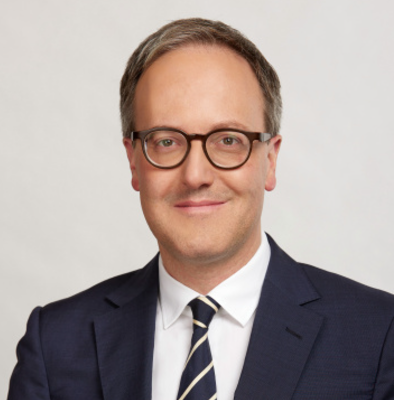
Autriche, ADLE, Porte-parole du groupe
16:38:45
Mr President, my dear colleague, Oleksii,
I can fully understand much of what you have said. These are arguments that one hears time and again in the media and in public debate. It is about stability, it is about security, but above all it is about business. Above all, it is about the fact that Azerbaijan has, of course, made tremendous economic progress in recent years. There is no question about that; we do not even need to discuss it. And, of course, it is also practical for us, as Austrians for example, that we have now found a new energy supplier. I do not dispute that at all. But what we here in the Council of Europe must focus on is the fact that over 400 people are currently imprisoned in Azerbaijan as political prisoners – namely opposition politicians, journalists, bloggers, but above all members of religious minorities are affected.
And now I’ll ask you quite frankly: I don’t believe there are any such political prisoners in Ukraine.
I am a liberal and I stand by that. I enjoy doing business. In my national Parliament, I am responsible for infrastructure and, by extension, for energy. But there is one thing I must make absolutely clear: we are not prepared to gallop from one form of dependence on a dictatorship into the next. Azerbaijan has crossed several red lines. This regime could actually achieve great things for the people, and I stand with the people of Azerbaijan.
The best investment is investment in democracy and the rule of law. At the end of the day, this benefits people’s economic freedom and personal liberty. And we must demand this here in the Council of Europe, and ultimately in our national parliaments too. I will say this quite plainly: if the situation continues to deteriorate, then I am also in favour of us discussing sanctions.
The elephant in the room here, of course, is the allegations of corruption with which we have also been confronted here in the Council of Europe in the past. We have been infiltrated by the system and the regime in Azerbaijan. We have had Members of Parliament who have portrayed the situation in reports as far more positive than it actually was. Why? Because they were paid to do so. This report, which is before us here today, is a clear response. A clear response that we need today, at this time. And that is why I believe that approving this motion would also send a powerful signal. I would like to thank the rapporteur for his excellent work and for sending this clear signal. Thank you very much.
Islande, SOC, Président de l'Assemblée
16:41:53
Mr Oleksii GONCHARENKO, you have asked to take the floor to ask a question to another member on behalf of your group.
In accordance with Article 37.4 of the Rules of Procedure, I remind you that you must ask a question, not make a speech. The question must be addressed to a member who does not belong to your political group. It must directly relate to the speech made by that member and to the topic of the debate. You will have 30 seconds to ask it.
The member to whom the question is addressed will have 30 seconds to respond. Mr Oleksii GONCHARENKO.
Thank you, Chair.
And Mr Dominik OBERHOFER, thank you very much for your speech.
I also care about democracy, human rights and the rule of law. And I care about people who are in detention. But I just want to ask you, do you really believe that the adoption of this report will help these people right now?
And secondly, do you really believe that Azerbaijan's not being a member of the Council of Europe will help these people who are in detention today?
That is my question. I absolutely understand the best intentions of the Rapporteur, and I appreciate this, but I want to be pragmatic.
Thank you.
Islande, SOC, Président de l'Assemblée
16:43:07
Mr Dominik OBERHOFER, do you wish to respond?
Autriche, ADLE, Porte-parole du groupe
16:43:10
Of course, I’d be happy to. Yes, I believe that. I am absolutely convinced of it. And the counter-question would be: what sort of signal would the Council of Europe be sending not only to the world, to the media and to the public, but above all to the member states, if we were not to discuss this report today and were not to approve it?
Islande, SOC, Président de l'Assemblée
16:43:35
Mr Frank SCHWABE, do you wish to use the blue card?
Mister President, I have a question for Mr Oleksii GONCHARENKO.
I hope it's allowed in the rules.
Dear Oleksii, what do you think this Organisation is about? We make a lot of reports about the Russian aggression towards your country – a lot – because we believe in the values of this Organisation.
Do you believe in the values of the Organisation? Do you really think that we should not criticise countries for what's going on in the country? Do you think this is helpful for the integrity of this Organisation, even if you look into the situation of your own country?
Islande, SOC, Président de l'Assemblée
16:44:28
Mr Oleksii GONCHARENKO, do you wish to respond?
Thank you very much.
Dear Mr Frank SCHWABE, I just want to remind you how we had debates here when many members of this Assembly were voting to take Russia back, saying we need to have them here, when we were telling you everything that's going on.
And I want to tell you now, first problems first. We have a huge problem in our Organisation. One of our member states is killed every day. And just to be effective and to defend all ourselves and our values, we need to be pragmatic. And pragmatically, we need today, Azerbaijan. We need them just as they need us. That is my position, nothing else. And I completely agree that we need to give messages and signals to them, but in order these messages and signals to be heard, they need to be a member of this Organisation. And that is something which I really care about. That's the only thing.
Thank you.
Islande, SOC, Président de l'Assemblée
16:45:28
Thank you.
And now, on behalf of the Group of the Unified European Left, Mr George LOUCAIDES. You have the floor.

Chypre, GUE, Porte-parole du groupe
16:45:38
Thank you very much, Mister Chairperson.
I will start with the dialogue. We are a platform of dialogue and democracy. So in order to serve the values of this organisation, we should have to be persistent, otherwise we undermine the credibility of this organisation, Mr Oleksii GONCHARENKO. When we use double standards, when we exercise our duties with hypocrisy, then we undermine the very same values of this organisation. And this is very clear.
So, on behalf of my group, the Group of the Unified European Left, I want to thank and congratulate the rapporteur for a report that documents a reality which the Council of Europe can neither ignore nor normalise, as we've seen it happening a few minutes ago.
What emerges from this report is a picture of a country where democratic space is shrinking rapidly. As independent journalism, civil society and political pluralism come under increasing pressure.
The evidence presented by the rapporteur points to a country where journalists, human rights defenders, opposition activists, academics and civil society representatives face prosecution, detention and intimidation, while critical voices are increasingly silenced rather than protected.
Particularly alarming is the growing number of political prisoners, the continued imprisonment of journalists and human rights defenders and the use of criminal proceedings against those who expose corruption, defend democratic values or engage in independent public activity.
The report also points to a deeply troubling picture regarding freedom of expression, freedom of association and political pluralism. Restrictive legislation, combined with the pressure placed on independent media and civil society organisations, has created an environment in which dissent is treated as a threat rather than as a legitimate component of democratic life.
Equally serious is the persistent failure to implement judgements of the European Court of Human Rights. Respect for the Court's judgements is not optional. It is a legal obligation and a fundamental condition of membership in the Council of Europe.
Particularly alarming is President Ilham ALIYEV's stated position that Azerbaijan will no longer recognise the binding force of judgements of the European Court of Human Rights. Such a position is incompatible with the obligations freely undertaken by every member state of the Council of Europe.
For our political group, dear colleagues, independent journalists, civic space and the rule of law are inseparable. Democracy cannot flourish when journalists are imprisoned, human rights defenders are prosecuted and criminal justice is used as an instrument to silence criticism.
This Assembly must speak clearly. Those imprisoned for exercising fundamental freedoms should be released. Politically motivated prosecutions should end. The credibility of the Council of Europe depends on our willingness to defend these principles consistently and without exception.
Thank you.
Islande, SOC, Président de l'Assemblée
16:48:56
Thank you. And now, on behalf of the Socialists, Democrats and Greens Group, Mr Frank SCHWABE.
You have the floor.

Allemagne, SOC, Porte-parole du groupe
16:49:04
Dear Mister President,
Dear colleagues,
And dear Mr Oleksii GONCHARENKO,
Again we all, maybe not all, but most of us, we want to stop Russia's aggression, Russia's war towards Ukraine. That's what we want together. But you misunderstand this organisation and that doesn't mean you put everything else in all the other states into perspective. We have something to do and we have to do our job. And I looked this morning, into the definition and the characteristics of dictatorship. I looked into it. No free and secret elections. There's either only one authorised single party or the results of rigged elections are predetermined. There's a lack of separation of powers. The government also controls the laws and the courts. There's suppression of freedom of speech and the press. Media is strictly censored and state-controlled. There's a ban on the opposition. There's disregard for human rights and fundamental rights. There's repression and surveillance. The state employs intelligence agencies, police or the military to intimidate and monitor its own population and to nip any resistance in the bud.
And I'm so sorry. This is a definition of the reality in Azerbaijan and I would like to thank Mr Christophe LACROIX very much for putting light on this situation. Thank you very much that you mentioned Mr Anar MAMMADLI. One of the best to defend our values and we have to support him. What else should we do in Azerbaijan, in Europe? Because of this he's awarded with the Václav Havel Human Rights Prize, but he's in prison now. One of the shining lights of human rights in Europe is imprisoned in Azerbaijan. Can you believe this? Thank you very much for mentioning Mr Ali KARIMLI. He's in prison. Recently he gave an interview to French TV, as I understand. The punishment from the government followed immediately. And he's tortured now and he's under horrible circumstances.
I would like to mention Mr Afgan SADIGOV, who was extradited against the European Court of Human Rights' (ECHR) decision in an authoritarian coalition from Georgia to Azerbaijan. Abzas Media, Radio Free Europe, Toplum TV, Meydan TV, Channel 11, Channel 13, Mr Gubad IBADOGHLU, Mr Akif GURBANOV, Mr Alasgar MAMMADLI, Mr Ruslan IZZATLI and all the others. I could read 300, 400 names here and we should put light on the situation of all of them.
And the repression continues outside of the country. People who flee the country and they do it every day, they are under oppression. They are under transnational repression. They repress their family at home. That's the situation. I want to have each and everyone inside in Europe, even some more member countries to be in this organisation. But it's very clear, if you undermine the credibility of this organisation and you go against everything, then you cannot be a member here. This is the reality.
I ask Azerbaijan to change. We want to welcome them, but they have to respect the rights and the values of this organisation.
Islande, SOC, Président de l'Assemblée
16:52:18
Thank you. In the debate I call next Mr Ivan RAČAN. You have 2 minutes.
Thank you.
Colleagues,
I have prepared a speech, but I will not read it.
Let me be very clear, I am all for being very pragmatic in politics. I have been pragmatic my entire life and I do believe in a pragmatic approach. However, we are in a quintessential rules- and values-based organisation: the Council of Europe.
This is not a military alliance. This is not a trade bloc. This is not an informal organisation. This is a rules- and values-based organisation. And we are here to protect those rules and those values. And they cannot be trumped by a pragmatic approach.
And with that said, I want to congratulate the Rapporteur for the report. It is like reading or watching a real-time development of dismantling exactly what we are supposed to protect: human rights and freedoms in a democracy. For that we have to protect what we stand for.
So there is no room for a pragmatic approach here. The enemy of my enemy cannot be my friend in the Council of Europe. Thank you.
Islande, SOC, Président de l'Assemblée
16:53:58
Thank you.
I call now on Mr Markus WIECHEL. You have 2 minutes.
Mister President and distinguished colleagues.
As a Parliamentarian deeply involved with and committed to working with democracy, the rule of law and human dignity, I find the situation in Azerbaijan both alarming and unacceptable.
The facts speak for themselves. Azerbaijan now ranks 171 out of 180 countries in press freedom. Not a single independent media outlet operates inside the country. Thirty-six journalists are currently detained, and there are 328 reported political prisoners.
This is not a snapshot of isolated problems; it's the result of a deliberate, systematic campaign to silence every critical voice. We have seen journalists murdered and harassed. We have witnessed transnational repression confirmed by French courts. Azerbaijan has ignored every recommendation from the Venice Commission, refused to implement numerous Strasbourg judgments, and even declared that it will no longer respect the European Court of Human Rights, using its own self-exclusion from this Assembly as a pretext.
And when we voted on their credentials in this Assembly, the regime responded by declaring several of us, myself included, persona non grata. That tells us everything we need to know about their attitude to scrutiny.
So, colleagues, turning a blind eye to this level of repression is not acceptable. We owe it to the brave journalists, human rights defenders and ordinary citizens of Azerbaijan to speak clearly. And that's what we do today. I, therefore, urge Azerbaijan to listen to the voices in support of democracy. Instead of banning those who speak up, try to be part of the democratic forces in our European family.
I actually agree with my distinguished colleague, Mr Oleksii GONCHARENKO: we need you, therefore, release all political prisoners, then restore the fundamental freedoms. The people of Azerbaijan deserve better than fear and silence.
Thank you very much.
Islande, SOC, Président de l'Assemblée
16:56:22
Thank you. I now call on Ms Christiana EROTOKRITOU.
You have the floor.
Thank you, Mr Chairman.
Dear colleagues,
Having read this Report, it is clear that we are witnessing a systemic failure in Azerbaijan's compliance with any fundamental human rights standards. I am therefore encouraged that this Assembly is resisting calls to ease pressure on a member state that continues to fall significantly short of its obligations.
Adherence to the European Convention on Human Rights is not optional, nor is it something that can be applied selectively. It is a binding commitment. Persistent failure to implement judgments of the European Court of Human Rights and to uphold the basic standards expected of a member state cannot continue indefinitely without consequences.
The report documents a deeply troubling pattern. Increasing pressure on journalists, human rights defenders, civil society activists and political opponents. We have repeatedly raised concerns about the detention of individuals such as the Václav Havel Human Rights Prize laureate, Mr Anar MAMMADLI, Mr Ulvi HASANLI, and members of Abzas Media, whose apparent offence has been the peaceful exercise of their fundamental freedoms.
Particularly alarming is a shrinking space for independent media and civil society. Politically motivated prosecutions, restrictive legislation and administrative obstacles have severely undermined freedom of expression and weakened independent oversight. Equally concerning is the reported misuse of legislation to target those co-operating with international organisations.
A democracy is not judged by how it treats those who support the government, but by how it treats those who challenge it. The ability of opposition voices to participate freely in public life is a cornerstone of democratic legitimacy. Our message, therefore, must be clear: the imprisonment of journalists, activists and human rights defenders for exercising their fundamental rights has no place in a member state of the Council of Europe.
Respect for the Court's judgments, co-operation with our monitoring bodies and the protection of independent media and civil society are not optional commitments.
Thank you.
Islande, SOC, Président de l'Assemblée
16:58:43
Thank you.
I now call Mr Armen GEVORGYAN. You have 2 minutes.
Dear Colleagues,
Critical voices are also being silenced in Azerbaijan through the prohibition of international humanitarian and human rights organisations.
Particularly alarming is the situation concerning the Armenian prisoners in Baku and the reports of the destruction of Armenian cultural and religious heritage in Nagorno-Karabakh. When independent international monitoring is absent, not only the rights of specific individuals are put at risk, but also the preservation of historical memory, cultural values and the credibility of information available to the international community.
Every new peace initiative and every ambitious vision for the future of the South Caucasus will remain incomplete as long as Armenian prisoners continue to be held in Baku. The release of prisoners is not merely a humanitarian gestures, it is a test of the sincerity of the entire peace process. No path to peace can be credible if it leads to the civilizational barbarism in Nagorno-Karabakh.
Dear colleagues,
It is difficult to believe that powerful leaders capable of shaping the future of entire regions are somehow unable to resolve a humanitarian issue involving a limited number of human lives. If there is sufficient political will to negotiate grand strategies, there should also be sufficient political will to bring Armenian prisoners home.
At the same time, some of our colleagues should be concerned not so much with Azerbaijan's return to the Parliamentary Assembly of the Council of Europe as with Azerbaijan's readiness to return to the principles, values, and obligations towards the Organisation.
Otherwise, we risk witnessing an unacceptable gradual adaptation of the Council of Europe to the standards of Azerbaijan's ruling regime and replacing rightly condemned the so-called "caviar diplomacy" with a new "gas diplomacy".
Thank you.
Islande, SOC, Président de l'Assemblée
17:00:50
Thank you. I call Ms Saskia KLUIT. You have 2 minutes.
Thank you very much.
Thank you very much, Chair.
As one of the Parliamentary Assembly of the Council of Europe (PACE) members, a few PACE members, I joined the Organization for Security and Co-operation in Europe (OSCE) Election Observation Mission of the last presidential elections in Azerbaijan.
And the rest of the PACE was refused or sent home because of how they voted here in this room. It was my first, and I will say that it probably prepared me for the rest of my life very well for future missions in recognising flaws and fraud in electoral processes. Because there were so many and they were not even hidden very well, so you could clearly learn. And they were not often not hidden at all.
Since then, Azerbaijan has not bettered their democratic flaws. It's still a country – and many of them have been named – with an opposition that gives no opposition, or if they do, they will end up in jail. And [a country] where the journalists speak no truth to power, because if they do, they will end up in jail. It's still a country where civil society is not forming civil strength, because if they do, they will end up in jail. And it is still a country where scientists don't discover, but feel the need to hide their work, because otherwise they might end up in jail.
And when, as a civilian, you decide to flee from all this, to find freedom in another country, from all these threats, the country hunts you down to hurt you, or they threaten your family to make you stop speaking truth to power or even just living your life in a new country. Yet with all this, Azerbaijan is a country that chooses to be part of our community at the Council of Europe. Yet it still is able to refuse PACE members access to electoral observations. And it still refuses to fulfil the ordinances of our Court of Human Rights.
So I can only fully, fully support the work of the Rapporteur. It's not our first work on Azerbaijan, but one can hope, and I still do, that at one point we will see at last the last report of Azerbaijan, because it finally reunited itself with the values of our Council.
Islande, SOC, Président de l'Assemblée
17:03:05
Thank you. I now call on the last speaker, Ms Tamila TASHEVA.
You have 2 minutes.
Dear colleagues,
I would like to stress that the Assembly should remain a place where difficult issues are discussed with balance, responsibility and respect for procedure.
Human rights, democracy and the rule of law are fundamental values for all member states. At the same time, our work must aim not only to state concerns, but also to encourage practical progress, co-operation and renewed trust.
Azerbaijan is an important member of the Council of Europe. We should also recognize the complex regional context. Azerbaijan has restored control over its internationally recognised territory and recent steps toward normalisation and peace with Armenia are important for the stability of the South Caucasus.
Ukraine knows the value of territorial integrity, sovereignty and the right of states to restore control over their own land. We also know that minority rights, including the rights of Crimean Tatars, must remain part of any sustainable peace and reintegration process.
While all alleged human rights violations must be addressed, the responsible state should be actively involved in the process to ensure meaningful dialogue. Let us keep the door open to encourage cooperation with member states, not make the gap wider.
Thank you.
Speech not pronounced (Rules of Procedure, Art. 31.2), only available in French
(Undelivered speech, Rules of Procedure Art. 31.2)
President, dear colleagues,
Thanks to the rapporteur!
The report before us is clear about the scale of political imprisonment in Azerbaijan.
According to Azerbaijani human rights defenders, there were 328 political prisoners in Azerbaijan in May this year. That number includes, human rights defenders such as Mr Anar MAMMADLI, academics such as Mr Iqbal ABILOV and Mr Bahruz SAMADOV and opposition figures such as Mr Ali KARIMLI, lawyers, civil society activists and journalists.
I was particularly disturbed by the reports concerning imprisoned female journalists.
It is deeply disturbing that journalists are first imprisoned for doing their work, and then reportedly subjected to further humiliation and abuse in detention. Allegations of threats of rape, sexual harassment and other forms of ill-treatment against imprisoned female journalists must be investigated promptly, transparently and effectively, and those responsible must be held accountable.
Each political prisoner represents a missing voice in public life.
That is the purpose of political imprisonment: not only to punish individuals, but to weaken the society around them.
That is why political prisoners must be at the centre of our response to Azerbaijan.
Azerbaijan’s absence from this Assembly does not suspend its obligations. It remains bound by the European Convention on Human Rights, by the judgments of the European Court, and by the commitments it accepted as a member of the Council of Europe.
Our demand should therefore be concrete: release those detained on politically motivated charges, drop fabricated cases, and end the use of criminal law against those who exercise their rights to freedom of expression, association and participation in public life.
Political prisoners are a symbol of a state that fears its own citizens. Political prisoners should not exist anywhere, and certainly not in a Council of Europe member State.
Thank you.
(Undelivered speech, Rules of Procedure Art. 31.2)
Madam President, Mister Secretary-General,
Silencing critical voices is just one of the symptoms that show us how the accumulation of power progressively destroys democracies.
In Mexico, the democracy we built gradually through plurality and consensus was capable of establishing one of the most solid and reliable electoral systems in the world.
The National Electoral Institute (Instituto Nacional Electoral), a product of the electoral reforms of 1994 and 1996, was a citizen-led, impartial institution, committed to the rule of law, and a guarantor of free, reliable, transparent, and monitored elections.
These characteristics clashed with traditional authoritarian ideas, vested interests, autocratic remnants, and concepts incompatible with democracy, which, paradoxically, democratic rules allow to participate in electoral processes, regardless of whether their objective is to achieve power to destroy democracy itself from within.
Since 2018, we in Mexico have experienced a process of systematic destruction of democratic institutions, the elimination of checks and balances, the subjugation or suppression of autonomous bodies, and the accumulation of power in the Executive. Today, the Executive not only holds a majority acquired under inequitable and undemocratic conditions, but it has also used the Legislative branch to dismantle the constitutional oversight capabilities of the Judiciary, in addition to centralising power at the expense of the Federal Pact and municipal autonomy.
The capture and destruction of democratic institutions by dictatorial ideas, interests, and projects close off democratic spaces and simulate electoral processes that are inequitable, rigged, and false. This undermines the free vote, free opinion, a free press, and an informed public opinion.
I must say that a regime has been established in Mexico since 2018 that has been destroying democracy, but there are many of us citizens who resist authoritarianism and the accumulation of power.
I appeal to this Assembly, which is committed to democracy, not to ignore threats beyond the Continent, but rather to remain vigilant in the global defence of democracy and human rights as a common, enduring mission.
Thank you very much.

Macédoine du Nord, SOC
20:12:08
(Undelivered speech, Rules of Procedure Art. 31.2)
Critical voices in Azerbaijan have become increasingly important in challenging the country's political system and drawing attention to concerns about democracy, human rights, and freedom of expression. Independent journalists, opposition figures, human rights defenders, and civil society activists have repeatedly criticised the government for restricting political freedoms and limiting public scrutiny of those in power.
Many critics argue that Azerbaijan has developed an environment in which dissent is difficult and often carries significant personal risks. Reports from international organisations, foreign governments, and advocacy groups have documented allegations of pressure on independent media, arrests of activists, restrictions on peaceful assembly, and obstacles facing opposition parties. As a result, many observers contend that opportunities for open political competition and public criticism have narrowed over time.
Independent journalists have played a particularly significant role in exposing alleged corruption, abuses of power, and governance failures. However, media outlets that challenge official narratives often face legal, financial, or administrative pressure. Some reporters and activists have been detained or prosecuted under charges that critics claim are politically motivated, while authorities maintain that all actions are conducted according to the law.
The growth of social media and digital platforms has provided an alternative space for dissenting opinions. Online activists and independent commentators continue to raise issues that receive limited coverage in state-aligned media. Nevertheless, concerns remain about surveillance, online restrictions, and the targeting of government critics.
The struggle of Azerbaijan's critical voices reflects a broader debate about the country's political future. Their demands for greater transparency, accountability, judicial independence, and freedom of expression continue to challenge existing power structures and keep questions of democratic reform at the centre of public discussion.
Islande, SOC, Président de l'Assemblée
17:04:43
Thank you.
I must now interrupt the list of speakers. The speeches of members on the speakers list who have been present during the debate but have not been able to speak may be given to the Table Office for publication in the Official Report. Speeches must not exceed 400 words. I remind colleagues that the typewritten text can be submitted, electronically if possible, no later than 4 hours after the list of speakers is interrupted.
I call Mr Christophe LACROIX, Rapporteur, to reply.
You have 3 minutes.
Thank you, Mr President.
Our colleague Mr Pablo HISPÁN, whom I would like to thank, drew on Cicero’s ‘hecatylinaire’ to emphasise just how much we are now calling on the Azerbaijani regime to finally respond to the criticism and to stop trying our patience.
For my part, I shall begin with a definition of dictatorship by Hannah ARENDT. “Dictatorship,” said Hannah ARENDT in the aftermath of the Second World War, “is exercised not only in the political sphere, but in all spheres, including the private and intimate spheres, permeating the whole of society and the entire territory.”
What a marvellous definition that applies to the regime of President Ilham ALIYEV.
I have occasionally heard the mind-boggling rhetoric of our colleague Mr Oleksii Goncharenko, though unfortunately he is no longer here. He made his video, he put on his show; I think he’s happy – he’s gone off again. But in fact, it is quite mind-boggling to criticise the Council of Europe and its Parliamentary Assembly for reiterating the fundamental principles upon which this foundation of human rights was built. And that is, ultimately, exactly what we have criticised Russia for, with its totalitarian system.
And today, when it comes to Azerbaijan, we’re supposed to turn a blind eye – and this is not the time for that. It is quite mind-boggling. It is a world defined by the Wild West. That, in fact, is what certain members of this Organisation here, of this Assembly, would like to see, but it is not the path we shall chart, nor is it the one that the majority of Parliamentarians, across all groups, will chart – not only for the Assembly’s member states, but also for the people and for democracy.
For in fact, Azerbaijan withdrew from the Parliamentary Assembly, not because it was expelled, but because it decided not to send its delegates, and thus excluded itself from the process. And we are still offering it a path to reconciliation. We are making it clear to the authorities – and this is set out in my report – that we remain ready to engage in a genuine, constructive dialogue to address these deep-rooted structural problems and return to a path in line with democratic standards.
Co-operation with the Council of Europe remains in the interests of the Azerbaijani state and, above all, its people. Implement the European Convention on Human Rights; elect a new judge to the European Court of Human Rights (ECHR); in short, do what needs to be done and respect the rules to which you have freely consented.
And in fact, I think my colleague Mr Dominik OBERHOFER has summed up the situation well. When he says that Azerbaijan’s resources today would make it possible to build shared prosperity for the benefit of the people and democracy, I am simply asking, through this report, that the government and President Ilham ALIYEV do what we are proposing in the interests of the people of Azerbaijan – who are a great people – and that they return to us having fulfilled all their freely undertaken obligations.
Thank you.
Islande, SOC, Président de l'Assemblée
17:08:44
Thank you.
Does the Chairperson of the Committee, Mr Eerik-Niiles KROSS, wish to speak?

Estonie, ADLE, Président de la Commission des questions juridiques et des droits de l'homme
17:08:54
Thank you, Chair.
I speak on behalf of the Committee.
First, I would like to thank the Rapporteur, Mr Christophe LACROIX, for his very good and very tough work. It's a difficult portfolio, as we just heard. I also would like to thank the former Rapporteur, Ms Hannah BARDELL from the UK, for her contribution.
The Committee has worked on Azerbaijan for a while. For context, already in 2023, we held a joint hearing with the Committee on the Honouring of Obligations and Commitments by Member States of the Council of Europe and the Committee on Culture, Science, Education and Media, during which we heard a very powerful testimony from Mr Ulvi HASANLI, who is currently serving a nine year prison sentence in Azerbaijan on charges that appear to be a retaliation for investigations into high level corruption. And despite the regrettable absence of the Azerbaijani delegation in the Assembly, we continue to closely follow the developments.
Last year we heard about the situation of Azerbaijani media workers from an exiled journalist and the Secretary General of the European Federation of Journalists. We also discussed the non-implementation of judgments of our Court by Azerbaijan with an expert from the European Human Rights Advocacy Centre.
So I invite, on behalf of the Committee, everyone to support this Resolution. It's an objective text, obviously. It was unanimously adopted by the Committee on Legal Affairs and Human Rights and there were no amendments. And I particularly welcome the call on the Secretary General to use his power under Article 52 of the Convention and demand explanations from Azerbaijan as to, as the rule says, how its law ensures the effective implementation of the Convention.
Thank you.
Islande, SOC, Président de l'Assemblée
17:11:03
Thank you. The debate is closed.
No amendments have been tabled. We will therefore now proceed to vote on the draft resolution contained in Document 16414. A simple majority is required.
The vote is open.
The vote is now closed. I call for the result to be displayed.
The draft Resolution in Document 16414 is adopted.
Hongrie, PPE/DC, Président de l'Assemblée
17:14:42
Dear colleagues,
Please take your seats so that we can begin with the next item of business this afternoon. And as this is the third day that I'm spending in the Assembly and the first time that I'm chairing, which makes me only a little bit more experienced than our guests up there, so welcome among the newcomers.
Allow me to say how grateful I am for the welcome that we have received here in this Assembly after the Hungarian elections on 12 April, and that it's a great pleasure to satisfy our promise to the Hungarian voters that we bring back Hungary to the European tables. And this plenary is one of those places where we want to bring Hungary back to. Thank you very much.
And so the next item of business this afternoon is the debate on the Report titled "The Functioning of Femocratic Institutions in Georgia”, Document 16420, presented by Ms Edite ESTRELA and Ms Sabina ĆUDIĆ on behalf of the Monitoring Committee.
In order to finish on time by 6:40 p.m., I will interrupt the list of speakers at about 6:20 p.m. to allow time for the reply and the votes.
We will begin with Ms Edite ESTRELA and Ms Sabina ĆUDIĆ, co-Rapporteurs. You have 5 minutes each now and 5 minutes in total to reply later to the debate.
I call Ms Edite ESTRELA.
Thank you, Mister President.
Dear Colleagues,
This is the third report on Georgia that we have presented in the last one and a half years. This demonstrates the importance and urgency that we attach to the unprecedented democratic breakdown in Georgia. The previous two reports were presented under urgent procedure. We therefore felt it was important to provide you with a report on the functioning of democratic institutions in Georgia containing an explanatory memorandum outlining our findings and conclusions regarding the worrying developments in the country in detail.
Since the adoption of Resolution 2624, the democratic backsliding has continued unabated as has the crackdown on civil society, political opposition and dissent. None of the urgent recommendations of the Assembly have been implemented the continuing breakdown of democracy in Georgia and the lack of any response to the recommendations of the Assembly to address this raise serious doubts about the authorities' willingness to abide by Georgia’s membership obligations and accession commitments to the Council of Europe.
Regrettably and of great concern, the ruling majority's initiative to ban almost all democratic parties of the opposition in Georgia remains very much on the table and has recently been widened in scope. The criminal prosecution of almost the entire leadership of the democratic opposition on politically motivated and trumped-up charges is ongoing. In recent weeks, the prosecution's efforts have intensified, with several hearings organised by the Prosecutor General in this so-called sabotage case. If these two developments are pursued, they would effectively establish a one-party system in Georgia, which is unacceptable and incompatible with Council of Europe membership.
The relentless crackdown on freedom of expression and assembly continues, including through repressive legislation and the abuse of politically motivated legal proceedings against civil society, the independent media, opposition groups and individual protesters. These actions must be stopped and the repressive legislation must be repealed. The Ministry of the Interior has recently set up a special division to combat hate speech. This division became operational on 1 June. However, independent journalists and civil society organisations have expressed concerns that its main objective will be to stifle any criticism of the ruling majority. The first fines issued and investigations opened by this new division have given some credence to these concerns.
The politically motivated prosecutions, which have no other objective than to silence dissenting voices, raise the spectre of political prisoners. Such prosecutions are incompatible with a democratic society and with Georgia’s membership obligations to the Council of Europe. In our Report and draft Resolution, we refer to Resolution 1900 on “The definition of political prisoner”. This resolution provides important guidelines for dealing with this issue.
All of these developments have had a profound impact on the country's political environment. Unfortunately, as a result of the relentless crackdown on the democratic opposition, civil society and the independent media, as well as the extreme social and political polarisation in Georgia, we must conclude that the conditions for holding genuinely democratic elections no longer exist.
Thank you very much for your attention and, I hope, for your support. Thank you.
Hongrie, PPE/DC, Président de l'Assemblée
17:22:05
Thank you, Ms Edite ESTRELA.
And I call Ms Sabina ĆUDIĆ.

Bosnie-Herzégovine, ADLE, Corapporteure
17:22:12
Dear colleagues,
Unfortunately our reporting on Georgia continues at the same pace.
One of the ways to analyse (or perhaps the key way to analyse) any progress, any country's progress and the functioning of its democratic institutions, in our institution, is to analyse its cooperation with the key bodies of this organisation: namely the Parliamentary Assembly of the Council of Europe (PACE), then the Venice Commission, then the European Court of Human Rights (ECHR) and then of course the Committee of Ministers.
Looking at all of these bodies, Georgian authorities fail to engage in meaningful dialogue with the Council of Europe. The space in which civil society can operate is shrinking rapidly. To the extent that their very survival is at stake. The continued assault on civil society organisations and their leadership, as well as on independent media, must end.
In line with the Venice Commission's recommendations, the so-called transparency legislation and Law on Grants, which threaten the existence of civil society as a whole, cannot be improved and should be repealed. As reported by both the European Committee for the Prevention of Torture and Inhuman or Degrading Treatment or Punishment (CPT) and our Commissioner for Human Rights, no credible investigation has taken place when it comes to the use of force, police brutality and violations of human rights conducted against demonstrators, nor have any investigations been conducted into the numerous reports of torture and ill-treatment of demonstrators during their arrest and detention.
The authorities' reactions to any concerns or criticism expressed by the Council of Europe's bodies has become increasingly dismissive and acrimonious. In its decision regarding the execution of the Makarashvili and Others vs. Georgia European Court of Human Rights judgement, the Committee of Ministers called on Georgia to revise its freedom of assembly legislation in line with the requirements of the European Convention on Human Rights (ECHR) and ensure an environment that enables civil society to operate effectively.
In response, Georgian authorities, namely the Secretary General of Georgian Dream, stated that it is unacceptable for anyone to lecture the Georgian people with a wagging finger. This is in sharp contrast to something that we as rapporteurs have been told when visiting Georgia last year by the Georgian Dream authorities, that they would make sure that the European Court of Human Rights judgements would be considered and implemented. So what we have been told is in sharp contrast to what is going on on the ground.
Similarly, in response to last week's report by the Council of Europe's Commissioner for Human Rights, representatives of the ruling majority stated that it was devoid of legality and completely unclear and unfounded.
In our last resolution, the Assembly called on the relevant bodies of the Council of Europe and its member states to use all available means under the Convention to ensure that Georgia fully honours all the standards and obligations stemming from the Council of Europe membership. This call recently received the full support (and I underline, the full support), of the European Parliament, when in its resolution on the 2025 Commission report in Georgia it stated that it welcomes the Council of Europe's Parliamentary Assembly's 2025 October resolution urging the Council of Europe's bodies to use all available means, including Article 52 of the European Convention on Human Rights and interstate applications to the European Court of Human Rights under Article 33 thereof, to ensure that Georgia upholds its obligation as a Council of Europe member state, calls on the EU Member States and the Council of Europe member states to consider implementing this recommendation.
We hope that this important recommendation, essentially a complete overlap between what we are doing here as the Council of Europe and the European Parliament, will soon receive a concrete follow-up by our bodies and our member states. As we stated in our draft resolution, we remain committed to an open but result-oriented dialogue with the Georgian authorities, as well as all other political and social forces in the country.
But we stress that such dialogue, and we have always stressed that such dialogue can only be based on the shared understanding that membership of the Council of Europe, is a privilege that comes with rights and obligations. The principles and standards of the organisation, as well as the obligations stemming from its membership and the imperative need to fully honour these obligations, cannot be put into question and negotiated.
In other words, we cannot be operating on the principles as an institution and an organisation. If you don't like our principles, we have some other ones, as one Mr Groucho MARX famously said. But we must uphold our principles, stand firmly behind them and demand that they be fully implemented for a meaningful dialogue.
Thank you.
I invite you to support to support this document and of course, if you have any recommendations and questions, we are more than ready to answer them.
Thank you.
Hongrie, PPE/DC, Président de l'Assemblée
17:27:16
Thank you, Ms Sabina ĆUDIĆ.
I remind the Assembly that speaking time is limited to 3 minutes for spokespersons for the political groups and 2 minutes for other members.
In the debate, I call first Mr Armen GEVORGYAN.

Arménie, CEPA, Porte-parole du groupe
17:27:33
Mister Chairman,
The situation in Georgia deserves our close attention and serious consideration. We cannot remain indifferent when concerns are raised about democratic standards, political pluralism, the rule of law or the functioning of democratic institutions in any member state. It is both the right and the responsibility of this Assembly to react.
We must also be clear that any disproportionate or unlawful use of force against demonstrators is unacceptable in any democratic society. All such cases in Georgia should be subject of effective investigation and those found guilty must face appropriate legal responsibility. Accountability is not a sign of institutional weakness, it is an appearance of democratic maturity.
At the same time, our objective should not be limited to identifying shortcomings. Our objective should be to help create conditions for democratic progress.
In this regard, I welcome the balanced approach. While clearly expressing concern and condemnation about recent developments in Georgia, we have also to preserve the possibility of continued dialogue between the Georgian authorities and the Council of Europe. This is an important way of addressing concerns without deepening confrontation and encouraging a return to constructive engagement.
At the same time, our responsibility does not end with expressing concerns. One of our priorities should be to support the restoration of meaningful political dialogue inside Georgia.
The current challenges facing the country cannot be resolved through confrontation. Sustainable solutions require communication between the government, opposition, civil society and democratic institutions. We can help to create the conditions in which democratic dialogue can resume and public trust can gradually be rebuilt. Georgia needs less confrontation and more dialogue. The Council of Europe should help make that challenge possible.
Dear colleagues,
As a representative of the region, I would say that what we are witnessing today in Georgia is also part of a broader regional challenge. Across the South Caucasus, democratic development is facing increasing pressures. The South Caucasus is not a collection of isolated democratic experiments. What becomes acceptable in one country today may become acceptable in another tomorrow. When our organization tolerates restrictions on political competition and disputed elections in one country of the region, they are becoming a new norm elsewhere. We have to fight a reality where democratic institutions remain in place, but democracy itself disappears.
Thank you very much.
Hongrie, PPE/DC, Président de l'Assemblée
17:30:20
Mr Eerik-Niiles KROSS.
Estonie, ADLE, Porte-parole du groupe
17:30:23
Thank you, Chair.
Before I speak about the report, there is one thing that I think must be said every time, or should be said, when a European politician discusses Georgia, and it's this: Elene KHOSHTARIA and all other political prisoners of the Georgian regime must be released immediately.
[Applause]
Their release must be a precondition for any dialogue, any co-operation, any European engagement with Georgia. But today we are discussing the functioning of democratic institutions in Georgia. And frankly, the title should say "non-functioning of democratic institutions", because frankly, here we are.
Since June 2024, this Assembly has adopted five resolutions on Georgia, and today it's number six. And Georgia has done literally nothing to meet the Assembly's calls. In fact, it has moved in the opposite direction, as we just heard.
What have we repeatedly demanded? Repeal the foreign influence law, withdraw the Foreign Agent Registration Act, repeal the so-called "family values law", reform the administrative offences code, stop police brutality and torture, release political prisoners, end retaliatory proceedings against protesters, restore conditions for new genuine democratic parliamentary elections, reverse electoral code changes that undermine impartiality and pluralism, guarantee civil society and media freedom, stop intimidation of civil servants and civil society, do not ban opposition parties, and finally, resume full co-operation with the Council of Europe, Parliamentary Assembly of the Council of Europe (PACE) monitoring and the Venice Commission.
Well, none of this has happened. The situation is worse. So my point today is not only about Georgia, it is about the Council of Europe. Georgia refuses to fulfil its obligation to send a delegation to this Assembly. It demands that we remove the conditions we set for ratifying its credentials. In essence, it's trying to blackmail this Assembly. And so far, we are actually allowing it to do it. So, when we talk about the non-functioning of Georgian democratic institutions, we should also ask whether the democratic institutions of the Council of Europe are functioning.
In October 2025, this Assembly called on Council of Europe bodies to use all available means, including Article 52 of the Convention. In practice, this means the Secretary General can and should ask Georgia to explain in writing how its laws comply with the Convention.
On 17 June, just recently, the European Parliament fully endorsed this call and again called the Council of Europe member states to implement this call. The irony is that we ourselves have not implemented it. I asked the Secretary General on Monday why, I didn't hear a real answer. So today, in this resolution, we repeat the call. And I sincerely hope that this time we will be heard. Because if our organisation doesn't listen to this Assembly, why should anyone else, including Georgia?
Thank you.
Hongrie, PPE/DC, Président de l'Assemblée
17:33:54
Ms Laura CASTEL.

Espagne, GUE, Porte-parole du groupe
17:33:58
Thank you, Chair.
Let me first thank the co-rapporteurs for their hard work.
Monitoring developments in our member state, Georgia, remains very much needed. For too many years, politics has been – and still is – poisoned. Instead of working hard on all parts of Georgian politics, to the benefit of a positive development of a vibrant democracy, a strong rule of law structure and fundamental respect for human rights, politicians are fighting each other for the wrong reasons.
A strong political debate and competition are very much needed, as long as this helps to strengthen Georgian democracy. Unfortunately, a large part of Georgian politicians act in the opposite direction. At this moment, those who support the government too often cast a blind eye to grave misdoings to politicians from opposition parties. Freedom of speech, the right to have free press and the right for society to act in freedom, they are under undue pressure.
It is unacceptable to have politicians in prison, whereas they should be in parliaments and the public debate. At the same time, several oppositional forces are more concerned with only blaming the government for everything, but forget that their place is in the institutions in which they can and should work. Boycotting a parliament does not make sense and does not help Georgian citizens and society as a whole.
As the Group of the Unified European Left, we want to press all politicians from all sides to do better than they are doing now. This includes pressure on the government to behave according to its obligations under its constitution, but under the European Convention on Human Rights also.
The Committee of Ministers should act faster and stricter, and it does appear not effective enough. The Committee of Ministers, and with the Parliamentary Assembly, should start the complementary procedure to make the government behave if Georgia wants to stay here. We should also demand that the Georgian parliament send a fully fledged delegation to our Assembly so that we can discuss all matters here with all political forces.
As said, Georgian citizens are entitled to a functional political structure to the benefit of the whole society. So thanks again to the co-rapporteurs for the work done here.
Thank you.
Hongrie, PPE/DC, Président de l'Assemblée
17:37:12
Mr Mogens JENSEN.

Danemark, SOC, Porte-parole du groupe
17:37:16
Mister President, dear colleagues,
The Socialists, Democrats and Greens Group, of course, strongly support this report from our colleagues, Ms Edite ESTRELA and Ms Sabina ĆUDIĆ, because being a member of the Council of Europe is a privilege that comes with both rights and obligations. And the principles of our organisations, as well as the obligations stemming from membership, cannot be questioned or negotiated. This is, of course, also true for Georgia.
Unfortunately, the situation in Georgia has become worse when it comes to the country's obligations and commitments regarding human rights, the rule of law and democracy. And this Assembly, again, must send a very clear message to the authorities in Georgia.
First, initiatives to ban democratic opposition parties and to prosecute their leaders on politically motivated and trumped-up charges are unacceptable in a democracy. We therefore call on the authorities to withdraw their appeal to the Constitutional Court seeking to ban democratic opposition parties and to end the unjustified and politically motivated prosecution of opposition leaders.
Second, the continued crackdown on freedom of expression and freedom of assembly must end. This includes repressive legislation and the abuse of politically motivated legal proceedings against civil society, independent media, opposition forces and individual protesters.
Third, the seemingly politically motivated prosecutions aimed solely at silencing dissent raise the spectre of political prisoners. This is incompatible with a democratic society and with the obligations that come with membership of our institution.
Fourth, the shrinking space for civil society must be reversed. The crackdown on civil society organisations and their leaders through the misuse of controversial legislation must end.
And fifth, credible allegations of police brutality, ill-treatment and torture by law enforcement officers must be investigated in a transparent and effective manner. The climate of impunity surrounding such human rights abuses must come to an end.
Dear colleagues, by supporting this report, let us state this clearly to the authorities in Georgia: it is your responsibility to restore a democratic civic and political environment in your country. And we will still be waiting for your answers on the critical questions this report raises.
Thank you.
Hongrie, PPE/DC, Président de l'Assemblée
17:40:22
Mr Emanuelis ZINGERIS.

Lituanie, PPE/DC, Porte-parole du groupe
17:40:31
Dear friends,
We had Georgia 10 years ago. More like 10 years ago, like a leading country to the Western democratic integration and they were a shining example.
Now we are facing, by mostly all of you, remarks that the country is on the way to becoming a dictatorship and on the hook of Russian totalitarian influence.
Today I would like to call on Georgian authorities to free all arbitrarily detained persons and end impunity for violations committed by law enforcement agencies, including excessive violence against peaceful protesters. I would like to mention political prisoners, only a few of them: Mr Levan KHABEISHVILI, Chair of the Political Council of the United National Movement; Mr Irakli NADIRADZE, Head of the Tbilisi organisation of the United National Movement; Mr Paata MANJGALADZE, Chair of the Political Council of the Strategy Builder party; Mr Mikheil SAAKASHVILI, founding Chair of the United National Movement and many, many, many others.
So, we are facing a country overbooked with political prisoners and in the hands of one oligarch: Mr Bidzina IVANISHVILI. And we would like to ask Mr Bidzina IVANISHVILI to say: let them go.
From our side, we're facing a Committee of Minister dialogue and we've told, mostly all fractions, from our respectful Assembly to all the Committee of Ministers, no to the members of Georgian Dream being among us before doing their homework. Homework created by us and by the Court next to us. Not one implementation of not one decision was implemented by the Georgian authorities and they monopolised the rule of Georgia.
So we strongly condemn legislation that restricts civil space and media freedom and call on Georgian authorities to repeal all undemocratic legislation. A vibrant civil society and independent media are essential pillars of any democratic society. They not only enable people to express their will, but also strengthen resilience against external Russian influence, disinformation and propaganda.
The justice system continues to be politically exploited as authorities disproportionately intimidate and prosecute human rights defenders, mass media, journalists and academia. We support the resolution created by our rapporteurs and calls on the Georgian authorities to reverse the ongoing democratic backsliding and to cease actions that undermine political pluralism, such as persecution of opposition parties, members and civil society leaders.
And the last point about Iran. Iranian influence is growing and the last publication of the Washington Post had an institute showing the influence of Iran, who should be again evaluated by us.
Thank you.
Hongrie, PPE/DC, Président de l'Assemblée
17:43:53
We move on to other members with 2 minutes of speaking time.
Mr Perran MOON.
Thank you. Meur ras, Chair.
Friends, we have to be explicit about the situation in Georgia.
Georgian Dream, the ruling party, has systematically weaponised the justice system to target and repress opposition parties and peaceful demonstrators.
Core state institutions, rather than acting as independent and impartial bodies, are deployed to silence dissent, suppress civil activism and punish independent media through politically motivated prosecutions, censorship and imprisonment.
The list of journalists, politicians and civil society now incarcerated has grown ever longer. I would like to draw the Assembly's attention to four of them, in particular Ms Mzia AMAGLOBELI, a respected journalist, two demonstrators, Mr Saba JIKIA and Mr Saba SKHVITARIDZE, and, of course, Ms Elene KHOSHTARIA, a mother of four, desperately unwell and deprived of the medical attention that she so desperately needs.
Behind these names are dozens and dozens more, and this Assembly must ensure that their voices continue to be heard across the continent. The repression must stop. All political prisoners must be freed, and there needs to be free and fair elections.
In this environment, the UK government must play its part in sanctioning the dirty money that bases itself in London and avoid accusations of complicity in the oppression of the Georgian people.
It is absolutely essential that the Council of Europe learns from its mistakes of the past too. The report says dialogue should be based on the shared understanding that membership of the Council of Europe is a privilege that comes with rights and obligations. So, without any tangible commitments or concessions, including the release of all political prisoners, engagement with the Georgian authorities cannot and should not be progressed.
This is an important report, and I encourage colleagues to support it.
Hongrie, PPE/DC, Président de l'Assemblée
17:46:06
Ms Albana VOKSHI.
Dear colleagues,
I would like to congratulate the two co-rapporteurs for this important report.
I want to repeat: diplomacy does not always work with authoritarian leaders. Georgia is facing a serious democratic crisis. The political opposition is criminalised; civil society and independent media are under pressure; academic freedom is undermined; peaceful protesters face repression; and allegations of police violence remain uninvestigated.
The right to peaceful assembly is a fundamental right protected by Article 11 of the European Convention on Human Rights. And I want to focus on this right. Authoritarian regimes fear peaceful protest because they fear the voice of free citizens. I see it happening every day in my country. The whole state machinery against hundreds of thousands of peaceful protesters, the criminalisation of dissent, the stigmatisation of demonstrators, the portrayal of civil society as enemies of the state, intimidation and threats. And when these methods fail, force is used.
When a government treats peaceful protesters as security threats rather than citizens exercising their rights, democracy is no longer functioning properly. In the June 2026 Report, the Monitoring Committee expressed serious concern over the lack of credible investigation into allegations of police violence and other human rights violations during the dispersal of demonstrators, including reports that chemical agents may have been used against protesters.
Similar concerns were raised by the Council of Europe's Commissioner for Human Rights and echoed in the Organization for Security and Co-operation in Europe's Moscow Mechanism Report, all calling for independent, thorough and transparent investigation.
As of today, silence and impunity. I therefore call on the Secretary General to use Article 52 to bring additional scrutiny to the alleged use of chemical substances against protesters in the absence of an adequate national investigation. Those responsible must be brought to justice. Thank you.
Hongrie, PPE/DC, Président de l'Assemblée
17:48:25
Mr Malte KAUFMANN.
Mr President, ladies and gentlemen.
I would like to follow on from what my colleague, Mr Armen GEVORGYAN, has already said. I have the impression that the country report is somewhat unbalanced with regard to Georgia. It also strikes me that there is an attempt here to interfere ever more deeply in the affairs of a sovereign state.
I would also like to emphasise explicitly what my colleague has already said: the rule of law, free elections, freedom of expression and protection against unjustified police violence are indispensable fundamental principles of any liberal democracy. And where there are credible allegations of abuse of power, these must, of course, be investigated and addressed.
But the report does not content itself with demanding standards in line with the rule of law. Rather, it claims the right to assess specific political decisions taken by a democratically elected state and, in some cases, even to have them reversed. This is particularly evident in the case of the so-called Foreign Influence Act. Its complete repeal is demanded here with remarkable vehemence. Yet this raises a very simple question: why should transparency regarding the funding of politically active organisations suddenly be a threat to democracy? Anyone who influences the formation of public opinion should disclose the source of their funding. This applies to political parties, companies, lobby groups and, of course, non-governmental organisations as well.
We stand for the rule of law, for democracy and for freedom, but equally for national self-determination and respect for democratic decisions – the decisions of sovereign states. And for this reason, the country report before us must also be rejected. Thank you very much.
Hongrie, PPE/DC, Président de l'Assemblée
17:50:32
Mr James MACCLEARY.
Thank you Chair and my thanks to the co-Rapporteurs for their comprehensive and very timely report which I fully support.
It illustrates what we all know and I have to say fear, that Georgia is not just facing a political crisis, but a democratic emergency. The Georgian people have repeatedly shown where they want their country to go. They want a European future. They want democracy, the rule of law, free elections and accountable institutions.
Yet the Georgian Dream government has chosen a very different path. They are gaslighting an entire nation, saying they support a European future for Georgia, while at the same time binding the country ever closer into Moscow's orbit. Georgian Dreamers suspended EU accession talks, passed repressive laws, targeted civil society, threatened and prosecuted opposition parties. It has used the courts and the police not as neutral institutions, but as tools of political control. It has allowed Georgia to be abused as a backdoor for Russia to evade sanctions resulting from their war on Ukraine.
Opposition leaders have been jailed, protesters beaten, independent voices have been intimidated. Ms Elene KHOSHTARIA was imprisoned for writing Russian Dream on a poster. Now she languishes in the prison cell while her four children are at home, wondering if they'll ever welcome their mother home again. Mr Giorgi VASHADZE and a long list of other opposition figures, some of whom were mentioned by colleagues already, have been swept up in a broader campaign against democratic opposition. It is not the behaviour of a government confident of support of its people. It is a behaviour of a government that is afraid of them.
The Council of Europe must be clear. We should demand the release of political prisoners, repeal repressive legislation, call for the protection of civil society and independent media, and a credible route back to free and fair elections. We should be prepared to impose targeted sanctions on those responsible for this democratic collapse, starting with oligarch Mr Bidzina IVANISHVILI and those who continue to support his grip on Georgian public life.
And we must never confuse the Georgian government with the Georgian people. The people of Georgia have not given up on Europe. We should not give up on them.
Hongrie, PPE/DC, Président de l'Assemblée
17:52:44
Mr Sam RUSHWORTH.
"Sorry" [spoken in French].
I'd like to commend the rapporteurs for this strong and important report.
The most important conclusion, I think, is paragraph 5, that the conditions for holding genuinely democratic elections do not exist in Georgia. That is an extraordinary finding, reflecting the gravity of the situation facing opposition politicians, independent media and civil society.
Earlier this month, I met with Georgian opposition leaders, as I often do, to hear again their lived experience of how the PUTIN-backed Georgian Dream has shut down democracy. I'm humbled every time I meet them. Their perspectives and courage are remarkable. We've become friends through this Assembly, and each time we part, I find myself wondering if I will see them again, or whether they, too, will become victims of the democratic backsliding described in this report.
That's why paragraph 6 is so important. We should deplore the politically motivated and disproportionate sentences imposed on opposition figures, including Elene KHOSHTARIA, one and a half years for writing Russian Dream on a campaign poster. Whatever one's political views, that punishment is clearly disproportionate. She's a mother, and there are deeply troubling reports that she's being denied access to urgent medical care while in prison.
The report is strong, but I believe it remains incomplete without the addition of names such as Mikheil SAAKASHVILI, the third president of Georgia, Levan KHABEISHVILI and Paata MANJGALADZE. Their cases are emblematic of our concerns about the treatment of opposition voices in Georgia today.
May I also say that alongside this is deep concern about the state media. The United Kingdom has sanctioned two major pro-government broadcasters over the dissemination of misleading narratives relating to Russia's illegal war in Ukraine. And I think it's a disgrace that they've been in the foyers out here while we've been sitting here today.
Thank you.
Hongrie, PPE/DC, Président de l'Assemblée
17:55:16
Mr Lőrinc NACSA.
I don't see Mr Lőrinc NACSA in the room.
So we move on to Mr Edmunds CEPURĪTIS.
Dear colleagues,
What we hear again and again and what we can read in this report, that those in power in Georgia, the Georgian Dream, are pretending that nothing is wrong in the country, that there is no social and political crisis, that they are fulfilling their membership obligations to this organisation. But the people in Georgia do not live in this dream. They live in reality, where violence is used to suppress freedom of speech and assembly. And those committing violence are not held accountable, they are instead rewarded.
It is our responsibility to state the facts. We can document the reality and defend it when it is attacked. Here, we face no prosecution, no violence and no imprisonment for speaking the truth, while anyone in Georgia does. And the truth is those in power in Georgia are not fulfilling the membership obligations. They are constantly shrinking the democratic space and they are betraying the long-lasting ambition of Georgian society for ever-closer ties to our countries, to our European family. It is the Georgian society or friends that I stand with today, and I invite you to do the same to support this report and follow its recommendations to bring them to our countries.
Thank you.
Hongrie, PPE/DC, Président de l'Assemblée
17:56:51
Mr Joseph O'REILLY.
Thank you President.
At the outset, I wish to begin obviously by congratulating the Rapporteurs, but specifically by agreeing with the earlier view of Mr Emanuelis ZINGERIS that Georgia is heading for totalitarian dictatorship and indeed the view of Ms Laura CASTEL that boycotting a parliament is not the best tactic and the view of my colleague from the United Kingdom (UK) who said that targeted sanctions are required.
In December 2025, my compatriot, Commissioner for Human Rights, Mr Michael O'FLAHERTY, wrote to the Prosecutor General in Georgia and I quote, he alleged "indiscriminate use of force against protesters, against media torture and sexual violence."
In December 2025, the European Court of Human Rights in Tsaava versus and others versus Georgia, it was established that Article 3 of the Charter dealing with human with torture was indeed violated. Similarly, on 18 February this year, the European Committee on Torture stated that they were inundated with allegations. The initiative recently to ban all democratic opposition parties and prosecution of their leadership on politically trumped up charges is indeed reprehensible.
Conditions for democratic elections don't exist, as exemplified. By the 2025 elections, when local elections, when Georgian Dream got 81.7% of the vote in a 40% poll, with most opposition parties opposing. Georgia is a beautiful country with a great people and we in Europe have a responsibility to collectively ensure that that people are liberated for what's a dreadful oppression on top of them. We have a collective responsibility to act here.
Thank you.
Hongrie, PPE/DC, Président de l'Assemblée
17:59:27
Ms Lesia VASYLENKO.
Thank you, Mister President.
I welcome this report and commend the co-rapporteurs, who have clearly demonstrated the deterioration of democratic institutions in Georgia, a process that has been ongoing for several years now.
Here in Ukraine, we are keeping a close eye on the situation in Georgia. We are concerned that Russia is using Georgian territory to circumvent international sanctions. Equally worrying are the ongoing plans to strengthen Russia’s military presence in the Black Sea. All of this is made possible by the ruling party, which has gradually taken control of Georgia’s institutions and state apparatus.
Opposition voices are being marginalised, the independent media is under pressure, and the views of a large section of the Georgian people are no longer represented. The list of political prisoners, unfortunately, continues to grow. I shall mention just a few names: Mr Nika MELIA, Ms Elene KHOSHTARIA, Mr Paata MANJGALADZE, Mr Irakli NADIRADZE, Mr Levan KHABEISHVILI and Mr Mikheil SAAKASHVILI. The list is, of course, much longer.
All are being held arbitrarily for the sole reason that their vision for Georgia differs from that of the ruling party. In the face of this situation, statements are no longer enough. We must, together with our governments, take action – and take it now. We must impose targeted individual sanctions against those responsible for political repression, arbitrary detentions and violations of freedom of expression.
Authoritarian leaders are not afraid of criticism or grand political rhetoric. However, they do react when their own personal interests are affected. That is why targeted sanctions are one of the most effective tools at our disposal. We must continue to monitor the situation closely and do everything in our power to help Georgia return to the path of democracy, the rule of law and European values, and to prevent it from sliding further into authoritarianism.
Thank you.
Hongrie, PPE/DC, Président de l'Assemblée
18:01:45
Mr Frank SCHWABE.
Dear Mr President,
First of all, congratulations to the Vice President in this Assembly.
Dear colleagues,
I think we speak about the biggest disappointment in this Organisation. I would like to thank the Rapporteurs, Ms Sabina ĆUDIĆ, and I would like to thank Ms Edite ESTRELA, for their commitment, for their work. And I know it from Ms Edite ESTRELA how much you would like to see Georgia acting in line with the values and rules of this Organisation. And what are you really doing for this?
And I asked the Georgian authorities just to co-operate with you in the best way. Just follow the recommendation of these co-Rapporteurs who really want the best for the country and they will get the best of the country.
How is it possible, dear colleagues, that the majority of the people like and they love Europe – they have the European flag, they like and love the European Union, some of them may even know the Council of Europe and they like us – and that at the same time the ruling party is going the other way around?
The reason is very easy. There's one rich man in the country who owns almost everything in the country, Mr Bidzina IVANISHVILI. And he have a lot of political puppets who organise the other way around just to keep power. This is the reason.
And it's maybe not the worst situation in the Council of Europe, if you look into Azerbaijan – we discussed it before – but it's a situation, it's a country where it's deteriorating every day in a very bad way.
Dear government of Georgia, what do you expect from us? Should we be silent? Should we not speak about the situation? I just want to underline what Mr Eerik-Niiles KROSS said. You mention everything what we ask from the country. I don't have enough time to mention everything.
One interesting thing was that the Secretary General of this organisation, I was quite sceptical, tried to start something and you promised you want co-operate and at the end you leave someone out in the cold. So, please come back to this organisation. Co-operate with us for the best of this Organisation.
Thank you very much again for the work of the two co-Rapporteurs.
Hongrie, PPE/DC, Président de l'Assemblée
18:04:04
Thank you, Mr Frank SCHWABE.
And Ms Azadeh ROJHAN.
Mister President,
Dear colleagues,
I would also like to start by thanking the rapporteurs for their very important work with this report.
Across our member states, we are seeing a deeply worrying development. The number of political prisoners is increasing. That should tell us something. Political prisoners are not only a violation of individual rights, they are a warning sign that the rule of law is being turned against democracy itself. When courts and criminal law are used to remove critics, opposition figures, journalists or protesters from public life, the damage reaches far beyond the prison walls. This is the concern I bring to the debate on Georgia. This report describes serious democratic backsliding, pressure on civil society, restrictions on protests, attacks on independent voices and politically motivated proceedings against opposition leaders.
One of the cases mentioned in the report is the one of Ms Elene KHOSHTARIA. She is an opposition leader who received a prison sentence after writing Russian Dream on a Georgian Dream campaign banner. The report describes her sentence as politically motivated and disproportionate. It also notes reports from her and other female detainees of degrading treatment and human rights abuses in detention.
Colleagues,
Georgia still has a choice. The warning signs are serious, but the path is not irreversible. This assembly has urged the Georgians to act on several occasions. End politically motivated proceedings, release those detained for peaceful political expressions and investigate allegations of ill treatment. If political imprisonment becomes normalised, it would not only silence individuals, it will change the character of the state. Georgia is a member of the Council of Europe and belongs here. But it requires a Georgia where opposition can organise, citizens can protest and criticism of power is not treated as a crime.
Thank you.
Hongrie, PPE/DC, Président de l'Assemblée
18:06:31
Ms Lucia PLAVÁKOVÁ. Not in the room, apparently.
So we move on to Mr Piero FASSINO.
Thank you, Mr President. I speak Italian.
I, too, would like to congratulate our rapporteurs on the very thorough report they have presented to us.
We have just heard a debate on Azerbaijan and now one on Georgia. And we find ourselves in two exactly similar situations: situations in which opponents are repressed and imprisoned, press freedom is curtailed, the independence of the judiciary is compromised, and civil society and public demonstrations are suppressed. In short, all the hallmarks of autocracies.
So, perhaps, we must begin to consider this aspect: these are not trends confined to a single country. We are witnessing a trend that is spreading to many countries, particularly those with more recent democracies. We are witnessing the spread of an autocratic way of governing and exercising power. And, naturally, this way of managing affairs takes hold above all where the democratic spirit, democratic culture and democratic history are most fragile, weakest and of recent development.
And so, I believe, we have a duty, as the Council of Europe, to fight to ensure that all this is stopped. We are waging a battle not only in the name of freedom and the protection of a country’s rights, but in the name of democracy, standing as a bulwark against an autocratic trend that is spreading across the world and endangering citizens’ rights and freedoms.
Thank you.
Hongrie, PPE/DC, Président de l'Assemblée
18:08:55
Mr Mehmet AKALIN.
Thank you, Mister Chairman.
Dear colleagues,
I would like to draw your attention to a very important subject, which has not been mentioned in the Report. This is the deportation of the Ahiska or Meskhetian Turks from their ancestral homeland in present-day Georgia more than 80 years ago.
Yet for thousands of families, exile has never truly ended. The repatriation process began more than 11 years ago, but progress has been painfully slow. This is simply unacceptable. Out of approximately 15 300 applicants seeking to return, only 494 have been granted conditional citizenship. These figures demonstrate that the process has fallen far short of the expectations created when Georgia undertook upon joining the Council of Europe in 1999.
To facilitate the return of the Ahiska Turks, significant legal and administrative obstacles continue to hinder the voluntary, safe and dignified return of this community. The Georgian authorities should intensify their efforts by removing remaining barriers, ensuring family unity and conducting return and citizenship procedures fully in line with the European Convention on Human Rights.
The Council of Europe has both moral responsibility and a political obligation to help find a durable solution. More than eight decades after their deportation, this remains an unsolved human rights issue. We must work with the Georgian authorities and all relevant stakeholders to ensure that repatriation becomes a practical reality, not merely a legal possibility.
These people should no longer be asked to wait. They deserve recognition, dignity and the opportunity to return home.
Thank you.
Hongrie, PPE/DC, Président de l'Assemblée
18:11:08
Thank you.
That concludes the list of speakers.
In a moment I shall call Ms Edite ESTRELA and Ms Sabina ĆUDIĆ, co-Rapporteurs, to reply.
You have 5 minutes in total. Please, Ms Edite ESTRELA.
Thank you, Mister President.
Dear colleagues,
First of all, I thank colleagues who participated in this important and useful discussion. And I thank as well the strong support for the resolution that we presented and for our proposals.
Yes, I would very much like the Georgian delegation to return to our Assembly. But as our colleague Mr Mogens JENSEN states, being a member of the Council of Europe is a privilege with obligations.
It's why I call on the government, the authorities, to restore democratic safeguards and political pluralism; protect freedoms of expression, assembly and association; end pressure on civil society, journalists and opposition actors; implement previous recommendations made by the Parliamentary Assembly of the Council of Europe regarding democracy, rule of law and human rights; stop politically motivated prosecutions; and safeguard political pluralism.
And I call on not only the government, but also the opposition parties and other relevant stakeholders to engage in a constructive and open dialogue with the aim of re-establishing a genuinely free and democratic political environment in the country.
Thank you.
Hongrie, PPE/DC, Président de l'Assemblée
18:13:29
Ms Sabina ĆUDIĆ.
Bosnie-Herzégovine, ADLE, Corapporteure
18:13:32
Dear colleagues,
Thank you for your discussion. Thank you for your support for our work and for the report.
While we are discussing here today, tonight and during our debate, we have already received the response from the Georgian authorities. And the response is that this Report does not reflect the developments in Georgia over the past year and that they would be not returning to the Parliamentary Assembly of the Council of Europe (PACE). It's an unfortunate message, but at the same time a reflection of exactly what we have expressed and found in our research through our Report, which is failure of Georgian authorities to face the facts.
In that sense, I also want to reflect on one of the questions that came from PACE tonight, which is how will the authorities trust us if we don't trust ourselves?
Our resolutions have called for action also from various bodies of this institution, and also on member states, the same way that the European Parliament has done so as well. I want to reiterate that these recommendations are there to be implemented and not simply ignored or observed. So I once more call on all the bodies and all the offices of this institution to take our considerations and recommendations that we have already adopted and that we continue to propose, not lightly, but seriously, because the window of opportunity for Georgian democratic institutions and democracy is closing, and we should not allow it to close fully.
Thank you.
Hongrie, PPE/DC, Président de l'Assemblée
18:15:25
Does the Vice-Chair of the Committee wish to speak?
Yes. Thank you.

Saint-Marin, SOC, Vice-président de la Commission pour le respect des obligations et engagements des États membres du Conseil de l'Europe (Commission de suivi)
18:15:30
Thank you, Vice-President, and good luck for the new role.
Dear Colleagues,
This is the third time in a little over a year that the Committee on the Honouring of Obligations and Commitments by Member States of the Council of Europe (Monitoring Committee) has presented a report to the Assembly on the dramatic democratic breakdown in Georgia.
On each occasion, the two rapporteurs have done an excellent job of providing a detailed overview and analysis of developments in the country, as well as drafting impartial resolutions for our consideration. On behalf of the Committee, I would like to thank them for their hard work and continuous engagement.
Unfortunately, the reports are not easy reading. The democratic backsliding has continued unabated since our last resolution, as has the crackdown on civil society, political opposition and dissent.
None of the Assembly's urgent recommendations have been addressed. None of our offers of a frank dialogue and co-operation to reverse the democratic backsliding have been accepted. The continuing erosion of democracy in Georgia, coupled with the absence of any meaningful response to the Assembly's recommendations, casts serious doubt on the authorities' commitment to honouring Georgia’s membership obligations and accession commitments to the Council of Europe.
The report details the many challenges to the social and political environment, including with regard to freedom of expression and assembly faced by civil society, the independent media, opposition activists and individual protesters. I will not repeat what has been said in the report here, but speaking on behalf of the Committee of the Parliamentary Assembly, I feel obliged to highlight the challenges faced by the democratic opposition in the country. The attempts to ban almost all opposition parties and prosecute their leadership on clearly politically motivated charges are unacceptable and must end.
Despite our serious concerns and the lack of a response from the authorities, our Committee continues to pursue and re-enter dialogue with the Georgian authorities, as well as with all other political and social forces in the country. At the same time, the Committee emphasises that such a dialogue should be conditional upon a shared understanding that Council of Europe membership is a privilege that comes with rights and obligations. The organisation's principles and standards and the obligations stemming from membership cannot be questioned or negotiated.
The draft resolution before you provides a clear analysis of the deep political crisis and clear, concrete recommendations on how the Assembly’s concerns can be addressed. I therefore hope that you will support the Committee's position on the amendments and adopt the resolution accordingly.
Thank you.
Hongrie, PPE/DC, Président de l'Assemblée
18:18:32
Thank you. The debate is closed.
Hongrie, PPE/DC, Président de l'Assemblée
18:18:36
The Monitoring Committee has presented a draft Resolution, Document 16420, to which 10 amendments have been tabled.
They will be taken in the order in which they appear in the compendium.
I remind you that speeches on amendments are limited to 30 seconds.
I understand that the Chairperson of the Committee and Vice Chair of the Committee wish to propose to the Assembly that Amendments 5 and 10 to the draft Resolution, Document 16420, which were unanimously approved by the Committee, be declared as definitely approved.
I understand that Amendments 2 and 4 to the draft Resolution, Document 16420, were also unanimously approved by the Committee. However, because Amendments 2 and 4 are subject to oral sub-Amendments, they will still be taken separately.
Is that so, Mr Gerardo GIOVAGNOLI?
Saint-Marin, SOC, Vice-président de la Commission pour le respect des obligations et engagements des États membres du Conseil de l'Europe (Commission de suivi)
18:19:37
Yes, that's the case.
Hongrie, PPE/DC, Président de l'Assemblée
18:19:39
Thank you.
If no one objects, I will consider the amendments to be approved. Is there an objection?
Amendments 5 and 10 to the draft Resolution are therefore approved and will not be called.
I understand that the Vice-Chair of the Committee wishes to propose to the Assembly that Amendments 6, 1, 7, 8, 3 and 9 to the draft Resolution, Document 16420, which were rejected by the Committee with a two-thirds majority, be declared as definitely rejected.
Is that so, Mr Gerardo GIOVAGNOLI?
Saint-Marin, SOC, Vice-président de la Commission pour le respect des obligations et engagements des États membres du Conseil de l'Europe (Commission de suivi)
18:20:26
That's correct, yes.
Hongrie, PPE/DC, Président de l'Assemblée
18:20:28
Thank you.
If no one objects, I will consider the amendments to be rejected.
Is there an objection?
I see no objection.
So, Amendments 6 1, 7, 8, 3, 3 and 9 to the draft Resolution are therefore rejected and will not be called.
We now move on to the amendments with oral amendments.
I call Ms Boriana ÅBERG to support Amendment 2.
You have 30 seconds.
Thank you, Mr. President.
We agreed with the Rapporteurs, with the sub Amendment which both sides are satisfied with.
So I suggest you to give the floor to Ms Edite ESTRELA to explain the sub Amendment.
Hongrie, PPE/DC, Président de l'Assemblée
18:21:50
Yes. Okay.
I have been informed that the Committee wishes to propose an oral sub-amendment as follows.
"In Amendment 2, delete the words, "including Elene KHOSHTARIA, Nika MELIA, Levan KHABEISHVILI, Irakli NADIRADZE, Paata MANJGALADZE and the third President of Georgia, Mr Mikheil SAAKASHVILI".
In my opinion, the oral sub-amendment is in order under our rules. However, do 10 or more members object to the oral sub-amendment being debated?
Okay. I see that more than 10 members have objected. Therefore, the oral sub-amendment cannot be moved.
We will now consider the main amendment as originally proposed. Does anyone wish to speak against the amendment? I don't see anyone.
What is the opinion of the Committee on the amendment?
Saint-Marin, SOC, Vice-président de la Commission pour le respect des obligations et engagements des États membres du Conseil de l'Europe (Commission de suivi)
18:23:19
Since the sub-amendment was voted unanimously, the Committee is against the original amendment.
Hongrie, PPE/DC, Président de l'Assemblée
18:23:30
So I shall now put the amendment in its original form to the vote.
The vote is open.
The vote is closed and I call for the result to be displayed.
Amendment 2 is rejected.
I call Mr Emanuelis ZINGERIS to support Amendment 4.
You have 30 seconds.
Yes, dear friends,
This amendment is related to "the Assembly condemns the recent act of transnational repressions against Mr Afgan SADIGOV, an Azerbaijani journalist who was deported from Georgia through expedited proceedings on 5 April 2026 despite the interim measures issued by the European Court of Human Rights".
Please be on the side of the European Court of Human Rights. Thank you.
Hongrie, PPE/DC, Président de l'Assemblée
18:25:23
I have been informed that the Committee wishes to propose an oral sub-amendment as follows:
In Amendment 4, delete the last two sentences which begin with quote, "this followed the temporary discontinuation of the criminal proceedings against him, etc." End of quote.
In my opinion, the oral sub-amendment is in order under our rules. However, do 10 or more members object to the oral sub-amendment being debated? Fewer than 10 members object to the oral sub-amendment being debated.
Therefore, I call one of the co-rapporteurs to support her oral sub-amendment.
Thank you.
Bosnie-Herzégovine, ADLE, Corapporteure
18:26:17
The amendment we fully support and the content of it remains.
We just in terms of language, shorten it by two sentences to make it more efficient so the meaning remains entirely the same.
We just believe it's a more efficient framing.
Thank you.
Hongrie, PPE/DC, Président de l'Assemblée
18:26:35
Does anyone wish to speak against the oral sub amendment?
What is the opinion of the mover of the main amendment, Mr Emanuelis ZINGERIS?
I'm in favour.
Hongrie, PPE/DC, Président de l'Assemblée
18:26:57
He is in favour of the shortening.
Thank you, Mr Emanuelis ZINGERIS.
The Committee is obviously in favour. I will now put the oral sub-amendment to the vote.
The vote is open.
The vote is closed. I call for the result to be displayed.
And the oral sub-amendment is agreed to.
We will now consider the main amendment as amended.
Does anyone wish to speak against the amendment?
What is the opinion of the Committee on the amendment as amended?
I shall now put the amendment to the vote as amended.
The vote is open.
The vote is closed.
I call for the results to be displayed
And Amendment 4 is agreed to.
We will now proceed to vote on the draft resolution contained in Document 16420 as amended. A simple majority is required.
The vote is open.
The vote is closed. I call for the result to be displayed.
The draft resolution in Document 16420 as amended, is adopted.

Croatie, PPE/DC, Président de l'Assemblée
18:30:18
Thank you very much.
If we can sit down with other rapporteurs to start.
I think we can start. Thank you very much.
We now come to the joint debate on the two reports of the Committee on Social Affairs, Health and Sustainable Development.
The first report is titled "Ensuring sustainable food security in times of crisis: strengthening resilience and access to food" (Doc. 16423), presented by Ms Larysa BILOZIR. The second report is titled "Food challenges and responses: the experience of Morocco” (Doc. 16425), presented by Mr Allal AMRAOUI.
In order to finish this item by 8 p.m. I will interrupt the list of speakers at about 7:30 p.m. to allow time for the replies and votes.
I call now Ms Larysa BILOZIR, rapporteur, to present the first report. You have 7 minutes now and 3 minutes at the end to reply to the debate.
The floor is yours.
Mister President,
Dear colleagues,
War is fought with tanks, missiles and drones. But war can also be fought with hunger.
Today, from Ukraine to Gaza, from North Africa to the Middle East and Asia, millions of people are facing food insecurity because of wars and because of conflicts. Not because there is not enough food in the world, but because food is being deliberately used as an instrument of domination, pressure or deprivation.
69% of people facing acute food shortages live in countries affected by conflicts. When farmland is mined, when grain silos are destroyed, when ports are blocked, when humanitarian aid is prevented from reaching civilians, food becomes more than a basic necessity, it becomes a weapon.
This report is about the weaponisation of food. It is about the use of hunger, deprivation, destruction as instruments of war. And it is about the human rights that stand against it. The right to food. Because the right to food is a fundamental human right. Today, this right is under unprecedented pressure. Armed conflicts, climate shocks and economic crises are undermining food security across the entire world. But this report highlights the even more disturbing reality: hunger is not only a consequence of war, it has also become a weapon of war.
Keeping up with current events, the blockade of the Strait of Hormuz when the prices went up very rapidly, when it was blocked. In Ukraine, also the Russian Federation's war of aggression has caused devastating damage to agricultural production and food systems. Before the war, Ukraine supplied agricultural products to over 400 million people worldwide. But now in Ukraine, farmers are not only facing market uncertainty, some of them are fighting land mines and drones.
We had another hearing, the farmer, the young farmer whose father was killed by the drones, he himself demined 5 000 mines and shot 200 drones and was killed by one of these drones while harvesting. History reminds us that in Ukraine today, growing food can cost life. Ports have also been attacked, irrigation systems have been destroyed, agricultural assets have been looted.
But it's also a story of resilience. Ukraine has also developed unique expertise and with your help of your countries, we have also initiated a Food from Ukraine initiative to most vulnerable and import-dependent countries from South Africa and the Middle East. And we are very thankful for this co-operation. And it shows that we have to stick together to provide this food security for the most vulnerable countries.
At the same time, Gaza is experiencing one of the most severe food crises. Since October 2023, civilians have faced an increasingly catastrophic humanitarian situation. The civilian population continues to face enormous obstacles in assessing food and humanitarian assistance. But accountability alone is not enough. The purpose of this report is not only to document violations, but also identify solutions.
First, we must call to the member states to strengthen their support for Ukrainian agricultural reconstruction, for Gaza's agricultural reconstruction. This includes agricultural demining, restoration of irrigation systems and so on and so forth.
We also call for stronger support for the documentation of damage through the Register of Damage for Ukraine. We call for all possible measures to ensure the safe delivery of humanitarian assistance to civilians in Gaza.
Third, we must strengthen the resilience of national food systems by diversifying food supply chains, supporting local and regional food production, protecting critical food transport routes, enhancing international co-operation and co-ordination in food security governance.
We must establish public food reserves, co-ordinate at the regional level, not only at the global level.
We must strengthen public information system on stock and prices, like the EU does very effectively with mitigation and risk management.
We need to take concrete actions to ensure that food never becomes a weapon of war or political pressure and to work collectively towards food systems that are resilient, that are sustainable and accessible to all.
Colleagues, the international community can preserve global food security. That is evident from practice because, when traditional export routes were blocked, the European Union rapidly established the solidarity lanes, helped to evacuate millions of tonnes of Ukrainian agricultural products to reach the most vulnerable, import-dependent countries.
We must recognise these vulnerabilities and take decisive actions to strengthen the resilience of our food systems in our countries. Also, above all, the human right to adequate food must take precedence over purely economic interests. This is why we must implement the recommendations contained in this resolution, strengthen international co-operation and work towards food systems that are resilient, equitable, sustainable and capable of ensuring stable access to food for all people.
Colleagues, this report reminds us of a broader lesson: food insecurity is a human rights matter. And it is in our hands to make sure that food is never used as a tool of war.
Thank you.
Croatie, PPE/DC, Président de l'Assemblée
18:38:12
Thank you very much, Ms Larysa BILOZIR.
I call now Mr Allal AMRAOUI, rapporteur, to present the second report. You also have 7 minutes to start and 3 minutes at the end of the debate. The floor is yours.
Mr President,
My dear colleagues,
Madam Consul-General of the Kingdom of Morocco,
When we talk about food security – and therefore whether we can guarantee every citizen sustainable access to sufficient, healthy and affordable food – we often think of harvests, markets and trade.
But, fundamentally, the issue is much simpler. Can we be sure that we will have enough water tomorrow to produce our food? That is the question at the heart of this report. Water is much more than just a natural resource; it is the very source and foundation of all life and all food. It nourishes plants, sustains agriculture and makes possible the entire food chain on which we depend.
Without water, there would be no harvests, no ecosystems, and no life as we know it. I chose to focus my work on my own country, Morocco, not because it is a perfect model, but because my country’s experience offers valuable insights for our entire Euro-Mediterranean region.
If I am able to present this report to our Assembly today, it is also because the partnership between Morocco and the Council of Europe has made this possible and continues to grow stronger. Since 2011, Morocco has actively benefited, on both sides, from its status as a partner for democracy within our Assembly. And when the Assembly recently decided, following the maturing of our partnership – which has achieved virtually all its objectives – to grant new rights to the Moroccan delegation, it sent out a clear message. Partners for Democracy are not merely observers of the debates; they contribute fully to our work and our joint deliberations. The report I am presenting today is a concrete illustration of this.
My dear colleagues,
Morocco is facing a reality that many other countries are beginning to experience or will experience in the future. Over the past 60 years, per capita water resources have fallen by more than fourfold. We have gone from over 2,500 m³ of water per person per year to around 600 today. Since the early 2000s, rainfall has been falling whilst temperatures have been rising – and we are seeing this play out this week in France. And even before this year’s exceptional drought, Morocco had experienced seven consecutive years of drought. Yes, seven years. For a country where agriculture still accounts for more than 60 per cent of rural employment, this is not merely a climatic phenomenon; it is a major economic, social and regional challenge.
Behind these figures lie human realities. There are the farmers whose harvests are becoming increasingly uncertain. There are young people wondering about their future in rural areas. There are women who often take on the dual roles of farm work, food processing and the day-to-day management of water resources.
In the face of these challenges, Morocco has been undertaking a profound transformation of its agriculture for over 20 years. The Green Morocco Plan, followed by the Generation Green Strategy, have helped to modernise agricultural sectors, boost exports and support rural development by providing support to young farmers, co-operatives and rural women. The country is now a major player in several agri-food sectors, notably fruit and vegetables, citrus fruits and local specialities, as well as the gradual emergence of agroecological practices aimed at strengthening the resilience of local areas in the face of climate change. Water management plays a central role in this strategy. The large-scale roll-out of drip irrigation, the construction of water infrastructure, the reuse of treated wastewater and, above all, the desalination of seawater and brackish groundwater are all evidence of an ambitious vision. This policy has produced undeniable results. These advances deserve to be recognised.
But our role as a partner is not merely to acknowledge successes; it is also to raise the questions that remain. And several tensions are emerging today. The first concerns water. How can we produce more with a resource that is becoming scarcer every year? How can we ensure that new technologies do not ultimately lead to higher overall consumption?
The second concerns the balance between exports and food security. Morocco has built a competitive agricultural sector that is open to the world. This is an economic success, but the country continues to import a significant proportion of its cereals and remains exposed to fluctuations in international markets, as we have seen in the wake of the pandemic or since the outbreak of the war in Ukraine.
The third concerns the sustainability of the agricultural model. How can we preserve soil, biodiversity and natural resources whilst maintaining the sector’s economic performance? How can we support the transition towards agricultural practices that are more resilient to climate change?
These issues do not concern Morocco alone. They concern the entire Mediterranean region. They also concern several of your Member States. For food security can no longer be reduced to a mere question of production. It is also a matter of social justice, a matter of land-use planning, a matter of climate resilience and, ultimately, a matter of human rights. This is precisely the message conveyed by our Assembly when it defends the human right to food.
My dear colleagues,
In preparing this report, I did not wish to present Morocco as a model to be followed, nor as a country that has found all the answers. My aim was to share an experience – one based on a combination of approaches designed to reconcile technological modernisation, water security and environmental sustainability within the framework of the 2020–2050 National Water Plan. The aim is to meet nearly 60 per cent of the country’s drinking water needs by 2030 using non-conventional resources. This strategy aims to ensure regional solidarity, as supplying coastal towns with desalinated water will enable conventional resources to be better preserved for agricultural and rural uses.
It is therefore an experience characterised by success and innovation, but also by debate and real challenges. And because what Morocco is experiencing today foreshadows, in many respects, the challenges that many societies will face in the future. Through its position between Europe, Africa and the Arab world, its exposure to climate change, and its capacity to trial new solutions, Morocco serves as a particularly instructive case study for our joint reflection. Morocco’s experience shows that it is possible to combine agricultural modernisation, climate adaptation and social inclusion, even in a context of severe environmental constraints. It is in this spirit of dialogue, co-operation and mutual learning that I submit this report for your information.
Thank you.
Croatie, PPE/DC, Président de l'Assemblée
18:45:22
Thank you very much, Mr Allal AMRAOUI, for this presentation of this report.
I remind the members that the time limit is 3 minutes for spokespersons of political groups and 2 minutes for everyone else in the debate.
We shall now call the political groups.
I call Ms Lesia VASYLENKO, on behalf of the Alliance of Liberals and Democrats for Europe.
The floor is yours.

Ukraine, ADLE, Porte-parole du groupe
18:45:47
Thank you, President.
Dear colleagues, on behalf of the Alliance of Liberals and Democrats for Europe (ALDE), I want to thank our rapporteur, Ms Larysa BILOZIR, for taking on this topic, which is fundamental to the survival of the human race.
With Ukraine being one of the top global agricultural producers, no discussion on food security – especially food security at a time of crisis – is possible without drawing lessons from the experience of Ukraine. The report does this beautifully, as it takes the war against Ukraine out of a European context and places it where it actually belongs, in a global frame.
When Russian missiles hit a grain silo in Odesa, the casualty is not only Ukraine. Before this war, Ukraine fed close to 400 million people globally. Half of the world's wheat-import-dependent countries relied on Ukraine for supply. This is not a regional statistic; that is the food security of Cairo, Lagos and Mogadishu.
So when Ukrainian ports are blockaded, when silos burn, when farmers are killed demining their own fields, the shockwave does not stop at Ukraine's border. It travels to the Horn of Africa, where 40 million people have fallen into acute hunger since 2022; it travels to Yemen and to Somalia, which became hunger hotspots because of a war thousands of kilometres away.
Since Russia escalated its aggression in 2022, every single year has brought new and growing threats to global food security. In 2022, it was the blockade of the Black Sea. Then it was the destruction of the Kakhovka Dam, which drowned irrigational farmland.
From 2023 onward, it became the deliberate targeting of Ukraine's energy grid, because without power and fuel, there is no harvest to collect, no processing, no storage and no food.
Each year, Russia has found a new way to turn food into a weapon. And each year, the bill has been paid not by Moscow. Prices increased in Asia, starvation forced people out of their homes and brought wars back to Africa, and Europe bore the financial burden and still bears it today.
This is why, on behalf of the ALDE group, I insist on three things: full implementation of the Rome Statute's prohibition on starvation as a method of warfare, sustained support for the maritime corridor and the solidarity lanes that keep grain moving, coming out of Ukraine to those countries and places where it is most needed, and accountability, accountability for all those who dare use food as a weapon of war.
And with this, I conclude, urging you to support this resolution, which is, in essence, a practical guide on ensuring food security in times of crisis.
Thank you.
Croatie, PPE/DC, Président de l'Assemblée
18:48:29
Thank you very much. I call now Ms Joanne COLLINS, on behalf of the United European Left.
The floor is yours.

Irlande, GUE, Porte-parole du groupe
18:48:37
President, Members, thank you.
Food security must be recognised as one of the defining strategic challenges of our time.
Across Europe, we have witnessed how quickly global chains can be disrupted by conflict, economic instability, pandemics and extreme weather events. These challenges have reminded us of a fundamental truth: no society can be truly resilient if it cannot ensure a secure and sustainable supply of food for its people.
Ireland has a proud agricultural tradition and some of the most productive farmland in Europe. We are a major exporter of agricultural products, particularly beef and dairy. Yet, like many countries, we are increasingly confronted with a policy dilemma. Productive agricultural land is coming under growing pressure from competing demands, including development and large-scale energy infrastructure.
Let me be clear: Europe must continue the transition to renewable energy. Energy security is vital. However, food security is equally vital. These objectives should not be viewed as competing priorities. Governments must ensure that policies designed to achieve climate and energy goals do not inadvertently weaken our capacity to produce food.
Farmers across Ireland and Europe are being asked to do more with less. Rising fuel, energy and production costs continue to place enormous pressure on family farms. Supporting food production is not a subsidy to one sector of the economy; it is an investment in national and European resilience.
Food is not simply another commodity, it is a strategic necessity. The ability to produce food, protect productive farmland, and support those who work the land should be regarded as a matter of public interest and long-term security.
As we discuss Europe's future, we must remember that strategic autonomy is not only about defence, technology, or energy, it is also about ensuring that our citizens can rely on a secure supply of safe, affordable, and locally produced food.
Because in any crisis, the ability to feed our people will remain one of the greatest measures of our resilience as nations and as a continent.
Food security is not merely an agricultural issue, it is a matter of security, stability, and sovereignty for every European citizen.
Thank you.
Croatie, PPE/DC, Président de l'Assemblée
18:51:18
Thank you.
I now call Ms Aurora FLORIDIA on behalf of the Socialists, Democrats and Greens Group. The floor is yours.

Italie, SOC, Porte-parole du groupe
18:51:28
Thank you, President.
We often think of food as something obvious. It is not. In times of peace, food arrives on our tables without questions. But in times of crisis, food becomes fragile. It can be cut off, controlled, or even used as a weapon of war. In this matter, our political group firmly stresses that it is our collective responsibility to condemn this practise of wherever it occurs and whoever the victims may be.
Ukraine is the central focus of this report, with some references to Gaza. Frankly, a more balanced approach would have been preferable in order to clearly affirm the general principle that should apply to all member states and all contexts alike, because food security is first and foremost a universal human right issue.
So today, the key question is no longer how much food is produced or traded globally. Food security must now be measured beyond exports, markets or trade flows. As UN Special Rapporteur Mr Michael FAKHRI has reminded us, it is about people's ability to feed themselves with dignity, autonomy and stability. And it is not only a question of quantity, but but also of quality, nutritional value and health. This means investing and building in sustainable food systems that strengthen rural communities, ensure social justice, and make the food supply chain more resilient to war, geopolitical crisis and climate change, including the protection of water, soil and air.
As we discuss Ukraine's recovery, we fully support the reconstruction of its agricultural sector and its path towards European Union membership. At the same time, reconstruction should be more than simply restoring production and exports.
Dear colleagues,
We face a double challenge. Protecting our food system from conflicts and geopolitical crises and ensuring they remain sustainable in the face of biodiversity loss and climate change. The extreme temperatures affecting Europe today remind us that food security also depends on environmental sustainability. And we must never forget that food itself is used as a weapon. Let us learn from the lessons of the past. Be prepared for geopolitical crisis and build resilience to climate change.
Thank you, Ms Larysa BILOZIR, for your report.
Thank you very much.
Croatie, PPE/DC, Président de l'Assemblée
18:54:29
Thank you very much.
I now call Ms Carmen LEYTE on behalf of the Group of the European People's Party.

Espagne, PPE/DC, Porte-parole du groupe
18:54:44
Dear colleagues,
On behalf of my group, I would like to congratulate the rapporteur on this. It is a balanced and courageous text that places the human right to food at the centre of our political and moral responsibilities.
On behalf of the Partido Popular (the people's party), we share completely the fundamental premise. Food must not become a weapon of war or an instrument of geopolitical pressure. And yet, this is what is taking place in a number of different contexts: the deliberate destruction of agricultural infrastructure, the blocking of ports, and the denial of humanitarian aid, all of which are flagrant violations of international humanitarian law.
The report states this clearly. The destruction of Ukraine's agricultural infrastructure has seriously destabilised global food security, and it also accurately captures the gravity of the situation in Gaza, where 1.5% of arable land is accessible, and millions of people are living with food insecurity.
We have just experienced the consequences of Iran's closure of the Strait of Hormuz – a loss of €40 billion. These figures are not numbers; they are human lives. They are entire generations whose future is being jeopardised.
We, at the Partido Popular, believe that we must act in unity, firmly and with responsibility. We strongly support strengthening international mechanisms for accountability, including investigating crimes related to the use of starvation as a method of warfare. We support the agricultural reconstruction of Ukraine, it's not only key for that country's recovery, but also for global food security; full, safe and sustained humanitarian access for the civilian population of Gaza; the opening of the Strait of Hormuz on a permanent basis; the need to strengthen the resilience of our food systems, diversifying supply chains, supporting small-scale producers and reducing strategic dependencies that can be used as a kind of leverage.
From the Council of Europe, we must send a clear message, and this report provides us with a roadmap to do so.
For all these reasons, I reiterate my congratulations to the rapporteur and express the Partido Popular's support for this resolution, which strengthens our values, our security and our international responsibility.
I would also like to congratulate Mr Allal AMRAOUI for accurately reflecting the profound changes in Morocco. It's an example of how structural reforms can contribute to regional stability and food security.
Thank you very much.
Croatie, PPE/DC, Président de l'Assemblée
18:57:41
Thank you very much.
And I now call last speaker on behalf of the political groups, Ms Alexandra SCHOOS, on behalf of European Conservatives, Patriots & Affiliates
The floor is yours.

Luxembourg, CEPA, Porte-parole du groupe
18:57:54
Thank you, Mr President.
Dear Colleagues,
Food is not a commodity. It is the most fundamental condition of human life and, as this report rightly demonstrates, it has become one of the most ruthlessly weaponized instruments of modern warfare.
Our group supports the core thrust of this resolution. The systematic destruction of Ukraine's agricultural infrastructure by the Russian Federation, its granaries, irrigation systems, ports and farmland, is not collateral damage. It is a deliberate strategy. But, I guess, that is war and that has been a strategy for centuries.
But we wish to go further, because this report also raises a question that goes beyond the immediate crisis. Why are our food systems so fragile in the first place? The answer, colleagues, lies in decades of excessive dependence on concentrated global supply chains, financialized commodity markets and the erosion of domestic productive capacity. When Russia's invasion began, global food prices surged, not because global stocks were insufficient, but because panicking financial markets amplified every uncertainty into a price shock. This is not resilience. This is structural vulnerability.
That is why my group strongly supports the amendments calling on member states to recognize the strategic importance of sovereign food production capacity. A nation that cannot feed itself is a nation that can be coerced. This is not protectionism, this is national security.
The Moroccan case study underlines this point with striking clarity. Morocco has invested heavily in modern, export-oriented agriculture and yet remains dangerously exposed to global price volatility and water scarcity. The lesson is clear, export competitiveness cannot substitute for food resilience.
Small and medium-sized farmers, local supply chains, diversified production: these are not romantic relics of the past. As experience of wartime has proven, they are the backbone of food security when logistics fail and ports are blocked.
Some may argue that emphasizing national food sovereignty risks undermining the multilateral trading system. Our response is simple: a trading system that turns food into a geopolitical weapon is a system that has already failed its primary purpose. We therefore need to protect domestic agricultural producers from unfair import competition, to invest in local food systems and to resist the temptation to treat food merely as a line item in a trade deal.
Dear Colleagues,
Let me close with this. Food security is not a technical issue. It is a political choice, about whose interests we put first, global financial markets or the people who need to eat. The right to food is not fulfilled by a free-trade agreement, it is fulfilled by a field that can be planted, a harvest that can be stored and a supply chain that cannot be held hostage.
Thank you.
Croatie, PPE/DC, Président de l'Assemblée
19:01:11
Thank you very much.
Now we move to the individual speakers list.
First is Mr Georgios STAMATIS from Greece.
The floor is yours.
First of all, I would like to congratulate Mr Allal AMRAOUI for this first report in the Hemicycle from the delegation of Morocco.
And from this floor allow me to thank the Kingdom of Morocco for the invitation last week to be a speaker in No Hate Speech Week in the United Nations.
And now allow me to speak in Greek.
Ladies and gentlemen,
Colleagues,
Now, in Holodomor, Ukrainians and Greeks all knew what starvation meant under conditions of war. They were dying every day. Thousands and thousands of people died. And this indicates the horrific crime committed by the Soviet regime and by Nazis as well.
The next wars will be for water, for food as well. At the same time, however, access or non-access to food and water, it's not only that it's used as a weapon of war, it also creates social imbalances, social inequality. And this is something that we ought to be really worried about.
I'm glad, indeed, that the report from Morocco displays a new approach and it shows that a country – not really in Europe – is actually within the spirit of Europe.
And the report by Ms Larysa BILOZIR tells us what's happening in Ukraine, indicates what we have to do for Ukraine, and for the entire world. Those that were first affected by the food crisis in Ukraine were poor people in Africa, poverty-stricken people there.
So, we have to build pathways for food. Not only pathways for food, but pathways and a way towards peace.
Croatie, PPE/DC, Président de l'Assemblée
19:03:38
And I call Mr Perran MOON from United Kingdom.
The floor is yours.
Thank you. Meur ras Chair.
International conflicts in Iran, Gaza and Ukraine have seen millions of innocent people suffering from the food security crisis. Since March, agricultural and cereal prices have risen by 3 and 4%, respectively. Disruptions to oil, gas and fertiliser flows through the Strait of Hormuz drove a 46% month-on-month rise in urea prices and increased agricultural prices by 8%, intensifying the affordability crisis. Maize and wheat prices, which were 5 and 11% higher, are driving the increase in cereal prices.
As ever, it is the poorest and most vulnerable that suffer most. But there are domestic actions that can lift this cost of living crisis. I'm incredibly proud that in the United Kingdom the Labour government has introduced household measures such as increasing the minimum wage, increasing the number of children receiving free school meals and scrapping the two child benefit cap that will lift over half a million British children out of poverty.
But we need to go further and faster, as the report states, reinforcing public mechanisms for regulating and co-ordinating agricultural markets, in particular through the establishment of food reserves, emergency mechanisms to protect against price spikes, and strengthening international co-operation to protect maritime food supply routes and humanitarian shipping corridors essential for global security from geopolitical disruptions.
De-escalation of the current conflicts in Ukraine, Iran and Gaza is not just a political and social imperative, it is a moral imperative.
And it's time to implement Resolution 2577, guaranteeing the human right to food.
Finally, I would like to thank the authors of such an important report.
Croatie, PPE/DC, Président de l'Assemblée
19:05:46
Thank you.
I call now Mr Serhii SOBOLIEV from Ukraine.
Thank you.
For thousands and thousands of years, food was a way how to survive for mankind.
But when food, especially in times of war, is in the hands of bloody dictators, it's a way of how to give death for millions of people. I want to thank Ms Larysa BILOZIR for her excellent report. I want to thank all rapporteurs because it's the open discussion on themes that was closed for a long period of time.
It's not a theme about Ukraine. Ukraine will survive even in the case of war. We have enough food. It's about Africa, it's about Asia, it's about the Middle East, it's about all mankind. Because our agrarian production, it's not a competition with European farmers, it's a real support how to survive for mankind in these circumstances.
I am from Zaporizhzhia, where the Kakhovka Dam was exploded. You can't even imagine what does it mean. Four times less water. But it's not only agriculture. Millions and millions of people who got water from the Dnieper River can't get it. And only because we invested millions of hryvnias for this process, we saved these people.
You must understand that now this weapon, as a wheat weapon, Russian used when they tried to use our grain, our corn in world markets. We found just a week ago that they used this weapon even in Iran. They gave for Iran our wheat and our corn. You can imagine this. So thank you very much for this theme and I think that all these items in this report and recommendations are very important.
Please support them.
Croatie, PPE/DC, Président de l'Assemblée
19:08:04
Thank you. I call now Baroness Thérèse COFFEY from the UK.
The floor is yours.
"Ensuring sustainable food security is essential for maintaining global stability. By solving the issue of access to food and overcoming hunger as a tool of war, the international community can build resilience, and promote sustainable development and long-lasting peace."
These are the closing words of the resolution first tabled by our rapporteur Ms Larysa BILOZIR back in October 2024 that led to this report.
While I think the broader issue on food security in crisis is well covered in the other report we are debating, I fully understand her focus on Ukraine, while also recognising the issues in Africa, and in that, I think especially of Sudan.
Ukraine is the bread basket of Europe. Amidst the turmoil of war, it was truly extraordinary that the farmers of Ukraine managed to get so much of the harvests in, particularly originally in 2022. And at a time when Ukrainians have been suffering so much, the initiative to get grain from Ukraine to some of the poorest and most vulnerable people in the world, has been an act of global humanity at its very best.
I also commend the ongoing actions of Ukrainian farmers. Agri-exports have shown remarkable wartime resilience, accounting for almost two-thirds of Ukraine’s export value.
Now turning to Mr Allal AMRAOUI's report regarding Morocco, I think there are many lessons for us all to consider on sustainable food production, particularly on how to use the very precious resource of water. One element it did not cover though is gene editing so we can get cultivars of current food types, accelerating the natural process, so we can have climate-resilient and pest-resistant crops.
The UK legislated to do this three years ago, and we are at an early stage of exploiting the science: with farmers working together with growers and scientists in order to truly protect our domestic food security.
I encourage other countries to embrace this technology soon.
Croatie, PPE/DC, Président de l'Assemblée
19:10:13
Thank you very much.
Now, Mr James MACCLEARY from the United Kingdom.
Thank you, Chair.
My thanks to Ms Larysa BILOZIR for bringing this very relevant report. I saw the minefields she spoke of when I visited Kherson a few weeks ago. Hundreds of sticks marking out Russian mines making vast swathes of some of the best farmland in the world unusable. That is hybrid warfare on food security.
And let’s be clear; food security is national security.
When families cannot afford healthy food, that is a social crisis. When farmers cannot make a living, that is an economic crisis. When a nation cannot rely on resilient food supplies, that is a security crisis.
If we are serious about food security, we must be serious about supporting those who produce our food. In the United Kingdom, only one in twenty farmers is under the age of 35. That should concern all of us. Without a new generation entering agriculture, we risk losing skills, expertise and domestic resilience.
During this Parliamentary Assembly of the Council of Europe (PACE) session we have all experienced the impact of climate change with soaring temperatures here in Strasbourg. Just today the UK recorded its highest ever June temperature. The impact of climate change on our society and our food systems is enormous and we have to adapt.
In any future conflict, Europe’s food supply and environment will be a priority target. Europe cannot fight a war if it cannot feed its own citizens. We must build resilience to our changing climate and to deliberate threats in an era of hybrid warfare.
But food security is about more than production alone. It is about nutrition, tackling food poverty, supporting local supply chains and ensuring children understand where their food actually comes from.
Across Europe we need food systems that are resilient, sustainable and fair. Investing in rural communities, supporting farmers through periods of crisis, protecting our natural environment and strengthening domestic production. A nation cannot be truly secure if it cannot feed itself.
Food security deserves the same strategic attention that we rightly give to energy security and national defence. Just as we must come together to invest in drones and ships to secure Europe, we must do the same with our food security.
Thank you.
Croatie, PPE/DC, Président de l'Assemblée
19:12:27
Thank you. I call now Mr Christophe LACROIX from Belgium. The floor is yours.
Thank you, Mister President,
Dear colleagues,
Allow me first of all to thank the rapporteurs for the high standard of their work.
Access to sufficient, healthy and sustainable food is not a variable to be adjusted; rather, it is a fundamental right. In particular, it requires us to reaffirm the central role of parliaments in regulating our food systems. Food sovereignty cannot exist without parliamentary sovereignty. It is our parliaments that must set the rules of the game, rather than the market; protect the public interest; and prevent purely financial considerations from taking precedence over essential humanitarian needs.
I would like to share a very modest initiative that I tabled in the Belgian parliament: a proposal to ban speculation on foodstuffs. For in a crisis, when prices are soaring and millions of people are plunged into food insecurity, it is quite simply unacceptable that some should be able to profit from the volatility of food markets and rake in enormous and unconscionable profits, sometimes – and indeed very often – by artificially starving populations.
Food is not a commodity like any other. It cannot be reduced to a financial asset.
The examples cited today – notably the resilience demonstrated in difficult contexts such as Ukraine, or the strategies implemented in Morocco – show that solutions do exist. These must, moreover, be accompanied by a clear, ambitious and democratically legitimate policy framework.
Finally, we must consider this issue at an international level. For no nation can, on its own, guarantee its food security. This requires co-operation, regulation and solidarity.
Food security is not merely an agricultural or economic issue. It is a matter of dignity, a matter of stability and a matter of peace.
And as such, it deserves the full and wholehearted commitment of our parliaments.
Thank you.
Croatie, PPE/DC, Président de l'Assemblée
19:14:34
Thank you.
I call now Mr Markus WIECHEL from Sweden.
The floor is yours.
Distinguished colleagues,
Russia's full scale war of aggression against Ukraine is not only an attack on a sovereign nation, it's also an attack on food itself. Before the invasion, Ukraine fed approximately 400 million people worldwide. Today, Russian forces have devastated its agricultural heartland. Ports have been blocked, grain silos bombed and hundreds of thousands of hectares mined. Energy infrastructure has been systematically targeted to cripple food production and storage. The World Bank estimates damages to Ukraine's agricultural sector at over 90 billion euros. As a result, around 5 million Ukrainians now face moderate or severe food insecurity.
This is starvation as a method of warfare, a clear violation of international humanitarian law and the Rome Statute. By attacking one of the world's most important grain exporters, Russia has also destabilised global food security, driving up prices and intensifying hunger far beyond Ukraine's borders. Yet Ukraine's farmers continue to show heroic resilience, developing cutting edge expertise in demining and rapid restoration of farmland.
We must act decisively. Fully support Ukraine's agricultural reconstruction plan, strengthen the register of damage for full compensation, maintain sanctions on Russian agricultural inputs and ensure accountability through the International Criminal Court.
Colleagues,
The right to food is a fundamental human right. Russia has weaponized it. So we must stand explicitly with Ukraine until victory.
Slava Ukraini.
Thank you.
Croatie, PPE/DC, Président de l'Assemblée
19:16:34
Thank you.
I call now Mr Martynas GEDVILAS from Lithuania. The floor is yours.
You have to insert the card. There is no hurry.
Mister President,
Dear colleagues,
Food security is no longer only an agricultural issue. It is a matter of national security.
The war in Ukraine has shown us that food can be used as a weapon. Destroyed farms, mined fields and blocked ports affect not only one nation, but entire regions and millions of people.
Behind every statistic stands a human story. A parent wondering how to feed their children. A family forced to leave its home, not because it seeks a better future, but because it can no longer survive where it lives.
We must also recognise another consequence: food insecurity fuels migration. When people lose access to food, they often lose hope and are forced to move. Therefore, strengthening food security is also a way to reduce future migration pressures.
Europe must become more resilient by supporting local food production, protecting critical infrastructure and reducing strategic dependencies on hostile regimes.
Food should never be used as a tool of war or political pressure. Hunger must never become a weapon.
Let us be clear: no child should ever become a casualty of a war fought through hunger.
Food must remain a source of life, never a weapon of power. Because a Europe that cannot protect food security will struggle to protect peace itself.
Thank you.
Croatie, PPE/DC, Président de l'Assemblée
19:18:49
Thank you.
I call Ms Boriana ÅBERG from Sweden.
The floor is yours.
Mister President,
Dear colleagues,
For there to be food on our tables, someone must produce it. This is a simple truth, yet it underpins every functioning society. Farmers sustain this foundation, even in times of crisis. They are central to our preparedness and resilience.
In recent years, we have become painfully aware of how vulnerable global supply chains can be. A strong agricultural sector is therefore not only a question of economic policy, it is a question of security.
This report draws our attention to Ukraine, where we see in its most brutal form what it means to be a farmer in wartime. Ukraine is one of the world's most important agricultural nations. Today, however, Ukrainian farmers work under life-threatening conditions. Large areas of farmland are mined or littered with unexploded ordnance. Many farmers are, in effect, forced to act as deminers, risking their lives simply to sow and to harvest. They contend with shelling, drone attacks and the constant presence of war. And they face enormous practical obstacles. Despite all this, they continue. They continue to produce food, not only for their own country, but for much of the world. That is nothing less than an act of courage and of responsibility.
What we are witnessing in Ukraine reminds us of something we too often take for granted: food is not produced by systems or by policies, it is produced by people. By farmers who rise early, who work in all conditions, who take risks, economic risks and in Ukraine's case, risks to their very lives.
We must continue to stand with Ukraine and with its farmers. Because in the end, it concerns something fundamental. Without farmers, there is no food. And without food, there is no society.
Croatie, PPE/DC, Président de l'Assemblée
19:21:24
Thank you.
I call now Mr Patrick CASEY from Ireland.
Thank you, Mister President and colleagues,
Firstly, can I thank both rapporteurs for their reports this evening.
In Res. 2577 (2024), this Assembly was clear: the right to food is a fundamental human right, in times of peace and in times of war. The draft resolution before us today builds directly on that principle, and the urgency could not be greater.
According to the 2026 Global Report on Food Crises, 266 million people across 47 countries faced acute food insecurity in 2025. With fewer than four years to 2030, we are not only off track on Sustainable Development Goal 2, we are failing to deliver on a right we have already recognised.
The draft resolution rightly identifies conflict, climate shocks and geopolitical disruption as key drivers. The conflict in Ukraine, the Gulf, and the disruption of the Strait of Hormuz, shows how fragile global food systems remain. Nearly one third of global fertiliser trade passes through this route. As the Food and Agriculture Organization (FAO) has warned, within six to twelve months fertiliser shortages could reduce agricultural yields, driving higher food prices and worsening food insecurity in 2026 and 2027.
The human consequences are stark. The United Nations Development Programme (UNDP) estimates 30 million people could be pushed into poverty, while the World Food Programme warns that 45 million more could face hunger, particularly in Africa and Asia. These risks are compounded by the projected 'super' El Niño, bringing extreme droughts and floods.
Colleagues, hunger is not inevitable. By supporting this resolution, we reaffirm that food security is a human-rights obligation and a foundation for peace.
Thank you.
Croatie, PPE/DC, Président de l'Assemblée
19:23:41
Thank you.
I call now Mr Mike READER from the United Kingdom.
Thank you, Mister President.
Friends, we do live in a more volatile world. Humanitarian crises, economic shocks, environmental breakdown, climate change, war, they're no longer rare interruptions. They are, unfortunately, the status quo that we live with. And each one of those crises tests our nations on whether we can feed our people. And each one finds new weaknesses in our global food system.
I'd like to thank the rapporteur for her work on this report. We have worked together on a series of amendments and I think her leadership of the report has been fantastic.
But I want to use my two minutes here to set out what I see as a sustainable food system. A secure food system is one that can absorb shocks and keep functioning. It prioritises regenerative and sustainable farming so that the land we depend on stays productive for generations to come. It builds resilient, productive food production and manufacturing at home, rather than hollowing it out in the name of efficiency. It means we protect the people who actually grow, harvest, produce and move our food. A food system that exploits workers is not resilient, it is brittle. It treats energy security as food security, because energy is embedded in the food we grow. When energy costs spike, food costs follow. It means building our own fertiliser and input capability so that dictators, unstable regimes and shocks thousands of miles away do not decide what our farmers can and can't grow. And as the report sets out, it means regional food solidarity, so that our neighbours co-ordinate and support one another in times of crisis, rather than retreating behind our own borders.
Now the report recognises that resilience is built, not assumed, and that productive capability, fair trade and planning for crises are not separate issues. They are all part of one system.
And that brings me to the heart of it. We protect our borders, we protect our energy. And we must make sure we also protect our food system, because food security is national security. Until we govern that way, we are leaving ourselves vulnerable to crises time after time.
Thank you.
Croatie, PPE/DC, Président de l'Assemblée
19:25:57
Thank you.
I call now Ms Seda GÖREN from Türkiye.
Thank you, Mister President.
Dear colleagues,
I would first like to thank the rapporteur for her work. The report highlights the humanitarian disaster unfolding before our very eyes in Gaza. The majority of Gaza’s population faces a real risk of famine. Farmland has been destroyed, livestock farming has been wiped out and, even more seriously, fishing – which was one of the population’s essential means of subsistence – has been completely banned.
At this stage, we must remember that the tragedy unfolding in Gaza is not merely a matter of statistics. It is a heart-rending human reality. I shall not speak of the number of lorries carrying food that have been blocked, nor of the number of children condemned to starve for days on end.
I would like to tell you about Mohammed ABU GIAB. Mohammed ABU GIAB was a fifteen-year-old boy who fished to keep his family from going hungry. On 7 June, he was killed in Deir al-Balah by Israeli forces. He has become one of some 240 fishermen killed since 7 October.
Dear Colleagues,
It is our human duty to ensure the immediate and unhindered delivery of humanitarian aid to Gaza.
In the face of global geopolitical upheavals, Türkiye has always pursued constructive, peaceful and humanistic diplomacy. As this report also highlights, the Black Sea Grain Initiative set a historic precedent in preventing a global food crisis during times of conflict.
I call on all member states to take concrete measures to build a just food system, based on human rights, in which food is never used as a weapon against populations and where no child is condemned to hunger.
Thank you.
Croatie, PPE/DC, Président de l'Assemblée
19:27:53
Thank you very much.
I call Mr Oleksii GONCHARENKO from Ukraine. The floor is yours.
Dear colleagues,
First of all, I would like to thank the rapporteur for the excellent job. This is a super important report.
And I want to be frank with you, when this report was prepared, and during the Committee meeting, and with the amendments we were looking at during the Committee meeting, I heard from some members, they said to me, "You know, it should be more general. Too much Ukraine here".
Dear colleagues, it shouldn't be this way. Ukraine is the country which makes the biggest input to the world food security from all member states of the Council of Europe. Four hundred million people in the world are dependent on calories from Ukrainian crops. And these crops are harvested beside minefields under sirens and under Russian missiles and drone attacks. That's a front line that feeds the world. Just imagine this.
And the same is happening when we just need your support, just to get our goods on the way to the markets. Our agricultural goods, our metal. And again we hear, "Oh, you know, we need to protect our industry. Oh, we have a Russian plant in Belgium, and we can't put sanctions on this because some people will lose their jobs".
But listen, we need this support. When we now hear that there will be Carbon Border Adjustment Mechanism (CBAM) tariffs, it's ecological tariffs on the Ukrainian industry and Ukrainian factories. It's crazy. You cannot decarbonise a planet under fire.
We're not asking to lower your standards. We are asking you not to apply peacetime standards to the country which is under full-scale invasion. Please help us. Let our goods go to your markets and we will feed ourselves, and we will ask less from you. It's about agriculture, it's about metal, it's about everything else. Food security of the world is dependent on Ukraine, on Odesa, where we made the Black Sea Security Forum, where we spoke about this. And Russia attacked our harbour again, attacked the vessels coming to Odesa again, because they want people to starve.
Let us stop this together. People have a right to food, and that is something which Ukraine provides people with even during the full-time war which we have today in our country.
Slava Ukraini.
Croatie, PPE/DC, Président de l'Assemblée
19:30:26
Thank you.
I call now Ms Mariia MEZENTSEVA-FEDORENKO. The floor is yours.
Thank you, President.
I would like to congratulate both of our rapporteurs for this brilliant work.
Ms Larysa BILOZIR, regardless of the bumpy road of this report and, of course, the Moroccan delegation in the face of Mr Allal AMRAOUI. This is the first report we're facing on behalf of the Moroccan delegation, so congratulations.
Colleagues,
I would like to thank my Greek colleague, Mr Georgios STAMATIS, for mentioning something very emotional not only to my family, but to millions of Ukrainians and European families. Because we went through terrible waves of starvation in the 20th century and if our grandmothers and grandparents wouldn't have survived, we wouldn't be speaking in front of you.
Russia, as the aggressor to all of our member states, is using food directly as a method of weapons, starvation, killing. Currently, we understand that we all need to look at the concrete figures and to invest in our future so the starvation would never take place. And this is about planning for 2026, 2028. This is about demining the agriculture fields. This is about securing our sky so that the drones and rockets wouldn't simply be killing agrarians at the fields during the harvest season. This is about the fact that if we don't act today on demining, it can take us 700 years to see our fields safe.
We of course need to record all the war crimes because they are genocidal crimes, as many of our resolutions reconfirmed. We have to dig into these war crimes, record those who are making the orders, put them on the personal sanctions list and of course send a clear message today.
Food security is about human rights and paramount rights to access for food.
Thank you very much, dear colleagues.
Croatie, PPE/DC, Président de l'Assemblée
19:32:40
Thank you very much.
I call now Mr Emmanuel FERNANDES from France.
Thank you [in French].
Thank you, Mister President.
Access to food is a right that should be universal. Yet food insecurity remains widespread. Climate change and economic crises are further exacerbating this situation. Above all, these crises expose the flaws in our food systems, which are driven by profit, speculation and the concentration of markets in the hands of a few multinationals.
Russia’s war against Ukraine is a prime example of this. The destruction of farmland and agricultural infrastructure, the mining of fields and the looting of grain directly affect the Ukrainian population, but also millions of people around the world.
In Gaza, the exploitation of food has reached extreme levels. Since October 2023, Israeli bombardments have destroyed food production and distribution capacities. Only 1.5% of agricultural land remains accessible today. Fishing is banned, livestock has been decimated and, after illegally blocking humanitarian aid, the government of Mr Benjamin NETANYAHU is only allowing it to enter in minuscule quantities.
But long before the genocide began, nearly half of Gaza’s population was already suffering from acute food insecurity due to the blockade imposed by Israel. Since then, deaths linked to malnutrition and dehydration have soared. In August 2025, Gaza entered a state of famine. Even today, the majority of the population remains in a state of food emergency, with a constant risk of a return to famine.
As the report highlights, however, observer status with our Assembly implies respect for the values of the Council of Europe. Yet Israel’s exploitation of hunger is in complete contradiction to the human rights we uphold. How can we claim to defend the rule of law, democracy and human rights everywhere whilst refusing to debate the suspension of a state’s observer status in this Parliament when that state is committing genocide?
I would like to thank the rapporteur for enabling us to address this crucial issue here in this Chamber today.
Thank you.
Speech not pronounced (Rules of Procedure, Art. 31.2), only available in French
Speech not pronounced (Rules of Procedure, Art. 31.2), only available in French
(Undelivered speech, Rules of Procedure Art. 31.2)
Dear colleagues,
Thank you for the opportunity to speak, and thank you to Ms Larysa BILOZIR for bringing Ukraine's experience into this debate. Ukraine knows very well that food security is not merely an economic issue.
Since 2022, Russia cynically tried to use food as a weapon. It blocked our ports. It attacked grain terminals, railways, warehouses and ships. It tried to cut Ukraine off from the sea and to manufacture a global crisis.
But Ukraine resisted not only on land, but on the sea. Thanks to our Armed Forces, to maritime drones, air defence, and our partners, Ukraine changed the balance in the Black Sea. Russia was forced to pull its fleet away from occupied Crimea. This let us reopen maritime routes and restore exports vital for the world.
Crimea is central to this story. It is my homeland. And for all Crimean Tatars.
It is also the platform from which Russia projects power across the Black Sea. Since 2014, Russia turned it into a military base. From Crimea, its troops advanced to occupy Kherson. From Crimea, Russia launches missiles and drones, and threatens ports, ships and trade routes.
The Black Sea is one of the arteries of global food security. If the Persian Gulf is critical for the world's oil, the Black Sea is critical for its grain. When navigation here is blocked, the consequences are felt far beyond Ukraine, in North Africa, the Middle East and Asia.
And the threat remains. Russia keeps attacking ports and cargo vessels. And it keeps stealing Ukrainian grain from occupied territories to sell abroad: more than 2 million tonnes in 2025 alone. Straight up looting.
That is why sanctions are important against Russia's shadow grain fleet, against companies involved in this theft, against all that help Russia profit from occupation.
Dear colleagues, food security is a complex issue, not to be separated from security in the Black Sea. And security in the Black Sea cannot be separated from Crimea. That means no recognition of occupation, no concessions on Crimea.
Thank you.
(Undelivered speech, Rules of Procedure Art. 31.2)
Dear President and Colleagues,
This report is not merely about food security. It is about justice and human dignity, and whether the international community is willing to act when starvation becomes a weapon of war.
While we discuss food security today, behind every statistic there is a human story: a mother unable to feed her child, a farmer whose land has been destroyed by conflict, a family waiting for humanitarian aid that never arrives.
Food insecurity is increasingly the result of political decisions, armed conflicts and geopolitical calculations. We have seen in Ukraine how conflict can turn food into a weapon.
Through the Black Sea Grain Initiative, nearly 33 million tonnes of grain and food products reached global markets.
Whether in Ukraine, Gaza, Sudan, Yemen or elsewhere, civilians must never be punished through hunger. There can be no just international order where international law and accountability are applied selectively.
In Gaza, children are dying not because food does not exist but because access to food is restricted. What is happening in Gaza is a genocide, a test of our collective conscience.
For months, the world has witnessed a devastating paradox: food exists, humanitarian aid exists, and the means to prevent famine are readily available. Yet civilians continue to face hunger because Israel continues to block, delay and restrict the delivery of humanitarian assistance to Gaza. If food is a fundamental human right, then humanitarian access cannot be treated as a political bargaining chip.
This is precisely why Türkiye has consistently argued that humanitarian assistance must never be obstructed, politicised or weaponised. The right to food cannot depend on political considerations just as international law cannot be applied with double standards.
Thank you.
(Undelivered speech, Rules of Procedure Art. 31.2)
Mister President,
Dear Colleagues,
First of all, I would like to thank our rapporteur, Ms Larysa BILOZIR, for this valuable and informative report.
As the report rightly highlights, food is being used as a tool of pressure and warfare in times of conflict.
Unfortunately today, Gaza stands as the most tragic example of this and one of the darkest moral failures of our time.
What we are witnessing is a genocide by all means, including a state-made famine and the systematic extermination of a people through hunger.
Palestinian children, women, elderly and vulnerable groups are bearing the heaviest burden of Israel’s atrocities.
They are starved, displaced, tortured, raped, deprived and killed before the eyes of the world.
According to the World Food Programme: 1.6 million people, representing 77% of Gaza's population, are facing acute food insecurity; 99% of the arable land is ruined; fishing is banned; livestock has been decimated; and local food production has been destroyed to prevent Palestinians from feeding themselves for generations.
On top of all of this, despite the humanitarian commitments accepted by Israel under the ceasefire agreement, the delivery and distribution of humanitarian assistance in Gaza remain far below the agreed levels, while ceasefire arrangements envisaged around 4,400 aid trucks entering Gaza each week, only 1287 trucks reportedly entered during the last week.
Today, in the year 2026, Netanyahu and his government are proving that they are above accountability and international law.
Colleagues, we must never allow any political objective to justify such disgusting crimes.
At nearly every part-session, we discuss new violations, atrocities and crimes committed by Israel.
So I am asking you, dear members of the Council, how many more reports, debates and children’s deaths will it take before a stronger response is delivered to that cruel state.
Thank you.
(Undelivered speech, Rules of Procedure Art. 31.2)
Dear Chair,
Dear Colleagues,
I congratulate the rapporteur on this crucial report, which offers vital insights into securing the fundamental right to food. The destruction of agricultural capacities noted in the report is a stark reality on global level.
On one hand agriculture modernises, on the other hand, in practice, monopolies are consolidating. And that situation causes high volatility on global food access. Seed conglomerates weaken reusable farming, causing new nutritional issues, while synthetic foods introduce novel dietary intolerances.
Furthermore, systemic imbalances cause the unsustainable consumption of crops grown with scarce water, accelerating food waste in one specific part in the world while obstructing basic nourishment in another. Alongside this human-made degradation, expanding conflict zones severely disrupt global production and consumption cycles.
To help restoring natural equilibrium, Türkiye, under the leadership of our President Recep Tayyip ERDOĞAN, established the Black Sea Grain Corridor from Ukraine. Concurrently, under the auspices of our First Lady Emine ERDOĞAN, Zero Waste initiative provides a roadmap to combat food waste.The report also rightly highlights the weaponisation of food. WFP data shows catastrophic acute food insecurity in Gaza. The World Bank’s May 2026 update warns that severe Israeli restrictions at the Gaza border have pushed food stocks to the brink of depletion.
To prevent food from becoming an instrument of genocide, I reiterate my call for an international monitoring mission for Gaza.
Ultimately, we must dismantle monopolies and strengthen local networks, we must fight against usage of food as weapon.
We must act today; tomorrow will be too late.
Thank you.
Croatie, PPE/DC, Président de l'Assemblée
19:34:59
Thank you very much.
I must now interrupt the list of speakers.
The speeches of members on the speaker's list who have been present during the debate but have not been able to speak may be given to the Table Office for publication in the official report. Speeches must not exceed 400 words. I remind colleagues that the type-written texts can be submitted, electronically if possible, no later than 4 hours after the list of speakers is interrupted.
In a moment I shall call rapporteurs Ms Larysa BILOZIR and Mr Allal AMRAOUI to reply.
You have 3 minutes each.
Mr Allal AMRAOUI, you have the floor first to respond to the debate.
The floor is yours.
Mr President,
For my part, I would particularly like to thank all my colleagues for their kind words addressed to the Moroccan delegation.
I would like to reiterate that this information report could not have been produced without, of course, the support of the President, whom I thank, and my dear friends in the Secretariat; and also thanks to the spirit of collegiality and co-operation that Morocco maintains with our European partners.
I hope that this first report marks the start of a new cycle of partnership between Morocco, which is so close to Europe, and that it also marks the beginning of a series of information reports on topics to which Morocco can contribute its experience and perspective.
The issue of water in Morocco is a very real one. Naturally, we are therefore trying to tackle it. Climate change is now a matter of public knowledge, and my country, of course, has borne the brunt of its consequences. This situation does not affect just one country – Morocco – but many others around the Mediterranean as well. And unfortunately, it will affect yet more countries in the future.
Water management should therefore be our top priority for the future, both in Europe and worldwide, because without water, there would be no life.
Thank you.
Croatie, PPE/DC, Président de l'Assemblée
19:37:36
Thank you very much.
I call now Ms Larysa BILOZIR to give her final remarks.
Dear colleagues, first of all, I would like to thank our Committee on Social Affairs, Health and Sustainable Development and our Secretariat.
It was very challenging, but I think the outcome will be very good, thanks to your contributions. And also I want to thank you for your vital contributions and you speaking on the whole. Each speech was very, very vital and very important from different angles of view.
But I also want to thank you for your deeds, for your countries, for your people and what they did for Ukraine in such a hard time of war. The Black Sea Initiative was provided by Türkiye, with the support of the United Nations. Then grain from Ukraine, now food from Ukraine, helping us to bring food to the most vulnerable from the Middle East, from North Africa to Asia. The World Food Organisation. Each of your governments has contributed to these programmes. To the European Union for the solidarity lanes.
Of course, we have to understand that Black Sea is the main route of export, and 95% of export goes through this. But how the EU was evacuating not only people, receiving people, but the grain from Ukraine, which, like in the Strait of Hormuz, influenced world prices a lot, maybe with some speculation, but still. And actually, what your governments, the EU and the members of the Council of Europe have done is very important.
And that was evacuating food for the most vulnerable, those who are facing hunger. And I just want to understand that aggressors are using food as a weapon. How are they doing this? They are taking over. We talk about Ukraine a lot, but you have to know Russia is number one in exporting grain and corn. They are taking over while we are quarrelling about competitions and so on; they are taking over these markets, and they are manipulating this, buying the loyalties of the countries.
And together with you, we can make this soft power, providing these countries with food security and food. And of course, we all, here in the Council of Europe, Ukraine is also very invested in agriculture. And your countries can be an example as global leaders in sustainable agrifood production standards setting, which we talked a lot about – regional stability, global food security, enhancing our strategic soft powers for those countries that are most dependent on food imports, because the aggressors are not only trading grain, they are buying loyalty and overtaking markets. They influence these countries. And this is already geopolitics through food, not just trade. And this is what the weaponisation of food is, which we must not let happen.
Thank you to you all.
Croatie, PPE/DC, Président de l'Assemblée
19:40:57
Thank you.
Does the Chairperson, Ms Saskia KLUIT, want to take the floor?
The floor is yours for three minutes.

Pays-Bas, SOC, Présidente de la Commission des questions sociales, de la santé et du développement durable
19:41:06
Yes, the Chair would like to do it.
First of all, to compliment both of the rapporteurs, because we have a historical moment in the Parliament today with the first report for information by the Moroccan delegation. And I'm very happy that it's our member of the Socialists, Democrats and Greens Group Committee, Mr Allal AMRAOUI, who is very eloquent describing what happens in Morocco. And I think we should celebrate that we expanded our debate with Partners for Democracy.
Then, Ms Larysa BILOZIR, this was your first report, and she took on a really big job, not only working for people with hunger, but also for her own country, which is not easy. And I think you did a great job.
The motion started with the Right to Food Report that the Committee made. The right to food is a basic right for every human being, and the right to food is sustainable food, it is nutritious and it is locally produced, so it makes you resilient in times of crisis. We had hearings with the farmers of Ukraine, which were really touching. They produce in extremely difficult conditions, and they indeed feed a lot of people who are in really difficult situations, even though they are themselves also in difficult situations.
Then we heard about the starvation in Gaza of the most vulnerable of people. And I did not think I would live, and I think most of our members did not think they would live, in a time where starvation would be used in times of war. And people who were looking for food were lining up for food, were being shot as they were looking for relief. And even when they were going there, it was not only unsafe or difficult to get the food, but also it was extremely unsafe to get to the locations.
So the solutions we find for these problems are urgent, and they are well described in the report, and they are also well described in old universal laws that are on humanitarian aspects of warfare. And I feel I must stress, and I think I do this in the name of my Committee for sure, that our country should take steps and to be as stern as possible when food is used in times of war, because it's the most cruel way to hurt civilians in a society.
So before I quit, I want to thank the Secretariat, because they also work extremely hard and they taught me so much this afternoon about the procedures, amongst which, a new form of amendment I did not know, the oral conciliation amendment.
So thank you, President.
Croatie, PPE/DC, Président de l'Assemblée
19:44:15
Thank you very much.
The debate is closed.
The Committee on Social Affairs, Health and Sustainable Development has progressed presented the draft resolution entitled "Ensuring sustainable food security in time of crisis: Strengthening resilience and access to food" to which 14 amendments have been tabled.
I remind you that speeches on amendments are limited to 30 seconds.
I understand the chairperson of the committee wishes to propose to the Assembly that Amendment 7 and 12 to the draft resolutions which were unanimously approved by committee be declared definitely approved.
Is that so, Ms Saskia KLUIT ?
Pays-Bas, SOC, Présidente de la Commission des questions sociales, de la santé et du développement durable
19:44:53
Yes, that is so.
Croatie, PPE/DC, Président de l'Assemblée
19:44:56
If no one objects, I will consider the amendments to be accepted.
Is there an objection to Amendments 7 and 12?
If there is no objection, Amendments 7 and 12 to the draft resolution therefore are accepted and will not be called.
I understand the chairperson of the committee wishes to propose to the Assembly the Amendments 4, 8, 1 and 10 to the draft resolution, which was rejected by committee with a two-thirds majority, be declared definitely rejected.
I understand that Amendments 11, 6, 9 and 3 to the draft resolution were also rejected by committee with the two-thirds majority.
However, because Amendments 11, 6, 9 and 3 are subject to oral amendments, they will still be taken separately.
I understand that Amendment 2 to the draft resolution was rejected by committee with two-thirds majority.
However, because Amendment 2 is consequential upon Amendment 9, it will still be taken separately.
Is that so, Ms Saskia KLUIT?
Pays-Bas, SOC, Présidente de la Commission des questions sociales, de la santé et du développement durable
19:46:05
Yes.
Croatie, PPE/DC, Président de l'Assemblée
19:46:06
Thank you.
If no one objects, I will consider the amendments to be rejected.
Is there an objection?
If no, Amendments 4, 8, 1 and 10 to the draft resolution are therefore rejected and will not be called.
Okay, I call us Ms Aurora FLORIDIA to support Amendment 5.
You have 30 seconds.
Yes.
This amendment is consistent with the UN Security Council Resolution 2417 and strengthens the coherence of the report by covering cases where military support may contribute to violations of international humanitarian law, including the destruction of food systems and starvation risk.
It deserves your support.
Thank you.
Croatie, PPE/DC, Président de l'Assemblée
19:47:10
Thank you very much.
Does anyone wish to speak against the amendment?
What is the opinion of the Committee on the amendment?
Pays-Bas, SOC, Présidente de la Commission des questions sociales, de la santé et du développement durable
19:47:23
In favour.
Croatie, PPE/DC, Président de l'Assemblée
19:47:24
Thank you.
I shall put now the amendment to the vote.
The vote is open.
Thank you. The vote is closed.
I call for the results to be displayed.
Amendment 5 is agreed.
Now to Amendment 11 and oral sub amendments.
I call Mr Mike READER to support Amendment 11.
You have 30 seconds.
This amendment makes sure we recognise that the ability of nations and people to feed themselves is critical to food security.
The report rightly diagnoses the dangers of dependence on concentrated global markets. And this proposes that resilience is built on sustainable local production, diverse supply chains and on the regional solidarity that is so clear in the report.
Croatie, PPE/DC, Président de l'Assemblée
19:48:22
Thank you. I have been informed that the Committee on Social Affairs, Health and Sustainable Development wishes to propose an oral summit amendments as follows.
In Amendment 11, replace the word "sovereign" in lines 2 and 6 with the word "sustainable".
In my opinion, the oral summit amendment is in order and under our rules.
However, do 10 or more members object to the oral sub amendment being debated?
If not, I call Ms Larysa BILOZIR to support her or some amendments. Ms Larysa BILOZIR?
Microphone please. Can you stand up?
Yes. I do support. I do support this oral amendment.
We agreed on this, just one word that would be substituted, "sovereign" productive capacity to "sustainable" and "sustainable" local food production and it's in line with the report. And we are talking about sustainable here because sovereignty is a limited but very specific concept that is more political and from certain associations that promote it and we wanted to be neutral and take the consideration that sustainable is very important. Thank you.
Croatie, PPE/DC, Président de l'Assemblée
19:49:55
Thank you.
Does anyone wish to speak against the oral sub amendment?
If not, what is the opinion of the mover of the main amendment?
Mr Mike READER, you have all to go. Thank you.
So you're okay with it?
The Committee on Social Affairs, Health and Sustainable Development is obviously in favour and I will put now the oral sub amendment to the vote.
The vote is open.
The vote is closed.
I call for the results to be displayed.
The oral sub amendment is agreed to.
We will now consider the main amendment as amended with oral amendment.
Does anyone wish to speak against the amendment? What is opinion of the Committee on Social Affairs, Health and Sustainable Development of the amendment?
Pays-Bas, SOC, Présidente de la Commission des questions sociales, de la santé et du développement durable
19:50:49
We are in favour.
Croatie, PPE/DC, Président de l'Assemblée
19:50:51
Thank you.
I shall now put the amendment as amended to the vote.
The vote is open.
The vote is called closed.
I call for the results to be displayed and the Amendment 11 is agreed to.
Now Amendment 6.
I understand that Ms Lesia VASYLENKO wishes to withdraw Amendment 6 in favour of the compromise amendment. Does anybody else wish to move it?
If not, Amendment 6 is withdrawn.
I have received an oral amendment from Ms Larysa BILOZIR which reads as follows "replace paragraph 10.1 with the following: Support any mechanism in courts responsible for documenting, investigating, prosecuting and ejecting international crimes including the use of starvation as method of warfare and and the weaponisation of critical civilian infrastructure".
In my opinion, the oral amendments meet the criteria. Is there any opposition to amendment being debated?
No, that is not the case.
I therefore calls Ms Larysa BILOZIR to support her oral amendment.
The floor is yours. You have 30 seconds.
Yeah. This is indeed a clarification and reconciliation amendment, and it just put into place a more broader understanding of the courts do not investigate solely, but support any mechanism and courts responsible for documenting, investigating, prosecuting and adjudicating. Because courts are adjudicating international crimes. So we just made it more clear and more precise in the legal terminology.
Thank you very much.
Croatie, PPE/DC, Président de l'Assemblée
19:52:44
Thank you.
Does anyone wish to speak against the oral amendment?
If not, the Committee is obviously in favour.
I shall now put the oral amendment to the vote.
The vote is open.
The vote is closed. I call for the results to be displayed.
And the oral amendment is agreed to.
Amendment 9, I understand that Ms Lesia VASYLENKO wishes to withdraw Amendment 9 in favour of a compromise amendment. Does anyone else wish to move it?
If not, Amendment 9 is withdrawn.
I have received an oral amendment from Ms Larysa BILOZIR, which reads as follows in paragraph 13.3, after "the port infrastructure", insert the following text, "including stationary and mobile port safety shelters".
In my opinion, the oral amendment meets the criteria. Is there any opposition to the amendment being debated?
This is not the case.
I, therefore, call for Ms Larysa BILOZIR to support her oral amendment. You have 30 seconds.
Very, very important amendment.
Actually, I just returned and we, together with Mr Oleksii GONCHARENKO that organised the Black Sea Security Forum, were in Odesa and it's being bombed daily. And they are bombing not only ports but also the international vessels from Türkiye, from Panama, from Indonesia and killing the teams of these vessels and we need for them to provide this stationary and mobile port safety shelters to preserve their lives. So it's very important. So we ask to support.
Croatie, PPE/DC, Président de l'Assemblée
19:54:46
Thank you very much.
Does anyone wish to speak against this oral amendment?
If not, the Committee is obviously in favour.
I shall now put the oral amendment to the vote.
The vote is open.
The vote is closed. I call for the results to be displayed
And the oral amendment is agreed to.
I call now Mr Oleksii GONCHARENKO to support Amendment 2. You have 30 seconds.
I withdraw this amendment.
Thank you.
Croatie, PPE/DC, Président de l'Assemblée
19:55:30
Does anyone else wishes to supported down this amendment?
If not, the Amendment 2 is withdrawn.
I understand that Mr Oleksii GONCHARENKO wishes to withdraw Amendment 3 in favour of a compromise amendment.
Does anyone else wish to move it forward?
If not, Amendment 3 is also withdrawn.
I have received an oral amendment from Ms Larysa BILOZIR which reads as follows:
In Paragraph 13.4, after the words “to ensure”, insert the following words: “risk mitigation mechanisms and”
In my opinion, the oral amendment meets the criteria.
Is there any opposition to the amendment being debated?
If that is not the case, I call Ms Larysa BILOZIR to support this oral amendment.
Very simple.
We are adding here "risk mitigation and mechanisms".
We are talking here about the different approaches, for example, in food security, crisis preparedness and response mechanisms from the EU that are very effective. It allows the monitoring of risk or direct responses. And here, it will be more precise. Also, risk mitigations and mechanisms just to make our food systems more resilient. And to take this beautiful example, as we had on our hearings, the European Commission officials, that is working when we have a crisis.
Croatie, PPE/DC, Président de l'Assemblée
19:57:16
Thank you.
Does anyone wish to speak against this oral amendment?
If not, the Committee on Social Affairs, Health and Sustainable Development is obviously in favour.
I will put now the oral amendment to the vote.
The vote is open.
The vote is closed.
I call for the results to be displayed.
The oral amendment is agreed to.
We will move now on Amendment 13.
I called Mr Mike READER to support Amendment 13.
You have 30 seconds.
Crises often bring emergency trade liberalisation, and that can be the right response.
But liberalisation without safeguards can undercut the very producers we will rely on for long-term resilience. This amendment mirrors safeguards and recommendations in existing EU and UK–Ukraine agreements, so domestic producers are not destabilised. It's an amendment which promotes both resilience and fairness.
Croatie, PPE/DC, Président de l'Assemblée
19:58:13
Thank you.
Does anyone wish to speak against this amendment?
If not, what is the opinion of the Committee?
Pays-Bas, SOC, Présidente de la Commission des questions sociales, de la santé et du développement durable
19:58:21
We are in favour.
Croatie, PPE/DC, Président de l'Assemblée
19:58:24
The Committee is in favour, and I now put this to the vote.
The vote is open.
The vote is closed.
I call for the results to be displayed.
And Amendment 13 is agreed to.
Amendment 14, I call Mr Mike READER to support Amendment 14. You have 30 seconds.
The millions who grow, harvest produce and move our food and too often they're absent from these debates on food security. This amendment ensures that the needs for protection are recognised and grounded in Articles 5 and 6 of the European Social Charter. Decent work and fair wages are not separate from food security. They are part of how we secure it.
Croatie, PPE/DC, Président de l'Assemblée
19:59:14
Thank you very much.
Does anyone wish to speak against the amendment?
What is the opinion of the Committee?
Pays-Bas, SOC, Présidente de la Commission des questions sociales, de la santé et du développement durable
19:59:23
The Committee was in favour.
Croatie, PPE/DC, Président de l'Assemblée
19:59:24
The Committee was in favour, and I shall put it to the vote.
The vote is open.
The vote is closed. I call for the results.
And Amendment 14 is agreed to.
And we will now proceed to vote on the draft resolution contained in Document 16423 as amended. A simple majority is required.
I now open the vote.
Thank you. The vote is closed. I call for the results to be displayed.
And congratulations, the resolution is adopted.
This sitting is adjourned.
The Assembly will hold its next public sitting tomorrow morning at 10 a.m. with the Agenda approved yesterday.
Thank you very much.