


05/06/2015 Questions politiques et démocratie
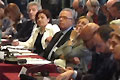
Lors d’un débat sur les opportunités et défis politiques actuels dans la région méditerranéenne, organisé à Rome aujourd’hui, les participants ont souligné la nécessité d’un processus politique conduit par les libyens. Ils ont également attiré l’attention sur le risque d’un effondrement économique imminent en Libye, indépendamment de toute évolution politique.
La Sous-Commision des relations extérieures et la Sous-Commission sur le Proche-Orient et le monde arabe, ont tenu aujourd’hui à Rome une réunion jointe en coopération avec le programme joint UE-Conseil de l’Europe « Vers une gouvernance démocratique renforcée dans le Sud de la Méditerranée » (Programme Sud II), et le Parlement italien", sur les Opportunités et défis politiques actuels dans la région méditerranéenne.
Cette réunion a permis de faire le point sur les développements et les tendances politiques dans la région, quatre ans après le “printemps arabe”, en se penchant en particulier sur les difficultés de consolidation de la démocratie, les questions de sécurité liées à l’émergence de l’entité terroriste connue sous le nom d’“Etat islamique”, et les façons d’aborder le désastre humanitaire resultant de l’augmentation sans précédent du flux migratoire irrégulier.
Pietro Grasso, Président du Sénat italien, Benedetto Della Vedova, Sous-Secrétaire d’Etat aux Affaires étrangères de l’Italie, l’Ambassadeur Luca Giansanti, Directeur général des affaires politiques et de la sécurité, ainsi que des orateurs invités, dont Hala Mustafa, analyste politique égyptienne, et Abdul Rahman Al Ageli, co-fondateur du Forum libyen de la jeunesse, étaient parmi ceux qui se sont exprimés devant les parlementaires.
Les participants ont souligné que les pays du Sud de la Méditerranée et du Proche-Orient ont besoin, de toute urgence, d’institutions stables et de sociétés basées sur des valeurs démocratiques et laïques. Les idées, y compris les idées extrémistes, ne doivent pas être combattues par les armes. Gabriela Battaini-Dragoni, Secrétaire générale adjointe du Conseil de l’Europe, et Gianni Buquicchio, Président de la Commission de Venise, ont fourni des détails sur ce que le Conseil de l’Europe a déjà fait, et sur ce que l’organisation pourrait faire de plus pour contribuer à réaliser ces objectifs.
Lors de la réunion, la situation actuelle en Libye a fait l’objet d’une attention particulière. Les orateurs, sans remettre en cause l’importance des efforts de médiation internationale, ont souligné la nécessité d’un processus politique conduit par les libyens. Ils ont également attiré l’attention sur le risque d’un effondrement économique imminent en Libye, indépendamment de toute évolution politique.
Les orateurs ont également appelé à une politique européenne plus concertée et responsable afin de gérer la catastrophe migratoire en Méditerranée. Aucun pays n’est capable d’y faire face seul, et il est nécessaire d’y apporter urgemment une réponse plus solidaire et résolue, y compris en passant par une éventuelle révision du Règlement Dublin qui, en l’état actuel, ne garantit plus une protection équitable, efficiente et efficace des demandeurs d’asile.