PACE systematically observes elections in any country which is subject to the Assembly’s monitoring procedure or post-monitoring dialogue, or which has applied for membership.
It also observes in any country whose parliament holds partner for democracy or special guest status with the Assembly or has requested either of these.
The Bureau of the Assembly may also decide to observe parliamentary or presidential elections and referendums in other states.
PACE Election Observation Missions (EOMs) are usually divided into two parts: a “pre-electoral” mission and a main mission at the time of the election itself.
During a pre-electoral mission, a smaller delegation usually meets representatives of the national authorities of the country concerned, officials from the various bodies involved in organising the elections, leaders of the main political parties or groups contesting the elections, representatives of the diplomatic community as well as journalists and NGOs.
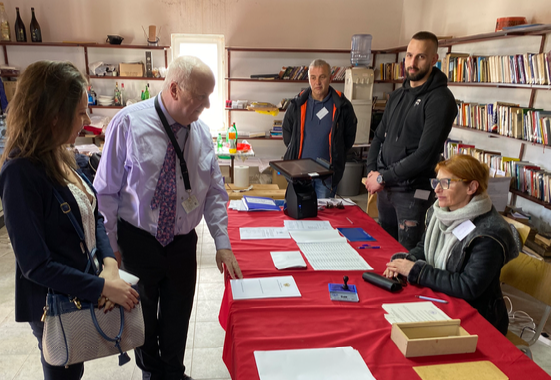
Then, during the main mission, PACE’s full-fledged delegation splits into teams of two who are deployed throughout the country and who observe the voting process on Election Day. These teams observe the voting and counting process on election day and share their observations with the head of the ad hoc delegation.
The delegation co-operates with partner organisations such as the OSCE/ODIHR, the OSCE Parliamentary Assembly, the European Parliament and the NATO Parliamentary Assembly, with whom it jointly draws conclusions and holds a press conference, usually on the day after election day.
The observation missions for parliamentary and presidential elections decided upon by the Assembly Bureau are organised by the Elections Division, in cooperation with its international partners (ODIHR, PA-OSCE, EP, etc.).
In 2025, the Assembly observed
* Any reference to Kosovo, whether to the territory, institutions or population, must be understood in full compliance with United Nations Security Council Resolution 1244 and without prejudice to the status of Kosovo.
In 2024, 64 PACE members from 28 member states took part in one or more of the 10 pre-election and election observation missions (EOMs) in four member states:
All reports are available here.
Any member of the Assembly may observe elections if appointed by his/her political group and if certain conditions are fulfilled, in line with the Guidelines for the Observation of Elections by the Parliamentary Assembly revised in June 2025 :
“In making appointments to an ad hoc committee for election observation, political groups must exercise due diligence, ensuring appropriate, impartial and skilled members for such missions. In particular, political groups must respect:
The election observation missions carried out by PACE help to ensure that the universal values upheld by the Council of Europe are more widely known, understood, accepted and shared, and in this way increase the number of European states committed to democracy, the rule of law and human rights.
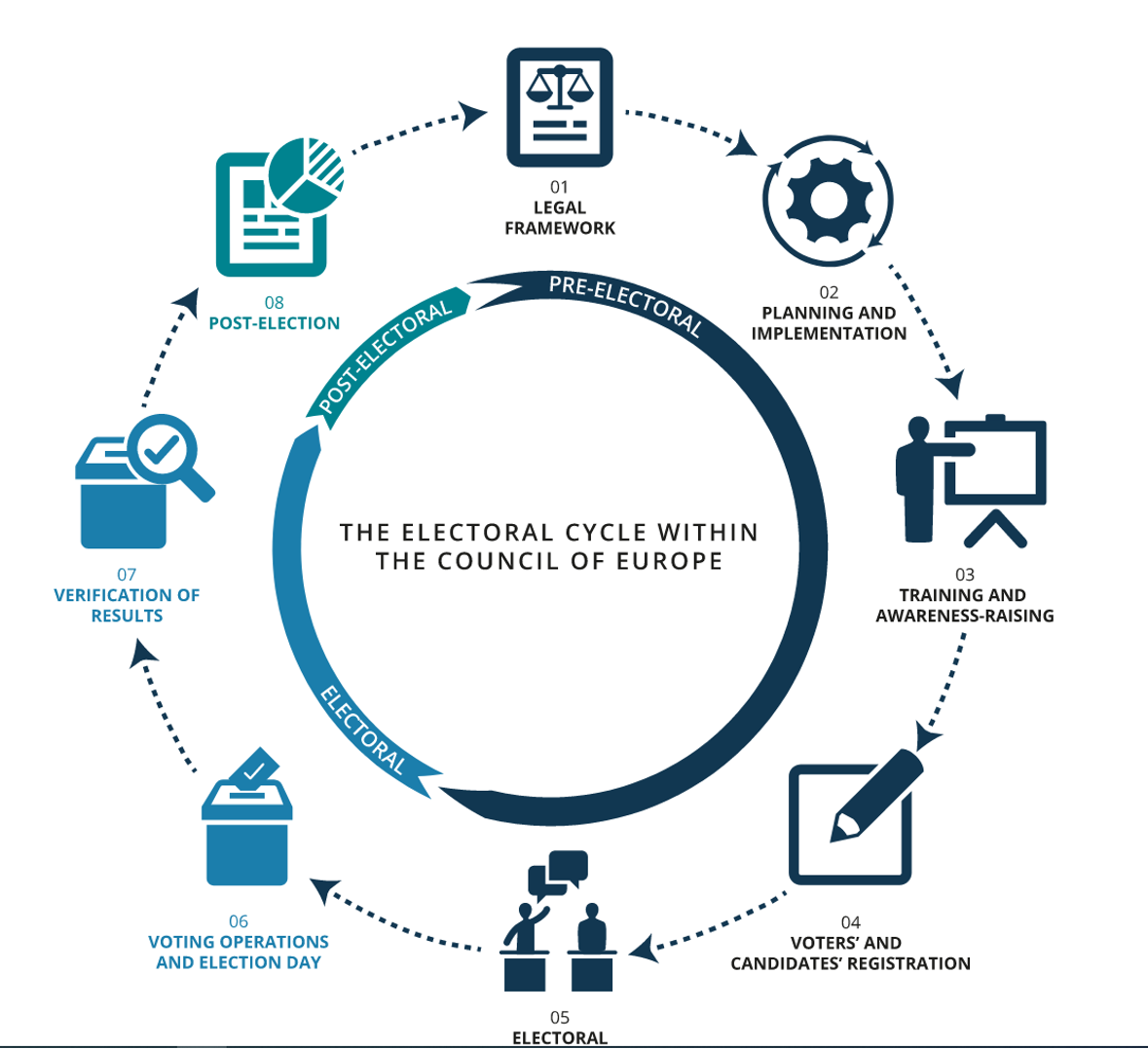
The conclusions and recommendations issued by the PACE delegations of election observers contribute to develop PACE activities in the field of elections, feed the Council of Europe Electoral Cycle and contribute to design Council of Europe policies and action plans in the field of elections.