jeudi 3 octobre 2019 après-midi
2019 - Quatrième partie de session Imprimer la séanceVidéo(s) de la séance 1 / 1

Suisse, SOC, Présidente de l'Assemblée
15:30:21
My dear colleagues,
The meeting is open.
Proposed changes in the composition of the committees were published in document "Committee 201907", Addendum 4.
Are there any objections to these changes? This is not the case. They are therefore adopted.
The next item is our current affairs debate entitled "violation of democratic rights and repression of peaceful demonstrations in the Russian Federation in the context of the elections to the Moscow City Council".
The speaking time of each speaker is set at three minutes, with the exception of the first speaker, designated by the Bureau, who has 10 minutes.
The Bureau has appointed Mr POLIAČIK, to whom I give the floor.
Honourable Mrs. President of the Parliamentary Assembly, dear colleagues and guests,
The reason we are having this debate today is not a double standard, as some of the speakers after me might want to claim. Actually, it is the opposite. When it comes to democracy, rule of law, and when it comes to Human Rights, there is only one standard.
This standard is set by the European Convention on Human Rights, the cornerstone of everything we do or should do in this great institution. And by hundreds of conventions and declarations stacked around this cornerstone, creating a legal environment, in which dignity, freedom and space for pursue of happiness is granted for every single human being.
In June this year, I had the privilege to represent ALDE, my political family, in the discussion concerning voting rights for the Russian delegation. Some of you might remember, I said that the Russian Federation is not coming back with finished homework in their pockets. That the assignment, formulated by this very Assembly in at least seven resolutions, in the last five years, has remained mostly untouched by the Russian authorities.
Today, most of that remains a reality, although some important steps, like the exchange of prisoners between Russia and Ukraine, have been taken and need to be recognised. I do welcome the fact that Mr. Oleg Sentsov is walking through the halls of this building, free. At the same time, we need to think of all the other political prisoners that are still in jail, waiting for their release.
The Russian Federation has failed to fulfil the obligations that came from resolutions 1990 from 2014, 2035 from 2015, resolution 2063 from 2015, and so on.
On top of that, new, very disturbing facts emerged in connection with the local elections in Moscow and Saint Petersburg.
When we listened to some of the Russian representatives in June, they claimed that the Russian Federation is ready to protect democracy, rule of law and Human Rights on its soil. Yet, the example of local elections shows the exact opposite.
Many opposition candidates were stripped of their rights to participate in fair and democratic elections. The Moscow election commissions officially refused to register several democratic candidates for elections to the Moscow City Duma, among them llya Yashin, Lyubov Sobol, Dmitry and Gennady Gudkov, Yulia Galyamina, Konstantin Yankauskas, Alexander Solovyov or Ivan Zhdanov.
The procedure to verify the signatures of candidates lacked transparency and, according to many observers, was full of mistakes.
The election commissions considered many Moscow citizens, who signed up for the nomination of opposition candidates, to be "dead souls" or non-existent people at all. Among them, for example, Professor Elena Lukyanova and sociologist, Professor Shaninki Grigory Yudin, who do exist, and have proven to exist by signing the petitions, but were still not recognised as having done so.
Dmitry Gudkov, who by the level of inconsistencies in the signatures, was not allowed to run in the election, posted a photo evidence that that election commissions made several mistakes in entering signatures into the public checking system. Skipping letters or changing male middle names for female names.
The right to participate in fair and democratic elections is a fundamental right, that assures that all the power in hands of elected representatives, truly comes from the hands of citizens. Blocking candidates, creates a situation in which citizen's right to choose their best representatives is violated.
State organs should not be misused for the creation of absurd and illegitimate obstacles in a free and democratic voting process.
It is only understandable that citizens of Moscow saw this as a threat to democracy, and went out to protest in great numbers. More than 20 thousand protesters gathered and demanded the participation of opposition candidates in the Moscow Duma elections.
According to various sources, like the Wall Street Journal, more than 2 thousand people were detained in the protests in Moscow. Many were taken to other districts, to make it harder for their families to pick them up. People were not allowed to have food or water for several hours. According to Human Rights activists, more than 50 of the detained persons were minors.
The Council of Europe has the full right to monitor election preparations, registration of individual candidates and all the processes connected to elections. In a country, known for several violations of the Council of Europe's rules and recommendations, it should be vital to actively seek for third parties, like independent observers, to watch and prove that elections were fair and democratic.
That is why we, at ALDE, feel it is necessary to point at these situations, in which the standards of this organisation are not met.
The reason why we're holding this debate today, is that there were two times of the Russian delegation in this hemicycle. One time was until June, when they said "we are not allowed to be here", and "you are not talking to us". "That is why we don't feel the need to speak to you, because first, you ought to let us in". We all remember that the process in June was very complicated. I didn't agree with the fact that the voting rights were totally restored to the Russian delegation. I think they should have been limited. That's why I ended up voting against. But I do respect the fact that the Russian delegation is back in the hemicycle.
Since then, we've had local elections in Moscow. We've had local elections in Saint Petersburg. But we do not see good will on behalf of the Russian authorities. We do not see that, the Russian Federation, is there to fulfil the obligations that are put on it by institutions like the Council of Europe.
If many people said in June that they are willing and ready to fulfil the obligations of this organisation, to be part of the family of the democratic countries that are willing to pursue the values of democracy, rule of law and Human Rights, we should be seeing active participation of the third sector in the elections and observation of elections. We should not see things like what has happened to Ivan Podkopayev, 25 years old and sentenced to 3 years for participating in the Moscow protests. Danila Begletz, 27, sentenced to two years for participating in protests. Kirill Zhukov, 28 years, sentenced to 3 years for participating in protests.
This is not a way for a democratic country to behave. This is not fulfilling the values of Human Rights, democracy and the rule of law.
So, two things. First, every Member country of the Council of Europe, should be able to allow all people that want to run in elections to do so, without technical and obscure tools, to show that they are not welcome in the elections. Secondly, if people are protesting, they should be treated with dignity and as human beings, as people who want to protect democracy in their country. That's why we think this debate is urgent, and it should take place in the hemicycle of the Council of Europe.
Thank you very much.
Suisse, SOC, Présidente de l'Assemblée
15:41:21
The next speaker is Mr EVANS, on behalf of the European Conservatives Group .

Royaume-Uni, CE, Porte-parole du groupe
15:41:27
Thank you very much, Madame President.
Can I just start today, though, by saying, on behalf of the British delegation, how deeply saddened we are by the news coming out of Paris today, with the murder of four police officers. I know that every parliamentarian here at the Council of Europe will stand shoulder to shoulder with the police force of France, the people of Paris, and the people of France, today, as they grieve their loss.
Can I say that I support the vast majority of what Mr POLIAČIK has had to say today. We know the backdrop of this. With the presidential elections, the main opponent to President PUTIN being denied the ability to stand, and then, well, over a thousand people being detained by the police and the brutality that is shown to any peaceful demonstrators. It, clearly, has no part in any democratic processes that should take place.
We are all Members of Parliament in one way, shape, form or another. We've all had to stand in elections, and I have lots of people standing against me —no doubt, in the impending elections in the United Kingdom we will see that, yet again. A plurality of candidates will be standing, and that's important, and indeed, the European Court of Human Rights has said, how bad it is, that the lack of pluralism that exists within Russia today.
And we've seen further evidence of the detainment of peaceful protesters in Russia with, there again, well over a thousand people —including children— being detained by the police. Well, that cannot be right, and I think the important thing, if you're looking for a silver lining about the Russians being back on the Council of Europe, is that they're here to listen to what we have to say, to engage in the debate which is important to us. There are six of them that are going to be speaking today, so it will be important for them to respond to some of the points we are putting out there.
We have demonstrations in London all the time. Particularly, over the last three years, since Brexit, people are able to have their say, and I think that is important. But in the Monitoring Committee earlier this week, we heard one of the Russians say that they believe that some of these people were enemies of the state. Well, no! Those who are opposed to a government are not automatically enemies of the state, they just happen to oppose the government, and the flourishing of a democracy in any country must be that there have to be different opinions heard. Just because people have a different opinion, whether it's online, on the Internet, whether it's in the streets, or whether it's at election time, does not mean that they are an enemy of the state. It means that they just happen to have a different opinion.
And in the 70th anniversary of the Council of Europe, it is important that we stand for the democratic rights of people throughout all of our countries —throughout the whole of the world quite frankly. But the ability to have candidates, who have differing opinions to that of governing candidates, should be able to stand and be able to have freedom of speech.
Suisse, SOC, Présidente de l'Assemblée
15:44:35
Mr. BOUYX, on behalf of the Liberal Alliance, has the floor.
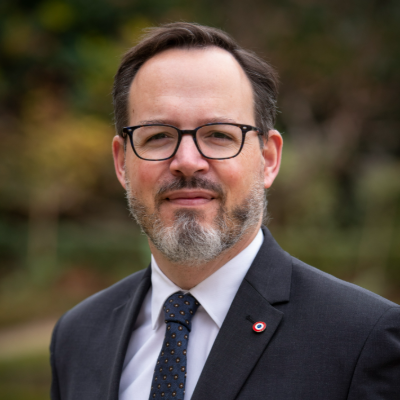
France, ADLE, Porte-parole du groupe
15:44:44
Thank you, Madame President.
On behalf of the French delegation, I wish to express my deepest condolences for the four policemen killed in Paris. It was a cowardly assassination that occurred a few moments ago.
Ladies and gentlemen,
The capital of Russia has experienced in recent months a level of extreme tension around the municipal elections held on 8 September. Candidates were prevented from running, opposition leaders were imprisoned repeatedly for their calls to protest, nearly 2 700 demonstrators were arrested and sentences of up to five years imprisonment were handed down.
We strongly condemn the particularly violent repression that occurred on the streets of Moscow this summer, especially since these actions were committed after the reinstatement of the Russian Federation into our Assembly.
We reaffirm our commitment to freedom of expression, freedom of demonstration, freedom of opinion, freedom to stand for election. These values are those that bring us together here in the Council of Europe and that we all defend.
And it is precisely to allow these values to come fully to the floor that it seemed necessary to reintegrate Russia into this Council. In the words of President Emmanuel MACRON, we believe in this European Russia, we believe in "European sovereignty", that is to say, to a stronger Europe, a Europe that has the right to reinvent itself in this dialogue.
The renewal of this dialogue, within the Council, cannot be done without precise monitoring of the commitments and obligations of the Russian Federation.
The latest report by the Committee on the Honoring of Obligations and Commitments by Member States of the Council of Europe on this subject dates back to 2012. It already pointed out the shortcomings and the restrictive implementation of laws essential for the functioning of democratic and regional institutions for the political environment, which has led to a deterioration of conditions necessary for genuine political pluralism. It seems important now to continue this type of evaluation in our Assembly.
It is a question here of gradually working to reduce the mistrust between Russia and Europe, to pose ourselves as partners and to set up a common agenda in particular as regards security at the international level.
Thank you.
Suisse, SOC, Présidente de l'Assemblée
15:47:19
I call Mr Özsoy, on behalf of the European United Left.
Thank you, Madam Chair.
This summer we have seen protests in Russia against the government's crackdown on the opposition, in the run-up to the Moscow city council elections. Detentions, police violence, disqualification or arrest of opposition candidates have greatly undermined the legitimacy of these elections. Russian authorities have violated the freedom of speech, the right to assembly and peaceful protest, and the right to have a fair and free election: the fundamentals of any democratic system. This is simply unacceptable.
What is happening in Russia, however, is neither new nor unique. Let me give you a couple of even worse examples from Turkey. Between 2016 and 2018, under emergency rule, and without any court decision, 94 elected Kurdish mayors were removed from office and replaced with appointed Turkish Governors. Ninety-three mayors were arrested before the March elections this year. Fifty Kurdish mayors were still in prison.
The removal of Kurdish mayors was done under the anti-terror law, which with its excessively broad and vague definition of terrorism, makes it impossible to determine the precise nature of alleged offences, and acts as an instrument to repress political rivals. As we have discussed in this very room several times before, anybody who dares to criticise the government in Turkey is easily criminalised as a terrorist or supporter of terrorism. So, please disregard terrorism-related charges against politicians.
Although protests against the removal of our mayors were banned, still many people protested on the streets, hundreds were detained, dozens injured and badly hospitalised due to police brutality, including one member of this Parliamentary Assembly, Ms Feleknas Uca, who is sitting right there. What else?
Last spring we also saw the unlawful cancellation of Istanbul elections. Ms Canan Kaftancioglu, the head of Turkey's main opposition CHP in Istanbul, and the architect of her party's electoral victory, was sentenced to nearly 10 years, with again the cliche charge of terrorist propaganda and insulting the president. No doubt this sentence was the ruling party's retaliation for its devastating defeat in Istanbul elections.
Another example: despite the ruling of the European Court of Human Rights to release HDP's former co-chair, Mr Selahattin Demirtaş, President Erdogan put it bluntly "we cannot release him". Revealing, in his own words, that there is no independent judiciary in the country. Indeed, European Court of Human Rights had previously emphasised that the primary aim of Mr Demirtaş's detention was to stifle pluralism and to limit the freedom of political debate.
I can multiply examples, but I have no time. What we see in Russia or Turkey is neither new nor unique. Governing parties in authoritarian systems across the globe are increasingly using the means of repression at their disposal, the police, the courts, and prisons in particular, to deal with their political rivals and maintain the rule. So the Council of Europe and its Parliamentary Assembly should take concrete action against such practices in member states, in order to protect both its institutional dignity and integrity, and the very principles on which it was established.
Thank you.
Suisse, SOC, Présidente de l'Assemblée
15:50:54
Ms ÅBERG has the floor, on behalf of the Group of the European People's Party.

Suède, PPE/DC, Porte-parole du groupe
15:50:58
Madame President, dear colleagues.
This debate is about Russia. What is the first word that comes to mind when Russia is mentioned? Is it harmony, contentment, unity? No, the word is fear. The Soviet empire was built on fear. Maintaining constant fear in the population was the Communist dictatorship strategy for staying in power.
Therefore, it is profoundly miserable that the current regime is so reminiscent of the Soviet's darkest days. The Kremlin wants people to feel fear. People in Ukraine, in Georgia, in other neighbouring countries, but most of all people in Russia. We who have suffered under the horrors of communism, remember how severely, really, those who dare to oppose the regime were punished: through internment labour camps, long prison sentences.
People were also killed when the regime found them displeasing. It still happens today: Sentsov, Skripal. The elections to the Moscow City Duma, and the summer of protests that preceded them, have attracted unusual International attention. Russians vote nationwide, even in occupied Crimea, against the international law. But the Moscow elections grab global headlines.
There are several reasons: the dubious decision of Russian authorities to ban independent candidates from running for the Moscow City Duma, the mass demonstrations, and the authorities' willingness to resort to brute force against ordinary citizens. Is it acceptable for a country, a member of Council of Europe, posing as a democracy, to employ such appalling violence against peaceful demonstrators, many of them women and youngsters?
To send siloviki to beat up unarmed protesters, arrest students and threaten to take away children from their protesting parents, is blatantly a violation of human rights. Russian people deserve to live free from fear in a normal country. We want the Russian people to benefit from the same extent of freedom as we do: to demonstrate without being beaten up, and to choose their representatives in free and fair elections.
Suisse, SOC, Présidente de l'Assemblée
15:54:03
I give the floor to Ms OHLSSON, on behalf of the Socialist, Democratic and Green Group.
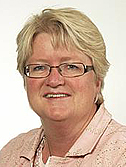
Suède, SOC, Porte-parole du groupe
15:54:08
Thank you, Madame President.
Colleagues,
The Council of Europe was established 70 years ago to rebuild trust and co-operation between peoples, to protect and promote the fundamental rights of everyone living in our continent, without discrimination, and we have this week celebrated the anniversary.
Nevertheless, we have a long way to go to reach fundamental rights for all. In Sweden, we celebrate now a hundred years of democracy. The decision when all men and women get the right to vote.
Democracy, human rights and the rule of law, we must defend every day, wherever we are. That is what this current affairs debate is about: democratic rights, violations and suppression of peaceful protests in the Russian Federation, against the background of the elections to the Moscow City Council. As parliamentarians, here in the Council of Europe, we have a responsibility to defend these fundamental rights. Not to defend and excuse our own governments when they do not follow these rights.
It is primarily the responsibility of any member state, having violated statutory obligations, to take steps towards solving the situation. Together, as parliamentarians, we must stand up for fundamental rights and our values. The right to vote, and the possibility for all candidates to represent different parties in the election, both promise and deliver. I hope that, after this debate, we can conclude and say that we have an agreement. That we have a role to play in reminding governments of their commitment to common European values of democracy, human rights and the rule of law, which the Council of Europe protects and promotes. It can send a strong message to Russia and other states who do not follow our common values.
We, as parliamentarians, have a special responsibility to bring home European human rights standards. We have the responsibility, and must guarantee that. It's about fundamental freedom, so let's do that together.
Suisse, SOC, Présidente de l'Assemblée
15:56:38
The next speaker is Ms ENGBLOM.
Madame Chair, dear colleagues,
In July of this year, more than 50 000 protesters turned out on the streets of Moscow in objection to authorities refusal to allow several prominent candidates of the opposition to be placed on the 8 September Moscow City Council ballot. Swarms of police in riot gear broke up the demonstrations and more than 2 400 people were detained amid complaints of police brutality. And we have all seen and read the reports, seen the films and footage from TV stations, both domestic and international. The appalling arrests of students, innocent passers-by, mothers and even children being torn from their parents. The Russian opposition is now focused on a new task: freeing those caught up in the Kremlin's crackdown, and the demonstration continues.
With 14 people facing up to eight years behind bars for the rows in the demonstrations for fair elections, Russians from all spectra of Russian society have demanded their release. It must be said that prosecutors since then have dropped criminal charges against six of the defendants, but one of those still remaining in jail is a 20-year-old young man called, Kirill Zhukov, who shall spend three years behind bars for lifting a policeman's visor.
And who stands out this time is the Russian civil society has awakened in response. In recent weeks, groups of professionals ranging from teachers to doctors to Orthodox priests, have signed open letters demanding the release of those left sentenced. And we, as delegates of the Council of Europe, must support it, in any way possible. That is why this debate is so important.
Madame Chair, I see a number of delegates from the Russian Federation on the speakers' list after me, that's good. I was one of those who voted against the re-entrance of the Russian Federation on the Council of Europe, but now that you're here, you have much to answer for, because what I'm not interested in hearing are evasive explanations or dashing out with arms declining total innocence or false accusation.
But what I am interested in to hear is what measures and initiatives the delegates of the Russian delegation will take to prevent this from happening again, to allow their citizens to express their freedom of speech and human rights. The very fundament, or cornerstone if you like, of the Council of Europe. So I'm very interested in response of Russian delegations because we want real measures taken to allow freedom of opinion, real legislative changes.Thank you.
Suisse, SOC, Présidente de l'Assemblée
15:59:53
The next speaker is Ms CHRISTENSEN.
Thank you very much, Madam President.
It has been said during the debate that this debate is about Russia. Is it? I thought this debate was about freedom of speech and free elections. God knows there are other countries that also have situations to answer for in this regard.
We are here to protect the inhabitants of the countries. That is the reason we are here. We are here to protect Human Rights and freedom of speech. Those are values that are threatened in many of our member countries. So it's not about being pro or con Russia as a concept. It's about being for Human Rights and for freedom of speech and for local elections.
In Norway, we just had a local election. There the problem was that almost 60% of people didn't use their right to vote. So, witnessing our neighbour country trying to have people not to vote, is kind of weird.
I am very happy that we're having this debate, because this might give us a chance to raise this question: how to secure free elections in every member state. Because every member state doesn't have free elections, every member state doesn't have freedom of speech, and every member state doesn't have the ability to organise freely. As we all know, civil society space is shrinking. This is a very important debate, but please colleagues, don't link it to one single country.
The reason why we are here is that we are supporting these rights together. We know that human rights violations are happening in every country, also Norway, also the country of the colleague that raised this debate.
So, I am so happy that we are having this debate, but I would love to hear initiatives on how to make every election free, how to make freedom of speech count in every member state, and how to open the shrinking space of civil society in Europe because we really need it.
Thank you very much for raising this debate. I hope it's not going to be a debate on whether Russia should be in this Assembly or not, because that decision has been made. I would like to welcome Russia here. I've been happy to work with Russian colleagues in the Committee. That question is closed. Let's look forward and let's talk about freedom of speech and free elections.
Thank you.
Suisse, SOC, Présidente de l'Assemblée
16:02:40
The next speaker is Mr TOLSTOY.
Madame President.
Dear colleagues,
I am pleased that today there is a chance in this Assembly for Russia to respond against the accusations levelled against us.
Now you can see what happens in the cradle of democracy.
Suisse, SOC, Présidente de l'Assemblée
16:03:13
Wait, Mr. TOLSTOY,
You must respect the rules of this House. Mr. TOLSTOY is a member.
I ask you to leave the gallery.
I ask you to leave the gallery.
You have to go out. You have to go out.
He who calls for the respect of the rules, begins by respecting them himself.
We resume our work and I give the floor to Mr. TOLSTOY.
Thank you Madame President.
It seems to me that that is a fairly graphic illustration of how in recent years there has been a dissemination of clichés about our country, and how alarming this situation is.
We're not here to be given homework. We're here to tell you about the facts that you are not acknowledging.
When the Moscow authorities are accused of using force on demonstrators, you seem to be closing your eyes to other cases in other countries. But since we're talking about Russia today, I'll dwell on some facts. Rejection of registration. There were some 400 candidates which had not complied with the legislation. 39 gave false signatures of dead people, and that was established by the electoral commission.
As regards unauthorised protests, and you know we allow any protest, but you have to respect public order. That is the case in every country including France, Germany or Italy you have the same legislation as in Russia. Unauthorised protests which were indeed instigated by foreign forces... 2700 where arrested, and 2085 of them were released, after just three hours, by the police.
So what sort of repression are you talking about colleagues? Russia is not using special means against the demonstrators as is the case in other countries. We are not using rubber bullets. We certainly don't have people wounded, let alone killed as a result of clashes with the police.
The names that have been mentioned... The people who have been convicted and imprisoned attacked policemen.
Ladies and gentlemen, I would like to remind you that in Italy the law provides for five years imprisonment. In France it's three years, and five years in Germany for attacking police. In Russia we also have a law that protects the police against such attacks. There should be no double standards.
Colleagues, let us proceed from a common understanding on Human Rights, of the right for everyone to a free opinion. Let's put an end to the clichés of the Cold War. We are constantly being reminded of the Soviet Union. There is no more Soviet Union dear friends. If you didn't know, I am quick to tell you that that is the case. Unlike many countries, Russia abides by the law. As Mr. Macron said from this podium, we are still working and we will continue to work with you on a safety and security doctrine and the upholding of public order in our country.
Thank you for cooperating.
Suisse, SOC, Présidente de l'Assemblée
16:07:49
Mr BALFE, you have the floor.
Thank you, Madame President.
Can I associate myself also with the condolences to the French government on the dreadful attack today.
I voted for Russia to return to this Assembly. I welcome them back, but most of all, I welcome the fact that they wish to join us. They know what this Assembly stands for and the very thoughtful speech by Madame CHRISTENSEN, I thought came very close to where we should be. We need to look carefully at each other but not in a condemnatory way, but in a helpful way because we must like to think, at least, we all share the same values and we must have dialogue in order to make them a reality.
The first lesson of any democracy is the acid test of a democracy, is when you can lose an election, not when you can win one. That's why I greatly welcomed the result in Istanbul because I was beginning rather to despair of some aspects of Turkey, but the fact that the mere reality of Istanbul changed gave me a little more faith that maybe all is not lost in that country either. Because the peaceful transfer of power is the fundamental value, to my mind, of the Council of Europe and what it stands for. It stands for dialogue, sharing, and that is one of the reasons why our member states are obliged to put forward delegations representing the whole of their parliament — not just the governing party, but the whole of the parliament.
And, as Madame CHRISTENSEN said, Russia is not the only place with defective elections. This year is only the 90th anniversary of universal suffrage in the United Kingdom. Until 1929, everybody didn't have the vote on the same basis. So looking at the particular subject under debate, I would certainly invite the Russian delegates to look into and maybe ponder on the need for change; ponder on the fact that whatever the intentions may be, the reality has come over as being a rather heavy-handed approach.
But, as my colleague Nigel EVANS said, these people not the enemies of the state because they oppose. And we shouldn't look at people who want to stand in elections as enemies of the state, but we should remember that we are in an age of increasing authoritarianism, that Mr Putin is not a communist and Russia is trying with democracy. Our job is to guide, to help, to advise, to criticise, but at the end of the day we are all in the democratic cauldron together and we must somehow make it work.
Suisse, SOC, Présidente de l'Assemblée
16:11:05
The next speaker is Mr BEN CHIKHA.
Madam Chair, dear colleagues.
I would like to state that, what should have been a democratic high day in Russia, became a breach of trust in our democracy. Approximately 5,000 elections on the local and regional level were held in Russia in September, and, as well, we all know that the local election of Moscow was one that was closely monitored. I say this because elections have been in breach of trust and democracy, because around 2,500 people were arrested while protesting against the current government.
A government that blocked any opposition during the Moscow election campaign. Several of those protesters are now facing prison sentences. A government shows weakness when it cannot guarantee citizen's right to political participation.
Political participation should, at the least, include procedural and competitive participation. This is the right to free and honest elections, and the right for citizens to form an opposition that can engage in elections. The violent reaction of the Russian police in the past and during these protests, are a direct violation to the procedural and competitive rights of citizens.
A democracy can only grow stronger when a state allows its citizens to express themselves. It’s for that reason that we, the Assembly, should not turn a blind eye and neglect of this basic concept of democracy in Russia. If we cannot allow free elections, we should not call ourselves a democratic society. Every member state that doesn’t speak out to this is part of the problem.
Yet, today, we’re presented with the opportunity to be a part of the solution. I suggest we act upon this.
Thank you.
Suisse, SOC, Présidente de l'Assemblée
16:13:13
Thank you.
The next speaker is Mr KISLYAK.
Thank you very much, Madame President.
As you know, I am listening to this particular discussion, and I am quite surprised because here we are in the house of democracy, but democracy requires the rule of law, friends. And I feel that there are very few here... no democracy can function without the rule of law. You have to respect the law and you, of course, have to meet the obligations of the law.
First of all, respect for elections is absolutely necessary. And over these couple of days, there were elections not only in Moscow but throughout the Moscow Federation. It is a piece of legislation that is applicable throughout the country. Now, the particularities of the Moscow election, there were elections in Moscow that took place in 2015 and they have always taken place peacefully.
The percent of registrations in Moscow was the very very lowest in the country, but the country, of course, is the same throughout the country as far as allowing all candidates, be they from the opposition, the ruling party or simple quotidian people — the man on the street. Anyway, the law is applicable to everybody. And if you want to change the law you have to do this through a legal procedure. Once again, a legal procedure has to be implemented.
You have presented a group of individuals as heroes here. Now, what was going on with these lists of candidates that went with hundreds and with the signatures of people who simply don’t exist — they had no passport or they had some sort of dubious passport as well. Half of those people that were signed on those registration lists, they didn’t present any sort of document — they had nothing. And it is required by legislation that some sort of clear document be there as far as signatories to this particular list. This is applicable for all parties. So one odd one has some sort of liberties, and others do not have any particular liberty as far as this issue. No, it is clear that all have to follow the particular laws as far as the lists and the signatures.
Now, what I want to say is that the particular protest followed a course that was illegal in nature. It was quite clear that there were certain signatures that were not valid. And of course, if there is any sort of protest with regard to that, that protest has to take place in a peaceful fashion. But these particular protests that involved blocking major thoroughfares of the street, blocking certain administrative buildings, blocking the office of the mayor and so on and so forth, you can imagine. And I know what would happen in the countries you are all from as well.
So, I think it is quite clear that there has to be law, that law has to be respected and that is the essence of the rule of law.
Suisse, SOC, Présidente de l'Assemblée
16:16:52
Please respect the speaking time.
If you do not, we will not be able to allow all the speakers to take the floor.
Mr SAAR, you have the floor.
Madam President,
Dear colleagues,
Throughout this Assembly, in many ceremonial statements, we loudly heard vowing to the fundamental principles of this organisation. That is to democracy, rule of law, human rights and fundamental freedoms, peaceful international cooperation and shared responsibilities for our common European home and its future. We also restored our faith that this organisation is not only about geographical Europe, but it is also about the centuries-old European ideas. Against this background, I must state, that today we cannot celebrate the 70 years of peace in Europe, nor the adherence to the aforementioned principles. In this regard the current affairs debate is very timely.
Throughout the summer, we have witnessed that the Russian authorities have maximised their efforts to suppress the democratic processes in their own country. After the opposition candidates were hindered to participate in the local elections, people came to the streets in Moscow, as well as in many other cities, to peacefully protest against such undemocratic action. Massive and deliberate arrests took place, to preclude and frighten people to stand for the rights. On many occasions, we have witnessed that also persons not participating in these events were arrested and sentenced. Whereas the rights to present adequate proof to the court were denied.
I especially would like to mention the 23 year old actor Pavel Ustinov, who was sentenced for three and a half years imprisonment with a faulty accusation. He was successful in standing for his rights only because his friends and fellow actors publicly protested against this severe judicial misconduct. But there are many more cases like this which still need to be made just.
Before these very recent developments in Russia, on June 25, the Assembly of the Council of Europe voted to reinstate Russia as a full voting member within the Assembly. To remind you, the Russian Federation was stripped of its voting power in 2014 after the illegal annexation of Crimea, and for supporting the separatist movement in eastern Ukraine. This has not ended yet.
Also, in Georgia, we witnessed the tensions orchestrated by Russia. We of course strongly condemn the recent illegal elections held in Abkhazia, the borderisation in Tskhinvali region, as well as ethnic discrimination of Georgians in both regions. I reaffirm the full Estonian support for the sovereignty and territorial Integrity of both the Ukraine and Georgia. We do not recognise the elections held in these illegally annexed regions. To summarise, this Assembly shall strongly condemn this disregard by the Russian authorities to the principles of the Council of Europe.
I call on the Russian authorities to fully follow our European values, and I call on our Russian colleagues, here today, to make the strongest and first efforts to convey this message to their leaders, fellow politicians and state officials. I hope that we stand together for a democratic Russia and its democratic future, based on our true European values.
Thank you
Suisse, SOC, Présidente de l'Assemblée
16:20:23
I call Mr SLUTSKIY.
Thank you very much, Madam President.
I would first like to address my colleagues from the French delegation, to express my deepest condolences on the tragic situation that took place in Paris today.
My most heartfelt condolences with respect to the tragic events in Paris.
Dear colleagues,
With respect to the issue of today's debate. First of all, I would like to say to Mr Martin POLIAČIK, my Slovak colleague, that he has given a very politicised and partial picture. Russia has fulfilled all the obligations that it undertook when it joined this organisation as regards the elections of the Moscow city council. Of course, the whipping up of passions around that election was completely artificial.
On 3 August, on the website of the US State Department, there was a map posted of problematic places appealing to people to riot, with the map of Russia depicted. On 27 July, there was a similar appeal from Deutsche Welle, which is a state holding of Germany. All of this is not very pretty, and it is being used to exploit the elections to the Moscow City Council and whip up negative passions against my country in Europe.
Today, unfortunately, we're seeing very few colleagues in the room. I can understand that because we well understand that this issue is an artificial one. In many countries of the Council of Europe, legislation on mass demonstrations is far more stringent than Russia's. On Monday, the bureau of our Assembly rejected a proposal to have an urgent debate, so we are here taking part in a current affairs debate.
Dear colleagues, it's time we stop the practice of artificial persecution of countries in the Council of Europe on trumped-up grounds.
The Moscow City Council had completely democratic and free elections and no Russian opposition can deny that. Moscow has always been a democratic city. As regards the police legislation in the United States in such situations, the policeman is allowed to shoot. That is an observer state in the Council of Europe. We need to be objective. We should think about such artificial debates taking place in this Assembly, hopefully for the last time.
Thank you.
Suisse, SOC, Présidente de l'Assemblée
16:23:40
The next speaker is Mr ÇEVİKÖZ.
President,
The debate we are having today is not only about a specific country or a specific event. The debate we are having today is taking place at a time when we are celebrating the 70th anniversary of this organisation. It is therefore also about the common values that we all share in this common house of ours that we call Europe.
It is about democracy, it is about freedom of speech, of expression, of opinion, of media. It is about the separation of powers that we all value. It's about human rights. It's about the right for demonstration. It's about avoidance of politicisation of the judiciary, it is about the rule of law. In some, it is about our values. If we lose touch of our values to anything in our daily lives, then we also lose the common cause of this organisation which unites us.
Therefore, the fact that we are having this discussion today is very appropriate. When President Macron addressed all of us in the hemicycle on Tuesday, he underlined that the principles and values that unite us are not only threatened by our divisions but challenged by the major transformations we are experiencing. Many transformations are happening in many countries.
In my country, for example, on the one hand, the judiciary power is being used politically to cancel the legitimate result of elections in Istanbul. On the other hand, it is also being politicised to victimise Ms Canan Kaftancıoğlu, the Istanbul provincial leader of the political party, due to her tweets, which were tweeted seven years ago, in spite of the fact that some of those tweets were never tweeted at all.
Elected mayors in cities like Diyarbakır, Mardin and Van are being dismissed by the decision of the Minister of the Interior without any court decision, hence politically but not judicially. In other words, transformations we are experiencing are challenging our values and deepening our divisions. Our strength to face global challenges, global change, is not weakening but is in defending our rights and freedoms.
It is true that Europe is shaped by its divisions, by its traumas but we tend to forget that controversies are essential and it is profoundly democratic. Constant controversy is not weakening but rather an asset of democracy and the rule of law.
Democracy aspires for the good and the better, no matter what kind of a challenge we face in our countries, as long as there is hope, democracy will continue to flourish. In the re-run of elections in Istanbul, the already elected legitimate mayor of Istanbul Ekrem İmamoğlu won overwhelmingly with a difference of 800 000 votes. If people are standing for democracy and if this is beginning to happen in Turkey, it can happen anywhere.
Thank you.
Suisse, SOC, Présidente de l'Assemblée
16:26:17
I give the floor to Ms ZHUROVA.
Colleagues,
I too would like to express. first of all, my condolences, my condolences indeed. But I didn't imagine that the question would arise that I would have to respond to, on the issue of young children in demonstrations. Now I'd like to point out that children participate in peaceful meetings, yes, but in this particular situation we had non-sanctioned meetings, where there may be problems. It is absolutely a totally insecure situation, and that is why there was this particular situation that developed, as far as people with children are concerned.
There are numerous different things that can take place at a meeting that hasn't been sanctioned, or in a congregation of people. So now, children and heroism are the hype of participating in this type of thing. This kind of thing is disseminated across the internet as well. But we have to take into consideration the psychological consequences, the reverberations of these particular types of meetings, particularly on children. And, the tragic, tragic events, what happened with these particular children, that in their early youth participated in non-sanctioned meetings? As a mother of two children I'm very concerned about this issue.
And I feel that this is something, of course, that is applicable in your countries as well. The way things are as far as your countries are concerned, in Russia as well. So, you are parents, you are grandfathers, grandmothers, and, of course, it is clear that bringing children to a meeting of this nature is totally unacceptable. Now there is always that editing.
A child climbs a two-metre column and then is taken down from the column by the police. Now, and of course, it could be presented as a way of protecting that particular child, or it can be presented in a different fashion. These particular children, that were hanging from these columns, two-metre columns or higher than that, this was very, very dangerous. The police was bringing these people down from these columns.
So, I think that this particular topic today, of criticism regarding the particular way that these demonstrations were dealt with, non-sanctioned meetings that were illegal, that had not been approved by the authorities —you are intelligent people, you are people with everything, with knowledge, education— so I think you would understand this is an issue of common sense.
Thank you very much.
Suisse, SOC, Présidente de l'Assemblée
16:29:21
The next speaker is Mr VAREIKIS.
Thank you, Madam Chairperson.
I have a question here for my Russian colleagues. Why are we talking, and talking, and talking about Russia and the problems about Russian democracy? The answer is simple. Because we are an institution of democracy.
I have to remind you that today we have a very interesting holiday. It is the day of the unification of Germany. If you don't remember, I'll remind you. Some decades ago, Germany was united. When I was a child at school, I asked why Germany had two countries. Why one part is democratic and the other is non-democratic. The answer was that the non-democratic part, is so because the Soviet Union won the war. I asked why my country was not on the map. The answer was, because the Soviet Union won the war. The Soviet Union was very polite for saying "of course, order in Europe is like that because we won the war, it's a consequence of the war".
So, the spirit of the Soviet Union is still here, because this summer the Russian representatives came here and said "there's no problem, we won the war, we won Crimea, we won Donbass, we won Transnistria, we won Abkhazia, we won South Ossetia, we won the war." It's okay. So, this is the spirit of the Soviet Union, Mr Piotr TOLSTOY. This is the spirit of the Soviet Union. Consequences of war are legitimate. What I now hear in Moscow is that the administration is "winning" the people.
It's a consequence of the conflict. People think "what is democracy?" Democracy is when you are not winning the war, but when you are making peace. Democracy is when you are not beating the demonstrators, but when you are friendly, discussing and helping them. This is democracy. I already felt in June here, that my wish is to really have a lovely, friendly and beautiful Russia.
I have a dream. I'm not like Martin Luther King, but I have a dream, that one day we will say that we are solving all the geopolitical problems with the help of Russia, but not taking them into account for inventing different procedures and instrument on how to hide some problem, and how to avoid others. This is, maybe, not very difficult, but please, forget the spirit of the Soviet Union. Victory in war is not the best way of life. Peace with your neighbours is the best way of life. Peace in Europe. Europe is built on peace. Peace with your people, Moscovites. This is a very nice idea. Why suppress them? People are asking. There's no need to suppress. They are nice people. They can reshape Russia. Be friendly with them.
Thank you.
Suisse, SOC, Présidente de l'Assemblée
16:32:32
The next speaker is Mr ANDERSON.
Madame President,
At the start of this debate, we had a protest from certain members in the public gallery. I could not help reflecting as to what might happen to those people had they made a similar protest in the Russian Federation. I shall listen very carefully, and have listened, to that which is said by our Russian colleagues, who are now back in the Assembly. I've tried to discern any chink of difference between them in respect of what happened during the Moscow elections; any understanding of the fact that people were prevented from standing; any understanding of the repression of those who were demonstrating; any protest against the fact that offices throughout Russia were raided as a result of following the demonstrations. Chink, there was none, alas, there was almost a crazed-eyed Stalinist monolith, and really our Russian colleagues must learn to dissent and to value dissent, which is an essential part of democracy. There was now no such dissent, which I see in virtually all other delegations. We must show that they value our fundamental values, which we hold dearly: the value of a set free Assembly, the value of free elections, and that has clearly not happened on this occasion.
The facts are clear — and there is no need to reiterate them here — that the local elections, many prominent figures were prevented from taking part in the local elections, many demonstrators were imprisoned. Some have tried to draw parallels with Turkey. Of course, there are serious concerns about what is happening in Turkey. No one doubts that but, at least in the Turkish public, many of the key cities including, of course, Istanbul and Ankara, are now headed by members of the opposition.
This, of course, in Russia is part of a wider problem. The debate about membership of Russia in the Assembly is over for a while. We decided to receive Russia back in the fold, in spite of many, many doubts. But there is a question of credibility of this Assembly and there must be question marks about the commitment of our Russian colleagues to the real values of democracy. That is, are there any limits to what before a state can no longer find itself in this home of democracy.
I end with two reflections. First, now Russia is back in the fold, we must hold the feet of our Russian colleagues to the fire and not hesitate to criticise Russia but, equally to ourselves, that when we criticise Russia and others, we must do so from a position of moral strength and give a good example of conduct ourselves.
Suisse, SOC, Présidente de l'Assemblée
16:35:54
The next speaker is Mr ŠEŠELJ.
Thank you,
All the debates in recent years to do with Russia have been a testament to hypocrisy. Today, an attempt is being made to condemn the Russian Government for alleged violations of the right to protest in Moscow. The protests weren't peaceful, but violent, and the police responded in accordance with the law. The police upholds peace, and doesn't breach anyone's right to peaceful protest if there is no violent threat to other citizens.
I would like to ask when the Council of Europe and the Parliamentary Assembly will discuss the violation of the rights of French citizens during the gilet jaunes, yellow vest protests. During those protests, 11 people have been killed in battles with the police. Where are their rights? This is hypocrisy.
An aggressive minority funded from abroad is protesting in Moscow. In France, it was the entire country protesting. And to criticise someone, one has first to put one's own house in order. The political west, first and foremost, the United States, must cease their attempts to trigger colour revolutions and regime change all over the globe.
In my country, that has been happening ever since the 4th of October 2000. Colour revolutions do not respect either the rights of citizens nor democracy.
Thank you.
First of all, on this solemn occasion, I'd like to express my condolences.
All states have to guarantee freedom, peace and liberty, of course, for all citizens. The state is the guarantor of that. What we are speaking about is not of a political nature, this is a legal issue. I think indeed that the initiator of this particular discussion mixed a number of things together that are not to be together.
So, first of all, we have the protests. The protests, however, resulted in great turbulence on the streets and disorder as well. And I think I'd like to draw your attention now to what took place in the gallery here. Why do some people have the right to express themselves and others don't have that particular right to express themselves? And the president had these people removed from this chamber because there is a rule, there are rules and there are other types of expressions of protest which do not fall within the rules or are not permitted or sanctioned.
So why were those people removed? Because these people are acting outside the framework of the rules that we have here. I think it is quite clear we have to have objective information. And Article 33 of the Russian Constitution states quite clearly that the right of congregation and protest does exist — excuse me, Article 31. According to 538, as well, all types of expression of protest have to be within the framework of some sort of sanctioned process. In other words, there has to be approved and the particular event has to be approved. Why? Because non-sanctioned protest simply leads to chaos in the city or in a particular place.
We have the issue of public transportation; people have to be able to circulate effectively. And for that particular reason, protests have to be sanctioned. There are also other issues, for example, environmental issues, which also have to be taken into consideration. Protest is extremely important but once again, it has to take place in a sanctioned environment and under that type of regime. Otherwise, ladies and gentlemen, it results in disorder once again.
So what took place in Moscow involved indeed just that: it was a non-sanctioned demonstration, and the result was what we saw. We are mature individuals, we are citizens that live within a state where laws are applicable and we have to meet the requirements of these particular laws. So I think it is absolutely necessary to understand that this is the spirit within which we functioned. And we want to work in cooperation and in concert with you now having returned to the....
Suisse, SOC, Présidente de l'Assemblée
16:41:19
I call the last speaker on the list, Mr Aleksei KONDRATEV.
Dear Colleagues,
I'm the last to speak, and I would like to lead you to a number of specific points.
I have a very clear understanding of the fact that Mr Martin POLIAČIK's report is based on inventions or deliberately trumped up information. I'd like to give you all the information about everything between July 6th and December 8th. I've never had such a request, even though this is an elementary feature of modern democracy.
When Lord Donald ANDERSON kept talking about 13 people... Where did you get that information from? That's just an example of the disinformation.
Look at the situation with Ukraine. When Mr. Sentsov was mentioned, I kept quite about it. He met the President. He's been here. Now look at the result. What happened with him? He was convicted to nine years for terrorist offences. He hasn't appealed his sentence to the Russian courts or the European Court of Human Rights.
What about educating Ukrainians about peaceful protests in Ukraine? They've been met with rubber bullets. Look at Mr. Vyshynsky, who was illegally arrested and held for several months in a Ukrainian prison on trumped up charges. That investigation is continuing. But I, and other colleagues, have pointed out that he has been put away for 12 to 15 years, when you can be sentenced to only 10 years for killing someone in Ukraine. And then, Zhukov, who was convicted for three years. But if he were now to throw molotov cocktails, now everybody in response to that action would respond. We saw what happened in Crimea.
Another question, Mr. Ustinov. The court revised the judgment of the initial court, and his criminal sentence was repealed. When my colleagues from Estonia talk about examples in Georgia, Abkhazia and South Ossetia, in 2008, it was clearly stated in this very same hall, that it was aggression by Georgia to those republics.
I would like us all to, perhaps, stand in memory of the French colleagues that were killed.
That would be a worthy remembrance of those individuals.
Suisse, SOC, Présidente de l'Assemblée
16:44:46
That brings us to the end of the list of speakers.
I remind you that at the end of the current affairs debate, the Assembly is not called to vote.
Of course, this debate has allowed for an exchange, animated - as you have seen - between the members of the Assembly. The Bureau may at a later stage propose that the subject matter be referred to the Committee responsible for report.
The next order of the day is the presentation and discussion of the report by Ms Maryvonne BLONDIN, on behalf of the Committee on Equality and Non-Discrimination, on Obstetric and Gynecological Violence. We will have to finish the examination of this text, including the vote, at 5:50 p.m.
We will, therefore, have to interrupt the list of speakers at around 5:35 p.m. so that we can hear the reply of the Committee and proceed to the necessary vote.
Madame Rapporteur, you have a total of 13 minutes speaking time to allocate to your convenience, between the presentation of your report and the response to the speakers. As soon as you have been able to take your seat, Madam Rapporteur, I will give you the floor.
Madam President,
My dear colleagues.
My report complements the list of previous reports on violence against women.
It addresses a theme not yet addressed by our Assembly. It is a subject that for too long has been concealed and, for that reason, for too long misunderstood.
Why such silence? Because pregnancy and childbirth are private moments, which should be times of joy and happiness. To tarnish these moments by evoking the suffering experienced is not customary in our society. Do not we say, "giving birth will be painful"?
If I believe, my dear colleagues, the reaction of the members of the Committee for Equality during the hearings, I can assure you that the it was worth the Assembly drawing up this report, which is an evaluation on violence against women. It has been a revelation for many of our colleagues.
In addition to the hearings and testimonies, we made a visit to Croatia, in Zagreb, the largest city. I met all the medical teams of the maternity and neonatal service of the biggest teaching hospital of this country. I can only congratulate them on their professionalism and their willingness to let the future mother choose what seems best for her. I was able to talk to them freely and they recognise how lucky they are to be able to give birth in such an establishment, which is unfortunately not the case in more rural areas and especially in the islands, where the lack of equipment, medicines, suitable premises and professionals makes the care of women more problematic.
And we talked to a parliamentarian who spoke about the urgent curettage without anesthesia she had to undergo. She also told us of her suffering and that she remembered the utterly devestated look of the doctor who was treating her.
I also had a discussion with Ms Dubravka Šimonović, United Nations Special Rapporteur, who is scheduled to present her report on the same subject tomorrow in New York to the United Nations General Assembly. And, ladies and gentlemen, without revealing her report, I must say that our observations and recommendations are similar.
I remind you that the subject was referred to the WHO in 2014. It already denounced the non-respectful and abusive treatment of women. She made recommendations that are now starting to bear fruit: the rate of caesareans and episiotomies has decreased, but some professional practices that it has forbidden, such as abdominal expression, unnecessary episiotomies and vaginal touching without consent are still in effect.
It will be necessary to wait for the effect of the years 2017-2018, just recently, following the liberation of discourse, via the campaigns you know on social media, highlighting of these problems. Press articles, books and reports shed light on the violence that women suffer during gynaecological examinations or during pregnancy and childbirth, all over the world.
In France, the High Council for Equality prepared a report in 2017, at the government's request, and the professional authorities – most of them men – did the same and started to react. The title of the HCR report and of my report, "Gynaecological and obstetric violence: lifting the taboo" certainly caused a reaction and may have shocked the professionals.
My dear colleagues, you will find the definition of such violence in the introduction to the report. A French researcher defines it as follows: "It is not the intentionality of the practitioner in his actions or his words that authorises the characterisation, but the feeling and the consequences for the one who undergoes them".
I also immersed myself in the history of childbirth, in France of course. As in all countries, I think, it was for a long time women's business, with female midwifes and men were excluded. It was not until the end of the 16th century that men, the barber surgeons, entered these birthing rooms with their instruments and gradually chased out the midwives. In doing so, they took control of women's bodies, their sexuality and their ability to give birth.
As for pain relief, it only came later, it was necessary to wait for Queen Victoria for the development of sedation using chloroform. In a recent TV documentary on ARTE titled, "You'll be in pain," a midwife explained, "We're no longer teaching midwifery students to accompany a birth without an epidural. The physiological childbirth has become a struggle".
The over-medicalisation of childbirth favours the use of more invasive means: I read in a medical journal, to prepare this report, that "the global trend is the frequent use of obstetric interventions, while the majority of births are low risk". It's fairly paradoxical.
The purpose of this report is not to stigmatise a profession, but to measure the reality of the accusations and the improvements made in order to recommend certain good practices, within the framework of the Council of Europe's values, to combat all forms of violence against women, to respect their fundamental rights and dignity.
The very first midwife I met here in Strasboug told me something that struck me and that reflects the spirit of the profession, I quote: "We teach carers how to do, not how to be. We reproduce what we have learned". According to her, violence towards patients is the daily life in many maternity wards for structural, cultural and sociological reasons.
I draw your attention to the difficult working conditions of these professionals who, let us not forget, can also be victims of violence from families and even patients: I have had testimonials to this effect. Lack of staff which leads to overwork, sometimes dilapidated premises, poorly adapted to confidential and privacy and the lack of financial resources increase the tensions in caring for women giving birth in the best conditions.
What stands out – this is the crux of the problem – is the relationship of inequality, between professionals (often men) and future mothers; the practices are deeply rooted in the health system, superiority of the doctor over the patient. It is a patriarchal culture that is perpetuated. It must be said that the position of the woman, legs apart in stirrups during a gynaecological examination, aggravates her feeling of inferiority. A Croatian parliamentarian and doctor told me. He himself had to undergo an intimate and invasive examination, he had trouble accepting it and he told me he understood the feelings of women. I quote also Martin Winckler, doctor and author: "I entered the room where I conducted abortions, I closed the door and I lay on the examination table, with my legs in the stirrups, it has changed my way of seeing things and my way of working".
It is difficult for the woman to question the professional on the choice of care that is given to her, it is difficult to stand up to a doctor. The information given is sometimes dripfed, and often is difficult to understand. In many countries, however, there is a charter of patients' rights with the right to information about one's health, the treatment choices concerning them, consent, respect for privacy and integrity.
I must say that this research and listening work deeply affect me as a woman and mother and convinced me of the need and urgency to act as a parliamentarian. In return, I heard testimonies from women who, after reading this report, were led to think about how these moments happened for them. It is a raising of awareness that will, I hope, help to remove taboos.
I thank the whole Committee, which is here represented by Petra BAYR, and all my colleagues for the monitoring and their continued support throughout this delicate and intimate report, and I thank, of course, the secretariat, and especially Elodie, for all their work.
Suisse, SOC, Présidente de l'Assemblée
16:58:26
Thank you, Madam Rapporteur.
You will have a minute and a half to respond to the interventions of the various speakers.
I now give the floor to Ms FRESKO-ROLFO, for the ALDE Group.

Monaco, ADLE, Porte-parole du groupe
16:58:40
Thank you, Madam President.
I can not begin without quoting at least a few sentences from the Hippocratic oath: "I will inform the patients of the decisions envisaged, of their reason and their consequences. I will never betray their trust and will not exploit the power inherent to the circumstances to force knowledge."
Madam Rapporteur, the ALDE Group would like to thank you for your work and your engagement on a difficult subject. You tackle an unspoken taboo, since unequivocal discomfort accompanies this matter, which deals with the female genital and reproductive system.
You have opened our eyes to a little-known subject. One certainty: women do not talk about it, or very little, probably due to the shame of not being able to anticipate inappropriate actions.
This report, Madam, you drew it up it with your heart.
You have listed behaviours which, just by mentioning them, cannot leave any of us indifferent. Whether we are a woman or a man.
How not to be scandalised that forced sterilisations can take place in our modern societies in the 21st century? What about clinics that practice female genital mutilation? What can one think when these constraints affect the minorities of a country, making them supposedly morally acceptable when they are condemned by most of the legislations of our countries and by the Istanbul Convention?
You know, Madam, how important this convention is to me, and I know that it is just as important to you. You mentioned the triggers of deliveries without consent, abdominal expression, the "husband's stitch"; these are extremely shocking practices.
You have not forgotten the infantilisation of the parturient, sexist remarks during a medical appointment, discrimination against LGBTI and against the Roma. I will talk about judgment, refusal to act, discrimination against young mothers.
But let's not fall into systematic criticism. There are many practitioners who practice their profession with passion, respect and compassion. It is not wrong to say that certain actions are not malicious, they do not come from a desire to mistreat, they are the result of inadequate training, and a lack of time making the medical profession expeditious.
This report was necessary not – and you pointed this out – to attack a profession but to show that the medical care of 50% of the population deserves to have the financial means and infrastructure and for practitioner training to include a human dimension and education on respect.
Thank you.
Suisse, SOC, Présidente de l'Assemblée
17:01:28
Thank you.
The next speaker is Mr JALLOW, for the Unified European Left Group.

Suède, GUE, Porte-parole du groupe
17:01:40
Thank you very much, Madam President.
This is an extremely important report. The European Union Agency for Fundamental Rights reports that one in three women in Europe are a victim of gender-based violence. This violence is manifested in so many different ways, at so many different levels, with devastating and life-changing consequences.
Obstetrical and gynaecological violence is one of the less known and unspoken forms of gender-based violence, that deserves more attention. This form of gender-based violence, just like the rest of them, takes place in spaces that are supposed to be safe for women. In this case, in the privacy of a medical consultation or child birth.
Madam President, an act in which they are totally at the mercy of the doctors or the medical practitioners. This is nothing but a despicable act, and a violation of human dignity. Not even when women are in these supposedly professional environments are they spared from being systematically subjected to inappropriate or non-consensual acts, such as vaginal palpation —that is mentioned in the report— or painful interventions without anaesthesia. Or, as mentioned earlier on, forced sterilisation. This is nothing but sexist behaviour and a direct violation of human rights and dignity.
Madam President, a manifestation of primitive, patriarchal behaviour and gender discrimination, which has long-term and life-changing consequences on the lives of the victims. No area is spared from this scourge of despicable patriarchy and sexist behaviour.
It makes a lot of sense that we, in our work against gender violence, take a victim's perspective. But I submit to this Assembly that it is as important to focus on the perpetrator of the crime. Men are more than often the perpetrators of gender-based violence. And it is equally important to create policy and programs, with the intention of both sensitising them, but also holding them accountable for their behaviour.
Madam President, I thank the rapporteur for this very important report, because it challenges us all in this Assembly to talk about the problem. This violence reflects a patriarchal culture, that is still dominant in society, and not even the medical field is an exception.
Madam President, I'm very much aware of the work and commitment of healthcare personnel, and strongly acknowledge and celebrate the importance of their contribution, in spite of some of the difficulties and stress situations that they face, that lead to some of these problems. Nevertheless, we must openly and firmly reaffirm our commitment to promote gender equality in all areas, which will make it possible to prevent and combat all forms of violence against women.
Thank you.

France, ADLE, Présidente de l'Assemblée
17:04:46
Thank you.
I call Ms TRASTOUR-ISNART, for the EPP.

France, PPE/DC, Porte-parole du groupe
17:04:52
Thank you, Madam President.
Madam Rapporteur,
Dear colleagues,
Because this concerns the intimate sphere, the woman's body, obstetric and gynecological violence have too often been overshadowed, too often brushed under the carpet. Yet this violence, these disrespectful acts exist. Women should not have to endure violent or disrespectful childbirth or gynecological examinations, sometimes associated with infantilising, sexist, violent acts performed without consent.
The phenomenon is still unknown and is poorly apprehended by society and perhaps not even the victims themselves, for whom, it may be difficult to reveal facts, which are too often trivialised and perceived as normal.
All these acts that assault women's bodies during medical care can cause psychological disturbances similar to a post-traumatic stress disorder, which affects nearly 5% of women. This is why it is important for public authorities to seize this issue to sensitise women and medical professionals. We must break the silence surrounding this subject. This violence must be recognised, prevented, and we must facilitate reporting procedures and implement better legislation.
This is the ambition of this report by my colleague Ms BLONDIN which proposes relevant recommendations. The EPP would like to insist on strengthening the training of medical and paramedical professionals as a powerful means of combating this violence.
Gynecologists, obstetricians, doctors, midwives, nurses must be trained in the prevention of such violence. The concepts of informed and free consent, of good treatment and benevolence must have a specific place in education.
To date, medical training is centered on technology — sometimes to the detriment of human relations. These two elements must not be antithetical, they must be complementary. In addition, health facilities must be adequately funded to ensure optimal reception and working conditions. Caring for patients with respect and kindness must be the sole objective of the services, not economic profitability. We are fully aware that health professionals do demanding and indispensable work in often difficult working conditions. Caregivers need to be helped, and this includes appropriate funding.
Finally, we believe that national laws must deal with consent in obstetric, gynecological and — more broadly — medical acts. As this report rightly proposes, it is necessary to encourage states that have not yet done so to adopt a law on patients' informed consent and their right to information at the different stages of medical procedures.
We are convinced that the Council of Europe must encourage states to implement them. It is a question of protecting human rights, it is a question of respect for the dignity of the human person, it is a question of promoting equality between men and women.
Thank you.
France, ADLE, Présidente de l'Assemblée
17:08:03
Thank you.
The next speaker is Ms SAYEK BÖKE, for the Socialist Group.

Turquie, SOC, Porte-parole du groupe
17:08:09
Thank you, Madame President.
This is a report that takes us to the privacy of the medical consultation room of childbirth. If nothing, this report takes the huge step of making the invisible seen: the women in those rooms. Therefore, I congratulate Madame BLONDIN, not only for raising the awareness, but also for outlining a road map.
The main question we face is, what turns the privacy of the obstetrical and gynaecological consultation or childbirth into a risky environment for women? Are these incidences non-systematic? Are they are random in nature? Or are they the outcome of the system and the structure? Are these incidences non-systemic –in one sense– individual incidences? Or are they systemic, ones that we observe across the system?
The answers to these questions actually point out a common answer. These are violences that are not random. They are not individual. They are quite systemic. And they are across the board. They are also systematic. They are the result of the structure. A structure that was built by us, the people. Therefore, structures that could change by change in policy.
And this is what this report does. Not only does it support conventions that protect women, but it also aims to change the structure that is indeed leading to the need for protection. There are two pillars of the structure that we have to tackle. One, as we mentioned here, is the patriarchy in the society. Second, is the economic framework. Both should change. The patriarchy can only be changed by equality, by equality in all dimensions: gender, race, ethnicity, beliefs, social class, and this is exactly why we need to hold on dearly to the Istanbul Convention. We have to protect all the grounds that have been gained in terms of women's rights in this convention and we have to invite all our member states who have not yet ratified and signed the Convention to do so.
We also need to change the economic structure. The economic structure that has privatised health care, that has indeed turned a public right and a public good into a private service and a private good to be bought and sold. The heavy privatisation has not only increased the vulnerability of the care seekers but it has also led to a strong deterioration of the work environment for the health care service providers.
In short, we need to reverse the structure of the system. It is not one where we only need protection for women. We need a strong welfare state. We need one where healthcare is indeed a public right and a public service, where health care providers are not under the pressure of sheer market performance.
One caution is necessary. To better formulate policies, we need data. However, as democracy erodes, personal data is becoming an abusive instrument in the hands of authoritarianism, seeking terrorists and lists of women who had abortions. Let's protect women but more so let's protect our rights and the Istanbul Convention.
I congratulate the rapporteur.
France, ADLE, Présidente de l'Assemblée
17:11:29
Thank you.
I call Ms GILLAN, for the Conservative Group.

Royaume-Uni, CE, Porte-parole du groupe
17:11:34
Madame President,
Can I, on behalf of the European Conservative Group, offer my congratulations to Madame BLONDIN, on what I think is a well-balanced, frank and sensitively expressed report.
We often discuss gender-based violence and female genital mutilation but, as pointed out in her report, rarely has specific, obstetric and gynaecological violence been given priority in any of our member states. I think the real horror of this report is that the perpetrators are often members of the medical profession, and as a woman, I can attest to the increased vulnerability, particularly of women when undergoing gynaecological examinations or obstetric procedures. You naturally place your total trust in your doctor or your midwife or your carer, only — in the many, and can I say well-researched examples presented by the rapporteur — to have that trust totally betrayed. This is a gender inequality that is only relatively received any attention.
The UK, in line with the recommendations, is currently exploring the evidence on prevalence, and has commissioned international research on this area, and found that there are many types of abuse that can occur during labour and birth, ranging from verbal abuse and humiliation to life-changing physical assault. We also found that non-confidential care is likely to be one of the most common forms of violence, particularly patient characteristics also raise the risk of violence, including HIV status, sexuality, race, ethnicity and disability. And when accessing healthcare, these groups increase in number for those at risk of violence and include sex workers, and drug users, and transgender women, and we must never forget that.
Reproductive coercion is also a big issue, globally, and coerced sterilisation still occurs for certain population groups, and that demands attention. I now hope that when this excellent resolution is on our Council of Europe records, that all member states will follow its recommendations and bring an end to this horrifying and often hidden abuse. So, indeed, all people requiring obstetric and gynaecological interventions have the highest calibre of treatment within all our medical services across the 47 countries of Council of Europe.
My congratulations to the rapporteur.
France, ADLE, Présidente de l'Assemblée
17:14:17
Thank you.
Shall we continue with the general debate list or do you want to talk?
Okay, let's continue.
The next speaker is Ms HETTO-GAASCH, from Luxembourg.
Thank you, Madame President.
Dear colleagues,
First of all, let me thank Maryvonne BLONDIN wholeheartedly for her report, which deals with a topic that is not only delicate and sensitive but also shocking.
I admit that I was particularly shocked by the mention of the husband's point of view. I cannot imagine that a man could consciously ask a doctor to call for an extra intervention on his wife, during childbirth, to increasing his own satisfaction during sexual intercourse, causing unimaginable pain for the woman throughout the rest of her life.
Any violence is a violation against human rights, whether it is not respecting privacy, informed consent, interventions or aesthetics, or budgetary constraints. All this is simply unacceptable.
In Luxembourg, we have some 6 000 births in one year. I asked one of the gynecologists in Luxembourg who works in maternity obstetrics in Luxembourg City, where some 3 000 - half of the births per year - take place. Approximately nine midwives work on 24-hour shifts to provide adequate and quality supervision for 10 pregnant women who are about to give birth. A midwife, in addition, is responsible for cesarean section. Proper suppor for the doctor and the midwife is in the interest of the woman and the baby.
Midwives and nurses receive, during their training, the necessary instructions to be able to provide quality work, namely: respect, sensitivity, information before any act and discretion. Each woman also has an interview with an anesthesiologist before birth in case a surgical procedure becomes necessary. Thus, they are in a state of awareness of possible problems, acts, and consequences. There is also a sort of charter for the delivery room.
I am of the opinion that the care provided at home and elsewhere must always be the most efficient. Each inappropriate act can have harmful consequences for the whole of life.
In March of this year, a public petition was filed, and this petition called for a regulatory framework to stop the excesses of caesarean practices without argument. The petition was closed due to a lack of signatures. The threshold of 4 500 had not been reached; there were 270 of them. And yet, these 270 signatures prove that there are also women among us who have experienced obstetrical violence. That's why, during the month of November, these women will gather at the maternity ward to plant a rose to raise awareness.
I am calling for a code of ethics for medical staff, quality supervision, a welcoming environment, optimal and caring care, and trained and sensitive staff, as well as a reception room to care for women and a place to submit claims.
Mutual trust plays an important role. We need doctors with whom women have a relationship of trust, since the doctor sometimes has to make emergency decisions in the interest of the health of the mother and the baby. It must, I believe, also be accepted that a birth plan may not be feasible due to exceptional circumstances.
The budgetary means granted and devoted to safeguarding lived must be appropriate and in relation to their ultimate goal: the health of the mother and the baby.
Thank you.
France, ADLE, Présidente de l'Assemblée
17:18:12
Thank you.
The next speaker is Ms RIZZOTTI from Italy.
Microphone.
There are many international instruments to combat violence against women, but few specifically mention obstetric and gynecological violence; only Article 39 of the Istanbul Convention deals specifically with forced abortion and forced sterilisation.
Why is it so difficult to recognise obstetric violence for the same women who suffer it? The concept of obstetric violence, above all, is not very well known except for the actions and individual campaigns carried out by some women's associations. It can be defined in a generic way as a set of incorrect behaviors that have to do with women's reproductive and sexual health.
These are deeply representative attitudes of gender inequality, as explained by the World Health Organization in 2014 in a document entitled "The prevention and elimination of abuse and lack of respect during childbirth assistance at hospital facilities". It is said that throughout the world many women during hospital birth experience disrespectful and abusive treatments. There is talk of physical and direct abuse, verbal abuse, coercive or non-consented medical procedures, lack of confidentiality, often lacking a real informed consent and refusal to offer adequate therapy for pain, as well as serious violations of privacy.
In Italy, starting back in 1972, some women's associations promoted the Basta tacere campaign in which tens of thousands of women participated. In April 2016, that campaign was re-launched with the support of dozens of associations. From this recent campaign, the Obstetric Violence Observatory (OVOItalia) was born with the aim of collecting data and stories, and to make visible a phenomenon that is not well known and recognised by the women themselves. At the Observatory's request, the national survey Doxa "Women and childbirth" was conducted, which provided the opportunity to collect very significant data.
Therefore, the intention of this report is to adopt legislative or other measures necessary to guarantee that, for example, performing an abortion on a woman without her informed prior consent is absolutely forbidden; performing surgery that has the purpose or effect of interrupting her reproductive capacity must be absolutely prohibited.
In December 2018, a Commission of Inquiry was established at the French National Assembly to examine cases of sterilisation or forced abortion in the Île de la Réunion in the 1960s and 70s. In April 2019, the Commission for Equality and Non-Discrimination held a joint hearing with the Parliamentary Women Free from Violence Network on the specific issue of forced sterilisation of Roma women. In June 2019, a British judge ordered an abortion on a pregnant woman with a developmental disability, despite the opposition of the woman and her mother.
In Italy, even if we have epidurals in the delivery room for the essential levels of assistance that our State gives to its citizens, we have a regulation stating that Italian women, as various surveys reflect, are satisfied with their experience.
As a woman, as a doctor and as a parliamentarian, I thank the rapporteur and the Committee for this important resolution.
Thanks.
France, ADLE, Présidente de l'Assemblée
17:21:51
Thank you Madame.
The next speaker is Ms WONNER.
Thank you, Madame President.
Madame Rapporteur,
Madame BLONDIN,
Dear colleagues,
First of all, I would like to acknowledge your commitment to the defense of women's rights, and I thank you for the quality of this report.
My attention was particularly on point 5.1. entitled Discrimination against lesbian women.
This is an important subject in my opinion –as your whole report, by the way– but particularly relevant in the light of the bioethics law that the French Parliament is currently looking at in the national assembly.
As a member of this special Committee on bioethics set up as part of this review, I welcome the work done and, in particular, the opening in France of the PMA to all women, since the PMA was up to then banned in France for lesbian couples and single women, while this practice is allowed in several other countries of the European Union.
I myself invested a lot in the writing of this law.
I am well aware that health professionals may have a biased perception of these women's sexual habits. The latter also lack information and are often victims of clichés that persist. The sexual health of lesbian women seems to be considered as separate and stigmatized by the medical community with the consequences that we imagine and highlight in your report.
Unfortunately, the medical profession seems not to be spared by this lack of information on the sexuality of lesbian women, communities to which researchers and doctors have contributed to the construction of a feeling of immunity within them, especially through of a reductive conception of female sexuality.
This ignorance of medical staff has the effect of driving lesbian or bisexual women away from the health system because of inappropriate reactions or many bad experiences.
Reading the information that appears in your report, and so that these women, in particular, can benefit from better monitoring, especially during and after pregnancy, it is up to us to be particularly vigilant about access to care.
What, according to you,are the paths to follow in order to avoid unequal treatment against homosexuals or single women, especially during the pre and post-natal monitoring? How to fight against the presumption of heterosexuality that these women often face? Are there experiences, practices in European countries by which other countries, including France, could be inspired?
Thank you.
France, ADLE, Présidente de l'Assemblée
17:24:48
Thank you.
I call Ms GHERMAN from the Republic of Moldova.
Ladies and gentlemen, dear colleagues,
I must confess that I can't just stand aside regarding the issue of obstetrical violence. I'm the Chair of the Committee on Human Rights in the Parliament of the Republic of Moldova. I am a woman, I am a mother of a girl, and I can't blame enough those who dare to mistreat a woman in vulnerable situations, such as pregnancy, during childbirth and even during basic gynaecological consultations.
It is utterly unacceptable that these periods, for so many women, become associated with suffering, verbal and physical humiliation, and even death. Obviously, women's sexual and reproductive health is an integral part of women's rights, and any form of violence against women is a violation of human rights in general.
I agree that measures need to be taken to ensure that women are treated with respect, that their bodies, health, and their decisions are being treated with respect. That is why it is necessary to speak out about this issue because, as far as we can see, it is a systemic problem. We must stand in solidarity, discuss about gynaecological and obstetrical violence, draw attention to it in order to ensure respectful medical care for women.
That is why I strongly support this report, and I highly appreciate the hard work, commitment, and the invaluable contributions of Ms Maryvonne BLONDIN to promoting women's human rights in the context of gynaecological and obstetrical violence. Thank you very much and remember that together we can stop violence against women in all its forms.
Thank you.
France, ADLE, Présidente de l'Assemblée
17:27:03
Thank you.
I call Ms RODRÍGUEZ HERNÁNDEZ from Spain.
Colleagues,
We have discussed on different occasions in this chamber about violence, violence against women, domestic violence, feminine genital mutilation, but we have never spoken about obstetrical and gynaecological violence. For that reason, I would like to express my thanks to Ms Maryvonne BLONDIN, for having brought this to the forefront.
It's very difficult for us to know how many victims there are. How many women are victims of this particular situation. For two basic reasons:
- On the one hand, there is a lack of knowledge, there is no data, there is no information out there. And, as a result, many women might not even know themselves that they have been victims of obstetrical violence.
- Also, there is the stigma element, and there is the shame that goes along with that as well. Of course, that would have reverberations for their family, and in society as well.
Now, in a number of different countries, Iceland, Germany and others, a number of different campaigns have been imitated in order to break this wall of silence, in order to disseminate information about this particular phenomenon. It is absolutely key for us to have information. Many people, once again, don't know anything about this, or don't understand the nature of this, also because of the medical terminology.
People feel inhibited as well. So this is something that curtails the rights of women, it is a serious violation of fundamental human rights. This type of violence, this type of aggression, at a moment of great vulnerability, at the maximum vulnerability under which one can be, for a woman —forced abortion, forced sterilisation. We are vulnerable, we are very vulnerable in this medical environment, and I think, indeed, this has to be understood very clearly.
I think we have to move forward, fighting for the rights of women, and fighting against this particular scourge as well. This form of aggression, this form of violence. But to do so, there has to be some sort of agreement between healthcare professionals and the relevant or competent authorities. There has to be some sort of concerted effort, in other words, bringing together the different forces, in order to eradicate this type of problem. Lets also mention, quite clearly, that there are certain medical activities, and certain medical procedures, which are not authorised, and they are being conducted without the consent of women.
And, once again, I simply wanted to thank Ms Maryvonne BLONDIN for this report, because this type of report helps us to break once again through the wall of violence, and become aware and be sensitised about a very serious issue. Quite clearly, if we do not speak about a reality, we cannot fight it.
France, ADLE, Présidente de l'Assemblée
17:30:20
Thank you.
Ms BRYNJÓLFSDÓTTIR, from Iceland, has the floor.
President,
I would like to congratulate the rapporteur on this important report. Gender-based violence is rarely discussed. Increasing attention is being given to inherent gender bias in healthcare. Women and girls have different medical needs, and even different biological representation of diseases, than men and boys. This has long been a neglected area of research, resulting in women receiving less qualified health care than men, resulting in traumatic experiences for women and girls, with increased chances of continued health problems for women that mean lowering the quality of women's lives and increased cost for societies.
It is important to remember that childbirth is one of the most dangerous events in a woman's life. It can create a dire life-and-death situation, and it is important to keep this in mind when we discuss the issue of obstetric and gynaecological violence.
All medical intervention must be based on best practice and the most current science. Routine episiotomies, for example, should be abolished, as this is an outdated practice shown to make women more harm than what can be justified by its limited benefits during childbirth.
Any type of intervention that is justified with the comfort of the hospital staff, rather than the best interest of the patient, is morally and medically wrong. Those people who still, in 2019, believe that childbirth should always be painful, no matter what, and deny women available pain relief on that ground, should not be part of the health care system.
For the most part, those practices exist because hospital staff are strapped for resources, overworked and have limited time. Often, they are not properly trained. I believe we must address these systematic problems and insist on a health care system that, wherever possible, secures patient informed consent for all interventions.
Proper communication is the lacking ingredient in many stories of obstetrical violence. Condescending and sexist remarks should never occur in health care, and are especially reprehensible when women are at their most vulnerable, as during childbirth or examination. Sexism is a function of our society, but we can only combat this by continuing to fight patriarchal values that view women as secondary to men. This is a fight that we must continue on all fronts, the health system included.
We need to strengthen laws requiring the informed consent of patients, whenever possible. Human rights and human dignity need to be safeguarded, not least during an already traumatic experience, as giving birth is. This may require us to increase funding and training in health care, but also to up our gender eyeglasses at every aspect of our society.
I want to thank the rapporteur, again, on this report.
France, ADLE, Présidente de l'Assemblée
17:33:37
Thank you.
The next speaker is Mr RAVALIA from Canada.
Madame President,
Let me begin by thanking rapporteur Maryvonne BLONDIN and her colleagues for their important study on obstetrical and gynaecological violence.
The World Health Organization (WHO) has found that, across the globe, certain women experience disrespectful and abusive treatment, especially during childbirth when they are at a particularly vulnerable moment in their life. Adolescents, unmarried women, women of low socio-economic status, indigenous women, women from ethnic minorities, migrant women and women living with HIV, are the most likely to experience abusive treatment.
As a family physician, and now parliamentarian, I find this situation deplorable. It goes against the fundamentals of our practice as health care providers and against the Hippocratic Oath. It breaks the trust between physicians and their patients. The prospect of disrespectful and abusive treatment can deter people from seeking any medical care, which can have direct long-term adverse public health consequences. The right to health is the right to dignified, respectful health care, which includes freedom from non-consensual medical treatment, such as forced sterilisation or cruel, inhuman, degrading treatment or punishment.
This is reflected in Article 12(2) of the United Nations Convention on the Elimination of All Forms of Discrimination against Women, which obligates state parties to ensure appropriate services to women in connection with pregnancy, childbirth, postnatal care and gynaecological procedures. While Canada ratified this Convention in 1981, there are still instances of obstetrical and gynaecological violence in my country.
For example, this year, the Canadian Senate Committee on Human Rights has heard from witnesses that forced and coerced sterilisation is not confined to the past and is still a horrible practice experienced today by some of Canada’s most vulnerable groups today. Along with indigenous women, other vulnerable and marginalised groups who are affected are women with disabilities, racialised women, intersex children and institutionalised persons.
As parliamentarians, in the House of Commons and the Senate of Canada, we are pushing for legislative and policy changes related to violence against women. The Canadian Indigenous Services Minister stated in December 2018 that forced and coerced sterilisation is a human rights violation, and the Government of Canada is “working with provinces and territories as well as health care providers and medical associations to make sure that the concept of informed consent is well understood and that culturally safe care is also well taught.”
I urge all of us to keep our governments to account on this issue. Eliminating violence against women remains a priority for Canada, both at home and abroad.
Thank you.
France, ADLE, Présidente de l'Assemblée
17:36:47
The next speaker is Mr RAMÍREZ BARBA from Mexico.
With your permission President.
In recent years in my country, where there are more than two million births annually, we have had rampant violence against women. This has existed for many centuries here. There has been a lack of information and this is something, of course, that has spread to the Internet as well, and to social media. There are numerous different cases of violence against women and, more specifically, women who are seeking medical care from their obstetrician and gynaecologist.
This takes place under those conditions as well. Over the last five years, 33% of women who gave birth between 15 and 40 years of age underwent some form of obstetrical violence. What we have to do is look at the causes of this type of violence against women, which takes place particularly during pregnancy and during childbirth.
We need a kind of adjustment of the system, an adjustment of the healthcare system so as to provide the necessary care and necessary sensitivity to women when they are giving birth, in addition to providing the necessary social and psychological support as well. And we ought also to take into consideration the danger of the moment when women give birth. Many many women die. And its absolutely clear that we have to have a clear stance against the system as it exists.
So, indeed, a number of different recommendations, 39 of 2007 was issued by the United Nations, a resolution against obstetrical and gynaecological violence. But as a representative of the Mexican Parliament, I would like first of all to thank the rapporteur for this excellent report. And indeed I think this ought to serve as a kind of launching point for a broader effort in order to fight this kind of obstetric and gynaecological violence.
A number of different lawmakers in the Parliament in Mexico have been made aware of this problem. Efforts are being made to initiate a campaign against any sort of abuse that takes place in this very sensitive environment but, of course, we have to recognise that much has to be done still. It has to be done in a concerted fashion with other organisations as well, as for example with this Committee.
So it is very important for us to work together and to state our very clear position and the need to move forward to take action on the issue of fighting obstetrical and gynaecological violence.
Thank you.
France, ADLE, Présidente de l'Assemblée
17:39:57
We must now interrupt the list of speakers.
Speakers who have been present during the debate but have not been able to speak may transmit their typed intervention to the Table Office within four hours for publication in the minutes.
I remind you that this text must not exceed 400 words and must be transmitted electronically.
I now call on the rapporteur.
Madame Rapporteur, you have 1 minute 30 seconds left.
You have the floor.
Yes, I do not have much time left. I spoke a little too slowly but it's such a fascinating subject.
I would like to thank you, each and every one of you, ladies and gentlemen, for speaking because you have to voice your concerns here, certainly, but in your parliaments as well. And that's important.
You mentioned it, Sir, the legislation is going to evolve and I hope it will be the case everywhere.
An update on the complaint mechanism: I think that it is also something that will have to be made easier and more tailored, in order to bring the complaint of the patient to the attention of the medical profession.
Medical research is also important because it has been done since the dawn of time — since the beginning — with men, male bodies, which are much different from women's bodies.
The patient's consent, you mentioned it.
So, I sincerely thank you all for the work we have done together and that we will continue to do together.
France, ADLE, Présidente de l'Assemblée
17:41:50
Thank you.
Ms Petra BAYR, do you have anything to say on behalf of the Committee?
It is common knowledge that every third European woman is a survivor of violence. It's an inconvenient truth of course but it's a fact. It's a known fact and it's evidence-based and because of that we can react. You can act. We can decide about laws or measures that tackle the issue. For instance, implementing this simple Convention.
For many of us, this resolution was really an eye-opener. Thank you once again very much for that because many of us were not aware that also in the field of obstetrics and gynaecology, violence is widespread. It's a reality for many women. It is clandestine and it is hidden, and it is very often ignored.
What is not clandestine, what is not hidden, are the root causes. Nevertheless, they are known and they are often ignored as well. The root causes for every form of gender-based violence, the basis of all of that, are patriarchal structures, lack of equality, weak social status of women, less resources, less respect, less dignity, less self-determination, less independence, less freedom and in some cases even fewer rights for women.
We have to eradicate all these root causes of gender-based violence including in the field of obstetrics and gynaecological violence. We have to encourage women to talk about their respective experiences and destigmatise the disclosure of this human rights violation. We have to protect and support the survivors and avoid that they undergo double discrimination and stigmatisation. We have to prosecute the perpetrators even if they are medical doctors or medical personnel. Especially important from a political point of view is to secure equal rights, equal social status, equal resources and equal dignity for women under all circumstances and everywhere.
I also once more want to thank Ms Maryvonne BLONDIN for this wonderful report, which really was for many of us the first time that we were confronted with this problem. I think it's really worth it to, with a broad majority, adopt this resolution and the amendments.
Thank you.
France, ADLE, Présidente de l'Assemblée
17:44:45
Thank you.
The general debate is closed.
The Committee on Equality and Non-Discrimination has tabled a draft resolution to which six amendments have been tabled.
I understand that the Chairperson of the Committee and Ms Petra BAYR, of the Committee on Equality and Non-Discrimination, would like to propose to the Assembly that Amendment No. 3, which has been adopted in unanimously by the Committee, is adopted by the Assembly.
Is that so?
Any objection? No, there is no objection.
I declare that Amendment No. 3 of the draft resolution is, therefore, adopted.
We are going to discuss other amendments. They will be called in the order in which they apply to the text as published in the compendium of amendments.
Ladies and gentlemen, I remind you that the speaking time for each amendment is 30 seconds.
Amendment No. 1, Ms Maria RIZZOTTI has the floor to support this amendment.
Withdrawn. Thanks.
France, ADLE, Présidente de l'Assemblée
17:45:48
It has been withdrawn.
Does anyone else wish to support the amendment?
No.
In that case, we will move on to Amendment No. 2.
Ms Maria RIZZOTTI?
Withdrawn as well because of the content of Amendment No. 3, which has been inserted in the text now. Thanks.
France, ADLE, Présidente de l'Assemblée
17:46:08
Okay.
Does anyone else want to say something about this?
No.
Okay, so we move on to Amendment No. 3, which has been adopted unanimously. Do you want to introduce it? No.
Let's move on to Amendment No. 5.
I call Ms Violeta TOMIĆ to support Amendment No. 5.
She is not here. Does anyone else want to support Amendment No. 5? If it is not supported, we will not put it to the vote either.
Amendment No. 6. I think that Ms Violeta TOMIĆ is still not there.
Does anyone want to support it?
Amendment No. 4, Ms RIZZOTTI.
Thank you.
Although not related to obstetric violence, I would like to mention that the worst act of gynecological violence is female genital mutilation, which still takes place in our countries and that we must never stop keeping in the spotlight.
This is why I believe that centres could be created, as was done with the Breast Units, in addition to European legislation for reconstruction following genital mutilation. A new European crusade must, therefore, be pursued to give these girls and women the best chance of regaining functionality and well-being, because often the women who have suffered it are not aware of the fact that reconstruction can be done.
France, ADLE, Présidente de l'Assemblée
17:47:34
Does anyone wish to speak against the amendment?
Madame Rapporteur?
Madam President, yes, this is an important subject, but, as Ms RIZZOTTI said, that is not at all the context of our report and she may be able, another time, to prepare another report on the subject.
France, ADLE, Présidente de l'Assemblée
17:48:00
Is this the opinion of the Committee?
Rejected with a vast majority.
Speech not pronounced (Rules of Procedure, Art. 31.2), only available in Italian
(Undelivered speech, Rules of Procedure Art. 31.2)
Madam President, dear colleagues,
Thank you Ms Blondin for this excellent report. This is a difficult subject because it is a personal experience with many dimensions. However, I welcome that we can openly talk about childbirth-related pain, fears and traumas in this Assembly. Unfortunately, obstetric violence is an often-overlooked type of violence against women.
I would like to raise my own views in this matter, because this is an important issue for people in Finland as well. In some European countries # me too during childbirth campaigns have recently been organized. The initial idea came from # metoo. Finland was one of these countries. Some medical staff felt that this campaign in a way questioned their expertise. As I see it, it was more about a need of some women to process their experiences. In want to point out that, the professional expertise in Finland is at a high level and these issues are part of staff training.
Through the campaign women wanted to raise awareness on bad treatment that they had experienced during childbirth, and I was surprised by the many stories that were told in the public.
Grievances still happen. For example, a friend of mine, who travelled from Finland to Malta experienced a miscarriage and had to see a doctor. Miscarriages can be frightening and traumatizing as they include difficult feelings and a great loss. In fear of an infection, my friend had appropriately asked the doctor in Malta to remove the fetus, but the Maltese doctor refused based on religious belief. My friend was left alone fearing an infection caused by the complication. The doctors in Finland recommended her to urgently seek medical treatment, but the doctors in Malta refused.
This is not right! Not even in the worst circumstances should a woman have to fear for her own health. We must have autonomy over our bodies. In the 21st century Europe, the right to proper treatment cannot be up to the country, where you happen to be. The Istanbul Convention condemns all forms of violence against women and all member states have an obligation to protect women from this kind of violence.
Thank you
France, ADLE, Présidente de l'Assemblée
17:48:08
We will vote on the amendment.
The vote is open.
The vote is closed.
I call for the result to be displayed.
Amendment No. 4 was rejected by 36 votes to 19. It was therefore not adopted.
We will vote on the draft resolution, which requires a simple majority. We will proceed to vote on the draft resolution contained in Document 14965.
The vote is open.
The vote is closed.
The result displayed is: adopted by a large majority. Thank you very much, the resolution is adopted, and congratulations.
We will move on to the next debate.
The next item of business is the debate and presentation of the report entitled "A legal status for climate refugees" by Ms Marie-Christine Verdier-JOUCLAS on behalf of the Committee on Migration, Refugees and Displaced Persons.
We must be done with the examination of this text, including the vote, at 7:25 p.m. We will have to interrupt the list of speakers around 6:50 p.m. so that we can hear the reply from the Committee and proceed to vote.
Madam Rapporteur, you have a total of 13 minutes speaking time, which you can divide at your convenience.
Yes, please, is this a point of order?
Dear Madam Chairman,
I have a point of order.
I would like to request for the document 14955 to be referred back off to the Committee, and I would like to give a short justification: we are dealing here with a matter that would require a great deal of legal definitions. And this document was only discussed in the Committee on Migration, not in the Legal Committee. This document strongly interferes with national legislation, in particular with regard to the closure of legal loopholes, which are obviously prevalent, and there is no corresponding opinion from the Legal Committee.
I therefore request for this document to be referred back, so that it can be adequately dealt with in the committees.
France, ADLE, Présidente de l'Assemblée
17:52:34
Therefore, in the case of a point of order, only the proposer of the motion, one speaker against and the rapporteur or the chairman of the Committee in question may be heard.
You have raised the motion. Does anyone want to speak against this motion? Against referral back to Committee? Madame ÆVARSDÓTTIR? Yes.
Thank you, Madame President.
As Chair of the Legal Affairs Committee, I have no objection to the fact that this was not sent to our Committee. The Bureau decides on these things. It did so at the relevant time. We have had plenty of time to object the procedure. There were plenty of opportunities to bring forth these kinds of objections. This is not the appropriate time. It should remain where it is on the floor for this important discussion that we are having now. You have no objections from the Chair of the Legal Affairs Committee that we were not requested of an opinion on this report.
Thank you.
France, ADLE, Présidente de l'Assemblée
17:53:40
What is the opinion of the Committee?
Madam President,
It is clear that the problem was not raised, was not discussed.
I take note that the chair of the Committee on Legal Affairs also considers that there is no objection. From our point of view, it is above all, indeed, a political issue of taking things into account and the legal aspect does not seem to me to be a priority. So we want to debate; of course, it is the plenary that decides.
France, ADLE, Présidente de l'Assemblée
17:54:13
The Assembly will now take a simple majority decision on the motion to refer this back to the Committee.
I remind you that those who wish to support the motion should vote yes, and those who wish to reject this motion should vote no.
The vote is open.
The vote is closed.
Can I ask for the result to be displayed? Referral to Committee was not approved.
We shall, therefore, continue with the debate. As I was saying, Madame Rapporteur, you have a total of 13 minutes to speak, which you may divide as you see fit between the presentation of your report and the reply to the debate.
You now have the floor.

France, ADLE, Rapporteure
17:55:10
Thank you, Madam President.
Mr President of the Committee on Migration, Refugees and Displaced Persons
Ladies and gentlemen,
Dear colleagues,
First of all, let me just express my solidarity with the police officers of the police headquarters in Paris, following the attack they have suffered.
We have something in common, in each of our countries and for many months: a youth that is expressing itself and pushing us to our limits. Young people, our children, our grandchildren.
This young tells us one thing: "You, who are responsible for big decisions, you do not go fast enough".
And for good reason, we are not meeting our requirements and the objectives that we have set ourselves in the fight against global warming and preservation of biodiversity.
Yet, we have everything we need to respond to these challenges in an unprecedented way.
First, we have the knowledge. Science has never been so mobilised to be able to classify the challenges we face and to see how to respond to these contemporary ills. We have the funding, it is not lacking across the planet to prepare for the ecological transition and strengthen the resilience of our countries. And we have multilateral or regional frameworks, like this, where for the peoples we represent are supposed to work for the common good and to prepare for the future of humanity.
When are we missing? What is missing, as our President Emmanuel Macron emphasised during his speech at the United Nations General Assembly, is "courage": the courage to know how to build peace and the courage of responsibility.
The courage to build peace, first of all, because we will need it when by 2050, if we continue to fail to meet our goals in the fight against global warming, 200 million people will be displaced on a global level because of environmental factors. We will then need this courage to go beyond the defence of our primary interests or the temptation of national withdrawal, in a world where resources will be more scarce than today and the competition to obtain these even more fierce.
The courage of responsibility, meanwhile, to say that Europe does not have to accept all the misery of the world but must in good faith take its share, because we are partly responsible for the climate change that is to take place and of which other people will suffer the consequences. It is the economically strong countries that cause the most global warming and it is the populations of the poorest countries who are the first victims.
In this context, France will take its responsibilities. We have already stopped all new hydrocarbon exploration on French soil, and the last coal plants will have closed before 2022. Regarding our commercial and economic agenda, we do not want it to be in contradiction with our climate agenda. As our President of the Republic has mentioned, there will be no further opening of trade negotiations with countries that are in contradiction with the Paris Agreement, which do not respect the Paris Agreement.
This courage of responsibility is also knowing how to face the facts. The fact that the number of migrants has been divided by five in Europe since 2015, but at the same time, asylum applications have increased in some of our countries. This increase in the demands of protection which is explained, largely part, by the transfer of migration flows from economic reasons to asylum.
It is a "false good idea" to open refugee status to environmentally displaced people, because we must first harmonise the conditions for asylum, and carry out a reform of the Dublin Regulation, which retains the principle of the responsibility for examining the asylum application of the country of entry, but organises European solidarity in the management of external borders.
The facts are also that most people displaced by natural disasters and climate change are internally displaced. The problem therefore lies more in the ability of states to manage natural disasters and ensure people's security and resilience.
The challenge of this motion for a resolution is fundamental: reconcile agendas linked to the fight against climate change with those related to migration, humanitarian action and development aid.
This motion for a resolution therefore calls for specific measures at local, national and international level to improve legal protection in the context of environmental migration.
The obligation to protect internally displaced persons for environmental reasons must be considered the first level of legal protection in the legislation of each member state.
National law should stipulate that the victims of natural disasters are to be accepted on the territory of member states, in particular by granting a temporary residence permit.
In legislation terms, in France we have already tabled a law proposal, aimed at better anticipating the movements of populations victims of climate change and loss of biodiversity. We are starting, we are setting an example, other countries must follow.
Steps need to be taken: measures to raise the resilience threshold of local communities, measures to improve disaster preparedness at the local level, targeting especially vulnerable populations, such as children and people with disabilities, improve disaster response and management capacity at the national level.
Thresholds and triggers for displacement should be investigated further, recognising the multiple causes. We need to deepen our understanding of the interactions between climate change and conflict and/or violence.
Finally, steps must be taken to improve coordination and funding.
The creation of an international solidarity fund to ensure the protection of people forced to emigrate as a result of climate disasters should be studied. In addition, co-operation with the Council of Europe Development Bank could be envisaged in a joint effort to implement the fundamental right of the present and future generations to live in a healthy environment.
Ladies and gentlemen,
Dear colleagues,
Ten years ago, the only role of politicians was to be whistle-nlowers against global warming. Five years ago, they began to develop action plans without taking action. Today we are in the immediacy and we must take concrete and real action, we have no choice. It's not because some people did not want to see – and I'll quote Jacques Chirac to whom we have paid tribute: "our house burns and we look elsewhere" – that we do not need, here today, to act. We are rightly asked to make decisions that apply immediately.
Let's have the courage to make them.
Thank you.
France, ADLE, Présidente de l'Assemblée
18:02:54
Thank you, Rapporteur.
You will have 5 minutes and 30 seconds to answer the speakers later.
In the general debate, the floor is now for the spokespersons of the political groups.
I call Mr FAMELLOS for the UEL, please.
Grèce, GUE, Porte-parole du groupe
18:03:14
Thank you, Mr Chairman,
Dear colleagues,
The climate crisis is rapidly evolving. There are commitments, but no true action. We are not moving as fast as we can to stop or deal with the changes that are happening to the Earth's ecosystems.
The report on the legal status for climate refugees is based on solid research, and reaches a balanced position with which we agree, and we congratulate the rapporteur.
But we must remember that the climate crisis is here. We are dealing with a violent transition. This transition will affect countries, regions, economies, livelihoods and will claim human lives. Additionally, we face negative developments, as, for example, the recent Amazon fires.
We need time for the ecological transformation of our societies and economies, for resilience. But time is what we do not have. Unfortunately, it is not evident to all, that we need to change our development model. Because it is this paradigm which has led us to this climate crisis. We should not limit climate resilience only to the Sustainable Development Goal 11. It is the entire SDG agenda that is relevant. Access to affordable energy, water and sanitation, consumption and production, inequalities and poverty are connected with the problem of climate crisis.
Our principle is clear: no-one should be left behind. This is the cornerstone for climate policy and for addressing climate migration.
The Mediterranean region is an especially vulnerable hotspot for the climate crisis. But Europe, also, must prepare for new migration flows, unfortunately, caused by climate change.
The violent transition will widen the gap between the south and the north. Within our countries, we also have the threat of new inequalities. And a just transition is a right for the inhabitants of areas that are connected with carbon and fossil fuels.
Thus, I would like to stress the following:
1. Climate mitigation requires effort from all countries, a new sustainable development model, very different from today. More fair to the people and to nature, with reallocation of resources, not only in the form of financing.
2. Building climate resilience requires cooperation for the development of climate-proof infrastructure, transfer of technology, of funds to other countries, to developing countries, of know-how cooperation. For example, for civil protection in the whole Mediterranean area, the initiatives that the former government of Greece already implemented in the Eastern Mediterranean region.
3. Unfortunately, we are not yet ready to address all legal issues associated with the displacement or migration of persons for environmental or climate reasons. We need to further develop the framework, procedures and infrastructure at local, national and international level.
And I agree with your proposal. But we are still facing the same question: are we doing enough, as fast as we could? The answer, unfortunately, is "no, not yet!" And young people, from all nations, expect more from all of us!
Thank you.
France, ADLE, Présidente de l'Assemblée
18:06:43
Thank you.
Given the time, I would like to stick to the three minute limit, if that's possible.
I give the floor to Mr KÖCK on behalf of the EPP Group.

Autriche, PPE/DC, Porte-parole du groupe
18:06:55
Madam President,
Dear rapporteur,
Dear Colleagues,
Climate change is one of the key issues we will be discussing over the next few years. And the young people on the streets, show this to us very clearly. We need to find answers, especially for those most affected by this in the regions concerned, that are to lose their means of subsistence.
On the other hand, we also have to change our way of living. We need to change the way we produce energy, how we consume it, and how we use our resources. We should also invest more in development aid in the future. This is also in this report. Surely, we will have to do a lot more, even if it hurts our budgets here and there, if we do not want people to flee their countries. Of course, it is important to pay attention to how these funds are transferred to these countries. Mostly because there are people in the governments, who are very corrupt, and often misappropriate this money.
We also have to work —I think— to prevent trafficking. Because trafficking is currently moving more money out of Africa than what is getting in through development aid. I believe that is also a fact we must definitely tackle in the near future.
But we should also distinguish: there are natural disasters, that make people suddenly fall into circumstances where they need help; and we have to help fast. But there is also climate change, climate change is slow. People are beginning to realize that, where they are now, they have no future, and will slowly have to find other areas to live. Here circumstances might not move as fast, but we must react. Overall, this is a very, very good report.
I thank all who have worked on it. I cannot fully share the report in Item 532, which seeks to give climate refugees protection status in the legislations of our countries. That, I mean, would be going too far. We had an interesting discussion this morning, where we are still working on how to deal with the refugee crisis that started in 2015. Countries that are affected, these are the Mediterranean countries, or the countries of destination, want a little less pressure from this crisis; and other countries that are not affected do not want to have anything to do with it.
There is very, very little solidarity. And if we now give the sign that we want to bring more people, then we also do the work of advertising for traffickers; they could use this again to recruit young people, in order to cross the Mediterranean, and possibly drown there again. So I would say the report is a very good, without this point.
But I cannot support it with this point.
France, ADLE, Présidente de l'Assemblée
18:10:29
Thank you Mr KÖCK.
I give the floor to Ms ÆVARSDÓTTIR for the Socialist Group.

Islande, SOC, Porte-parole du groupe
18:10:37
Thank you Madam, dear colleagues.
Let me first extend my deepest condolences to France for today's atrocities.
Climate change requires politics that don't exist at the moment, and tackling climate change requires technology that doesn't exist appropriately today. These are words paraphrased from Greta Thunberg, as she spoke them in New York, where I was honoured to see her (give an) address a few days ago.
We are confronted by a global problem that does not respect territorial sovereignty, global borders or any of the man-made constructs that we have used to separate nations into borders, into countries, that some have access to and others do not. We come from a continent that has a huge, huge guilt to deal with when it comes to climate change. We are, by and large, heavily responsible for the position that the global universe is set in today. And yet, we choose to continue to look the other way, which is to continue to think that some negotiations, maybe fixing one or the other wording of one or the other treaty, may help solve a problem that is catastrophic, and so immense that we do not really comprehend the size of the problem yet.
I would like to refer to the words of the French President Emmanuel Macron, who encouraged us at the 70th anniversary celebration to dare to dream, and to dare to offer the peoples of Europe hope.
Now, I commend the rapporteur's report. It gives us a comprehensive overview of the status quo today. Of the stalemate that we are in. Of the unwillingness of every single leader in Europe, to truly offer a solution that respects the fact that this is a global problem that needs a global solution. One that is not focused constantly on territorial sovereignty, protecting our borders from people whose problems we have caused. I think we should dare to dream a much bigger solution than changing the Dublin Regulation, sorry to say.
I agree that we shouldn't change the Refugee Convention, but we need to come up with a global agreement on how to deal with climate change in its entirety. I would, finally, also like to underline the conclusions of my committee, the Committee on Legal Affairs and Human Rights, which two days ago expressed its deep concern about the effects that climate change would have on the rule of law, democracy and human rights. This is something we should all be concerned about and we should be a lot more mobilised than we are right now.
Thank you.
France, ADLE, Présidente de l'Assemblée
18:13:55
Thank you, Madame.
I call Mr DUNDEE for the Conservatives.

Royaume-Uni, CE, Porte-parole du groupe
18:14:02
Madame President.
For this debate, we're very fortunate to have the excellent report written by Ms Marie-Christine VERDIER-JOUCLAS. Briefly today, I'll comment upon three anomalies which she implies. In the first place, insufficient preparedness to anticipate and deal with the problem, some explanations for this inadequacy, then misleading semantics undermining the legal status of climate refugees.
In 2005, as the rapporteur observes, shortly after the ocean tsunami, over 168 governments pledged to implement the advice of the Hyogo Framework for Action 2005-2015. They agreed to adopt measures to reduce the risk of disaster. These would become part of existing sustainable development programmes. Accordingly, they undertook to strengthen and adapt their relevant institutions, mechanisms and capacities as well.
Since then, however, hardly any of these steps have been taken and we're now 14 years later in 2019. We look at the unsatisfactory level of what is in place. It might almost seem to us as if the same governments had completely forgotten their commitments at the time, let alone their need to prepare for many other natural disasters.
Nevertheless, in view of the strong probability of these, along with the effect of global warming, it's estimated that, within the world, 200 million people will be displaced by 2050. This apparent international amnesia may partially emanate from the debate about global warming itself. For if, as is held by some —which it is — that global warming is not a real threat at all, allegedly, being instead an incorrect assessment. It follows, of course, that there would be many fewer climate refugees. That, at least, is a logical point of view.
Another opinion also attempts to defend the lack of action. This begins by conceding that global warming probably is a real threat. It goes on to assert that, in any case, other types of refugees require more immediate and urgent attention now than do climate refugees, who are more into the future.
Yet both these arguments are specious. Firstly, on global warming. Almost certainly this is a real threat, therefore, it's far wiser to bear its consequences, even if those turn out to be milder than currently assessed. And secondly, it is not very wise at all to fail to prepare for 200 million displaced refugees just because at the moment other types of refugees need to take up our immediate attention, which they obviously do.
Then some confused semantics within the Geneva Convention, the description of disadvantaged people as "climate refugees" affords less legal protections if the same group of people were to be called instead "environmentally displaced persons". To achieve this better status, therefore, they should be described accordingly.
In summary, strongly urged by the Council of Europe, and as advocated by the support, specific measures to address this issue must now be properly taken at local, national and international levels.
France, ADLE, Présidente de l'Assemblée
18:17:06
I call Ms RODRÍGUEZ HERNÁNDEZ for the ALDE Group.

Espagne, ADLE, Porte-parole du groupe
18:17:13
Thank you very much to my colleague for this report, and thank you for addressing this issue, which I think will be of utmost importance for the next century or so.
I would like to, if I may, give you a couple of examples from my country, from Spain. We've had floods, and we have had really heavy rainfall, which has led to loss of life. This happens more and more frequently.
In the Canary Islands, eight percent of the Gran Canaria island has been affected, recently, by extreme weather. That can lead to a lot of problems. We've had very heavy storms, rainfall, and that can have an impact on people of course. This climate has an impact on all of us. It seems, almost, mission impossible to deal with it.
There are those who are in complete denial. I think it's important for those people to look at reality as it is. Look at what's happening around the planet. The European Agency for Environment has mentioned that there is a serious economic impact around Europe, because all the disasters caused by climate have cost 453 million euros.
Many of the people affected by this have been deprived of everything, and have not been compensated in any way. In this report, we need to mention that as well, because I don't think it's in there right now.
If we have a lot of extreme weather causing a lot of disasters, more and more frequently, we need to be aware that it will lead to inequality between people, increasing the societal gap.
We talk a lot about how to mitigate the effects of climate change, but that's one thing. We also need to talk about how to adapt, of course. Even with an optimistic point of view, thinking that the temperature will only increase by 1.5 degrees, that could still create a rise in the displacement of population, or have a very negative impact by reducing our coastal areas and affecting the people living there. Sea levels rising will affect our island and coastal regions. Many of our countries will be affected by that.
We need to look for solutions, and we need to pay closer attention to adaptation.
I think it is also important for us to create a common legal framework to respond to displacements, as this situation will only worsen if we don't do anything about it. On behalf of the liberal group, I would like to just add one comment. We don't believe it's adequate to talk about a typology of refugees we might be dealing with.
Aside from that, we believe we need to do more. We need to have a global change to respond to these displacements. If we fail to do that, an increasing number of people will be affected. And if we don't commit to our planet, we might not have a future.
France, ADLE, Présidente de l'Assemblée
18:20:27
Madam rapporteur, do we continue the discussion or do you want to reply?
Okay.
France, ADLE, Rapporteure
18:20:35
Quickly, I would like to thank the speakers for their comments and support towards this draft resolution, and just to provide some answers.
Mrs ÆVARSDÓTTIR, I agree completely, regarding the change in what we call the Dublin process.
I think it is clear that, beyond the desire to have a European agreement, we should aim for a global agreement, which would be much better than anything that could be done at a European level. But let's start at the level of Europe.
Mr KÖCK, just in relation to point 5.3.2, I would like to draw your attention to the fact that this part, this article, is relevant to internally displaced persons. I believe that each Member State must first do the right thing, within each country, to protect their people. So I do not see why that would prevent you from supporting the resolution.
And Mrs. RODRÍGUEZ. Yes, I hear what you tell me about insurance. This is, indeed, a point that could have been raised.
Thank you.
France, ADLE, Présidente de l'Assemblée
18:21:45
Thank you, Madam Rapporteur.
We will continue now with the general discussion.
I will give the floor to Ms HOPKINS, from Ireland.
She is not there? No.
In that case, I give the floor to Ms PAVIĆEVIĆ, from Montenegro
Thank you, Madam Chair.
Dear colleagues,
First of all, I would like to thank the rapporteur for the very well prepared document. I can certainly tell that an incredible amount of time and effort was put into creating this report, which outlines all relevant documents on migration policies, climate change and disaster risk reduction (DRR).
I am very well aware of the complexity of these topics, as I have more than 15 years’ experience in the climate change field, including as national focal point of Montenegro for IPCC (Intergovernmental Panel on Climate Change), UNFCC (UN Framework Convention on Climate Change) and also expert for DRR.
My country, Montenegro, adopted in 2016, the National Sustainable Development Strategy for 2030.
Through that Strategy, Montenegro became one of the first countries which fully accepted and integrated the UN requirements into its national system.
Our strategic goals, and measures for managing national resources, through a four-dimensional development concept are based on: human, social, natural and economic resources.
Related to the topic "Legal Status of Climate Refugees" I have to say that our Strategy addresses migration only through the concept of Human Resources, while migration due to environmental or climate change is not specifically identified yet.
Over the last few years, Montenegro has been witnessing more intense internal migration, in the form of displacement from less developed parts of the northern region towards the central and coastal regions, where the living conditions are economically and climatically more favourable.
These migrations have led to a trend in growth of the population in urban areas, which increased the pressure on natural resources and affected the microclimate.
As a response to these trends, we have established a strategic and normative framework, as well as an institutional structure, to effectively manage internal and external migration.
Moreover, Montenegro conducts two equally important and complementary sets of activities, taking into account national circumstances and our capacities as a developing country.
1) The first relates to international multilateral agreements.
2) The second relates to the EU accession process.
Ms Marie-Christine VERDIER-JOUCLAS. I strongly believe and agree with you that disaster preparedness strategies, should include measures to protect people affected by climate change-induced disasters, that force displacement, particularly in the case of vulnerable groups.
All those measures must be implemented in line with the Sendai Framework of Disaster Risk Reduction, the UN Global Platform for DRR, as well as the UN Agenda 2030.
In view of the multiplication of climate-risk hazards, climate change adaptation measures must be central to building resilience in people, nature and socioeconomic systems.
Dear colleagues, we are all aware of the complexity of this topic. However, I believe that all of our countries should do their best to strengthen all relevant policies, and improve national disaster response and management capacities.
Thank you.
France, ADLE, Présidente de l'Assemblée
18:25:36
Thank you.
If we could stay within three minutes, because we're going to have to stop the speakers anyway, and that's a shame.
I now give the floor to Mr COAKER, from the United Kingdom.
There are many reasons why people might migrate or move. Poverty, war, famine, all of those things. But this specifically deals with climate change. My message to my own government, and to the world really, and to Europe, is that we need to get our move on and we need to wake up a little bit.
How many times are we going to debate this? How many times are we going to discuss this? It's incredible!
When you read on the front of the document here, that global warming is a concern shared by all nations. It is estimated that 200 million people will be displaced globally by 2050, because of climate change. First of all, there will be an argument as to whether that figure is scaremongering, whether that figure is right. Well, that figure is actually meaningful. And yet, here we have statistics which tell us the threat that faces us. But it's a concern. Surely, when we see our children and grandchildren, it should be more than a concern. It should be something that actually demands that we do something, and we do something quickly.
I regularly meet schools in my own area, and just in the last few months I've met a secondary school, Calton le Willows, and some young children in junior school, Priory Junior School, Netherfield Primary School, Parkdale Primary School, Porchester Junior School. These schools, these young children say to me: what are you doing? What are you doing?
It will be our own children and grandchildren saying that to us. And we say, well it's very difficult, if you only understood, if you only realised.
I tell you if we don't wake up to this, whatever the reality that people think, we are going all to face a catastrophic future.
My own government gives us a briefing when we come here, Madam Chair. It says "we do not recognise the term climate refugee or climate migrant". And then goes on to qualify it, because other people move for lots of reasons. Well, I get that.
Can I make this prediction to my own government? They may not recognise it now, but it's not going to be long before they recognise it. This Council of Europe debate, this discussion here, should act as a wake-up call. Not as an interesting debate and discussion, but as a wake-up call to Europe and beyond, because that catastrophe is coming.
People, one day, in a few years, are going to say: what did you do about it?
I want us to be able to say that we recognised it was a problem, and we acted with the urgency that it deserves.
France, ADLE, Présidente de l'Assemblée
18:29:07
Thank you.
The next speaker is Mr LE NAY, from France.
Madam President,
My dear colleagues,
Four years ago the Paris Climate Agreement was signed, which aimed to contain the rise in global average temperature significantly below 2 degrees compared the pre-industrial era, and to continue the actions to limit it to 1.5 degrees. This agreement is clearly in line with sustainable development of our planet and the fight against poverty. Some developing countries are particularly vulnerable to the adverse consequences of climate change.
This agreement is important and I am pleased that Russia announced its ratification last week. At a minimum, each state must keep its commitments and, if possible, go beyond them.
The French Parliament has just adopted finally, last week, a draft law allowing France to engage in a process aimed at carbon neutrality by 2050.
I thank our colleague Marie-Christine VERDIER-JOUCLAS for putting a special emphasis on the issue of the legal status of climate refugees. This is not the first time our organisation has been interested in this topic since, as early as 2008, a report entitled "Migration and environmental displacement: a challenge for the 21st century" was presented. The Assembly then re-examined these issues in 2016.
In 11 years, the subject has grown in intensity. The recent IPCC Special Report on the Oceans and the Cryosphere emphasises that rising sea levels could ultimately lead to declining fish stocks and increased cyclones, with direct consequences for people living on the shorelines.
Although displacements linked to natural disasters and climate change today occur most often within a country, these migrations can lead to political turmoil. And tomorrow, migration linked to climate change could also have an impact on Europe and on its political cohesion. The management of migration flows in the Mediterranean cruelly shows us this.
Our colleague's report recalls that today there is no agreement on a definition of "climate refugees" and stresses the urgent need to preserve the status of refugees and the right of asylum. This is a fundamental point.
It seems important to me that states prepare for this issue of migration linked to climate change and that risk reduction be integrated into sustainable development and development policies, in order to increase the threshold of resilience of local communities.
It seems to me desirable that states adopt clear strategies for populations suffering from climate disruption. The Kampala Convention on Protection and Assistance to Internally Displaced Persons (IDP) in Africa, which urges states to include in their legislation the provision of care for IDPs, seems to me to be a useful method, along with strengthening international solidarity actions.
France, ADLE, Présidente de l'Assemblée
18:32:12
Thank you.
The next speaker is Mr BEN CHIKHA, from Belgium.
Dear Madam Chair, dear Madam Rapporteur.
Thank you for your effort to research and write on such an important topic. I was happy to read your report and hope that it will start some very concrete steps and measurements. I would like to bring up point three of the draft resolution, which talks about a proactive approach by the Council of Europe to the protection of victims of natural and man-made disasters and to improve disaster preparedness mechanisms, both in Europe and in other regions. It's important to know that climate refugees will continue to flee from man-made disasters.
This realisation should come with a great sense of urgency and law binding agreements. Acting upon climate change shouldn’t be a choice. Even though states are faced with the threat of climate change, the same states are faced with an opportunity to act.
I would also like to especially mention that states have been reacting on this topic of climate change as one issue in theory, while in reality it is a question of two issues: an ethical and a legal issue. States lack a sustainable response and this generates inequality for the most vulnerable populations: people like women, children, elderly people. While we still have difficulties to formulate answers for people who are affected by war and fleeing from dangerous situations caused by climate change, people are dying because of the ineffectiveness of answers. This is merely an ethical question. Additionally, the lack of a legal status makes it practically impossible for people to take up their rights. At this point, there’s no difference between human rights and ecological rights.
Finally, I would like to raise a question concerning point 5.3.6 of the draft resolution: this resolution states that a commitment has been undertaken by developed countries, parties, to mobilise $100 billion by 2020 so that the Green Climate Fund can be fully operational.
My question: is there more information about the current state of this Climate Fund? And if we haven't reached this goal yet how can we increase the process to reach the goal by 2020?
Finally, I would like to ask the members of this Assembly to put more pressure on their local governments, because if we don't do something, we're abandoning the most fragile people and states: they pay the highest price. Thank you.
France, ADLE, Présidente de l'Assemblée
18:34:59
Thank you.
I call Mr GAVAN from Ireland.
Thank you very much.
I want to welcome this report and offer my support to the draft resolution.
I'm very conscious of the fact that before I came into the Chamber I was watching reports of the extra-tropical storm lashing the west coast of my country, Ireland, the second one we've had in the last two years — something that would have been unheard of, frankly, and until this current decade.
Climate change is the defining challenge of our generation. The next 11 years will be instrumental in determining the future of our planet. The depth and breadth of change we require to decarbonise our economies and societies is such that can only be dealt with by an emergency plan led by governments and coordinated at the international level. These emergency plans need to deal with climate refugees.
There are currently 70 million people forcibly displaced worldwide because of persecution, conflict or human rights violations, and we're not currently doing enough to assist these vulnerable refugees and to provide them with the sanctuary they need.
As has been mentioned already, the estimated 200 million people will be displaced globally by 2050 because of climate change. This is a massive and unprecedented increase. It will particularly impact on developing countries in the global south, who are the least to blame for climate change. We need to get serious about urgently tackling climate change and preparing for climate refugees. Developments in international human rights law need to now be taken into account with a view to strengthening the overall protection of human mobility following environment-related disasters or climate changes.
And I welcome the statement of paragraph 4 that member states should recognise human migration as a tool for livelihood, resilience and a legitimate form of climate change adaptation. What else could it be?
There's a lot more I want to say, but I'm conscious of time now, and I want to cut to the chase. Following on from the last point of the last speaker, this fund of $100 billion, I'd be curious to see where it's at. And I want to put this figure in context. Right now, the annual defence expenditure of just the EU member states is €200 billion — each year — €200 billion in defence spending. An official EU policy is to systematically increase that figure.
Colleagues, what does this tell us about the real priorities of member states? At the time of the greatest threat to humanity that climate change represents, when will politicians call for a drastic rebalancing of expenditure in favour of humanity and against the business — for business is what it is — of war?
Finally, I want to urge members to reject the siren voices of division that are reflected in so many of the proposed amendments to this resolution. It is incumbent on all of us who believe in the principles of the founding fathers of the Council of Europe, to continue to insist that human rights are, and always must be held, to be universal.
France, ADLE, Présidente de l'Assemblée
18:38:03
I call Mr HEBNER from Germany.
Ladies and gentlemen,
The resolution is well meant, but "well meant" is often the exact opposite of good, because facts are ignored. In the case of this resolution, four main points are ignored:
Firstly, it declares a legal status for climate refugees, without a definition of who is actually a climate refugee and how they can achieve this status; it is completely missing. This opens the door completely to abuse. We have now learned in the Committee that, apparently this year, it has been said that you want to enable a broad reception. This cannot, and must not, be. We cannot operate in a way where we say we open our doors. And, without a clear definition of who is a climate refugee, one can only reject this resolution.
The second point is with regard to the conditioning factors. Let's take a look at the population growth, and I take Africa as an example. These are numbers from the UN. Africa currently has 1.25 billion people as population. In 30 years at the latest, 2050, that will be 2.5 billion. Those are the figures we have mentioned, 200 million people coming, in this case, is one-sixth of this amount. We have a huge problem in the world, and I'm not just talking about Africa. The population growth is skyrocketing; that has to be limited. If I now only look at Africa, then I have an additional one million people within eleven days.
Ladies and gentlemen, within one year, that is the population of Netherlands, Belgium and Luxembourg together. Where should they go, if the present fertile areas are inhabited? Where should they go? Do you want to bring all of them to Europe? That's what this resolution declares. No, in that case, from my point of view, one cannot consciously support this naive action. We have to be very clear that population growth is a fundamental problem.
The third problem is that we are already having major problems in Europe, including the welfare systems, with housing shortages, with the need for further care— we have no shortage in Europe— for the poor. We cannot ignore that in the case. We are responsible, here in the Council of Europe, for our own population. We cannot say now that we open the door and just say: we meant well. Well, we also have to take into account the conditioning factors.
And the fourth point is quite clear: if you spend a Euro in Europe, then when you spend it in Africa, you have ten times the purchasing power. Then it is perfectly logical to say that we should invest it in Africa instead of opening the floodgates, where we import huge financial, social and other problems anyway. But there must be a meaningful regulation here. Help must be provided for self-help in Africa, but also in other countries, without the self-abandonment of Europe. That cannot, and must not, be. And thus this resolution is clearly to be rejected.
Thank you very much.
France, ADLE, Présidente de l'Assemblée
18:41:07
The next speaker is Mr SCHENNACH from Austria.
Thank you very much, Madam President.
It's a bit hard to answer after such a speech. I can tell the rapporteur that the request is not only well intentioned, it is also good and right.
But, first of all, I want to express some words of deep concern. As rapporteur, I was often in the prefecture where today, these police officers were murdered. I would like to express my full sympathy to the French authorities and the French people. But I would also like to congratulate, first, the rapporteur. The right application, the right report, at the right time with the right content.
But I want to congratulate someone in particular: New Zealand. New Zealand officially recognized and adopted Sigeo Alesana and his family as climate refugees on the 4th of August 2014. Since then, New Zealand has developed a climate study. I would like to take this opportunity to pick up on what Mrs Melissa Rodriguez Hernandez has said. She drew our attention to the islands in a special way, and she is absolutely right.
The Caribbean, specific parts of the Atlantic and the Indian Ocean are under extreme pressure. Only the states of Maldives, the Marshall Islands and Tuvalu, 270,000, 58,000 and 9,000, are under two meters. Then there are the Fiji Islands, which have 800,000 inhabitants and no longer have drinking water. Vanuatu, in 2005, already made the first relocation.
I'm also with the Earl of Dundee, who says we need to expand the Geneva Convention on Refugees. He's totally right, and that's right, everything else means to close our eyes. Because the warming, the rise of the sea water, the consequences of climate change, make vast tracts of land uninhabitable. Greenpeace has calculated that by 2040 there will be around 200 million climate refugees in the world.
These are dramatic numbers, and that's why it is important to start filling the climate fund. Because, for example, regarding the previous speaker's fear of Africa: much is being circumvented to internal migration in Africa. Nobody thinks, not everyone thinks, about going to Germany or the Benelux countries. If we fill these funds, we will help them locally. But, to return to Earl of Dundee once again, we must establish a clear international definition.
Madam rapporteur: I fully agree with this resolution.
France, ADLE, Présidente de l'Assemblée
18:44:22
Thank you.
The next speaker is Mr RAVALIA from Canada.
Madam President,
I would like begin by thanking Ms Marie-Christine VERDIER-JOUCLAS for her report on the legal recognition of climate refugees.
I will begin by speaking about Canada’s experiences with refugees and people displaced by disasters.
In 2018, Canada was proud to admit more resettled refugees than any other country in the world: a total gross of 28 000. However, we also recognise that the current record-high level of global displacement is a humanitarian crisis that is beyond the capacity of any single country to resolve. International cooperation is vital.
Even as we continue to work toward increasing global cooperation to address this crisis, such as through the Global Compact for Safe, Orderly and Regular Migration, we must also look ahead to future challenges. The report highlights how climate change will exacerbate many of the issues that contribute to mass migration. There may be some circumstances where climate migrants will benefit from existing protections under international humanitarian law.
However, neither Canadian nor international law specifically recognise climate refugees. Instead, Canada considers actions in the event of natural disasters on a case-by-case basis. For example, in the aftermath of the 2004 Indian Ocean earthquake and tsunami, the 2010 Haiti earthquake, and the 2015 Nepal earthquake, Canada took steps to protect affected populations, such as expediting applications from individuals who had immediate family members in the country.
While these types of responses will continue to be essential in the event of sudden-onset disasters — which we know will increase as a result of climate change — gradual adverse impacts of climate change will also lead to an increase in voluntary migration, which will require more nuanced and proactive responses.
As noted by the Nansen Initiative, international law is silent on key issues that could affect hundreds of millions of environmental migrants and displaced people over the next several decades, including with respect to admission, access to basic services, and conditions for return. It is important for the international community to address these key gaps in international law in order to prepare for the challenges that we know are ahead.
At the same time, the international community must also continue to meet its existing moral and legal obligations to refugees by prioritising protection for those who are in greatest need of asylum.
Thank you.
France, ADLE, Présidente de l'Assemblée
18:47:12
Thank you.
I call Ms BRYNJÓLFSDÓTTIR, from Iceland.
Madame President,
Migrant and refugee issues will continue to be one of the main issues in the upcoming months and years here at PACE.
Climate change is now the main threat to human rights. As Michelle BACHELET, the UN High Commissioner for Human Rights stated to the UN Human Rights Council meeting in September: “The world has never seen a threat to human rights of this scope”.
Last June, the Council of Europe's Commissioner of Human Rights also made a statement on the human rights aspect of the climate issue. Climate change and a warming planet are fuelling wars. Environmental activist are being attacked and the lives of indigenous people are threatened by wildfires in the Amazon and by the melting ice cap in the Arctic.
People are fleeing their homes on account of ever-stronger hurricanes and increasing droughts. According to UN data, the majority of those wishing to come to Europe are leaving farmland that is no longer sustainable. According to the Deputy High Commissioner for Refugees, 250 million could be forced to leave their homes because of natural disasters and the effects of global warming by 2050.
This increased migration and crop failures cause political instability. Forty per cent of wars over the past decades have been linked to environmental degradation. Climate change is impacting security around the world and the number of those fleeing their homes for a better life surpassed 70 million last year. That is the highest number of displaced people ever recorded, and half of those 70 million people on the run are children.
Would their futures be better secured by a new legal status of “climate refugee”?
People fleeing persecution and political instability, which may have its roots in climate change, are already protected and can claim refugee status.
What about those that are fleeing famine caused by droughts?
Most people fleeing environmental degradation are internally displaced. I agree with the rapporteur’s proposal to use the term “environmentally displaced person” and that the best way to provide shelter for those people is through the establishment of humanitarian visas or specific policies of that sort, and by increasing the national and local resilience to environmental risks.
Categorising who is and who is not a climate refugee is challenging but we cannot let that deter us from the core issue, which is the aid of people fleeing the effects of climate change. This report is a very much-needed effort. It comes to terms with what kind of legal status we would want to use.
But at the same time as I welcome wholeheartedly this report, it focused very much on action needed to react and cope and planning with disaster deriving from climate changes, rather than mention enough preventing climate changes. Nor is it mentioned here that war-torn societies’ infrastructures aren't capable of planning or reacting and coping, so that needs special attention. Planning and reacting are very necessary, but we also have to focus on how to diminish climate changes to prevent people from fleeing their homes and losing their livelihood because that is a human rights issue.
Thank you.
France, ADLE, Présidente de l'Assemblée
18:50:45
Thank you.
I now call Mr HOWELL from the United Kingdom, who will be the last speaker.
Thank you, Madame President.
Yesterday, I said in the debate on the Development Bank that I welcomed the concentration that that Bank was placing on dealing with climate change. I think it's important for us to show that we can fund the sort of issues that we talked about in this hemicycle. Because climate change is fundamental.
As Mr Paul GAVAN said, with a major hurricane facing the Azores and likely to hit the coast of Ireland very shortly, it has never been more urgent to address this issue. What this report does in concentrating on the effect of climate change on the vulnerable is, I think, very crucial. It is time we looked at the effect on communities.
There are two issues that I want to concentrate on, apart from the general one of trying to limit the effects of climate change in a global sense, which must be the first priority. The first is the effect on migration, and, as the report rightly highlights, the importance of water-related disasters — whether that is too much water or too little water, it is still a disaster.
The second issue one of disaster preparedness. Now, I am very proud that in the recent disasters in the Caribbean, the Royal Air Force from the village in which I lived was able to get to the Caribbean in record time. But that misses the point. The point should have been that we should have prepared those countries for that crisis before it occurred.
Now I think that the terms that we are using are somewhat irrelevant. I don't mind whether we call people "climate refugees" or that we call them "environmentally displaced persons". But we have to acknowledge one thing and that is that climate change will affect all of these people fundamentally. What we need to do is to protect their human rights.
There's been a lot talked about Africa. I look after Nigeria for the British Government. It has the seeds of hope there, as well as the seeds of disaster. The seeds of hope are the green bonds that the government is issuing and the amount that it is putting into water protection, irrigation, water supply, waste management. The difficulty with it is that the effects of climate change are being felt now. If you look at the bloody bitter battle between farmers and nomadic herders that occur in the centre of Nigeria, that is not a religious dispute, it is fundamentally about the access that is there to good land.
Climate change is a major source of instability.
Suède, PPE/DC, Présidente de l'Assemblée
18:54:08
Thank you.
That concludes the list of speakers. I call Ms Marie-Christine VERDIER-JOUCLAS, the rapporteur, to reply.
You have 4 minutes and 20 seconds.
You have a point of order.
Please.
Thank you, Madam President.
Only to point out that in the vote on the previous resolution, concerning the violence in obstetrics, I failed to vote. So I would like it to remain on record that my vote was for and not against the resolution. Thanks.
Suède, PPE/DC, Présidente de l'Assemblée
18:54:57
Thank you.
We'll put it in the protocol.
Another point of order?
Yes.
Please.
A point of order. Since two speakers are missing at the end of the discussion, can I speak? Because since this morning I have registered many times in the Council of Europe to speak and I have never had the chance.
Since two speakers are missing to finish the general discussion, I ask you at least to listen to me.
(Undelivered speech, Rules of Procedure Art. 31.2)
Colleagues, I would like to begin by thanking Ms. Verdier-Jouclas for her report on the legal status of people who are displaced as a result of climate change.
As we know, in October 2018, the Intergovernmental Panel on Climate Change found that the world’s carbon budget has nearly run out. Globally, our CO2 emissions must decline by about 45% from 2010 levels by 2030 in order to keep global average heating below 1.5 degrees.
Depending on how much we continue to choose to emit greenhouse gases, a spectrum of consequences can be expected. These consequences – such as increased natural disasters, drought, rising sea levels, and food scarcity – will be primarily negative and will fall disproportionately on poor and vulnerable populations. According to the Nansen Initiative, children, women-headed households and indigenous peoples are among the groups who are most seriously affected by such disasters.
Another consequence of climate change is the threat of mass displacement, migration and relocation. As noted in the report, it is estimated that 200 million people around the world will be displaced by 2050 because of climate change. We need to proactively prepare for this unprecedented humanitarian crisis.
Part of our preparation should include ensuring that the legal world that we create reflects the realities of the world that is changing around us. For example, it is well established that everyone has the right to life, liberty and security of the person, as recognized in the Universal Declaration of Human Rights, the International Covenant on Civil and Political Rights and countless other international and domestic legal instruments. But what will these rights mean to people displaced en masse as a result of climate change? Without addressing climate change, it may not be possible to meaningfully protect these rights.
The international community can take several steps to give substantive meaning to the rights of potential climate migrants. We can support international development in order to build in-country resilience to the impacts of climate change. We can cooperate to ensure safe, orderly and regular migration, and we can work to address the root causes of displacement, including by rapidly reducing greenhouse gas emissions.
This approach is consistent with the Sustainable Development Goals, the Global Compact for Safe, Orderly and Regular Migration, and the scientific findings of the Intergovernmental Panel on Climate Change.
I trust that the international community can continue to work together to build on these initiatives and realize the essential goal of a just and sustainable world.
I thank you for your attention.
Suède, PPE/DC, Présidente de l'Assemblée
18:55:44
Unfortunately, we don't have enough time because we have to continue with the next debate and we have to be finished by 8:30 p.m. because of the translators.
So I'm sorry, Sir, but it's not possible.
The floor is yours Ms Marie-Christine VERDIER-JOUCLAS.
France, ADLE, Rapporteure
18:56:09
Thank you, Madam President.
First of all, I thank all the speakers for their interventions, and I also take the opportunity to thank the Committee – to which I belong here in the Council of Europe – more particularly to Angela and Penelope, who have really contributed a lot and given a lot of their time so that this report be published, as well as my colleagues in Paris, who will recognise themselves.
Just in response, Mr GAVAN, let me first of all assure you of all my support in relation to the hurricanes that currently affect your country, which I love very much, I have family in Ireland.
You have stressed at the same time Mr BEN CHIKHA the problematic of point 5.3.6 on the Green Fund. What I can tell you is that there has been $5 million that has been exceeded since 2015, that Germany and Norway have just doubled their contribution, with respectively €1.5 billion and $413 million, and the fund is in the process of refinancing and estimates that it will have $3.5 billion a year for the next three or four years.
But where I agree with you is that it is up to us, parliamentarians, indeed, to hold our governments to account for the commitments that have been made.
Mr HEBNER, I think I will have the opportunity to respond to the various amendments you have made to my resolution, but I assure you, there is no naïveté in my report, but a reality that we must face up to. I am in the light where it seems to me that you are in the dark.
Finally, Madam – excuse me, I do not want to pronounce your name because I'm afraid to pronounce it wrong – I agree with you. Indeed, we must also tackle the causes of global warming. The idea of this resolution is, in fact, to protect those who, by not being responsible, suffer just this global warming and are forced to flee.
The priority, which is the purpose of this resolution, is to know how to take steps to protect them, and that is why this report deals only with that.
Thank you.
Suède, PPE/DC, Présidente de l'Assemblée
18:58:22
Thank you.
Does the Chairperson of the Committee wish to speak?
Thank you, Madam President.
Dear colleagues,
First of all, I would like to congratulate the rapporteur for her very interesting work on a topic that is extremely relevant. So, according to the IPCC report on climate change, if we do not speed up momentum in this area, there will be irreversible impacts on ecosystems and life on Earth.
An increase in temperature up to two degrees would have devastating consequences: rise in sea levels, drought, desertification, loss of natural habitat and species, decrease of ice caps, water crisis, extreme events. With impact on health, safety, economic growth and then life on earth.
A few days ago a new report by this same group of experts, the IPCC, was made public in Monaco, this time on the state of the oceans.
It reports the inevitable rise in water, due to the shrinking of the Antarctic and Greenland ice sheets, which will threaten many coastal regions, from small island states to large metropolises, such as New York or Shanghai, via the Ganges and Mekong deltas.
With or without adaptation measures, such as dyke construction, inevitably communities will have to move. How to continue to live in certain parts of the world, where we will have a choice of either drought or flood? We must therefore plan for the management of these population displacements that will be generated by these climate changes. And this is clearly our responsibility, even though, during Committee debates, some people doubted the responsibility of our countries. It is still the industrial world which is largely responsible for all these phenomena, perhaps more than the current victims in some parts of the world.
This report and the resolution address the issues that will be linked to these displacements. It is fundamental to anticipate. Regarding global warming, we have not been able to anticipate sufficiently the consequences. Now we have to understand and we have to get into gear.
Mr HEBNER, I was very pleased to hear that you were indeed in favor of development cooperation, investing in Africa to allow people to hope to stay where they are. It is true that in a certain political spectrum, we often have people who are followers of the withdrawal and closure of Europe.
I presented a resolution on this topic a few months ago "Development cooperation: a tool for preventing migration crises", and at the end of this report, the resolution, I said: "I urge all member states to work globally to limit climate change, which it is estimated will force nearly 50 million people to leave their homes in African countries by 2050".
Dear colleagues,
People do not migrate for pleasure: insecurity, war, hunger and now, well, the climate appear and there are people who can no longer stay at home, they have to move. We must recognise this phenomenon. We must accept it. This must be an additional motivation for us, on the one hand, to mobilise our countries against global warming and then agree to anticipate and make the means available to avoid the inevitable.
So I wanted in my report once again for this subject be taken up and discussed further within the Council of Europe. So I say thank you again to the rapporteur.
I encourage you to continue the fight, here, now and later, so that those of use responsible can truly find a solution to these tragedies that lie ahead.
Suède, PPE/DC, Présidente de l'Assemblée
19:02:00
Thank you. The debate is closed.
The Committee on Migration, Refugees and Displaced Persons has presented a draft resolution to which 15 amendments have been tabled.
Amendment No. 1. If this amendment is agreed on, Amendment No. 2 falls.
I call Mr Martin HEBNER to support Amendment No. 1.
You have 30 seconds.
Does anyone else wish to support this amendment?
Yes, may I speak?
The point of this amendment is quite clearly that we have no definition of what climate refugees are. But the problem is precisely that this overpopulation — as Mr HAU said just now — is actually fighting for this fertile land.
Ladies and gentlemen,
If, in Africa, as an example, the population will double within 30 years — at the latest 30 years — you will, of course, have to fight for fertile land.
Incidentally, it's not just about Africa. It is also the Arab states, which will be expanding by 70% from the current 410 million to 680 million people. We have to realise that this here is the biggest problem, and it has been completely ignored in this motion and subsumed under climate refugees. Therefore, I ask for your support of this amendment.
Thank you.
Suède, PPE/DC, Présidente de l'Assemblée
19:03:33
Mr SCHENNACH wants to speak against the amendment.
I want to speak against because overpopulation and others have nothing to do with this resolution and it's trying to make another focus on the topic. I think this amendment, we should really re-check and not support.
Suède, PPE/DC, Présidente de l'Assemblée
19:04:00
What is the opinion of the Committee?
The Committee is against.
Suède, PPE/DC, Présidente de l'Assemblée
19:04:11
I shall now put the amendment to vote.
The vote is open.
The vote is closed.
I call for the result to be displayed.
Amendment No. 1 is rejected.
Amendment No. 2, I call Mr Martin HEBNER to support Amendment No. 2.
You have 30 seconds.
Yes, please.
We are talking here about a similar matter, namely that we cannot say that they are all climate refugees and that — as it has been said here — industrialised countries are the ones to blame.
We have to understand quite clearly that much of the problem is local, especially in the battle for fertile land, which is simply being cut down here. That, in this case, will cause environmental damage. We cannot dare to claim that everything is caused by the industrialised countries.
That, ladies and gentlemen, is why we cannot think so simplistically; we owe that to the people whom we represent here. Thank you very much.
Suède, PPE/DC, Présidente de l'Assemblée
19:05:31
Thank you.
Mr WHITFIELD wants to speak against the amendment.
I wish to oppose this amendment because it discusses the concept of externally induced environmental changes. How is a refugee supposed to decide between internal changes occasioned by their own country and external changes?
I disagree with this amendment.
Suède, PPE/DC, Présidente de l'Assemblée
19:05:53
What is the opinion of the Committee?
The Committee is against.
Suède, PPE/DC, Présidente de l'Assemblée
19:05:59
I shall now put the amendment to the vote.
The vote is open
The vote is closed.
I call for the result to be displayed.
Amendment No. 3 is rejected.
Amendment No. 3, I call Mr Martin HEBNER to support Amendment No. 3.
You have 30 seconds.
Thank you.
The situation is as follows: we cannot say that everyone is welcome to come. That's not appropriate. We always need to bear in mind that the host countries, so-called host countries, are also equipped to deal with the number of people coming in. They need to be able to cope with such an influx. We cannot completely overburden the social security systems of our countries, which are already strained today, including the housing market. I know very well some countries have already reached their limit.
Thank you very much.
Suède, PPE/DC, Présidente de l'Assemblée
19:07:03
Thank you.
Madame Rapporteur wants to speak against the amendment.
France, ADLE, Rapporteure
19:07:09
In fact, I find it so restrictive that I do not understand that we can make this kind of remark.
The time to check all the conditions that you impose on us and the people who are in this situation it's simply not possible. It's clear. So I formally oppose this amendment. The very concept of culture is very dangerous in my opinion. How can we force people to go to places simply because there are other people who have the same culture? How can you have such a limited mindset?
I really oppose this amendment very strongly.
Suède, PPE/DC, Présidente de l'Assemblée
19:07:43
What is the opinion of the Committee?
The Committee is against.
Suède, PPE/DC, Présidente de l'Assemblée
19:07:49
I shall now put the amendment to the vote.
The vote is open.
The vote is closed.
I call for the result to be displayed.
Amendment No. 3 is rejected.
Amendment No. 4, I call Mr HEBNER to support Amendment No. 4.
You have 30 seconds.
Again, this is about not overburdening the host countries. We must also ensure that the right conditions are in place; that the people who come to us are also integrated into the relevant industry, jobs and so on.
And I can tell you now that it is a mistake to think that we can accept the people we have now — in the millions, according to figures from recent years — in our high-tech industries. Here, too, we have to consider: What are the requirements of this industry? And anyone who demands that everyone be included is not familiar with industry today.
Thank you.
Suède, PPE/DC, Présidente de l'Assemblée
19:08:58
Mr Stefan SCHENNACH wants to speak against the amendment?
Yes, when we take for example the Maldive Islands, then you see they have now at the moment 1 metre 70. The government held an underwater cabinet meeting to show the world what has happened due to the melting of the Poles. So this amendment, I am so sorry, but it has nothing to do with that what we are discussing.
Suède, PPE/DC, Présidente de l'Assemblée
19:09:31
What is the opinion of the Committee?
The Committee is against.
Suède, PPE/DC, Présidente de l'Assemblée
19:09:34
I shall now put the amendment to the vote.
The vote is open.
The vote is closed.
I call for the result to be displayed.
Amendment No. 4 is rejected.
Amendment No. 5.
I call Mr Martin HEBNER to support Amendment No. 5.
You have 30 seconds.
I want to point out, clearly, that I'm talking about facts here. And this is not the case of who has just responded to this amendment, that argued with a guilty conscience.
We have to be guided by facts, and not by a guilty conscience. There are floods, but we should see that we cannot accommodate, here in Europe, all of those who, in this world, are affected by this problem.
That's what this request is about. So please, it's not that we should not help these people, but that we should not welcome them all.
Here again, the question is that there must be a proper regulation for the receiving societies.
Thank you very much.
Suède, PPE/DC, Présidente de l'Assemblée
19:10:37
Mr Martin WHITFIELD wants to speak against the amendment?
I am grateful.
This amendment is unnecessary because the existing paragraph talks about the multiple causes of displacement, which means that climate change and conflict violence interact.
So it is an unnecessary amendment.
Suède, PPE/DC, Présidente de l'Assemblée
19:10:56
What is the opinion of the Committee?
The Committee is against.
Suède, PPE/DC, Présidente de l'Assemblée
19:11:00
I shall now put the amendment to the vote.
The vote is open.
The vote is closed.
I call for the result to be displayed.
Amendment No. 5 is rejected.
Amendment No. 6.
I call Mr Martin HEBNER to support amendment No.6.
You have 30 seconds.
Reference is made to the Kampala resolution of the African states.
Ladies and gentlemen,
Here again, the same problem: there is not, not at all, a differentiation between environmental problems and overpopulation. That is precisely the problem. With this resolution, if adopted in its entirety, we assume the responsibility that should be taken by the African States.
Therefore, this reference cannot, and must not, be endorsed, this Kampala resolution, as a basis for us. We cannot take the responsibility, the responsibility of the states in Africa. Not only in Africa, but elsewhere in the world.
Therefore, I ask to delete this, as requested in the application. Thanks.
Suède, PPE/DC, Présidente de l'Assemblée
19:12:11
Mr Stefan SCHENNACH wants to speak against amendment No. 6.
Yes. We should not delete this sentence because Europe and a lot of European countries have a big responsibility for the history in Africa. This Kampala Convention helps us to be careful with the situation and helpful, and not as the speaker before, you be only afraid that Africans came to Europe. This is something, which is helping the situation, and not a fear.
Suède, PPE/DC, Présidente de l'Assemblée
19:12:48
What is the opinion of the Committee?
The Committee is against.
Suède, PPE/DC, Présidente de l'Assemblée
19:12:53
I shall now put the amendment to the vote.
The vote is open.
The vote is closed.
I call for the result to be displayed.
Amendment No. 6 is rejected.
Amendment No. 7. I call Mr Martin HEBNER to support amendment No. 7.
You have 30 seconds.
Yes,
Again, this is an analogous situation.
But I would like to point out, very clearly now: it cannot be that, again, we make European states responsible for everything, and then declare our population responsible as well, incriminating them.
By the way, I want to emphasize again: it is not just about African countries. It goes just as well for other similar countries, maybe not quite so, but 70% growth in 30 years is absolutely too much population growth.
Ergo, it is a request to emphasize self-responsibility in this matter.
Thank you very much.
Suède, PPE/DC, Présidente de l'Assemblée
19:13:57
Mr Martin WHITFIELD wants to speak against the amendment.
I'm grateful. Yes I oppose this amendment because if it's read carefully, it is actually requesting countries to take that preparation beforehand and, more importantly, in the case of a natural disaster, to take preparations to accept people who'd be coming in fleeing to save their own lives.
Suède, PPE/DC, Présidente de l'Assemblée
19:14:19
What is the opinion of the Committee?
The Committee is against.
Suède, PPE/DC, Présidente de l'Assemblée
19:14:23
I shall now put the amendment to the vote.
The vote is open.
The vote is closed.
I call for the result to be displayed.
Amendment No. 7 is rejected.
Amendment No. 8.
I call Mr Martin HEBNER to support Amendment No. 8.
You have 30 seconds.
Yes, thank you, with pleasure.
The European Development Bank is quite clearly referring to member states in this case. And we've got some really important tasks here for us in this community, but these are important issues. And even in Europe, we have no shortage of poor people so, under those circumstances, we cannot just turn this on its head. It's not appropriate. We cannot take responsibility for everyone else, for instance, African countries or elsewhere. Therefore, please delete this paragraph.
Thank you.
Suède, PPE/DC, Présidente de l'Assemblée
19:15:29
Mr SCHENNACH wants to speak against the amendment.
We had the discussion about the Bank of the Council of Europe and I want to remind you that this Bank was founded to solve the refugee problem.
Mr. Venzel, the Governor, spoke here in the middle of the hemicycle and he said that one of the next and principle works and topics of the Bank will be to solve the refugee crisis and finance their better integration into life.
Suède, PPE/DC, Présidente de l'Assemblée
19:16:06
What is the opinion of the Committee?
The Committee is against.
Suède, PPE/DC, Présidente de l'Assemblée
19:16:10
I shall now put the amendment to the vote.
The vote is open.
The vote is closed.
I call for the result to be displayed.
Amendment No. 8 is rejected.
Amendment No. 9, I call Mr Martin HEBNER to support the amendment.
You have 30 seconds.
With pleasure.
Again, we must emphasise responsibility in the regions. That is why I have to make the comment and ask to delete this. It is not that we do not want to help them — of course, we must help. That is important. But then we cannot say that all responsibility will be negated, that we will not accept responsibility, as such, but that we will accept all those who have problems there. Therefore, please delete this paragraph.
Thank you very much.
Suède, PPE/DC, Présidente de l'Assemblée
19:17:08
Madame rapporteur wants to speak against the amendment?
France, ADLE, Rapporteure
19:17:13
Yes quite. Because I consider that if we do not prepare our countries, if we do not help countries to have disaster preparedness strategies, we are not playing our role. And we must make sure that every country integrates this into its policy.
In France, when we study a bill or any potential law, we have an environmental impact assessment and we have to go even further.
And then, some countries have capacities in the face of climatic upheavals, like Spain for example, or England, to tackle the problems, they have the economic, financial and infrastructure capacities. Other countries, no: we must be able to help and support them.
Suède, PPE/DC, Présidente de l'Assemblée
19:17:57
What is the opinion of the Committee?
The Committee is against.
Suède, PPE/DC, Présidente de l'Assemblée
19:18:03
I shall now put the amendment to the vote.
The vote is open.
The vote is closed.
I call for the result to be displayed.
Amendment No. 9 is rejected.
Amendment No. 10, Mr HEBNER, you have 30 seconds to support the amendment.
With pleasure,
Again, it is again the entire listing of problems, including training, etc. Please, can we be aware, we need to emphasize on responsibility. Here, the automatic assumption we have all responsibility, and African states have none, in the case of taking care for their own population — this does not work. We cannot do that. In the case of style, it is almost in colonial fashion. We should definitely emphasize ownership here.
Thank you very much.
Suède, PPE/DC, Présidente de l'Assemblée
19:19:00
Ms Rósa Björk BRYNJÓLFSDÓTTIR wants to speak against the amendment.
Yes, I must say I'm appalled by the lack of humanity found in this amendment by Mr Martin HEBNER and his dear friends, and the other amendments that have been moved here in this discussion.
This particular amendment is about raising awareness and educating women, youth and marginalised communities. Let us not forget that. So, of course, I'm against this amendment, and every other amendment that comes from Mr Martin HEBNER and his friends.
Suède, PPE/DC, Présidente de l'Assemblée
19:19:40
What is the opinion of the Committee?
Once again, the Committee is against.
Suède, PPE/DC, Présidente de l'Assemblée
19:19:47
I shall now put the amendment to the vote.
The vote is open.
The vote is closed.
I call for the result to be displayed.
Amendment No. 10 is rejected.
Amendment No. 11.
Mr Martin HEBNER, you have 30 seconds.
With pleasure.
By the way, here again, the compassionate emphasis, in the case of the affected population, is represented. I understand that completely. I did not say that we should not help —that would be the wrong impression.
Here it is simply a matter of not being able to completely reject the individual responsibility of the states for their own population. If you say that is the case, then you are actually taking over part of the government.
Here, the next application is actually about the fact that the total financing, and the total development aid, has been flowing or has landed in Swiss accounts. In this case, I say: we provide large sums of money and do not care about monitoring where the money actually goes.
Our goal is to help the people, and not give the money to the elites who use the money for themselves.
Thank you very much.
Suède, PPE/DC, Présidente de l'Assemblée
19:20:59
Mr ORLANDO wants to speak against the amendment.
I would like to say that all the proposed amendments are manifestly illogical, because we try to change two things that the report does not say.
Nowhere is it said that the only cause is climate change; there are also other causes, we all know that, but this is a report that deals with this issue. And nowhere is it said that we are the only ones who must take responsibility for this but, being the only ones who can commit ourselves, we say what we need to do.
So the only result that can be achieved with these amendments is that, if someone reads the report, they will interpret it as having a meaning that it does not have.
I would therefore ask you to withdraw the amendments that have been presented so far.
Suède, PPE/DC, Présidente de l'Assemblée
19:21:58
What is the opinion of the Committee?
The Committee is against.
Suède, PPE/DC, Présidente de l'Assemblée
19:22:03
I shall now put the amendment to the vote.
The vote is open.
The vote is closed.
I call for the result to be displayed.
Amendment No. 11 is rejected.
Amendment No. 12, Mr Martin HEBNER, you have 30 seconds to support the amendment.
Once again, let me be clear. We can't have a situation where those who are indebted through their own actions — and if you have environmental damage, which is actually man-made and our own responsibility — we can't just supplant these people in their responsibility. We can't take on all responsibility. I think it's a paternalistic way of looking at things and I don't think it works. I think it works against us.
That is why I ask you to delete the paragraph. Thank you very much.
Suède, PPE/DC, Présidente de l'Assemblée
19:23:03
Mr Martin WHITFIELD wants to speak against the amendment.
Yes, I oppose this amendment because it, actually, paragraph 537 goes to the heart of what you're asking for. It talks about "comprehensive cross-disciplinary research so that we can produce reliable forecasts data on environmentally induced migration."
It seems ironic to delete the very paragraph that is doing what you asked it to do!
Suède, PPE/DC, Présidente de l'Assemblée
19:23:27
What is the opinion of the Committee?
The Committee is against.
Suède, PPE/DC, Présidente de l'Assemblée
19:23:32
I shall now put the amendment to the vote.
The vote is open.
The vote is closed.
I call for the result to be displayed.
Amendment No. 12 is rejected.
Amendment No. 13.
I call Mr Bob De BRABANDERE to support amendment No. 13. You have 30 seconds
Yes, climate change will affect Africa and other regions. Resilience to the negative impacts of climate change is small in many of Africa's countries. The interaction between climate change and eventual economic disruptions will cause people to migrate, especially in Africa.
Today, 1.4 million Africans leave the country yearly. By 2050, this number will grow to 3.5 million. A lot of these people want to move to Europe. For the benefit of the migrant, we believe they should be accommodated as much as possible in their own region, their own cultural, linguistic area. This would also be to the benefit of Europe. Our countries simply have already reached the maximum amount of migrants we can process.
Suède, PPE/DC, Présidente de l'Assemblée
19:24:48
Mr Martin WHITFIELD wants to speak against the amendment.
I wish to oppose this amendment because it is the most unhumanitarian amendment I've ever read. The idea of requiring people who are fleeing to preserve their own life, to try and find their own cultures to stay in, is an abhorrence.
Suède, PPE/DC, Présidente de l'Assemblée
19:25:07
What is the opinion of the Committee?
The Committee is against.
Suède, PPE/DC, Présidente de l'Assemblée
19:25:12
I shall now put the amendment to the vote.
The vote is open.
The vote is closed.
I call for the result to be displayed.
Amendment No.13 is rejected.
Amendment No.15- I understand that Ms Rósa Björk BRYNJÓLFSDÓTTIR has agreed to speak in support of amendment No. 15 in place of Mr Michel BRANDT. So you have 30 seconds.
Yes, but I understand there's a sub-amendment, isn't there Rapporteur?
May I give the floor to the rapporteur to introduce the sub-amendment?
No. I think you're wrong, first you have to propose the amendment and then the rapporteur will suggest a sub-amendment.
Yes. Yes. I move this amendment but I was caught a little bit off guard when I was asked to move the amendment because I didn't know that Monsieur Brandt was not here.
So, yes, as the text says, to develop a legal status and an asylum system in member states and in international law for people fleeing long-term climate changes in the native countries. The industrialised member states of the European Council carry a particular responsibility to those countries, as we have been speaking of here, in this debate, and I think we should live up to that responsibility. That's why this amendment here is moved.
Suède, PPE/DC, Présidente de l'Assemblée
19:26:56
I have been informed that Madam rapporteur Ms Marie-Christine VERDIER-JOUCLAS wishes to proposal an oral sub-amendment as follows:
In the first sentence replace the words "illegal status" with the word "protections" and in the second sentence delete the word "early".
In my opinion the oral sub-amendment is in order under our rules, however do 10 or more Members object to the oral sub-amendment being debated?
No. Fewer than actually 0 Members objected to the oral sub-amendment being debated, therefore I call on Ms Marie-Christine VERDIER-JOUCLAS to support her own oral sub-amendment.
You have 30 seconds.
France, ADLE, Rapporteure
19:27:53
We changed because we saw that talking about legal status with the word "refugees" was complicated: we were returning to the definition of the word "refugees" at the level of the Geneva Convention and, with the rise of populism on our doorstep it is better – I think – not to touch that definition.
So, to be clearer and less controversial, we replaced "legal status" by "protection", because that's what it's about: we want to protect these people, and we removed "very early", because, indeed, in an industrialized country, "very early" or "very late" does not matter.
Suède, PPE/DC, Présidente de l'Assemblée
19:28:31
Thank you.
Does anyone wish to speak against the oral sub-amendment?
No?
What is the opinion of Ms Rósa Björk BRYNJÓLFSDÓTTIR?
I support the sub-amendment.
Suède, PPE/DC, Présidente de l'Assemblée
19:28:47
What is the opinion of the Committee?
The Committee is in favour.
Suède, PPE/DC, Présidente de l'Assemblée
19:28:51
I will now put the oral sub-amendment to the vote.
The vote is open.
The vote is closed.
I call for the result to be displayed.
The oral sub-amendment is agreed.
We will now consider the main amendment, as amended.
Does anyone wish to speak against the amendment?
What is the opinion of the Committee?
Oh sorry Mr Martin HEBNER. You have 30 seconds.
We have to be very clear, again, that we cannot only turn to the industrialised countries. We had an interesting discussion in the Committee about this. One colleague said, "Why can't a country like Saudi Arabia, which is much closer to the countries that currently have a lot of refugees, take on more refugees and also take on more responsibility for this?" Why must it always be the industrialised countries? Why can't the wealthy countries that are on the Gulf — which may not be as industrialised but have a lot of money — be held accountable as well? I don't think this wording works at all.
Thank you.
Suède, PPE/DC, Présidente de l'Assemblée
19:30:14
What is the opinion of the Committee?
The Committee is in favour.
Suède, PPE/DC, Présidente de l'Assemblée
19:30:20
I will now put Amendment No. 15 as amended to the vote.
The vote is open.
The vote is closed.
I call for the result to be displayed.
Amendment No. 15 is agreed.
Amendment No. 14, I call Mr Tom van GRIEKEN to support Amendment No. 14. You have 30 seconds.
Simply the fact that we talk about a legal status for climate refugees shows how far this Parliament has driven away from common sense.
I truly cannot believe that for example an African farmer who suffers from, truly suffers from, global warming would move thousands of kilometres to Brussels or Berlin because he believes his crops will grow better in a crowded European city.
Climate refugees will be in most cases will simply be economic migrants. This document is another excuse for more migration to Europe. We should limit migration as much as possible to their own regions. I think it's the most humane we can do.
Suède, PPE/DC, Présidente de l'Assemblée
19:31:36
Mr Martin WHITFIELD wants to speak against the amendment.
Yes, again I oppose this amendment because of the wording, because of the insinuation that migrants are to define their own disaster by what they've come from, where they seek to go. And to use the phrase used in move in the motion, common sense tells us that we must reject this.
Suède, PPE/DC, Présidente de l'Assemblée
19:31:55
I will now put the amendment to the vote.
The vote is open.
The vote is closed and I call for the result to be displayed.
Amendment number 14 is rejected.
We will now proceed to vote on the draft resolution contained in document 14955, as amended.
The vote is open.
The vote is closed and I call for the result to be displayed.
The draft resolution in document 14955 is adopted.
Thank you.
The next item of business this afternoon is the debate on the report titled "Functioning of democratic institutions in the Republic of Moldova" document number 14963, presented by Mr Egidijus VAREIKIS and Ms Maryvonne BLONDIN on behalf of the Committee on the Honouring of Obligations and Commitments by Member States of the Council of Europe or for short "Monitoring Committee". In order to finish by 8:30 p.m. I will interrupt the list of speakers at about 8.10 p.m. to allow time for the reply and vote.
We will begin with Mr Egidijus VAREIKIS and Ms Maryvonne BLONDIN, co-rapporteurs. You have 13 minutes in total, which you may divide between presentation of the report and reply to the debate.
I call Ms Maryvonne BLONDIN.
The Committee is against.
Suède, PPE/DC, Présidente de l'Assemblée
19:32:00
I will now put the amendment to the vote.
The vote is open.
The vote is closed and I call for the result to be displayed.
Amendment No. 14 is rejected.
We will now proceed to vote on the draft resolution contained in Document 14955, as amended.
The vote is open.
The vote is closed and I call for the result to be displayed.
The draft resolution in Document 14955 is adopted.
Thank you.
The next item of business this afternoon is the debate on the report entitled "Functioning of democratic institutions in the Republic of Moldova", Document No. 14963, presented by Mr Egidijus VAREIKIS and Ms Maryvonne BLONDIN on behalf of the Committee on the Honouring of Obligations and Commitments by the Member States of the Council of Europe, or in short "Monitoring Committee".
In order to finish by 8:30 p.m., I will interrupt the list of speakers at about 8:10 p.m. to allow time for the reply and vote.
We will begin with Mr Egidijus VAREIKIS and Ms Maryvonne BLONDIN, co-rapporteurs. You have 13 minutes in total, which you may divide between presentation of the report and reply to the debate.
I call Ms Maryvonne BLONDIN.
Thank you, Madam President.
My dear colleagues,
The report we are presenting today on the functioning of democratic institutions in the Republic of Moldova is an unusual report, both in substance and in form. It was included in the agenda following the political and constitutional crisis of June 2019 and is intended to allow us to discuss the expected reforms, after extraordinary political agreements, reached after three months of government wandering, both constitutional and judicial.
In February 2019, a divided parliament, with no clear majority, was elected. On 7 June, the Constitutional Court ruled that the deadline for the formation of a parliamentary majority had expired, called for the convening of new parliamentary elections and decided on the suspension of the President of the Republic; a series of decisions which, according to the Venice Commission, did not meet the required conditions. After the excesses of the Constitutional Court supporting the defeated Democratic Party, and in the face of growing instability and insecurity, an unexpected coalition was set up between the Socialist Party of President Dodon, pro-Russian, and the ACUM Bloc, pro-European, formed by the party of Maia Sandu and Andrei Nastase.
These two antagonistic political parties signed a "temporary political agreement on the deoligarchisation of Moldova" – this is the first time this term was used, I believe – and firmly committed, and as a matter of priority, to depoliticise the country and fight against corruption and money laundering.
The political and social life of the country have undergone profound changes since the fall of the Democratic Party government, the flight of its leader Vladimir Plahotnuic, and the election of a new party leader Pavel Filip ,former Prime Minister, who is committed to join the ranks of the parliamentary opposition, but also the flight of businessman Shor leader Shor, who was convicted in the 2014 banking fraud scandal and nevertheless elected to Parliament last February. The country is currently living through a period of democratic transition, and it must be emphasised here that the transfer of powers has been peaceful, and I wish to commend the resilience shown by the Moldovans in this uncertain period.
This Moldovan people expects a lot from the government, and first and foremost the improvement of their living conditions and their hopes for the future, while the country is losing its inhabitants. We have the feeling that today's majority reflects the state of Moldovan society and its various components, and reflects the choices made by voters. A new political agreement has just been signed between the two parties to set priorities in the medium and long term. I would also like to say that we are a few days away from the local elections of 20 October, which will be observed by the Congress of Local and Regional Authorities. I remind you that it was, among other things, the cancellation of the municipal elections in Chisinau in June 2018, which was one of the triggers of this chaotic period. I also recall that our Assembly expects Moldova to respect its democratic commitments. And as such, local elections will be a "democratic" test.
During our visit, we focused on the reform of the judicial system and the fight against corruption, and we saw a strong determination to restore citizens' trust in political life and in justice, to eradicate corruption, and thus restore dialogue with international partners.
Remember, ladies and gentlemen, we have repeatedly highlighted the serious dysfunctions in this "captive country", as described in 2015 by our former Secretary General, a state where the services and administrations have apparently been put at the service of private interests.
Prime Minister Maia Sandu, with the help of the Council of Europe and the European Union, has launched ambitious and courageous reforms, first and foremost in the area of justice. Without independent justice, there is no rule of law. The reforms undertaken are aimed at "cleaning up" the judicial system and protecting it from profit-driven policies. The measures taken also aim to tackle major dysfunctions of the institutions, starting with the banking scandal I mentioned, not resolved to date. Diligent and thorough investigations must be carried out, and I welcome the contribution of the new Moldovan Parliament to this process with the creation of several investigative committees.
Among the reforms launched, we have, for example:
· The abolition of the mixed electoral system that had been criticised by the Venice Commission and the return to a proportional electoral system.
· The dismissal of senior officials who have not performed their duties in a neutral manner, and indeed, many have chosen to resign.
· The renewal of the members of the Constitutional Court, the Superior Council of the Judiciary and the Public Prosecutor's Office.
· The modification of the Attorney General's selection rules, and that, is a particularly sensitive subject.
I welcome the contacts and cooperation already established by the Moldovan authorities with the Council of Europe to support these reforms.
First of all, there was the decisive role of the Venice Commission's opinion of June 2019, Venice Commission will thus adopt next week an opinion on the bill for the reform of the Supreme Court of Justice and Public Prosecutor's Office.
The day after our visit, GRECO published its recommendations to prevent corruption among judges, prosecutors and parliamentarians, who should adopt a code of conduct to increase the transparency necessary for all democratic life.
I have also called on the Government and the Moldovan Parliament to ratify the Istanbul Convention, and I welcome the support expressed by President Dodon and the Speaker of Parliament. I count on the members of the Moldovan delegation to make progress on the fight against violence against women.
The Republic of Moldova is facing large-scale projects. We have experienced this during our visit: there is strong resistance to reforming the justice system as a whole, including the training of judges, and this process is not proceeding smoothly. Today, it is the revocation of the mandate of all the members of the Superior Council of the Judiciary by an extraordinary general meeting of judges which raises serious questions, and this should be monitored by our Assembly. At the same time, because the pace of reforms should not be at the expense of respecting the rule of law, we have also called for the "clean-up" of the system not to be turned into a "witch-hunt", which would be counterproductive.
For my part, I will conclude by congratulating the Republic of Moldova for the direction and the measures taken, but I remain vigilant on the depoliticization undertaken, that it does not swing in the other direction. And our Assembly must support the authorities and monitor the evolution of the situation in this sensitive period to support a country, a people who deserve our full attention and who, as our colleague Josette DURRIEU says, is "at the crossroads of worlds".
Suède, PPE/DC, Présidente de l'Assemblée
19:43:08
Thank you, Madame BLONDIN.
I call Mr VAREIKIS.
Thank you Madam Chairperson, I think we will save the time because the presentation was very comprehensive, I have nothing to add really.
Suède, PPE/DC, Présidente de l'Assemblée
19:43:30
Thank you.
In the debate, you have four and a half minutes left. And in the debate I call first Mr REISS of France EPP Group.

France, PPE/DC, Porte-parole du groupe
19:43:44
Thank you, Madam President.
Dear colleagues,
This excellent report reads like a soap opera and I would like to congratulate the authors, who have been able to reproduce not a fiction but the reality of the current situation of the Republic of Moldova.
As a member of the France-Moldova Friendship Group of the National Assembly, I have just spent a week with five colleagues in this young republic born after the fall of the Berlin Wall. I have seen that the coalition between the ACUM bloc and the Socialist Party is determined to eradicate the evil influence of the oligarchs and to fight against the corruption that for too long has been plaguing the country.
The young parliament of today does not lack good intentions, while recognising that it has no experience. But when you hear a member say "democracy can only be strong if we fight for it every day", we can only be confident about the future of Moldova.
A first answer will be given to us, as Ms BLONDIN mentioned, during the next local elections, where one of the issues will be the mayor of Chisinau. If the current coalition passes this test successfully, then we can be resolutely optimistic.
After the difficult situations of last spring, the majority is, and I quote, "at the head of a dry country financially". Therefore, the creation of an economic council to parliament is a good initiative. Likewise, the implementation of the Association Agreement with the European Union, the respect of IMF recommendations, and the appointment of a new director of the customs system, all go in the right direction.
As for Transdniestria, the famous deadlock conflict, we can see an evolution that is still barely perceptible, but which could lead to reunification after the two banks of the Dniester have, unfortunately, widened.
I remember the efforts of Jean-Claude Mignon, then President of PACE, to put an end to this conflict. Today, as stated by the French Secretary of State, Ms DE MONTCHALIN, France and other countries are prepared to contribute to a comprehensive, peaceful and lasting settlement, which can only be based on sovereignty and the territorial integrity of the Republic of Moldova.
The current government clearly sets out its priorities: European integration, the fight against corruption with the reform of the judicial system, in accordance with the directives of the Venice Commission, and the defence of human rights, with, hopefully, upcoming ratification of the Istanbul Convention.
I encourage the political leaders and leaders of Moldovan civil society to be bold and firm in providing a better future for the Moldovan youth who so deserve it.
The EPP Group fully supports the excellent work of our two co-rapporteurs, and I would like to underline the passion that Ms BLONDIN and Mr VAREIKIS have shown in this work.
Thank you.
Suède, PPE/DC, Présidente de l'Assemblée
19:46:48
Thank you.
The next speaker is Mr SCHENNACH on behalf of the Socialist Group.

Autriche, SOC, Porte-parole du groupe
19:46:56
Thank you, Madam President,
Yes, as a Moldovan insider, I can really congratulate the two rapporteurs on this special report. It underlines, once again, how important our monitoring system is, as it has just averted the danger of a tremendous institutional crisis. That has been averted here, by the Venice Commission, GRECO and so on.
I just want to remind you that, not so long ago, when no attention at all went to Moldova, the institutional crisis fully penetrated all political institutions and democratic institutions in the country.
What particularly pleases me is the concept of de-oligarchization. That's what it's all about. Moldova has always been referred to internationally as a captured state, that is, an overrun or captured state. And that calls for de-oligarchization. Of course, one thing that is a little saddening in the case, and it is also expressed in the report, is regarding the Constitutional Court, which gives us a lot to think about.
But, to that extent, it is important that a constitutional reform is now being addressed. And that essential places, from the prosecutor's office to the courts, are to be re-elected on this basis. It is also pleasing to see that, President Dodon, has pledged that the Istanbul Convention will be ratified. This is a very, very important step. In January 2018, in my capacity as Chairman of the Committee on Conflict Between Member States, I invited talks about Transnistria, based on the Council of Europe.
These days, in preparation for this report, I have met former participants of this conversation. And they are still excited about how relaxed that was, and about the fact that the so-called de facto authorities, and the Moldavian authorities, as well as others, have come to these talks. Also, the OSCE Ambassador in charge of the Transnistria conflict.
That's where we felt, and I agree with the previous speaker, that this is a conflict, a Frozen conflict, that can be thawed out. We are not far from there. And that is why these talks, the five plus two negotiations, should continue. But also, on the basis of the Council of Europe, we should make more moves here.
Suède, PPE/DC, Présidente de l'Assemblée
19:49:58
Thank you.
The next speaker is Lord DUNDEE on behalf of the European Conservatives.
Royaume-Uni, CE, Porte-parole du groupe
19:50:08
Madam President, all of us will be very grateful to the co-rapporteurs Mr Egidijus VAREIKIS and Ms Maryvonne BLONDIN for the informative report.
I'll briefly comment upon three points. The first two are already in the report.
Firstly where we are at the moment and why we should be grateful for what has happened over the last few months as a result. Secondly an identification of key issues for Moldova and the Council of Europe to work together further to progress. Yet thirdly although unmentioned in the report, a couple of suggestions about how the Monitoring Committee itself might now perhaps adapt its own procedures to better effect.
All of us welcome the recent achievement of the current coalition government and its component political parties to which the rapporteur has just referred. For they've set aside their differences in favour of common policies. These include the intention to de-oligarchise the country and fight against corruption. Regarding the latter, evidence of genuine resolve comes from the publication of the Kroll 2 audit report audit report, this being necessary first step in bringing to justice those responsible for the 2014 bank fraud scandal.
Externally since June 2019 and following these internal improvements, there are good signs as well for each of the International Monetary Fund and the European Union has resumed financial support, previously discontinued. Not least will such resume dispersements strengthen the rule of law, encourage investment in jobs, and while assisting social and economic living conditions, also provide incentives to many who otherwise might have left the country, to stay there instead. Another recent and positive outcome concerns the Transnistrian conflict mentioned by Mr Frédéric REISS. This is the willingness of the Moldovan authorities to continue the five-plus-two discussions between their country, the de facto Transnistrian authorities, the OSCE, Russian Federation and Ukraine, in order to seek and accomplish a peaceful resolution.
Nevertheless as the rapporteurs emphasise, it's vital that the recent constructive momentum is sustained. The focus of monitoring must be comprehensive. There is not time now to go into details suffice to say that its scrutiny should begin with attention to the independence of the legal system, which in her remarks the rapporteur has also emphasised. And efforts to control fraud and corruption. Another concern is that politically motivated arbitrary arrests, and the lifting of parliamentary immunity from several members of the Șor Party our rapporteurs and the monitoring committee ought to address this. The Moldovan authorities should be asked to fill the vacant places in their delegation with members of the Șor Party, thus no longer excluding them from their delegation to PACE.
Then there is the methodology of the Council of Europe monitoring itself. So far and within a variety of different countries we can be proud of its usefulness and efficacy. Nevertheless, certain adaptations may now be called for. These comprise shorter lead time and more targeted dates and deadlines, thus encouraging quicker responses that adjusts to the advantage of all, not just in Moldova, which we happen to be discussing today, yet also elsewhere in Europe whenever monitoring becomes relevant. For while of course shorter deadlines can always be extended, longer ones in the first place...
Suède, PPE/DC, Présidente de l'Assemblée
19:53:37
The next speaker is Mr Alfred HEER from the ALDE Group.
Yes, thank you, Mrs Chair.
I want first to thank to the rapporteurs for their report and also for letting us know how the situation is in Moldova and indeed it's a serious situation we are facing there, which is of great concern and should be of great concern to the Council of Europe. We are facing, or as the Council of Europe, we are responsible for the rule of law, for democracy and Human Rights. And Moldova is a small country; is a new country and is a poor country, of course, as well.
And the evil thing that we see, not only in Moldova, but also in other countries of the Council of Europe, is the cases of corruption. And corruption can grow in countries where poverty is existing. And corruption leads to the fact that there won't be any private investments. That there won't be any economic growth. And I think the key should be, if we want to develop a small country like Moldova, also, to ensure that we have a real rule of law and a real independent justice.
This said, is easily said, and of course we are all full of hope, but as we know, it is not very easy and we should also besides the report also see how we can strengthen the civil society that believes in democracy and that believes in the value of the Council of Europe and strengthen those forces besides of giving credits by the IMF and so on or by the European Union, also Switzerland is a big donor helping Moldova. But in the end, these are all these are only things that can help for the situation to improve, but in the end we should see that Moldova can stand on its own feet. Of course, Moldova has a conflict also with Transnistria; it's a country surrounded by, let's say, Ukraine and Romania, and it's not easy for them.
And the Council of Europe, I think, here we have a real possibility to show what we can do in good faith and what we can help together with the Venice Commission to have improvements in this republic and I'm glad that we have two good rapporteurs that are really working well and we should support them by our Parliamentary Assembly, by giving an okay to this very good report.
Thank you.
Suède, PPE/DC, Présidente de l'Assemblée
19:56:46
Thank you. The next speaker is Mr Tiny KOX on behalf of the United European Left.
Thank you very much, Madame President.
I want to thank Mr Egidijus VAREIKIS and Ms Maryvonne BLONDIN for their report on the "Functioning of democratic institutions in Moldova" or, better said, the "non-functioning" of democratic institutions in this member state in the heart of Europe.
When you read the report, you see how the rapporteurs describe that a member state in the heart of Europe has become the victim of an oligarch who was able to take almost every control over almost everything in that state.
That, the rapporteurs together with our former Secretary-General react on, for example, call a "captured state". Read the words and think what they're saying, because this "captured state" was a full-fledged member of this Council of Europe, and it was not that we were not warned. I mentioned the issue several times. Many others mentioned the issue several times. Moldova is gliding away to the position where democracy cannot function because the state is captured as the rapporteurs describe in their report, "captured", which means that public power is abused for private gains and interest.
And we know the name of the man who was in charge of almost everything: Mr Plahotniuk, who controlled everything, almost all the political sphere, and controlled the economic sphere. And we let him go. He was the vice-president of the socialist international. He still is, in my opinion.
The fact that this could happen should also give us reason to rethink what we did. This country also became associated with the European Union. Although all these elements that this country was gliding away to the stages of a captured state were known.
It's fortunate that, in the end, the country was able to overcome this. There is a new government. There is a new chance that finally Moldova's given back to its citizens. The intentions of the new government, the intentions of the presidents, they sound good. But here is it we have to see what is going to happen. What is going to happen in practice? Because the effects of a captured state, the effects of the oligarchisation on society are enormous.
For my group, it is important that we also see that those who would dare to protest against this captured state, and were put into prison, are released as soon as possible. Immediately, I would say. Those who said already what we now find in the report should not be in a prison. They should be in the parliaments if they are elected there, otherwise, they should be able to operate freely.
Yesterday I spoke with one of them, we just now released several men, who were still in prison ... Our former vice-chair, he cannot go home. So I hope this Assembly supports the amendment that we should help the people who already warned against what was now described, and that they should be released out of prison.
Thank you very much.
Suède, PPE/DC, Présidente de l'Assemblée
20:00:22
Thank you very much.
The co-rapporteurs will reply at the end of the debate, but do you? ... don't want to.
Thank you, and in the debate, I'll now call Mr Viorel Riceard BADEA, EPP group.
He's not here.
The next speaker is Mr Andrian CANDU, Moldova, Socialist group.
Madame chairwoman, dear colleagues,
I would like first to thank the rapporteurs for the report.
Moldova, indeed, faces different challenges, and the most important challenge is to find a way of strengthening the institutions, to reform the justice, to fight corruption and to find ways to improve the economy and life of people. It is definitely a long and difficult path to follow, but this can be achieved if there is a mobilisation of all stakeholders and the standards of the Council of Europe are followed.
Although we hear strong statements from the government about good intentions, unfortunately, the actions show the opposite. A real witch-hunting was launched against the leaders and members of the opposition parties. The opposition parliamentary parties are limited in their freedom of speech and actions. In many cases, important issues are brought on the parliamentary agenda without any preliminary notifications. Sometimes, we get the agenda one hour before the plenary session. Many abuses in breach of rules and procedures, when the parliamentary immunity is lifted. Hundreds of people, professionals, working in the government while the state institutions, were fired just because they worked with previous governments. And this is happening while Moldova is facing a difficult challenge, with the lack of qualified human resources. Many Moldovans are leaving the country.
The ruling coalition set up a very important goal: to depoliticise the institutions. For example, the Constitutional Court. But, unfortunately, again, by the opposite, we see an excessive politicisation of the institutions. The majority of judges of the Constitutional Court, which were recently appointed, are members of the ruling parties. The president of the Constitutional Court is one of the leaders of the ruling party, the Socialist Party of Moldova.
Dear colleagues, to reform justice is important. But this should be in full compliance with the standards of the Council of Europe. Today, important laws are approved without any expertise from the Venice Commission. As it was the recent case, when the Superior Council of Prosecutors was replaced by the government, commissioned to select candidates for General Prosecutor, while the Constitution provides otherwise.
Within two weeks, local and partial parliamentary elections are to be held. It is very important that the authorities ensure that all democratic standards are followed. Unfortunately, we see already big issues. Some independent candidates were refused to be registered. In the end, dear colleagues, my conclusion is that the Council of Europe shall stay close and monitor what is happening in Moldova. Everybody has high expectations for the new government, but there is a big risk that this high expectation for success will turn into a big failure.
Thank you very much.
Suède, PPE/DC, Présidente de l'Assemblée
20:03:41
The next speaker is Ms Doina GHERMAN, Moldova, EPP group.
Ladies and gentleman, dear friends,
A few months ago, my country went through an unprecedented political crisis, when it's very existence as a European, free and democratic state, was jeopardised. The old government refused to transfer the power peacefully, forgetting that the alternation of power and government is an essential condition of democracy.
It is due to the solidarity and the active response of the whole society, but also the firm intervention of the international institutions, including PACE, that democracy managed to resist, and we have overcome this political crisis, caused by the systematic undermining of the state institutions by an oligarchic group. As we expected, the resistance of the old regime is fierce, but we have the political will to change things, to carry out reforms, and to bring the Republic of Moldova back to democracy and prosperity, as it should be, as a true European state.
It is difficult to make the changes, but the results are already visible. Moldova initiated the Justice Reform and requested the opinion of the Venice Commission on the draft law. We also managed to restore the confidence of foreign partners. We also returned to the proportional voting system. We adopted the double quota system with placement provisions for both sexes, which will substantially increase the probability, averaging the balance between women and men.
At the moment, active steps are being taken to ratify the Istanbul Convention. According to the political agreement recently signed by the parliamentary majority, the signatory parties undertake to govern under the conditions to respect human rights, rule of law, constitutional order and mutual respect.
We also want to stress the need for withdrawal of Russian troops in line with the 1999 OSCE Summit commitments, undertaken by the Russian Federation.
We are very grateful to Mr VAREIKIS and Ms BLONDIN for such a clear and incisive report, which is well evidenced and balanced, and accurately reflects the state of affairs in Moldova. Therefore, we support the draft resolution and the report itself, dated September 16th. We accept the constructive criticism expressed by the authors of the report, and we are committed to follow the suggestions of the Assembly.
Thus, we count on your firm support to adopt this resolution.
Thank you for your attention.
Suède, PPE/DC, Présidente de l'Assemblée
20:06:50
Thank you. The next speaker is Mr Gheorghe-Dinu SOCOTAR, Romania, Socialist group.
Thank you, Madam President.
First of all, I want to congratulate the rapporteurs for their excellent work and, because it's much more than a sentence of convenience, I want to emphasise this. I represent Romania and I and my colleague have always said that talking about a report from a former communist country, and in addition to a former Soviet country, is a delicate job. And to do this work, we must pay attention to the people who are chosen to report, we made a very good choice. First, because in this region – I come from this region, I know it – we have a different mentality and different contemporary collective culture. And that's fine if those who have just made the report understand this culture.
Mr Vareikis is of course a person who has experience, he lives in a former Soviet country, as he himself today mentioned in a few subjects. Our colleague Ms Maryvonne Blondin, through her activities, has not only proven that she knows the reality of the Republic of Moldova for ten years but that she was also deeply attached to this country. She proved it on Monday when she organised an auction dedicated to this country. So, once again, congratulations.
If we come to the report, the first time I saw this topic, I wondered whether it was necessary to report on the functioning of the democratic institution in the Republic of Moldova.
And I can say, yes, of course, it was necessary. I have already said that I claim that I know the mentality of this region and it is very good if observations, recommendations come from an institution as prestigious as this Council of Europe because they are well received by the population of the Republic of Moldova, by the political class of Republic of Moldova, by everyone who is interested in the development of the Republic of Moldova. Romania is a brother country of Moldova, we share the same language, we have a common historical and cultural heritage. The path that the Republic of Moldova will follow is therefore also very important for Romania.
I mention that Romania is the first country to recognise the independence of the Republic of Moldova and we encourage Moldova to keep this attachment to European institutions and values. I think this is the best way to bring the two countries closer together.
Thank you.
Suède, PPE/DC, Présidente de l'Assemblée
20:10:06
Thank you. The next speaker is Mr Jacques LE NAY, France, ALDE group.
Thank you, Madam President.
My dear colleagues.
First of all, I would like to congratulate our two colleagues, Ms BLONDIN and Mr VAREIKIS, for the quality of their work. This report presents with great precision the institutional and political situation in Moldova.
The crisis that began in June 2019, when the Constitutional Court decided to dissolve Parliament and then temporarily suspend the President of the Republic, could have had disastrous consequences. Fortunately, the Moldovans have been able to keep a cool head and manage this crisis peacefully.
This illustrates the failings of the judicial system, whose independence is constantly challenged. Reforms are needed to limit the role of the executive in the process of appointing and dismissing judges. These must be better paid and better trained. To achieve this, assistance from the European Union and the Council of Europe is needed. I hope that the current ruling coalition can take the necessary steps to change the organisation of the judicial system, so as to respond to GRECO's recommendations in this area.
But the failings of the judicial system are only the consequence of a particularly developed corruption and money laundering. In 2014, $1 billion disappeared from the accounts of three major national banks. One wonders again how the government's services could not prevent such a fraud! Worse still, the investigations carried out following this scandal have still not managed to establish who are the beneficiaries of this embezzlement. It is clear that some oligarchs have enriched themselves at the expense of Moldova and its citizens. The current government will have to shed light on this scandal.
In addition, in order to regain the trust of citizens, it will also be necessary to guarantee the rules of fairness during election ballots, particularly in terms of funding and access to the media. This would be a decisive step in the fight against the oligarchs and for the strengthening of democratic institutions.
Finally, I would like to end by mentioning the situation in Transnistria. A negotiated solution involves the implementation of the confidence-building measures defined in the Berlin Protocol in 2016. President DODON wishes to make respect for human rights and the democratisation of the Transnistrian region a priority. For that, it is necessary that the local elections in October can take place in the best possible conditions. Russia's support will be vital. The return of Russian parliamentarians to our Assembly should facilitate dialogue in this region.
For my part, I will vote for this motion for a resolution, which acknowledges the efforts of the Moldovans to create a truly democratic state.
Suède, PPE/DC, Présidente de l'Assemblée
20:13:09
Is Ms GRIGORIU, Republic of Moldova, EPP Group.
Mr VAREIKIS, thank you for your presentation and we support it.
Dear ladies and gentlemen,
I am honoured to represent, in front of you, my country, the Republic of Moldova, and my parties, members of the EPP, part of the political block Acum, the Dignity and Truth platform, a party that grew from a protest movement four years ago.
Following June 7th this year, was a massive accomplishment, after so many years of seesaw battle. Needless to say, it came with extremely high expectations from our citizens, eager to see justice served immediately, tired of the endless political struggles they had witnessed for decades. Because previous political parties had come into power through fraud or empty promises, that were long forgotten once they took over the main state institutions.
The gravest consequence of this was the fact that the justice system had been seized to serve certain, so-called, cleanse, and individuals who sought to make a fortune fest.
Today, four months after, the greatest responsibility falls on a few dozen people's shoulders, who have taken the duty of governing the new, free Moldova. We want things to happen much faster, as our citizens demand. Yet, we also promised we would seek to implement long-lasting change with performed results of a time. We are nothing like former rulers, who were acting irresponsibly for their personal gain. We are different. We want to transform Moldova into a state entirely guided by the rule of law and driven by our citizens' well-being. A place where people can return to their homes and to their families.
To do this, first and foremost, we aimed to free the judiciary, and it helped us in economic growth and raising the standards of living of our citizens. We know how to grow the country's economy, and this is only possible after getting rid of, in state institutions, the enterprises, of all illegalities. Lastly, the freedom of justice we are sparked towards, will help our cities, towns and villages prosper. This is only possible with ours and everyone's full involvement. This is the Republic of Moldova, post regime.
Thank you very much.
Suède, PPE/DC, Présidente de l'Assemblée
20:16:19
Thank you.
The next speaker is Mr KONDRATEV. Russian Federation.
Thank you. Madam President, colleagues, ladies and gentlemen.
Of course I have to begin by thanking Ms Maryvonne BLONDIN and Mr Egidijus VAREIKIS for their report. It's a very informative and professional paper. I myself was at the parliamentary elections in Moldova as an observer. I saw what happened with my own eyes. I saw exactly what... I was in a number of places, I was in Gagauzia, I was close to Dniester, I know exactly what happened.
So I really would like to thank our Moldovan colleagues for what they said. In speaking people accepted responsibility for their country, for taking forward democracy in that country. They are Members of a common European home here, and all of that of course warms the cockles of my heart. I am very delighted to hear we are all speaking the same language here.
Now, at the very beginning of the report however I think the emphasis that was laid on certain points was not entirely correct where it described one group as being pro-Russian and the other pro-western. I think that's a somewhat artificial division and President Dodon I think certainly neither he nor his group can be called pro-Russian. It would be like calling Madam Merkel or Mr Macron pro-American. and that wouldn't be correct. I wouldn't say that. But I am sure that we here would not do that kind of thing, and I would hope that kind of thing would not happen again.
As for the AKUM block, here again as I understand it, Moldova is committed to reform, to political reform, and it is moving forward as an independent autonomous body in seeking to become closer to our common European home. Its not a question of being pro-western or pro-European - its our European home that we are all at home in, and I think that's something we have to recognise in terms of developing the parliamentary system, developing civil society. We are all singing from the same hymn sheet.
Lets not forget Moldova is a young country. It came into being after the breakup of the Soviet Union. I would remind Mr Egidijus VAREIKIS of the fact that there are important dates in history to be observed. This actually is the day when back in 1993 we saw the shelling of our parliament in Russia and we know what happened. Yes you can look at the past and you can see some things that went well and some things that didn't go so well. And here I would remind you of what our Romanian colleagues said. We are now living in a situation where we have to be aware of the past, and we have to be very much aware of the 15 republics that previously made up the USSR and those countries are now living in a post-Soviet reality. And I think we have to bear that in mind. But we also have to bear in mind our common interests, our common values, what unites us, and that is the first and foremost, the rule of law.
Thank you.
Suède, PPE/DC, Présidente de l'Assemblée
20:19:33
Thank you.
That concludes the list of speakers.
I call now Mr VAREIKIS.
Thank you, all the people who participated in the discussion.
We have some conclusions from that discussion.
I would like to list some key words, which are very important to understand Moldova as a country and to understand the report we prepared.
I would start with the words "complexity and diversity". Some of these discussions said that, of course, Moldova is not a big country, but its very complex, very diverse — ethnically, politically, and of course I agree with Mr Aleksei KONDRATEV. It is a result of a very intensive history of this country. The influences of different cultures of different states create Moldova like it is. It's complex and because it's complex, it cannot be very much uniform, one-sided.
I think what has been created in the country now, with a coalition that looks strange for some people. It exactly reflects that diversity and complexity, which is unavoidable. It's difficult to imagine how a different solution can be. But at the same time, that diversity creates also the problems. The problem of justice and the problem of, let's say, state institutions, because of diversity in institutions can be — have to be — flexible and have to be very well organized.
We emphasise in the report that there are still many things to do to have freely juridical institutions and state administration working flexibly and working effectively. So it's not a surprise but many things have to be done.
Later, the very important keyword mentioned by many people here, very strange: "de-oligarchisation", even difficult to pronounce, yes? Moldovan Parliament recognises the state as a captive state and the necessity to change it to a really democratically functioning society. We are emphasising in our report for this not very simple case. It will be not easy. Many changes have to be done, and until now there is a good beginning. But still far away from the good findings and analysation of that.
So the key word "justice" is very important here and justice system. Of course, we spoke...we discussed here about the coalition, the Moldovan coalition. What we wish really that the country is not to have a very strong dividing line between so-called coalition and opposition. All the parties have to work together, not fighting each other, but better I would say fighting for the country as it is. Especially when the people are here, our expectation is when they are coming here they are defending the interests of the country but not the interests of a particular political party.
So what we tried to do was to accept as much as possible suggestions and amendments from both sides, all the sides, to make people from different political parties more cooperative, more working for the sake of this country. So, generally, I would say the discussion was very useful, fruitful and I hope what result of a discussion will be also acceptance or rejection of some amendments.
Finally, we will have not only a complex report but also a practical report that can be helpful for this country.
Thank you.
Suède, PPE/DC, Présidente de l'Assemblée
20:24:21
Thank you.
Does Roger GALE, the Chairperson of the Committee, wish to speak?
Thank you, Madame President.
Today, the Monitoring Committee has presented a report on the functioning of the democratic institutions in the Republic of Moldova. I would like to add my thanks to Madame BLONDIN and Mr VAREIKIS, and to our Secretariat, for providing us with a thorough report, which depicts a complex situation in a country undergoing a transitional period, taking a brand-new, and particularly unusual, political situation.
The political and constitutional crisis occurred in June. The Monitoring Committee decided immediately to propose this debate to the Assembly. The rapporteurs paid a visit in July, and submitted their report early in September. So our Assembly will be able today to have a debate on the political crisis and propose a way forward.
In response to Lord DUNDEE, Madame President, with whose thoughts I have great sympathy. This report, I think, is a prime example of our ability to react swiftly, to enquire on the spot about a situation. It also demonstrates our ability to understand the complexities of a situation, and for our report rapporteurs to come back with a solid understanding of the facts on the ground, despite those complexities.
This —I think— is precisely what the monitoring procedure should be about. Enquiring, making objective assessments, understanding different points of view and helping the authorities to set and implement Council of Europe standards. And it gives me great pleasure to invite the Assembly to support the resolution that we are proposing this evening.
Thank you.
Suède, PPE/DC, Présidente de l'Assemblée
20:26:00
The debate is closed.
The Monitoring Committee has presented a draft resolution to which seven amendments have been tabled.
I understand that the Chairperson of the Committee wishes to propose to the Assembly that Amendment No. 6 to the draft resolution, which was unanimously approved by the Committee, should be declared as agreed by the Assembly.
Is that so, Sir Roger GALE?
That's correct.
Suède, PPE/DC, Présidente de l'Assemblée
20:26:34
Does anyone object?
As there is no objection, I declare that Amendment No. 6 to the draft resolution has been agreed.
Amendment No. 3.
I call Mr Mr Andrian CANDU to support Amendment No. 3
You have 30 seconds.
Madame Chairwoman,
The amendment No. 3 is all about transparency. And, actually, the lack of transparency. In paragraph 44 of the report it says, correctly, that in July, the parliament, following a public contest, selected —not appointed, selected— two candidates to become judges of the Constitutional Court. Very reputable persons which were former Venice Commission members. And, unfortunately, overnight, without any explanations, someone else was appointed as the members of the ruling parties. Without any explanation. So this is a lack of transparency.
Thank you.
Suède, PPE/DC, Présidente de l'Assemblée
20:27:40
Ms GHERMAN wants to speak against the amendment.
Thank you.
Ladies and gentleman,
The Moldovan authorities follow the aim to set up an objective and transparent selection in order to appoint highly professional candidates. So, I must specify here, that there is no imperative legal norm that would compel us to organise such competitions. Nevertheless, we made use of the right to appoint and not to choose by competition once we chose the candidates, which did well in terms of professionalism.
Thank you.
Suède, PPE/DC, Présidente de l'Assemblée
20:28:19
What is the opinion of the Committee?
The Committee accepted the amendment with a large majority.
Suède, PPE/DC, Présidente de l'Assemblée
20:28:25
I shall now put the amendment to the vote
The vote is open.
The vote is closed.
I call for the results to be displayed.
Amendment No. 3 has been approved.
Amendment No. 4.
I call Mr Andrian CANDU to support the amendment.
Thank you very much.
It is about recommendations of the Council of Europe.
Unfortunately, the ruling parties and their current government come, sometimes, with approving the laws without any recommendations and consultations, and we just called to obey, and to take the recommendations very seriously.
Suède, PPE/DC, Présidente de l'Assemblée
20:29:13
I have been informed that Mr Egidijus VAREIKIS wishes to propose an oral sub-amendment as follows:
In Amendment No. 4 replace the words at the end of paragraph 10, with paragraph 10 after "requirement systems" and after the words "Council of Europe" insert "therefore".
In my opinion, the oral sub-amendment is in order under our rules. However, if 10 or more members object to the oral sub-amendment being debated?
No.
I call Mr Egidijus VAREIKIS to support his oral sub-amendment.
So we simply proposed that the government to make the text more more clear —how to say— more explanatory, because we, of course, we know that not everything in the country is perfect, so we are requiring more transparency and more efforts to follow really what the mover of the amendment said, more listening and reading what the Council of Europe is proposing.
Suède, PPE/DC, Présidente de l'Assemblée
20:30:29
Does anyone wish to speak against the oral sub-amendment?
Ms Doina GHERMAN please.
The amendment is too vague and too broad, it does not regard a certain issue or set of issues to be approached. While proposing the amendments, the Moldovan government followed the recommendations of the Council and tried to make the amendment suitable to the Council of Europe's standards and to rebuild justice and restore citizens' trust in the act of justice, because the level of citizens confidence in the justice eroded dramatically during the old regime.
Suède, PPE/DC, Présidente de l'Assemblée
20:31:09
Thank you. What is the opinion of Mr Andrian CANDU?
I agree with the proposals of the rapporteurs.
Suède, PPE/DC, Présidente de l'Assemblée
20:31:16
What is the opinion of the Committee?
The Committee accepted the sub-amendment with a large majority.
Suède, PPE/DC, Présidente de l'Assemblée
20:31:23
I will now put the oral sub-amendment to the vote.
The vote is open.
The vote is closed.
I call for the result to be displayed.
The oral sub-amendment is agreed.
We will now consider the main amendment as amendment.
Does anyone wish to speak against the amendment?
Oh, sorry, Mr Andrian CANDU, please. But are you sure that you want to speak against the amendment? The main amendment? You cannot speak against your own which you approved.
I shall put — sorry, I have to ask you what is the opinion of the Committee?
The Committee is in favour of the amendment, as amended.
Suède, PPE/DC, Présidente de l'Assemblée
20:32:35
Thank you.
I shall now put amendment No. 4 as amended to the vote.
The vote is open.
The vote is closed.
I call for the result to be displayed.
Amendment No. 4 as amended is agreed.
Amendment No. 1.
I call Mr Andrej HUNKO to support the amendment.
Mr Stefan SCHENNACH will speak.
This is a very clear amendment from the former time...from the former political pressure time. There are still different political cases open in the court, and also against, not only the activists, also against their lawyers. We should come to an end, very soon. And also for the lawyers, who are some of them outside of the country, can go back without fear.
Suède, PPE/DC, Présidente de l'Assemblée
20:33:35
Thank you.
I call Mr Andrian CANDU to speak against the amendment.
Thank you very much.
I call the Assembly to reject the amendment because it is already mentioned about the selective justice, and, moreover, paragraph 11 to which it refers, speaks about calling Moldovan authorities too.
If we continue like this with this amendment, then the Moldovan authorities cannot interfere in criminal cases. It cannot interfere in justice. The courts should take such kind of decisions.
Thank you very much.
Suède, PPE/DC, Présidente de l'Assemblée
20:34:06
What is the opinion of the Committee?
The Committee was marginally in favour.
Suède, PPE/DC, Présidente de l'Assemblée
20:34:12
I shall now put the amendment to the vote.
The vote is open.
The vote is closed.
I call for the result to be displayed.
Amendment No. 1 has been agreed.
Amendment No. 5.
I call Mr Andrian CANDU to support the amendment.
Thank you very much.
It is about, actually, rewarding. Because we underline the Moldovan authorities should ensure that, all the reforms, are fully in compliance with the Council of Europe standards.
Thank you.
Suède, PPE/DC, Présidente de l'Assemblée
20:34:56
Does anyone wish to speak against the amendment?
Ms Doina GHERMAN?
Yes, Madame Chair, thank you.
The amendment is misleading and it does not provide added value.
We have already put an end to selective justice.
The language aims to smear the ruling majority. The reforms implemented by the Moldovan government follow the purpose to restore and reinforce the rule of law. Thus, the amendment is not grounded.
Suède, PPE/DC, Présidente de l'Assemblée
20:35:26
What is the opinion of the Committee Sir Roger GALE?
The Committee was in favour by a marginal majority.
Suède, PPE/DC, Présidente de l'Assemblée
20:35:32
I shall now put the amendment to the vote.
The vote is open.
The vote is closed and I call for the result to be displayed.
Amendment No. 5 has been agreed to.
Amendment No. 2.
I call Mr Haluk KOÇ to support amendment No. 2.
You have 30 seconds. Oh sorry. You speak in his place.
Thank you. Thank you, Madame Chair.
As you all know, the Gagauzian community is the third largest constituent ethnic group in Moldova. The needs of such a large minority should be addressed with utmost care and respect in accordance with the principles and the values of the Council of Europe.
In addition, the existence of a working dialogue mechanism is important to maintain and promote peaceful coexistence and strong relations between different parts of society, that's why we moved this amendment.
Thank you.
Suède, PPE/DC, Présidente de l'Assemblée
20:36:47
Thank you, Ms Zeynep YILDIZ.
Does anyone wish to speak against the amendment?
This amendment - the topic of this amendment - didn't represent the issue of the recent political crisis, and respectively wasn't the subjects affected in the current report. Moreover, the central authorities are ensuring a conditional dialogue with the territorial administrative unit of Gagauzia and it's governor (Bascan) is a member of the cabinet minister. Thank you.
Suède, PPE/DC, Présidente de l'Assemblée
20:37:29
What is the opinion of the Committee?
The Committee was overwhelmingly opposed to this amendment.
Suède, PPE/DC, Présidente de l'Assemblée
20:37:35
I shall now put the amendment to the vote.
The vote is open.
The vote is closed.
I call for the result to be displayed.
Amendment No. 2 has been rejected.
Amendment No. 7, I call Mr Aleksei KONDRATEV to support Amendment No. 7.
You have 30 seconds.
Madam President.
Colleagues,
This amendment is extremely important. Please listen to me.
The fact is that what is being discussed here in paragraph 16, towards the end, simply does not make sense.
I think that if we are going to leave the paragraph as it is, it is not correct. After all, we have an international mandate, so it is not possible to do what is being suggested in this paragraph. Yes, we have to look at this, but it has to be done in a proper manner.
Suède, PPE/DC, Présidente de l'Assemblée
20:38:43
Ms GHERMAN wants to speak against the amendment.
The amendment is ignoring a very important fact, which was acknowledged by this Assembly in its Resolution 1896 from 2012, and the commitment of the Russian Federation of the 1999 OSCE Istanbul Summit to withdraw troops and ammunition from the territory of the Republic of Moldova.
Suède, PPE/DC, Présidente de l'Assemblée
20:39:10
Thank you. What is the opinion of the Committee?
The Committee was unanimously opposed to this amendment.
Suède, PPE/DC, Présidente de l'Assemblée
20:39:17
I shall now put the amendment to the vote.
The vote is open.
The vote is closed.
I call for the result to be displayed.
Amendment No. 7 is rejected.
We will now proceed to vote on the draft resolution contained in Document 14963, as amended.
The vote is open.
The vote is closed.
I call for the result to be displayed.
The draft resolution in Document 14963 as amended is adopted.