Ladies and Gentlemen,
Please take your seats, as the meeting is about to begin.
The sitting is now open.
Ladies and gentlemen, I would remind you that you must insert your voting card and leave it in for at least 30 seconds to speak or vote. To request the floor, please press the "Request" button. I would also remind you that members who have not submitted an annual declaration of interests must begin their speech with an oral declaration of interests in accordance with Paragraph 20 of the Code of Conduct for Members of the Parliamentary Assembly.
Finally, I would remind you to give the floor to as many speakers as possible. Speaking time in this morning's discussions is limited to three minutes for political group spokespersons and two minutes for speakers. The next item is the presentation and discussion of the report by Mrs Elisabetta GARDINI on behalf of the Committee on Political Affairs and Democracy on "Violence and hate speech against politicians; a threat to democracy", and the opinion presented by Mrs Yevheniia KRAVCHUK on behalf of the Committee on Equality and Non-Discrimination. We would remind you that due to the question session with Mr Alain BERSET, Secretary General of the Council of Europe, we will be obliged to suspend at around 12:10 p.m. He will continue this afternoon.
Mrs Elisabetta GARDINI, you have 7 minutes to present your report and 3 minutes to reply to the speakers.
Mrs Elisabetta GARDINI, you have the floor.
Yes, thank you, President.
Ladies and gentlemen, today we are dealing with an issue that does not only concern those who hold public office: it affects the quality of our democracy more deeply.
When intimidation, threats, campaigns of hatred and violence spread in public confrontation, it is not just a person who is affected, it is the very principle of democratic representation that is affected, the space of political freedom is restricted, the relationship of trust between citizens and institutions is weakened: this is what we are talking about today.
In many member states of the Council of Europe, unfortunately, we are witnessing an increase in serious episodes against elected officials, local administrators, candidates and public representatives.
However, it would be a mistake to read this phenomenon as an internal political issue. It is not. The real point is another.
If those who engage in public life are intimidated, threatened or reduced to silence, it is not a category that loses, it is citizens – especially citizens – who lose because pluralism is impoverished, democratic confrontation is altered and participation is discouraged.
Violence never arises suddenly. It often grows slowly through the normalisation of insult, systematic delegitimisation, harassment, very often online. And, when this climate moves into reality, it can degenerate into physical aggression and, in the most extreme cases, even murder. Unfortunately, we have seen this often.
We must also have the honesty to recognise that, in many European countries, there is an increasingly evident rift between citizens and the ruling classes. Too many perceive politics as distant, self-referential, unable to really listen to what are the fears, what are the needs and the concrete difficulties of citizens. But, precisely because of this, we must be even clearer.
Distrust, even when it is deep, can never turn into hatred, let alone violence.
We reaffirm here that in a democracy, dissent is legitimate – indeed, more than legitimate. Criticism is legitimate, even when it is harsh. But dehumanisation, threats, targeted harassment and incitement to violence are not. All this is not legitimate.
The report distinguishes these parts well. We were careful because even harsh criticism, contestation and even satire belong to democratic pluralism. Indeed, they are precisely an expression, a symptom that democracy is healthy and in good health. We must be able to express dissent even in a lively manner, we have reminded ourselves of this today in the final hours of work in the Commission.
But we see the resilience of the democratic space in the face of certain manifestations of violence at risk. Because when violence enters into public confrontation on a permanent basis, it produces very real effects, effects that are precisely damaging to democracy. This is especially true at the local level, where mayors, councillors and administrators are often the most exposed because they are those closest to the citizens, they are the most easily reached.
In the long run, all this impoverishes representation, reduces pluralism and makes democracy more fragile. So, to break this vicious circle we need a serious, balanced and non-ideological response: I believe this is what we have done together, across the board, working on this report.
First of all, we reaffirmed a simple principle: participation in public life must be free from fear. This is, after all, the spirit of the Reykjavik Principles for Democracy, adopted in 2023 by the Heads of State and Government of the Council of Europe.
Secondly, concrete tools are needed and the report contains recommendations that go precisely in this direction: adopting appropriate legislation against different forms of violence, countering the dissemination of content that incites hatred and violence, including manipulated content, but without suppressing freedom of expression. This is a North Star that we must always bear in mind and defend.
Therefore, strengthening the response capacity of the competent authorities, promoting civic education, media literacy and accountability in public debate, widening the spaces for democratic participation and genuine confrontation with citizens.
It is equally essential that institutions protect all political voices, equally, without ideological filters, without double standards. Violence must always be condemned, regardless of who is the victim and what their political orientation is. On the contrary, I seem to recall that it was perhaps already said here, referring to other situations – or certainly at least in the Commission – that the closer the violence is perceived to be to your political side, the more you have to react against this violence, including verbal violence. And that seems to me a very healthy principle.
And, also for this reason, the proposal to create a monitoring mechanism at the level of the Council of Europe capable of collecting data, identifying trends and helping national and local authorities to better prevent these phenomena is useful.
Ladies and gentlemen, I must say that I already want to thank in advance all those who collaborated in the drafting of this report, in better defining and refining it. I believe that, in principle, we have achieved a unanimity that is rarely seen with such force.
Whenever violence replaces confrontation, democracy retreats. This is a principle on which we have all agreed.
Whenever fear takes the place of political freedom, citizens lose, and that is the bottom line.
Therefore, I invite you to support this report not to defend a category, but to defend a democracy in which dissent remains free, confrontation remains civilised and participation remains possible. Ideas are fought with other ideas, never with hatred, never with threats, never with violence. Therefore, I urge you to vote in favour, because when fear enters politics, freedom leaves democracy.
Thank you.
Thank you, Rapporteur.
Ms Yevheniia KRAVCHUK, you have the floor to present the Commission's opinion on equality and non-discrimination.

Ukraine, ALDE, Rapporteur for opinion
10:12:09
I'd like to thank Madam rapporteur for this very timely report. And I think this report is probably one of the most, I would say, eye-catching and attention-catching of this session. And you can see that from the number of people who signed up to speak today.
And this report clearly shows that violence and hate speech against politicians are no longer isolated phenomena. And it's a growing, systematic problem, and it directly affects not just us as people, but it affects democracy and the quality of our democracies. And what we see today, that those who are most exposed are also those whose voices we cannot afford to lose, and they are under even bigger pressure. So, these are women in politics, these are young politicians, these are representatives of different minorities, representatives of the LGBTI community. And very often it's not about the direct attacks, but also it's about the constant pressure and harassment, especially in the online sphere.
And, of course, it's really important not to mix up things about freedom of speech, free debate. I mean, these 80 people are going to debate with this report and that's a normal process. But if it's the constant hate speech and also the constant harassment, it will have, and it does have a chilling effect. People start to self-censor, withdraw and decide not to enter public life at all.
Thank you to the Committee for accepting the amendments tabled by the Committee on Equality and Non-Discrimination. We will proceed with them and I think they will enrich the report.
Thank you.
Thank you, Madame rapporteur.
We will now move on to the general discussion.
I would remind you that speaking time is limited to 3 minutes for political group spokespersons and 2 minutes per speaker.
In the general debate, I give the floor to Mrs Maria SYRENGELA of the Group of the European People's Party.

Greece, EPP/CD, Spokesperson for the group
10:15:03
Okay, thank you.
Across Europe we see and we are witnessing a disturbing normalisation of threats, harassment and intimidation directed at elected representatives. We see that systematic hate speech seeks to silence opponents, shame individuals publicly, destroy reputations and exclude those with different views from public debate.
Too often, parliamentary members are facing threats, curses, harassment and aggressive targeting in public life and online, especially on social media. Too often, disagreement is turning into hatred, and we know that hatred can easily turn into violence.
What is worse though, is that this hate speech is supported by opposing political parties, especially radical ones, and their representatives. Despite the lessons of the past, populism is still here, and we see it rising again, not only in Europe, but across the world.
I speak not only in principle, but from personal experience. I too have been a victim of hateful abuse. I even receive social media comments wishing death upon my children. No parent, no public representative, should ever have to face such cruelty. I would also like to mention the dimension of political hate speech, directed particularly at women, minorities, and of course, the LGBTQI community. We are too often targeted, not for our ideas, but for who we are, through sexism, racism, homophobia and other forms of prejudice.
Such abuse sends a dangerous message: that public life is reserved only for those willing to endure humiliation and threats. As a result, many women, talented women, and members of minority communities, choose not to enter politics at all.
This is not only a personal loss for them, but a democratic loss for all of us. When fear drives people away from public service, our institutions become less representative, less inclusive and less legitimate. All this, of course, poisons democratic regimes.
As Europeans, we must respond together. First, online platforms must act responsibly and transparently against coordinated hate campaigns, threats and incitement. Secondly, us political leaders must set the tone.
Words matter. If we tolerate demonisation, we should not be surprised when extremism follows. Democracy is strongest when courage defeats fear and respect defeats hatred. Let us defend democratic debate without accepting abuse. Let us ensure that future generations inherit a politics that is shaped by ideas, not intimidation.
Thank you very much.
Thank you.
Ms Britt HUYBRECHTS, from the Group of the European Conservatives, Patriots & Affiliates (ECPA), has the floor.
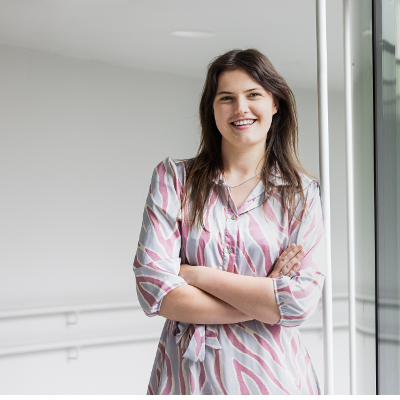
Belgium, ECPA, Spokesperson for the group
10:18:17
Thank you.
First of all, our group would like to congratulate our Vice-President, Ms Elisabetta GARDINI, for an excellent and balanced report.
Violence against all people is wrong, and therefore violence against all politicians is wrong as well. We rightly speak here about violence against politicians as a threat to democracy. But if that outrage is selective, then we are undermining that very democracy ourselves.
Because too often, I see that the reaction depends on who the victim is. When someone from the far left is attacked, the outrage is loud, and rightly so. But when conservative, traditional or right-wing voices are targeted, then it often remains strikingly silent, or when Mr Charlie KIRK was murdered, some people were even celebrating.
And where was a broad outrage after the cowardly murder of a right-wing student, Mr Quentin DERANQUE, in France? Where is the outrage when people with different ideas are attacked by far-left groups or the "hammer gang"?
It remains too quiet.
And this is not some distant problem. I see it in my own country, in Flanders. Colleagues from my party sometimes have to inform the police where and when they will arrive at a speaking event, because their safety might not be guaranteed, simply because they express their opinions, and the left barely can cope with it.
At a recent demonstration, like-minded people with me were attacked with glass bottles.
And let us be honest: these are just a few examples. I can say with near certainty that almost every colleague in my group has experienced something similar. And again: the reaction often remains suspiciously silent.
But when I express my opinion, when I defend my ideas, for example on migration or on Ms Ursula VON DER LEYEN, then those previously silent voices suddenly become very loud.
Colleagues, I conclude: democracy only works if it applies to everyone. Not only to those we like. Not only to those who think like us. And honestly: if any of you were attacked tomorrow because of your beliefs, I will stand by your side. Without hesitation. I will defend your rights. Because violence against a politician is always an attack on democracy.
The only question is: will you do the same for me? Will you do the same for any of my colleagues?
Because if the answer to that is "no", or even "maybe", then we are not defending principles here, we are simply choosing sides.
And let us be honest about that: the real enemies of democracy are not those with a different opinion, but those who try to silence other opinions through intimidation, through exclusion, or through violence.
I know which side we are on. I hope you do too.
Thank you, Ms Lucia PLAVÁKOVÁ.
Ms Lucia PLAVÁKOVÁ of the Alliance of Liberals and Democrats for Europe (ALDE) has the floor.
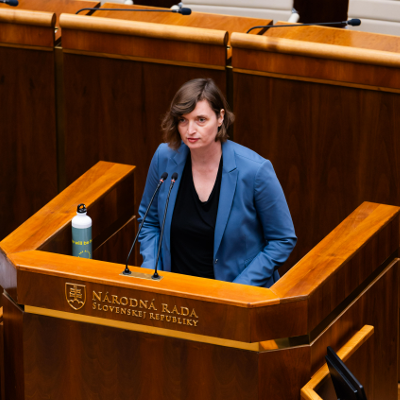
Slovak Republic, ALDE, Spokesperson for the group
10:21:24
Thank you very much.
Dear colleagues,
Dear friends,
I would like to speak about my experience, but this is not only about me. What I have gone through is shared by many other politicians, especially women and queer politicians. I am choosing to speak in personal terms, not just to make a general point, but to show what we are actually facing in reality. As a female queer politician, advocating for the rights of women and LGBTI people, this is what I have experienced in just two past years.
I was expelled from a parliamentary session while presenting a legislative proposal simply because I had the rainbow sticker on my notebook. During a press conference, another member of the Parliament called me a bitch and said he did not consider me to be a woman. After that, I have received thousands of hate messages and death threats, not only to myself, but also to my daughter. She was six years old at that time. I had to be placed under state security protection because of the disinformation campaign about 72 sexists used as a political tool against my party.
I am misgendered and questioned about my identity on a daily basis. Because my daughter has two mothers, I am attacked as a parent, with people asking where I got her or accusing me of destroying her life. And I receive sexually explicit messages every day, not only online, but also as letters to my home address.
These attacks and this constant harassment have serious consequences. They affect mental health, family life, well-being. They can also have a chilling effect, paralysing politicians at work, making them question whether they shall run again, whether they shall ask for re-election. As a result, we are losing committed public representatives, especially those from underrepresented groups as women and minorities.
Violence and hate against politicians are a threat to democracy itself. That is why it is so important that we act. On behalf of our liberal group, I call on all politicians to stop using polarising, racist, anti-LGBTI narratives, as well as disinformation and prejudices, because this is where hate and violence in society begin. Let us change the current tone of public debates and lead by example.
Thank you very much.
Thank you.
I call Mrs Sevilay ÇELENK of the Group of the Unified European Left.
Türkiye, UEL, Spokesperson for the group
10:24:35
Thank you dear Chair, distinguished colleagues.
We, the Group of the Unified European Left, value this report for its careful evidence-based approach, which is a significant contribution.
However, it contains important gaps that should be addressed. Notably, it doesn't sufficiently reflect that even in some member states, politicians have often been subjected to sustained forms of state violence.
If we support the report, we must also criticise and broaden its scope. Political violence is not only societal or driven by non-state actors. It is also produced, enabled or normalised by state institutions themselves, including through hostile rhetoric. Indeed, those in power, whether in the state or in government, are often the primary source of violence and hate speech directed at politicians.
They also contribute to encouraging and reinforcing such tendencies within society. Türkiye exemplifies this pattern.
Over the past decade, dozens of elected mayors from the Kurdish political movement represented today by the DEM party have been removed and replaced by government appointed trustees, a practice repeatedly criticised by the Council of Europe.
MPs were detained and our former co-chairs Mr Selahattin DEMIRTAŞ and Mr Figen YÜKSEKDAĞ [were] imprisoned despite European Court of Human Rights judgments.
Nighttime raids and ill treatment were widely reported.
Today, this pressure extends to the opposition. Istanbul mayor Mr Ekrem İMAMOĞLU faces judicial measures criticised by European institutions.
Mr Can ATALAY, elected as an MP in 2023, has been kept imprisoned and prevented from taking his seat despite constitutional court rulings in his favour.
The report cites older attacks elsewhere, but amidst recent incidents in Türkiye, including violent assaults in parliament targeting the DEM party and other opposition members.
The recognition that women politicians are disproportionately targeted is well-founded.
However, intersectionality should be addressed more concretely. For example, Kurdish leftist women and LGBTI politicians in Türkiye face overlapping pressures, including state action, gender-based harassment and co-ordinated online abuse.
Democratic debate may be contentious, but combating political violence, whether societal or state-driven, must remain fully consistent with the European Convention on Human Rights.
Thank you for your attention.
[Applause]
Thank you for your attention.
I shall now give the floor to the speakers.
Oh yes, I forgot, Ms Anna-Kristiina MIKKONEN, you have the floor. My apologies.

Finland, SOC, Spokesperson for the group
10:28:00
Thank you, Mr Chairman,
Ladies and gentlemen,
Democracy is being undermined in Europe in an unprecedented way. Politicians at all levels of government and from all political backgrounds can be victims of violence: candidates, party members, elected representatives and political decision-makers holding institutional office. As we have already heard today, their relatives and associates are also often affected.
Politicians who are victims of violence may feel compelled to modify their behaviour, limit their participation in public events or reduce their exchanges with their electorate. They may also choose to censor themselves, avoiding certain controversial subjects or even changing their position on certain policies. Finally, they may decide to step down or not stand for re-election. Similarly, people considering entering politics may be deterred by violence: this reduces pluralism and representativeness, and undermines the quality of democratic processes. Intimidation, online or offline threats and other forms of verbal or physical aggression can also have a critical impact on the mental wellbeing of politicians, reducing their ability to work and serve the public.
Violence cannot be justified in the name of freedom of expression. The ultimate aim of these acts of intimidation and violence is motivated solely by disrespect and hatred, with no clear purpose.
We need the teaching of media literacy at all school levels, guarantees against the manipulation of content, and legislation recognising the various forms of violence against political figures as specific criminal offences. We must show zero tolerance towards this phenomenon, while preserving freedom of expression and the diversity and representativeness of elected representatives.
Urgent measures must be taken to prevent and counter violence against politicians, as it fuels a climate of fear that discourages democratic participation in political life.
Thank you for your attention.
We now come to the list of speakers, and Ms Edite ESTRELA has the floor.
Thank you, Mister Chair. [in French]
Dear colleagues,
Violence and hate speech against politicians are no longer isolated incidents. They are part of a broader climate of polarisation, amplified by digital platforms and, too often, tolerated in our political culture.
And this violence is not neutral.
It disproportionately affects women, young politicians and those from minority backgrounds.
This is not only an attack on individuals. This is an attack on political pluralism. It is an attack on equality. It is an attack on our core values.
Colleagues,
When a mayor is threatened in one country, when a parliamentarian is harassed in another, this concerns all of us. Because the erosion of democratic norms does not stop at national borders. We need stronger cooperation between our states to monitor and combat hate speech, especially online.
We need clear rules for digital platforms, which cannot continue to profit from outrage while ignoring its real consequences. And we need to ensure that law enforcement and judicial systems are equipped to respond effectively to threats against elected people.
But legislation alone is not enough. We must also look at ourselves. Too often, the line between legitimate political criticism and harmful rhetoric becomes blurred. Too often, harsh language is rewarded with visibility and political gain.
Let us be clear.
Freedom of expression is a cornerstone of our democracies. But it must not be used as a shield for intimidation, harassment, or incitement to violence. Defending democracy means defending both freedom and safety.
If people are afraid to speak, to stand for election, or to serve their communities, then democracy is already weakened.
Thank you very much.
Thank you for your time.
Ms Deborah BERGAMINI has the floor.
Thank you for your time.
Baroness Thérèse COFFEY has the floor.
Violence or threat of violence risks politicians acting freely, going about their business freely in both their professional and private lives.
I recall that within just a few months of becoming an elected member, another MP was stabbed in their surgery while meeting constituents. That significantly changed how I acted as an MP in regards to managing open contact with constituents, which brought criticism locally, but the challenge is, you never know. That was reinforced by the murder of two MPs in 2016 and 2022, the late Ms Jo COX and Sir David AMESS.
Also, my last act as a minister was in tackling dangerous dogs, and that led to a number of death threats, and while I didn't think they were credible, I was certainly challenged in person regularly by campaign groups.
It is that sort of activity which does put people off becoming politicians, particularly women. I have a number of friends or contacts in my professional life who would be brilliant politicians. And when I've encouraged them to run for election, pretty much all of them do not want to put up with a hostile environment.
Now, the hatred and threats, particularly online, are hurtful not just for the politician, but I suggest in particular it's the case for people who work for politicians. They are often the first to see the hate emails, the harmful language, and they often divert or deflect that from the politician to protect them. And while I did think it not necessary to table an amendment to reflect that, I think we should all be mindful of the impact on those who help us in our professional lives too.
Now, I do support the amendment to remove hate speech. We do have to be careful that issues of hate speech do not constrain free speech. That said, we as politicians are civic leaders, and we need to lead by example. Careless words can get amplified. Constantly accusing opponents of lying can incite hostility and hatred, but challenge in a considered and considerate way should be our course.
Thank you for your time.
Ms Sona GHAZARYAN has the floor.
Honourable Chair,
Dear colleagues,
First of all, I would like to thank Ms Elisabetta GARDINI for presenting this timely and necessary report.
Violence, intimidation and hate speech directed at politicians are not simply personal attacks. They are attacks on representative institutions, on political pluralism and on a free exchange of ideas that sustains democratic life. When elected representatives are threatened into silence, it's not only politicians who lose their voices; citizens lose their voices as well.
In Armenia, politics was heavily demonised and rarely seen as a space for young women. The environment didn't encourage their participation, nor did it suggest that public life was open to a new generation of female voices. It was only after the Velvet Revolution that young women began to actively participate in political processes, bringing with them the energy that democratic institutions needed. Yet the programme came with resistance.
I personally faced significant hate speech, both for my age and gender. Much of it was not intended to attack me personally, but to send a wider message to the public: politics is not a place for young women. I have served now for seven years in my parliament, and I have learned one very simple but yet effective way to confront it: to speak up openly about it.
Silence protects the problem. Honesty began to dismantle it. By addressing those problems publicly, we have helped to clear up a path for new women politicians, who, in my view at least, have been targeted less for being women and young. We should also recognise the strategy behind such abuse. It's to make politics appear hostile, exhausting and undesirable for the young generation.
Thank you.
Thank you for your time.
Lord George FOULKES has the floor.
Mister President,
I welcome this report and this debate, if only because it allows me to agree completely with Baroness Thérèse COFFEY, who I usually disagree with quite a lot.
In fact, the report of our Electoral Commission in Britain and the John Smith Centre shows that violence has moved from the periphery of politics to the centre.
70% of candidates at the last election in the United Kingdom said they had experienced violence. 70%!
That is appalling that that should have happened, because canvassing, they don't want to canvas. And yet canvassing is a central part of our democracy.
As Baroness Thérèse COFFEY said, Ms Jo COX and Sir David AMESS were murdered at surgeries. So it's not people on the right or people on the left, it's that both sides are being murdered. The worst thing that can happen. And it was an Islamic extremist in one case and a far-right extremist in the other. Surgeries are so central to our democracy. Absolutely important for the link between us and our constituents.
So what are we doing to counter this?
In the United Kingdom, the government has got now this operation to try and counteract the effects of this. We have got now 57 co-ordinators around the country in this operation to encourage and to advise members of parliament and candidates in relation to threats.
But I agree with Ms Britt HUYBRECHTS, who said earlier on that violence against the far right and the left is equally bad.
I want to ensure that in politics we can win by argument, not by aggression.
Thank you.
(Applause)
Thank you, Mr Nicos TORNARITIS.
Mr Nicos TORNARITIS has the floor.
Thank you, Mister President.
Dear colleagues,
Across Europe, politicians are increasingly targeted by intimidation, harassment, hate speech and even physical violence. This trend is escalating, fueled by the rapid spread of online abuse, deep fakes and false narratives, often without consequences. The impact is serious. It undermines the democratic process and weakens trust in public institutions. This is not just a concern; it is a systematic threat.
Condemnation alone is not enough. We must act now. Prevention, public awareness and effective monitoring mechanisms are essential. Initiatives such as the Council of Europe's platform or observatory can strengthen protection and accountability.
At the same time, we must ensure faster investigations, stronger legal frameworks and better co-operation among stakeholders. Particular attention must be given to those most targeted, including women, young politicians and minorities.
Violence has no place in democracy. Protecting those who serve in public life is essential to safeguarding free debate, pluralism and democratic integrity. Democracy must never be intimidated.
Thank you very much.
Thank you for your time.
Mr Marco DREOSTO has the floor.
Mr Marco DREOSTO? He is not here.
Lord Don TOUHIG has the floor.
President,
Promoting hate and threatening violence against politicians is the norm now in every country in Europe.
I first encountered such a threat when I stood for election in Wales, 52 years ago. My wife and I had anonymous phone calls from a man threatening to kidnap our baby son. In those days, such actions were very rare. Not so today, when it's commonplace. I have many friends who have endured personal abuse and threats to their families. One female colleague received a text message telling her that her daughter would be kidnapped and gang-raped.
These threats are anonymised, made by evil cowards who use and abuse social media to make life a misery for so many in public life. So much so that in the United Kingdom, many good and decent people are now very reluctant to stand for public office.
Our draft resolution today underpins very clearly the challenge we face. Declaring representative democracy can only be achieved and sustained if candidates are allowed to campaign safely and peacefully.
We need legislation to take account of the threats against politicians and to criminalise those who make them. But we as politicians, we have a responsibility too. We must recognise that responsibility and set an example by refraining from using inflammatory language, which can lead to hate and violence.
Today, I'm thinking of a dear friend, a Jewish friend, Mr Leo ABSE, who was a Member of Parliament for 30 years in Britain, and when he retired, he said, "I have only one piece of advice for those who follow me. Tolerate everything, tolerate everyone. But never ever tolerate people who are intolerant". Wise words.
Thank you for your time.
Ms Andrea EDER-GITSCHTHALER has the floor.
Thank you, Mister President [spoken in French].
Dear colleagues,
When we, as democrats, look at the facts on violence as a means of political debate today, the conclusion is alarming. From a sober perspective, psychological and physical violence is unfortunately a part of everyday political life that we female politicians in particular, I say quite deliberately, have to reckon with every day and everywhere. We have already heard today that many of us are and have been affected, especially online. The attacks happen suddenly and it is often not even recognisable why.
For example, Austrian politicians and members of government receive up to 500 hate messages a day, including many from us MPs, and some senders threaten murder, rape and much worse things. It goes without saying that these attempts to commit or encourage violence must be prosecuted with the full rigour of the rule of law.
In Austrian criminal law, less tangible forms of violence, such as hate, are now also well regulated by law. And here it is up to us, to us politicians, to really take the rule of law seriously and emphatically demand compliance with the law. Especially where they affect us. In short, protecting politicians from violence is not just a task for the judiciary, but also a task for politicians themselves and for society, while of course always respecting freedom of expression.
And that's why I think this report is so important in terms of raising awareness and publicising this issue. We must not be victims. We must defend ourselves with all the means at our disposal, because violence in any form must not become an occupational hazard for us, for us democratically committed people. Public life must be free of fear and liberated.
Thank you for your time.
Ms Valentina GRIPPO has the floor.
Mrs Valentina GRIPPO?
Mr Murat Cahid CINGI has the floor.
Thank you, Mister President.
Dear colleagues,
I would like to thank the rapporteur for her timely and significant work.
It tries to remind us that violence and hate speech against politicians are not only attacks on individuals, but direct threats on democratic representation itself.
When elected representatives are threatened, intimidated or silenced, democracy loses its voice. As the report rightly underlines, violence and hate speech creates a chilling effect on political participation, weakening pluralism and eroding public trust in institutions.
It is especially alarming that women in politics and representatives of minority groups are often disproportionately targeted online and offline.
In this regard, we must adopt a principled and resolute response, a response that strengthens protection, ensures effective investigation and establishes safeguards against threats, blackmail, AI and deep fake content.
At the same time, we must promote freedom of expression while ensuring protection mechanisms apply equally to all political voices, regardless of their political views.
Therefore, as politicians, we carry a particular responsibility: to lead by example.
Inflammatory, dehumanising and public rhetoric as well as scapegoating and normalisation of hostility poison democratic life.
In already-polarised societies, such language can deepen divisions and ultimately pave the way for extremism.
Protecting politicians means protecting democracy. This responsibility begins with us, dear politicians.
Thank you.
Thank you for your time.
Ms Hripsime GRIGORYAN has the floor.
Thank you honourable Chair.
Distinguished colleagues,
When we discuss violence and hate speech against politicians, we are not discussing the fragility of individual egos. We are discussing the fragility of democracy itself. The report before us is right: when a politician is attacked because of her or his public role, democracy is attacked as well.
In Armenia, we know this not in theory, but in experience. On the night of 9 November 2020, then Speaker of Parliament Ararat MIRZOYAN was violently assaulted during the post-war riots and seriously injured. In February 2021, an opposition rally in front of our parliament staged a performance titled “The execution of Ceaușescu or Death to Traitors”, a grotesque political spectacle that pushed public discourse even further toward dehumanisation. On 24 April 2024, at Tsitsernakaberd, during the Armenian Genocide commemoration place, Ms Anna HAKOBYAN and the Prime Minister’s youngest daughter, then eight years old, were met with offensive chants. These are not isolated episodes. They are warning signs.
And the threat does not end in the street. It continues online relentlessly. In Armenia, as elsewhere, women in public life are especially exposed. A 2024 Council of Europe report on Armenia points to significant legal and institutional gaps in responding to digital violence against women.
Violence and hate speech poison democracy in numerous ways. First, they radicalise society: political opponents are no longer seen as competitors, but as enemies. Second, they silence voices. Third, and perhaps most dangerously, they teach citizens, especially the young, that politics is a dirty arena of humiliation, fear, and hatred. The long-term result is not only extremism, it is also apathy.
That is why this report matters. We need a political culture in which disagreement remains sharp, yet human dignity remains inviolable.
Violence has no place in democracy. If we allow hatred to become the language of politics, democracy will eventually forget how to speak at all.
Thank you very much.
Thank you for your time.
Ms Victoria TIBLOM has the floor.
Thank you Mister President, and thank you very much to the Rapporteur [spoken in French].
"Take a knife and cut a Sweden democrat." Those words were inscribed on our party’s campaign cabin during the election campaign in 2022. And below stickers from a political left organisation.
Violence against politicians is on the rise across Europe and beyond, and it poses a direct threat to the very foundations of our democracy. Let us be clear: when a politician is attacked, it is not only an attack on an individual. It is an attack on democracy itself.
And in my own experience as a right-wing politician, much of the hate I have personally received has come from individuals on the political left. Both in real life and on social media. Nobody is as openly aggressive as the political left!
Representative democracy depends on the ability of candidates to campaign freely and safely, and on elected officials being able to carry out their duties without fear. Yet today, too many politicians, at all levels, face harassment, threats, and even physical violence. This affects not only them, but also their families and those around them.
Such violence creates a climate of fear. It silences voices, discourages participation, and drives capable individuals away from public life. Many politicians feel forced to limit their engagement, avoid controversial issues, or even step down altogether. The result is a chilling effect on democratic participation, reducing pluralism and weakening the quality of our institutions.
The response must be decisive. We need stronger legal frameworks, better protection and support for politicians, and effective investigation and prosecution of all forms of violence.
Thank you [spoken in French].
Thank you for your time.
Mr Emmanuel FERNANDES has the floor.
Thank you, Mister President.
Yes, violence against politicians is a threat to democracy. But we need to address the causes. The rise of the far right in France and Europe is accompanied by the trivialisation of racist, Islamophobic, antisemitic, homophobic and misogynist discourse, often relayed by certain media. The example of Mr Bally BAGAYOKO, the newly elected mayor of Saint-Denis-Pierrefitte in France, is revealing. Since his election, he has been subjected to an outpouring of racist hatred with unbearable anti-Black insults, notably on the 24-hour news channel CNews, which compared him to a monkey or a primitive tribal chief. He is being targeted because a black man at the head of a major city is unbearable for the far right.
These acts of violence are not isolated; they reflect the systemic racism and discrimination that affect many racialised elected representatives. If we do not clearly name these realities, we miss the essential point: the ability of our democracy to be truly representative. In Strasbourg itself, a candidate, Ms Jamila HADDOUM, received death threats at knifepoint during the recent municipal campaign. When elected representatives from minorities are attacked, it sends a message of exclusion. Such violence discourages commitment and weakens democracy.
Unfortunately, today's report ignores the extreme right's immense responsibility for the violence. The rapporteur's one-sided approach is particularly glaring in the paragraph dealing with the case of Mr Quentin DERANQUE. I would like to set the record straight here. He was a neo-Nazi activist whose numerous online publications glorified the Third Reich and the Holocaust. He obviously died as a result of the blows he received, more than an hour after the violent street brawl that he and his neo-Nazi acolytes provoked, in a veritable ambush deliberately organised to target anti-fascist activists. This death is certainly tragic, but I firmly condemn the fact that this report presents Mr DERANQUE as an innocent victim of the anti-fascists.
So, Madam rapporteur, I say to you: "We are all anti-fascists" [spoken in Italian].
Mr James MALONEY has the floor.
It's my first time speaking, I didn't know how to turn on the mic.
I want to thank the rapporteur for this outstanding report on this very important issue, not just to Canadians, but to politicians around the world and people around the world.
The recommendations contained in that report go to the heart of the issue and the issues we're grappling with in Canada, just like people in this room are grappling with around the world. But the report talks about protecting politicians. I would like to expand that to the Canadian example because we've acted on some of these recommendations. We have legislation before our parliament now, the Combatting Hate Act, but it not only protects politicians, but it protects our citizens. Because if our citizens are living in fear of hate, they will not want to become politicians. So it is not just about us, it is about our communities as well. And that's what I would like to focus on.
And this bill before our Parliament, I think, strikes a balance between stopping hate, stopping hate-motivated behaviour, but ensuring that freedom of speech is maintained, because that balance is delicate but important. And this legislation, in my view, does just that. We protect cultural groups, we protect religious groups, we protect minorities. It allows people to practise their religion, love who they want to love, do what they want to do without fear of hate.
The last thing I want to talk about is the online world, because unless we can control the online environment, we will not be able to stop hate speech. We have seen hate dressed up as populism, and the forum they use most often now is the online world. Social media has become a great tool, but it is also becoming a very dangerous weapon. And unless we can control that weapon, this challenge we're debating today becomes much more difficult.
Thank you.
Thank you for your time.
Mrs Biljana PANTIĆ PILJA has the floor.
Thank you. First of all, I would like to congratulate the rapporteur on the excellent work.
In the era of new technologies, hate speech and violence directed at politicians have unfortunately become part of everyday life. Although legal frameworks exist to regulate this issue, we often face a serious challenge. Whenever someone is arrested for making threats online, various activities and non-government organisations invoke the principle of freedom of speech.
I came from Serbia, a country where the prime minister was assassinated and where today similar threats are being directed at President Aleksandar VUČIĆ. The past year in Serbia has been particularly difficult as violence and hate speech reached alarming levels. Opposition politicians created something resembling a wheel of fortune on social media. Each morning, they would spin it, and whichever government official it pointed to, they would publish the address where that politician lived with their families.
Such a level of hatred and aggression is something new in political life. We are even witnessing a reaction from Commissioner Marta KOS, who warned that publishing and visiting the private address of political opponents is unacceptable.
At the same time, politicians from the ruling side were targeted online in a campaign described as "making them known", accompanied by calls for members of the ruling party to be chased through the streets and for their homes and facades to be marked with paint. Such practice evoked disturbing historical parallels not seen since the Second World War, when similar methods were used to mark Jewish homes under Nazi rule.
All of this is a direct consequence of hate speech that has spread and overtaken the public space.
[mic was cut off]

Iceland, SOC, President of the Assembly
11:01:24
Thank you.
Ms Gökçe GÖKÇEN, you have the floor.
Mr Chairman,
Ladies and gentlemen,
It is absolutely necessary to ban hate speech in politics. Because when hate speech is used, it imposes a hierarchy. It forces the target to defend himself or herself or others, instead of expressing his or her own ideas. Even if that person is very good at fending off hate speech, they are prevented from doing their job.
So even if hate speech does not directly incite racism or violence, by the way it makes the target feel and by imposing an unjust hierarchy of power in that environment, it is in itself the main enemy of democracy.
We note that women and young politicians are particularly exposed to hate speech. Let me give you an example. A young mayor, Ms Gülşah DURBAY, had undergone a medical operation. Rumours were spread about her, that she was in a relationship with the leader of her party and that she had had an abortion.
In reality, Ms Gülşah DURBAY had undergone surgery for colon cancer. Her sister was pregnant, and she had wanted to hide her illness for a while so as not to worry him. But those who targeted Ms Gülşah DURBAY did not stop and added new stories to their lies. Ms Gülşah DURBAY read these lies every day.
Then she appeared publicly, explained the situation and took all these liars to court. She started winning her cases. Young girls and female politicians who saw her strength took her as a role model.
But Ms Gülşah DURBAY died because of this illness. She is no longer with us today. Those who spread lies about her are still alive, and continue to choose new young women as their targets.
Do we want the world to be like this? Do we want politics to be like this? Or do we want to establish certain ethical principles and draw certain lines?
Iceland, SOC, President of the Assembly
11:03:46
Thank you.
Sir Edward LEIGH, you have the floor.
Mister Chairman,
I would like to start by paying tribute to my murdered friend, Mr David AMESS.
His only crime was to attend a surgery to look after his own constituents, and he was stabbed to death by an Islamist extremist.
He had made no criticism of Islam. He spent most of his political career actually defending the rights of animals. And for that crime, he was murdered, ruthlessly and horribly.
So this is an important debate. And we should call out hatred wherever it is found.
It gives me an opportunity to congratulate my socialist friends Lord George FOULKES and Lord Don TOUHIG on what they said. And Baroness Thérèse COFFEY.
And I agree with everything they say, that we should be tolerant of everybody and simply intolerant of intolerance.
But I also want to congratulate my colleague Ms Britt HUYBRECHTS from Belgium. She gave a very powerful and very brave speech.
Every time, when you're on the right, and you try and speak up for what you believe in, you are trolled and abused. I mean, frankly, I feel it's my duty sometimes to put these meanderings on social media, but such is the abuse I don't bother to read the replies anymore and I live happily for that.
But she's quite right, what my colleague says, that we on the right have a right to stand up for our Judeo-Christian heritage. That's not anything against Islam: it's the fundamental nature of Europe, and progress in Europe, and tolerance.
We on the right have a right to stand up against mass migration which is undermining the social compact of our nations. That's not racist in any way. We on the right have a right to say that government has no money of its own. And when government says we're spending this, we're doing this, they're spending your money. So I will defend the right of the left here to say whatever they like, as long as they defend the right of me, on the right, to say what I want to say.
Thank you.
Iceland, SOC, President of the Assembly
11:05:58
Thank you.
Mr Erich HESS, you have 2 minutes.
Thank you Mister President.
Esteemed Council of Europe,
Physical violence, calls for violence, insults, defamation and threats are unacceptable. Not only in politics, but everywhere. But I believe that these offences are punishable in all European countries. I don't think this paper will do anything to prevent such offences.
I believe we need to tackle the root of the problem. Where does the resentment of citizens who are inclined to commit such offences come from? I think perhaps we need to rethink our democratic system. In other words, shouldn't we allow our fellow citizens to have more of a say so that they don't feel resentment in their stomachs?
For example, as the example of Switzerland shows, it could be a direct democracy where citizens can not only vote and elect once every four years, but can also express their opinions on political issues several times a year, so that there is no resentment in their stomachs. However, we must not restrict freedom of expression any further. It has already been restricted to such an extent that you can't even say anything against certain groups with a clear conscience, you almost have to be afraid of being a criminal.
Thank you for your attention.
Iceland, SOC, President of the Assembly
11:08:15
Thank you.
Mister Aleksandar MIRKOVIĆ, you have two minutes.
Thank you.
Hate speech is something which probably exists in every country, but nowhere has it become normalised simply because it is directed against those in power.
There is not a single person in my party who has not in the past 16 months been subject to digital, verbal or physical violence.
They have tried to burn us alive, shoot at us, attacked our families and set our offices on fire, all in an effort to forcibly overthrow elected government.
This level of continuous violence which we endure day after day has not been recorded anywhere else in the world.
It's fueled precisely by hate speech and blunt lies.
By far the most dangerous and disturbing situation concerns President Aleksandar VUČIĆ and his family, who are being dehumanised on a daily basis; calls for their murder have become commonplace – something that's entirely unacceptable. Television programmes openly discuss his parents, even his children, with explicit calls for their murder.
In some countries, even a fraction of what the authorities in Serbia are subject to would result in people being brutally beaten, arrested and sentenced to the prison.
And then, nobody talks about the freedom of speech. When we talk about freedom of speech, the main question is: where is the dividing line between freedom of speech and hate speech?
When it comes to attacks on my colleagues and President Aleksandar VUČIĆ, that line was clearly crossed ten years ago, especially in the last year.
That is why we strongly support this report.
I am particularly encouraged by the call to tighten legislation in our countries, so that this toxic hatred and politically motivated violence can be brought to an end and those who are responsible for that be properly punished.
Thank you.
Iceland, SOC, President of the Assembly
11:10:10
Thank you.
Ms Bisera KOSTADINOVSKA-STOJCHEVSKA, you have two minutes.
Thank you first and foremost to the rapporteur for this report that, in my opinion, is one of the most important here, not just for us, but also for our societies.
Today, with social media, we have become very easy targets as politicians.
If you open any of your Facebook, Instagram or any other social posts that you have made, even today, the most widely used words would be "prison", "corrupt", "traitor", "stupid" – and I don't think I'm even allowed to say the words that are being used for women.
Politicians today endure much verbal harassment, intimidation, sexual abuse, undermining their professionalism. They go through immense levels of public scrutiny.
Usually their employers are not happy that they are in politics.
Women in politics are usually, according to the public, "immoral", and they "don't follow principles".
Even though 10 years ago, when I entered politics, one very prominent politician told me that "it comes with the job; you have to get used to it and you have to give it three days".
There was a recent event almost a year ago, when an Instagram profile published every single step me and my family took. When I went to the prosecutor's office, they said they did not have the proper legislation to solve it.
After me, the Prime Minister got a threat through the same profile – and the case was solved three days afterwards!
So I really do not care if someone is left or right, because violence is violence. We have to address it in any form, because it's taking a huge toll on us, on our families, on our societies, and on our work.
Thank you.
[Applause]
Iceland, SOC, President of the Assembly
11:12:16
Thank you.
Ms Zita GURMAI, you have two minutes.
Thank you, Ms Elisabetta GARDINI, your report could not be more timely.
In Europe today, violence against politicians is no longer a tragic exception. It has become a pattern. A Social Democratic candidate was beaten in Dresden, a Senator struck from behind in Berlin, a Prime Minister assaulted in a Copenhagen square, and more than 50 candidates physically attacked in a single French campaign.
And it is a pattern that targets, above all, women. Research shows that 85% of women MPs have suffered psychological violence in the exercise of their mandate. Nearly one in two have received threats of death, of rape, of beatings, threats that increasingly extend to their children.
Dear colleagues,
Let me be clear: no feminism, no democracy. When a woman is driven out of public life by rape threats on social media, by deepfakes stripping her of her dignity, by orchestrated campaigns of misogyny, it is not only her voice that is silenced. It is the voice of every one of us. Our pluralism is diminished. It is our democracy that is mutilated.
The Group of Experts on Action against Violence against Women and Domestic Violence (GREVIO) was right, in its first General Recommendation, to name the digital dimension of violence against women for what it is: a continuum. The line between an anonymous troll and an assassin is thinner than we like to pretend. Just like in the case of Ms Jo COX, the trigger was pulled by a man who had first been radicalised, on our platforms, in our silence.
We have the tools. We have a Recommendation on combating hate speech. In the EU, we have the Digital Services Act. We have the Directive on criminalising deepfakes and cyber-violence. We have a European Democracy Shield. What we lack, too often, is the political courage to use them, and the honesty to acknowledge that six member states of the EU, including my own, have still not ratified the Istanbul Convention.
Dear colleagues,
An attack on any politician, woman or man, left or right, the mayor of a village or the head of a government, is an attack on democracy itself. We owe it to our colleagues who have been injured, to our sisters driven from office, and to the citizens who sent us here, to speak more loudly, to legislate more firmly, and to act together.
The fight is not over yet. There is no time to lose.
Thank you.
Iceland, SOC, President of the Assembly
11:14:30
Thank you,
Sir Christopher CHOPE, you have two minutes.
United Kingdom colleagues,
I wish to bring some historical context to this important debate. As a newly elected MP in 1984, I was at the Grand Hotel in Brighton when the Irish Republican Army (IRA) blew up the hotel, attempting to murder our prime minister, but instead killing my parliamentary colleague Tony Berry. The IRA also murdered three other MPs.
When I started out in politics in the 1970s, threats and violence from left-wing trade unionists were commonplace. But we were not intimidated and carried on. And I think that that should be the message we send out from this Assembly today. Politicians should not be wimps. They should persevere and carry on.
Pluralism is fundamental to democracy and that includes defending the right of people to speak, irrespective of whether you agree with them or. And that is why we must call out what is essentially the Orwellian trend in the European Parliament to treat some politicians as more equal than others. That is why re-reading Animal Farm is, I think, essential for us all.
And then we will understand that we must denounce those political parties represented in this hemicycle who support cordon sanitaire against politicians with whom they disagree. To support a cordon sanitaire is to be an enemy of democracy. And that's why I'm also very in favour of the amendment to remove hate speech, because hate speech is used by opponents of democracy and free speech as a means of trying to control the views and expressions of of others.
Iceland, SOC, President of the Assembly
11:16:30
Thank you.
Ms Maria-Nefeli CHATZIIOANNIDOU, you have 2 minutes.
I speak today as a young representative from Greece, a country that like many others, is experiencing the growing pressure of toxicity in public life. Violence and hate speech against politicians are becoming normalised and in today's digital era, these normalisations spread faster, deeper and more aggressively than ever before.
Social media has transformed political communication. It has given a voice to many, but it has also amplified anger, misinformation and dehumanisation at an unprecedented scale. A lie can now travel across countries in minutes and a coordinated attack can destroy reputations overnight. And sometimes the consequences are not just political, they're also human.
Just last week in Greece, after a wave of fake news and online attacks, the deputy minister to the prime minister suffered a ruptured aneurysm and he's now in a critical condition. And although we cannot reduce such a medical event to a single cause, we cannot ignore the environment we are collectively creating, because this is our new reality. Intensity without pause, exposure without protection and judgement without responsibility.
Dear colleagues,
When politicians are constantly under attack, democracy itself is weakened, people withdraw, they self-censor and many decide not to enter public life. So we must act, because this is the real danger. Not only the attacks we see, but the voices we do not hear. And, equally, we must change our own behaviour, because words matter, tones matter. We must reject hate even when it targets our opponents, especially then.
Protecting politicians is not a matter of privilege. It is a matter of preserving the integrity of our democratic institutions. Because we know very well that democracy cannot survive in an atmosphere of fear.
Thank you.
Iceland, SOC, President of the Assembly
11:18:37
Thank you.
Ms Louise MOREL, you have two minutes.
Mr President, ladies and gentlemen,
To attack an elected representative is to attack democracy itself. This is not a rhetorical formula, it is a reality that we are documenting, that many of us are experiencing, and that this report finally obliges us to treat with the seriousness it deserves. The facts are there.
In France, a report by the Centre d'analyse et de lutte contre les atteintes aux élus, published in May 2025, recorded 2 501 incidents of violence or incivility against elected representatives in 2024, i.e. between 30 and 40 per week, including 250 physical assaults. There was a slight drop of 9% compared with 2023, which might seem reassuring, but it is not. This level remains structurally worrying and the municipal elections of March 2026, which have just ended, confirmed this. The campaign was marked by an upsurge in intimidation and hostility towards candidates, even in municipalities where local political life had previously been calm. This is not a spontaneous phenomenon; it is part of a growing mistrust of our institutions, fuelled by a polarisation that social networks are amplifying every day.
And then there's the increasingly violent rhetoric that, by dint of repetition, ends up trivialising hatred in public debate. When elected representatives come to censor themselves, when candidates give up running for office out of fear, it's not just worrying, it's democratic pluralism that is in retreat. This phenomenon knows no borders. In Germany, Spain and Italy, the same violence and intimidation are taking place. And behind these acts, there is a logic at work, the logic of undermining the confidence of citizens in their representatives, of making them believe that their representatives deserve neither respect nor protection.
We must reject this logic forcefully, with strong laws and swift, effective investigations. We need digital regulation that protects freedom of expression, but that no longer allows dehumanising rhetoric to flourish, because the strength of democratic debate is measured not by the violence of the attacks, but by the quality of the arguments.
Thank you very much.
Iceland, SOC, President of the Assembly
11:20:51
Thank you.
Mr Nuno FAZENDA, you have two minutes.
Thank you, Mister President.
Dear Colleagues,
Violence and hate speech against politicians are not isolated acts. They are increasing across Europe and represent a serious threat to democracy. We must be clear: disagreement is not legitimate, it is essential to democracy. But violence and hate speech are not political expression. They are attacks on democracy.
Democracy depends on free debate and participation. Violence has no place in it. Representative democracy depends on freedom, the freedom to campaign, to speak, and to serve without fear. Yet today, too many candidates, politicians and public figures face threats, intimidation and hate speech, both online and offline. And too often, their families are targeted as well.
This is amplified online. What starts as a comment can quickly become a co-ordinated campaign. And behind every screen, there is a real impact on real people.
This violence is not neutral. Hate speech, misogyny and racism are being normalised in public discourse. This creates a chilling effect. It discourages capable individuals from entering public life and narrows the diversity of voices in our institutions. The result is clear: less pluralism, less representation, and weaker democracy.
So, what must we do? We need zero tolerance for violence. We need accountability, especially online. And we need a political culture based on respect and responsibility. Political leaders must lead by example. Words matter. Tone matters. Responsibility matters. If we normalise hate speech, we normalise those who reject a democracy based on freedom and respect.
Europe must stand firm, with full commitment to democracy.
Thank you.
Iceland, SOC, President of the Assembly
11:23:04
Thank you.
Ms Elvira KOVÁCS, you have two minutes.
Distinguished chair,
Dear colleagues,
For years, there has been an ongoing heated global debate over the precise boundaries between free speech, discrimination and hate speech. If we think of democracy as being built on the twin pillars of majority rule and minority rights, or to put it another way, freedom and equality, they have tended to be better for freedom than equality.
We have failed to emphasise the importance of equal rights. We have neglected the idea of reciprocity, which should be central when my freedom depends on your freedom, even if we disagree. I believe that without freedom from hate, there can be no true freedom of speech.
In the Western Balkans, hateful narratives are particularly dangerous because of their substantial potential to increase the existing tensions between communities and negatively affect the trust-building process as well as the genuine recovery of the whole society from past conflicts.
The European Commission against Racism and Intolerance (ECRI) report on Serbia recommends that the authorities step up their efforts in encouraging public figures, in particular high-level officials, politicians, to refrain from using racist and other forms of hate speech themselves, to firmly and promptly condemn the use of hate speech by others, to use counter speech and alternative speech, etc.
On the other hand, for example, the most common hate narratives used on political opponents in the Western Balkans were that they are enemies of the state, enemies of the people, foreign-hired soldiers, dangerous and corrupt. These narratives fuel one another's rhetoric and or actions, leading to growth and radicalisation on both sides of this division.
I believe that more empirical research on hate speech in the Western Balkans will enable a better understanding of factors and actors that lead to hate speech in different spheres of society, sensitise the professional community and the public, and help signal potential security threats and escalation.
Thank you.
Iceland, SOC, President of the Assembly
11:25:11
Thank you.
Ms Bianca-Eugenia GAVRILĂ, you have two minutes.
Thank you.
Mister President, dear colleagues,
First of all, I would like to thank Ms Elisabetta GARDINI for her excellent report.
I speak today, not only as an elected representative, but as a voice from a young political movement in my country, the Party of Young People in Romania. And I want to share with you what the past year has felt like for us.
We are a party of ordinary citizens: entrepreneurs, teachers, craftspeople, drivers, young parents. People who had never been in politics before, but who stepped forward because they believed their country was drifting away from them.
And from the very first day, we were not debated, we were labelled. We were not contradicted, we were dismissed. Our voters were called ignorant, our members were called extremists. Our MEPs were called agents of foreign powers. Our young activists received abuse online that no young person should ever have to read.
Some of our members have stopped going to public events. Some have quietly stepped back, not because they lost the argument, but because they lost the energy to keep defending the simple right to hold a different opinion.
I do not stand here today to ask for pity. I stand here to tell you something more important: this is not only our story. The same is happening across this Assembly, across this continent. Violence and hatred do not choose a political colour, they choose whoever dares to say something uncomfortable.
So, yes, I support this report. Yes, I condemn violence against every single politician in this room, regardless of party, regardless of country, regardless of whether we agree. But colleagues, let us remember this: citizens turn to anger when they feel nobody is listening. The answer to hatred is not silence, it is to hear them before the anger turns into violence.
Thank you.
Iceland, SOC, President of the Assembly
11:27:19
Thank you.
Ms Gabrielle CATHALA, you have two minutes.
Thank you, Mr President.
I would like to take this opportunity to respond to the member for Sweden who said earlier that violence comes exclusively from the left. I invite her to look at the statistics of the European Union or what is happening in France. Because what we see in France is that in 40 years, the far right has killed 10 times as many people as the so-called ultra-left. What we see is that since 1986, the far right has killed 64 people in our country for racist, Islamophobic, anti-Semitic or nationalist reasons. Since 2022 alone, our country has seen the deaths of Mr Hichem MIRAOUI, Mr Djamel BENDJABALLAH, Mr Federico MARTÍN ARAMBURÚ and three Kurdish activists. All these people were killed for extreme right-wing motives.
If there are any colleagues from the Rassemblement National in this Chamber, they should also look at the cases against them, since the Rassemblement National is the only party in France where people who have stood for election or held positions of responsibility within the party have either been convicted or are awaiting trial on terrorist charges. We are talking about nine people who are members of the Rassemblement National.
And I would also refer you to the statement made by Mr Sébastien CHENU, the Vice-President of the National Assembly and a member of the Rassemblement National, who said of Mr Quentin DERANQUE – who was an admirer of Nazi Germany and whose thousands of anti-Semitic, racist and negrophobic tweets have been found online – Mr Sébastien CHENU said: "He was one of us, one of our tribe". And when all these messages were discovered, well, at no point did he apologise.
So if there is such a thing as violence, it's the violence of the far right, and it's only the far right that kills in this country.
Iceland, SOC, President of the Assembly
11:29:30
Thank you.
Ms Mayuli Latifa MARTÍNEZ SIMÓN, you have 2 minutes.
It's an honour to address this parliamentary body, which represents one of the strongest traditions in the defence of democracy, human rights and the rule of law. In the framework of the debate on the protection of democracy, today across different regions of the world, we face a common challenge: the gradual erosion of democratic institutions.
In various regions of the world, including Latin America, we see worrying patterns, weakening institutional checks and balances, subordination of the judiciary, intervention by those in power in electoral systems, political concentration that blurs the limits of democratic practice and the systematic delegitimisation of criticism by the opposition, the press and civil society.
These phenomena fracture the balance which is indispensable for any democracy. Mexico is not immune to this reality. The modernisation of the Mexico-European Union Global Agreement, which was concluded last year, establishes an ambitious and modern framework for expanding political co-operation, trade and investment relations. This international co-operation is linked to respect for the rule of law, human rights and democracy.
However, these commitments now face serious challenges as, in Mexico, we have seen a worrying concentration of power in recent years. Consitutional checks and balances have been eliminated or subjugated to the executive branch. For the first time, the judiciary is renewed under the total control of the government, through popular vote with lists previously distributed to its clientelist base, making it possible to impose its ministers on the Supreme Court of Justice of the nation, as well as magistrates and judges with barely a 10% voter turnout.
All this occurred in a serious security crisis. 10 mayors were murdered in 2024-2025 and 14 000 people are missing.
I make a firm and respectful appeal to the honourable Assembly to observe what is happening in Mexico.
Thank you.
Iceland, SOC, President of the Assembly
11:31:45
Thank you.
Ms Kolbrún Áslaugar BALDURSDÓTTIR, you have 2 minutes.
Mister President,
I would like to thank the rapporteur for this important report.
Violence against politicians is rising, and it is not limited to the internet. It occurs both online and offline, ranging from harassment and threats to physical attacks and even killings.
While social media has amplified this problem, we must not reduce it to a digital issue. It is a broader challenge linked to polarisation, mistrust, and the erosion of respect in political life.
At the same time, we must be clear: strong political disagreement is part of democracy. But violence, threats, and dehumanising language are not.
What is most concerning is the impact. Violence creates fear. It discourages people from entering politics. It pushes others to withdraw or self-censor. In doing so, it weakens democratic participation and representation.
So what is the response?
Security measures are necessary, but they are not sufficient.
We need a broader approach: stronger legal frameworks, effective enforcement, responsible media environments, and better protection against online abuse.
But we also need to go further.
We must invest in civic education, strengthen trust in institutions, and promote a political culture based on respect and responsibility.
And we, as politicians, must lead by example. We must reject inflammatory rhetoric and clearly condemn violence in all its forms.
Because this is not only about the safety of politicians.
It is about the health of our democracies.
Thank you.
Iceland, SOC, President of the Assembly
11:33:46
Thank you.
Ms Béatrice FRESKO-ROLFO, you have 2 minutes.
Thank you, Mr President, ladies and gentlemen,
As the draft report points out, we are no longer dealing with mere rumours, but with architectures of disinformation.
When millions of citizens are exposed to hateful content, claiming against all reality that a first lady was born under another identity or that leaders are something other than human beings, we cross a critical threshold. The aim of this information is not to convince, but to destabilise, to ridicule and, ultimately, to delegitimise.
These campaigns follow clearly identified patterns. Academic research has shown that networks automated by bots amplify this content. Rumour prepares the ground, doxing the pressure. As soon as a politician or his or her family becomes a personal target, the aim is no longer democratic debate, but intimidation.
As a woman parliamentarian, let me stress that women candidates are not attacked in the same way as their male counterparts. They are sexualised, threatened, exposed in their intimacy. LGBTI candidates, on the other hand, are often targeted by outing practices and disclosure of personal information that expose them to real physical risks.
In these cases, doxing becomes a weapon, not to discredit them, but to locate, designate and sometimes incite violence. Doxing is a door that is forced open. It's an address thrown open like a target, a child's name exposed, a private life snatched from intimacy to be handed over to the digital mob.
With just a few clicks, political disagreement becomes stalking, and the public space spills over onto our doorsteps. We must therefore treat these phenomena for what they really are: not excesses of freedom of expression, but operational attacks on democratic integrity.
When it takes hold in public debate, it is not just the safety of elected representatives that is at stake, it is the very ability to govern that is gradually undermined.
Thank you very much.
Iceland, SOC, President of the Assembly
11:35:56
Thank you.
Mr Rostyslav TISTYK, you have 2 minutes.
Mister President,
Dear colleagues,
For Ukraine, this issue is not theoretical. We are living in the conditions of war where the Russian Federation used not only missiles and tanks, but also terror, political assassinations, hate-driven information campaigns and attempts to physically eliminate political leaders.
Recently, Ukraine was shocked by the assassination of Mr Andriy PARUBIY, the former chairman of the Verkhovna Rada of Ukraine and a member of the Ukrainian parliament. The investigation established that the perpetrator had been recruited by the Russian intelligence services long before the attack and acted under their co-ordination. This is not just a crime. It is an example of how an authoritarian state uses political violence as a tool of war against democracy.
Another tragic example was the murder of Ms Iryna FARION, a Ukrainian linguist, public figure and former member of the Verkhovna Rada of Ukraine. She was a prominent representative of the Ukrainian National Movement and strongly advocated for the Ukrainian language, national identity and democratic values. According to the investigation, the motive for this crime is believed to be hatred and national intolerance related to her public stance.
Of course, you know about the numerous attempts to assassinate the President of Ukraine, Mr Volodymyr ZELENSKYY. This represents a new type of threat for Europe. When political leaders are physically targeted, when hate is campaigned and launched against them, when the violence becomes an instrument of politics, democracy itself comes under direct attack.
We must say clearly: political violence, hate speech and intimidation campaigns cannot be part of democratic politics. The international community must act together to confront the threat. Because by defending democracy in Ukraine, we are defending democracy in Europe.
Thank you.
Iceland, SOC, President of the Assembly
11:38:07
Thank you.
Lord Leslie GRIFFITHS, you have 2 minutes.
Thank you President and colleagues,
It's good to be here.
I'm the rare member of this Assembly who has never had a death or harmful threat of any kind at all. And it has been important for me to hear the pain that's been reported, the personal experiences that the people have undergone and the widespread nature of the harm being done by irresponsible speech and the anonymised threats that come via the Internet.
So I'm very glad I've heard what I've heard, but I can't add to it, except to say that I sought some advice from the Jo Cox Foundation. We're coming up to the 10th anniversary of Ms Jo COX's death, violent death. And it doesn't need to be said which side of the spectrum effected that dreadful thing, it happened. And the fact that it happened is what we register.
The report that I got from the Jo Cox Foundation gives us all the statistical stuff that I've been listening to this morning: the widespread nature of abuse. But it also sets out progress that has been registered. And I think perhaps that note needs to be struck too.
The United Kingdom's cross-government Defending Democracy Taskforce, co-ordinating responses across government departments. The police with improved resources. Safety spending is now exempt from election spending limits. The Electoral Commission has improved its guidance to candidates and is currently planning a deepfake scanning tool. The devolved administrations in England, Wales, Northern Ireland and Scotland have their own measures underway. And political parties are encouraged to take more action to improve the way they behave themselves in their public lives.
So perhaps that note needs to be part of the way we respond to this excellent report.
Iceland, SOC, President of the Assembly
11:40:24
Thank you.
Ms Nađa LAKOVIĆ, you have 2 minutes.
Thank you.
Dear colleagues,
Today, we are not only talking about politicians. We are talking about the state of democracy. Violence and hate speech against politicians are no longer rare. They are becoming normal. And that is a serious warning. When politicians receive threats, when they are insulted or attacked, they start to stay silent. They avoid important topics. They withdraw from public life. And when politicians are silent, democracy becomes weaker.
Women and minorities are especially targeted. They face more attacks, more pressure, and more personal abuse. This sends a dangerous message that politics is not for everyone. And a democracy without diversity is not a real democracy.
Social media has made this problem even worse. Hate spreads fast. Often anonymously. Without consequences. And the most dangerous part is this: hate is slowly becoming accepted as normal. But it is not. Violence is not an option. Threats are not freedom of speech. Hate is not democracy. If we allow politicians to work in fear, then we allow fear to lead.
That is why our responsibility is clear. We must protect politicians. We must protect public space. We must restore a culture of dialogue. And most importantly, we must send a clear message. In politics, disagreement is normal. Criticism is necessary. But hate and violence must never be accepted. Because when we protect politicians, we protect democracy.
Thank you.
Iceland, SOC, President of the Assembly
11:42:31
[Applause]
Thank you.
Ms Jurgita ŠUKEVIČIENĖ, you have 2 minutes.
Mister President,
Dear colleagues,
I am speaking today on the resolution on violence and hate speech against politicians. We fully support this draft resolution. The text responds to a worrying reality that affects all our democracies.
The report clearly underlines that violence and hate speech against politicians constitute an existential threat to democracy. These are not just attacks on individuals, but direct attacks on the functioning of our institutions and on democratic participation.
Today, many elected representatives, both at local and national level, are facing threats, online harassment and disinformation campaigns. These attacks have serious consequences. Self-censorship, withdrawal from office and a loss of public confidence in democratic institutions.
We must also recognise that certain groups are particularly vulnerable. Women in politics and representatives of minorities are disproportionately exposed to these forms of violence. This weakens political representation and undermines the diversity essential to any democracy.
What's more, these phenomena are not just a matter of internal dynamics. They can also be instrumentalised by external engineers and hybrid strategies aimed at destabilising our democratic societies.
For all these reasons, Lithuania supports this resolution. It is an important step towards strengthening the protection of politicians, guaranteeing genuine freedom of expression and preserving the integrity of our democracies.
Thank you very much.
Iceland, SOC, President of the Assembly
11:44:41
Thank you.
Mr Malte KAUFMANN, you have 2 minutes.
Mister President, ladies and gentlemen,
Thank you very much for this debate. I believe it is important and it shows that politicians from all kinds of different parties are affected. We have heard some frightening examples. My party, the Alternative for Germany (AfD), is also particularly affected by political violence. Our party stands are being attacked. The next party conference in Erfurt in June is to be prevented by the Antifa. Thousands of people will take to the streets. Police officers are often injured during these actions. When I was a candidate for mayor of Stuttgart, I myself experienced being attacked by left-wing extremists despite having bodyguards. One of them managed to hit me on the head from behind.
But it's not just violent offences like this that happen. There are also more subtle things, such as party members having their bank accounts cancelled or hotels being cancelled or party members even being excluded from clubs. These are all very unpleasant developments. We have to set a good example. That's why it doesn't help at all if we then use words like "antisemitism" or "racism" or "right-wing extremist" or even "building firewalls" in the debate out of the blue. These are all things that provide a breeding ground that can lead to hatred and violence.
Ladies and gentlemen, I would also like to point out another aspect. It's not just politicians who are affected. In Germany, for example, rescue workers, paramedics, even bus drivers and journalists are increasingly affected by violence. That's why I think we should stand up for freedom of expression. Everyone should have the right to criticise migration policy or gender ideology or even the green policies without fear of being subjected to violence.
Thank you very much.
Iceland, SOC, President of the Assembly
11:47:00
Thank you.
Mr Claude KERN, you have 2 minutes.
Thank you, Mister President.
Dear colleagues,
I would like to thank Ms Elisabetta GARDINI for this report, which tackles a subject that is crucial to the vitality of our democracies.
The observations she makes are more than worrying, both in terms of the seriousness of the violence committed and the fact that it is widespread and commonplace throughout Europe.
I would also like to stress that this phenomenon spares no democracy, and it is perhaps even the oldest ones, such as the United Kingdom and France, that are the most affected according to the data in this report. This clearly shows that, despite the experience of years gone by, our regimes do not have the necessary tools to curb this violence. Admittedly, it is taking on new forms and is tending to multiply as a result of digitisation, with repeated cyber-harassments against several elected representatives.
But this does not mean that verbal and physical attacks are disappearing - far from it! I am therefore delighted that this report and resolution propose measures to put an end to it, such as the creation of a European observatory on this violence and the adoption of appropriate laws.
In this respect, I would like to thank you for quoting the French law of 2024, because it was a Senate initiative, which I co-signed and which the Senate adopted unanimously. Our intention was to strengthen the protection of local elected representatives, who are more vulnerable and increasingly under threat. As the Senate represents local authorities, it was our duty to act to preserve the conditions in which local democracy can be exercised.
Not only have we toughened the criminal arsenal against acts of violence committed against elected representatives, but we have also improved their functional protection and strengthened financial and moral support for victims.
We must not let our guard down, because local elected representatives, like us members of parliament, are targeted by malicious organisations.
I will therefore unreservedly support the resolution and recommendation that you are proposing, because, in the face of such threats, we need to coordinate the efforts of all our parliaments and learn from each other's experiences.
Thank you.
Iceland, SOC, President of the Assembly
11:49:14
Thank you.
Mr Ionuț-Marian STROE, you have 2 minutes.
Thank you, Mister Chair.
Dear colleagues,
Coming from Romania, where we have recently seen politicians threatened and targeted both online and physically, during election campaigns and beyond, I know this is not a distant issue. It is real, and it is growing all across Europe.
Violence and hate against politicians are increasing and becoming a serious threat to democracy. And when politicians are threatened or pushed out of public life, pluralism suffers, and democracy, of course, cannot function properly.
And this is, of course, fuelled by disinformation, by online harassment, by deepfakes, which spread lies and divide all the people and also the society. We already see the effects: more aggressive debates, growing polarisation and the loss of the middle ground.
And let us be clear, freedom of speech does not mean the right to threaten or spread hate. Europe's history reminds us that ignoring early signs of political violence has never ended well.
And we must lower the tone, reject hate and keep political debate respectful. Democracy depends on people being willing to engage and find common ground. We must act now because Europe cannot accept violence in politics, and we must fully support this resolution.
Thank you very much.
Iceland, SOC, President of the Assembly
11:50:59
[Applause]
Thank you.
Ms Aysu BANKOĞLU, you have 2 minutes.
Thank you, Mister Chair.
Distinguished Colleagues,
We stand at a crossroads where violence against politicians is no longer an isolated incident, but an alarming trend rising across many of our member states. As this report states, violence has no place in a democracy.
We are witnessing a "chilling effect" undermining our representative institutions. When intimidation and dehumanizing rhetoric become the standard tools of political engagement, it is our democratic pluralism that pays the price. Women and minorities are disproportionately targeted. An 85% of female parliamentarians have suffered psychological violence.
To our youth and young women, the message we are sending today is a dangerous one. When they see public figures targeted by deepfakes and online harassment, we are not inviting them into the politics. We are warning them that the price of admission, is their safety and their sanity.
The polarisation treats opponents as enemies. In Türkiye, aggressive rhetoric creates fertile ground for hostility. Normalising violence shatters the fundamental trust citizens place in our institutions. We must meet this crisis with robust legislation, not delegate to algorithms.
Colleagues,
We are not here just to protect our seats or our personal safety. We are here to safeguard the fundamental right of every citizen to serve without fear or the loss of their human dignity.
If we remain silent today, our democracy will be silent tomorrow. We are not here to merely survive the noise; we are here to lead through it.
Let us prove that the power of an idea is always greater than the shadow of a threat.
Let us reclaim our political spaces and ensure that the voice of the people is never drowned out by the noise of hate.
Thank you.
Iceland, SOC, President of the Assembly
11:53:09
[Applause]
Thank you.
Ms Madalena CORDEIRO, you have 2 minutes.
Thank you.
We are living in a time when truth has been trivialised, silenced. We are living in a world where saying that a man is a man and a woman is a woman is considered scandalous. Where protecting the life of a baby is labelled "extremism". Where questioning the power of elites is dismissed as "disinformation". Where defending freedom is seen as being "radical". We are living in a world where truth has gone from being self-evident to being dangerous.
And because of that, hatred is now divided into two types. The hatred of the so-called "far-right", which brings us here today to debate this issue. And then there is the "righteous" hatred, the acceptable hatred. The kind that raises no concern because it is claimed to serve a higher good.
This so-called righteous hatred is what targeted Mr Charlie KIRK in the United States, or Mr Quentin DERANQUE in France. It is this same hatred that led an Antifa activist to throw gasoline at babies during the March for Life in Portugal and yet the establishment parties lacked the courage to condemn it as terrorism.
Distinguished members,
Mr Charlie KIRK, Mr Quentin DERANQUE, and many others were not attacked because they are far-right. They are labelled as far-right so that they can be attacked. And for us, we stand firm in our path and in our values. Because when truth becomes dangerous, the men and women who speak it become indispensable.
Thank you.
Iceland, SOC, President of the Assembly
11:55:03
Thank you.
Ms Albana VOKSHI, you have 2 minutes.
Thank you, Chair.
I thank the Rapporteur, Ms Elisabetta GARDINI, for the timely and important report.
I will focus on an issue very close to my heart. Last December, on behalf of European People's Party (EPP) Women, I proposed a resolution to the EPP Political Assembly on Combating Violence against Women in Politics and Public Life, which was adopted unanimously. And I also discussed this with the Chair of EPP Group, Mr Pablo HISPÁN, to propose a similar one.
Why? All women here know their reality. We carry it every day under our skin. We know how hard it is, not only to enter politics, but to stay in it. Especially in countries like mine, where institutions fail to protect women and often stand on the side of those who violate them.
Across Europe, women in politics face offline and online attacks, not because of what they say, but simply because they are women. The violence is not accidental. In many cases it is designed to push strong, independent, professional women out of public life and to preserve power in a closed male-dominated system. Very often perpetrators are colleagues, mayors, ministers, people in power.
What message is sent to women in Albania when a female candidate is threatened inside a polling station by a criminal group, told that if she does not leave the place they will take her daughter? Or when the Socialist Chair or parliamentary group humiliates a female MP from the opposition, suggesting that her number starts with 0900, a reference to a sex hotline, and he remains unpunished? When the Prime Minister himself insults and offends women in the opposition, and not only them?
This is a direct attack on dignity, equality and democratic values. When such acts go unpunished, they become a model of behaviour. They teach men and boys in every home that this is acceptable and that they can do the same with their sisters, mothers and girlfriends. These attacks have no borders, no party. That is why this resolution is not only timely, but overdue. Let us support this resolution not as a formality, but as commitment to protecting democracy by protecting women.
Thank you.
Iceland, SOC, President of the Assembly
11:57:19
Thank you.
I call on Mr Christophe CHAILLOU. You have 2 minutes.
Mister President,
Ladies and gentlemen,
The report by our colleague, Ms Elisabetta GARDINI, aims to objectify a phenomenon that is unfortunately increasingly present in our democracies.
We cannot help but be struck by your very accurate comment, which emphasises the deterrent effect of such violence on younger generations, on women and on people from minority groups who would like to become involved in politics.
And we see this – including at local and regional levels – where these phenomena of violence and intimidation or pressure have developed in recent years. As the report indicates, I would like to pay tribute to the work of the Congress of Local and Regional Authorities in Europe in this area. I would also like to mention the recent creation of an European Observatory for the Defence of Democracy at Local Level by the Council of European Municipalities and Regions and the Association of Basque Municipalities.
In an increasingly violent context, involvement in public life is declining. We saw this in my country, France, during the recent municipal elections. There were 35 000 fewer candidates than in 2014. In a department like mine, in the centre of France, in two thirds of the communes, only one list was put before the electorate, a very significant drop.
So, yes, the risk of aggression or moral pressure is not the only factor, but it does weigh heavily in the crisis of commitment. A healthy democracy must guarantee fair access to elected office and the conditions under which it is exercised. This is why we cannot tolerate any physical attack or harassment of our elected representatives.
I am also thinking, in particular, of our colleague, the ecologist and elected representative for Marseille, Mr Amine KESSACI, who is now a deputy mayor. His physical integrity is now under direct threat, particularly because he fights against drug trafficking. And I regret that the report makes no mention of this act of violence, even though the same report goes on to say something about the death of the French activist, Mr Quentin DERANQUE.
Thank you very much.
Iceland, SOC, President of the Assembly
11:59:32
Thank you.
I call on Mr Damien COTTIER; you have 2 minutes.
Thank you, Mister President.
The report we are discussing today is important, and we must dispel the notion – if that is the impression people might get from listening to this debate – that politicians today are only concerned with themselves. They are not concerned with protecting themselves, they are concerned – and we are concerned today, through this debate – with protecting our institutions and, therefore, protecting democracy.
And I would like to thank the rapporteur, because this report is important and comes at a good time, since we are seeing – and this has been pointed out by many speakers today – a disturbing phenomenon that is on the rise in all our countries: verbal violence, and sometimes even physical violence, directed at representatives of the authorities, members of the authorities, or elected officials. And it is not possible to sustain our democracy if we allow this to develop.
So we must be very clear – and the report is clear, as is the resolution, the debate of ideas – a debate that is sometimes lively, sometimes even passionate, and which we sometimes witness in this Assembly – is important, it is not a problem, it is, in fact, an essential part of democratic debate, and we must allow it to take its rightful place. Arguments may be forceful, but all of this must always be done with respect for the individual. We attack – or, more accurately, we challenge ideas, we fight for our own – but we do not attack or challenge the other person. Verbal or physical violence is never acceptable.
If that were the case, we could not exercise democracy freely. This has been stated, and examples are cited in the report. It is not possible for people to stand by their ideas. Sometimes they feel pressured to change their position or no longer wish to run for elected office. And that is something that strips democracy of all meaning. That is, in fact, why I introduced a bill in the Swiss parliament to ensure that threats of violence against elected officials are prosecuted ex officio, just as they are for civil servants.
We must act on these recommendations. That is what the report proposes, and I urge you, colleagues, to support it.
Thank you, Mister President.
Iceland, SOC, President of the Assembly
12:01:51
Thank you.
Ms Ann GRAVES, you have 2 minutes.
Thank you.
This report comes at a crucial time when true democracy and those who support fairness, equality and democratic processes are under attack.
These attacks and the threat of attacks are very, very real. Violence against politicians is alarmingly on the rise in many Council of Europe member and observer states. We must stand unequivocally together and condemn all forms of violence against politicians and reaffirm that violence has no place in democracy.
Threats of violence are felt at all levels of democracy. Local city councillors, members of parliament, government ministers and members of the European Parliament have all suffered. Even families have felt the cold chill of physical and online threats.
In Ireland, I have been targeted online, as have many of my Sinn Féin party colleagues, with abuse and death threats and others right across the political divide have suffered as well. We've also had protests at family homes, constituency offices, some of which have turned particularly violent.
However, these threats do not land on everybody equally. Women and representatives of minority groups are disproportionately targeted, including through gender-based violence, sexual threats, misogyny, homophobic or racist attacks.
Democracy is precious. It's under threat, and it must be protected. While there are elements in this report that I cannot support, there are amendments to be voted on later from the Group of the Unified European Left that I hope will be accepted, and so allow me to support it.
While we should not ignore threats of violence, we will not be frightened into submission by the enemies of democracy. Otherwise, they win. I have campaigned and will continue to campaign for a democratic, safe and welcoming Europe.
Thank you.
Iceland, SOC, President of the Assembly
12:03:59
Thank you.
Mr Armağan CANDAN, you have 2 minutes.
He's not here, so we'll go to the next one. Ms Doris BURES, you have 2 minutes.
Thank you, Mr President.
Ladies and gentlemen,
Liberal democracy lives from a paradox. On the one hand, it protects freedom of speech, even the harshest criticism; on the other, it must not allow freedom of speech to become a weapon against people, debates to turn into threats and differences of opinion into hate campaigns.
The report, for which I would like to thank my colleague Ms Elisabetta GIARDINI, shows that women are disproportionately affected by violence and hate speech. And this is not a marginal phenomenon, it is an attack on the core of our democracy.
If every second Member of Parliament in Europe experiences sexualised violence, massive hostility and even death threats, this is not an individual failure, but shows a structural need for action. In other words, a need for regulatory action as well as more vigilance in the political culture so that such attacks cannot be dismissed as a professional risk.
Democracy means that we are committed to effectively combating online attacks aimed at intimidating political leaders at all levels and ensuring that unrestricted, meaningful participation in political life, especially for women, is guaranteed without fear or agitation. And the report rightly refers to the New Democratic Pact, a new social contract that also sets clear boundaries, not against criticism, but against threats, not against passion, but against violence.
And we, the Council of Europe, must raise our voices to ensure that democracy and pluralism are not silenced.
Iceland, SOC, President of the Assembly
12:06:24
[Applause]
Thank you.
Mr Vladimir ĐORĐEVIĆ, you have two minutes.
Thank you, Mister Chair.
When we talk about violence and hate speech we are talking about those in power in Serbia. Inside the National Assembly, this is no longer a debate, this is the abuse of power normalised. Opposition MPs are not challenged, they are targeted. Traitors, foreign mercenaries, enemies of the state. They are denied the right to speak, shouted down, pushed out. This is not politics, that is repression.
And outside Parliament, the same repression continues. From Belgrade to Novi Sad, across the country, elected representatives are pushed aside, silenced, treated as intruders in the institutions they were elected to serve.
And beyond institutions, people face routine police brutality and the media blackout enforced from the office of the regime. Then it reached the streets. Pressure, intimidation, targeting activities, journalists, citizens all made to understand that speaking out will be punished.
Gatherings are restricted, people are questioned, even presence becomes suspicion. Fear is no longer an exception, it is the method. And above all this, surveillance. Thousands of cameras across cities, feeding a system built to monitor, identify and track people in real time. A government that speaks about European values while building a Chinese-style surveillance state based on facial recognition and mass monitoring.
Violence, hate speech, pressure, surveillance. This is a model of rule. A system where dissent is seen as a threat and threats and opposition are an enemy to be eliminated. And when those in power turn institutions, language, the police force and technology against their own people, well, this is Serbia today.
Thank you.
Iceland, SOC, President of the Assembly
12:08:38
Thank you.
This was our last speaker.
I remind members that the debate will resume at 4:30 p.m. this afternoon.
The next item on the agenda is the questions to Mr Alain BERSET, the Secretary General of the Council of Europe.
After his opening words, Mr Alain BERSET will respond to questions from our members of the Assembly.
Please, the floor is yours for 3 minutes.

Secretary General of the Council of Europe
12:10:48
So, thank you. Thank you very much, Madam President.
Dear Ms Petra BAYR, Madam Secretary General of the Parliamentary Assembly,
Excellencies,
Members of the Parliamentary Assembly,
Well, let me start maybe this intervention today by mentioning the most recent elections: Hungary, Bulgaria. People have spoken. Both elections show that democracy is alive. And we need to build, I think, on this momentum, especially at this challenging time.
No one knows this better than the people of Ukraine. The last time we met, they were going through the harshest winter of the war without heat and electricity. Attacks on the critical infrastructure were relentless. Peace negotiations were stalled. One of the member states was bracing for possible military action by one of our closest allies.
We thought, how can it get worse? But then, another war broke on Europe's border. It has shaken the global economy and increased our sense of instability and need for democratic security. And three months later, the situation in the Middle East occupies a central place in your debates, and rightly so.
Europe is a geographical reality. No major crisis is ever truly far from Europe. Not for its energy, not for its economy, not for its security. But this war cannot eclipse what is happening in Ukraine. Ukraine, where Russia's full-scale invasion has entered its fifth year, where peace is still elusive.
But where we are making progress is on accountability, including the Special Tribunal for the Crime of Aggression. And the ministerial session in Chișinău next month will be important for our support to Ukraine. It will also advance key priorities in migration and foreign information, manipulation and interference. And it will do so in full respect of the convention system and the values we stand for. They are our compass in this period of rupture, where each unchallenged threat or use of force threatens the legal and democratic foundations of lasting security in Europe.
So, thank you for your attention, and I look forward now to your questions.
Thank you very much, Mr Alain BERSET, and also for keeping to the time.
We will now listen to questions on behalf of the political groups and then hear a response from Mr Alain BERSET to those questions.
Please will these speakers limit their intervention to 30 seconds? And I remind colleagues that you should ask one single question and not make speeches.
The first on my list on behalf of the Socialists, Democrats and Greens Group is Ms Azadeh ROJHAN. Please, Azadeh.
Madam President.
Thank you, Secretary General.
The European Convention on Human Rights has long been a cornerstone of the Council of Europe, and the interpretation of the Convention has been a matter for the European Court of Human Rights.
Now that some governments have opened a discussion – even if the outcome will only be a declaration – many are rightfully concerned that such a declaration with an unclear legal status could risk challenging the independence of the Court.
As member states and institutions of the Council of Europe, how do we ensure that the independence and authority of European human rights are fully protected and not undermined?
Thank you, Mister Secretary General.
Secretary General.
Secretary General of the Council of Europe
12:14:54
So I thank you for the question, and it's a good occasion for me to recall a fundamental principle in this context and in this hemicycle.
Independence of the European Court of Human Rights (ECHR) must be and remain intangible. That is exactly the reason why we needed to act. When we are confronted with an open letter like the one we received last year, in which one third, one third, of all the members of the European Union, in an open letter not addressed to the Council of Europe, putting in question the independence of the courts, trying to put pressure on the case or on the courts, it is a serious matter.
And then the second point is a question of methods. It's about the methods. And the method was to choose between, to act as if nothing was happening and to risk letting the pressure increase and maybe reach a point where it is no longer possible to channel this pressure. This was one alternative, the other was to accept the situation.
We didn't decide to launch this discussion, but to accept the situation, to take this point and to try to channel this discussion in a proper and correct manner. And my goal with this involved two elements. The first element was to take this discussion back to Strasbourg and not allow a discussion to be had on the ECHR and on Strasbourg, outside of Strasbourg. This was the first element. The second element was to channel this discussion at the political level, where it must be done, and not accept pressure on the Court. And it was in this context that we held the Ministerial Conference in December.
Channelling this discussion leads to a political declaration, and your question is: what should we expect from this political declaration? I mean, the first element to mention here is that it is not the first time that we have had a political declaration from the Committee of Ministers concerning the Court. We have quite a lot of experience with this. I can remember there was, I think, a declaration in Interlaken in 2010, there was one in Izmir, we had one in Copenhagen in 2020, and there are some others. And not always to do with technical issues, sometimes also concerning, well, substantial issues, as it is the case here with migration. And we have some experience in how to deal with this.
It is not about undermining the independence of the Court, because the independence of the Court, as I said before, must be and remain intangible. But it gives the possibility for member states, when they have a concern, to address it in an organised manner, and to offer what they think about the challenges that they are facing regarding migration. And then the Court can, if they read this, take this information into account.
This is a better way than just reading the newspapers and seeing the pressure on the Court and integrating this or not into their views on an issue. That means my proposal with this is to integrate this in the field that we know. It is familiar territory for us to have this kind of declaration, recalling once again this most important point: independence of the Court is intangible and must remain intangible.
Because I fully agree with you. I mean, the Convention system and the European Convention of Human Rights is the most important text that we have. And I can maybe also say in this context that our continent has not often produced a text of that level. We had the Magna Carta, we had the Declaration of the Rights of Man and of the Citizen in 1789 and the European Convention of Human Rights.
Thank you.
Next, we are listening to Mr Emanuelis ZINGERIS on behalf of the Group of the European People's Party.

Lithuania, EPP/CD, Spokesperson for the group
12:19:16
Thank you, Madam President.
I would also like to thank you for your activities, Mister Secretary General.
would also like to ask a few questions. First question: On the 12th and 14th we will be in Kishinov for a final meeting to set up this Special Tribunal. The financial side of this tribunal has not yet been prepared. How can we set up this special tribunal? That is a very important question. How quickly will this come about?
Thank you very much for this question. Secretary General please.
Secretary General of the Council of Europe
12:20:23
Thank you very much, Madam President.
I have only heard the first question and I will try to answer the first question as well.
Thank you very much for mentioning this very important moment that we will have in three weeks' time in Chișinău for the Special Tribunal.
I think we are in a very good situation at the moment. At the moment we have 19 member states that have declared their willingness to support this. And then we also have Costa Rica, as an observer state, which is prepared to do so. That is a very strong signal, and now we have to say it clearly, we are ready, we can move forward very quickly. What do we need? We need resources, finances from countries that are prepared to support the tribunal. And then a confirmation, a confirmation that these 19 states plus others – we also have to increase the pressure to have others – are also prepared to do it. In other words, it is also an appeal that I can perhaps make here. There are representatives of more than 46 states, member states and others in this room. And it seems very important to me that we now really use every opportunity to make it clear that this support and these steps are extremely important and must be taken as quickly as possible.
Thank you very much.
On behalf of European Conservatives, Patriots & Affiliates, Ms Victoria TIBLOM. Please.

Sweden, ECPA, Spokesperson for the group
12:22:06
Mister Secretary General,
The Council of Europe positions itself as a guardian of the rule of law and accountability.
In the case concerning Mr Thorbjørn JAGLAND, including the elements linked to the Epstein-related materials, many observers perceive that developments have been slow, including the Council of Europe's official reaction.
How do you justify this pace and what concrete steps will you take to ensure timely and credible outcomes?
Can you commit to a clear timeline for concluding these processes?
Thank you.
Thank you, Mister Secretary General.
Secretary General of the Council of Europe
12:22:43
Thank you very much for this question.
I think full transparency in this matter is my guiding principle. And maybe I would take this occasion to add full clarity on the facts. I have already informed the Presidential Committee on 23 March and the Bureau of the Assembly on 20 April, and I will continue to keep you informed regularly about the next steps and keep you regularly updated.
I do not agree with what you are saying about the fact that we are slow. I don't think we are slow at all. The opposite is true. And let me maybe start by telling you that I requested an initial informal internal administrative inquiry to establish basic facts, as we had some elements appearing in the media last November, and I wanted to establish facts and to know, including whether the Council of Europe resources or facilities had been involved. And that inquiry, it was made between November, December and January at the beginning of this year. It was an informal one, it was an administrative one, but it was possible to confirm contacts. And this inquiry also provided preliminary elements.
But at the same time, I need to be clear on this. It could not use investigative power, such as a formal evidence request or forensic analysis. And on this basis, I referred the matter to the Independent Directorate of Internal Oversight (DIO) that we have at the Council of Europe, which has now opened a full investigation into possible wrongdoing affecting the organisation.
And this work will take a few months. It is always a trade-off that we need to do between how fast we want to go and the level of quality that is essential. We need to have the highest possible level of quality for the results and to make sure full transparency, which also requires a high-quality level for the job. And it is not possible to do this in two, four or six weeks. It will take six months. That's not that long if we imagine that we started recently and it will take until September.
I also just want to add in this context that we have another element working right now. It is this criminal investigation concerning Mr Thorbjørn JAGLAND in Norway. We have been requested to collaborate, and I can assure you that we have been as quick, as fast, as possible and fully collaborating with The National Authority for Investigation and Prosecution of Economic and Environmental Crime (Økokrim) in this context. And we continue to do so.
Thank you very much.
The next one is Ms Yevheniia KRAVCHUK on behalf of the Alliance of Liberals and Democrats for Europe.
Ukraine, ALDE, Spokesperson for the group
12:25:51
Thank you, Mister Secretary General,
With regards to the Special Tribunal, my question is when do you think we can move from the phase zero advanced team to the phase one skeleton tribunal?
What concrete steps will be taken after the Chișinău meeting, after the Committee of Ministers sits and takes that decision on the enlarged partial agreement?
What role can the Council of Europe play in enlarging this number that you mentioned, from 20 countries to more?
Thank you.
Mister Secretary General, you have the floor to respond.
Secretary General of the Council of Europe
12:26:29
Thank you for this question.
I think once again accountability is essential because we know that without accountability there can be no credible, no just and no lasting peace.
This Parliamentary Assembly and the Council of Europe have already been working for a long time already on accountability.
We should never forget the Court, European Court of Human Rights, is addressing everyday violations of human rights in the context of the war in Ukraine, including – we have also this Inter-State case published last July. I mean, it shows that the first pillar of accountability is fully working.
We have the second with the Register of Damage for Ukraine. And last December, the creation of the International Claims Commission for Ukraine. It is also working well.
You are addressing the third pillar, the Special Tribunal for the Crime of Aggression against Ukraine. I think we have now a good situation. We have 19 states, member states willing to join with clear statements. Some of them are saying: 'We are joining without asking about the budget and the finance'. Others tell us: 'We want to join, but we will make the decisive step once we have a precise idea about the budget' – that makes a difference.
But now the next conference in Chișinău will be key because it is the first moment we will be addressing this and to have really this step made. And then we are able to envisage the next steps.
In parallel we are working with an advanced team, I mean, on the so-called Skeleton Tribunal, to prepare all the elements. We have all this funding from the European Union. We are really thankful for the European Union for funding this work.
We also have a commitment from the Netherlands for the first step for this Skeleton Tribunal, but we need now to have a clear budget for the next steps as soon as possible. That must be clear.
We are not able to define the budget for the tribunal. I think for the member states, they are also expecting this information to come now, to go then as fast as possible.
Let's now imagine we will have a full commitment for the second step, full transparent information about the budget. And then those 19 states, plus Costa Rica, are able to do, I mean, in the internal procedures, what they need to really join with the budget. I mean, it could go fast.
Why am I not able to tell you a date where it is possible to open? Because it is not depending on us. We are ready. We are not slowing down the rhythm. The opposite is true. But we really need now a commitment from the states with the budget, with the resources, with finance to make those steps happen.
And if it's coming, and I hope that Chișinău will offer to all of us a momentum to make this clear and to prepare then to have the next step, then it could go quite fast. That's why I'm not able to give you a date for enlarging that. That's a very important question that you are addressing.
I think it was also always my message to Ukrainian authorities. I mean, we are at the Council of Europe the perfect organisation for being able to enlarge not only to all members, all countries from the European continent, but also beyond, because we have this experience. We have conventions where a lot of countries from different continents are participating, not just observing what we are doing, they are fully participating in conventions. We have this experience and we need to use this to enlarge.
It is at my level, for example, to address this on every occasion that I have meetings with people from other countries, other continents to make the appeal to join. And the step in Chișinău will be decided also for this, because then it is concrete. You know, it is possible that, okay, you are not joining an idea that is not clear.
We now have the support, the necessary support to do the next step. Please come. It is the moment to join, to support Ukraine, to support accountability, but first of all to support the idea of a world where peaceful relations and rule of law and accountability will prevail, and not a world where destruction, force, violence and impunity will prevail.
It is really a strong statement that we need also beyond Europe.
Thank you very much.
And on behalf of the Group of the Unified European Left, I call on Ms Patricia STEPHENSON. Please, you have the floor.

Ireland, UEL, Spokesperson for the group
12:31:24
Thank you very much.
Secretary General, how do you view the approach of Council of Europe member states in the Chișinău Process – particularly the lack of transparency and engagement with stakeholders, such as civil society organisations, who have legitimate interests in the outcome of the process?
Particularly in the light of the Reykjavik commitment to ever greater transparency.
Should the Committee, for example, have formally invited Parliamentary Assembly of the Council of Europe (PACE) members and views on the matter? I think PACE members have been notably excluded from this process up to this point.
Mister Secretary General, please.
Secretary General of the Council of Europe
12:31:58
Okay, thank you.
If I just... I mean the sound was not perfect.
It was about European Convention on Human Rights (ECHR), Chișinău, migration and inclusiveness within the Parliamentary Assembly of the Council of Europe (PACE). That's correct?
Ireland, UEL, Spokesperson for the group
12:32:11
So, the Parliamentary Assembly Council of Europe members and also the civil society groups that were very much not included in the process.
Secretary General of the Council of Europe
12:32:17
Thank you. I thank you.
Well, I mean, you know, this process and again, I'm really open to speak about all questions about the methods, the right methods to address situations that we are facing. I didn't choose – neither did you – that we had one third of the members of the European Union, one fifth of the members of the Council of Europe, launching this way this kind of discussion on migration and the European Commission of Human Rights and the case of the Court. We didn't choose this.
We had to act with this because it is just a reality. And I decided, I think, well, I claim here that it was the right thing to do to try to take certain control about this discussion and not to let this discussion just happen without us. That was the reason why I proposed to take this back in Strasbourg, to have this ministerial conference. And I think, my impression is that this process is bringing some fruits, I hope, we will see. We can make an assessment afterwards and see if it's right or not to do this. That's an important element.
About inclusiveness and civil society, it is clear in this situation that it is a discussion between member states. To be honest, I was not participating in this discussion. I was not in the room as they discussed the declaration. I was not there. It is between member states and as you know, we are strongly interested to have a strong participation of the civil society at all possible levels in the organisation. We are even organising, precisely, standards as we want to work with civil society and as we can also develop this within the Secretariat.
I mean, we are really fully, not only open, but willing to have this also made much more. By the way, by more or less all my visits and bilateral visiting member states, I more or less always meet also civil society representatives, because it is extremely important, not only here in Strasbourg, not only the Secretariat, but also visiting countries. It was the case also for the recent visits I've made. Thank you.
And so about the Parliamentary Assembly of the Council of Europe (PACE), again it must be also probably a discussion between the Committee of Ministers, Steering Committee for Human Rights (CDDH) and PACE. But I think it is a process where the member states have been involved and we will see what comes out of this discussion. But it is also depending where it was launched. Well, maybe what I can take with this.
Thank you very much.
I now give the floor to other speakers, and we'll take them in groups of three.
Please also limit your interventions to 30 seconds.
And we start with Lord Don TOUHIG from the UK.
Secretary General,
When you spoke to the Committee of Ministers in March, you said the destruction of the international legal rights order called for a bold, clear and values-based vision for Europe in the future as a whole. I think that's a right and noble ambition and I fully support it.
Can you tell us more about how you think we can achieve that goal?
The next one on my list is from Armenia, Mr Armen GEVORGYAN.
Secretary General,
Today in Armenia, in a very tense and democratically challenging election process, the ruling party and its leader are promoting a narrative that if they do not win the upcoming elections, a new war will follow.
In your view, as a person who is engaged with regional processes, to what extent is it respectful toward international actors who are making efforts to promote peace in the region, specifically regarding the Washington Agreement, and how might this affect the trust within Armenian society toward peace initiatives of the international community?
Thank you.
And the third one is Ms Gökçe GÖKÇEN from Türkiye.
Mr Secretary General,
My question to you is about the targeting of members of the Congress of Local and Regional Authorities of the Council of Europe.
Mr Hasan AKGÜN, the Mayor of Büyükçekmece, was serving right here, in this very chamber. He has been detained for 11 months, and there is still no indictment against him.
Tunç SOYER was the President of the Congress of Regions. He has been detained for 10 months. There is an indictment against him, but he was released in that case. However, as he was about to be released, two additional investigations were launched against him, and precautionary detention orders were issued.
Now, permission has been requested to initiate an investigation against Ayşe ÜNLÜCE, the Mayor of Eskişehir and the head of the Turkish delegation.
At this rate, do you think there will be any members left from Türkiye in the Congress of Local [and Regional Authorities]?
Thank you very much.
Mister Secretary General, now the floor is yours.
Secretary General of the Council of Europe
12:37:37
Thank you very much for those questions.
I think the first question was about, I would say, the effectiveness of what we are doing.
What can we do to have a higher impact, to make sure that we are not only speaking eloquently on different elements, but we have really a positive impact for the population on our continent? If I understand the question well.
I think we need, to do this – because I think I strongly believe that we are confronted with a kind of rupture in the international order, what you are seeing right now. We are no longer in the same situation as we have been – a really positive situation, I would say, in most cases – in most parts of the continent, not everywhere, but there's a positive evolution in what we would call the 'right direction': supporting the rule of law, human rights and more democracy. Now we are challenged on those elements.
I think the most important thing is to take into account the context where it is happening.
We need to see the geopolitical context. We need to see that it is not exactly the same thing to make some progress on human rights if we have a positive development at an economic level or not, if it is not the same thing to do if we have an explosion of inequalities, or the opposite – a strong, positive way, reducing inequalities.
It is not the same situation if we have concerns about the access to energy, to health care, or if we do not have those concerns. Saying this, knowing that we have a huge diversity of contexts in Europe.
That's why I think part of the answer to your really deep question is to consider that we need to adapt; not to renounce something, but to be stronger for our values and to adapt to this world where maybe we are not as convergent as we would wish for ourselves, where the world is more divergent and we are under strong pressure about the values, about force, about violence, about the pressure on the rule of law coming from all the continents, from partners, even.
We need to take this in account. That's why one of the points that we are working on now is to think about and to work on a possible reform of the Council of Europe; not transforming the Council of Europe to do something differently, to transform, to be stronger for the values. Taking more in account this context that we are facing right now, I think that's one of the important elements.
It starts, if I may be so clear, it starts by not allowing that we undermine and slowly are destroying what makes us strong. I come back to this, to the European Convention of Human Rights and European Court of Human Rights.
We should never underestimate the strong role, the really strong role that the Court and the decisions of the Court played for this convergence over the last 70 or more than 60, more than 60 years.
That's exactly why it is the core element we need not only to protect, but to make stronger. It is in my view also the reason why we had to take this migration discussed, migration on the table and not to look away as member states started with this. And it is one of the reasons why I'm travelling to the United Kingdom this week, because it was only, we believe as possible to have all the programme set exactly to address also those elements.
That's the reason why I'm also trying to share this view on the continent, on the Council of Europe, with as many of the member states as we can, and also sharing with you, with the Parliamentary Assembly and having exchanges exactly on those elements.
So I thank you for this question. It is a fundamental question in a fundamental moment for the continent and for our societies.
I go to the second question on Armenia. Thank you very much for asking it.
I think we are at a decisive moment and in a broader context of instability and war at Europe's border.
South Caucasus has a real opportunity and responsibility as well to move towards lasting peace and stability.
I want also to mention in this situation, this context, therefore, by Armenia and Azerbaijan to normalise relations and therefore particularly important, not only for the two countries, but for the stability in the wider region.
Fully aware, evidently about, obviously about the fact that we will have elections very soon. I think this is an important moment in democratic society, in democratic life and I mean humanitarian issues also, in the context of the war, knowing that we have elections, remains critical.
I think I see two elements: once about the whole region and situation with the war between peace and, we hope, the next positive step between Armenia and Azerbaijan and the detainees. It is clearly having an impact on all the political discussions in Armenia. You know this better than me.
The other element is what can we do to make sure that we have a free, fair and good situation for the elections, in all countries, by the way?
I mean, we will see what will happen in Armenia. But I want to mention in this context that after the risk that we are seeing more or less everywhere on manipulation, interferences, disinformation – I mean, it's concerning all the countries.
This is exactly the reason why we are working on a possible framework convention on disinformation and for any interferences.
We need to work together on a kind of toolbox to see what the governments can use or not use to protect democracy, because the risk we are facing is to take measures or actions undermining democratic values. We need to find the right balance in this. I think it is probably also an important element for the whole region.
On the third question, where are you? Yes, thank you for asking.
I mean, well, you can also understand that for me, it's quite difficult to comment on individual judicial cases. I know that it is a bit frustrating, but my role and my goal is to do what I can to always support the instruments that we have.
First of all, the European Court of Human Rights, knowing that the cases can also appear there. but at the same time, when members of the Congress of Local and Regional Authorities of the Council of Europe are detained without indictments, and when judicial proceedings affect the head of a congress delegation, this inevitably raises really serious concerns.
I mean, as you are asking, these are not only individual situations. There is broader questions about due process. They raise questions about the use of pre-trial detention, about the appointment of trustees, about legal certainty and the conditions for democratic representation at the local and regional levels.
I am, you can imagine, in close contact with the Congress of Local and Regional Authorities of the Council of Europe on these cases, and we are following these developments.
I take also this occasion to recall that all member states are bound by the European Convention on Human Rights. That obviously includes the guarantees relating to liberty, the guarantees related to due process and fair trial. These safeguards are particularly important for elected representatives who are concerned and saying this, my expectation is clear.
Full respect for all those elements for the Convention standards and full respect for the democratic mandates of elected local representatives.
You can imagine that in this context, we will continue to remain engaged together with the Congress of Local and Regional Authorities of the Council of Europe and within this discussion and within its mandate.
Thank you.
I still have 14 people who would like to ask questions on my list. I'm afraid we will not make it through all of them.
But we come to the round of the next three members who would like to pose questions. And I start with Mr Piero FASSINO from Italy.
Thank you Secretary General.
You know how the Balkans is a sensitive region for European stability. You yourself were in Serbia a few weeks ago.
So I would like to ask you: this Assembly voted by a large majority to admit Kosovo into the Parliamentary Assembly and the Council of Europe.
But it continues to be blocked at the level of the Committee of Ministers.
I would like to know how you intend to act to try to unblock this veto.
Thank you.
Thank you very much.
Next on my list is Ms Ivanka VASILEVSKA from North Macedonia.
Mister Secretary General,
Allow me to ask a clear and direct question: does the Council of Europe intend to react, and by what concrete mechanisms does it intend to act in the case of lawyer Mr Toni MENKINOSKI, who has been banned from entering the Republic of Bulgaria for 10 years, even though he is actively involved in proceedings before the European Court of Human Rights?
Thank you very much.
Thank you very much.
And the third in this list is Mr Bertrand BOUYX from France.
Thank you, Madam President.
Mr Secretary General,
I would like to ask you about the nature of the Council of Europe and the necessary changes you have mentioned. The Council of Europe can only function effectively in a world where we believe in and promote the values of multilateralism. We need only look around us to see that the world in which our institution was built is faltering. The Council of Europe must not become an island repeating its mantra, deemed outdated by a large number of states, including our oldest allies.
Against this backdrop, my question is simple. What changes do you intend to bring about to adapt the Council of Europe and enable it to continue to play its role?
Thank you.
Mister Secretary General.
Secretary General of the Council of Europe
12:48:47
Thank you very much.
I'm going to start by perhaps answering Mr Piero FASSINO's question about Kosovo. I was in Serbia recently. I will soon be travelling to Bosnia-Herzegovina. There are a number of exchanges with the region, because I think it is very important, not only to be present now, but also to make the links, to contribute to everything that can be done in the region for stability, peace, dialogue and exchanges. I think the issue of Kosovo is quite clear at the Council of Europe. An application for membership has been received by the Committee of Ministers, which has asked the Parliamentary Assembly to give its opinion. After all the work that has been done, an opinion has been given and it is now before the Committee of Ministers, which has to take a decision.
As you said yesterday, and I was in the room when you spoke about this issue, the current situation of institutional instability is not helping. If anything, it tends to make everyone think: "Well, we'll see once this is settled. We'll see what happens next week". I had the opportunity this morning to speak with Mr Glauk KONJUFCA, Deputy Prime Minister and Minister for Foreign Affairs and the Diaspora of Kosovo, also to discuss this issue. At the same time, we also need to stress the need to resume and pursue dialogue between Pristina and Belgrade, to try to move towards normalisation of relations.
What guides me in these reflections, and I believe it is the same for you, are the reflections that concern the citizens who live in these countries, whatever their situation, whatever group they identify with. That's what counts, being able to guarantee proper protection of human rights for the people concerned. This is something that must concern us and that must continue to concern us. Every time you talk about it here, you are also sending a message to the Committee of Ministers. This question remains open and we would like to know how things are going to develop.
As for the next question, I'd like to thank you for asking it, but I'm not sure I'm familiar with the case you mentioned. And so it's difficult for me to take a position, let's say, without having an exact impression of what you want to address. You mentioned Bulgaria. I know that with Bulgaria there is, of course, a whole series of cases involving the execution of the Court's judgements that concern what are known as the UMO Ilinden cases, but I don't think that's what you wanted to talk about. In these circumstances, I would suggest that we could perhaps also meet with my cabinet and understand exactly what the question is and that we try to provide you with an answer. This will be done bilaterally and not in public, to provide as precise an answer as possible to the question you are asking.
Mr Betrand BOUYX, thank you very much for your question. I think I touched on some points earlier in a previous answer. How have things developed? First of all, I think that we can see once again today, in the face of this breakdown, what I think we can call a breakdown in the world order, that the values upheld by the Council of Europe and the guidelines, in fact, are fundamental. We have alternatives to democracy, to relationships based on rules, and therefore on the rule of law, and to good protection of human rights. It's not that there are no alternatives. It's just that we don't want to live with these alternatives. And we need not only to say so clearly, but also to commit ourselves to making it happen. This is what the Council of Europe is doing in a context that is much more turbulent today than it was even fifteen years ago, and which is changing extremely rapidly.
I was talking about this this morning with the Deputy Prime Minister of the Republic of Moldova, Mr Mihail POPSOI. The Republic of Moldova took over the presidency of the Council of Europe in November, and will be able to hand it over to Monaco soon, in May. During these six months, what has happened between the kidnapping of a country's president, the discussion on Greenland that came and went, the war in Iran that developed under the conditions we all know about, all the consequences that this situation also has on support for Ukraine, because there is this temptation, naturally, that we are fighting, to no longer succeed in looking at all the situations and to look elsewhere than at Ukraine. We need to stay focused on this, on everything that has happened in the last six months.
We are faced not only with a rupture, but with an extremely rapid transformation, and I don't think there is any alternative - or at least we don't want there to be - to taking this context into account and staying the course on the values we hold. And that is why, I repeat, I think we need to think about a certain evolution of the Council of Europe. We cannot defend human rights in the long term without considering that these human rights must be defended in a context that includes issues of security, democratic security, solid institutions, access to energy, energy security and all these elements. And so we need to address this. It's a discussion we're going to have. I had the opportunity to share with the group chairmen last Sunday an initial document, an initial reflection on this subject, and I think that we are going to have to deal with this quickly so that we can remain as relevant as possible.
So we get to the last three questions of this question hour.
Mr Serhii SOBOLIEV from Ukraine, please.
Secretary General,
My question is about the theme that we are raising here. Of course, it's about the Special Tribunal and frozen Russian assets. Maybe it's a time for in-depth cooperation with the European Union, because we have the same values, in order to have the real solution to this question. Maybe next month, but not in the next years. What is your opinion about this?
Thank you.
And now Mr Gerardo GIOVAGNOLI from San Marino.
Thank you President.
Mr Secretary General, first of all, I would like to thank you, also on behalf of the Delegation, for your visit to our Republic and for the official oration at the inauguration of our Heads of State. In particular, for having mentioned the value of international law in relation to small States, such as San Marino, which provides in Article 1 of the Constitutional Charter that it conforms to the standards contained in the international declarations on human rights and fundamental freedoms and whose existence is based on international law, diplomacy and their consequence: peace.
Do you agree with me that the attitude of small states towards mediation and respect for others should be more valued and more widespread?
Thank you.
Thank you. And finally, Mr Hasan TAÇOY from Cyprus.
Mister Secretary General,
Despite the Turkish Cypriots demonstrating well in favour of the United Nations' Settlement Plan in 2004, and declaring promises that followed, we have been living under complete international isolation for over five decades, unable to trade, travel freely or participate in international bodies.
What concrete steps will the Council of Europe take to finally end this isolation?
Taking this opportunity, we hope to welcome you to Northern Cyprus upon your next visit to the island.
Thank you, Secretary General.
Secretary General of the Council of Europe
12:56:50
Thank you.
I'll try, Madam President, to be very brief with my answers.
The first question is about the Special Tribunal. And you mentioned the frozen assets and the collaboration with the European Union. I can tell you that we have a really strong collaboration with the European Union. And I mean, the fact is that the European Union is funding all the preparatory work for the establishment of the Special Tribunal. And we are able to finance the advanced team with this money. I mean, we have a close, close collaboration, and we will continue on this.
Then the question about the financing and the resources for the Special Tribunal, it must be resourced and financed by states, by participants to the enlarged partial agreements. And then they need to decide how to work on this. Clearly, I mean, frozen assets are part of the possible discussion. This is done in the framework of the European Union, and it's a good thing. I think what we try to do between the Council of Europe and the European Union is really to have complementary work and to deliver where we are at best for delivering. And for what, concerning the Council of Europe, it is on the organisation of the Tribunal, on the elements preparing for states then to join.
But we will be really happy if we have, as I said before, clear resources, financing and budget as soon as possible. And the member states must decide what they want to integrate in this.
Very soon, I will have a meeting with Commissioner Michael MCGRATH just to underline the fact that we are also in close contact at a personal level.
Secretary General of the Council of Europe
12:58:22
For the small states, thank you again for the extraordinary welcome I received in San Marino on this recent visit.
And at the investiture of the Captains Regent, I would like to remind you that this assembly is in the rather exceptional situation of having one of its members, one of your colleagues, Ms Alice MINA, who today is in fact Head of State, co-Head of State in San Marino as Captain Regent for the next six months. And this gives me the opportunity to stress a very important point.
It is not the size of a country that determines its influence. What determines a country's influence is its commitment to principle, its adherence to principle and the clear line it follows. And it is obvious that the smallest states have a massive interest in having a clear, legible line in relation to the principle and its commitments. This is obviously the case for San Marino and other member states that we have. And you are in fact in the front line defending them.
I think that this is an extremely important role that also ensures at international level that, naturally, it is not power or relative strength that will determine priorities between states, but it is equality between states that must prevail, an element that I think is extremely important.
Secretary General of the Council of Europe
12:59:55
Last question about...
Thank you for the intervention. I understand that for many Turkish Cypriots this is not an abstract issue. When we speak about the situation it relates to daily life in very concrete ways.
We think that the engagement of the Council of Europe is the most important thing and we also stand ready to support renewed efforts for a solution between all parties. And, you know, we are supporting the elements for a solution in line with the agreed parameters of the Bizonal Bicommunal Federation.
I had, as you mentioned before, the possibility to visit the Republic of Cyprus last September, to prepare the contacts and collaboration in the context of the Presidency of the European Union. Thank you for also mentioning this. It was really interesting for me to be present. I would like to renew this strong support that we have for a solution if possible. I think maybe now there would be a window of opportunity that we should use, after the recent elections in the northern part of the island. And you can count on our support to do what we can to support this.
Thank you very much, Mister Secretary General, for your answers this morning.
The Parliamentary Assembly will hold its next public sitting this afternoon at 3:30 p.m. with the agenda approved yesterday.
The sitting is adjourned.