


mercredi 22 juin 2016 après-midi
2016 - Troisième partie de session Imprimer la séanceVidéo(s) de la séance
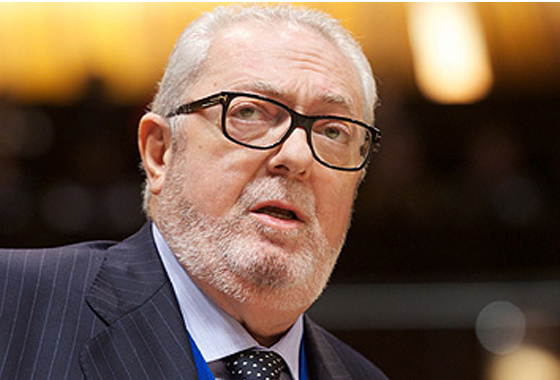
Espagne, PPE/DC, Président de l'Assemblée
15:35:50
We will now hear an address by Mr Alexis Tsipras, Prime Minister of Greece. After his address Mr Tspiras will take questions from the floor.
Prime Minister, it is an honour and a pleasure for me to welcome you to our Assembly, which brings together members of parliament from all over Europe and beyond to support human rights, democracy and the rule of law.
We are all too well aware of the great challenges facing Greece and of the sacrifices that your people and government have had to make. Your country continues to face serious economic, social and humanitarian challenges, and finds itself on the front line of a large-scale arrival of migrants, asylum seekers and refugees seeking shelter from persecution and poverty. Your country has had to take difficult decisions that have required strong political leadership, but you did not step back from Europe, and now Europe must not turn its back on Greece.
European solidarity is essential. The timing of your address to our Assembly is all the more pertinent as this week we have been discussing the situation of refugees in Greece.
Mr Prime Minister, we are keen to hear your message to us. You have the floor.
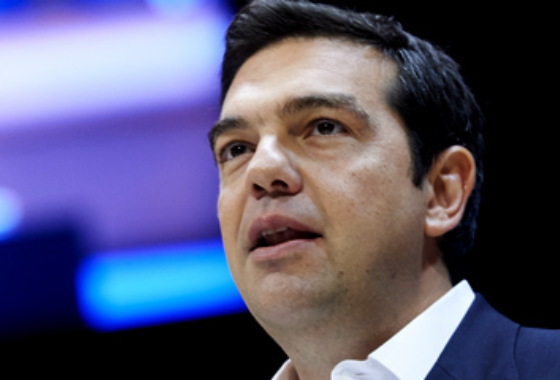
Premier ministre de la République hellénique
15:37:29
Mr President, Secretary General of the Council of Europe, dear colleagues, members of the Parliamentary Assembly, ladies and gentlemen, it is a great honour for me to address the Parliamentary Assembly of the Council of Europe. I appreciate this honour.
I stand here as a representative of my country, Greece, and would like to start by expressing my deep feelings and gratitude. Like all other Greek citizens, I cannot forget the significance of the words extended by the Council of Europe to the Greek people when we were fighting for democracy under the dictatorship of the Colonels. The Council of Europe made it possible for those who resisted the Colonels to express themselves and to give witness to the fact that there were political prisoners and that people were being tortured. That was heard everywhere in Europe.
The Council of Europe isolated and condemned the regime of the Colonels. On 30 January 1969, the consultative council closed the door to Greece and recommended to the Committee of Ministers that Greece be excluded from the Council of Europe. That resolutely democratic decision was very much in line with the values and objectives of the Council of Europe. It was a unique attitude among international organisations, and one that protected human rights, the parliamentary system and the rule of law in the member States.
That move honoured the European Convention for the Protection of Human Rights and Fundamental Freedoms – a Convention that, together with the European social charter, which was signed in Turin in 1961, constitutes the cornerstone of our common post-war European approach to the organisation of societies. The recognition of the right of workers to a dignified salary; the protection of trade union rights; the protection of the right to engage in collective bargaining; the right of the elderly to social security; the combating of poverty and social exclusion – all these provisions are to be found in the revised European social charter. This is not just our continental acquis, if you will, but it points the way to an appropriate development of our societies in the future. It is really the only way to go for social democracy. That is the way to ensure the dignity of individuals and social cohesion. Freedom and democracy are in danger when social rights are not guaranteed.
My country, Greece, did not ratify the social charter of 1961 until 23 years later in 1984 – an inexcusable delay – and the revised social charter was ratified 20 years after it was adopted. For our government, this ratification is a sign of our attachment to social justice in Europe. It is also proof of our will to apply the principles of social justice and the rule of law.
Unfortunately, the European social charter is not binding. It does not contain binding provisions, but is simply, through the notorious Turin procedure, an effort to promote social rights through the work of national parliaments. That is why, although the European social charter is a balancing force, it is insufficient to protect people from the destruction of the European social model through more and more deregulation. And this despite the fact that the European Union social charter recognises and integrates these fundamental social rights.
It is important that the European social charter is transformed from a text of recommendations and pious wishes into something more binding, because social rights in Europe are often not protected and are often undermined by those who should be their guarantors. There are social rights à la carte, depending on which country you are in. The internal policies of austerity, budgetary rigour, deregulation imposed by the European Union through the financial support MoUs (memorandum of understanding) are pushing States towards a situation in which they do not respect the basic commitments they took on ratification of the European social charter.
In its recent case law, after collective proceedings brought by Greek trade unions, the European Committee of Social Rights itself considered that the European social charter is being violated by a number of the measures being implemented in Greece. That must stop. What Greece needs today is clear-cut reorganisation of an already flexible labour market – and not its levelling.
Dear colleagues, ladies and gentlemen, I stand here before the Council of Europe one day before the British referendum, in which British voters will decide whether or not to keep the United Kingdom within the European Union. Please allow me to share my opinion about the referendum with you. I think we would all agree that Europe today finds itself in crisis. The very fact that tomorrow’s referendum is taking place shows how deep rooted the crisis is. Of course, any pro-European force must react positively and urge the United Kingdom to remain within the European Union.
However, I am convinced that whatever the result of tomorrow’s referendum, the consequences for our common European home will be deleterious. Leaving the European Union and going back into splendid isolation would be very harmful to the United Kingdom and the European Union, but even the negotiation of some special status and the refusal to afford the same social rights to non-British European Union citizens in the United Kingdom would be a very negative development in the conservative direction. It would set a negative precedent in Europe.
At the same time, I believe that we need to rethink our Europe. We must understand that today, the European social model is becoming a neo-liberal model. Whatever the choice of the British people, we must all ask ourselves the crucial question about which direction Europe should take at this crossroads. We can take advantage of the crisis to engage in deep-rooted and far-reaching reform. We need to take a hard look at our model and how it is functioning, as well as at the management of our three simultaneous and parallel crises – the economic crisis, the refugee crisis and the security crisis.
All of this has pushed Europe into a political and social crisis – a crisis that is shaking Europe at its very foundations and undermining European unity. The dominant forces in Europe are continuing to apply the rules and the rules are resulting in a lot of problems. Let me take the example of countries that have a high public debt, a situation that has become worse because of austerity policies and the economic crisis. This has made it very difficult for those countries to return to growth. The only credible solution to put the crisis behind us must be based on investor confidence. Investors will put their trust in those countries again once they return to a sustainable level of public debt. Countries should be able to finance their own debt and have access to financial markets. Of course, when I talk about those countries, I have in mind first and foremost my own country, Greece.
The failure of the neo-liberal model to manage the crisis, with austerity as the main weapon to be deployed, has become clear. We have 22 million people unemployed in Europe. That shows that the crisis is not behind us. It is ongoing and well entrenched in Europe. Indeed, about half of those 22 million people were long-term unemployed as of 2015, a figure that has doubled since 2008. This shows that unemployment in Europe is systemic. Twenty-two million unemployed, 11 million of them long term – that is an entire country wiped off the map of Europe. Long-term unemployment is a serious political problem that Europe must confront head on. The failure of austerity policies at the national level, with recession, excessive debt and plummeting remuneration, shows that we are confronted by a problem with a European dimension. Competition among States for salaries can result in competitive advantage in theory, but the differences between the northern and southern countries are becoming larger, with people looking at their own nations for solutions, despite the inter-State competition. That is why there is growing Euroscepticism in the southern part of Europe.
In the northern part of Europe we are seeing a tendency to call for derogations from applying the acquis communautaire. The growing economic crisis has awoken the monster of populism and extreme right-wing policies. Those who were formerly isolated have now appeared in the political arena. In some countries the extreme right even threatens to take over political power or at least undermine or destabilise the existing power. A Europe that is closing its borders to refugees and opening them to austerity; a Europe of supranationalism when it comes to common rules for refugees but which forgets about national sovereignty when it comes to austerity – that is a Europe that is trampling on its fundamental values, its unity and its cohesion. It is a Europe that has pushed itself into a profound crisis and become incapable of convincing peoples that it is in their interest to support and strengthen Europe.
It is blatantly obvious that the response to the crisis can be neither the neo-liberal model nor a growing nationalism, with each country trying to manage on its own. We have to fill that gap and quickly. We have to react collectively, not on the basis of any particular ideology or preconceived notions, but by returning to the principles of democracy, justice, solidarity, equality and respect for human rights and social rights, in order to strengthen our cohesion and be more unified in moving forward. We all need more Europe, not less Europe, but first and foremost we need a better Europe. To achieve that we need to change our policies, strengthen democracy and get back in touch with European citizens by strengthening the institutions of democratic governance and combating inequality. We need to strengthen the social dimension of Europe, and to do that we must come to an agreement about social cohesion. We cannot opt for policies that are most disadvantageous to European workers. We need a new social contract for Europe. That is something we must fight for.
Dear colleagues, the economic crisis and the refugee and migrant crisis are challenges for Europe as a whole. They are challenges that call on us to confront them with joint and common mechanisms so that we can promote European values. As you all know, Greece has been confronted with and buffeted by these crises perhaps more than anyone else, especially when it comes to the refugee crisis. The Greek Government, Greek volunteers, foreign volunteers, and local authorities and NGOs in mainland Greece and on the islands are all making Herculean efforts every day, with a view to being able to welcome and support the at least 1 million refugees who arrived in Greece in 2015. More than 160 000 lives have been saved at sea, most of them children, the elderly or members of other vulnerable groups. I am pleased that this has now been recognised by the Council of Europe, with the award of prizes to two Greek NGOs.
These efforts are ongoing. In Greece we currently have 58 000 migrant refugees. Over a 20-day period, the Balkan countries unilaterally decided to close their borders, despite the contrary decision taken by the European Council, which meant that 58 000 people were trapped in my country. That may seem a very small number to you, but compared to the Greek population, 58 000 refugees is not a small number. The equivalent numbers for Germany, France and Italy would be between 400 000 and 600 000, and they are the result of the closure of the border between Greece and the former Yugoslav Republic of Macedonia. The Idomeni camp on the border was finally emptied in peace, without using force, after eight weeks, whereas in other countries such illegal camps remain for years and then evacuated with a lot of force and violence.
We have created 55 000 shelters for the individuals concerned, and obviously their living conditions are not ideal, but we are doing everything we can to improve conditions. We offer those individuals all the conditions needed for survival – their primary needs are met. Of course, we need European funding to continue doing that, and we are co-operating with the United Nations High Commissioner for Refugees and with non-governmental organisations, which directly receive two thirds of the European funds that we use to take care of refugees. We try to address the daily difficulties by registering and identifying every individual who arrives on a Greek island. We take care of them from the moment they submit their request for asylum.
The Asylum and Refugees Authority, following European and international law, informs all refugees and migrants of their rights and obligations, examines their asylum applications separately and individually and fully respects the rights of each applicant. I underscore that these are applications for asylum in Greece because, as Frontex has noted, individuals have been encouraged, even by legitimate organisations and NGOs, to submit applications for asylum not with a view to remaining in Greece but in the hope that pathways to other parts of Europe will open once again. I thank the European Commission and the European Asylum Support Office for their support and responsible approach.
We take particular care of vulnerable groups, especially unaccompanied minors, and we seek to achieve family reunification for those who became stuck in our country after the unilateral closure of the Balkan route. Their applications are examined on a priority basis. Some 500 unaccompanied minors are hosted in existing structures. Following an action plan drawn up with the United Nations High Commissioner for Refugees and NGOs, we will introduce additional special infrastructures for the hosting of an additional 400 unaccompanied minors in July. A number of other internal measures are being introduced, including: a register of tutors; strengthening the possibility of placing children with foster families; and the development of an electronic platform for tracing minors, for which we will hopefully be able to take advantage of a contribution from the Council of Europe Development Bank – that work is a very high priority for us. We will be submitting a proposal to the European Commission to the effect that unaccompanied minors who are less than 10 years old and who have been stuck on Greek territory since before 19 March should be priority candidates for relocation to other European States, whatever their nationality. That would be a positive step.
The financial crisis and the migration crisis clearly cannot be resolved through the instruments of nationalism and retrenchment and through policies that would put responsibility on the shoulders of the most vulnerable countries, as that would violate the rights of the most vulnerable groups. Xenophobic policies, such as refoulement at sea and actions that seek to treat migrants as a problem only for front-line countries, violate European values and threaten the future of Europe’s ethics. Greece continues to try to deal with the problem, but the migration crisis requires solidarity – we must work together. Only by co-operating with transit countries and with the countries of origin will we be able to address the phenomenon appropriately.
We must stress the resolution of conflicts through humanitarian co-operation and more interconnection between our migration policy and our foreign policy. In that respect, Greece has strengthened its co-operation with Turkey, which together with Jordan and Lebanon is one of the three countries that have received the most refugees – there are 3 million refugees in Turkey. There has been Euro-Turkish co-operation, and a related NATO operations in the Aegean Sea, and thanks to the huge efforts of Greek, Turkish and European authorities the flow of 7 000 to 8 000 migrants a day to the Aegean islands last November has now been staunched to fewer than 1 000 a day. Most importantly, we have not been seeing the tragic deaths at sea that we all deplored on the smuggling routes in the recent past. The irregular routes taken by smugglers have been replaced by a legal route into Schengen States from Turkey, so the former situation, of which we were all so ashamed, has now been resolved. The new route has been used by hundreds of refugees over the past few months, and we expect it to become a permanent route for thousands of individuals who want to settle in Europe.
Many efforts have been made, but we need to do more to improve the migration management process. On a daily basis, the Asylum Service and the migration ministry, which did not even exist a few years ago, are sharing a huge burden and making tremendous efforts to fulfil their mission. I publicly thank the Greek people – the woman and man on the street – the volunteers and the ministries, and I particularly thank the minister responsible for the migration ministry, Ioannis Mouzalas, all of whom are fighting daily to ensure humanitarian support for refugees. The minister has not come from a political milieu, but has broad experience as a physician and has been a member of humanitarian organisations. He is an excellent organiser and has managed to ensure good co-ordination among all those who are contributing to dealing with this humanitarian problem, nationally and internationally.
As of now, we expect that there will be fair distribution of the burden of welcome across Europe. The front-line countries should not bear all of the burden. We expect our partners to take up their responsibilities on the basis of solidarity – not just solidarity towards Greece but solidarity towards the values of an organisation that they have chosen to join. Solidarity means that we share the problem without undermining those working with us to deal with it. We expect a significant speeding up of relocation processes and a fair revision of the Dublin Agreement so that everyone takes up the burden that is rightfully theirs.
We also hope to be able to co-operate with the Council of Europe to take advantage of its expertise, especially in the field of human rights. It was with particular pleasure that I recently welcomed the Secretary General and the President of the Parliamentary Assembly to Greece. We had an opportunity to talk about how we can work together. It is clear that we can confront the migrant and refugee crisis effectively only by looking at the root causes that have given rise to it – armed conflict, impoverishment, climate change and the violation of human rights. We must therefore co-ordinate more to avoid a further deterioration in the security crisis in Europe, which is resulting in not only the destabilisation of countries close to Europe but the setting up of terrorist networks within our European societies. Europe is called upon to find the solution that will protect it and its values, and which will make it possible for us to confront terrorism abroad and ensure that we have the right conditions for peace, security and reconciliation in the countries affected. We need solutions that will protect European citizens and the rule of law in Europe.
Greece, as a European country located on the Mediterranean and close to countries of the Black Sea, continues to be active in its multi-dimensional foreign policy. During this period of increased regional confrontation and destabilisation, we must enter into dialogue and work bilaterally and multilaterally with our neighbouring countries in the Mediterranean, the Black Sea and the Balkan countries. We must use international law to defend our sovereign rights. In this regard, we strongly support the cross-community talks for a fair and viable solution to the Cyprus problem, based on the resolutions of the United Nations Security Council and the European Union membership of Cyprus; a solution which shall infuse a sense of security to the people of Cyprus, both Greek Cypriots and Turkish Cypriots, with no occupying forces and outdated institutions, such as guarantees.
We are in favour of UN initiatives to support peace and stability in Ukraine, Libya and all countries affected by conflict. We are in favour of finding solutions to the situation in the Middle East, and we want to see a sovereign Palestinian State that can co-exist peacefully with Israel. We want to strengthen the monitoring of our borders, and we will co-operate with our partners to deal with the issues of terrorism and extremism while respecting international law, European law and human rights.
As you will understand, over the past 18 months we have been undertaking significant efforts to deal with the migration crisis and the financial crisis while security challenges were increasing. However, the need to protect human rights in Greece means that we have been active in many other areas as well. In December we introduced civil partnerships for same-sex couples, putting an end to a cycle of regression and injustice for all Greek citizens. We opened a new cycle of equality and dignity for all people of whatever gender and sexual orientation. We want to protect all people from fear and intolerance – that is our democratic inheritance, and it has led to an improvement in the lives of many Greeks. Changes in the law have also resolved many issues relating to divorce and inheritance.
However, there is still a long way to go in our daily struggle against all forms of discrimination and racism. We are also looking to change our law on nationality to guarantee that second-generation children of immigrants can have Greek citizenship. If children born in Greece to migrant parents want to study in our country, we want to make that easier for them. We also have a legislative programme to improve the situation in our prisons, because we want to deal with the problem of over-population. We are working on reforms to our national health system to link it with penitentiary institutions, and we want to improve our centres for those suffering from drug addiction.
We are working to improve the situation of our Roma population, because the Roma population both in Greece and in Europe as a whole are extremely vulnerable. We have established the National Supervisory Mechanism for Roma Policies, and we will set up a Special Secretariat within the Ministry of Social Solidarity to examine and resolve the issues with which they are confronted.
In the near future, we are going to build a mosque and a Muslim cemetery in Athens, which has been planned for a long time. We want to respect the Muslim population of Athens, but that is not the only reason for doing it – we also want to firmly safeguard our own values and principles.
Today, Europe is confronted with a major challenge. We need to re-establish economic stability and, at the same time, protect social rights and social cohesion. Your Assembly, which is a vital body within an institution that provides models for the rule of law, democracy and human rights, is in a privileged position, and as such you are the conscience of European citizens. Your task is a difficult one. You have to study the responses available and offer solutions to the challenges that threaten both the European construction and human rights.
Greece believes that the role of the Council of Europe, as a unifying force based on shared principles and values, is irreplaceable, and Greece has contributed to, and will continue to contribute to, fulfilling the Council’s goals. Allow me to underscore our ongoing commitment to the construction of a democratic Europe: a Europe of solidarity; a Europe of tolerance; and a Europe based on the values and the principles of the Council of Europe. This is vital if we are to confront the challenges that our countries face, and we must confront them at an institutional and constitutional level, as we have done for the past two years. I am sure that you will work as best you can to this end.
Ladies and gentlemen, we are counting on you. We believe that your efforts cannot be replaced.
Espagne, PPE/DC, Président de l'Assemblée
16:10:24
Thank you very much, Mr Prime Minister. Unfortunately, your speech has taken up most of the time allotted. We will find it very difficult to move on to the list of speakers.
I will give the floor to the five speakers on behalf of the groups, to ask questions together. If there is time after, we will follow the list of speakers. I am very sorry about that.
Mr Prime Minister, as you said, we are living in dangerous times, in which we see growing tensions on our continent and international co-operation under threat. We especially notice tensions between Russia, the biggest member State of the Council of Europe, and the European Union, which 28 of our member States are also members of. There has been the imposition of serious sanctions, back and forth, and sanctions that may be reconsidered in the near future. You are now known in both Brussels and Moscow. Can you see any way out of this dangerous policy of confrontation and a way towards co-operation?
Prime Minister, the refugee crisis is a major challenge and Greece must not be left alone. However, Greece has brought itself into a very difficult economic position. You referred to neo-liberalism. Frankly, I think that communism is a system that has failed and we need to consider the welfare of our own people at home. What do the Greek authorities intend to do to improve the financial situation and to finance yourselves on the capital markets?
Mr Tsipras, it is crystal clear that as far as the refugee crisis is concerned Europe must show more solidarity. Solidarity is one of our basic and beautiful values. At the same time, however, it must also apply to our consideration of refugees. I have certain concerns about the refugees in respect of the European Convention on Human Rights and the Geneva Convention. Could you please explain how the Greek Government are implementing the request of the European Court of Human Rights in this respect?
Prime Minister, thank you for having accepted my invitation to address this Assembly. Your country has been undergoing very severe budgetary restrictions. Can you see the light at the end of the tunnel and how will you comply with the principle of accountability, keeping in mind that we want all Greeks to benefit in the near future from all these reforms, so that they can live a life of dignity, serenity and certainty about the future?
The fight against the economic crisis in Greece has gone on for several years. What was the main mistake made by the European Union and the eurozone in the advice, recommendations or ultimatums that were given to Greece, or were the mistakes only made by Greece in the past? I ask because a good answer from you could be important not only for Greece but for a rethinking of Europe.
Premier ministre de la République hellénique
16:10:24
I will try to reply to the five questions that have been asked.
The first question, if I remember rightly, was from Mr Kox from the Netherlands and it was on sanctions and Russia. I am absolutely convinced that we cannot go back towards the Cold War, and I am also convinced that anything that is contrary to international law should be condemned. However, having taken note of these violations of international law, we need to find ways to work together to establish agreement and to bring matters back into line with international law, through dialogue and negotiation.
Up to now, these sanctions have not been effective and it is my view that we cannot speak of any shared security architecture in Europe without including Russia. Therefore, I consider that the way forward in the near future – slowly and step by step – is to make sure that the Minsk agreements are implemented, and to show that that will be merely the first step on the way out of the sanctions process and towards improving the relationship between the European Union and Russia.
The second question was put by our colleague from the EPP. Of course the communist model was a failure – nobody would disagree with that – but I say to you that the neo-liberal model has also been a failure. We need to find the way to achieve social cohesion in Europe and to bring it back to its basic values: social cohesion, democracy and solidarity.
I will now try to reply to the question of when we are going to get out of the economic crisis, which is of concern to millions of my fellow Greeks. There is so much that the Greek people have done over the last few years and so much that they have suffered. Many say that they have suffered in spite of applying the programmes. The truth is that the programmes were not very well constructed and that is why they were badly implemented.
Returning the Greek economy to growth will require more than the ill-assessed measures that were applied. Now, for the first time, we have a moderate adjustment programme that offers the prospect of getting out of recession, especially if, after Greece fulfils its commitments, our partners fulfil theirs, and of course that has to do with lessening the debt burden. On 24 May, at a meeting of the Euro Group, we spoke about keeping that below 15% of GDP. I think that decision is a just one, and not only for Greece, but for all European countries. For if we are europhiles, we should not just be seeking concessions for our country; we should be trying to achieve a good deal and prosperity for all the peoples of Europe. We therefore need to look at the public debt of other countries as well. That is of primary importance. What was decided for Greece was that we would have a mutualisation of the debt and that that could lead us towards a European solution. At the same time, everything that was decided for Greece needs to become more specific and more immediate; we should not have to wait years to see the application of decisions that seem perfectly logical and clear today.
In answer to the question from our Estonian colleague on human rights and the Geneva Convention, I would like to be very clear that throughout this whole period the Greek Government, and indeed all of Greece, has found itself in a very difficult situation. On the one hand we had to adhere to the European conventions and receive the refugees, but on the other hand we had to face a very unilateral approach at the same time. From the time when our northern frontiers were closed unilaterally, the prospect of Greece becoming the place where thousands of people would be locked in – 5 000 to 7 000 arriving every day – was a very serious danger. We had to find a way out of that pressure cooker. We did so by providing our own effective solutions to the refugee crisis, in full respect of international law, human rights and the Geneva Convention. Today, every asylum application is taken on a case-by-case basis. Every individual on any Greek island has their rights respected according to the Geneva Convention and international law, obviously with courts and an appeal process. Each case and each application for asylum is determined on a case-by-case basis, treating each migrant and each refugee individually.
In answer to the question on the principle of accountability, at the beginning of this grand adventure that followed the economic crisis we had elections, after the signing of the programme agreement. The Greek people went to those elections with all the cards on the table and in full knowledge of what they were deciding upon. The government was there in order to apply the agreement that was signed. Back then, in 2015, we received a mandate to negotiate. We negotiated and achieved a compromise. We then went back to the Greek people so that they could judge, and in September 2015 they requested that we continue. The programme was very difficult, but we were trying to protect their social rights and the most vulnerable groups. I hope that we will achieve that and that we will not have to cross any of the red lines that we laid down when we signed the agreement.
The fifth question, which was from our Polish colleague, is a very interesting one: what was the basic mistake? Was it a mistake by the European Union, or were others also responsible for the crisis, and not just our partners? Were Greek mistakes part of that? I do not like pointing the finger at our partners at every turn, and it is obvious that many of the mistakes were made in Greece, under Greek management. Why were Greek Governments unable to see this when Greece became a member of the eurozone? In those years of growth Greek Governments were more concerned with organising the Olympics, rather than establishing a modern Greek State, and we know what that led to: over-indebtedness and everything else.
Obviously Greece was also in error. The day when the Greek Government was no longer able to borrow money on the markets, when we were no longer soluble, led to that lack of solvency and then to the current situation. At the time, unemployment in Greece was slightly higher than in Germany, at 7.5%. Today, unemployment is below 7% in Germany but above 20% in Greece. That is a clear sign of the failure of the austerity policy that was applied to us. All of this began with the fact that Greece was in such deep debt.
What was the European Union’s main mistake? It did not have confidence in the European institutions. It allowed technocrats to take decisions – it was not politicians who took those decisions. As a result, today Europe faces a political and democratic crisis. It is a crisis of confidence. European citizens no longer trust Europe. That is the consequence of failed policies, not only in Greece but in Spain, Portugal and other countries in the European south.
I think there is one question that I have not replied to – no, I am being told that I have replied to all the questions. If there is time I would be delighted to reply to any other questions.
Espagne, PPE/DC, Président de l'Assemblée
16:10:24
Time has absolutely run out, but thank you very much again for being with us today. I look forward to our continuing future co-operation. That brings to an end the questions to Prime Minister Tsipras.
Members on the questions list who have been present in the Chamber but have not been able to ask their question may submit it to the Table Office for answer in writing and publication in the Official Report.

20:28:39
1. Ms Anttila (Finland, ALDE) – Mr Prime Minister, the point of departure for the Schengen system is to register asylum seekers in the European Union country of entry. However, the refugee crisis has led to serious exceptions to this rule.
In light of the current situation, what is your understanding of the functioning and the relevance of the Schengen system?
Reply:
Being at the external border of the EU, Greece has been one of the countries, most affected by last year's unprecedented refugee and migratory flows towards Europe. Since 2015 we have received more than 1.1 million refugees and irregular migrants. Despite the ongoing financial crisis, the people of Greece have welcomed the refugees in a humane way and have catered to their immediate needs. The Greek coastguard has saved the lives of tens of thousands of people, while the Greek Asylum Service - which was founded three years ago - is dealing with the 4th largest number of asylum applications in Europe. This is a situation that no country in Europe could cope with on its own. Support from the UN and the EU - particularly through UNHCR, IOM, FRONTEX and EASO - has been important, but much more is needed.
While dealing with increasing influx of refugees and migrants, we remained committed to upholding the Schengen rules and we have dedicated relentless efforts to that end. Today, according also to the European Commission, Greece is registering at a rate of 100% (including fingerprinting and conducting relevant security checks) all those who enter the country irregularly. At the same time, we are cooperating closely with FRONTEX on strengthening border management.
Following the evaluation of Greece on the implementation of the Schengen acquis in the field of management of the external borders, we have delivered ahead of time on almost all Council and Commission recommendations and have proceeded to the adoption of the necessary measures for the longer-term ones. Preserving the Schengen acquis and ensuring that Europe will remain a secure area for its citizens, while safeguarding the rights of the people in need of international protection, is a top priority for us.
2. Mr Büchel (Switzerland, ADLE) – Mr Prime Minister, in your speech you spoke of the European countries’ debt. The Central European Bank (CEB) is buying government bonds on a wide scale. The CEB says that this monetary policy should make it possible to reduce financing costs for the Eurozone. This purchasing programme is converting no less than €1140 billion into new funding which is then injected into the financial system.
Do you think this means that the structural reforms in the Eurozone countries will be implemented more slowly? What is the situation in Greece in this regard?
Reply:
The European Union is in the midst of a triple, economic, refugee and security crisis. That triple crisis has turned into a political crisis on the project of European integration itself.
In this framework, dealing with these crises is necessary to ensure the future of the European project. In the economic field, we must look at the question of tackling European debt in conjunction with the growth problem of the Eurozone. In that context, structural reforms as well as the overall macroeconomic stance of member States, need to be growth and employment oriented, so as to take advantage of the ECB's quantitative easing.
Greece does not participate in the quantitative easing program because of the sustainability problem of the Greek public debt. We are following all our commitments deriving from the agreement of 12 July 2015, to the letter. A significant part of this agreement involves the restoration of the sustainability of our debt, subsequent to the successful conclusion of the first review of our economy by the institutions. This review is to be concluded in the next days. So, we justifiably expect that the horizon will clear before the end of 2016. This means that the specific debt-easing measures to be implemented up to and subsequent to 2018 will have to be announced in the next two months, so that a clear signal is sent to investors and the markets. That will enable us to participate in the ECB's quantitative easing program and, as a consequence of it, return to the markets. The Greek economy is now recovering. That means that, starting from the second quarter of 2016 (positive GDP growth 0.3%), we are expecting three consecutive quarters of positive growth. Therefore, the announcement of those specific debt-easing measures is the push that the Greek economy needs to return to sustainable growth.
3. Mr Howell (United Kingdom, EC) – Mr Prime Minister, in the area I represent in the parliament of the United Kingdom, the rate of unemployment is 0.5% as a direct result of austerity and the long term economic plan of the government of the United Kingdom. Why will these not apply to Greece?
Reply:
What you are suggesting is an exception to the experience of the rest of Europe. Austerity has led to an increase in unemployment across the continent during this crisis. Unemployment is now a major economic, social and political problem not only for Greece but for the European Union as a whole. In particular, the large number of long-term unemployed - one half of the total number of unemployed (11 million out of 22 million) - is an indication that Europe is experiencing an unemployment crisis.
This is due to austerity, which causes recession and, thereby, a rise in unemployment. In Greece, unemployment was 7.8% of the total labour force in 2008. In 2011, in the second year of the Memorandum, it more than doubled to 17.9%. In 2014, after four consecutive years of austerity policies, unemployment had skyrocketed to 26.5%. After the relative relaxation of austerity and an aggressive strategy targeting unemployment, from 2015 on, unemployment decreased to 24.9% in that year. During 2016, it has further decreased to 23.3% according to April's data (a rise in employment of 3% relative to April 2015, i.e. an increase of 107 000 persons). I think these figures speak for themselves.
4. Ms Karamanli (France, SOC) – Mr Prime Minister, Greece is faced with two crises: an economic crisis and a migration crisis. Between 2007 and 2015, the public debt of Greece rose from 103% to 179% of GDP.
The two main causes for the debt increase are (negative) growth and the interest burden. Growth is one of the two keys to a return to prosperity for the Greek people. But in order to achieve sustainable growth there has to be a strategy.
In the assignment for the French National Assembly of which I am in charge, investment in Greece is seen as one of those keys. This presupposes a stable legal and tax environment for companies and both tangible and intangible investment. Basic training, ongoing training, research and innovation are all also part of this.
There are three simple parts to my question:
- which industrial and farming sectors will be given priority assistance?
- what is the limit set on the significant and constant increase of taxation on businesses?
- how are you going to improve the service delivered by schools, university and continuing education?
Restoring confidence in the State means improving the service provided to everyone.
Reply:
During the recession, investment has dropped by two-thirds in absolute numbers. Since investment is the only road to growth and thus an exit to the crisis, we have created an investment-friendly institutional environment. For the first time in Greece, our government introduced a 12-year stable tax regime for investment plans exceeding €20 million. We have also undertaken major reforms concerning the business environment. They have to do with the simplification of licensing processes, the fight against bureaucratic constraints, and the opening up of certain markets which will attract private investment.
We have given priority to investment which will alter the structure of production from its concentration on low technology and high competition areas, with a price-elastic demand for exports, to the dynamic range of high-tech industries that could improve market power in international trade. The main focus is on diversifying the economy, apart from tourism, which will continue to be a major area of investment attraction, or shipping, where Greece has traditionally very strong potential, into other sectors as well, which can mobilise the excellent human capital of the country. Those include bio-certified farming and food processing, the energy sector, innovation and R&D, etc. Our scope is to transform Greece into an energy and logistics hub for the whole area of south Eastern Europe.
You are also right in saying that to restore confidence in the State means to improve the services provided to everyone. For us, health and education provision is a political priority that we have to honour despite the very limited financial resources that we have due to the implementation of the agreement of 12 July 2015 with our creditors. We are re-organizing both these sectors in order first, and above all, to make them accessible to all and, second, to improve the quality of their services. In particular, with respect to education that you are asking about, with effect from the ongoing school year, we have introduced all-day elementary school and we have reformed technical and vocational education at the secondary and post-secondary levels so as to prepare and specialise students professionally and, at the same time, restore their right to access the University system. We have started the reform of secondary education in order to render lyceum an autonomous educational level of critical learning instead of a mere exam-centred preparatory stage to the University. We will facilitate continuing education and continuing professional development.
As for higher education, our aim is to maintain equality of educational opportunities with economic efficiency of universities by developing synergies between businesses, research centres and institutions of higher education.
5. Ms Kyriakides (Cyprus, EPP/CD) – Mr Prime Minister, in relation to the ongoing talks for the solution of the Cyprus problem, we would like to hear your opinion with respect to the position expressed by Turkey to maintain the anachronistic system of Guarantors, in case of reaching a solution to the Cyprus problem.
Especially since we are talking about a Member State of the European Union and also because the United Kingdom and your own country have declared that they have no reservations to renounce this capacity.
Reply:
We have repeatedly stressed that abolishing the anachronistic system of guarantees in Cyprus and the full withdrawal of Turkish occupation forces from the island are key elements for achieving a comprehensive, just and viable settlement of the Cyprus problem on the basis of UN Resolutions and the status of Cyprus as a member-state of the EU. We have been systematically working in order to underline the importance of this matter, in all directions.
6. Mr Önal (Turkey, EC) – Mr Prime Minister, during your pre-election pledges for the Turkish minority in Western Thrace were promising. However, no positive steps have so far been taken. Although preschools are part of the compulsory education in Greece, the Turkish minority’s request for the opening of bilingual preschools is still pending.
Will your government respond positively to the minority’s request for the opening of minority preschools and new minority schools in general?
Reply:
In Thrace, there are over 35 functioning kindergartens in minority villages that are free and accessible for children belonging to the Muslim Minority. Once they complete their year in the kindergarten, minority children have the option of attending either a minority primary school, or a general primary school. Furthermore, the Ministry of Education is consistently exploring ways in order to improve both general and minority education in Thrace.
7. Mr Rouquet (France, SOC) – Mr Prime Minister, thanks to the courageous efforts of the leaders of the two parties on the island, there is today hope that the Cyprus conflict will come to an end. This hope is, however, fragile. Do you share this cautious optimism and can Greece support the efforts currently being made?
Reply:
Greece supported from the outset the intercommunal talks in Cyprus, which have been continuing at an intensive pace. We understand that, while important progress has been recorded, significant differences still remain on crucial negotiation chapters.
For all the past disappointments and the difficulties still ahead, the intercommunal talks remain the only negotiation process that is acceptable to all the interested parties. This process must therefore continue, until an agreed, comprehensive, just and viable settlement is reached. UN Security Council resolutions provide the basis for the solution of the Cyprus problem, which must also be fully compatible with the EU acquis.
8. Ms Schou (Norway, EPP/CD) – Mr Prime Minister, through the European Economic Area (EEA) funds Norway has over a long time donated considerable amounts of money to support your country’s efforts to handle the influx of asylum seekers and migrants. During 2014-2021, a total of €120 million will be made available to Greece through EEA-funds. A substantial part of these funds are earmarked migration and asylum.
What control mechanisms do you have in place to make sure that the funds made available for you are managed in a responsible way, and spent in accordance with what has been agreed?
Reply:
The body responsible for the management, at national level, of the EEA Financial Mechanism, which includes the Program GR06 on migration and asylum, is the Independent Unit of Planning Coordination and Monitoring of the Implementation of the Financial Mechanisms of the EEA (National Focal Point) within the Ministry of Economy, Development and Tourism. The European and Development Programs Division of the Ministry of the Interior and Administrative Reconstruction has been defined as Program Operator. It should be noted that the Norwegian Directorate of Immigration acts as advisor on the implementation of the Program. A Monitoring Committee is responsible for overseeing all Programs funded by EEA grants. Moreover, a Cooperation Committee has been established to monitor progress of the different projects in the asylum and migration sector. An External Advisor of the Program Operator is evaluating progress and offering advice on the management of funds. Payments are conducted by a separate Division of the Ministry of the Interior and Administrative Reconstruction. Audit procedures have been assigned to an external certified auditor. All data related to the Program are registered in the Integrated Informative System of the Ministry of Economy, Development and Tourism. The aforementioned structure, in accordance with the Program Agreement, ensures effectiveness, efficiency and transparency in all stages of the program implementation.


