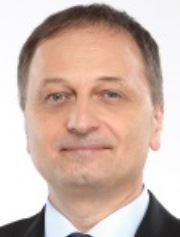
Thank you very much, Madam President,
I will speak in German.
First of all, at the request of Ms Petra BAYR, who is no longer able to respond, I would like to thank the members of the Election Commission in Kosovo and the Secretariat for their work and for the many questions and critical comments that have been addressed to Ms Petra BAYR.
Overall, I would say that this debate also shows - as does the fact that we have had so many requests for urgent and current affairs this week - how alarming our situation around our countries is becoming. I don't think this is a coincidence either. We are living in a time when war is returning to Europe: the war in Ukraine, also around Europe, the war now in Gaza and also tensions in other countries. We are also feeling how more and more debates are being geopoliticised. In such a situation, democracy, the rule of law and human rights are under particular pressure. And here it is particularly important for the Parliamentary Assembly of the Council of Europe, for the Council of Europe as a whole, not to be biased, to be balanced and to look not only at one thing, but also at various other things.
I would like to mention a few points that have not been discussed now, but which actually deserve a more intensive debate: the situation of the Alawites in Syria. We have criticised the Assad regime for years, but what is happening now? It's quite devastating - it's not an issue. And I also think - of course this has been mentioned a few times, and I don't want to go into the individual countries now, but I see a danger that lawfare - the political instrumentalisation of justice - will return or come to Europe, as we perhaps know it from Latin America - I'm reminded of the Lula case. And that is also a danger, without going into more detail about the individual countries. Some of them have been mentioned.
It was also mentioned, and I also mentioned it at the beginning, that even in Germany, which is considered an established democracy, we have considerable problems with this last early Bundestag election on February 23. I hope that we can reach a conclusion quickly. I would also ask for your support to ensure that the procedure, which is also provided for in Germany, is brought to a quick conclusion.
Perhaps I will come back then, even if not. In any case, I would like to thank you for your co-operation over the last few years and wish you a pleasant Monday evening. Thank you very much.
Merci beaucoup, Madame la Présidente.
Je vais m’exprimer en allemand.
Tout d’abord, à la demande de Mme Petra BAYR, qui ne peut pas répondre aux collègues, je souhaite réitérer ses remerciements aux membres de la commission électorale du Kosovo ainsi qu’au Secrétariat pour leur engagement. Si vous avez des questions, Mme BAYR reste à votre disposition.
De manière plus générale, je dirais que ce débat reflète également – tout comme le nombre de demandes relatives aux affaires urgentes et affaires d’actualité cette semaine – le caractère préoccupant de la situation dans plusieurs de nos États membres. Cela ne relève pas du hasard. Nous vivons une époque où la guerre est de retour en Europe : la guerre en Ukraine, les conflits aux frontières du continent, la guerre à Gaza, et des tensions dans plusieurs autres régions.
Nous constatons en parallèle une géopolitisation croissante des débats. Dans ce contexte, la démocratie, l’État de droit et les droits humains sont soumis à une pression accrue. C’est précisément dans ces moments que l’Assemblée parlementaire du Conseil de l’Europe et le Conseil de l’Europe dans son ensemble doivent faire preuve de neutralité, d’équilibre, et veiller à ne pas concentrer leur attention sur un seul sujet, mais à prendre en compte l’ensemble des défis.
Je souhaite mentionner ici quelques éléments qui n’ont pas été abordés en profondeur mais qui mériteraient une attention accrue.
Je pense à la situation des Alaouites en Syrie. Le régime d’Assad a été critiqué pendant de nombreuses années, mais qu’en est-il aujourd’hui ? La situation est désastreuse, et pourtant elle ne fait plus l’objet d’un débat actif.
Je souhaite également attirer l’attention sur un risque que nous voyons poindre en Europe : celui du lawfare, c’est-à-dire l’instrumentalisation politique de la justice. Nous en avons vu des exemples ailleurs – je pense au cas Lula en Amérique latine – et nous devons rester vigilants afin d’éviter de telles dérives dans nos propres systèmes. Je ne souhaite pas ici évoquer chaque pays individuellement, bien que certains aient déjà été mentionnés.
Enfin, je rappelle – cela a été signalé en début de séance – que même dans un pays comme l’Allemagne, considéré comme une démocratie consolidée, des problèmes significatifs ont été observés lors des dernières élections fédérales anticipées du 23 février. J’espère qu’une conclusion sera rapidement atteinte. J’appelle ici au soutien de toutes et tous pour que la procédure en cours puisse aboutir dans les meilleurs délais.
Je reviendrai peut-être sur ce point à un moment ultérieur, si cela s’avère nécessaire.
En attendant, je vous remercie pour la coopération de ces dernières années et vous souhaite une agréable soirée.
Merci beaucoup.
Vielen Dank, Frau Präsidentin,
ich werde auf Deutsch sprechen.
Zunächst möchte ich auf Bitten von Frau Petra BAYR, die jetzt nicht mehr antworten kann, nochmal ihren Dank an die Wahlkommissionsmitglieder im Kosovo ausrichten und an das Sekretariat für die Arbeit und dass viele der Fragen und kritischen Anmerkungen, die hier kamen, dass Sie sich sozusagen gerne auch nochmal an Frau Petra BAYR wenden können.
Insgesamt würde ich sagen: Diese Debatte zeigt auch – ebenso wie die Tatsache, dass wir diese Woche so viele Beantragungen von Urgent Affairs und Current Affairs hatten – wie sehr unsere Situation um unsere Länder herum alarmierend wird. Das ist, glaube ich, auch kein Zufall. Wir leben in einer Zeit, in der der Krieg wieder zurückkehrt nach Europa: der Ukrainekrieg, auch um Europa herum, auch der Krieg jetzt in Gaza und auch Spannungen in anderen Ländern. Wir spüren auch, wie immer mehr Debatten geopolitisiert werden. In einer solchen Situation stehen Demokratie, Rechtsstaatlichkeit und Menschenrechte in einem besonderen Maße unter Druck. Und da ist es besonders wichtig für die Parlamentarische Versammlung des Europarats, für den Europarat insgesamt, nicht biased zu sein, ausgewogen zu sein und nicht nur auf die eine Sache zu schauen, sondern auch auf verschiedene andere Sachen.
Ich will ein paar Punkte erwähnen, die jetzt nicht mehr zur Sprache kamen, die eigentlich auch eine intensivere Debatte verdient hätten: die Situation der Alawiten in Syrien. Wir haben über Jahre das Assad-Regime kritisiert, aber was passiert jetzt? Das ist ja auch ganz verheerend – es ist kein Thema. Und ich denke auch – das wurde natürlich ein paar Mal angesprochen, und ich will jetzt nicht auf die einzelnen Länder eingehen, aber ich sehe eine Gefahr, dass Lawfare – die politische Instrumentalisierung der Justiz – zurückkehrt oder nach Europa kommt, wie wir es vielleicht auch aus Lateinamerika kennen – ich erinnere an den Fall Lula. Und das ist auch eine Gefahr, ohne jetzt genauer auf die einzelnen Länder einzugehen. Die wurden teilweise erwähnt.
Es wurde auch erwähnt und ich habe es ja auch am Anfang angesprochen, dass wir selbst in Deutschland, was ja so als etablierte Demokratie gilt, erhebliche Probleme haben bei dieser letzten vorgezogenen Bundestagswahl am 23. Februar. Ich hoffe, dass wir da schnell zu einem Abschluss kommen. Ich bitte da auch um Unterstützung, dass sozusagen das Verfahren, das auch in Deutschland dafür vorgesehen ist, schnell zu einem Abschluss kommt.
Vielleicht komme ich dann auch wieder, wenn auch nicht. Ich bedanke mich auf jeden Fall für die Kooperation der letzten Jahre und wünsche noch einen angenehmen Montagabend. Vielen Dank.