mardi 24 juin 2025 matin
2025 - Troisième partie de session Imprimer la séanceVidéo(s) de la séance 1 / 1

Grèce, PPE/DC, Président de l'Assemblée
10:03:36
The sitting is open.
Good morning, dear colleagues. This morning, the Agenda calls for the election of a judge for the European Court of Human Rights in respect of the United Kingdom.
The list of candidates and biographical notices are to be found in Document 16177. The Committee's opinion is presented in Document 16198, Addendum 2.
The voting will take place in the area behind the President's Chair.
At 1:00 p.m., I shall announce the closing of the poll. Counting will then take place under the supervision of five tellers, who have been chosen by the political groups. The tellers are:
From the Socialists, Democrats and Greens Group: Mr Denis BEGIC from Sweden;
From the Group of the European People's Party: Mr Sergiy VLASENKO from Ukraine;
From the European Conservatives, Patriots & Affiliates: Mr Axel KASSEGGER from Austria;
From the Alliance of Liberals and Democrats for Europe: Ms Lucia PLAVÁKOVÁ from Slovakia;
From the Group of the Unified European Left: Ms Ann GRAVES from Ireland.
I would like to remind them that they will have to be in the room set aside for this purpose at 1:00 p.m. The result of the vote will be announced at the beginning of this afternoon’s sitting.
For these first ballots, an absolute majority of the votes is required. If a second round has to be organised, it will take place this afternoon from 4:00 p.m. to 6:30 p.m.
I now declare the ballot open.
We continue our work in the meantime.
Before I move on, I remind the Assembly that members who have not submitted an annual declaration of interests are required to start any intervention with an oral declaration of interests under paragraph 20 of the Code of Conduct for Members of the Parliamentary Assembly.
I remind members that they should insert their badge before taking the floor. As you begin your speech, please press the microphone “request” button once only, wait for a couple of seconds and then start talking.
I remind the Assembly that the Bureau has agreed that speaking times are limited to 2 minutes for all of today’s debates.
I would like to ask the Assembly to approve changes in the Agenda for Wednesday 25 June and Friday 27 June.
The debate on “Analysis and guidelines for a sustainable and socially fair energy transition” is currently due to take place on Friday 27 June.
I propose to bring that forward to the afternoon sitting of tomorrow.
Is that agreed?
Yes, thank you.
It is agreed, and the Agenda is amended accordingly. Because, as I announced yesterday, we will receive President ZELENSKYY at that late hour.
Before I go to the next item of business, I would like to refer to the day that we celebrate today. Today, we celebrate Women in Diplomacy Day, an occasion to honour the women who shape international relations. From men's intermediaries to today's peace negotiators, women have long influenced diplomacy, even when history left them unnamed. This day is both a tribute and a call to ensure their voices are fully included at every table. Yet globally, women remain underrepresented, as highlighted in our 2020 Assembly Resolution on the gender dimension on foreign policy. Only about 21% of ambassadors worldwide are women, and they hold a small share of senior diplomatic positions. Progress exists, but parity remains distant. The Council of Europe tells a different story. With 20 of its 46 ambassadors being women, it reaches nearly 44% female representation, far above the global average. These women are not just statistics. They are exceptional diplomats with whom I've had the honour to work closely since the first day of my Presidency. Their professionalism, insight and friendship have strengthened our cooperation and inspired our shared commitment to democratic values. And it is a happy coincidence that we have the Maltese Presidency. Malta, as you know, is represented by a woman, as a diplomat, as an ambassador, who is, at the same time, the youngest among her peers.
Now, the next item of business this morning is a current affairs debate on the European Court of Human Rights: rising to the challenges of our times.
Speaking time in the debate is limited to 2 minutes for all members, except for one member chosen by the Bureau to open the debate who is allowed 7 minutes.
In the debate, I call first Lord Richard KEEN. Lord Richard KEEN, you have 7 minutes following the debate, and then 3 minutes to respond. You may have the floor.
Thank you, Mr President. Colleagues.
Montesquieu’s seminal work on political science The Spirit of Law, published in 1748, addressed his ideal constitutional model which encompassed the separation of powers between a legislature, an executive and a judiciary. This was the model for the United States constitution and, in a looser sense, for the Council of Europe.
The Council, of course, comprises a Parliamentary Assembly as a legislature, a Committee of Ministers as an executive and a Court of Human Rights. And the democratic legitimacy of the latter as part of the Council of Europe is reflected in the role of this Assembly in the election of judges. These elements should be able to work in harmony, but only if each respects its distinctive role and actually discharges its obligations under the convention.
The Court relies for its legitimacy, competence and jurisdiction, upon state consent. That is the consent of the state parties to the Council of Europe. That consent is conferred by the Convention and by the individual protocols that state parties have ratified.
The role of the court is to determine whether state parties have or have not complied with their obligations under the Convention and its relevant protocols and enforced the rights conferred by the Convention and protocols. When it comes to the interpretation and application of the Convention, the Court, for at least the last 50 years, has treated the Convention as a living document which must reflect current social, economic and political attitudes, as well as developments in wider international law.
To take one simple example, the perception of what constituted the right to family life in 1950 differs markedly from what it is today. However, the competence of the Court does not extend any further than the interpretation and application of the Convention and its protocols. It is not for the Court to innovate upon the rights and obligations consented to by state parties.
Colleagues, the Court as a body and its individual members should not be the subject of attack by state parties for the decisions which it makes. That does not mean, of course, that the judgements of the Court should be free from criticism. The majority judgements of the Court are not infrequently the subject of criticism by judges of the Court themselves, in dissenting opinions. A recent example was the dissenting judgement of Judge EICKE in the Swiss old peoples case. I happen to believe that Judge EICKE's criticisms were well founded.
I, of course, respect the majority opinion of the Court. But, like a number of commentators, I happen to believe that the Court did exceed its jurisdiction and that this was an example of judicial activism. The President of the Court will, of course, disagree with me as he is perfectly entitled to do.
Colleagues, I now come to the open letter from the 9 state parties that has prompted this debate. I am not entirely sure what was meant in this context by an open letter, because I didn’t receive it. I don’t consider that the letter was the most appropriate mechanism for raising issues with respect to the competence and jurisdiction of the Court. But equally, I do not consider that it was intended, as suggested in the original title to this debate, as an attempt to undermine the Convention or as an attack on the independence and impartiality of the Court. It was an expression of exasperation with the migration issues perceived to be overwhelming many state parties to the Convention. It came from across the political spectrum, beginning with the socialist Prime Minister of Denmark. Colleagues, if nothing else, it has acted as a catalyst by triggering this debate.
The more neutral title adopted for this debate refers to the "European Court of Human Rights: rising to the challenges of our times". I personally believe that it should be the "Council of Europe: rising to the challenges of our times". The Court cannot be expected to do it on its own. One of those challenges is the uncontrolled migration into Europe aided and abetted by criminal gangs. If the terms of the present Convention do not allow the domestic legislatures of member states to address this issue, then it is not the Court but the Convention and its protocols that require to be addressed.
As I previously observed, the Court relies upon state consent for its legitimacy, as expressed in the terms of those protocols and the Convention. If state parties consider that the Convention and its protocols no longer reflect their requirements for the proper protection of human rights, then the mechanisms for dealing with this are available and they don’t include an attack on the Court.
State parties can promote a further instrument to the Convention which reflects what they regard as current attitudes to migration. I have no doubt that such a proposed instrument, whether in the form of guidelines, a protocol or further convention, would be the subject of intense scrutiny and debate in this Assembly. If such an instrument was ratified, then it would be respected by the Court in its application of Convention rights. Such respect is of course mutual. If the Court respects the terms of the Convention and its protocols, then members states will respect its judgements and implement them - something that has been rather lacking in recent years.
Colleagues, that brings me to my final observation. In order for the rights and obligations of the Convention and its protocols to work effectively, all three elements of the Council of Europe, the Assembly, the Committee of Ministers and the Court must work in harmony. That I fear has sometimes been lacking. A perception of judicial activism makes some state parties reluctant to obey judgements of the Court. That in turn causes the Committee of Ministers to rarely, if ever, invoke Article 46. The machinery of the Convention then grinds to a halt.
The open letter is therefore a wake up call to the entire Council of Europe. Colleagues, many of you will have read that famous novel The Leopard by Tomasi di Lampedusa. I also recall one particular line attributed to the Prince of Salina as he faced the consequences of the risorgimento in Sicily. "If we wish to remain the same, then some things will have to change."
Thank you, President.
Grèce, PPE/DC, Président de l'Assemblée
10:16:08
Thank you, Lord KEEN.
I call next Mr Mattias GUYOMAR, President of the European Court of Human Rights. And on this occasion, I want to welcome you to the Assembly and wish you all the best for your election and the years to come. You have 10 minutes, Mister President.

Président de la Cour Européenne des droits de l'homme
10:16:38
Mr President, Mr Secretary General, Members of the Parliamentary Assembly, Ambassadors, Ladies and Gentlemen.
I am deeply honoured to address you this morning in your Assembly at the start of my term of office as President of the European Court.
Elected for a full three-year term, I intend to follow in the footsteps of my immediate predecessors, Presidents Robert SPANO, Síofra O'LEARY and Marko BOŠJNAK. I am well aware of the advantages of this three-year term, which is a guarantee of institutional stability for the Court. Continuity and stability guarantee the coherence of the Court's action over time.
There is no need to remind you of the difficult context in which we find ourselves, and the challenges to the Convention system to which Lord Richard KEEN has just referred, in the very year in which we are celebrating the 75th anniversary of the signing in Rome of this treaty of legal humanism, the expression of the sovereign will of states.
Nevertheless, the Court is strong, and I would like to tell you, ladies and gentlemen, how my determination, commitment and optimism are rooted in this institutional solidity. The Court is strong in the 46 judges you have elected. With their varied backgrounds and wealth of experience, they make the Convention the living instrument that Europe needs.
The Court is strengthened by the more than 700 members of the Registry, under the authority of Ms Marialena TSIRLI, whose presence I welcome, more than 700 people whose skills and commitment contribute fully to the Court's activity and success. The Court enjoys the strong support of its member states, as expressed at the Reykjavik Summit, where the Heads of State reiterated the extraordinary contribution of the Convention system to the protection and promotion of human rights and the rule of law in Europe, and to the maintenance of democratic peace and security throughout the continent.
In this respect, the Court has honoured the trust placed in it by making the historic choice to retain residual jurisdiction over cases brought against the Russian Federation prior to its expulsion from the Council of Europe. Having thus decided to exercise its jurisdiction, the Court is today the only international court before which the Russian Federation can be held responsible for violations of rights and freedoms protected by the Convention. Of the 16 000 cases pending in 2022, the Court has already settled more than half, and on 9 July it will deliver a judgment in the inter-state cases of Ukraine and the Netherlands v. Russia.
It is at this pivotal moment that my term as President begins. And to meet the challenges of our time, I have placed it under the banner of "shared responsibility", based on the following three priorities: efficiency, visibility and accountability.
Efficiency. Numerous reforms have been undertaken in recent years, which have enabled us to significantly improve productivity, thanks in particular to a fine-tuned prioritization of cases, and we have thus reduced our stock of pending cases to around 60 000. Since its creation in 1959, the Court has settled over a million cases.
However, we still need to make progress in the administration of justice. In particular, the Court still takes too long to hear the most complex cases. And I am committed to improving the situation over the next three years, by striving to reach a target of 2 to 3 years' average time to judgment for chamber cases.
Visibility is the second priority. Transparency and accessibility are essential if we are to win the trust of the Court's stakeholders. We must succeed in addressing three circles of people at the same time. The first circle naturally includes the parties to disputes, but also all the institutional players of the Council of Europe, of which the Court is the judicial body. The second circle is made up of the national authorities of the member states, in particular the domestic courts, but also the Court's usual partners, lawyers, NGOs and opinion multipliers, such as the press and social networks. Finally, the third circle includes public opinion, the people who bring their lives to our courtroom, and to whom we owe it to better explain our role.
Finally, responsibility. The strength of the rule of law, including at European level, rests on the cardinal principle of judicial independence. I can assure you that, throughout my term of office, I will work with vigor and determination to guarantee the full independence of the Court and its judges.
And as President Theodoros ROUSOPOULOS reminded us in his speech yesterday, "history has shown us that when political power interferes with justice, it is democracy that pays the price."
But there can be no independence without responsibility. Assuming jurisdictional responsibilities without fear or loophole implies knowing how to be accountable. 75 years ago, the Founding Fathers entrusted us with the task of safeguarding and developing human rights and fundamental freedoms. Whether we are talking about the interpretation or application of this Convention, we must explain our judicial mission, we must explain what we have done and what we are doing with this legacy, which is both precious and fragile. In this respect, I shall endeavor to strengthen the ties that already exist with the Council of Europe and, in particular, with your Assembly.
In the face of the challenges it faces and the criticisms levelled at it, the Court's legitimacy depends on its effectiveness, visibility and accountability. But the Court's legitimacy is also rooted in shared responsibility and the principle of subsidiarity, which underpins relations between national authorities and the Court. I can never emphasize enough that the Court must only intervene in its own right, after all domestic remedies have been exhausted, and in its own place, while respecting the historical, political and legal biodiversity that is the richness of our Europe.
At a time when anti-judicial populism is on the rise, to use the eloquent words of Lord Robert REED in his speech at Inner Temple on 12 June, I want to say here, and here in your hemicycle, that opposing judges to democracy is an absolute contradiction in terms. And I would like to take this opportunity to emphasize the essential role played by judges in supporting and protecting democracy. This link is enshrined in the preamble to the Convention, which reminds us that the maintenance of human rights depends essentially on a genuinely democratic political system.
You are the "political engine" of the organization. You are the indispensable bridge between the Council of Europe and its member states. And I wish to reiterate before you the irreplaceable source of legitimacy that the Court's 46 judges derive from having been elected by your Assembly. I would remind you that since 2021, you have elected 22 judges. This is a democratic guarantee that both strengthens and obliges us.
The Court is a legitimate object of political debate. But it is not a player in the political debate. It expresses itself first and foremost through its judgments, the quality of its work, the rigor of its reasoning and the balance of its solutions. And when it comes to the separation of powers and the exact restitution of the Court's judicial role, it is in the Klima judgment just mentioned, of 9 April 2024, in paragraph 412, that the complementarity between the jurisdiction of the courts and other democratic processes is precisely described.
Four points in this respect. Firstly, judges are the bulwarks against arbitrariness, ensuring compliance with forms and procedures and exercising independent external control.
Secondly, judges are the guardians of the unavailable part of human rights, those absolute rights which suffer no derogation, such as the human dignity protected by Article 3. These rights are unavailable to the majorities of the moment, because they are enshrined in the very depths of the human person. Judges are the guarantors of respect for pluralism, for the rights of minorities and the unrepresented. And for the first time, in the judgment of 9 April 2024, the Court enshrined the notion of the interests of future generations, even though they are not currently represented.
This ability to judge the future brings me to my fourth and final point. Judges are the custodians of a certain form of democratic temporality. Election time and political action time are not the same as justice time. They must complement each other, not clash. And populism feeds on collisions between these different temporalities. Judges, seized of disputes that have already come to a head, by their very nature look back on the issues at stake. They can also, in deciding the particular case before them, define general rules to be applied over the long term.
But let me say here, ladies and gentlemen, that judges cannot act as legislators. The Court has consistently reiterated this. National authorities enjoy direct democratic legitimacy and are, in principle, in a better position than the international judge to give an opinion on local needs and contexts. And as far as the legislature is concerned, the Court has long stressed the importance of the quality of parliamentary scrutiny in applying the margin of appreciation.
In conclusion, I would like to reiterate with conviction that the judge's deference to Parliament, which adopts the law in the general interest, far from affecting his independence, reinforces his legitimacy, within the framework of a well-understood separation of powers. It is thus by taking care not to overstep the bounds of its judicial role that the Court can best fulfil its function, both fully autonomous in interpreting the Convention as it stands and mindful of the context in which it intervenes. This is the condition for the effective protection of the human rights set out in the Convention and of the values on which it is based, and it is in this way that the ideals of peace and justice can prevail.
Thank you for your attention.
Grèce, PPE/DC, Président de l'Assemblée
10:27:51
Thank you, Mr President.
Dear colleagues, we will now hear speeches from the speakers on behalf of the political groups. I remind members that speaking time is two minutes.
On behalf of the Socialists, Democrats and Greens, Mr Christophe LACROIX has the floor.

Belgique, SOC, Porte-parole du groupe
10:28:11
President, dear colleagues,
Are we to ignore the fact that some leaders are seeking to weaken the European Convention on Human Rights? Should we ignore the fact that leaders are attacking the independence and impartiality of the European Court of Human Rights? Should we accept that the body which offers the world's most advanced protection of human rights should be so easily and openly, through the press, called into question and delegitimised?
We are facing an undeniable emergency here: the migratory issues facing our countries are being used to fracture our democratic institutions and our most fundamental values. But nothing will ever justify going back on the total and absolute ban on torture. Nothing will ever justify going beyond the rule of law. Nothing will ever justify challenging the judiciary head-on.
Yet this is precisely what the signatories of this letter are promoting. They call for the Court to be modernised, for States to be given more leeway in migration matters, and for increased monitoring of foreign nationals unfit for deportation. In short, the Court is neither independent nor impartial, and responds to an alleged political agenda.
But what I find outrageous is this letter's total disregard for the role and function of the Court.
Firstly, the Court is the most vital bulwark of human rights. It is, after our States, a second and indispensable layer of protection for these rights. Secondly, interpretation is, by its very nature, part of a judge's function. The Convention is a living tool that judges must interpret in light of the current context and today's challenges. The judges must be impartial, but not neutral. thirdly, the judges do not respond to a political agenda determined elsewhere: they are among the few elected judges. and fourthly, the Court already leaves considerable room for manoeuvre for States to legislate, including in terms of migration policy.
Dear colleagues, in these dark times, our only duty is to express our indignation at these formidable attempts to weaken the European Court of Human Rights, and through it, all human rights.
Thank you for your support.
Grèce, PPE/DC, Président de l'Assemblée
10:30:25
Thank you, Mr Christophe LACROIX. On behalf of the EPP, Mr Rónán MULLEN.

Irlande, PPE/DC, Porte-parole du groupe
10:30:32
Mister President and friends and colleagues,
The European Convention and the European Court of Human Rights are the jewels in the crown of the Council of Europe institutions. That idea can unite us all. But this open letter, written by nine member states of the European Union, has really led the Court, and indeed the Council of Europe, to arrive at what we might call a crisis moment, but also, to borrow a term from the ancient Greek, a kairos moment, a critical or opportune time for decision or action.
Because the letter demonstrates that the Council of Europe has been unable to resolve an important issue through the normal internal negotiation channels. If one recalls only the Lautsi case, where member states were unhappy with the direction being taken in the Court's jurisprudence, in a forum in which the Court was an observer, the message got across. But this painful and delicate moment is one where it almost seems like the dirty laundry is being washed in public. And this is delicate because the independence and the perception of the independence of the Court is vital. But also, while the Court must always be beyond interference, it can never be beyond scrutiny, as others have said. And perhaps now is the time for healthy pruning and reform.
And I would offer a couple of principles here this morning that in the appointment of judges, careful attention must be paid to the curriculum vitæs of applicants. We had controversy some years ago about the disparity between a submitted CV and the facts of whether an appointed judge had a past career as a licensed advocate. So it's up to us, as the Parliament, to give to the Court judges who have experience of impartial adjudication in the member states. Avoiding conflicts of interest will also be important. Perhaps the role of NGOs may need to be scrutinised, and declarations of interest by candidates and judges may be something that is timely.
I note some of the recommendations made by the European Centre for Law and Justice in two reports in 2020 and 2023 are perhaps worthy of consideration at this time. And perceived consistency in decision-making by the Court as well. These are among the principles. It is friends, in the end, who criticise with a view to enabling the Court fulfil its important function. And now may indeed be a time for reform, not just to the Convention, but a healthy reflection on the composition of the Court and how it does its work as well. And in that important task, we should all be involved.
Thank you.
Grèce, PPE/DC, Président de l'Assemblée
10:32:56
Colleagues, I know it is difficult, but you have to stay within the 2-minute limit.
On behalf of the European Conservatives, Patriots & Affiliates, Ms Elisabetta GARDINI. Elisabetta.

Italie, CEPA, Porte-parole du groupe
10:33:06
Thank you Mr. President.
I would first of all like to thank the President of the Court for his speech and also my colleague Lord KEEN for his important contribution to the discussion. This is an important discussion, which comes at a sensitive time for our democracies.
The open letter signed on 22 May by nine heads of state and government proposes a high-level reflection on the great international conventions; not to weaken them, as some have interpreted, but precisely to strengthen them. Because making them more adherent to today's realities means precisely to protect their value and ensure their effectiveness even in a world that has changed profoundly.
We have to remember that these conventions were born in a totally different era: it was the last century, it was after World War II, so a completely different context from today. Today, our societies are facing new, complex, global challenges; starting with the phenomenon of migration, which, as has already been mentioned, affects security, social cohesion and the ability of states to respond in a fair and balanced way.
And it must be admitted that, in some cases, the application of principles that are, and I stress this, sacrosanct has generated outcomes that are also difficult to understand, especially for public opinion. I am thinking, for example, of decisions that have prevented the deportation of foreigners convicted of serious crimes. Here, for this reason, I think it is right and proper to open a serious reflection, my group thinks it is important, that allows us to verify whether the legal instruments at our disposal are still proportionate, effective, adequate to the challenges of the present. So it is not a question of questioning the values that the conventions embody, but of strengthening them.
I thank Secretary General Alain BERSET who, among the many things he said, also said that there should be no taboos, because, in our opinion, the real danger to fundamental rights is not confrontation, but dogma. It is when the right is closed to reality that it loses its strength and legitimacy.
I thank you.
Grèce, PPE/DC, Président de l'Assemblée
10:35:28
Thank you, Ms Elisabetta GARDINI. On behalf of the Liberal Democrats, Mr Bertrand BOUYX. Mr Bertrand BOUYX, you have the floor.
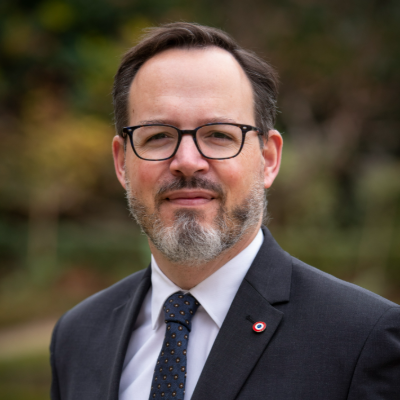
France, ADLE, Porte-parole du groupe
10:35:37
Thank you, Mr President.
Ladies and Gentlemen,
In the face of today's threats to the independence of the European Court of Human Rights, we have a collective responsibility. It is our responsibility to stand firm in defending the Convention system, the cornerstone of our shared commitment to the Council of Europe.
The recent criticisms of the Court's jurisprudence, notably by European leaders, are not insignificant. They are part of a dangerous political strategy which, under the guise of security and migration concerns, aims to weaken the Court's authority, to call into question its interpretation of the Convention and, more broadly, to erode the fundamental guarantees of human rights.
As our Secretary General Alain BERSET rightly reminded us, it is not for politics to dictate the law, and even less to threaten its institutions. It is precisely in moments of tension that we measure the value of the rule of law, when principles resist the pressure of populist agendas.
The European Convention on Human Rights is one of the most solid pillars of our European democratic order. It guarantees every citizen independent protection beyond transient political majorities and national borders, as you rightly pointed out, President Mattias GUYOMAR.
What we are defending here is not an isolated institution. It's the very idea that fundamental rights are non-negotiable, that the interpretation of the Convention cannot be dictated by governments, and that multilateral cooperation remains our best weapon against authoritarian excesses.
So yes, let's open this debate, let's document the threats, let's call them by name. And above all, let us reaffirm our unambiguous commitment to the independence of the Court, to the binding force of its judgments and to the unity of the Convention system, because to weaken the ECHR is to weaken Europe, and that we will not accept.
Thank you for your support.
Grèce, PPE/DC, Président de l'Assemblée
10:37:50
Thank you, Bertrand.
On behalf of the Group of the Unified European Left, Mr Søren SØNDERGAARD. Søren.

Danemark, GUE, Porte-parole du groupe
10:37:58
Thank you.
Some countries have sent an open letter demanding a change in the practice of the European Court of Human Rights. One of these countries is my own country, Denmark. Let me start by stating that the Danish government does not speak in my name and it does not speak in the name of all Danes either. The letter tries in a sophisticated way to imply that foreigners can come to Europe and commit crimes with impunity. This is not the case. No ruling from the European Court of Human Rights has ever prevented criminals from being punished and punished hard, regardless of where they come from, just like any other citizens in our countries.
But what is the real problem when you look at the world today? Is it that human rights are too widespread or that they are respected too much? No, just the opposite. Human rights and international law are under pressure everywhere. From Trump in the US, from Putin in Russia, from the ayatollahs in Iran, from Netanyahu in Israel, but also here in Europe. Just think of Kavala and Demirtaş in Türkiye, who have been imprisoned for years despite the clear demands for their release from the European Court of Human Rights. We are looking forward to participating in a discussion about the European Court of Human Rights. We are also looking forward to discussing all kinds of arguments. But it should start by addressing the real problems. The waiting time at the Court is far too long and the Court has far too little power to implement its decisions. From our group, the United European Left, we do not want human rights to apply to fewer people. We want more human rights to apply for all people.
Thank you.
Grèce, PPE/DC, Président de l'Assemblée
10:40:11
Thank you, Søren.
We continue with Mr Pierre-Alain FRIDEZ. Pierre-Alain, we cannot hear you. Have you inserted your badge?
Thank you, President.
I can't help but think that the disputed report on collective expulsions that I presented in this hemicycle last April is perhaps partly at the origin of the letter from the nine countries that called for a change in certain decisions of the European Court of Human Rights, for emotional reasons in the case of certain countries close to Belarus with its hybrid war, or for political reasons in the case of others.
During the debate, members of parliament from these countries challenged the red line represented in all cases by the absolute right of every migrant to an individual assessment of his or her own situation, with protection and respect for his or her rights.
And if there is to be a return, it will only be to a safe third country. Our various countries cannot demand à la carte treatment according to their national agendas. The ECHR represents the bedrock of our values, it obliges us, and the separation of powers is essential.
Thank you for your support.
Grèce, PPE/DC, Président de l'Assemblée
10:41:35
Thank you, Pierre-Alain.
Ms Petra BAYR is next. Petra.
Yeah, thank you very much.
The Court interprets the Convention, and that makes it a living document; and since it entered into force, for instance, Article 14 on anti-discrimination has been developed tremendously.
And we are also now all witnesses to an emerging right to live in a healthy, clean and sustainable environment. This development, of course, is important as it reflects social progress. And also debates about the interpretation are legitimate, if they are serious and if they uphold the values and protection of human rights.
A letter of nine, addressed to nobody, is maybe more a piece of domestic policy than a constructive contribution to the further development of the Convention and of the decisions of the Court. It is more a signal of the category "Fortress Europe" than a contribution to foster human rights and to really make them strong.
And I very much share the thoughts and the visions the President told us for the Court, for the work of the Court, for the Convention as such. And I think what we as the Assembly really can and will do is to promise that we really do our utmost to elect the best judges possible. You know, we are working on some further developments on how we make this progress really smoothly, how we also already start at the national selection procedures to really have these judges in the court in the very end, that really have an understanding of the values and of the core principles of the Convention, of us as a European Council of Europe. And I think that is a good co-operation that we have – thank you very much for all your contributions to us. I think it's a great dialogue, and I'm sure that we will foster the Convention in a way that it cannot be undermined by whoever.
Thank you very much.
Grèce, PPE/DC, Président de l'Assemblée
10:43:54
Thank you, Petra.
Mr Christophe BRICO. Christophe.
Thank you, Mr. Chairman,
Today's debate is almost a paradox. Basically, there is the question of migration, which is an issue that runs through most of our countries, and which tends to give rise to populism. Populists who are the first to attack the independence of the judiciary. The independence of the judiciary, which is one of the foundations of the rule of law and of the European Court of Human Rights, is precious to us.
In the case of the European Court, this independence is almost twofold, since there is the independence of the separation of powers, but there is also the fact that it is made up of 46 judges from 46 states, which means that the judge who judges a state is not from that state, and is therefore doubly independent in relation to the state being judged.
Now, I'd like to appeal to our responsibility, since President Mattias GUYOMARD appealed to that of the European Court. We elect the judges. We are responsible for the composition of the Court. We defend the European Convention on Human Rights. The Court applies it, not us. It is the Court that, on a case-by-case basis, decides how this Convention applies to the citizens of our states.
So we have to be careful, particularly in this house where we defend democracy, the rule of law and fundamental rights and freedoms, and in particular in this case, the rule of law, to ensure the independence of the judiciary, the separation of powers, the hierarchy of norms, which is also an element of the rule of law.
And I believe that we must take care in our speeches, without omitting, I repeat, the migration issue, which is a real subject, to preserve this jewel, as my colleague from our institution said.
Thank you very much.
Grèce, PPE/DC, Président de l'Assemblée
10:45:52
Thank you, Christophe.
Ms Sigríður Á. ANDERSEN is next.
Yes, Mr President.
I welcome the initiative of the nine European leaders taken with the recent statement on the capacity of the ECHR and the interpretation of the European Convention on Human Rights. The statement refers to judgments of the Court solely in one specific area, namely in regard to migration.
I would like to take this opportunity to draw your attention to other important factors to be considered. Well, the ECHR, the Court operates quite differently than regular courts that most of us know from within our countries and even transnational courts like the European Court of Justice and the EFTA Court. The procedures with the EFTA Court, with the European Court of Justice, with the European Court of Human Rights, I was going to say, mainly how it reaches its conclusions, how it decides on which cases to hear and which not, is not compatible to other courts. Even the election or the leading up to the election of the judges is not beyond doubt, in my opinion.
This is important to bear in mind when debating the role of the Court in setting precedent, let alone inventing new rules. The European Court of Human Rights has been reluctant to interfere with the assessments of national courts, particularly when it comes to discretionary decisions or the interpretation of the domestic law. Fine. But this principle is in retreat. Even this principle is in retreat. The ECHR has not only been interfering with decisions taken by the executive branches of member states, as in the migration cases, it has also disregarded democratic decisions taken at the legislative level. In Iceland, for example, we have a case of the ECHR concluding as unlawful some lawful decisions taken by the Parliament in Iceland, Althingi, on the appointment of 15 national judges at a newly established Court. Decisions taken fully in concordance with law and confirmed by the Supreme Court of Iceland.
I emphasise. I emphasise that if one is of the opinion that human rights varies with time, which I certainly am not, it's not my opinion, it must be the task of those democratically elected to ratify those rights and amend the European Convention on Human Rights.
Grèce, PPE/DC, Président de l'Assemblée
10:48:19
Thank you.
Mr Damien COTTIER is next.
Thank you, President.
First of all, thank you for this debate. The European Court of Human Rights is indeed an indispensable instrument for guaranteeing democracy and human rights on our continent, and for this architecture as it was created after the Second World War.
Therefore, to call into question on principle the independence or impartiality of the Court is something we cannot accept. And it is the role of this Assembly to debate it and to defend the Court in its role, to defend the application of its judgments - and our Assembly regularly takes an interest in this - and to devote, as several of the speakers have said, all its energy and perhaps even more attention than today to the very important process of electing judges, as we are doing today.
Nevertheless, I know that this isn't popular in today's world, but we must try to have a nuanced position in this debate. The right to criticise exists. And I am one of those - and indeed, as the President of the Commission said earlier, the President of the Court probably will not have the same opinion - who feel that the Court has gone too far in certain cases, as in the case of KlimaSeniorinnen v Switzerland, which has been mentioned several times. By modifying its case law on certain points, the Court has interpreted the notion of a living instrument of the Convention very broadly, and in so doing has taken a step towards a certain judicial activism. This must be avoided at all costs, in order to preserve the confidence and credibility of the Court.
In short, because we feel so strongly about the Court and its role, we have to be careful that it doesn't go too far. This is why the two chambers of the Swiss Parliament very recently adopted a motion inviting the government to discuss with other governments the possibility of a 17th additional protocol to bring into sharper focus the points on which, perhaps, the court went slightly too far.
I believe this is the legitimate way to conduct a political debate. The role of politicians is to debate the framework, and then the role of the Court is to decide, in concrete cases, in a totally independent manner. By proceeding in this way, we will be in line with the very logic of the separation of powers, and therefore the responsibility that is linked to independence, as mentioned earlier by the President.
Thank you.
Grèce, PPE/DC, Président de l'Assemblée
10:50:46
Thank you, Damien.
Mr Benjamin DALLE, you're next. Benjamin.
Thank you Mr President.
Dear colleagues,
President of the European Court of Human Rights [in French],
Let me first start by thanking those who initiated this debate, in particular my Belgian colleague, Mr Christophe LACROIX. It comes at a crucial moment. Everywhere in the world, we are witnessing a troubling trend: growing political interference in independent institutions, including the judiciary. The European Court of Human Rights, as the guardian of the Convention, is increasingly the target of that pressure.
The open letter, co-signed by nine European leaders, including the Belgian Prime Minister, openly questions the Court’s authority and interpretative role. As a Belgian parliamentarian, I believe it is important to express a different view. One that firmly reaffirms the essential role of the Court within our democratic and legal order.
In the letter, one sentence in particular stands out:
“We believe that the development of the Court’s interpretation has, in some cases, limited our ability to make political decisions in our democracies.”
That framing, dear colleagues, suggests that rights and democracy are somehow in tension, in contradiction. But in truth, rights are not limits on democracy. They are what make democracy legitimate, what make democracy worth fighting for.
When judicial oversight is framed as an obstacle to political action, we risk hollowing out the very principles we claim to protect.
The Court’s independence is not a threat to national sovereignty, but a safeguard against its abuse. And when that independence is challenged, this Assembly must respond with clarity and unity.
Let us stand by that legacy, firmly, calmly, and together.
Thank you.
Grèce, PPE/DC, Président de l'Assemblée
10:52:48
Thank you.
Mr Axel KASSEGGER is next.
Thank you very much, President.
Ladies and gentlemen,
In a letter, nine heads of government have expressed their concerns about the case law of the European Court of Human Rights. I quote: "There is a need to look at how the European Court of Human Rights has developed its interpretation of the European Convention on Human Rights. Whether the Court, in some cases, has extended the scope of the Convention too far as compared with the original intentions behind the Convention, thus shifting the balance between the interests to be protected."
In other words, what were the original intentions of the 1953 Convention on Human Rights? Surely the protection of the interests of European citizens against the encroachments of the state, against arbitrary arrests, against restrictions on freedom of expression, etc.?
As a politician of the Freedom Party of Austria, the strongest party in Austria with almost 30% of the electorate, I welcome the request in this letter. I welcome the fact that nine heads of government have initiated this discussion. I explicitly welcome the fact that our Federal Chancellor of the Republic of Austria has also signed this letter. And I also welcome two key messages in this letter, firstly that the democratically elected governments of sovereign states must not be unduly restricted in their decisions to deport illegal or delinquent migrants. And the second message, which is about the priorities, the interests worthy of protection, the security and stability of our own community, must have the highest priority.
Grèce, PPE/DC, Président de l'Assemblée
10:54:38
Thank you, Axel.
Mr Piero FASSINO. Piero, you have the floor.
Thank you President.
I believe that this debate is undermined by a misunderstanding: the letter of the nine heads of government and state evokes a conflict between national sovereignty and the European Court, basically arguing that the European Court, in its interpretations, undermines, the Austrian colleague has suggested, the national sovereignty of individual countries.
I believe that is not the case. I believe that the European Court of Human Rights was created to protect citizens and to ensure equal treatment of all citizens of the countries that are members of the Council of Europe. And the respect for sovereignty is absolute. As the President of the Court mentioned, the Court intervenes only after all the degrees of judgment have been excised in the domestic jurisdiction. And so, from this point of view, it is not really true that the Court's activity challenges national sovereignty.
In fact, rights are not a variable. Political majorities that are democratically elected have the right to adopt, propose, modify legislation that corresponds to their agendas, but those legislative measures cannot be against fundamental rights of equality and respect for the entitlement of citizens. And I think that's the problem.
And so we have to guarantee the independence of the ECHR and its activity, precisely to guarantee citizens, because it is to protect citizens that the Court was created many years ago and not to protect nation-states. And so I think we can discuss everything, discussion is never denied, and so we also discuss the things that are evoked in that letter, but knowing that our societies today are not weaker because there are too many rights. Our societies today are weaker because rights are often not protected and respected.
Grèce, PPE/DC, Président de l'Assemblée
10:57:17
Ms Agnes Sirkka PRAMMER is next. Agnes.
Thank you Mr President.
Honourable colleagues,
When I first studied the European Convention on Human Rights, it felt like a promise. A promise that dignity, freedom, and justice are not just ideals, but enforceable rights. That promise is still powerful. But it is not self-fulfilling. It depends on us.
Human rights are not automatic. They must be defended, especially when they become politically inconvenient. They are the last safeguards. And that is why attacks on the independence of the European Court of Human Rights by some governments – unfortunately including mine – are so dangerous. Weakening the Court weakens the rights of all of us.
We all know that the Convention is the result of a process and this process of development must continue. But there is a legitimate way to do so: through the Court’s interpretation, and through protocols and conventions agreed by all of the states. If we bypass that, we risk eroding the rights we claim to stand for.
Let’s be honest: defending human rights is not always the easy path. But the easy path never led to justice.
By ratifying the Convention, our states committed not only to its rights, but to its principles. Above all, the rule of law and the separation of powers. These are the structures that protect us from arbitrariness. They are what turn ideals into guarantees.
Colleagues, we did not inherit these standards for free. They were hard-fought, often in the face of tyranny, war, and injustice. Now it is our responsibility to protect them and strengthen them. To do otherwise is to betray those who came before us and those who count on us today.
Thank you.
Grèce, PPE/DC, Président de l'Assemblée
10:59:32
Thank you. Mr Marco DREOSTO.
I take my cue, Chairman, from this important debate to speak about the shameful, offensive, ideological statements made by the Commission against racism and intolerance at the Council of Europe to the law enforcement agencies of Italy and our country.
The European Court of Human Rights, which we are talking about today, certainly has the task of assessing objective facts, but these words are allusive and we reject them at sender. Moreover, Mr President, they undermine the credibility of the European institutions.
To insult our law enforcement agencies is to bash men and women who risk their lives every day to protect the lives of others. This is also recalled, our President of the Republic, Sergio MATTARELLA, recently recalled it, and he put clear words in defence of the professionalism, dedication and irreplaceable role of the Italian police in protecting democracy and legality.
I believe President, I also say this to the President of the Court of Justice, that we need a real and deep reflection on these commissions, but perhaps more generally on the role of the Council of Europe. If it is to be used as a cudgel, I repeat, a cudgel to attack governments that are disliked by the caviar left, then perhaps it is time to also concretely review our participation, and this money evidently that is going to be saved can be used precisely for law enforcement, which is always at the service of the country for our defence.
Thank you.
Grèce, PPE/DC, Président de l'Assemblée
11:01:36
Ms Gala VELDHOEN is next.
Thank you, Mister President.
Colleagues, the recent joint statement by the 9 EU and Council of Europe member states is a dangerous attack on the rule of law and democracy. Under the guise of border control and public safety, it questions the Court's interpretation of the Convention, which undermines the rule of law and separation of powers.
The Court exists to protect individuals against the arbitrary use of state power. Its role is to interpret the Convention, an agreement designed to ensure legal protection for all. Attempts to influence the Court's jurisprudence through political pressure rather than formal treaty amendments set a dangerous precedent.
Today, the pressure is focused on migration. Tomorrow, it could target anyone who challenges state authority.
This is not a legal reform. It's a political assault on a body that holds governments accountable. Allowing states to pick and choose which rulings to respect weakens legal safeguards against discrimination and oppression.
We urge all Council of Europe member states to defend the Court's independence and the principles it embodies.
We also call on the European Union to accelerate its accession to the European Convention of Human Rights. The EU have to stand with us. This would create a unified legal space where the Court can review EU decisions for human rights compliance, including migration matters.
In this time of co-ordinated political pressure, not only we, as the Council of Europe, but also the EU, must take a firm and unequivocal stance for human rights, for judicial independence and the rule of law for its member states, and also for itself, so we build a stronger Europe.
Thank you.
Grèce, PPE/DC, Président de l'Assemblée
11:03:42
Thank you, Gala. Mr Pierre LAMELY is next. Have you inserted your badge because I don't see your name in the computer. Have you inserted your badge? Have you inserted your badge first? You are not connected. Now you are connected, you can press the button and start talking.
Yes, thank you, Mr. President, ladies and gentlemen,
The separation of powers is a central foundation of every democracy. But what we are currently experiencing is a dangerous imbalance: the European Court of Human Rights is interpreting these rights unilaterally in favor of illegal migrants and depriving national parliaments of their necessary scope for action. According to the Court's decisions, criminal migrants are often not allowed to be deported and our borders cannot be effectively protected. Those who make such decisions are disregarding the rights of people who have been living here for a long time. We Germans, Hungarians and Italians - all Europeans are also holders of human rights. We too have human dignity and we too have a right to live safely and physically unharmed in our own homeland.
However, it is precisely this right that is being increasingly challenged and called into question by illegal migration. Anyone who disregards this reality is not administering justice, but is engaging in left-wing political activism from the bench! Some courageous European heads of government have clearly stated this in an open letter. They quite rightly demand that the security and protection of European citizens must finally be given priority again. This letter confirms exactly the position that we as Alternative for Germany have been advocating for years. I therefore call on all European heads of government to endorse this letter - above all the German Federal Chancellor - and I ask: Mr MERZ, what is actually stopping you from signing this letter? Finally put your words into action during the election campaign and make not only Germany but the whole of Europe more peaceful, more secure and more just.
Thank you very much.
Grèce, PPE/DC, Président de l'Assemblée
11:05:39
Thank you, Ms Aurora FLORIDIA is next. Ms Aurora FLORIDIA.
Thank you Mister President, dear colleagues.
Today I choose to speak in Italian. I intend, in fact, to address my country, Italy, as well, because it is especially at home that a worrying climate of questioning the foundations of democracy is being nurtured.
Today, I feel the onus is on me to raise the issue of a very specific political offensive: a coordinated network, promoted by extreme right-wing parties, that crosses borders and is now targeting the EDU Convention. A network that, under the pretext of "updating" the convention, actually aims to empty it of meaning, as, moreover, is already happening in Italy with some fundamental freedoms, starting with that of assembly.
It is dangerous, and I say this most clearly, to instrumentalize such sensitive issues with media operations disguised as open letters. These are not mere opinions: they are political acts that call into question the legitimacy of an independent court. The risk is clear: manipulating public opinion, delegitimizing the judiciary, gradually dismantling fundamental rights that endanger democratic stability. Indeed, one only has to look at how many times the EDU Convention has already been updated to see that this new urgency is not technical, but deeply political.
Unfortunately, I do not believe in the good faith of those who call for the revision of treaties and institutions without prior technical and parliamentary discussion. It is an opaque method, symptomatic of a vision of vertical power, impervious to democratic verification.
Ladies and gentlemen, defending the European institutions means defending ourselves, because today democracy is like a fire lit on a windy night: it must be protected with care and fed with constancy, so as not to extinguish it. So, no distractions and naiveté, but eyes open: we must keep watch over democracy.
Thank you.
Grèce, PPE/DC, Président de l'Assemblée
11:07:57
Aurora, thank you.
Baroness Shami CHAKRABARTI is next.
Mr President,
Colleagues,
Our Convention on Human Rights and its Strasbourg Court constitute the most successful rights protection mechanism in human history. Their values, having been distilled by a post-war generation well used to times as challenging and dangerous as our own, are well capable of helping us navigate the challenges and dangers of our own century without ignoring the hard lessons of the last one.
To the question of whether we might build on existing rights, I say, of course, we might. Whilst, for example, rapid developments on the internet and in artificial intelligence engage and violate rights against degrading treatment to fair trials and private life, the freedom of expression and against discrimination, they might also inspire new rights to access these technologies and to transparent decision making or new protocols designed to make the traditional rights more effective in this new online continent.
We might, of course, think about making universal human rights more directly, practically enforceable against global corporations. But today's debate seems more about the challenge from those, even perhaps amongst us, who seek to diminish Convention rights, not enhance them. They want to clip the wings of the Court and refuse rights to non-citizens. They should perhaps remember that we are all foreigners almost everywhere, including in other member states, and there is no such thing as democracy without the rule of law.
Grèce, PPE/DC, Président de l'Assemblée
11:09:49
Thank you, Baroness Shami CHAKRABARTI. Ms Susanne FÜRST.
Dear Mr President, ladies and gentlemen,
The European Court of Human Rights has strayed from the right path, from the path of law. Historically, it has had the noble task of defending and interpreting the European Convention on Human Rights. In accordance with its purpose, it must exercise restraint in its case law and respect the national legislative competence of the Member States. However, the Court abandoned this approach some time ago. Just two examples: first, instead of dispensing justice, it acts as an activist of aggressive asylum and immigration policies into Europe. In its case law, the Court prohibits Member States from deporting even the most serious criminals, murderers or child abusers, because it would be contrary to the Convention. That is unbelievable. A total misinterpretation of the Convention. Secondly, instead of dispensing justice, the Court is acting as an activist for irrational climate policy. It upheld a complaint by two Swiss women who demanded that their country make greater efforts to protect the climate. Their health was endangered by stronger heat waves. They were proved right. That is unbelievable. An encroachment on Switzerland's national competence and direct democracy, because the majority of the Swiss population rejected exactly that.
Now to the open letter from several heads of government regarding the reinterpretation of the convention and the demand for more national leeway: this is completely justified, but far from sufficient. We must take a firm stand against the encroachments and the ambitions of the Court of Justice in Strasbourg to make policy. It is not responsible for that. It is responsible for interpreting the Human Rights Convention and case law in the interests of the people of Europe.
Thank you very much.
Grèce, PPE/DC, Président de l'Assemblée
11:12:02
Thank you, Susanne. Ms Bisera KOSTADINOVSKA-STOJCHEVSKA is next. Bisera.

Macédoine du Nord, SOC
11:12:08
Thank you Mr President.
The European Convention on Human Rights is a supranational convention to protect human rights and political freedoms in Europe. The European court of human rights makes sure that they are indeed protected.
According to Mr Guido RAIMONDI, The European system of protection of human rights with its Court is inconceivable untied from democracy. In fact, we have a bond that is not only regional or geographic. A State cannot be party to the European Convention on Human Rights if it is not a member of the Council of Europe; it cannot be a member State of the Council of Europe if it does not respect pluralist democracy, the rule of law and human rights. So, a non-democratic State should not participate in the ECHR system: the protection of democracy goes hand in hand with the protection of rights.
While we have been struggling to stay off the track that goes straight into WWIII, now that for almost two years we have seen the atrocities all around the world that are beyond imaginable, that we work on establishing separate judiciary instances for the atrocities in Ukraine, 75 years after the establishment of these two instruments that cement deeply into our nations the protection of human rights, both the European Convention on Human Rights and the European Court of Human Rights need not be questioned and debated, but need to be looked after and implemented.
We need to debate the misplaced children, the prisoners of war, the humanitarian aid collapse, the ceasefire, the erosion of human rights, the demotion of the rights of women and the LGBT community. Lets focus on that.
Grèce, PPE/DC, Président de l'Assemblée
11:13:40
Thank you, Bisera. Gergely ARATÓ is next.
Dear Parliamentary Assembly,
When Europe woke up 80 years ago to the horror of the Second World War and the Holocaust, it became clear that there is only one solution to end dehumanisation, exclusion and murder: to set up clear human rights standards and enforce it.
We are all politicians. We all serve our constituents, our country's need, in the best way we see. And I clearly understand how frustrating it can be if some of the policies are blocked by the ECHR. Yes, it's clear, it's a problem. And sometimes, the voters themselves do not understand why the policy that they were promised and that they think is right cannot be achieved.
Yes, there are limitations and obstacles, but I think they are necessary to defend our freedom and humanity. Sometimes, it's easier to deny the decisions and attack the Court. But I think the work we should do to find better solutions, the thinking, the arguing, is something that benefits our people and our countries.
If human rights can be denied to one, then it can be denied to everyone. If today the human rights of refugees are not important, then tomorrow it will be the rights of the LGBTQ community or national minorities, and the day after tomorrow it will be the rights of women, or anybody else. Believe me, I am from Hungary, I know this.
So no matter how popular it may seem to attack the court, human rights, and the rule of law, in the long run it will lead to a weakening of democracy, legal certainty, and humanity, which I am sure none of us want.
Thank you.
Grèce, PPE/DC, Président de l'Assemblée
11:16:16
Mr Tony VAUGHAN is next.
Thank you, Mr President.
We all recognise the real and pressing challenges our nations face. But in my view, the case for rewriting the European Convention itself is not at all clear.
First, national governments already have plenty of scope to act within the Convention as it stands. Take the UK. The UK Parliament has already been tightening up how Article 8, the right to family life, applies to foreign offender deportations for several years. The UK has legislated to define when the public interest outweighs family ties. And the Labour government will do more on this. So there is no need to tear up the rule book to keep our streets safe.
Second, on Article 3 and torture, yes, there are challenges, but the answer is more international cooperation, not less. National governments already work with other countries to tackle concerns such as about prison conditions and medical cases. And we should build on co-operation like this within the terms of the existing Convention.
But let's also face facts. The so-called case for reform is often based on myths and misinformation. In the UK, we all heard a story about an Albanian national who defeated, supposedly, deportation because his child wouldn't eat Albanian chicken nuggets. Now, this was utter nonsense. Yet it spread like wildfire. It stoked outrage and gave cover to those in the UK who would want us out of the Convention altogether. We have a duty to call out these falsehoods and stand up for the truth.
Finally, we must not open a Pandora's box. If we start unpicking the Convention's core protections, we risk unravelling not just the ECHR, but the foundations of democracy and the UN system and the international legal order itself. So when we have that debate about amending the ECHR, we must scrutinise the case for change very carefully, because there is much we can already do. So let's work together to improve how we apply the Convention and not undermine its bedrock values.
Thank you.
Grèce, PPE/DC, Président de l'Assemblée
11:18:22
Thank you, Tony.
Mr Paweł JABŁOŃSKI.
Thank you, President.
Dear colleagues,
I'm hearing this discussion especially from the left side, and I see that many of you are outraged by the simple fact that nine government leaders decided to say, in a very polite and adequate manner, that they do not like certain aspects of legal reality that we are facing, certain aspects of judicial activism that we see on the part of the European Court of Human Rights.
Now, I understand that some of you may not agree with the content of the letter, but the fact that prime ministers, democratically elected leaders from many political groups, decided to express themselves is nothing that should be condemned. But when I hear you, you seem to act as if some sacred taboo was infringed by the mere fact that these prime ministers and leaders decided to speak.
Dear colleagues, here we are in the Parliamentary Assembly. Parliament. "On y parle", we talk here. We debate. And if we don't like some elements of the law or its application, we discuss it. It's not an attack on the rule of law. If an open letter is an attack on the rule of law, then the rule of law in itself would seem to be very, very weak. The rule of law is much stronger than that. And open letters are not attacking it. Open letters initiate a process of debate. Here we are in this, and we speak of human rights.
Dear colleagues, our citizens, our women and children and men also have human rights: to have safe streets, to be protected, to have secure borders. Let's safeguard these rights. If we are so bold in speaking about whom we should protect, let's start at home. Let's protect our people.
Grèce, PPE/DC, Président de l'Assemblée
11:20:29
Thank you, Paweł.
Ms Sandra ZAMPA is next. Sandra.
Thank you, President.
To avoid an election debacle, the former Conservative Prime Minister of the United Kingdom, Mr Rishi SUNAK, had latched onto the migration issue and challenged the European Court of Rights, which had prevented him from implementing his deportation plan. We all know how that turned out.
Today that spirit is back, in the letter published by the nine countries, evidently aimed at public opinion, to attack the Court, accusing it, in some way, of impeding the exercise of their authority and power.
It is, for all intents and purposes, a questioning of human rights and an attack on the separation of powers.
One cannot suggest, as the letter does, that there are A and B human rights or that fundamental rights should only be extended to those who deserve them. Fundamental rights are not discretionary concessions, but indispensable guarantees to be respected for every individual, regardless of other aspects. This is like the separation of powers and the defence of the rule of law: essential for the survival of democracy.
I want to conclude by quoting what Secretary General Alain BERSET said just after his election:"In a society governed by the rule of law, no judiciary should face political pressure. Institutions that protect fundamental rights cannot bend to political cycles."
I think we would all do very well to remember that, because political cycles change, but fundamental human rights should not and cannot be subjected to that change.
Grèce, PPE/DC, Président de l'Assemblée
11:22:46
Thank you, Sandra.
Mr Mogens JENSEN is next. Mogens.
Thank you, Mr President.
Dear colleagues, the European Convention on Human Rights and the European Court of Human Rights are fundamental and cornerstone pillars of European co-operation. This has been the case since the end of the Second World War and it must remain so in the future, it is necessary, it is important. However, to ensure that this continues, it is crucial that both the Convention and the Court's work and judgments are respected by the populations these institutions are meant to protect. Thus a large gap must not arise between the Convention and the Court's decisions, and the reality experienced by ordinary citizens.
Therefore, we must be able to continuously discuss, among other things, the Court's interpretation of the Convention. It is not and it should not be set in stone, and it has many years on its back. This discussion we also have taken over the years as well. In the last 15 years, there's been specific discussions about the Court's work and premises in Interlaken, in Brighton and Copenhagen, where we have made declarations, where we emphasise the need and possibility for dialogue on the Court's work. And this letter from nine member states should be seen in that context, not as a confrontation with either the Convention or the Court, but as a desire to ensure the support for these fundamental pillars is also firmly grounded in the future. It is no use for us as a parliament or organisation to put ourselves in a corner and close our ears, eyes and mouth, refusing to discuss the challenges of reality. Therefore, I also find it very positive that the Secretary General is now proposing to find the right ways to engage in this dialogue and ensure cohesion and respect between the Convention, the Court, governments and people.
Thank you very much.
Grèce, PPE/DC, Président de l'Assemblée
11:25:01
Thank you, Mogens. Céline THIÉBAULT-MARTINEZ is next.
Thank you, Mr Chairman,
Mr Chairman, dear colleagues,
I'd like to take advantage of this debate to remind you what the Court is for, and what it does for each and every one of us. I'd like to tell you about Julie, a French teenager who accused 22 firemen of raping her between 2008 and 2010. At the time, Julie was aged between 13 and 15, and in a state of great psychological distress. She had attempted suicide several times, leaving her with severe disabilities.
After a 10-year trial, only three firefighters out of the 22 accused were prosecuted, not for rape, but for sexual assault. In 2020, France's highest court upheld the re-qualification of the facts, because it considered that Julie, despite her condition, had consented. Finally, the European Court of Human Rights restored Julie's honour and the honour of French justice.
In a decision handed down in 2025, France was condemned for its lack of speed in bringing such a case to trial. It was also condemned for its inability to propose a penal system capable of punishing acts committed by minors without their consent. This example shows that the European Court of Human Rights is a safeguard, a protection for all citizens when our legal systems do not sufficiently appreciate the seriousness of facts such as violence perpetrated against women and girls. Our states, our democracies, can sometimes forget their principles, neglect their values. The Court is there to remind us of the laws, our laws, and to guarantee fairness before the law. It is a democratic tool. It is proof of the vitality of our constitutional states.
To call into question its role, in the name of an obsession with migration, to challenge its decisions when we are the architects of this jurisdiction, is to renounce the exercise of our freedoms and rights, to leave room for arbitrariness, and to take a step backwards in the history of democracy and justice.
Thank you very much.
Grèce, PPE/DC, Président de l'Assemblée
11:27:13
Thank you, Céline.
And the last in my list is Lord Don TOUHIG.
Mr President, across Europe, we are seeing more and more challenges to human rights, democracy and the rule of law. Our Convention is essential to defending these rights. As British and European, I am proud of the fact that the United Kingdom played a major role in establishing the Council of Europe and drafting the Convention.
For my part, I was very pleased that last week the Lord Chancellor of Great Britain, addressing the Committee of Ministers here, reaffirmed Britain's continued support for the Convention and told the President of the Court that it had her full support in interpreting and applying the Convention. But that does not mean we should not have discussions about the Convention. It has endured because it has evolved over time.
Now, I personally do not think the letter signed by the nine is the way forward, but burying our heads in the sand when faced with the questions that the letter raised will solve nothing. We should not be afraid to have this discussion about the Convention. And I welcome the words you uttered yesterday, Mr President, when you spoke. And I also welcome the comments of the Secretary General, who, in responding to the letter, emphasised the need for dialogue and open discussion on the Convention, while also cautioning against politicising the European Court of Human Rights.
I end by reading a sentence from the Lord Chancellor's speech to the Committee of Ministers. She said this: "When people come to believe that rights only exist to protect the rule breaker, not the rule follower, those who would undermine the entire idea of universal human rights, the populists, and we've got plenty of them, they will seize the space that we leave behind. Colleagues, our Convention is too precious, essential to defending our freedoms. We must not let the intolerant and the bigoted undermine and destroy it."
Grèce, PPE/DC, Président de l'Assemblée
11:29:21
Thank you, Don.
Dear colleagues, I will now give the floor to Lord KEEN to respond. Dear Richard, you have 3 minutes.
Thank you, Mister President.
Colleagues, what is apparent, I believe, taking a cross section of the views expressed here, is the need for us, as the Assembly, and a need for the Committee of Ministers to ensure that the terms of the Convention and its protocols reflect not only the fundamental rights and freedoms that they are intended to encompass, but also the democratic desires and the democratic aims of the state parties to the Convention.
I welcome the open letter that I didn't receive, not because I believe it was an appropriate mechanism to raise questions with regard to the Convention and the Court, but because it has stimulated a debate that we require to have. But that debate will take place in the political sphere, not in the judicial sphere. And I consider it inappropriate to draw the Court in to such a political debate.
As I mentioned at the outset, we should respect the separation of powers. And we should respect the role of the Court, which is intended to ensure that the political parties, the state parties to the Convention, actually temper their obligations and discharge the rights that the Convention has granted. It does no more than that. It does no less than that. It should do no more than that. And where there is a fear of judicial activism, then we can speak out and no doubt the Court will listen.
But at the end of the day, the separation of powers does matter. And the Court rests entirely upon state consent.
I thank everyone for their contributions.
Grèce, PPE/DC, Président de l'Assemblée
11:31:57
Thank you, Lord Richard KEEN.
Dear colleagues, you have heard my opinion yesterday. I shouldn't intervene, of course, in this debate. I only want to share with you an information received by a friend, a lawyer who's watching us from Athens, about the adaptivity of the rule in modern times. And I'm sure that Richard will agree with that.
The oldest law still enforced today in the world is the Statute of Marlborough, enacted in 1267, 800 years ago as part of English parliamentary law. It is not a message. It is not a message. I'm really glad that I had participated in presiding this tremendously, in my opinion, interesting discussion we had today. An interesting exchange of views. I want to thank all of you, all political groups, all my colleagues that took the floor.
I want, of course, to thank the President of the Court for his participation. Mr President, I believe that judges should listen the voice of society, and then, of course, take the decisions by the voice of the law. But the society and the law are connected. This is very difficult. It was very easy for us to express our opinions. Now the difficult part is yours. I'm really glad that you have said that you are available to this institution and to this assembly. And you are always welcome here.
Thank you all, dear colleagues, and thank you sir, Lord Richard KEEN, for your remarks.
Grèce, PPE/DC, Président de l'Assemblée
11:33:30
Now, I remind you that we come now to the joint debate on two reports from the Committee on Legal Affairs and Human Rights and the Committee on Political Affairs and Democracy, respectively. The first is titled "Legal and human rights aspects of the Russian Federation's aggression against Ukraine", presented by Mr Eerik-Niiles KROSS on behalf of the Committee on Legal Affairs and Human Rights and the Committee.
The second is titled "Support for political negotiations to enforce exchange and release of prisoners of war", presented by Yelyzaveta YASKO as rapporteur, and Rian VOGELS as rapporteur for opinion, on behalf of the Committee on Political Affairs and Democracy.
Yes, I just want to remind you that there is a vote on a judge. The ballot place is behind the Presidency desk. You can vote until what time, Despina? One o'clock. So we will finish with the debate that is about to start at 12 p.m., in 25 minutes. But the debate will be continued in the afternoon. I remind members that speaking time is in this debate is limited to two minutes.
I call now Mr Eerik-Niiles KROSS, rapporteur, to present the first report for the Committee on Legal Affairs and Human Rights. Dear Eerik, you know that you have seven minutes now and three minutes at the end to reply to the debate.
Dear President,
Dear colleagues,
it is really an honour to present to you today this draft resolution on the legal and human rights aspects of the Russian Federation's aggression against Ukraine. We all have an obligation to defend the principles and values on which the international order stands and upon which European freedom rests. We all have an obligation to defend Ukraine, and this is how we do our part.
The draft resolution before you today is the third in the so to say, series of those reports. And it could not come at a more important time. On one hand, it comes as Russia's war of aggression against Ukraine, Russia's crimes against peace, intensify. These days we are witnessing some of the deadliest attacks since the full-scale invasion began in February 2022, more than three years into Russia's full-scale war against Ukraine. We must speak plainly. The aggressor is systematically violating the rights of Ukrainians all over the Ukrainian territory. The report before you documents an array of grave breaches, murder strikes against civilians and civilian infrastructure, against schools, hospitals, kindergartens, museums, theatres and churches, arbitrary detentions, torture, illegal mass deportations, property confiscation, suppression of identity. And these are not isolated events. These are features of a deliberate policy.
Yesterday, when we were debating other topics here, Russia launched 352 drones and 16 missiles against Ukraine. Russian troops attacked a group of teenagers playing volleyball with a Lancet drone in Novi Borovychi, Chernihiv region. They also hit a school in Odessa region, killing and injuring multiple people. And also yesterday in Kyiv, an entire section of a residential building was destroyed. At least nine people were killed, 35 were injured. Now all these strikes constitute war crimes. And the Prosecutor General's Office of Ukraine has registered more than 160 000 war crimes committed against Ukraine since 2014. The Assembly again in this resolution reaffirms that many of these crimes, including forcible deportations, targeted attacks on civilians, torture, etc. amount to war crimes, crimes against humanity and possibly genocide. These are crimes that under international law cannot be subject to amnesty or statute of limitations. On the other hand, this resolution arrives on a day when we are finally about to create the Special Tribunal for the Crime of Aggression Against Ukraine.
Tomorrow, President ZELENSKYY will visit us to sign on behalf of Ukraine the legal documents needed to launch the Special Tribunal. He will hopefully also address this Assembly. In this context, I want to highlight the role of the Parliamentary Assembly has played in making this Special Tribunal a reality. The Assembly was the first to propose the establishment of the Tribunal to investigate and prosecute the crime of aggression committed by Russia's political and military leadership back in 2022. At that time, many found this idea unrealistic and even laughable. That proposal is now approaching realisation. We welcome the work underway towards its establishment and call on all member states to support its full and independent functioning. The world must know that aggression will be punished.
The draft resolution I present today builds on the foundations of previous resolutions and reflects recent developments such as the progress on the Tribunal hearings held by the Committee on Legal Affairs and Human Rights and also my fact-finding missions to Kyiv and Ukraine in early April and in June. The draft resolution also affirms that the Tribunal is indeed a vital but only one part of a comprehensive accountability system for Ukraine and for the international legal order. A lot of work is yet to be done. The draft resolution also urges all member states and international partners to increase their support for Ukrainian prosecutors and existing international accountability mechanisms, as well as civil society projects working on Ukraine, especially to fill the gap left by the recent U.S. decision to withdraw from some of the projects and suspend aid.
I would like to specially mention here all the efforts to return the Ukrainian children from Russian captivity. The resolution reiterates 15 undisputed legal and human rights principles that must be respected by all members and observer states, as well by all European institutions and international partners during any future peace talks or negotiations. For example, the resolution says the principle that crimes committed by Russia and its leaders in Ukraine cannot be subject to any form of amnesty under international law. It also emphasises that according to international democratic standards, elections cannot be held under martial law and that President ZELENSKYY remains the legitimate President of Ukraine until elections can lawfully be held.
Perhaps most importantly, it emphasises that illegal annexation of any Ukrainian territory since 2014 is a breach of jus cogens norms and cannot be recognised under any circumstances. Any attempt to coerce Ukraine into recognising these annexations would itself violate international law. Finally, the draft resolution also refers to the situation of POWs, unlawfully detained Ukrainian civilians and, most importantly, deported and illegally transferred Ukrainian children. It is essential that the issue of the exchange of POWs and the release of children remains central to any peace process. Even today when we speak here, children are taken from their families, forcibly relocated to Russia or Russian occupied Crimea, placed in camps or adopted under false identities. These acts are not only violations of international law, they are war crimes and crimes against humanity. Russia is obliged under international law to provide complete information concerning POW civilians and children under its control and comply with its most basic obligations under international humanitarian law. If this doesn't happen, we need to increase pressure on Russia with more sanctions.
I ask you to support this resolution and let it remind the world that Europe remembers what justice requires and that never again is not empty words.
Grèce, PPE/DC, Président de l'Assemblée
11:43:07
Thank you.
I call now Ms Yelyzaveta YASKO as rapporteur and Ms Rian VOGELS as rapporteur for opinion to present the second report from the Committee on Political Affairs and Democracy.
Yelyzaveta, you have 7 minutes now and 3 minutes at the end to reply to the debate.
Thank you, President.
Dear colleagues, today once again we are discussing Russian crimes against Ukraine. Unfortunately, it continues, but it's great that in this Assembly we discuss political aspects and the legal aspects together. I've been a member of this Assembly six years already, but I think only in recent weeks have I become very, very scared of what happens in the world so much. Before coming here, I faced two big attacks in Kyiv, with a lot of massive drones and ballistic missiles flying over my window and doors. This is what we face every day. But it was the first time when I felt that things were getting so much worse.
We often feel powerless because it seems that this war has changed all international order. All laws and regulations sometimes don't matter anymore. But in fact, there are areas when we do have the power to make a change, When I feel very often powerless and hopeless, recently, the situation of the prisoners of war and recent prisoner swaps and exchanges that we had actually gives me hope. We do have the power to facilitate the exchanges and to reach some next steps for possible negotiations for peace. Despite the old regulations the Geneva Convention has on prisoners of war, Russia doesn't comply with those rules. And, for us, the only fulfilment for us, Ukraine, that Russia actually agreed to fulfil recently, was to arrange these exchanges. And recently in Istanbul, with the attempt to establish these peace negotiations. Luckily, we managed to get more than 1000 of our servicemen back. And let me tell you more about the shape and the situation of the prisoners of war and what they are facing. Various international monitoring mechanisms, such as the UN Independent International Commission, the ICRC and the Human Rights Monitoring Mission of the United Nations, had verified that there are many violations that include ill-treatment, widespread and systematic torture, summary executions that are regular and often filmed on camera. There are verifications of the executions of 71 Ukrainian prisoners of war and and records of the deaths of at least 21 prisoners of war in custody. While the real figures are much higher, we cannot have the exact number, but we know that there are hundreds of these cases. Ukrainian prisoners of war are denied access to adequate nutrition, medical attention and legal advice. They are not held in appropriate places of detention. They are subject to verbal, psychological, physical and sexual abuse. They are not permitted to communicate with their families for weeks, months and even years. And unfortunately, the current tracing system that should identify all detention centres holding these people, which is governed and organised by the ICRC, unfortunately, the ICRC is not able to identify all these places because Russia doesn't allow them to do so. The International Committee of the Red Cross is not permitted to fully fulfil its mandate to provide medical care and appoint a mixed medical commission to examine sick and wounded prisoners of war. Because the Russian Federation has so far rejected initiatives and also initiatives by other states to assume the role of protecting powers. So all the regulations that we have on that, Russia is denying. Unfortunately, this systematic torture in various detention facilities suggests that there is a huge endorsement by the Russian civil and military authorities at the highest level.
Dear colleagues, you do have the power to put an end to this and to do everything to facilitate the repatriation of the Ukrainian prisoners of war. I want to emphasise that you do have this political power because we are very grateful to every member state that maybe doesn't have a mandate to do so, but is being creative and is acting as a mediator to help us to return as many people as possible. And I want to express gratitude to Türkiye and to the United Arab Emirates to help us with the prisoners of war. Please, let's use this creative governance and mediation possibilities to bring more people home. And let's do everything possible to insist on strengthening the tracing, identification and medical care capabilities of the ICRC and more importantly, on insisting that Russian authorities will accept what is already available in the regulations. You do have the power to support the prisoners on their return home, by providing more political, financial, material and technical support for the establishment of such mechanisms. Consider the identification of a neutral country, where prisoners of work could be safely returned home later.
Finally, I would like to emphasise that this resolution highlights the importance of accountability and by calling all states to support the work of the International Criminal Court, the Tribunal, and make sure that we use the instrument of universal jurisdiction to prosecute Russian officials involved in war crimes and other crimes. These decisions are needed not only for Ukrainian prisoners, but for every future prisoner of war who is currently suffering from many, many violations. We need to amend this international system of humanitarian law and provide more capabilities to protect prisoners of war, no matter where they come from.
Thank you.
Grèce, PPE/DC, Président de l'Assemblée
11:50:25
Thank you, Yelyzaveta. Rian VOGELS, Rian, you have 3 minutes.

Pays-Bas, ADLE, Rapporteure pour avis
11:50:36
Thank you, President.
Dear colleagues, allow me first to congratulate Ms YASKO on an excellent report that thoroughly addresses a very delicate issue.
My task as Rapporteur for the opinion appointed by the Committee on Legal Affairs and Human Rights was indeed difficult. After all, how can one think of legal arguments when dealing with a state – a permanent member of the United Nations Security Council – that has shown and continues to show blatant disregard for the most fundamental principles of international humanitarian law?
In his 1986 Nobel Prize lecture, Elie WIESEL famously said, and I quote, "There may be times when we are powerless to prevent injustice, but there must never be a time when we fail to protest."
And so today, just like so many times before, we reiterate our attachment to inalienable human dignity and our unwavering commitment to uphold the rule of law.
The three amendments I proposed in the opinion are technical in nature and aimed at increasing the accuracy of the draft resolution. The opinion takes stock of the existing information collected within the framework of the Moscow Mechanism of the Organization for Security and Co-operation in Europe (OSCE) regarding the dysfunctional operation of the Russian National Information Bureau.
It also clarifies the scope of the Third Geneva Convention with regard to the obligation to release and repatriate prisoners of war, which becomes applicable only after the cessation of active hostilities. Nevertheless, accelerating the release of Ukrainian prisoners of war must be a priority, especially considering the inhuman conditions of their detention.
In sum, this resolution stands as a powerful reminder that even in the darkest times, our commitment to uphold human dignity must shine through. I hope we can be united on this shared mission.
Thank you.
Grèce, PPE/DC, Président de l'Assemblée
11:53:21
Thank you, Rian.
I now open the list of speakers on behalf of the political groups, calling first Mr Markus WIECHEL, on behalf of the European Conservatives, Patriots & Affiliates. Markus.

Suède, CEPA, Porte-parole du groupe
11:53:33
Esteemed colleagues,
Today, we stand resolute in our unwavering support for Ukraine and our Ukrainian brothers and sisters.
We find ourselves at a critical moment, one that will not only shape the future of Ukraine, but it will also test the very principles that reinforce the core values of this Assembly, international law and our collective humanity.
We have witnessed atrocious acts such as indiscriminate attacks on civilians, torture and execution of prisoners of war, unlawful detentions and the forced deportation of Ukrainian children, among many others. These are not merely legal infractions. They are crimes against humanity that demand unwavering accountability.
The establishment of a Special Tribunal for the Crime of Aggression against Ukraine is not a mere aspiration. It is an absolute necessity. All our member states must expedite the creation of this Tribunal so that justice can be served.
The Russian Federation, along with any other state director complicit in this aggression, be it Belarus, North Korea or Iran, must be held accountable for their crimes. Furthermore, we must prioritise comprehensive reparations for Ukraine. The Register of Damage for Ukraine and the forthcoming Claims Commission are crucial steps towards addressing the profound suffering endured by the Ukrainian people. Let us champion mechanisms that will ensure reparative justice and call for the redirection of frozen Russian assets to support this cause.
In conclusion, any progress in peace negotiations must include the unconditional release of prisoners of war and unlawfully detained civilians. The safe return of deported children must be a cornerstone of our peace efforts, ensuring their reintegration into Ukrainian society and reunion with their families. We stand with Ukraine not only because history and justice demand it, but because our shared humanity commands it.
Together, we will demonstrate to the world that aggression will not go unchallenged. We will secure both peace and justice for Ukraine.
Thank you very much.
Grèce, PPE/DC, Président de l'Assemblée
11:55:44
Thank you, Markus. Stephen GETHINS on behalf of ALDE.

Royaume-Uni, ADLE, Porte-parole du groupe
11:55:47
Thank you, Mr Chairman,
Can I first of all commend my colleagues, Ms YASKO and Mr KROSS, for their powerful testimony, but also for their hard work and their insights around Russia's war and aggression and the release of prisoners.
Mr Chair, this is my first time speaking in this Chamber, and I can think of no more appropriate issue to be my opening speech than on this one.
Ukraine and Russia's war is a defining issue for us as Europeans, and how we react and continue to react will be pivotal for our common future. It goes to the fundamentals of why we gather here as Europeans and the common values and rights that we need to protect that solidarity, and that solidarity must mean something.
If our rights are not respected in one part of Europe, they cannot be universal rights. If one citizen is affected, so too are we all affected. That's why we must react to Russia's crimes against our fellow citizens, and their inhumanity must be important to us all. And I've listened to the reality from our Ukrainian colleagues in this Chamber and elsewhere when they speak to us. We talk about the impact on us all, including prisoners, combatants, and also non-combatants, including children. Children, ripped away from their families.
Russia has breached the Convention, but also the international norms, as well, and must be held accountable. Russia deliberately targets civilians and first responders. Russia abuses its prisoners. So, for the rules-based system to mean anything, we must look at everybody without fear or favour. So I commend my colleagues for also looking at Ukraine. But Ukraine provides unfettered access to international organisations, as Ms YASKO rightly pointed out.
For these crimes, there must be accountability. And I commend Mr KROSS on the recommendation for an international tribunal. That is pivotal for accountability. Sovereignty pooled is sovereignty enhanced.
So I back these reports and I thank our colleagues and we back Ukraine.
Thank you, Mr Chairman.
Grèce, PPE/DC, Président de l'Assemblée
11:57:57
Thank you, Stephen.
Ms Sophia CHIKIROU on behalf of the Group of the Unified European Left.

France, GUE, Porte-parole du groupe
11:58:06
Thank you Mr President, thank you Mr President [in French].
We all strongly condemn Vladimir PUTIN's brutal aggression against Ukraine. Together, we demand the immediate return of the thousands of deported Ukrainian children, and justice for the war crimes and crimes against humanity perpetrated.
But beware: a special tribunal will never be the alpha and omega of a truly lasting peace. These resolutions completely ignore the internal resistance in Russia. More than 3 000 Russian political prisoners are currently being held for daring to oppose this war. We have heard the poignant testimonies of Yevgeny STUPIN, Mikhail LOBANOV, Alexey SAKHNIN and Alexander BIKBOV, who recall that 50 000 Russians deserted to avoid taking part in this criminal aggression.
These men and women put their lives at risk every day. They are harassed, tortured or imprisoned, like Boris KAGARLITSKY, Alexei GORINOV or Azat MITAKHOV, twice condemned for his anti-war stance. Let's not abandon them. Supporting Russian political prisoners is an essential political act for building bridges.
Similarly, I wish to draw your attention to and denounce the consequences of martial law in Ukraine and the abuses of Article 111.1, and our duty to ensure that political activists, trade unionists and conscientious objectors are not accused of collaboration in defiance of international law, as emphasized by the European Court of Human Rights and the UN Commission against Torture.
If we want to be true to our principles of international law, fundamental rights and international justice, we must firmly condemn Vladimir PUTIN's criminal regime, and support Russia's internal resistance and citizens' initiatives such as People First. But we must also prepare the conditions for a just peace, based on a general amnesty and the right of return for political refugees. We must demand full respect for fundamental freedoms, both in Russia and in Ukraine, which must comply with its international commitments and the Convention on Human Rights.
Thank you very much.
Grèce, PPE/DC, Président de l'Assemblée
12:00:13
Thank you, Sophia. The Minister has arrived, as you see. But Minister, I will give you 2 minutes to get prepared. I'll give the floor to Marietta KARAMANLI. Kalimera, Marietta, you have the floor.

France, SOC, Porte-parole du groupe
12:00:36
Thank you, President. Kalimera.
First of all, on behalf of my group, I would like to thank our two rapporteurs, Mr Eerik-Niiles KROSS and Mrs Yelyzaveta YASKO, for the two reports.
They both underscore two related subjects: namely, the need to render justice in Ukraine at a time when the international situation is particularly unstable and uncertain, and where we lose sight of a war that threatens the doorstep of the European continent.
With regard to the legal issues and human rights violations linked to Russian aggression, it is important to reaffirm the fundamental principles of international law, according to which the political and military leaders of the Russian Federation can and will be held criminally liable. An international court can be set up to recognise the crime of aggression, compensation for the damage caused to the Ukrainian state and its citizens must be ensured by a claims commission, and any diplomatic and political solution yet to come must take into account the right to integrity of the Ukrainian state and its people. With regard to the release of prisoners of war, the Socialist MEPs endorse the various points in the draft report.
In particular, they support the implementation of, and I quote, "a structured and permanent mechanism, negotiated and accepted by all interested parties, and possibly coordinated by the ICRC, to enable the rapid, safe and regular identification, search, release and exchange of all prisoners of war, paying particular attention to those who are seriously wounded or ill".
All countries adhere to the Third Geneva Convention, which also grants the ICRC a special mandate and a central role in protecting the dignity and well-being of prisoners of war.
The Socialist, Democrats and Greens Group of MEPs supports these steps, and is in favor of the principles and developments outlined here: reminding the Russian government and the international community to respect international law, and encouraging active action to ensure decent treatment of the state, its citizens and respect for their rights.
We shall be voting in favor of both reports.
Thank you for your support.
Grèce, PPE/DC, Président de l'Assemblée
12:02:56
Thank you, Marietta.
Dear colleagues, we will now close this debate, which will continue this afternoon after the Q and A with Secretary General BERSET.
Ladies and gentlemen, dear colleagues, it is an honour for us now to welcome to this Assembly Mr Ian BORG, Deputy Prime Minister and Minister of Foreign Affairs and Tourism of Malta and President of the Committee of Ministers.
Dear Minister BORG, I have already had the pleasure of meeting with you during your visit to the Council of Europe in March last year, and again during the meeting of the Standing Committee in Valletta in May. It is now my pleasure to welcome you to our hemicycle. And we look forward to hearing your presentation of the priorities and planned activities as Malta begins its presidency of the Committee of Ministers for the fourth time in its history, and also in the year that you celebrate your 60th anniversary as a member of the Council of Europe.
Dear Minister, you have the floor.
Vice-Premier ministre et ministre des Affaires étrangères et du Tourisme de Malte, Président du Comité des Ministres
12:03:55
Thank you.
President of the Parliamentary Assembly,
Secretary General of the Parliamentary Assembly,
Secretary General of the Council of Europe,
Distinguished Parliamentarians,
Excellencies,
I am honoured to have the opportunity to address you all for the first time in this plenary in my capacity as President of the Committee of Ministers.
In Luxembourg last month, my country assumed the Presidency at a particularly historic and consequential moment for Europe. A time when the founding values of our common European project, human rights, democracy, and the rule of law, are being tested in ways not seen in decades. The ongoing war in Ukraine, the resurgence of authoritarianism, and the rise of disinformation and populist narratives are a huge threat to the very principles that have bound our continent together since 1949.
These are not abstract values. They are the building blocks of our democratic societies. They are the legacy of those, who, in the wake of conflict, chose cooperation over conquest and dignity over despair. Our task is to uphold them with conviction, especially when doing so is most difficult.
The Council of Europe was built to act and to adapt. It has never been a passive institution. Rather, it was born of moral urgency. And in today’s volatile geopolitical context, it is precisely this agility that must be protected, strengthened, and supported. Let us recall: the Council of Europe was the first to expel a member state for violating the very values upon which it was built. It has created robust monitoring mechanisms, over 220 conventions, supported the rule of law across 46 states, and consistently raised the alarm when human rights are under threat.
It has done so, not only in moments of peace, but amid crisis, conflict, and political division.
And this agility has never meant compromise. It has meant coherence, the ability to respond to emerging threats without losing sight of enduring values. But agility does not come by default. It depends on political will that is clear, collective, and courageous. It relies on the strength of our institutions and the resources we are willing to invest.
In such a moment, the Council cannot retreat into passivity. The challenges before us demand unity of purpose and principled leadership. And this is what I emphasised in my speech at the Ministerial in Luxembourg. This is the driving force behind my country’s commitment as we lead the Committee of Ministers over these six months: that of delivering principled leadership powered by unwavering political resolve.
Together, we can ensure this with determination and purpose. And it is with this in mind that we prepared our Presidency priorities.
Continuing on what we did in our role as Chairperson-in-Office of the OSCE, and also at the United Nations Security Council, we are keeping Ukraine at the top of our agenda as it continues to face the brutal war of aggression by the Russian Federation. Accountability, justice, and lasting peace are not rhetorical aspirations. They must be structured into our institutional and legal responses. We cannot afford to grow complacent in standing behind Ukraine. But must continue supporting and advancing the ongoing work towards justice and accountability, and underscoring the urgency of progressing with the next steps.
For Malta, it was in fact a logical step to steer forward the process for the establishment of the Special Tribunal for the Crime of Aggression against Ukraine. It is an honour that this afternoon I will chair the Committee of Ministers' extraordinary session to adopt the decision authorising the signature of the bilateral agreement establishing the Special Tribunal. The signing ceremony will mark a moment of historic and moral significance for every victim of this merciless war.
The creation of the Special Tribunal sends a powerful message: the crime of aggression is a grave international offence and those responsible will be held to account for their crimes. It underscores that no one is above the law. By supporting the Tribunal, the Council of Europe, its Member States and international organisations demonstrate their willingness to deliver justice, not just words. There is no accountability without justice.
Throughout our Presidency, we will remain steadfastly committed to actively supporting all efforts aimed at achieving a comprehensive, just, and lasting peace, and to support the Action Plan for Ukraine's Resilience, Recovery and Reconstruction.
We will also remain deeply committed to countering the rise in disinformation, hate speech and hate crime; combatting violence and discrimination; protecting children and promoting their best interests; safeguarding democracy and the rule of law; and ensuring that the voices of young people are not only heard but meaningfully included in decision-making.
In just the first six weeks of our Presidency, we have launched major initiatives advancing equality, inclusion, and human rights across Europe. We proudly hosted the 12th IDAHOT+ Forum on SOGIESC rights, convened the 4th European Youth Work Convention with over 500 participants, and also held a High-Level Conference on Technology and AI to combat human trafficking.
Empowering women and youth remains central to our agenda, demonstrated by numerous events focusing on women in politics, gender equality and dismantling harmful gender norms. Last week, we also proudly supported the No Hate Speech Week and the Conference on Preventing and Combatting Hate Crime, reaffirming our commitment to stand against hatred and promote human dignity and respect.
Now looking ahead, allow me to highlight several key upcoming events:
The first-ever Ministerial Conference on the Lanzarote Convention, celebrating its 15-year anniversary next week; a Ministerial Conference on Justice in September, where a new Additional Protocol on mutual assistance in criminal matters will be opened for signature - marking an important step in the modernisation of judicial cooperation; the 10th Youth Ministerial Conference in October, to realise the vision of the Reykjavik Summit of implementing a youth perspective, with young people engaged as equal partners; and, in November, the 75th anniversary of the European Convention on Human Rights, a milestone that calls us to celebrate its achievements, reflect on the challenges, and recommit to defending the rights and freedoms it upholds.
And with this update about the Presidency priorities, I would like to now brief you about the Committee of Ministers' work since your last PACE session, where it has been engaged with a full and demanding agenda.
The 134th Ministerial Session in Luxembourg, on 13-14 May 2025, was a highlight of the last three months of activities. This Session, which was well attended, addressed a number of issues that also lie at the core of the priorities of the Maltese Presidency.
Ministers reaffirmed their steadfast support for Ukraine by welcoming the formal letter from Ukraine requesting the initiation of the process to establish the Special Tribunal for the Crime of Aggression against Ukraine. By having created an ad hoc working party GT-TRIBUNAL, which met last week to pave the way for the establishment of the Special Tribunal, the Council of Europe demonstrated once again its agility and responsiveness.
In Luxembourg, the Ministers also welcomed the ongoing efforts to reach an agreement on the establishment of a Claims Commission for Ukraine, and reaffirmed their determination to secure the return of Ukrainian children unlawfully deported or forcibly transferred to Russia.
Finally, they also acknowledged the full operationality of the Register of Damage and emphasised the importance of stepping up support for Ukraine, particularly through the Action Plan.
Building on the follow-up report on the Reykjavík Declaration, ministers welcomed the Secretary General's "Roadmap towards a New Democratic Pact for Europe".
The importance of vivid and inclusive democracy to ensure security, stability, and prosperity in Europe cannot be overstated.
The core mission of the Democratic Pact is to revitalise democracy: making it more engaging, accessible, resilient, and beneficial to all. And I look forward to the implementation of the Roadmap, and to the Maltese Presidency’s active contribution to it through a number of events in Malta in September and October.
In a landmark move for global environmental protection, the Ministers adopted a new Convention on the Protection of the Environment through Criminal Law. Complemented by a new long-term strategy on the environment and its action plan, aimed at addressing the accelerating environmental crisis through human rights, democratic governance, and the rule of law.
Moreover, the Council of Europe Convention for the Protection of the Profession of Lawyer was opened for signature in Luxembourg, gathering already seventeen signatories. This is the first-ever international treaty aimed at protecting the profession of lawyer in a context of increasing reports of attacks on the practice of this profession.
The Committee of Ministers also adopted two new essential recommendations to strengthen the protection of the rights and best interests of the child in parental separation proceedings and in care proceedings. These recommendations aim to ensure that the best interests of the child are a primary consideration in all such decisions. And a particularly important point in this regard is that children and young people themselves were consulted in the preparation of these texts, ensuring that their voices and lived experiences informed the content and approach of both recommendations.
Furthermore, the second quarterly meeting of the Committee of Ministers in its human rights formation was held between the 10th and 12th of June, adopting 40 decisions concerning 25 states.
The Committee welcomed the participation of Turkish Deputy Minister of Justice, Mr Niyazi ACAR, in the debate on Kavala v Türkiye, whose attendance followed the third high-level technical visit to Ankara that took place just last May. The applicant nevertheless remains regrettably detained despite repeated calls for his immediate release and the Court’s finding of a violation of Article 46(4). At the meeting, various possibilities for implementing the judgement were discussed, with a view of achieving results. While the Deputy Minister’s participation was encouraging, it remains in the hands of the Turkish authorities to show tangible progress in the implementation of this final judgement.
The credibility of the Convention system hinges on the implementation of the judgements of the European Court of Human Rights. It is therefore imperative that all member states, without exception, abide by their obligations and execute the Court's judgements.
Across our continent and beyond, we are increasingly confronted by actions that erode human dignity and threaten our shared values. In particular, recent political and legislative developments in Georgia have raised concerns within the Committee of Ministers. Following the exchange with key stakeholders of the Council of Europe held by the Committee last March to gain a comprehensive understanding of the situation, the Rapporteur Group on Democracy was tasked to follow up on this and report back by Autumn.
Other recent matters of discussion at the Committee of Ministers, were the letter signed by nine states regarding the ECHR system and the situation in Gaza and the Middle East.
On the letter, while dialogue remains a cornerstone of peaceful and constructive cooperation and a foundational pillar of effective multilateralism, it is necessary to recall that respect for judicial independence must remain non-negotiable.
As regards the Midde East, this grave deteriorating situation on our doorstep raises profound concerns. While the Council of Europe had unequivocally condemned the attacks carried out by Hamas on 7th October 2024, the appalling suffering in Gaza that ensued and is still ongoing cannot, and must not, be ignored or forgotten.
Although the jurisdiction and mandate of the Council of Europe is limited to the European continent, this does not mean that the Committee of Ministers remains untouched and unaffected by the multiple serious consequences of this conflict, including the rise of antisemitism and anti-Muslim hatred. We cannot deny the far-reaching human rights implications of all that is happening, which fall within the scope of our values and our vigilance.
And, as this brings me to the end of my report as Committee of Ministers President, allow me to add in my national capacity. It is deeply sobering to witness these and other conflicts unfolding around us. We must not forget that behind every headline are individuals - families, children, communities - whose daily realities are shaped by fear, loss, and uncertainty.
We must never lose sight of the deep and lasting toll these conflicts have on ordinary people, people whose only fate was to be born in the crossfire.
We must resist the temptation to become desensitised or to accept such suffering as inevitable.
Normalising conflict undermines our shared humanity, which erodes the very principles on which peace and justice are built. It is our collective responsibility to uphold those principles and to continue working towards peaceful and lasting solutions.
Distinguished Parliamentarians,
Let us protect what protects our values: the standards, the mechanisms, and the moral clarity of the Council of Europe. Let us not take for granted the relevance, agility, and enduring impact of this Organisation.
Because the world may be shifting, but our duty to human rights, democracy and the rule of law must not.
The challenges we face do not stop at the borders. And so, neither should our responses.
In unity, with unwavering commitment and resolute cooperation, we must rise to these challenges together, ensuring that justice, freedom, and dignity prevail beyond every frontier.
Thank you.
Grèce, PPE/DC, Président de l'Assemblée
12:22:14
Thank you, Mr BORG.
Before I start the Q-and-A procedure, I would like to remind my colleagues that there is a vote in progress to elect a judge with respect to the United Kingdom to the European Court of Human Rights.
The poll will close at 1:00 p.m. Those who have not yet voted may still do so by going to the area behind the President's chair.
And the second announcement, I have already spoken about this morning in my opening remarks, but now that most ambassadors, if not all, are present, I would like to say that today we celebrate Women in Diplomacy Day. And I want to say that globally, women remain underrepresented. As highlighted in our 2020 Assembly Resolution on the gender dimension on foreign policy, only 21% of ambassadors worldwide are women. The Council of Europe tells a different story. With 20 of its 46 ambassadors being women, it reaches nearly 44% female representation, above the global average. Congratulations, dear ambassadors, dear ladies, for the day.
And now I open the Q-and-A procedure. Dear Minister, I will first give the floor to the representatives of the political groups. The procedure is the same as always. One question, one response. And then I will take in group of three parliamentarians who have asked to address questions to you.
I start with Petra BAYER on behalf of the Socialists, Democrats and Greens Group.
Thank you very much, Mr Deputy Prime Minister.
No member state of the Council of Europe is perfect, but some infringe our common values massively. Where would you draw this fine red line where dialogue and common efforts is still fruitful to bring countries back to the side of rule of law, democracy and human rights? And where do you think any common efforts and dialogue doesn't make sense any more and we should better consider different consequences?
Thank you.
Grèce, PPE/DC, Président de l'Assemblée
12:24:34
Thank you, Petra.
Minister, would you like to respond?
Vice-Premier ministre et ministre des Affaires étrangères et du Tourisme de Malte, Président du Comité des Ministres
12:24:38
Thank you.
Thank you for your question, Ms Petra BAYR.
And, of course, a very important question, Mr President, because this Council is not a club of convenience. It is a community of values, as much as I referred to in my speech, of human rights, democracy, and the rule of law. And like any other membership, it clearly entails obligations. These are not open to interpretation. You are either following those obligations or you are breaching them.
In 2022, both the Committee of Ministers, but also your Assembly here, drew a firm and principled red line with the historic decision to exclude Russia from this organisation. And therefore, it marks how this organisation plays a central role in upholding and ensuring compliance with well-established standards. And in most cases, these are codified in rules, embodied in our conventions, and also in other legal texts.
Yet, I believe that the Council of Europe goes beyond standard setting. It is also an organisation that benefits from the expertise of several other monitoring bodies, including the CPT, the Venice Commission, ECRI, GRECO, and MONEYVAL, and here I am just mentioning a few.
Again, we are not only about setting standards, but it's crucial to see their implementation, that members are abiding to them.
There are judgements, reports, recommendations, findings of these bodies that are constantly on the agenda of the Committee of Ministers, that I also mentioned in my speech earlier.
As President of the Committee of Ministers, I would also like to express the appreciation towards your Assembly for its significant role in this monitoring exercise, because your vigilance and engagement is equally critical. Strong coordination and cooperation are indispensable.
When it comes to the national position, now, allow me to underscore the importance of dialogue and multilateralism. I already mentioned our track record, not only in these first six weeks of this presidency, but also when chairing the OSCE and serving on the Security Council for the past two years. And therefore, such engagement should not be construed as an endorsement of the current state of affairs. Rather, it reflects our collective resolve to confront common challenges through principled diplomacy.
We will continue to advocate for cooperative approaches, but never at the expense of our shared commitments. So let's hope that dialogue and accountability continue to go hand in hand.
Thank you once again for your question.
Grèce, PPE/DC, Président de l'Assemblée
12:28:51
Thank you, Minister. On behalf of the European People's Party, we have Mr Emanuelis ZINGERIS. Emanuelis, don't take it personally, I have just forgotten to mention that it is a 30-second time limit. I'm sure that you are going to be in the time limit.

Lituanie, PPE/DC, Porte-parole du groupe
12:29:09
Yes, we see that on the screen. Thank you, dear President.
So my question is related to your very important chairmanship. In the most uncertain time, when synchronised attacks by Russia, China, Iran, Cuba, North Korea's totalitarian regime on us are implicated on an everyday basis, hybrid attacks and others, so the Register established is only in the second phase, how to make the Register's implementation in the Hague quicker?
Second, after these uploads to your site about the Special Tribunal will be established. And we applaud you, dear Minister. How speedy will the implementation be? One hundred and five thousand citizens are compensated by the Ukrainian state. How will we compensate the citizens through the Register and create a foundation for that?
And last is, of course, Radio for Europe. I would like to ask you to send a letter in the name of the Committee of Ministers to the European Union Commission to finance Radio Free Europe. While it's very important to have this item, we discuss this item in the current debates in Malta, thank you.
Grèce, PPE/DC, Président de l'Assemblée
12:30:36
I see that the Socialists, Democrats and Greens Group are complaining, Emanuelis. Thank you. They will say that since I come from the Group of the European People's Party, I gave you more time.
Minister, you have the floor.
Vice-Premier ministre et ministre des Affaires étrangères et du Tourisme de Malte, Président du Comité des Ministres
12:30:47
In this Plenary, I see that I can receive many complex questions as well, but I'll try to address these because you made many questions in one and I'll try my best.
Look, today we are reaching an important milestone. So when hopefully everything goes well in the afternoon and during the CM, we will get a mandate for the setting up of the Special Tribunal. It means that just a couple of weeks after receiving the letter from Ukraine, we managed to deliver. And then, as you rightly pointed out, it's a matter of implementation.
We should not rest on our laurels. It won't be the final destination, it will just be the start of a longer journey. And rightly so, as I discussed also with the President of this Assembly earlier this morning, I am sure that your role keeping governments in check to implement, to also make the funding and resources available for the actual implementation, be it the Tribunal, be it the Register of Damage, is crucial. And I'm sure that we will continue to walk this journey together in order to achieve and deliver justice on both sides of the coin. The Council of Europe would like to see this as soon as possible.
Grèce, PPE/DC, Président de l'Assemblée
12:32:40
Thank you, Minister.
On behalf of the European Conservatives, Patriots & Affiliates, Mr Paweł JABŁOŃSKI. Paweł.

Pologne, CEPA, Porte-parole du groupe
12:32:47
Thank you, President, Excellency.
It was a very interesting debate on the letter of the nine leaders about the judicial activism of the European Court of Human Rights. You also referred to it as addressing it as probably not the best way to approach this matter. But there is a way in the Convention, Article 46, that states that the Committee of Ministers can seize the Court for a ruling on the question of interpretation. Such a referral decision might be taken by the Committee of Ministers. And I believe that when we speak about expelling criminal, illegal immigrants, this is possibly the way to do it. The question is, is the Committee of Ministers planning to do such a step, to take such a step?
Grèce, PPE/DC, Président de l'Assemblée
12:33:29
Thank you, Paweł.
Minister, would you like to respond?
Vice-Premier ministre et ministre des Affaires étrangères et du Tourisme de Malte, Président du Comité des Ministres
12:33:40
Very, very important, important question. And I believe that, first of all, we have to keep in mind the importance of the Convention and how well this has served our continent, our people, for all these decades that we look forward to celebrating later on this November.
Of course, it is also true that migration remains a dominant issue worldwide, including in Europe, and it's good to have an honest, frank and constructive discussion amongst us. Actions and initiatives, meetings are multiplying on the different European political scenes, and it has been discussed, yes, in the Committee of Ministers (CM) as well, and it will surely be in the future.
The Council of Europe has relevant capacities, and they should also be used properly in accordance with its fundamental values. I'm sure that the CM, in close co-operation with the Secretary General, who has already exposed some of his ideas on this issue, will make further progress on this topic. And let me mention some relevant figures, what I've seen also today, which gives you an idea about the dimension and the issue, as well as about the trends. So, 21% overall decrease in illegal border crossings into the EU compared to this time last year, 69 000 estimated legal border crossings through mid-June. So, regular migration remains a complex and global challenge that no nation state is equipped to address alone.
But, yeah, with reference also to criminal groups, to smugglers and networks mainly also located in countries that are facing uncertain times or instability, like our neighbouring country, Libya. We know something about it and we know how important it is to find ways and means to work with the Libyan authorities on both sides, to work with their coast guards, first of all, to save lives at sea, but equally important to combat the illegal migration network of criminals and smugglers.
So it's also true that these criminal groups operate far beyond the Mediterranean as well. And at the same time, we should not compromise the principles enshrined in the Convention that have basically guided us for all these years.
We also note the letter that was seen in public, signed by many leaders. And, of course, we take note of this. But I will definitely be honest and keep this Assembly informed through transparent dialogue with the President, with all those who would like to be briefed. But all I can say, once again, is that we fully appreciate and support also the Secretary General's initial response to this matter.
Grèce, PPE/DC, Président de l'Assemblée
12:38:30
Thank you, Minister. On behalf of ALDE, it is Béatrice FRESKO-ROLFO. Béatrice, you have the floor.

Monaco, ADLE, Porte-parole du groupe
12:38:38
Thank you, Mr. Chairman,
Minister,
We are witnessing a regression in the rights of LGBTI people in too many Council of Europe member states. Perhaps you'd like me to wait?
We are witnessing a regression in the rights of LGBTI people in too many Council of Europe member states, such as Slovakia, Hungary and Bulgaria, to name but a few, on the pretext of protecting so-called traditional values. Recent legislative developments have weakened this community. Several members of this House have called for a debate on the subject.
What do you intend to do during your presidency to reaffirm and strengthen the dignity and rights of LGBTI people?
Thank you very much.
Grèce, PPE/DC, Président de l'Assemblée
12:39:25
Thank you, Béatrice.
Minister, would you like to respond?
Vice-Premier ministre et ministre des Affaires étrangères et du Tourisme de Malte, Président du Comité des Ministres
12:39:31
Thank you for your question.
Well, first of all, I think that what our country managed to achieve already explains a lot, not only our national position, but also how much we'd like to convey the best practices and examples to our colleagues around the table in the CM. Because it's true that we are witnessing a rise in rhetoric that erodes human dignity and also challenges the very foundations of our shared values. The CM position, basically, it's essential to recall that discrimination based on sexual orientation and gender identity is contrary to the Convention on Human Rights and member states, including those you refer to, are of course obliged to guarantee the right of freedom of expression and also assembly, including by allowing pride events to take place. I had the opportunity last month to discuss briefly about this with my Hungarian colleague as well.
We have strong strategies in place to counter such backsliding, and the Committee of Ministers recommendation of 2010 on measures to combat discrimination on grounds of sexual orientation and gender identity constitutes a common base for European countries with no equivalent at global level. In recent years, further steps have been taken as well. In 2022, the Committee of Ministers adopted a recommendation on combating hate speech, and two years later in 2024 a recommendation on combating hate crime. A new recommendation on the equality of rights is also under preparation. In parallel, the European Commission Against Racism and Intolerance monitors these issues and promotes its general policy recommendation number 17.
As Malta, we made decisive and sustained progress in advancing the rights of LGBTIQ+ persons. A landmark judgment also of the European Court of Human Rights served as catalyst for fundamental legislative reforms. For the tenth consecutive year, Malta is proud to be recognised as a European leader in this field. But, at the same time, we are under no illusion, recognising that we must never breed complacency. In 2023, we adopted the Third National Strategy and Action Plan for LGBTIQ+ equality. We outlined 34 targets there across sectors. National efforts are also taking place not in isolation, and therefore, through our presidency, we will continue to place this issue at the forefront of our agenda. As I mentioned in my speech, we already hosted the 12th IDAHOT+ Forum in Malta earlier this year. In September, we will convene a conference on ensuring equality for rainbow families in Europe and also in close co-operation with the Parliamentary Platform for the rights of LGBTI persons of the Parliamentary Assembly. So we look forward also to welcome many of you there. At a time when identity is increasingly politicised and weaponised, Malta will definitely stand firm in its conviction. So that is my response, Mister President.
Grèce, PPE/DC, Président de l'Assemblée
12:44:10
Thank you, Minister.
Ms Sevilay ÇELENK on behalf of the Group of the Unified European Left.
We cannot hear you. We cannot hear you, Sevilay. Have you inserted your badge first? And press the microphone. Yes, yes, it's okay now.

Türkiye, GUE, Porte-parole du groupe
12:44:36
Okay, thank you.
At a time when expectations and hopes for a new peace process in Türkiye are rising after the laying down of weapons, but unfortunately, the Israeli and Iranian war continues and Syria remains unstable, pressure on the main opposition party, the Republican People's Party (CHP), is increasing and many judgments of the court are awaiting for implementation.
So my question is, what mechanisms can the Committee of Ministers set in motion to support a secure, stable and democratic order and establish peace in Türkiye and the region?
Thank you.
Grèce, PPE/DC, Président de l'Assemblée
12:45:20
Thank you. Minister.
Vice-Premier ministre et ministre des Affaires étrangères et du Tourisme de Malte, Président du Comité des Ministres
12:45:22
Thank you.
Of course, my reply would be the importance of multilateralism and strengthening its role, which is definitely under huge attack at the moment. Türkiye is an important partner for all of us, not least, we have an excellent relationship with the people of Türkiye. And it also lies in a very particular geographical juncture.
I referred in my speech to the Deputy Minister's participation recently and the fact that we, as Presidency of the Committee of Ministers, will keep urging each and every government and their authorities to not only accept, but also implement, execute Court decisions like you mentioned in your question. At the same time, you are aware that this obligation lies within the Turkish authorities' territory. And we will keep making our point with them and ensuring that each and every member state, participating state, is following the obligations of the membership that I referred to in the first question I received earlier in this session.
Thank you.
Grèce, PPE/DC, Président de l'Assemblée
12:47:19
Thank you, Minister.
So, now I have to open the speakers list. The questions, as I have said, have to be limited in 30 seconds.
Dear colleagues, listen. I have five requests. The procedure is that I give in groups of three, if the minister agrees, I would like to give all five colleagues to ask questions in 30 seconds each. And then you will have like seven minutes to respond. Is it okay? Okay.
Let's start with Ms Hripsime GRIGORYAN.
Thank you, President.
Mr Minister, during the ministerial session in Luxembourg, a decision was made by the Committee of Ministers on calling on Armenia and Azerbaijan to sign and ratify the peace agreement, the agreement on peace and the establishment of interstate relations. And, I would want to ask you to kindly elaborate on what steps have been taken to facilitate progress in this matter. And, taking this chance, I wish the best of luck to Malta's Presidency during these trying times.
Thank you.
Grèce, PPE/DC, Président de l'Assemblée
12:48:24
Thank you.
Zita, Ms Zita GURMAI.
Thank you very much.
I will be telegraphic. All ethnic violence has been on the rise in European recent times, while more and more European nations consider national minorities living in their territory as a security threat. What can we do to reduce the rising number of hate crimes against our very own national minorities? And what can the Commission of Ministers play in respect?
And then three small things. We are going to have the Equality Committee in Malta, which I'm looking forward to. I will be at the pride because I really wanted to show dignity is super important. Third, it is very important that feminine diplomacy has got 44% like your own, and then last, new democratic pact. Yes, for the new democratic pact.
Thank you very much.
Grèce, PPE/DC, Président de l'Assemblée
12:49:08
Too fast, too quick, to ask three questions. Bravo, Zita. I will ask for tips later on how do you do this. I was a journalist for 20 years and I never had the opportunity to ask so many questions in 30 seconds.
So, Bisera, it's your turn now, Ms Bisera KOSTADINOVSKA-STOJCHEVSKA.
Macédoine du Nord, SOC
12:49:27
Thank you, Mister President.
Respected Deputy Prime Minister, in view of your priorities as the Council of Ministers President and upholding the Presidency, I would like to ask you what means, besides upholding events, has Malta taken into force to prevent violence against women and combat hate speech?
Thank you.
Grèce, PPE/DC, Président de l'Assemblée
12:49:46
Thank you, Bisera.
And then it's Mr Armen GEVORGYAN. Armen.
Armen, we cannot hear you.
Mister Deputy Prime Minister, you know that shameful trials are currently taking place in Azerbaijan against Armenian prisoners. This organisation has so far been unable to exert any meaningful influence on the Azerbaijani authorities or to secure a just and dignified resolution of their fate. Why is the Council of Europe incapable of influencing this situation? What message does this send to those around the world who still believe in democratic values, especially at a time when such values are under intense global pressure?
Thank you.
Grèce, PPE/DC, Président de l'Assemblée
12:50:32
Thank you, Armen.
And the last colleague is Ms Yevheniia KRAVCHUK.
Thank you, President.
On behalf of the Ukrainian delegation and the Ukrainian people, I would like to thank Malta for its leadership in the coordination of the creation of the Special Tribunal. The whole process, we will see this week. My question is, where do you see it at the end of the year? Where will the Special Tribunal be if all these needed steps happen this week?
And as the Chair of the Subcommittee on Youth, what are your priorities as having the Presidency of Malta with regards to youth empowerment, especially with the Ministerial Conference in Malta in October?
Thank you.
Grèce, PPE/DC, Président de l'Assemblée
12:51:15
Thank you, Yevheniia.
So, Minister, you have 10 minutes, if you want, if you wish, of course.
Vice-Premier ministre et ministre des Affaires étrangères et du Tourisme de Malte, Président du Comité des Ministres
12:51:22
Thank you. Thank you, Mister President.
So, about Armenia and Azerbaijan, the situation in the South Caucasus. Last year, when I chaired the Organization for Security and Co-operation in Europe (OSCE), I had the opportunity to meet Prime Minister PASHINYAN and President ALIYEV twice, because in that organisation, the peace agreement is basically keeping the organisation hostage when it comes to its budget. And both heads of governments were quite clear that they wanted to first see the peace agreement achieved, signed and respected before moving forward on the Minsk structures. It was good news that earlier this year, we saw developments on the peace agreement being reached, but not yet signed.
So, what are we doing? Basically, also two weeks ago, when I was attending one of the international conferences – it was in Nice, about oceans called by the United Nations – I met the respective delegations asking for updates and what is still pending. I understand that this is a work in progress. It's also true that, and I fully respect the fact that Armenia and Azerbaijan would like to keep their talks bilateral, not including any other organisation or third country in those discussions. So, we can just hope and wait because we are so close to this agreement. That can mean a lot, not only for the two countries in question, but also for the whole region.
Of course, and I link the question on the trials in Azerbaijan and also with the previous question about Türkiye and the opposition there. Well, as I said, I mean, we cannot but ask and urge all member states to respect the values that they subscribe to when they joined this organisation. Other countries want to join this organisation. They know the commitments. If you are in or if you are out of this organisation, you know what values and principles are enshrined. And, therefore, we expect Azerbaijan, Türkiye, but all other countries, including my own, and no one is exempted or excused from upholding the highest levels of justice and the rule of law.
With regards to hate speech and hate crimes. As I said, the protection of all individuals, including national minorities, is essential to democratic resilience, and as the Council of Europe, there was already action taken, including standard setting, intergovernmental co-operation activities and in this domain, the Council of Europe Framework Convention is the first legally binding multilateral instrument devoted to the protection of national minorities worldwide. Its implementation is also monitored by the Advisory Committee, which is the only international committee dedicated exclusively to minority rights.
Furthermore, the Committee of Ministers has adopted a number of key recommendations in recent years, including the Recommendation on combating hate speech in 2022 and on combating hate crime, which includes its investigation and victim support, just last year.
From a national perspective, we affirm our commitment to combat violence and discrimination in all its forms, and this commitment lies also at the heart of our domestic agenda and it's reflected in our priorities that I refer to also in my speech.
In the early weeks of this Presidency, we have already translated commitment into action through initiatives such as the No Hate Speech Week and also the Conference on Preventing and Combating Hate Crime held here in Strasbourg, and furthermore, combating hate crime and hate speech, both online and offline forms an integral part of Malta's anti-racism strategy. We hope that these efforts are kept very high on the agenda, not only during our Presidency, but also beyond.
When it comes to youth. Thank you for your question as well. Youth is not just one of Malta's priorities under our Presidency, but it is a cornerstone of our vision. We believe that young people are not only the future, but also active agents of change today and leaders in today's political spectrum. And in this spirit, we already hosted a major event this year that placed youth at the very heart of our Presidency. That was the 4th European Youth Work Convention. As I mentioned in my speech earlier, it brought together around 500 participants from 40 countries, and we explored key themes such as ethics and standards in youth work, inclusive practices that empower young people, amongst other things.
And we are also hosting the 10th Council of Europe Conference of Ministers responsible for youth in October. It's important to note that this high-level gathering will review progress since 2012 – Saint Petersburg Declaration that set the vision for youth policy up to 2030. And also, we are building on the Reykjavík Summit's commitments. So we will have this conference that will bring young people at par with ministers to the same table in Valletta and in a genuine co-creation, not in parallel tracks.
With regards to Ukraine and to violence against women, again, it's a priority for us, and it's not only focusing on the response, but also on prevention. This requires recognising how gender stereotypes perpetuate cycles of discrimination and violence. And preventing violence at its roots requires that we also recognise how gender stereotypes reinforce cycles of discrimination, exclusion and harm. These efforts, in my opinion, must be complemented by strong legal frameworks that translate principles into practice. And in this regard, Malta amended its criminal code back in 2022 to recognise femicide as an aggravated form of homicide. Just this week, we took another step forward by introducing panic alarms for persons deemed to be at extreme danger through official assessment. But violence is not limited to physical harm, Mister President, and therefore online hatred, disinformation, character defamation and deliberate distortion of truth are equally damaging.
Women in public life, today, as you mentioned, we're celebrating Women in Diplomacy. Thank you to all the women in diplomacy, which we once again gave an example, I had three permanent representatives, women doing an excellent job in the Security Council in New York, in Vienna for the OSCE and here in Strasbourg with the Council of Europe Presidency.
And on Ukraine's Special Tribunal. Yes, and I conclude, we will continue to seek to advance the next steps. As I referred to in an earlier question by the Lithuanian Member of Parliament here, our role is to encourage sustained political will after today, after tomorrow, when we sign, hopefully we can keep that momentum, we can keep that same political will in order to have the critical mass to achieve and ensure sustainable budget and wide participation. These, I think, are the most important steps before us. So we also rely on the Assembly's support to ensure wide support and participation.
So I hope I managed to at least give my answers to your members' questions, and I thank you.
Grèce, PPE/DC, Président de l'Assemblée
13:02:51
You did so, Honourable Deputy Prime Minister of Malta. Thank you so much.
Dear colleagues, before closing, the ballot for electing the judge with respect to the UK to the European Court of Human Rights is now closed.
The counting of votes will take place under the supervision of the tellers.
I repeat the names:
On behalf of the Socialists, Democrats and Greens Group, Denis BEGIC from Sweden;
On behalf of the Group of the European People's Party, Sergiy VLASENKO from Ukraine;
On behalf of European Conservatives, Patriots & Affiliates, Axel KASSEGGER from Austria;
On behalf of the Alliance of Liberals and Democrats for Europe, Lucia PLAVAKOVA from Slovakia;
On behalf of the Group of the Unified European Left, Ann GRAVES from Ireland.
I invite them to go to the count that will take place in the room set aside for this purpose.
The results of the election will be announced at the opening of the afternoon sitting.
The Assembly will hold its next public sitting this afternoon at 3:30 p.m., with the Agenda approved on Monday.
The sitting is adjourned.