vendredi 30 janvier 2026 matin
2026 - Première partie de session Imprimer la séanceVidéo(s) de la séance 1 / 1

Croatie, PPE/DC, Président de l'Assemblée
10:10:45
Good morning to everybody.
The sitting is now open.
I remind members that in order to be registered for the sitting, you should insert your badge when you take your seat and keep it inserted for at least 30 seconds.
You should also insert your badge in order to speak or vote. To request the floor, please press the “request” button, just once. Please press the request button just once and wait couple of seconds.
I also remind the Assembly that members who have not submitted an annual declaration of interest are required to start any intervention with an oral declaration of interest under paragraph 20 of the Code of Conduct for members of the Parliamentary Assembly.
Our first order of business this morning is the free debate. I remind members that this debate is for the topics not already on the agenda agreed by the Assembly. Speaking time will be limited to 3 minutes. Speakers should start by identifying the topic they wish to raise.
I first call now Mr Emmanuel FERNANDES from France on behalf of the Group of the Unified European Left. Mr FERNANDES, you have the floor.

France, GUE, Porte-parole du groupe
10:12:01
Thank you Mister President.
I shall now turn to the subject of the EU-Mercosur agreement. International justice is the subject...Sorry, excuse me. This is not the right speech.
Could I please ask you to be pushed further down the list, because this speech that I have been given is obviously not the right one.
I apologise.
Thank you very much. I'll sort it out.
Croatie, PPE/DC, Président de l'Assemblée
10:12:36
No problem.
Now I call on behalf of the Socialists, Democrats and Greens Group, Ms Agnes Sirkka PRAMMER.
You have the floor.

Autriche, SOC, Porte-parole du groupe
10:12:52
Thank you, Mister President,
Today, on behalf of the Socialists, Democrats and Greens Group, I would like to raise an issue that many of us may not yet have discussed in this Assembly, but yet it is already undermining human rights and democracy all across Europe.
I am speaking about violent misogyny. Not everyday sexism. But the glorification of violence against women, and its growing role as a shared recruitment space for extremism.
What is particularly dangerous is this, violent misogyny becomes common ground. Far-right extremists, Islamist extremists and other violent movements may differ ideologically, but they increasingly converge in their hatred of women.
They share narratives of male dominance and legitimise control and violence. They portray women’s rights as a threat, and equality as the enemy. The convergence allows different extremist ideologies to recruit from the same pool: anger, grievance and the belief that violence against women is justified.
And the consequences reach far beyond individual victims. Violent misogyny is not only a threat to women’s safety, it is a direct threat to democracy. Across Europe, women in public life, politicians, journalists, activists, face rape threats, death threats and co-ordinated harassment campaigns.
The effect is chilling. Women withdraw from debates. They leave political spaces. They silence themselves to stay safe. When participation in public life comes at the price of fear, democracy cannot function. When women are pushed out of political discourse, democratic legitimacy is weakened.
This Assembly knows that democracy and human rights rise and fall together. Violent misogyny attacks both, at the same time.
That is why we must take it seriously. We need to recognise violent misogyny as a cutting driver of radicalisation. We need to understand its impact on democratic participation. And we need to see the shrinking of women’s public space as a warning sign for democratic backsliding.
I therefore call on all member states, and the Council of Europe, to place violent misogyny firmly on the political agenda, to address its role in radicalisation and to protect women’s equal participation in public life.
If women are driven out of democracy, democracy itself is driven to danger.
Thank you.
Croatie, PPE/DC, Président de l'Assemblée
10:15:47
Thank you very much. I call now Mr Niklaus-Samuel GUGGER, on behalf of the European People's Party Group.
You have the floor.
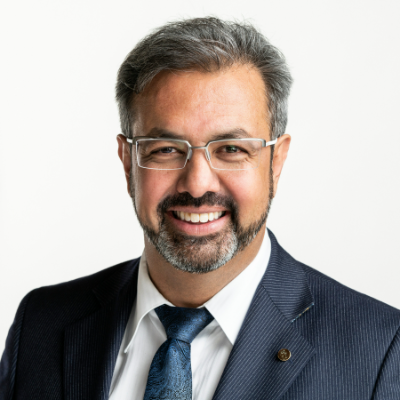
Suisse, PPE/DC, Porte-parole du groupe
10:15:57
Dear Mister President, ladies and gentlemen.
I am speaking today about multilateralism and I will start with a practical example. When a small state asserts its rights against a stronger one, when a person obtains justice from the European Court of Human Rights or when states jointly commit themselves to rules, then multilateralism shows itself to be in concrete effect. Power is limited by law. The Council of Europe was founded on the conviction that peace in Europe does not come from the strength of the individual, but from the commitment of all to the law. This conviction is just as relevant today as it was in 1949, because we are living in a time in which international law is increasingly being relativised and is in danger of being replaced by a logic of power.
Multilateralism in the sense of the Council of Europe means not only co-operation, but also voluntary subordination to common rules. This means that even the strongest are bound, that even the most powerful are accountable and that human rights do not become a bargaining chip. This is precisely the civilising achievement of our common order. At the same time, there are new initiatives for conflict resolution that are deliberately located outside established multilateral structures. They promise faster results through limited formats. But efficiency must not be confused with legitimacy. Peace without a basis in international law remains fragile and is often no more than a temporary ceasefire.
International law is not an obstacle to peace, it is its prerequisite. It protects the weaker parties, limits violence and creates reliability. Where it is circumvented or selectively applied, new injustice arises. And where power decides instead of law, peace loses its normative core. The Council of Europe stands for a different logic, for equality before the law, for the protection of the individual and for the indivisibility of human rights. These principles are not outdated. They are the counter-model to an order in which influence, military strength or economic power are placed above justice and dignity. Multilateralism must remain capable of reform, but reform means strengthening the law, not circumventing it. The Council of Europe is a place of standards. Its task is to take a stand when the law comes under pressure. On behalf of the Group of the European People's Party, I ask you to do all you can in favour of international law.
Thank you very much.
Croatie, PPE/DC, Président de l'Assemblée
10:19:02
Thank you very much.
I call now Mr Malte KAUFMANN on behalf of the European Conservatives, Patriots & Affiliates.
And then follows Mr Emmanuel FERNANDES.

Allemagne, CEPA, Porte-parole du groupe
10:19:13
President, ladies and gentlemen, thank you very much for giving me the floor.
I would like to speak today on the subject of democracy. It is now a year since Mr J. D. VANCE, the Vice President of the United States, spoke in Germany at the Munich Security Conference. He met with our party leader from the AfD, Ms Alice WEIDEL, on the fringes of the conference and criticised the fact that the largest opposition party was not invited to this security conference. Thank God things are different this year. We have representatives invited there again. But Mr J. D. VANCE has issued a wake-up call to Europe, saying that freedom of expression and democracy are very much under threat.
What is the state of democracy one year on? I would like to report a little from Germany, because people are often completely unaware of what is going on in our country. Here in Germany, the largest party in the polls, the AfD, is under constant attack. A firewall is being built against us. We are being marginalised, members of our party are being bullied. Members of our party are even having their bank accounts cancelled simply because they belong to the AfD. There are always demonstrations organised by the Antifa. They go hand in hand with representatives of the established parties. In some cases, these demonstrations escalate into violence against our candidates and members. And there are also fantasies of bans in our country. Members of the established parties simply want to ban us, even though we have over 70 000 members. And all we want is to call for conservative, liberal reform in our country. We are accused of being anti-Semitic. Nothing could be further from the truth. We have a Jewish sub-organisation within the AfD. Jewish life is very important to us. We also fully support the state of Israel and the sovereignty of this country.
And what's more, we are now also being deprived of the right to stand for election. We had a mayoral candidate in Ludwigshafen, Mr Joachim PAUL, who was not even allowed to stand in the election by a small electoral commission without a prior judicial decision.
Ladies and gentlemen, democracy is in danger in Europe because of such machinations. But the people in Germany will no longer allow themselves to be told not to vote for the AfD. That is why we are polling at 40 per cent in some federal states. And I appeal to the Council of Europe that we address the issue of democracy in Europe instead of spending hours on gender ideology. It is high time.
Thank you very much.
Croatie, PPE/DC, Président de l'Assemblée
10:22:17
Thank you very much.
And now I call Mr Emmanuel FERNANDES on behalf of the Group of the Unified European Left.
You have the floor.
France, GUE, Porte-parole du groupe
10:22:25
Thank you, Mister President.
So I'm going to talk about democracy and the rule of law in the European Union (EU).
For several months now, farmers in the European Union have been mobilising on a massive scale. At issue is the Mercosur agreement, by far the largest and most harmful free trade agreement ever negotiated by Brussels. This agreement will have far-reaching consequences, with devastating effects for our agriculture, public health and the environment, but also for our European economies, and with it, devastating social impacts.
It provides for hundreds of thousands of additional tonnes of beef, poultry, cheese, cereals, sugar and honey to be imported every year. These are products that we already produce in Europe, and which will only put our farmers, already strangled by falling incomes and rising costs, in direct competition with each other. How can we fight against knockdown prices from factory farms in Brazil, which have neither the same wage levels nor the same health, environmental and animal welfare standards?
Faced with these warnings, the European Commission is hiding behind mirror measures and safeguard clauses, but these measures are largely ineffective. Mirror measures are neither really binding nor fully enforceable, and their conditions of application are vague. As for the safeguard clauses, they are long, complex, subject to extremely restrictive criteria and dependent solely on the political will of the Commission. These safeguards serve primarily to make the agreement presentable, not to protect farmers or the environment.
Faced with this situation, on Wednesday, 21 January the European Parliament adopted a motion initiated by The Left group in the European Parliament, chaired by Manon Aubry, calling on the Court of Justice of the European Union to examine the legality of the EU-Mercosur agreement. This is a powerful political act.
And yet, despite this, the Commission intends to trigger the provisional application of this agreement. In concrete terms, this would mean that it could enter into force even before the European Parliament has given its consent. This is a serious anti-democratic move.
Yet the framework agreement between the European Parliament and the Directorate-General for Trade is clear: trade agreements must not be applied provisionally before Parliament has given its consent. Since 2011, almost all agreements have complied with this principle, with very few strictly justified exceptions. In this case, however, there is no justification for going through the motions.
This choice tramples on the sovereignty of the legislative power and sends out an extremely worrying message: that of an authoritarian European executive, ready to bypass democracy in order to impose the worst kind of free trade rejected by tens of thousands of farmers and by the people.
Colleagues, we are here in the institution responsible for ensuring respect for the rule of law, yet the executive of the European Union respects neither the legislative body, since the Commission does not seem to care whether or not it has the agreement of the European Parliament, nor the judiciary, since Ms Ursula VON DER LEYEN has not renounced the provisional application of the Mercosur Treaty despite the forthcoming judicial review by the Court of Justice of the European Union. Together with my group, we are calling loud and clear in this Chamber next to Parliament: Ms Ursula VON DER LEYEN, submit to the rule of law!
Croatie, PPE/DC, Président de l'Assemblée
10:25:36
Thank you very much. We have finished the speakers on the behalf of the political groups.
We now go to the list of additional speakers. I call now Mr Sam RUSHWORTH from the United Kingdom.
The floor is yours.
Thank you.
It's quiet here this morning, but I stayed behind to speak in this debate because I believe that this session of the Parliamentary Assembly has some unfinished business. And I hope that what I'm about to say does not come across as whataboutism. But over the last five days, this Assembly has addressed many important issues; from safeguarding the system of international justice, to ensuring accountability and humanitarian protection in Gaza and the West Bank, to peace in Ukraine and standing firm with our neighbours in Denmark and Greenland.
But there is one contemporary issue, a crisis, a humanitarian catastrophe, a genocide, in my opinion, happening right now, which I do not believe I've heard mention of, not in plenary or in any committee or side event. I speak of Sudan.
Recently as a committee member of the International Development Committee in my parliament, I heard evidence from the Yale School of Public Health's Humanitarian Research Lab of a genocide unfolding in real time. Images consistent with house-to-house killings by Sudan's Rapid Support Forces, bodies on the ground throughout multiple areas of El Fasher and evidence of mass graves. The death toll, even at a conservative estimate, has surpassed that of Gaza. Sexual violence is being used as a weapon of war, with reports of women lying on the ground waiting to be raped, I believe to protect their village, hoping that the militia will not get so far.
And we cannot say that we did not know because the warning signs were there and they were repeated over and over again. Is the world really doing enough?
I developed my political consciousness as a 10 year old, seeing images of the genocide in Rwanda and in Srebrenica in the news and learning about the Holocaust, which we remembered this week, including a beautiful, moving speech by my parliamentary colleague, Lord Alf DUBS. This led to a career in atrocity prevention in grassroots peacebuilding prior to my election to this parliament. And so I have felt deeply ashamed in recent weeks and fear that I've become one of the politicians I used to critique. Of putting "must say something about Sudan" on a checklist of a hundred others without giving this issue the urgency it deserves.
Mass atrocities are preventable. Are we really doing enough? Have we done enough to pressure the United Arab Emirates to stop providing the weapons? Have we done enough on humanitarian assistance? Are we doing enough to gather evidence and ensure that those responsible know that they will face international justice? Are we doing enough to protect the victims of sexual violence?
My friends and colleagues, I ask you what more we can do in this Assembly.
And I hope that this will be raised at our next plenary.
Thank you.
Croatie, PPE/DC, Président de l'Assemblée
10:28:46
Thank you very much. I call now Mr Hayk MAMIJANYAN from Armenia.
The floor is yours.
Thank you, honourable Chair.
[Pause]
It is awkward to hear silence when you are waiting for someone to speak, isn’t it? Now, you feel the same way we Armenians do about the reaction of the international community about the things happening in my country.
Mr Nikol PASHINYAN is attacking the Armenian Apostolic Church. Attacking by words and by force. Silence.
Four archbishops have been under arrest for more than six months. Silence.
A well-known philanthropist declares his support for the Church and gets arrested for that. Silence.
We initiate an impeachment process and the joint opposition candidate for Prime Minister gets arrested. Silence.
Reporters and whole media agencies get targeted by government officials. Silence.
Bloggers get arrested. One of them goes on hunger strike, his health is so bad that yesterday he was brought to the court in a wheelchair. Silence.
Members of parliament, former presidents, oppositional leaders are arrested or banned from traveling. Silence.
I can go on and on with such horrifying facts.
My land is occupied politically by Mr Nikol PASHINYAN and physically by Mr Ilham ALIYEV. More than 50 of my compatriots are deprived of freedom because of their political views in Armenia and according to the official numbers, 19 of my compatriots are in jail in Baku just because they are Armenians.
I have decided for myself: I am not going to stay silent.
Now it’s your choice, ladies and gentlemen.
Thank you.
Croatie, PPE/DC, Président de l'Assemblée
10:31:05
Thank you very much.
I call now Ms Cristina Gabriella DUMITRESCU from Romania. The floor is yours.
Thank you, Mister President.
Dear colleagues,
Putin is a war criminal and what is happening in Ukraine is horrifying.
I wanted to start with this statement because I wanted to make it clear that what I am about to say next is not about a war, but it's about neighbourly relations and minority rights.
It has to do with the over 600,000 Romanians living in Ukraine whose rights are not respected. The Romanian churches over there would like to come under the Romanian Orthodox Church, and they are not allowed to do so. Romanian education is seriously threatened. In the Chernivtsi region, out of 20 Romanian high schools, only four will remain next year.
Dual citizenship for ethnic Romanians living there will not be possible. My country is not on the shortlist of five states established by Mr Volodymyr ZELENSKYY where dual citizenship will be allowed.
Romania has been giving millions upon millions to Ukraine since the war started, but received nothing. In fact, it gets something: bans.
Mr Eugen PATRAS, who fights for Romanian churches, although he's a Ukrainian citizen, is banned in Ukraine.
Mr Deputy Petru-Gabriel NEGREA, who always fought for the rights of Romanians over there and who at the beginning of the war received for free, in his hotel, more than 150 Ukrainian refugees, for over one month and a half, was banned last week.
And I want to ask you, is that correct?
Thank you very much.
Croatie, PPE/DC, Président de l'Assemblée
10:33:45
Thank you very much.
I now call Mr Roland Rino BÜCHEL from Switzerland.
Dear Chairman, ladies and gentlemen.
I am going to talk about democracy. The USA left the World Health Organization (WHO) this year with clearly formulated criticism.
The WHO responds to such accusations from the USA and other countries around the world verbatim. Quote from the beginning:
"The WHO recommended the use of masks, vaccines, physical distancing, but at no time did it recommend mandatory masks, mandatory vaccination and lockdowns. We supported sovereign governments to make decisions that they felt were in the best interests of their populations, but the decisions were theirs." End quote.
We know the result: billions wasted, bans, restrictions and coercive measures around the world. These didn't last for days, they didn't last for weeks, they didn't last for months - they lasted for years.
At some point, about three years ago, we were all glad that this nightmare seemed to be over. When I look at what is currently happening in my home country and in my home canton as a concrete example, I can't really be reassured.
A new healthcare law is being discussed intensively there. It concerns one of the most sensitive areas of our society, namely the right balance between the exercise of state power and people's personal freedom. This law allows the government to order vaccinations. Anyone who refuses to comply will be fined. In St. Gallen, these amount to up to 20 000 francs, while other cantons even impose fines of up to 100 000 francs. That is the equivalent of more than 109 000 euros, almost 95 000 pounds or more than 5.5 million Turkish lira. The massive resistance to the law is primarily directed against the means by which the state intends to assert its power. In future, the focus will be on de facto coercion rather than convincing arguments.
We must therefore provide an answer to the crucial question. Is the state allowed to rule over people's bodies as it pleases?
The Council of Europe is the institution that looks after democracy and human rights in the member states.
I therefore call on you to do the following: If our governments try to suppress democracy and rule bypassing parliament and the people, then in future we should put up much more resistance at all levels than we have done so far.
Thank you very much.
Croatie, PPE/DC, Président de l'Assemblée
10:37:04
Thank you very much.
I call now Mr Titus CORLĂŢEAN from Romania.
The floor is yours.
[There is] no co-ordination today between the Romanian interventionists and the plenary; but, indeed, my intervention is also related to the worsening of the situation of the ethnic Romanians in Ukraine.
Colleagues,
As you know, the position of my country, Romania, concerning Ukraine was crystal clear from the beginning. My country firmly condemned the Russian crime of aggression committed against Ukraine. Romania supports the territorial integrity, independence and sovereignty of this country and was for all of these four years of war in the first line of supporting the victim against the aggressor, unconditionally.
This explains why for us in Bucharest, it's impossible to understand the lack of reciprocity of Kyiv, while the Ukrainian authorities continue to restrict, diminish and violate the rights of the ethnic Romanians to the preservation of their national cultural and religious identity, according to the European standards for national minorities and to the bilateral agreements concluded with Romania.
The constant limitation of the education of the mother tongue, since 2017, will see a new and dramatic episode just two days from now. On 1 February this year, the Ukrainian government will close 28 out of 32 academic high schools only in the Chernivtsi region, northern Bukovina.
This will represent a disaster for the ethnic Romanians from Ukraine.
This is why we call on the Ukrainian government to postpone and reconsider this fundamentally wrong decision that violates the rights of national minorities consecrated by the Framework Convention for the Protection of National Minorities and the European Charter for Regional or Minority Languages.
The same violation and abusive conduct against freedom of religion [is happening] to Romanians in Ukraine. [There is] huge pressure on the priests and members of the Romanian Orthodox Churches perpetrated by the Ukrainian secret services and different other authorities. Actions sending non-obedient priests to war in the army. The postponement of over one and a half years means refusal of the request made based on the Ukrainian legislation itself, for the register of a religious Romanian Orthodox association that will separate from Russian influence – and this is good – but which wants to maintain its Romanian identity, without the obligation for a priest to serve in Ukrainian. Because that would mean the assimilation of the Romanian Christian Orthodox identity.
[There has been] no result until now, after numerous demarches of the likes of the Romanian authorities, Presidency, Government, Foreign Ministry, Department of Religious Cults, Ministry of Education, Parliament, even the Patriarch of All Romania. [There have been] no positive answers, only postponements and refusals.
If the bilateral normal demarches from a partner country that unconditionally supported Ukraine receives no answer, then we need to ask the European institutions to take action out of the respect for the European standards in this domain.
For the Ukrainian authorities, a clear and predictable public message: the non-fulfilment of the political criteria for accession to the European Union will determine the position of the Romanian Parliament, upon the moment of the request for the ratification of the EU accession.
I hope in a predictable manner to avoid that moment.
Thank you.
[Applause]
Croatie, PPE/DC, Président de l'Assemblée
10:40:27
Thank you very much.
I call now Ms Albana VOKSHI from Albania. The floor is yours.
Thank you, Chair.
I will speak on the approval of the Criminal Code in Albania and the chilling effect on the media.
This week, on Tuesday night, after midnight, the Albanian Parliament adopted amendments to the Criminal Code that contradict the findings and recommendations of the Council of Europe itself.
Only a few months ago, the Council of Europe facilitated working groups on the dialogue platform for freedom of expression. Independent legal experts reached a clear, unanimous conclusion: defamation and insult must be fully decriminalised without exception, without registries, without conditions. Criminal law, they warn, creates a chilling effect on journalists, civil society whistle-blowers and all those who speak for the public interest. Yet instead of implementing this recommendation, the socialist majority in the Albanian Parliament chose a different path. Against the advice of this Assembly, the OSCE Office for Democratic Institutions and Human Rights, the European Union and against repeated calls from international and national journalist organisations.
Defamation remains a criminal offence. Protection is made selective and conditional. Legal uncertainty is deepened, and the risk of intimidation through criminal procedures is preserved.
As we speak, 77 journalists in Albania face criminal defamation charges by ministers, mayors, former prosecutors and judges dismissed through the vetting process. This is a threat to freedom of expression and to journalists' safety. European standards are unequivocal, defamation and insults must be addressed, if at all, only through proportionate civil law.
It is a direct deviation from the Council of Europe's standard, from Article 10 of the European Convention on Human Rights and from this Assembly's long-standing position that criminal law must never be used to regulate public debate.
The Criminal Code was voted, among others, by the Deputy Prime Minister, whose parliamentary immunity is currently being blocked to prevent her arrest despite the formal request by the special anti-corruption prosecution (SPAC).
The irony is painful. In Albania, an ordinary citizen risks prison for double parking in the wrong place, while a Deputy Prime Minister under investigation for procurement violations worth €1.1 billion remains untouchable and votes on the criminal legislation.
For six weeks, the Albanian Parliament has deliberately refused to examine SPAC's request to lift the immunity of Ms Belinda BALLUKU, meetings were cancelled, agendas suppressed, deadlines invented, and even an entirely unrelated Constitutional Court request was used as a pretext for delay. This has never happened before since the justice reform. At the same time, Parliament rushed after midnight to approve a Criminal Code that tightens criminal pressure on speech and citizens, while shielding power from accountability.
This is not just hypocrisy, it is a systematic inversion of the rule of law. Harsh for the weak, paralysed for the powerful. If this Assembly tolerates such an obstruction of justice, the credibility of Albanian justice institutions [the speaker's mic was cut off].

Autriche, SOC, Présidente de l'Assemblée
10:43:53
Thank you very much. I'm sorry, the time is over.
The next on my list is Mr Erich HESS.
Thank you very much, Madam President. Ladies and gentlemen,
I have to say a few words about our Council business here. I have been in various parliaments for over 20 years. I was on the City Council of the City of Bern, I was in the Cantonal Parliament of the Canton of Bern, I have been in the Swiss National Parliament for 10 years.
However, in my view, I have never experienced such poor, undemocratic council behaviour as here in this chamber. Our Council has the task of scrutinising other democracies to see whether they work and whether things are fair. That is why we have to be a role model here, that we have a model democracy. That is why I believe that we need to correct certain mechanisms in this Council so that we really do become a model democracy here too.
I think your Council could well look to Switzerland and see how we do it in Switzerland, so that we become more democratic here too. I was also shocked here in the Council that the left side does not talk to the right side in debates here, that no personal discussions take place. I ask you to become more democratic in future, to all talk to each other, so that we really are a role model for the nations we oversee.
Thank you very much for your attention.
Autriche, SOC, Présidente de l'Assemblée
10:46:02
Thank you.
Next on my list is Mr Rónán MULLEN, who has arrived just in time.
Thank you very much, Madam President.
I might take this opportunity to congratulate you as well.
On Tuesday, in reference to a debate on an education resolution, I pointed out that a resolution that mentioned up to 30 threats to young people, mostly related to internet access, but failed to mention pornography once, had its head in the sand, because this is in a week when we read that the European Commission has launched another investigation into X, this time over its AI tool being used to create sexualised images of real people.
One might think on reading this that Europe is interested in protecting its citizens. But is it really? Or is it simply pursuing a political free speech witch hunt by another means?
Over seven months ago, the European Commission claimed that Pornhub's and Stripchat's age verification systems were ineffective in preventing minors from watching adult content. But here we are seven months later, armed with the wide-ranging EU's Digital Services Act (DSA) and yet nothing has happened.
In my own parliament, we make a song and dance about nudification software. But despite so-called robust legislation, no Irish court has prosecuted a major hosting provider, ISP, social media company or indeed a platform for hosting child pornography content under Irish statutes. How we totally ignore this foremost challenge facing our young people is hard to fathom.
France has taken a lead against Pornhub, but where are the rest of us? In Ireland, sexual assault crime rises in double digits year on year, but we will not hold anyone responsible for the offensive pornography that leads to this increase.
I myself moved a piece of legislation, which would make platforms and providers liable for hosting offensive material to minors, but I was told that we had to move at the pace of our European partners.
The buck-passing on pornography must stop. Our young people deserve better than what we are serving up at present.
It's worth noting, by the way, that from February 2026, Pornhub's parent company announced that it would block new UK users who haven't completed age verification. This is in protest against that country's online safety requirements.
I think it was Cato in ancient Rome who ended every speech with "Carthage must be destroyed". And if we are serious about children's welfare in this day and age, we have to rethink the very availability of pornography online. We've got to stop putting people's dubious individual tastes and excessive claims of privacy ahead of the much more important imperative, which is to protect children's welfare online and offline. Sooner or later, pornography must come offline, but in the meantime, we must get serious about strict age verification to prevent children from accessing this very damaging material.
Thank you.
Autriche, SOC, Présidente de l'Assemblée
10:49:24
Thank you very much. I saw that Mr Malte KAUFMANN used the blue card.
That means he has a question now to pose to you. You will speak to the room for 30 seconds.
Allemagne, CEPA, Porte-parole du groupe
10:49:33
Many thanks for the word.
I think this is a good tool. I want to use it today and ask Mr Erich HESS from Switzerland:
You have taken your country as a role model. Perhaps you could expand on that a little.
What do you mean by strengthening democracy?
What do you mean by talking to each other?
Do you also have something like a firewall as we do in Germany? What do you think of it?
Perhaps you can give us a few more ideas on how we can bring more democracy into the Council of Europe.
Thank you very much.
Autriche, SOC, Présidente de l'Assemblée
10:50:03
Mr Erich HESS, you have 30 seconds in which to respond.
Thank you very much, Mr Malte KAUFMANN, for your question.
I don't know, perhaps you saw earlier that my colleague from the Swiss Parliament, from the Greens party, and she is on the far left, was sitting next to me and we had a normal discussion. The kind of firewall that exists in Germany should not exist in a democracy, because people elected us to discuss and find solutions together. And that's why it's not a democracy if you exclude groups.
Autriche, SOC, Présidente de l'Assemblée
10:50:44
Thank you very much.
Next on my list is Mr Murat Cahid CINGI.
Please, you have the floor.
Thank you Madam Chair,
Dear colleagues,
Youth unemployment remains one of the most serious challenges we face across Europe, and even in my country, Türkiye.
Far too many graduates complete their education full of hope, only to encounter frustration and uncertainty. This is not because they lack talent, but because our education systems often fail to respond to the real needs of the economy. The growing skills gap across our industries is no longer only an economic issue, it has become a structural threat to social stability and even democracy.
When education is disconnected from real employment opportunities, it produces not only unemployment but also disappointment, social exclusion, and a deep loss of trust in institutions. This is precisely where vocational education becomes essential, not as a "second choice" but as a cornerstone of growth, dignity, and democratic resilience.
Young people who gain a profession, earn their own living, and see a future for themselves are more confident, more engaged, and more committed to democracy.
In Türkiye, and particularly in my hometown of Kayseri, we are trying to respond to this reality by bringing education closer to real working life. Our goal is to move beyond ordinary university diplomas that often leave young people unable to find the jobs they aspire to or a future they feel fulfilled by, and to equip them with real professions through which they can earn their living, contribute to the economy of the country, and build dignified and meaningful lives.
Yet, vocational education is still widely perceived as inferior, and we must work to change this perception. Ignoring vocational education means ignoring the potential of millions of students who could become skilled workers, innovators, start-up experts and even entrepreneurs. For this reason, we must deepen cooperation among member states, strengthen partnerships with the private sector, and create common standards and mobility pathways.
Sharing good practices in this field will help us build a more inclusive, competitive, and resilient Europe. For this purpose, our Council and the related committees must work together to make vocational education as attractive as possible again and share partnerships and experiences among member states.
Thank you.
Autriche, SOC, Présidente de l'Assemblée
10:54:06
'Thank you very much' [spoken in Spanish].
The next speaker is Mr Marko Antonio CORTÉS MENDOZA.
President, thank you very much indeed.
Parliamentarians,
I address this Assembly with profound concern and a deep sense of democratic urgency.
The Parliamentary Assembly of the Council of Europe is a global benchmark in the defence of democracy, human rights and the rule of law. This House therefore deserves absolute clarity when these principles are violated, including in non-member states or in observer countries such as Mexico.
The modernisation of the Global Agreement between Mexico and the European Union reaffirms that international co-operation is inextricably linked to respect for the rule of law. The democratic clause is not mere diplomatic wording; it is a genuine, enforceable and verifiable commitment. Mexico is currently failing to honour that commitment. In recent years, power has been routinely concentrated. Constitutional checks and balances have been eliminated or subordinated to the executive.
This Assembly has clearly stated that there can be no half-measures in judicial independence, it either exists or it does not. It has also stated that there can be no democracy without an independent judiciary.
In Mexico, the Supreme Court has fallen under the full control of the government. Through abuse of the Public Prosecutor's Office and threats of arrest warrants against senators and their families, the legislative branch has been brought under the government's control and the Constitution amended at will.
For the first time in the country's history, the judiciary was elected by popular vote, using lists pre-distributed to the government's client base and with barely 10% voter turnout. The result is a judiciary clearly lacking in both autonomy and capacity.
Key autonomous bodies, responsible for transparency have been dismantled. Without accountability, there can be no democracy.
The writ of amparo, wich is the principal civic safeguard against government abuse, has been weakened. A forthcoming electoral reform threatens to further undermine political pluralism. Ten mayors have been assassinated in the last two years. In 2025 alone, more than 20 000 homicides and 14 000 disappearances were recorded. Young people are being forced to work for organised crime, which controls territories where the State has no effective authority [the speaker's mic was cut off].
Autriche, SOC, Présidente de l'Assemblée
10:57:27
"Thank you" [in Spanish].
And the next on my list is Mr Tekke PANMAN.
Ms. President, thank you.
I would like to use this time for the free debate on the quality of our plenary debate we have here.
Since this week we have had the use of a 'blue card'. Also as we have just seen, that is a good instrument that is really improving the quality of our debate here. I appreciate it.
On the other hand, I have three points of concern and especially for you, Ms. President.
One is the time management. We now have a different approach on time, and especially people who are non-native speakers have a big disadvantage, especially if you are more strict on the time. We have seen, Ms. President, that more often even rapporteurs had not enough time or were not given enough time to express their report and to be informative to our Council.
On the other hand, when we had a discussion about the Holocaust, then there were people having more time so it was not consequent.
So Ms. President, I see that you are not looking, but please be aware because I voted for you. And up until now you are disappointing. I really hope that we look more to quality than time because we, the Council of Europe, the world is watching us and we are responsible for having good quality.
We are not a time machine.
Another thing that I would like to speak about is that, just a suggestion for you Ms. President, as you now started, to make Fridays more attractive so there are more people here in the plenary debate on Fridays.
Thank you so much.
Autriche, SOC, Présidente de l'Assemblée
10:59:47
Thank you.
As far as I know Mr Dominik OBERHOFER is not here anymore, so we proceed to Mr Igor DODON.
Ladies and gentlemen,
I am here today to send a clear message about the real situation in the Republic of Moldova, which is often absent from official discourse.
As a former President of the Republic of Moldova and representative of the main opposition force, I am here today to speak on behalf of many Moldovan citizens whose concerns are not being heard at European level.
For several years now, the European Union has been receiving information on the Republic of Moldova almost exclusively from sources linked to the powers that be in Chișinău. However, this vision is incomplete and does not reflect the reality experienced by a large part of the population.
The Republic of Moldova is currently going through one of the most difficult periods in its recent history. This crisis is not the result of armed conflict, but of governance that has lost touch with its people.
Poverty now affects almost a third of the population. Electricity and gas prices have tripled or quadrupled, while incomes remain among the lowest in Europe. The country is also experiencing a massive exodus of its population and worrying economic stagnation. External debt has reached record levels, exceeding 60% of GDP.
At the same time, the democratic situation has deteriorated sharply. Media outlets have been closed down, political candidates have been excluded from elections, and prosecutors investigating those in power have been dismissed or forced to leave their posts.
It is alarming that such practices should be carried out by a government that presents itself as pro-European and enjoys the political support of the European Union.
Against this backdrop, scepticism about the European project has grown. In the referendum of 2024, the majority of citizens living in the Republic of Moldova voted against the pro-European direction. Similarly, in the presidential election, the result was determined mainly by the diaspora.
Many Moldovans feel that the excesses of Chișinău's government were known in Brussels, but tolerated by a strategic silence. This silence has fuelled Euroscepticism and distrust of European values.
I share these facts in order to highlight the gap between the official discourse and the reality on the ground. I therefore call on European leaders to engage in an open dialogue not only with the powers that be, with the government, but also with all the political and social forces in the Republic of Moldova.
I believe that this change is necessary. Moldovan democracy must be protected and saved.
Thank you very much.
Autriche, SOC, Présidente de l'Assemblée
11:03:00
Thank you.
The very last one my list of speakers is Mr Iulian BULAI.
Thank you, Ms. President.
I've looked forward so much to this moment because I think you did very well. I want to congratulate you for the leadership over the past days. I think we should be a bit more generous and allow more time before judging people.
That being said, on behalf of the Liberals, we wish you good luck, wisdom, inspiration and creativity for the coming two years. You have our full support for the good things you have proposed to do with this Assembly on behalf of all Europeans.
I welcome very much the freedom that the new Swiss colleague has taken in speaking his own mind. That's the spirit of this Parliamentary Assembly. There's no censorship of that. So we are here to exchange views. We are here to be brothers and sisters of open communication with arguments.
As Liberals, and as a Liberal, I would never ask someone to just refrain from saying something, but I would not have the courage to award a person for those statements either, despite the fact that I'm not agreeing with it. So here there's liberty of speech. But those who want to destroy this institution from within, they should not be rewarded. I stay committed with that.
Beyond this, it's been an excellent week. Lots of debates, lots of great reports.
We congratulate the people of North Macedonia and authorities for having had the post-monitoring period over the past few years. Now that is over. That's a good thing.
Now, on the intervention of Mr Igor DODON... Mr DODON, there are so many Russian-speaking people in this Assembly that are respected. Russian-speaking people belong to Europe. This Assembly has nothing to do with the core language identity of people. But it is against people – sometimes like you – wanting to hand over a country to Mr Vladimir PUTIN. Defending the presence of the Russian tanks in Transnistria. That is all it is about.
You should not take the Russian minority of Moldova hostage, pretending that the whole of Europe is hostile towards them. Because it's not. Moldova does great. Moldova is probably not perfect, but Moldova is led by a strong woman and [has] strong leadership. That is one thing, a strong independent country. Now, as your people decided in Europe, [it is] not in the hands of a criminal dictator, that is killing millions of Ukrainians and has kept a grey zone military presence in Transnistria just for the sake of destabilisation.
That being said, we welcome everyone, we accept everyone, we allow everyone to say whatever they want; but we should not always reward them for that.
Thank you.
I'm looking forward to a fantastic year together here.
Autriche, SOC, Présidente de l'Assemblée
11:06:08
Thank you very much.
That concludes the list of speakers.
The debate is closed.
Autriche, SOC, Présidente de l'Assemblée
11:06:13
The next item on today’s agenda is the continuation of the debate on the Progress Report of the Bureau and the Standing Committee in Document 16323 Addendum 4.
The Bureau has proposed several references to committees, set out in Addendum 4. These references must be submitted for ratification by the Assembly in accordance with Rule 26.3. Any objections successfully raised mean those references will be referred back to the Bureau.
Are there any objections to these references?
I don't see any.
I now propose that the other decisions in the Progress Report in Document 16323 Addendum 4 be ratified. Are there any objections? If Mr Oleksii GONCHARENKO says there are not, then there aren't any.
Our next business is to consider the changes proposed in the membership of committees. These are set out in Document Commissions (2026) 02 Addendum 1 and Commissions (2026) 01 Addendum 4.
Are the proposed changes in the membership of the Assembly’s committees agreed to?
Yes, they are.
Autriche, SOC, Présidente de l'Assemblée
11:07:31
The final business today is to constitute the Standing Committee.
The membership of the Standing Committee is determined by Rule 17.3, as follows: the President of the Assembly; the Vice-Presidents of the Assembly; the Leaders of the political groups; the Chairpersons of national delegations; and the Chairpersons of the general committees.
A full list of members is set out in Document Commissions (2026)03.
The Standing Committee is accordingly constituted.
We have now come to the end of our business.
I would like to thank all members of the Assembly, particularly rapporteurs and Chairs of Committees, for their really, really, very hard work during this part-session.
I would like to thank all the Vice-Presidents who chaired during this part-session, who are: Ms Mónika BARTOS, Mr Bertrand BOUYX, Mr Antonio GUTIÉRREZ LIMONES, Mr Mogens JENSEN, Lord Carwyn JONES, Ms Miapetra KUMPULA-NATRI, Ms Mariia MEZENTSEVA-FEDORENKO, Mr Sigurður Helgi PÁLMASON and Mr Marko PAVIĆ.
I would also like to thank the staff, technical personnel and interpreters, both permanent and temporary, who have worked hard to make the part-session a success.
The second part-session of the 2026 Session will be held from 20 to 24 April 2026.
I declare the first part of the 2026 Session of the Parliamentary Assembly of the Council of Europe closed.
The sitting is closed.
[Applause]
Thank you very much.